
 Reviewed by: Takahiro Sugiyama (CEO, meguri Inc.)
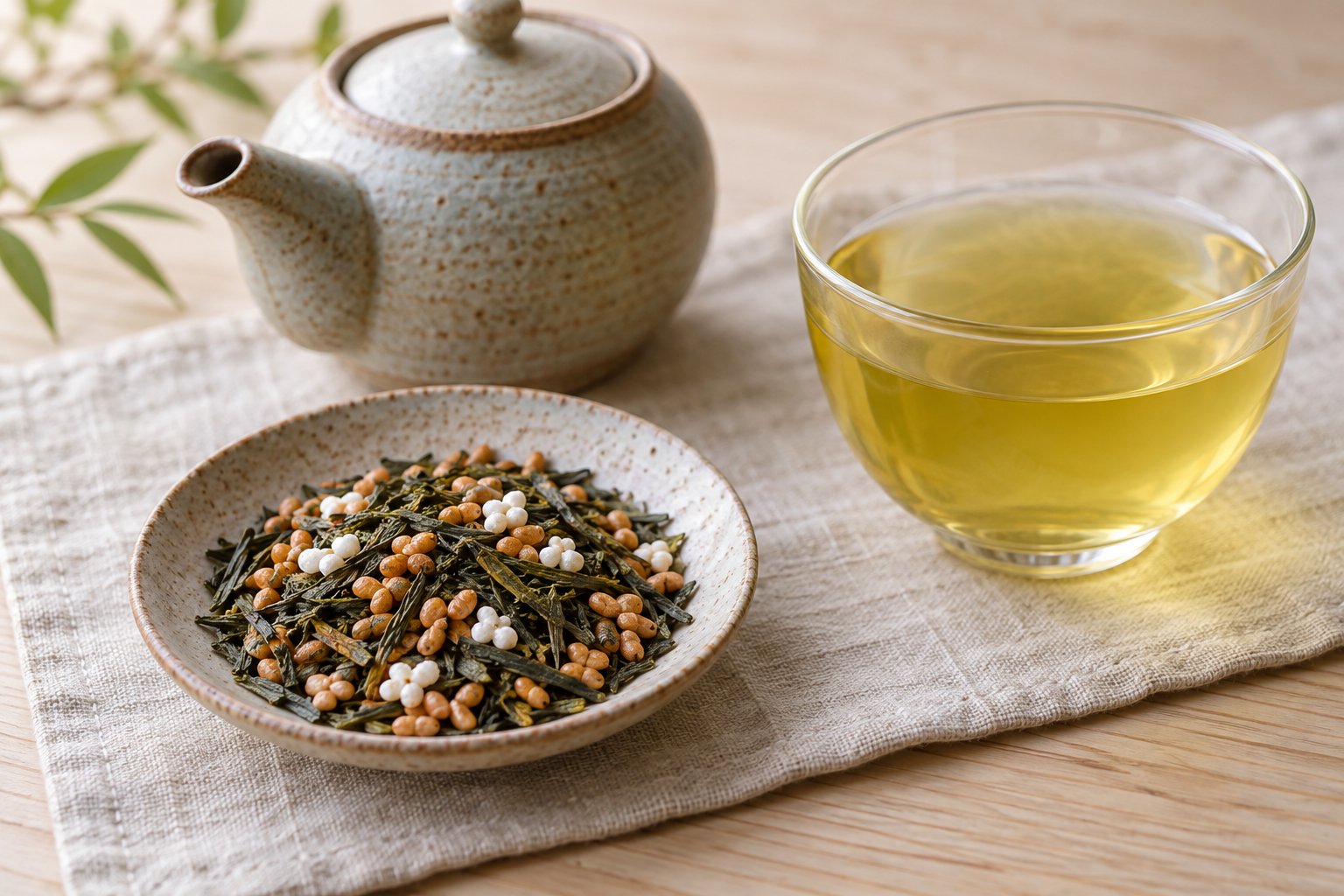
Some cafés consider genmaicha as a menu item to sit alongside matcha lattes and hojicha lattes. Genmaicha is green tea mixed with roasted rice, and what goes into it varies more than the name suggests: the type of rice, the blend ratio and whether matcha is added all differ by product. Using a Japanese industry body’s labelling standard, Japan’s official food composition tables and tea companies’ own information, this article looks at what genmaicha contains, its caffeine, how to use it on a menu and what to check when buying.
What is genmaicha?
Genmaicha is green tea such as sencha or bancha with roasted rice added. The tea part is green tea, so it is not related to black tea or oolong tea. The toasty aroma of roasted rice sits on top of the astringency of green tea.
The definition in the labelling standard
The Green Tea Labelling Standard of the Japan Tea Central Public Interest Incorporated Association (a common standard for green tea set by the industry body, last revised on 10 July 2026) defines each name used for green tea. Genmaicha is “sencha, bancha or similar tea with roasted rice added.” Bancha is tea made from leaves that have grown large and hard, older leaves, stems and similar material.
The Standard Tables of Food Composition in Japan (8th revised edition, 2023 supplement; “the food tables” below), published by MEXT (Japan’s Ministry of Education, Culture, Sports, Science and Technology), also place genmaicha in the same “green tea” group as sencha and matcha. Its English name there is “Genmai-cha (mixture of tea and roasted brown rice).”
Flavor and aroma
Ippodo Tea, a long-established tea company in Kyoto, describes its genmaicha as a tea with the toasty aroma of roasted rice and a clean astringency. It recommends it as a tea to drink with meals, and its English site writes it as Genmaicha.
What genmaicha is made from: tea leaves and roasted rice
Genmaicha is made from two things, green tea leaves and roasted rice, and despite the name, the rice can be white rice. No standard sets the ratio of tea to rice, so it differs by product.
Tea leaves: sencha, bancha and similar
The labelling standard’s definition says “sencha, bancha or similar tea,” so it does not fix a single type of leaf. Ippodo Tea’s English site says its genmaicha uses a green tea of large leaves called “yanagi,” with an ample amount of leaves with a light bitterness, and that the amount of rice is purposely kept small.
Rice: glutinous, non-glutinous and brown
As an example of genmaicha, the food tables give 50% sencha mixed with 10% roasted glutinous rice and 40% polished non-glutinous rice that has been steamed, dried and then roasted. Polished rice is white rice, with the outer layers of brown rice removed. The food tables also state that “blends vary widely.” The English name says roasted brown rice, but the blend example in the description includes white rice.
The ingredients of Ippodo Tea’s Gokujo Genmaicha are listed as “green tea (Japan), roasted rice (Japan).” The English site for the same product says the rice is roasted at two levels: lightly roasted, and deeply roasted until the grains puff.
| Item | Labelling standard, raw material names (translated) |
|---|---|
| Ingredients other than tea | Roasted “rice,” “Job’s tears (hatomugi)” and “arare (rice crackers),” plus flowers used for scent such as jasmine, and mandarin or yuzu peel |
| Order | Ingredients are listed in descending order of the weight used in the product |
| Example | “Tea, rice” |
Source: Japan Tea Central Public Interest Incorporated Association, “緑茶の表示基準” (Green Tea Labelling Standard, last revised 10 July 2026, in Japanese) https://www.nihon-cha.or.jp/pdf/hyoujikijyun.pdf
The order of ingredients tells you which is heavier
In the labelling standard, the ingredient name for tea is written as “tea” or “green tea,” and roasted “rice” is listed as an ingredient that may be used besides tea. Ingredients are listed from heaviest to lightest, so “tea, rice” means a product with more tea leaves, and “rice, green tea” means one with more rice. There is no rule requiring the ratio to be shown, so ask your supplier for the actual proportions.
What is matcha-iri genmaicha?
Matcha-iri genmaicha is genmaicha with matcha added. No standard sets the amount of matcha, so it differs by product.
How the labelling standard would name it
“Matcha-iri genmaicha” is not in the labelling standard’s table of names. The table does include “blended tea”: for a mix of different tea types, the standard says to put the tea with the greatest weight last and write “XX-iri YY-cha” (YY tea containing XX). Applying this, “matcha-iri genmaicha” reads as a product that is mainly genmaicha, with matcha added.
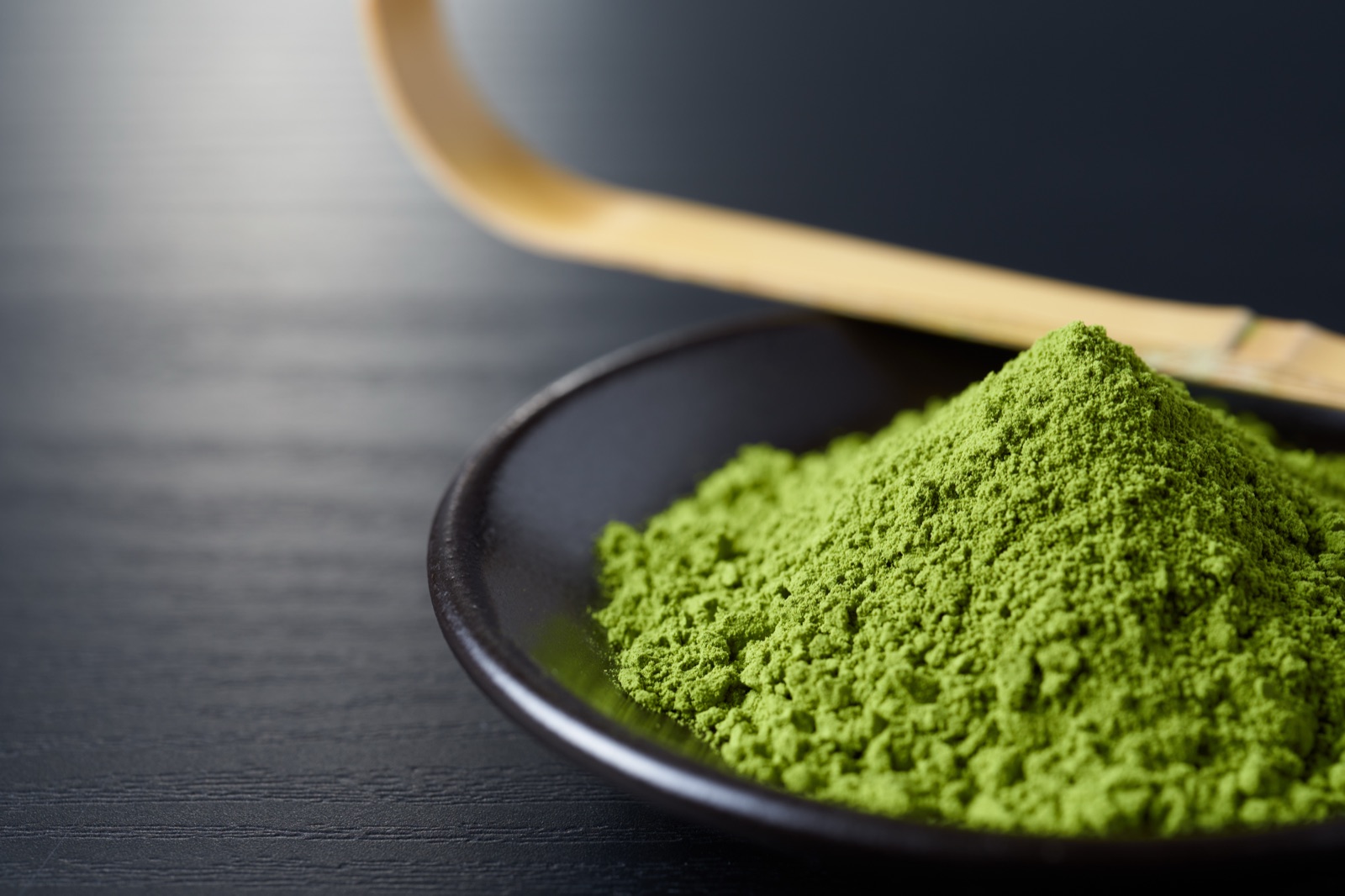
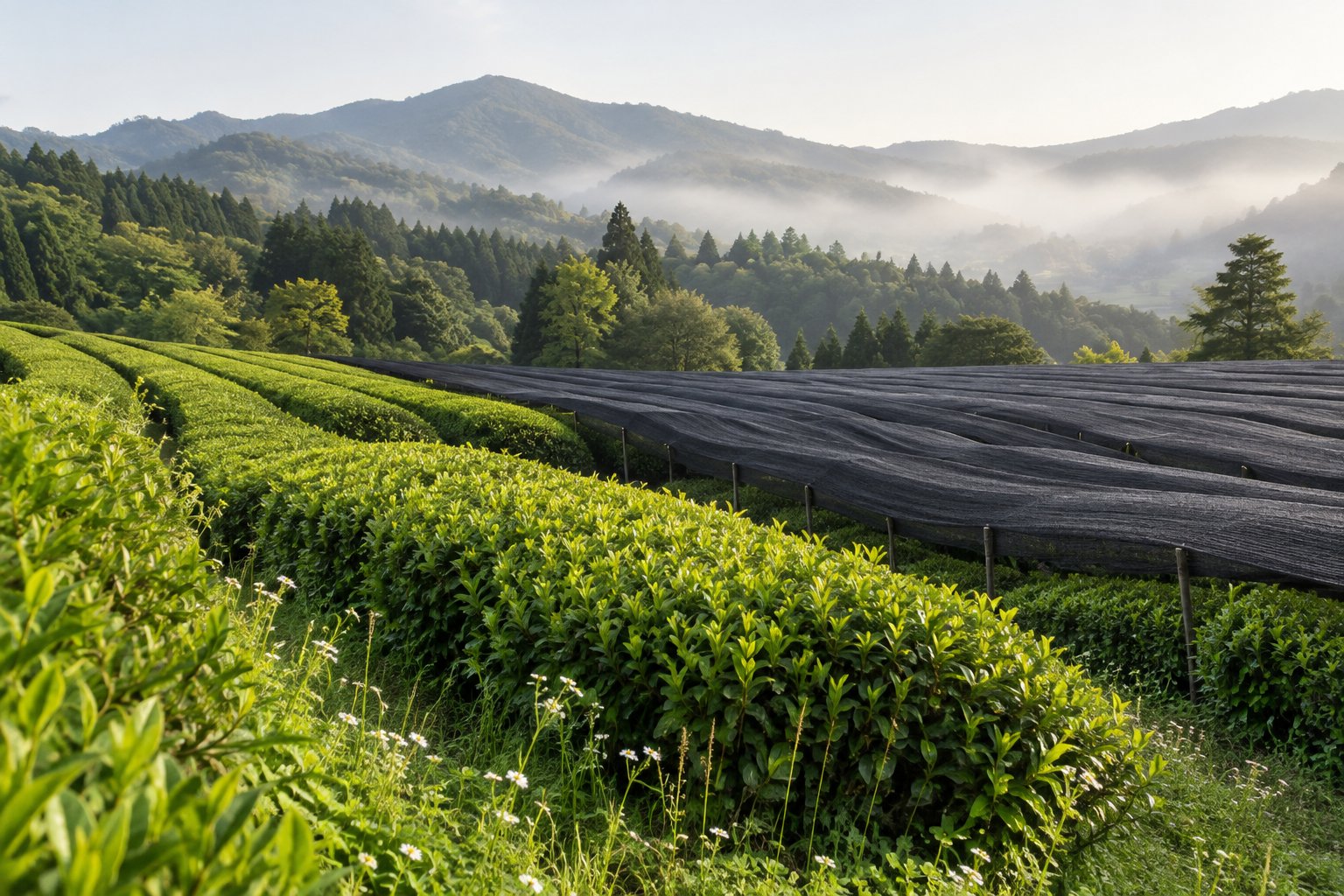
In the labelling standard, matcha is tencha (tea grown under shade and dried without rolling) ground into a fine powder with a tea mill or similar.
The ingredient list alone may not show whether matcha is included
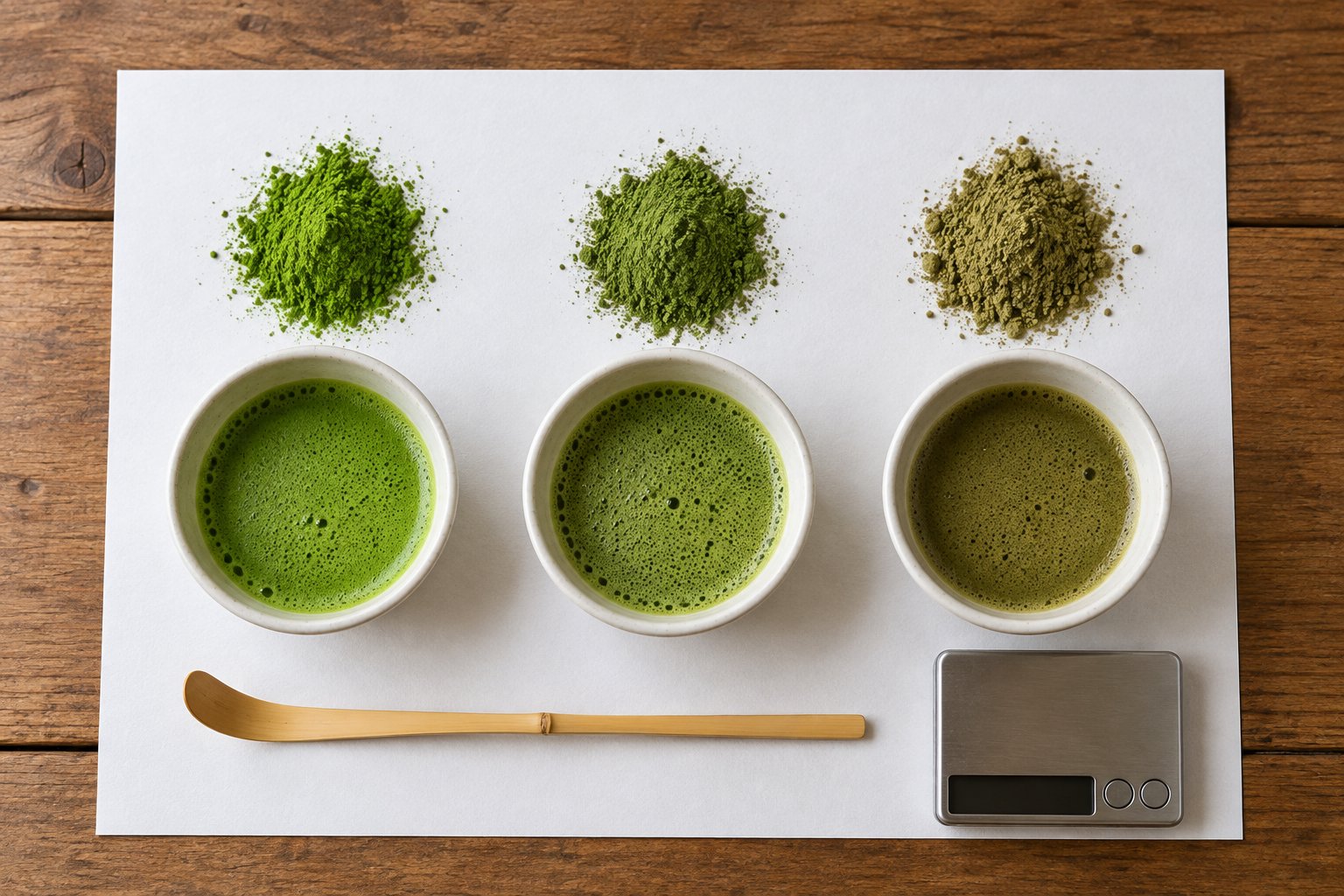
In the labelling standard, the ingredient name for tea is written as “tea” or “green tea,” so matcha can apparently also be listed simply as “tea” or “green tea.” To check whether matcha is included, look at the product name, the trade name and the specification sheet, not only the ingredient list. There is no labelling rule for the share of matcha either, so if you want the color to match a sample, brew samples and compare the color side by side.
Genmaicha vs matcha and hojicha
Genmaicha, matcha and hojicha are all Japanese green teas, but their raw material, processing and the way they are drunk differ. Genmaicha mixes tea leaves with roasted rice, matcha is tencha ground into powder, and hojicha is tea roasted over strong heat.
Side by side
| Genmaicha | Matcha | Hojicha | |
|---|---|---|---|
| Raw material | Sencha, bancha or similar tea leaves, and roasted rice | Tencha | Sencha, bancha and similar |
| Processing | Tea leaves mixed with roasted rice | Tencha ground into a fine powder with a tea mill or similar | Roasted over strong heat |
| Caffeine (food tables) | 10mg per 100g of infusion | 3.2g per 100g of powder (64mg in a 2g cup, calculated) | 20mg per 100g of infusion |
| How it is drunk | Brew the leaves; powder is dissolved and drunk | Powder is dissolved and the whole leaf is drunk | Brew the leaves; powder is dissolved and drunk |
Definitions are from the Japan Tea Central Public Interest Incorporated Association’s labelling standard, and caffeine values are from the food tables. The raw material and roasting of hojicha are covered in What Is Hojicha?, and matcha vs sencha in Matcha vs Green Tea.
Price of the raw tea
In MAFF (Japan’s Ministry of Agriculture, Forestry and Fisheries) materials based on a survey by the National Federation of Tea Producers’ Associations, the average price across all harvest seasons for aracha (unrefined tea, before finishing) produced in 2025 was 8,562 yen per kg for tencha, 1,746 yen for sencha and 1,812 yen for bancha. Tencha, the raw material for matcha, costs more than 4 times as much as the sencha and bancha used for genmaicha leaves. The material has no category for genmaicha, so the price of genmaicha itself is not known.
Caffeine: comparing values in the food tables
In the food tables, genmaicha infusion contains 10mg of caffeine per 100g, half the 20mg of sencha and hojicha infusions. It is the same value as bancha infusion.
Values per 100g of infusion
| Drink | Caffeine (per 100g of infusion) | Brewing method in the tables |
|---|---|---|
| Gyokuro | 160mg | 10g of tea, 60mL of water at 60°C, 2.5 minutes |
| Sencha | 20mg | 10g of tea, 430mL of water at 90°C, 1 minute |
| Hojicha | 20mg | 15g of tea, 650mL of water at 90°C, 0.5 minutes |
| Genmaicha | 10mg | 15g of tea, 650mL of water at 90°C, 0.5 minutes |
| Bancha | 10mg | 15g of tea, 650mL of water at 90°C, 0.5 minutes |
Source: MEXT Food Composition Database, “玄米茶 浸出液” (Genmaicha, infusion; Standard Tables of Food Composition in Japan, 8th revised edition, 2023 supplement) https://fooddb.mext.go.jp/details/details.pl?ITEM_NO=16_16041_7
For tea, the food tables note that high-grade and low-grade products differ considerably in their components, and that mainly mid-grade products were analyzed.
Compared with matcha
Matcha is drunk as a whole powder, so the caffeine depends on how much goes into a cup. The tables list 3.2g of caffeine per 100g of matcha, so the roughly 2g used in the Kyoto Prefectural Tea Research Institute’s method works out at 64mg (calculated). Calculations for other amounts are in Does Matcha Have Caffeine?
No values for matcha-iri genmaicha or powder
For genmaicha, the food tables list only the infusion, with no values for matcha-iri genmaicha or genmaicha powder. With matcha-iri genmaicha, the caffeine changes with the amount of matcha added. Powder is drunk whole, so the amount differs from brewed tea. If you want to answer customers with a number, ask your supplier for analysis results or send a sample to a testing laboratory.
What is genmaicha powder?
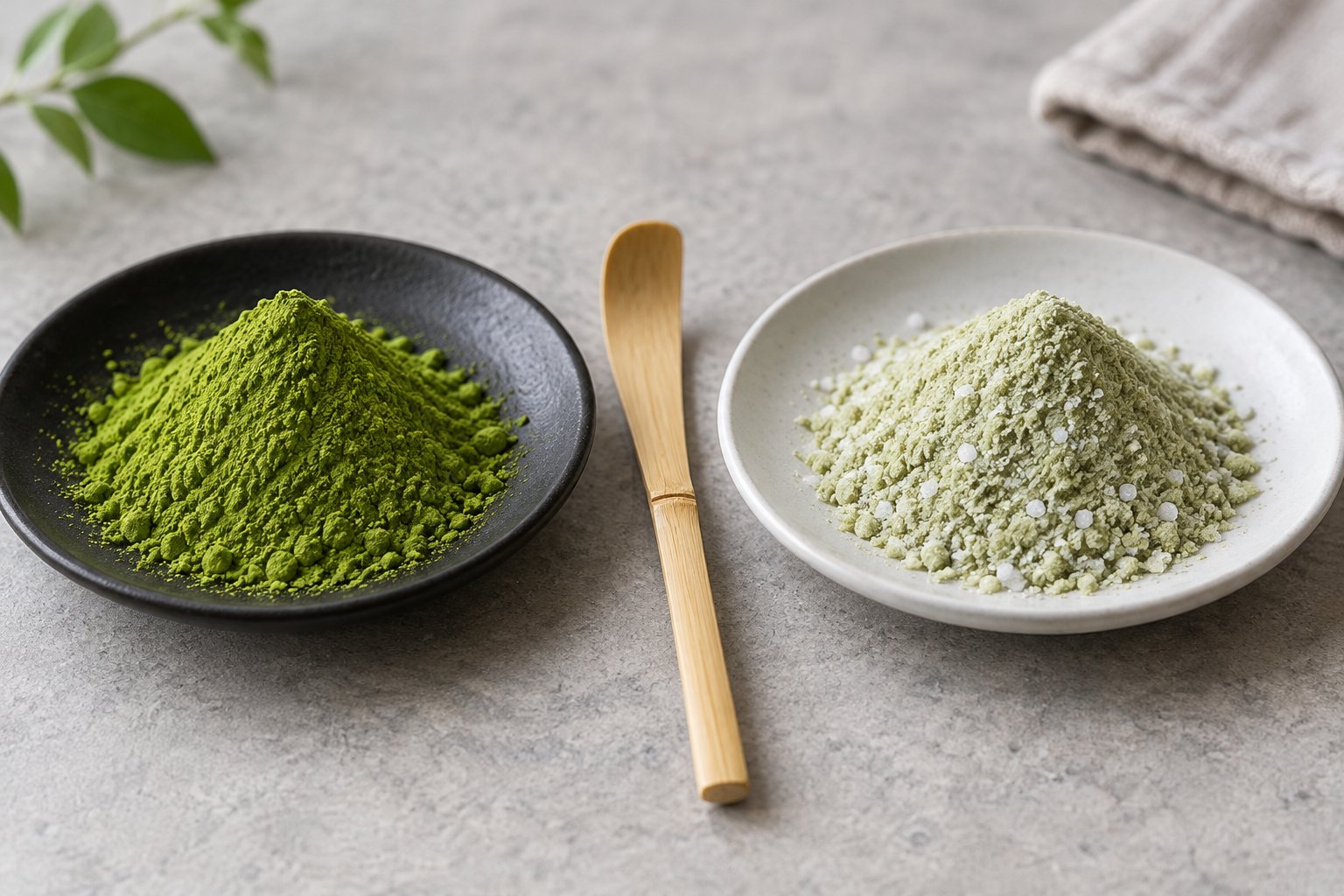
Under the names in the labelling standard, genmaicha powder takes one of two forms: “powdered tea,” where tea leaves and rice are ground, or “instant tea,” where the tea’s components are extracted and dried. Tell them apart from the ingredients and the specification sheet.
Two names in the labelling standard
| Name | Definition in the labelling standard |
|---|---|
| Powdered tea | Tea made into powder with a grinder or similar |
| Instant tea | Water-soluble components extracted from green tea, concentrated and dried into powder or granules |
The labelling standard gives “tea, dextrin” as an example ingredient list for instant tea. Dextrin is a powder made from starch. With ground powder you consume the whole tea leaves and rice, while instant tea is a powder of only the components that dissolve in water. Both have different names from matcha, which is tencha ground with a tea mill or similar.
Sweetened mixes
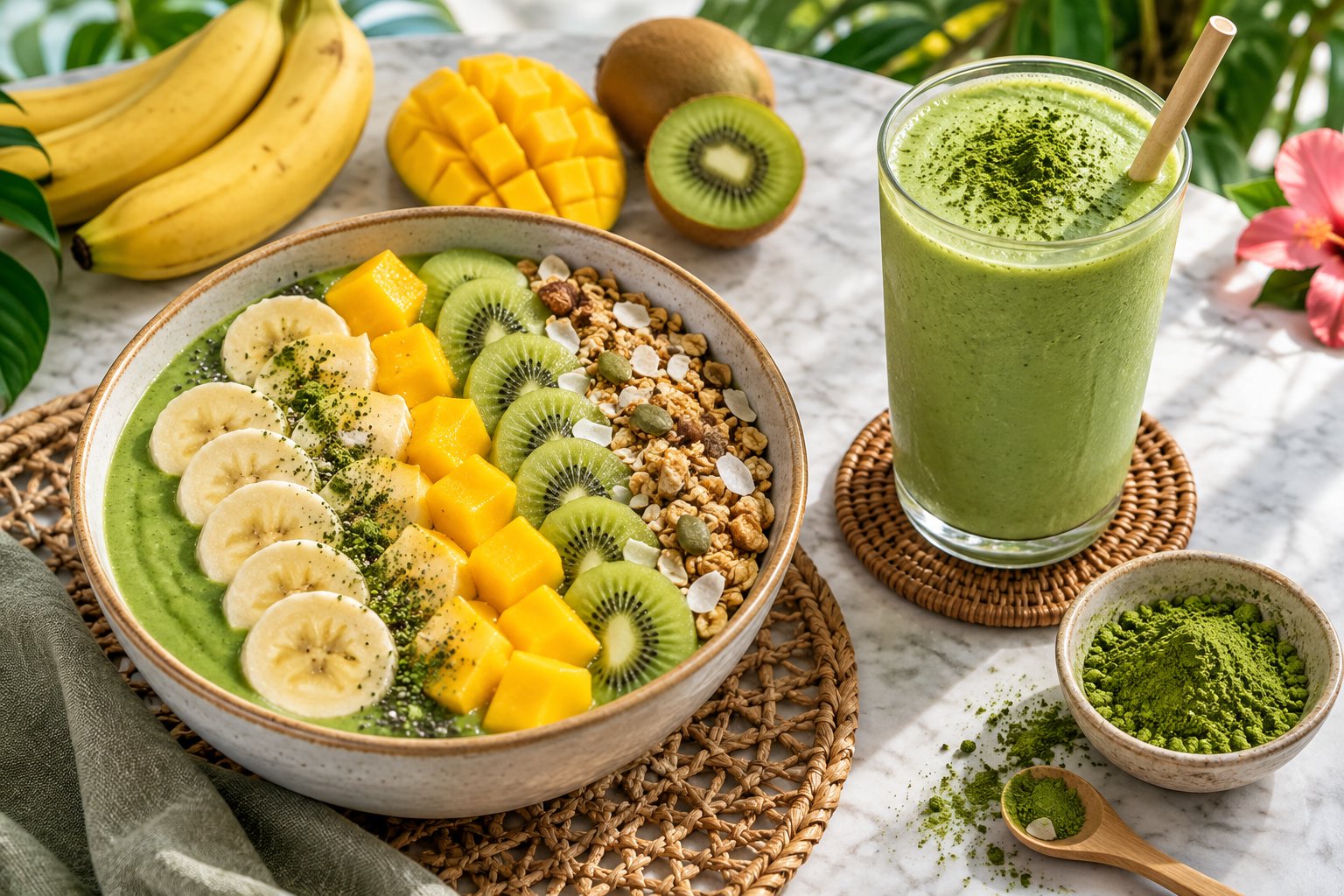
Powders for lattes also include mixes with sugar or milk ingredients added. If the ingredients include sugar or milk ingredients, it is a mix with the sweetness of each cup already fixed. If you want to adjust sweetness in the shop, a powder of tea and rice only gives you more control. How to tell the difference for matcha is covered in What Is Pure Matcha?
Genmaicha latte and other drinks: published recipes compared
Genmaicha recipes published by tea companies mostly brew the leaves in boiling water. In the official sites of Japanese tea companies that we checked, including Ippodo Tea, we did not find a latte recipe made with genmaicha powder (as of October 2026).
Recipes side by side
| Ippodo Tea (hot) | Ippodo Tea (iced) | Yamamotoyama U.S.A. (latte, 2 servings) | |
|---|---|---|---|
| Tea leaves | 10g (2 Tbsp) | 10g (2 Tbsp) | 1 Tbsp |
| Water | 240mL at 100°C | 240mL at 100°C | 1 cup of boiling water |
| Time | 30 seconds | 60 seconds | 1 minute |
| Finish | Pour as is | Pour over plenty of ice | 1 cup of frothed milk, 1/4 cup of brown rice syrup or brown sugar |
Ippodo Tea recommends using water at a full boil to bring out the aroma. For iced tea, it uses the same amount of leaves and water as for hot, and doubles the time to 60 seconds. Yamamotoyama U.S.A. was established in Los Angeles in 1975 by Kahei Yamamoto IX, of the Yamamoto family, which opened a tea shop in Edo (now Tokyo) in 1690. Its recipe dissolves the sweetener in the brewed genmaicha, fills each cup halfway, tops it up with frothed milk and sprinkles powdered genmaicha on top.
Setting your shop’s standard (our view)
- For leaves, start with the published amounts and time, such as Ippodo Tea’s iced method (10g, 240mL, 60 seconds)
- For a latte, start from Yamamotoyama U.S.A.’s 1:1 ratio of brewed genmaicha to milk, and look for the ratio at which the aroma still comes through
- If you use powder, start from the amount per cup your supplier recommends
- Write down the amounts in grams and mL so every staff member makes it the same way
If you serve it next to a matcha latte, how to decide the amount of matcha is covered in How to Choose Matcha for Café Lattes, and pouring over ice in Iced Matcha Latte Recipe.
What to check when buying genmaicha for a café
When buying genmaicha, check six things: the order of ingredients, the rice, whether matcha is included, the type of powder, allergen labelling and the lot. The labelling standard only requires that roasted rice is added; the ratio of tea to rice, the type of rice and the roasting differ by product.
Six things to check
| Item | What to check | Why |
|---|---|---|
| Order of ingredients | Whether tea or rice is listed first, and the ratio of tea to rice | Ingredients are listed by weight, and the ratio is not shown |
| Rice | Glutinous, non-glutinous or brown rice, how it is roasted, and its origin | The labelling standard only says “roasted rice,” and the contents differ by product |
| Matcha | Whether the name, trade name or specification sheet mentions matcha, and its share | Tea is listed as “tea” or “green tea,” so the ingredient list alone may not show whether matcha is included |
| Type of powder | Ground powder or instant, and whether sugar or other ingredients are added | It changes how strength and sweetness can be adjusted |
| Allergen labelling | Ingredients other than rice, and warnings about other products made in the same factory | The labelling standard also lists arare (rice crackers) and others, besides rice, as ingredients that may be mixed with tea |
| Lot | Lot numbers, and how color and aroma are checked for each lot | The food tables also note that tea differs considerably in its components between high and low grades |
Rice and allergen labelling
Rice is not covered by Japan’s food allergen labelling. According to the Consumer Affairs Agency, as of April 2026 the 9 “specified raw materials” that must be labelled are shrimp, cashew nuts, crab, walnuts, wheat, buckwheat, egg, milk and peanuts. There are 20 items “equivalent to specified raw materials” for which labelling is recommended, and rice is not among them either.
The Consumer Affairs Agency recommends a warning label when, even for a food that does not use an allergen as an ingredient, the possibility of cross-contact cannot be ruled out after measures such as cleaning the production line. Ask your supplier for allergen information together with the specification sheet. Labelling rules differ by country, so check the standards of the country where you sell it; for Singapore, see also How to Import Matcha into Singapore.
How to compare
Get two or three samples, brew them with the same amount of leaves, the same water and the same time, and line them up. For a latte, make each with the same milk and check whether the rice aroma holds up against the milk. Choosing a supplier is covered in Bulk Matcha: How to Buy Matcha Wholesale.
How to store genmaicha
Store genmaicha away from high temperature, humidity and odors from other foods. The label examples in the Japan Tea Central Public Interest Incorporated Association’s labelling standard also give the storage method for green tea as “avoid high temperature and humidity, and take care with odors from other foods.”
What tea companies say
- Ippodo Tea: its Gokujo Genmaicha has a best-before period of 180 days (unopened)
- Ippodo Tea (English site): gives the shelf life of its genmaicha as “Consume quickly”
Move opened bags into an airtight container and keep it away from heat sources such as espresso machines (our view). How to store tea in shops in hot, humid countries, and how to bring chilled tea back to room temperature, are covered in the storage section of What Is Hojicha?, and storage tests at different temperatures are covered for matcha in Does Matcha Go Bad?
Omakase Matcha plans to add hojicha and genmaicha powders; they are coming soon. The matcha we currently carry is on the Catalog, and how we think about grades is on Matcha grades.
Sources
- Japan Tea Central Public Interest Incorporated Association, “緑茶の表示基準” (Green Tea Labelling Standard, last revised 10 July 2026, in Japanese) https://www.nihon-cha.or.jp/pdf/hyoujikijyun.pdf
- MEXT Food Composition Database, “玄米茶 浸出液” (Genmaicha, infusion, food number 16041, in Japanese) https://fooddb.mext.go.jp/details/details.pl?ITEM_NO=16_16041_7
- MEXT Food Composition Database, “ほうじ茶 浸出液” (Hojicha, infusion, food number 16040, in Japanese) https://fooddb.mext.go.jp/details/details.pl?ITEM_NO=16_16040_7
- MEXT Food Composition Database, “番茶 浸出液” (Bancha, infusion, food number 16039, in Japanese) https://fooddb.mext.go.jp/details/details.pl?ITEM_NO=16_16039_7
- MEXT Food Composition Database, “せん茶 浸出液” (Sencha, infusion, food number 16037, in Japanese) https://fooddb.mext.go.jp/details/details.pl?ITEM_NO=16_16037_7
- MEXT Food Composition Database, “玉露 浸出液” (Gyokuro, infusion, food number 16034, in Japanese) https://fooddb.mext.go.jp/details/details.pl?ITEM_NO=16_16034_7
- MEXT Food Composition Database, “抹茶 茶” (Matcha, tea, food number 16035, in Japanese) https://fooddb.mext.go.jp/details/details.pl?ITEM_NO=16_16035_7
- MAFF, “茶をめぐる情勢(令和8年10月)” (The situation of tea, October 2026, in Japanese) https://www.maff.go.jp/j/seisan/tokusan/cha/attach/pdf/ocha-201.pdf
- Consumer Affairs Agency, “食物アレルギー表示に関する情報” (Information on food allergen labelling, in Japanese) https://www.caa.go.jp/policies/policy/food_labeling/food_sanitation/allergy/
- Consumer Affairs Agency, “アレルギー表示とは” (What is allergen labelling, as of April 2026, in Japanese) https://www.caa.go.jp/policies/policy/food_labeling/food_sanitation/allergy/assets/food_labeling_cms204_260401_01.pdf
- Kyoto Prefectural Tea Research Institute, “お茶のおいしい入れ方 抹茶” (How to make delicious tea: matcha, in Japanese) https://www.pref.kyoto.jp/chaken/irekata_maccha.html
- Ippodo Tea, “極上玄米茶 100g袋” (Gokujo Genmaicha 100g bag, in Japanese) https://www.ippodo-tea.co.jp/products/bancha606612
- Ippodo Tea, “基本の番茶類(ほうじ茶・玄米茶など)” (Basic bancha teas such as hojicha and genmaicha, in Japanese) https://www.ippodo-tea.co.jp/blogs/tea-recipe/基本の番茶類-ほうじ茶-玄米茶等
- Ippodo Tea, “Genmaicha (100g Bag)” https://ippodotea.com/products/gokujo-genmaicha
- Yamamotoyama U.S.A., “GENMAICHA LATTES” https://yamamotoyama.com/blogs/recipes/genmaicha-lattes
- Yamamotoyama U.S.A., “About Us” https://yamamotoyama.com/pages/about-us