
 Reviewed by: Takahiro Sugiyama (CEO, meguri Inc.)
Search for matcha powder in Singapore and you will mostly find retail tins of 30g or 40g. If your café uses matcha in lattes every day, the way you think about quantity, price and documents changes. We checked who takes on what under each way of buying, using public information from the Singapore Food Agency, Singapore Customs and the Inland Revenue Authority of Singapore as of October 2026.
Three ways to buy matcha powder in Singapore
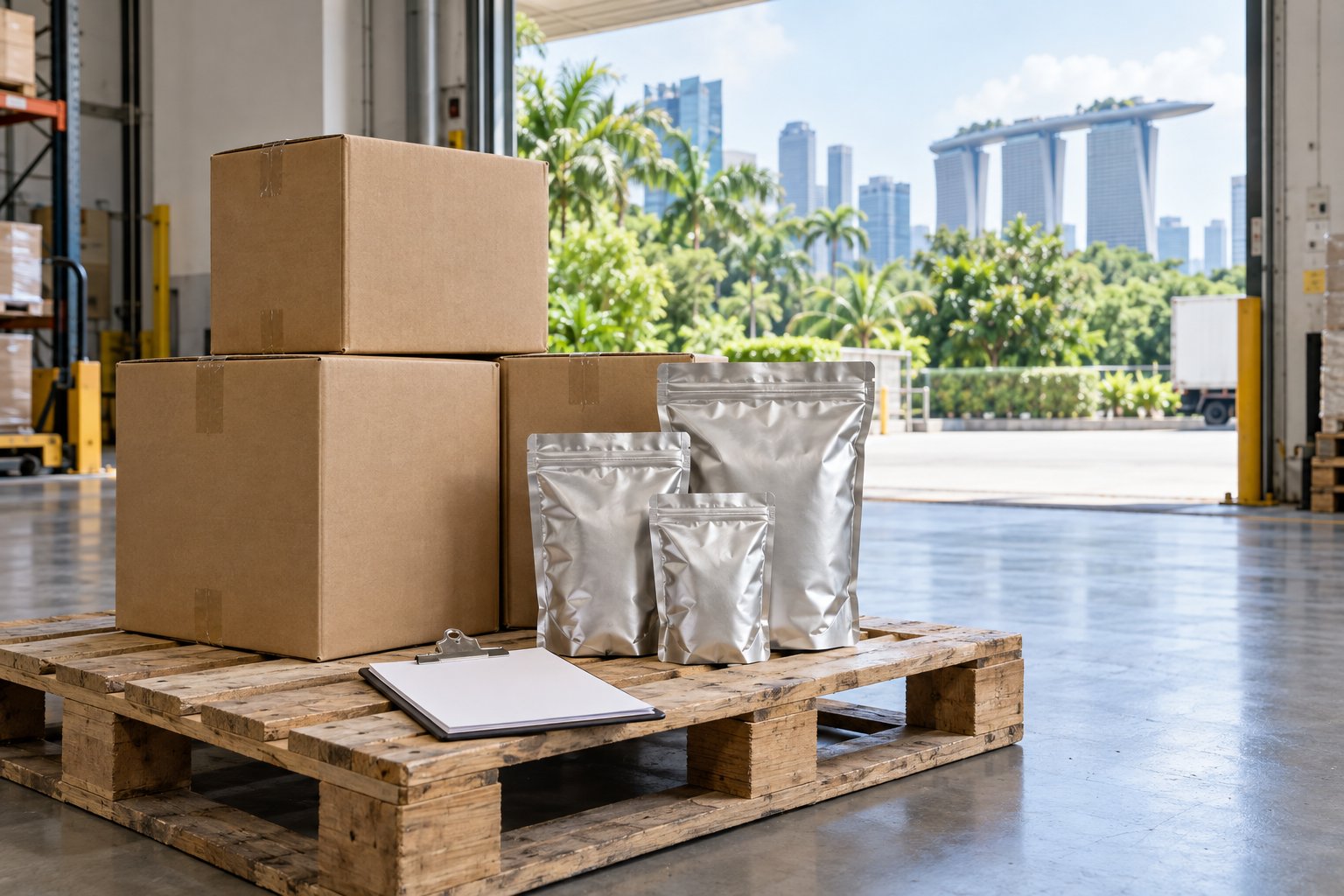
A café can buy matcha for business use in three ways: from an importer in Singapore, by importing it from Japan itself, or in small amounts from shops and online stores. Which one you choose decides who handles the import procedures.
In Singapore, only businesses registered with the Singapore Food Agency (SFA) may import processed food for commercial sale. Matcha counts as processed food, so whichever way you buy, someone holding this registration has imported it.
| Local importer | Import from Japan yourself | Retail and online (local) | |
|---|---|---|---|
| SFA import registration | Held by the importer | Held by your company (with DDP, the seller’s side may arrange it) | Already done by the shop |
| Customs clearance and import permit | Importer | Your company or a declaring agent | Not needed |
| Quantity per order | Units set by the importer | Minimum lot of the Japanese seller | Tins and small bags |
| How visible origin and lot are | Depends on the importer’s documents | You get them directly from the seller | Often only the tin label |
| Suits | Shops that do not want to handle procedures | Shops that use a lot and want to manage documents themselves | Testing recipes, before opening, small menus |
To open as a café, you need an SFA Food Shop Licence, separate from the import registration. SFA lists restaurants, coffeeshops and similar businesses in this category.
How matcha flows from Japan to Singapore
From January to August 2026, Japan exported 52.8 tonnes of powdered green tea to Singapore, and the unit price rose from 7,097 yen per kg in the same period a year earlier to 9,531 yen. Volume fell year on year, while value rose.
The figures below are from the Japan Tea Export Council, compiled from Japan’s trade statistics (Ministry of Finance) and other data.
| January to August 2026 | Powdered | Other (leaf etc.) | Total |
|---|---|---|---|
| Export volume | 52,794kg | 66,153kg | 118,947kg |
| Export value | 503.16 million yen | 275.99 million yen | 779.15 million yen |
| Unit price per kg | 9,531 yen | 4,172 yen | 6,550 yen |
Source: Japan Tea Export Council, “緑茶の国別・形状別輸出実績 2026年1〜8月” (Green tea exports by country and form, January to August 2026, compiled from Ministry of Finance trade statistics and MAFF reports, in Japanese) https://nihon-cha.or.jp/export/wordpress/wp-content/uploads/2026-08_cha_export.pdf
Powdered tea export volume was 89.0% of the same period a year earlier and value was 119.5%, and powdered tea made up 65% of export value. According to MAFF (Japan’s Ministry of Agriculture, Forestry and Fisheries), “powdered” in these statistics combines matcha with powdered tea made by grinding tea in a mill, so it is not a figure for matcha alone. Why raw material prices in Japan rose is covered in Is There a Matcha Shortage?.
Buying from a local importer
When you buy from an importer in Singapore, the importer takes care of SFA registration, the import permit, customs clearance and import GST. Your café can receive the matcha without handling import procedures.
What to ask the importer
In exchange for skipping the procedures, it can be harder to see where and when the matcha was made. Ask for the origin and harvest, the lot number and a certificate of analysis (COA) for each lot, pesticide residue test results, and the production date and how long the matcha will have left before its best-before date when it arrives. How to compare these is set out in the table under “How to compare quotes” below.
If the importer is GST-registered, 9% GST is added to the invoice.
Minimum quantity and delivery units
How much you can buy at a time and the delivery units are set by each importer. Work out your monthly usage first, then decide how many bags to receive and how often. How to calculate usage is covered in Bulk Matcha: How to Buy Matcha Wholesale.
Importing from Japan yourself
If you buy directly from a company in Japan, your company registers with SFA and gets an import permit through TradeNet, the customs electronic declaration system, for every shipment. There are more procedures, but you receive origin and lot documents directly from the seller.
What you need to import yourself
| Item | Details |
|---|---|
| SFA registration | Registration to import processed food. Free, and SFA reviews it in 1 working day |
| Import permit | Applied for through TradeNet for every shipment. SFA charges no fee for processed food permits |
| Who applies | Your company or a declaring agent such as a forwarder |
| Retail labels | Tins or bags sold in the shop need English labelling. Business-use bags for drinks fall outside the general labelling provisions |
Your company number (UEN), activating a customs account, choosing product codes and labelling rules are covered in How to Import Matcha into Singapore.
Samples also need registration and a permit
SFA treats receiving and selling samples by parcel post as importing food for commercial sale. Singapore Customs also states that controlled items such as food need a permit even for samples with a CIF value (cost of goods, insurance and freight combined) of S$400 or less. A shop without registration can receive samples through a registered importer.
Shipping terms change who the importer is
The shipping terms you agree with the Japanese seller change who handles import procedures. Under DAP (delivered at place), the buyer handles import clearance and taxes. Under DDP (delivered duty paid), the seller handles import clearance and taxes as well. With DDP your shop does not have to deal with customs, but who is named as the importer on the import permit changes how GST is treated. The differences between terms are covered in Bulk Matcha: How to Buy Matcha Wholesale, and making tins or bags under your shop’s name in Private Label Matcha.
Buying small amounts from shops and online stores
Buying tins and small bags from shops and online stores in Singapore suits testing recipes before opening, or shops with few matcha items on the menu. The shop has already handled the import procedures, so you can use it straight away.
Sold in household sizes
Many retail matcha products are sold in household sizes such as 30g or 40g. Once a drink is established on your menu and you use matcha every day, compare it with business-use bags using the cost-per-cup calculation below.
Ordering by parcel from overseas shops
Take care when ordering from a Japanese online shop by parcel. SFA states that receiving and selling food by parcel post also counts as importing for commercial sale. When you order ingredients for your shop by parcel, check with SFA first whether you need registration and an import permit.
How you pay GST depends on how you buy
Singapore’s GST (Goods and Services Tax) is 9%. It applies to imported matcha at import, and to matcha bought locally if the seller is GST-registered. What differs is who pays it to Singapore Customs, and who can claim it as input tax.
Import GST and the conditions for claiming it
According to the Inland Revenue Authority of Singapore (IRAS), import GST is paid to Singapore Customs and applies whether or not you are GST-registered, unless an exemption, relief or suspension scheme applies. It is charged on the CIF value plus duties and incidental charges such as commission.
A GST-registered company can claim the GST paid on imports as input tax. One condition is that your company is listed as the importer on the import permit. IRAS states that even if you are the rightful importer, you cannot claim input tax based on a permit that names another business as the importer.
Source: Inland Revenue Authority of Singapore, “Importing of Goods” https://www.iras.gov.sg/taxes/goods-services-tax-(gst)/claiming-gst-(input-tax)/importing-of-goods
GST by way of buying
| Way of buying | Who pays GST to Customs | What your café should check |
|---|---|---|
| Local importer | The importer | Whether GST is shown separately on the invoice |
| Importing yourself (FOB, DAP etc.) | Your company (sometimes through a declaring agent) | Whether your company is the importer on the permit |
| DDP from a Japanese seller | The importer arranged by the seller’s side | Who the importer on the permit is, and whether GST is included in the quote |
| Retail and online (local) | The shop | Whether the receipt amount includes GST |
GST registration is compulsory when taxable turnover exceeded S$1 million in a calendar year, or is expected to exceed S$1 million in the next 12 months. A shop that is not registered cannot claim GST on purchases, so it should count the amount including GST as its cost.
Receiving and storing matcha in heat and humidity
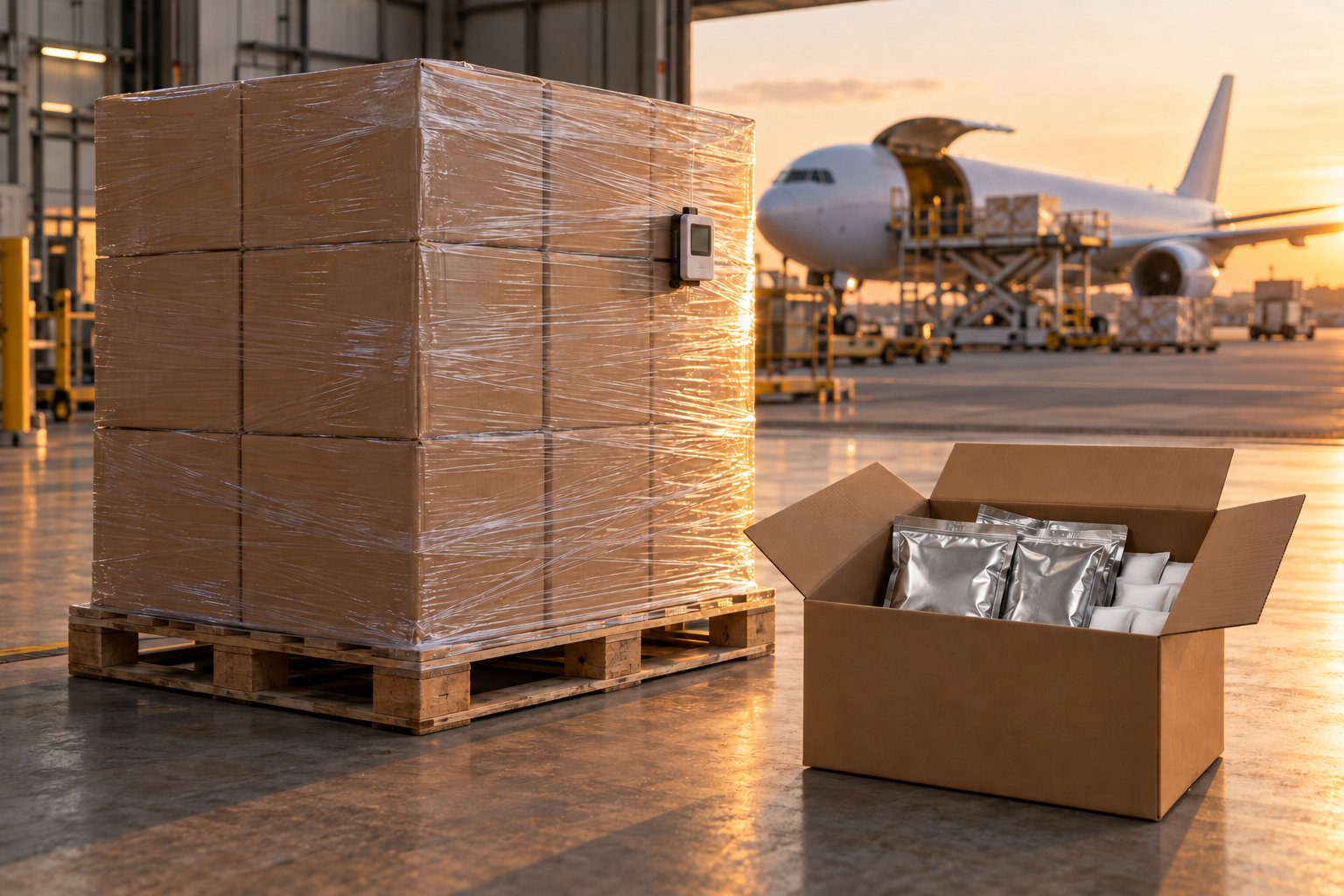
In Singapore, the 24-hour mean temperature ranges from 26.8 to 28.6°C by month, and mean annual relative humidity is around 82%. This is above the 25°C at which matcha kept its quality in a storage test, so keep it cool from the day it arrives.
In a storage test of raw matcha for processing, published in the Tea Research Journal (Japan), the matcha kept its product characteristics for 24 weeks at 25°C or below, while at 37°C it was usable for only 3 to 4 weeks. Yamamasa Koyamaen, a Kyoto tea merchant, recommends storing unopened matcha in the freezer, refrigerator or similar, and bringing it back to room temperature before opening.
With an importer, check temperature control in the warehouse and delivery. If you import yourself, allow for days held at customs and plan how the matcha gets from arrival into your shop’s refrigerator. With retail, check that it is not on a sunny shelf. After opening, Ippodo Tea recommends using matcha within a month. How to choose bag sizes is covered in Does Matcha Go Bad?
How to compare quotes: matcha cost per cup
Compare quotes by lining up what is inside, not grade names, and by the matcha cost per cup including the cost of getting it to you. The price per kg alone cannot compare quotes that treat shipping and GST differently.
Line up what is inside
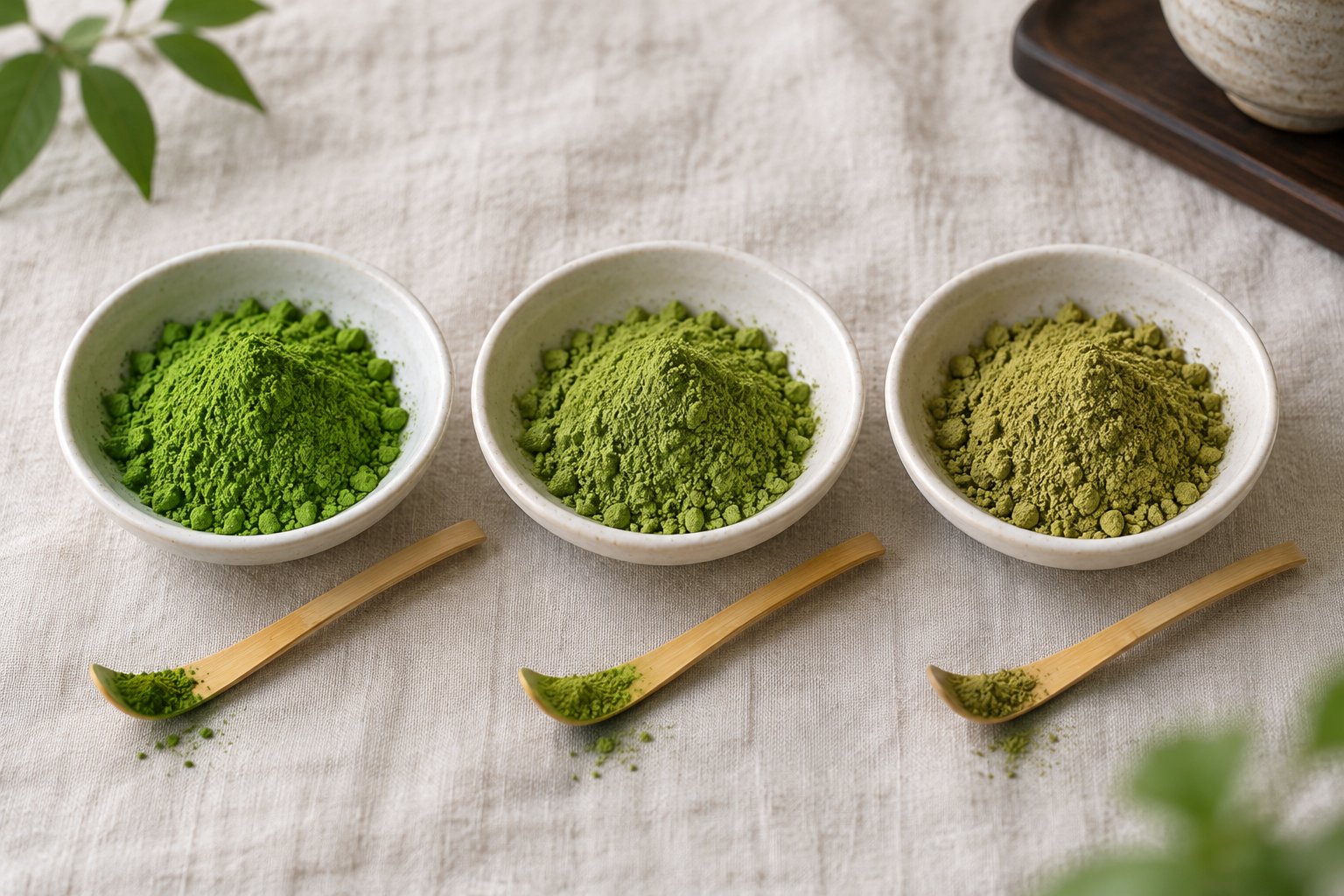
Grade names such as “ceremonial,” “latte” and “culinary” are labels sellers use as a guide to how the matcha is meant to be used. Put the following side by side for each quote.
| Item | What to check |
|---|---|
| Harvest | First flush only, or including second flush and later |
| Origin | Prefecture, and the breakdown if blended |
| Lot and COA | Lot number and the certificate of analysis for that lot |
| Pesticide residues | Test results checked against Singapore’s limits |
| Packing and dates | Amount per bag, production date, time left before the best-before date |
How grades differ is covered in Matcha grades, and grades suited to lattes in How to Choose Matcha for Café Lattes.
Work out the matcha cost per cup
Calculate in this order:
- Work out the delivered price per kg (product + shipping + customs costs + GST if you cannot claim it)
- Matcha cost per cup = delivered price per kg ÷ 1,000 × grams used per cup
As a hypothetical example, if matcha costs S$300 per kg delivered and you use 3g per cup, the matcha cost is S$0.90. Doing the same calculation for retail tins shows the difference in cost when you change how you buy.
Checklist before you sign
Before you sign, check four things: procedures, documents, price and storage.
- Procedures: who is named as the importer on the import permit; how samples will be received; if you also sell tins or bags in the shop, who adds the English labels
- Documents: whether origin, harvest and lot number match between the bags you receive and the documents; whether a COA for each lot and pesticide residue results checked against Singapore’s limits are provided
- Price: whether shipping, customs costs and GST are shown on separate lines; payment terms and when prices are reviewed
- Storage and quantity: how many months remain before the best-before date on arrival; whether one bag can be used up within a month of opening
Buying from Omakase Matcha
Omakase Matcha supplies matcha bought directly from the Uji, Yame, Kagoshima, Shizuoka and Miyazaki regions, from 1kg. To Singapore, we deliver DDP, with duties and taxes paid by us. Payment is in advance by Wise or PayPal, and we also visit shops in Singapore.
If you want to taste before ordering, you can request up to 3 samples. Terms are on the Singapore wholesale page.
Sources
- Japan Tea Export Council, “緑茶の国別・形状別輸出実績 2026年1〜8月” (Green tea exports by country and form, January to August 2026, in Japanese) https://nihon-cha.or.jp/export/wordpress/wp-content/uploads/2026-08_cha_export.pdf
- MAFF, “茶をめぐる情勢(令和8年10月)” (The situation of tea, October 2026, in Japanese) https://www.maff.go.jp/j/seisan/tokusan/cha/attach/pdf/ocha-201.pdf
- SFA, “What You Need to Know for Import of Food for Commercial Sale” https://www.sfa.gov.sg/food-import-export/commercial-imports/what-you-need-to-know-for-import-of-food
- SFA, “Application Process & Fees for Licence / Permit / Registration for Import / Export” https://www.sfa.gov.sg/food-import-export/licence-permit-registration/application-process-fees-for-licence-permit-registration-for-import-export
- SFA, “Businesses that Need Licence / Permit for Food Retail” https://www.sfa.gov.sg/food-retail/licence-permit/businesses-that-need-licence-permit-for-food-retail
- SFA, “A Guide to Food Labelling and Advertisements” https://www.sfa.gov.sg/docs/default-source/food-information/labelling-and-packaging-information/a-guide-to-food-labelling-and-advertisements.pdf
- Singapore Customs, “Importing Trade Samples” https://www.customs.gov.sg/doing-business/import-operations/import-procedures/importing-trade-samples/
- Singapore Customs, “Goods and Services Tax” https://www.customs.gov.sg/doing-business/valuation-duties-and-fees/goods-and-services-tax-gst/
- IRAS, “Importing of Goods” https://www.iras.gov.sg/taxes/goods-services-tax-(gst)/claiming-gst-(input-tax)/importing-of-goods
- IRAS, “Current GST Rates” https://www.iras.gov.sg/taxes/goods-services-tax-(gst)/basics-of-gst/current-gst-rates
- IRAS, “Do I Need to Register for GST” https://www.iras.gov.sg/taxes/goods-services-tax-(gst)/gst-registration-deregistration/do-i-need-to-register-for-gst
- JETRO, “DAP(仕向地持込渡)条件について” (About DAP terms, in Japanese) https://www.jetro.go.jp/world/qa/04A-011212.html
- JETRO, “VAT登録の要否:EUへ輸出する場合” (Whether VAT registration is needed when exporting to the EU, explaining DDP, in Japanese) https://www.jetro.go.jp/world/qa/04O-110801.html
- Meteorological Service Singapore, “Climate of Singapore” https://www.weather.gov.sg/climate-climate-of-singapore/
- Haraguchi et al., “原料抹茶の保存条件が品質に与える影響” (Effect of storage conditions on the quality of raw matcha), Tea Research Journal No. 93 (2002), in Japanese https://www.jstage.jst.go.jp/article/cha1953/2002/93/2002_93_1/_pdf
- Yamamasa Koyamaen, “抹茶の取扱い” (Handling matcha, in Japanese) https://www.yamamasa-koyamaen.co.jp/matcha/basic/handling.html
- Ippodo Tea, “How to Keep Your Matcha Fresh” https://ippodotea.com/blogs/ippodo-tea-blog/how-to-keep-your-matcha-fresh