
 Reviewed by: Takahiro Sugiyama (CEO, meguri Inc.)
In the US, many notices under California’s warning law (Prop 65) have been issued for products that contain matcha. Cafés, too, are sometimes asked by customers or business partners whether their matcha contains lead. This article covers why lead gets into matcha, the results of a Japanese government survey, the limits in each country and how to read test results, checked against government sources from Japan, Singapore, Thailand and the US. It does not judge health effects. It sets out what to check when buying.
Does matcha have lead?
Matcha can contain very small amounts of lead that come from soil and air. In a survey of 120 Japanese green teas (including 10 matcha) by Japan’s Ministry of Agriculture, Forestry and Fisheries (MAFF) in fiscal 2019, 117 contained 0.30mg of lead per kg or less.
Lead is one of the substances present in the natural environment, such as soil, water and air. MAFF explains that the internationally agreed approach for substances like lead that get into food unintentionally is to reduce them as far as reasonably possible at each stage from production to consumption. Rather than asking for “zero lead” food, checking how much is present in figures is the practical way to buy.
No safe level has been set
According to MAFF, international risk assessment bodies concluded that it is not appropriate to set a tolerable intake for lead (an amount below which no adverse health effect is expected), because even very small amounts affect children’s intelligence and adults’ blood pressure. The US Food and Drug Administration (FDA) also says that no safe level of lead exposure has been identified. MAFF explains that keeping lead intake low is important, and that many countries, including Japan, regulate the release of lead into the environment.
Why lead gets into matcha
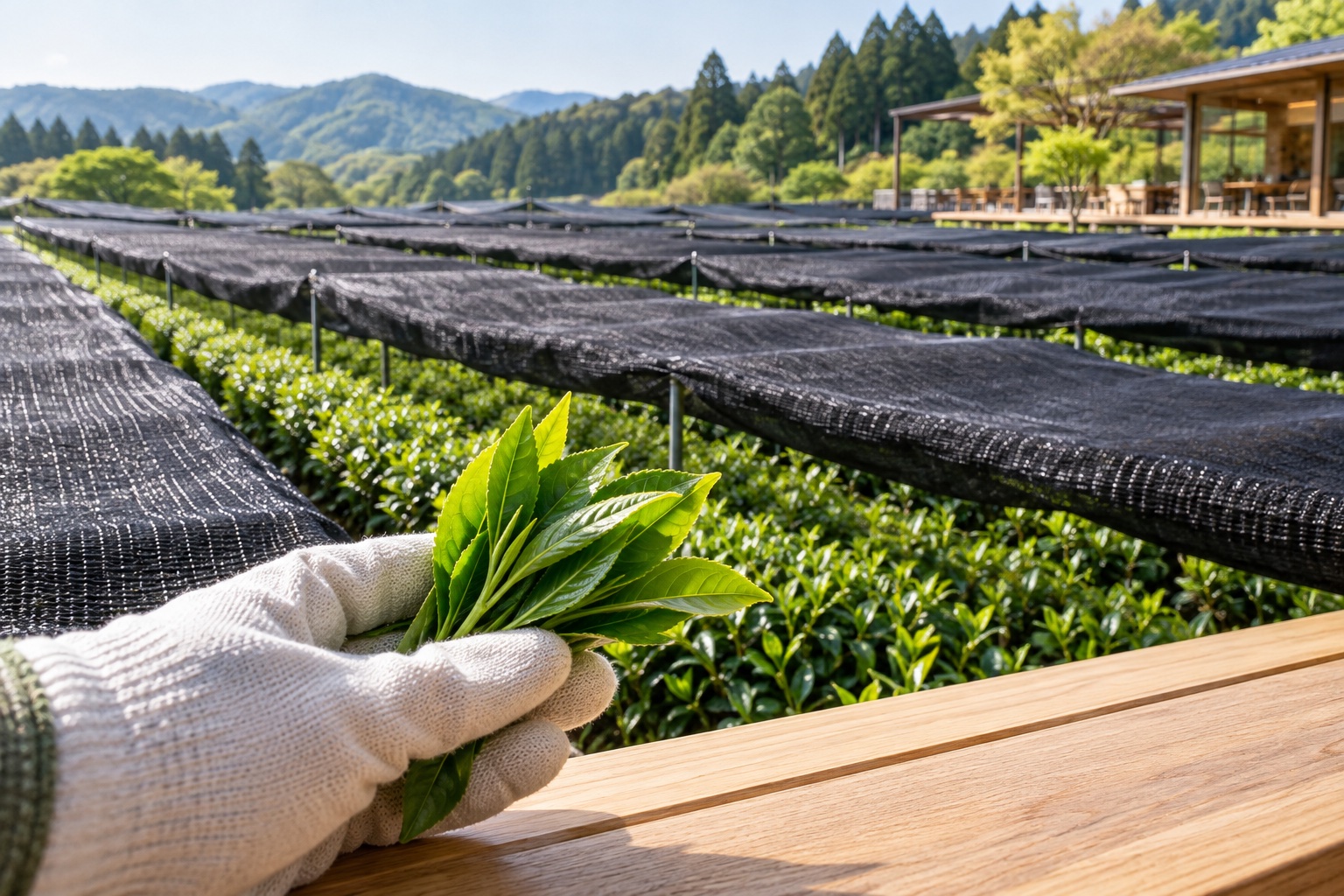
Lead can get into tea leaves by falling onto the leaves as dust from the air, and by being taken up from the soil by the tea plant. Matcha is tea leaf ground into powder and drunk whole, so the lead concentration of the leaf goes straight into the cup.
From soil and air
MAFF says that lead is known to be present in the air and to fall with dust and contaminate farm produce. In Japan, too, airborne lead was high until the 1960s because of leaded petrol and factory exhaust. Emissions are now controlled, but because lead was used for so long, it may still be widely present in the environment.
A 2005 study of tea gardens in Zhejiang province, China, found that more lead was washed off the leaf surface in more industrialised districts and near roads, and identified lead falling from the air as one cause of lead in tea leaves. In another study by the same researchers, the soils of the tea gardens studied were strongly acidic, older gardens had more acidic soil, and more lead was in a form that plants can absorb. The researchers say this could increase the uptake of lead into tea leaves.
Matcha is drunk whole, so the leaf’s concentration matters
With tea brewed in hot water, such as sencha (a steamed Japanese green tea), not all of the lead in the leaf moves into the drink. When MAFF tested 10 high-lead sencha and bancha leaves, the estimated rate at which lead dissolved into the brewed tea was 8.8%.
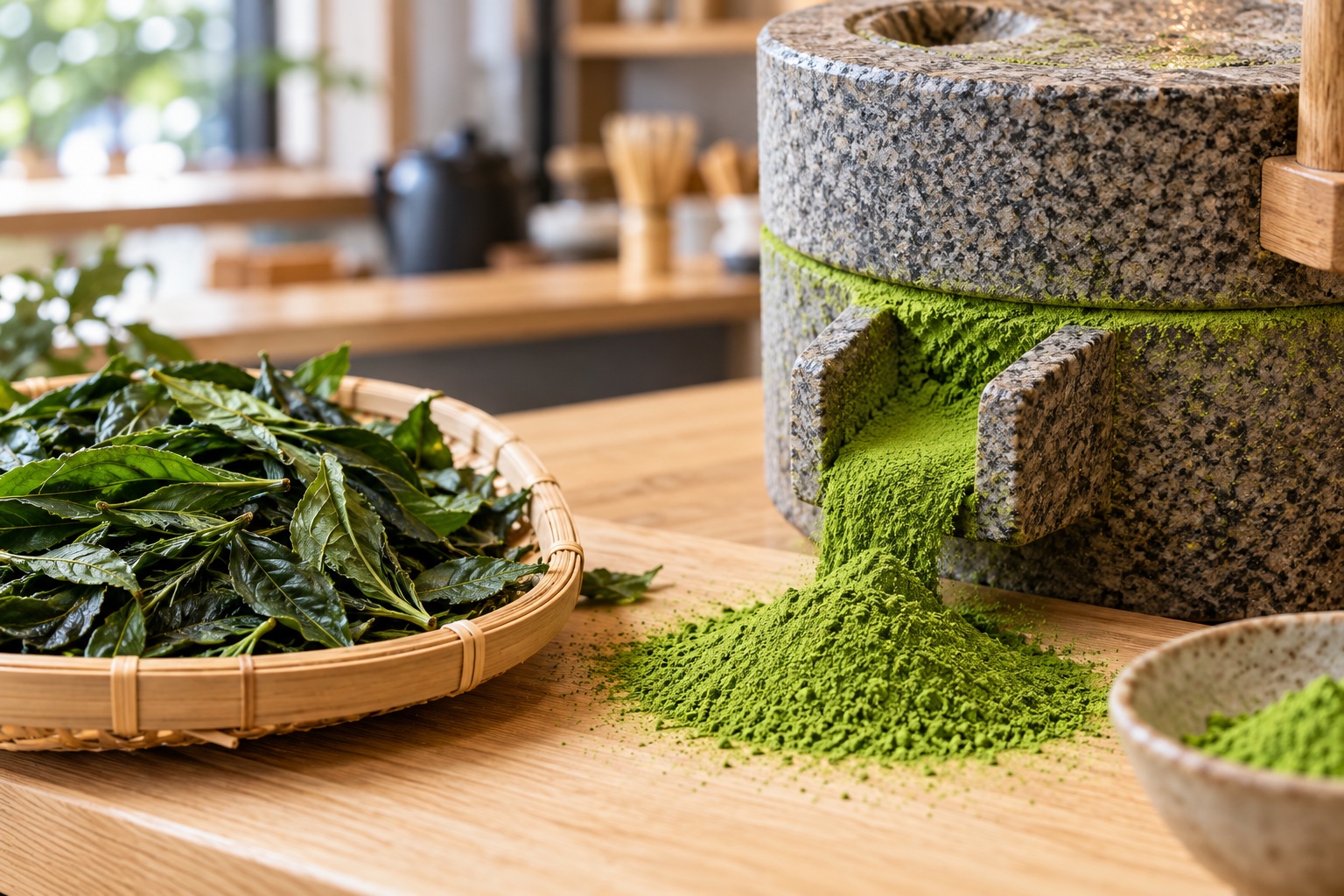
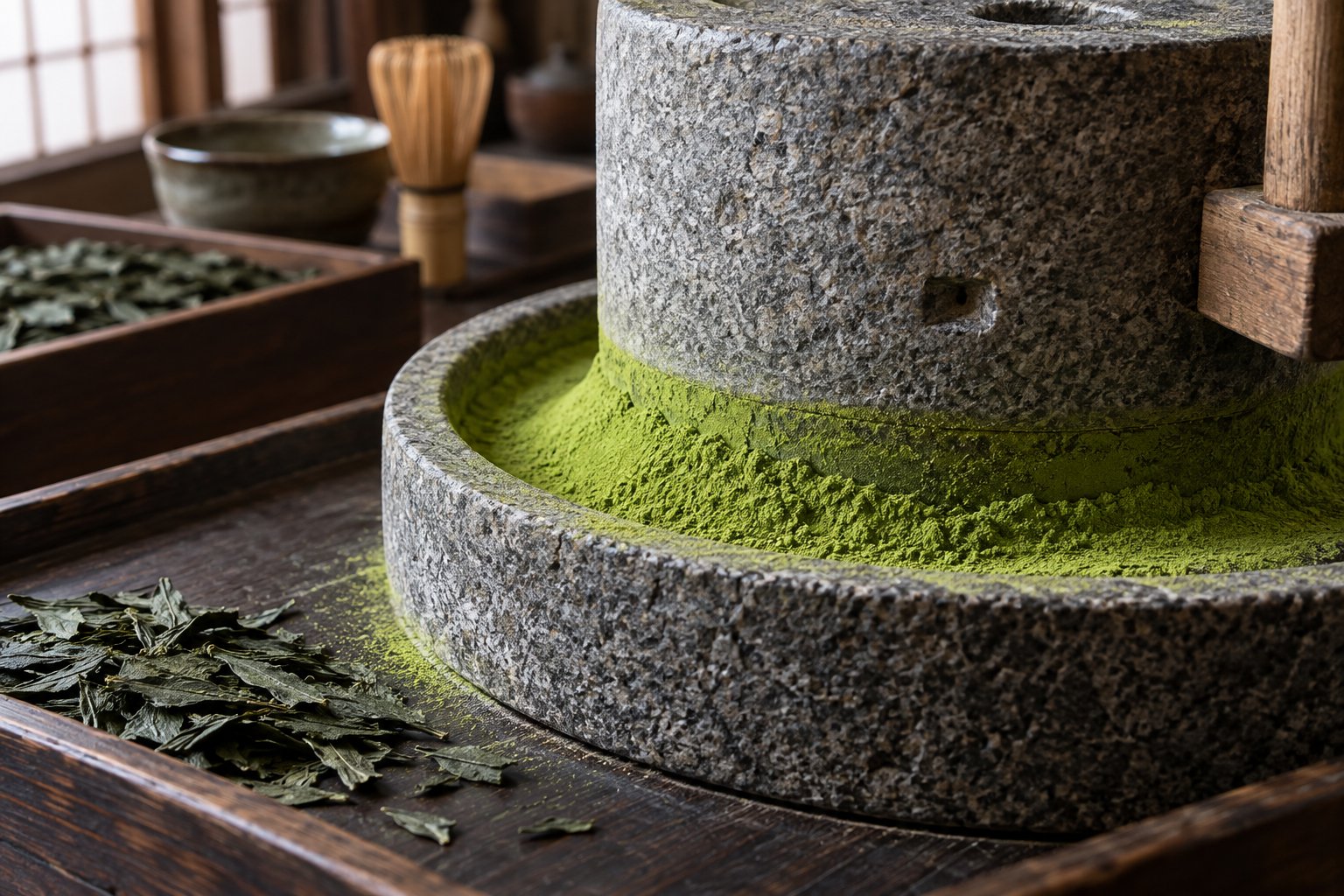
Under the labelling standard of the Japan Tea Central Public Interest Incorporated Association, matcha is tencha (the tea leaf used to make matcha) ground into a fine powder with a stone mill or similar. Because matcha powder is dissolved in water or milk and drunk entirely, nearly all the lead in the leaf goes into the cup.
Lead in Japanese green tea (MAFF survey)
In MAFF’s fiscal 2019 survey, more than half of 120 Japanese green teas were below the limit of quantification (0.10mg/kg). One aim of the survey was to reflect the actual levels in Japanese green tea in the lead limits for tea being discussed by the Codex Alimentarius Commission (the international food standards body).
What was tested and the results
In September and October 2019, MAFF bought 120 Japanese green teas from shops and online, and analysed lead and other substances with ICP-MS (inductively coupled plasma mass spectrometry, an instrument that measures trace metals). The breakdown, by type of Japanese green tea, was 55 sencha or fukamushi sencha (deep-steamed sencha), 20 bancha, 10 gyokuro or kabusecha, 10 matcha, 10 tamaryokucha or kamairicha, 5 kukicha (stem tea) and 5 hojicha (roasted tea).
| Item | Result |
|---|---|
| 0.30mg/kg or less | 117 samples |
| Of which below the limit of quantification (0.10mg/kg) | 77 samples |
| Samples above 0.30mg/kg | 3 (all bancha) |
| Maximum | 2.4mg/kg (bancha) |
Source: MAFF, “令和元年度 緑茶中の鉛及びアルミニウム等の含有実態調査の結果について” (Survey of lead, aluminium and other substances in green tea, fiscal 2019, in Japanese) https://www.maff.go.jp/j/syouan/seisaku/kakou/greentea_pb.html
Because the 3 samples above 0.30mg/kg were all bancha, all 10 matcha samples were 0.30mg/kg or less. The page does not give figures for matcha alone. For the bancha with the highest level, the manufacturer changed its raw tea leaves to reduce lead.
Tea was not found to be a main source of intake
From leaf concentrations, the dissolution rate into brewed tea and actual tea consumption in Japan, MAFF estimated that the lead taken in through tea is far smaller than the amount from food as a whole, and concluded that tea is not a main source of intake. However, this estimate used the dissolution rate of tea brewed in hot water. For matcha, which is drunk as powder, the leaf concentration is used as it is.
Lead limits by country: is there a specific limit for tea?
Of the countries and regions covered in this article, Singapore and Thailand set a specific lead limit for tea. Japan, the EU, US federal regulations and the international Codex standard have no lead entry for tea.
| Country / region | Lead limit for tea | Basis |
|---|---|---|
| Japan | None (lead limits apply to mineral water, other soft drinks, some farm produce and so on) | Standards under the Food Sanitation Act (MAFF risk profile sheet, updated 14 November 2025) |
| Codex (international standard) | None. In 2019, “tea and herbal teas” were proposed as a candidate for a new limit | CXS 193-1995 (as summarised by MAFF) |
| Singapore | Tea: 2ppm (2mg per kg) | Food Regulations, regulation 31(1) and Tenth Schedule |
| Thailand | Tea and herbal tea: 0.5mg/kg as a drink. Foods not listed: 1mg/kg | Ministry of Public Health Notification No. 414 (2020) |
| US (federal) | None. FDA has issued action levels (benchmarks the authority uses to decide on action) for foods for babies and young children and others | FDA “Closer to Zero” |
| California, US | A warning system, not a limit. The benchmark below which no warning is needed is 0.5µg a day | Prop 65 (state regulation 27 CCR 25805) |
| EU | None (there are limits for infusions for babies, food supplements, dried spices and others) | Regulation (EU) 2023/915 (as summarised by MAFF) |
ppm means parts per million, and 1ppm equals 1mg per kg. According to MAFF’s summary, China and Hong Kong also limit lead in tea (green and black tea in Hong Kong) to 5mg/kg.
Singapore
Singapore’s Food Regulations set maximum amounts of arsenic and lead for each food in the Tenth Schedule. For tea, the limits are 1ppm of arsenic and 2ppm of lead.
| Type of food (Tenth Schedule, item 24) | Arsenic | Lead |
|---|---|---|
| Tea | 1ppm | 2ppm |
Source: Singapore Statutes Online, “Food Regulations,” Tenth Schedule https://sso.agc.gov.sg/SL/SFA1973-RG1?ProvIds=Sc10-#Sc10-
According to the summary by JETRO (the Japan External Trade Organization; survey as of October 2022), Singapore also sets other limits for tea, such as 0.5ppm of mercury and 0.2ppm of cadmium.
Thailand
Thailand’s Ministry of Public Health Notification No. 414 (standards for food containing contaminants) limits lead in “tea and herbal tea” to 0.5mg per kg as brewed tea or a drink, and to 1mg for other foods not listed. Dried tea has a cadmium limit of 0.3mg/kg. For contaminants not listed, Codex values apply.
Matcha is imported as powder and dissolved in the shop, so check with your importer or Thai FDA which value the powder is compared against.
Japan, the EU and the US
Japan’s Food Sanitation Act has no lead limit for tea. Lead limits are set for mineral water (0.01mg per litre or less), other soft drinks (not detected), some farm produce and so on. According to MAFF’s summary, the EU’s contaminant regulation also has no lead limit for tea leaves. The US FDA has set benchmarks for processed foods for babies and young children and others under its plan to reduce lead in food, but there is no value for tea.
California’s Prop 65: a warning system, not a limit
Prop 65 is a California law that requires businesses to give a warning on products that expose people to chemicals listed by the state. It is not a limit that bans sales, and no warning is needed if the exposure is below a certain amount. This is why you see the words “Prop 65” on matcha products in the US.
For lead, the benchmark is 0.5µg a day
Under state regulations, the benchmark for whether a warning is needed for lead’s reproductive effects is 0.5µg (micrograms, millionths of a gram) a day (for cancer, it is 15µg a day when taken by mouth). The amount is calculated not as a concentration but as the amount taken in a day with average use.
There is also a rule that chemicals naturally present in food, to the extent they cannot be avoided by good agricultural or manufacturing practice, do not count as exposure. However, it is up to the business to show how much is naturally present.
60-day notices for products containing matcha
Prop 65 can also be enforced by private persons suing in the public interest. Before suing, state regulations require them to send a notice of violation (a “60-day notice”) to the business, the state Attorney General’s office, district attorneys and others, and the Attorney General’s office publishes these notices.
Counting notices in the Attorney General’s public records with “matcha” in the product name, those naming lead numbered 33 in 2025 and 48 in 2026 up to 2 October (searched by our editors on 13 October 2026). There were 21 in 2023 and 7 in 2024. The notices include blended products such as matcha latte powder. A 60-day notice is a claim by the party sending it, and does not mean a violation has been found.
If you sell wholesale to the US or buy US products, ask how your partner handles Prop 65 warnings.
How to read a test result
You cannot compare test results without looking at three things: the unit, the limit of quantification, and which country’s limit the result was judged against. Even if a result says “not detected” or “lead free,” you cannot judge it without knowing how low the test can measure.
Match the units
Concentrations are written as “mg/kg,” “ppm” or “µg/g,” and all three are the same (1mg/kg = 1ppm = 1µg/g). “ppb” is one thousandth of a ppm, so 100ppb is 0.1mg/kg. Product pages overseas sometimes mix amounts per cup (µg) with concentrations (mg/kg), so match the units first.
Look at the limit of quantification
The limit of quantification is the lowest concentration a test can report as a number. In MAFF’s survey, the limit of quantification for lead was 0.10mg/kg, and the limit of detection (the lowest concentration at which the test can tell whether it is present) was 0.01mg/kg.
“Not detected” or “below the limit of quantification” in a test result does not mean zero. It means less than the test can measure. If a test with a limit of quantification of 0.5mg/kg reports “below the limit of quantification,” the actual level could be 0.4mg/kg. Check that the certificate of analysis states the limit of quantification along with the result.
Which limit was the result judged against?
Even if a document says “compliant,” its meaning changes depending on whether it refers to Japan’s standards or those of the importing country. Japan’s Food Sanitation Act has no lead limit for tea, so a “compliant” for Japan may say nothing about lead. Compare the figures yourself: 2ppm for Singapore, or the values in Notification No. 414 for Thailand.
Reading reports of studies and tests
In June 2026 in Thailand, researchers at a Thai university reported that they analysed 12 matcha powders that sell well in Thailand and found all five of lead, arsenic, cadmium, aluminium and mercury in every sample. The study calculated risk assuming 5g a day. When reading such reports, check how many samples were tested, what amount was called “detected,” and how many grams a day were assumed. A test result that names a product is also the result for that lot, and does not necessarily apply to other lots or to a whole growing region.
How to work out the lead in one cup
The lead in one cup, in µg, is the matcha’s lead concentration (mg/kg) × the grams used per cup. The concentration differs from lot to lot, so use the figures in the test results for the matcha you buy.
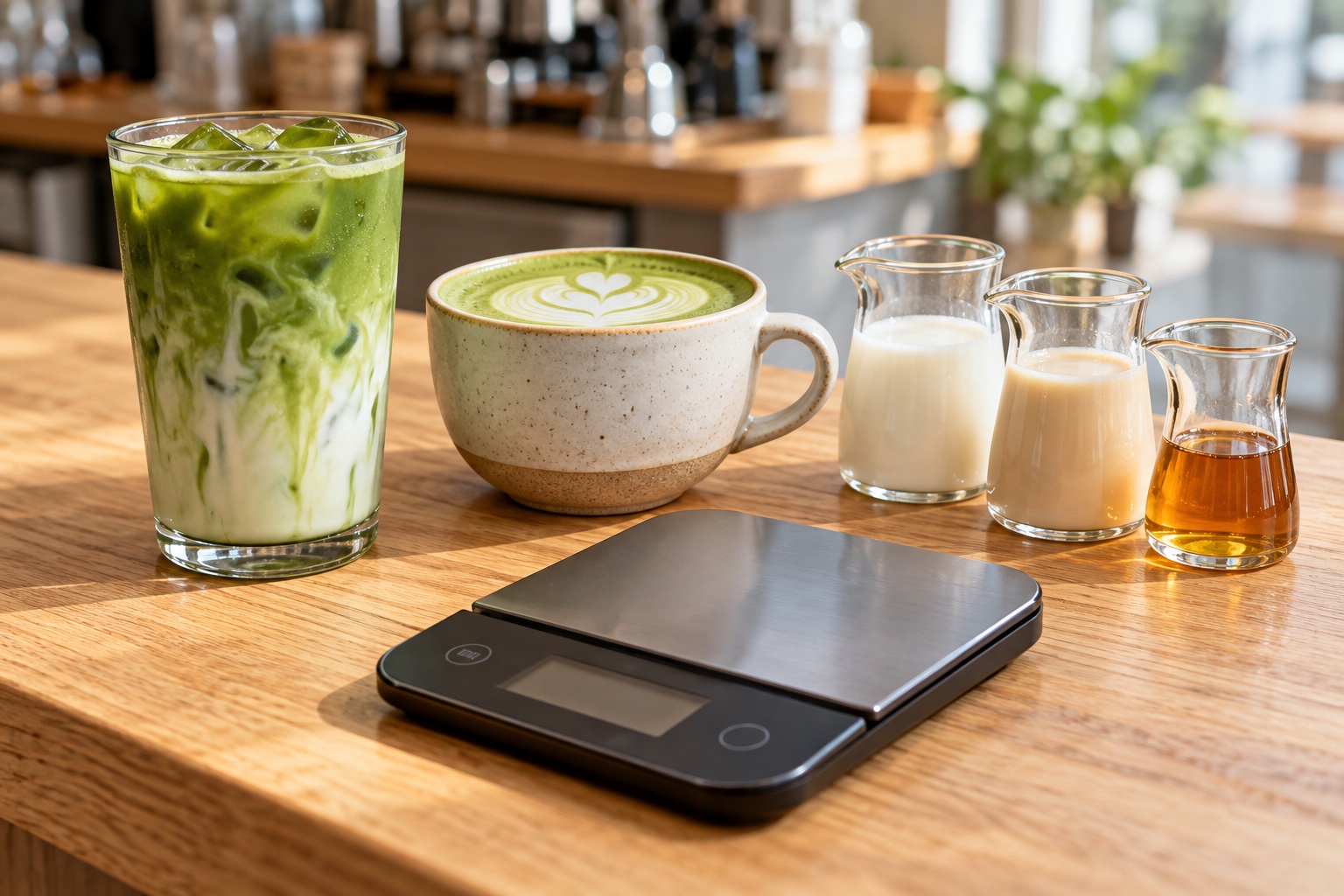
In the official recipes of Ippodo Tea in Kyoto, usucha (whisked matcha for drinking) uses 2g and a matcha latte uses 3g. With these amounts, the figures are:
| Lead concentration of the matcha | 2g (usucha) | 3g (latte) |
|---|---|---|
| 0.10mg/kg (limit of quantification in MAFF’s survey) | 0.2µg | 0.3µg |
| 0.30mg/kg (117 samples in MAFF’s survey were at or below this) | 0.6µg | 0.9µg |
| 2mg/kg (Singapore’s limit for tea) | 4µg | 6µg |
Reference values do not decide whether one cup is safe
Values used for comparison include:
- Prop 65 benchmark for lead: 0.5µg a day (benchmark for whether a warning is needed)
- FDA interim reference levels (IRL): 2.2µg a day for children, 8.8µg a day for women of childbearing age (a benchmark for judging whether lead taken in from food may be a health concern)
For example, if you take 3g of matcha a day, a concentration of about 0.17mg/kg would reach the Prop 65 benchmark of 0.5µg. However, these values are for deciding whether a warning is needed or for assessing the diet as a whole. They do not decide whether one cup of matcha is safe or dangerous. This article does not judge health effects. For a café, being able to explain in figures what concentration of matcha you use and how many grams go into each cup is the answer to customers and business partners.
How to decide the grams per latte is covered in How to Choose Matcha for Café Lattes.
Documents a café should check when buying
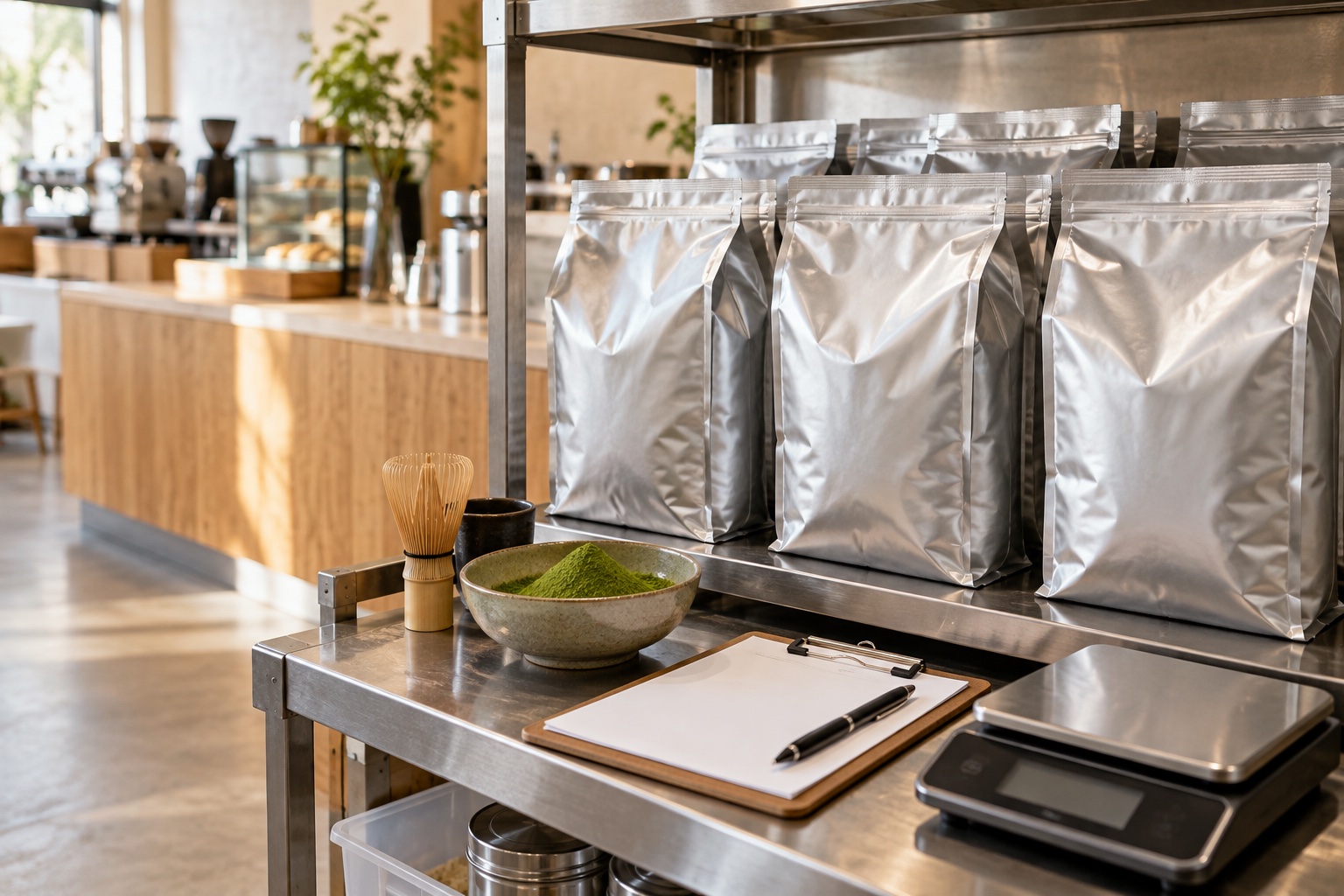
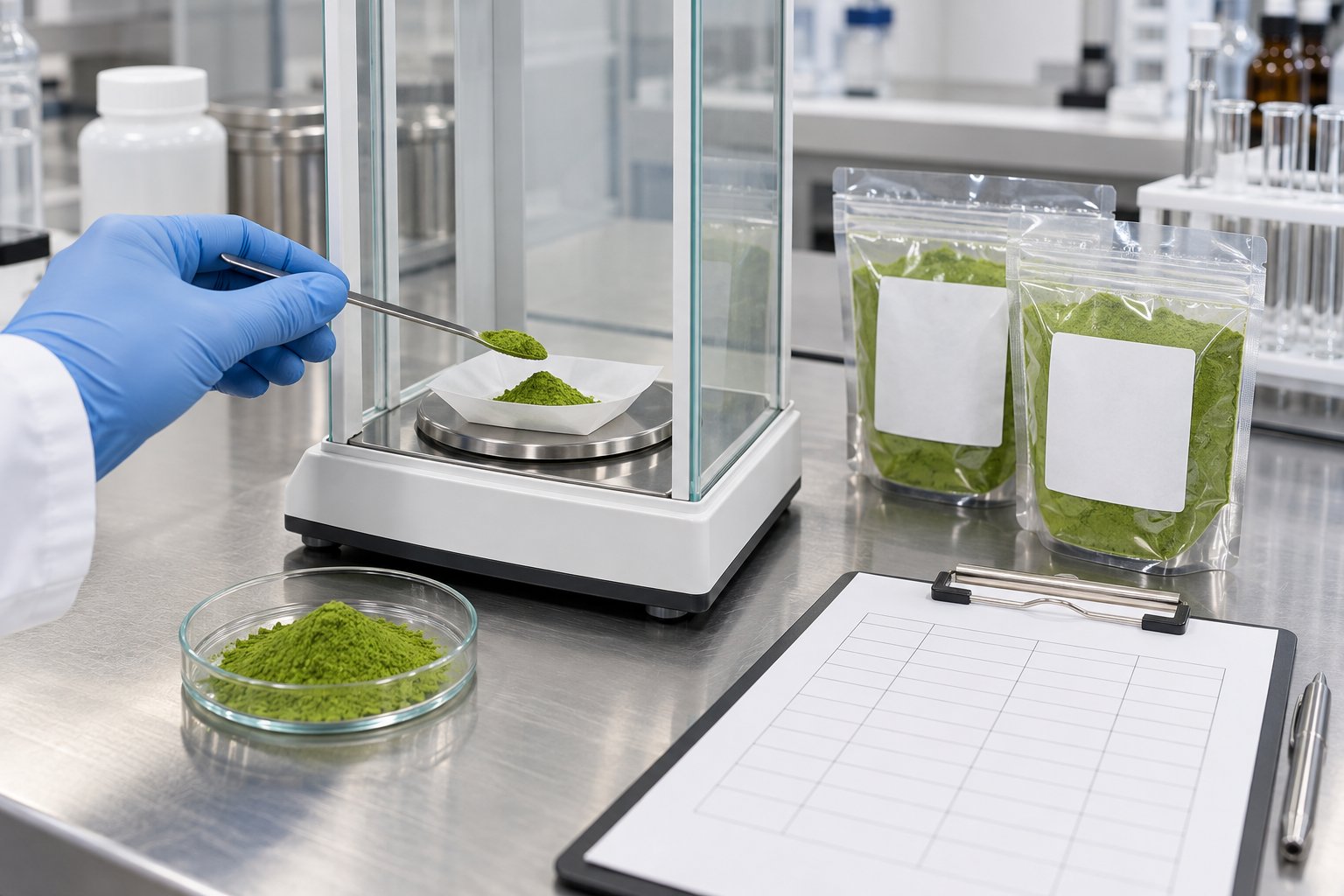
When buying, ask for a heavy metal certificate of analysis linked to the lot number, and check the laboratory, the method, the limit of quantification and the limit used for judgement. The figures in documents are easier to compare than the words “lead free” on a product page.
What to check
| Item | What to check |
|---|---|
| Certificate of analysis (COA) | Which metals were measured, such as lead, cadmium, arsenic and mercury. The results, with units |
| Lot number | Whether the lot number on the document matches the lot number on the bags you receive |
| Laboratory | Whether the test was done in-house or by an outside laboratory. The laboratory’s name and location |
| Laboratory accreditation | Whether it is accredited to ISO/IEC 17025 (the international standard for the competence of testing laboratories). In Japan, accreditation bodies include IAJapan (the NITE accreditation centre) and the Japan Accreditation Board |
| Method | Which method was used, such as ICP-MS |
| Limit of quantification | If “not detected,” how low the test can measure |
| Test date | Which lot was tested and when. Tea leaves change from year to year, so do not rely on old results alone |
| Limit used for judgement | How the result compares with the limits of the importing country (Singapore, Thailand and so on) |
Steps
- At the quotation stage, say that you need heavy metal test results
- Get the certificate of analysis for the sample’s lot together with the sample
- Get documents with the same items for the lot of your actual order
- Match the lot number on the bags you receive with the documents, and keep the documents
The contents of matcha change from lot to lot with the harvest (first flush or later), origin and blend. Other items to check in a quotation (grade, origin, pesticide residues, shipping conditions) are covered in How to Buy Matcha Wholesale, and the differences between grades in Matcha grades.
Samples and documents can be requested from Samples.
Sources
Checked on 13 October 2026
- MAFF, “食品中の鉛に関する情報” (Information on lead in food, updated 28 January 2026, in Japanese) https://www.maff.go.jp/j/syouan/nouan/kome/k_pb/
- MAFF, “令和元年度 緑茶中の鉛及びアルミニウム等の含有実態調査の結果について” (Survey of lead, aluminium and other substances in green tea, fiscal 2019, in Japanese) https://www.maff.go.jp/j/syouan/seisaku/kakou/greentea_pb.html
- MAFF, “食品からの鉛の摂取量” (Lead intake from food, in Japanese) https://www.maff.go.jp/j/syouan/nouan/kome/k_pb/exposure.html
- MAFF, “国際機関の動向” (Trends at international bodies: lead, in Japanese) https://www.maff.go.jp/j/syouan/nouan/kome/k_pb/international_1.html
- MAFF, “食品安全に関するリスクプロファイルシート(鉛)” (Food safety risk profile sheet: lead, updated 14 November 2025, in Japanese) https://www.maff.go.jp/j/syouan/seisaku/risk_analysis/priority/attach/pdf/hazard_chem-6.pdf
- Japan Tea Central Public Interest Incorporated Association, “緑茶の表示基準” (Green Tea Labelling Standard, in Japanese) https://www.nihon-cha.or.jp/pdf/hyoujikijyun.pdf
- Singapore Statutes Online, “Food Regulations,” Tenth Schedule https://sso.agc.gov.sg/SL/SFA1973-RG1?ProvIds=Sc10-#Sc10-
- JETRO, “茶の輸入規制、輸入手続き(シンガポール)” (Import regulations and procedures for tea: Singapore, in Japanese) https://www.jetro.go.jp/world/asia/sg/foods/exportguide/greentea.html
- Thai FDA, “ประกาศกระทรวงสาธารณสุข (ฉบับที่ 414) พ.ศ. 2563 เรื่อง มาตรฐานอาหารที่มีสารปนเปื้อน” (original Thai text) https://food.fda.moph.go.th/media.php?id=509427551207301120&name=P414.PDF
- Thai FDA, “Notification of Ministry of Public Health (No 414) B.E. 2563 Re: Standards for Contaminants in Food” (unofficial English translation) https://food.fda.moph.go.th/media.php?id=509427551085666304&name=P414_E.pdf
- JETRO, “茶の輸入規制、輸入手続き(タイ)” (Import regulations and procedures for tea: Thailand, in Japanese) https://www.jetro.go.jp/world/asia/th/foods/exportguide/greentea.html
- JETRO, “茶の輸入規制、輸入手続き(米国)” (Import regulations and procedures for tea: US, in Japanese) https://www.jetro.go.jp/world/n_america/us/foods/exportguide/greentea.html
- JETRO, “茶の輸入規制、輸入手続き(EU)” (Import regulations and procedures for tea: EU, in Japanese) https://www.jetro.go.jp/world/europe/eu/foods/exportguide/greentea.html
- FDA, “Lead in Food and Foodwares” https://www.fda.gov/food/environmental-contaminants-food/lead-food-and-foodwares
- FDA, “Closer to Zero: Reducing Childhood Exposure to Contaminants from Foods” https://www.fda.gov/food/environmental-contaminants-food/closer-zero-reducing-childhood-exposure-contaminants-foods
- California Code of Regulations, Title 27, §25805 https://www.law.cornell.edu/regulations/california/27-CCR-25805
- California Code of Regulations, Title 27, §25705 https://www.law.cornell.edu/regulations/california/27-CCR-25705
- California Code of Regulations, Title 27, §25501 https://www.law.cornell.edu/regulations/california/27-CCR-25501
- California Code of Regulations, Title 27, §25821 https://www.law.cornell.edu/regulations/california/27-CCR-25821
- California Code of Regulations, Title 27, §25903 https://www.law.cornell.edu/regulations/california/27-CCR-25903
- California Department of Justice, “Proposition 65 Enforcement Reporting” https://oag.ca.gov/prop65
- California Department of Justice, “60-Day Notice Search” https://oag.ca.gov/prop65/60-day-notice-search
- Jin CW et al., “Lead contamination in tea leaves and non-edaphic factors affecting it,” Chemosphere 61(5), 2005 https://pubmed.ncbi.nlm.nih.gov/16219507/
- Jin CW et al., “Lead contamination in tea garden soils and factors affecting its bioavailability,” Chemosphere 59(8), 2005 https://pubmed.ncbi.nlm.nih.gov/15833489/
- วารสารสิ่งแวดล้อมศึกษาการแพทย์และสุขภาพ (Thai academic journal) 11(2), “ปริมาณสารโลหะหนักตกค้างในผลิตภัณฑ์ผงมัทฉะที่จำหน่ายในประเทศไทย” (Heavy metal residues in matcha powder products sold in Thailand, 30 June 2026, in Thai) https://so06.tci-thaijo.org/index.php/hej/article/view/297175
- Ippodo Tea, “Matcha Latte Recipe” https://ippodotea.com/blogs/recipes-to-brew-japanese-tea/matcha-latte-recipe
- Ippodo Tea, “Usucha (Classic Matcha)” https://ippodotea.com/blogs/recipes-to-brew-japanese-tea/usucha-thin-matcha
- National Institute of Technology and Evaluation (NITE), “日本の試験所・校正機関の活用事例” (Examples of using Japanese testing and calibration laboratories, 24 July 2013, in Japanese) https://www.nite.go.jp/data/000134537.pdf
- MAFF, “有機食品の検査認証制度” (Inspection and certification system for organic food, in Japanese) https://www.maff.go.jp/j/jas/jas_kikaku/yuuki.html