
 Reviewed by: Takahiro Sugiyama (CEO, meguri Inc.)
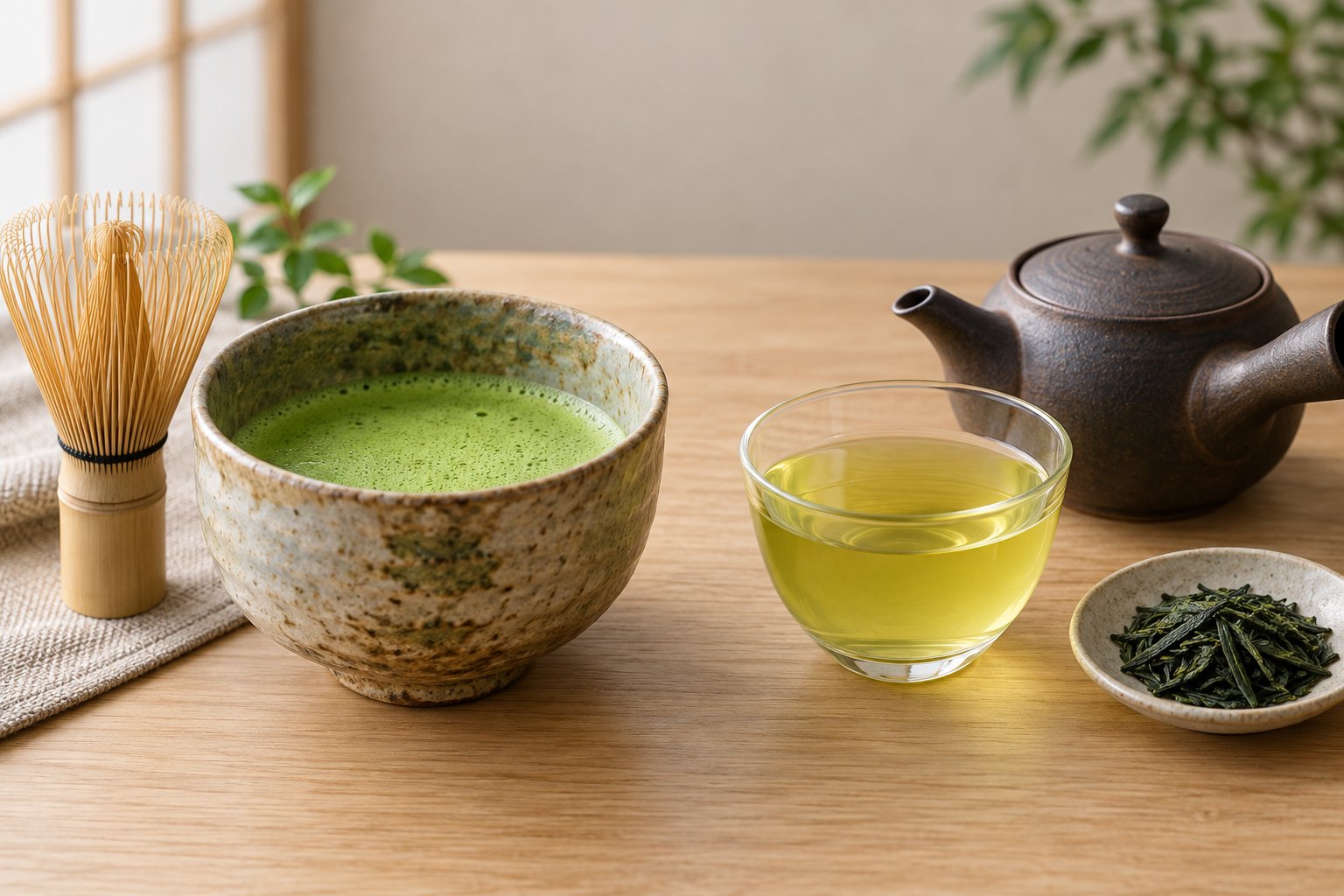
Matcha and sencha are both green teas made from the leaves of the same tea plant (Camellia sinensis). Even so, they differ widely in color, taste and price. The differences come from three things: whether the tea field is shaded before picking, whether the picked leaves are rolled, and whether you drink the whole powder. Checking how much the composition and price differ, using Japan’s official food tables and statistics, makes it easier to decide how to use each on a café menu.
Is matcha green tea? Matcha vs green tea
Matcha is a type of green tea, and it differs from sencha in how it is grown, made and drunk. Green tea is the general name for tea whose leaves are steamed or similar after picking to stop the action of the enzymes in the leaf, and both matcha and sencha belong to it.
Matcha is a green tea
The Green Tea Labelling Standard of the Japan Tea Central Public Interest Incorporated Association (a voluntary industry standard, last revised on 10 July 2026) defines green tea as tea leaves that are steamed or pan-fired to stop the action of the enzymes in the leaf, then made ready to drink. The table of names in this standard lists sencha, gyokuro, matcha, powdered tea and others.
The Standard Tables of Food Composition in Japan (8th revised edition, 2023 supplement), published by MEXT (Japan’s Ministry of Education, Culture, Sports, Science and Technology), also place matcha and sencha in the same “green tea” group. The English name given for matcha is “Green tea/“Maccha”.”
Compared here with sencha
The most widely drunk green tea in Japan is sencha. MAFF (Japan’s Ministry of Agriculture, Forestry and Fisheries) describes sencha as “the most commonly drunk tea,” and sencha made up 48.1% of Japan’s 2025 aracha (unfinished tea before final processing). Tencha, the raw material for matcha, made up 8.6%.
This article compares matcha with sencha. The main differences are:
| Matcha | Sencha | |
|---|---|---|
| Growing | The tea field is shaded for about 2 to 3 weeks before picking | Grown in sunlight without shade |
| Processing | Steamed, dried without rolling to make tencha, then ground in a mill | Steamed, then rolled while it is dried |
| How it is drunk | The powder is mixed into hot water and drunk whole | Hot water is poured over the leaves and only the liquid is drunk |
| Amount used at a time | About 2g (one bowl, 70mL of hot water) | About 10g (one pot, poured into several cups) |
| Price of 2025 aracha (all-season average) | Tencha ¥8,562/kg | ¥1,746/kg |
Amounts follow the Kyoto Prefectural Tea Research Institute’s brewing methods. Prices come from MAFF materials (survey by the National Federation of Tea Producers’ Associations).
Tea sold overseas as “green tea” also includes Chinese green tea. According to the Standard Tables of Food Composition, most Japanese green tea is steamed, while Chinese green tea is almost all “kamairi-cha,” made by pan-firing.
Growing: shaded or grown in sunlight
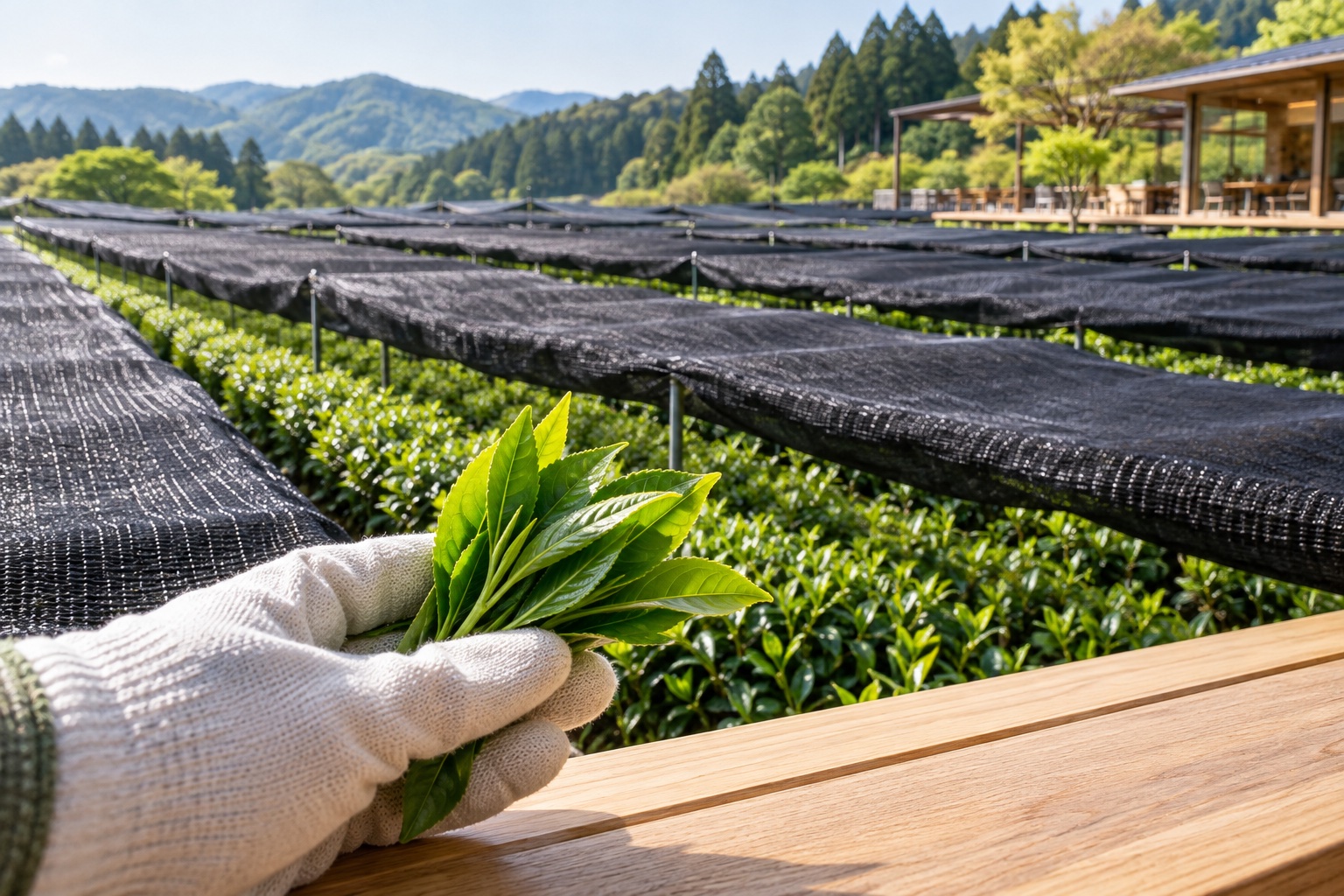
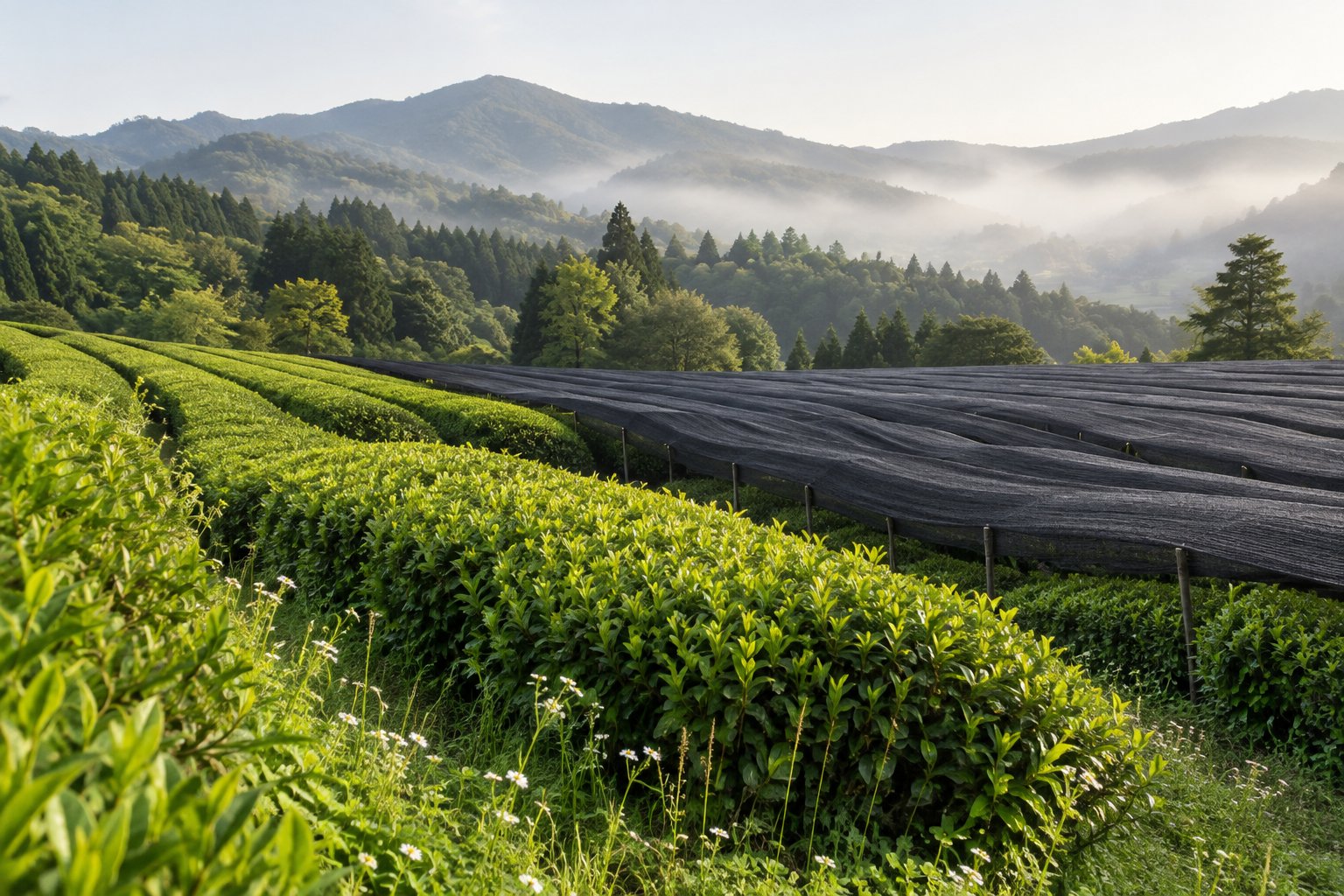
Tencha, the raw material for matcha, is grown with the tea field shaded for about 2 to 3 weeks before picking to block sunlight. Sencha is grown without shade. This is where the difference in taste and color begins.
Tencha is grown under shade
According to MAFF, tencha is made from leaves picked from an “ooishita” (shaded) tea field, which is covered for about 2 to 3 weeks before picking with reed screens, straw mats or kanreisha (a shade cloth), often on a shelf. Gyokuro is also shaded, for about 20 days, and kabusecha for about 7 days. Together, these three are called “ooi-cha” (shaded teas).
Shading increases umami and lowers astringency
NARO (Japan’s National Agriculture and Food Research Organization) states that matcha contains more amino acids such as theanine, a source of umami, than sencha. Shading lowers epigallocatechin (EGC), one of the catechins (the compounds behind astringency), while epigallocatechin gallate (EGCG) does not change.
Blocking sunlight also makes the leaves a deeper green.
Processing: dried without rolling and ground, or rolled and dried
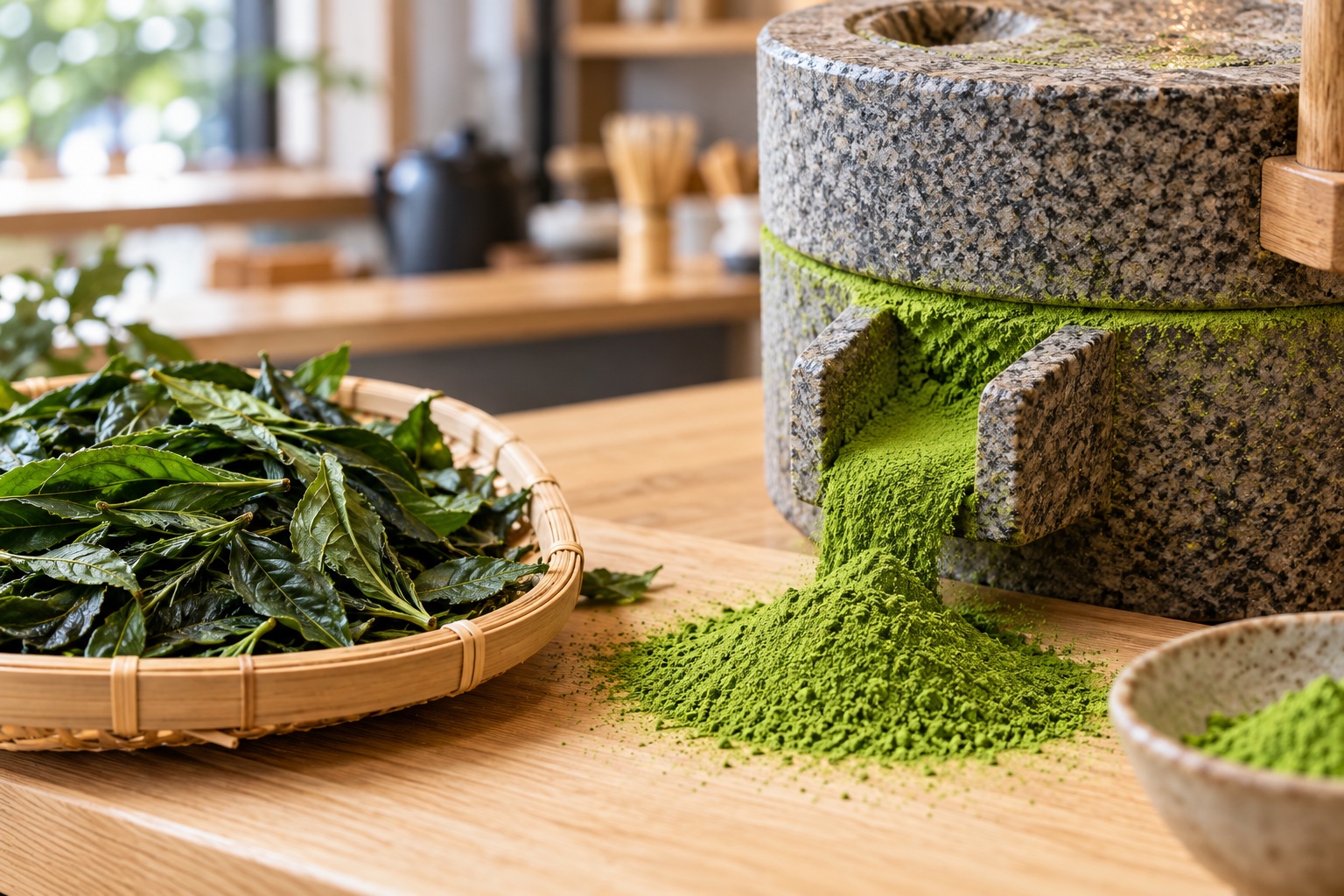
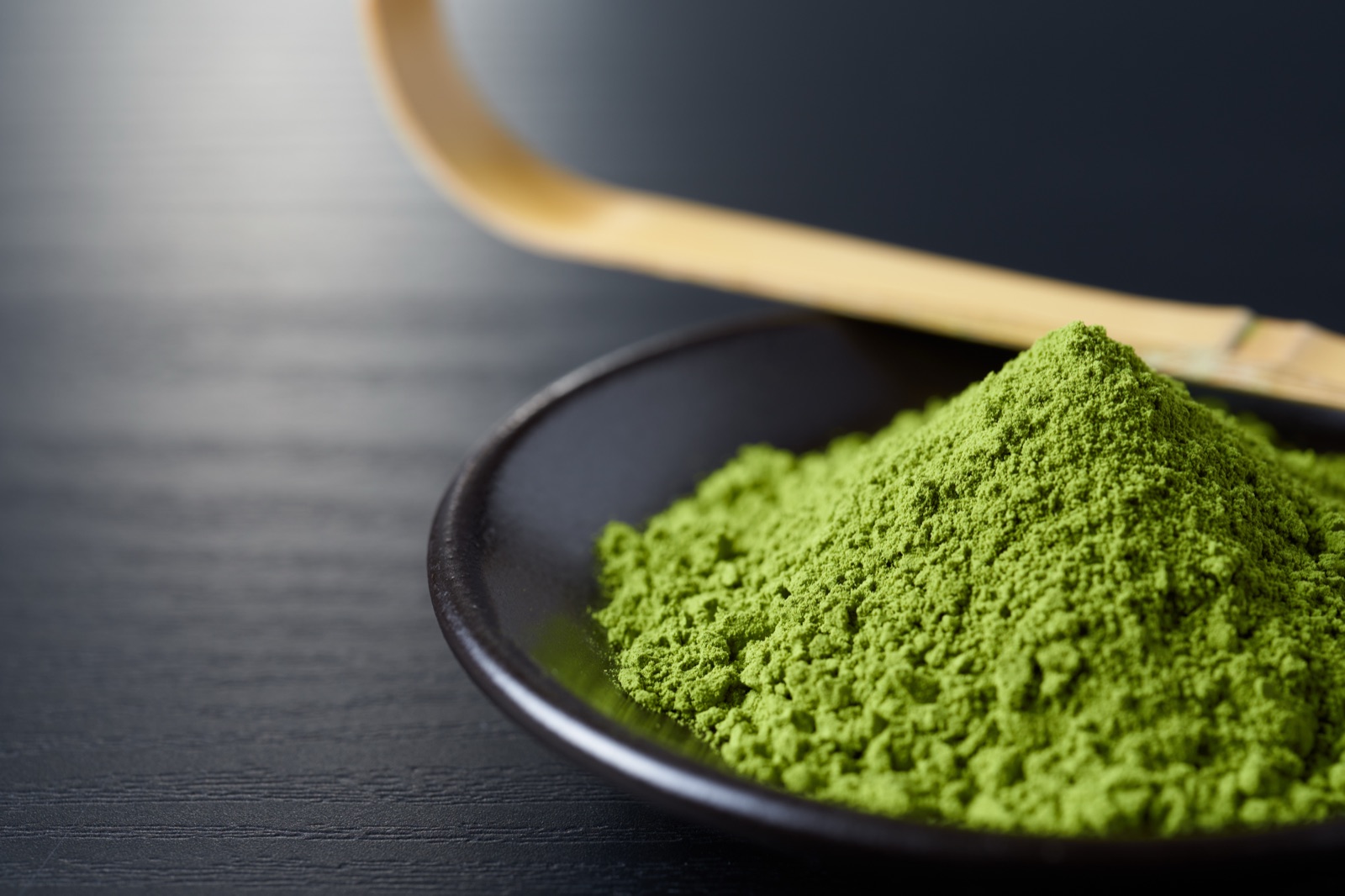
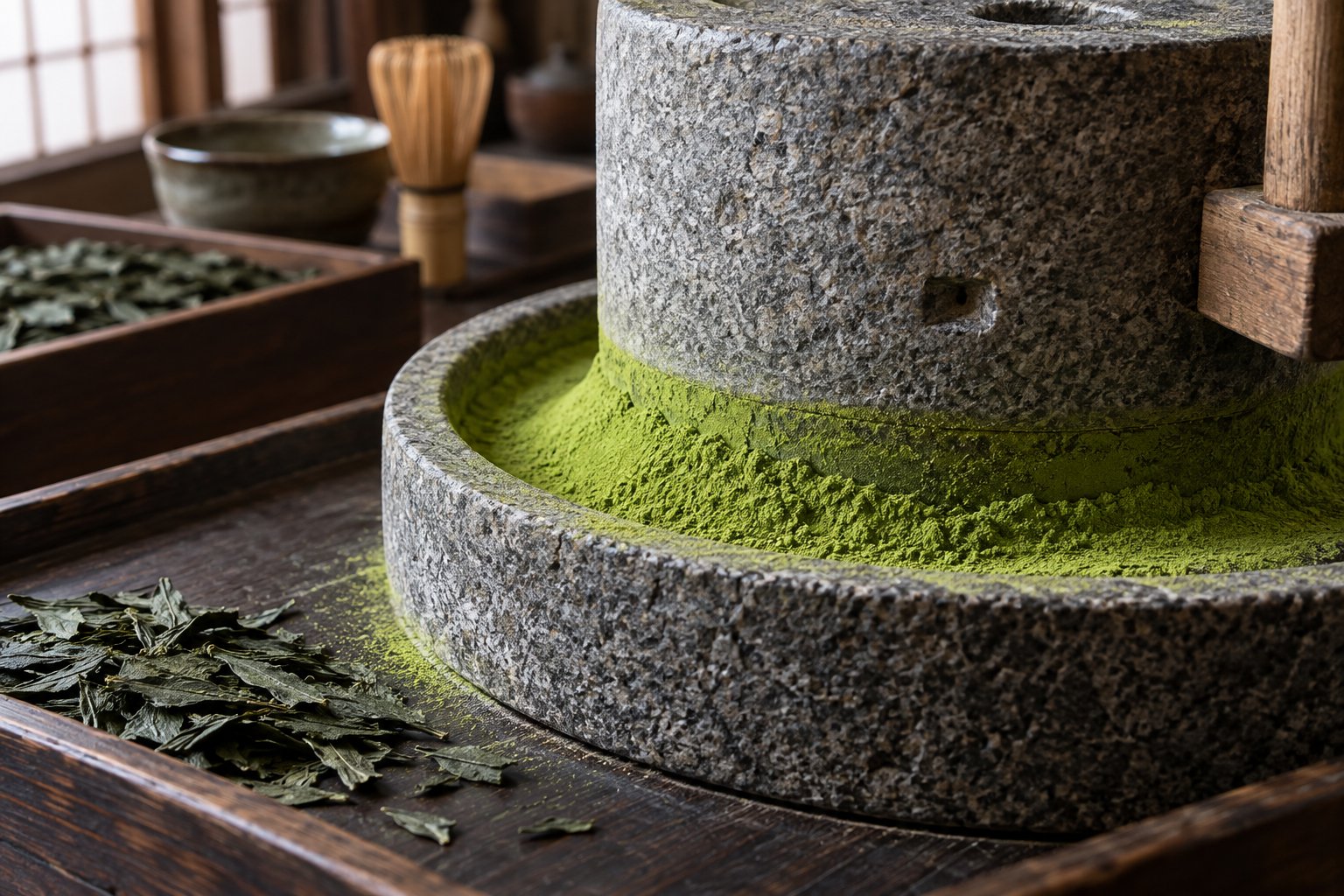
Sencha is steamed and then rolled while it is dried, while tencha is steamed and dried without rolling. Matcha is this tencha ground into a fine powder with a tea mill.
How sencha is made
The labelling standard of the Japan Tea Central Public Interest Incorporated Association defines sencha as tea “made by steaming, rolling and drying tea leaves.” According to MAFF materials, sencha goes through rolling while it is dried, plus a step that shapes the leaves into thin, long needles (seiju, final rolling).
How matcha is made
Matcha is made in this order:
- New shoots are picked from the shaded field and steamed
- The leaves are dried without rolling, in a tencha furnace (a drier made for tencha) or similar
- Stems and veins are removed with machines such as wind separators, and the leaf parts are finished as tencha
- The tencha is ground into a fine powder with a tea mill
The labelling standard defines the tea mill as “a stone mill used to grind tencha into a fine powder to make matcha,” and includes grinders that work in the same way as a stone mill. Tencha has no rolling step and is dried in a tencha furnace or similar drier, so the machines on its processing line differ from those for sencha. A manual by NARO and partners shows the tencha processing line as a diagram with a steamer, a tencha drier, a wind separator, a stem separator and other machines.
How they are drunk: the whole powder, or only the liquid
Matcha powder is mixed into hot water and drunk with the leaf, while for sencha hot water is poured over the leaves and only the liquid is drunk. This difference changes how much of each component you take in from one cup.
How to make matcha
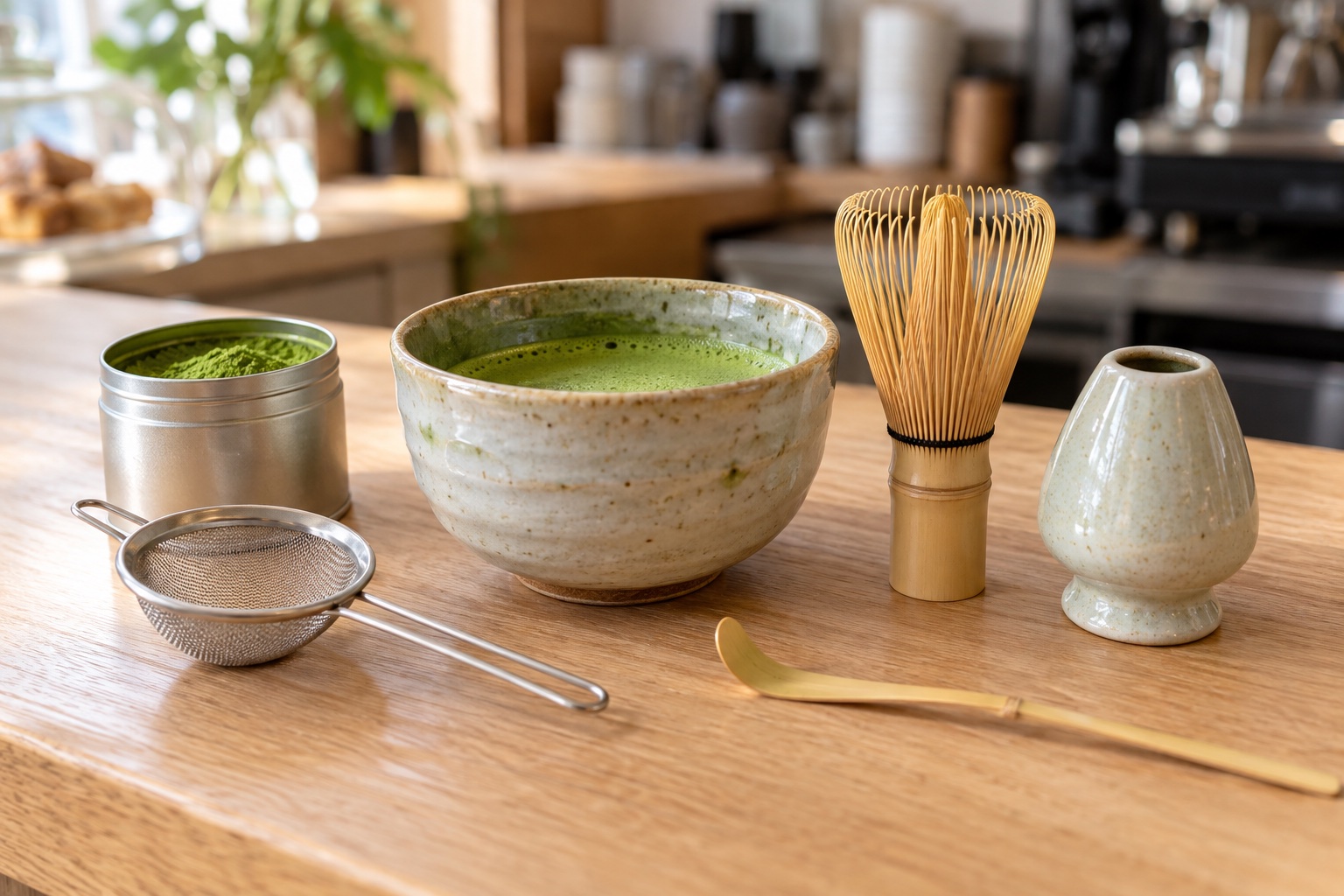
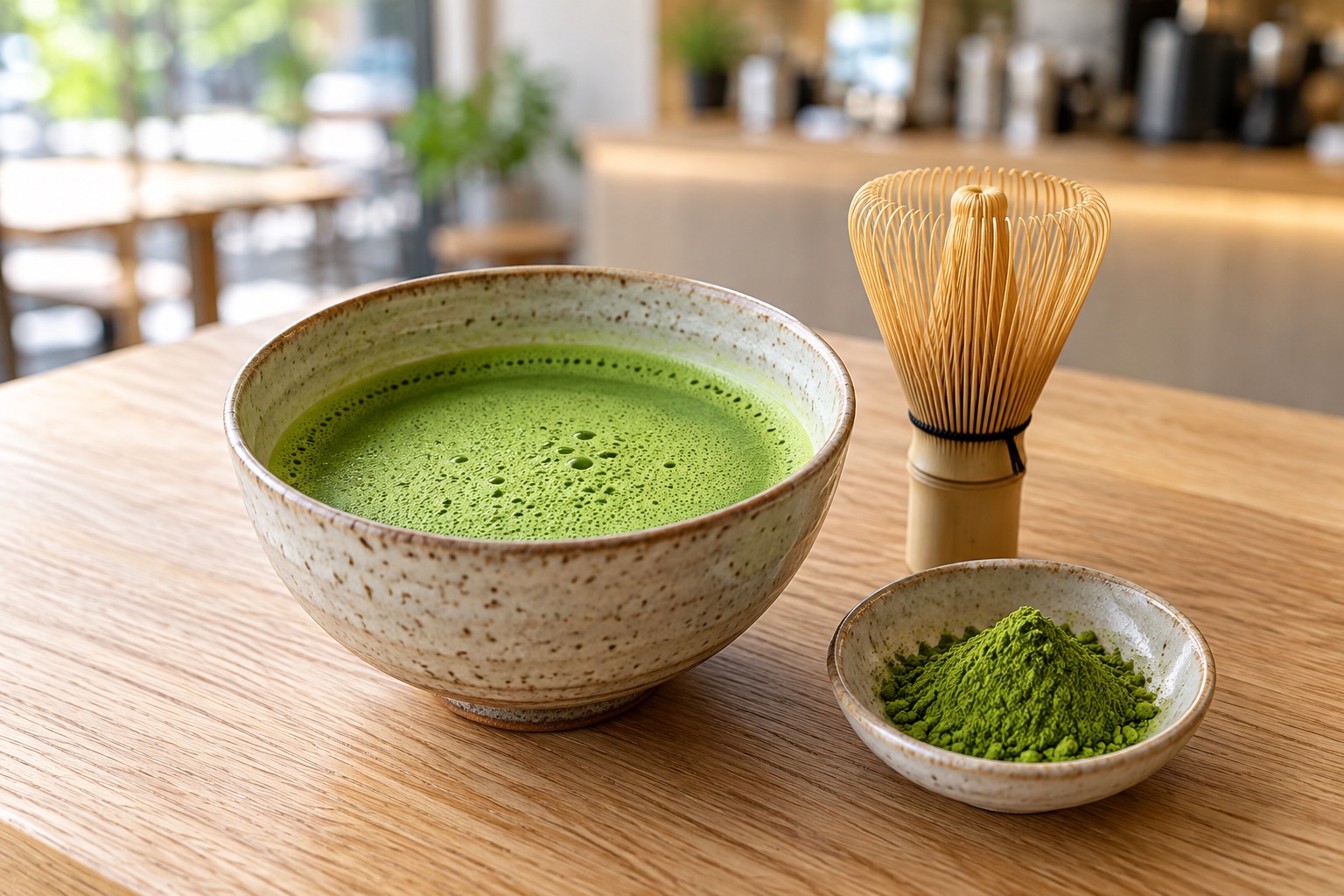
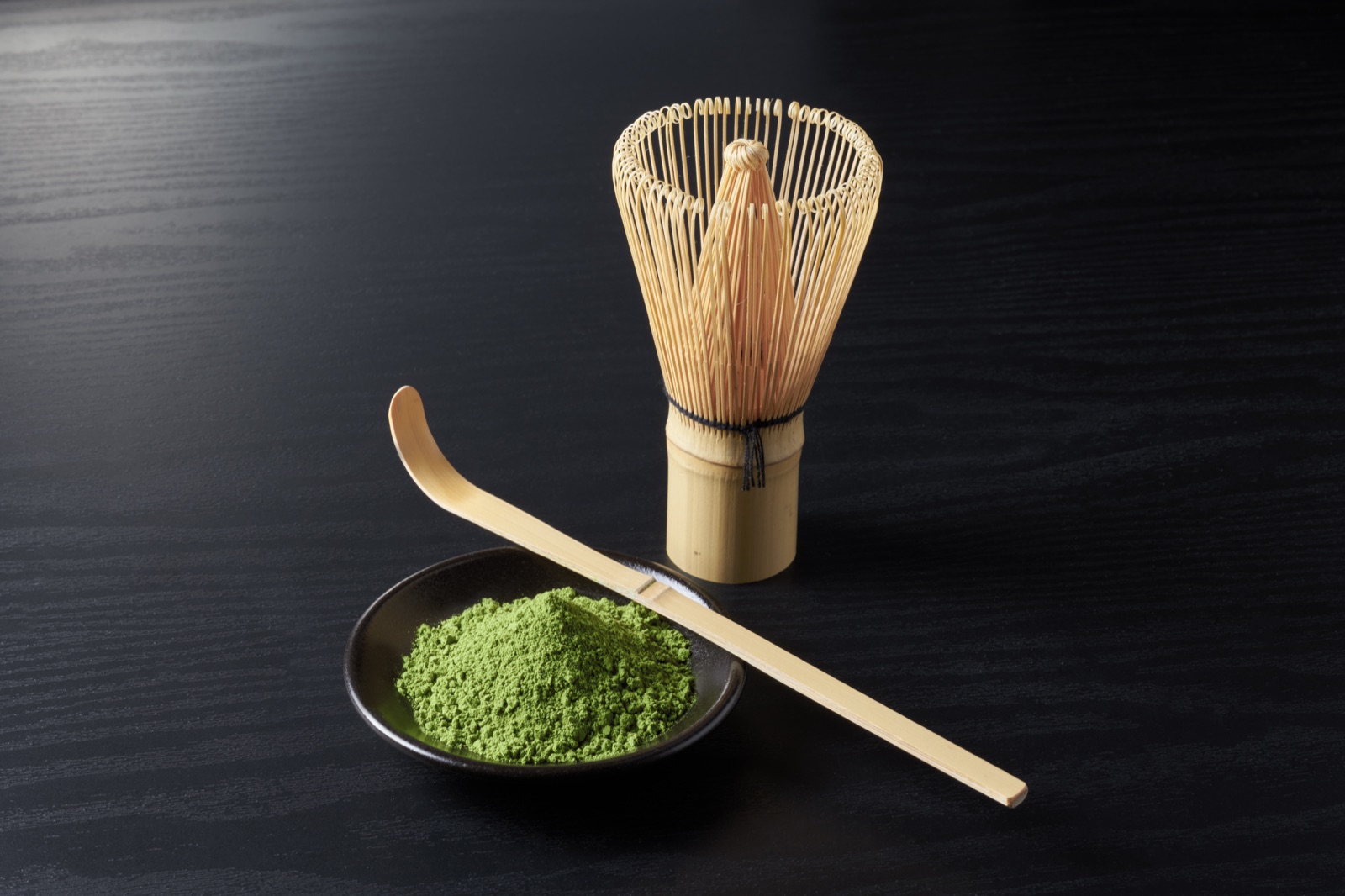
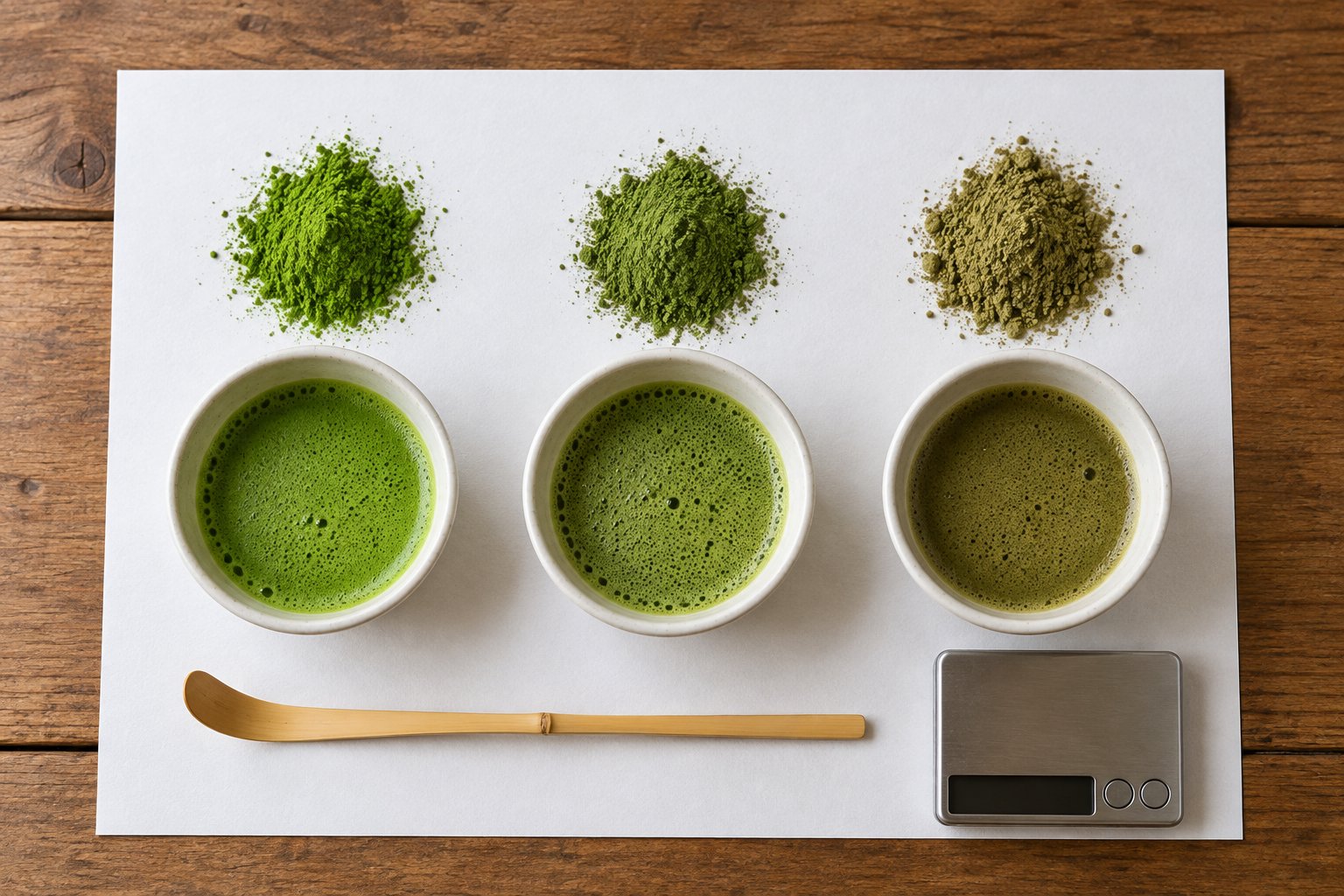
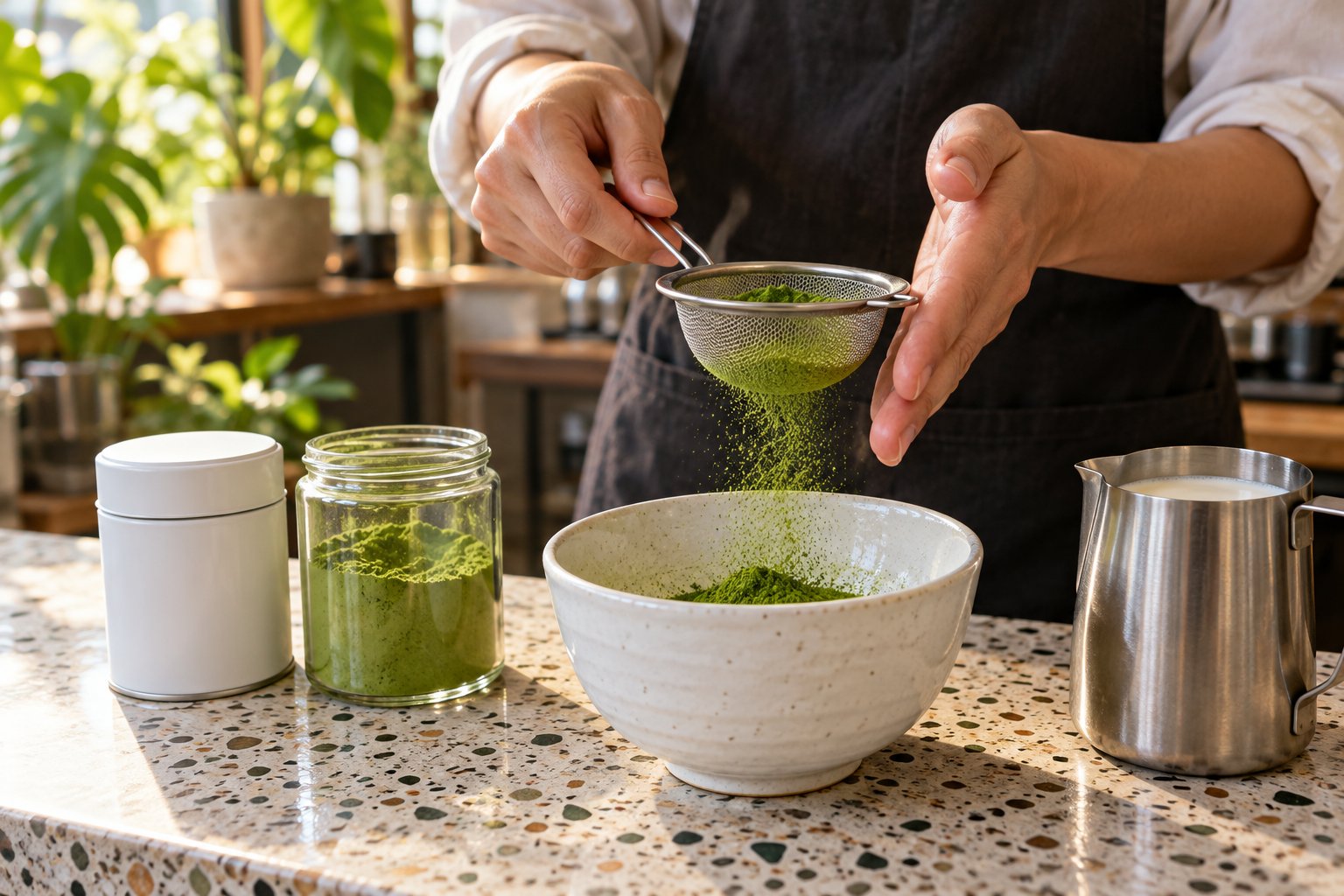
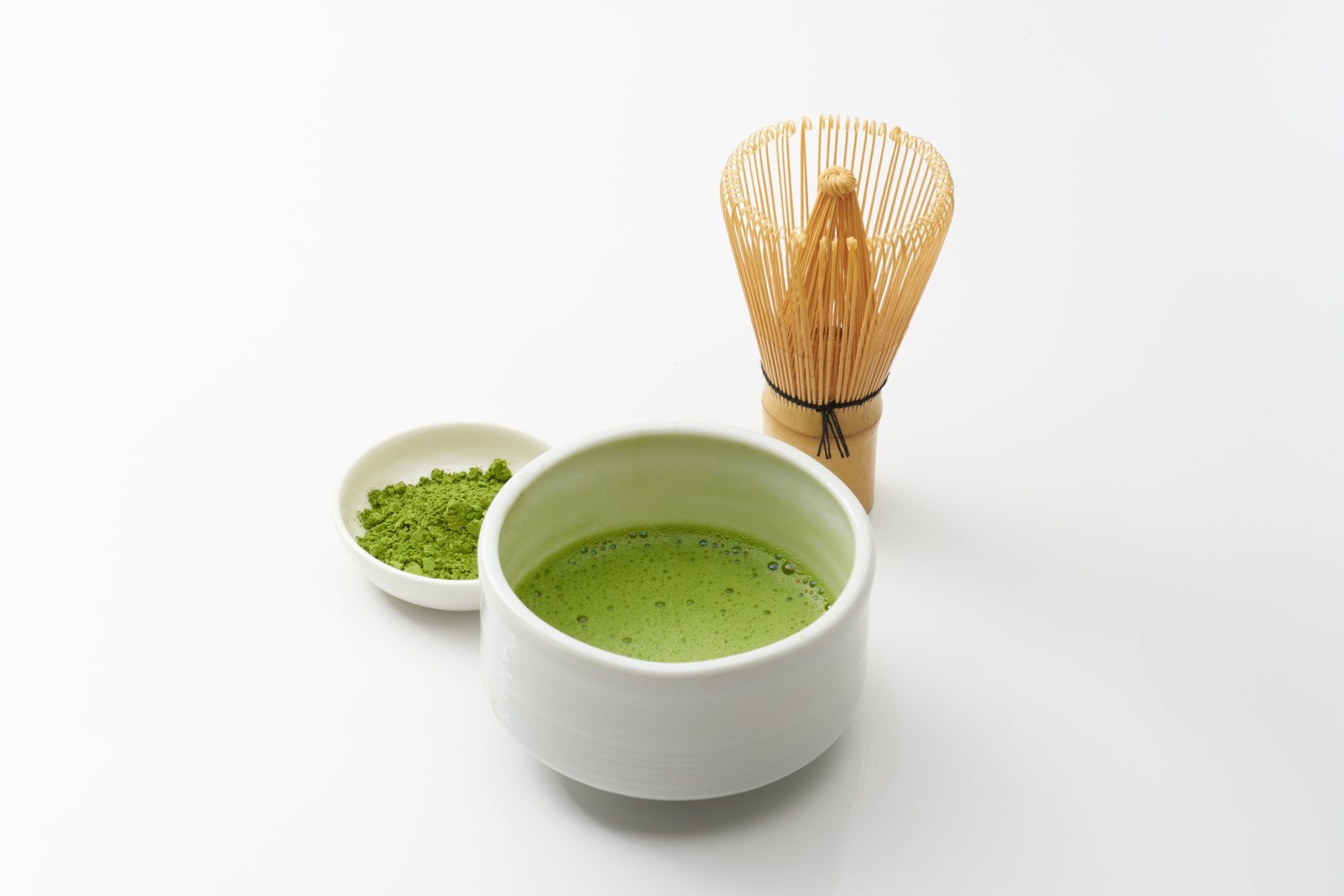
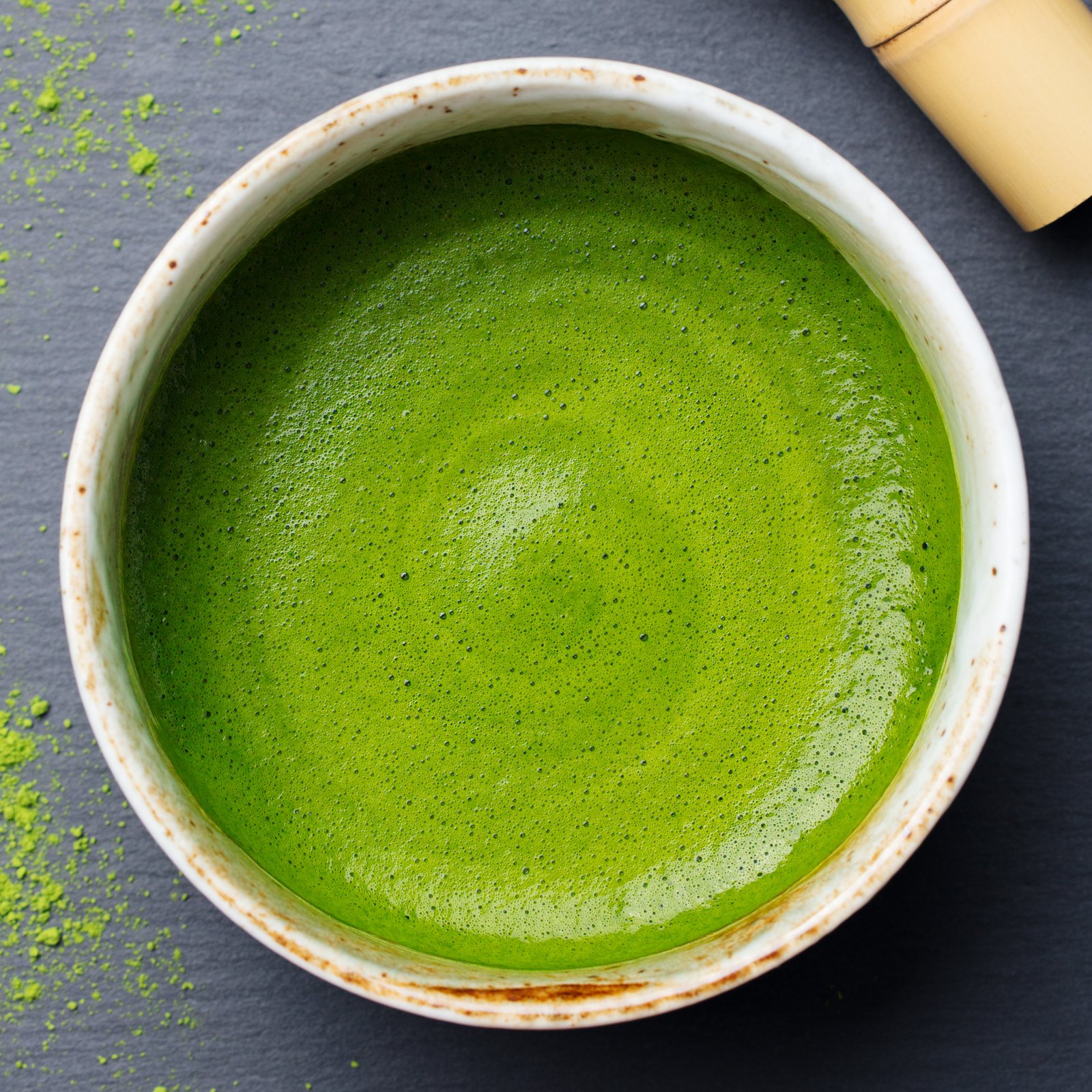
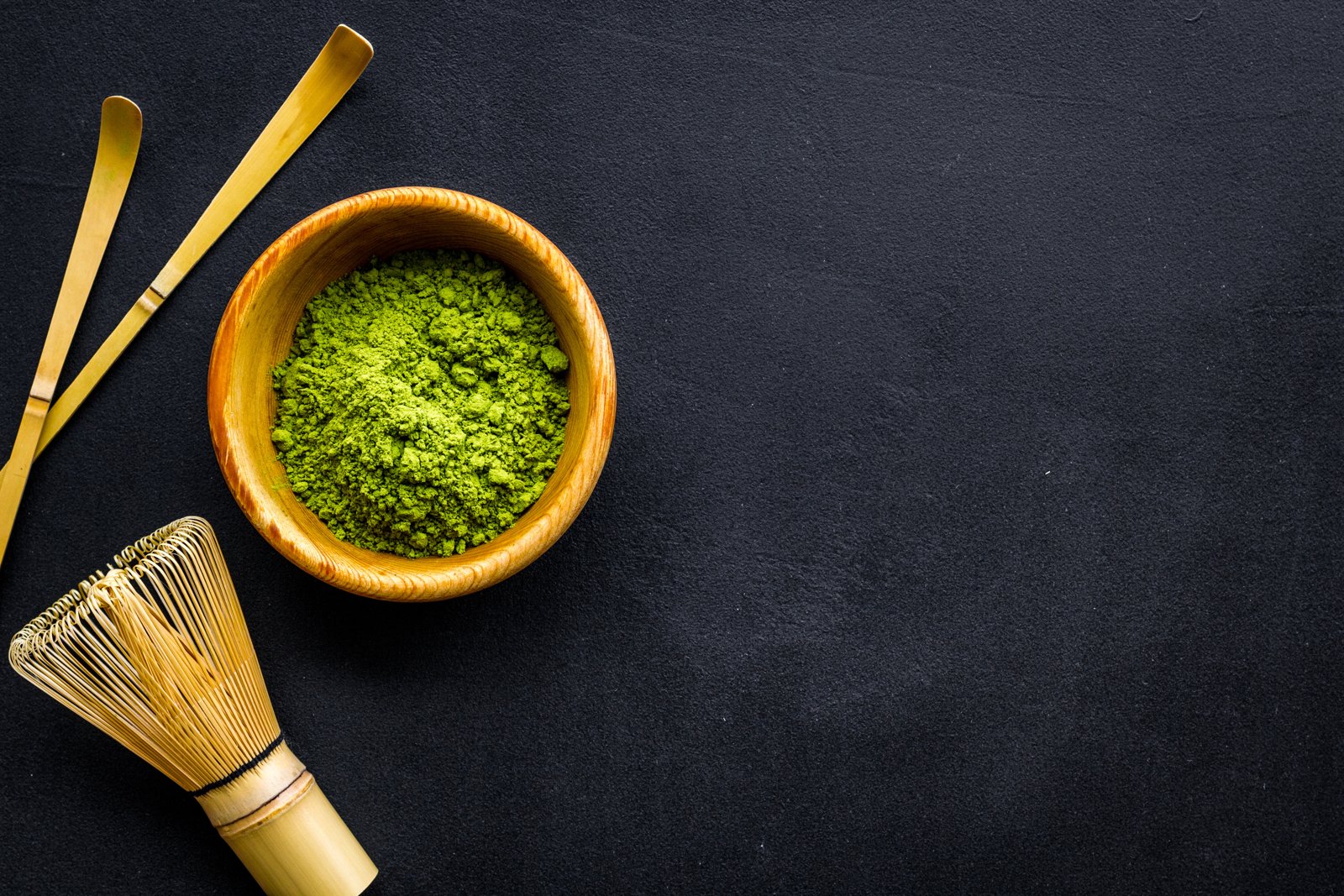
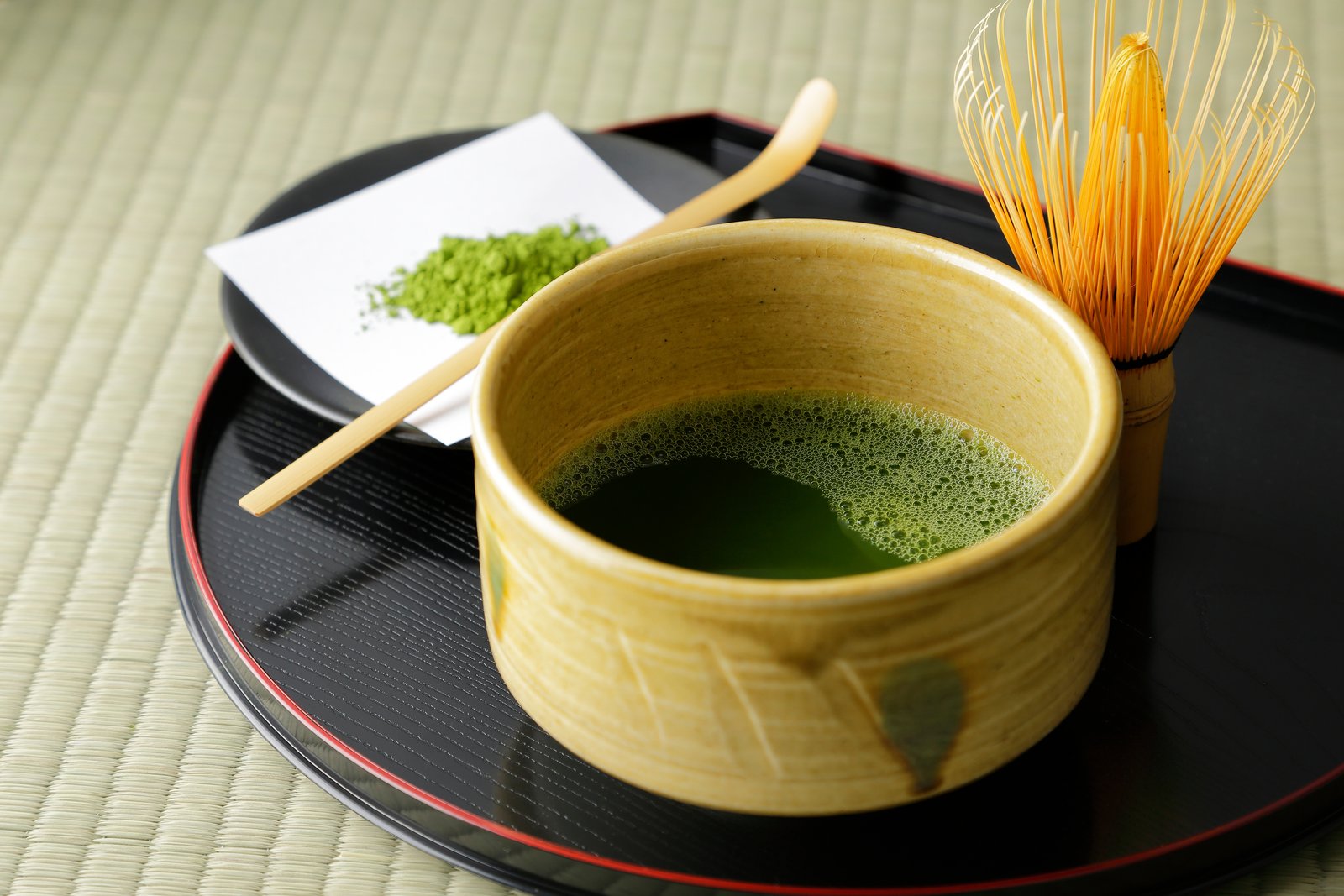
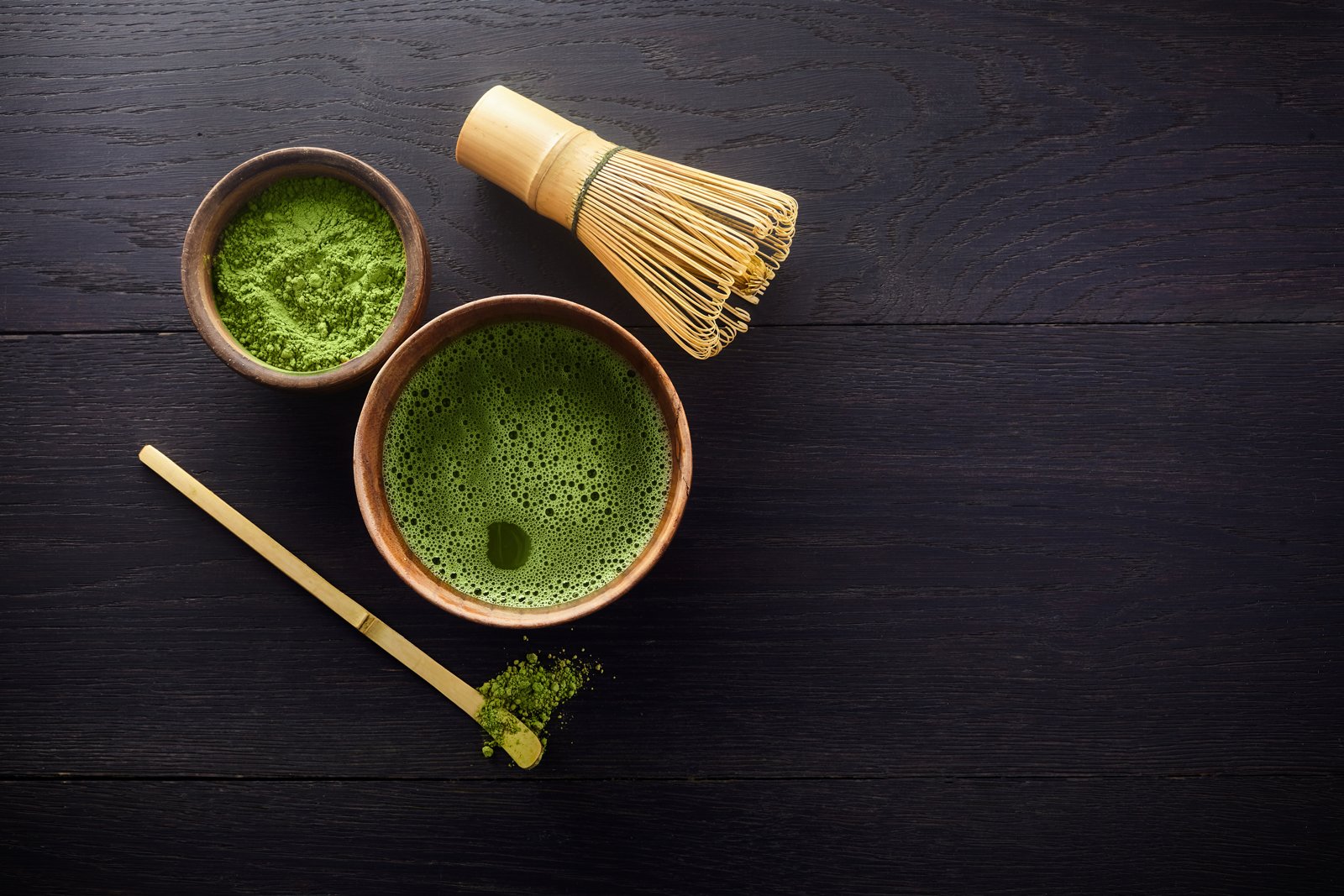
The Kyoto Prefectural Tea Research Institute says to put two scoops of sifted matcha with a chashaku (bamboo tea scoop), about 2g, into a bowl, and whisk it with 70mL of hot water cooled to 70 to 80°C. The amount, water temperature and whisking are covered in How to Make Matcha.
How to brew sencha
The Kyoto Prefectural Tea Research Institute says to put about 10g of leaves in a kyusu (Japanese teapot), pour in hot water cooled to about 70°C, wait about 2 minutes, then pour it out into the cups. The leaves stay in the pot, and the same leaves can be used for a second and later infusions. For later infusions, the water temperature is raised and the waiting time is shortened.
Composition compared per 100g of tea
Per 100g of tea, matcha has more caffeine, while sencha has more vitamin C. Neither tea is higher in every component.
Values in the Standard Tables of Food Composition
The main values per 100g for matcha (tea) and sencha (tea leaves) in the Standard Tables of Food Composition are:
| Component (per 100g) | Matcha | Sencha (leaves) |
|---|---|---|
| Caffeine | 3.2g | 2.3g |
| Tannin | 10.0g | 13.0g |
| β-carotene equivalent | 29,000μg | 13,000μg |
| Vitamin K | 2,900μg | 1,400μg |
| Vitamin C | 60mg | 260mg |
| Total dietary fiber | 38.5g | 46.5g |
| Protein | 29.6g | 24.5g |
| Energy | 237kcal | 229kcal |
Caffeine and tannin (a source of astringency) are values listed in the remarks column of the tables. For matcha, the remarks also say it is a powdered product.
Source: MEXT Food Composition Database, “抹茶 茶” (Matcha, tea; Standard Tables of Food Composition in Japan, 8th revised edition, 2023 supplement) https://fooddb.mext.go.jp/details/details.pl?ITEM_NO=16_16035_7
Theanine is not in the tables
Theanine, a source of umami, is not an item in the Standard Tables of Food Composition. When NARO tested 56 samples of Japanese matcha, higher-priced matcha tended to contain more theanine. Amino acids such as theanine are reported to be higher in matcha than in sencha.
Values vary even within matcha
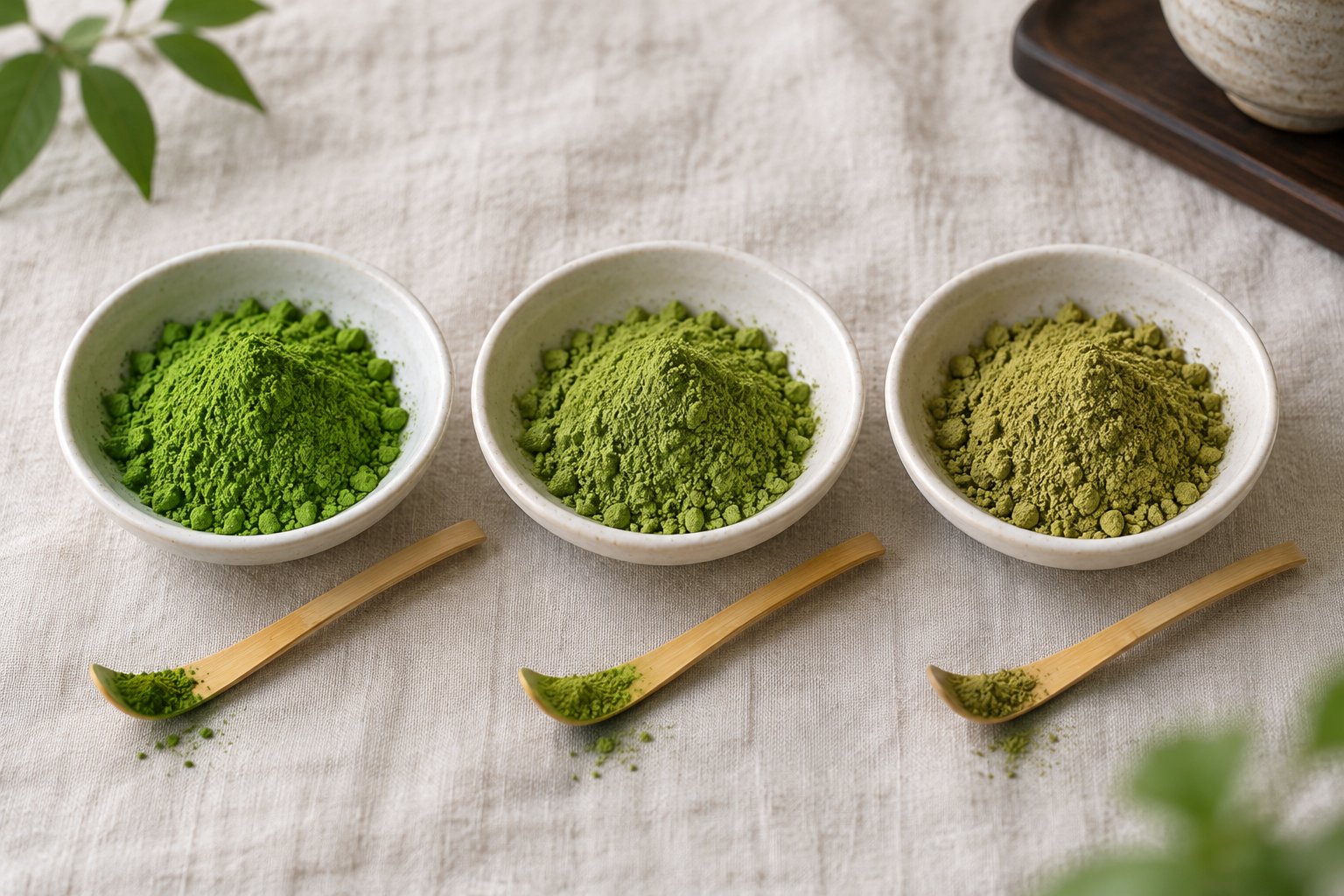
The Standard Tables of Food Composition note that the composition of tea differs considerably between high-grade and low-grade products, and that mainly mid-grade products were analyzed. Values change with grade (quality) even for the same matcha, so the figures in the table are a guide. Differences by grade are covered in Matcha Grades Explained.
Per cup (calculated from the food composition tables)
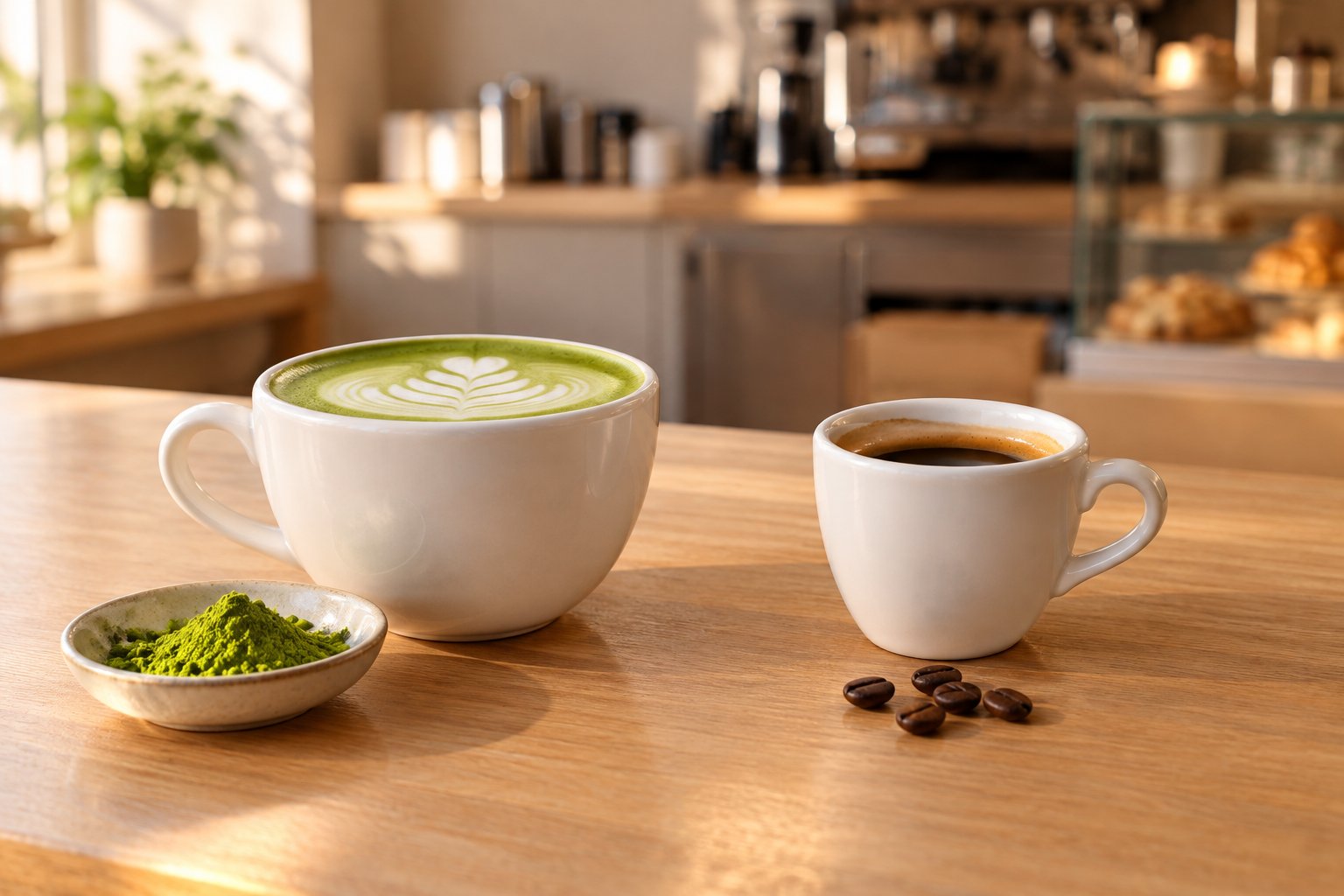
Compared by the amount you drink, one cup of matcha gives you more caffeine and β-carotene than sencha. This is because matcha is drunk as whole leaf, while with sencha you drink only what has dissolved into the hot water.
2g of matcha and 100g of sencha infusion
For matcha, we used 2g, one bowl by the Kyoto Prefectural Tea Research Institute’s method, and multiplied the values per 100g in the tables by 0.02. For sencha, we used the values for “sencha, infusion” per 100g in the tables as they are. The infusion in the tables was made by steeping 10g of tea in 430mL of water at 90°C for 1 minute.
Source: MEXT Food Composition Database, “せん茶 浸出液” (Sencha, infusion; Standard Tables of Food Composition in Japan, 8th revised edition, 2023 supplement) https://fooddb.mext.go.jp/details/details.pl?ITEM_NO=16_16037_7
| Component | 2g of matcha (calculated) | 100g of sencha infusion |
|---|---|---|
| Caffeine | 64mg | 20mg |
| Tannin | 200mg | 70mg |
| β-carotene equivalent | 580μg | 0 (estimated) |
| Vitamin K | 58μg | Trace |
| Vitamin C | 1.2mg | 6mg |
| Total dietary fiber | 0.77g | Not measured |
| Energy | 4.7kcal | 2kcal |
What the calculation shows
- Caffeine from 2g of matcha is about 3 times that of 100g of sencha infusion
- β-carotene and vitamin K, which are high in the leaves, barely come out into sencha infusion
- Vitamin C is higher in sencha per 100g of leaves, and also higher in sencha infusion per cup
If you use 3g of matcha in one cup, for example in a matcha latte, the caffeine is 96mg by calculation. With sencha, the amount that comes out changes with the amount of leaves, the water temperature and the steeping time, so the values in this table apply to the brewing method used in the tables.
Price: tencha is about 4.9 times sencha
The all-season average price of 2025 aracha was ¥8,562 per kg for tencha and ¥1,746 for sencha, so tencha was about 4.9 times sencha. Tencha goes through steps that sencha does not: the tea field is shaded, the leaves are dried without rolling in a tencha furnace or similar, and stems and veins are removed.
Aracha prices by picking season
The 2025 aracha prices per kg in MAFF materials (survey by the National Federation of Tea Producers’ Associations) were:
| 2025 (Japan) | First flush | Second flush | All-season average |
|---|---|---|---|
| Tencha | ¥10,030 | ¥4,950 | ¥8,562 |
| Sencha | ¥2,278 | ¥1,321 | ¥1,746 |
Even comparing first flush with first flush, tencha is about 4.4 times sencha (calculated). Aracha is unfinished tea; to make matcha, stems and veins are removed and the tea is ground in a mill after this stage.
Prices are still rising
According to Ippodo Tea, interest in matcha rose worldwide from around 2024, and demand grew quickly. In the average trading prices of first flush tea at the Kyoto market (JA Zen-Noh Kyoto tea market) compiled by the company, tencha rose about 3.3 times and sencha about 2.0 times from 2024 to 2026 (as of 19 June 2026). Why prices rose and the outlook are covered in Is There a Matcha Shortage?
Matcha vs green tea powder (powdered tea) and konacha
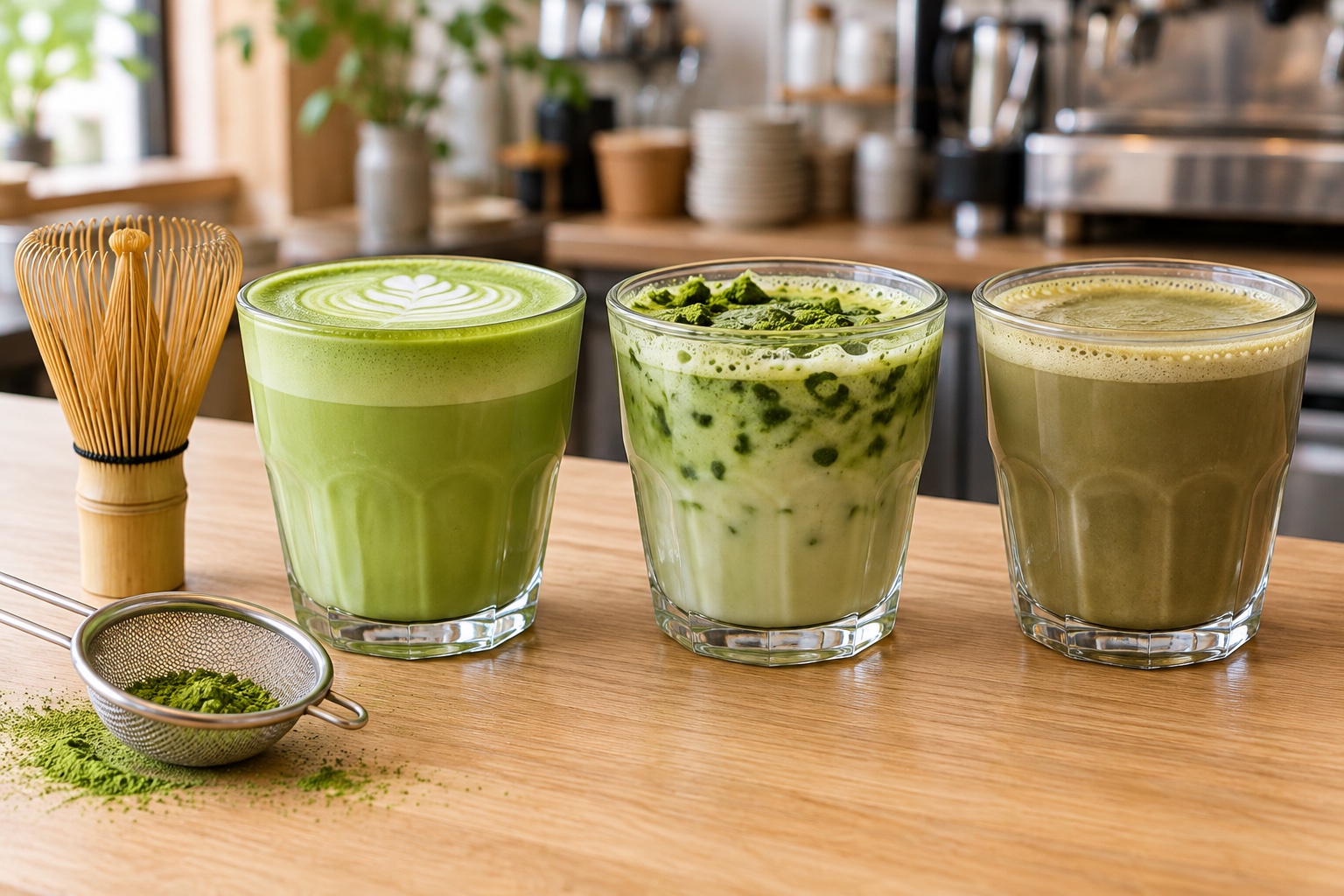
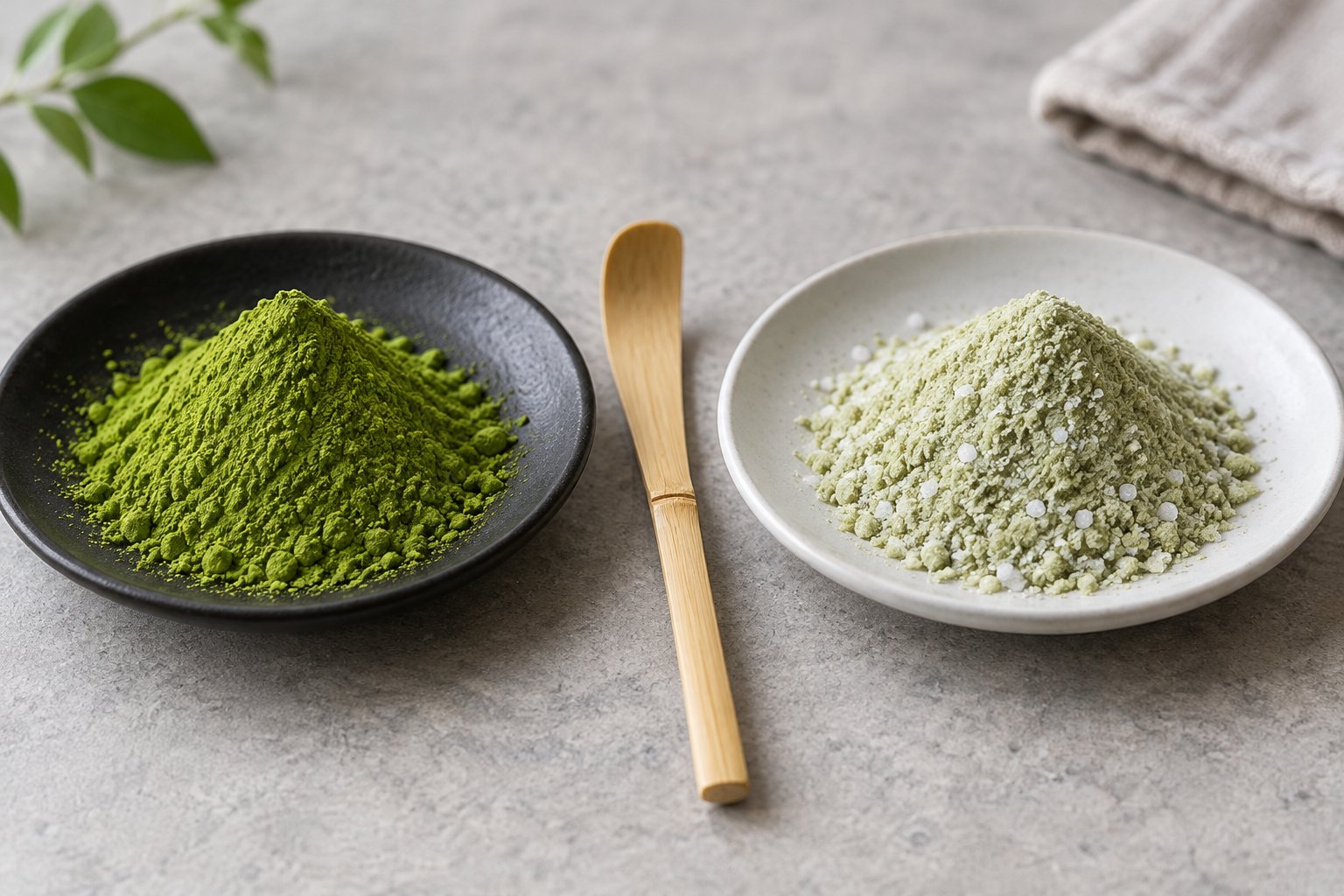
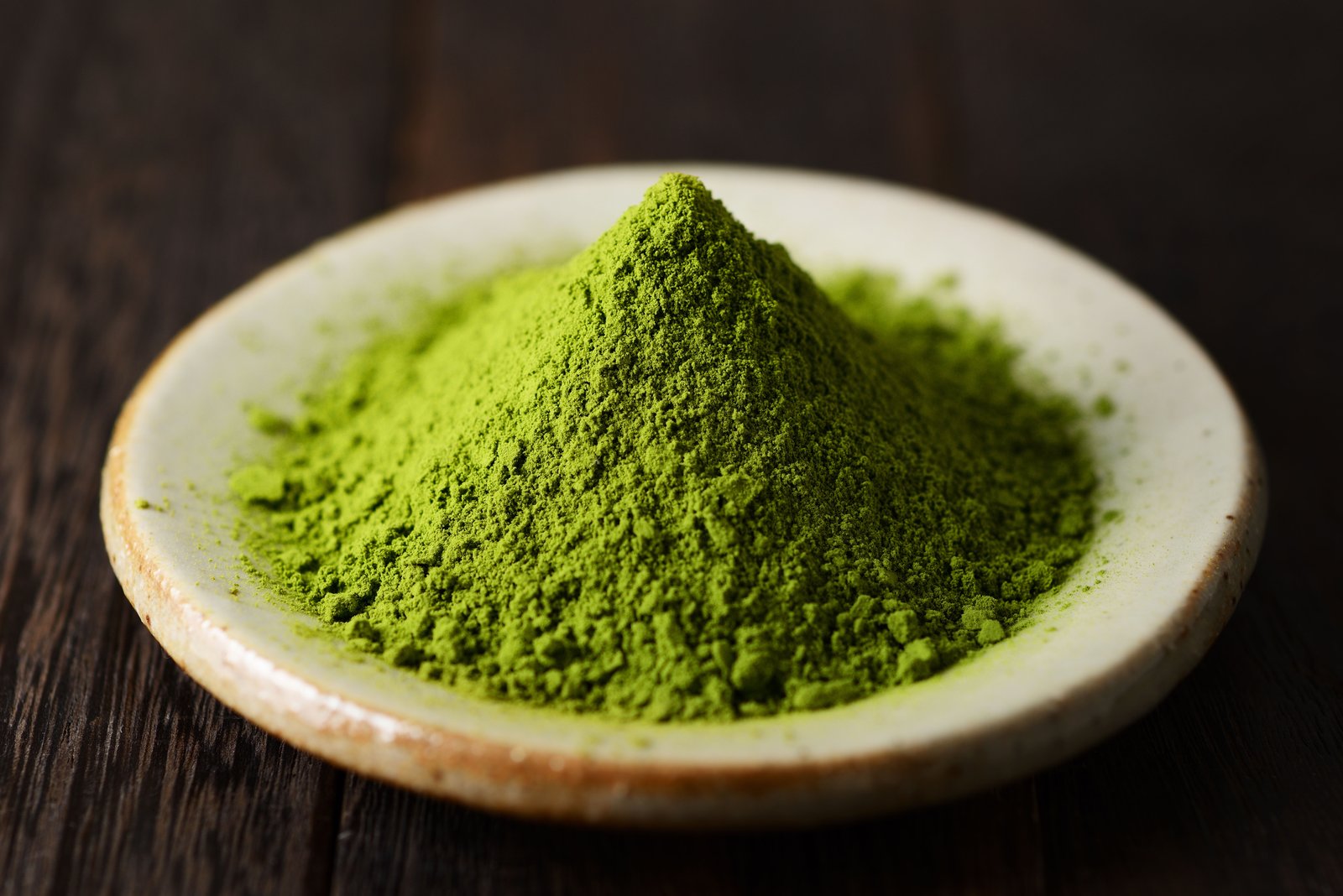
Even if the powder is green, only ground tencha is matcha. Tea such as sencha made into powder with a grinder is a different tea called powdered tea. A powder labelled “green tea powder” overseas can be either matcha or powdered tea.
How the labelling standard divides them
The labelling standard of the Japan Tea Central Public Interest Incorporated Association divides tea in powder or fine form as follows:
| Name | Definition (translated) |
|---|---|
| Matcha | Tencha made into a fine powder with a tea mill or similar |
| Powdered tea (funmatsu-cha) | Tea made into powder with a grinder or similar |
| Konacha | Tea in powder form sifted out in the finishing process |
| Instant tea | Water-soluble solids extracted from green tea, concentrated and dried into powder or granules |
Konacha (literally “powder tea”) has a similar name but is a different tea from matcha and powdered tea. It is tea in powder form sifted out in the finishing process (including cut leaves), and in Japan’s export statistics it falls under “other” rather than “in powder form.”
Composition also differs
In NARO’s study, only 1 of 56 samples of Japanese matcha had 1% theanine or less, while all 6 samples of commercial powdered tea had 1% or less. On a green color indicator that correlates closely with chlorophyll content, every matcha sample was at or above a set value (0.4), and no powdered tea sample exceeded it. How to read labels and check whether matcha is genuine is covered in What Is Pure Matcha?, and how we think about grades on Matcha grades.
Using each on a café menu
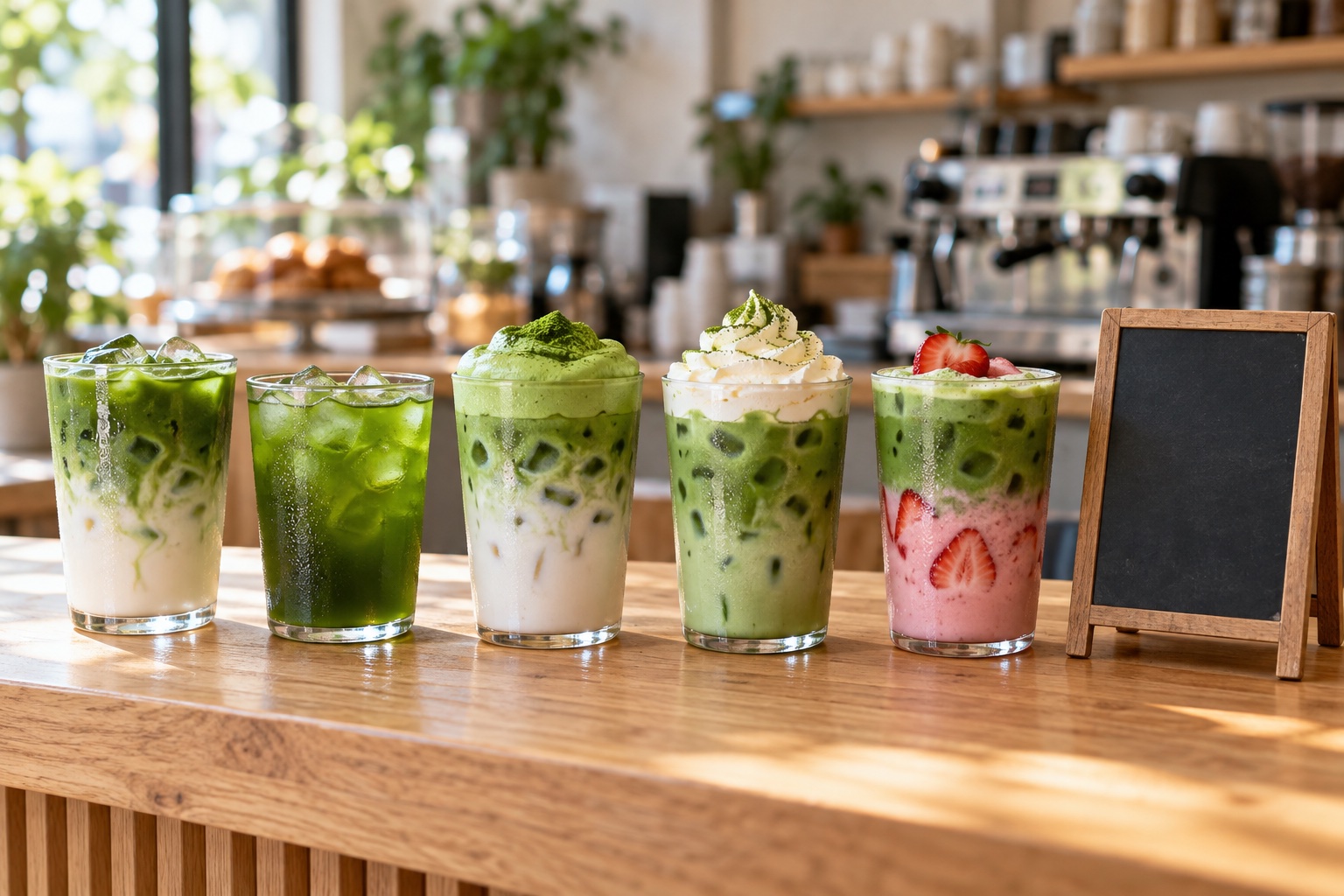
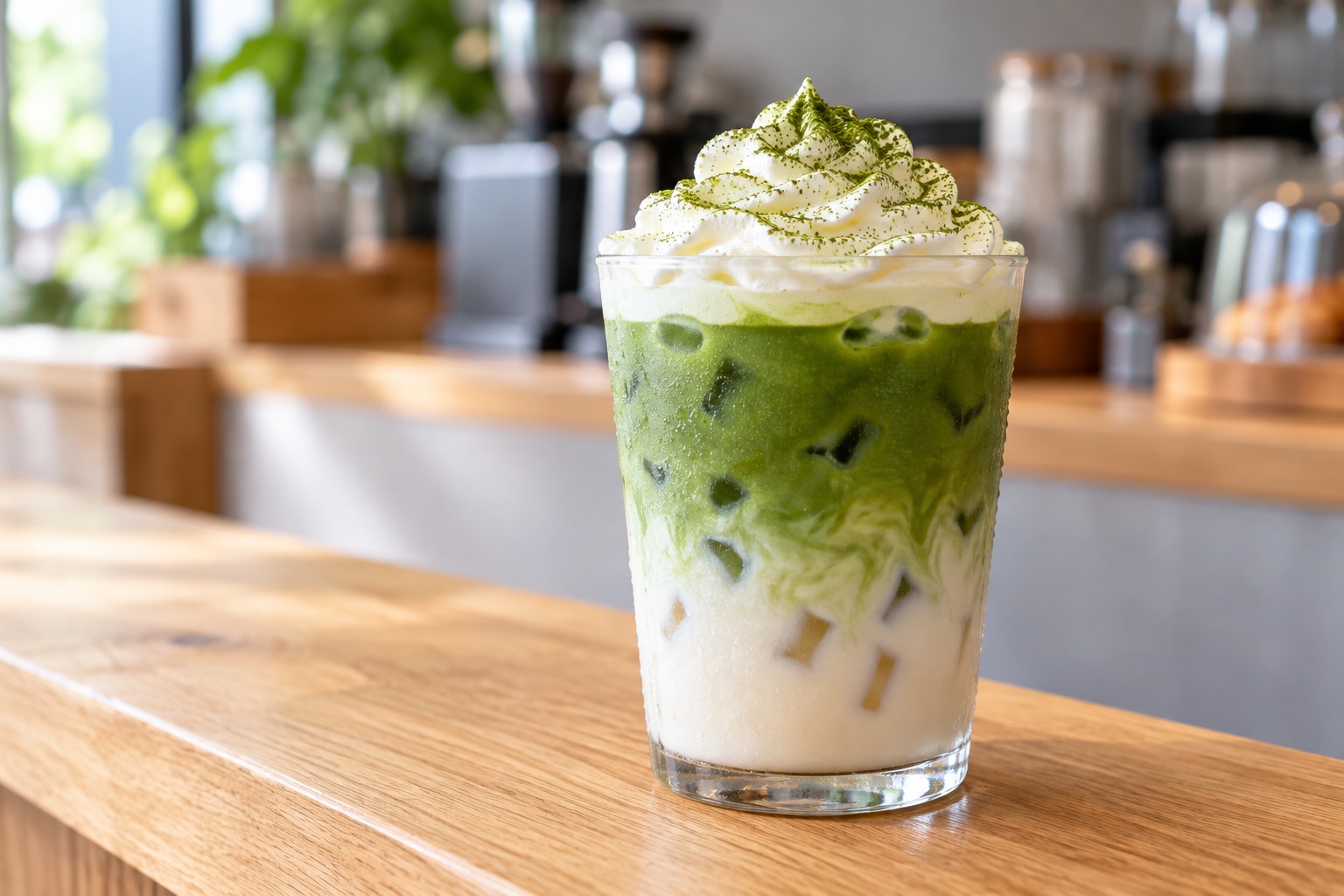
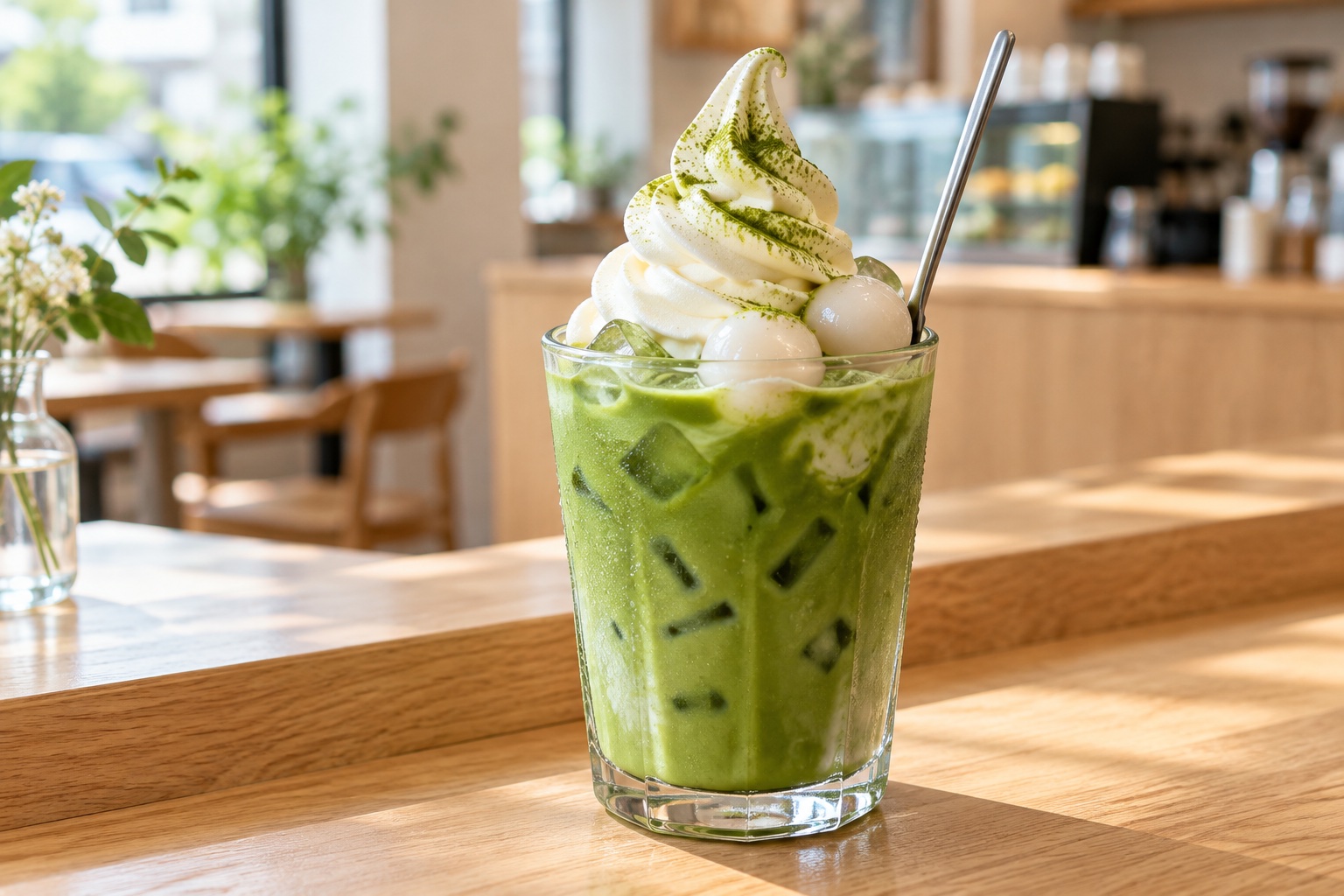
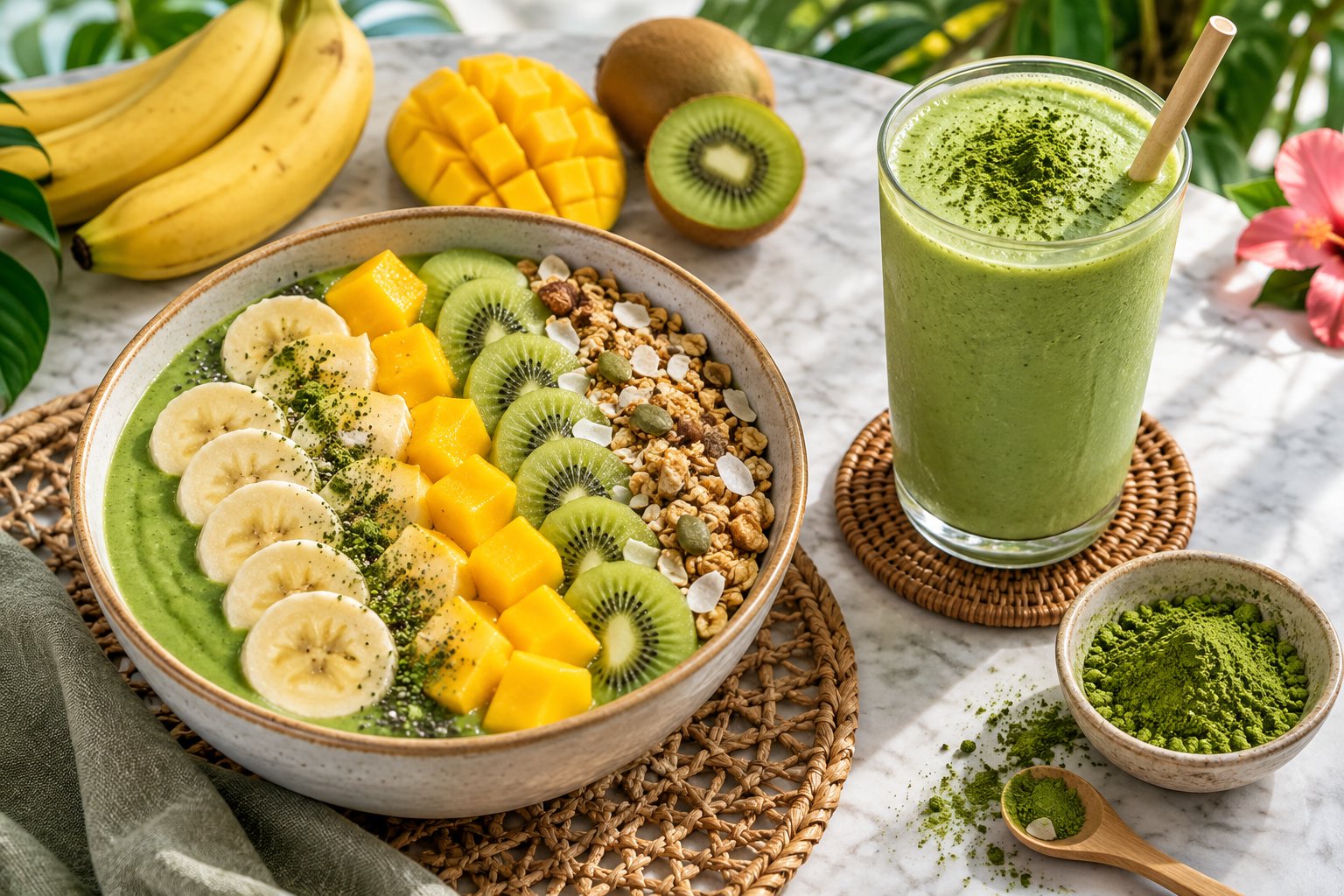
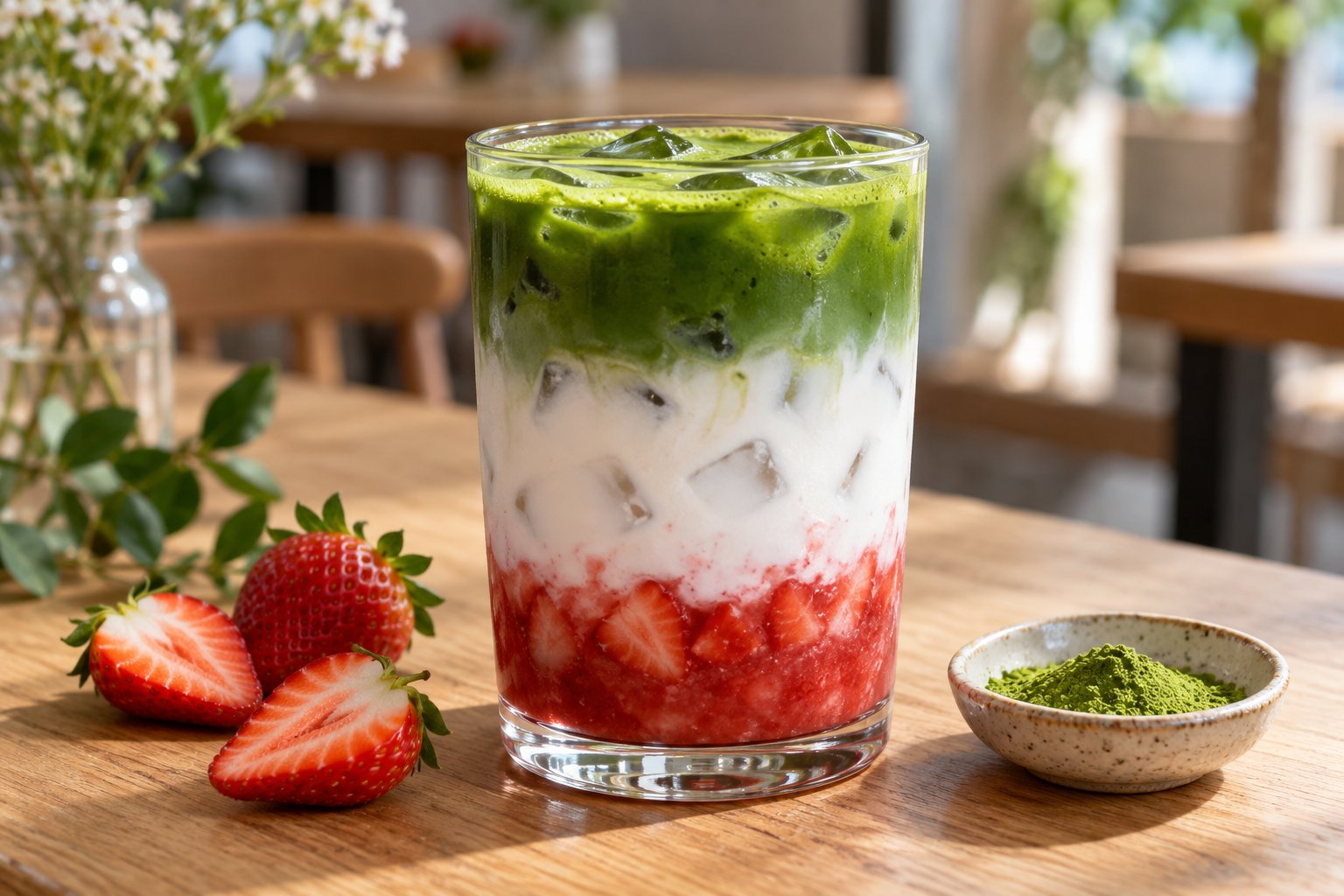
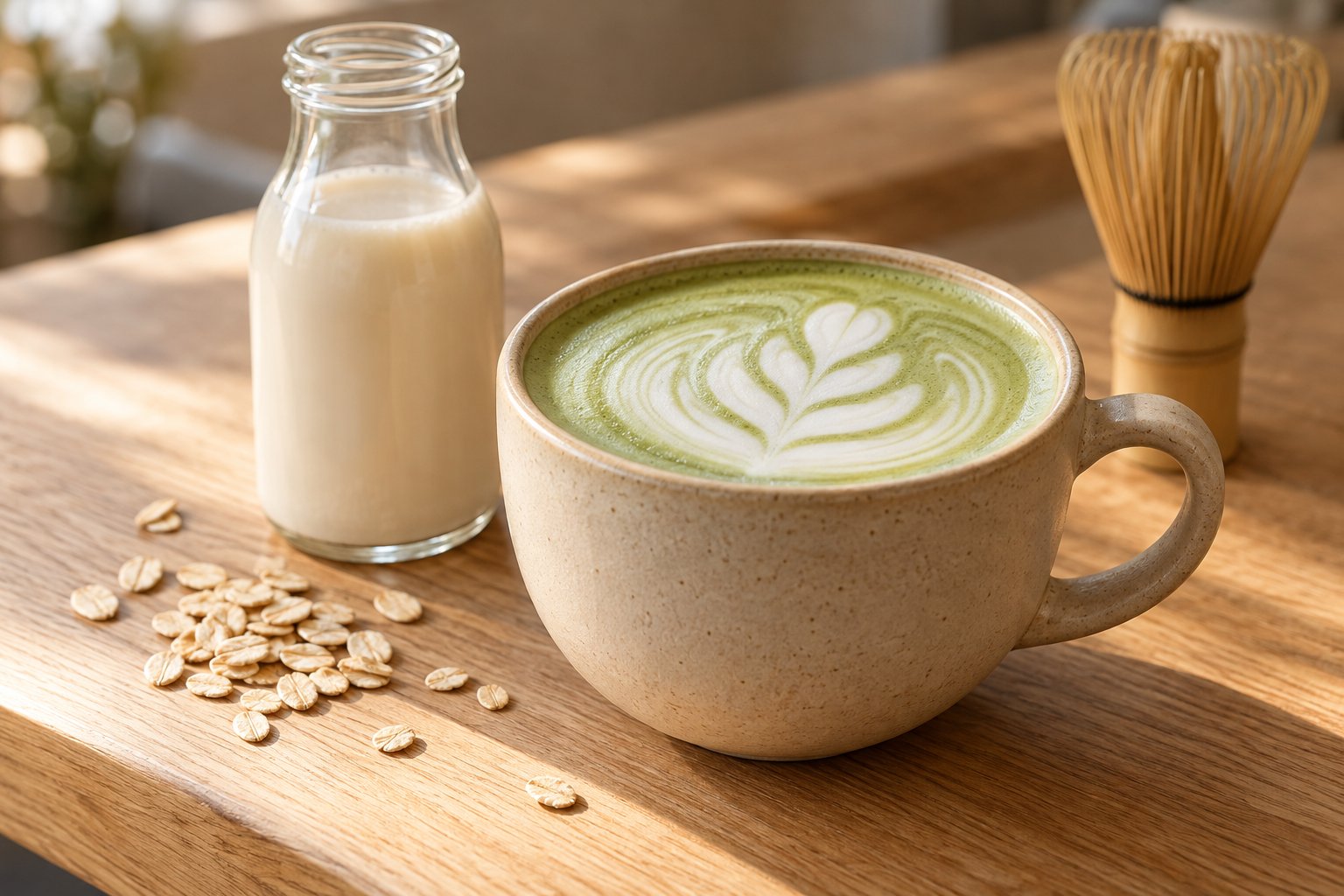
Matcha suits menu items mixed with milk or sweeteners, and sencha suits tea brewed and served as it is. Because the whole matcha powder is mixed in, its color and taste stay in the drink.
Menu items that suit matcha
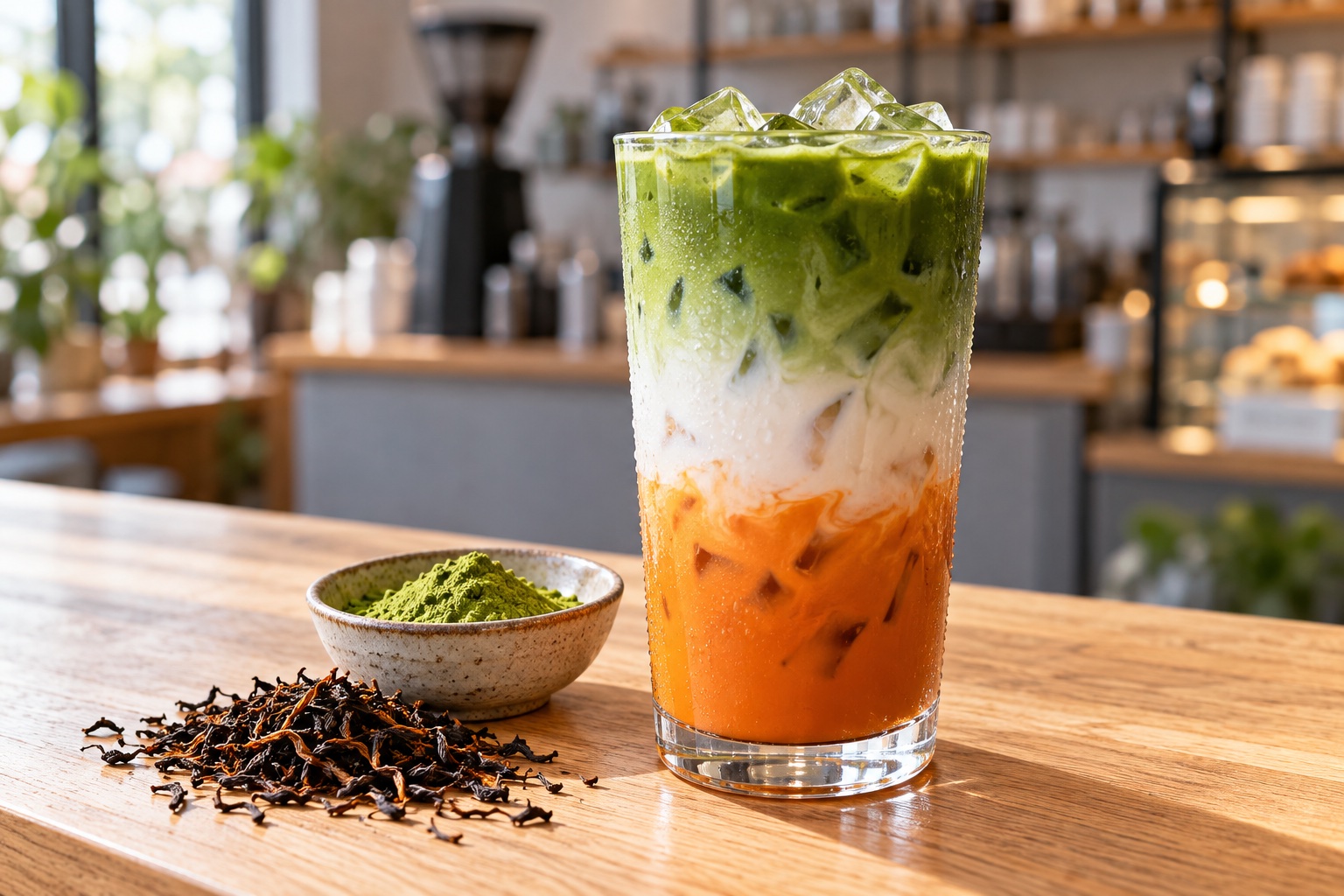
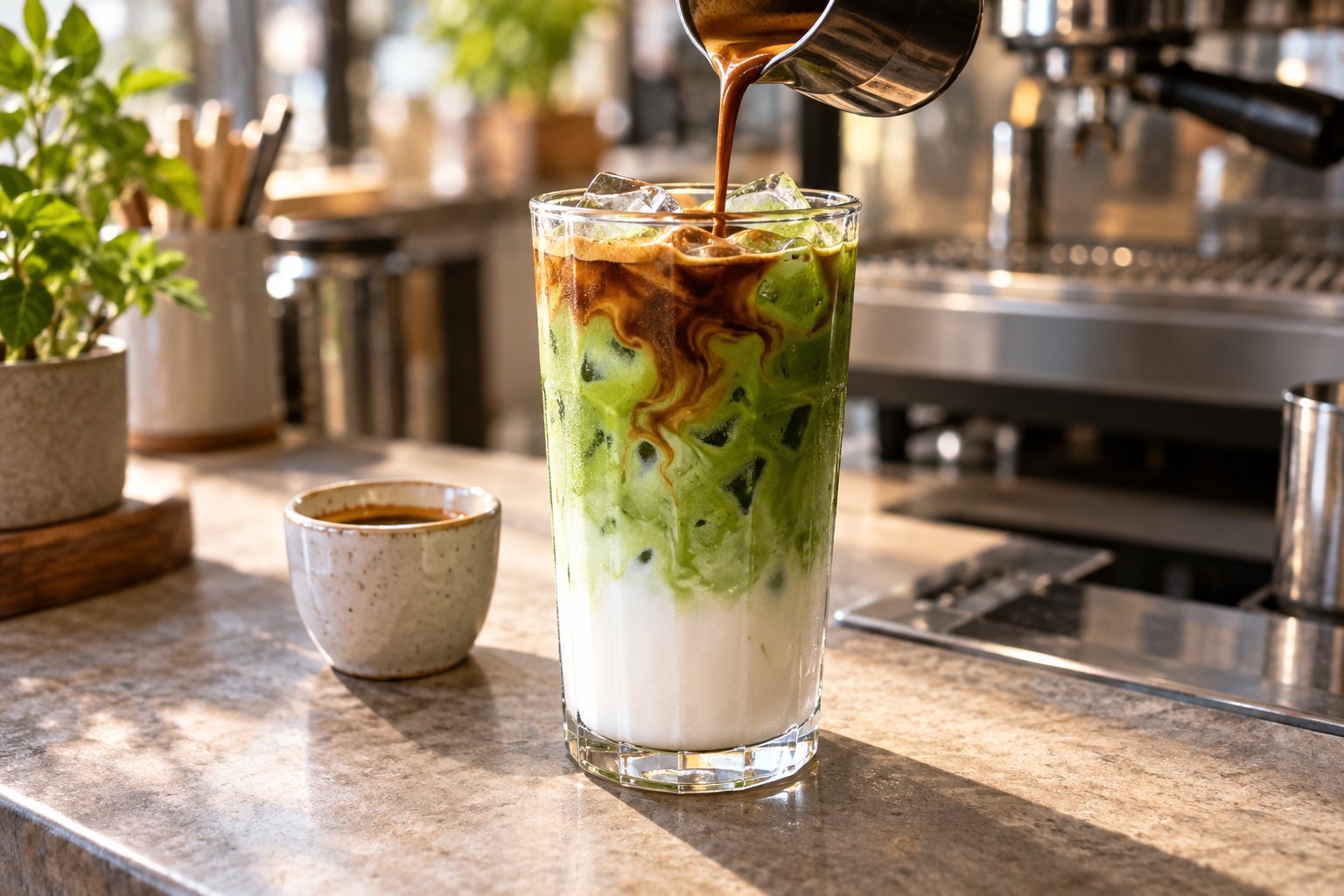
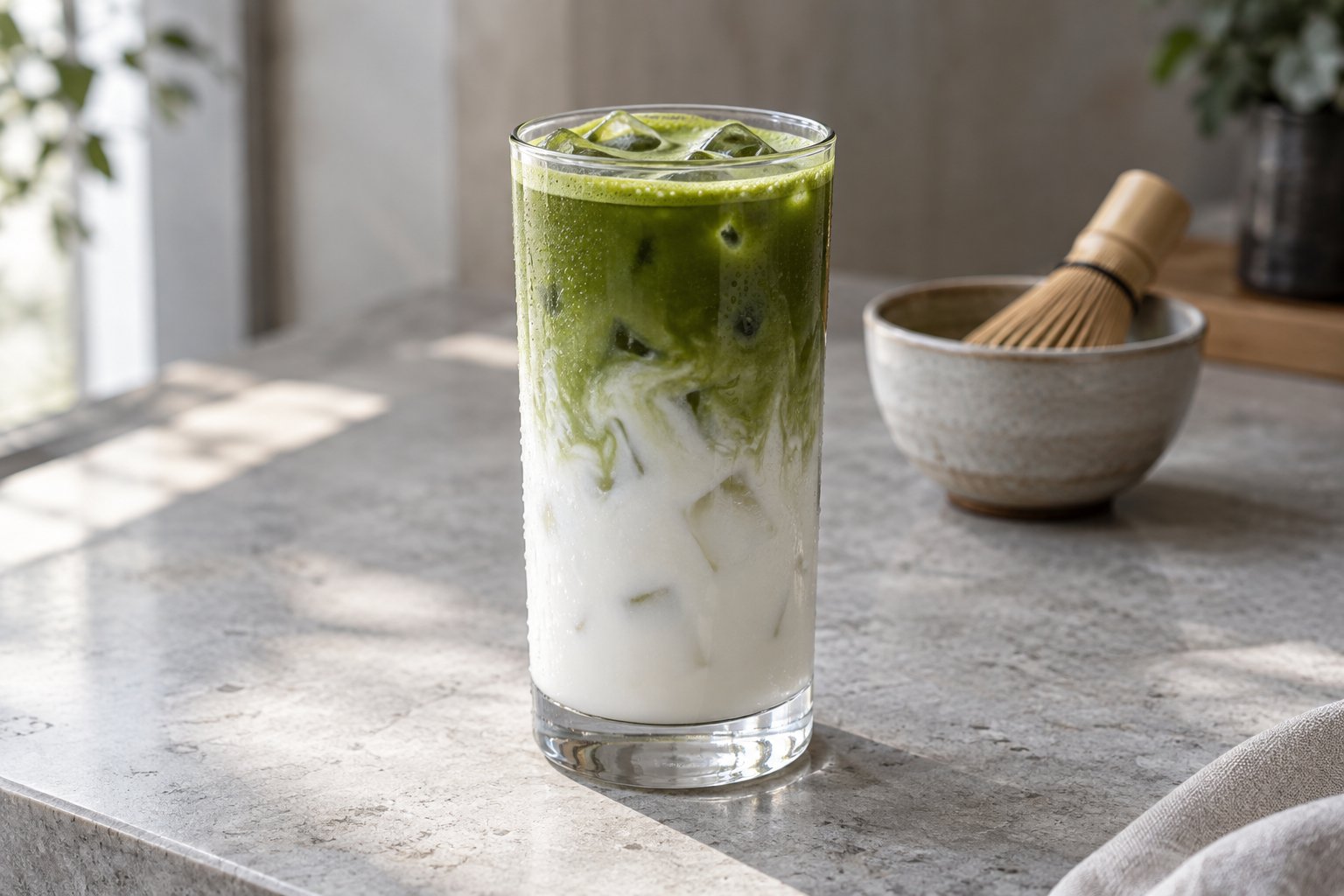
- Matcha latte, iced matcha latte, matcha served straight
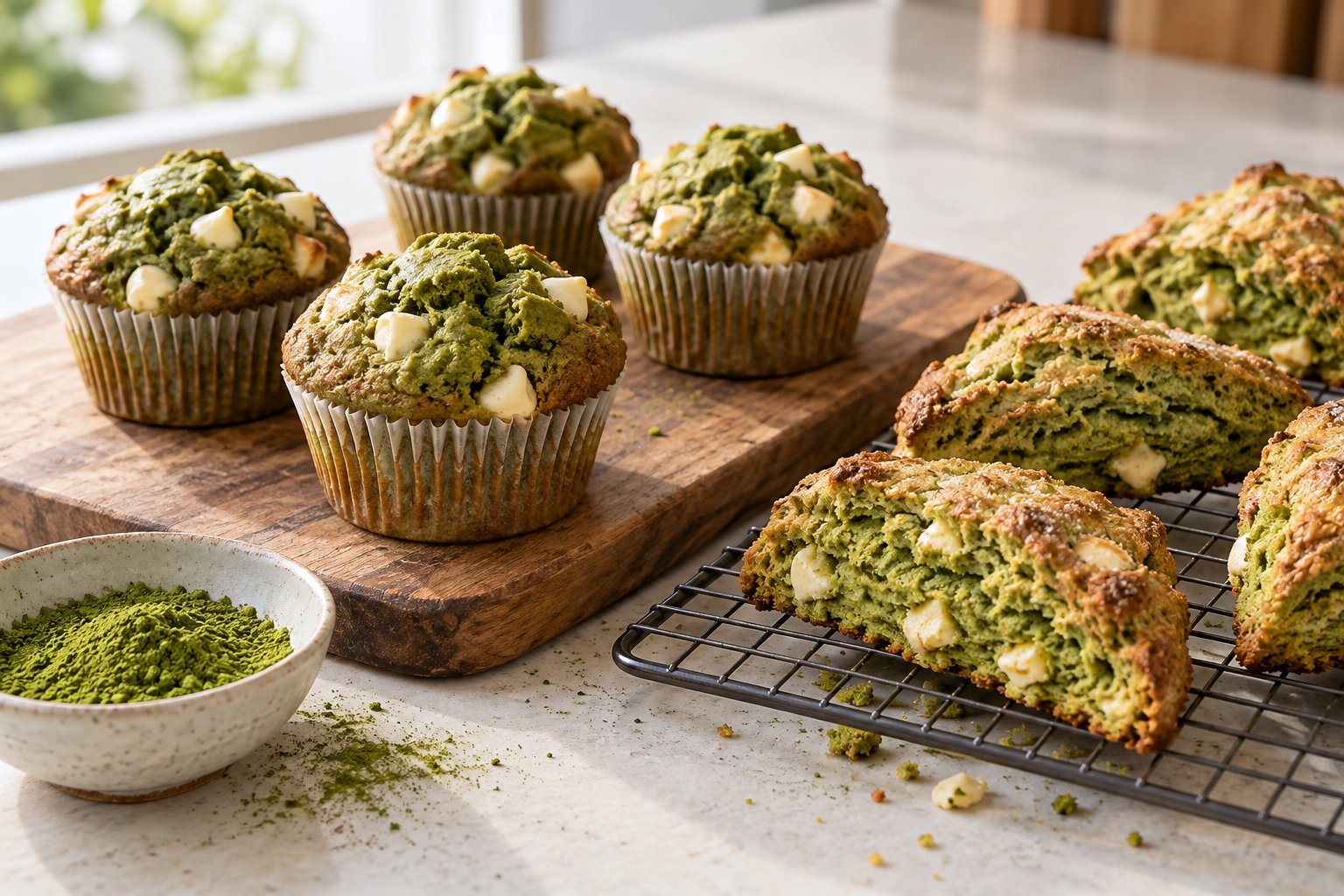
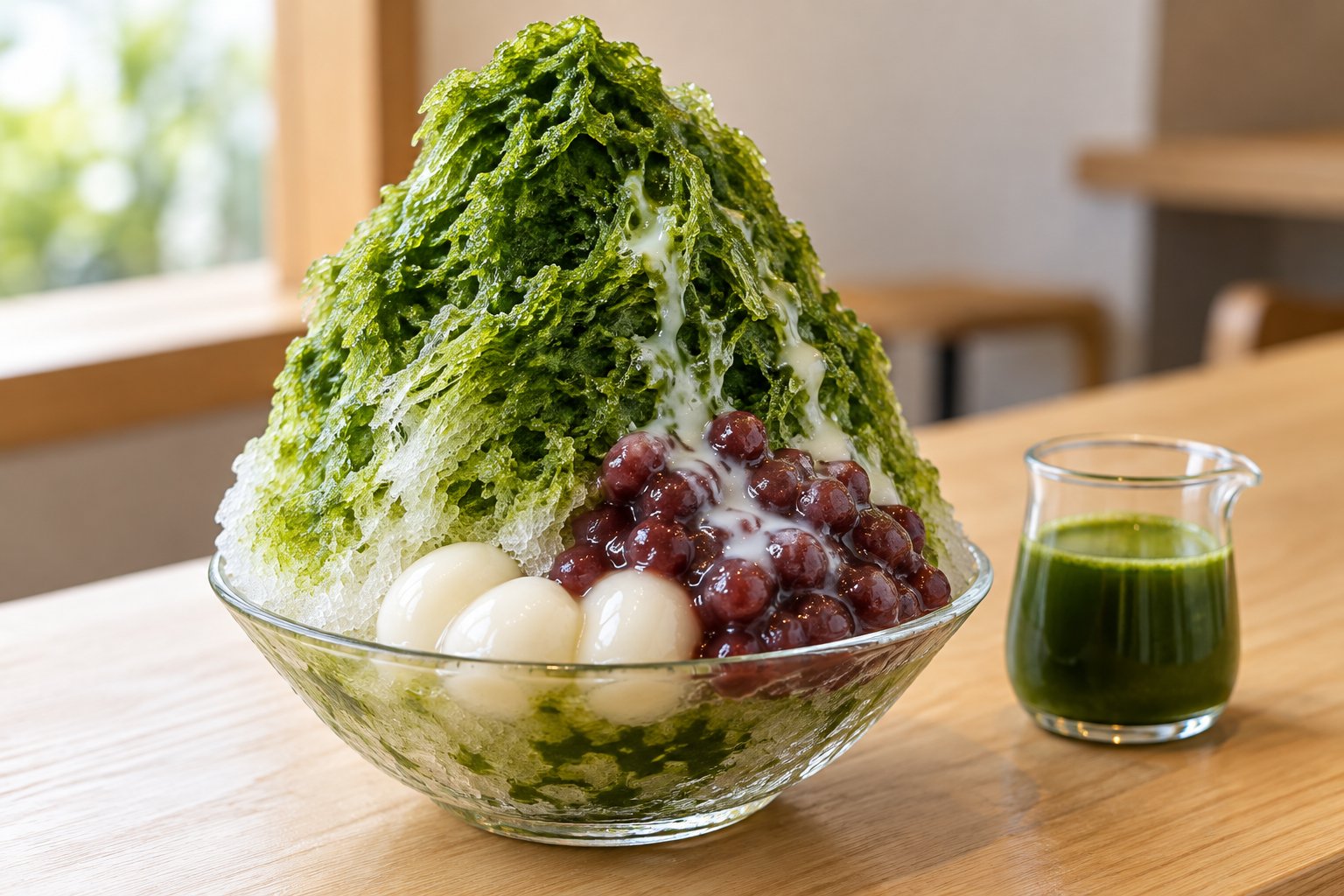
- Sweet drinks and smoothies, baked goods, ice cream
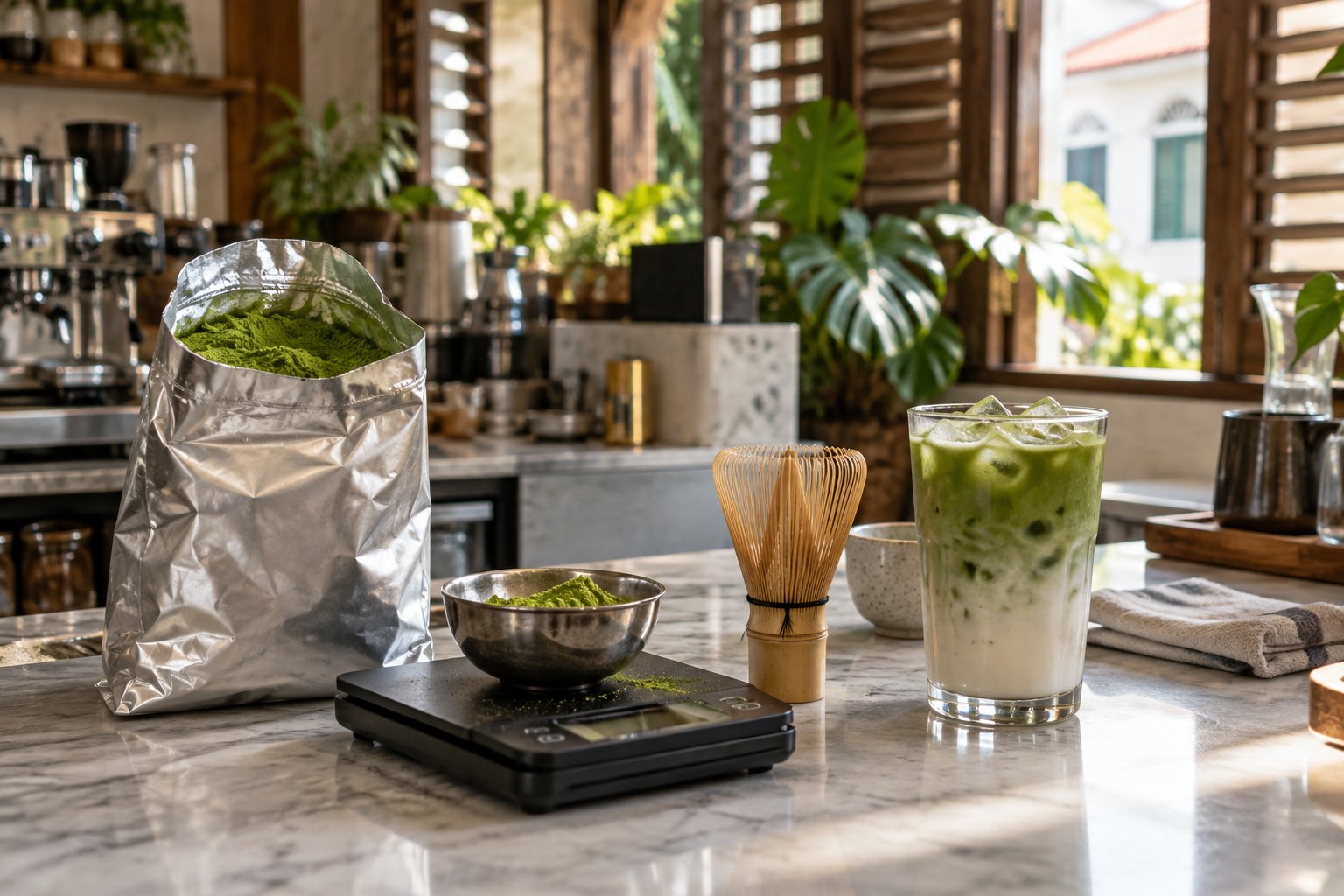
Because the powder is mixed into the liquid, there is no need to strain leaves, and the amount per cup can be set in grams. Grades and recipes for lattes are covered in How to Choose Matcha for Café Lattes.
Menu items that suit sencha
- Hot green tea brewed in a teapot or pot
- Green tea served cold
Because it is brewed by steeping the leaves, the leaves are removed after pouring. By the Kyoto Prefectural Tea Research Institute’s method, it is about 10g of leaves with water at about 70°C for about 2 minutes.
What to check on the menu name and when buying
If you write “matcha” on your menu, check the specification sheet to confirm that the raw material of the powder you buy is tencha. Low-priced green powders also include powdered tea and latte mixes. Ask your supplier for:
- Ingredients and name (matcha, powdered tea, or a mix containing sugar or other ingredients)
- Origin and picking season (first flush, or second flush and later)
- Lot number, certificate of analysis and pesticide residue test results
Differences by origin are covered in region articles such as What Is Uji Matcha?
Sources
- MEXT, “日本食品標準成分表(八訂)増補2023年” (Standard Tables of Food Composition in Japan, 8th revised edition, 2023 supplement, in Japanese) https://www.mext.go.jp/a_menu/syokuhinseibun/mext_00001.html
- MEXT Food Composition Database, “抹茶 茶” (Matcha, tea, food number 16035, in Japanese) https://fooddb.mext.go.jp/details/details.pl?ITEM_NO=16_16035_7
- MEXT Food Composition Database, “せん茶 茶” (Sencha, tea leaves, food number 16036, in Japanese) https://fooddb.mext.go.jp/details/details.pl?ITEM_NO=16_16036_7
- MEXT Food Composition Database, “せん茶 浸出液” (Sencha, infusion, food number 16037, in Japanese) https://fooddb.mext.go.jp/details/details.pl?ITEM_NO=16_16037_7
- Japan Tea Central Public Interest Incorporated Association, “緑茶の表示基準” (Green Tea Labelling Standard, last revised 10 July 2026, in Japanese) https://www.nihon-cha.or.jp/pdf/hyoujikijyun.pdf
- MAFF, “茶をめぐる情勢(令和8年10月)” (The situation of tea, October 2026, in Japanese) https://www.maff.go.jp/j/seisan/tokusan/cha/attach/pdf/ocha-201.pdf
- Ippodo Tea, “2026年10月・11月 商品仕様の見直しと価格改定について” (Product specification changes and price revisions for October and November 2026; average trading prices at the JA Zen-Noh Kyoto tea market, in Japanese) https://www.ippodo-tea.co.jp/blogs/news/20260901
- NARO, “国産抹茶の価格と化学成分含有量の関係” (Relationship between price and chemical composition of Japanese matcha, 2018, in Japanese) https://www.naro.go.jp/project/results/4th_laboratory/nifts/2018/nifts18_s16.html
- NARO, “被覆茶安定生産マニュアル” (Manual for stable production of shaded tea, 2018, in Japanese) https://www.naro.go.jp/PUBLICITY_REPORT/publication/files/hihukucha-antei_man201803.pdf
- Consortium 26099 (NARO and partners), “日本茶業の活性化に資する茶品種育成とその栽培・加工技術マニュアル” (Manual on tea cultivars, growing and processing, centered on the cultivar Seimei, 2019, in Japanese) https://www.naro.go.jp/PUBLICITY_REPORT/publication/files/nifts_teaikusei_pamph201903031.pdf
- Kyoto Prefectural Tea Research Institute, “お茶のおいしい入れ方 抹茶” (How to make good tea: matcha, in Japanese) https://www.pref.kyoto.jp/chaken/irekata_maccha.html
- Kyoto Prefectural Tea Research Institute, “お茶のおいしい入れ方 煎茶” (How to make good tea: sencha, in Japanese) https://www.pref.kyoto.jp/chaken/irekata_sencha.html