
 Reviewed by: Takahiro Sugiyama (CEO, meguri Inc.)
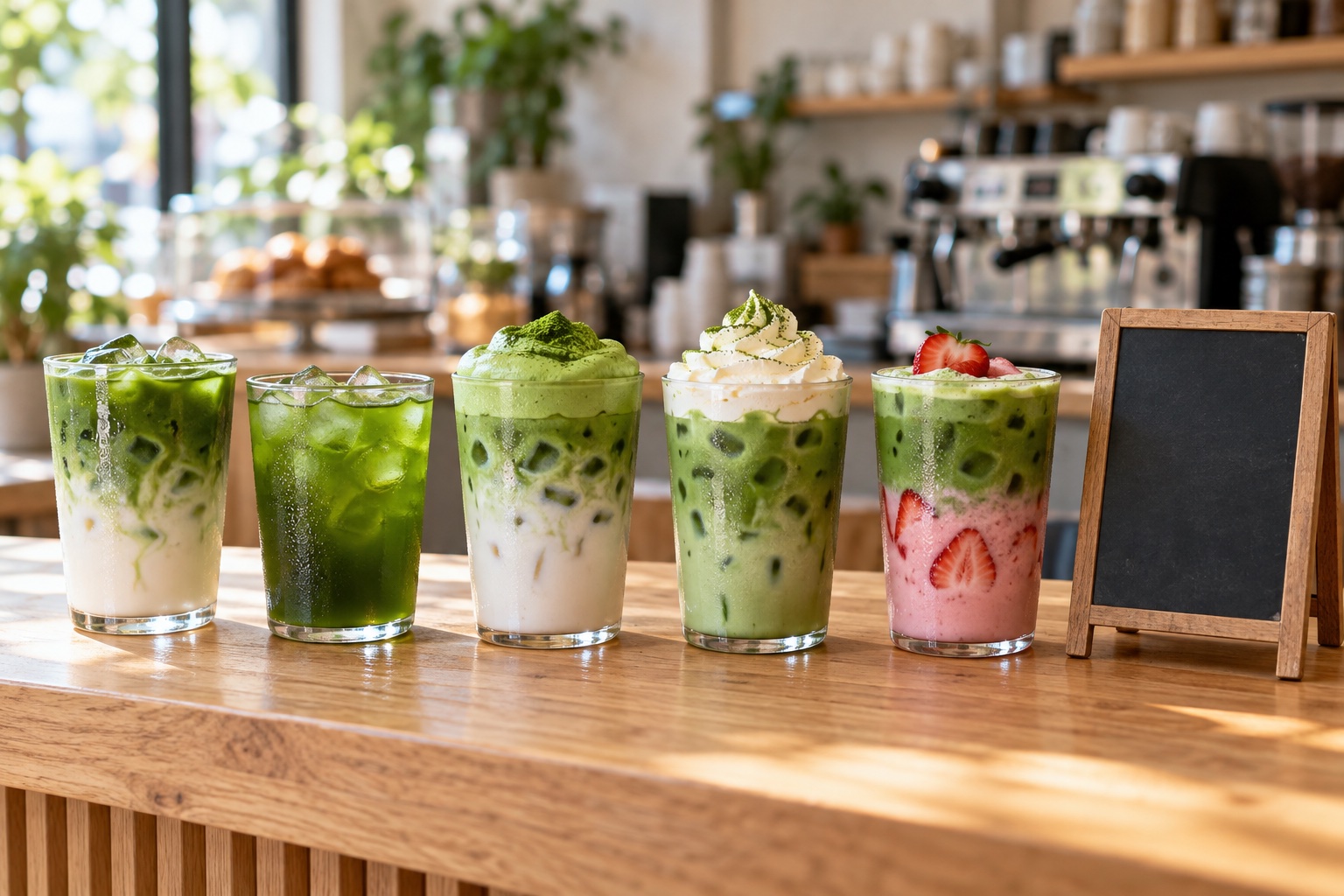
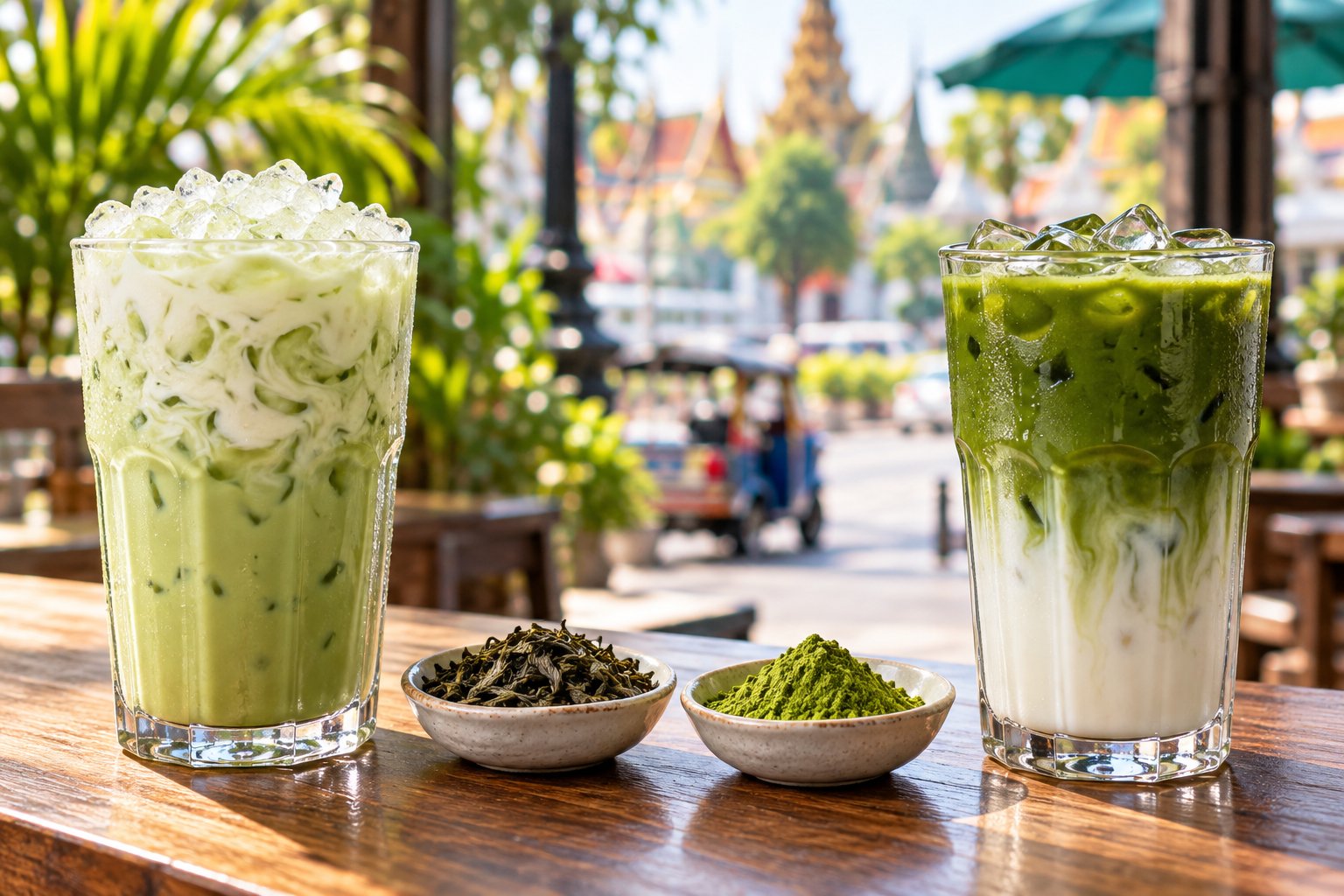
At cafés in Thailand, Singapore and Indonesia, matcha drinks are listed with names in both English and the local language. The Thai coffee chain Café Amazon calls one drink “เพียวมัทฉะเย็น”, a Starbucks store in Thailand calls a similar drink “Iced Clear Pure Matcha”, and matcha cafés in Singapore call it “Straight Matcha”. In the other direction, one “green tea latte” may be made with matcha and another with jasmine green tea. If you check the contents in the menu descriptions on delivery sites and official websites, you can build a name table and see which names change in meaning from café to café.
The same matcha drink name can mean different things
Matcha drink names have no fixed definitions, and the same name can mean different contents at different cafés. When you translate a menu, match the contents in the description, not just the name.
Examples of one name with different contents
Reading the menu descriptions turned up mismatches like these.
- At Starbucks in Thailand, “Iced Clear Pure Matcha” is matcha with water, while “Pure Matcha Latte” is unsweetened matcha powder with milk and syrup. Here pure refers to the matcha powder, not to “topped up with water”
- “Green Tea Latte” is made with matcha at Starbucks in Indonesia and Thailand, and with jasmine green tea at KOI Thé in Thailand
- “Dirty Matcha” contains espresso at many cafés, but in Indonesia there is a “Dirty Matcha Regal” made with a biscuit
The menus used here
For Thailand, these are the menu descriptions for Café Amazon, Starbucks (Siam Future Ekkamai), Inthanin (อินทนิล) and KOI Thé (The Mall Bang Khae) on the delivery site Wongnai. For Singapore, the official menus of Starbucks and luckin coffee and articles by the delivery app Grab. For Indonesia, Starbucks’ official website and articles on local information sites. For Japan, nana’s green tea’s official menu. All were opened and checked on 22 October 2026.
Name table: English, Thai, Indonesian and Japanese
Common matcha drink names in four languages are shown below. The names combine those on the menus cited in this article with the translations used in this site’s articles, and the contents are the general way each drink is made.
Table of 15 drinks
| English | Thai | Indonesian | Japanese | Contents |
|---|---|---|---|---|
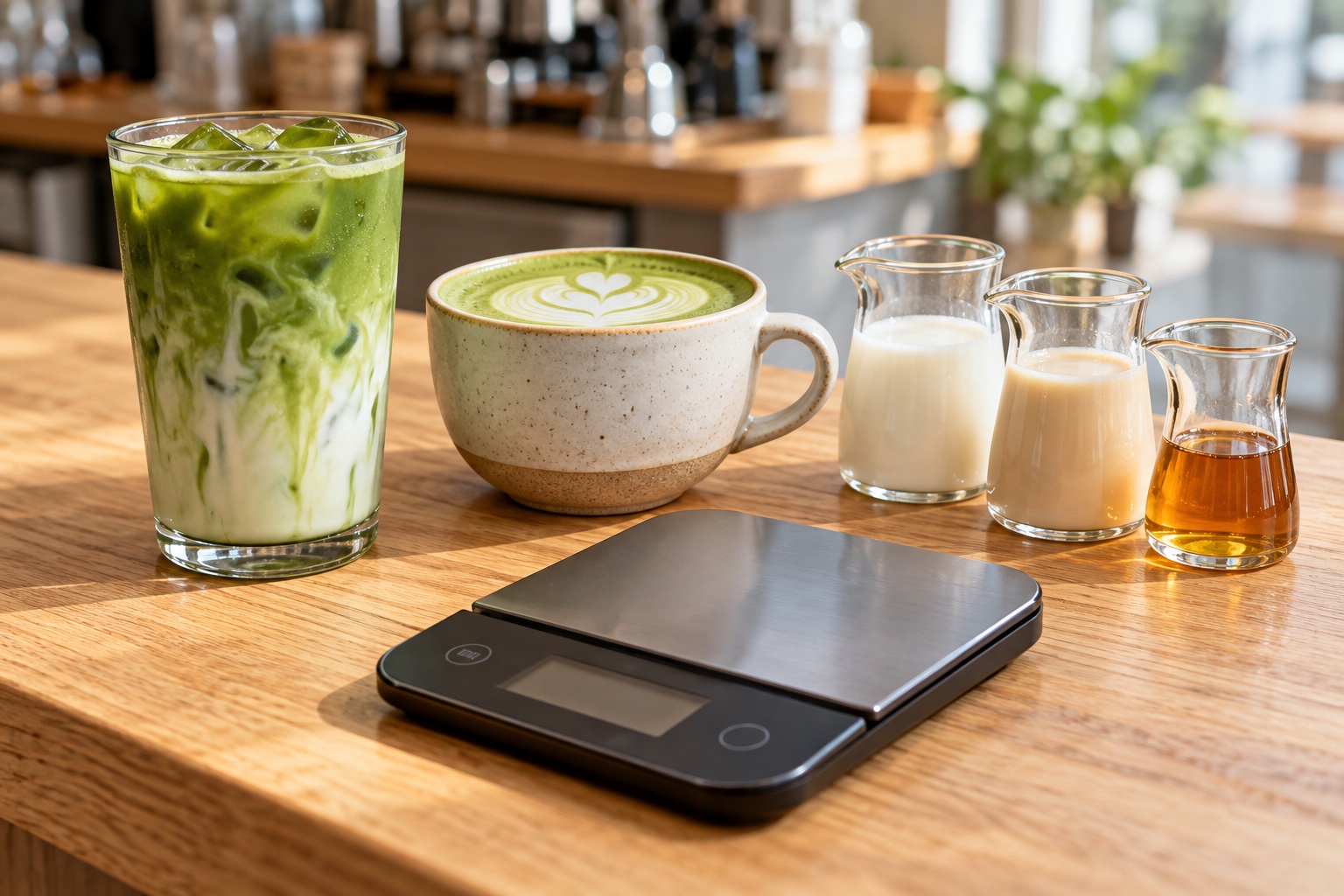
| Matcha latte | มัทฉะลาเต้ | Matcha latte | 抹茶ラテ | Matcha + milk (hot, iced) |
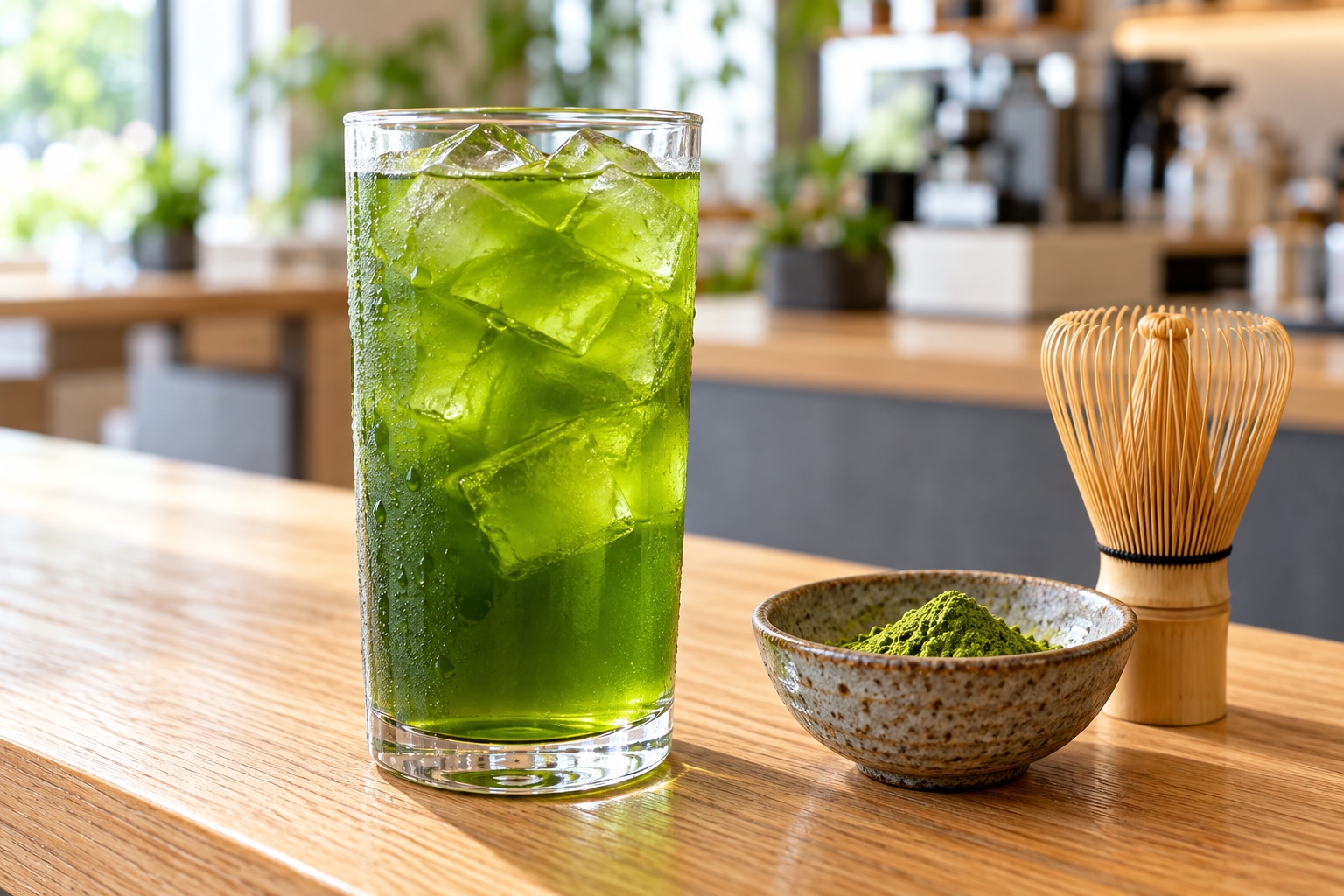
| Pure / Clear / Straight matcha | เพียวมัทฉะ(เย็น) | Matcha cold whisk | 抹茶グリーンティー, 水点て抹茶 | Matcha + water and ice, no milk (how to) |
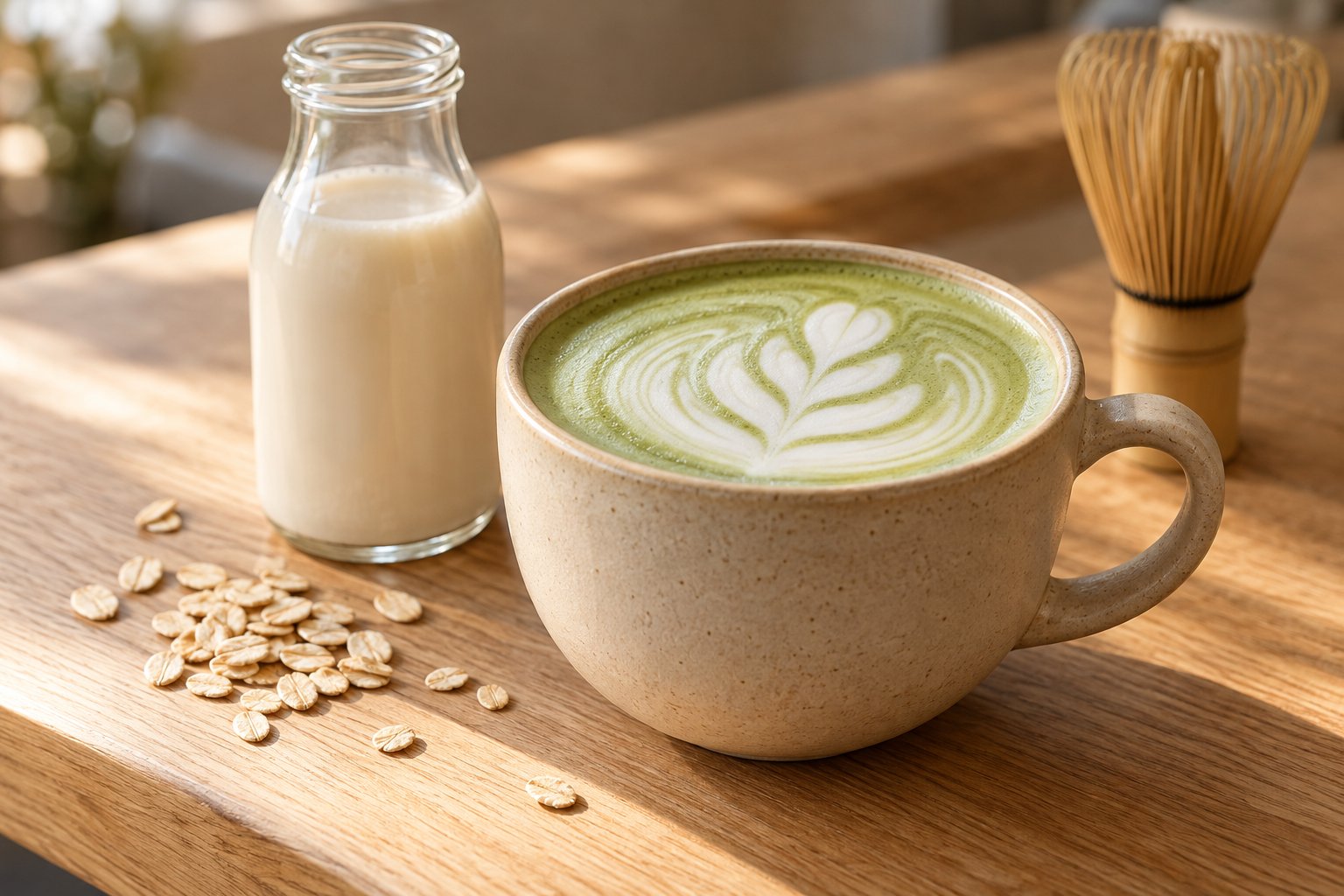
| Oat milk matcha latte / Matcha oat latte | มัทฉะลาเต้นมโอ๊ต | Matcha latte oat milk | オーツミルクの抹茶ラテ | Matcha + oat milk (how to) |
| Coconut milk matcha latte | มัทฉะลาเต้นมมะพร้าว | Matcha latte santan | ココナッツミルクの抹茶ラテ | Matcha + coconut milk (how to) |
| Matcha coconut water | มัทฉะน้ำมะพร้าว | Matcha air kelapa | 抹茶ココナッツウォーター | Matcha + coconut water (how to) |
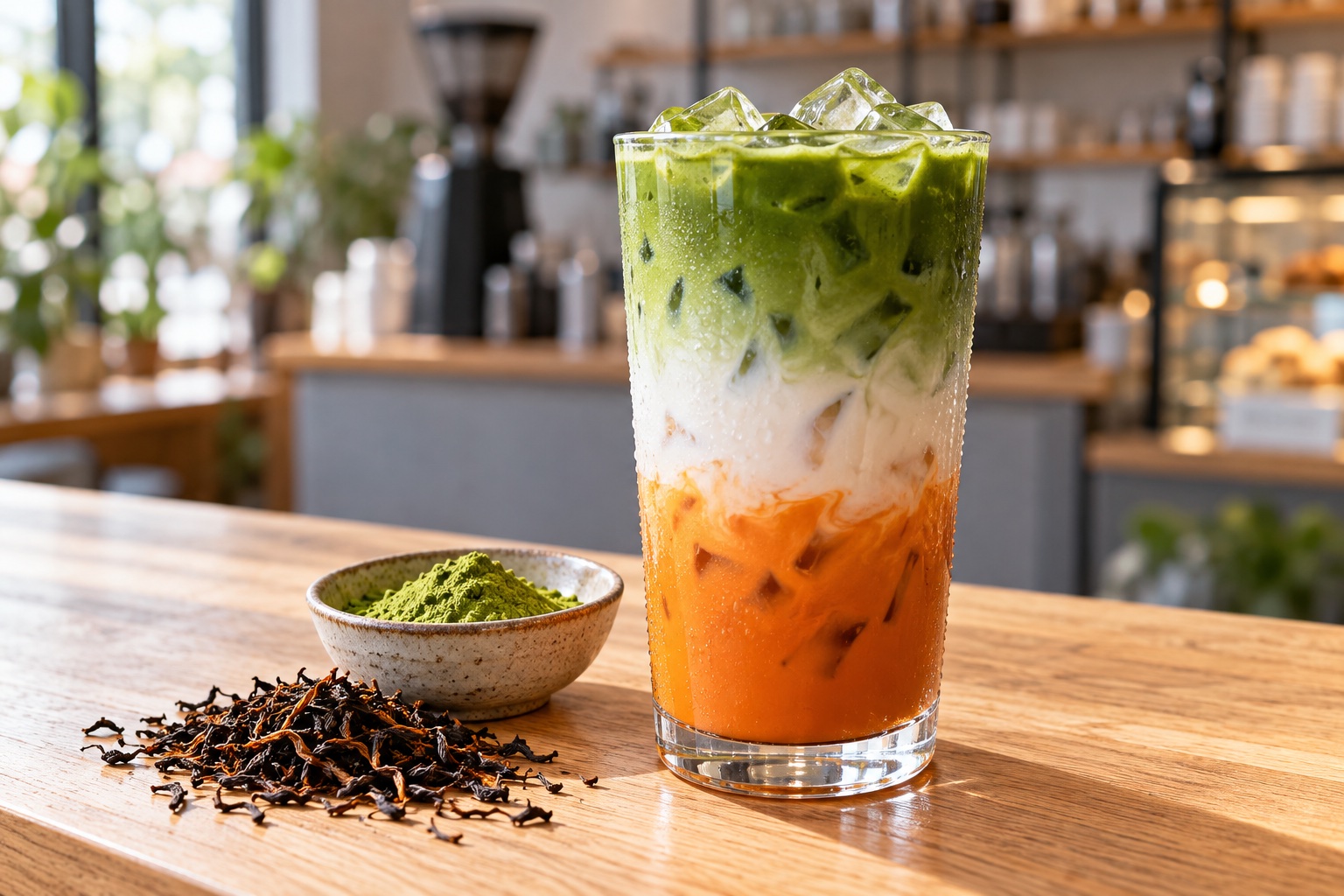
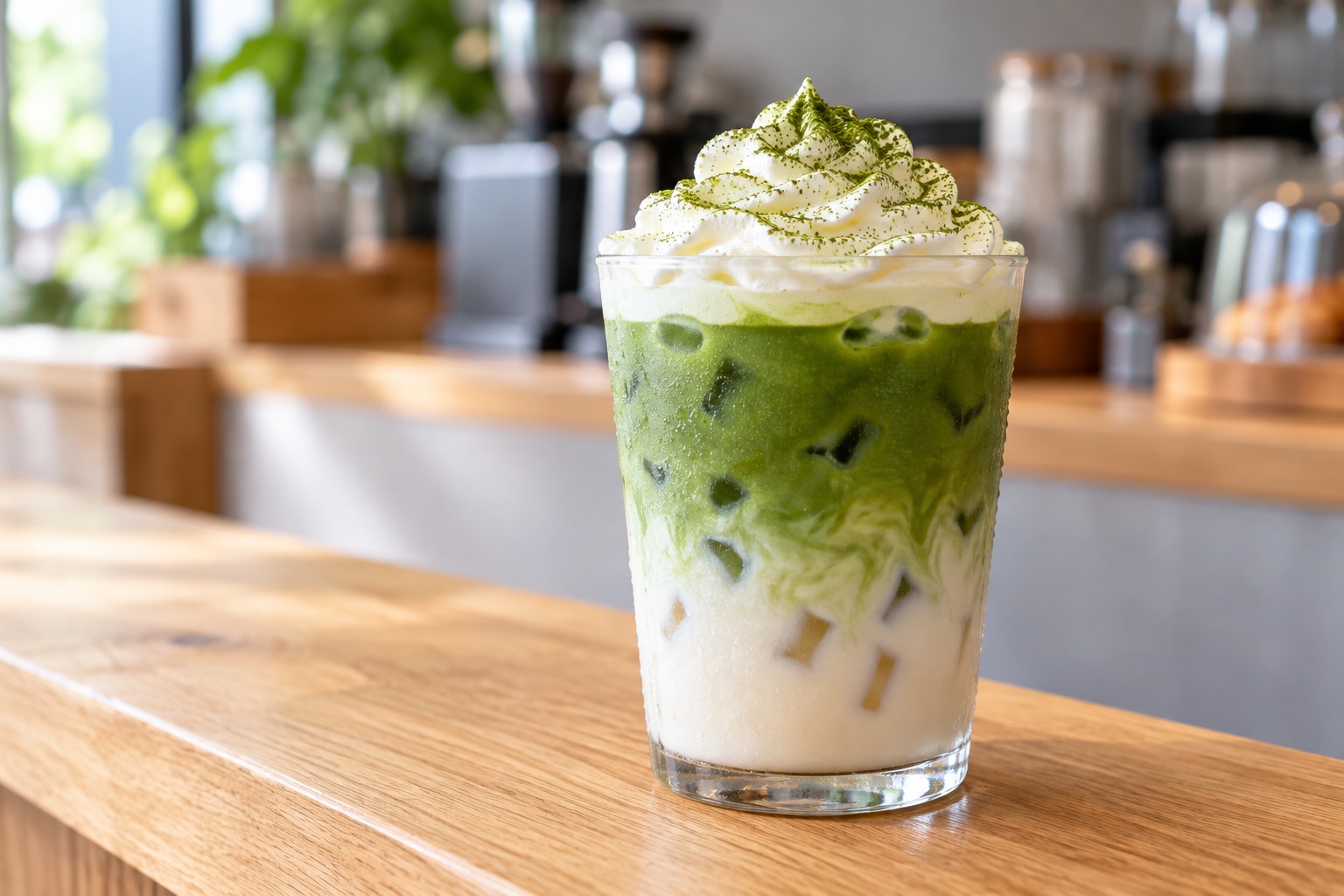
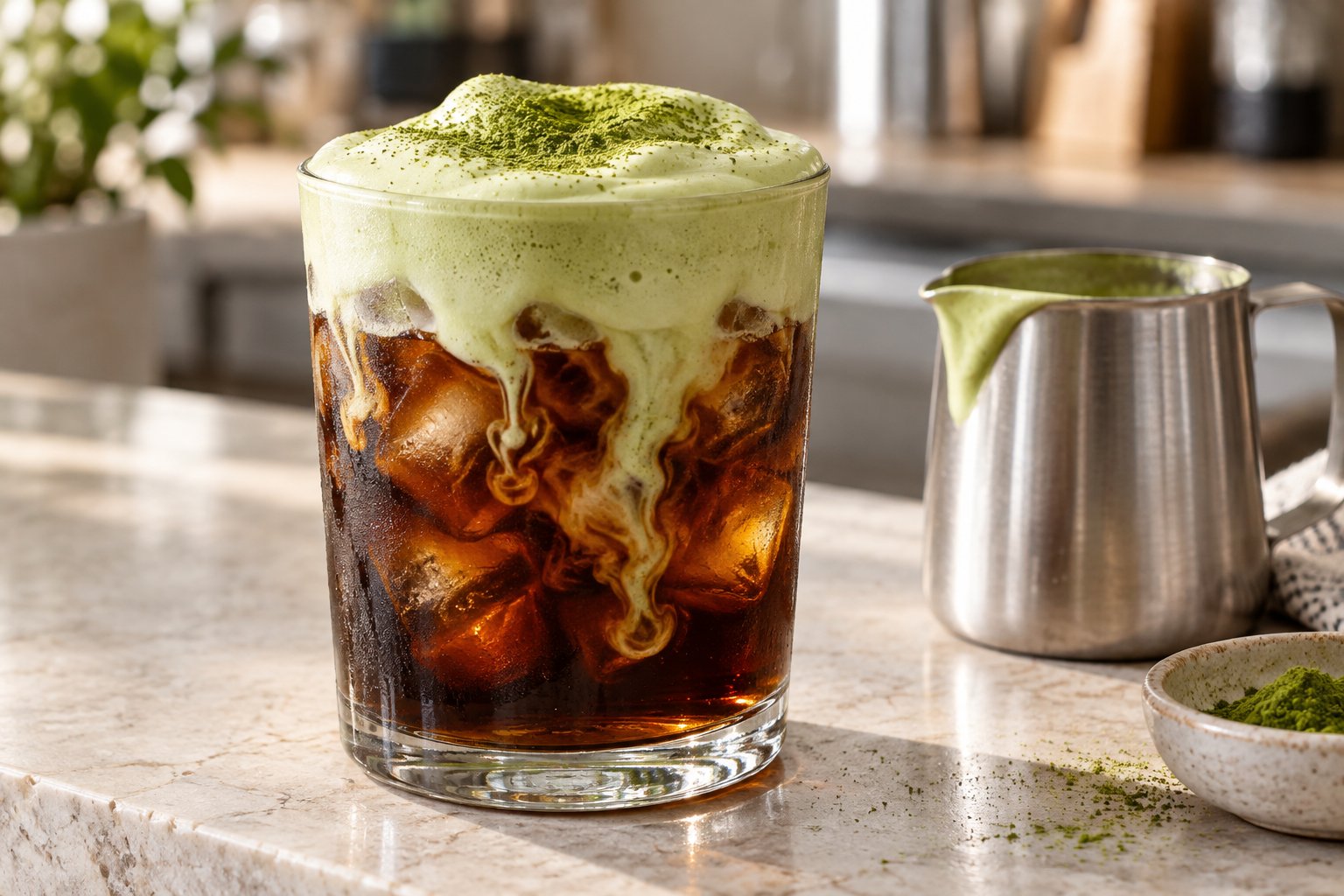
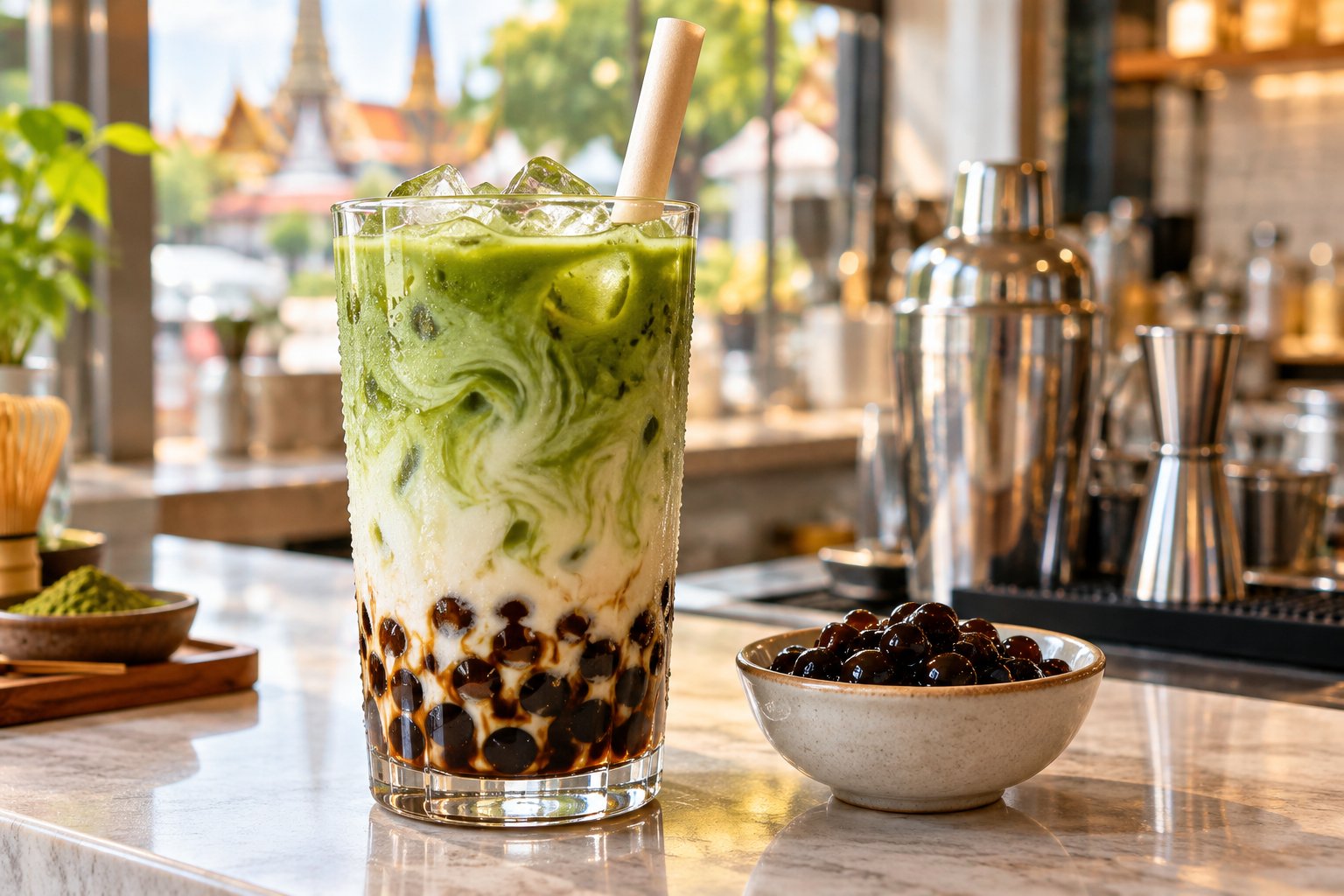
| Cloud matcha | มัทฉะคลาวด์ | Matcha on cloud | クラウド抹茶 | A layer of foam on a liquid (contents differ by café, how to) |
| Matcha einspanner | Matcha einspanner | Matcha einspanner | 抹茶アインシュペナー | Matcha latte + whipped cream (how to) |
| Matcha macchiato | Matcha macchiato | Matcha macchiato | 抹茶マキアート | Matcha + a layer of milk cream (contents differ by café) |
| Matcha cold foam | Matcha cold foam | Matcha cold foam | 抹茶コールドフォーム | Cold milk or cream foamed without heating (how to) |
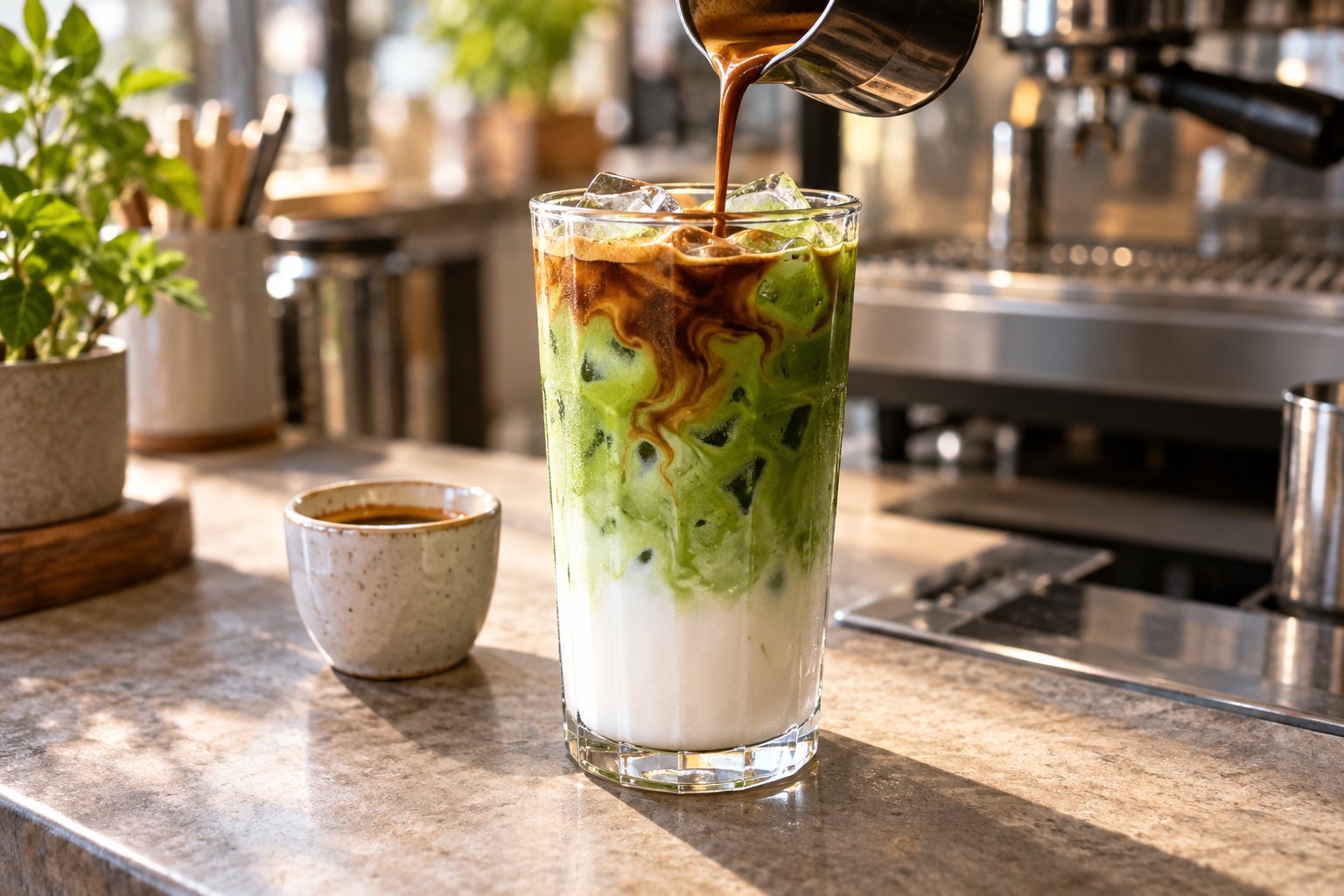
| Dirty matcha / Matcha & Espresso Fusion | Dirty Matcha | Dirty matcha | ダーティー抹茶 | Matcha latte + espresso (how to) |
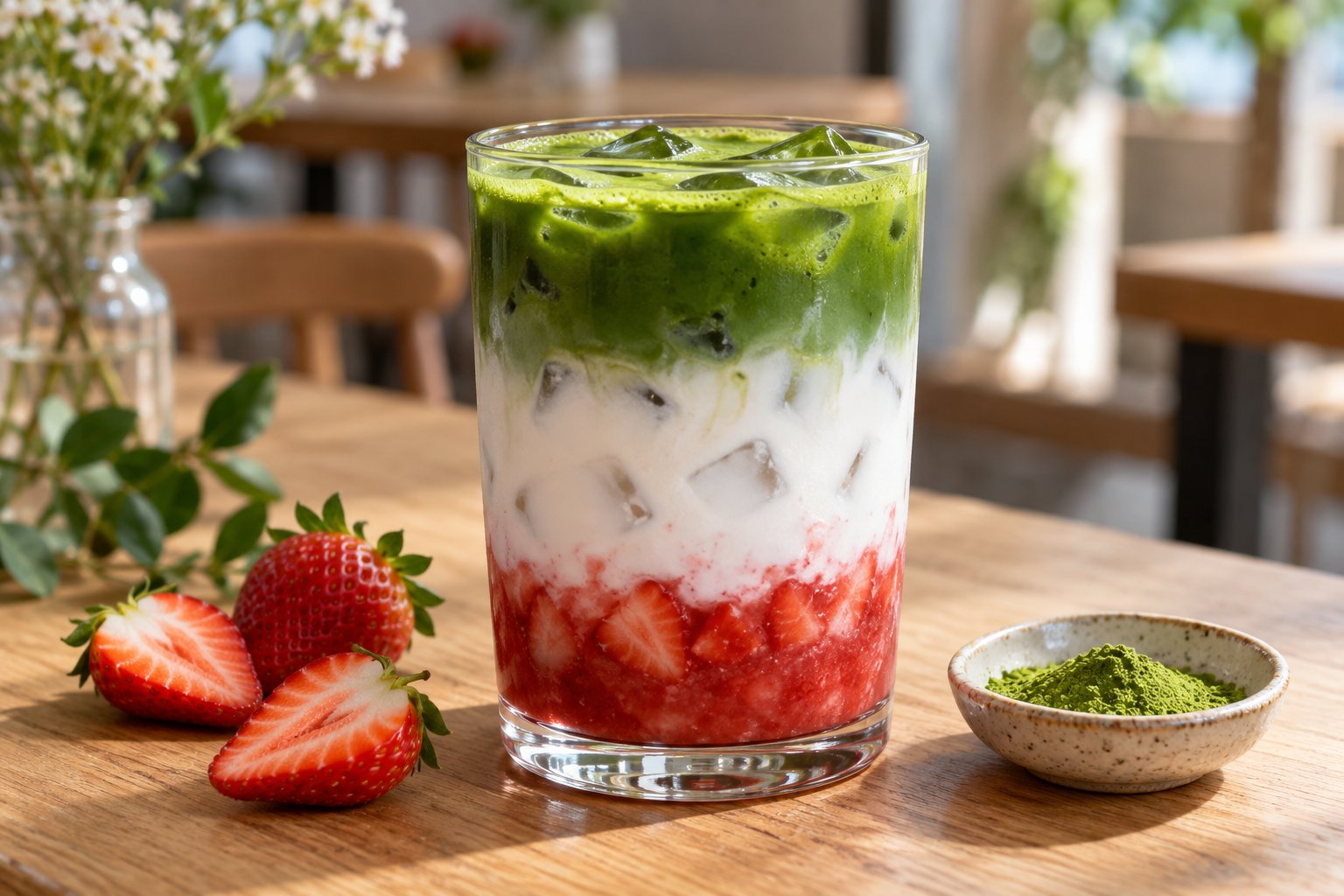
| Strawberry matcha latte | สตรอว์เบอร์รี่มัทฉะลาเต้ | Strawberry matcha latte | ストロベリー抹茶ラテ | Strawberry + milk + matcha (how to) |
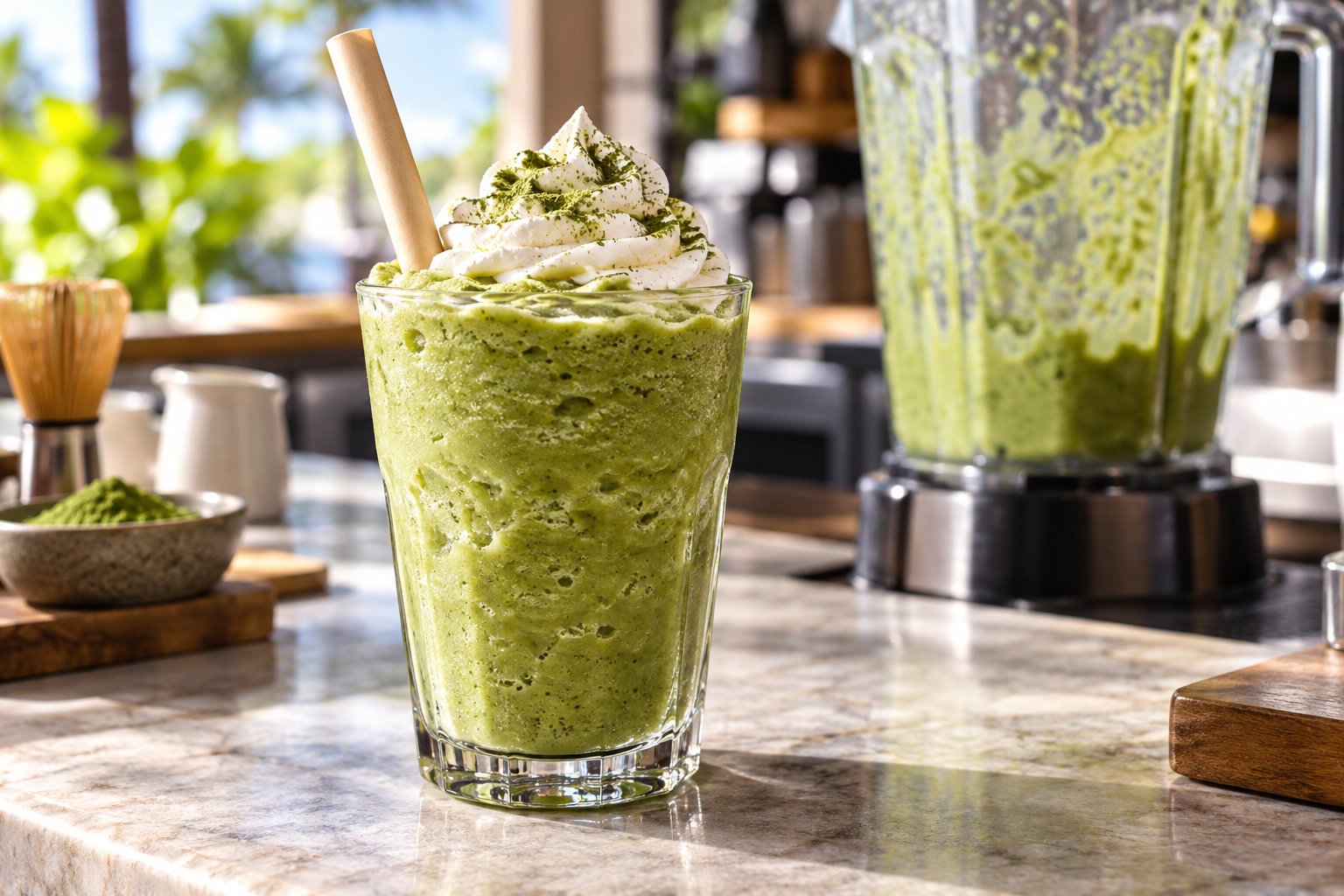
| Matcha frappe | มัทฉะปั่น | Matcha frappe | 抹茶フラッペ | Matcha + milk + ice, blended (how to) |
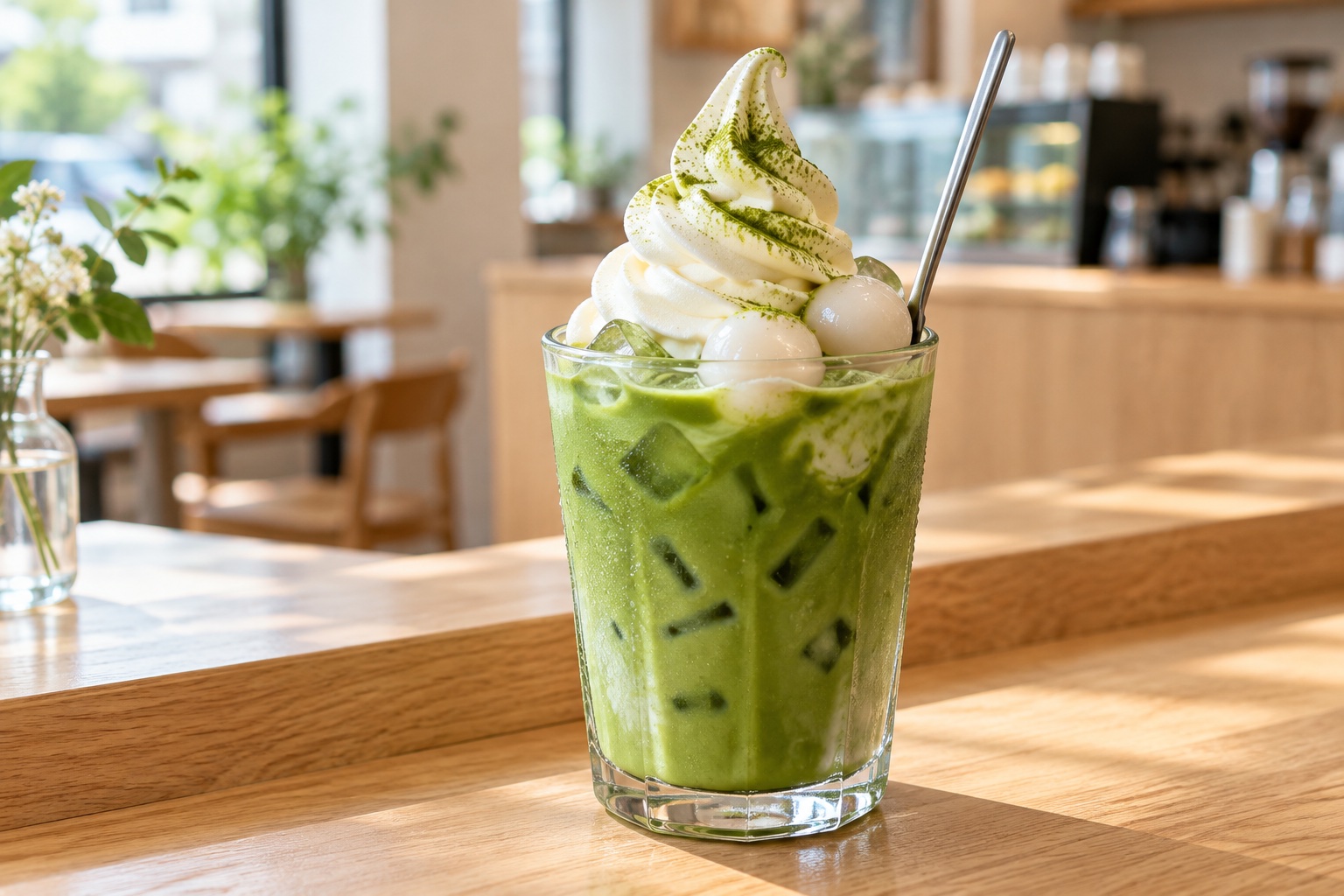
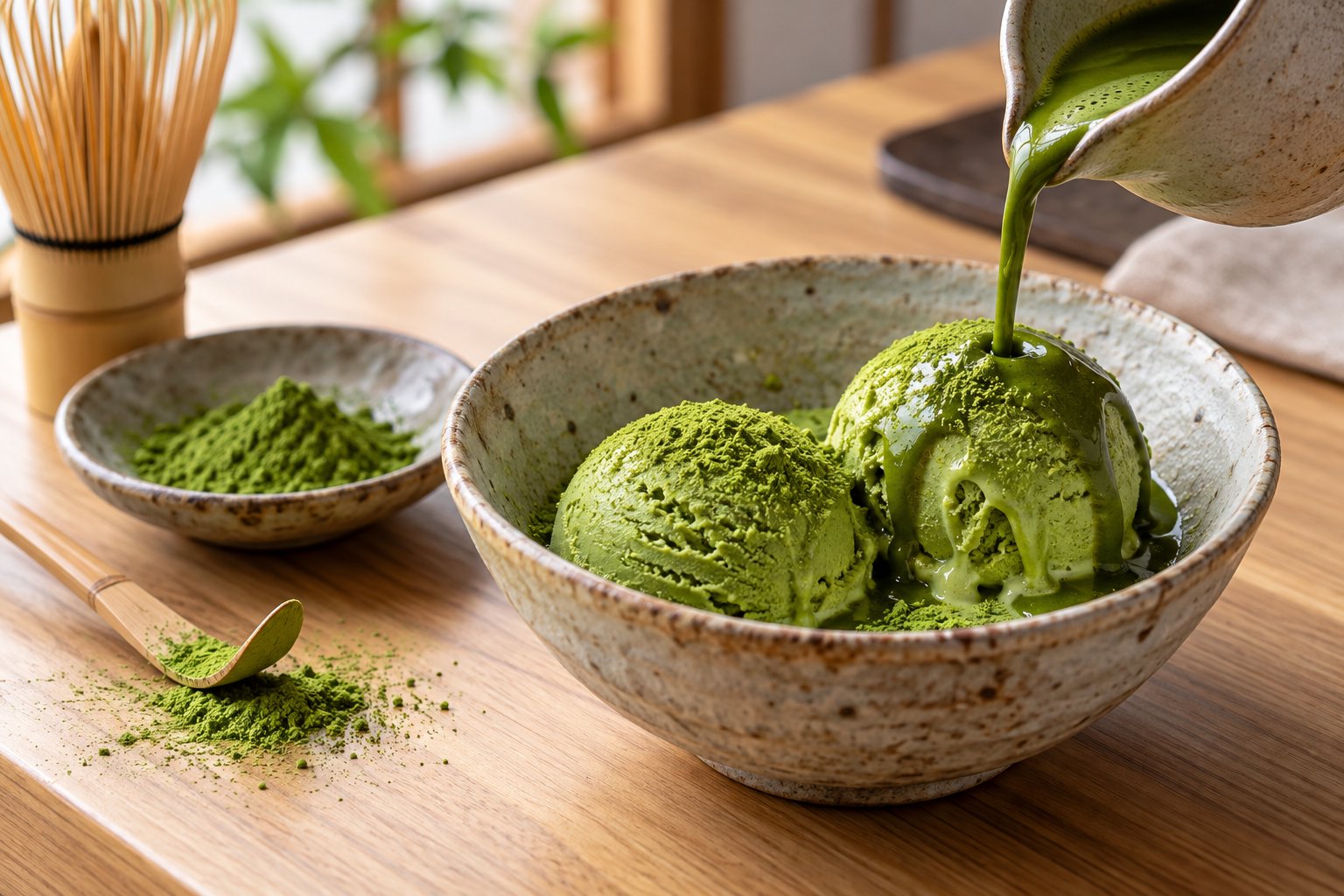
| Matcha float | มัทฉะโฟลต | Matcha float | 抹茶フロート | Matcha drink + ice cream (how to) |
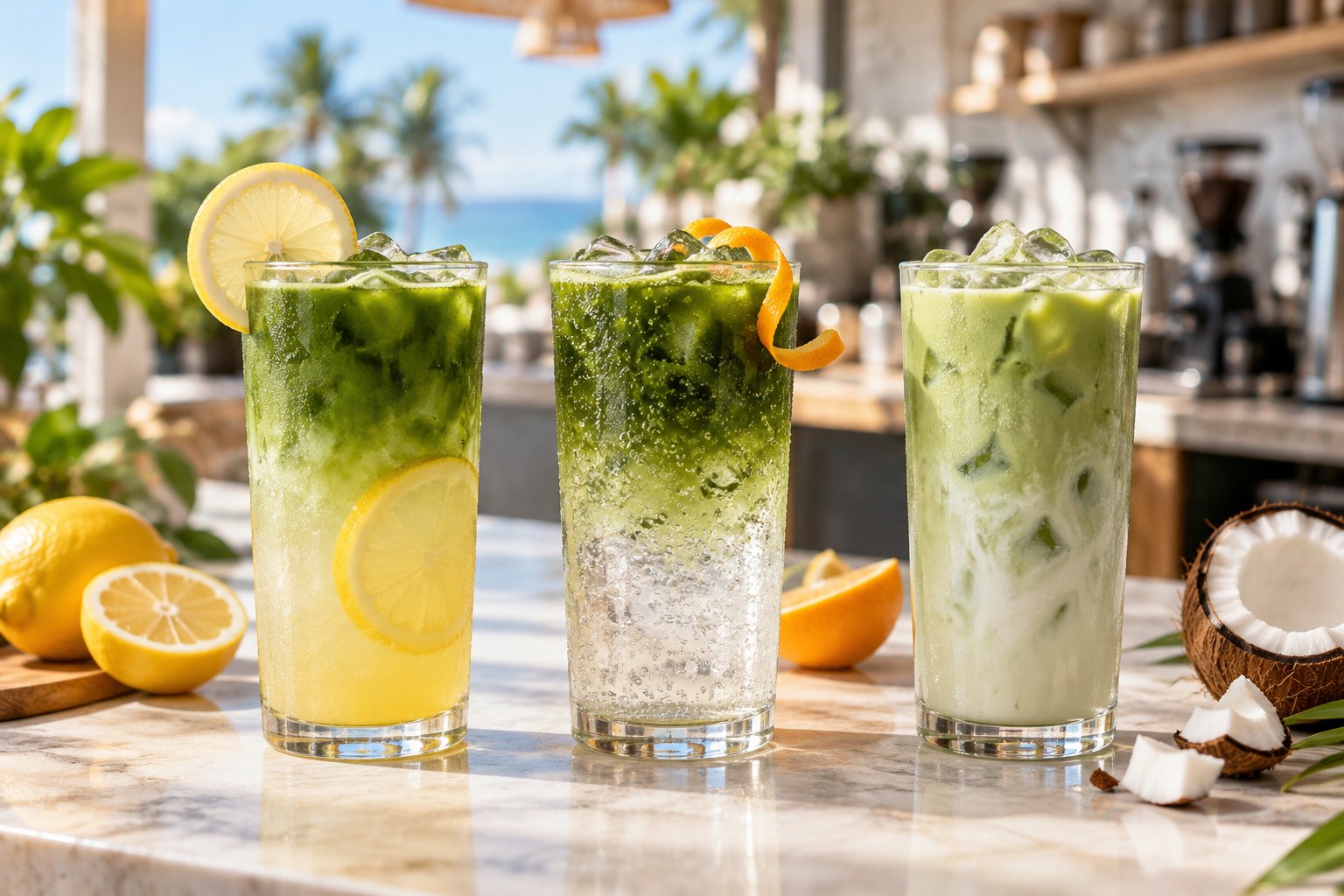
| Matcha lemonade / tonic / soda | มัทฉะโซดา | Matcha soda | 抹茶レモネード・トニック・ソーダ | Matcha + juice or carbonated water (how to) |
| Hojicha latte | โฮจิฉะลาเต้ | Hojicha latte | ほうじ茶ラテ | Roasted tea + milk, not matcha (how to) |
A list that includes other drinks and the amount of matcha in each is on the Matcha drinks page.
How to read the table
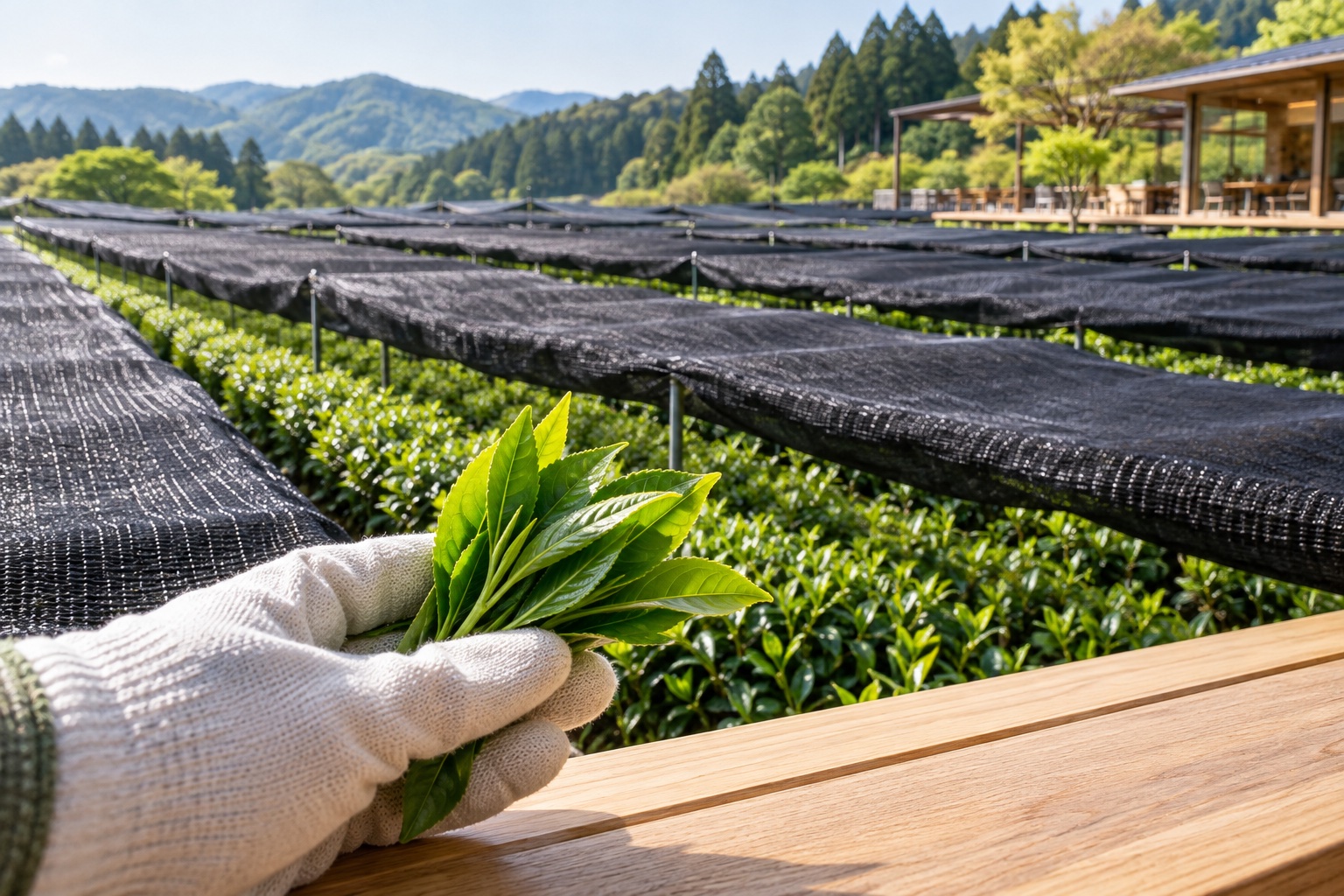
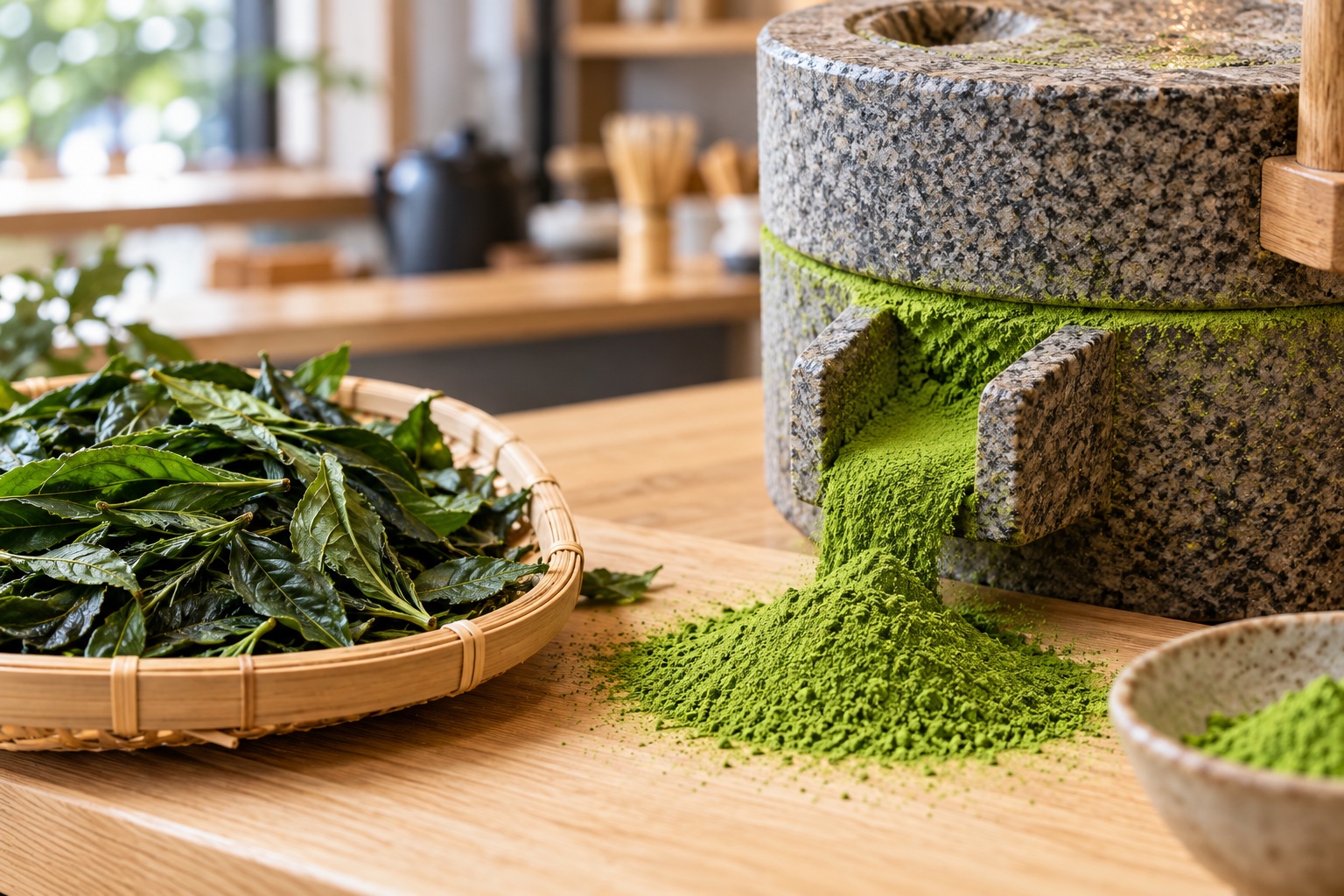
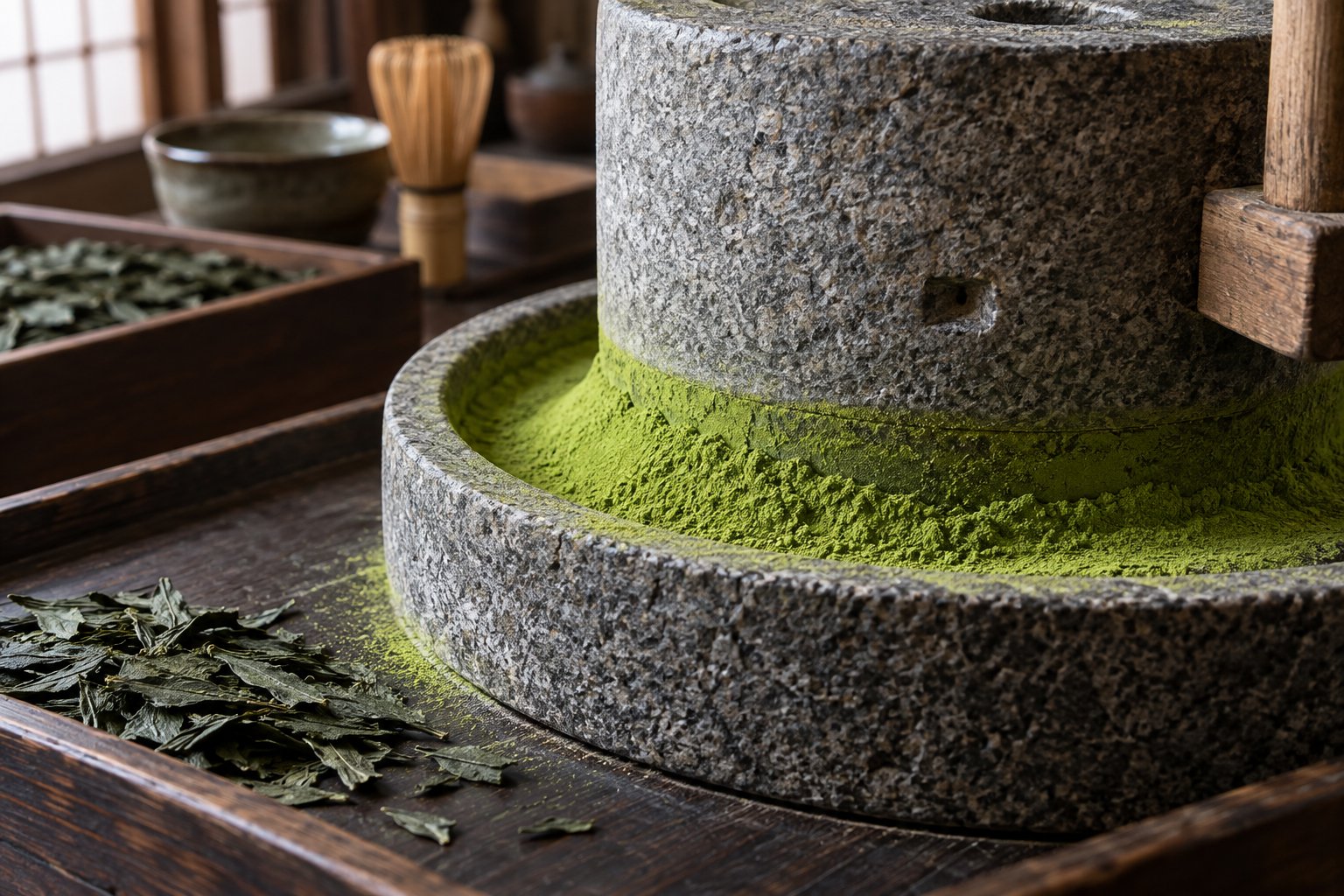
Matcha is tencha (tea leaves grown under shade and dried without rolling) ground into a fine powder. In Thai, “มัทฉะ” means matcha, “ชาเขียว” green tea, “ลาเต้” latte, “เย็น” cold and “ปั่น” blended. In Indonesian, coconut milk is “santan” and coconut water is “air kelapa”, two different words. Indonesian café menus mostly use English names, so the table lists the same names as in English.
Pure, clear and straight: not always without milk
Pure, clear and straight are names for matcha topped up with water and no milk, but some cafés use pure for the matcha powder itself. When translating into English, check in the description whether milk goes in.
Thai “เพียวมัทฉะ” and the English names
The Thai “เพียวมัทฉะ” is the English pure matcha written in Thai script. Café Amazon describes its “เพียวมัทฉะเย็น” as a cold drink with a full matcha taste, and separately lists “Iced Premium Pure Uji Matcha” as a “มัทฉะใส (clear matcha)” drink made with matcha from Uji. Inthanin’s “เพียวมัทฉะ” is an item where sweetness starts at 0%. Starbucks in Thailand puts clear and pure side by side in “Iced Clear Pure Matcha”, its drink of matcha with water.
Examples where pure includes milk
At the same Starbucks in Thailand, “Pure Matcha Latte” is unsweetened matcha powder with milk and syrup, “Iced Pure Matcha Coconut” is matcha with coconut water, and “Pure Matcha Frappuccino” is matcha powder blended with milk and syrup and topped with whipped cream. At this café, pure is the name of the matcha powder used, not “topped up with water only”. An August 2026 article in the Thai newspaper Thairath describes pure matcha as matcha whisked with hot or cold water and nothing else, also called usucha (thin matcha) or Cold Whisk. Judging by the name alone mixes up these two meanings. Pure in the sense of the powder is covered in What is pure matcha.
Names in Singapore, Indonesia and Japan
In Singapore, a Grab article introduces SKOSH’s “Straight Matcha” as a no-frills matcha. However, HALO Ube + Matcha’s “Straight Matcha Ube Sea Salt Cloud” in the same article is a drink whose name combines ube (purple yam), salt and cloud, so a drink with straight in its name is not always topped up with water only. In Indonesia, local articles feature “Matcha Cold Whisk” at Matcha Bae in Jakarta and “Harumi Matcha Cold Whisk” at Uji Matcha. Japan’s nana’s green tea calls matcha topped up with water “抹茶グリーンティー”, and in English “Matcha green tea (sugar free)”.
Green tea latte and matcha latte, ชาเขียว and มัทฉะ
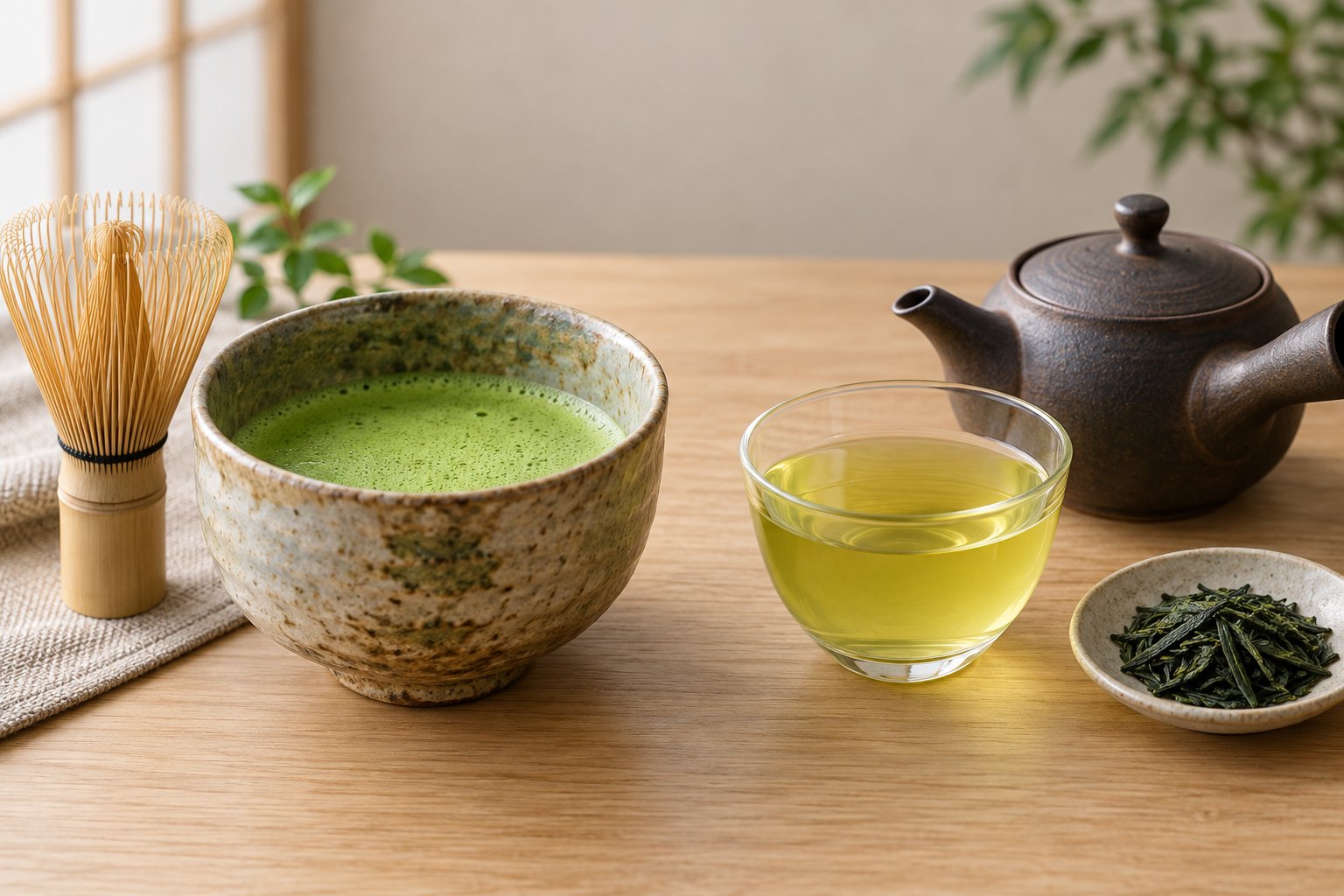
Some cafés make a “green tea latte” with matcha and others with green tea brewed from leaves. The Thai “ชาเขียว” is the same, and the menu name alone does not tell you whether it is matcha.
At Starbucks it means matcha
Starbucks Indonesia lists “Green Tea Latte” in the Tea Latte section of its official website and describes it as smooth and creamy matcha, lightly sweetened and served with steamed milk.
Source: Starbucks Indonesia, “Green Tea Latte” https://www.starbucks.co.id/menu/beverage-list/others/teas/tea-latte/green-tea-latte
The menu description for “Green Tea Latte” at Starbucks in Thailand is also “ชาเขียวมัทฉะผสมนมสดร้อน (matcha with steamed milk)”. For “Matcha & Espresso Fusion”, which combines matcha and espresso, the Indonesian official website calls the powder “Matcha powder” and the Australian official website calls it “Green Tea powder”. Even for the same drink from the same company, the wording matcha or green tea changes by country.
Cafés that use jasmine green tea
On the KOI Thé menu in Thailand, “GREEN TEA LATTE” is described as jasmine green tea with milk (ชาเขียวจัสมินผสมนมสด) and “MATCHA LATTE” as matcha with milk (ชาเขียวมัทฉะผสมนมสด), as separate drinks. Café Amazon also has “ชาเขียวนม (Green Tea with Milk)” and “เฟรชมัทฉะลาเต้ (Fresh Matcha Latte)” as separate items. Inthanin gives “Iced Green Tea” as the English for “ชาเขียวลาเต้” and keeps it separate from “มัทฉะลาเต้”.
Separating them on the menu
On the menus above, “ชาเขียว” was used for both leaf green tea and matcha, and drinks made with matcha had “มัทฉะ” or “ชาเขียวมัทฉะ” in their descriptions. The difference between Thai green milk tea made with a tea leaf mix and a matcha latte is in Thai green tea vs matcha latte, and how matcha and sencha are grown differently is in Matcha vs green tea. What follows is our editorial view. Putting matcha in the English name of drinks made with matcha, and green tea in the name of drinks made with green tea leaves, lets customers tell them apart at cafés that serve both.
Coconut and cloud: the liquid below and the foam on top
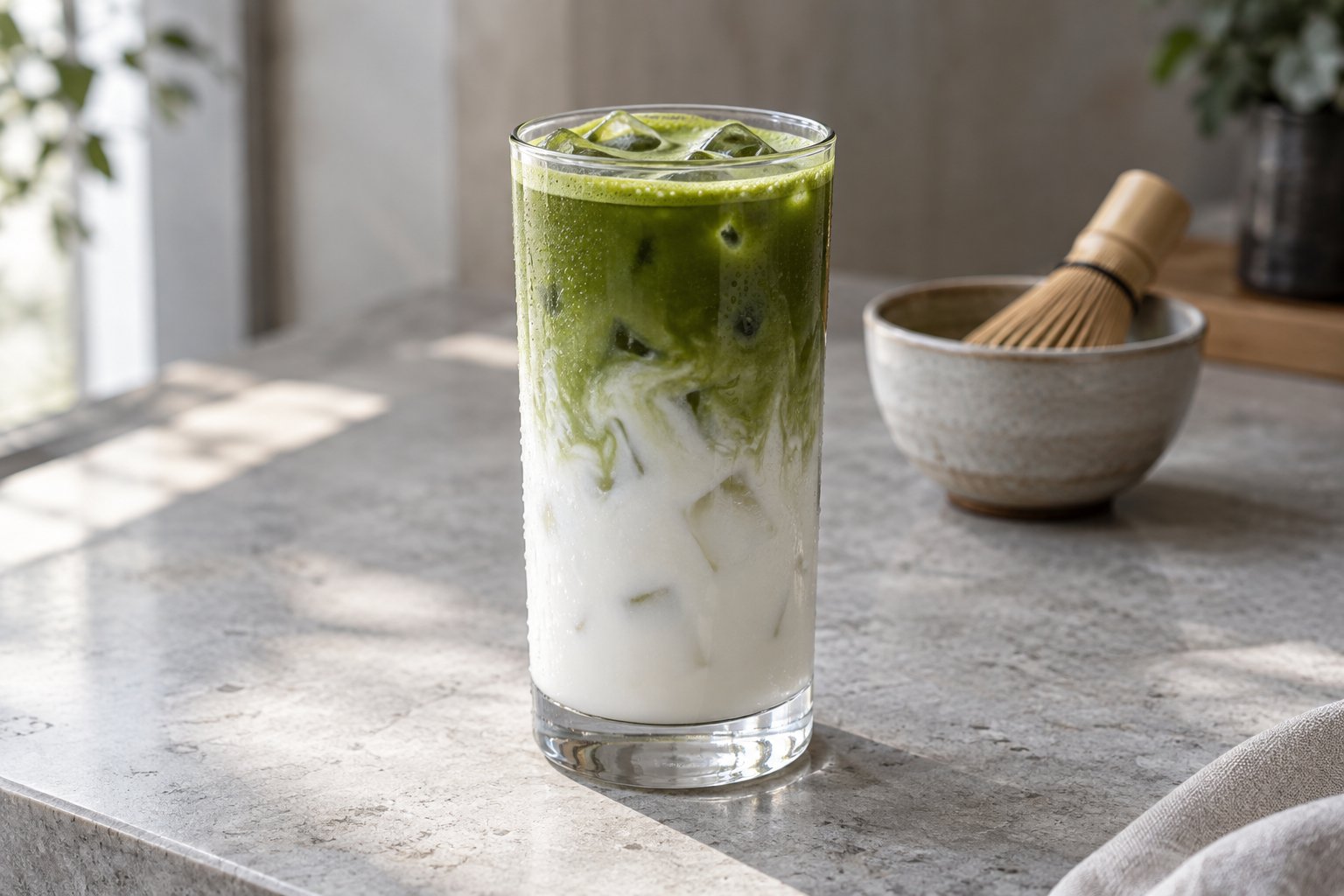
“Coconut matcha” can be matcha topped up with coconut water or a latte made with coconut milk. With “cloud”, too, the liquid below and the foam on top differ by café.
Coconut water or coconut milk
The “Iced Pure Matcha Coconut” at Starbucks in Thailand is matcha with coconut water (น้ำมะพร้าว). A July 2026 article in the Indonesian newspaper JawaPos says a Hakuji pop-up lets customers choose the base from cow’s milk, oat milk, usucha and coconut milk (santan kelapa). luckin coffee in Singapore lists “Coconut Matcha Latte” on its official menu, but does not say whether it uses coconut milk or coconut water.
When putting the Thai “มัทฉะมะพร้าว” into English, use a name that shows which one it is, such as “Matcha Coconut Water” for coconut water or “Coconut Milk Matcha Latte” for coconut milk. Coconut milk and coconut water differ greatly in fat, and the method changes too. The differences are in Cloud matcha and coconut matcha latte.
Three types of cloud
Sorting drinks with cloud in the name by their descriptions gave three types.
| Café (country) | Name | Liquid below | Foam on top |
|---|---|---|---|
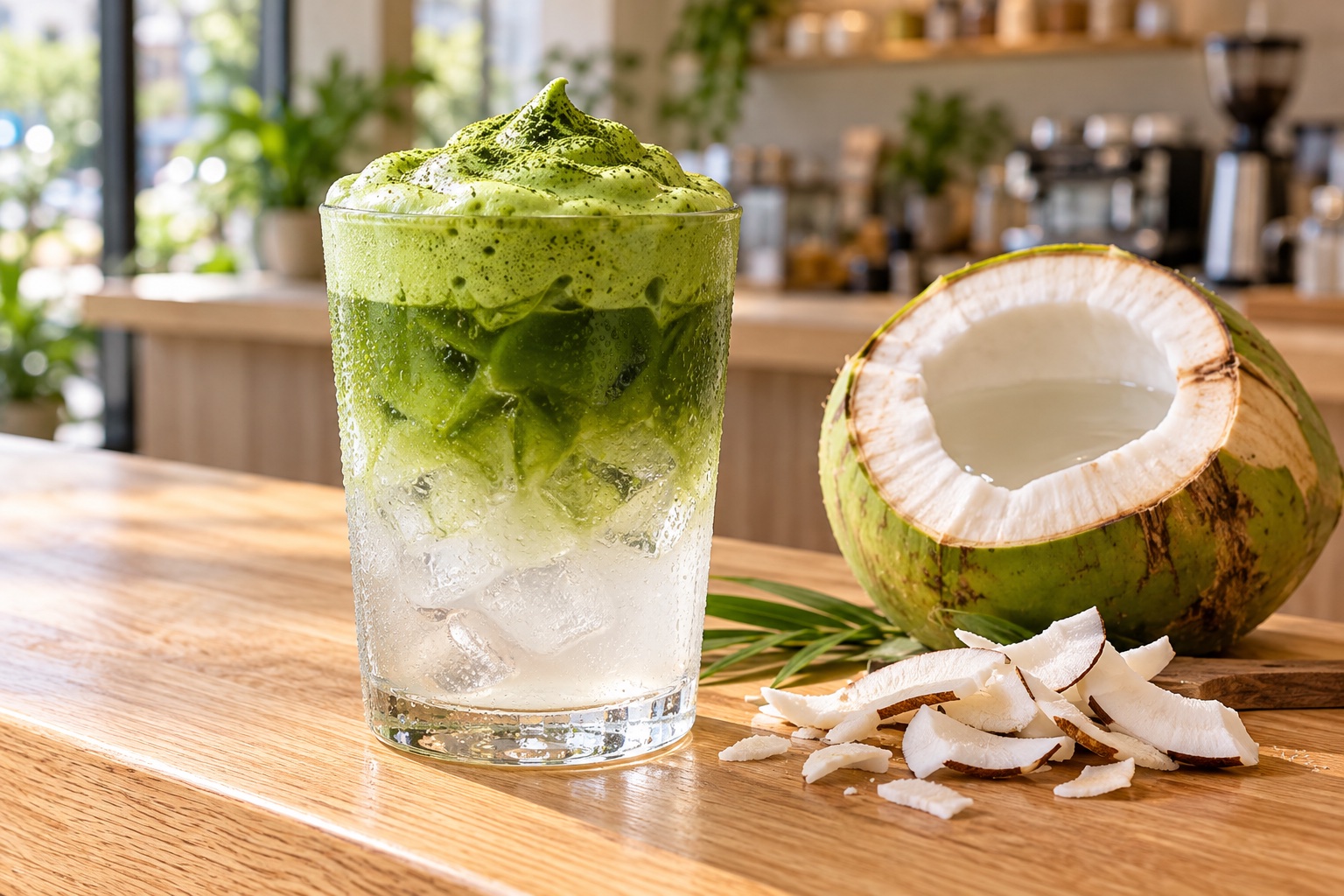
| Inthanin (Thailand) | Cloud Matcha (มัทฉะคลาวด์) | Fresh coconut water and coconut flesh | A whipped layer of Uji matcha |
| Atelier (Bandung, Indonesia) | Matcha on Cloud | Matcha latte | Matcha foam |
| Matcha Next Door (Singapore) | Honey Sea Salt Cloud Matcha Latte | Matcha latte | Foam named for honey and sea salt (contents not stated) |
The Inthanin example comes from an August 2026 article by the Thai marketing outlet Brand Buffet, Atelier from an article on the information site What’s New Indonesia, and Matcha Next Door from a Grab article. The only thing cloud drinks share is a layer of foam; whether the matcha is in the liquid below or in the foam on top differs by café.
Adding the contents to the English name
What follows is our editorial view. If you use the cloud name, add the liquid below and the contents of the foam in brackets, as in “Coconut Cloud Matcha (coconut water + matcha foam)”. A customer looking for a drink without milk cannot tell from the cloud name alone whether it contains milk. How to foam cold milk without heating it is in Matcha cold foam.
Macchiato and einspanner: names for a cream topping
Macchiato and einspanner are both used for matcha drinks with a layer of cream on top, but their original meanings differ. Check each café’s contents in the description.
Einspanner is Vienna’s whipped cream coffee
According to the Vienna Tourist Board, an Einspänner was originally a carriage pulled by one horse, and the coffee called Einspänner is a mocha (double espresso) topped with a large amount of whipped cream. The matcha version uses matcha instead of espresso. A 2025 article on the Indonesian information site Orami describes the “Matcha Einspanner” at Maru Matcha in Bandung as topped with a thick milk cream. Ratios and layering are in Matcha einspanner.
Macchiato is the tea shop’s cream cap
In a 2017 article, the New Zealand dairy company Fonterra describes “tea macchiato (奶盖茶)”, popular at tea shops in China, as tea topped with a layer of cream and cream cheese, drunk at a 45 degree angle so the tea and cream come together. The “Matcha Macchiato” at KOI Thé in Thailand is also described as matcha topped with milk cream, drunk by lifting the cup. The same café’s “Green Tea Macchiato” is jasmine green tea with cream on top. In Indonesia, local articles say Matcha Bae in Jakarta serves a “Matcha Macchiato”, but do not say what the cream is made of.
Cheese and salt names
In Singapore, foam named for sea salt (Sea Salt Cloud) is also used. Macchiato has no fixed contents beyond a layer of cream on top, and whether it contains cheese differs by café. For customers with milk or cheese allergies, write the cream’s ingredients in the description.
Dirty: not always espresso
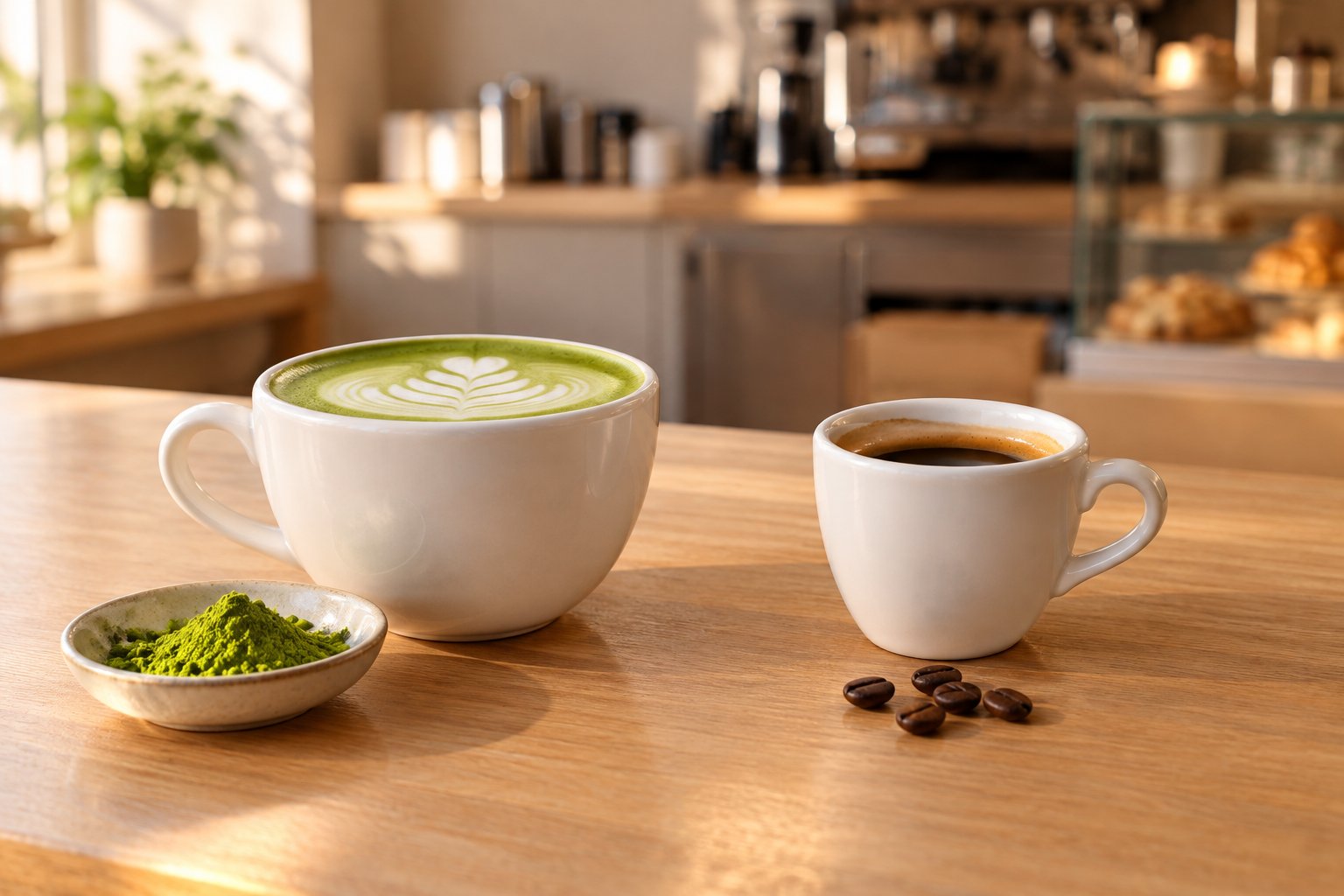
“Dirty matcha” is usually a matcha latte with espresso added, but some drinks are called dirty without espresso. Some customers want to limit caffeine, so make it clear from the name whether there is coffee.
Where the name comes from
The German coffee company Dallmayr explains that the name “dirty” comes from the espresso darkening the bright green of the matcha. In Singapore, a Grab article features SKOSH’s “Dirty Matcha Latte” and Matchaya’s “Dirty Matcha”.
Starbucks calls it “Fusion”
Starbucks calls the same combination “Matcha & Espresso Fusion”. The menu at its store in Thailand describes it as matcha powder with steamed milk and a shot of espresso. The Indonesian official website lists the iced “Iced Espresso & Matcha Fusion” and says it can be enjoyed hot and iced.
A biscuit “dirty”
A 2023 article on the Indonesian information site Popmama describes “Dirty Matcha Regal” from the matcha series of the coffee chain Janji Jiwa as matcha powder combined with Regal (an Indonesian biscuit brand), and mentions no espresso. Customers who see dirty in English may take it to mean espresso, so if you do not use coffee, write the contents next to the name. Ratios and caffeine are in Dirty matcha.
Tool and preparation names: chasen, usucha, cold whisk
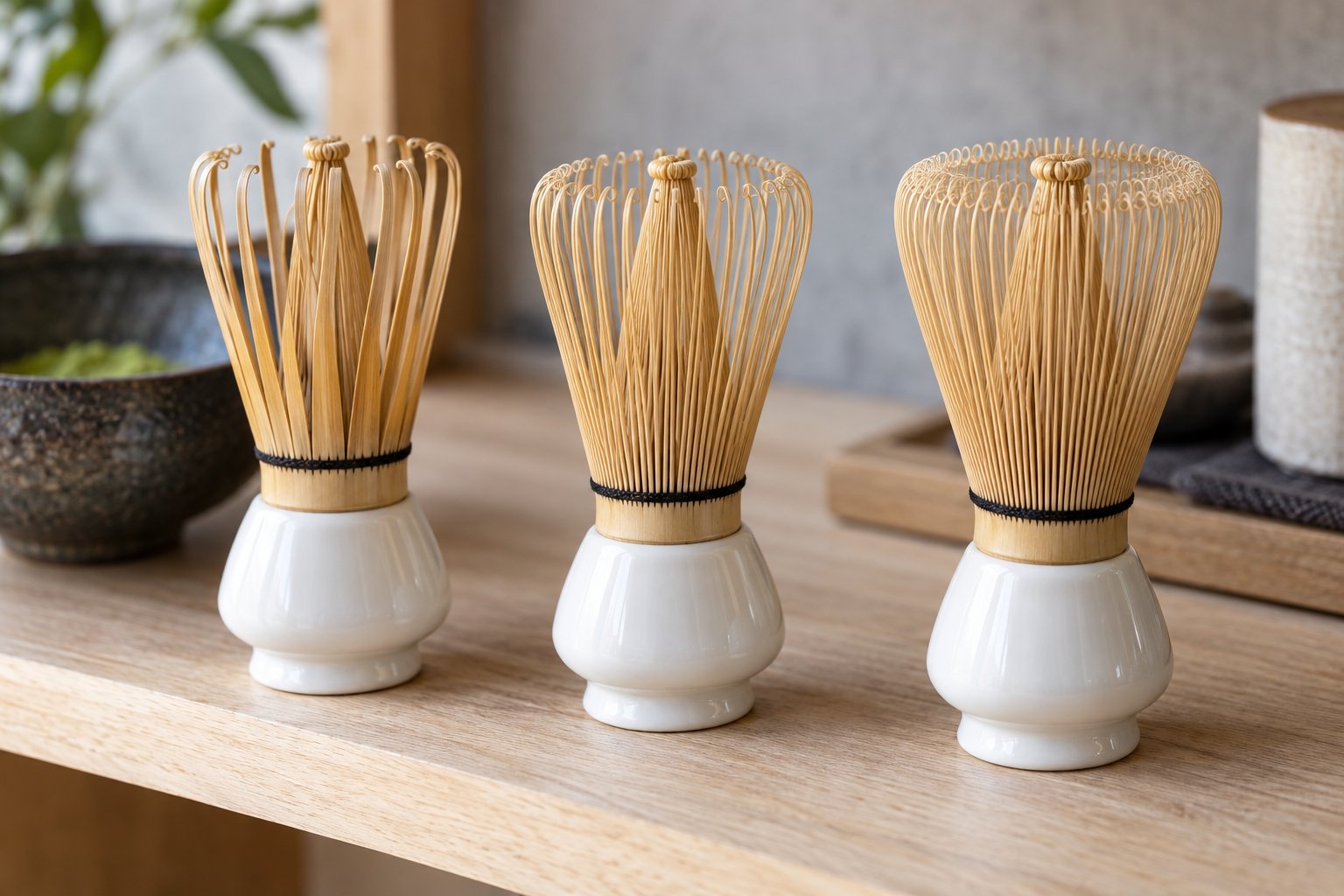
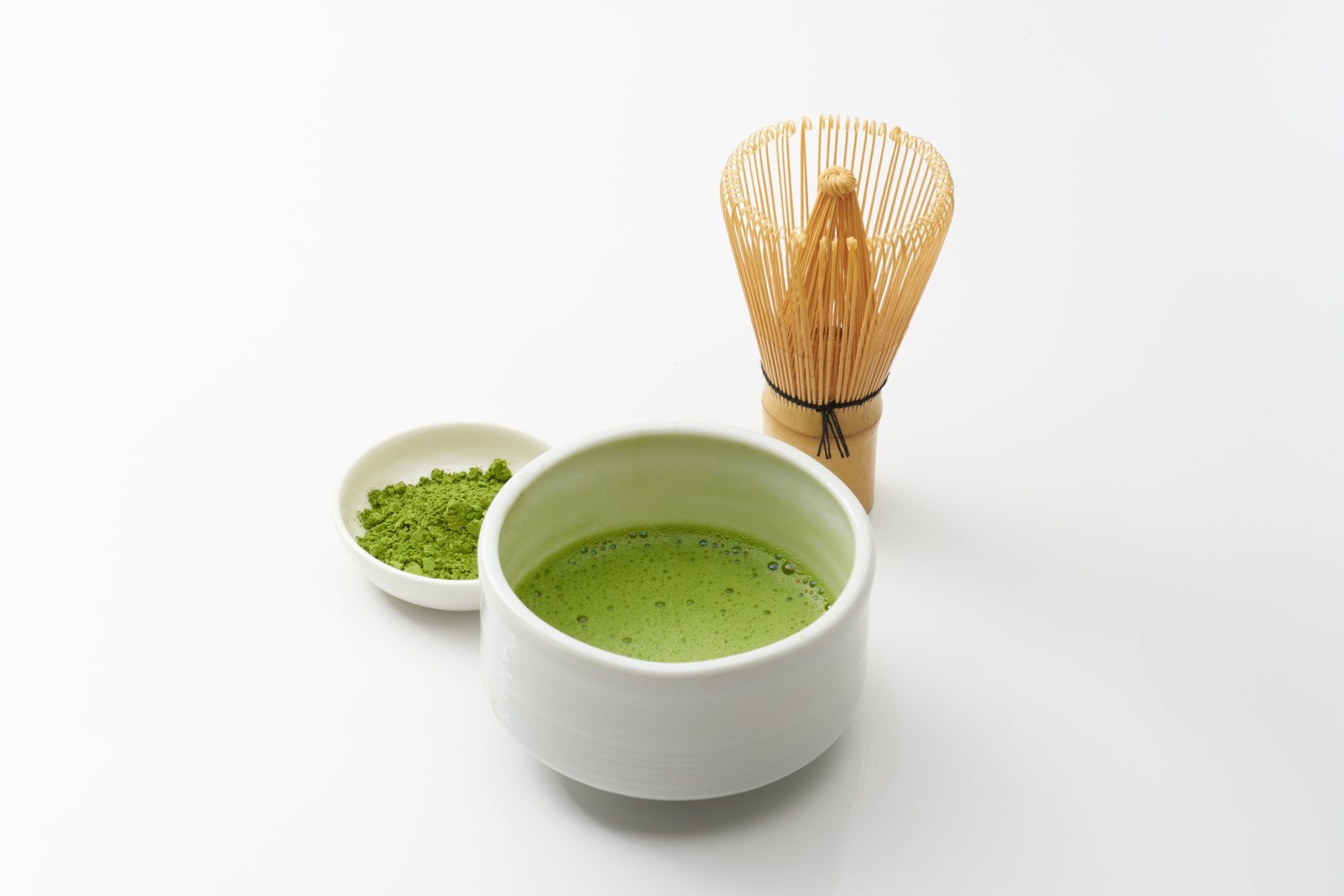
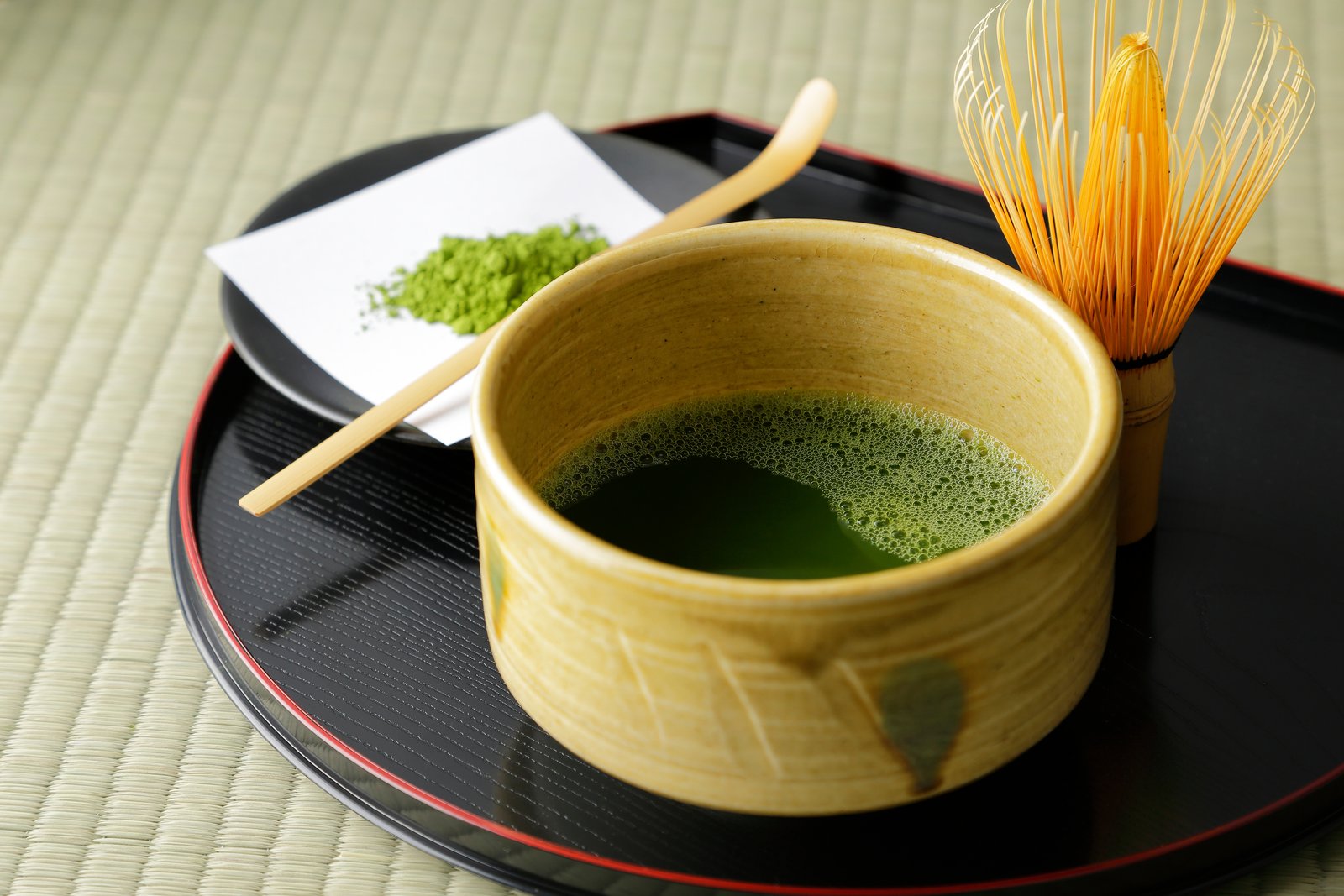
Matcha menus and descriptions often include Japanese tool and preparation names written in the Latin alphabet. In English, chasen becomes matcha whisk and usucha becomes thin matcha.
Tool names
| Romanized | Japanese | In English | Used for |
|---|---|---|---|
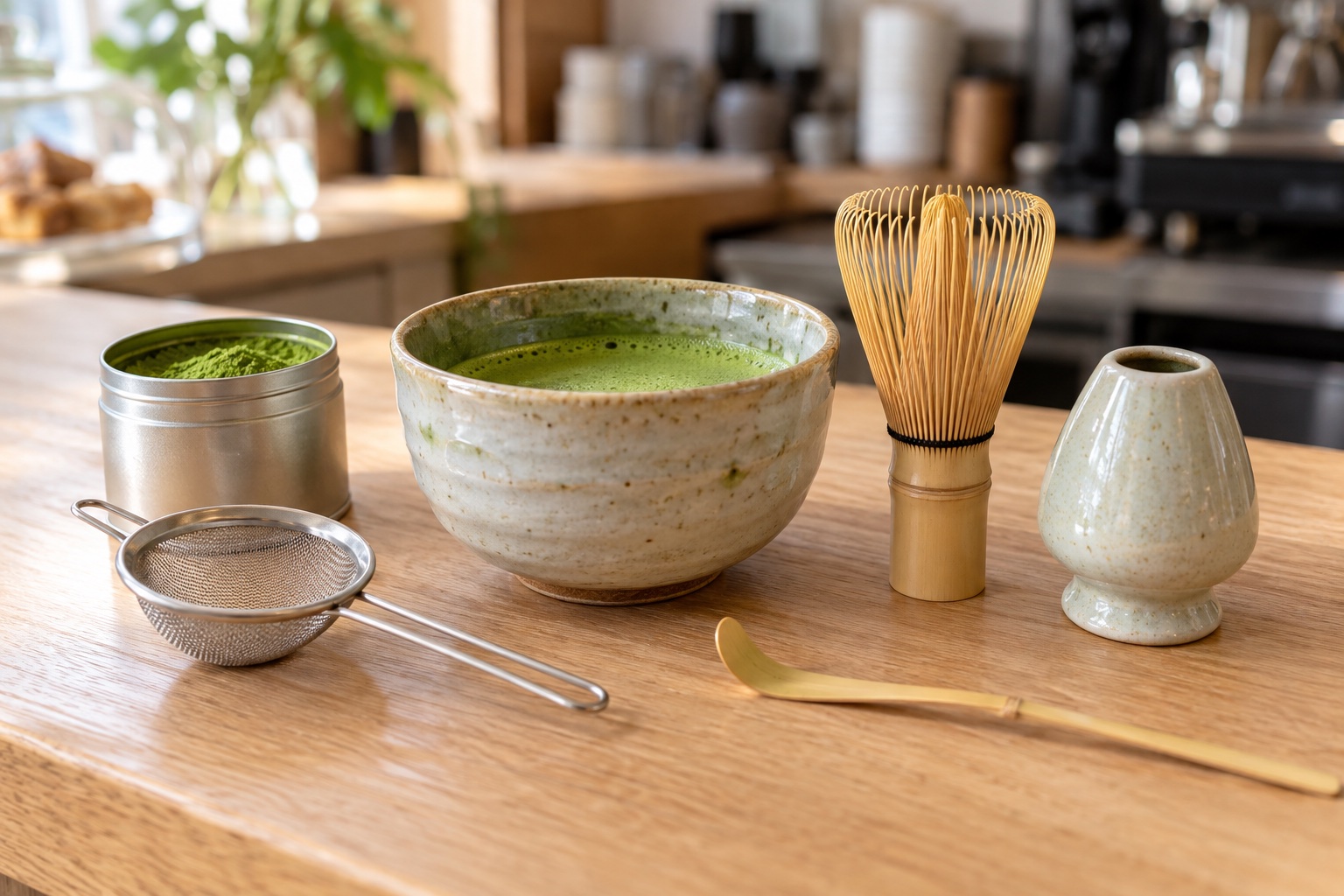
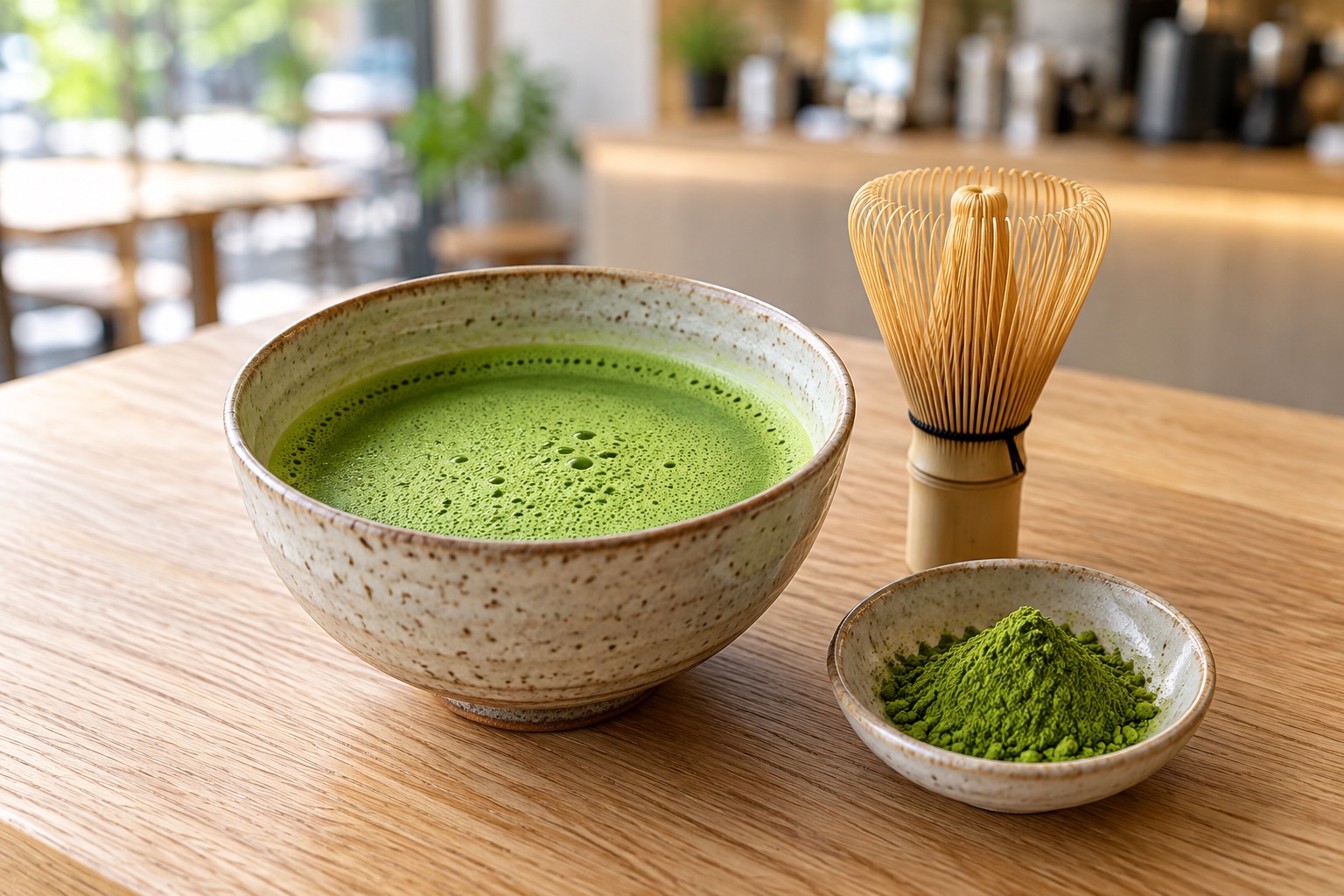
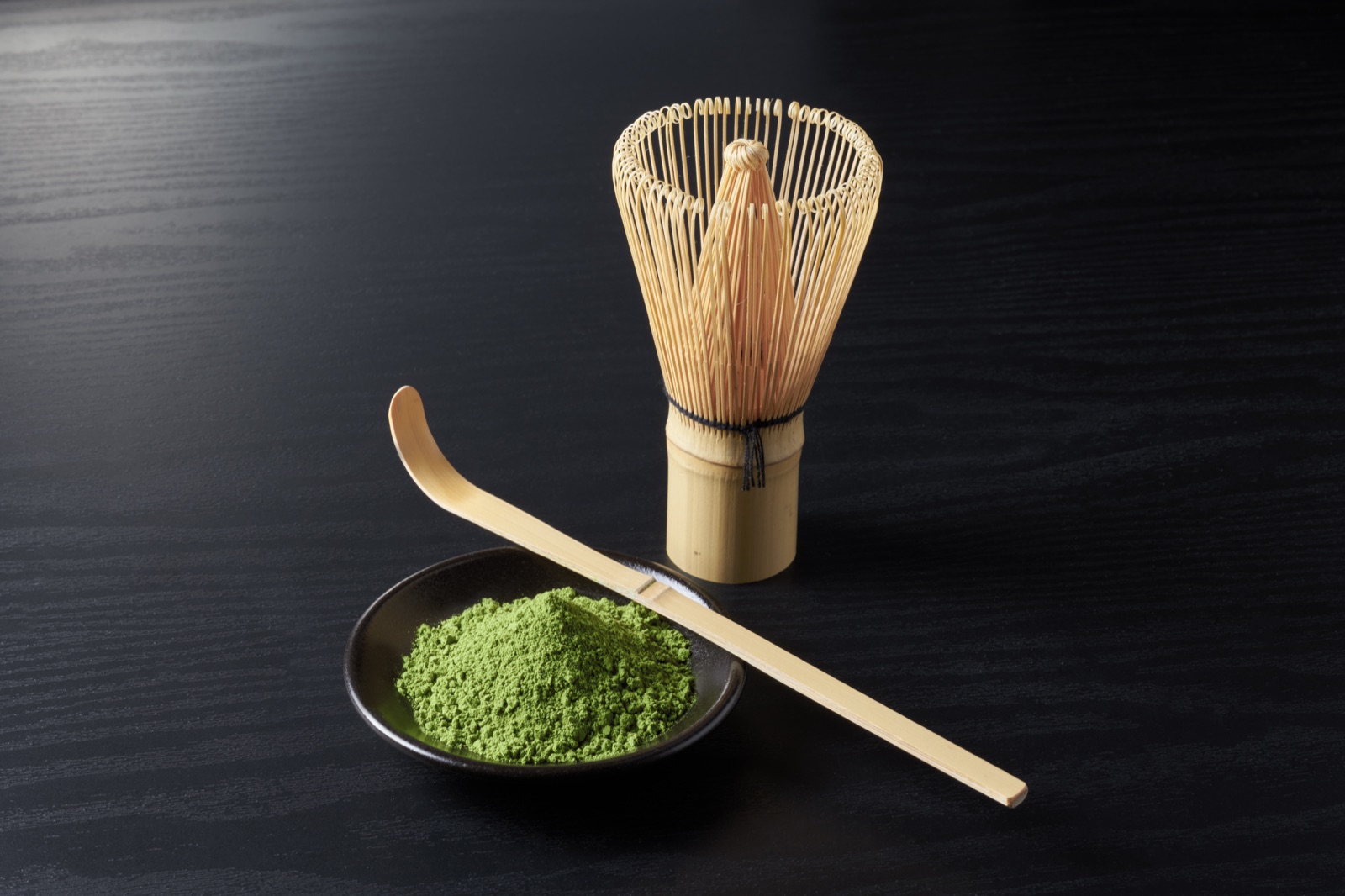
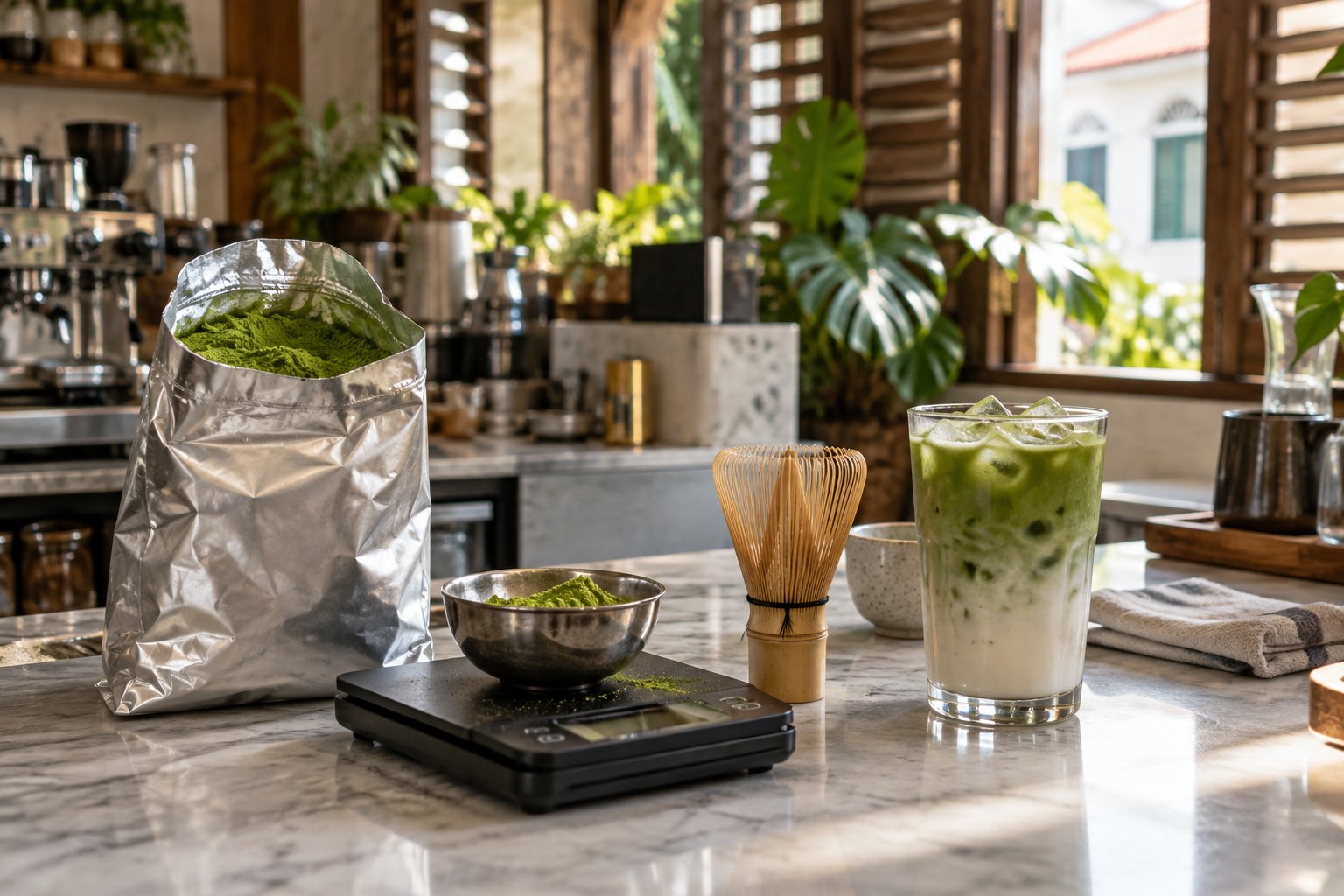
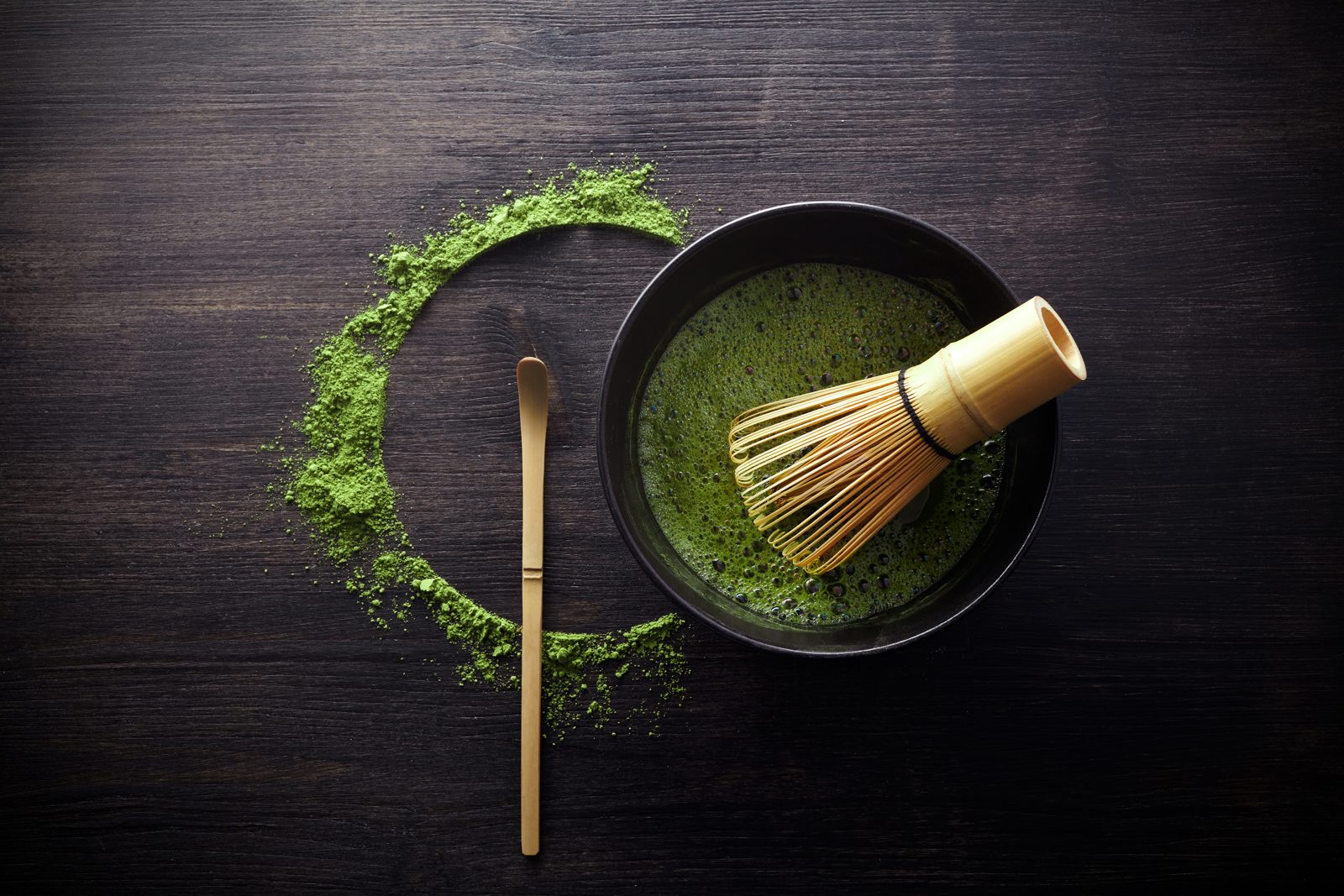
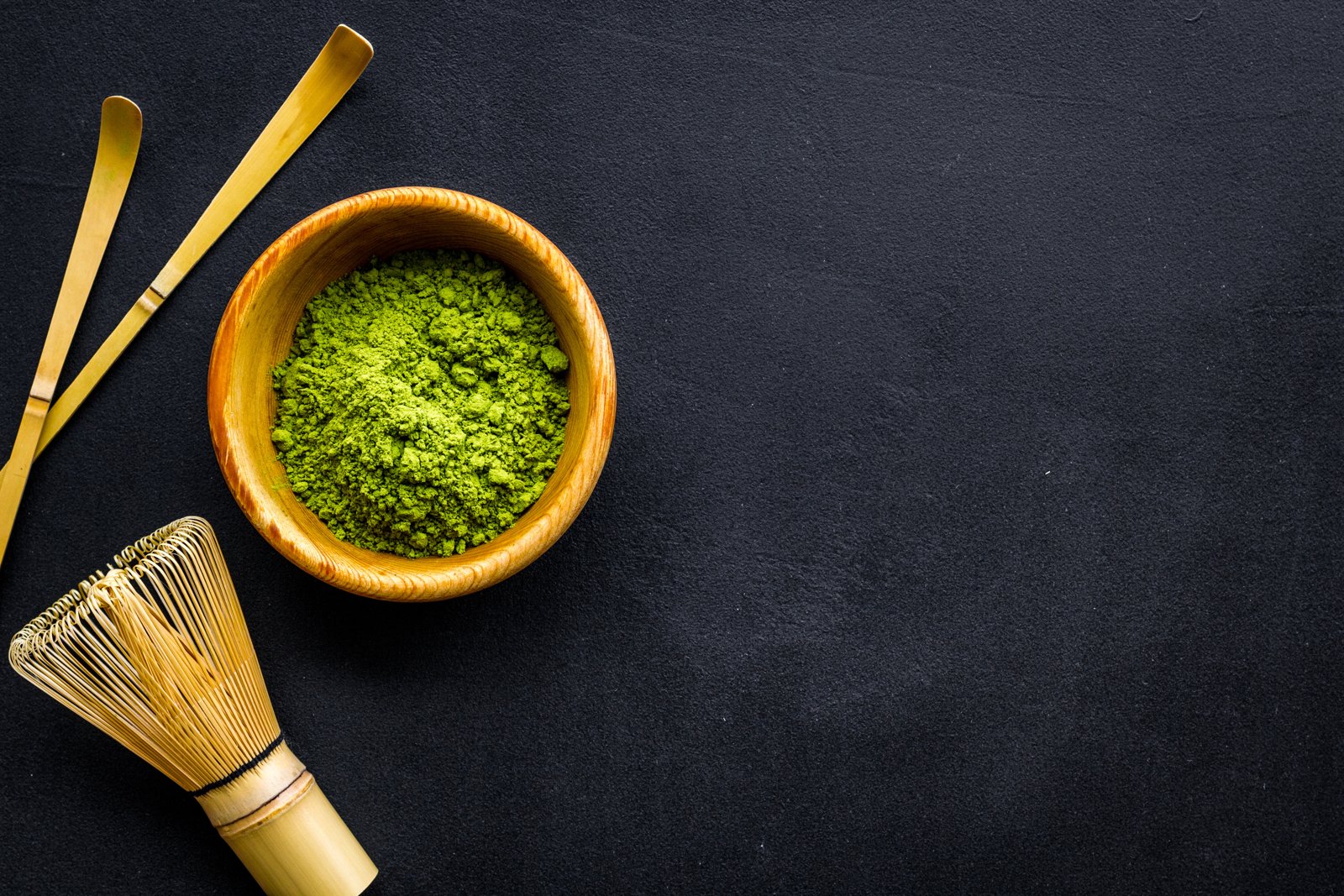
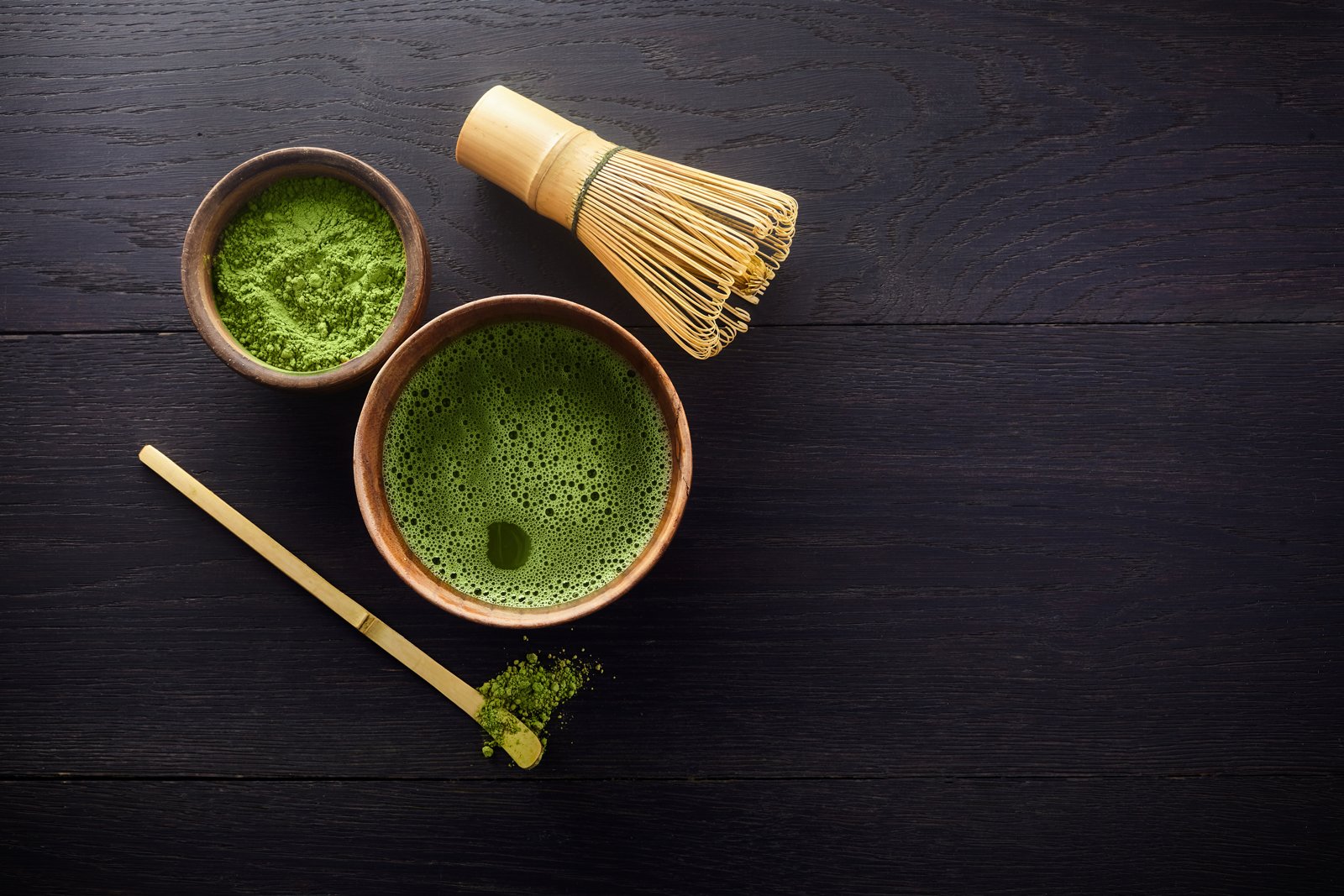
| chasen | 茶筅 | matcha whisk | A bamboo tool for mixing and frothing matcha with hot or cold water |
| chashaku | 茶杓 | bamboo scoop | A bamboo spoon for scooping matcha |
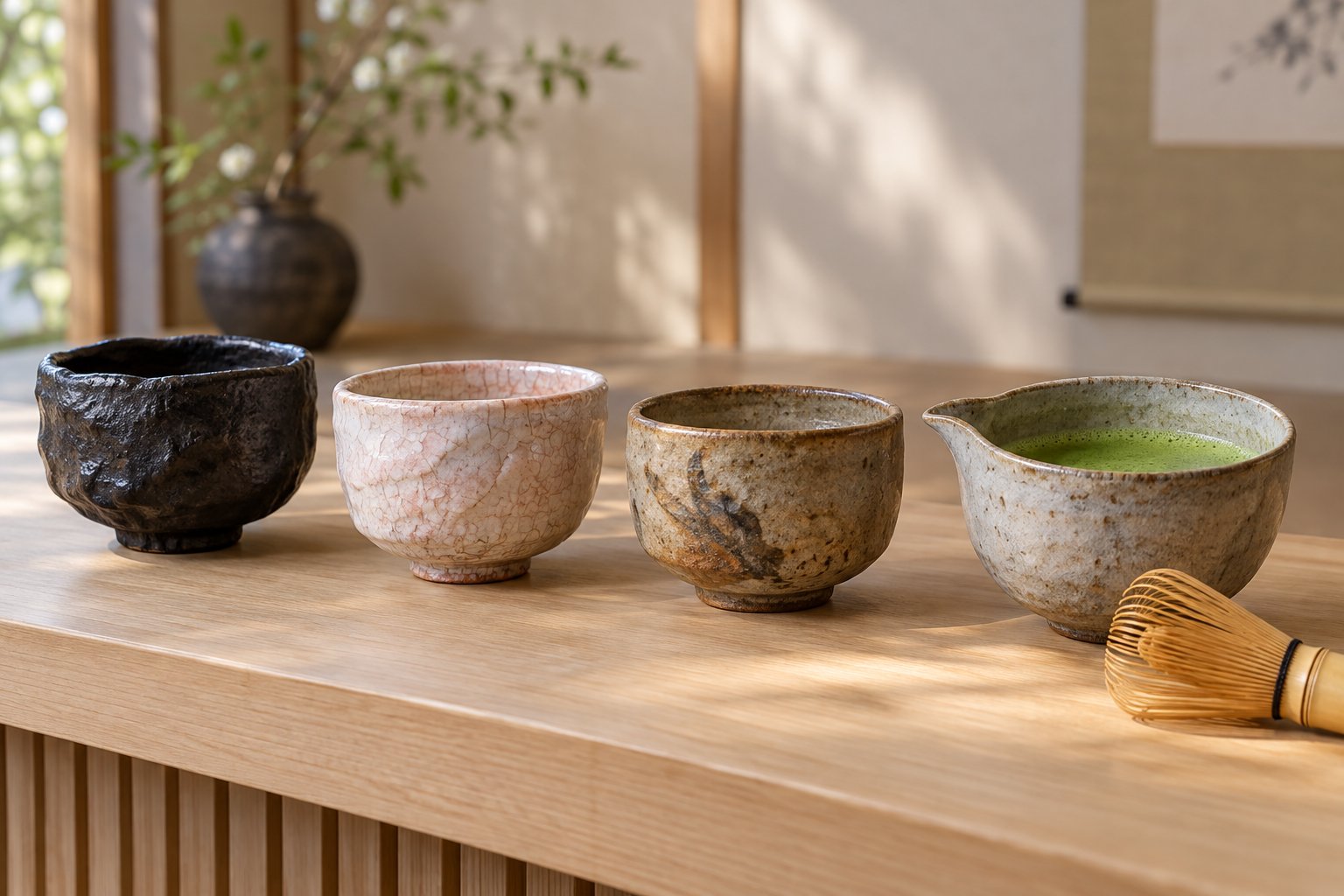
| chawan | 茶碗 | matcha bowl | The bowl for whisking matcha |
The Kyoto Prefectural Tea Research Institute lists a matcha bowl, chasen and chashaku as what to prepare, and says to put two chashaku scoops (about 2g) of sifted matcha in the bowl and whisk with 70ml of water cooled to 70 to 80°C. Takayama in Nara Prefecture is the only chasen production area in Japan, and the traditional craft Takayama chasen is said to use hachiku, kurochiku or madake bamboo. Types and care of the chasen are in What is a chasen, and choosing a bowl is in Choosing a matcha bowl.
Preparation names
In Ippodo Tea’s official recipes, usucha (thin matcha) is 2g of matcha whisked with 60ml of 80°C water for 15 seconds, and koicha (thick matcha) is 4g of matcha prepared with 30ml of 80°C water. Cold whisk is 2g of matcha whisked with 60ml of ice-chilled water for 15 seconds. Usucha and koicha differ in the amount of water for the matcha: koicha uses half the water and twice the matcha of usucha. Step by step instructions are in How to make matcha.
Using them on a menu
Indonesian café menus use the names usucha and cold whisk as they are. Customers who do not know Japanese will not understand them, so as our editorial view, we suggest adding an English explanation, as in “Usucha (matcha whisked with hot water)”.
What to check when naming menu items
Before writing “matcha”, check that the powder is matcha, write the contents next to the name, and work out the cost per drink from the contents, not the name.
Powder that can be called matcha
The “Green Tea Labelling Standard” of the Japan Tea Central Public Interest Incorporated Association (an industry voluntary standard, last revised 10 July 2026) sets the names for tea sealed in containers or packaging, and separates matcha, “tencha ground into a fine powder with a stone mill or similar”, from powdered tea, “tea ground into a powder with a grinder or similar”. It says it also applies, with the necessary changes, to drinking-type products. In April 2022, the International Organization for Standardization (ISO) published ISO/TR 21380, a technical report on the definition and characteristics of matcha.
The ISO page for ISO/TR 21380:2022 “Matcha tea — Definition and characteristics” says it contains information on the cultivation, manufacture and sensory analysis of the tea referred to as “matcha tea” in international trade, gives an internationally agreed definition based on the plant source, cultivation and production methods, and does not apply to flavoured matcha tea, blended matcha tea, or decaffeinated or soluble extracts of matcha tea.
Source: ISO, “ISO/TR 21380:2022 Matcha tea — Definition and characteristics” https://www.iso.org/standard/80777.html
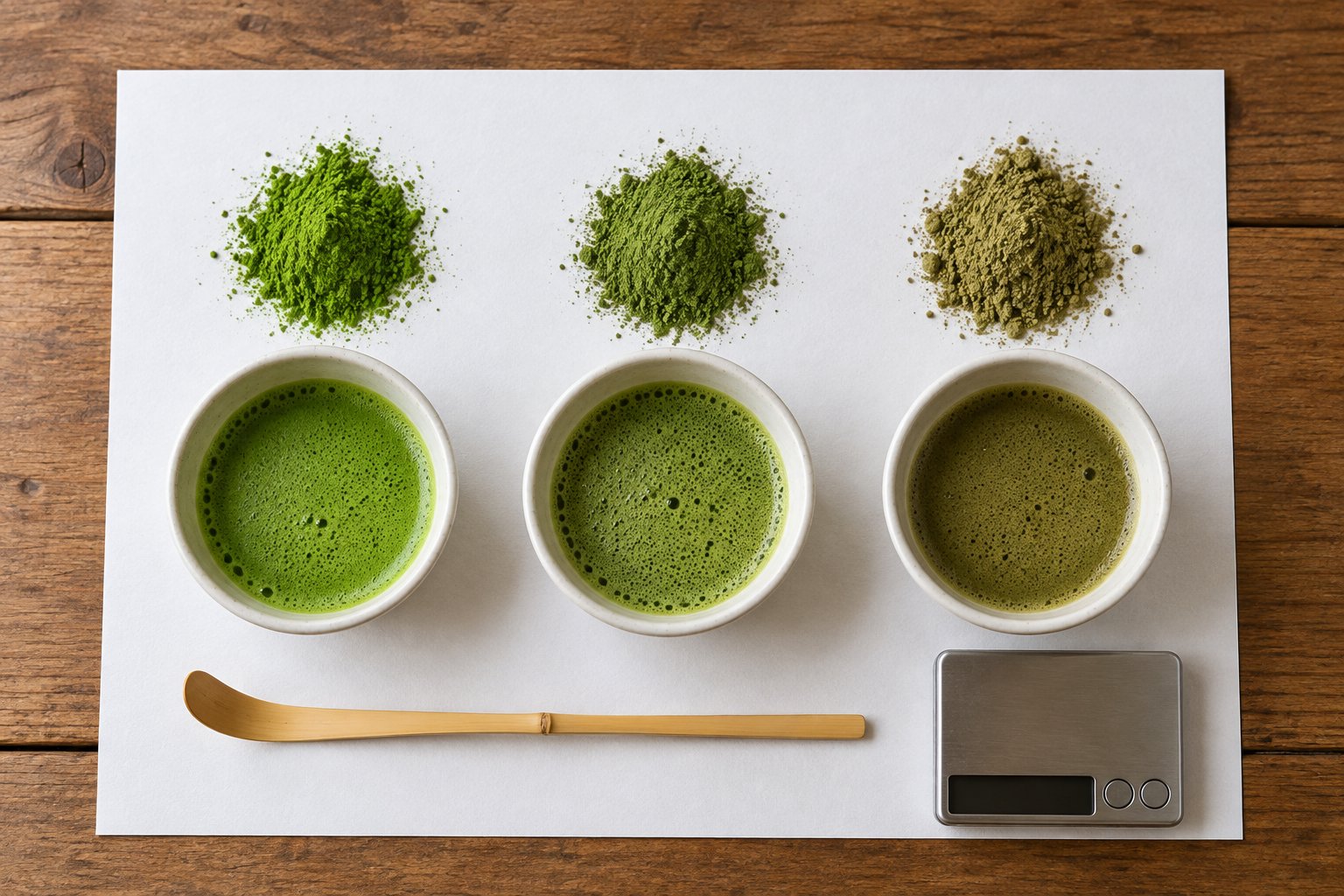
Neither directly governs café menus, but both define matcha by its raw material and how it is made. To avoid presenting sencha ground into powder, or a mix with sugar or milk powder, as 100% matcha on the menu, check the ingredients and specification sheet of the powder you buy. How to tell them apart is in What is pure matcha and Matcha grades.
Writing the contents next to the name
What follows is our editorial view.
- Put the English and the Thai or Indonesian name side by side, with the ingredients written briefly below (for example “Iced Clear Matcha / เพียวมัทฉะเย็น: matcha + water + ice”)
- For names whose contents differ by café, such as pure, cloud, macchiato and dirty, always state whether there is milk, cream or espresso
- If you serve both drinks made with green tea leaves and drinks made with matcha, use the names green tea and matcha separately
- Hojicha drinks are not matcha, so list them apart from the matcha section or put hojicha in the name
The cost per drink depends on the contents
The matcha cost per drink is worked out the same way whatever the name.
Matcha cost per drink = purchase price per kg ÷ 1,000 × grams used per drink
Whatever the name, the ingredient cost per drink changes with what else goes in besides matcha.
| Name | Ingredients other than matcha that go into the cost |
|---|---|
| pure / clear | Water, ice (syrup if sweetened) |
| matcha latte | Milk such as cow’s or oat milk, sweetener |
| coconut | Coconut water or coconut milk |
| cloud / einspanner / macchiato | The liquid below and the cream, cheese or other foam on top |
| dirty | Milk, coffee beans for the espresso |
The grams of matcha per drink from official recipes are in each drink’s how-to article. How the purchase price per kg is set is in Why is matcha so expensive, and choosing a grade to fit your selling price is in Choosing matcha for a café latte.
Omakase Matcha works with matcha sourced from Uji, Yame, Shizuoka, Kagoshima and Miyazaki. We accept orders from 1kg, you can choose up to 3 samples, and we can discuss blends to suit your menu. To try them both with water and as a latte, apply through Sample request.
Sources
- Wongnai, Café Amazon delivery menu https://www.wongnai.com/delivery/businesses/577439iz/order
- Wongnai, Starbucks Siam Future Ekkamai delivery menu https://www.wongnai.com/delivery/businesses/4760uM/order
- Wongnai, Inthanin delivery menu https://www.wongnai.com/delivery/businesses/321927gX/order
- Wongnai, KOI Thé The Mall Bang Khae delivery menu https://www.wongnai.com/delivery/businesses/390150zU/order
- Brand Buffet, Inthanin Cloud Matcha (10 August 2026, in Thai) https://www.brandbuffet.in.th/2026/08/inthanin-open-airicanotm-cloud-matcha/
- Thairath, “เพียวมัทฉะ VS มัทฉะลาเต้” (2 August 2026, in Thai) https://www.thairath.co.th/lifestyle/food/2950045
- Starbucks Singapore, “Beverages” https://www.starbucks.com.sg/menu/beverages
- luckin coffee Singapore, “Menu” https://www.luckincoffee.com.sg/menu
- Grab, “Matcha Singapore: Order Matcha Drinks on GrabFood” https://www.grab.com/sg/articles/food/matcha-singapore/
- Grab, “Matcha Orchard: Order Matcha Cafes in Singapore” https://www.grab.com/sg/articles/food/matcha-orchard/
- Starbucks Indonesia, “Green Tea Latte” https://www.starbucks.co.id/menu/beverage-list/others/teas/tea-latte/green-tea-latte
- Starbucks Indonesia, “Iced Espresso & Matcha Fusion” https://www.starbucks.co.id/menu/beverage-list/espresso-beverages/iced-espresso-matcha-fusion
- Starbucks Australia, “Espresso & Matcha Fusion” https://www.starbucks.com.au/product/espresso-matcha-fusion/
- Popmama, “10 Rekomendasi Minuman Matcha ala Jepang yang Ada di Coffee Shop” (2023, in Indonesian) https://www.popmama.com/life/health/rekomendasi-minuman-matcha-ala-jepang-yang-bisa-kamu-coba-00-6wys7-lfww4v/amp
- Popbela, “8 Matcha Cafe di Jakarta yang Enak, Matcha Lovers Merapat!” (2025, in Indonesian) https://www.popbela.com/lifestyle/food/matcha-cafe-di-jakarta-n3v01-00-fzpls-h62b8h/amp
- Orami, “7 Rekomendasi Matcha Cafe di Bandung yang Wajib Dikunjungi!” (2025, in Indonesian) https://www.orami.co.id/magazine/rekomendasi-matcha-cafe-di-bandung
- JawaPos, “Cafe Matcha Paling Estetik di Jakarta” (July 2026, in Indonesian) https://www.jawapos.com/kuliner/2607130300/otentik-banget-cafe-matcha-paling-estetik-di-jakarta-siap-kasih-feed-instagram-anda-yang-super-keren
- What’s New Indonesia, “Best Matcha Places in Bandung” https://www.whatsnewindonesia.com/bandung/ultimate-guide/food-and-drink/best-matcha-places-bandung
- nana’s green tea, drink menu (in Japanese) https://www.nanasgreentea.com/collections/drink-menu
- Dallmayr, “Dirty Matcha Latte Recipe – Iced Matcha Meets Espresso” https://www.dallmayr.com/deen/academy/magazine/dirty-matcha-latte/
- Vienna Tourist Board, “Kurioses aus der Wiener Küche” (in German) https://www.wien.info/de/essen-trinken/wiener-kueche/kurioses-350558
- Fonterra, “They’re drinking our cream cheese in China with Naigai teas” (19 July 2017) https://www.fonterra.com/sea/en/our-stories/articles/theyre-drinking-our-cream-cheese-in-china.html
- Japan Tea Central Public Interest Incorporated Association, “緑茶の表示基準” (Green Tea Labelling Standard, last revised 10 July 2026, in Japanese) https://www.nihon-cha.or.jp/pdf/hyoujikijyun.pdf
- ISO, “ISO/TR 21380:2022 Matcha tea — Definition and characteristics” https://www.iso.org/standard/80777.html
- Ippodo Tea, “Basic Usucha Matcha” https://global.ippodo-tea.co.jp/blogs/tea-recipe/basic-usucha-matcha
- Ippodo Tea, “Basic Koicha Matcha” https://global.ippodo-tea.co.jp/blogs/tea-recipe/basic-koicha-matcha
- Ippodo Tea, “Cold-Whisked Matcha” https://ippodotea.com/blogs/recipes-to-brew-japanese-tea/cold-whisked-matcha
- Kyoto Prefectural Tea Research Institute, “お茶のおいしい入れ方 抹茶” (How to make matcha, in Japanese) https://www.pref.kyoto.jp/chaken/irekata_maccha.html
- Association for the Promotion of Traditional Craft Industries, “高山茶筌” (Takayama chasen, in Japanese) https://kougeihin.jp/craft/0625/