
 Reviewed by: Takahiro Sugiyama (CEO, meguri Inc.)
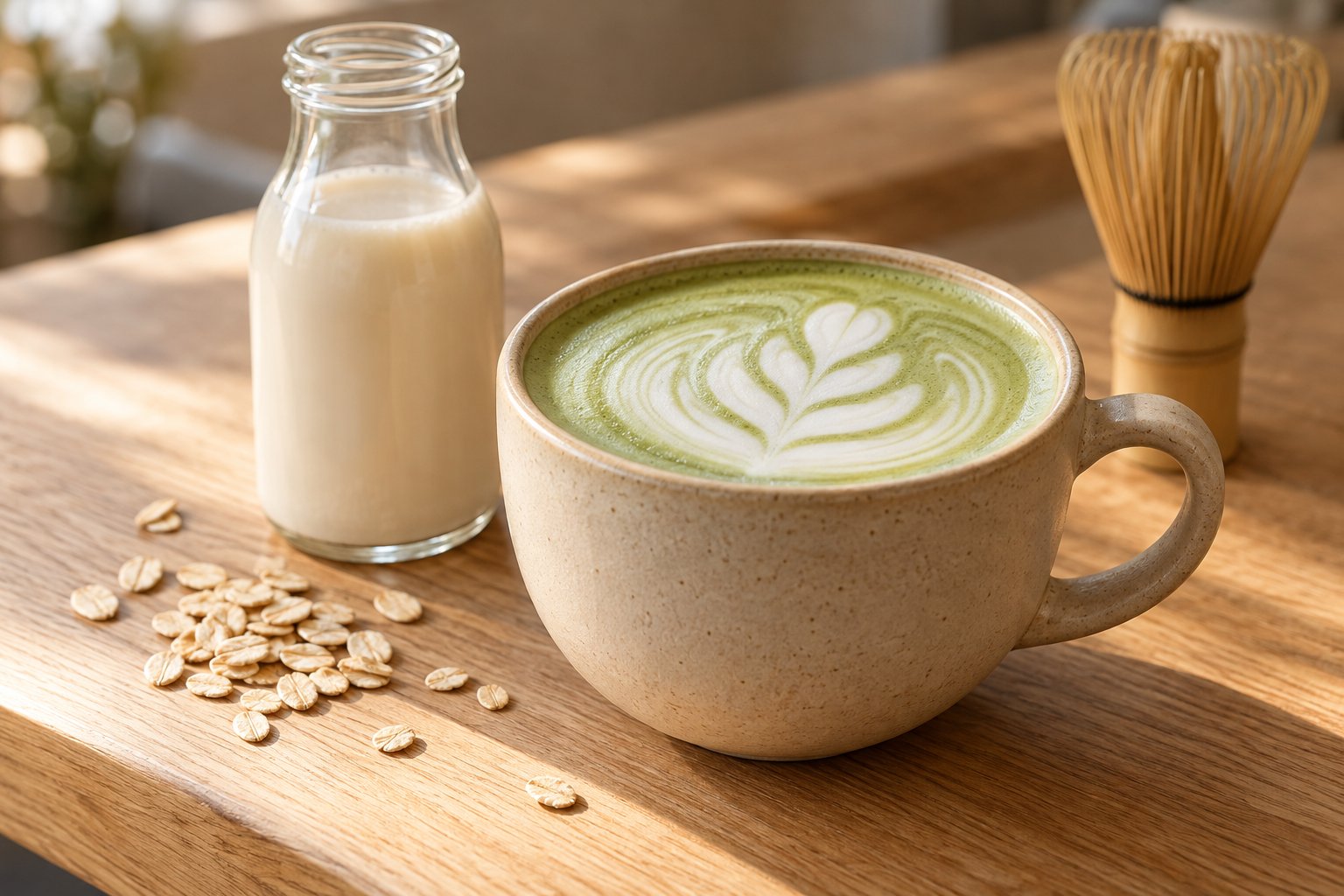
An oat milk matcha latte is a matcha latte made with oat milk instead of cow’s milk. If you use the same matcha and amounts you set for cow’s milk, the color can turn more yellow and the matcha aroma can feel weaker. This guide compares cow’s milk and oat milk using Japan’s official food composition table and manufacturers’ labels, then looks at the ratios in matcha shops’ recipes, how to make the drink, and how to choose the milk and the matcha.
What is an oat milk matcha latte?
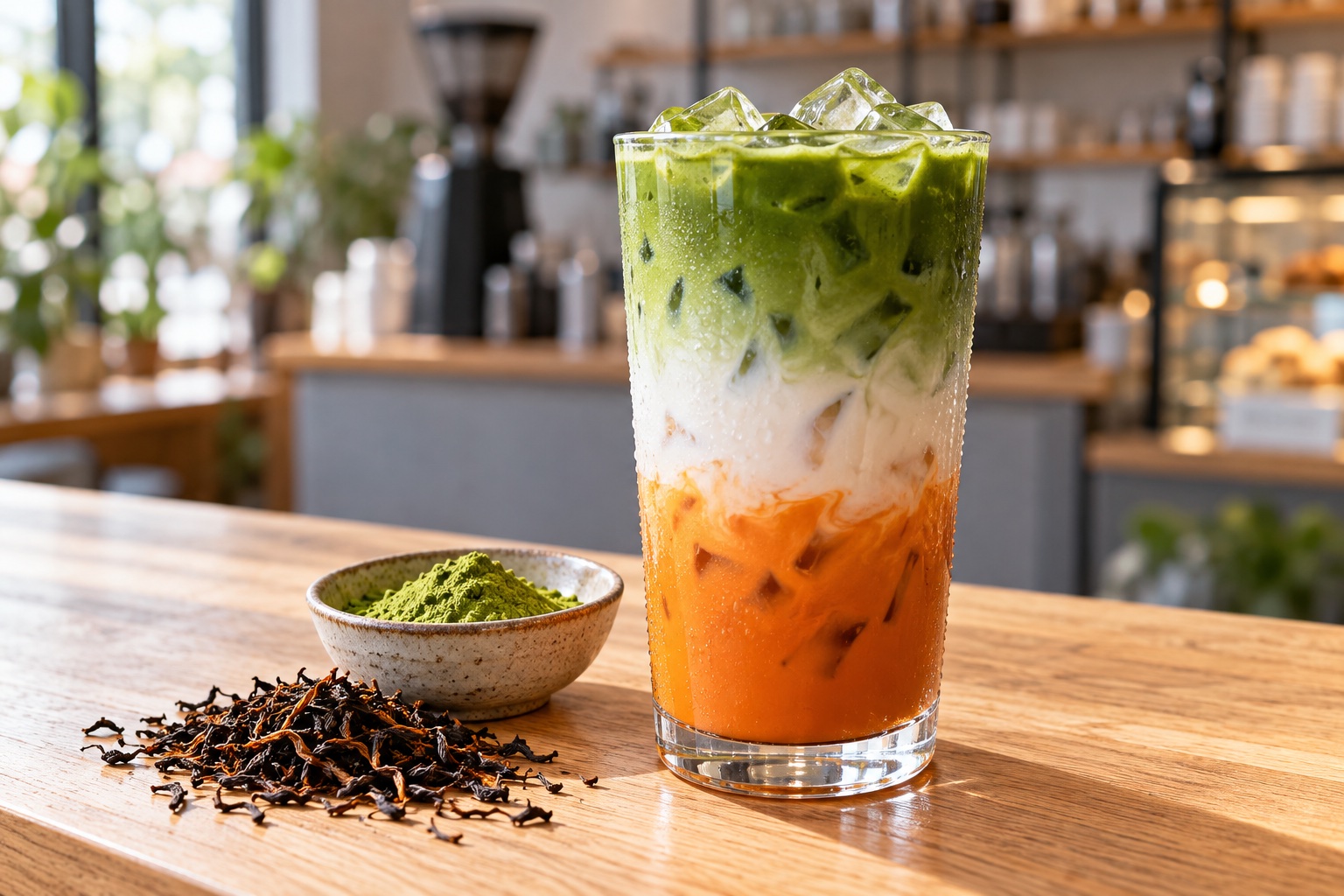
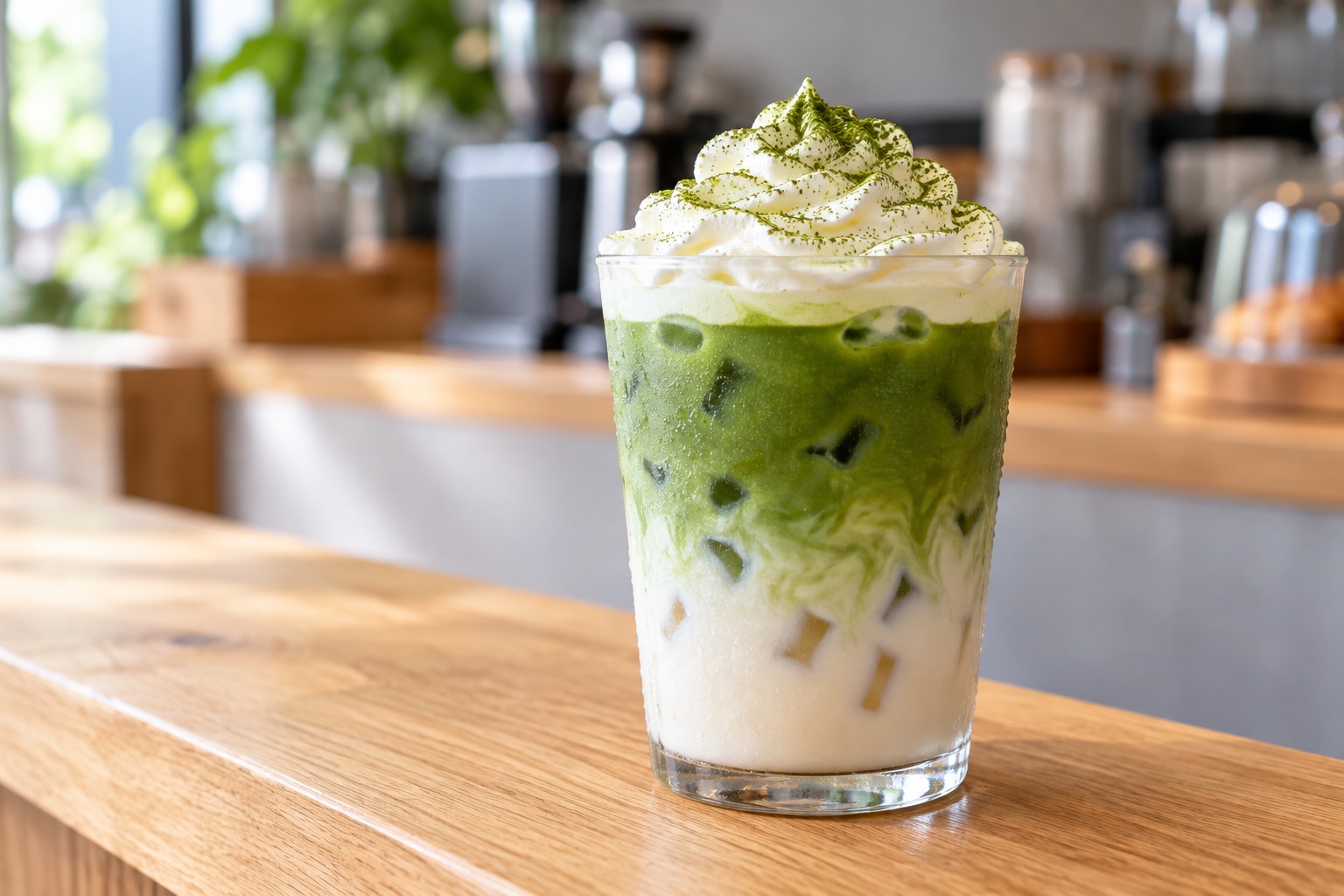
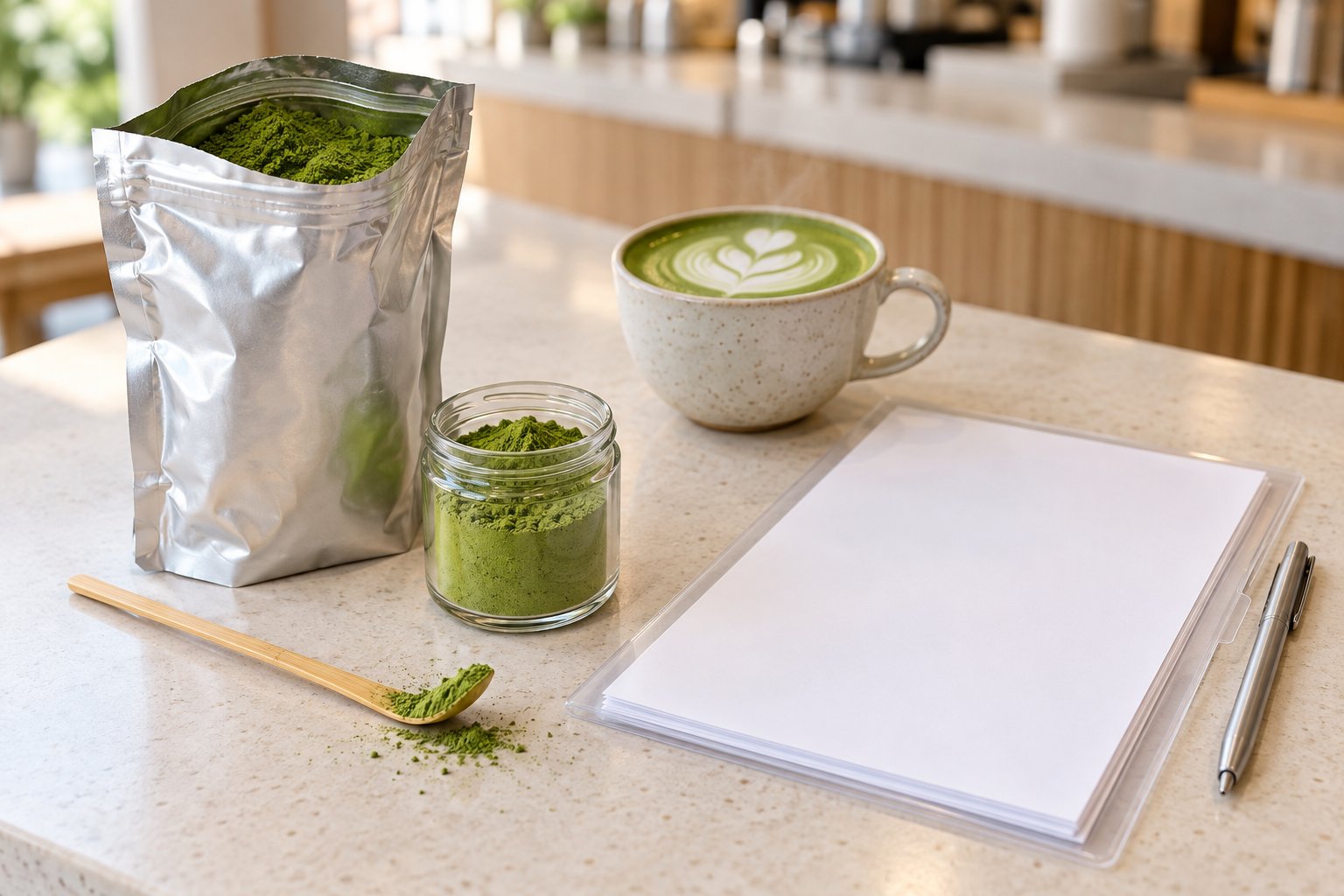
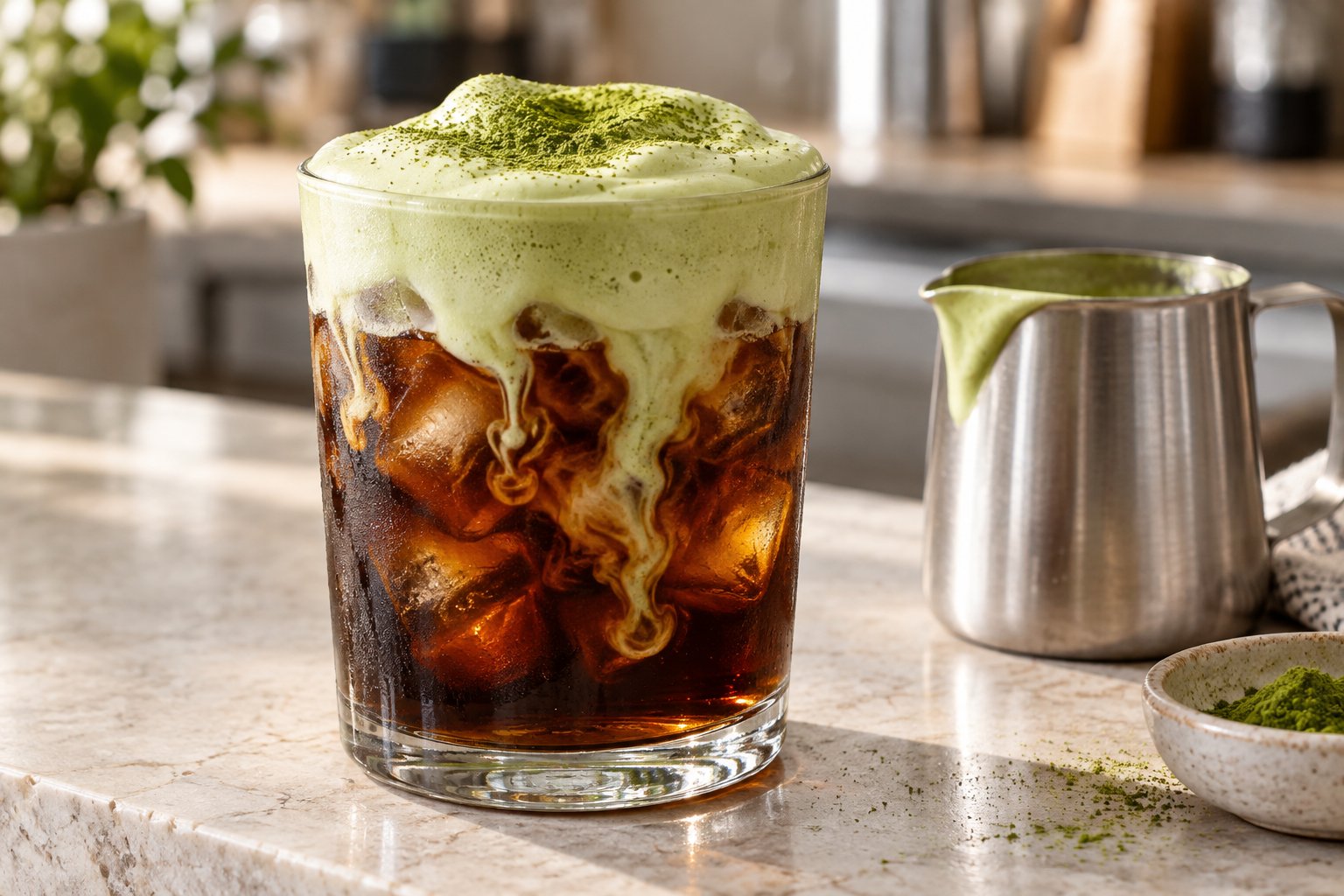
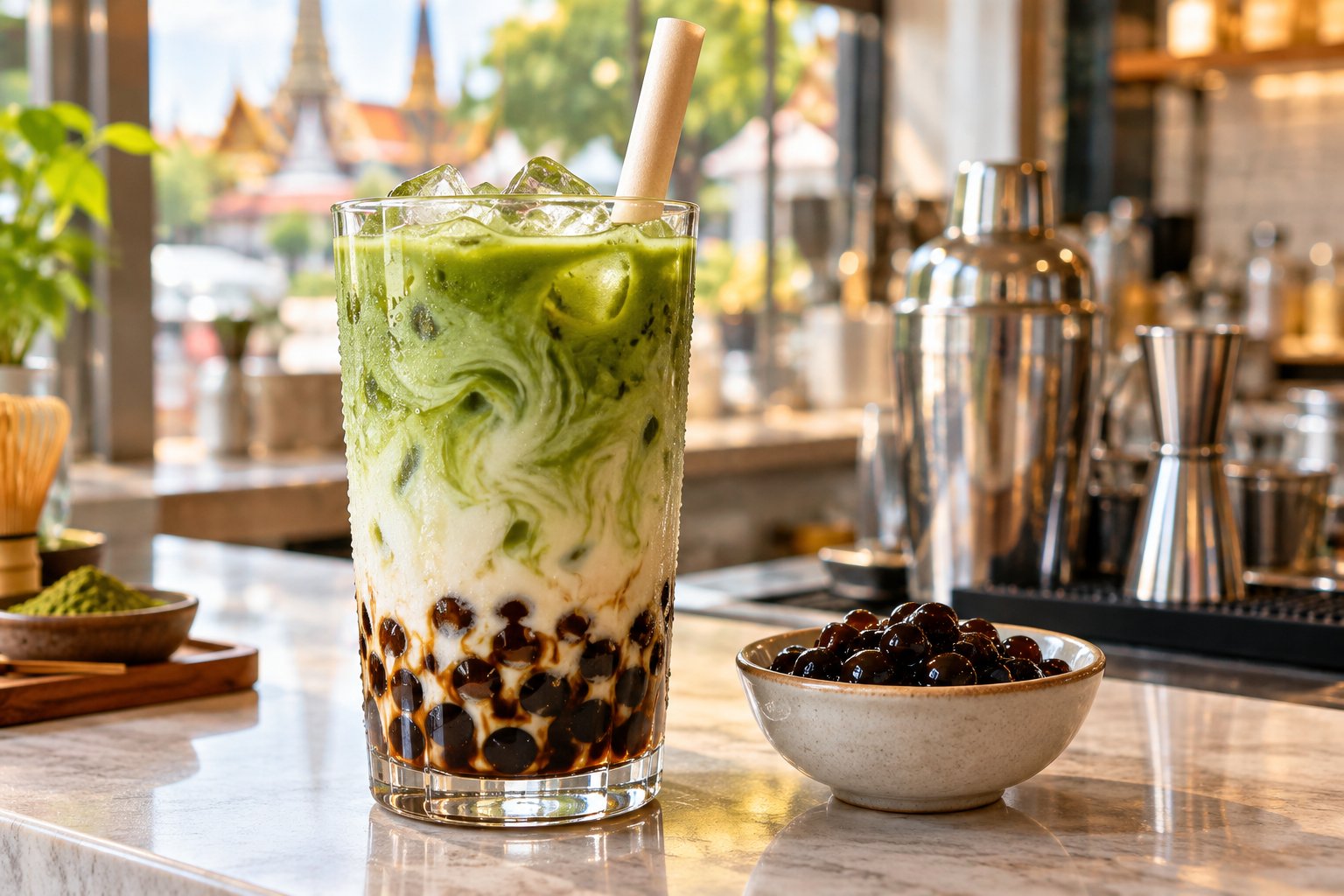
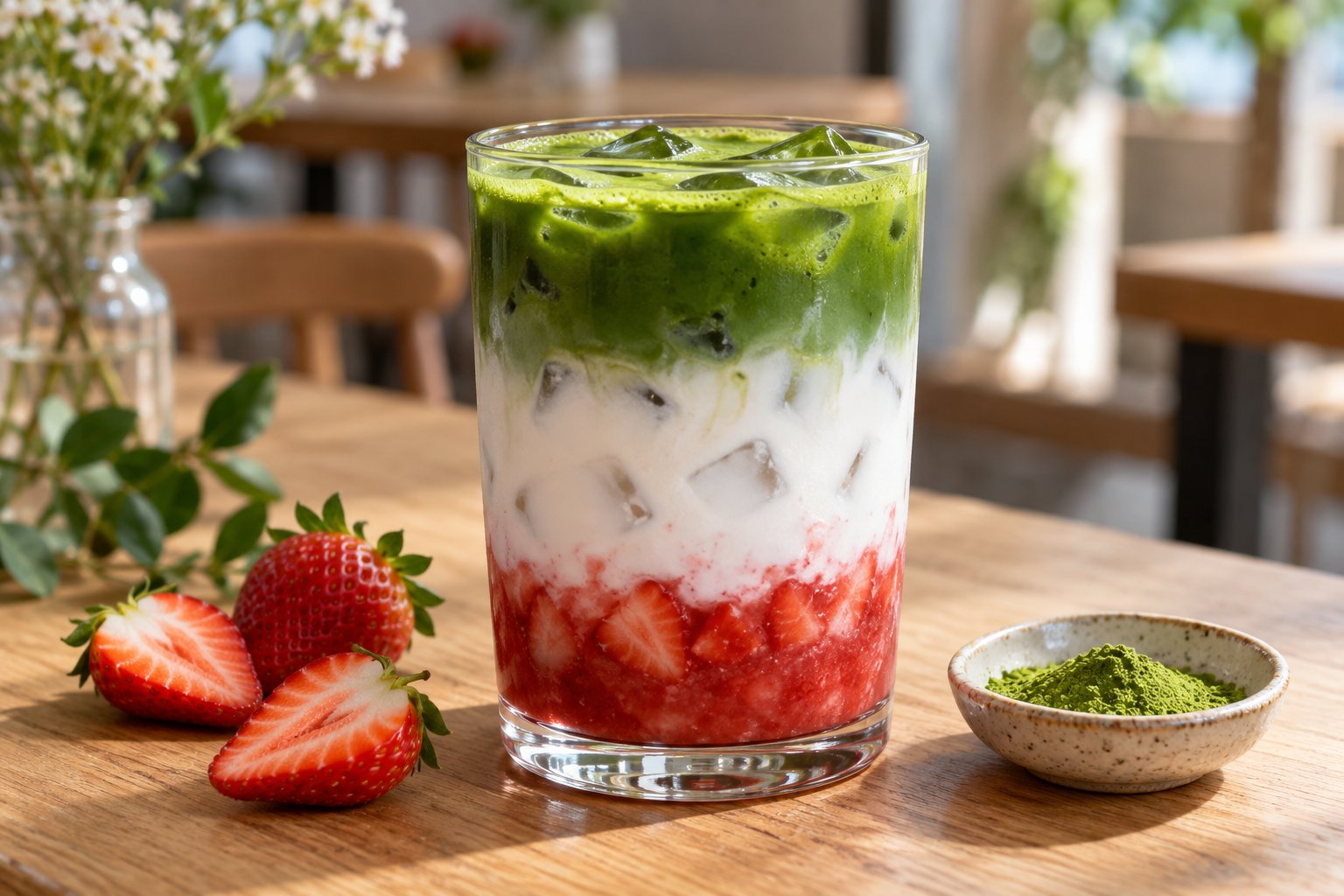
An oat milk matcha latte is matcha dissolved in a little hot water and topped up with oat milk instead of cow’s milk. It is made the same way as a cow’s milk matcha latte. What changes is the composition of the milk.
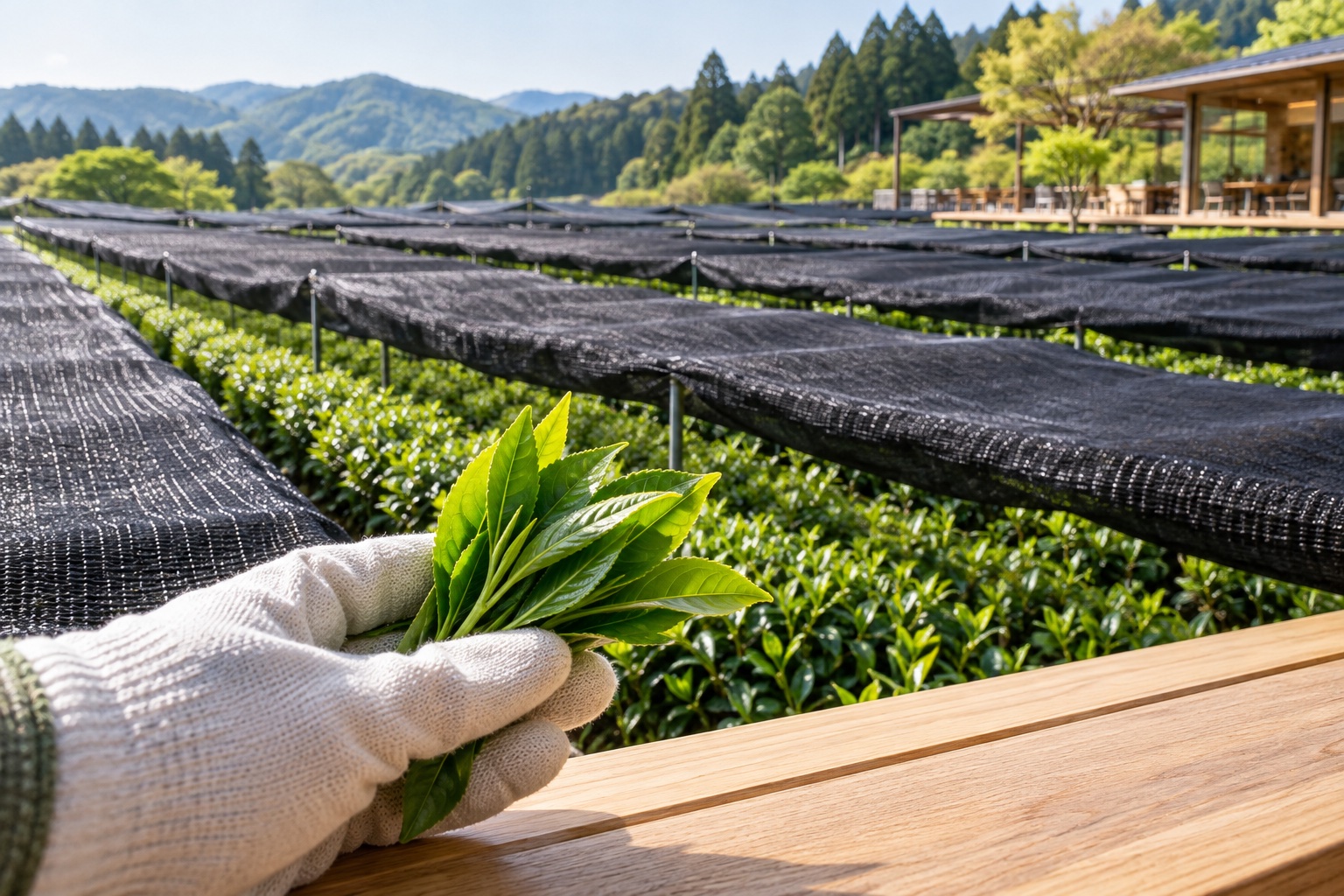
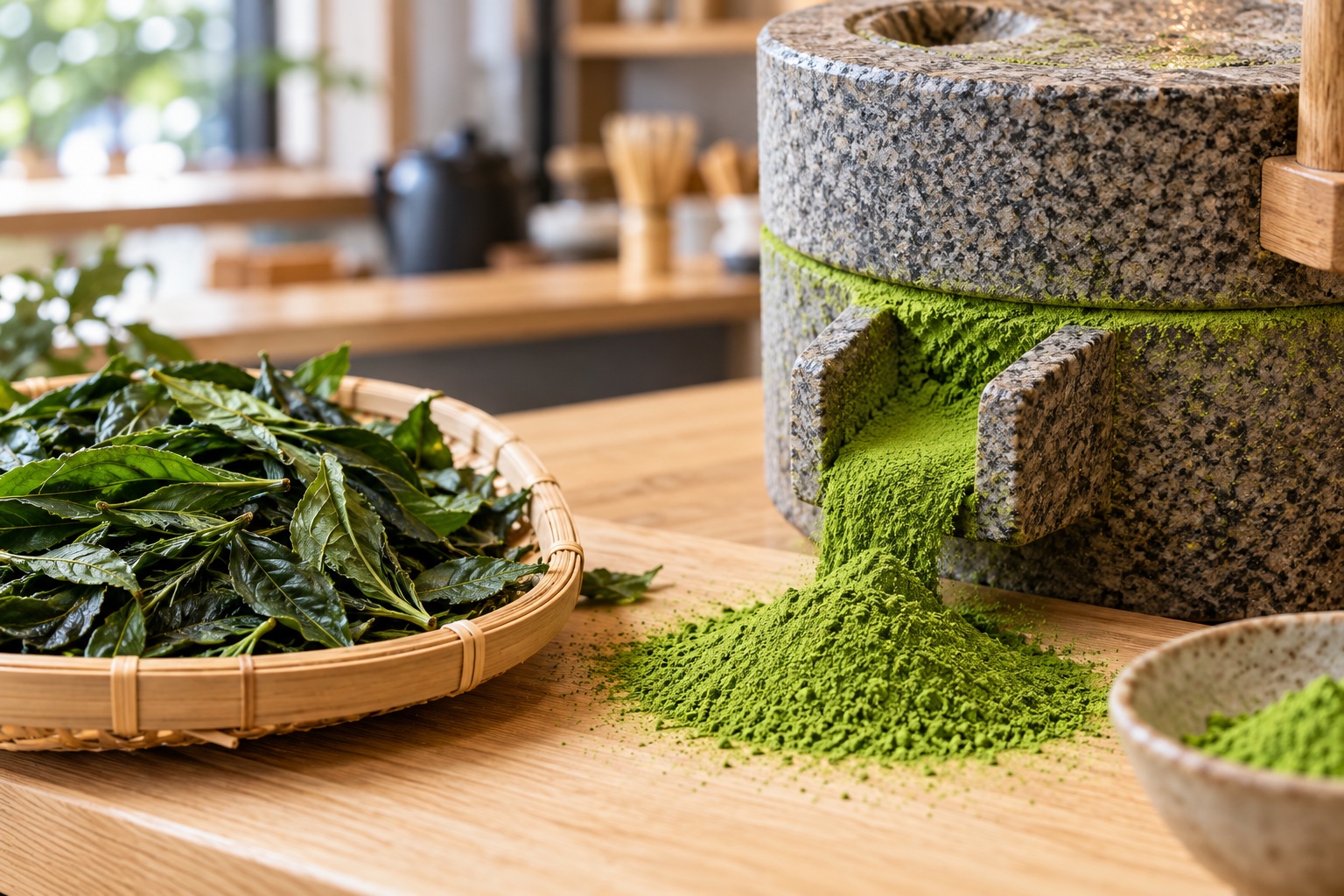
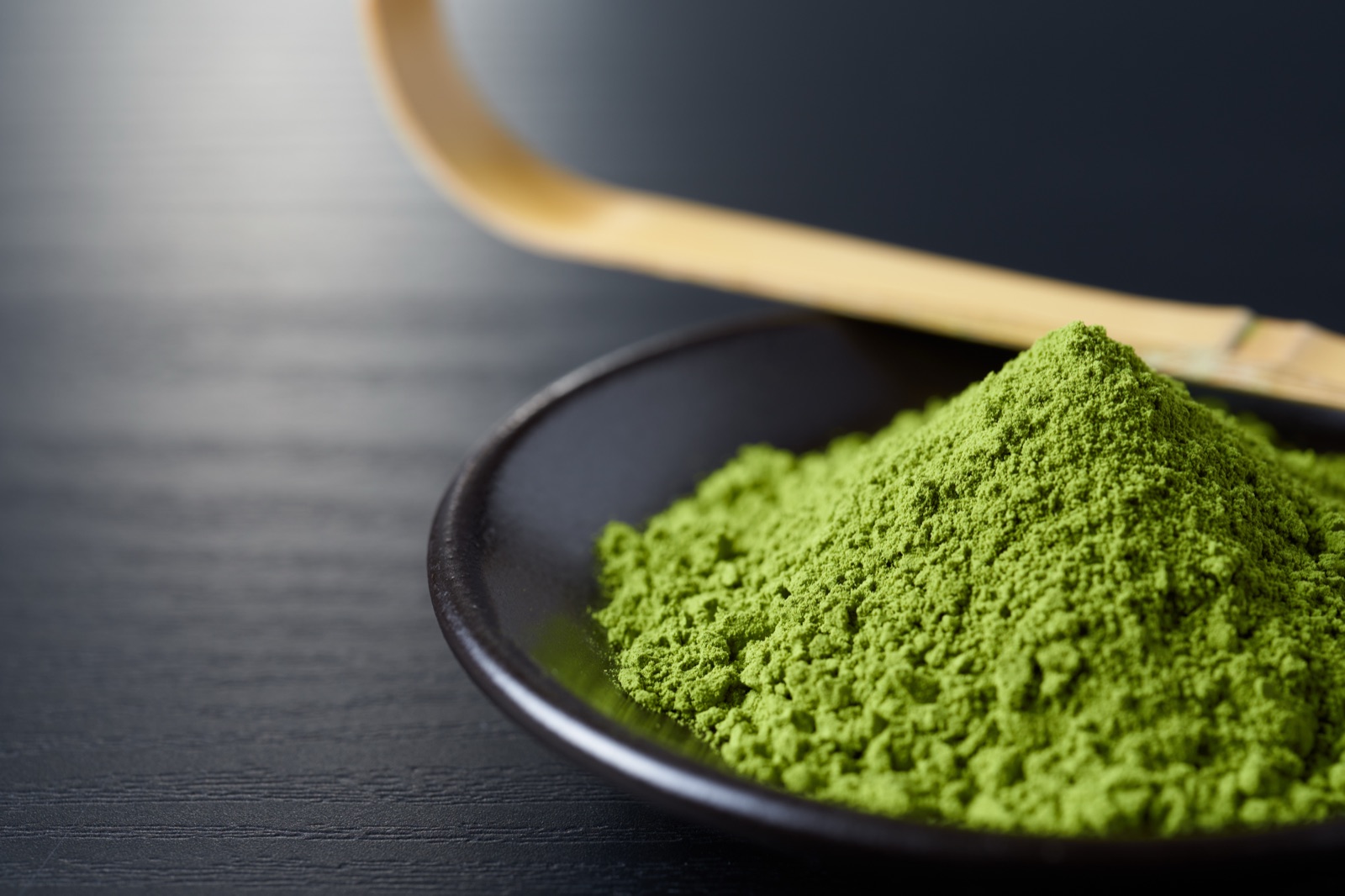
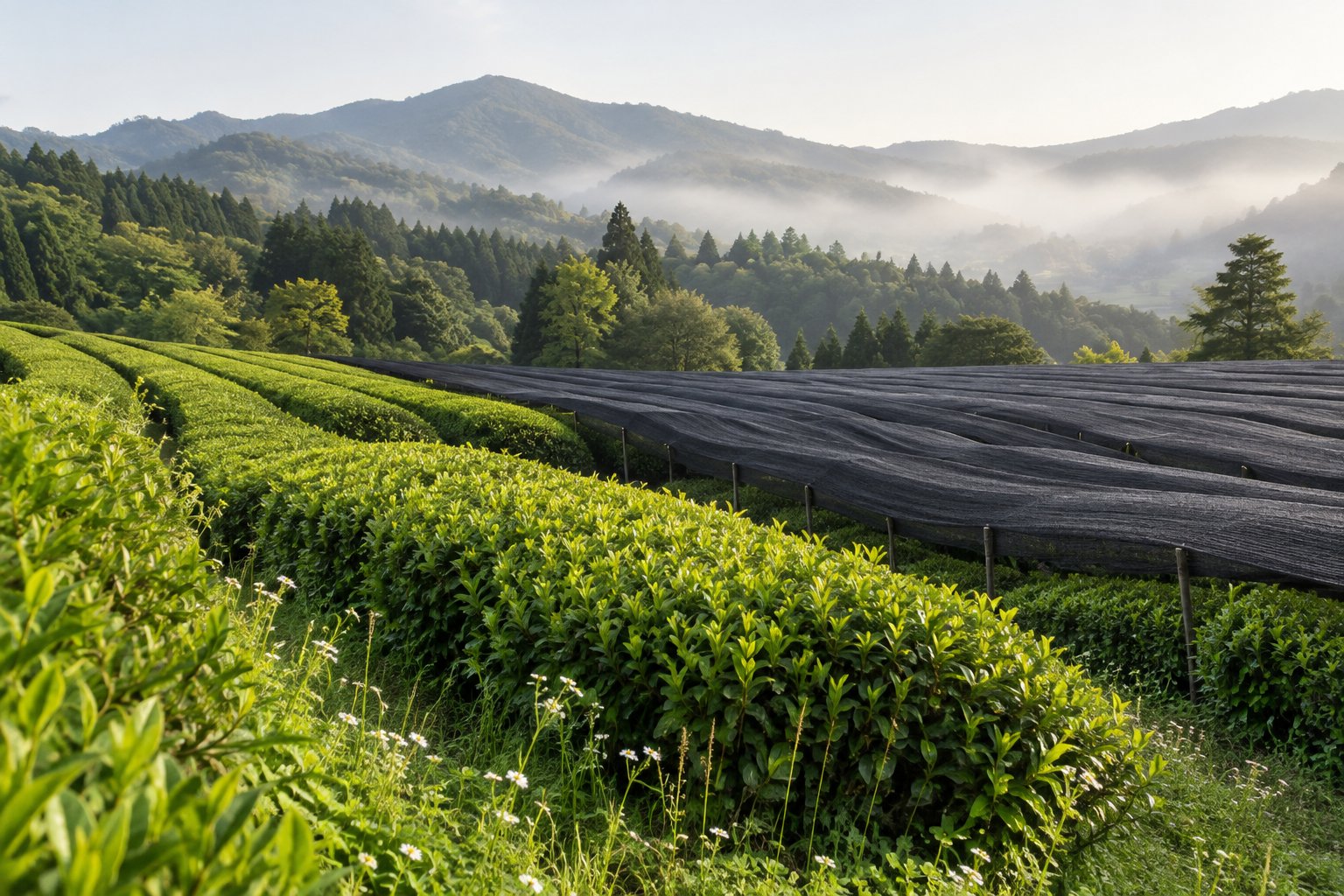
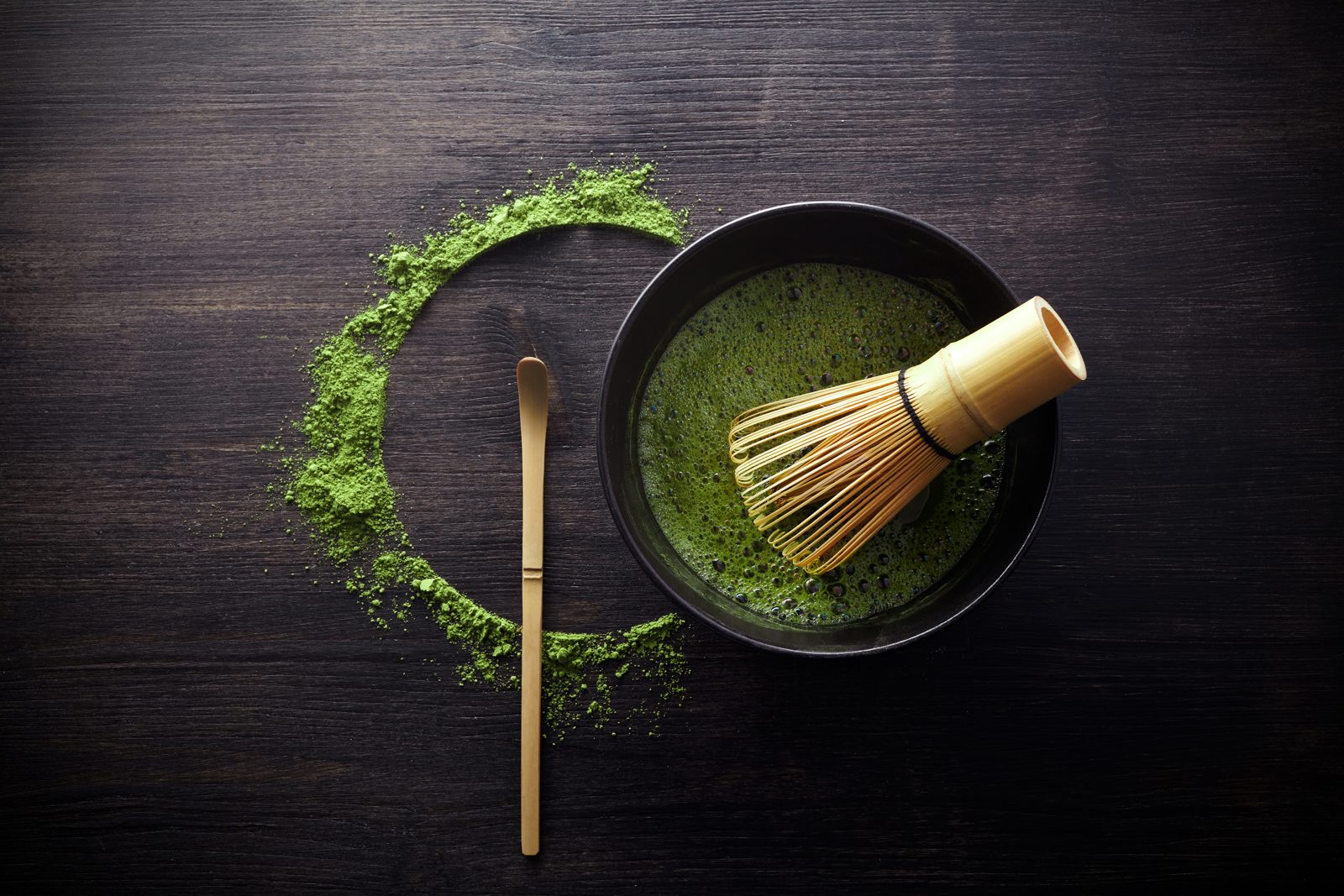
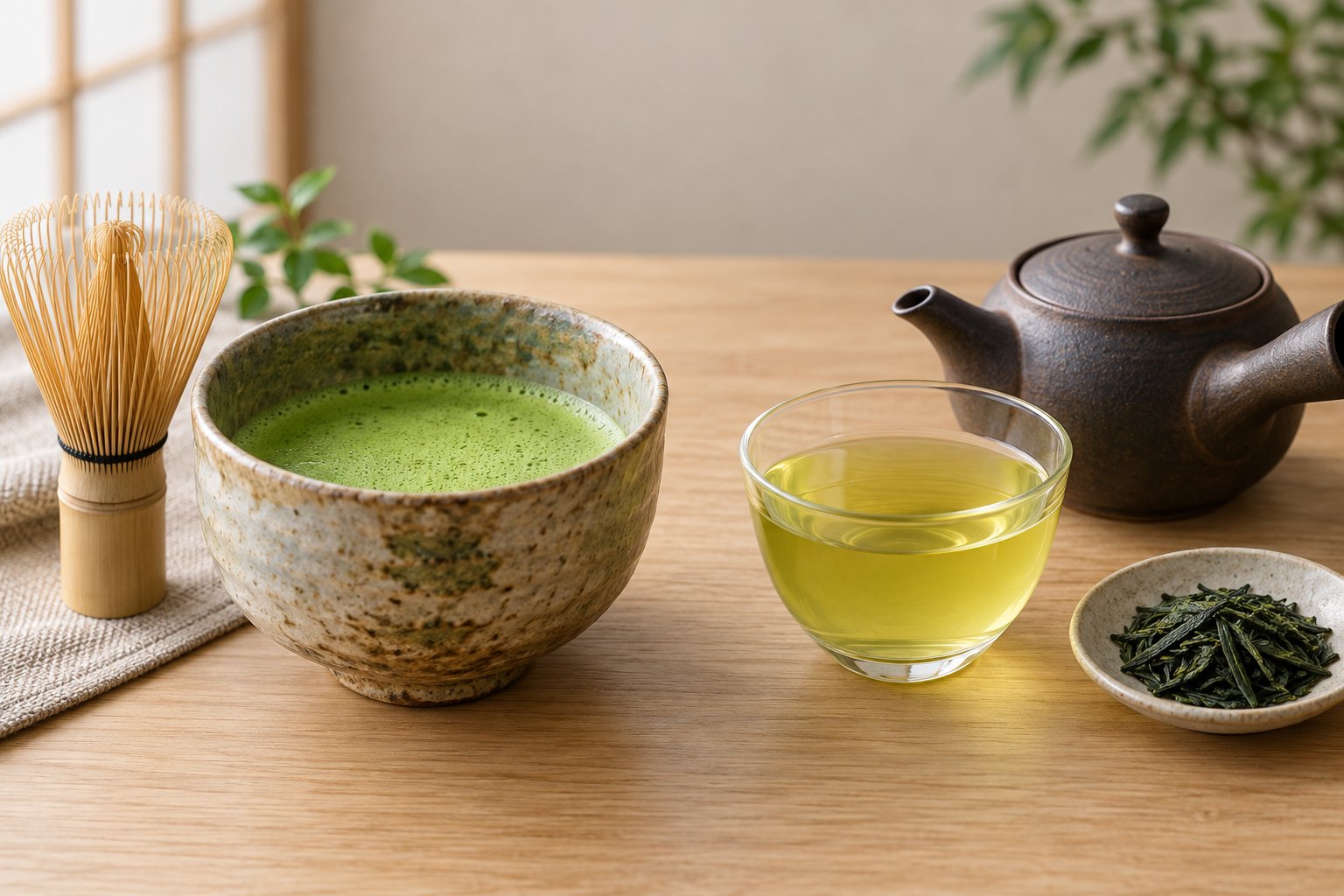
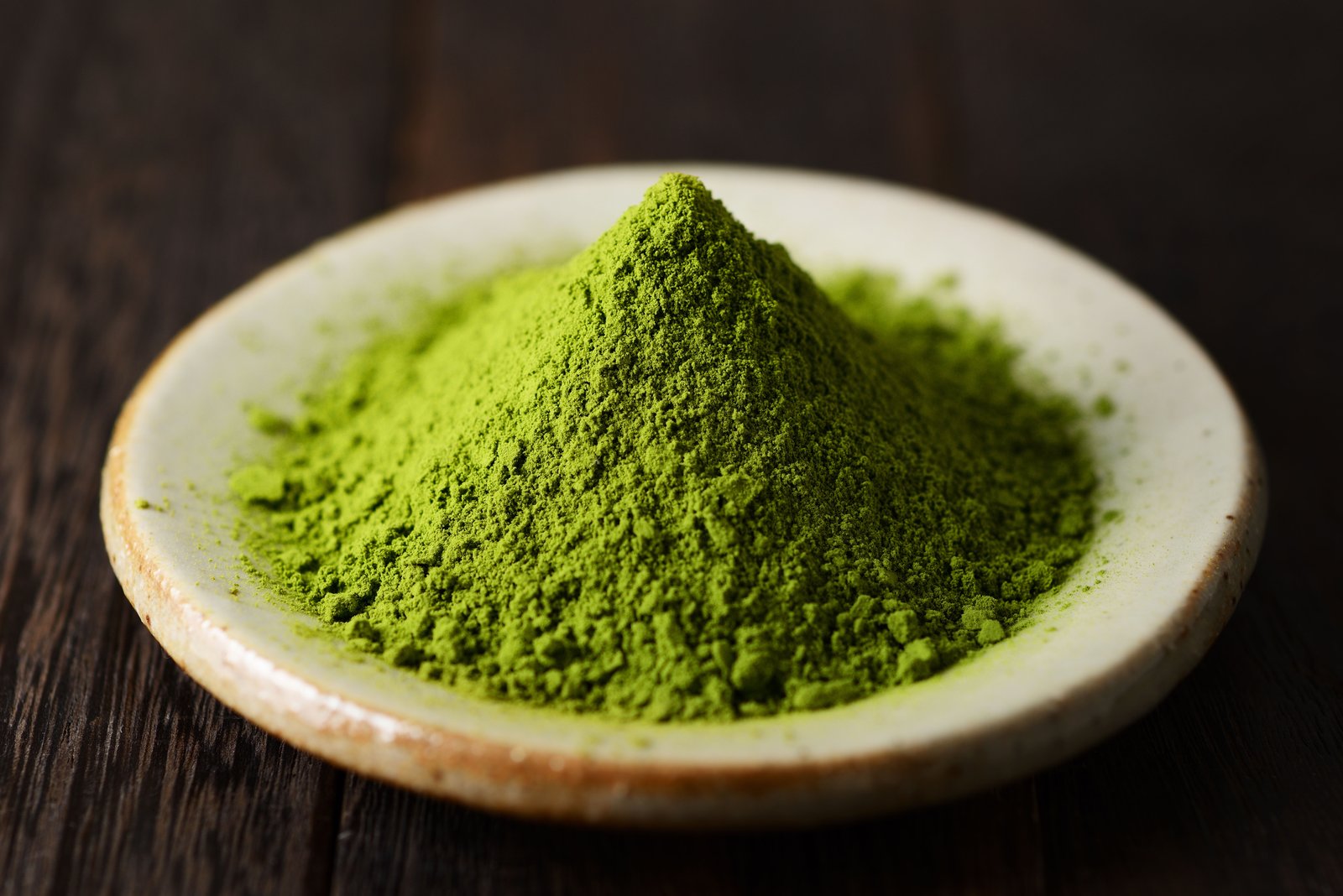
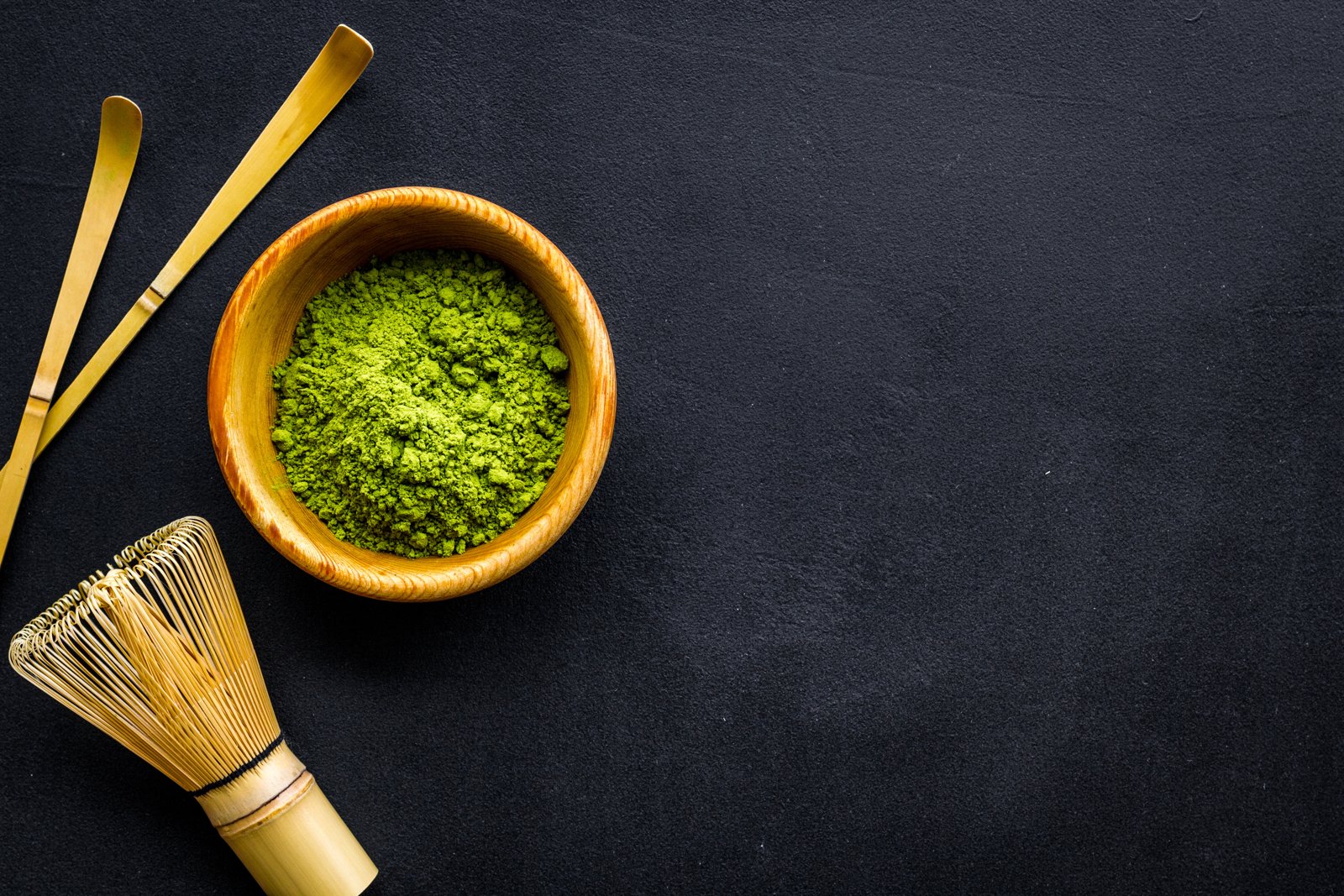
Oat milk is a plant-based drink made from oats and water. Some manufacturers and countries call it “oat drink” and others “oat milk”; this guide uses oat milk. Matcha is tencha (tea leaves grown under shade and dried without rolling) ground into a fine powder, so you drink the whole leaf.
The basic ratios for a cow’s milk matcha latte and the matcha grades used for lattes are covered in How to Choose Matcha for Café Lattes. This guide focuses on what changes when you switch to oat milk.
Cow’s milk vs oat milk: the composition compared
Oat milk has less protein than cow’s milk and contains added vegetable oil. It does not contain more sugar than the lactose in cow’s milk. What differs is the type of sugar (maltose in oat milk, lactose in cow’s milk).
Composition table
The table below sets the whole milk and soy milk figures from Japan’s Standard Tables of Food Composition (MEXT, 2023 edition) beside the official labels of two barista oat milks. Cow’s milk and soy milk are per 100g; oat milk is per 100ml. Oat milk labels differ by country, so the Oatly figures come from Oatly’s UK site and the OATSIDE figures from its official Singapore store.
| Item | Whole milk | Soy milk | Oatly Barista Edition (UK, chilled) | OATSIDE Barista Blend (Singapore) |
|---|---|---|---|---|
| Protein | 3.3g | 3.6g | 1.1g | 0.6g |
| Fat | 3.8g | 2.8g | 3.0g | 3.2g |
| Carbohydrate | 4.8g | 2.3g | 7.1g | 8.1g |
| Sugar | Lactose 4.4g | — | Sugars 3.4g | Sugars 2.8g |
| Added oil | None | None | Rapeseed oil | Canola oil |
| Energy | 61kcal | 43kcal | 61kcal | — |
Source: Oatly, “Chilled Oat Drink Barista Edition” https://www.oatly.com/en-gb/products/chilled-oat-drink/chilled-oat-drink-barista-edition-1l (ingredients: water, oats 10%, rapeseed oil, acidity regulator (dipotassium phosphate) and others; the page also says it performs well when foamed and acts like a coffee creamer without separating)
How it shows in a matcha latte
The table points to three things that change in the taste and look of a matcha latte.
- Protein: oat milk has a third or less of the protein of cow’s milk. Instead, vegetable oil (rapeseed or canola) is added, and the fat is close to that of cow’s milk.
- Sugar: Oatly explains that during production, enzymes break down the oat starch into maltose, which sweetens the drink naturally. The amount of sugar is about the same as or less than the lactose in cow’s milk, not more. Even so, Naoki Matcha says most oat milks are naturally sweeter than regular milk.
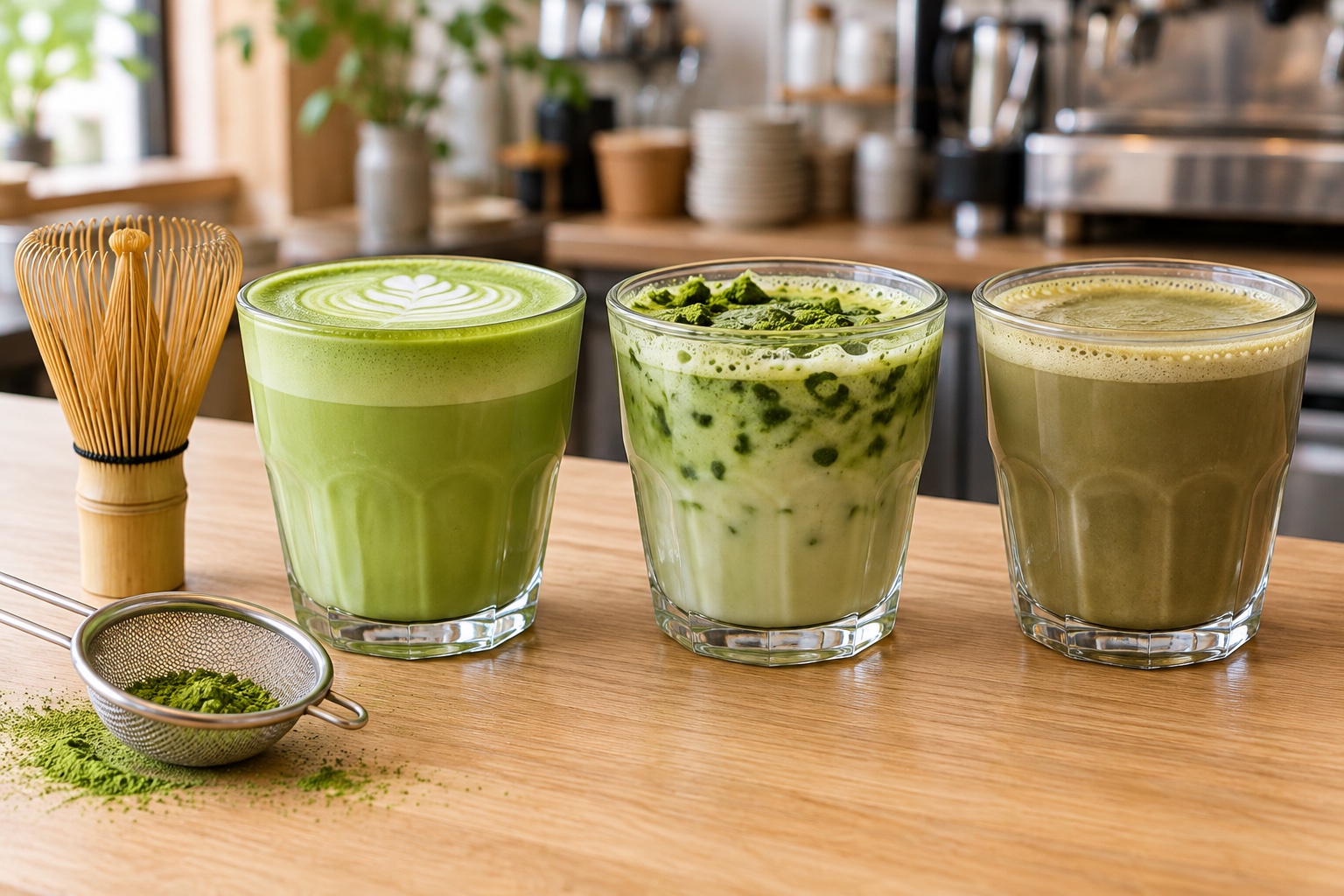
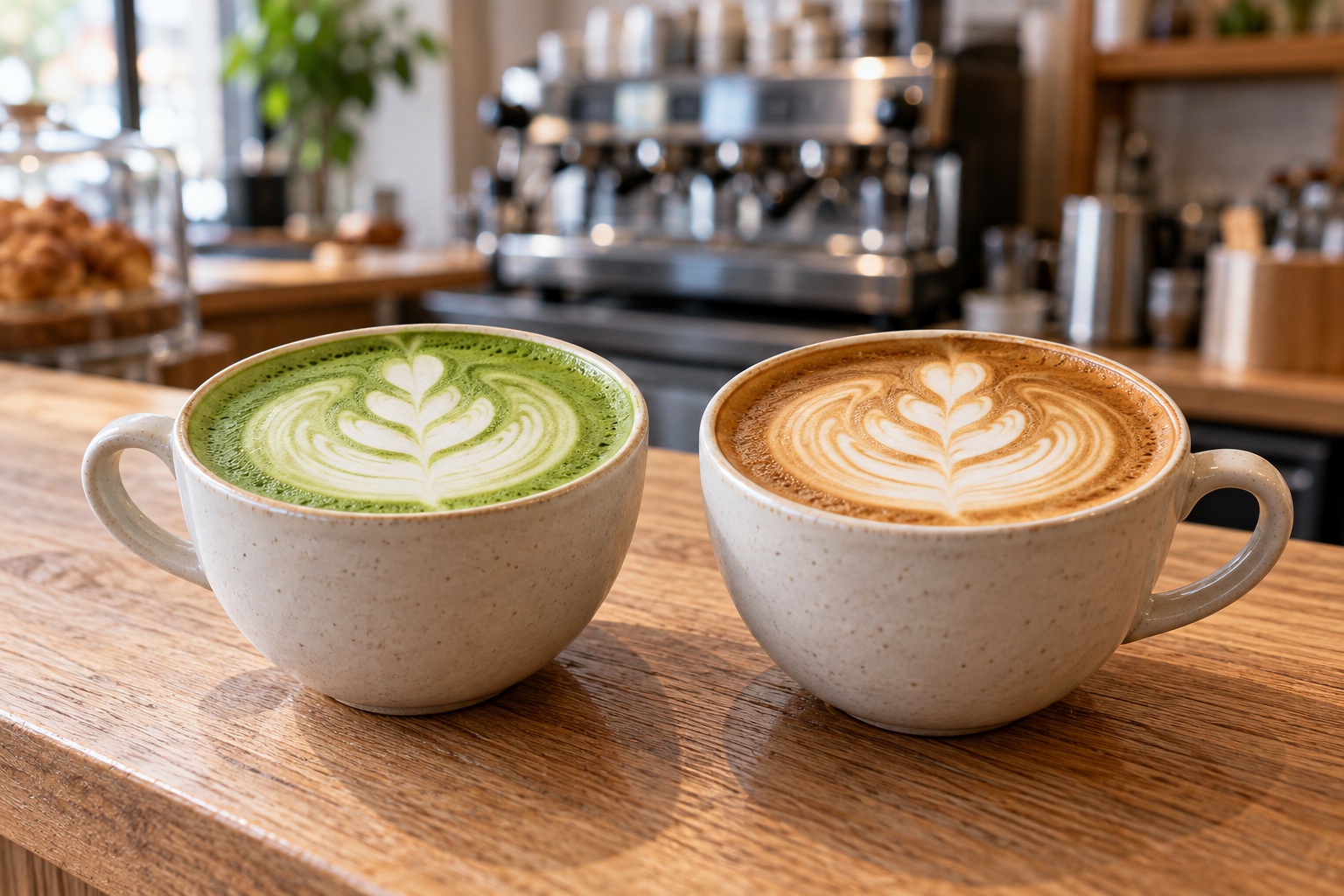
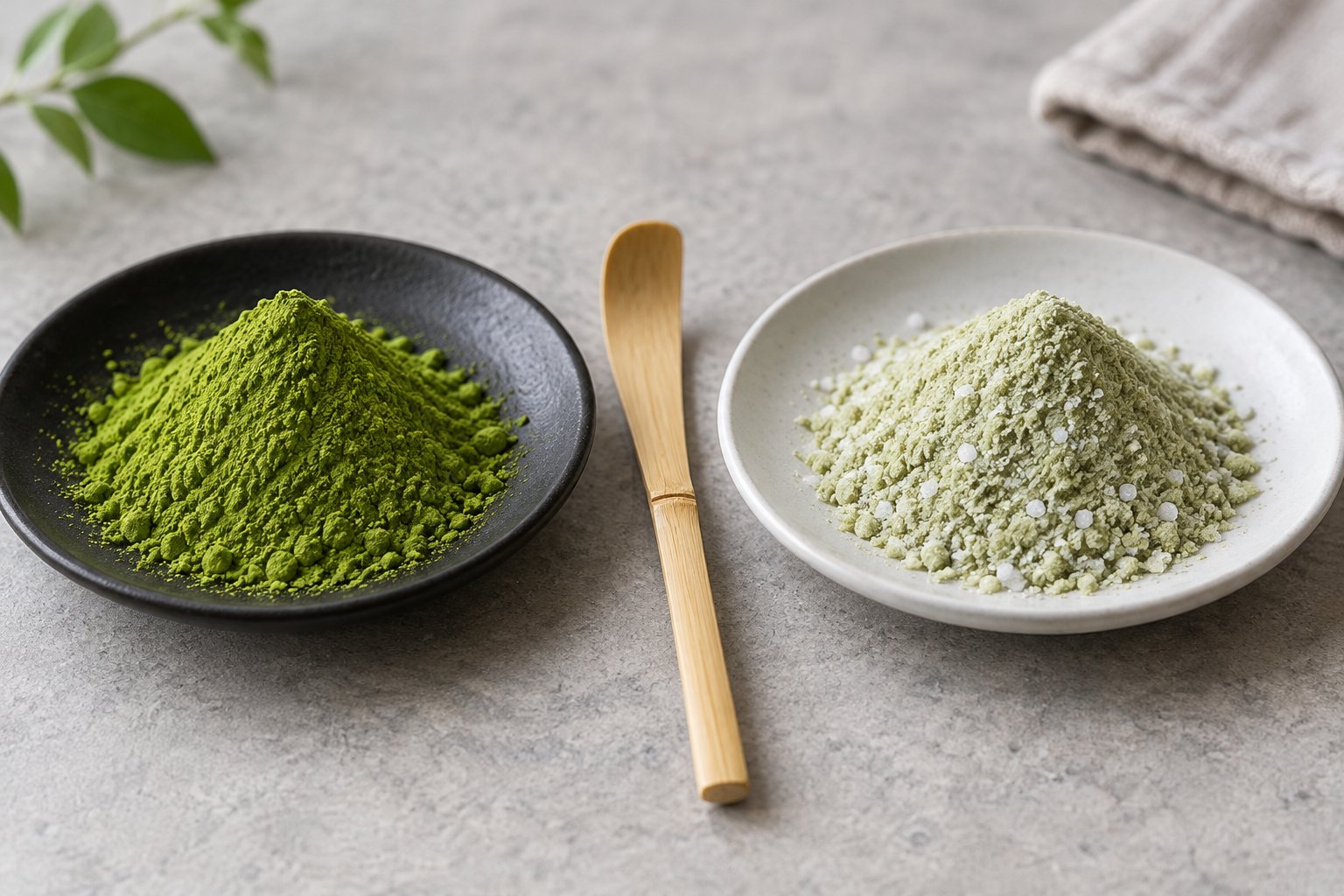
- Color: cow’s milk is white, and oat milk is beige. With the same amount of matcha, the green can look more yellow in oat milk.
You will also see claims online that the sweetness of oat milk comes from fiber (beta-glucan), but Oatly’s official explanation is that the sweetness comes from maltose.
Official recipes: the ratios compared
In the oat milk matcha lattes of matcha shops and brands, 2 to 2.5g of matcha (2 teaspoons at Naoki Matcha) is dissolved in a little liquid and topped up with oat milk. The main differences are the amounts of liquid and milk, in other words the strength.
Four recipes side by side
| Source | Matcha | Liquid for dissolving | Oat milk | Sweetener | Hot / iced |
|---|---|---|---|---|---|
| Naoki Matcha (matcha brand) | 2 teaspoons | 50ml water at 80°C, whisked with a chasen | 230ml (heated to about 65°C for hot) | 0.5 teaspoon powdered brown sugar (adjust to taste) | Both |
| MATCHA STAND MARUNI (matcha stand in Tsukiji, Tokyo) | 2g | 20ml water at 80°C, whisked with a chasen for about 20 seconds | 80ml | Optional (recommends a low-viscosity syrup) | Iced |
| THE NODOKA (Japanese tea brand) | 2g | 60ml cold water | 150ml | Optional, added to the oat milk | Iced |
| Kurasu Kyoto (coffee shop in Kyoto) | 2.5g | 30 to 40ml hot water | 150g milk (says soy milk or oat milk also works) | Optional | Both (100g ice for iced) |
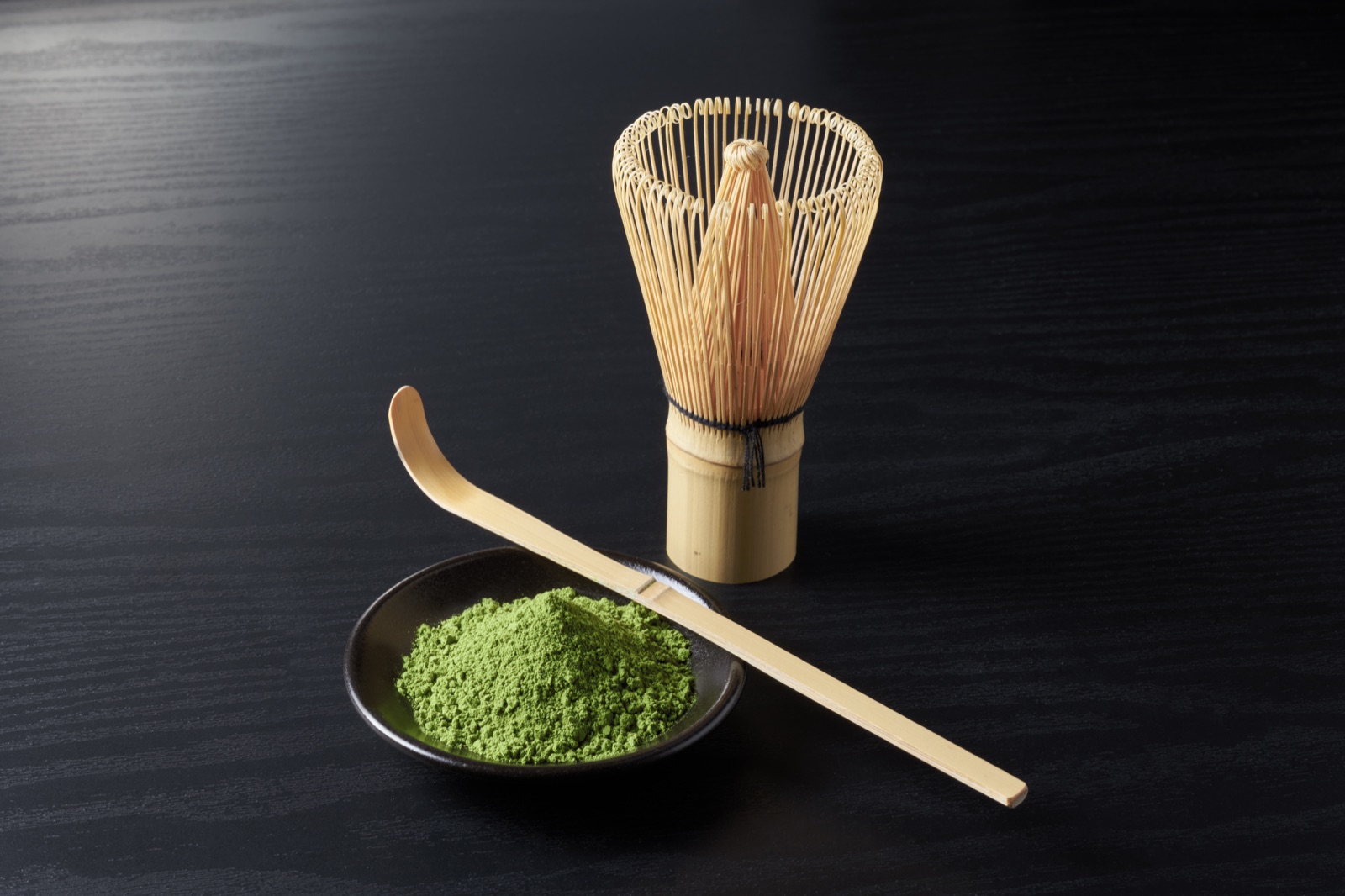
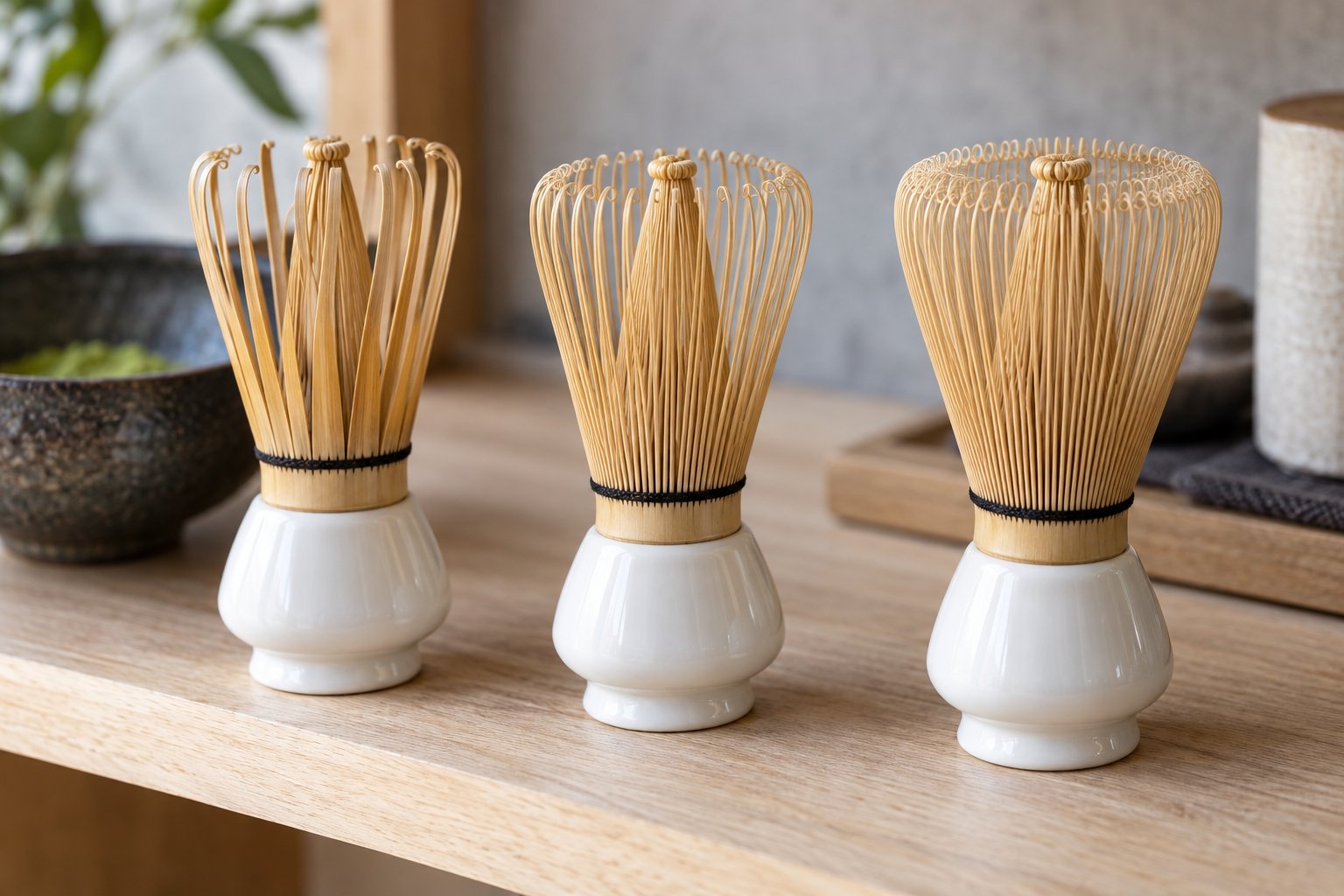
A chasen is a bamboo whisk. Ippodo Tea’s cow’s milk recipe dissolves 3g of matcha in 100ml of water at 80°C and adds 100ml of milk. How to think about ratios is covered in How to Choose Matcha for Café Lattes, and a comparison of iced ratios is in Iced Matcha Latte Recipe.
What the table shows
MATCHA STAND MARUNI uses 100ml of liquid in total for 2g of matcha, the strongest of the four. Naoki Matcha uses 280ml of liquid in total, enough for one large cup. Comparing the amount of milk per gram of matcha shows how strength differs between shops.
Setting your café’s standard (our view)
From here on, this is our view based on the comparison above. First set the amounts of ice and milk from your cup size, and start testing the matcha at 2 to 2.5g. Oat milk can make the color look more yellow than cow’s milk does, so if you want it to look like your cow’s milk menu, add matcha 0.5g at a time and compare. Write the result on a recipe card with every amount (matcha, water, milk, sweetener) in g or ml.
How to make an oat milk matcha latte (hot and iced)
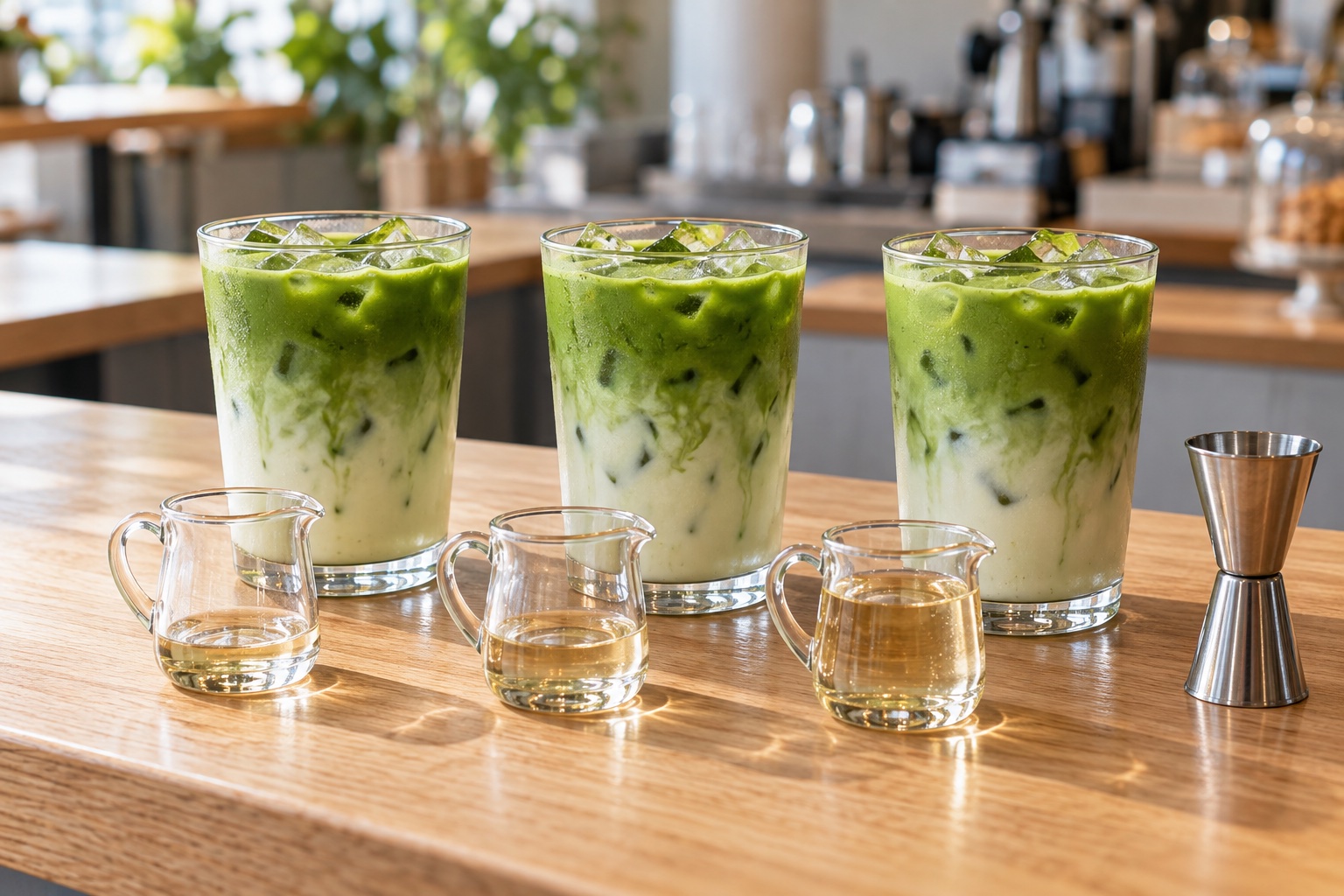
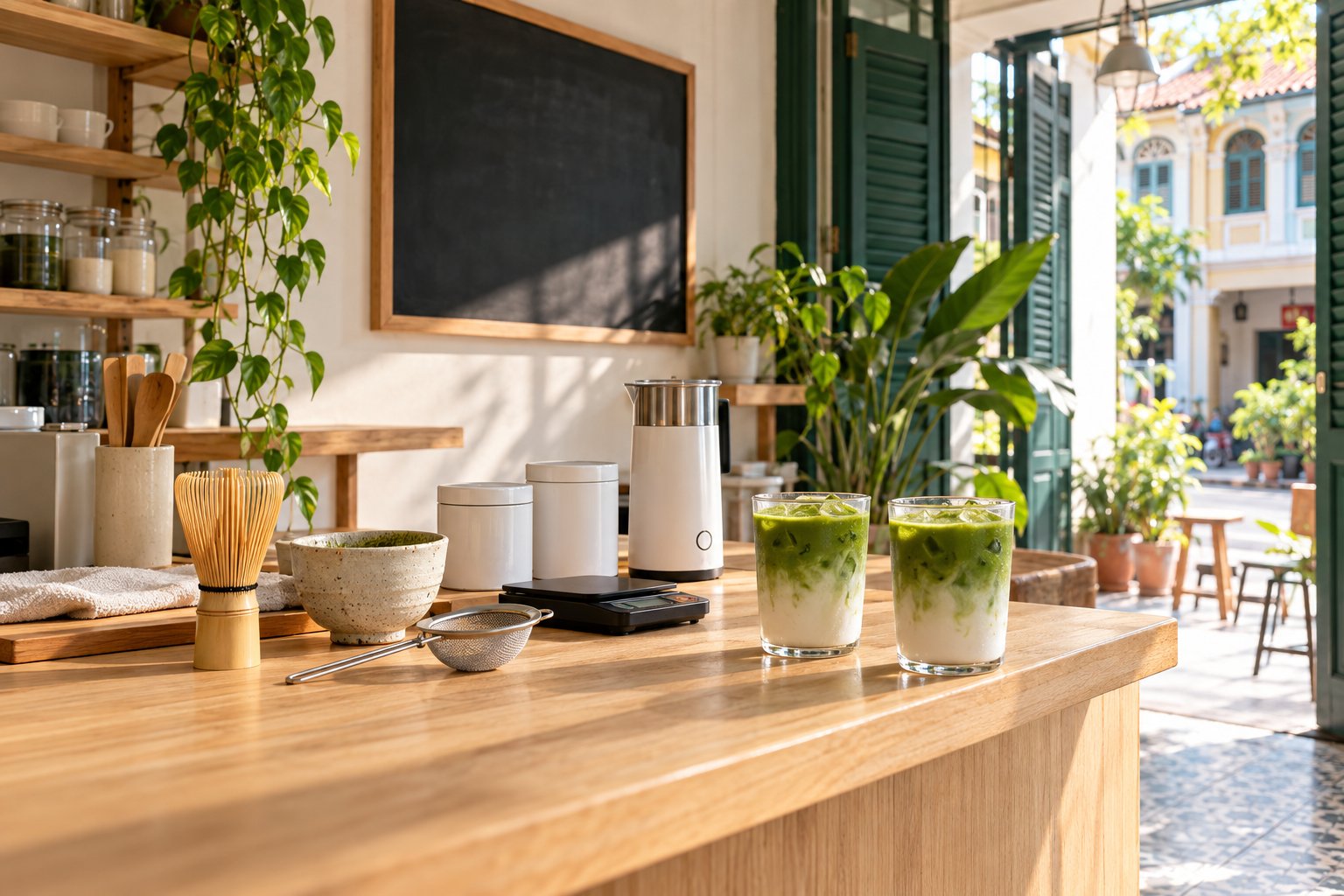
Sift the matcha, dissolve it in water at 70 to 80°C, then combine it with oat milk. For hot, do not overheat the oat milk. For iced, many recipes put the oat milk in the glass first and pour the dissolved matcha in afterwards.
For both: dissolve the matcha
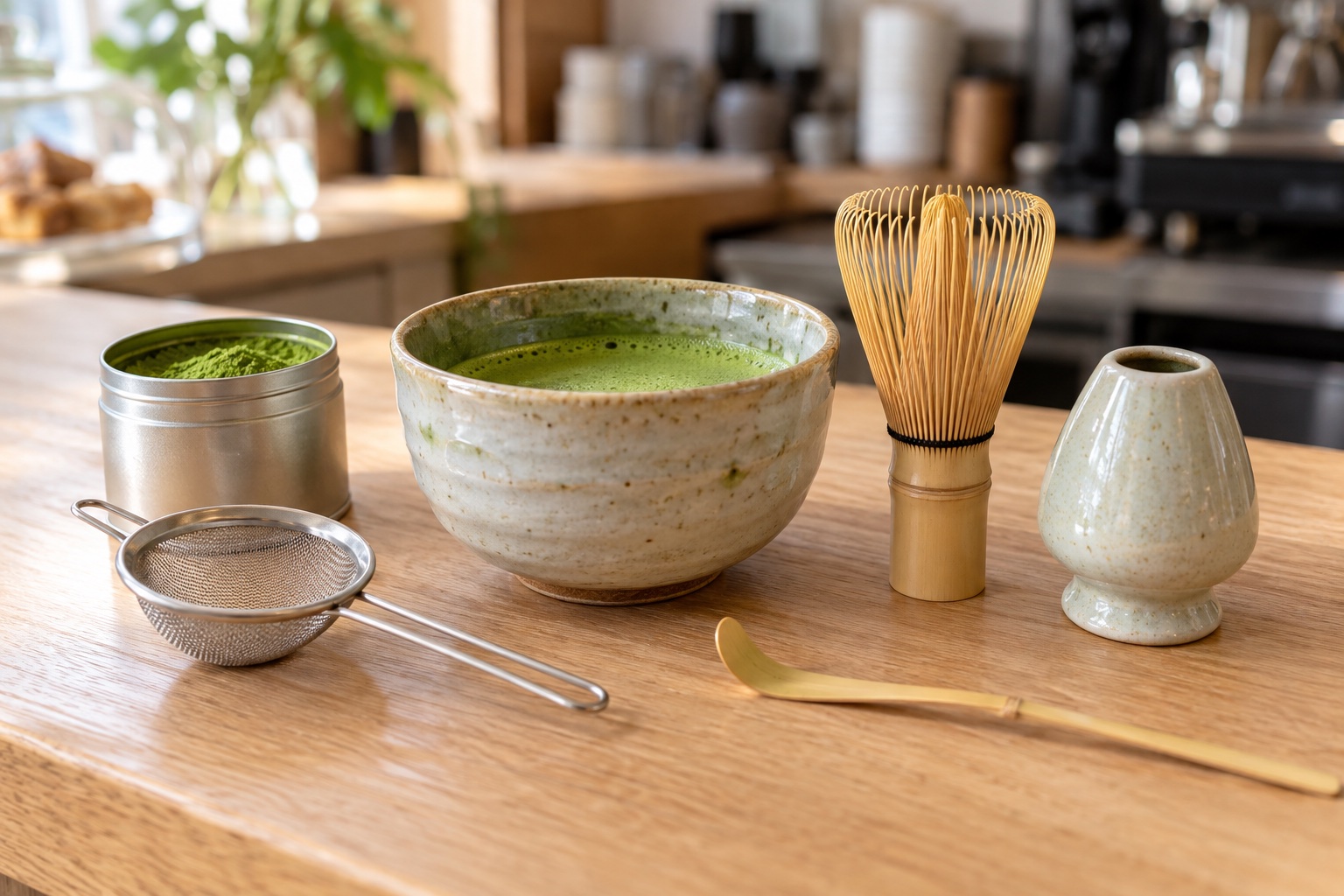
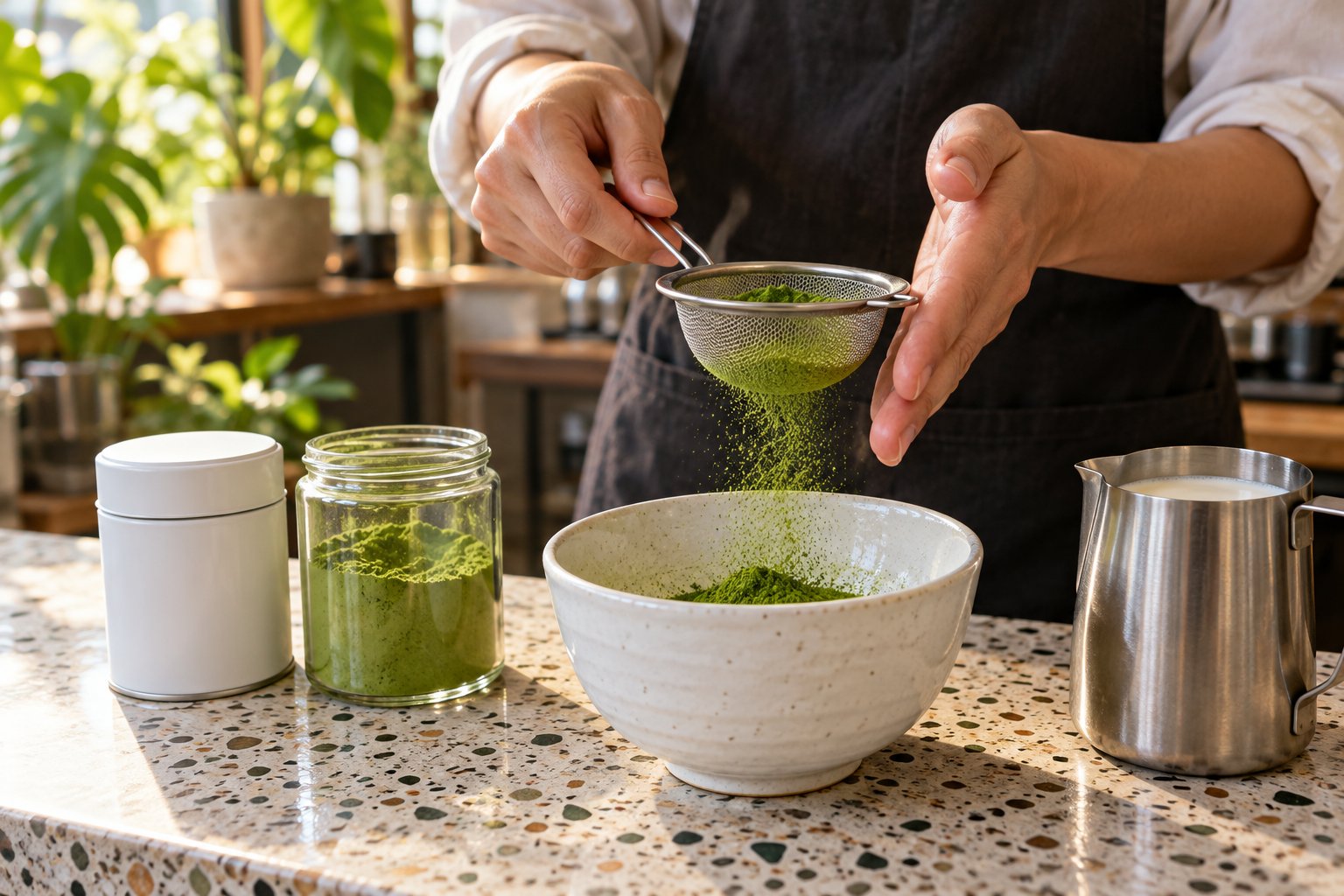
- Sift the matcha through a tea strainer to remove lumps
- Pour in a little water at 70 to 80°C
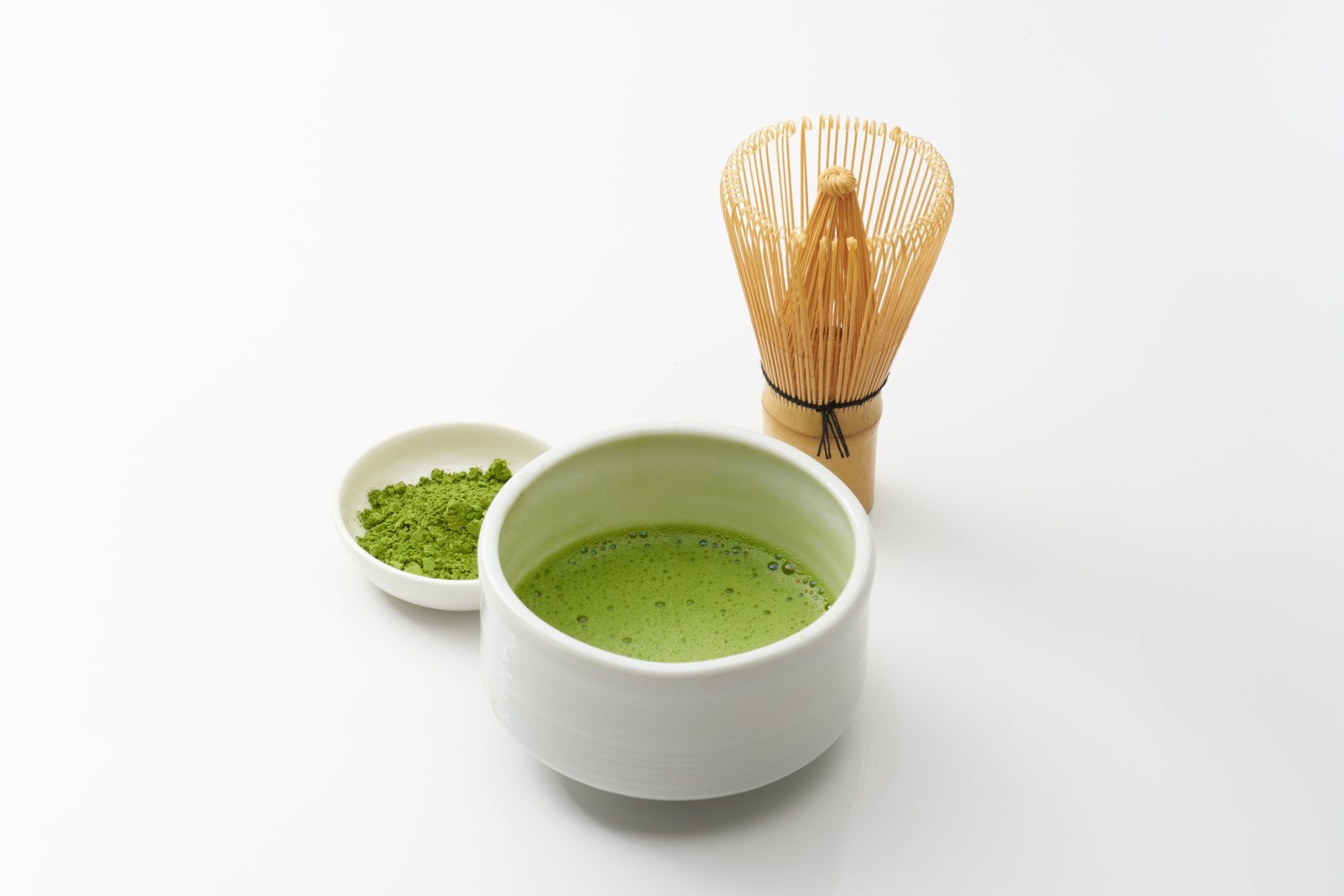
- Mix with a chasen or a spoon until no powder is left
The Kyoto Prefectural Tea Research Institute advises sifting matcha once through a tea strainer and using water cooled to 70 to 80°C. Do not use water straight off the boil; dissolve the matcha in this temperature range. Detailed steps for sifting and mixing are in How to Make Matcha.
Hot
In Naoki Matcha’s recipe, the dissolved matcha goes into the cup, the sweetener is mixed in, and oat milk heated to about 65°C is poured over it. If you foam with a steam wand or a frother (a tool for foaming milk), follow the heating guidance of the oat milk manufacturer.
Iced
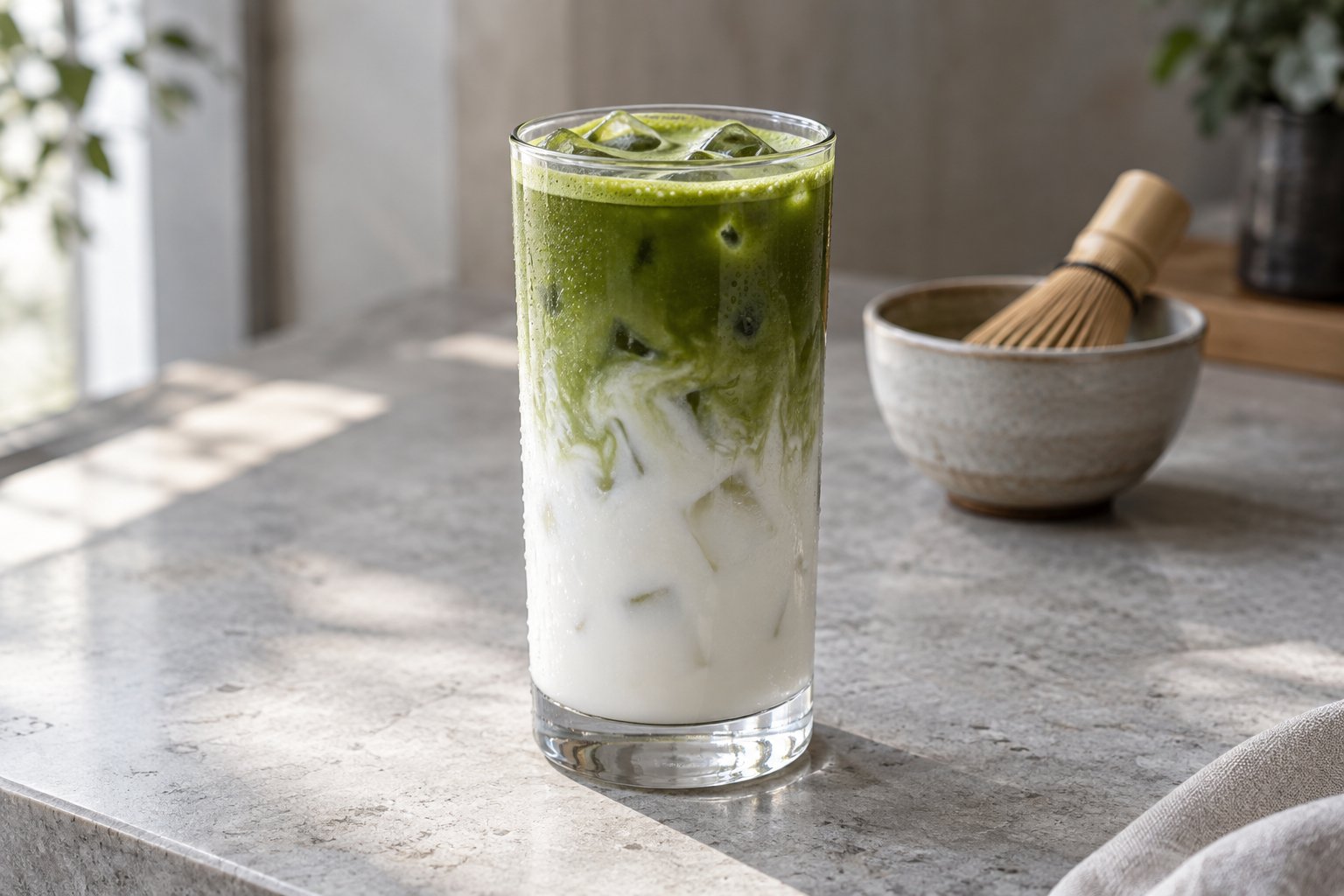
Three of the four put the oat milk in the glass first and pour the dissolved matcha in afterwards. Kurasu does the opposite, adding cold milk and ice to the dissolved matcha.
- THE NODOKA puts ice and oat milk in first, and says adding the sweetener to the oat milk so that it sinks to the bottom keeps the two layers from mixing
- Naoki Matcha dissolves the matcha in room-temperature or warm water for iced, then pours it into oat milk mixed with sweetener
- MATCHA STAND MARUNI pours oat milk into a glass of ice, then pours matcha whisked with a chasen for about 20 seconds over the top
If you serve it layered, add a straw or stirrer so customers mix it before drinking. Making ahead and per-order steps are covered in Iced Matcha Latte Recipe.
Best milk for a matcha latte: how to choose
Choose the milk for a matcha latte by taste, foam, color and your customers’ dietary needs. By composition, cow’s milk and soy milk are higher in protein, while oat milk is lower in protein and has added vegetable oil.
How the milks differ
| Milk | Composition (from the table above) | How it shows in a matcha latte |
|---|---|---|
| Cow’s milk | Protein 3.3g, fat 3.8g (per 100g) | White, so the matcha green shows as it is |
| Soy milk | Protein 3.6g, fat 2.8g, carbohydrate 2.3g (per 100g) | Less sweet, with a bean aroma |
| Oat milk | Protein 1.1g or less, fat 3.0 to 3.2g, carbohydrate 7 to 8g (per 100ml, two brands) | Grain aroma. Beige, so the green can look more yellow |
| Almond milk, coconut milk | Composition varies widely by brand | Check protein, fat and sugar on the label of the brand you use |
How to decide for your café
This is our view. If you offer both cow’s milk and plant-based milk, set the amount of matcha again for each milk. Even with the same matcha, switching the milk changes how the color, aroma and bitterness come through. If you stock only one plant-based milk, choosing a barista product that foams and works in hot drinks lets you cover both hot and iced.
How to choose a barista oat milk
Barista oat milk is made to resist separating in hot drinks and to foam easily. For matcha lattes too, use barista oat milk as the baseline for hot and foamed drinks.
Why it contains an acidity regulator
Oatly Barista Edition and OATSIDE Barista Blend both list an acidity regulator (dipotassium phosphate) in their ingredients. Oatly explains that it is used to stop plant-based drinks from separating (splitting into fine pieces or settling) in acidic coffee. The product page also mentions that it does not separate, like a coffee creamer, and how it performs when foamed.
Four things to check on the label
Before buying, check these four points on each brand’s label.
- Sugars: even without added sweetener, there are about 3g of sugars from oats per 100ml (Oatly Barista Edition 3.4g, OATSIDE Barista Blend 2.8g)
- Fat and type of oil: these change richness and finish. The two brands above use rapeseed oil and canola oil
- Protein: it affects mouthfeel and foam, so check it in your test batches
- Added sweetener: with a sweetened brand, it is harder to adjust the sweetness in your café
Storage after opening
Once opened, keep oat milk refrigerated and use it up quickly. OATSIDE advises refrigerating below 4°C after opening and using it within 5 days. The chilled Oatly Barista Edition is a product kept refrigerated from the start. Shake the carton well before use.
How to set the sweetness of an oat milk matcha latte
Taste an oat milk matcha latte without sweetener first, then add sweetener. Oat milk already contains sugar from oats, so using the same amount of sweetener as your cow’s milk recipe can make it taste sweet.
| Naoki Matcha’s note on oat milk and sweetener (summary) |
|---|
| Most oat milks are naturally sweeter than regular milk, because starch in oats is broken down into sugars |
| Their preferred brand (Oatly) has about 8g of sugar per cup, so they add only half a teaspoon of powdered brown sugar |
| Read the label of your oat milk brand and adjust the sweetener. Some brands are sweeter and may need none |
Source: Naoki Matcha, “How to make a matcha oat milk latte (hot or iced)” https://naokimatcha.com/blogs/recipes/how-to-make-a-matcha-oat-milk-latte-hot-or-iced
Sweetener in the official recipes
Naoki Matcha uses only half a teaspoon of powdered brown sugar with Oatly, and says some brands may need no sweetener. MATCHA STAND MARUNI recommends a low-viscosity syrup. THE NODOKA and Kurasu treat sweetener as optional.
What to standardize on your menu
This is our view.
- If customers can choose the sweetness (for example none, light, regular), write the grams of syrup for each level on the recipe card
- Set the amount of syrup for oat milk separately from your cow’s milk menu
- Honey and brown sugar have strong aromas, and together with the oat aroma they can make the matcha aroma harder to notice, so if you use them, test the amount of matcha at the same time
Which matcha suits oat milk
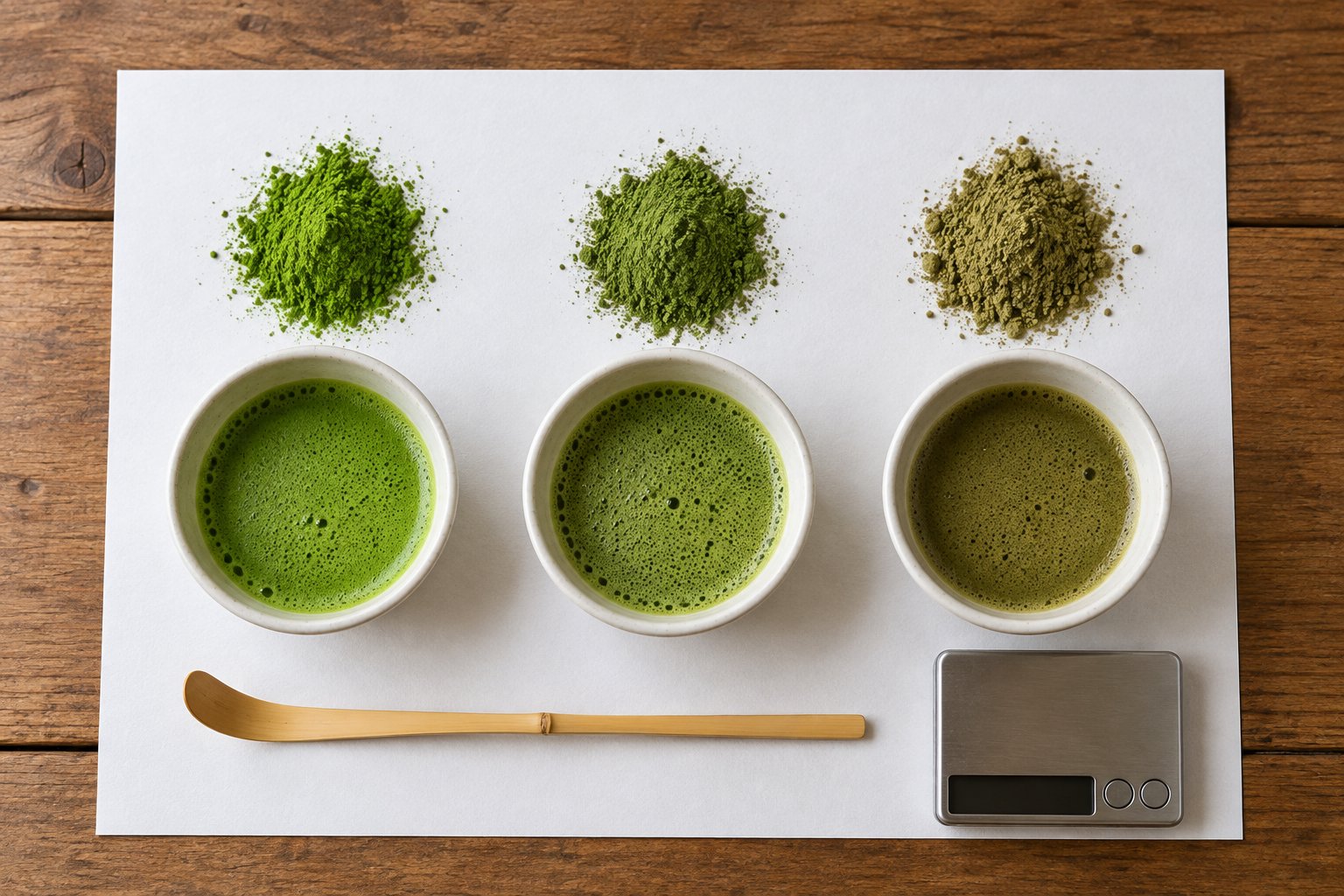
Choose matcha for oat milk from among latte matcha, looking at the harvest and the milling. Make the final decision by mixing it with the oat milk you use in your café and comparing.
The harvest changes the taste
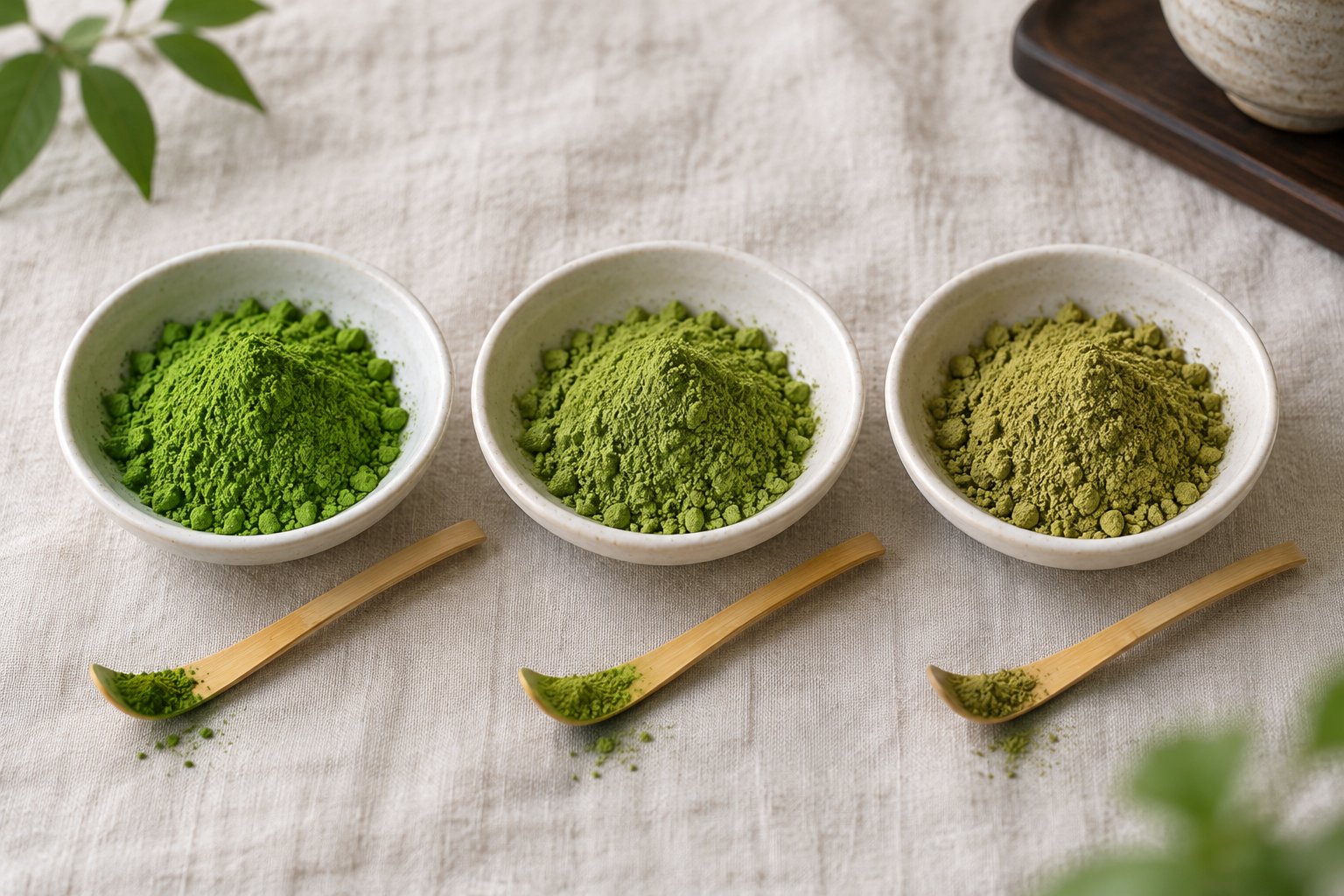
First-flush matcha (from the first new shoots of the year) is high in amino acids, the source of umami. Tea picked later in the season has less theanine (an umami compound) and more catechins (astringent compounds). For oat milk, we think about it as follows (our view).
- First flush only: matcha with more umami compounds. Start testing it in less-sweet menus where you want the matcha to lead
- First and second flush blended: more astringent compounds than first flush only. For sweet menus, check whether the matcha flavor still comes through with the sweetener in
The names and differences of grades are on Matcha grades, and how to choose for lattes is in How to Choose Matcha for Café Lattes.
Comparing with your café’s oat milk
- Use the oat milk your café actually uses (do not test with a different brand)
- Keep the amount of matcha, the water temperature and amount, and the amount of milk the same
- Make both hot and iced
- Taste both without sweetener and at your menu’s sweetness
- Also check one that has stood for 10 minutes
Check five things: color (how much green remains, fresh and after 10 minutes), aroma (can you tell it is matcha on the first sip), bitterness (does it linger too much at the end), mouthfeel (no powdery feel) and the matcha cost per cup.
Comparing with Omakase Matcha
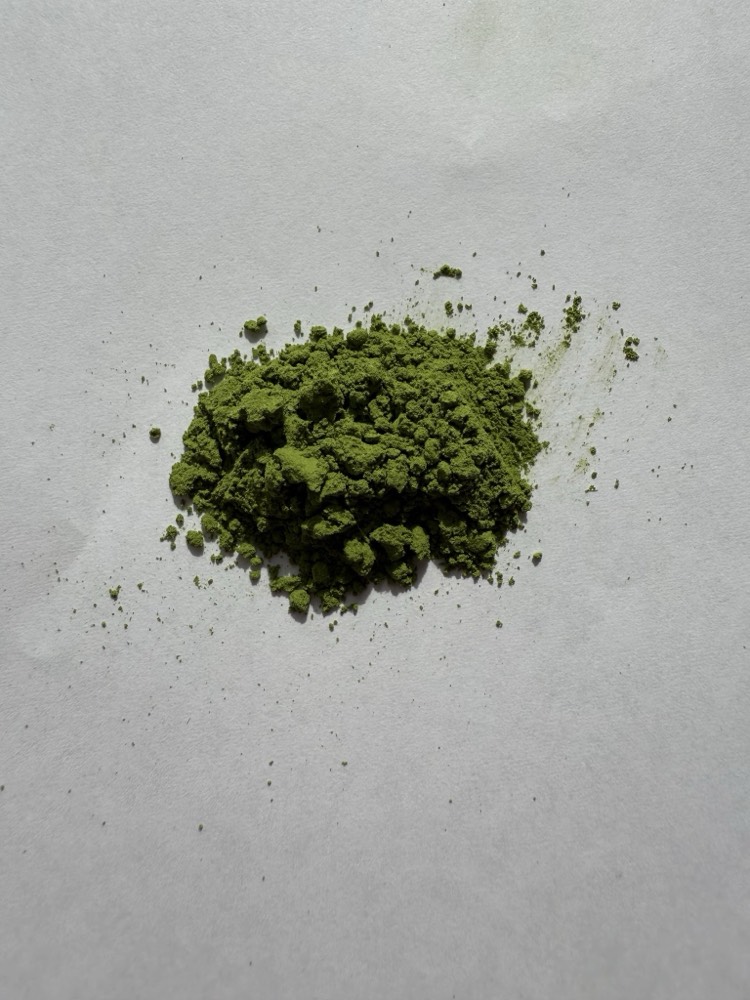
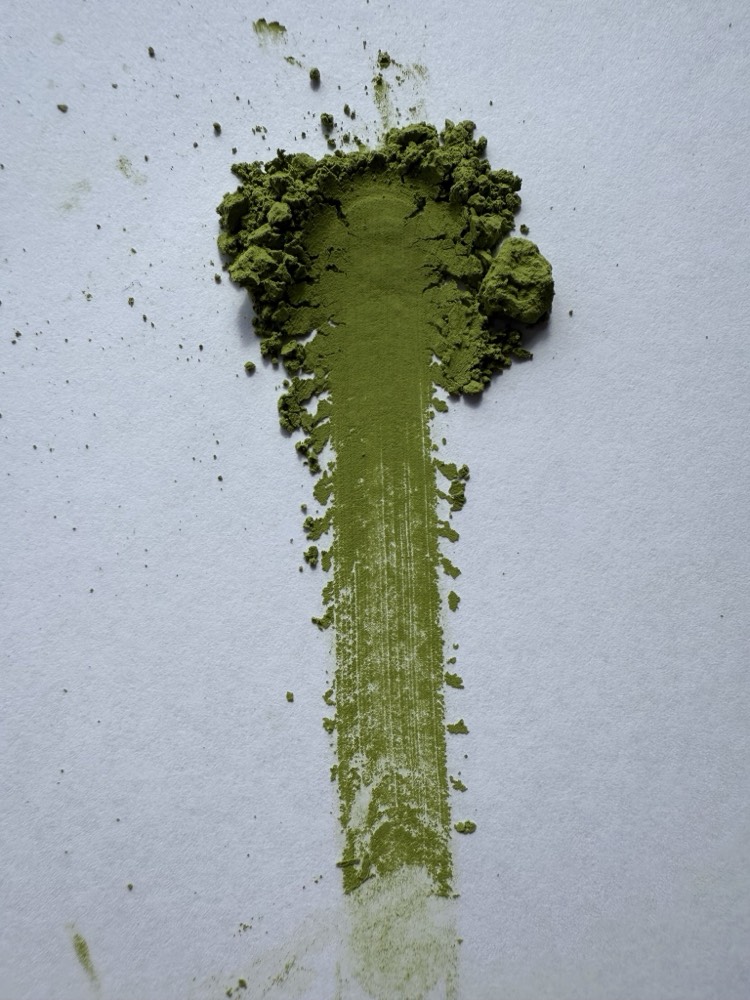
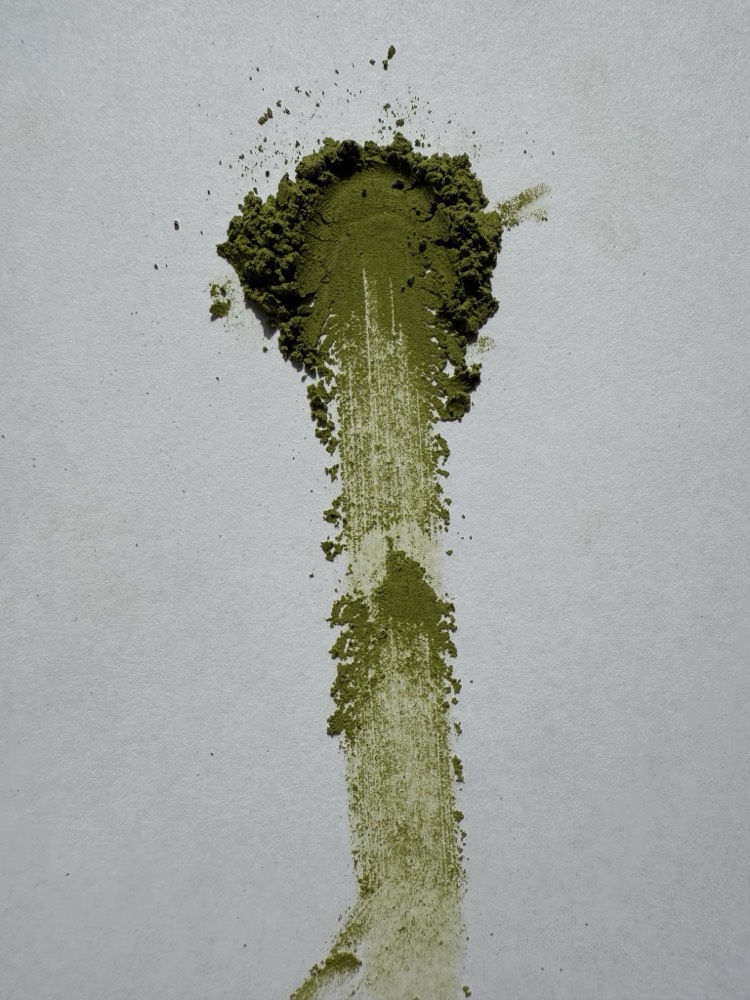
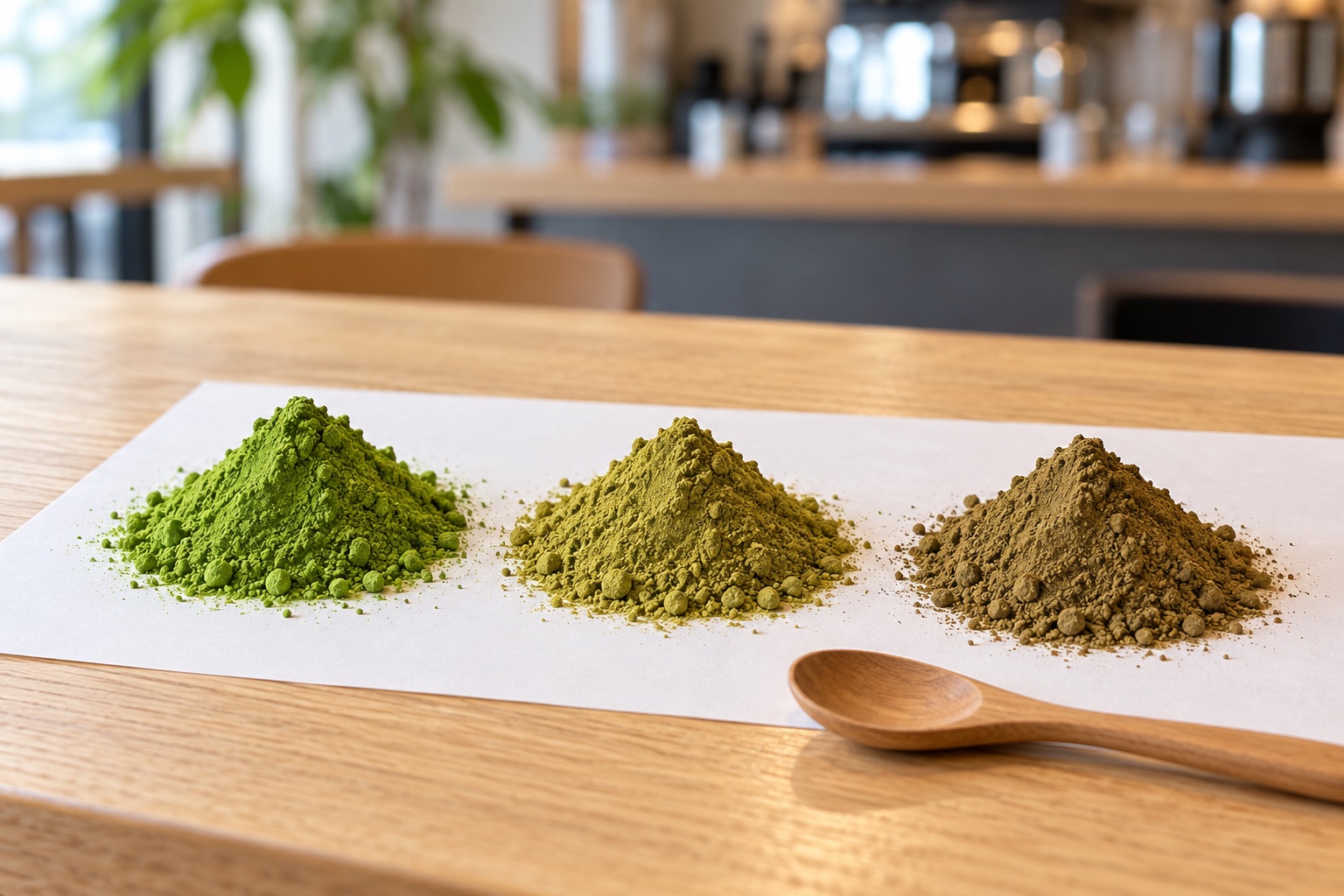
All Omakase Matcha is made for lattes, in three grades: Premium (first flush only, stone-milled), Standard (first flush, or first and second flush blended, machine-milled) and Basic (leaves from the second flush and later). You can request up to 3 kinds of samples, and we accept orders from 1kg. Tell us the oat milk brand you use and the sweetness you want, and we will help narrow down the candidates; for shops in Singapore and Thailand, we visit and taste with you. If none of them fits, we can also adjust the blend.
Common problems and how to fix them
The five common problems with an oat milk matcha latte are a dull color, lumps, separation, weak aroma and lingering bitterness. Most come from the amount of matcha, how it is dissolved, or the milk temperature.
The fixes below are our guide, based on the official information above.
| Problem | Main cause | Fix |
|---|---|---|
| Dull or yellowish color | The beige color of oat milk. Matcha that has been open for a while | Add matcha 0.5g at a time and compare. Try first-flush matcha. Use opened matcha up quickly |
| Lumps | Matcha not sifted. Powder added straight to the milk | Sift through a tea strainer, dissolve in a little hot water, then combine with milk |
| Separation or grainy texture | Heating a regular oat milk. Overheating | Switch to barista oat milk and follow the manufacturer’s heating guidance. Shake the carton well before use |
| Weak matcha aroma | Too much milk. Sweeteners with strong aromas such as honey | Add matcha or reduce milk. Use syrup as the sweetener |
| Only bitterness remains | Dissolved in water straight off the boil. Too much matcha | Dissolve at 70 to 80°C. Use less matcha, or try first-flush matcha |
The green of matcha changes with light, heat and humidity. How to store matcha in shops in hot countries, and how to decide how many days to use it up after opening, are covered in Matcha Shelf Life.
Sources
- MEXT (Japan’s Ministry of Education, Culture, Sports, Science and Technology), Food Composition Database, “普通牛乳” (Whole milk, in Japanese) https://fooddb.mext.go.jp/details/details.pl?ITEM_NO=13_13003_7
- MEXT, Food Composition Database, “普通牛乳(炭水化物)” (Whole milk, carbohydrates, in Japanese) https://fooddb.mext.go.jp/details/details.pl?ITEM_NO=13_13003_7&MODE=7
- MEXT, Food Composition Database, “豆乳” (Soy milk, in Japanese) https://fooddb.mext.go.jp/details/details.pl?ITEM_NO=4_04052_7
- Oatly, “Chilled Oat Drink Barista Edition” https://www.oatly.com/en-gb/products/chilled-oat-drink/chilled-oat-drink-barista-edition-1l
- Oatly, “Our process” https://www.oatly.com/oatly-who/our-process
- Oatly Professionals, “FAQ” https://professionals.oatly.com/health/faq
- OATSIDE, “Barista Blend” https://shop.oatside.com/products/barista-blend
- Naoki Matcha, “How to make a matcha oat milk latte (hot or iced)” https://naokimatcha.com/blogs/recipes/how-to-make-a-matcha-oat-milk-latte-hot-or-iced
- MATCHA STAND MARUNI, “Authentic Iced matcha oat milk latte made at home” https://matchastandmaruni.com/blogs/recipe/authentic-iced-matcha-oat-milk-latte
- THE NODOKA, “オーツミルク抹茶ラテ” (Oat milk matcha latte, in Japanese) https://www.nodokatea.com/blogs/recipes/article-34
- Kurasu Kyoto, “Kurasu Blend / SUI 美味しい『抹茶ラテ』のレシピ” (A delicious matcha latte recipe, in Japanese) https://jp.kurasu.kyoto/blogs/kurasu-journal/okumidori-no-sugar-recipe
- Ippodo Tea, “Matcha Latte Recipe” https://ippodotea.com/blogs/recipes-to-brew-japanese-tea/matcha-latte-recipe
- Kyoto Prefectural Tea Research Institute, “お茶のおいしい入れ方 抹茶” (How to prepare tea: matcha, in Japanese) https://www.pref.kyoto.jp/chaken/irekata_maccha.html
- Compositional Diversity and Functional Interactions of Bioactive Compounds in Japanese Green Tea: Focus on Matcha, Sencha, and Gyokuro (Molecules, 2026, PMC) https://pmc.ncbi.nlm.nih.gov/articles/PMC13515311/