
 Reviewed by: Takahiro Sugiyama (CEO, meguri Inc.)
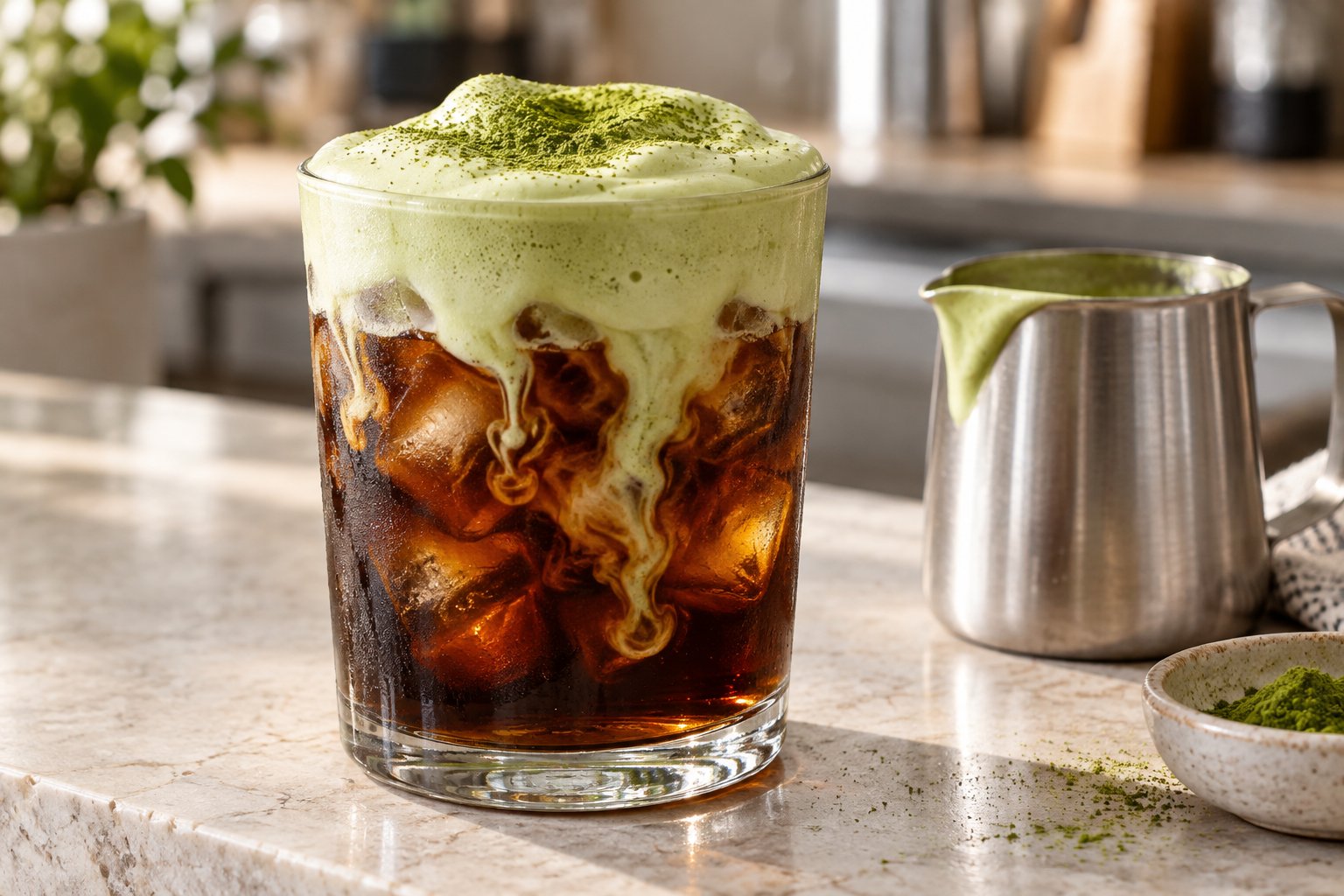
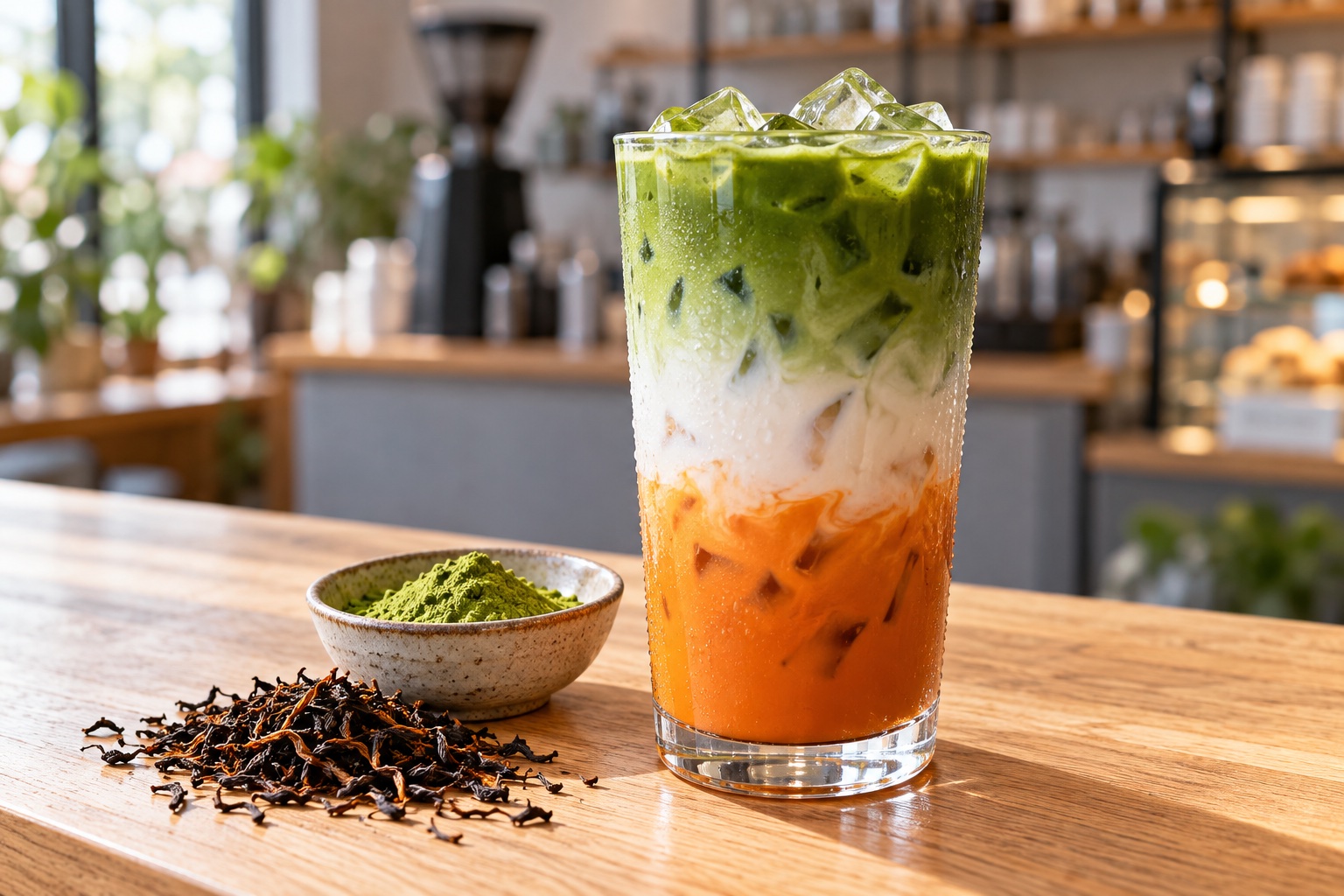
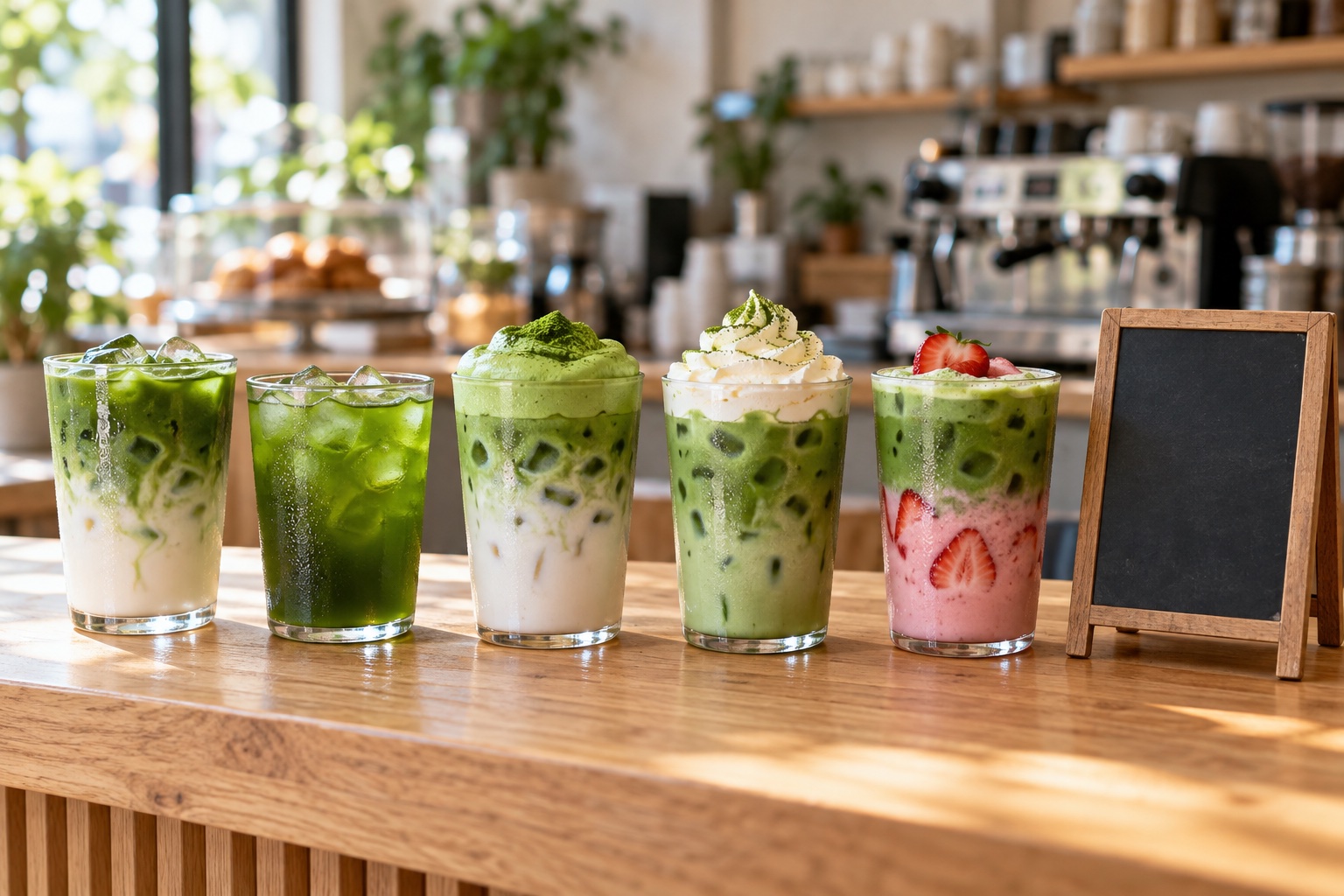
Matcha cold foam puts a layer of matcha foam on top of a cold drink. On cold brew, it lets you serve coffee and matcha in one cup. On an iced matcha latte, it gives you two layers of matcha. Most published recipes, however, are written for home use, and their amounts, tools and holding times vary. This article compares the ratios in official recipes from a drinks maker, appliance makers and a dairy company, then looks at why foam forms, how to mix matcha without lumps, the steps for each tool, how long you can hold it, and the cost and labelling per cup.
What is matcha cold foam?
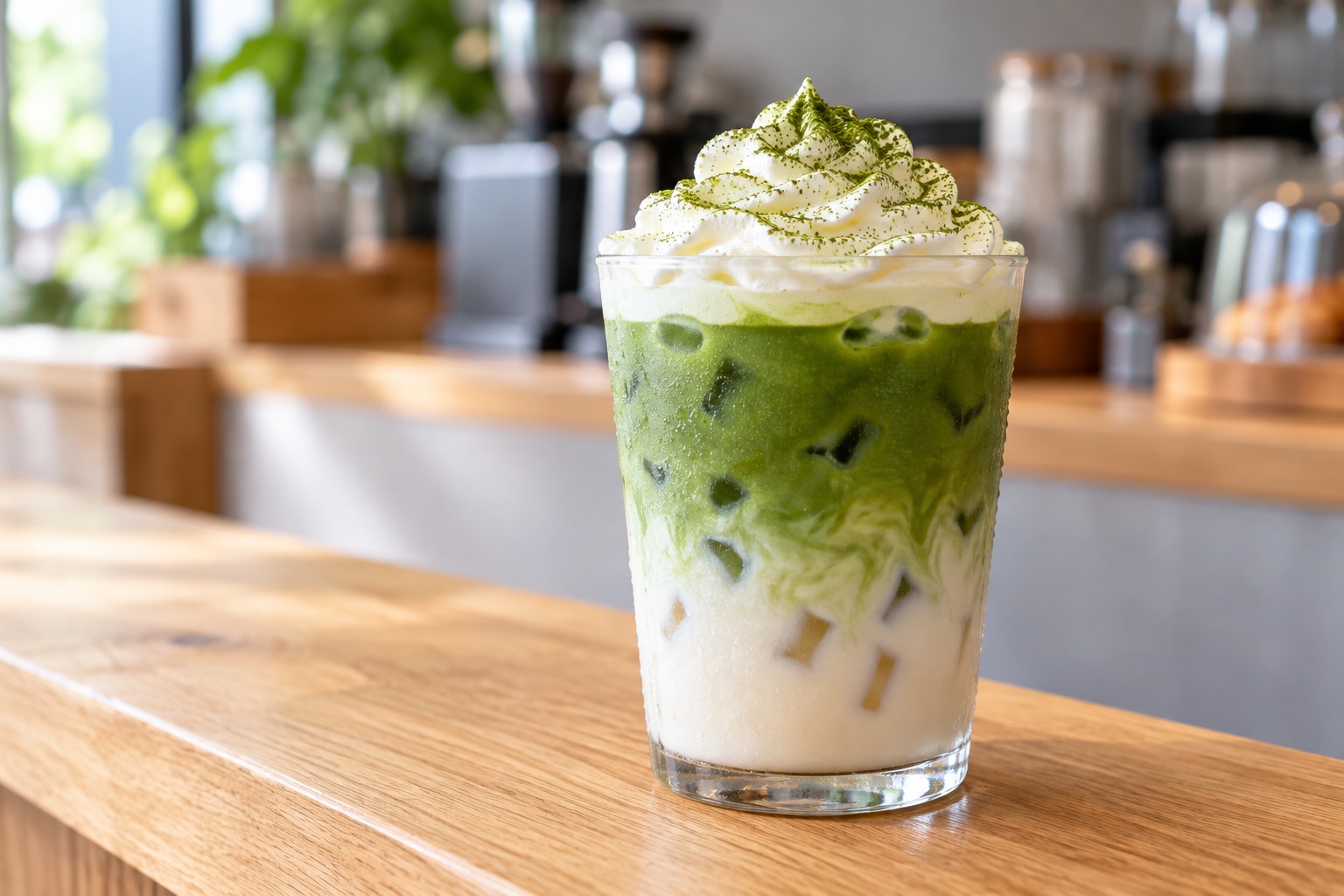
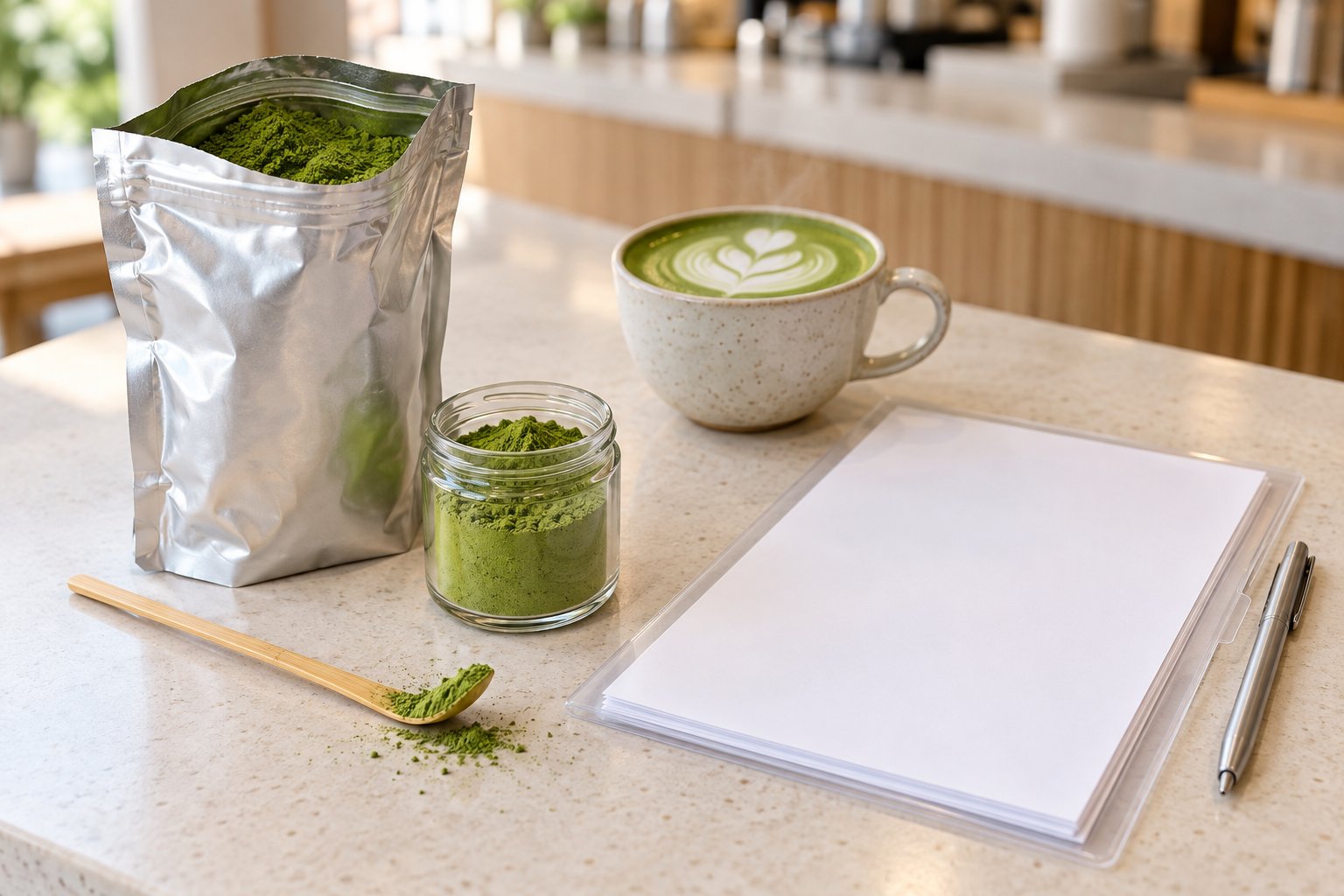
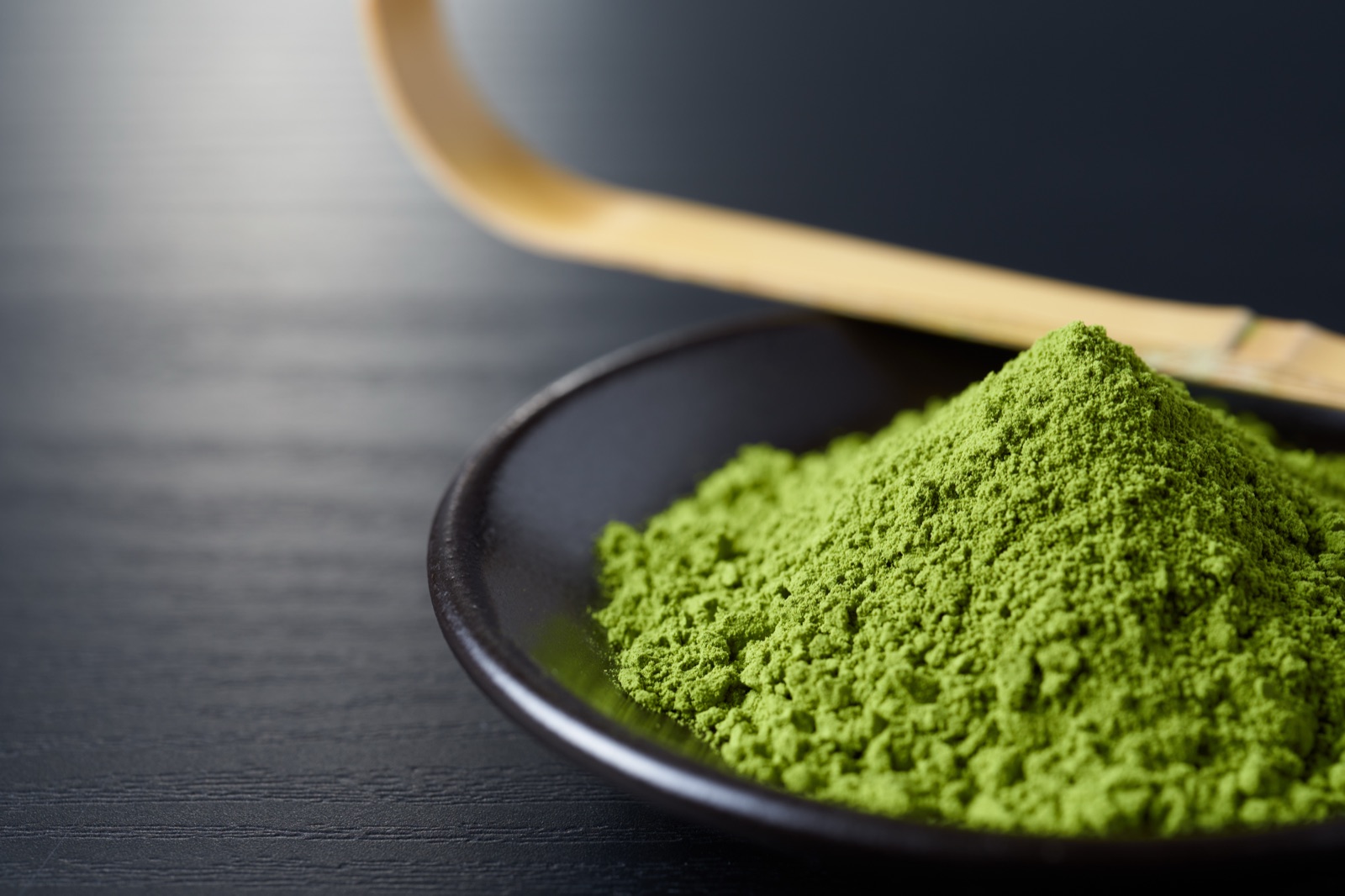
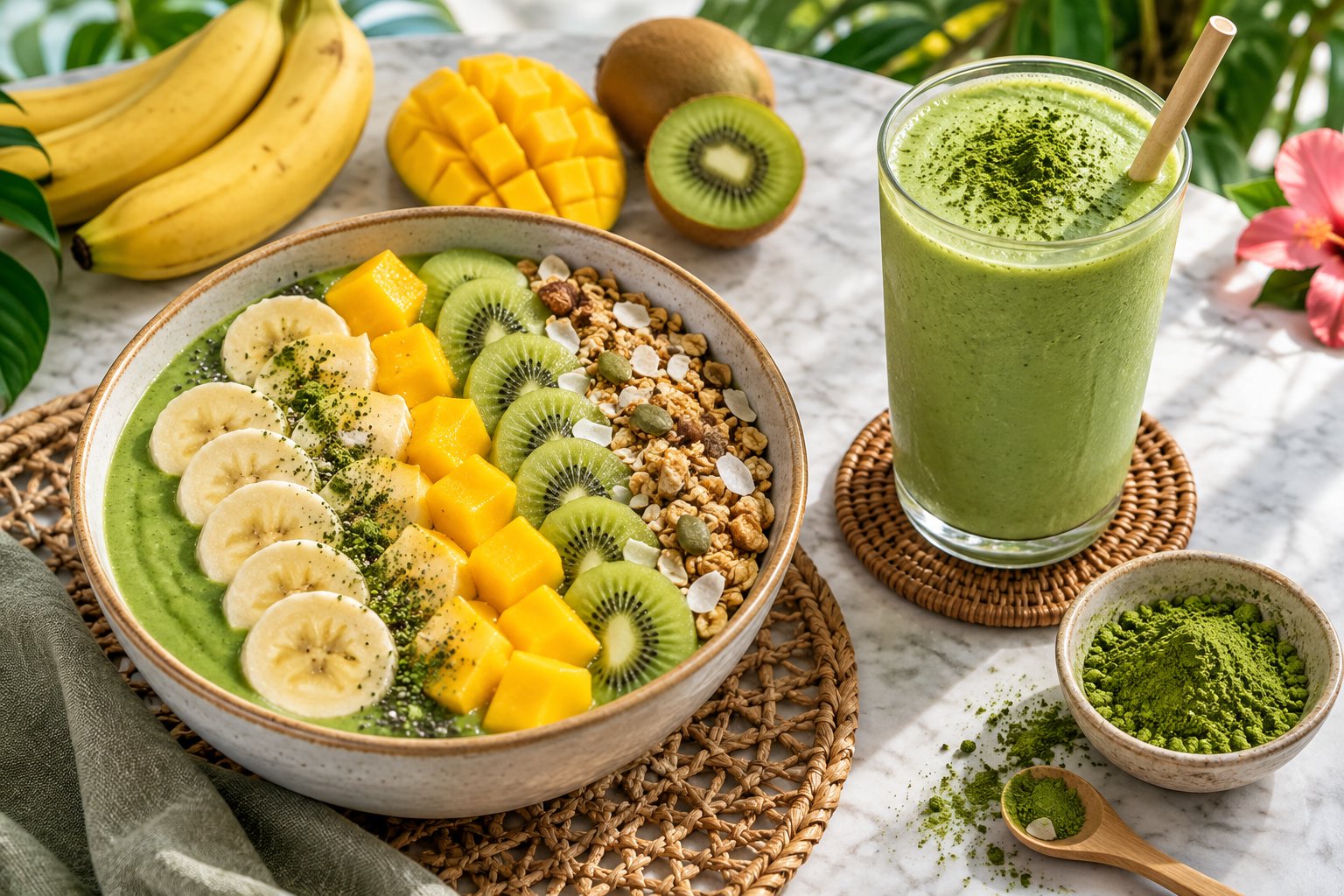
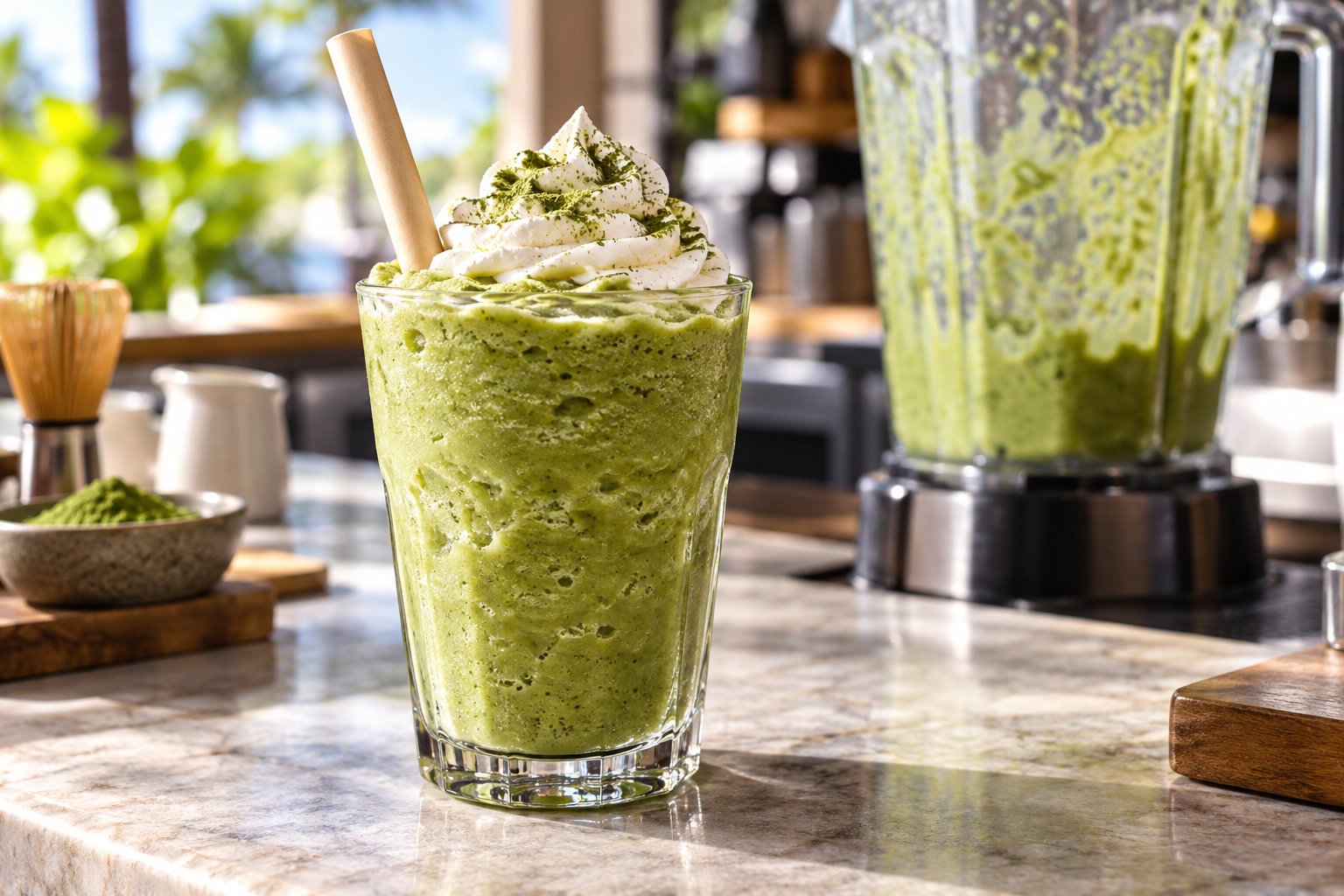
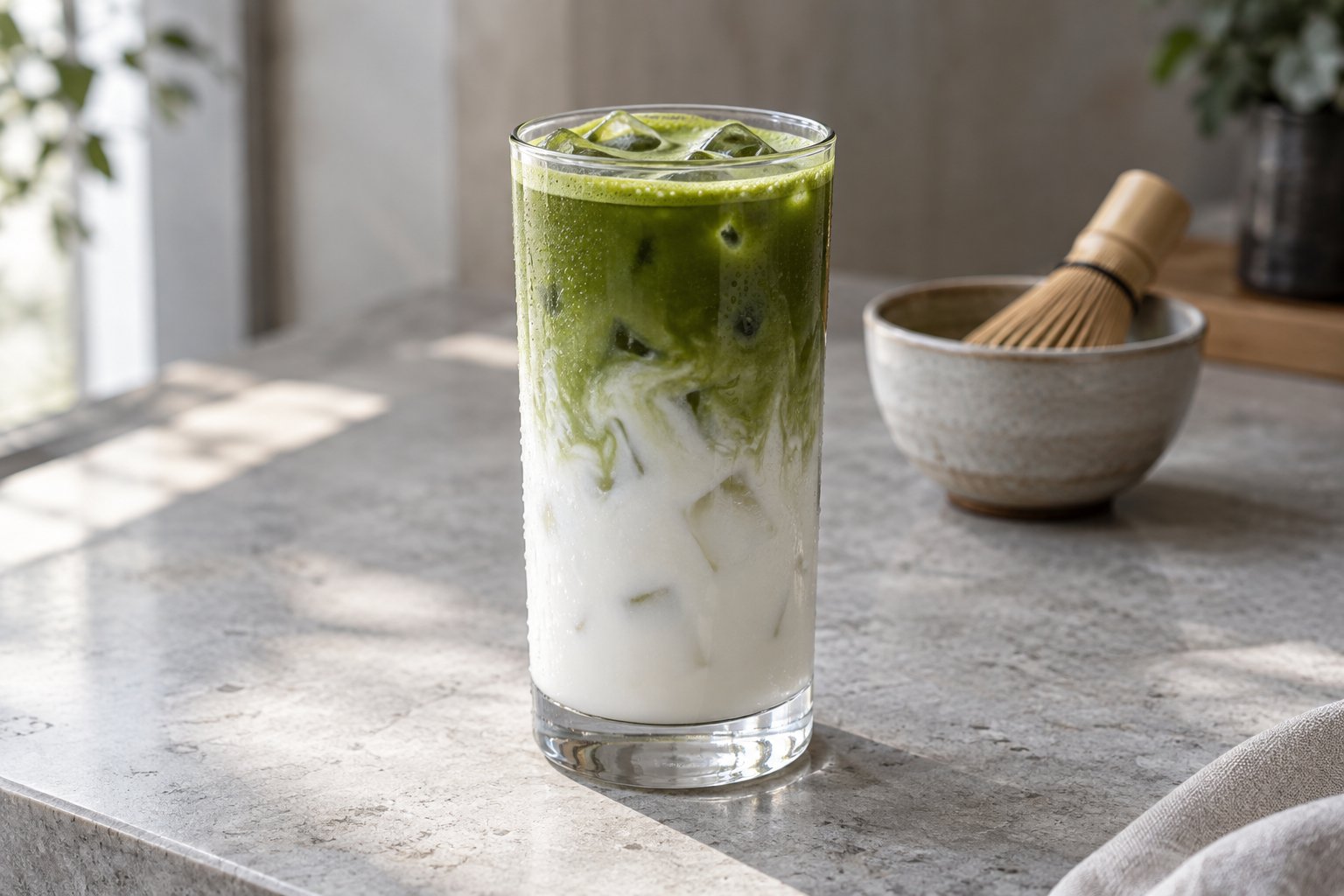
Matcha cold foam is a topping made by frothing cold milk or cream without heating it, mixing in matcha, and putting it on top of a cold drink. Unlike a hot matcha latte, the milk is not heated with steam, so the foam layer holds on a drink with ice.
How a large chain uses it
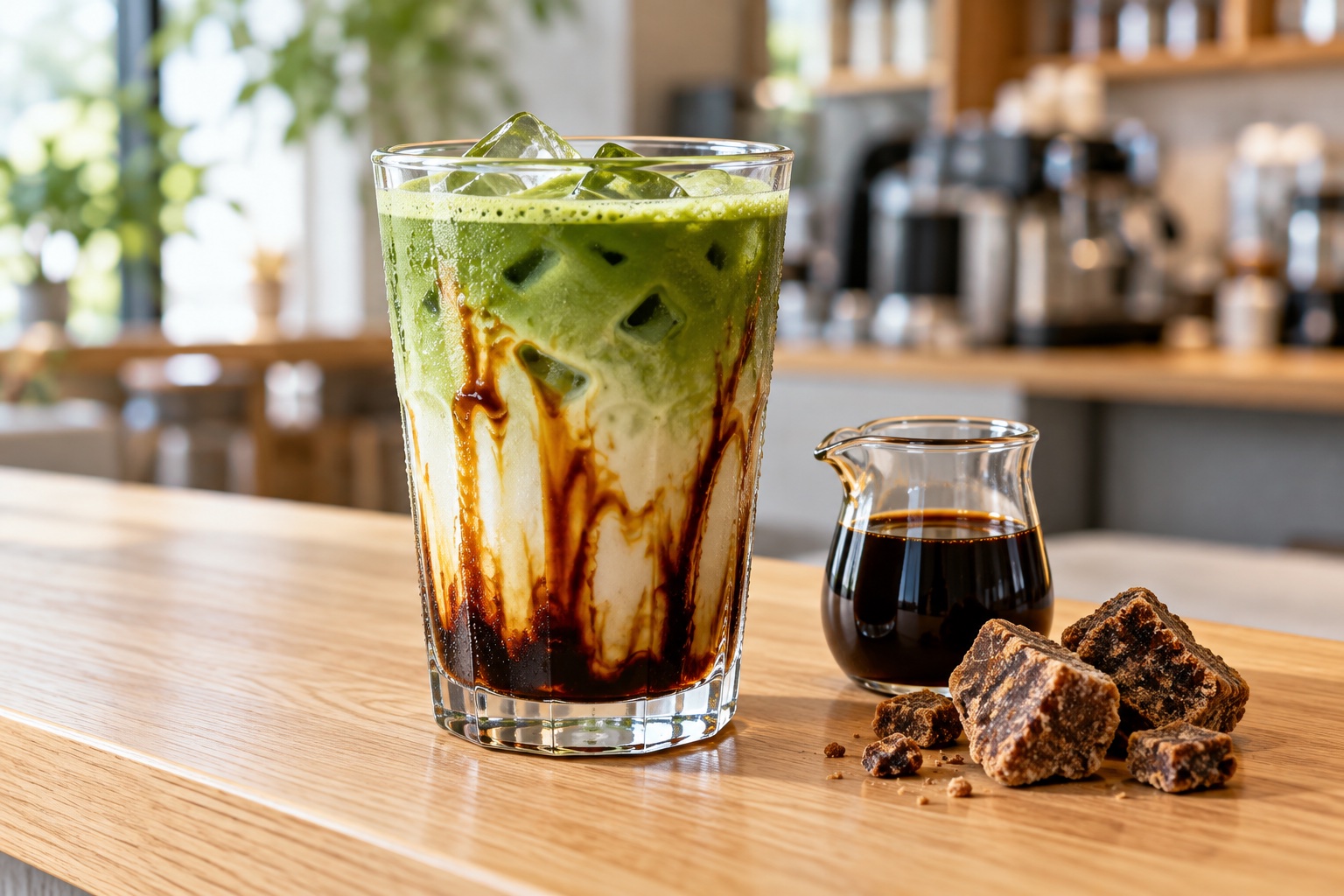
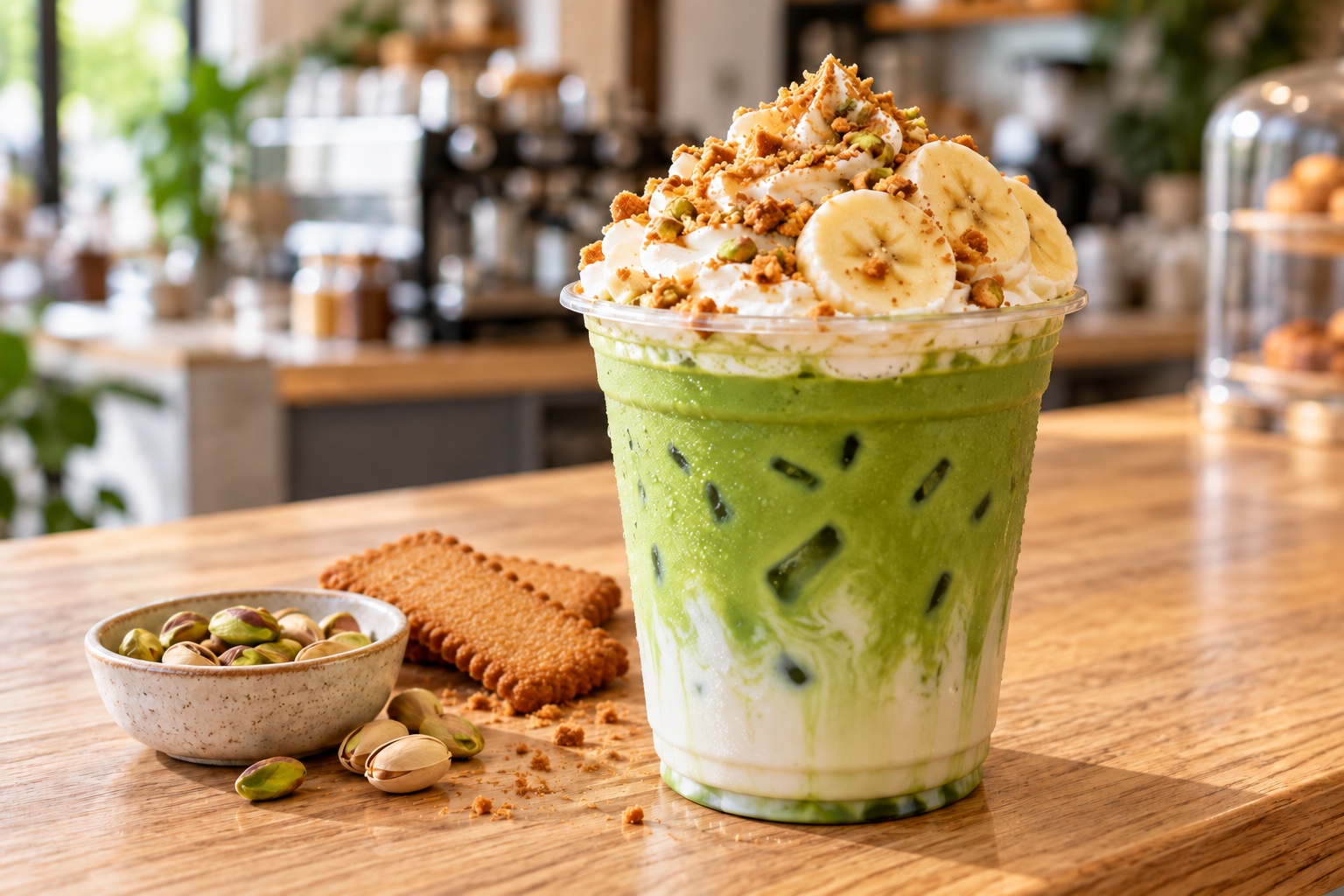
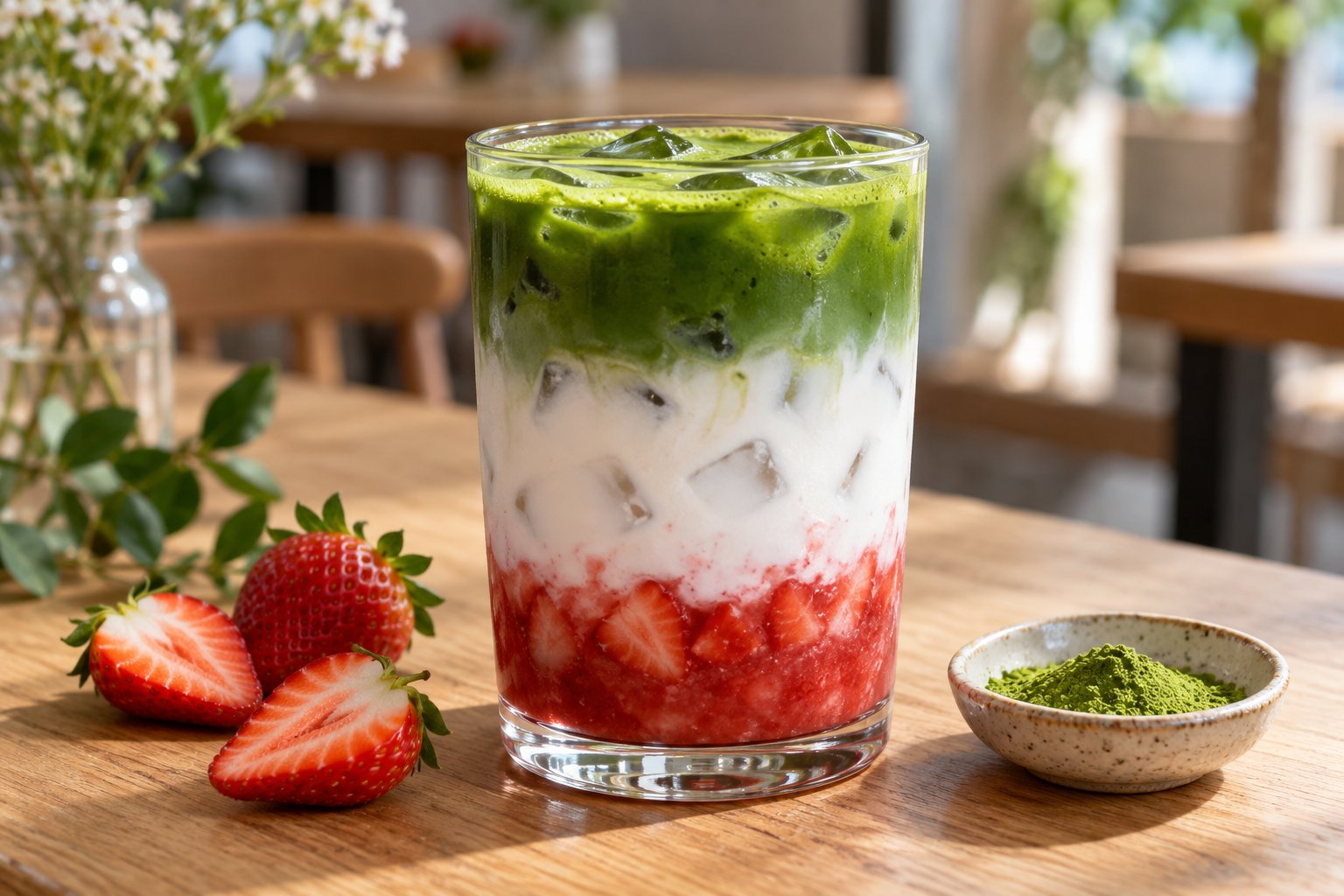
On February 3, 2026, Starbucks added two matcha drinks to its year-round menu. The Iced Double Berry Matcha layers strawberry puree, matcha and a raspberry cream cold foam over ice. The Iced Banana Bread Matcha combines matcha with brown sugar syrup and milk, topped with a banana cream cold foam.
In the same announcement, Starbucks explained that its matcha powder is unsweetened and that sweetness is adjusted by the amount of syrup. It said its limited-time cream cold foam can be added to any cold drink. Whether the matcha goes into the drink or into the foam changes how you build the menu.
Matcha in the foam, or matcha in the drink
The published official recipes follow two patterns.
- Matcha mixed into the foam: Oatly, Vitamix, Breville
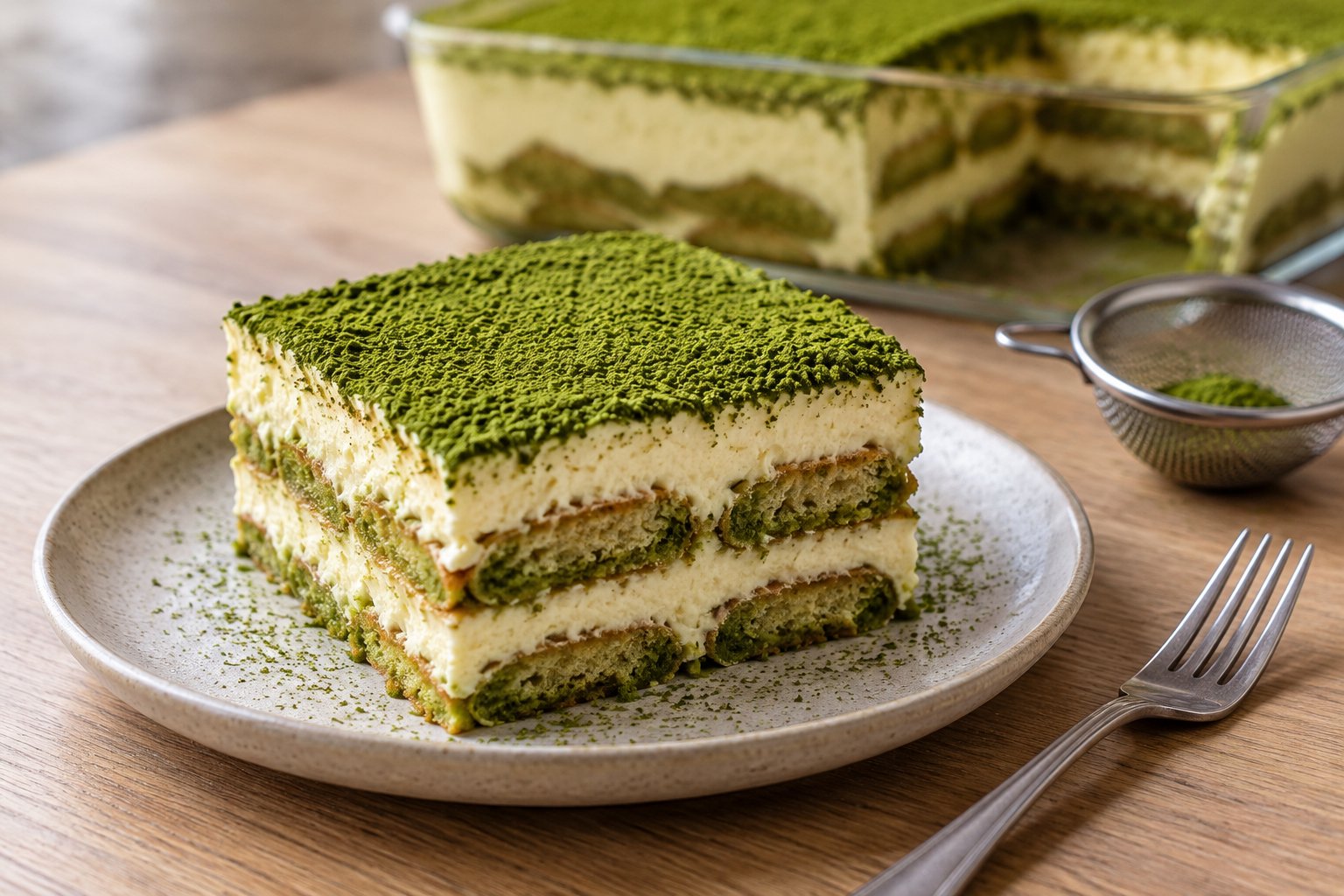
- Matcha in the drink, with plain white cream foam on top dusted with matcha: Meiji’s “Iced Matcha Cream Latte”
This article mainly covers the first pattern. The ratios for the iced matcha latte underneath are in How to make an iced matcha latte.
Comparing the ratios in official recipes
For the matcha mixed into the foam, Oatly’s official instructions use 1.5–2 g for 50 ml of liquid before foaming. The base is one of three: skim milk, a plant-based product made for cold foam, or cream.
Four official recipes compared
| Source | Base | Matcha | Sweetener | How it is frothed |
|---|---|---|---|---|
| Oatly (plant-based cold foam product) | 50 ml per serve (before foaming) | 1.5–2 g | 10–20 ml syrup | Hand frother (small electric frother) or spindle mixer |
| Oatly (blender) | 200 ml | 6–8 g | 40–80 ml syrup | Blender with an aerating disc. 200 ml becomes about 350 ml |
| Vitamix “Matcha Skim Foam” | 240 ml skim milk (or a milk alternative) | 1 teaspoon | None | 15 seconds in the Aer Disc (frothing blade) container |
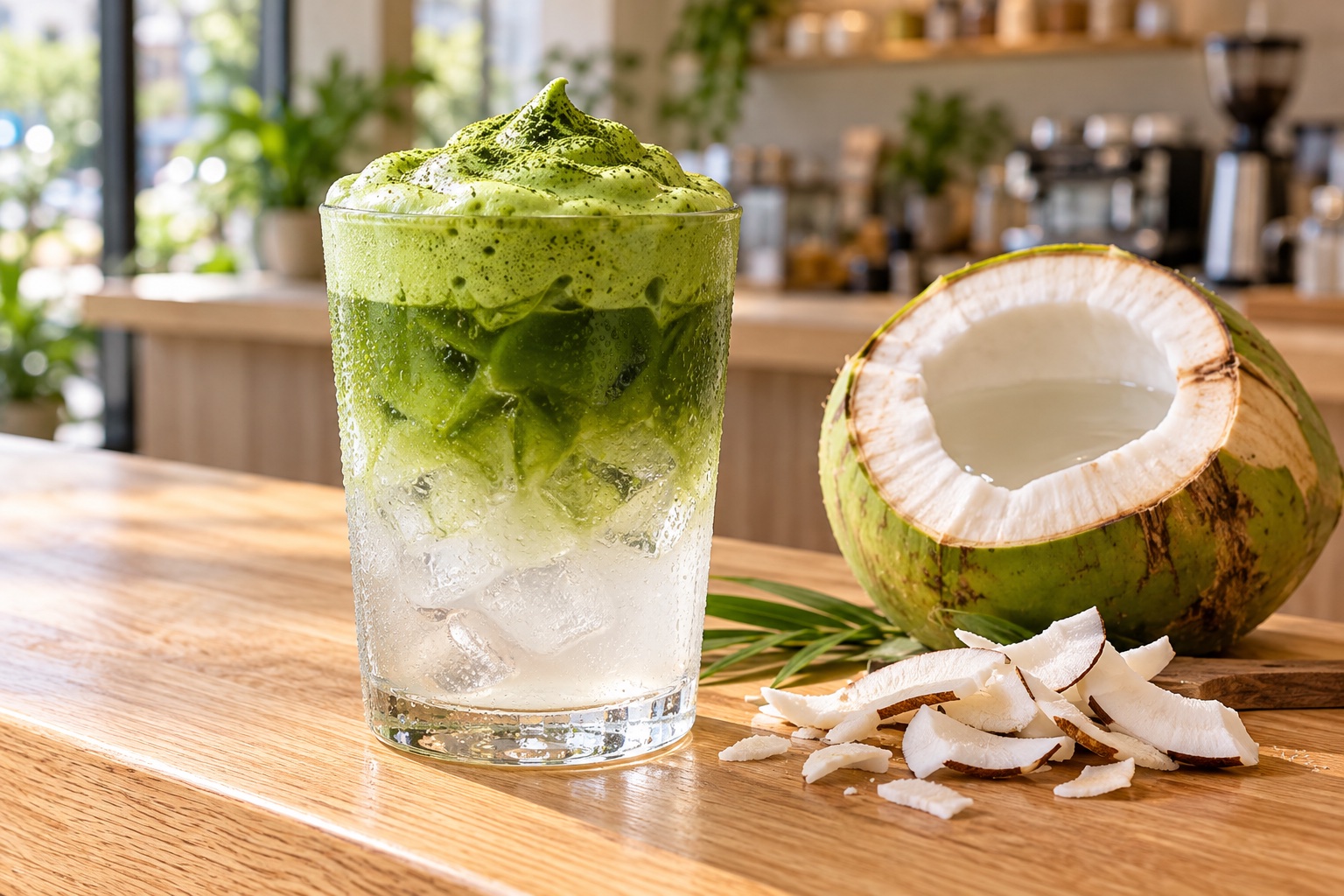
| Breville “Coconut Cold Brew Matcha” | 50 ml cream | 1 teaspoon (dissolved in 1 tablespoon of boiling water, then cooled) | 2 teaspoons sugar | Whisk or hand frother, until thick but still pourable |
| Meiji “Iced Matcha Cream Latte” | 80 ml cream (for 4 servings) | Not in the foam; dusted on top through a tea strainer | Not in the foam | Bowl chilled in ice water, whipped to soft peaks |
Source: Oatly, “Introducing Oatly Barista Cold Foam” https://www.oatly.com/things-we-do/stories/barista-cold-foam (recommended serve 50 g, or 50 ml before foaming; keeps up to 8 hours refrigerated after foaming; holds on the drink for about 1 hour; with a blender, 200 ml becomes 350 ml, and 40–80 ml of syrup and 6–8 g of matcha can be added to 200 ml)
What the table shows
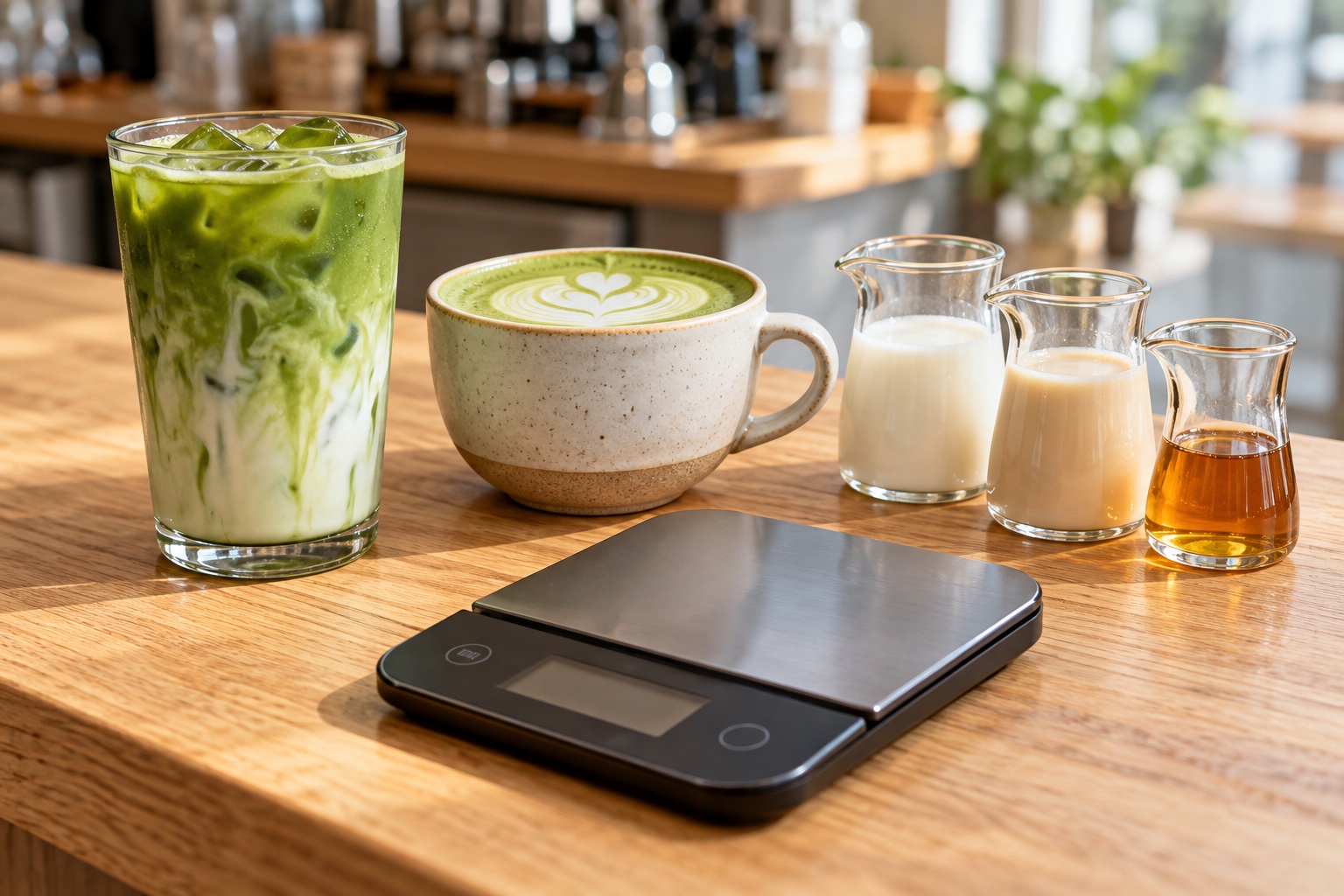
Oatly’s ratio is the same whether it is 1.5–2 g for 50 ml or 6–8 g for 200 ml: 0.75–1 g of matcha per 25 ml of liquid. Vitamix uses 1 teaspoon for 240 ml. Ippodo Tea gives 1 teaspoon of matcha as 2 g. Using that conversion, Vitamix works out to about 0.2 g per 25 ml, so Vitamix uses roughly a quarter to a fifth of Oatly’s proportion of matcha in the foam. Breville uses 1 teaspoon for 50 ml of cream, which by the same conversion is about 1 g per 25 ml, close to the higher end of Oatly’s range. The actual grams in a teaspoon depend on how you scoop, so set your shop’s amount by weight.
Setting your shop’s standard (our view)
From here on is our own view, based on the comparison above. Start the matcha in the foam at Oatly’s “2 g per 50 ml,” then decide the strength together with the amount of matcha in the drink. On menus where the drink underneath also contains matcha, the matcha in the foam and in the drink add up to the matcha in one cup, so write both gram amounts on the recipe card.
Fat and protein decide how well it foams
Cream foam forms when partly joined fat droplets hold the air bubbles in place. For milk foam, research papers report temperature ranges in which fat gets in the way of foaming.
Cream foam is held up by a network of fat
According to a dairy textbook from the University of Guelph in Canada, the fat in retail cream is standardized to 35% for whipping cream, and 18% or 10% for cream for coffee and similar uses. When cream is whipped, the fat droplets (fat globules) partly join together in chains and clusters, attach to the air bubbles and hold the foam up. The textbook explains that crystallized fat is essential for this partial joining, so whipping cream depends heavily on temperature. If cream is whipped too far, the fat separates and butter particles form.
Source: University of Guelph, “Dairy Science and Technology eBook: Overview and Fluid Milk Products” https://books.lib.uoguelph.ca/dairyscienceandtechnologyebook/chapter/overview-and-fluid-milk-products/ (retail cream standardized to 35%, 18% or 10% fat; diagram of whipped cream structure; whipping is very temperature dependent; overwhipping forms butter particles)
Meiji’s recipe also whips the cream while chilling the bottom of the bowl in ice water. Given the textbook’s point that whipping depends on temperature, make cream foam with a chilled container and cold cream.
In milk foam, fat can get in the way
A study that tested milk foaming at 5–85°C (Kamath et al., 2008, International Dairy Journal) found that milk fat hindered foam formation and stability in whole milk, especially at 15–45°C. The effect was smaller in milk that had been homogenized (processed so the fat droplets are smaller) or UHT treated (ultra-high temperature pasteurized). A review of milk foaming (Huppertz, 2010) also says lipids can hinder foam at temperatures such as around 20°C, where milk fat is partly crystallized.
These studies look at the conditions for foaming milk. They do not compare cold foam recipes used in cafés. In your shop, froth the milk you actually use while it is cold, and compare how much foam you get and how long it lasts. In its recipe notes, Vitamix also names specific products that give good foam, such as unsweetened soy milk and skim milk. Plant-based milks foam differently from product to product, so test the ones you use. How to choose a plant-based milk is covered in Oat milk matcha latte.
How to mix matcha without lumps
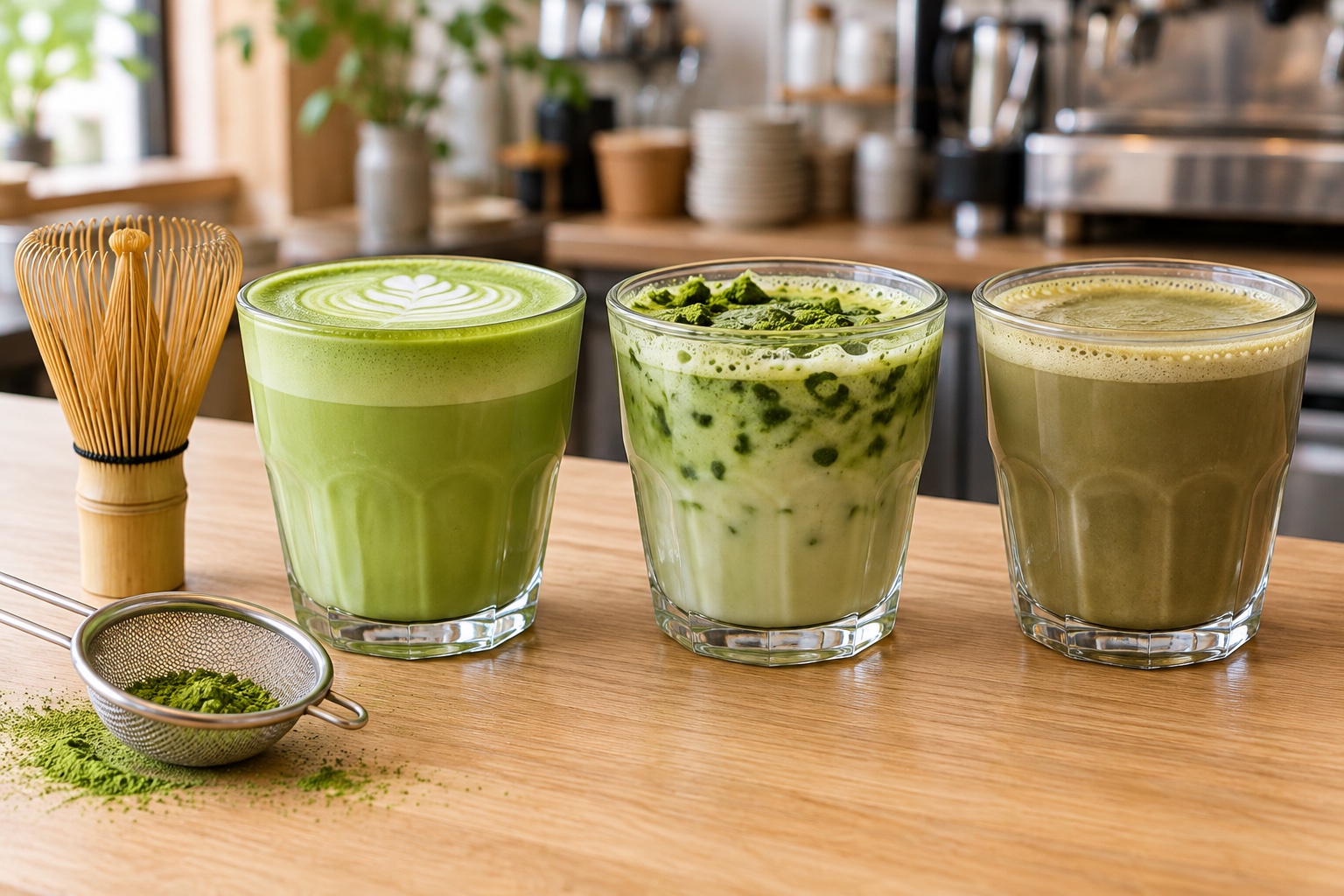
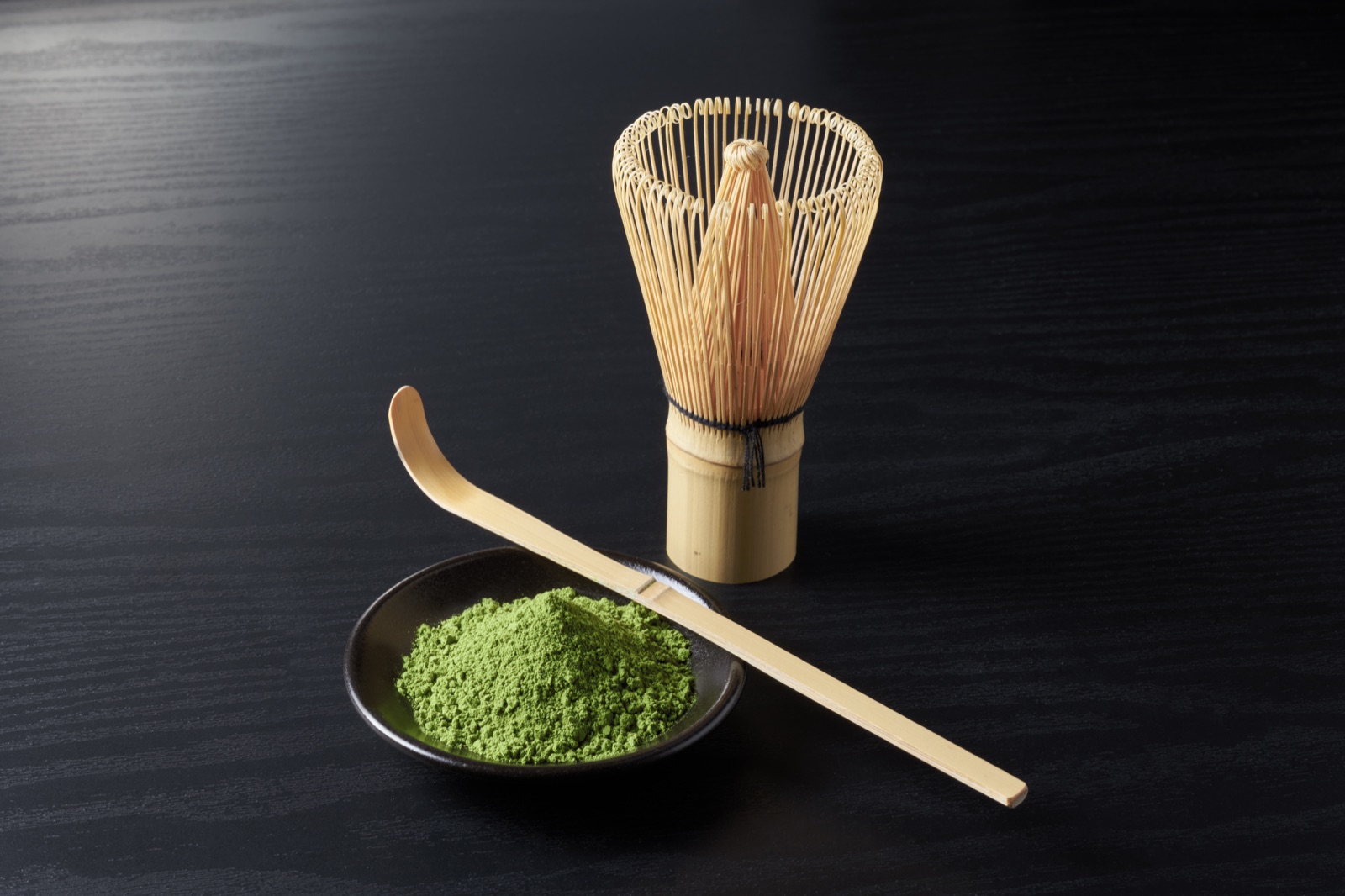
Official recipes that use a whisk or a siphon dissolve the matcha in a small amount of liquid before adding it to the base. Oatly’s and Vitamix’s recipes for blenders and hand frothers add the powder as it is.
Dissolve in a small amount of liquid first
The official recipes dissolve the matcha as follows.
- Breville: dissolve 1 teaspoon of matcha in 1 tablespoon of boiling water, cool, then add to the cream and sugar and froth
- Oatly (siphon): whisk 12–16 g of matcha into 100 ml of cold water, then add to 400 ml of the cold foam product and the syrup
- Meiji (in the drink): rub the matcha and granulated sugar together, dissolve in 100 ml of warmed milk, then add cold milk. Meiji says rubbing matcha and sugar together makes lumps less likely
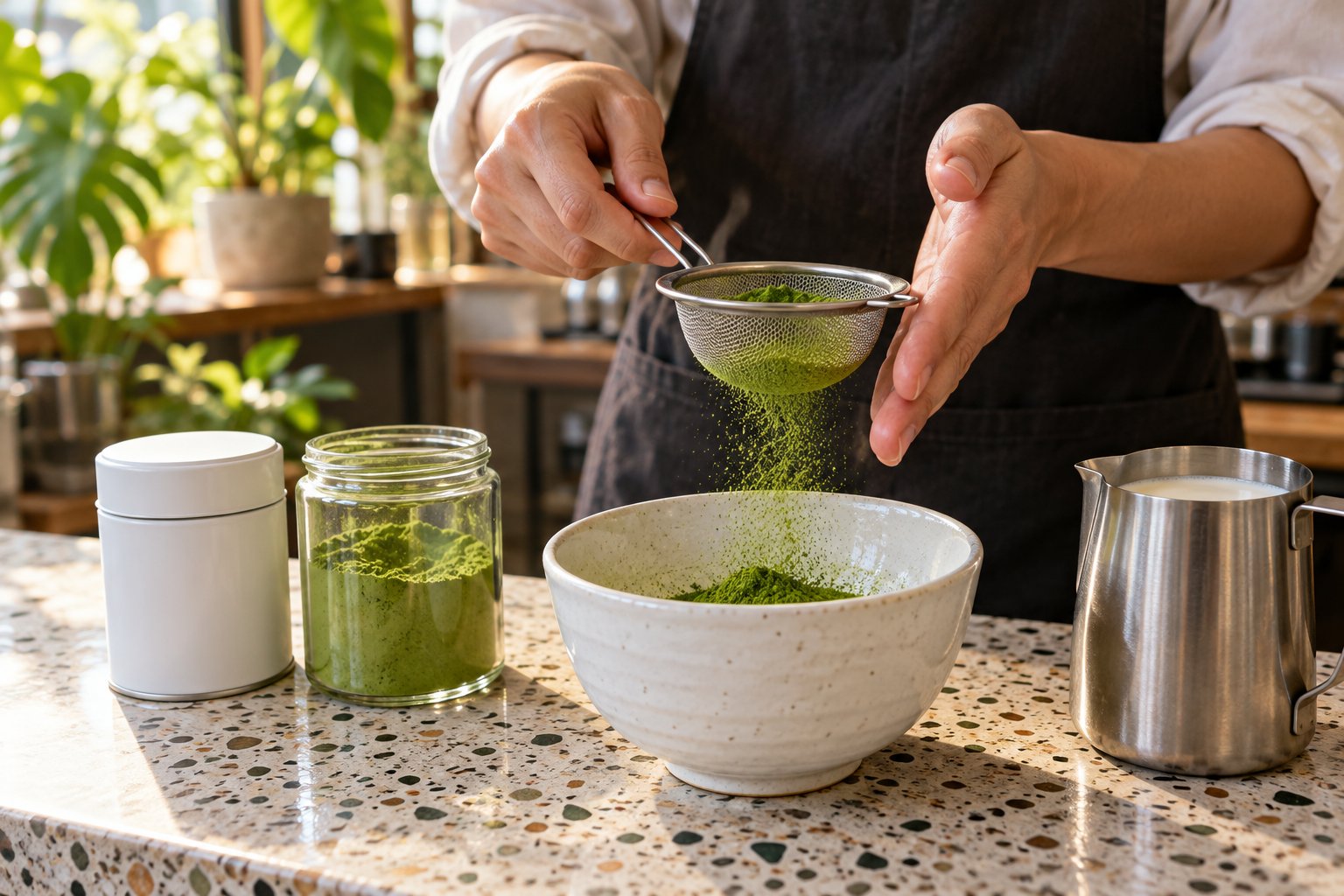
Breville lets the matcha dissolved in boiling water cool before adding it. As covered above, whipping cream depends on temperature, so add the dissolved matcha only after it has cooled. The steps and temperatures for dissolving matcha in hot water are in How to make a matcha latte (hot), and how to sift it is in How to make matcha.
Blenders and frothers take the powder as it is
Vitamix’s recipe puts the skim milk and matcha straight into the container and froths them. Oatly’s blender, spindle mixer and hand frother instructions are also written as adding matcha powder directly to the liquid before foaming. Oatly dissolves the matcha first only when using a siphon.
Using matcha syrup (our view)
From here on is our own view. If you make a matcha syrup ahead of time, with matcha and sugar already dissolved, you can measure sweetener and matcha in one step. Oatly’s ratio adds 10–20 ml of syrup and 1.5–2 g of matcha separately. If your shop switches to a matcha syrup, set its strength so the grams of matcha per cup stay the same. How to make and store it is in How to make matcha syrup.
Steps for each frothing tool
Choose the tool by how much you make at once. A hand frother for one cup at a time, a blender or siphon for batches.
Tools compared
| Tool | Official steps | Amount |
|---|---|---|
| Hand frother | Oatly: froth in a container for about 20 seconds, until the volume doubles | 100 ml becomes 200 ml |
| Spindle mixer (milkshake mixer) | Oatly: fill until the agitator is covered, run for 20 seconds | 250 ml grows about 1.75 times |
| Blender with an aerating disc | Vitamix: in the Aer Disc container, run the Cold Foam program, or start at the lowest speed and go up to Variable 6 for 15 seconds / Oatly: cold foam program, 200 ml becomes 350 ml | 240 ml, 200 ml |
| Siphon (a container that dispenses foam with gas) | Oatly: 1 gas charger per 500 ml, shake 3–15 times. The more you shake, the firmer it gets | 500 ml or 1,000 ml |
| Whisk | Meiji: bowl chilled in ice water, whipped to soft peaks / Breville: until thick but still pourable | 1–4 servings |
Choosing the tool for your shop (our view)
From here on is our own view. Making each cup with a hand frother at busy times means frothing time for every cup. Shops with many orders can compare frothing several cups at once in a blender with dispensing from a siphon, as Oatly describes. Whatever the tool, set the frothing time and amount so the firmness of the foam does not change from person to person.
What to put it on: cold brew, iced matcha latte, hojicha latte
In the official sources, cold foam goes on cold brew, iced coffee and iced matcha lattes. We did not find an official recipe that puts it on a hojicha latte, but it can be built the same way as another cold milk drink.
Cold brew and iced coffee
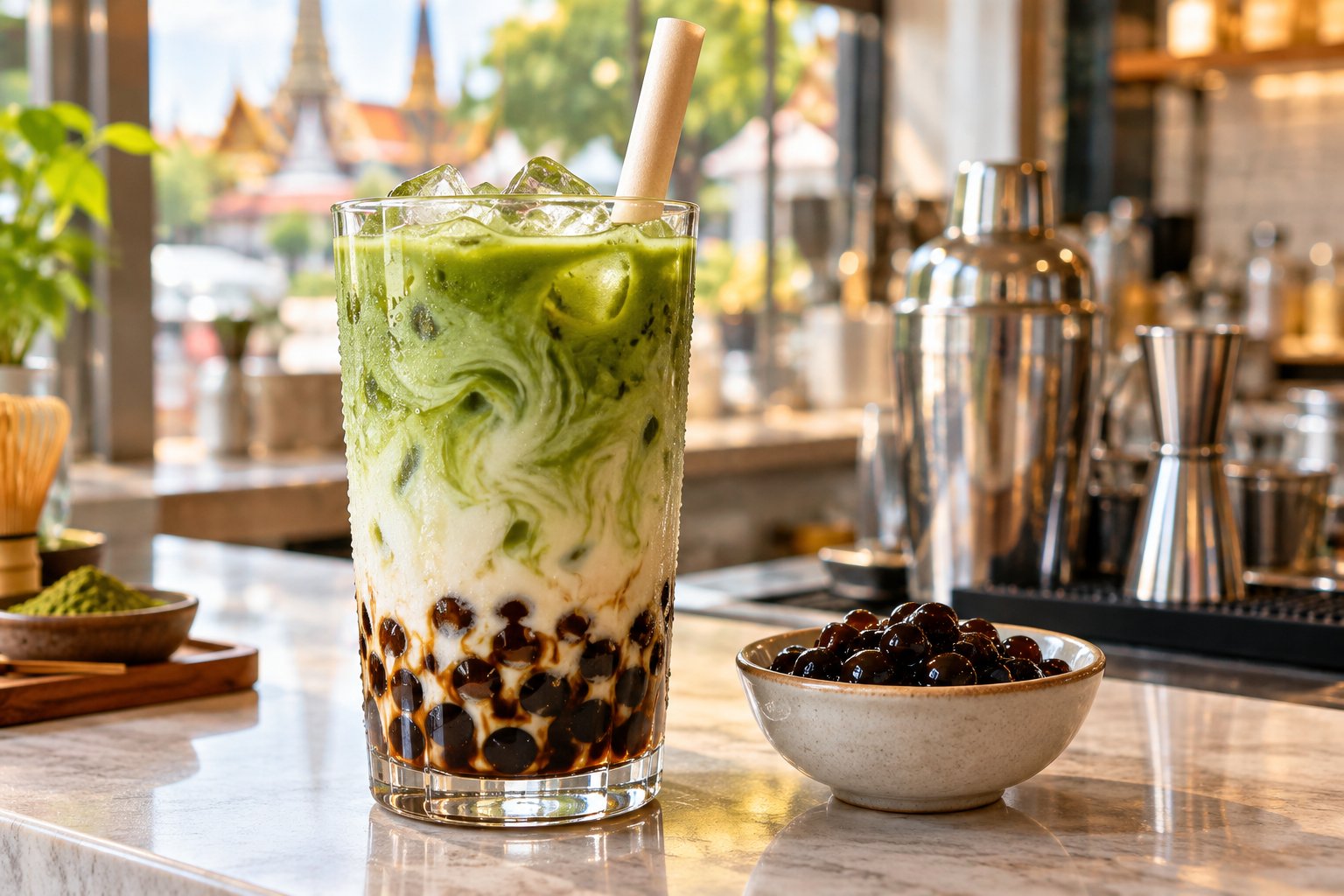
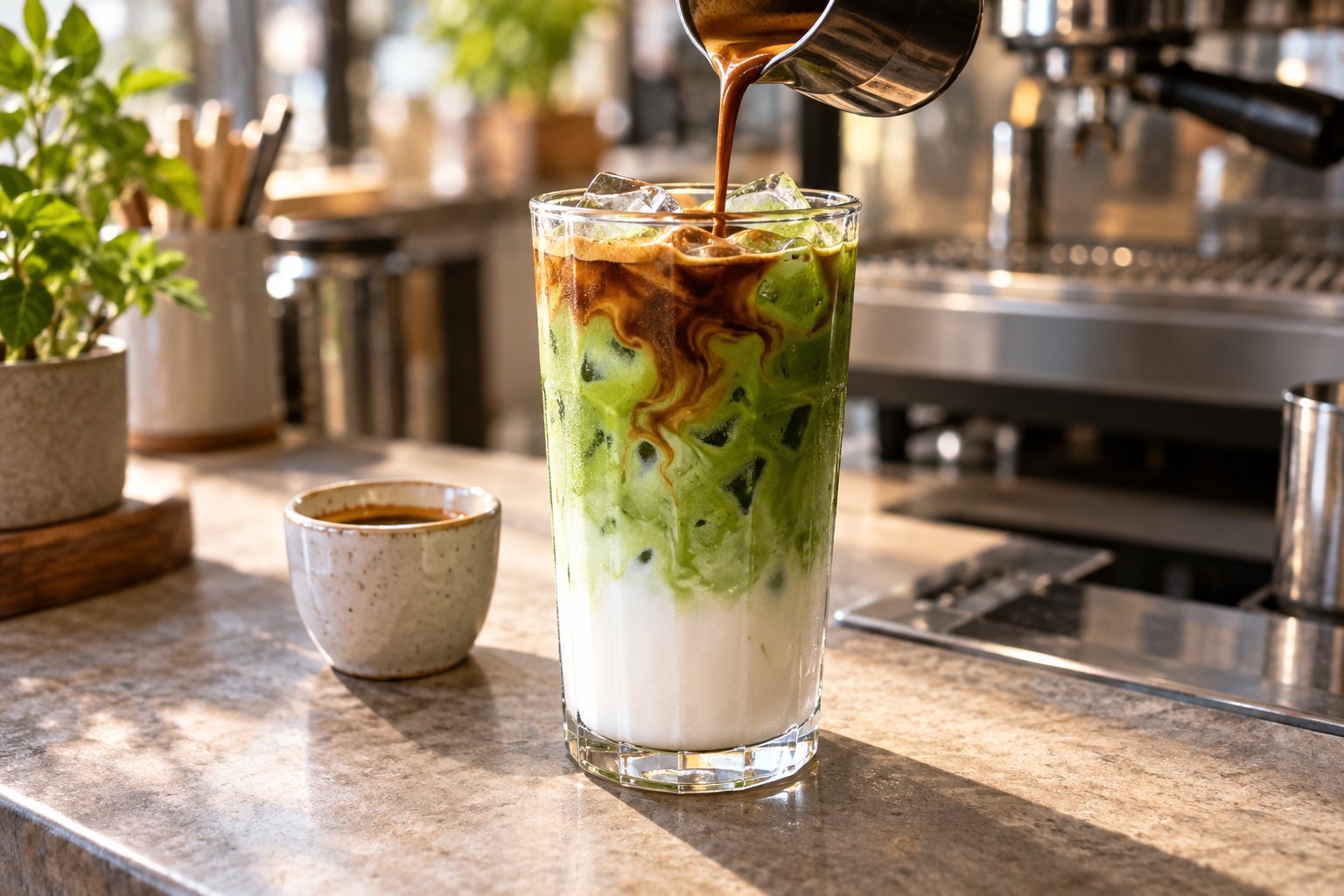
Oatly says its foam goes on iced coffee and cold brew. Breville puts the matcha cream on top of ice, cold brew and 120 ml of coconut water. Starbucks also put a cream cold foam on cold brew for a limited Valentine’s Day drink. Ratios and caffeine for serving coffee and matcha in one cup are in How to make dirty matcha and Matcha caffeine.
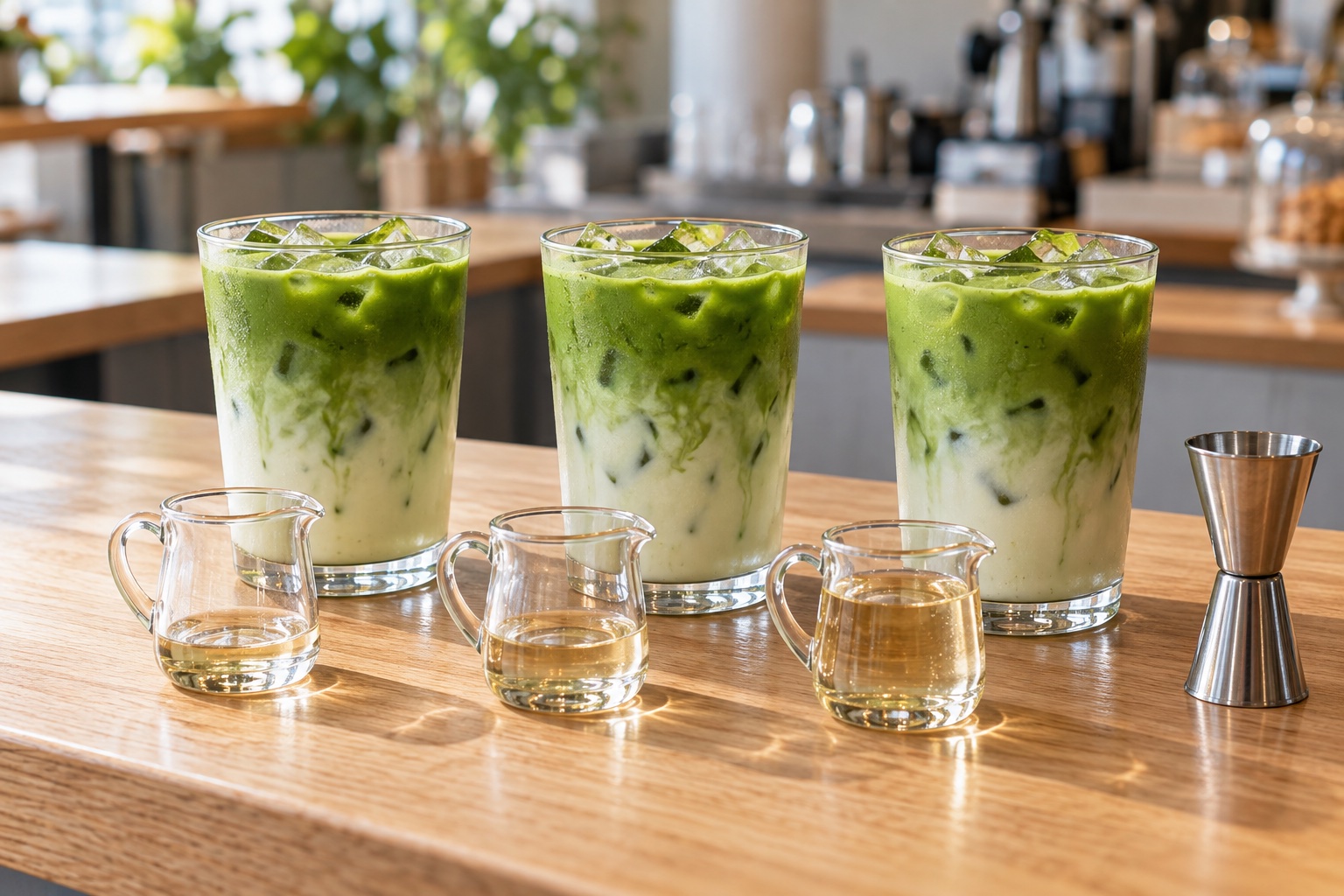
Iced matcha latte
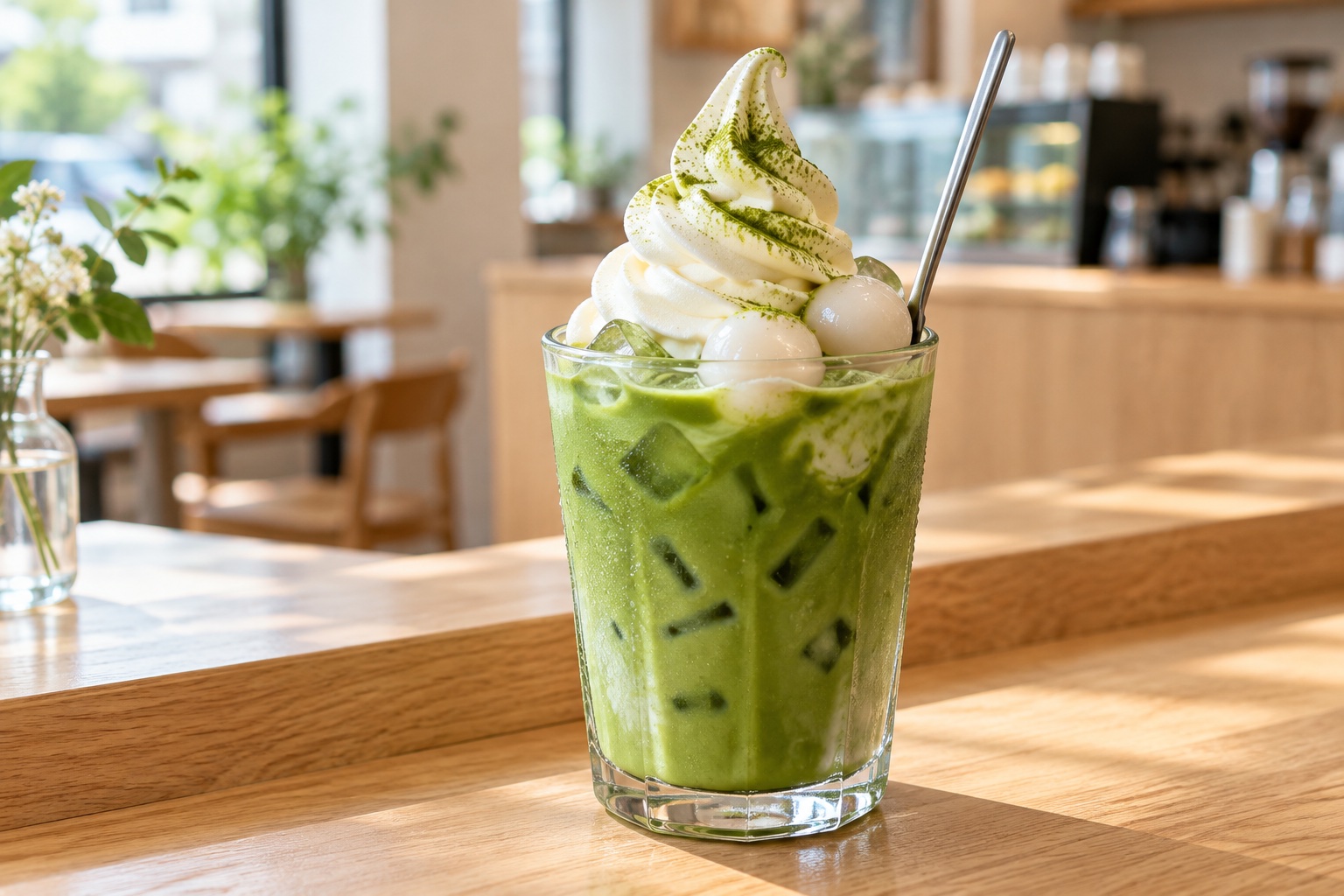
Starbucks’s two matcha drinks put a cream cold foam on top of a matcha drink. If you put matcha foam on a matcha latte, adjust the strength by the total matcha in the cup, for example by reducing the matcha in the latte underneath or by using a plain cream foam without matcha. How to make the latte underneath is in How to make an iced matcha latte.
Iced hojicha latte (our view)
From here on is our own view. Putting matcha foam on a hojicha latte, with its roasted aroma, gives two layers with different colors and aromas. Hojicha (roasted Japanese green tea) powder, and a tea merchant’s recipe that dissolves it in cold water, are covered in What is hojicha?
Prep and holding times
Under the U.S. FDA Food Code 2022, foods such as milk and cream are held at 5°C or below. If time is used instead of temperature control, written procedures must be in place, the time 4 hours later is marked, and the food is served or thrown away by then. These are food safety rules. They do not say how long cold foam stays foamy.
Public food safety guidance
| Source | Guidance |
|---|---|
| U.S. FDA “Food Code 2022” | Animal foods that are raw or heat-treated count as foods that need time/temperature control for safety. These foods are held at 5°C (41°F) or below |
| Same (when time is used as the control) | Methods are written down in advance, kept on site and shown to the regulatory authority on request. The food is at 5°C or below when taken out of temperature control. The time 4 hours later is marked on the container, and the food is served or thrown away within 4 hours. Unmarked food is thrown away. Extending to 6 hours has separate conditions, such as monitoring that the food does not go above 21°C and marking both the removal time and the time 6 hours later |
| Singapore Food Agency (SFA), guidelines for people ordering catered meals | Keep cold food below 5°C. Food should not be kept at room temperature for more than 4 hours from cooking to eating (covered in “Can you make it ahead?” in How to make an iced matcha latte) |
The Food Code is a model that U.S. states and local governments use when they write food safety rules, and the SFA guidance is mainly aimed at catered meals. Check the rules that actually apply in the country and area where your shop is.
Oatly’s “8 hours” is about its own product
Oatly says foam made from its own cold foam product keeps for up to 8 hours in the fridge after foaming with a blender, siphon or spindle mixer. The product can be stored at room temperature, and Oatly advises chilling it to 5–8°C before use. You cannot apply these 8 hours as they are to foam made from milk or cream. On the drink, foam from Oatly’s product holds for about 1 hour.
Pre-opening prep (our view)
From here on is our own example procedure, based on the guidance above.
- Make a foam base of dissolved matcha, syrup, cream and milk, and keep it in the fridge at 5°C or below. Write the time it was made on the container
- Froth to order, or shortly before busy periods
- If frothed foam sits outside the fridge, set a limit shorter than the Food Code’s 4 hours and write the time down
- Compare the amount and firmness of the foam with a fresh batch to decide how many minutes it can still be served in your shop
Yamamasa Koyamaen, a matcha producer, explains that the green color of matcha fades in light, and that the same is true of foods made with matcha. Keep dissolved matcha in a container that blocks light. Storing matcha powder is covered in Matcha shelf life.
Cost per cup and menu labelling
The matcha cost per cup is the total grams of matcha used in the foam and the drink × the purchase price per kg ÷ 1,000. Milk and cream are milk allergens, so also decide how you will tell customers.
Cost formula
For example, if the foam uses 2 g of matcha as in Oatly’s recipe and the iced matcha latte underneath uses 3 g, one cup uses 5 g of matcha. Add the following to get the ingredient cost per cup.
- Foam base (ml of cream, milk and so on × price per ml)
- Syrup (ml × price per ml)
- Milk, coffee and ice for the drink underneath
- Cup, lid and straw
Frothing increases the volume, so calculate cost from the amount of liquid before frothing. How to choose a matcha grade to match your selling price is in Choosing matcha for café lattes, and how matcha prices are set is in How matcha prices are set.
Telling customers about allergens
The SFA labelling guide requires packaged food labels to declare foods known to cause hypersensitivity. The list includes milk and milk products (including lactose). The U.S. Food Code lists milk as a major food allergen and says customers must be told in writing when an unpackaged food contains a major food allergen.
Cold foam is a topping where the milk or cream is easy to miss, so state on the menu that it contains milk. Starbucks says its raspberry cold foam is available with a nondairy option. If you let customers switch to plant-based milk, also list which bases they can switch to on the menu.
Nutri-Grade in Singapore
According to Singapore’s Health Promotion Board (HPB), since December 30, 2023, drinks made in places such as food and beverage outlets have also been covered by “Nutri-Grade.” The grade is set by sugar and saturated fat content, and drinks graded C or D must be labelled. Small businesses with annual revenue of S$1 million or less that sell at fewer than 10 premises are, for now, not required to show this label. HPB also requires the sugar content of toppings to be stated on menus and similar materials. Count foam made with syrup and cream in the sugar and fat of each cup. The details of the scheme are in How to make a strawberry matcha latte.
Sources
- Starbucks, “Starbucks launches new Matcha and Valentine’s Day drinks” (February 3, 2026) https://about.starbucks.com/stories/2026/starbucks-launches-new-matcha-and-valentines-day-drinks/
- Oatly, “Introducing Oatly Barista Cold Foam” https://www.oatly.com/things-we-do/stories/barista-cold-foam
- Vitamix, “Matcha Skim Foam” https://www.vitamix.com/us/en_us/recipes/matcha-skim-foam-r03175
- Breville, “Coconut Cold Brew Matcha” https://www.breville.com/inspiration/en-au/recipes/coffee-espresso/coconut-cold-brew-matcha
- Ippodo Tea, “Cold-Whisked Matcha” https://ippodotea.com/blogs/recipes-to-brew-japanese-tea/cold-whisked-matcha
- Yamamasa Koyamaen, “抹茶の取扱い” (Handling matcha, in Japanese) https://www.yamamasa-koyamaen.co.jp/matcha/basic/handling.html
- Meiji, “アイス抹茶クリームラテ” (Iced Matcha Cream Latte, in Japanese) https://www.meiji.co.jp/meiji-shokuiku/shokuikurecipe/recipe/0363.html
- University of Guelph, “Dairy Science and Technology eBook: Overview and Fluid Milk Products” https://books.lib.uoguelph.ca/dairyscienceandtechnologyebook/chapter/overview-and-fluid-milk-products/
- Kamath S, Huppertz T, Houlihan AV, Deeth HC, “The influence of temperature on the foaming of milk,” International Dairy Journal 18(10-11):994-1002 (2008) https://research.ucc.ie/en/publications/the-influence-of-temperature-on-the-foaming-of-milk/
- Huppertz T, “Foaming properties of milk: A review of the influence of composition and processing,” International Journal of Dairy Technology 63(4):477-488 (2010) https://research.ucc.ie/en/publications/foaming-properties-of-milk-a-review-of-the-influence-of-compositi/
- U.S. Food and Drug Administration, “Food Code 2022” §1-201.10, §3-501.16, §3-501.19, §3-602.12 https://www.fda.gov/media/164194/download
- Singapore Food Agency, “A Guide to Food Labelling and Advertisements” https://www.sfa.gov.sg/docs/default-source/food-information/labelling-and-packaging-information/a-guide-to-food-labelling-and-advertisements.pdf
- Singapore Food Agency, “Guidelines for ordering catered meals for functions and events” https://sfa.gov.sg/docs/default-source/food-retail/guidelines-for-ordering-catered-meals-for-functions-and-events.pdf
- Health Promotion Board, Singapore, “Measures for Nutri-Grade” https://hpb.gov.sg/healthy-living/food-beverage/nutri-grade