
 Reviewed by: Takahiro Sugiyama (CEO, meguri Inc.)
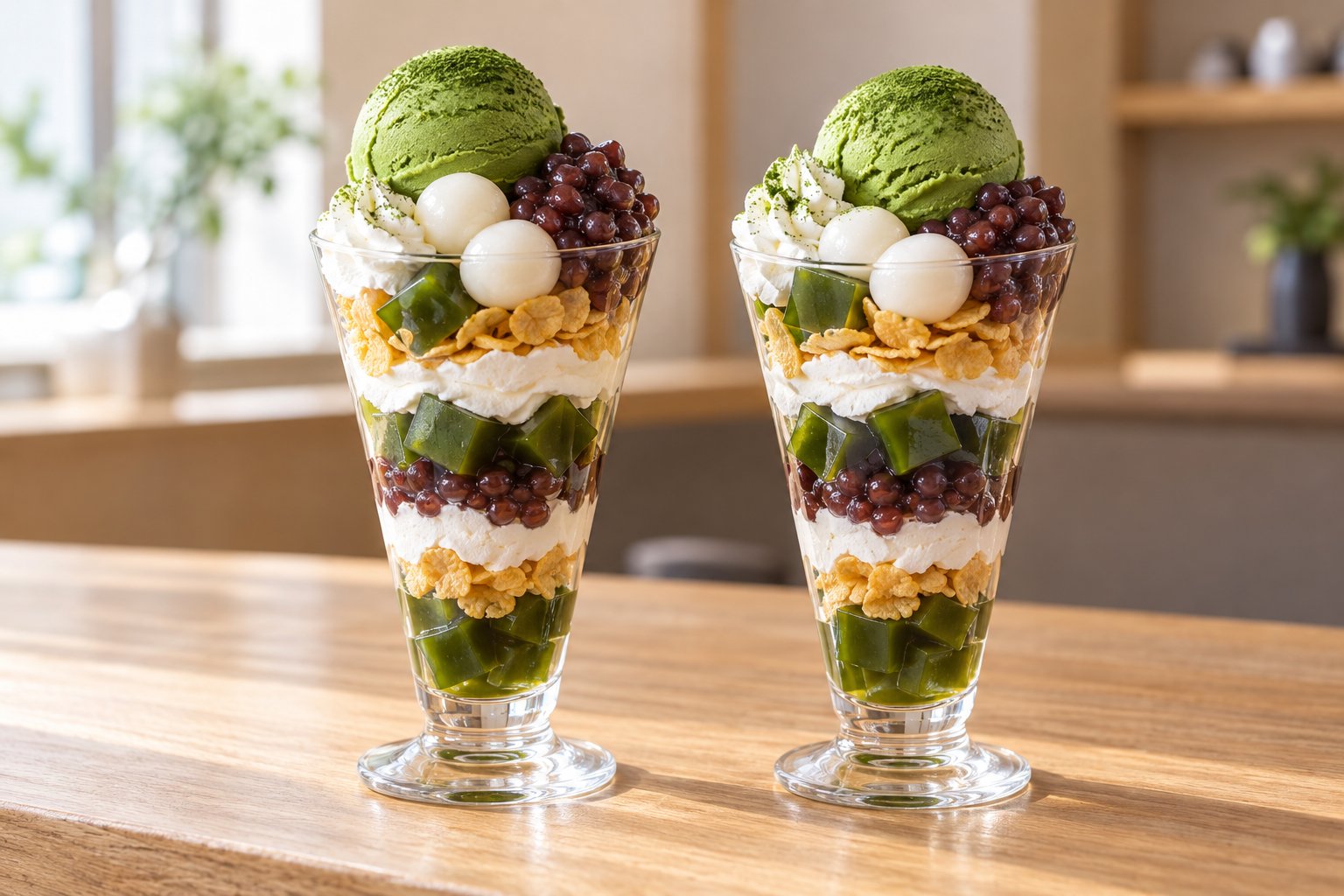
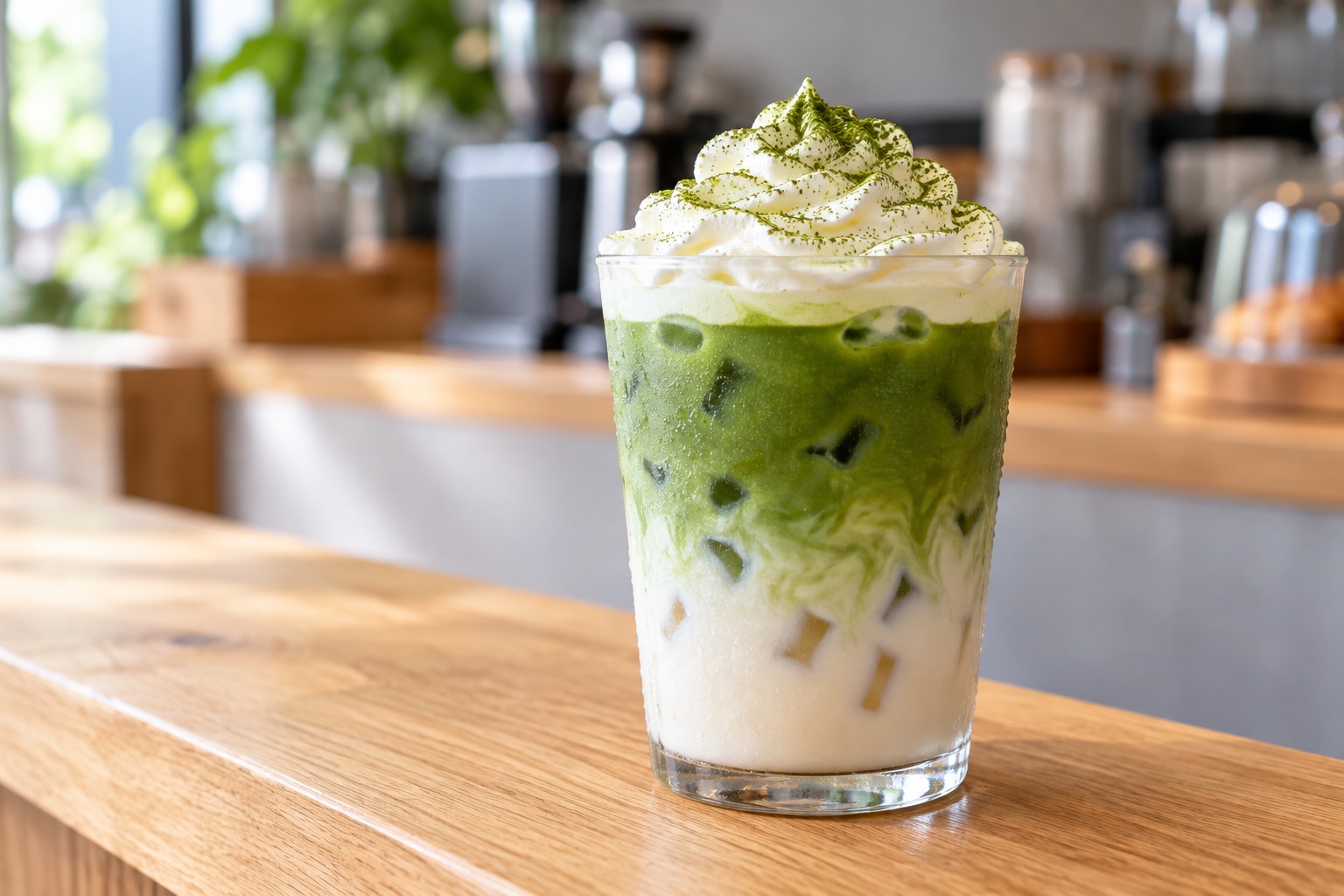
A matcha parfait is a dessert served at Japanese tea houses and cafés, made by layering jelly, ice cream, cream, shiratama, anko and other parts in a glass. How much matcha goes into one glass changes a lot depending on which parts carry the matcha, and some parts, such as ice cream and gelatin jelly, melt easily at room temperature. We compared how official recipes from cooking schools, food companies and tea companies put the parfait together and how much matcha they use.
What is a matcha parfait: common parts and layers
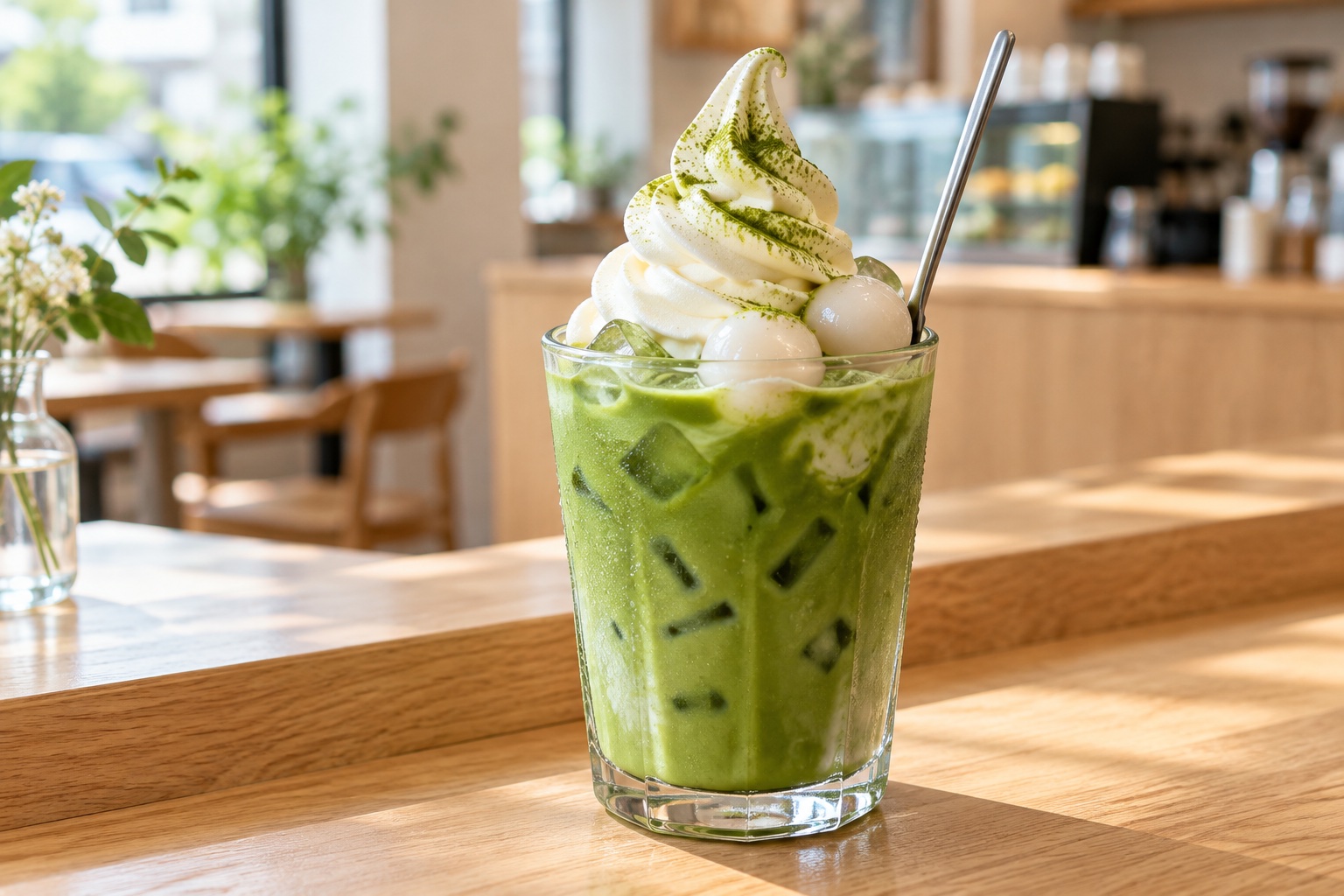
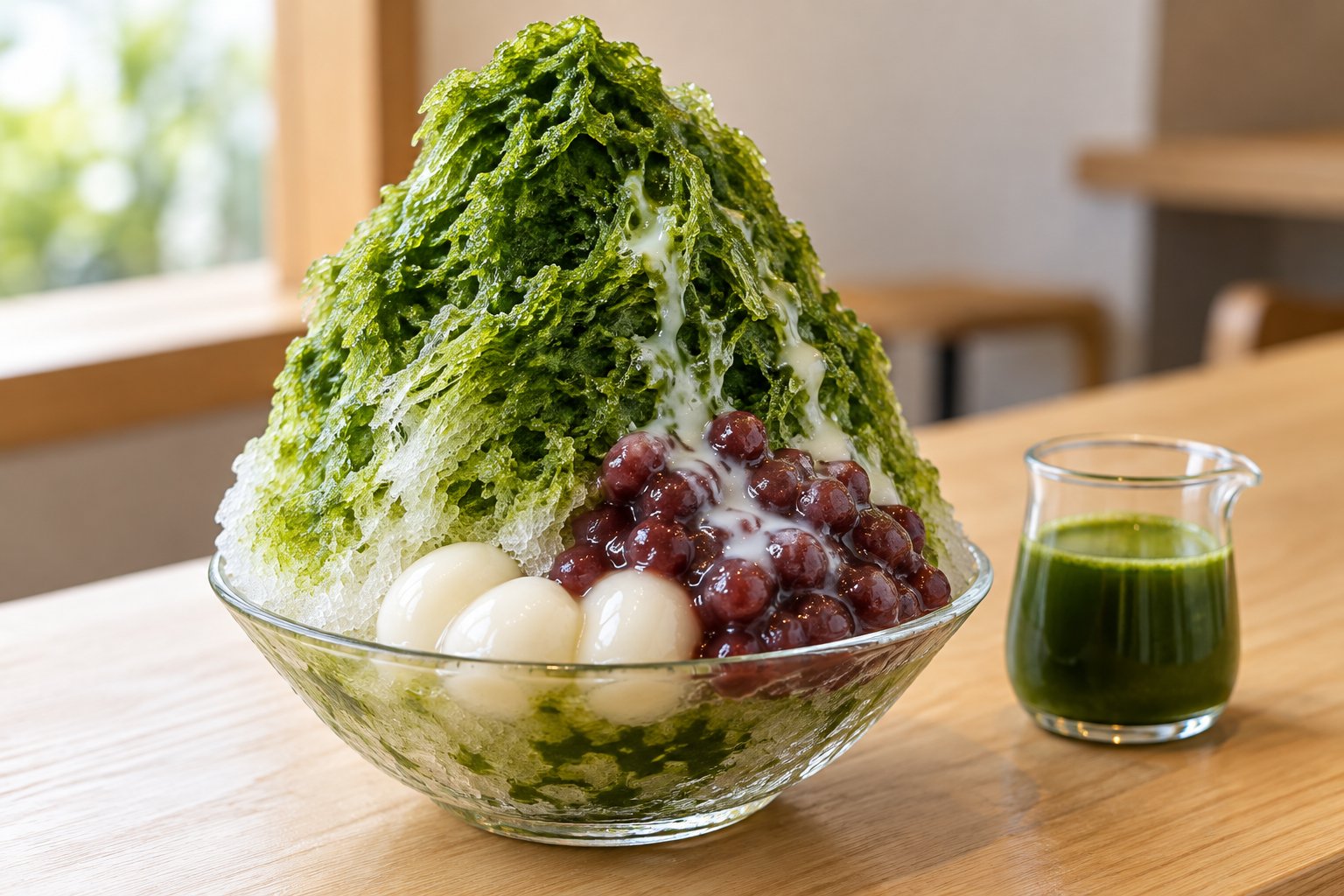
A matcha parfait is a dessert that layers matcha jelly, ice cream, cream, shiratama, sauce and similar parts in a glass, together with anko and cornflakes. There is no fixed form, and which parts carry the matcha differs from shop to shop.
Common parts
The parts that appear in the official recipes we read are as follows.
| Part | Recipes with matcha in it | Recipes without matcha in it |
|---|---|---|
| Jelly | HATTORI DINER (Hattori Nutrition College), Akahori Confectionery and Café College, Snow Brand Megmilk, Ina Food Industry, Kumitasu | — |
| Ice cream | Akahori Confectionery and Café College, Hasshoku Center, Nakamura Tokichi Honten, Kuze, AIYA America | HATTORI DINER (vanilla ice cream) |
| Cream | Kumitasu (matcha in soy whipped cream) | Akahori Confectionery and Café College, Snow Brand Megmilk, Nakamura Tokichi Honten, Kuze |
| Shiratama | Akahori Confectionery and Café College, Kumitasu | HATTORI DINER, Hasshoku Center |
| Sauce and syrup | Nakamura Tokichi Honten (thick kneaded matcha), AIYA America, Kuze (ready-made matcha sauce) | — |
| Anko | — | Akahori Confectionery and Café College, HATTORI DINER, Snow Brand Megmilk, Hasshoku Center |
| Cornflakes and granola | AIYA America (granola dusted with matcha) | Akahori Confectionery and Café College, Kuze (brown rice flakes) |
Kumitasu is a food allergy information site (run by Willmore Inc.), Kuze is a company that supplies ingredients to restaurants, and Hasshoku Center is a market in Hachinohe, Aomori Prefecture.
Order of layers in official recipes
From bottom to top, the recipes are built as follows.
- Akahori Confectionery and Café College: cornflakes → anko, matcha ice cream, cream, matcha shiratama → kuromitsu
- HATTORI DINER: matcha jelly, agar jelly, boiled azuki → shiratama, vanilla ice cream, chestnut
- Hasshoku Center: anko → agar jelly → matcha ice cream → whipped cream → fruit → shiratama (kuromitsu is poured on while eating)
- Nakamura Tokichi Honten: whipped cream → fruit → thick kneaded matcha sauce → sponge → matcha ice cream → dusting of matcha
- Kuze: almond tofu (a milk jelly) → matcha pudding → matcha sauce → brown rice flakes → whipped cream → coffee jelly → whipped cream, matcha roll cake, matcha ice cream
HATTORI DINER, Hasshoku Center, Kuze, Kumitasu and Bento&co put the jelly, agar or pudding in the bottom layers. Kuze and Kumitasu pour the liquid into the glass and chill it until set before adding the parts above, and Snow Brand Megmilk alternates layers of jelly and cream. Most recipes put the ice cream near the top, but some, such as AIYA America, also put vanilla ice cream at the bottom.
Matcha amounts in official recipes
In official recipes that give matcha in grams and the number of servings, matcha per glass was about 0.5 to 7g. With matcha in one part only (the jelly), it is 0.5 to 3g; with matcha in 3 parts (jelly, shiratama and cream), it is 7g. The number of parts makes a big difference. The 0.5g figure comes from a jelly recipe served with shiratama and sweet red beans, not a parfait.
Recipe by recipe
| Source | Parts with matcha | Matcha | Servings | Matcha per glass |
|---|---|---|---|---|
| Ina Food Industry (agar company), matcha jelly | Jelly | 3g | 6 servings | 0.5g |
| HATTORI DINER (Hattori Nutrition College) | Jelly | 12g | 4 servings | 3.0g |
| Kumitasu (dairy-free) | Jelly 8g, shiratama 3g, cream 3g | 14g | 2 parfaits | 7.0g |
| AIYA America (US arm of a matcha maker in Aichi, Japan) | Syrup 10g, 2 tsp on granola | 10g (syrup) | 2 parfaits | Up to 5g from syrup alone |
| Akahori Confectionery and Café College | Ice cream 5g, shiratama 5g, jelly 10g | 20g | Not given | — |
| Snow Brand Megmilk | Jelly | 1⅓ tbsp | 4 servings | Not given in grams |
| Nakamura Tokichi Honten (tea company in Uji, Kyoto) | Sauce and dusting | Not given | 1 to 2 glasses | — |
Matcha per glass is our calculation: the weight of matcha divided by the number of servings. AIYA America uses part of the syrup it makes, so 5g is the upper limit if all of it is used. Ina Food Industry’s recipe is not a parfait, so it is listed as a guide for using just one layer of jelly.
HATTORI DINER’s matcha parfait, 4 servings: matcha jelly (matcha 12g, white sugar 50g, powdered gelatin 8g, water at about 80°C 200g, water 200g), agar jelly (agar powder 2g, white sugar 50g, water 400g) and shiratama (shiratamako 50g, water from 40g). In step 5, matcha jelly, agar jelly and boiled azuki go into the glass, topped with shiratama, ice cream and chestnut.
Source: HATTORI DINER, “抹茶パフェ” (Matcha parfait, in Japanese) https://www.hattoridiner.jp/recipes/detail/238
Parfaits built from ready-made products
Kuze, a company that supplies ingredients to restaurants, gives each part for 1 serving by weight. It uses matcha pudding 25g, matcha sauce 10g, brown rice flakes 5g, whipped cream 16g, coffee jelly 24g, matcha roll cake 20g and matcha ice cream 25g (scooped with a #26 disher), with almond tofu at the bottom. It uses no matcha powder, and gets the flavour and colour only from the matcha in the ready-made products.
| Kuze “Matcha parfait” (Kuze Tsushin No. 93), 1 serving | Amount |
|---|---|
| Water | 10ml |
| Almond tofu mix | 4g |
| Milk for catering | 15ml |
| Matcha pudding | 25g |
| Matcha sauce S | 10g |
| Brown rice flakes for catering | 5g |
| Plain whipped cream | 16g |
| Cut coffee jelly | 24g |
| Roll cake (Nishio matcha and warabi mochi) | 20g |
| Uji matcha ice cream | 25g |
| Bamboo leaf | 0.25 leaf |
Method: set the almond tofu and then the matcha pudding in the glass in turn, chilling each, then add matcha sauce, brown rice flakes, plain whipped cream and cut coffee jelly in that order.
Source: Kuze, “抹茶パフェ” (Matcha parfait, in Japanese) https://www.kuze.co.jp/recipe/detail_1702.html
Weighing each part in grams lets you work out matcha per glass even when you mix homemade and ready-made parts. As Kuze’s ingredient list shows, ready-made matcha ice cream and sauce may not state their matcha content, so either count only the matcha you add to homemade parts or ask your supplier for the formula (our suggestion).
How to make each part, and how much matcha
In official recipes, matcha was about 0.8 to 4% of the liquid in jelly, 2 to 3% of the cream in matcha cream, and 3 to 4% of the milk and cream in ice cream. Most recipes mix the matcha with sugar first, or work it into a paste with a little liquid, before adding it.
Matcha jelly
| Source | Matcha | Liquid | Setting agent | Matcha to liquid |
|---|---|---|---|---|
| Ina Food Industry | 3g | Water 400ml | Ina Agar L (the company’s gelling agent) 8g | About 0.8% |
| Kumitasu | 8g | Water 300ml, soy whipped cream 80ml | Gelatin 8g | About 2.1% |
| HATTORI DINER | 12g | Water at 80°C 200g, water 200g | Powdered gelatin 8g | 3.0% |
| Akahori Confectionery and Café College | 10g | Water 250g | Gelatin 10g | 4.0% |
The ratios are our calculation, treating ml and g as equal. HATTORI DINER combines the matcha, sugar and gelatin first, dissolves them in hot water, adds water and strains the mixture through a sieve. Ina Food Industry sifts the matcha just before use and mixes it with sugar, and adds it after turning off the heat under the boiled gelling agent. Kumitasu stirs from time to time so the matcha does not sink, and pours the jelly into the glass once it has thickened. This is the same way of preventing settling as in Matcha pudding.
Matcha cream
Seven Premium’s recipe uses 6g of matcha and 25g of granulated sugar for 200ml of cream, with matcha at 2 to 3% of the cream as a guide. Mix the matcha and sugar well, add about 50ml of the cream to make a paste, then add the rest and whip over iced water. It says the cream separates easily if whipped all the way with a hand mixer, so whip it loosely first and then adjust the firmness with a whisk. Foam for topping cold drinks is compared in Matcha cold foam.
Matcha ice cream, shiratama and sauce
- Ice cream: Akahori Confectionery and Café College uses 5g of matcha for 65g of milk and 60g of cream (about 4.0%). Other official recipes are in the 3% range, as covered in Matcha ice cream and soft serve
- Shiratama: Akahori Confectionery and Café College uses 5g of matcha for 50g of joshinko (non-glutinous rice flour) and 100g of shiratamako (glutinous rice flour), about 3.3% of the flour. It mixes the matcha with sugar, dissolves it in warm milk, then combines it with the flour. The difference between the flours and why the dough hardens is covered in Matcha mochi, daifuku and warabi mochi
- Sauce: Nakamura Tokichi Honten slowly kneads matcha with a little hot water into a thick sauce and pours it over the fruit and sponge. Sweetened syrup recipes are compared in How to make matcha syrup
The ratios are our calculation.
Assembling so it does not melt, turn watery or go soggy
Put the ice cream on last, assemble gelatin jelly straight from the fridge, and build the order so that sauce and anything melting do not run directly onto the cornflakes. Between assembly and reaching the customer’s table, the upper parts can melt and soak into the layers below.
Ice cream last, once everything is ready
Hasshoku Center’s recipe says that cutting the fruit first lets you decorate smoothly so the ice cream does not melt. Nakamura Tokichi Honten, HATTORI DINER and Kuze put the ice cream on near the end. Before assembling, line up the parts in the order they go into the glass, scoop the ice cream with a disher and put it on straight away (our suggestion).
Gelatin jelly melts at room temperature
According to Ina Food Industry, gelatin starts to melt at 20 to 30°C, while agar does not melt until 85 to 95°C. In hot places such as Singapore and Bangkok, do not leave gelatin jelly outside the chilled case for long. HATTORI DINER combines gelatin matcha jelly with agar jelly, and Hasshoku Center uses agar jelly only. Temperatures in both cities are covered in Matcha shelf life and storage.
Where to put the cornflakes (our suggestion)
Akahori Confectionery and Café College puts the cornflakes at the very bottom, and Kuze puts brown rice flakes above the matcha sauce and below the whipped cream. In either position, the texture changes if melted ice cream or sauce runs into them. For a café, these steps are worth considering:
- Sandwich the cornflakes between parts with little moisture, such as anko or cream
- Pour sauce or syrup over the ice cream, or along the side of the glass
- Serve kuromitsu on the side, as Hasshoku Center does, for the customer to pour while eating
Keeping the colour: finishing matcha and light
Matcha’s green fades with light and heat, so dust the finishing matcha just before serving and do not leave assembled parfaits under lights. The more a part shows its matcha through the glass, the more the colour change stands out.
Light and heat change the colour
According to Yamamasa Koyamaen, matcha fades under both sunlight and artificial light, and a matcha cake left under showcase lights for a long time loses its colour. Heating can also weaken the flavour or turn the colour reddish. Seven Premium also writes that matcha’s colour fades over time when exposed to light.
Dust the finishing matcha just before serving
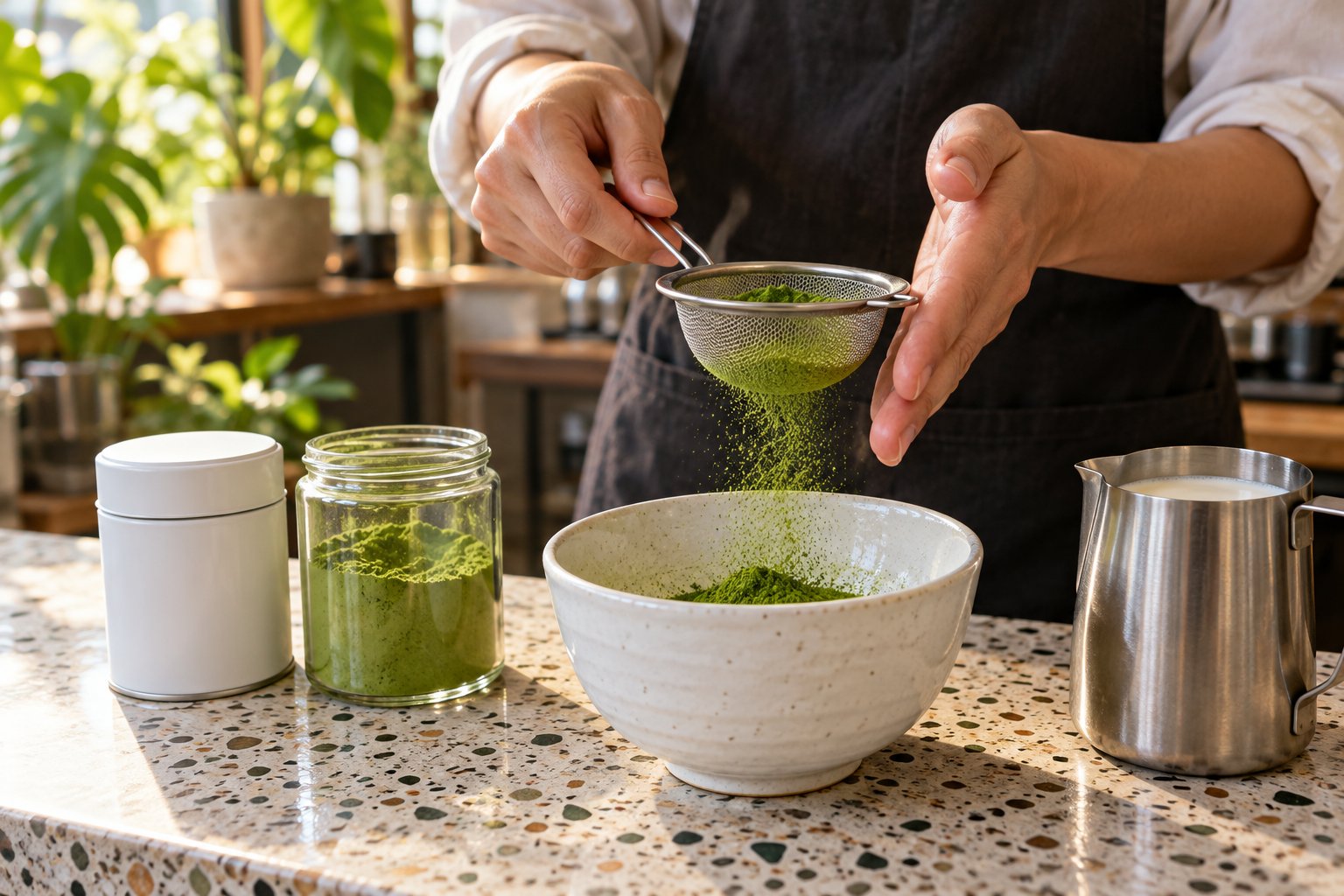
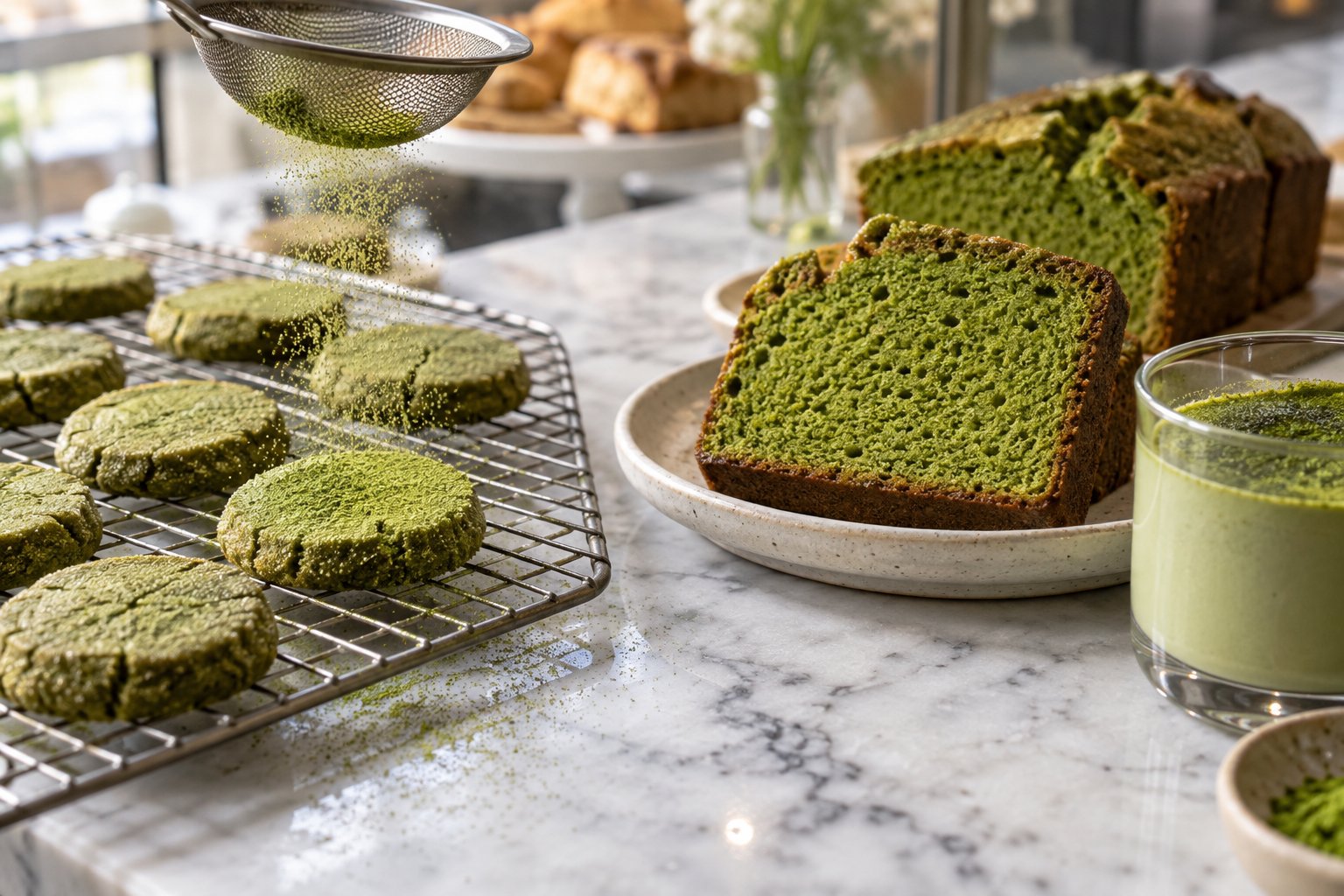
Nakamura Tokichi Honten writes that dusting the finishing matcha on its tiramisu just before eating keeps the colour bright for longer. For a parfait too, dust the matcha just before serving. According to Yamamasa Koyamaen, matcha is a fine powder of about 10 microns that lumps easily, and sifting it just before use prevents this. Dusting through a tea strainer spreads the powder evenly (our suggestion).
Keep the dusting matcha in small portions
Yamamasa Koyamaen explains that if water drops from hands or tools fall into stored matcha, they form hard lumps that cannot be broken up. Keep only one day’s worth of finishing matcha in a small container at the assembly station, and do not touch the matcha in the bag with wet hands (our suggestion). Ways to keep the colour in baked goods are covered in Choosing matcha for baking.
Prep and making ahead: storage for each part
Make jelly and pudding the day before and refrigerate them, whip the cream just before use, and keep ice cream at −18°C or below. Date-mark refrigerated parts made in your shop with the day they were made.
Prep guide for each part
| Part | When to make it | Basis |
|---|---|---|
| Jelly and pudding | The day before or the morning of the day | Bento&co recommends making matcha pudding the day before or that morning because it needs at least 4 hours in the fridge. Kuze sets almond tofu and matcha pudding in the glass in turn |
| Matcha cream | Just before use | Seven Premium says leaving it after whipping causes separation |
| Shiratama | Boil to match serving times | Rice flour dough hardens as it cools (Matcha mochi) |
| Ice cream | Keep frozen and scoop just before assembling | The Japan Ice Cream Association and Meiji explain that at −18°C or below bacteria do not grow and quality changes very little |
| Finishing matcha | Dust just before serving | Nakamura Tokichi Honten (tiramisu finish) |
Refrigeration temperature and date marking
The 2026 edition of the US FDA Food Code (a model code for food safety in US restaurants and shops) requires refrigerated foods that need temperature control to be held at 5°C or below. Refrigerated foods made in the shop and kept for more than 24 hours must be date-marked, for up to 7 days at 5°C or below, counting the day of preparation as day 1. 7 days is an upper limit, so also check the labels on the milk, cream and eggs you use and set a shorter number of days for each part in your shop. Heating and cooling parts that contain eggs is covered in Matcha pudding, and allergen labelling is in the table in Matcha tiramisu.
Do not assemble parfaits ahead
None of the recipes above includes a step for keeping assembled parfaits. Make the parts ahead, and assemble in the glass only after the order comes in (our suggestion).
Matching grade and matcha cost per glass
Yamamasa Koyamaen recommends drinking grade for uses that bring out matcha’s flavour, such as “sprinkling”, “ice cream” and “cream”. A parfait often layers all 3 in one glass. In the company’s chart of uses, sprinkling runs from drinking grade to processing grade Special A, and ice cream, cream, matcha sauce, jelly and pudding run from drinking grade to processing grade Special B.
Matching grade
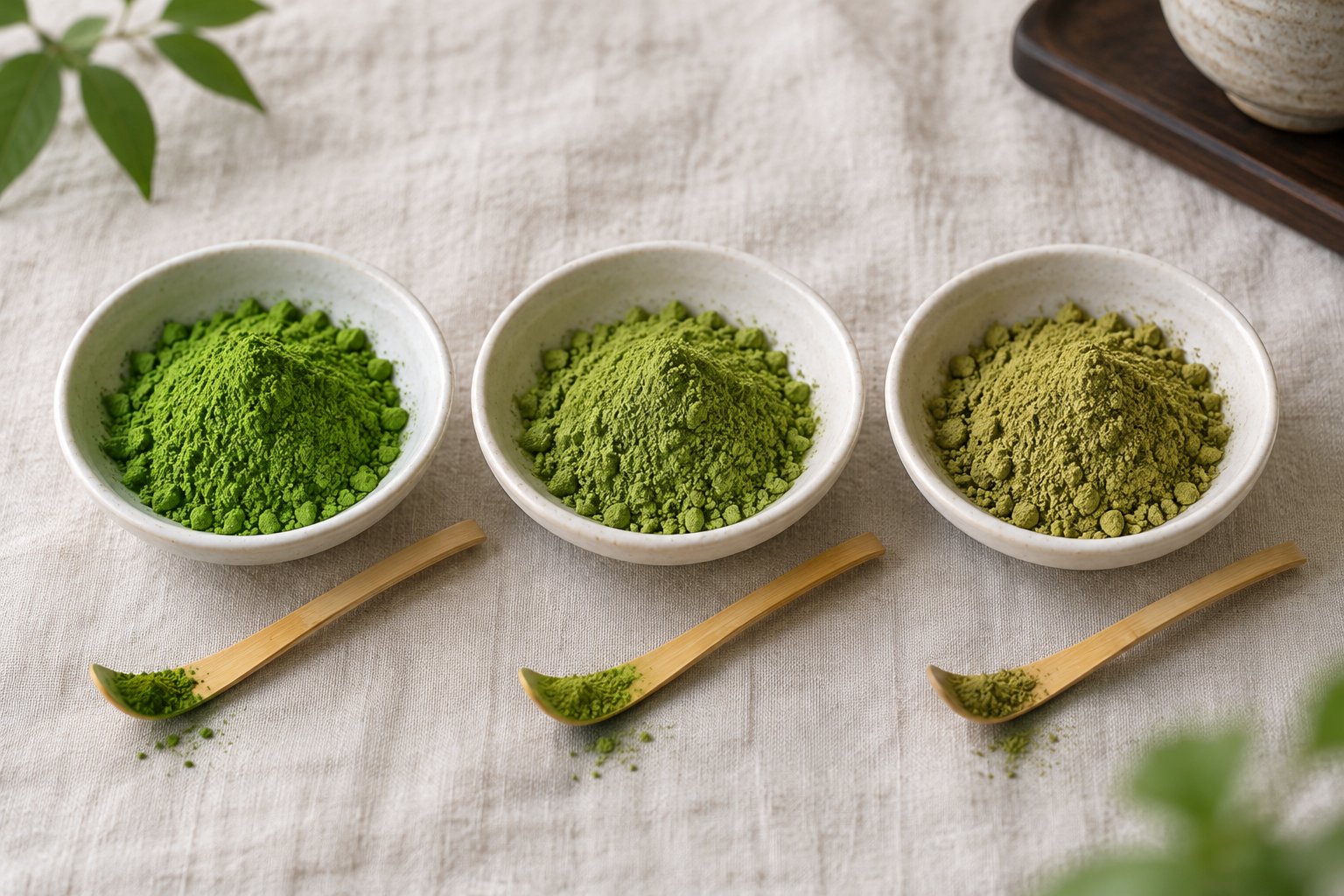
The company describes matcha as a secondary ingredient in food, says that using a higher grade gives a more flavourful product, and recommends choosing with quality first. Cream and finishing matcha are not heated, so the aroma and colour of the matcha come through as they are. Choose drinking grade for the finishing matcha and the cream, and test different grades within the chart’s range for the jelly and ice cream, which makes the difference easier to see (our view). The differences between grades are explained in Matcha grades.
Working out matcha cost per glass
Matcha cost per glass is “buying price per 1kg ÷ 1,000 × grams of matcha per glass”. Matcha per glass in official recipes is as follows (our calculation).
| Recipe | Matcha per glass |
|---|---|
| Ina Food Industry (jelly only) | 0.5g |
| HATTORI DINER (jelly only) | 3.0g |
| AIYA America (syrup only, upper limit) | 5.0g |
| Kumitasu (jelly, shiratama, cream) | 7.0g |
If you add finishing matcha, weigh that too and add it. Besides matcha, include ice cream, cream, anko, rice flour, cornflakes, the work of washing glasses, and parts thrown away after their date in the cost. How matcha prices are set is explained in How matcha prices are determined.
What to check when buying
Work out monthly use from grams of matcha per glass and the number of glasses on your menu, and choose a bag size that you can use up in the days after opening. If you split grades, work out the amount for each grade.
Amount used and bag size
Monthly matcha is “grams of matcha per glass × glasses served per month”. If other menu items such as lattes use the same matcha, add them together. Opened matcha deteriorates with light and moisture, so choose the bag size by the number of days it takes to use it up after opening. How to decide is covered in Matcha shelf life and storage.
What to compare in test batches
- Colour when dusted on top: under the same lights, compare the colour right after dusting and a few minutes later
- Colour and bitterness in cream: make it at 2% and 3% of the cream and compare
- Colour in jelly: after it sets, compare the green as seen through the glass
Omakase Matcha supplies matcha from Uji, Yame, Shizuoka, Kagoshima and Miyazaki, with orders from 1kg and up to 3 samples. To compare matcha for the finishing dust and for the parts of your parfait, request matcha from Samples.
Sources
- HATTORI DINER (Hattori Nutrition College original recipe), “抹茶パフェ” (Matcha parfait, in Japanese) https://www.hattoridiner.jp/recipes/detail/238
- Akahori Confectionery and Café College, “あかほりレシピ 白玉抹茶パフェ” (Shiratama matcha parfait, in Japanese) https://www.akahori.ac.jp/recipe/7693
- Snow Brand Megmilk, “栗原はるみのミルクのある生活 抹茶パフェ” (Matcha parfait, May 2009, in Japanese) https://www.meg-snow.com/fun/kurihara-recipe/backnumber/200905/recipe_02.html
- Ina Food Industry, “抹茶ゼリー” (Matcha jelly, in Japanese) https://www.kantenpp.co.jp/recipe/matchajelly/
- Ina Food Industry, “寒天の疑問解決!” (Agar questions answered, in Japanese) https://www.kantenpp.co.jp/kanten/faq
- Kumitasu, “抹茶白玉パフェ(乳不使用)” (Matcha shiratama parfait, dairy-free, in Japanese) https://www.kumitasu.com/contents/recipe/3927
- Seven Premium, “ふんわり『抹茶クリーム』のレシピ” (Fluffy matcha cream recipe, in Japanese) https://7premium.jp/recipe/search/detail?id=9356
- Kuze, “抹茶パフェ” (Matcha parfait, Kuze Tsushin No. 93, in Japanese) https://www.kuze.co.jp/recipe/detail_1702.html
- Hasshoku Center, “料理道場レシピ集 抹茶パフェ” (Matcha parfait, in Japanese) https://www.849net.com/recipe/difficulty/easy/75-No15.html
- Nakamura Tokichi Honten, “おうちで作る抹茶パフェ” (Matcha parfait to make at home, in Japanese) https://tokichi.jp/blogs/life-with-cha/recipe_matcha-parfait
- Nakamura Tokichi Honten, “抹茶ティラミス” (Matcha tiramisu, in Japanese) https://tokichi.jp/blogs/life-with-cha/recipe-matcha-tiramisu
- AIYA America, “Matcha Parfait” https://aiya-america.com/matcha-parfait/
- Bento&co, “How to Make Matcha Parfait, Kyoto’s Favorite Green Tea Dessert” https://en.bentoandco.com/blogs/bento/how-to-make-matcha-parfait-kyotos-favorite-green-tea-dessert
- Yamamasa Koyamaen, “抹茶の取扱い” (Handling matcha, in Japanese) https://www.yamamasa-koyamaen.co.jp/matcha/basic/handling.html
- Yamamasa Koyamaen, “加工用抹茶・他パウダー(業務用・製菓用)” (Matcha and other powders for processing, in Japanese) https://www.yamamasa-koyamaen.co.jp/product/for-processing.html
- Meiji, “市販アイスクリームへ賞味期限を表示” (Best-before dates on retail ice cream, 22 January 2020, in Japanese) https://www.meiji.co.jp/corporate/pressrelease/2020/0122_01/
- Japan Ice Cream Association, “アイスクリームには賞味期限が書いてないけど、どうして?” (Why does ice cream have no best-before date?, in Japanese) https://www.icecream.or.jp/iceworld/qa/05.html
- US Food and Drug Administration, “FDA Food Code 2026” https://www.fda.gov/food/fda-food-code/food-code-2026