
 Reviewed by: Takahiro Sugiyama (CEO, meguri Inc.)
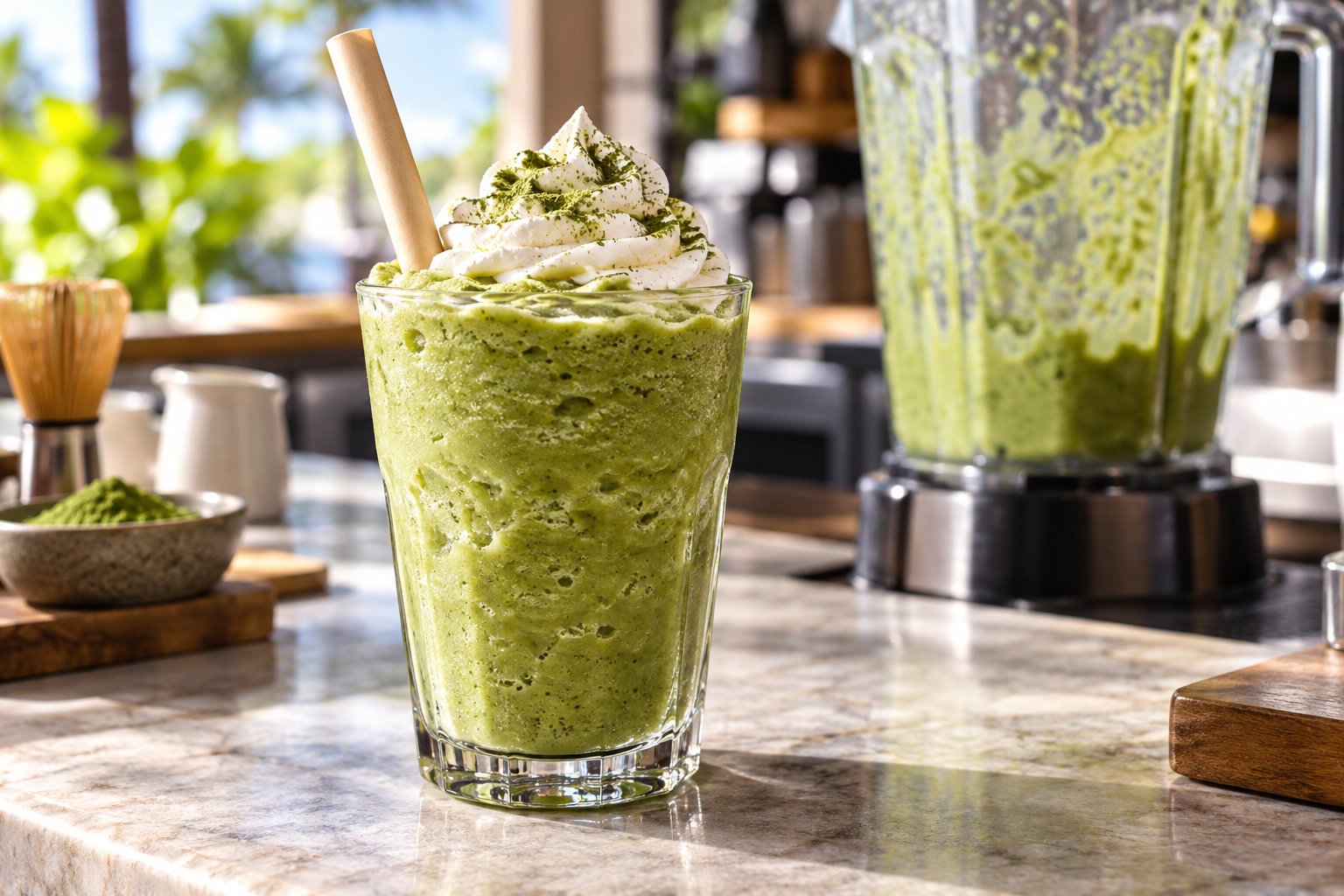
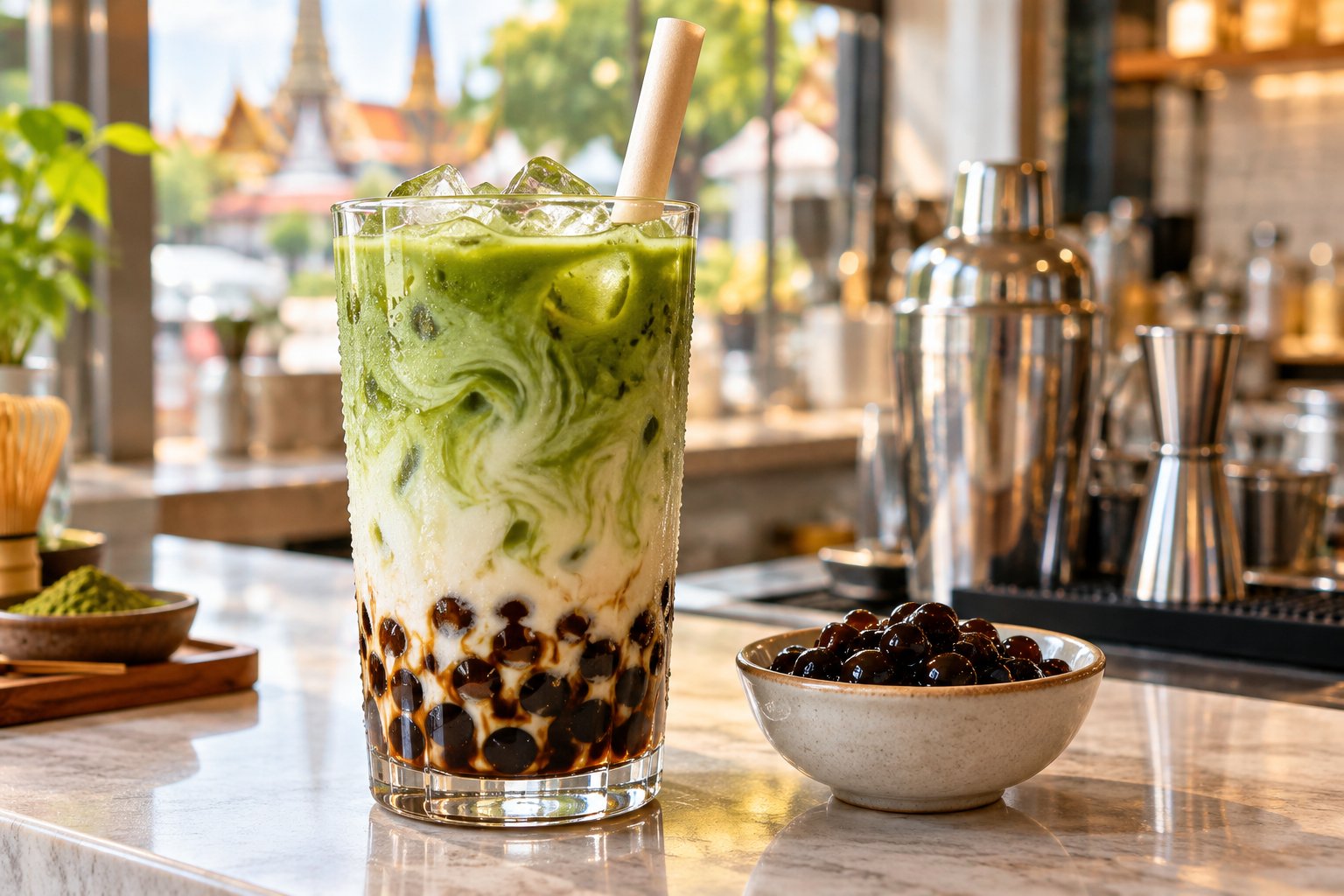
A matcha frappe is a cold drink made in a blender from the same ingredients as a matcha latte, with ice added. In Thai it is called “มัทฉะปั่น” (matcha spun in a blender). This article sets out official information from syrup makers, tea companies, a blender maker and a coffee chain, and looks at the ratios, ice, loading order, bases, sugar labelling and cost per cup that a café has to decide.
What is a matcha frappe?
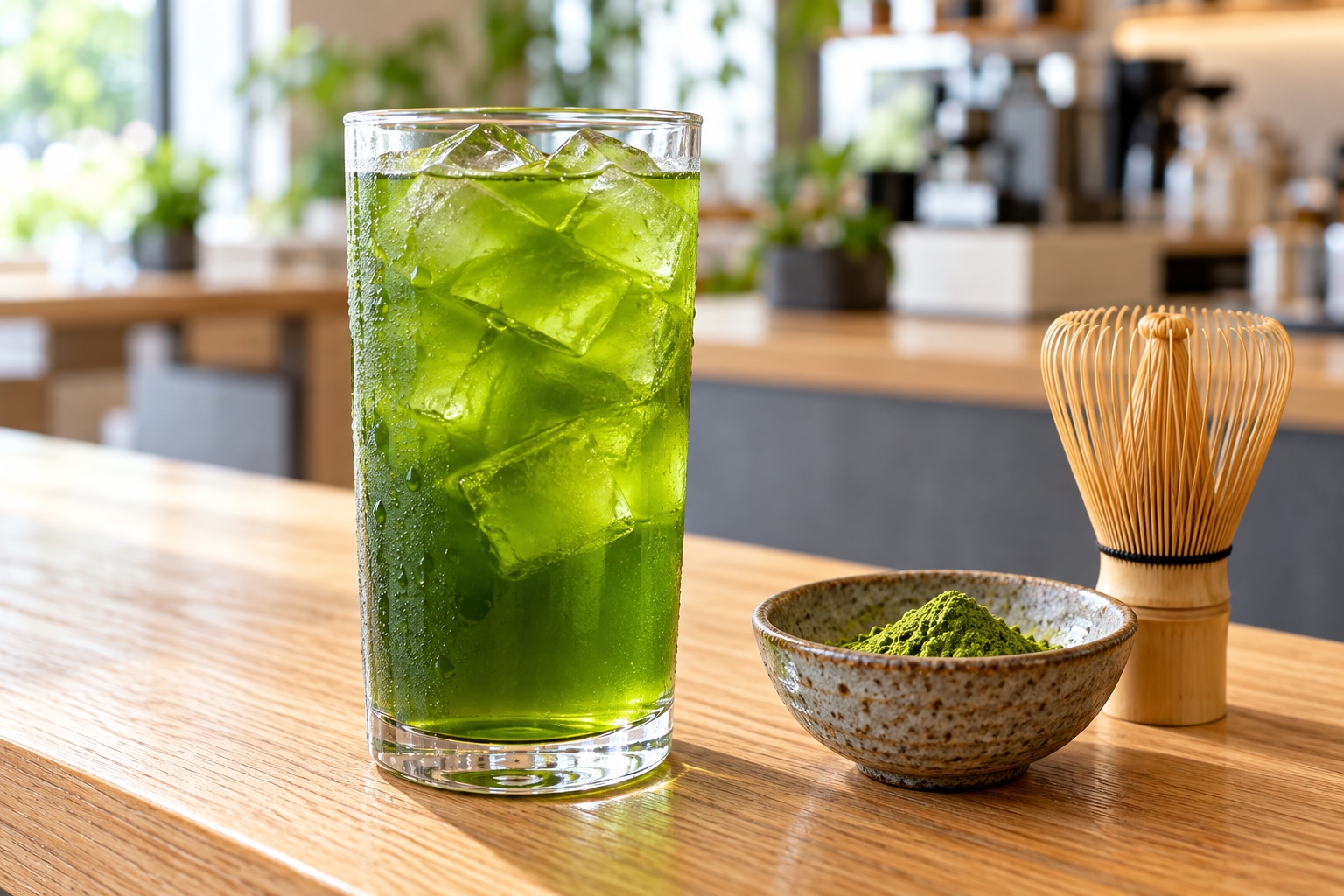
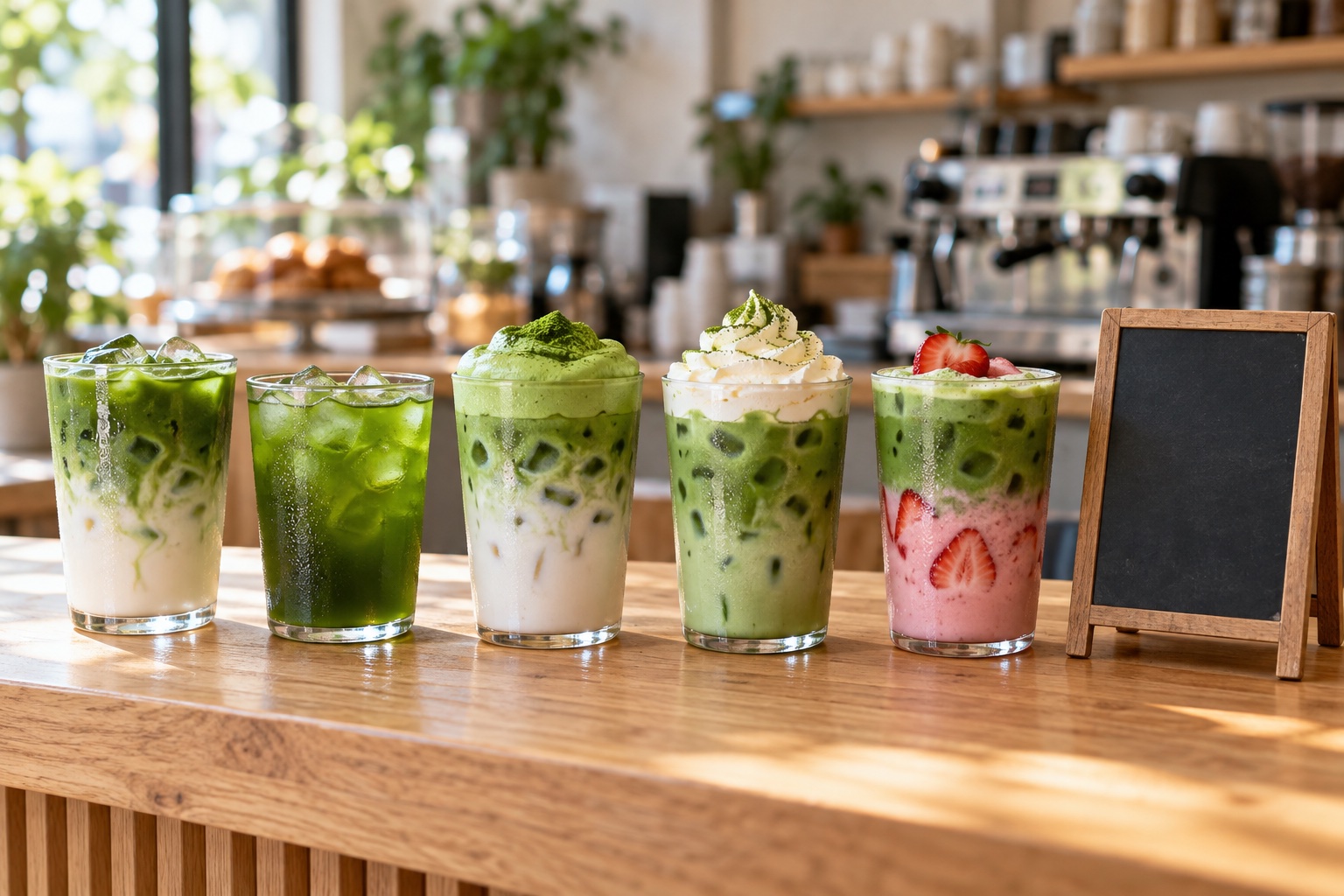
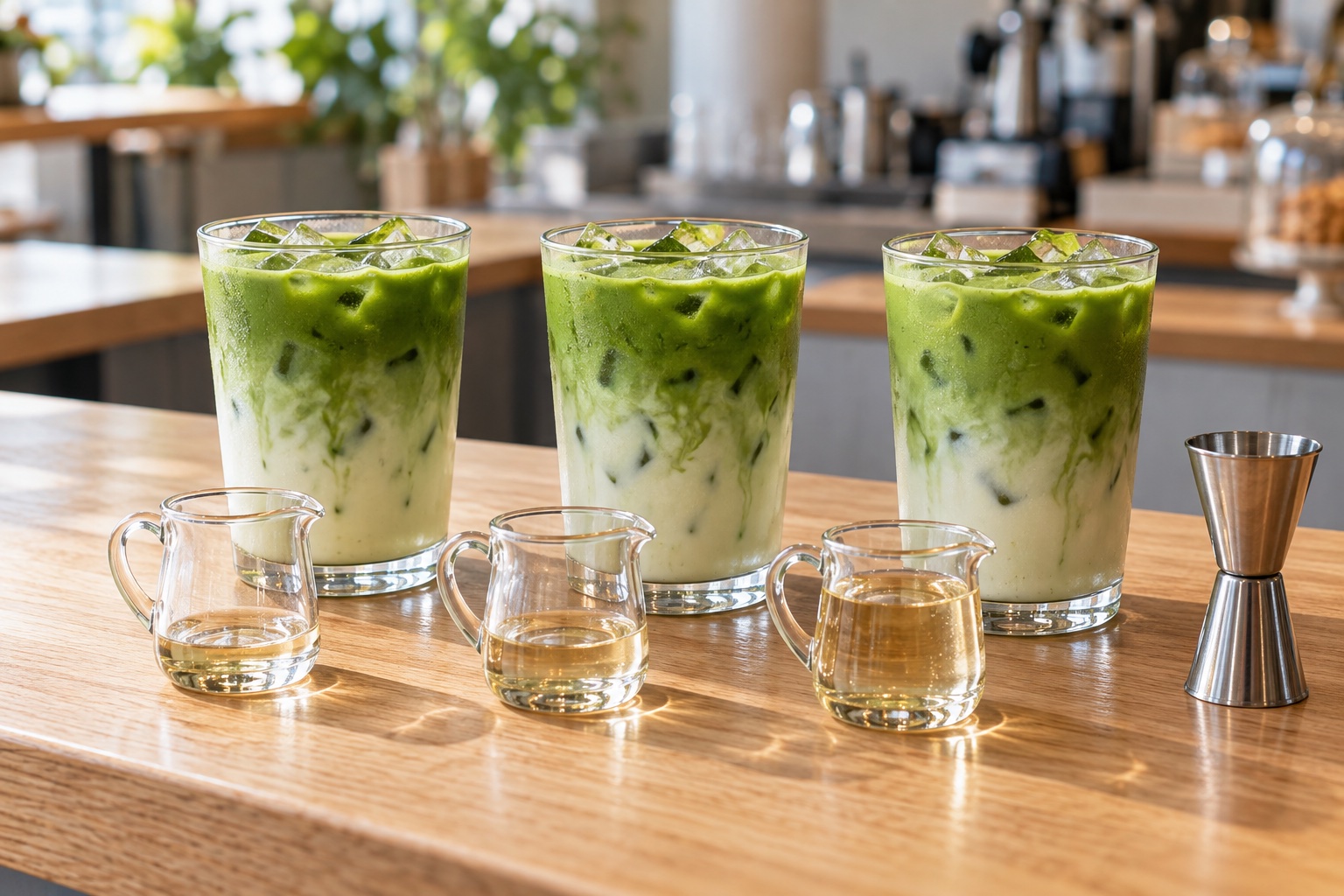
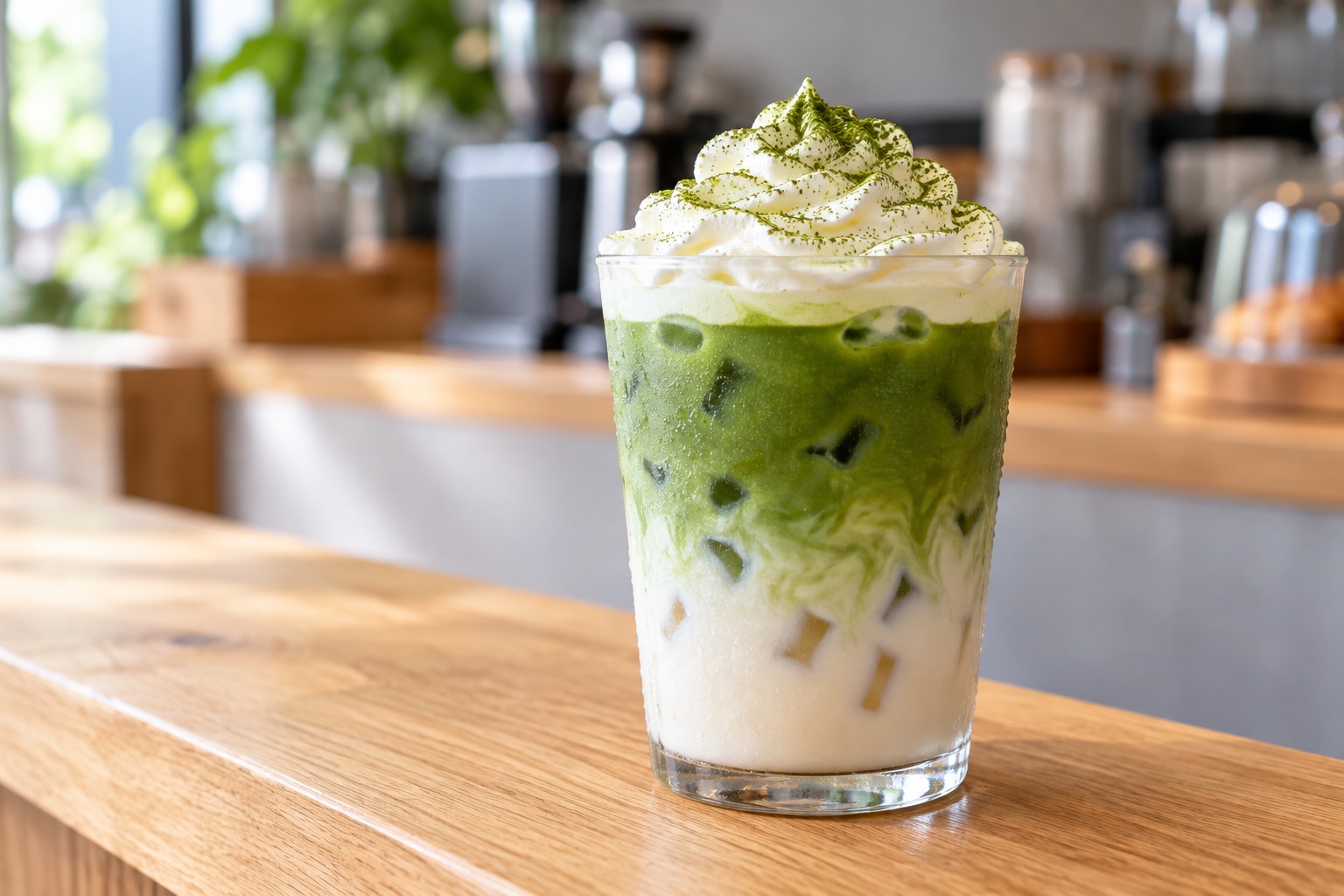
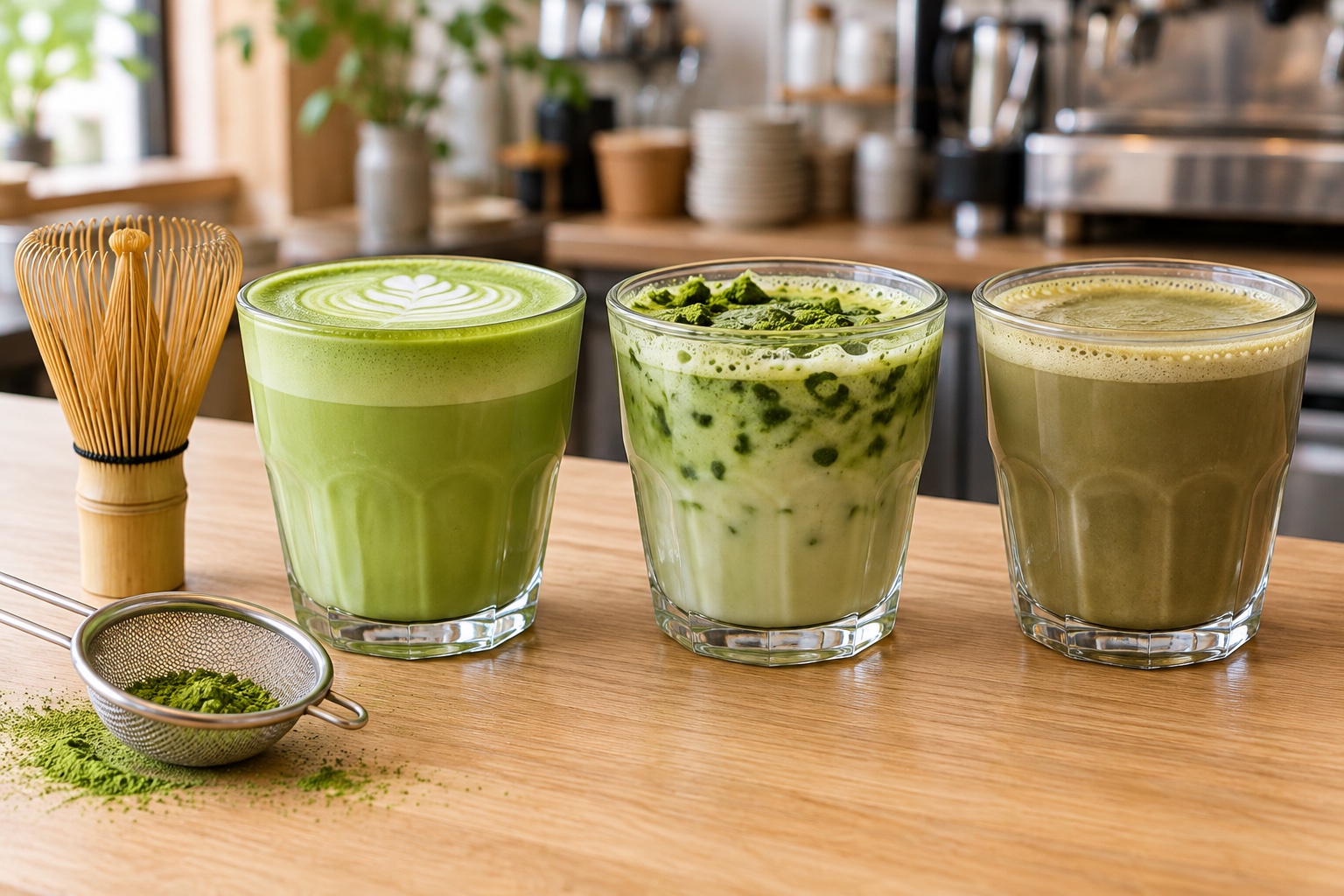
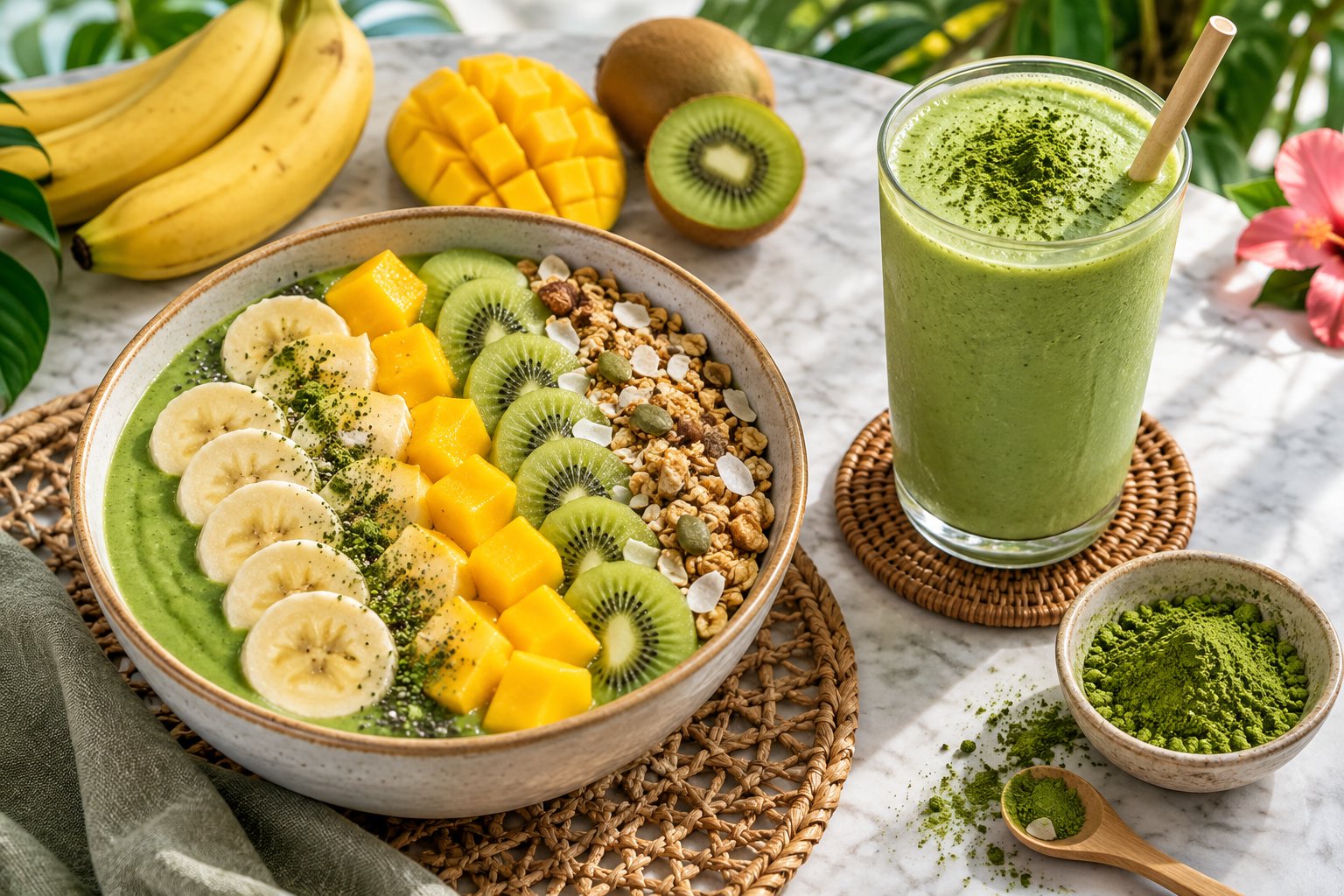
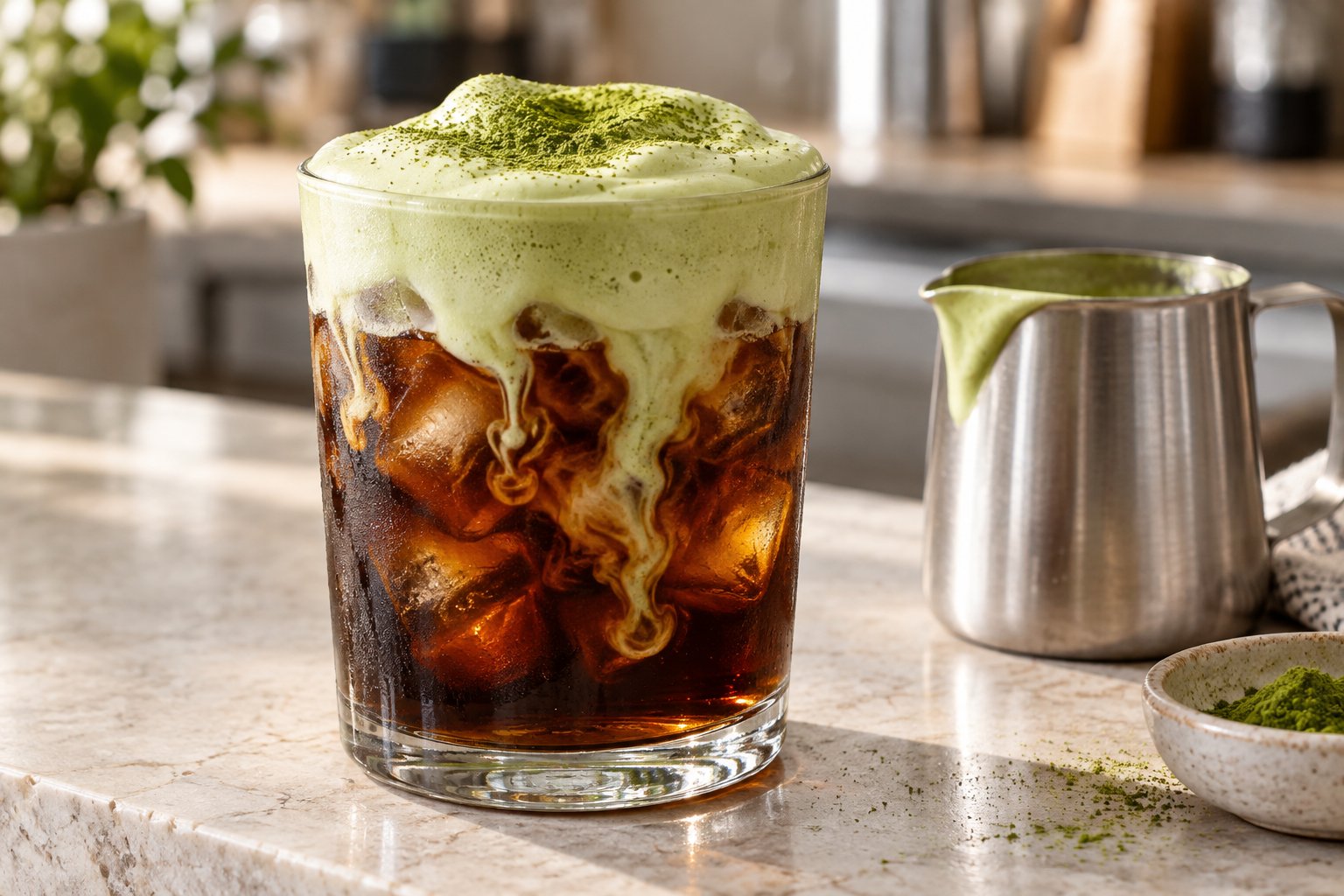
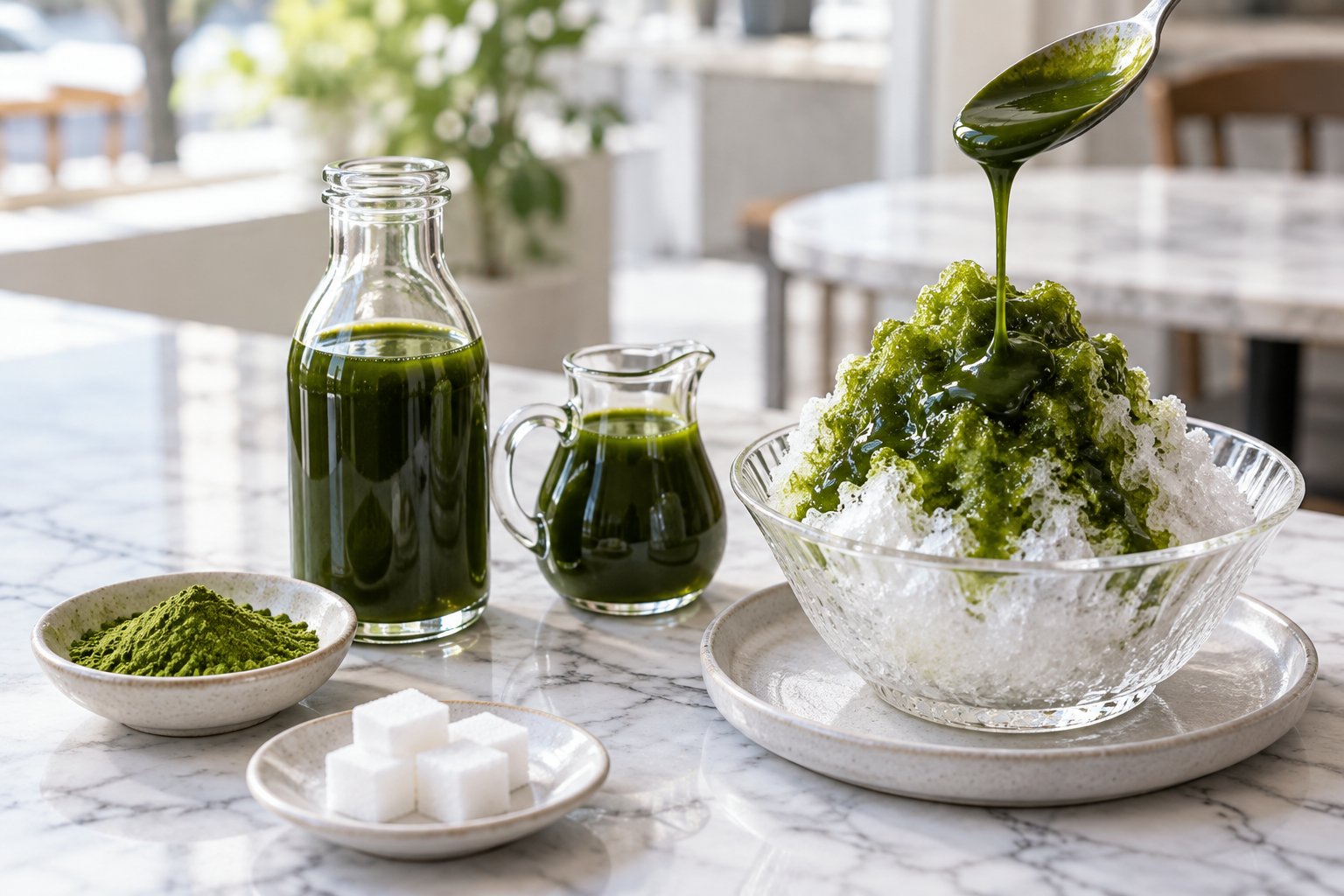
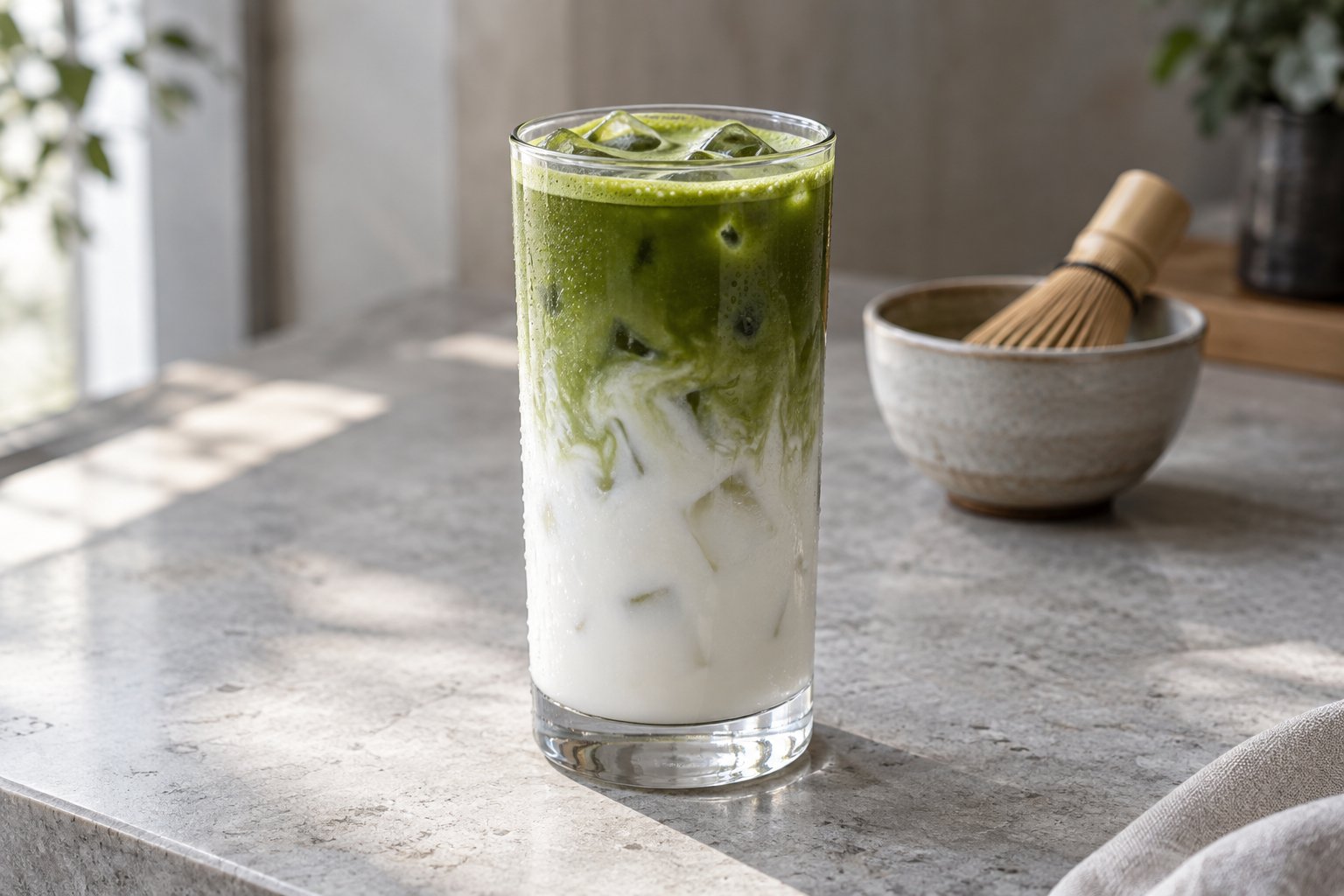
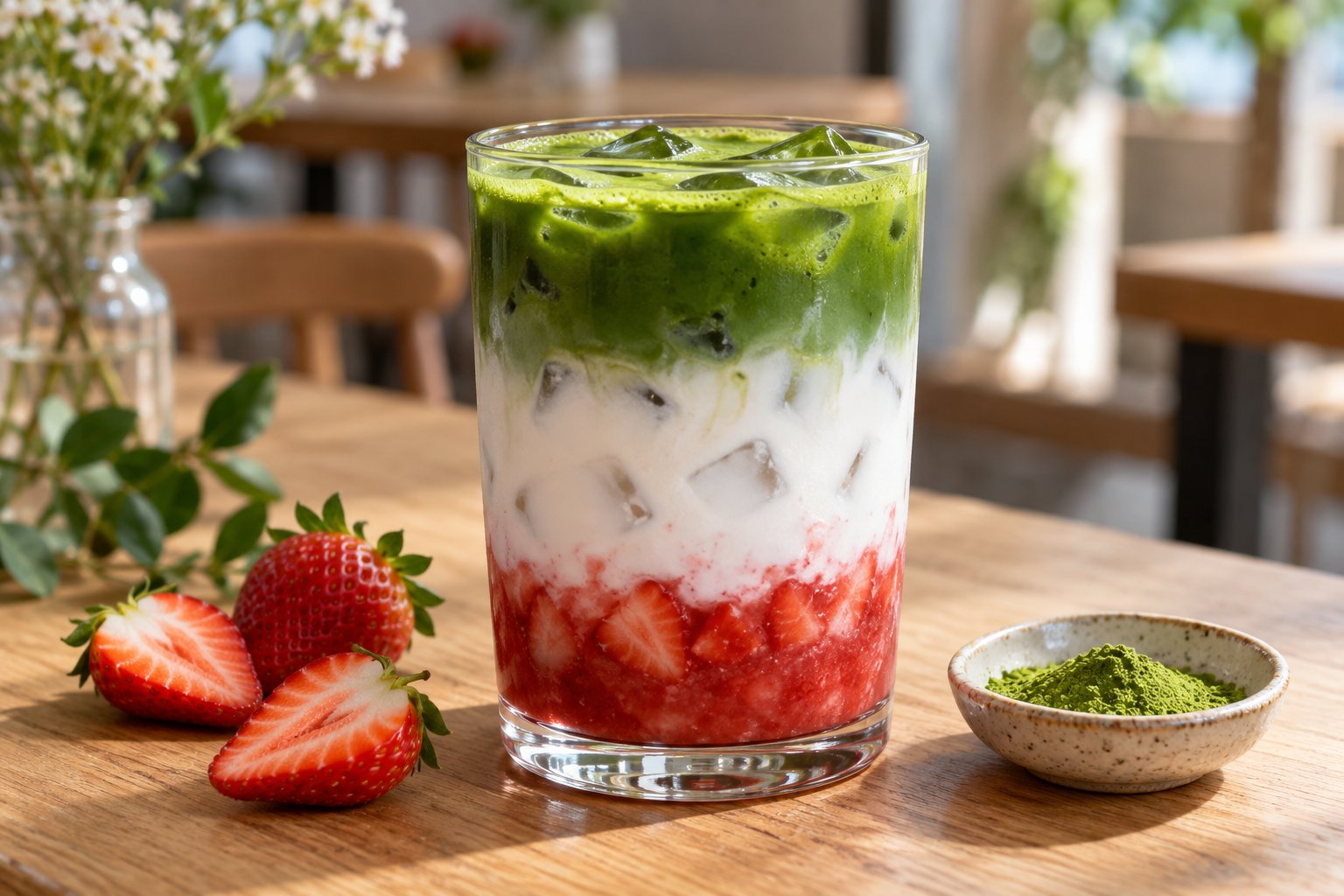
A matcha frappe is a cold drink of matcha, milk, sweetener and ice, blended so the ice is crushed fine and mixed in. Unlike an iced matcha latte, where the latte is poured over ice, the ice itself becomes part of the drink.
Frappe vs smoothie
Cambridge Dictionary defines a frappe as “a partly frozen drink or a drink made with a lot of ice, containing milk, fruit juice, or alcohol.” It also gives a second meaning: a cold coffee drink shaken with ice, originally from Greece. A smoothie is “a thick, cold drink made from fruit and often yogurt or ice cream, mixed together until smooth.”
Vitamix’s matcha smoothie gets its thickness from frozen bananas and oats and uses no ice. The matcha frappe recipes are all built on milk and ice.
Frappuccino is a Starbucks product name
Frappuccino® is a product name that Starbucks uses with the registered trademark symbol. The US Matcha Crème Frappuccino® is described as matcha, classic syrup, milk and ice, topped with sweetened whipped cream. On your own menu, use a general name such as “Matcha Frappe” or “Matcha Frappé.”
“มัทฉะปั่น” in Thailand
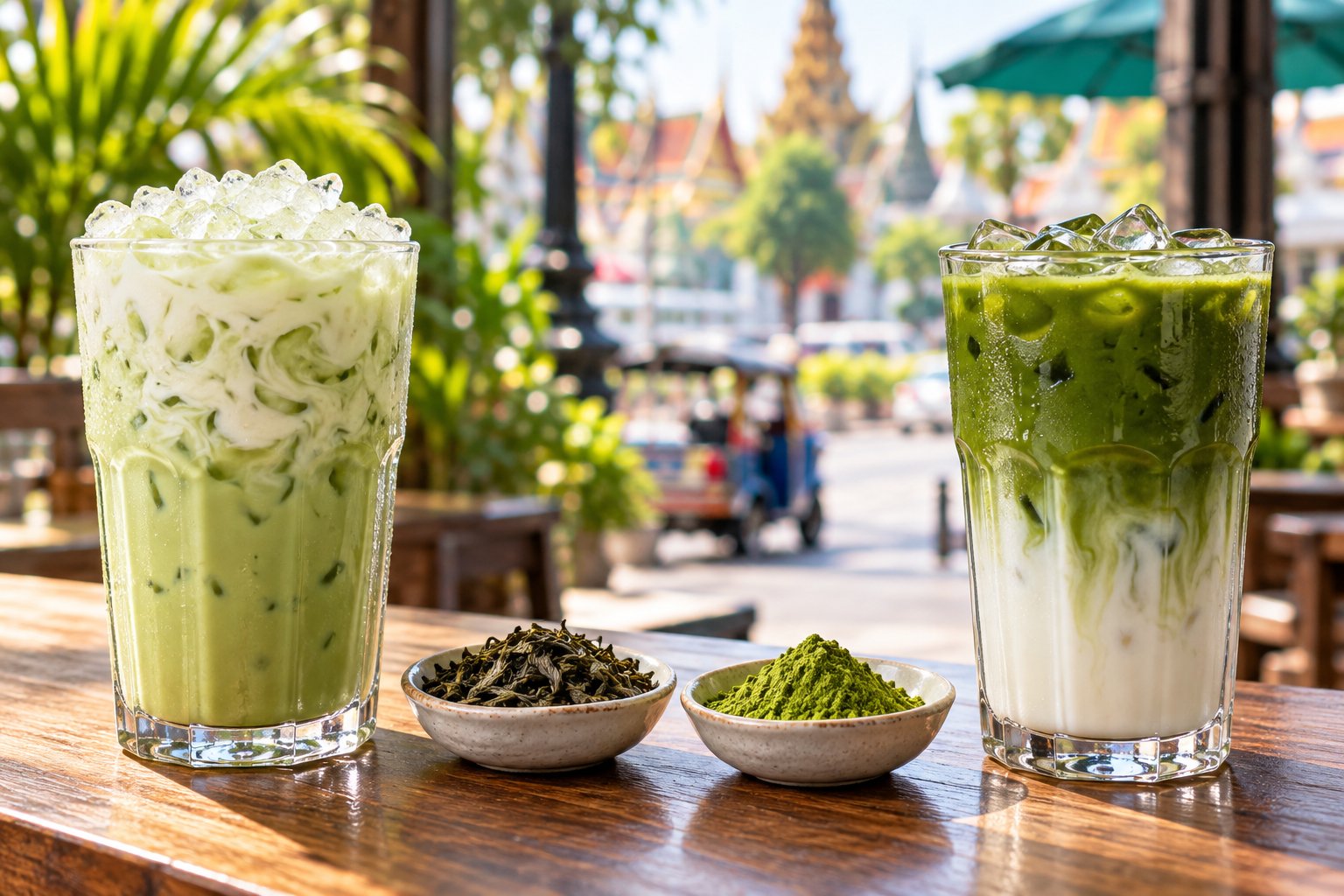
The Thai word “ปั่น” means to spin in a blender, and the green tea version is called “ชาเขียวปั่น.” It is made from the same ingredients as a matcha latte with ice added. Latte ratios are covered in how to make an iced matcha latte.
Official recipe ratios compared
In official recipes, ice ranges from about the same amount as the milk to twice as much, for 100 to 180ml of milk. Matcha goes in as one of three forms: matcha powder, a matcha concentrate (a concentrated syrup), or a sweetened matcha powder mixed with sugar and other ingredients.
7 official sources compared
| Source | Matcha | Milk and liquid | Ice | Sweetener and base |
|---|---|---|---|---|
| Starbucks (US) Matcha Crème Frappuccino® Grande (16 fl oz) | 3 scoops matcha powder (grams not published) | Milk | Ice | 3 pumps classic syrup, Crème Frappuccino syrup, whipped cream |
| Monin (US) “Matcha Frappé” (480mL glass) | 30mL matcha concentrate | 150mL milk | Enough to fill the glass | 1 scoop vanilla frappé powder, whipped cream |
| David Rio (US tea company) “Matcha Rio Frappé Blend” | 1⅓ Tbsp frappe matcha powder | 180ml milk | 240ml | Powder contains vanilla and salt |
| DaVinci Gourmet (syrup company, Asia Pacific) matcha and strawberry blended drink | 20g sweetened matcha powder (sugar is the first ingredient) dissolved in 10ml hot water and drizzled inside the glass | 100ml milk | 200g | 40g frappe powder, 30ml strawberry fruit mix |
| Yamamotoyama “Green Tea Frappé” (4 servings) | 4 packets sweetened iced matcha | 2 cups milk | 2 cups | Sweetener in the powder |
| ITO EN (US) “Iced Matcha Latte” (a latte made in a blender) | 1.5 tsp matcha | 1/4 cup water, 1 cup plant-based milk | 3 cubes (plus ice in the serving glass) | 1/2 to 1 tsp honey |
| Vitamix matcha smoothie (for comparison) | 1 Tbsp matcha | 2 cups soy milk | None | 3 frozen bananas, 4 dates, 1 cup oats |
David Rio’s ice is listed as “6oz (240ml)” in the ingredients and “8oz (240 ml)” in the method; the table uses the ml figure. DaVinci Gourmet’s “Matcha” is a powder the company calls a matcha beverage base, with ingredients listed as sugar, green tea powder, maltodextrin, salt, turmeric extract and colouring.
What the table shows
Ice relative to milk is about 1.3 times for David Rio, 2 times for DaVinci Gourmet (milk in ml, ice in g) and the same amount for Yamamotoyama. Monin uses enough ice to fill a 480mL glass. ITO EN uses only 3 ice cubes, and its drink is a frothed latte poured over ice.
For matcha, Monin uses a sweet concentrate, and David Rio, Yamamotoyama and DaVinci Gourmet use sweetened powders. Sweetened powders and syrups do not state how many grams of matcha they contain, so a café cannot work out the matcha strength or caffeine itself.
Setting your house standard (our view)
From here on, this is our view based on the comparison above. If you use plain matcha powder, start from the same grams of matcha as your iced matcha latte, and test three versions with 150 to 180ml of milk and ice between the same amount and twice as much. Write the final recipe on a recipe card with every ingredient (matcha, sweetener, milk and ice) in grams or ml.
Ice: how much and what kind
For blended drinks, small forms of ice are easier to measure and blend faster than large pieces. In an article for businesses, the blender maker Vitamix lists ice form and measuring among the causes of inconsistent drinks.
Large ice is hard to measure
According to Vitamix, large ice such as full cubes and large spheres is ideal for cooling soft drinks, but in blended drinks it leaves gaps of unfilled space in a measuring container and is hard to fill level, so employees sometimes overfill. It also takes longer to blend, which may affect speed of service. Vitamix recommends smaller forms of ice such as pearls, nuggets or flaked ice.
Source: Vitamix, “Four Causes of Beverage Inconsistency” https://www.vitamix.com/us/en_us/articles/four-causes-of-beverage-inconsistency
Use a container you can fill to the brim
In the same article, Vitamix says it is faster and more accurate to fill a small container to the brim than to fill a larger container up to a line. It also says colour-coded measuring containers help when training new employees. Monin’s method of filling the serving glass with ice and adding that ice uses the glass as the measuring cup.
Method and how to add the matcha
Load the blender with liquid first, then powders such as matcha, then ice. Some recipes dissolve the matcha in a little liquid before adding it.
Loading order
Vitamix’s article for businesses gives this order: liquids first, then powders such as protein or matcha so they can dissolve in the liquid, and finally frozen fruit and ice. Adding powder after the liquid stops it forming a plume when the blender starts and coating the sides and lid of the container.
Monin also pours the ingredients into the blender cup in the order listed, then adds the ice from the glass last and blends until smooth.
Dissolving the matcha first
Yamamotoyama mixes the matcha powder with 2 Tbsp of the milk to make a paste, then blends it on high with the rest of the milk and the ice. DaVinci Gourmet drizzles matcha dissolved in hot water inside the glass and does not add it to the blended mix.
How to dissolve matcha is covered in how to make a matcha latte and how to make an iced matcha latte.
Blending time
DaVinci Gourmet blends for 15 seconds, ITO EN for about 30 seconds on high, and the Vitamix smoothie for 40 to 50 seconds. Vitamix says that if you set the blender’s built-in programs to its buttons, staff only need to press one button, which cuts down variation. In your café, find the number of seconds at which no ice is left in your blender, and use the same program or time every time. If you switch to plant-based milk, see matcha latte with oat milk.
Bases and syrups: what sets texture and sweetness
Some chain and commercial frappes use a “base” to adjust sweetness and texture. Starbucks’ US Matcha Crème Frappuccino contains xanthan gum in its base syrup.
What is in the Starbucks base
On Starbucks’ US nutrition page, the ingredients are listed in this order: ice, milk, Crème Frappuccino syrup, whipped cream, classic syrup and matcha. The Crème Frappuccino syrup is made of sugar, water, natural flavor, salt, xanthan gum, potassium sorbate (a preservative) and citric acid. The matcha is listed only as “ground green tea,” and sweetness comes from the syrups.
Xanthan gum is a polysaccharide (a chain of sugars) made by microbial fermentation. The US food additive regulation (21 CFR 172.695) says it may be used as a stabilizer, emulsifier, thickener, suspending agent (keeps particles spread through a liquid), bodying agent or foam enhancer.
Frappe powders and matcha syrup
Monin adds a vanilla frappé powder and DaVinci Gourmet adds a milk-based frappe powder called “Frappease,” each measured per drink separately from the matcha. Frappease lists vegetable fat, sugar, milk solids and stabilisers among its ingredients. David Rio says its sweetened frappe matcha powder uses matcha from Kagoshima, adds vanilla and salt, and contains no creamer (a powdered milk substitute), so operators can choose their own milk.
Monin’s matcha concentrate has 12g of total sugars per 30mL. Ingredients and storage are compared in how to make matcha syrup.
Without a base (our view)
From here on, this is our view. The Monin, David Rio and Yamamotoyama recipes have no step for adding a thickener on its own. Start with the basic ingredients only, and try a frappe base if the drink separates quickly or feels coarse. Some bases also add sweetener or fat, so include the base in your sugar labelling and cost per cup.
Sweetness and sugar labelling
In a frappe, sugar comes from the base and whipped cream as well as the sweetener, so add up the sugar in one cup ingredient by ingredient. Singapore requires labelling for drinks made in outlets as well, and Thailand charges excise on beverages such as those filled in sealed containers.
Sugar in a chain’s cup
Starbucks’ US Matcha Crème Frappuccino Grande (16 fl oz, whole milk, with whipped cream) has 320kcal, 45g of sugars and 13g of fat (8g saturated). Starbucks Singapore makes it with sweetened matcha, low-fat milk and ice, and lists 70kcal, 8.1g of total sugar and 2.4g of saturated fat per 100mL. The Singapore page says its Nutri-Grade is based on the default preparation before ice is added.
Nutri-Grade in Singapore
According to Singapore’s Ministry of Health (MOH) and Health Promotion Board (HPB), from 30 December 2023 drinks made in outlets also came under “Nutri-Grade,” which grades drinks by sugar and saturated fat, and drinks graded C or D must show the mark next to their menu listing. Smaller businesses with revenue of not more than S$1 million that sell at fewer than 10 premises are, for now, not required to show it. Toppings that can be added to drinks, such as pearls, jellies, ice cream and whipped cream, must have their sugar content stated on menus and similar materials. The details are in how to make a strawberry matcha latte.
Thailand’s excise definition of a “beverage”
Thailand charges excise tax on “beverages” under its Excise Tax Act, with rates that include a part based on sugar content. According to an explainer from Thailand’s Excise Department (July 2022), a “beverage” in the tariff list is something that can be drunk as it is, contains no more than 0.5% alcohol, and is filled in a container and sealed. Excluded are beverages a producer makes specifically for its own retail sale that contain no carbon dioxide and are not chemically preserved, and beverages in the form of ice flakes.
| Item | Excise Department explainer, p.7 (translated) |
|---|---|
| “Beverage” | Normally drunk without mixing, no alcohol or no more than 0.5% alcohol, filled in a container and sealed |
| Excluded | Natural water or mineral water; distilled or filtered water for drinking without flavouring; beverages a producer makes specifically for its own retail sale, without carbon dioxide and not chemically preserved; plain milk and other milk, flavoured or not, as set under food law; beverages in the form of ice flakes; others set by ministerial notification |
| Also covered | Concentrates made only for machines that make ready-to-drink beverages for sale to consumers at the point of retail |
Source: Excise Department, Thailand, “ความรู้เกี่ยวกับภาษีสรรพสามิตประเภทสินค้าเครื่องดื่ม” https://www.excise.go.th/cs/groups/public/documents/document/dwnt/ndyx/~edisp/uatucm461624.pdf
The same explainer also lists concentrates for machines that make drinks at the point of retail (green tea concentrate is among its examples) and sugar-containing powders or concentrates that are dissolved in water to drink (such as 3 in 1 tea and coffee). Dietary supplements and powdered milk products under food law are excluded. The explainer does not say directly whether a frappe made in a café, or the sweet powders and bases a café buys, are taxed. Check with the Excise Department whether your products are covered.
Caffeine and which grade to use
Matcha has about 32mg of caffeine per gram, so the caffeine in one cup depends on the grams of matcha used. Milk, sweetener and ice dilute the taste, so you can choose from latte grades.
Caffeine per cup
Japan’s Standard Tables of Food Composition, published by the Ministry of Education, Culture, Sports, Science and Technology (MEXT), list matcha at 3.2g of caffeine per 100g, which gives 64mg for 2g of matcha and 96mg for 3g. Adding more ice or milk does not change this. Starbucks lists a Grande US Matcha Crème Frappuccino at about 65mg. If you use a sweetened powder or concentrate, ask the maker for its caffeine figure. Comparisons with other drinks are in matcha caffeine.
Which grade (our view)
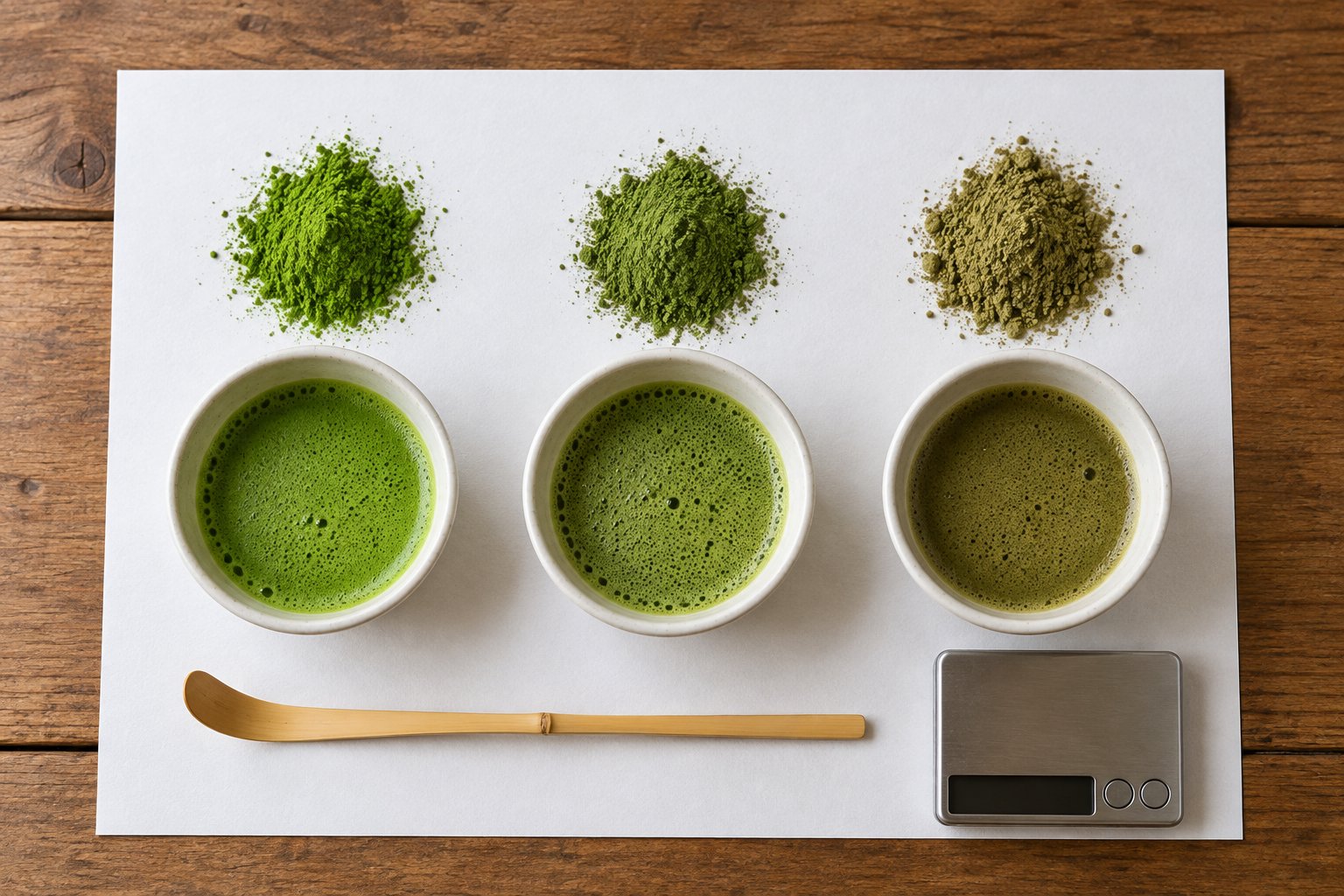
From here on, this is our view. A frappe is drunk cold with milk, sweetener and ice, so you do not need a high grade meant for drinking straight; a latte grade gives matcha colour and aroma. Because the ice dilutes it, adding a little more matcha is an easier way to adjust the taste than moving up a grade. Grade differences are on our grades page, and choosing matcha for lattes is covered in matcha for café lattes.
Cost per cup and putting it on the menu
Matcha cost per cup = grams of matcha used × purchase price per kg ÷ 1,000. Add milk, sweetener, base, ice and cup costs to get the ingredient cost.
The cost formula
To the matcha cost, add milk, syrup and frappe powder, each as “amount used × price per ml or g,” then ice (if bought, price per kg × grams used), toppings, and the cup, lid and wide straw. If you use a sweetened matcha powder or concentrate, work out matcha and sweetener together as “amount used per cup × price per g or ml.” How matcha prices are set is covered in how matcha prices are set.
Toppings
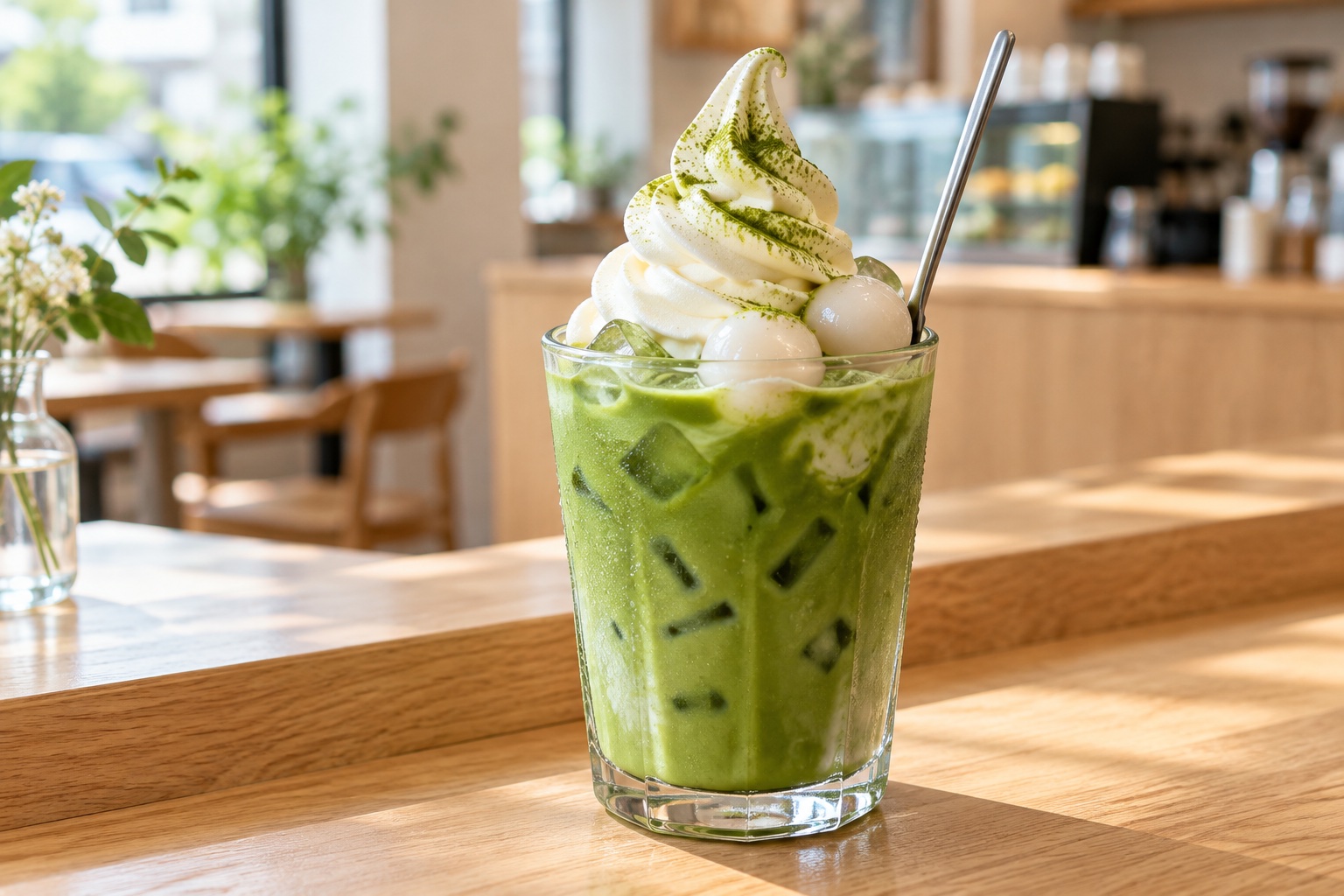
Monin and Starbucks top their drinks with whipped cream. Putting matcha cold foam on top instead adds matcha colour to the top layer as well. If the topping contains matcha, add the matcha in the frappe and the topping together to work out caffeine and cost per cup.
Variations and menu names (our view)
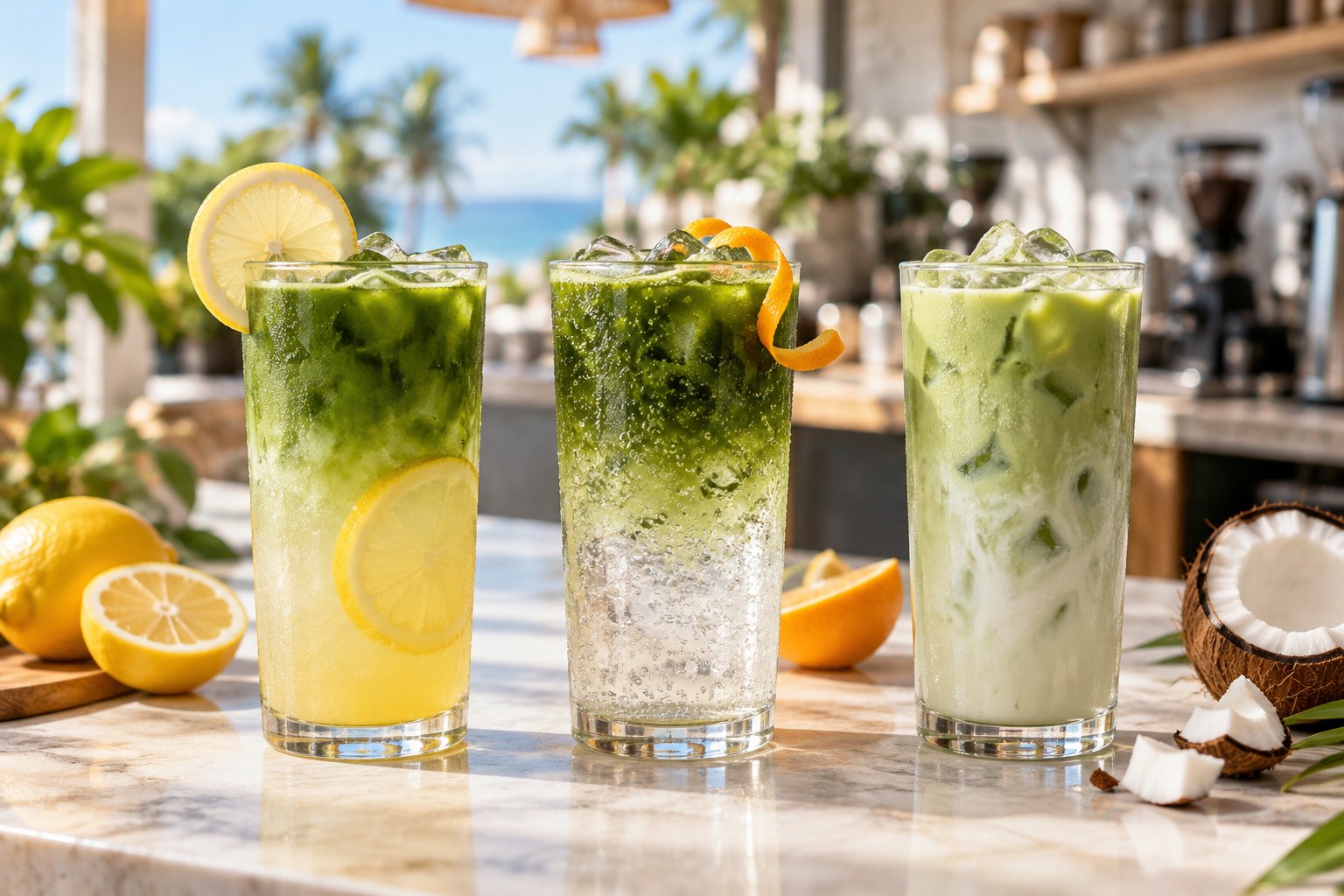
From here on, this is our view. Pairing it with fruit, like DaVinci Gourmet’s strawberry, makes a seasonal menu item. Other cold matcha drinks are in matcha lemonade, tonic and soda. On the menu, use names such as “抹茶フラッペ,” “Matcha Frappé” or “มัทฉะปั่น,” and also state whether it comes with whipped cream and whether plant-based milk is available.
Sources
- Cambridge Dictionary, “frappe” https://dictionary.cambridge.org/dictionary/english/frappe
- Cambridge Dictionary, “smoothie” https://dictionary.cambridge.org/dictionary/english/smoothie
- Starbucks, “Matcha Crème Frappuccino® Blended Beverage” https://www.starbucks.com/menu/product/439/iced
- Starbucks, “Matcha Crème Frappuccino® Blended Beverage: Nutrition” https://www.starbucks.com/menu/product/439/iced/nutrition
- Starbucks Singapore, “Matcha Crème Frappuccino®” https://www.starbucks.com.sg/menu/beverages/frappuccino-blended-beverages/matcha-creme-frappuccino
- Monin US, “Matcha Frappé” https://monin.us/products/matcha-frappe
- Monin US, “Matcha Green Tea Concentrate” https://monin.us/products/matcha-green-tea-concentrate
- David Rio, “Matcha Rio Frappé Blend” https://www.davidrio.com/recipes-2/matcha-frappe
- David Rio, “David Rio San Francisco Unveils “Matcha Rio”” https://www.davidrio.com/post/press-release
- DaVinci Gourmet, “Matcha Strawberry Shortcake Smoothie” https://apmea.davincigourmet.com/recipes/matcha-strawberry-shortcake-smoothie-davinci-gourmet
- DaVinci Gourmet, “Matcha” https://apmea.davincigourmet.com/products/matcha/
- DaVinci Gourmet, “Frappease Powder” https://apmea.davincigourmet.com/products/frappease-powder/
- Yamamotoyama, “Green Tea Frappé” https://yamamotoyama.com/blogs/recipes/green-tea-frappe
- ITO EN, “Iced Matcha Latte” https://itoen.com/blogs/recipes/iced-matcha-latte
- Vitamix, “Comment préparer un smoothie crémeux au matcha et à l’avoine” (in French) https://www.vitamix.com/ca/fr_ca/articles/how-to-make-a-creamy-matcha-oat-smoothie
- Vitamix, “Four Causes of Beverage Inconsistency” https://www.vitamix.com/us/en_us/articles/four-causes-of-beverage-inconsistency
- U.S. Code of Federal Regulations, “21 CFR 172.695 Xanthan gum” https://www.govinfo.gov/content/pkg/CFR-2024-title21-vol3/xml/CFR-2024-title21-vol3-sec172-695.xml
- Ministry of Health Singapore, “Implementation of Nutri-Grade requirements for freshly prepared beverages from 30 December 2023” https://www.moh.gov.sg/newsroom/implementation-of-nutri-grade-requirements-for-freshly-prepared-beverages-from-30-december-2023/
- Health Promotion Board Singapore, “Measures for Nutri-Grade” https://hpb.gov.sg/healthy-living/food-beverage/nutri-grade
- Excise Department, Thailand, “ความรู้เกี่ยวกับภาษีสรรพสามิตประเภทสินค้าเครื่องดื่ม และการใช้สิทธิเสียภาษีในอัตราตามมูลค่ากรณีต่างๆ” (21 July 2022, in Thai) https://www.excise.go.th/cs/groups/public/documents/document/dwnt/ndyx/~edisp/uatucm461624.pdf
- Ministry of Education, Culture, Sports, Science and Technology, “日本食品標準成分表(八訂)増補2023年” (Standard Tables of Food Composition in Japan 2020, Eighth Revised Edition, Supplement 2023, in Japanese) https://www.mext.go.jp/a_menu/syokuhinseibun/mext_00001.html