
 Reviewed by: Takahiro Sugiyama (CEO, meguri Inc.)
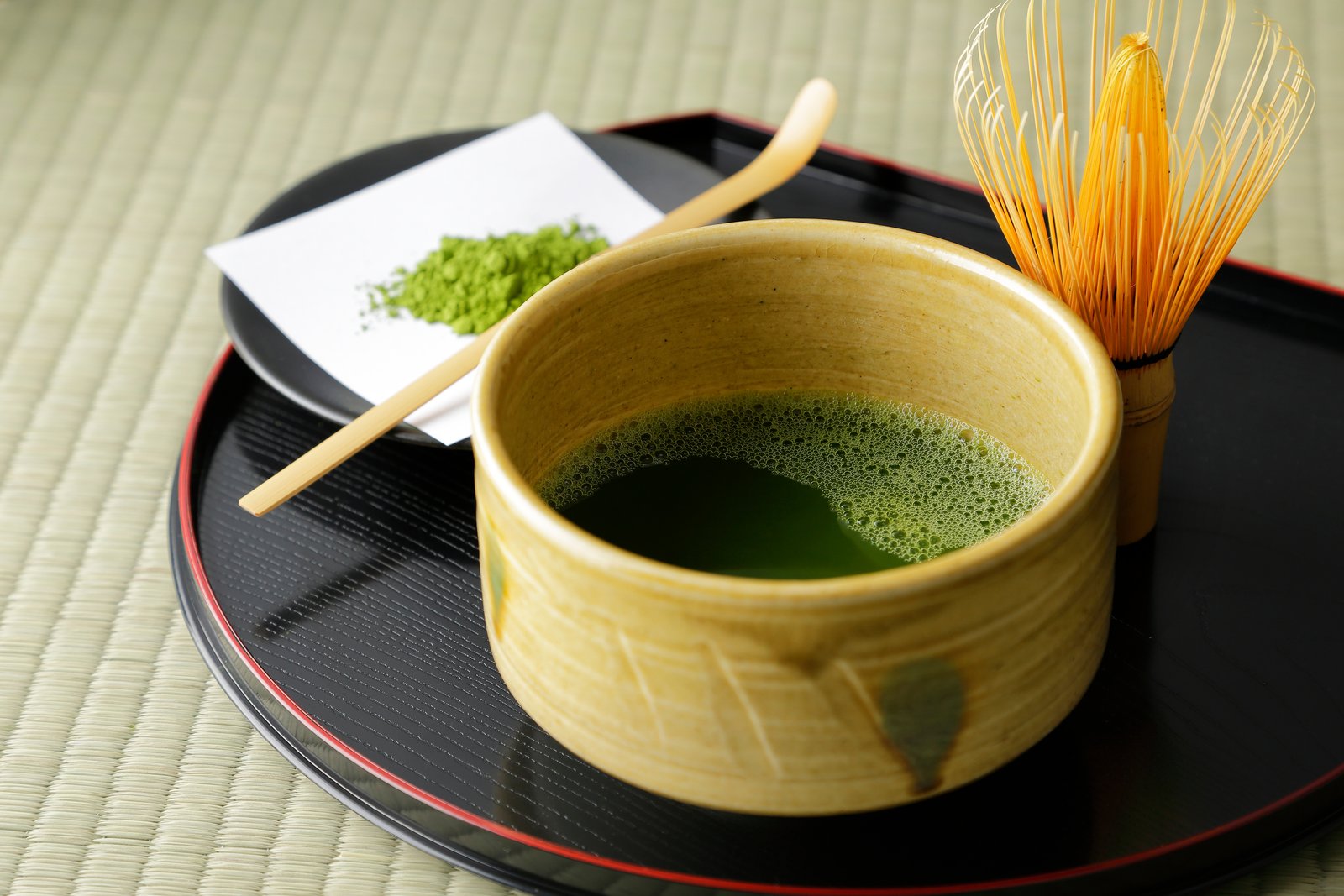
“Uji matcha” is a common sight on café menus and online shops overseas. Uji is known as a famous matcha region, but what Uji matcha refers to is set by a Japanese industry body and by a registration with the Japan Patent Office. Knowing what the name means, and where the raw material is actually made, makes it easier to check what your supplier tells you.
What is Uji matcha?
Uji matcha is tea grown in the four prefectures of Kyoto, Nara, Shiga and Mie, finished inside Kyoto Prefecture by a Kyoto-based company, and made into matcha. It does not mean matcha grown in Uji city. It is registered with the Japan Patent Office as a regional collective trademark (a trademark that combines the name of a region with the name of a product).
The definition registered with the Japan Patent Office
The regional collective trademark “Uji matcha” (registration number 6226519, held by the Kyoto Prefecture Tea Cooperative) covers matcha that meets the following conditions:
- It uses tea grown in the four prefectures of Kyoto, Nara, Shiga and Mie
- It is finished by a Kyoto-based company, inside Kyoto Prefecture, using methods that originate in the Uji area
- The finished tea is crushed and ground with a mill into matcha
| Item | Registered content (translated) |
|---|---|
| Trademark | 宇治抹茶 (Uji matcha), registration number 6226519 |
| Designated goods | Matcha made by crushing and mill-grinding tea from the four prefectures of Kyoto, Nara, Shiga and Mie that has been finished by a company in Kyoto Prefecture, inside the prefecture, using methods that originate in the Uji area |
Source: Japan Patent Office, “商標登録第6226519号 宇治抹茶” (Trademark registration No. 6226519, Uji matcha) https://www.jpo.go.jp/system/trademark/gaiyo/chidan/shoukai/ichiran/6226519.html
The definition of Uji tea was set in 2004
The definition of “Uji tea,” on which Uji matcha is based, was set by the Kyoto Prefecture Tea Industry Council in 2004. It followed a revision of the green tea labelling standard by the Japan Tea Central Public Interest Incorporated Association in the same year. Under the definition, Uji tea is tea grown in the four prefectures of Kyoto, Nara, Shiga and Mie and finished inside Kyoto Prefecture by a Kyoto-based company, and priority is given to tea from Kyoto Prefecture. The definition does not set a minimum percentage of Kyoto tea.
Uji tea and Uji matcha are not registered as geographical indications (GI, a system in which the government protects the link between a product’s origin and its quality). In the list of registered products published by MAFF (Japan’s Ministry of Agriculture, Forestry and Fisheries) as of 10 July 2026, the tea GIs are “Yame Dento Hon Gyokuro,” “Fukamushi Kikugawa Cha” and “Nihoncha” (Japanese tea), which was registered in July 2026.
Uji tea, Uji matcha and Uji tencha: the differences
Several trademarks carry the Uji name, and “Uji tencha” has the strictest conditions. Uji matcha can use tea from four prefectures, while Uji tencha is limited to tea gardens in Uji city and Joyo city.
The three trademarks compared
| Trademark | Holder | Origin of raw material | Main conditions |
|---|---|---|---|
| Uji tea | Kyoto Prefecture Tea Cooperative | Kyoto, Nara, Shiga, Mie | Green tea finished inside Kyoto Prefecture by a Kyoto-based company, using methods that originate in the Uji area |
| Uji matcha | Kyoto Prefecture Tea Cooperative | Kyoto, Nara, Shiga, Mie | Matcha made by crushing tea finished under the conditions above and grinding it with a mill |
| Uji tencha | Uji Tencha Production Promotion Association (NPO) | Uji city, Joyo city | Tencha from tea gardens shaded with a shelf (direct covering excluded), shaded for 30 days or more with hon-zu shading (reed screens topped with rice straw) or a double layer of kanreisha cloth (a synthetic shade cloth), using ichibancha (the first tea picked each year) hand-picked from tea plants left to grow naturally without trimming, processed in tencha furnaces in the area, and registered in the association’s database |
The Kyoto Prefecture Tea Cooperative also holds the trademarks “Uji gyokuro,” “Uji sencha” and “Uji hojicha.”
What is tencha?
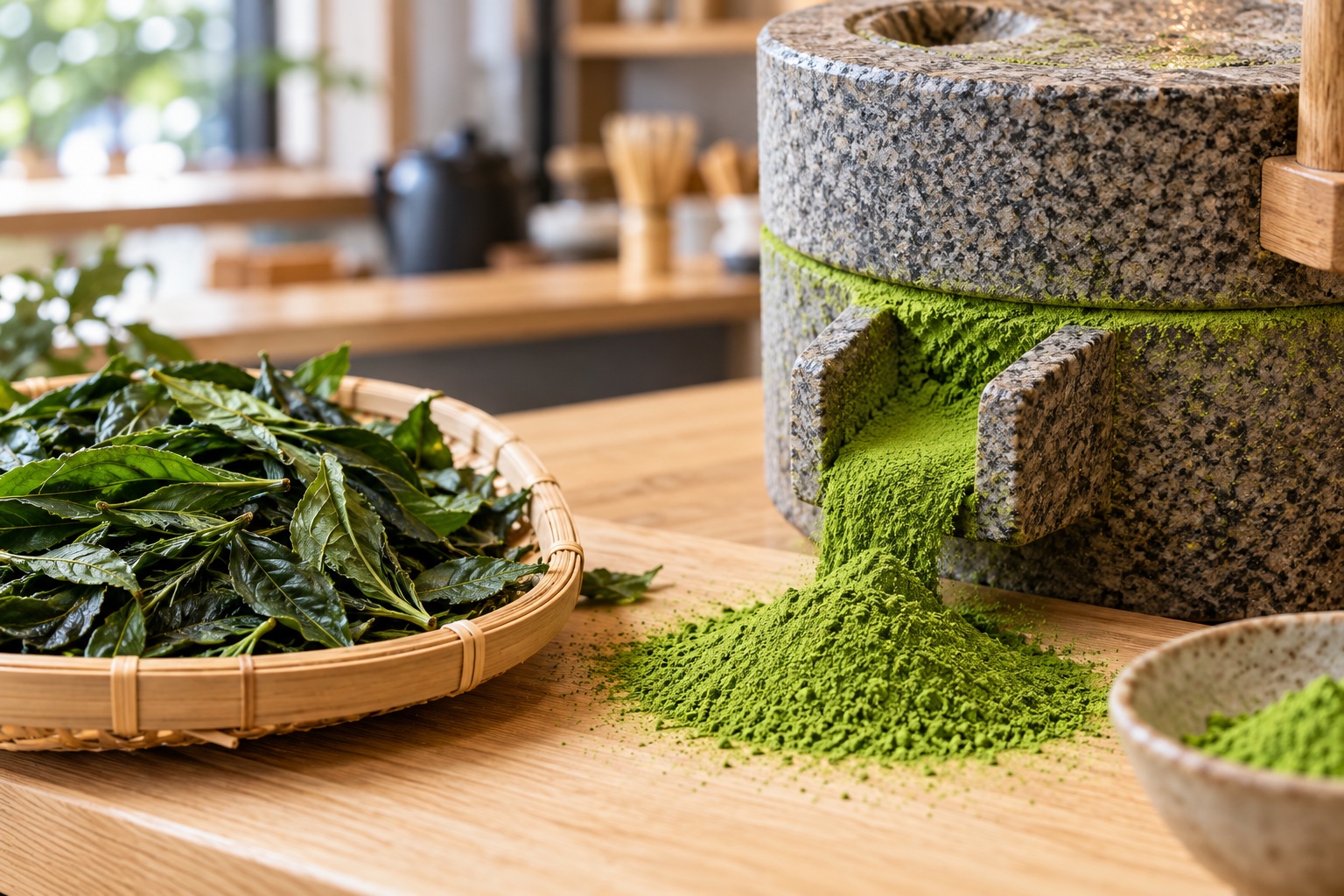
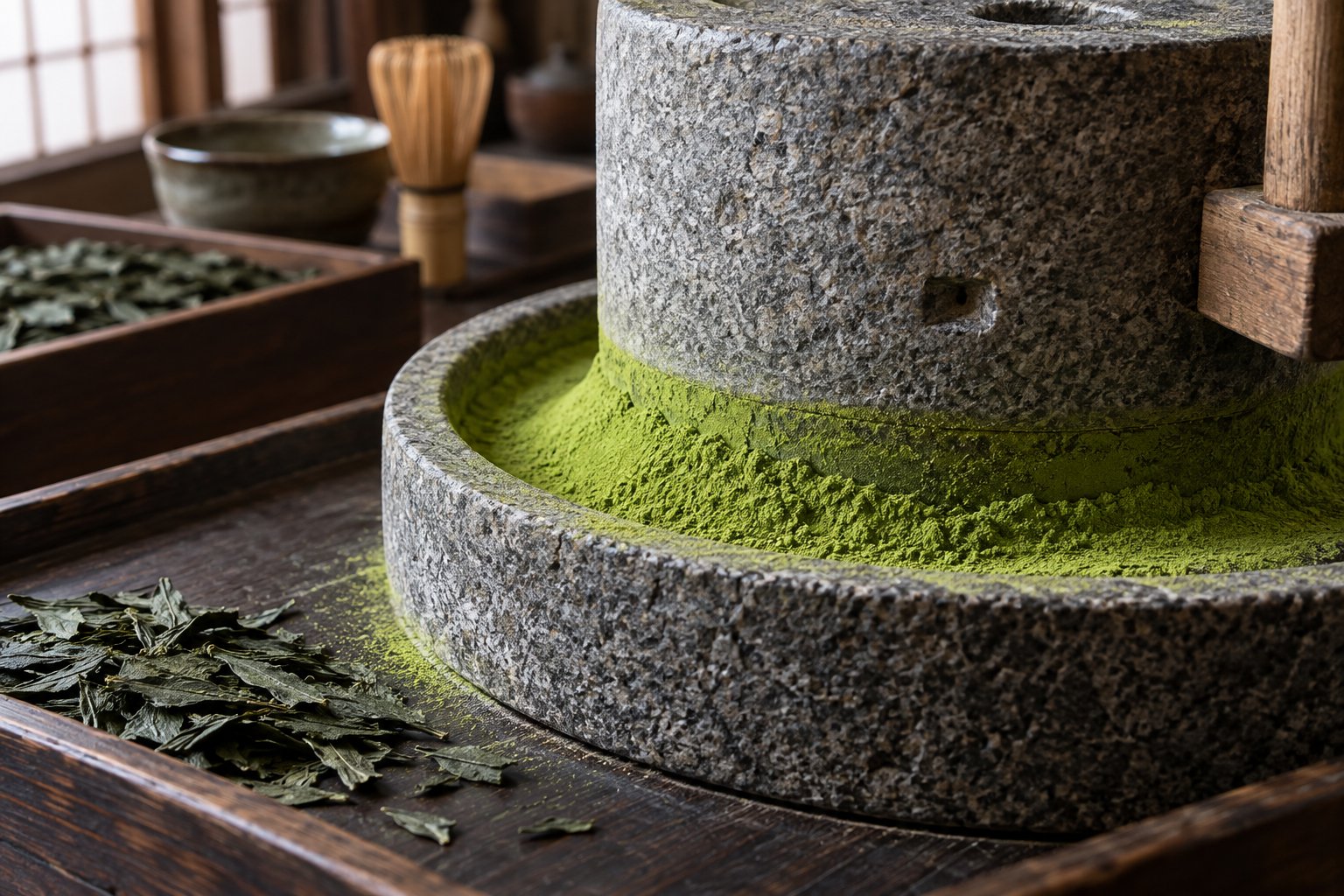
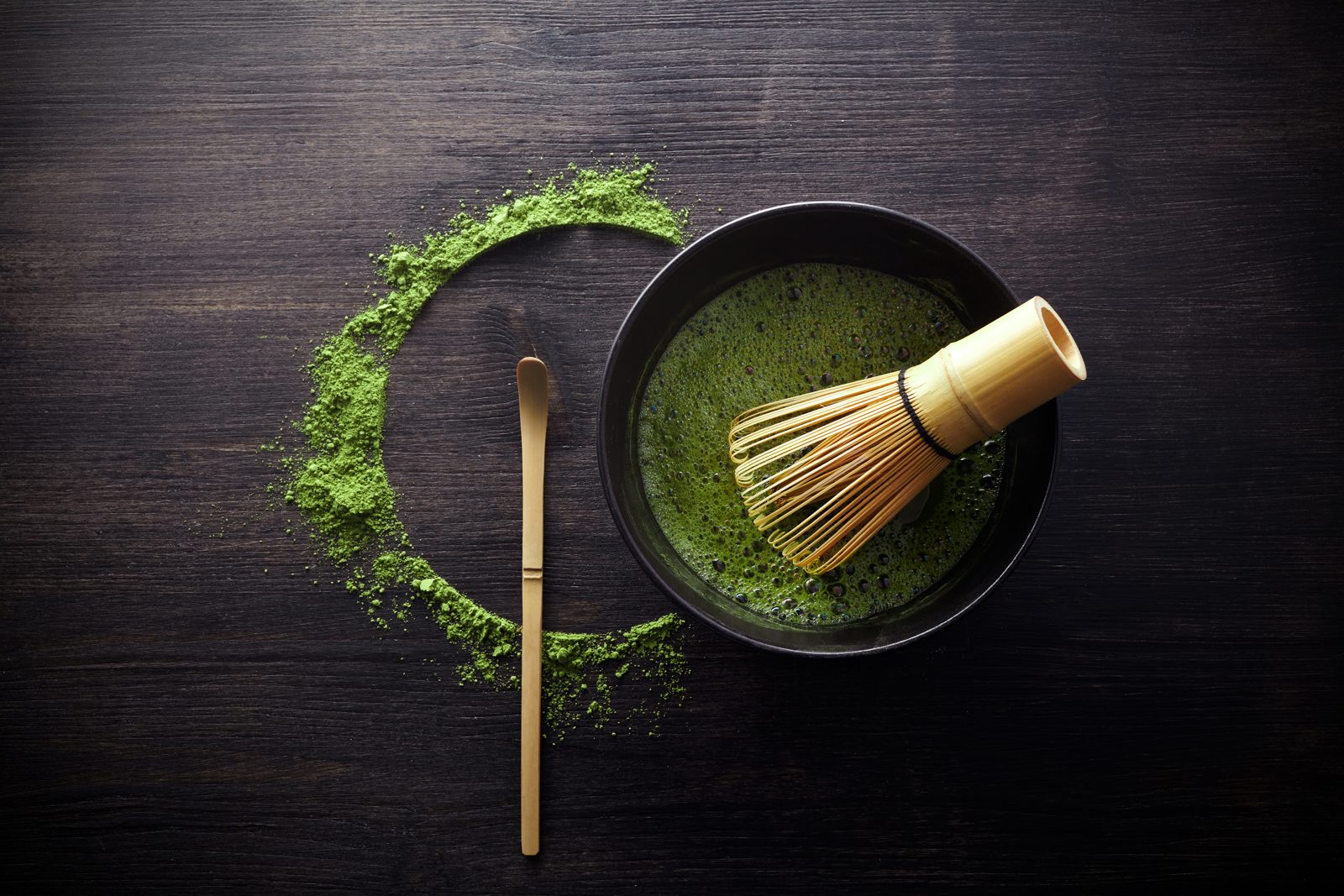
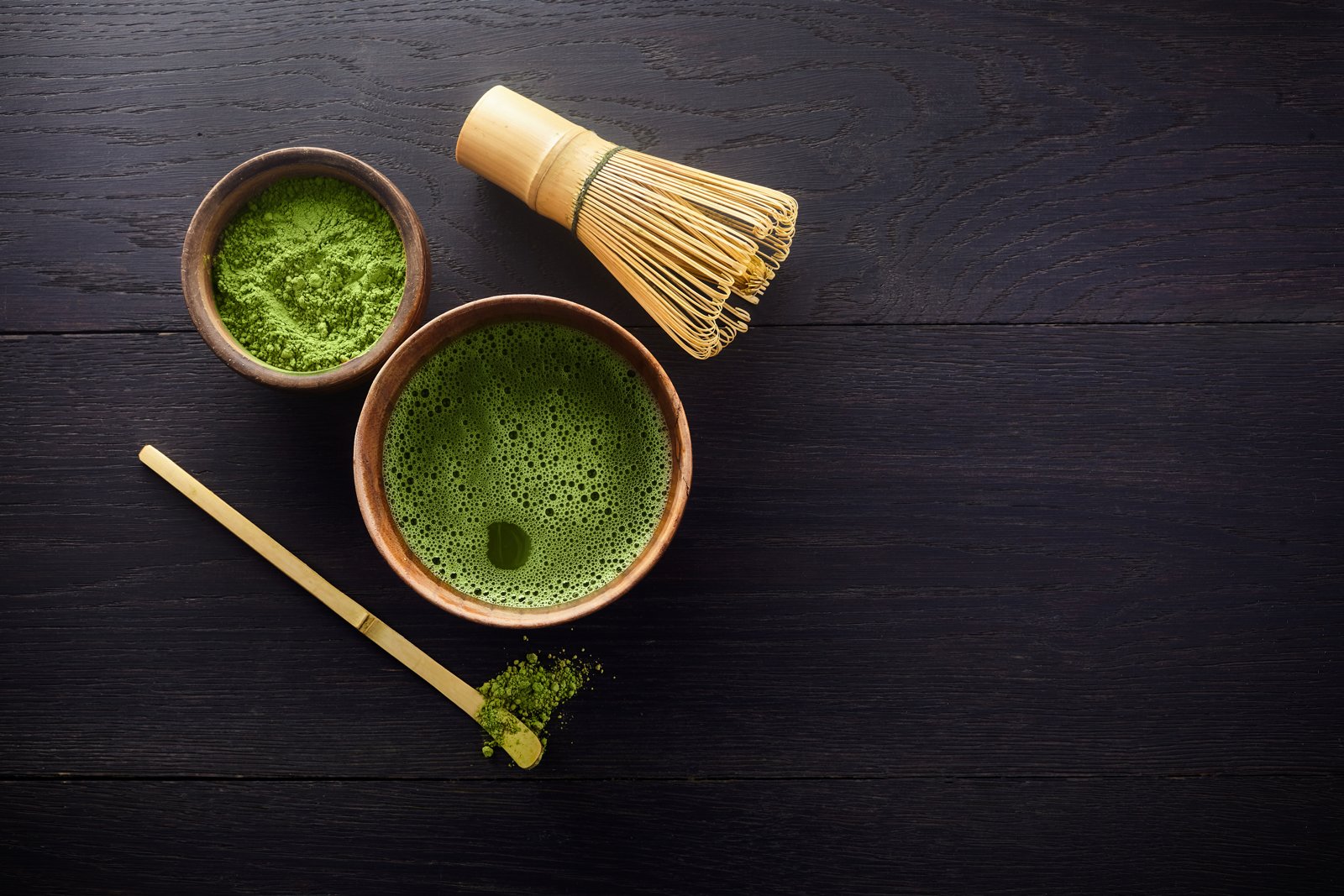
Tencha is the tea leaf that matcha is made from. According to the Kyoto Prefecture Tea Industry Council, tencha is made by steaming new shoots grown under covers that block sunlight, then drying them without rolling. Grinding tencha into powder with a stone mill or similar makes matcha. Uji tencha is a name given only to tencha that is grown in Uji city or Joyo city and meets the conditions above.
Where the raw material for Uji matcha is made
About half of the tencha in Kyoto Prefecture is made in Wazuka town, and Uji city makes about 3%. The raw material for Uji matcha comes mainly from towns and villages in the hills around Uji city.
Tencha by municipality in Kyoto Prefecture
According to Kyoto Prefecture’s statistics, the prefecture produced 973.8 tonnes of tencha in 2025 (excluding autumn tencha, which is made in autumn). The top municipalities were:
| Municipality | Tencha in 2025 | Share of prefecture |
|---|---|---|
| Wazuka town | 476.7 tonnes | About 49% |
| Minamiyamashiro village | 171.5 tonnes | About 18% |
| Ujitawara town | 156.1 tonnes | About 16% |
| Kizugawa city | 60.2 tonnes | About 6% |
| Uji city | 31.6 tonnes | About 3% |
Shares are calculated from the prefecture total of 973.8 tonnes.
Source: Kyoto Prefecture, “参考資料(令和7年茶生産実績)” (Reference material, 2025 tea production results) https://www.pref.kyoto.jp/nosan/documents/r7chachosa2.pdf
Tea from outside Kyoto can also become Uji matcha
By definition, tea grown in Nara, Shiga and Mie can also become Uji tea or Uji matcha if it is finished inside Kyoto Prefecture by a Kyoto-based company. We could not find statistics showing how much tea from each prefecture is used.
Tencha production by region
Kagoshima Prefecture is first in Japan for production of matcha raw material, and Kyoto Prefecture is second. According to Kyoto Prefecture, Kyoto’s tencha production grew ahead of the rest of the country, but Kagoshima rapidly switched from sencha to tencha and has been first in Japan since 2020.
Tencha by prefecture (2025 harvest)
According to the National Federation of Tea Producers’ Associations, Japan produced 6,278 tonnes of tencha in 2025.
| Prefecture | Tencha | Share of Japan |
|---|---|---|
| Kagoshima | 2,670 tonnes | About 43% |
| Kyoto | 989 tonnes | About 16% |
| Shizuoka | 875 tonnes | About 14% |
| Aichi (Nishio and others) | 463 tonnes | About 7% |
| Mie | 398 tonnes | About 6% |
| Miyazaki | 304 tonnes | About 5% |
| Fukuoka (Yame and others) | 280 tonnes | About 4% |
Shares are calculated from the national total. Kyoto’s 989 tonnes is the figure from the National Federation of Tea Producers’ Associations and comes from a different source than Kyoto Prefecture’s statistics above (973.8 tonnes).
Region names and volume
Uji has a long history as a matcha region and its name is well known, but by volume Kagoshima produces about 2.7 times as much as Kyoto. The name Uji matcha shows where the tea came from and where it was finished, not how much is made.
How Uji tencha is grown
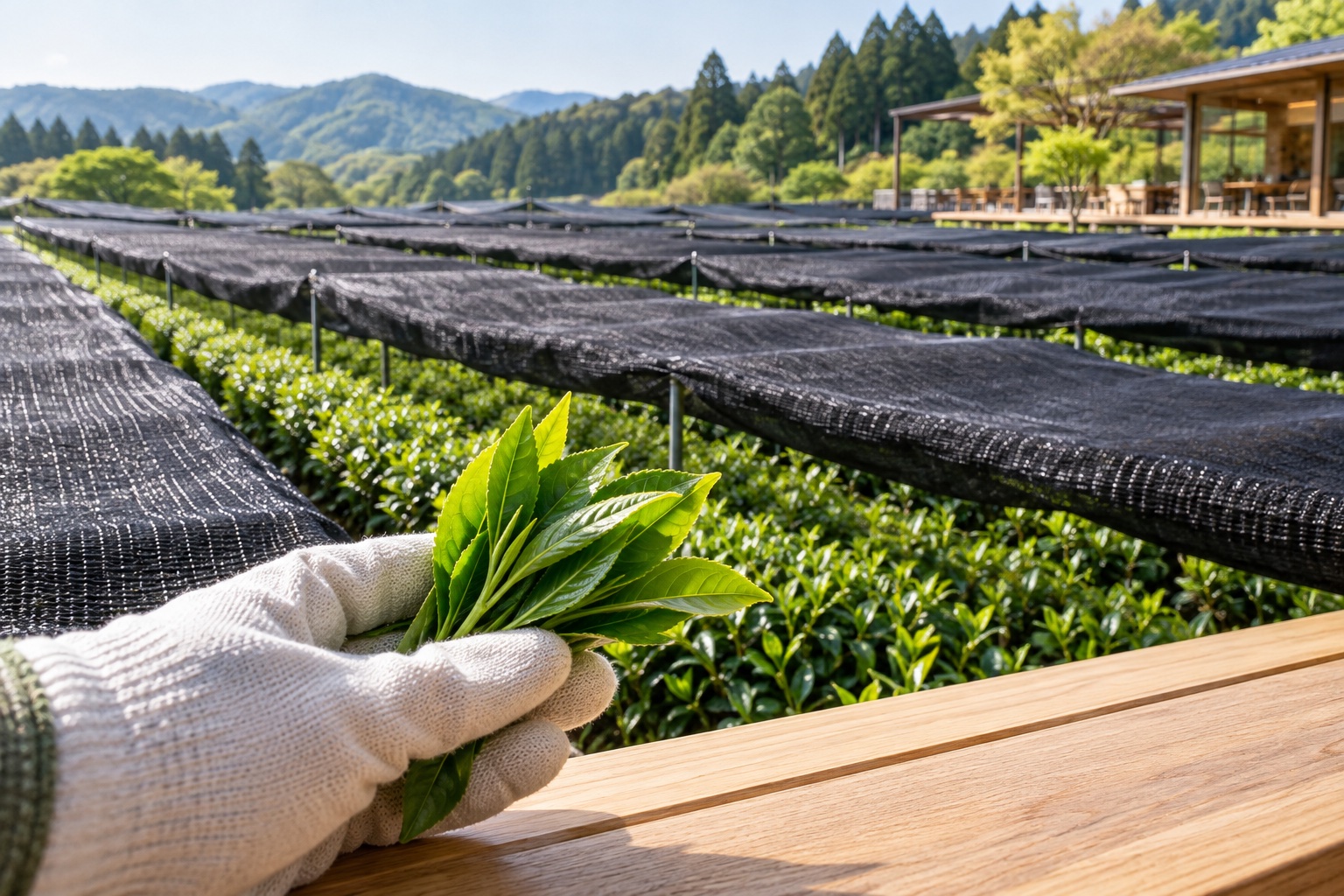
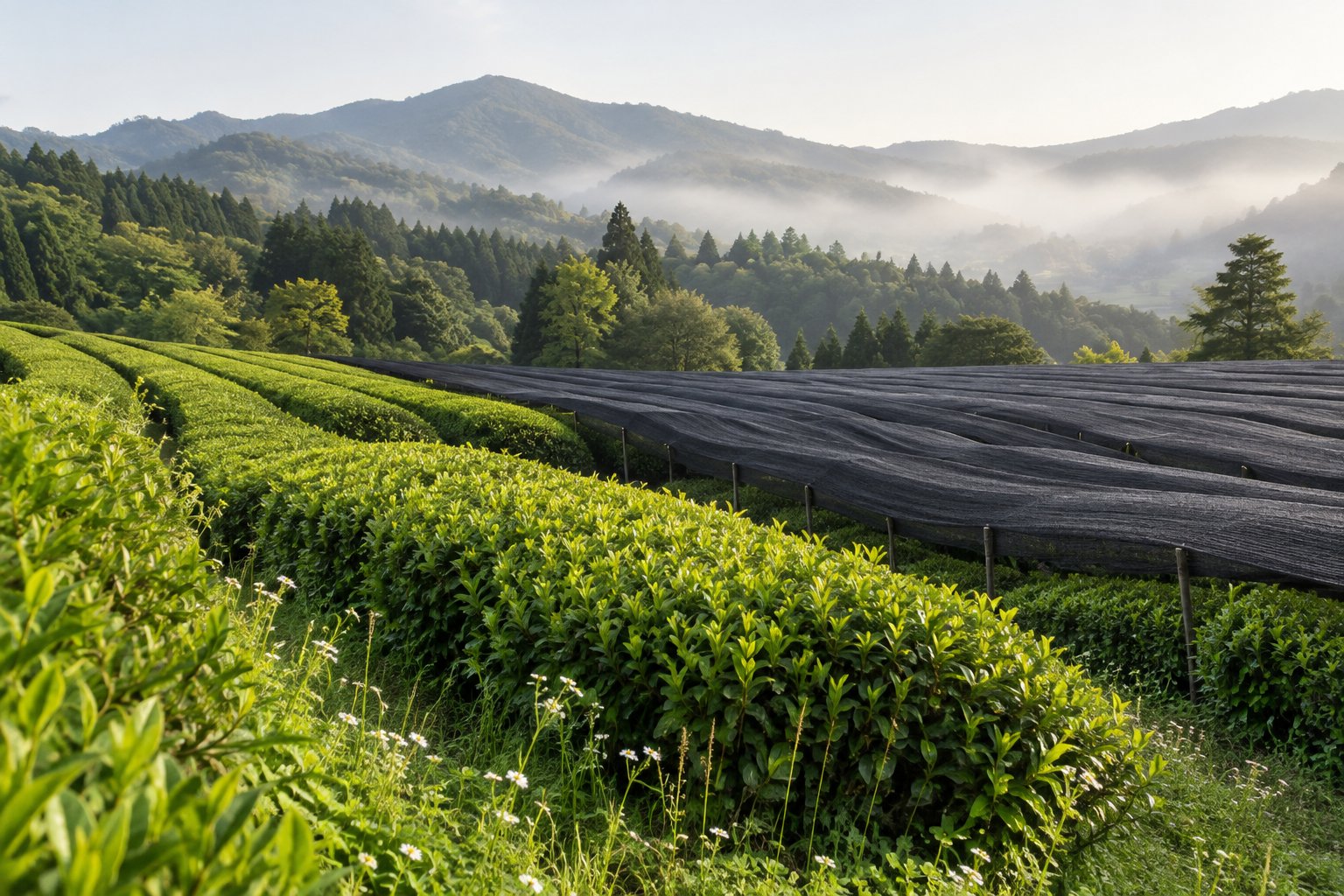
In Uji, tencha is grown under shade, with covers placed over the tea field to block sunlight. According to the Kyoto Prefecture Tea Industry Council, shade growing began in Uji in the late Muromachi period.
How the fields are shaded
The Kyoto Prefecture Tea Industry Council explains that the fields are covered in April and May not to keep them warm, but to block direct sunlight and slow the change of theanine, a source of umami, into catechins.
The main ways of shading are:
| Shading method | What it involves |
|---|---|
| Hon-zu | Reed screens are spread over a shelf above the tea field, and rice straw is spread on top to block sunlight |
| Shelf covering (one or two layers) | One or two layers of black synthetic cover are placed on a shelf above the tea field |
| Direct covering | The cover is placed directly on the tea plants |
According to the Kyoto Prefectural Tea Research Institute, tea grown under hon-zu is regarded as the highest quality, but spreading rice straw on a shelf about 1.8m high is dangerous and requires skill, so its area has fallen sharply. According to Kyoto Prefecture’s statistics, tencha gardens in the prefecture in fiscal 2024 covered 281.3ha with direct covering, 146.8ha with a one-layer shelf, 95.7ha with a two-layer shelf, and 20.1ha with reed screens and straw mats. Direct covering accounts for about half, and shading with reed screens (hon-zu and shading with straw mats) for about 4%.
Hand-picking and machine-picking
Kyoto Prefecture’s tea industry promotion plan notes that unit prices of tencha and gyokuro have fallen with the switch from hand-picking to machine-picking and the increase in direct covering, and that traditional hand-picked tencha is declining every year, partly because pickers are getting older. The prefecture says that changes in shading methods are splitting quality into two tiers. Even when tea carries the Uji name, how it is grown and picked differs from garden to garden.
The price of Uji tencha
The price of tencha at the Kyoto tea market rose about 3.3 times in the two years from 2024 to 2026. Kyoto Prefecture writes that Uji matcha is very popular, and that bulk buying by visitors to Japan led tea merchants in the prefecture to limit or stop sales of some products.
The average trading prices of first flush tea at the JA Zen-Noh Kyoto tea market, published by Ippodo Tea (data from the Kyoto Prefecture Tea Industry Council), were as follows for matcha raw material (tencha from the first picking):
| Year | Per kg |
|---|---|
| 2024 | ¥5,402 |
| 2025 | ¥14,144 |
| 2026 | ¥17,797 (as of 19 June) |
Why prices rose and how this affects café buying is covered in Is There a Matcha Shortage?
What to check when buying “Uji matcha” overseas
Overseas, the “Uji” name is sometimes used for matcha that does not meet the Japanese definition. Kyoto Prefecture’s tea industry promotion plan states that low-quality Chinese matcha is being exported to Vietnam and other countries under the names “Uji tea” and “Uji matcha.” MAFF also says that infringements of intellectual property, such as Chinese “Uji matcha” in circulation, are increasing.
What to confirm with your supplier
When buying matcha as Uji matcha, ask your supplier to confirm the following in writing:
- Who finished it and where: whether a Kyoto-based company finished it inside Kyoto Prefecture
- Origin of the raw material: Kyoto, Nara, Shiga or Mie, with the prefecture and, if possible, the municipality
- Whether the company is a member of the Kyoto Prefecture Tea Cooperative: the Kyoto Prefecture Tea Industry Council publishes a list of members
- If it says “Uji tencha”: whether it is tencha grown in Uji city or Joyo city that meets the conditions
Labelling rules
Under the “Green Tea Labelling Standard” of the Japan Tea Central Public Interest Incorporated Association (a voluntary industry standard), a region name may be shown on the label only if the tea is grown in Japan and at least 50% of the raw material comes from that region. At 100%, the tea can be labelled “[region] tea.” From 50% to under 100%, the label must make clear that it is a blend. If the tea is finished somewhere other than where the aracha (picked tea leaves that have been steamed and dried, before final processing) was made, the place of finishing must be shown. Where a region name covers more than one prefecture, as with Uji tea, the parties who use that name decide the area and other conditions.
Should a café choose Uji matcha?
The region name alone does not decide whether a matcha suits lattes. We have not found any public data that compares taste by region. Even within one region, taste and price change with how the field is shaded, whether the tea is hand-picked or machine-picked, whether it is first or second flush, and how it is blended.
When choosing for your café, deciding in this order makes the choice easier:
- Decide whether you need it for lattes or for drinking straight (Matcha grades)
- Work out the range of buying prices you can use from the cost per cup (How to Choose Matcha for Café Lattes)
- Taste matcha from Uji side by side with matcha from other regions such as Kagoshima, Shizuoka and Yame, using the same amount and the same milk
- Collect the documents for the matcha you choose: origin, lot and test results
If you write “Uji matcha” on your menu, check your supplier’s documents to confirm that the matcha you bought meets the definition above. The regions Omakase Matcha works with are listed on Origins.
Sources
- Japan Patent Office, “商標登録第6226519号 宇治抹茶” (Trademark registration No. 6226519, Uji matcha, in Japanese) https://www.jpo.go.jp/system/trademark/gaiyo/chidan/shoukai/ichiran/6226519.html
- Japan Patent Office, “商標登録第5050328号 宇治茶” (Trademark registration No. 5050328, Uji tea, in Japanese) https://www.jpo.go.jp/system/trademark/gaiyo/chidan/shoukai/ichiran/5050328.html
- Japan Patent Office, “商標登録第6205526号 宇治碾茶” (Trademark registration No. 6205526, Uji tencha, in Japanese) https://www.jpo.go.jp/system/trademark/gaiyo/chidan/shoukai/ichiran/6205526.html
- Kyoto Prefecture Tea Industry Council, “宇治茶Q&A” (Uji tea Q&A, in Japanese) https://ujicha.or.jp/knowledge/qa
- Kyoto Prefecture Tea Industry Council, “理科” (Science, in Japanese) https://ujicha.or.jp/enjoy/science
- Kyoto Prefecture Tea Industry Council, “買える店(京都府茶協同組合組合員)” (Where to buy: members of the Kyoto Prefecture Tea Cooperative, in Japanese) https://ujicha.or.jp/knowledge/howto/buy
- Kyoto Prefecture Tea Cooperative, “事業内容” (Activities, in Japanese) https://kyocha.or.jp/business_content/
- MAFF, “地理的表示(GI)保護制度 登録産品一覧” (Geographical indication protection system: list of registered products, in Japanese) https://www.maff.go.jp/j/shokusan/gi_act/register/index.html
- MAFF, “茶をめぐる情勢(令和8年10月)” (The situation of tea, October 2026, in Japanese) https://www.maff.go.jp/j/seisan/tokusan/cha/attach/pdf/ocha-201.pdf
- Aichi Prefecture, “2025年産茶の生産状況” (Tea production in 2025, National Federation of Tea Producers’ Associations survey, in Japanese) https://www.pref.aichi.jp/uploaded/attachment/622005.pdf
- Kyoto Prefecture, “参考資料(令和7年茶生産実績)” (Reference material, 2025 tea production results, in Japanese) https://www.pref.kyoto.jp/nosan/documents/r7chachosa2.pdf
- Kyoto Prefecture, “令和6年度 京都府産茶の生産・流通状況等に関する資料” (Production and distribution of Kyoto tea, fiscal 2024, in Japanese) https://www.pref.kyoto.jp/nosan/documents/r6chachosa1.pdf
- Kyoto Prefecture, “京都府茶業振興計画” (Kyoto Prefecture tea industry promotion plan, March 2025, in Japanese) https://www.pref.kyoto.jp/nosan/documents/2025kyoto_chagyousinkoukeikakui.pdf
- Kyoto Prefectural Agriculture, Forestry and Fisheries Technology Center, Tea Research Institute, “試験研究業務月報” (Monthly research report, July 2020, in Japanese) https://www.pref.kyoto.jp/nosoken/monthlyreport/documents/r20705.pdf
- Ippodo Tea, “2026年10月・11月 商品仕様の見直しと価格改定について” (Product specification changes and price revisions for October and November 2026, in Japanese) https://www.ippodo-tea.co.jp/blogs/news/20260901
- Japan Tea Central Public Interest Incorporated Association, “緑茶の表示基準” (Green Tea Labelling Standard, in Japanese) https://www.nihon-cha.or.jp/pdf/hyoujikijyun.pdf