
 Reviewed by: Takahiro Sugiyama (CEO, meguri Inc.)
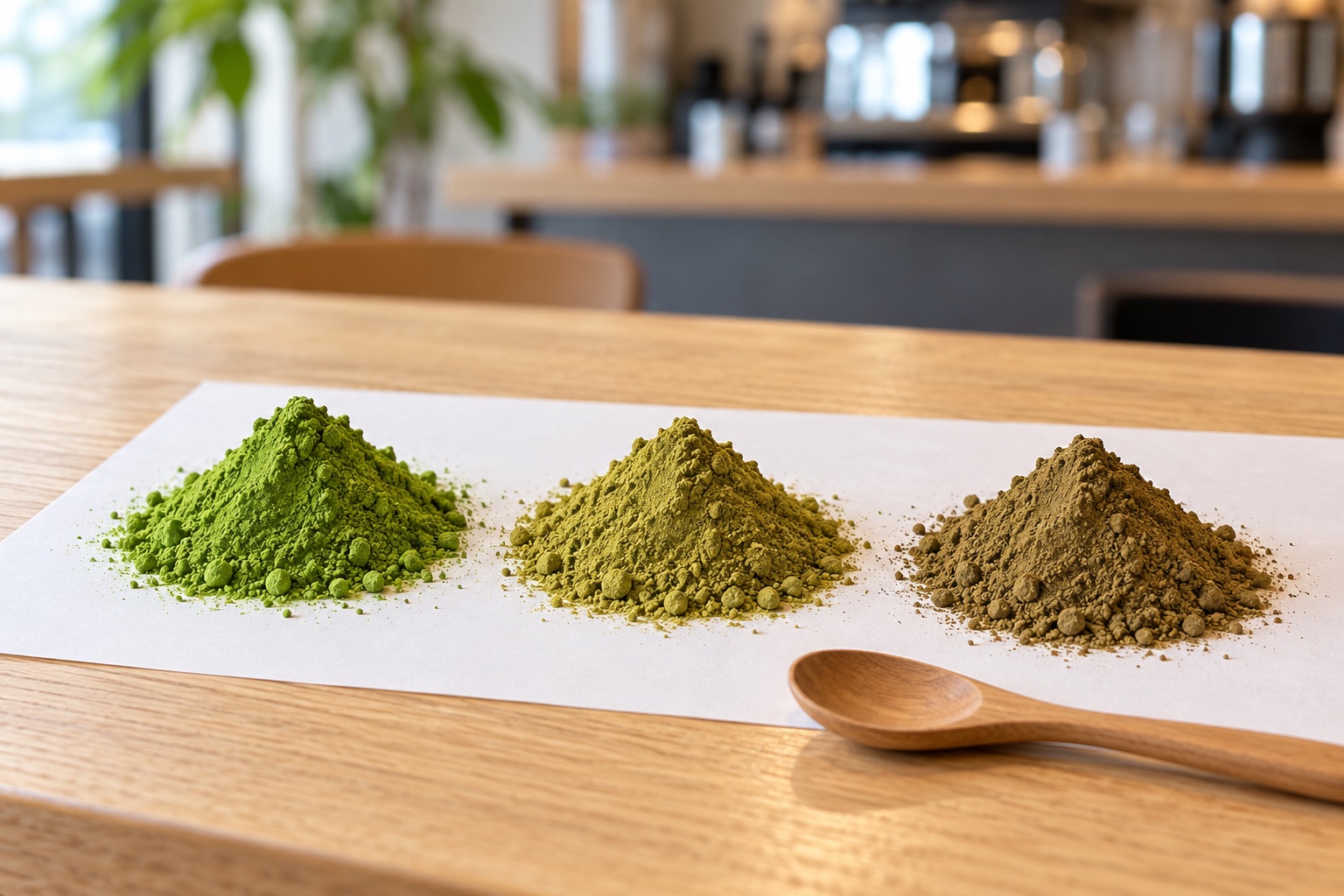
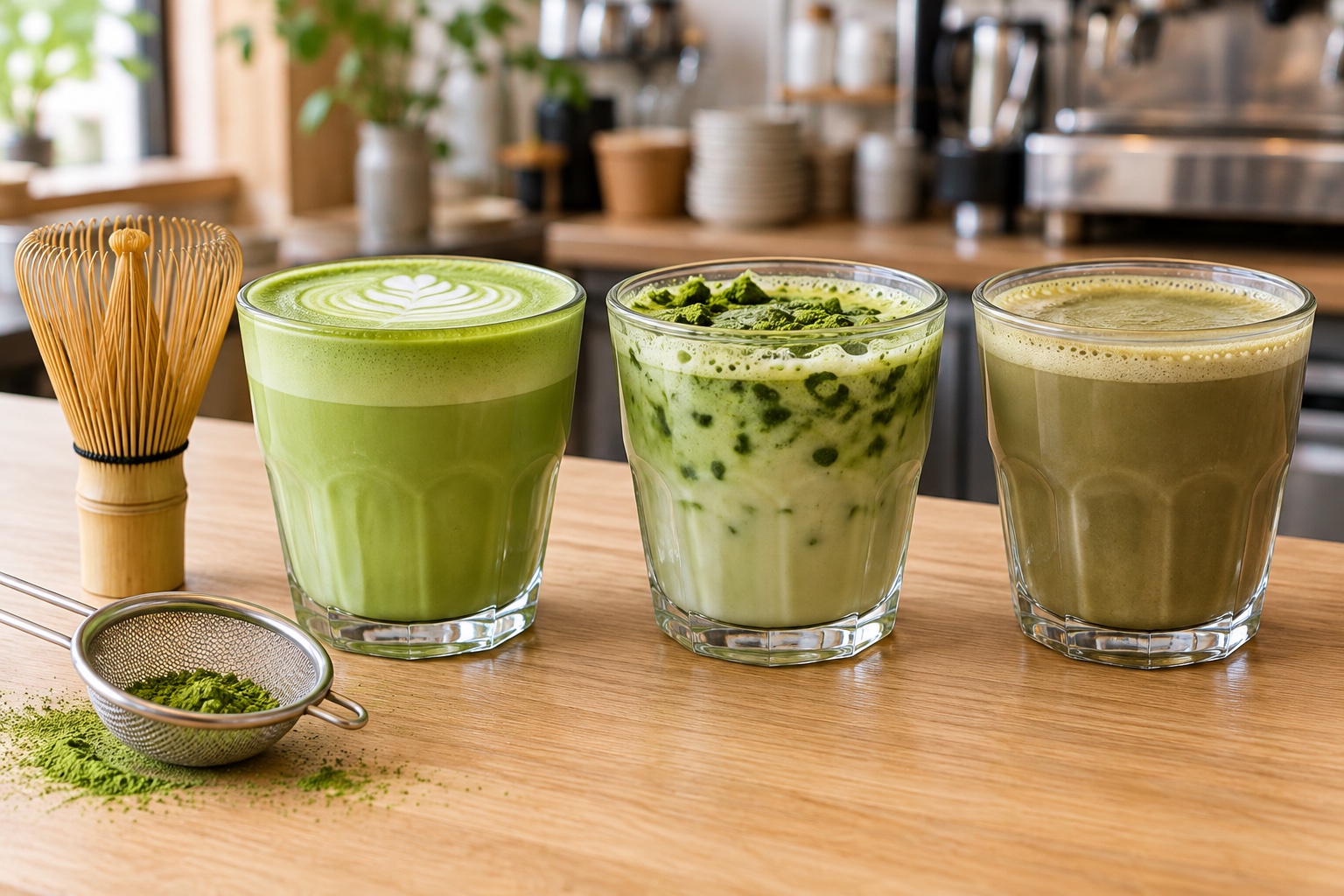
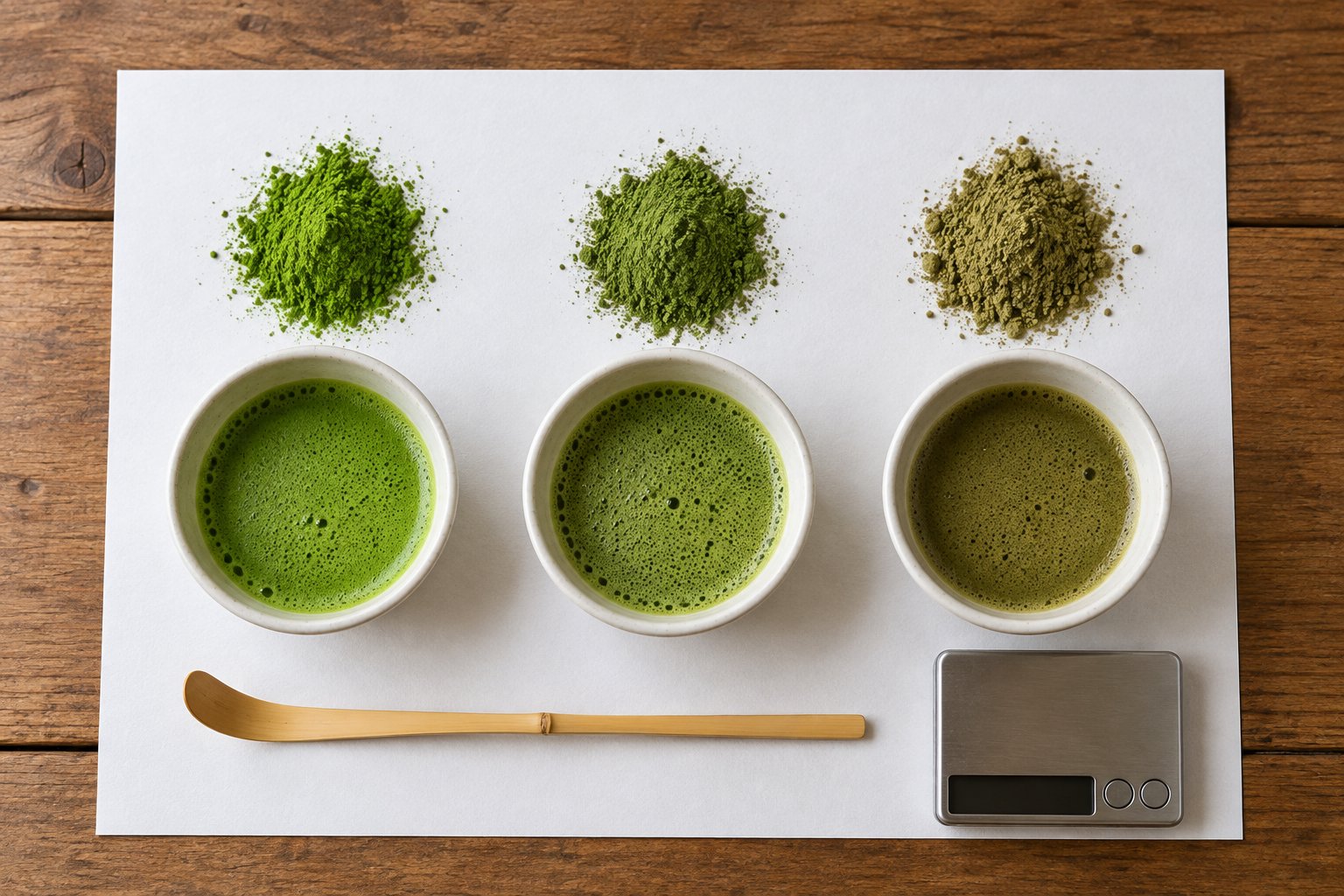
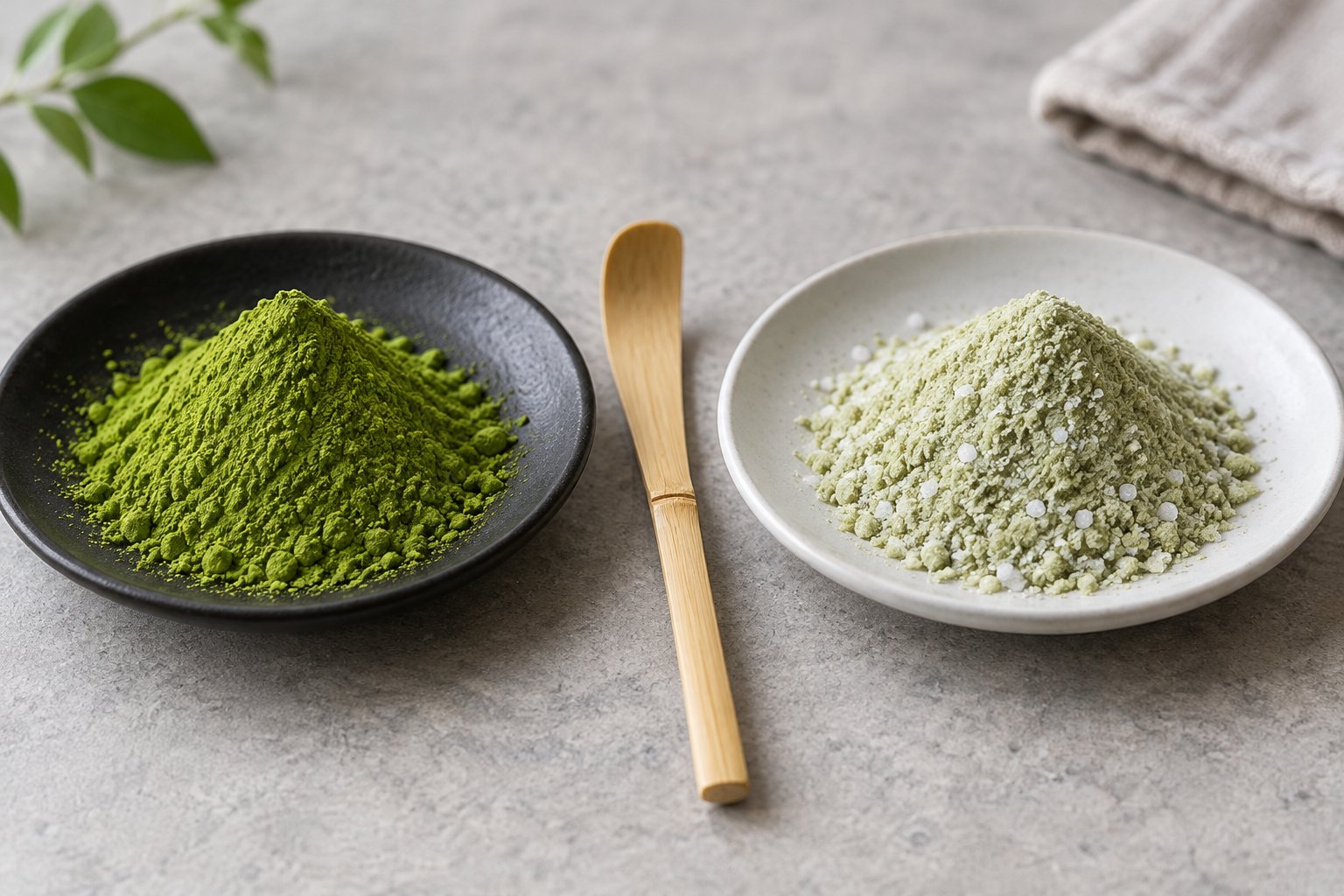
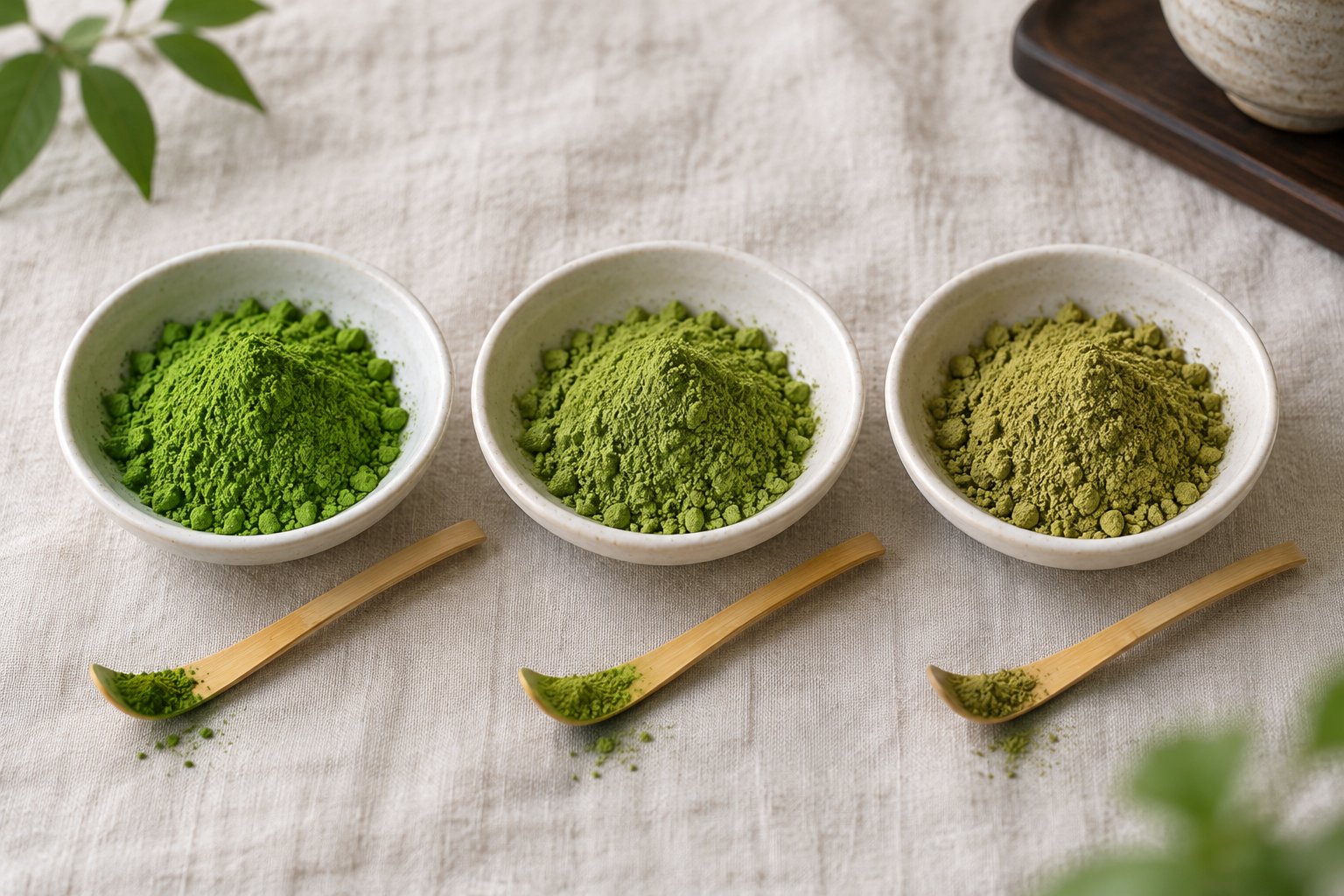
Line up several matcha samples and you may see clear differences, even though all of them are “matcha”: vivid green, yellowish green, dull green. Each difference has a reason in how the leaves were grown, when they were picked, and how the powder was stored after grinding. Using measurements from Japanese prefectural research stations and a university, this article looks at what color can tell you.
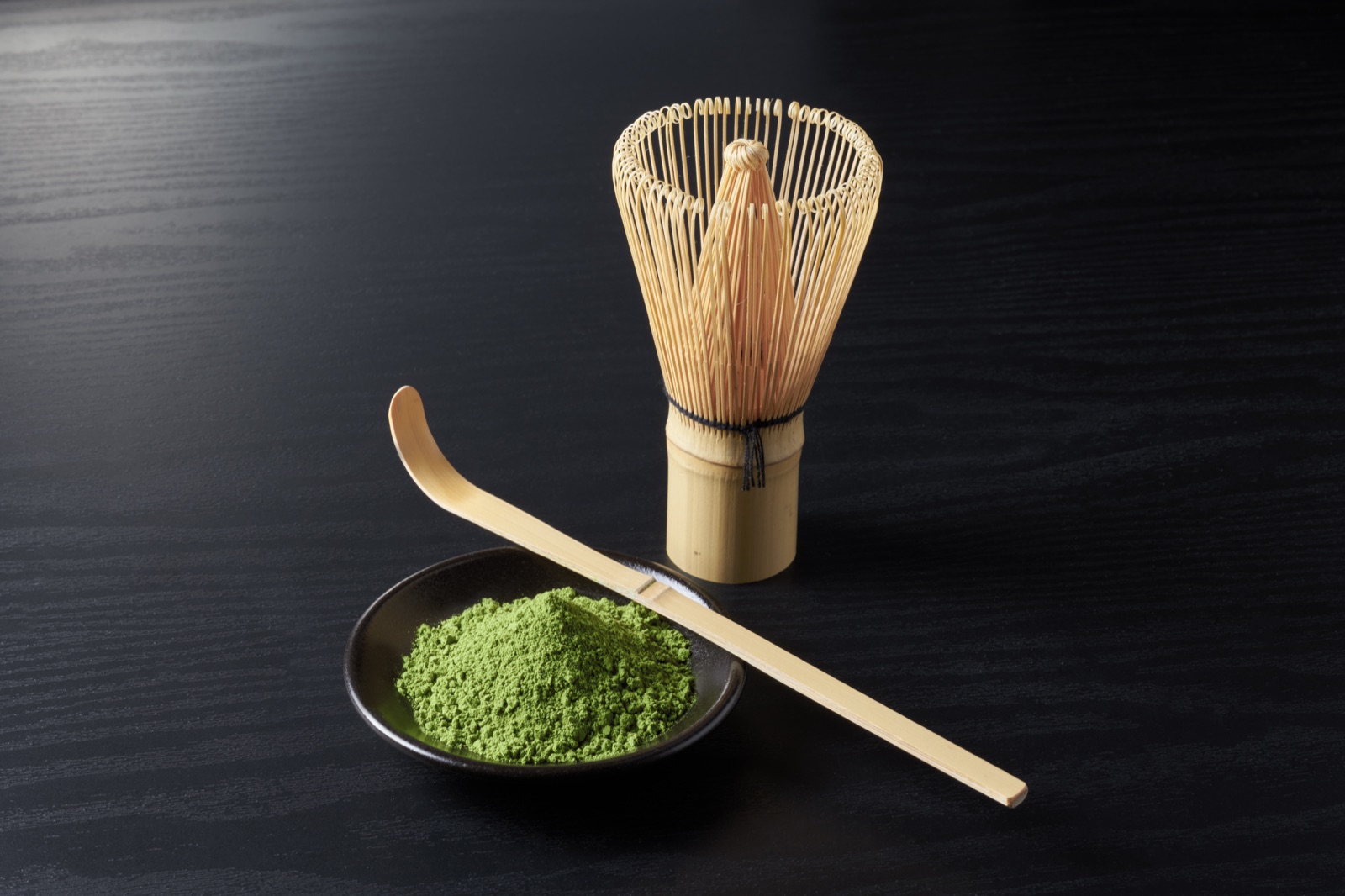
What is matcha color? The color name and the powder color
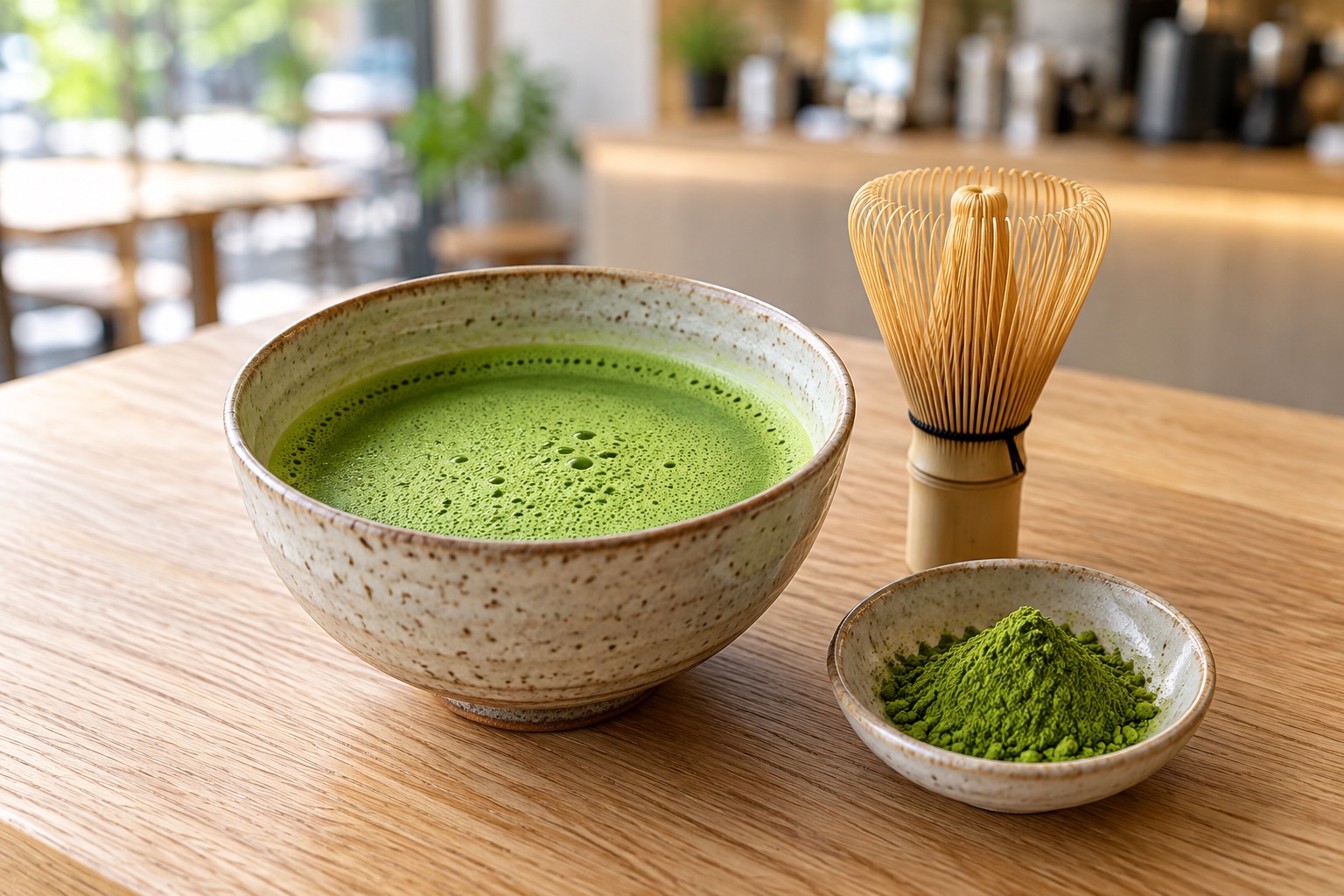
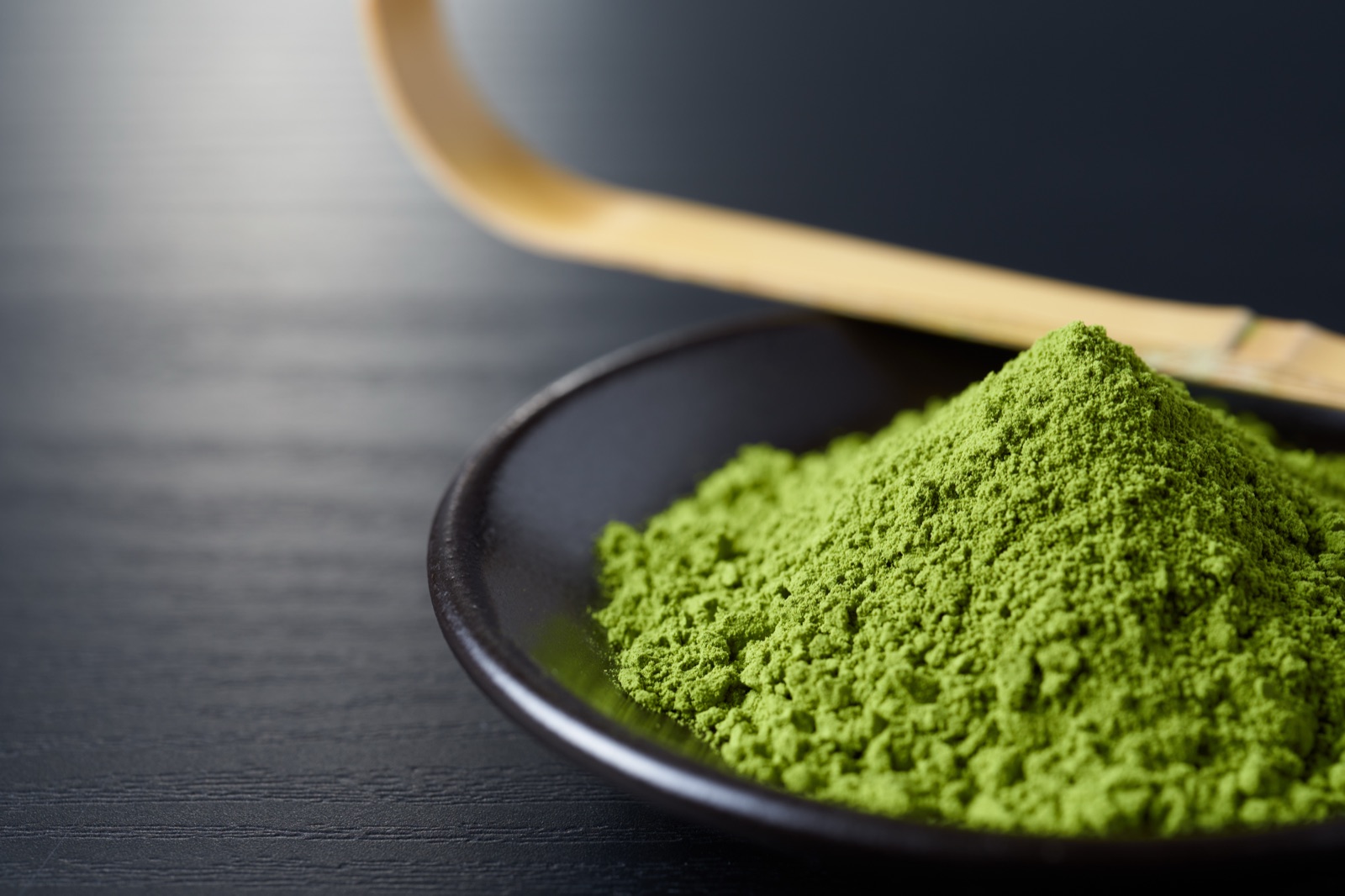
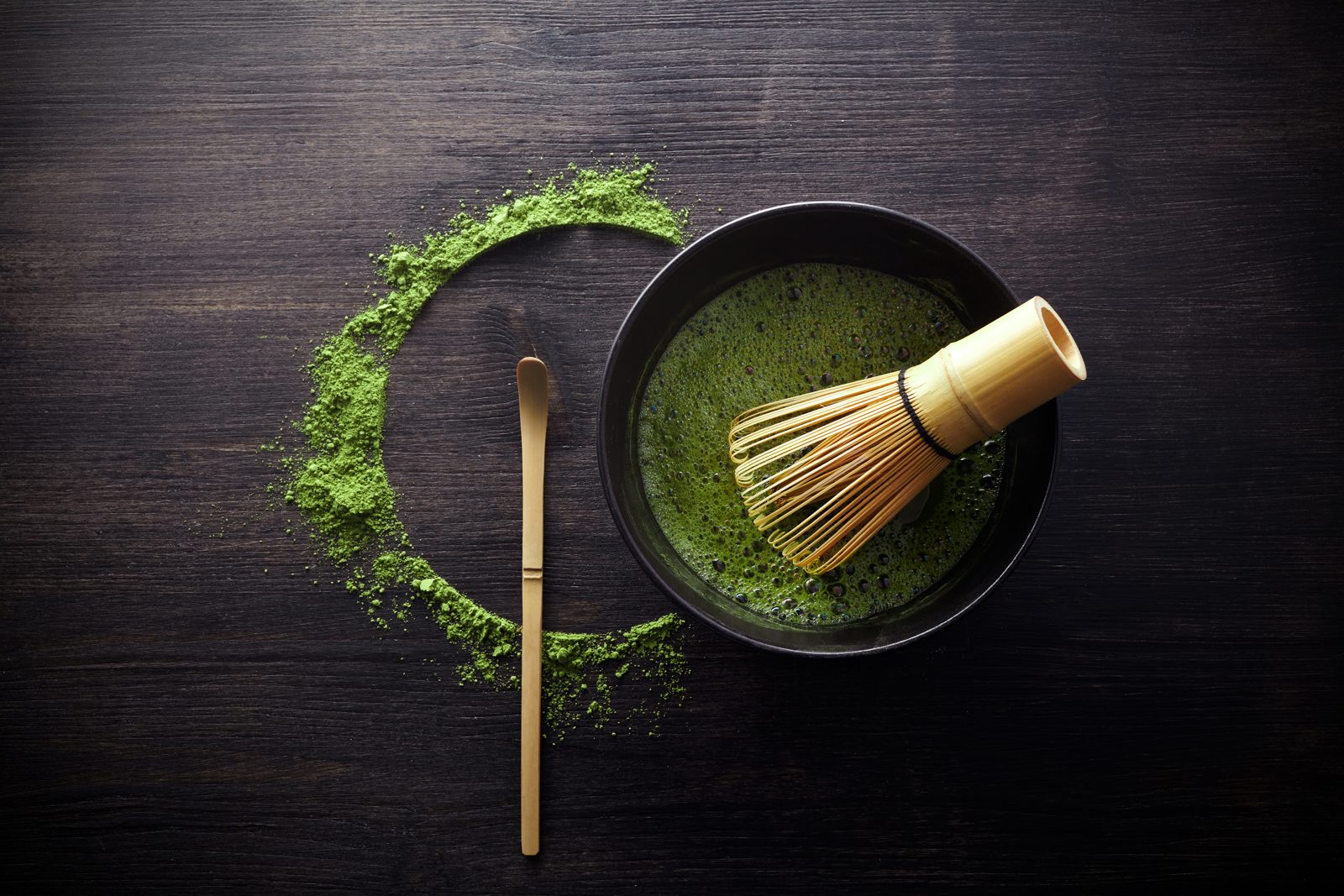
As a color name, “matcha green” means a soft green with a yellowish tint, named after matcha powder. When judging quality, though, matcha color means the color of the powder itself. Measured, even good matcha sits on the yellow-green side, and what separates good from poor is the strength of the green.
“Matcha green” as a color name
In fashion and interiors, a calm green with a touch of yellow is called matcha green. The Indonesian women’s media Popbela also describes warna matcha (matcha color) as a soft green with a little yellow in it. As far as our editors could find, this color name has no officially defined color value.
Matcha powder is yellow-green in numbers
First flush matcha from Shizuoka Prefecture, measured by Yoriyuki Nakamura of the University of Shizuoka, had a b* value (yellowness) of 38.01, a large positive number, and an a* value (greenness) of −11.47. In the measurements, even good matcha is a yellowish green. That the color name leans yellow-green matches the color of the real powder.
What this article covers
From here on, the article covers the color of the powder that cafés and wholesalers look at when buying. How to judge matcha including aroma, taste and fineness is covered in How to Tell High Quality Matcha, and how color fades once matcha is in a drink is in Fixing Bitter, Weak and Off-Colour Matcha Lattes.
Where does matcha’s green come from? Chlorophyll and shading
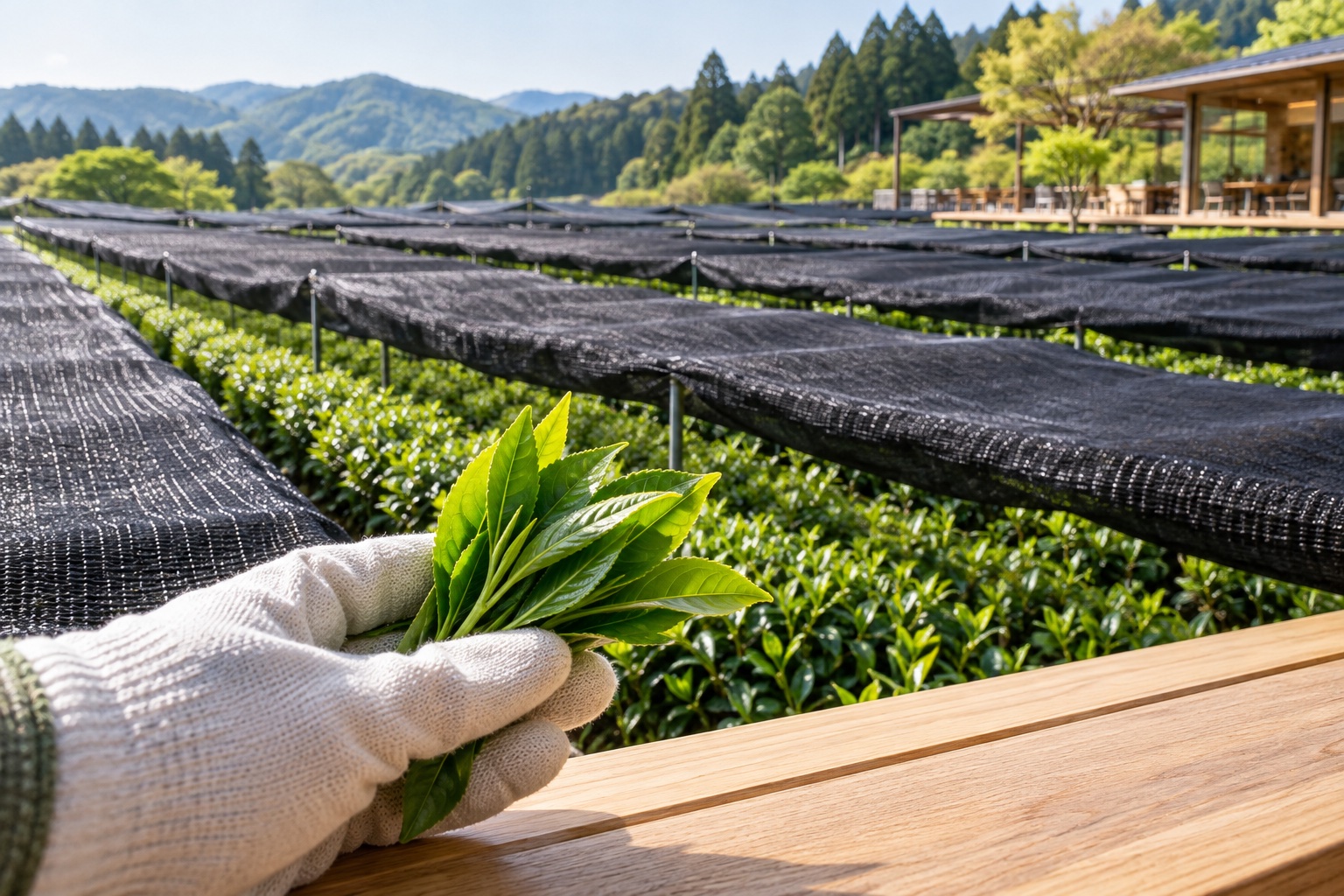
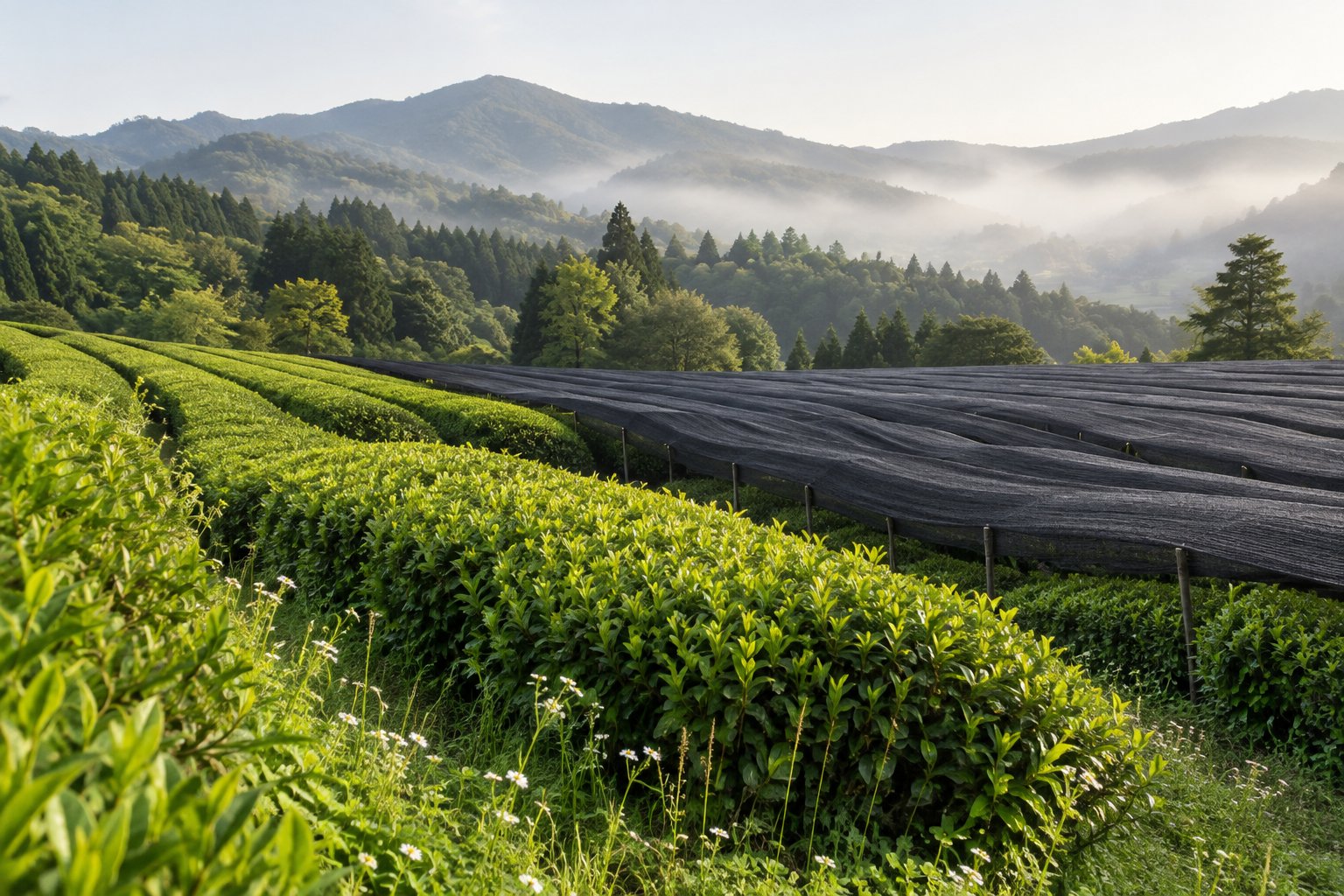
Matcha’s green is the color of chlorophyll, which increases when the tea field is covered before picking to block sunlight. Longer shading does not keep adding more, though. In a Shizuoka trial, chlorophyll leveled off at around 15 to 20 days.
Shading increases chlorophyll
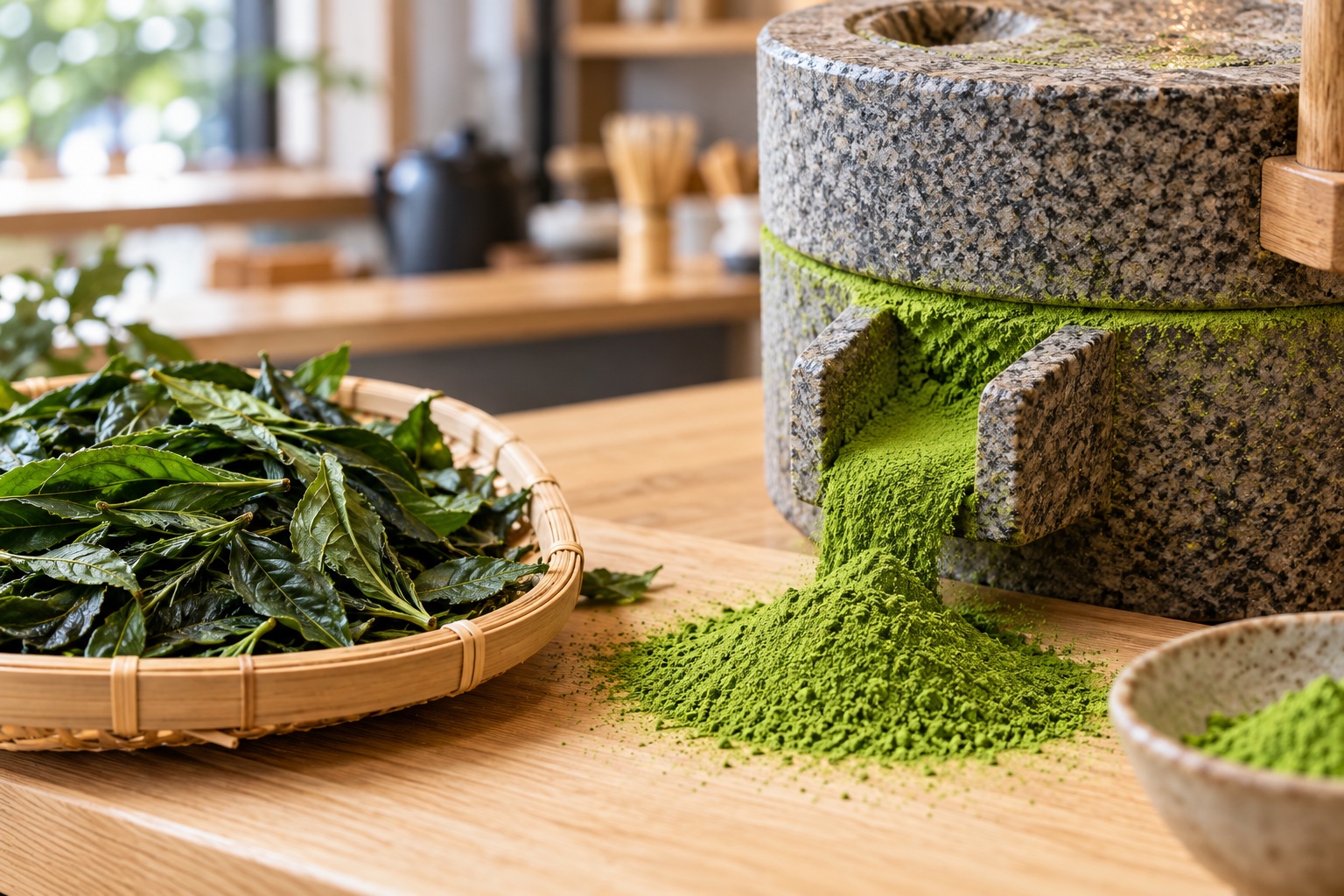
Kyoto Prefecture explains that growing tea under cover increases chlorophyll along with theanine and other umami compounds, and raises the quality of the tea. Tencha (the leaf used to make matcha, grown under cover and dried without rolling) is made this way. The Tea Research Center of Shizuoka Prefecture also states that the more chlorophyll a (a green pigment) the leaves contain, the darker green the fresh leaves become.
Shading days and chlorophyll content
The Tea Research Center of the Shizuoka Prefectural Research Institute of Agriculture and Forestry covered tea plants directly with an 85% shade material and made tencha with different shading periods (first flush, 2019).
| Shading days | Chlorophyll a (mg/100 g, dry weight) | Yield (kg/10 a) | Total nitrogen (%) |
|---|---|---|---|
| 15 days | 579 | 630 | 5.7 |
| 20 days | 634 | 949 | 5.2 |
| 25 days | 620 | 1,197 | 4.7 |
In the 2017 trial, chlorophyll a rose after shading began and peaked 15 days later. Extending shading to 25 days increased yield, but chlorophyll did not increase and total nitrogen (a component closely linked to judging scores) went down. In research led by NARO (the National Agriculture and Food Research Organization), the chlorophyll content of fresh leaves also leveled off at around 300 degree-days of accumulated temperature (the sum of daily mean temperatures) after shading began.
Shading strength and powder color
The Aichi Agricultural Research Center states that tencha for food processing is generally rated higher the darker green it is, and that the color of the appearance and of the “kara” (the leaves after soaking in hot water) is given weight. In the center’s 2017 to 2019 trials, tencha shaded at 95% for 21 days scored 99.1 out of 100, and tencha shaded at 85% for 16 days scored 86.3.
According to the center’s discussion, the depth of green of the sorted leaves depended mostly on the shading rate, while the depth of green of the powder and the kara depended mostly on when shading began (the shading period). The leaf appearance and the powder color do not necessarily change by the same amount under the same growing method.
What good matcha color looks like, and how it is judged
Good matcha has a “sae” color, one in which vivid green stands out. In Japanese judging, color is assessed relative to the best sample in the set.
A color with sae
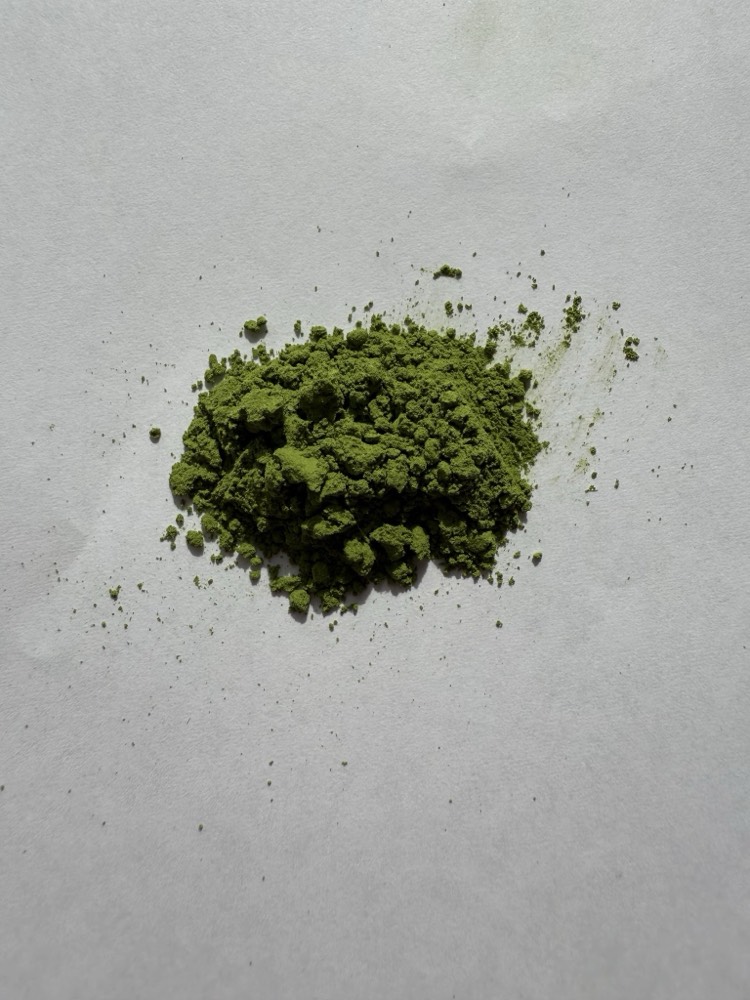
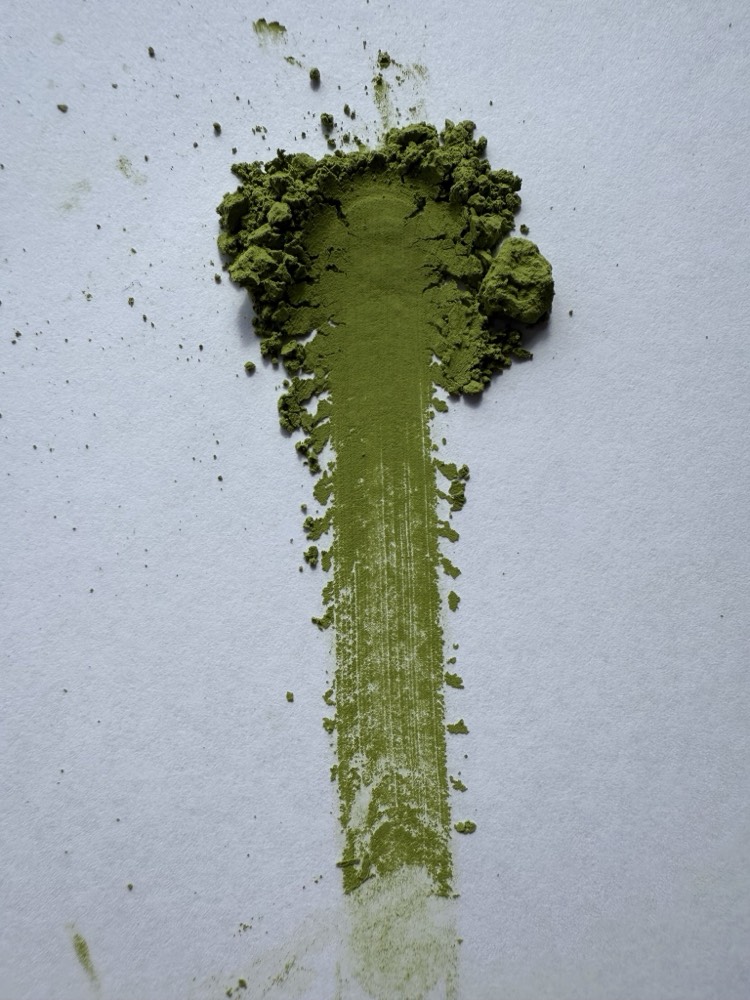
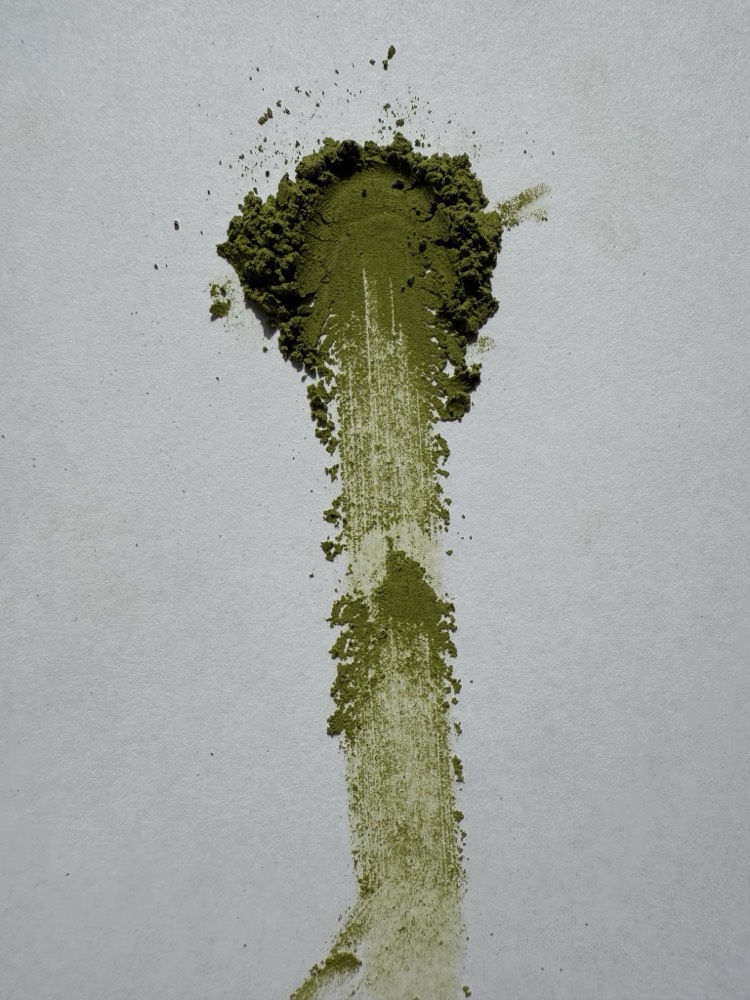
In his description of matcha judging in the Tea Research Journal (the journal of the Japanese Society of Tea Science and Technology), Hiroaki Murakami, formerly of the Kyoto Prefectural Tea Research Institute, states that matcha made from good raw material and finely ground looks sae both when weighed onto paper and when spread with a spatula. A list of color defects such as reddish-black, bluish-black, yellowish and whitish, and their causes, is in the “Color” section of How to Tell High Quality Matcha.
Color is judged by comparison
Judging at the Kyoto Prefectural Tea Research Institute is relative: the best sample among those presented gets full marks. The Aichi Agricultural Research Center also notes that sensory evaluation (judging by looking and tasting) is relative to the evaluator, so results tend to vary. It is hard to tell whether a green is good by looking at one bag alone. You need something to compare it with.
Finer powder can look brighter
Murakami states that good matcha is generally finely ground, but the finer it is, the higher its lightness, and it can look whitish, so the judge should focus on the color tone. A sample that looks brighter is not necessarily greener.
Why matcha turns yellowish or dull
The main reasons matcha looks yellowish and dull are a later harvest, too little shading, and the use of hardened leaves. All of these are decided at the leaf stage before grinding, and grinding cannot recover them.
Green strength changes with the harvest
The harvest (chaki in Japanese) refers to which picking of the year the tea came from. These are the values Nakamura measured for Shizuoka matcha by harvest.
| Harvest | L* (lightness) | a* (negative is green) | b* (positive is yellow) | Hue angle |
|---|---|---|---|---|
| First flush | 53.73 | −11.47 | 38.01 | 106.76 |
| Second flush | 54.84 | −9.48 | 36.80 | 104.45 |
| Autumn-winter | 55.60 | −8.09 | 37.48 | 102.16 |
As the harvest gets later, a* becomes less negative and the green weakens. b* does not change much between harvests. The yellowish look can be read as yellow standing out because green has decreased, rather than yellow increasing. How price differs by harvest is covered on our matcha grades page.
Too little shading and hardened leaves
In Murakami’s judging terms, a yellowish tint is a defect with a large quality impact, caused by insufficient shading of the new shoots or by leaves that have hardened. As the Shizuoka and Aichi trials above show, shading strength and duration change chlorophyll and depth of green.
Variety and growing region
The depth of green also varies by tea variety. Trials in Kagoshima and Nagasaki comparing color by variety are introduced in How to Tell High Quality Matcha. When comparing samples of different regions or varieties, keep in mind that a color difference is not necessarily a quality difference.
Why matcha turns brown or reddish: oxygen, heat, light and humidity
After grinding, oxygen, heat, light and humidity break down chlorophyll, so the green fades and takes on a reddish or brownish tint. In a storage trial, what changed was mainly the green-red axis, while lightness and yellowness barely changed.
In storage, the green-red number moves
In a trial published in the Tea Research Journal by ITO EN researchers, raw matcha for food processing was put in aluminum bags and stored for 24 weeks at −70°C, 4°C, 25°C and 37°C, and its color was measured. The a value (positive is red, negative is green) moved strongly toward red at 37°C, and at 4°C it also moved toward red compared with −70°C. Meanwhile, lightness (L value) stayed between 51.27 and 52.95 and yellowness (b value) between 21.39 and 23.11, barely changing.
In this trial, the change that looks like color fading appeared in the numbers as green disappearing and the color shifting toward red. How much chlorophyll a remains at each temperature, and how many weeks matcha keeps, is covered in Does Matcha Go Bad?.
Heating and storage change color in different ways
When magnesium is lost from chlorophyll a, it becomes a different pigment, pheophytin a. In the same trial, pheophytin a did not increase by as much as chlorophyll a decreased during storage. The researchers estimate that color loss in storage comes from breakdown in the presence of oxygen, not from the conversion to pheophytin that happens during tea manufacturing.
Uses that involve heat are covered in Matcha for Baking, and mixing matcha with acidic drinks in Fixing Bitter, Weak and Off-Colour Matcha Lattes.
Light and humidity
The Mie Prefectural Industrial Research Institute describes matcha products as one of the most light-sensitive processed foods. Keeping matcha in a clear jar on the counter or leaving an open bag in a humid place also makes the color fade. How to decide where to store matcha in a hot country is covered in Does Matcha Go Bad?.
Measuring color in numbers: how to read L*a*b* and hue angle
To compare matcha color in numbers, look at a*, the green-red axis, and the hue angle (h). In a University of Shizuoka survey, more expensive matcha had a more negative a* and a larger hue angle, while yellowness, b*, showed no clear difference.
What L*, a* and b* mean
According to the Osaka Research Institute of Industrial Science and Technology (a local incorporated administrative agency set up by Osaka Prefecture and Osaka City), the L*a*b* color system is a way of expressing color defined by the International Commission on Illumination (CIE) and is widely used in manufacturing and quality control. It is measured with a spectrophotometer, and color is expressed with three values.
- L*: lightness. Larger is lighter
- a*: red to green. Positive is red, negative is green
- b*: yellow to blue. Positive is yellow, negative is blue
The hue angle is calculated from a* and b* and shows where a color sits between red, yellow and green. For matcha, a larger hue angle means a stronger green.
Color values by price band
Nakamura measured matcha bought in and outside Japan with a Konica Minolta spectrophotometer and averaged the values by price band per 100 g.
| Price per 100 g (yen) | Average price (yen) | L* | a* | b* | C* | h |
|---|---|---|---|---|---|---|
| up to 1,000 | 654 | 60.31 | −3.63 | 34.08 | 34.30 | 96.03 |
| 1,001–2,000 | 1,575 | 56.25 | −3.89 | 34.75 | 35.02 | 96.28 |
| 2,001–3,000 | 2,247 | 57.94 | −5.73 | 35.88 | 36.39 | 99.00 |
| 3,001–4,000 | 3,492 | 59.13 | −6.87 | 34.64 | 35.38 | 101.09 |
| 4,001–5,000 | 4,404 | 57.24 | −6.35 | 34.11 | 34.78 | 100.65 |
| 5,001–10,000 | 7,582 | 55.16 | −9.13 | 35.01 | 36.21 | 104.61 |
| 10,001 and over | 12,225 | 57.64 | −7.95 | 34.64 | 35.60 | 102.83 |
Source: Yoriyuki Nakamura, “国内における抹茶(碾茶)生産の推移と科学的特性” (Trends in matcha (tencha) production in Japan and its scientific characteristics), Table 2, Tea Science Research Center, University of Shizuoka (in Japanese) https://dfns.u-shizuoka-ken.ac.jp/labs/tsc/thesis/0410.pdf
b* is 34 to 36 in every price band, with almost no difference. The differences are in a* and hue angle: a* was −3.63 in the band up to 1,000 yen and −9.13 in the 5,001 to 10,000 yen band. Nakamura notes that expensive matcha showed a* of −10 or lower, while many in the low price bands were −5 or higher. The highest band (10,001 yen and over) was less green than the 5,001 to 10,000 yen band, and above a certain price the values leveled off.
Color values are linked to chlorophyll
In the same survey, hue angle and a* had a strong negative correlation (−0.9898), and the absorbance used to measure chlorophyll a also correlated strongly with hue angle and a*. Murakami also reports that, in 74 commercial matcha samples in Japan, samples ranked higher for appearance had larger hue angles, and the judging results agreed well with the color values.
Do not compare numbers from different instruments or methods
The Aichi Agricultural Research Center uses a method that derives a hue value from scanned images with free software, and even though it is also called “hue,” its numbers differ in size from the hue angle of a spectrophotometer. The L and b values in the ITO EN storage trial were also not measured with the same instrument and conditions as Nakamura’s. When a supplier gives you color values, ask for the instrument name and method too, and compare only values measured under the same conditions.
How to compare sample colors in your shop
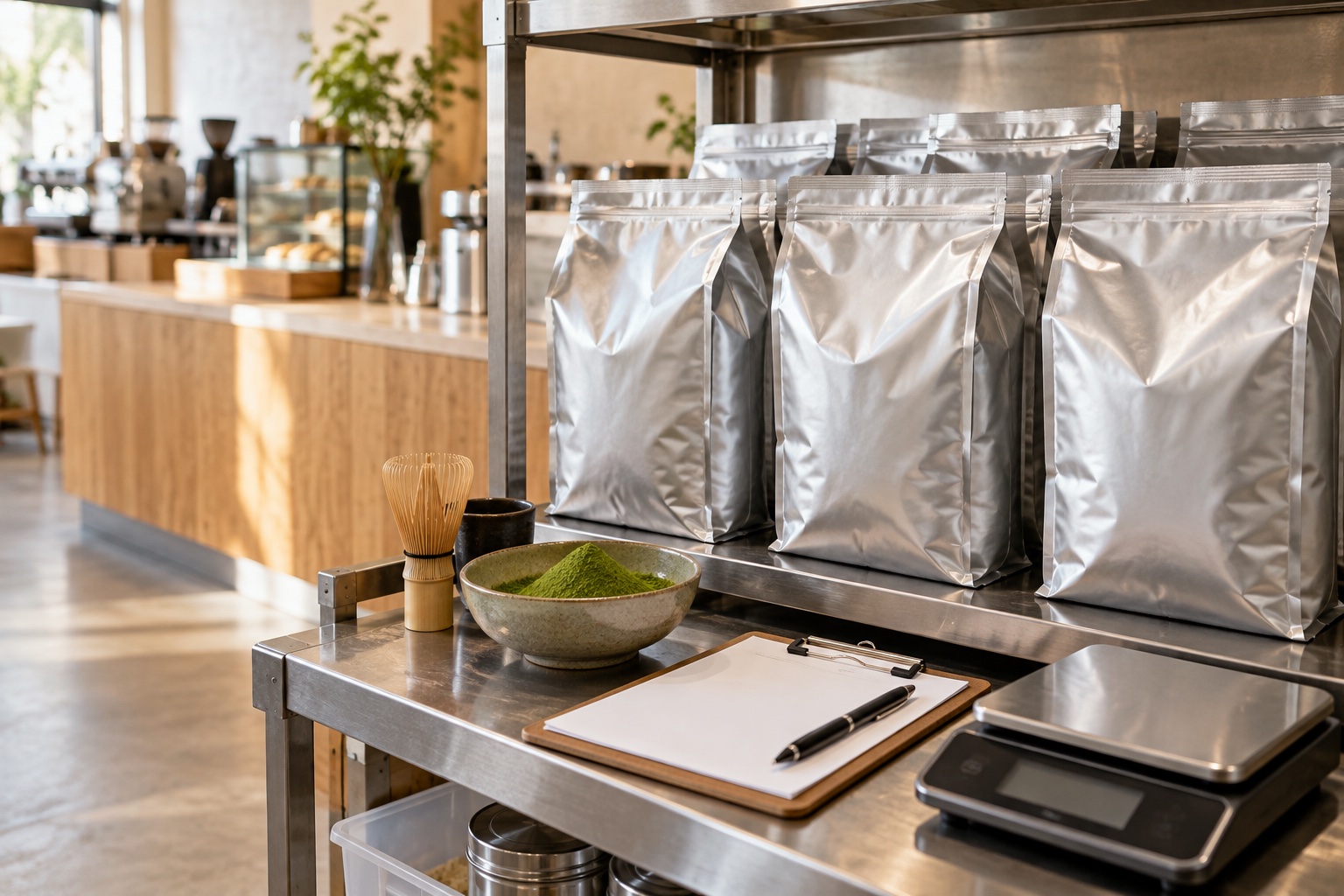
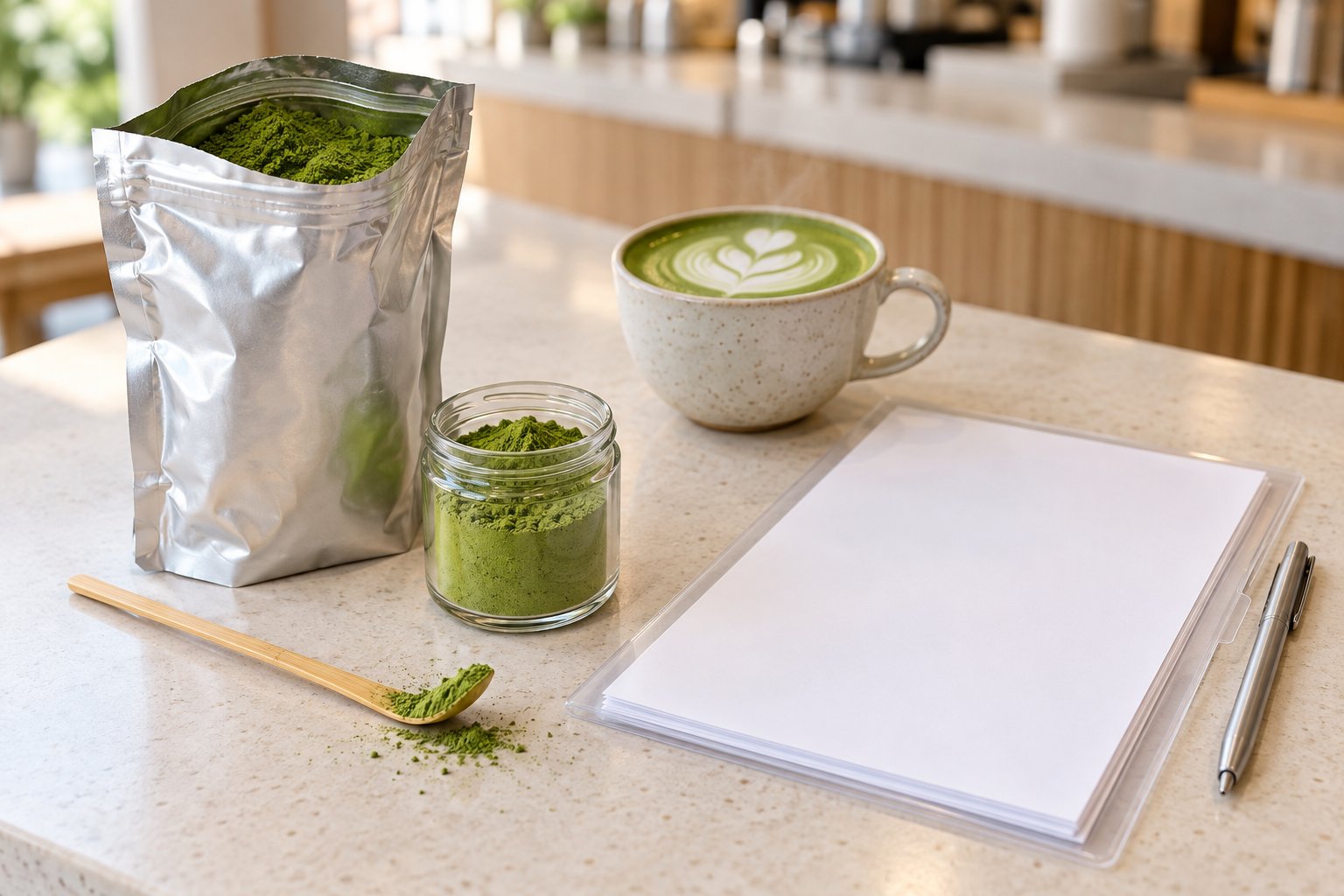
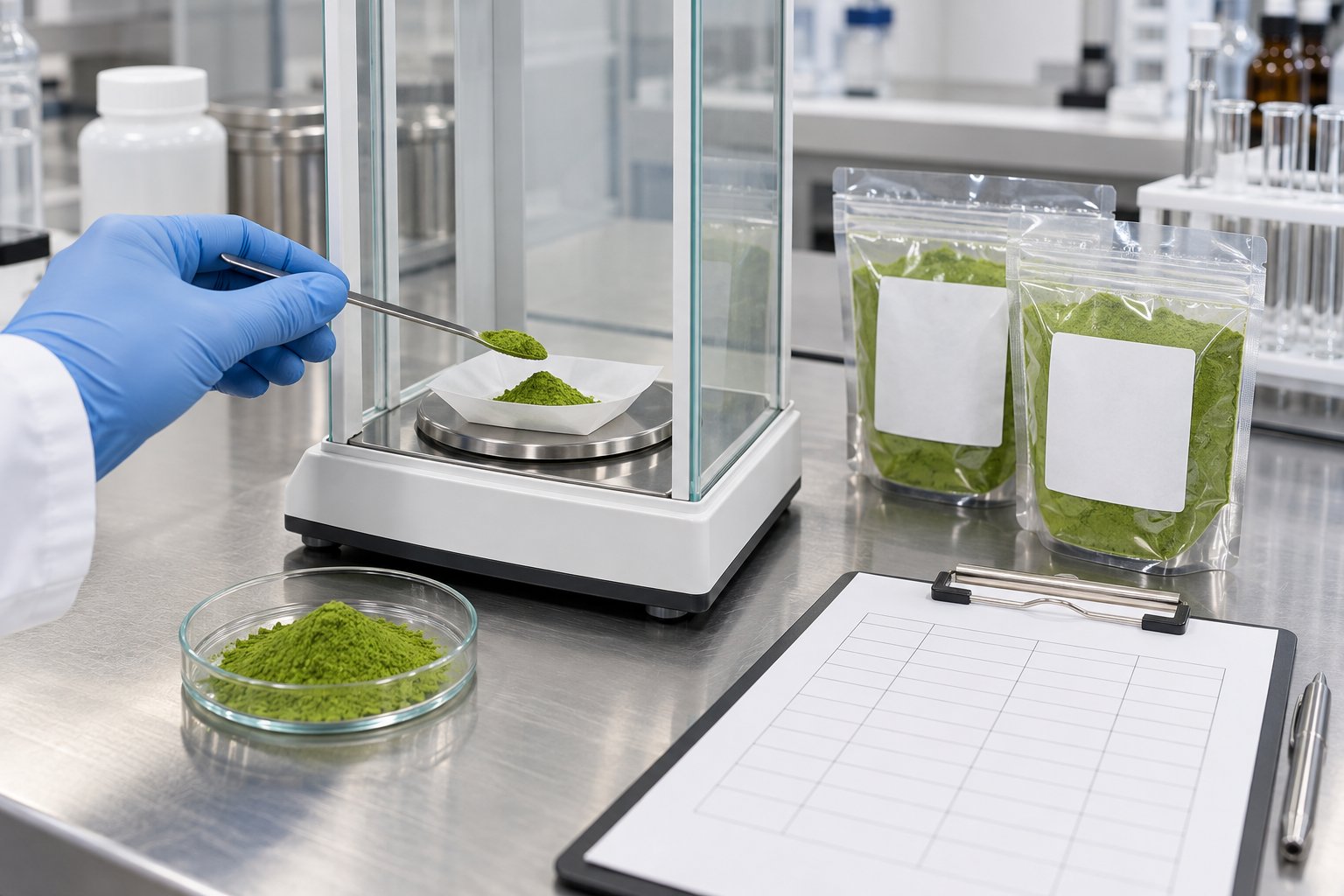
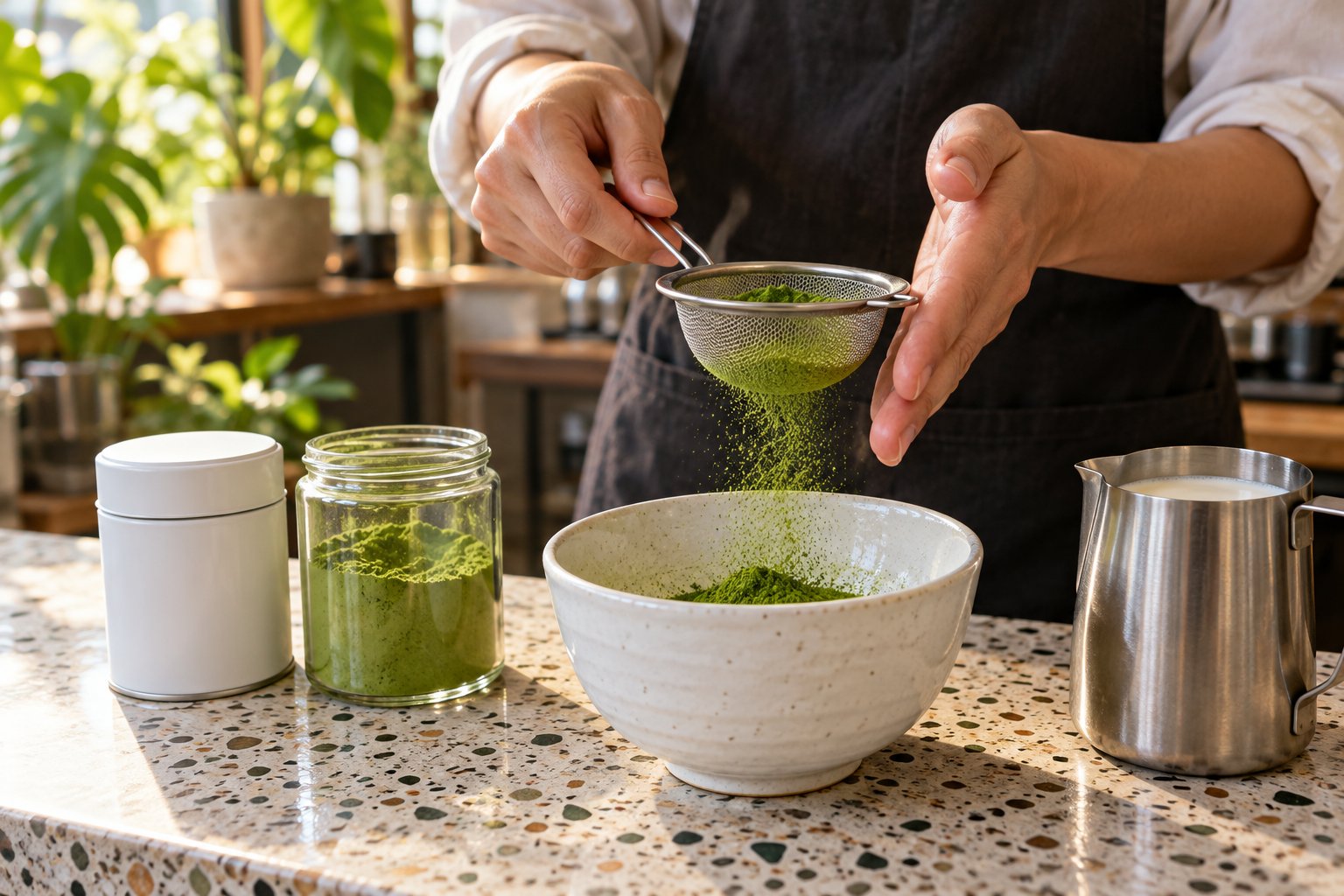
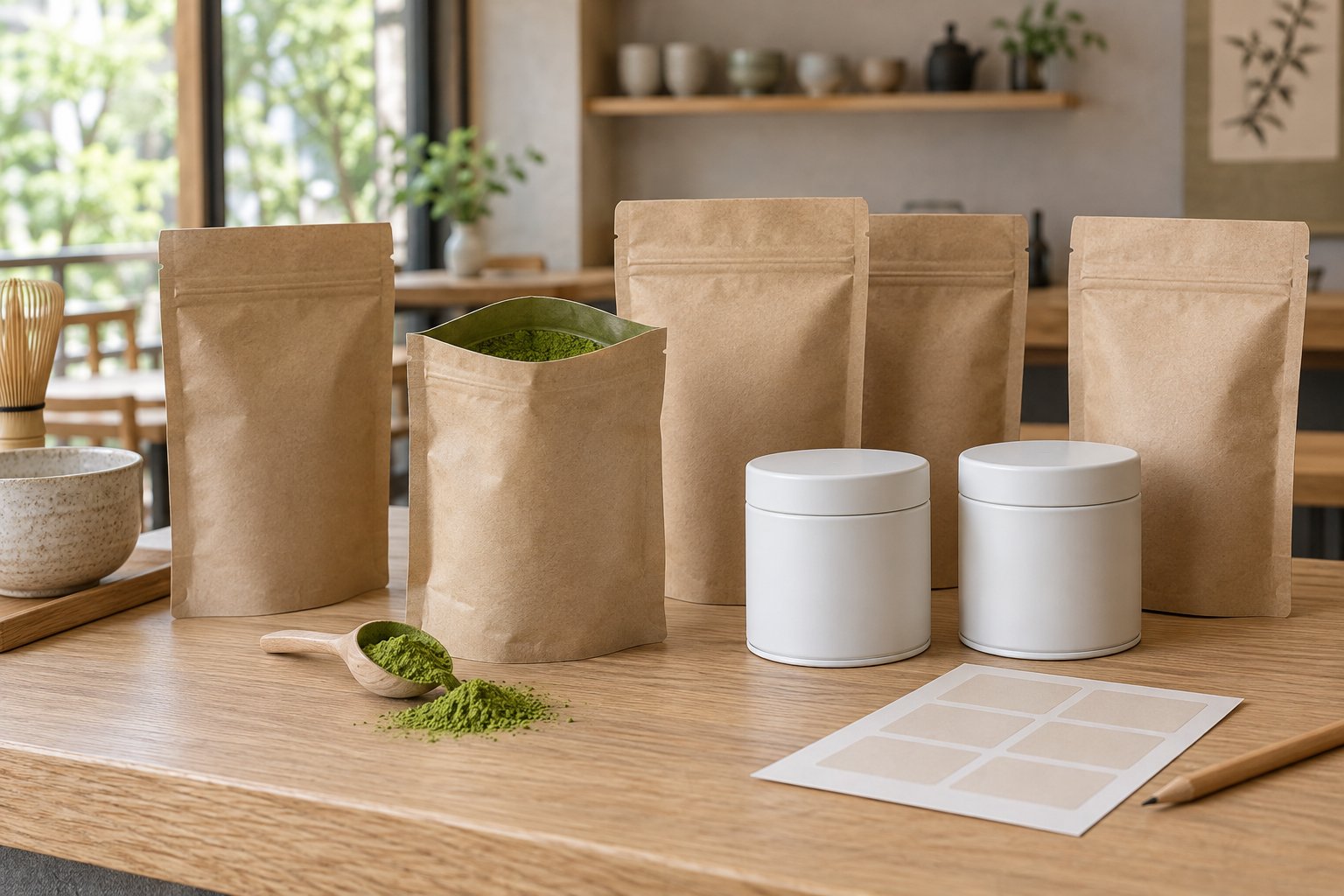
Put the same amount of each sample on its own sheet of white paper, number them so no one knows which is which, and compare them side by side under the same light. This is a procedure our editors put together for cafés, based on the judging method.
One sheet of white paper per sample
In judging at the Kyoto Prefectural Tea Research Institute, 2 g of each sample is weighed onto its own sheet of powder paper (thin white paper). According to Murakami, a method of placing several samples on one judging tray was used in the past, but it was inconvenient because the samples could not be moved or rearranged. With one sheet per sample, you can move similar colors next to each other to compare them.
- Put 2 g of each sample on separate sheets of white paper
- Hide the origin and price, and write only a number
- Compare no more than about 10 samples at a time (according to Murakami)
Same light, and spread the powder before looking
NARO’s commentary notes that tea color looks very different depending on the light, so lighting in the judging room needs care. Matcha looks different by the window and at the back of the shop, in the daytime and at night, so compare in the same place under the same lighting.
After looking at the powder on the paper, press it with the back of a spoon to spread it, and look at the color of the spread surface too. When you whisk the matcha and look at the foam color, the liquid surface showing through under the foam makes it look darker, so break the large bubbles and smooth the surface before comparing (according to Murakami).
Keep a record with a scanner
The Aichi Agricultural Research Center put ground tencha in a clear plastic bag, flattened it, and read it with a scanner as a 300 dpi image to measure color. The center notes that values can differ by measuring method, but there is no practical problem if the conditions are kept the same.
The following is our editors’ view. In a shop, scanning each sample with the same scanner and the same settings lets you compare lots without being affected by lighting. If you use a smartphone, keep the place, lighting and distance the same. How to compare how much color remains when mixed with milk is in the steps in How to Tell High Quality Matcha.
Things called matcha that are not matcha
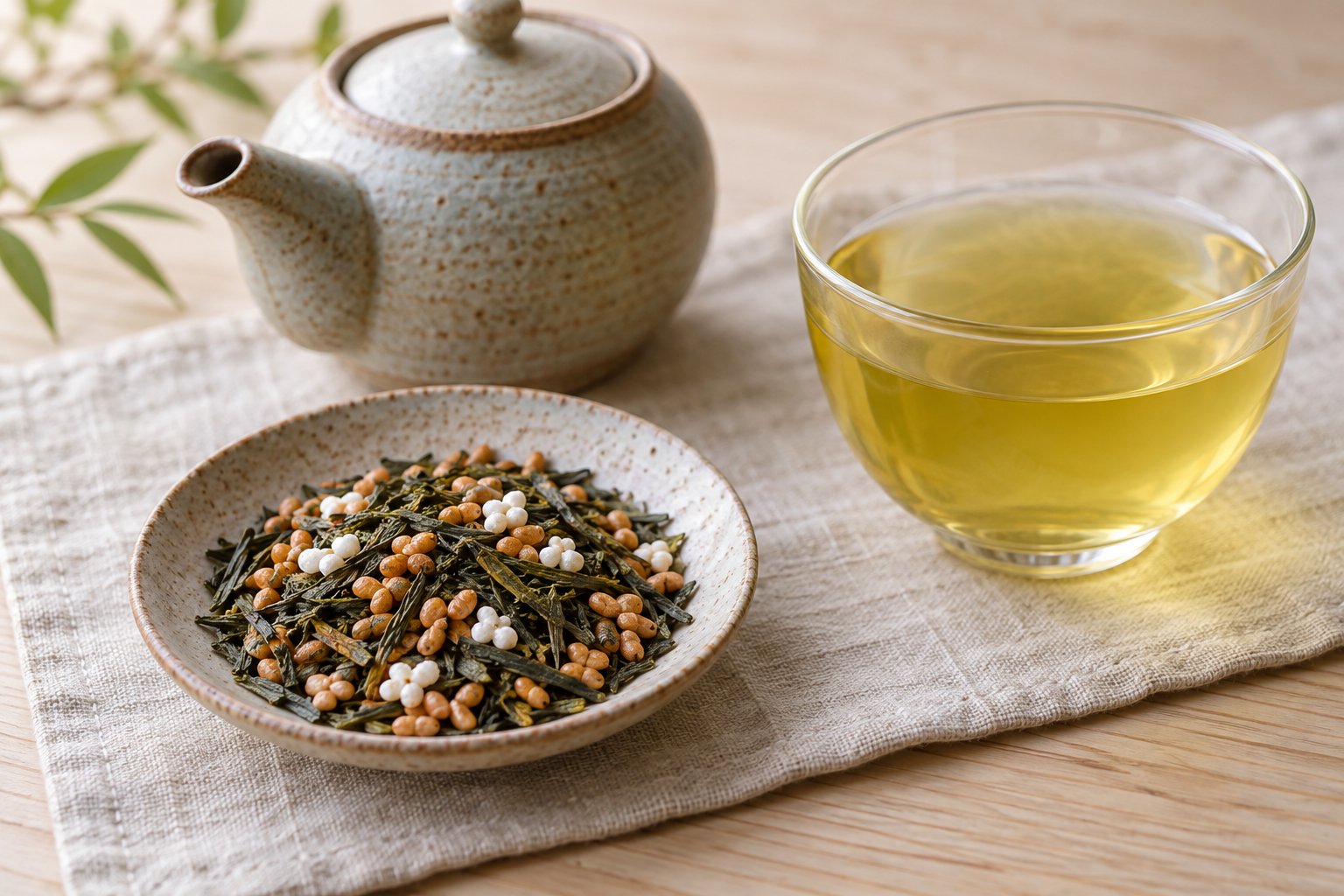
Blue matcha is a blue powder made from butterfly pea flowers, not tea leaves, and it is not matcha. Brown hojicha powder is also a different tea from matcha.
The definition of matcha
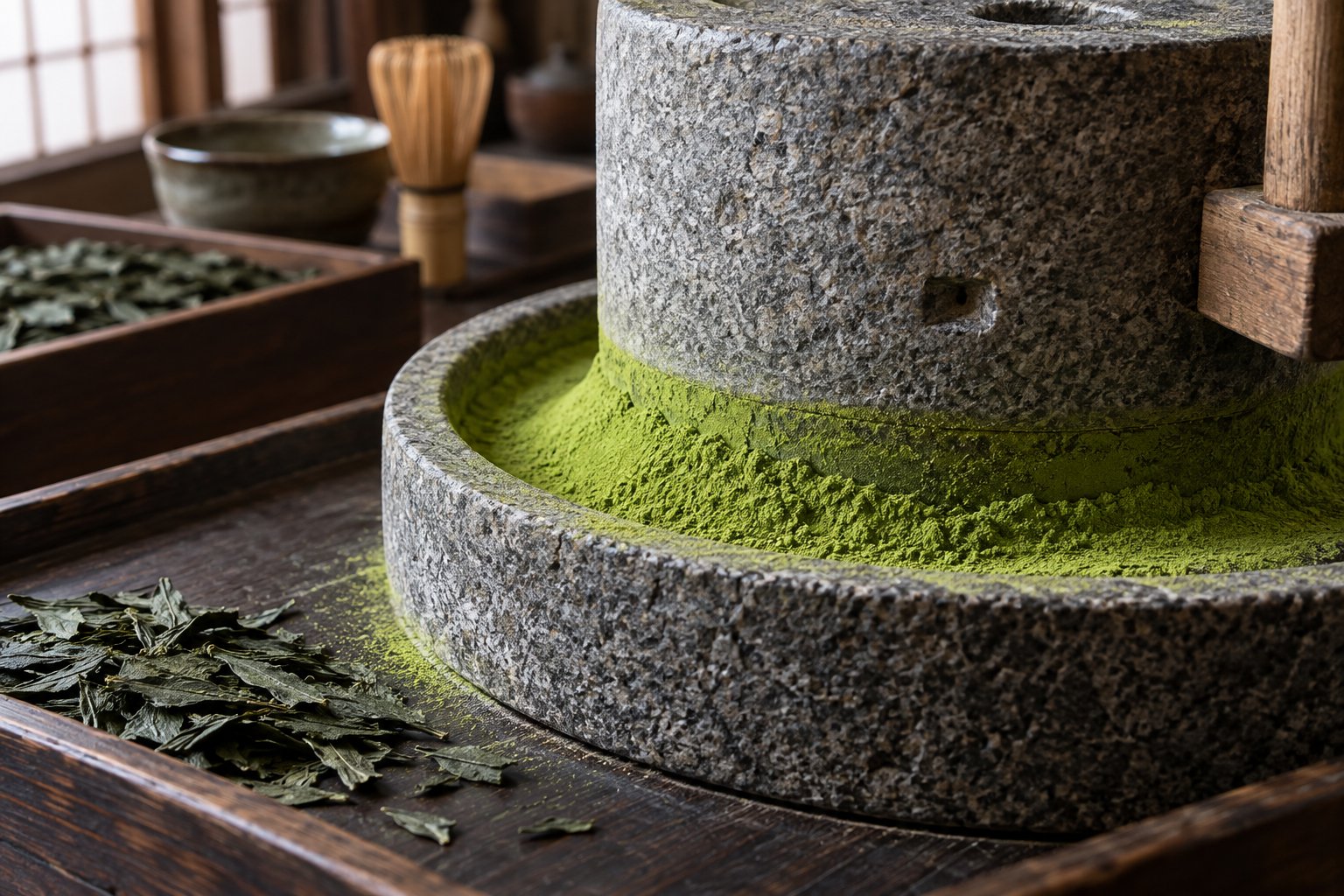
The Green Tea Labeling Standard of the Japan Tea Central Public Interest Incorporated Association defines “tea” as products made from plants of the genus Camellia (Camellia sinensis) and defines matcha as “tencha made into fine powder with a tea mill or similar.” Only ground tencha made from tea plant leaves is matcha. Powder from other plants is not matcha, whether it is green or blue. How matcha differs from powdered tea and latte mixes is covered in Pure Matcha.
Blue matcha gets its blue from butterfly pea flowers
In 2021, the US FDA (Food and Drug Administration) added butterfly pea flower extract to its federal regulations (21 CFR 73.69) as a color additive. Under the definition, it is a dark blue liquid made by extracting dried flowers of Clitoria ternatea (butterfly pea) with water, and its main pigment is anthocyanins. Teas are among the foods it may be used in.
- Identity in the regulation: a dark blue liquid prepared by the aqueous extraction of dried butterfly pea flowers from Clitoria ternatea, processed by ultrafiltration, concentration and pasteurization; citric acid may be used to control the pH; the principal coloring component is anthocyanins
Source: US FDA, “Listing of Color Additives Exempt From Certification; Butterfly Pea Flower Extract,” Federal Register 86 FR 49230 (2 September 2021) https://www.govinfo.gov/content/pkg/FR-2021-09-02/pdf/2021-18995.pdf
In a paper published in a Thai academic journal, butterfly pea extract was red in acidic solution, blue in neutral solution and green in basic solution. This is why the color changes when an acid such as lemon is added. Both the source of the color and the way it changes differ from the chlorophyll that makes matcha green.
Brown powder is hojicha powder
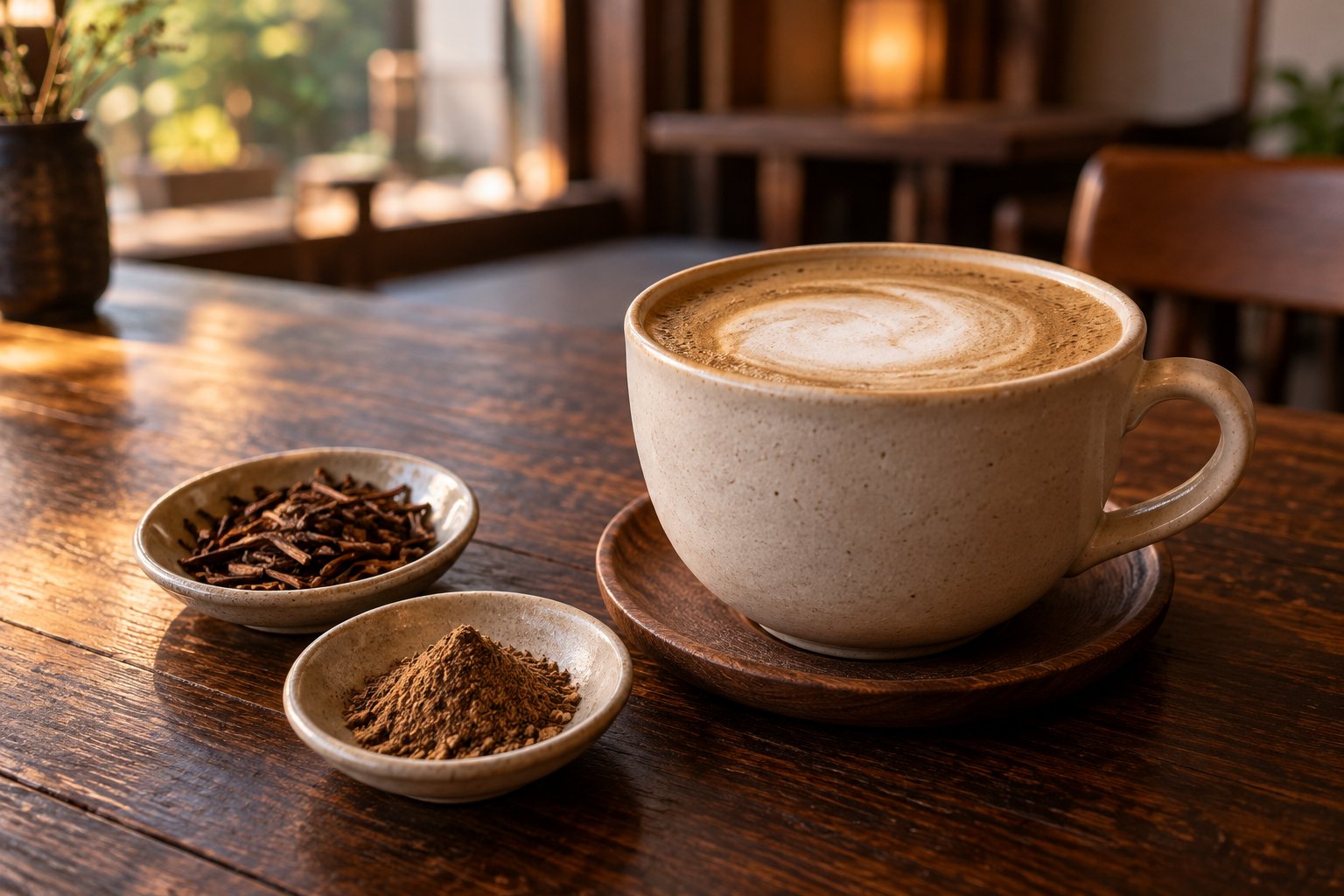
Hojicha powder is hojicha (sencha, bancha or similar teas roasted over strong heat) ground into powder. It is brown because it has been roasted, which is different from matcha that has turned brown from deterioration. Under the labeling standard of the Japan Tea Central Public Interest Incorporated Association, tea ground into powder with a grinder or similar is not matcha but has a separate name, “powdered tea.” How to check the raw material is covered in What Is Hojicha?.
What to check about color when buying
Color is decided both by how the leaves were grown before grinding and by storage after grinding, so check the harvest, shading method, grinding date and storage temperature with your supplier. Keeping a small amount from the bag you receive lets you compare the color of later lots under the same conditions.
Questions for your supplier
| Item | What to check |
|---|---|
| Harvest | First flush only, or including second flush and autumn-winter tea |
| Shading | About how many days the tencha was shaded, and whether the cover was on a trellis or directly on the plants |
| Grinding date and lot | When it was ground, and whether the lot number is known |
| Storage and shipping | At what temperature it is stored, and how it is packed and shipped |
| Color values | Whether they can provide them, and if so with what instrument and method |
How to read specifications and certificates of analysis is in How to Tell High Quality Matcha, and color tendencies by grade are on our matcha grades page.
Keep some from the first bag and compare it with the next lot
The following is our editors’ view. Take a small amount from the first bag you receive, seal it and freeze it, and when the next lot arrives you can compare the two on the same paper under the same light. Bring chilled matcha back to room temperature before opening it. Opening it cold causes condensation and damages it (Does Matcha Go Bad?).
Samples from Omakase Matcha
Omakase Matcha sources matcha directly from the growing regions of Uji, Yame, Kagoshima, Shizuoka and Miyazaki. We send up to 3 samples, and orders start from 1 kg. Line up the samples under your shop’s lighting and with the milk you use, and compare them.
Sources
- Japan Tea Central Public Interest Incorporated Association, “緑茶の表示基準” (Green Tea Labeling Standard), in Japanese https://www.nihon-cha.or.jp/pdf/hyoujikijyun.pdf
- Kyoto Prefecture, “覆い栽培した茶が受けるストレスの調査” (Survey of stress on tea grown under cover), in Japanese https://www.pref.kyoto.jp/library_documents/h27-ooichasutoresu.pdf
- Tea Research Center, Shizuoka Prefectural Research Institute of Agriculture and Forestry, “てん茶の良質多収を目指した被覆技術” (Shading techniques for high quality and high yield tencha), 2019, in Japanese https://www.pref.shizuoka.jp/_res/projects/default_project/_page_/001/044/307/r1-a.pdf
- Tea Research Center, Shizuoka Prefectural Research Institute of Agriculture and Forestry, “食品添加に適した濃緑な生葉の生産方法” (Producing dark green fresh leaves suitable for food use), in Japanese https://www.pref.shizuoka.jp/_res/projects/default_project/_page_/001/044/307/036.pdf
- Agriculture, Forestry and Fisheries Research Council, “高品質・安定生産を可能にするてん茶の適期被覆技術体系の確立” (Establishing well-timed shading techniques for high quality, stable tencha production), in Japanese https://www.affrc.maff.go.jp/docs/project/jisseki/2019/attach/pdf/index-34.pdf
- Aichi Agricultural Research Center Research Bulletin 52, “強遮光短期被覆による濃緑で高品質な食品加工向け直がけ碾茶生産技術の開発” (Dark green, high quality direct-covered tencha for food processing by strong, short shading), 2020, in Japanese https://www.pref.aichi.jp/uploaded/attachment/374703.pdf
- Aichi Agricultural Research Center Research Bulletin 49, “スキャナーとフリーソフトを利用したてん茶の葉色簡易測定法” (A simple method for measuring tencha leaf color with a scanner and free software), 2017, in Japanese https://www.pref.aichi.jp/uploaded/attachment/258417.pdf
- Aichi Agricultural Research Center, “デジタル画像を利用したてん茶被覆法の判別技術を開発” (Identifying tencha shading methods with digital images), 2019, in Japanese https://www.pref.aichi.jp/uploaded/attachment/316261.pdf
- Yoriyuki Nakamura, “国内における抹茶(碾茶)生産の推移と科学的特性” (Trends in matcha (tencha) production in Japan and its scientific characteristics), Tea Science Research Center, University of Shizuoka, in Japanese https://dfns.u-shizuoka-ken.ac.jp/labs/tsc/thesis/0410.pdf
- Yasuhiro Haraguchi et al., “原料抹茶の保存条件が品質に与える影響” (Effects of storage conditions on quality of matcha), Tea Research Journal 93, 2002, in Japanese https://www.jstage.jst.go.jp/article/cha1953/2002/93/2002_93_1/_pdf
- Hiroaki Murakami, “抹茶の審査について” (Sensory evaluation of matcha), Tea Research Journal 134, 2022, in Japanese https://www.jstage.jst.go.jp/article/cha/2022/134/2022_31/_pdf
- Yuichi Yamaguchi, National Institute of Vegetable and Tea Science, NARO, “日本茶の品質評価の現状と展望” (Current state and outlook of quality evaluation of Japanese tea), in Japanese https://www.naro.go.jp/PUBLICITY_REPORT/publication/archive/files/vt_s_3_5-2.pdf
- Mie Prefectural Industrial Research Institute, “LED技術を利用した抹茶の光劣化軽減に関する調査” (Reducing light deterioration of matcha using LED technology), Research Report 37, 2013, in Japanese https://www.pref.mie.lg.jp/common/content/000172115.pdf
- Osaka Research Institute of Industrial Science and Technology, “色を表現するために ~Ⅰ.色の種類について” (Expressing color: I. Types of color), in Japanese https://orist.jp/technicalsheet/16001.pdf
- US FDA, “Listing of Color Additives Exempt From Certification; Butterfly Pea Flower Extract,” Federal Register 86 FR 49230, 2021 https://www.govinfo.gov/content/pkg/FR-2021-09-02/pdf/2021-18995.pdf
- Kungsuwan K, Singh K, Phetkao S, Utama-ang N, “Effects of pH and anthocyanin concentration on color and antioxidant activity of Clitoria ternatea extract,” Food and Applied Bioscience Journal 2(1) https://li01.tci-thaijo.org/index.php/fabjournal/article/view/77397
- Popbela, “Warna Matcha Seperti Apa? Ini Jenis dan Padu-padannya,” 5 October 2026 https://www.popbela.com/fashion/style-trends/warna-matcha-seperti-apa-00-cvjck-2tbzw9