
 Reviewed by: Takahiro Sugiyama (CEO, meguri Inc.)
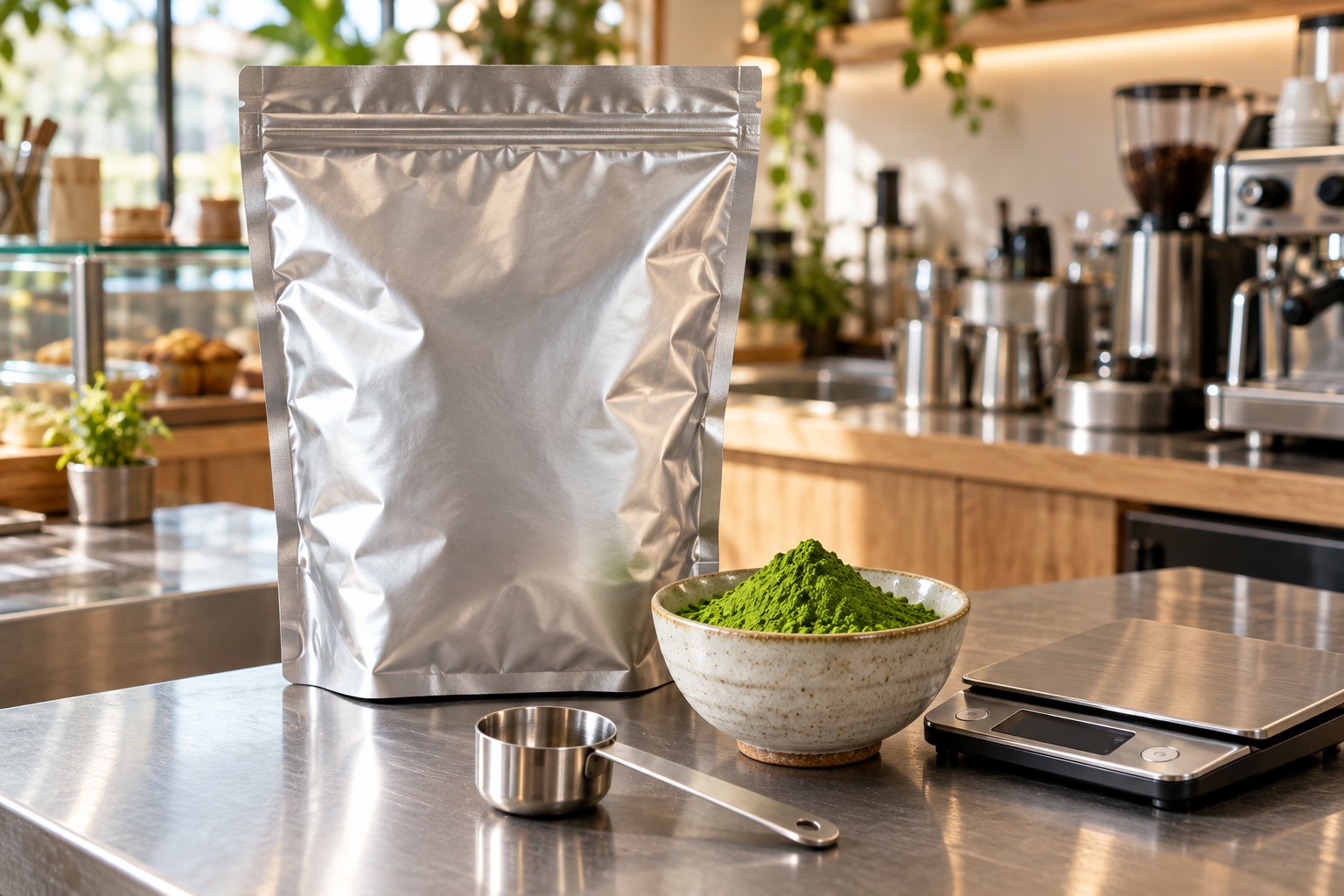
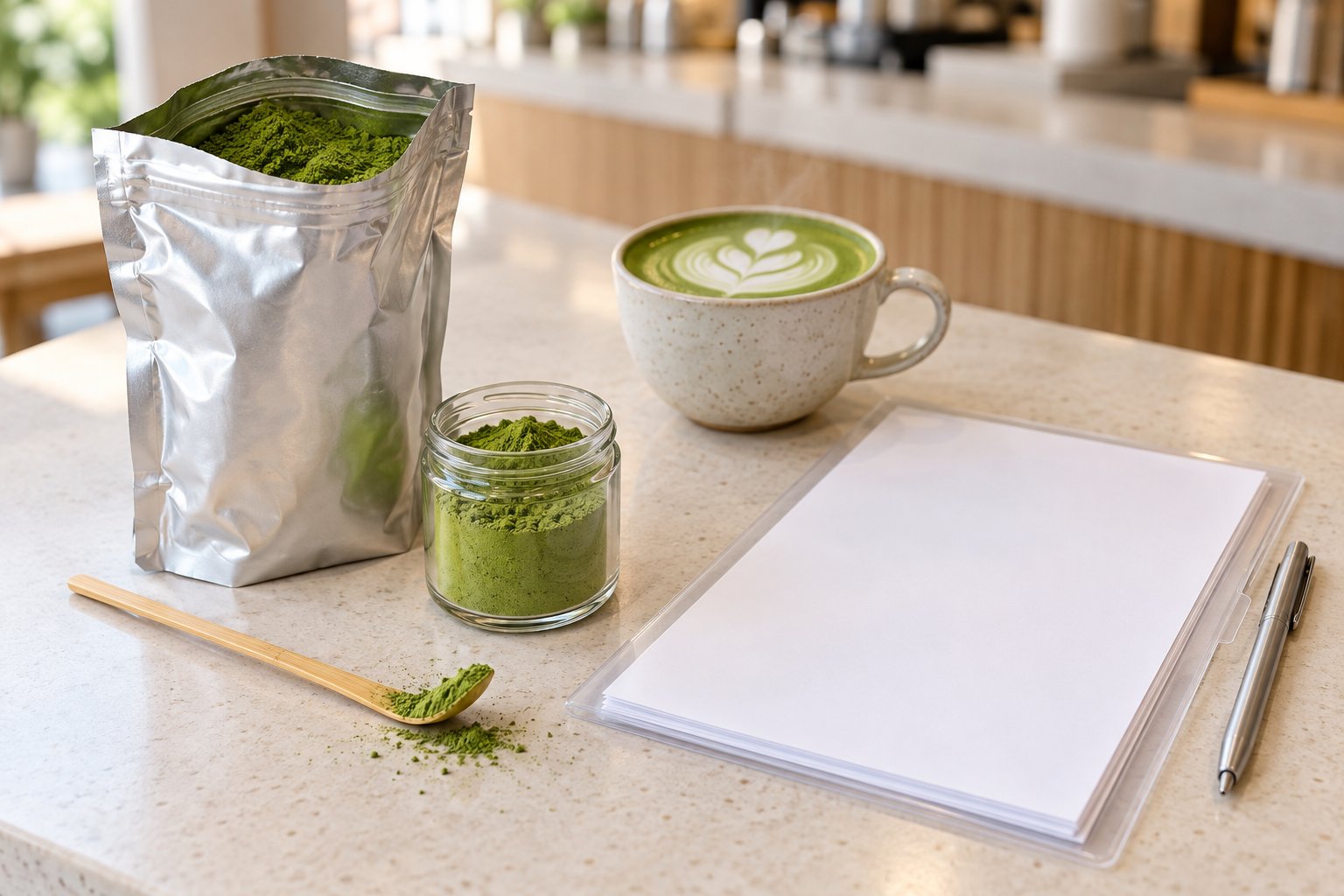
Search for bulk matcha for a café or bakery and you will find many 1kg and 500g bags. Under the same word “matcha”, some bags hold only matcha and others hold a latte powder with sugar and milk powder, and the amount per drink and the cost are completely different. The label on the back tells you most of what is inside. This article checks the Japanese labelling rules in public documents, then covers choosing for lattes or baking, storing a 1kg bag, and what to check in a quote. For buying wholesale for import into another country, see How to buy matcha wholesale.
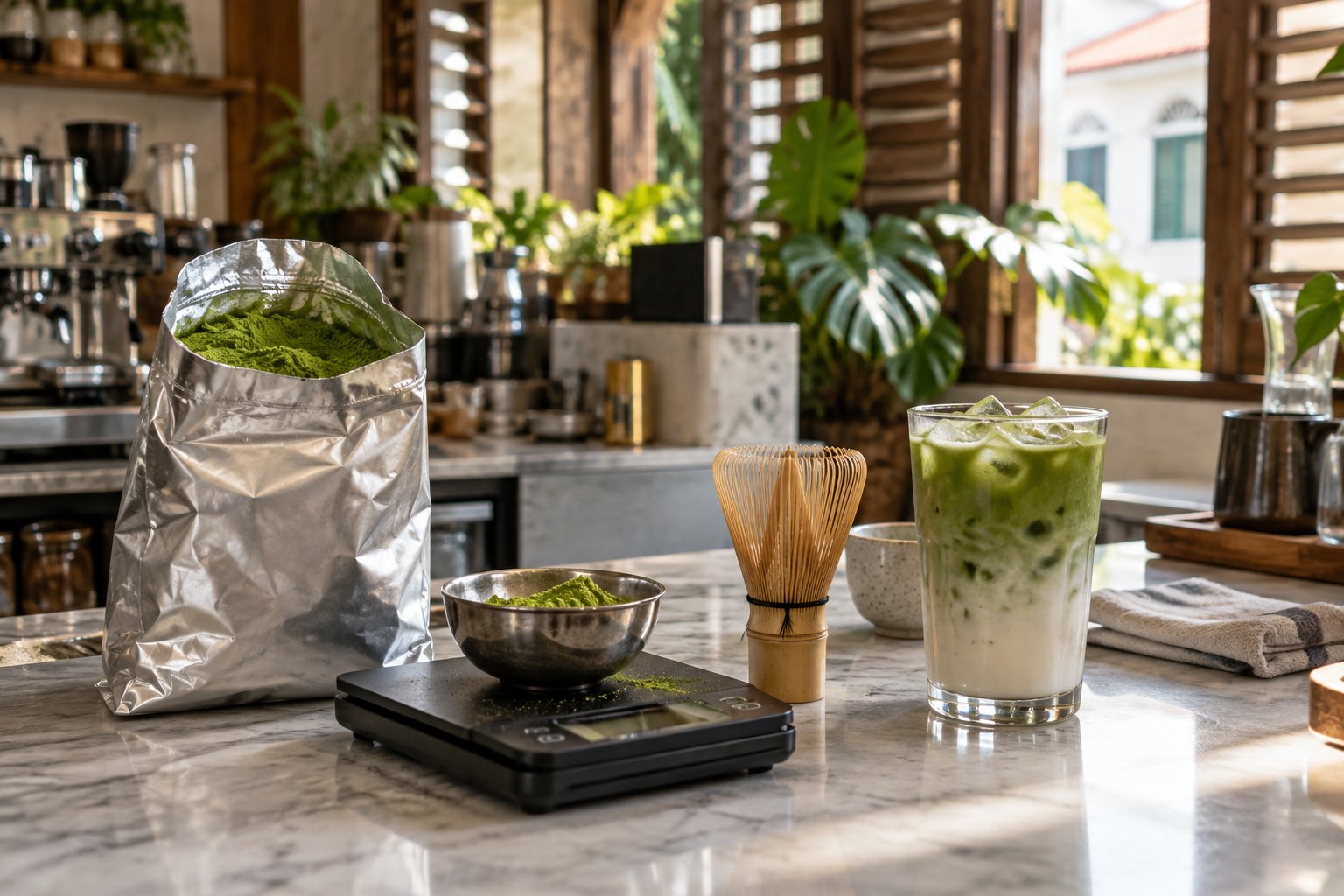
What is in a bulk matcha bag
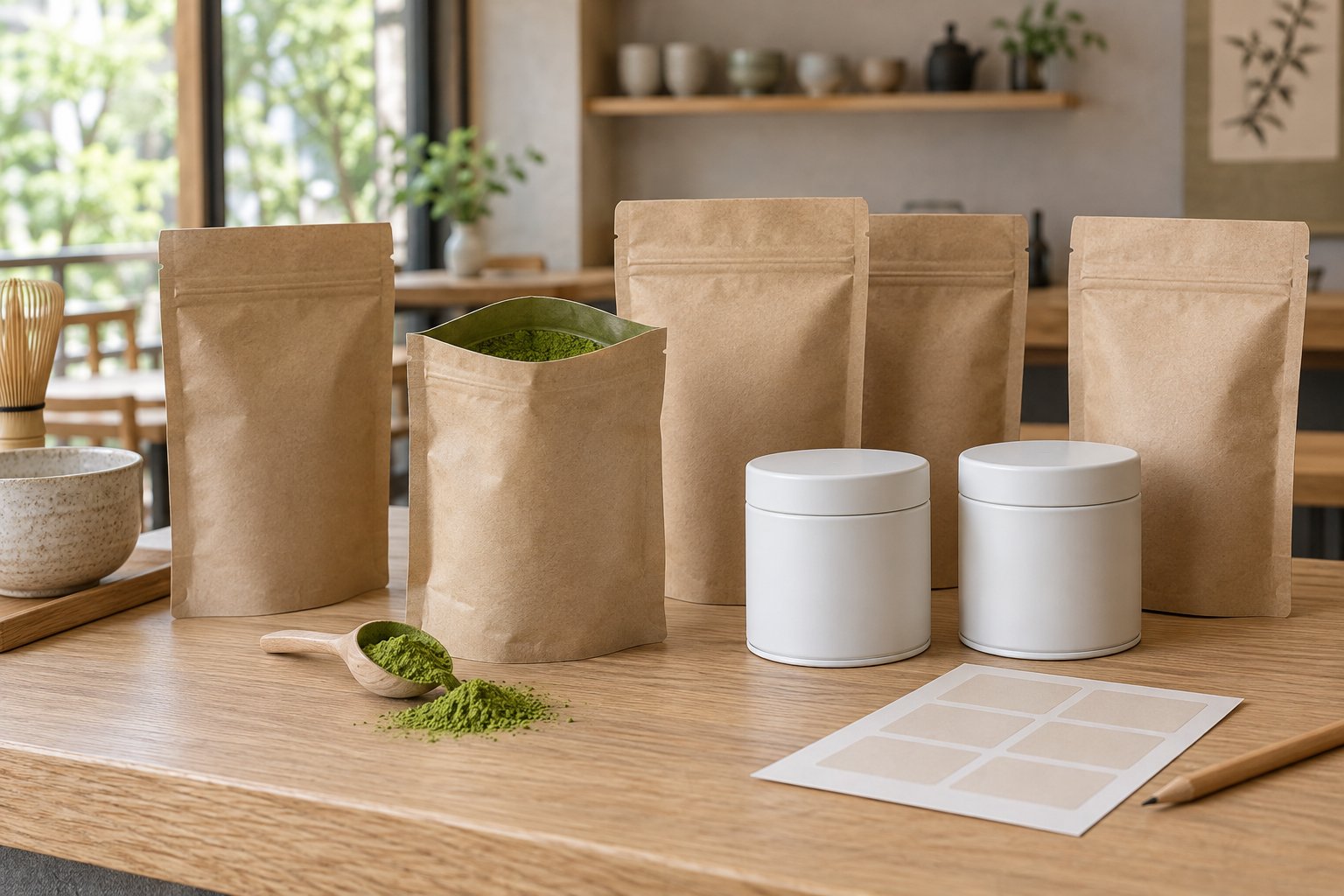
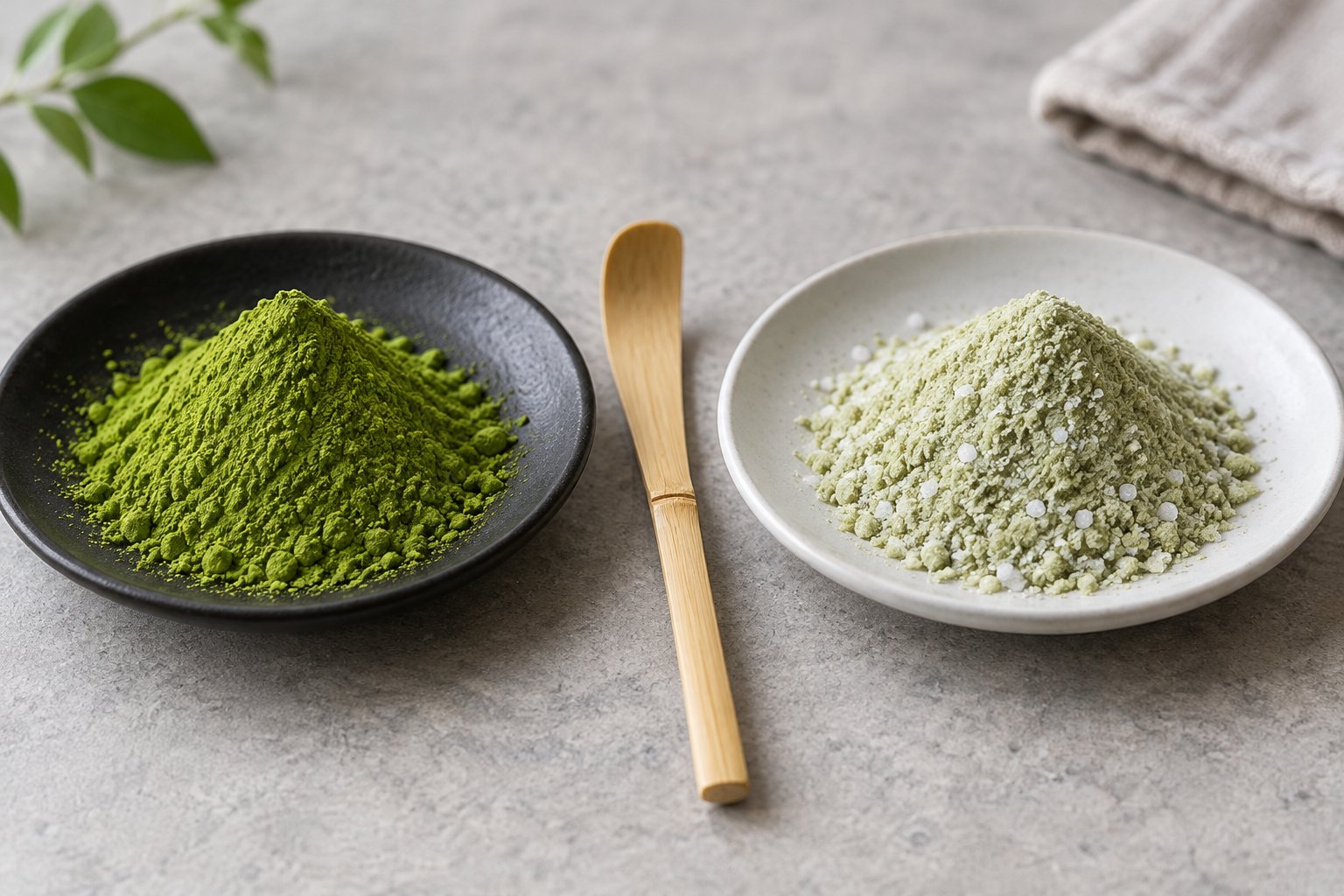
Bags of matcha sold for business use fall into two groups: matcha only, and matcha latte powder mixed with sugar and dairy. Both come in 1kg and 500g bags, but they are used and labelled differently.
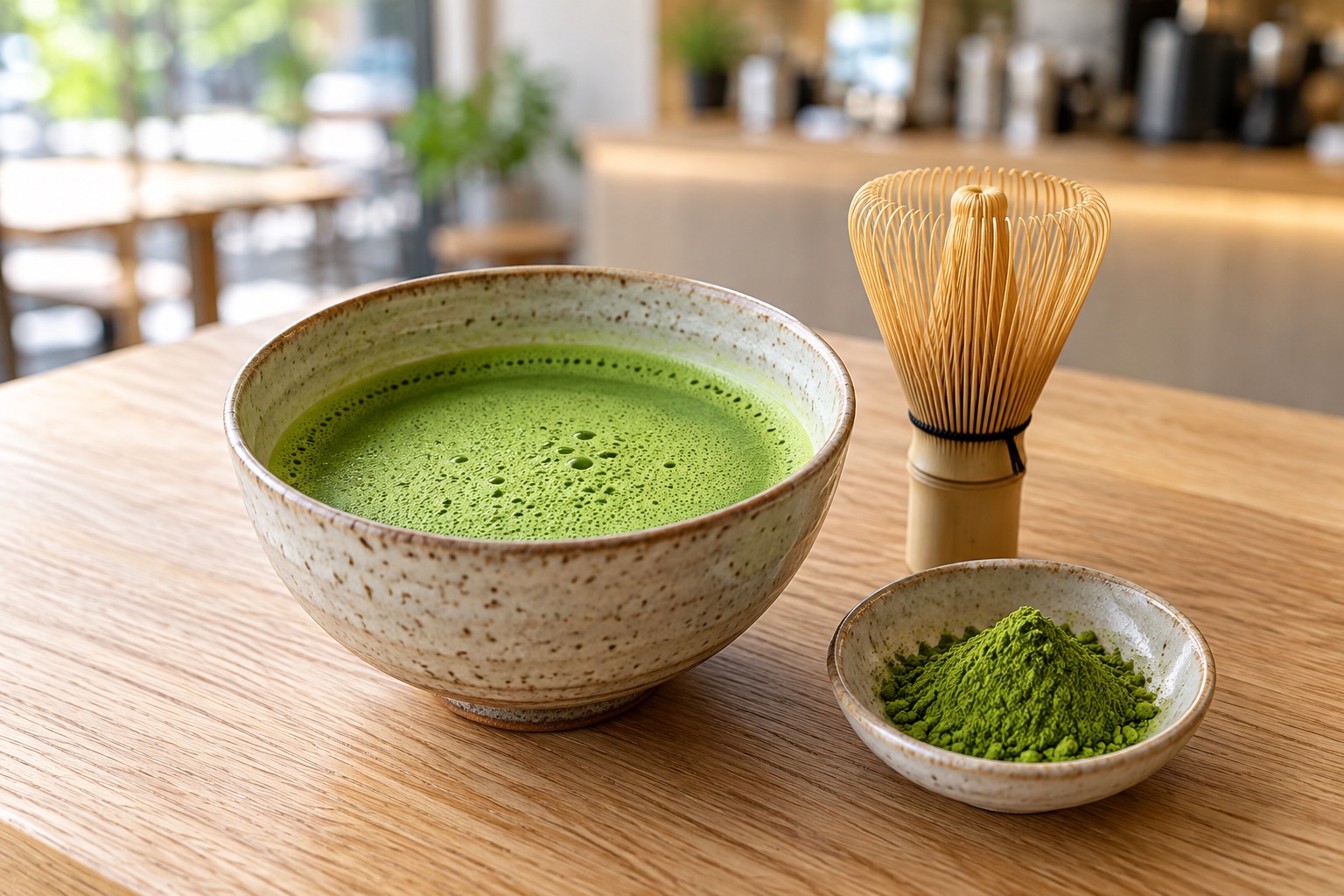
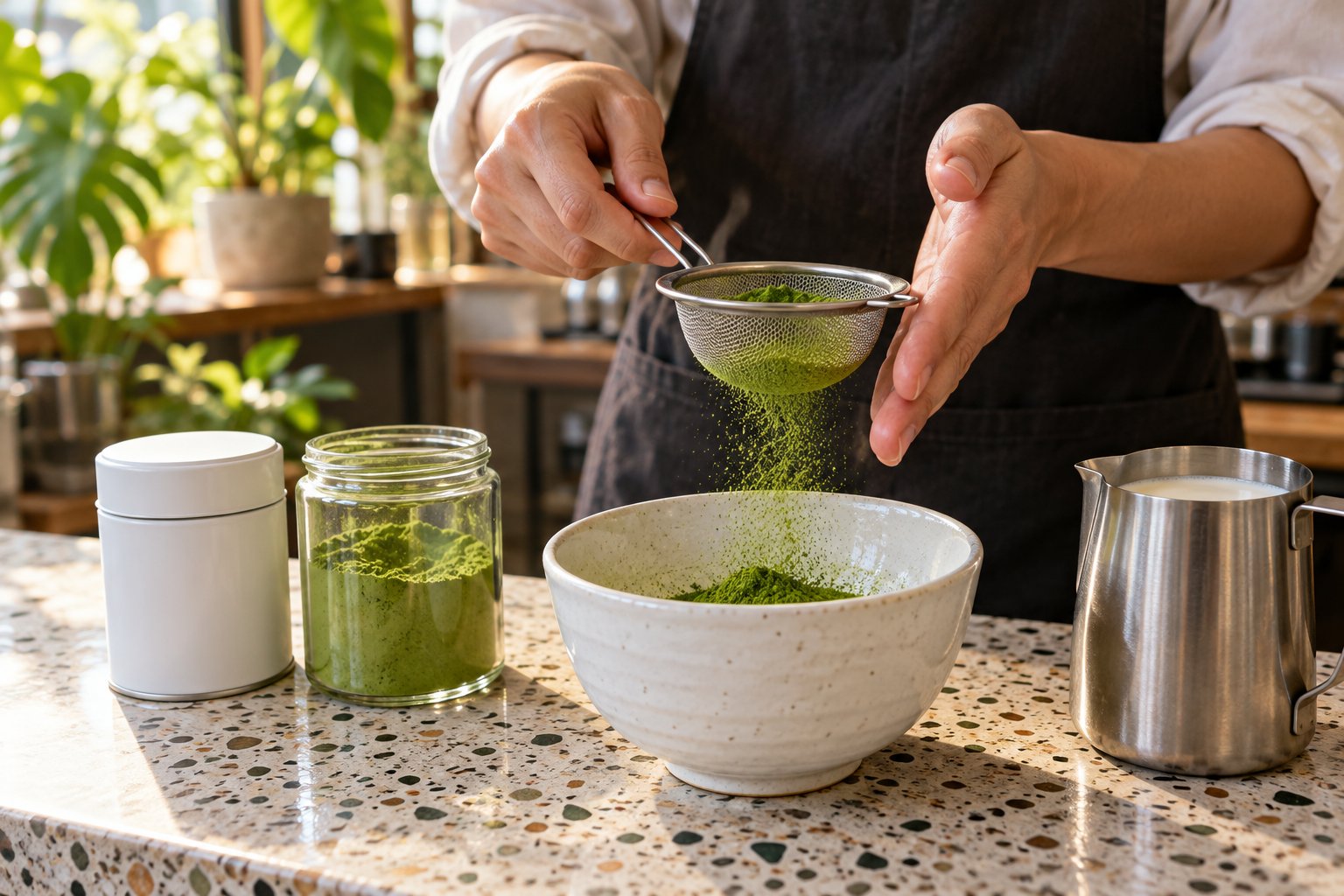
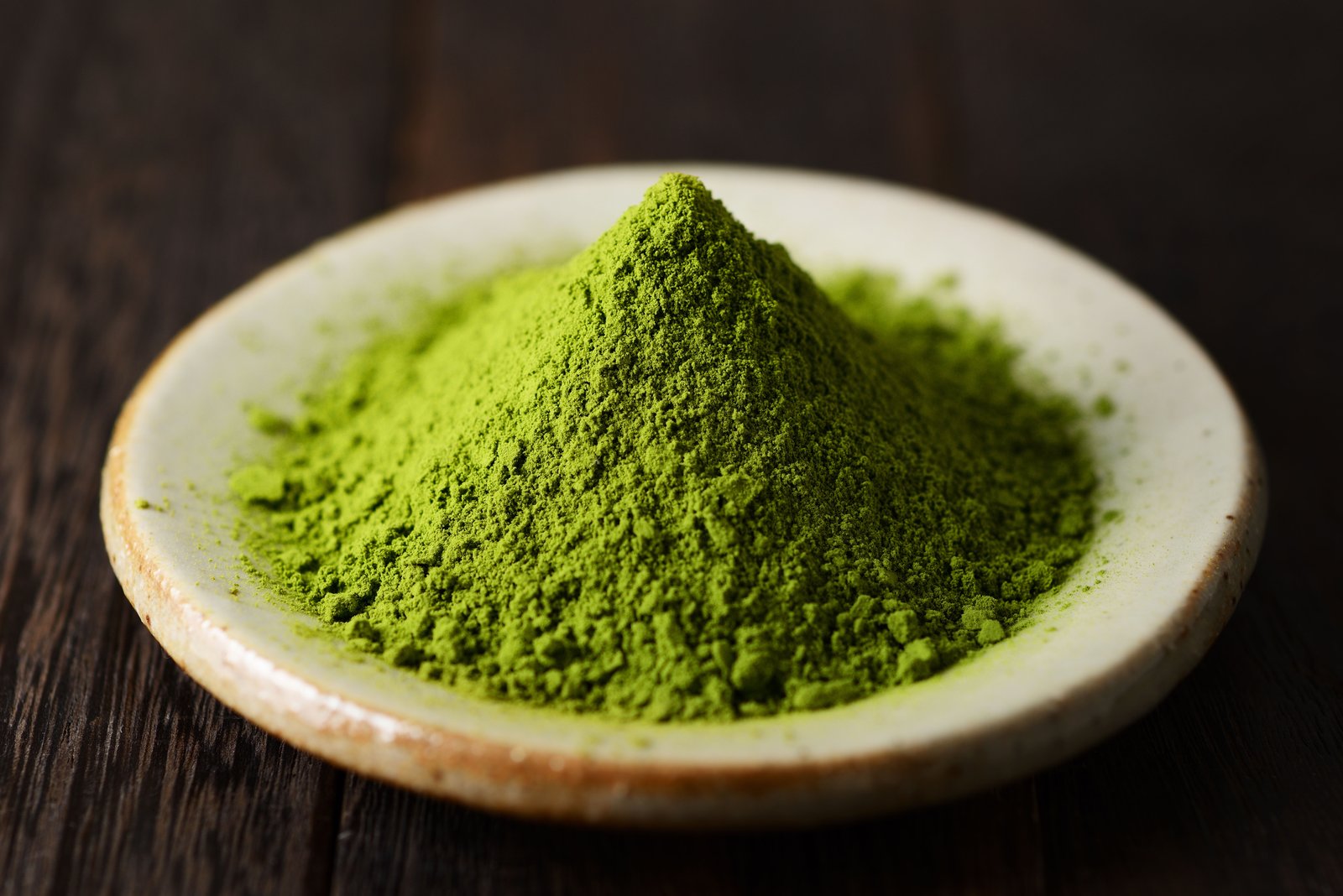
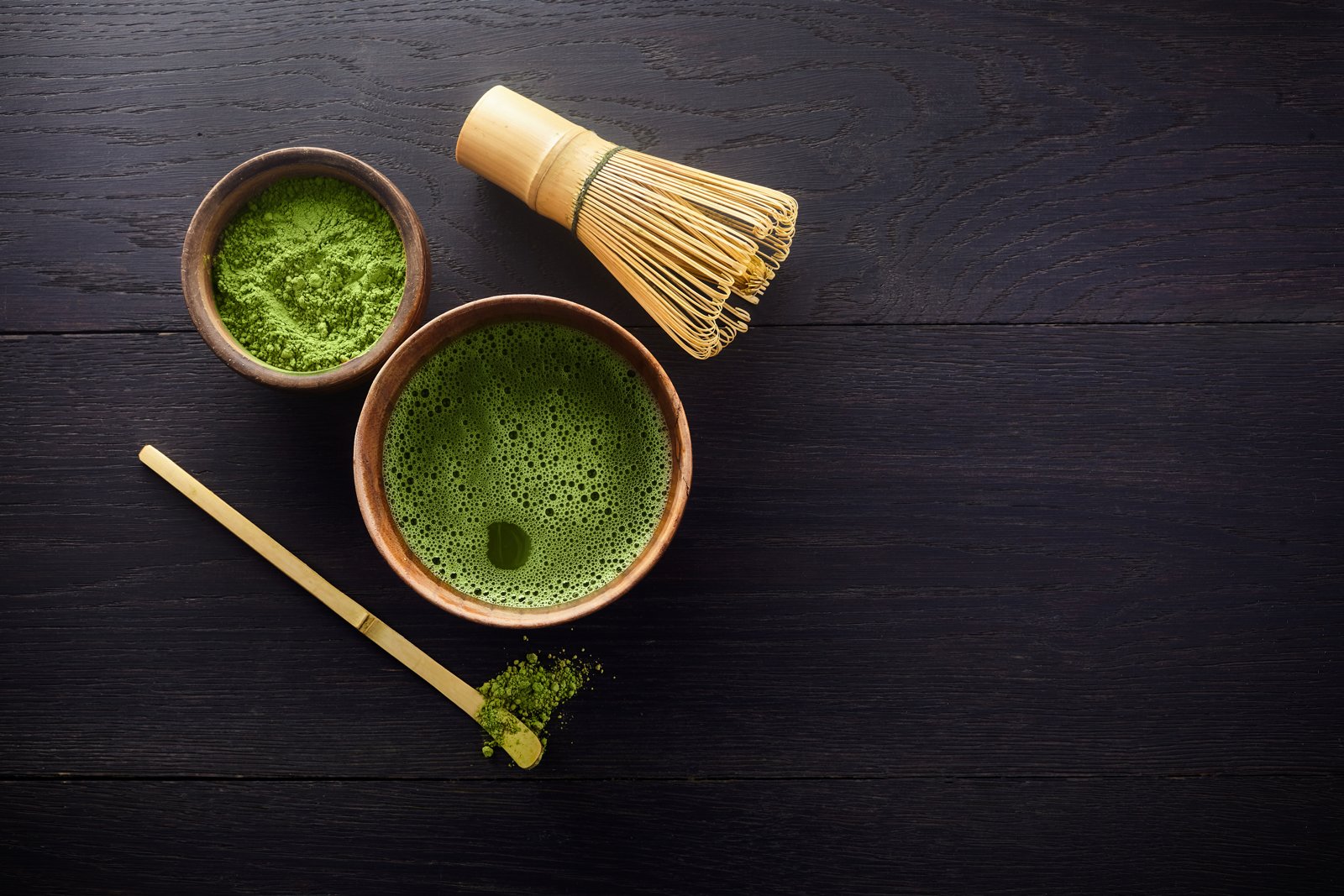
100% matcha powder
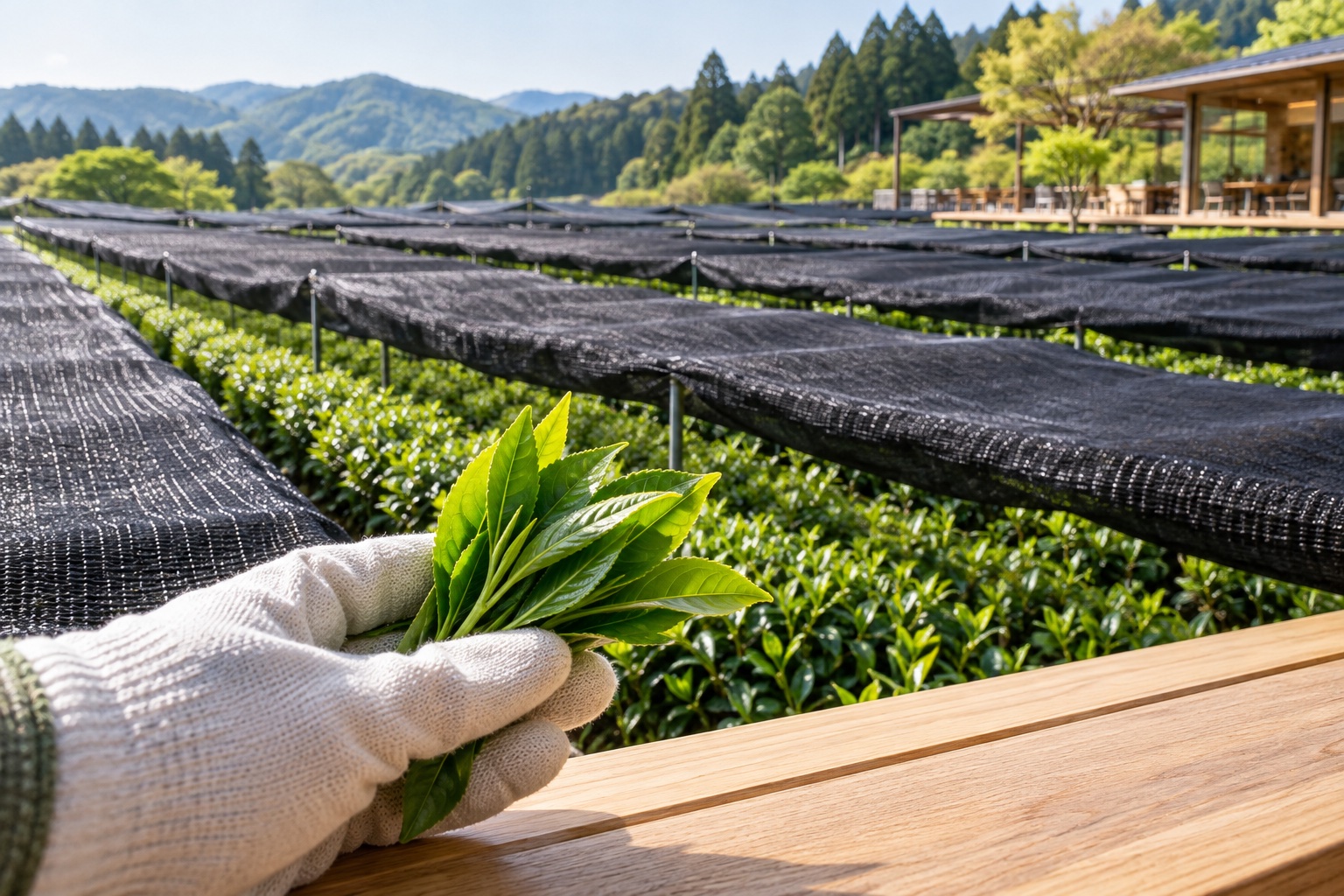
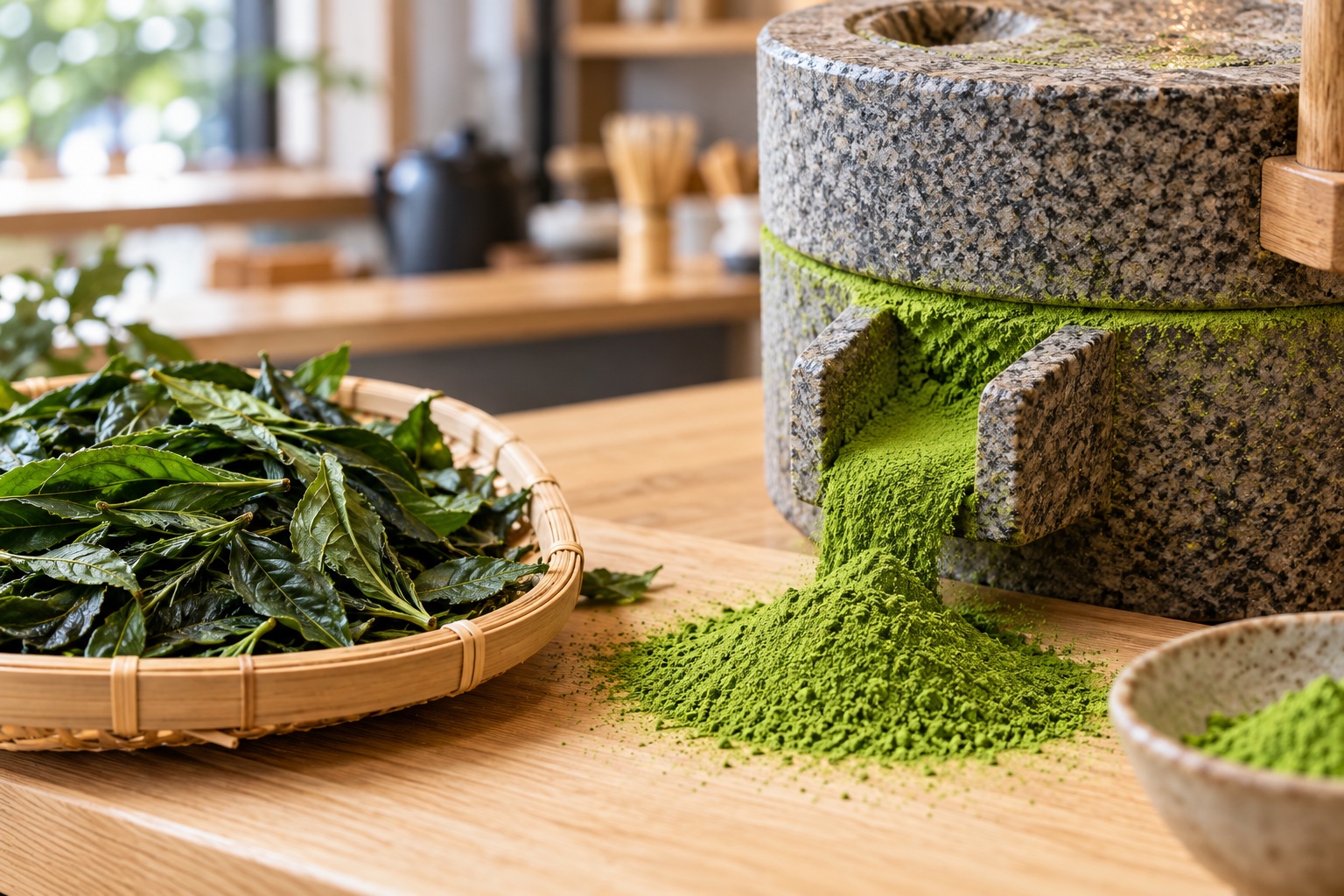
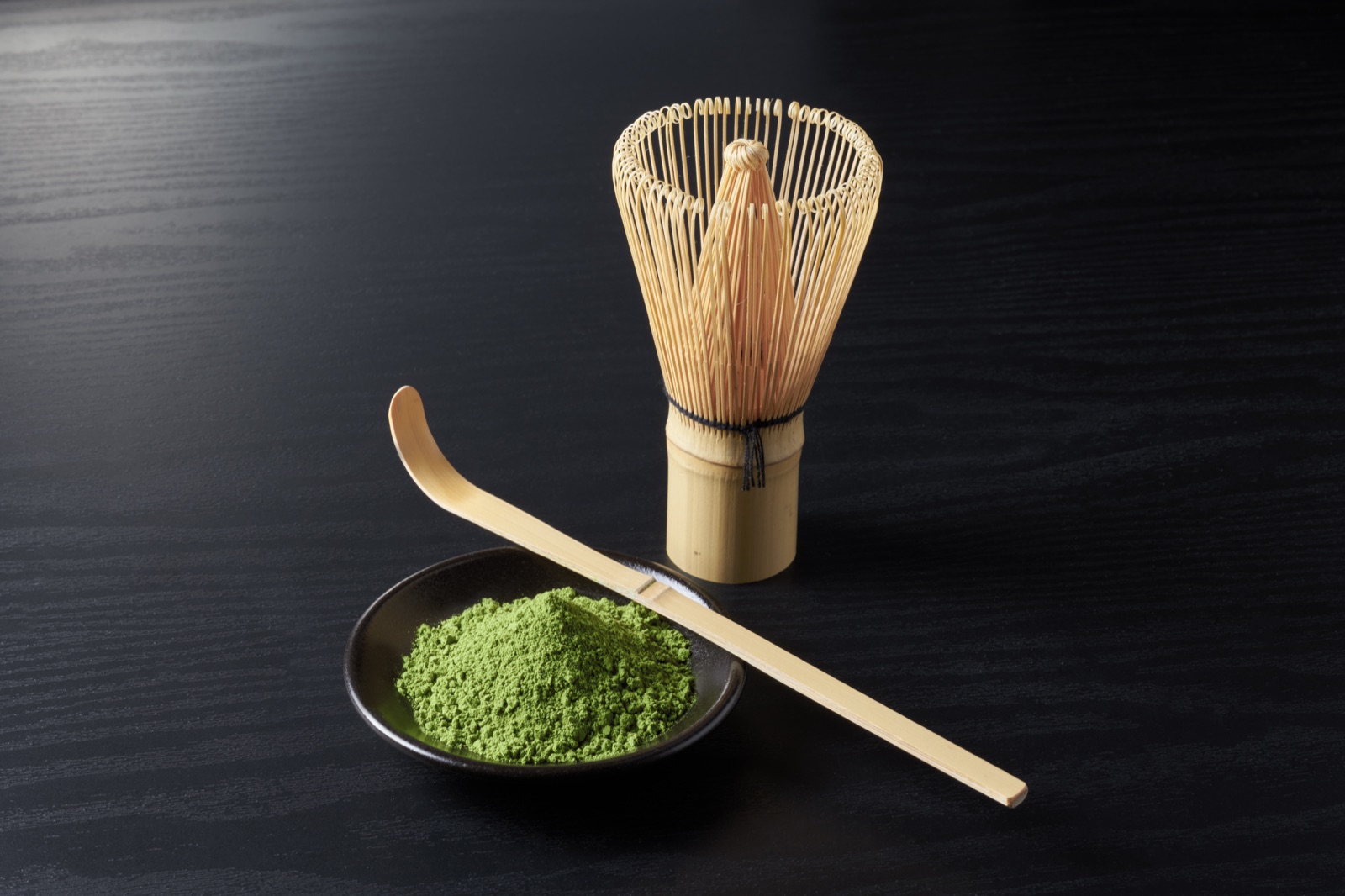
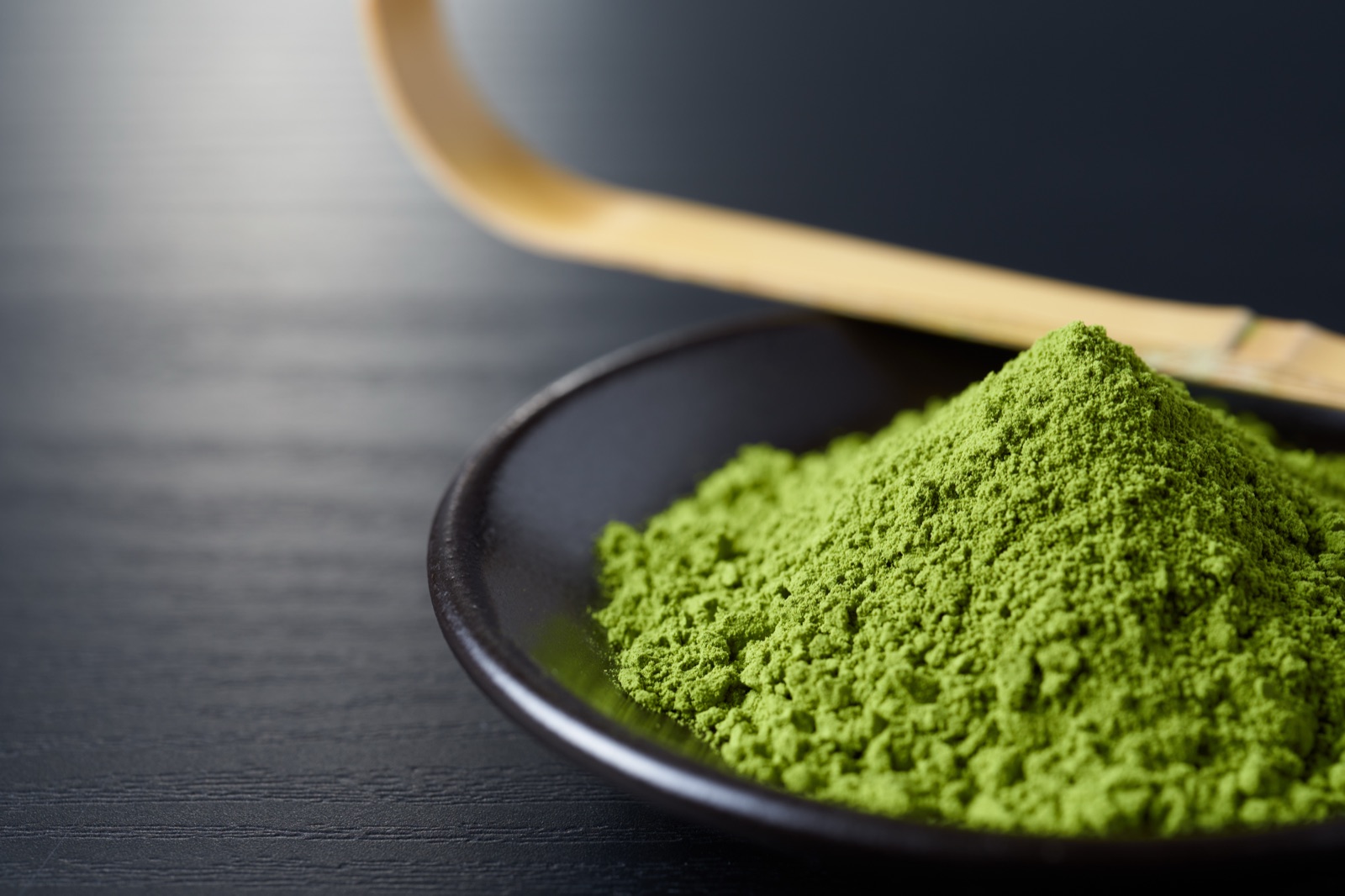
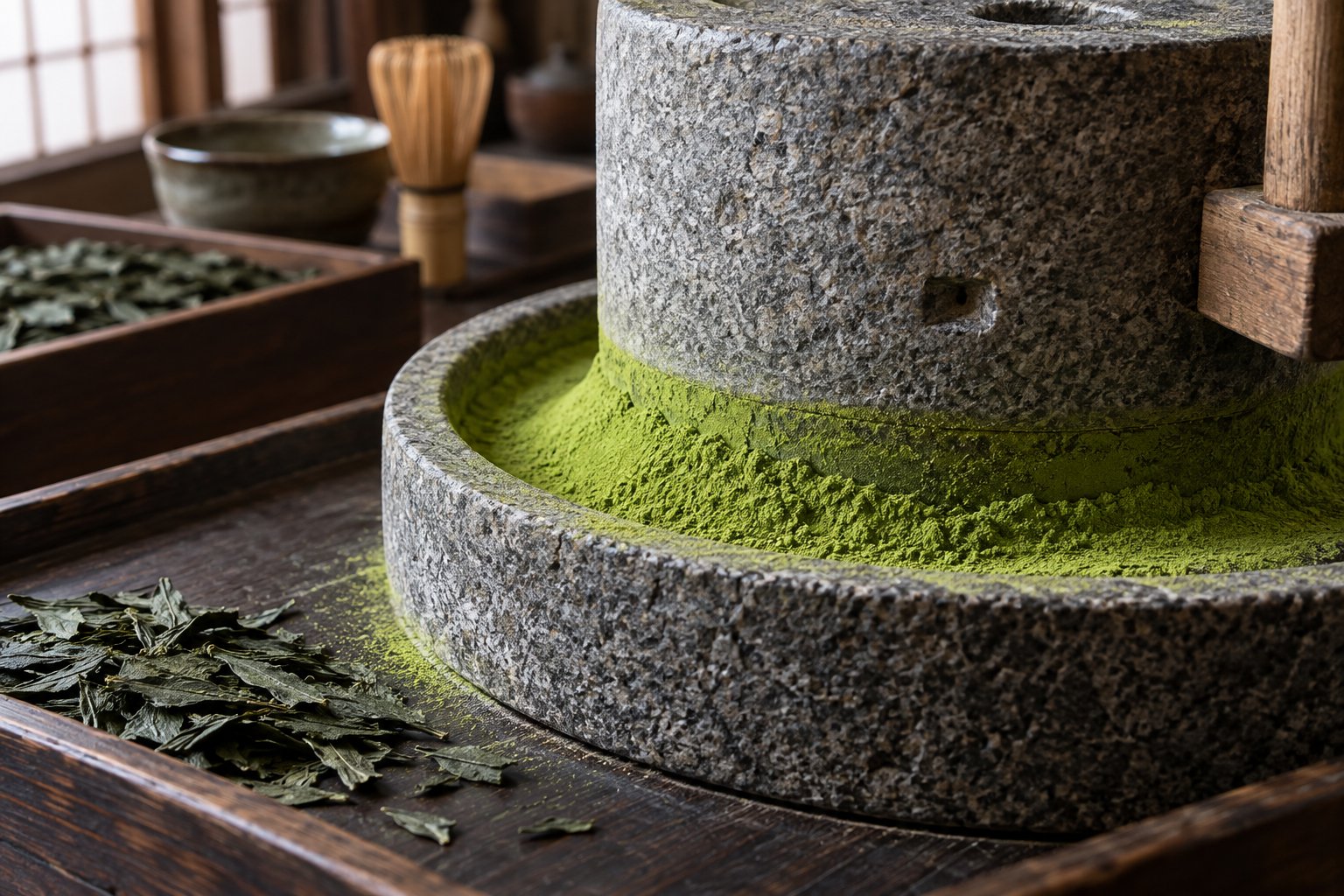
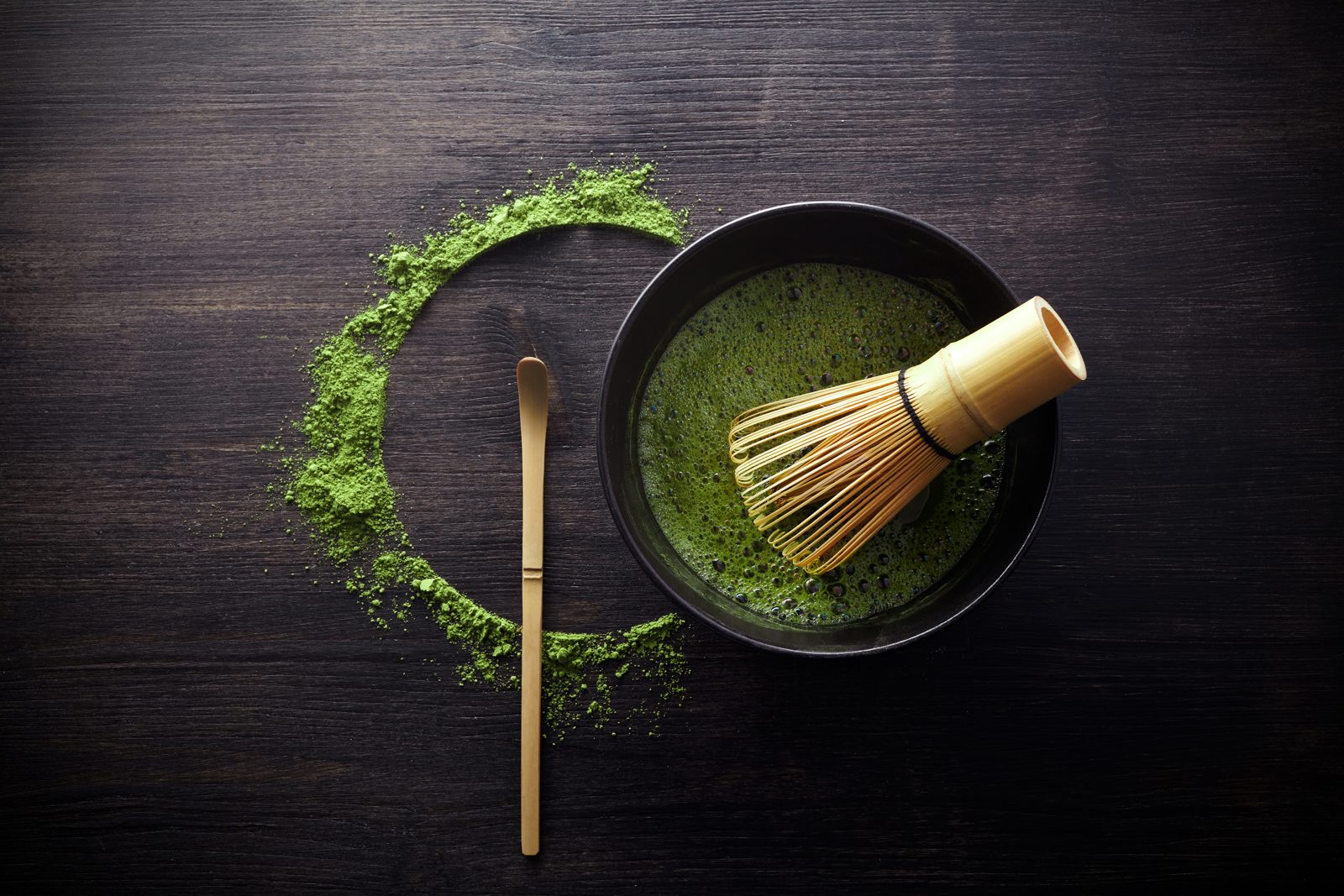
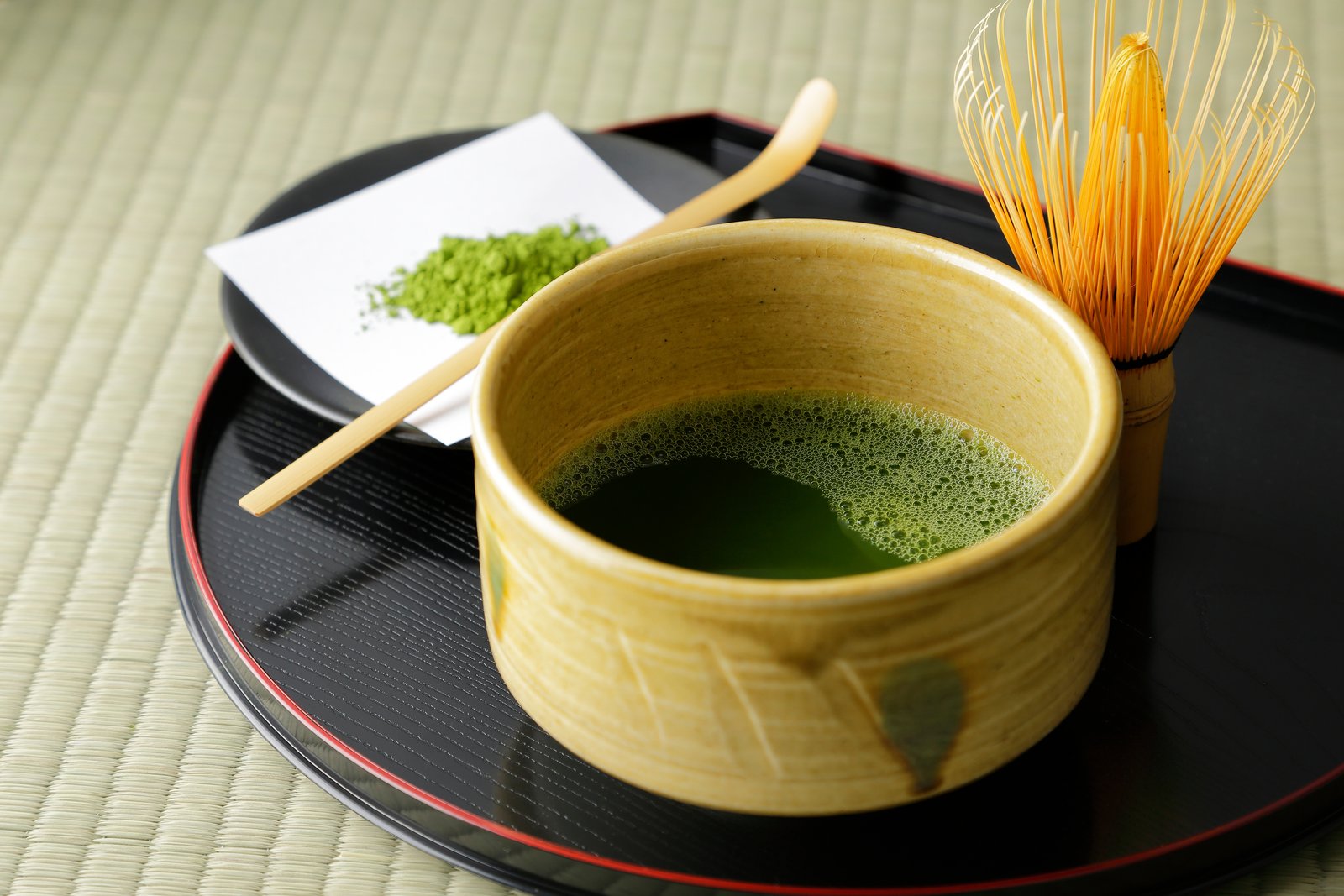
This is matcha alone. The Japan Tea Central Public Interest Incorporated Association’s Green Tea Labelling Standard (an industry standard, last revised on 10 July 2026) defines matcha as tencha (shade-grown tea leaves steamed and dried without rolling) ground into a fine powder with a stone mill or similar. Sencha and other teas ground with a grinder are “powdered tea” (粉末茶), a different name from matcha.
It has no sugar or milk, so you set your own recipe for lattes, straight matcha, baked goods or ice cream.
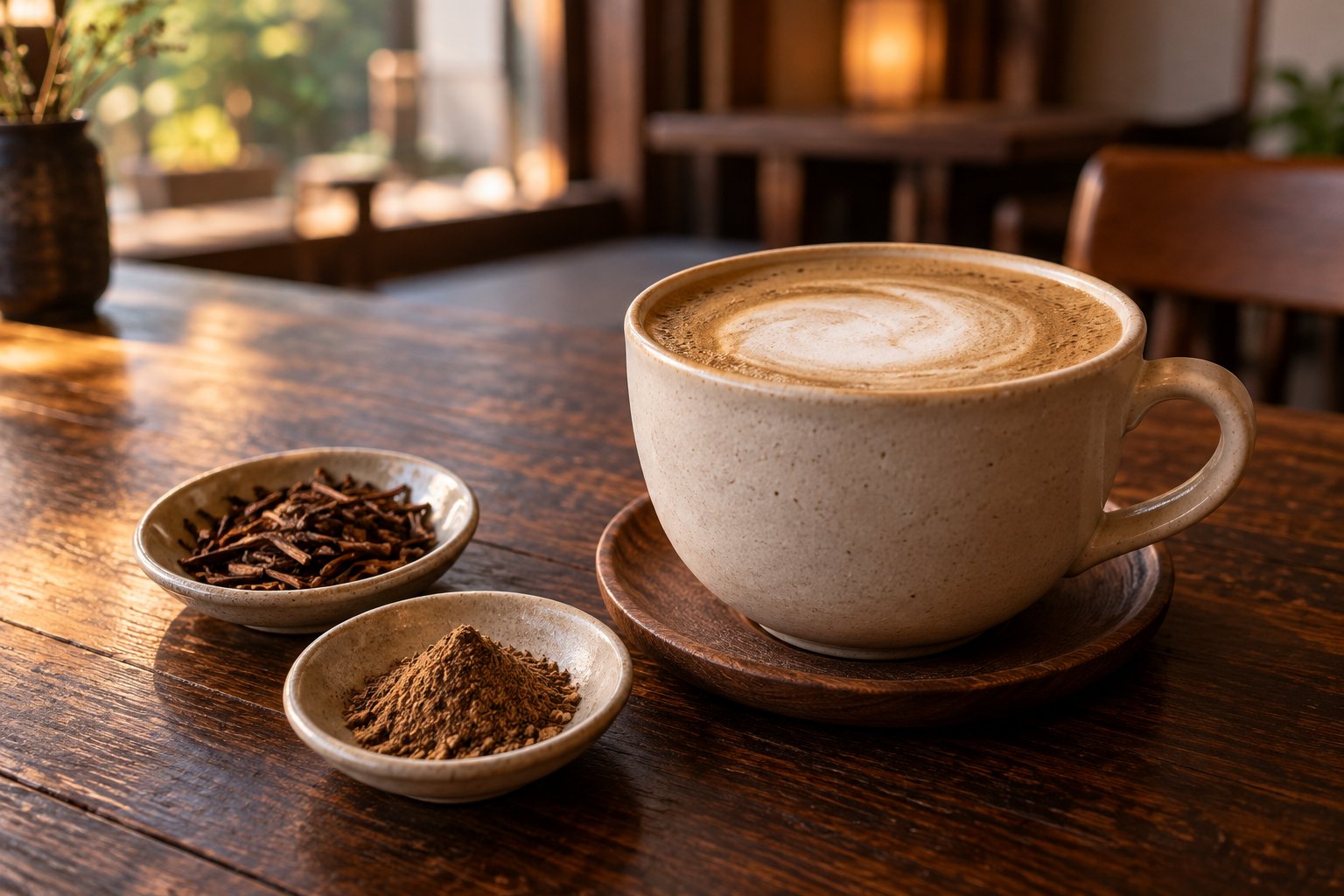
Matcha latte powder (sweetened, with milk)
This is matcha mixed with sugar, dextrin (a powder made by breaking down starch), milk powder, vegetable oil and other ingredients. You only dissolve it in hot water or milk, so the taste varies less between staff. The industry’s Green Tea Labelling Standard sets names for teas, and powders mixed with sugar or milk powder are not among them. They are labelled under Japan’s Food Labelling Standard like other processed foods.
Which one you choose changes how you read the label, how much you use per drink and how you work out the cost.
How to read the ingredients label
On a Japanese label, check three fields: product name, ingredients and country or region of origin of the main ingredient. Ingredients are listed in descending order of weight, so the position of “matcha” tells you whether it is more or less than the other ingredients.
Product name and ingredients
The Green Tea Labelling Standard requires the ingredient name on a matcha bag to be written as “tea” (茶) or “green tea” (緑茶). Even a bag of 100% matcha says “green tea”, not “matcha”, in the ingredients field. Check the product name field, not the ingredients, to see whether it is matcha.
The same standard says that, as a rule, food additives are not used, and that ingredients are listed in descending order of weight, with foods and additives separated. A bag of matcha alone lists one ingredient, “green tea” or “tea”, and no additives.
Source: Japan Tea Central Public Interest Incorporated Association, “緑茶の表示基準” (Green Tea Labelling Standard), implementing rules, ingredient names https://www.nihon-cha.or.jp/pdf/hyoujikijyun.pdf
Origin of the main ingredient
According to the Consumer Affairs Agency, since September 2017 all processed foods made in Japan must show the origin of the ingredient with the largest share by weight. The transition period ended on 31 March 2022, and business-use processed foods sold from April 2022 are also covered.
- A bag of matcha alone: “domestic” (国産) or the prefecture name if Japanese, the country of origin if imported (Green Tea Labelling Standard)
- A latte powder whose main ingredient is a processed food such as a sugar preparation: the place where it was made, such as “made in Japan” (国内製造) or “made in X” (○○製造)
The agency explains that “made in Japan” here means the ingredient was made in Japan, not that its raw material was Japanese. To know where the matcha was grown, check the supplier’s specification sheet (a document listing the contents and labelling), not only the origin field.
Tea labelling is set by an industry standard
Coffee in Japan has fair competition codes, labelling rules set by the industry under the Act against Unjustifiable Premiums and Misleading Representations. The Consumer Affairs Agency’s list of industries (as of 22 March 2023) includes coffee drinks and regular and instant coffee among food labelling codes, but not tea. Tea labelling is set by the Food Labelling Standard and by the Green Tea Labelling Standard.
The Green Tea Labelling Standard lists as improper labelling terms such as “finest”, “special” and “superior” used without objective grounds, and “additive-free” used to make one product look better, since tea is normally made without additives.
“Matcha”, “green tea”, “with matcha” and “Uji matcha used”
“Matcha” is treated as a general name, like brown sugar, so its share does not have to be shown. If you add a region or brand name and say it is “used”, you must show the share unless it is 100%.
“Matcha” is a general name
The Consumer Affairs Agency’s Food Labelling Standard Q&A (processed foods, No. 204) treats brown sugar (黒糖) as a general name within sugar and lists matcha as a similar example. If you also use other sugars and write only “brown sugar”, people may think all the sugar is brown sugar, so the label must not mislead.
Source: Consumer Affairs Agency, “食品表示基準Q&A” (Food Labelling Standard Q&A), Chapter 2, processed foods, No. 204: brown sugar is a general name, and if other sugars are also used the label must not mislead; similar examples include sanontou sugar, matcha, gyokuro and kabusecha https://www.caa.go.jp/policies/policy/food_labeling/food_labeling_act/assets/food_labeling_cms201_261001_12.pdf
If a latte powder lists “powdered tea”, “green tea extract powder” and “matcha” separately, it contains tea ingredients other than matcha.
“With matcha” depends on the type of product
For tea leaf products, the Green Tea Labelling Standard names a blend of different teas “X-iri Y-cha” (Y tea with X), with the tea that weighs most at the end. For example, in “matcha-iri genmaicha” (genmaicha with matcha), genmaicha is the larger part and matcha the smaller.
When a sweet or a latte powder says “with matcha”, it means the general ingredient “matcha” was added, and there is no rule requiring the share to be shown.
“Uji matcha used” requires the share unless it is 100%
The Q&A (No. 202) treats ingredients carrying a brand name, such as “Uji tea used”, as distinctive ingredients, and says that writing “used” or “with” when they are not 100% of that kind of ingredient misleads consumers into thinking the product is better than it is. Morinaga Milk’s “Mount Rainier Uji Matcha Latte” states on its product page “25% Uji matcha (share of the matcha)”.
If a bakery writes “Uji matcha used” on a bag of sweets, either all the matcha must be Uji matcha or the share must be shown. For the definition of Uji matcha, see What is Uji matcha; for more labelling detail, see Matcha syrup.
Matcha latte powder vs 100% matcha
In the business-use matcha latte powder whose official page we checked, a sugar preparation came first in the ingredients, and the powder per drink was more than four times the matcha used in a latte made from matcha alone. It saves work, but leaves less room to adjust sweetness and matcha strength.
Example label of a business-use matcha latte powder
The label of “Business-use Matcha Latte 500g” sold on Mitsui Norin’s online shop for professionals reads:
| Item | Label |
|---|---|
| Product name | Powdered soft drink |
| First ingredient | Sugar preparation (sugar, dextrin) (made in Korea) |
| Tea ingredients | Powdered tea, green tea extract powder, matcha (last of the food ingredients) |
| Standard amount | 14g per cup (140ml) |
| Per bag | About 35 cups |
| Nutrition (per 100g) | Carbohydrate 74.5g, fat 11.0g, protein 7.6g |
| Allergens | Milk, soy |
| Shelf life | 540 days |
By our calculation, one 14g serving contains about 10.4g of carbohydrate. Because dairy and sugar are already mixed in, dissolving it in hot water or milk gives the same taste each time.
A latte made with 100% matcha
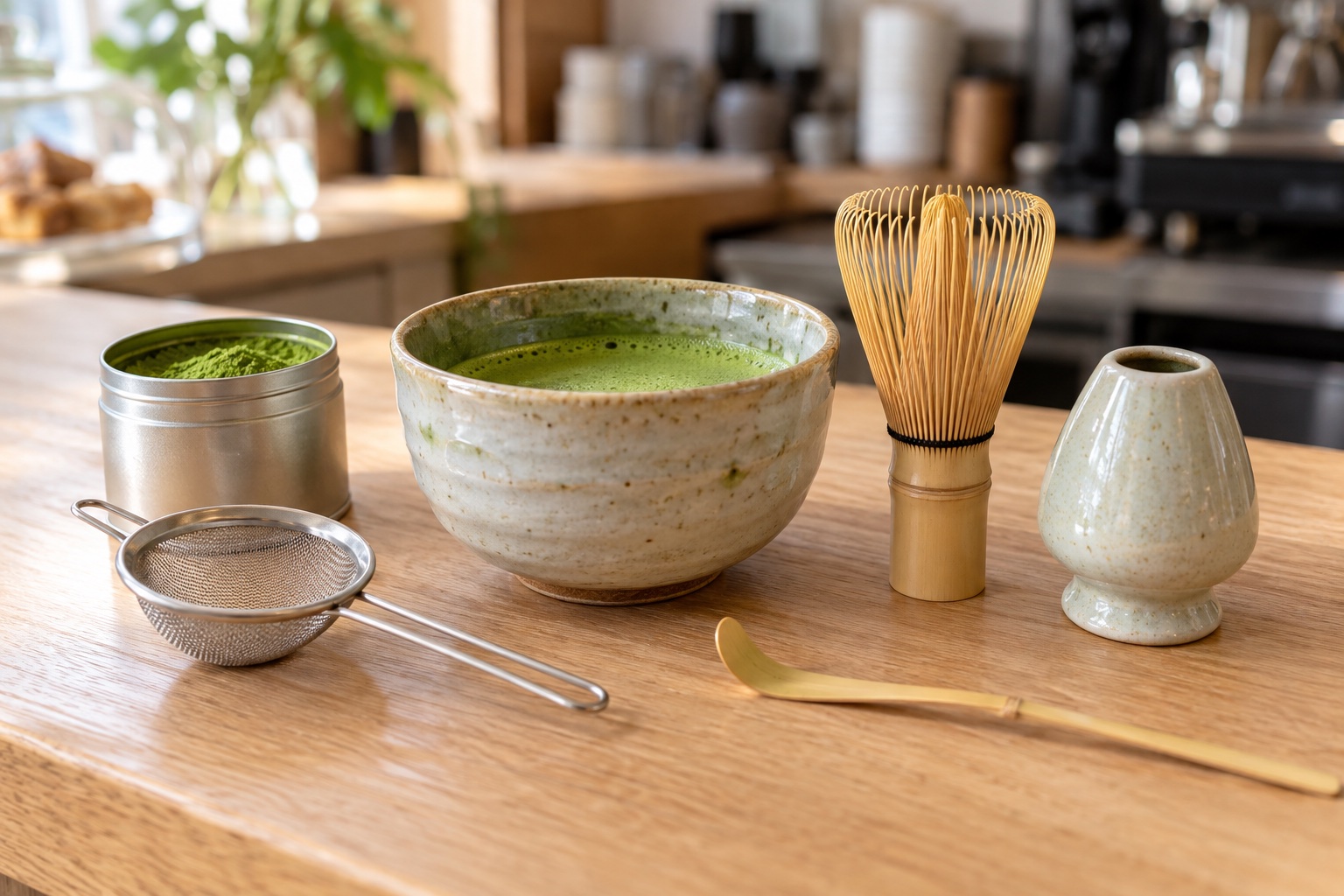
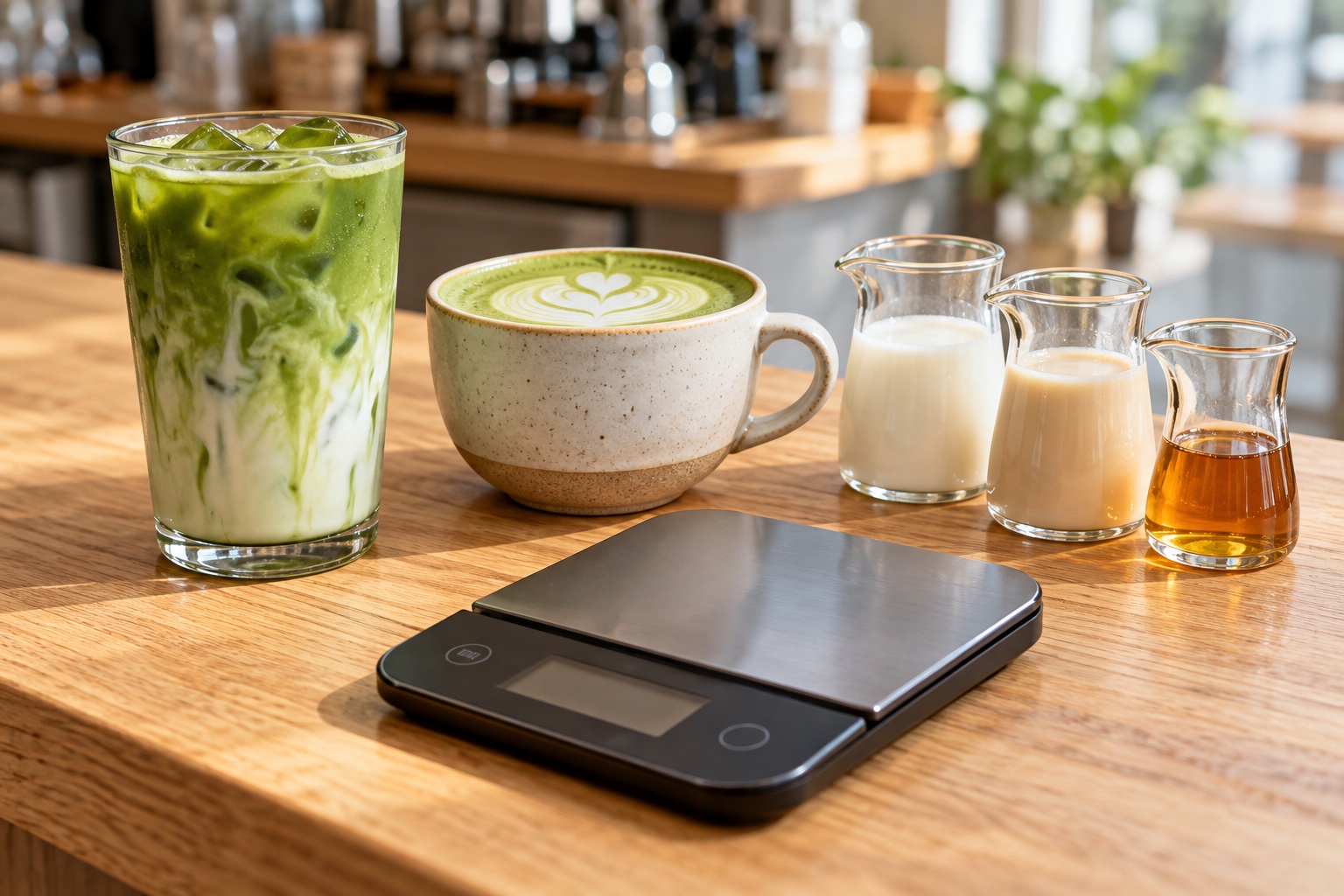
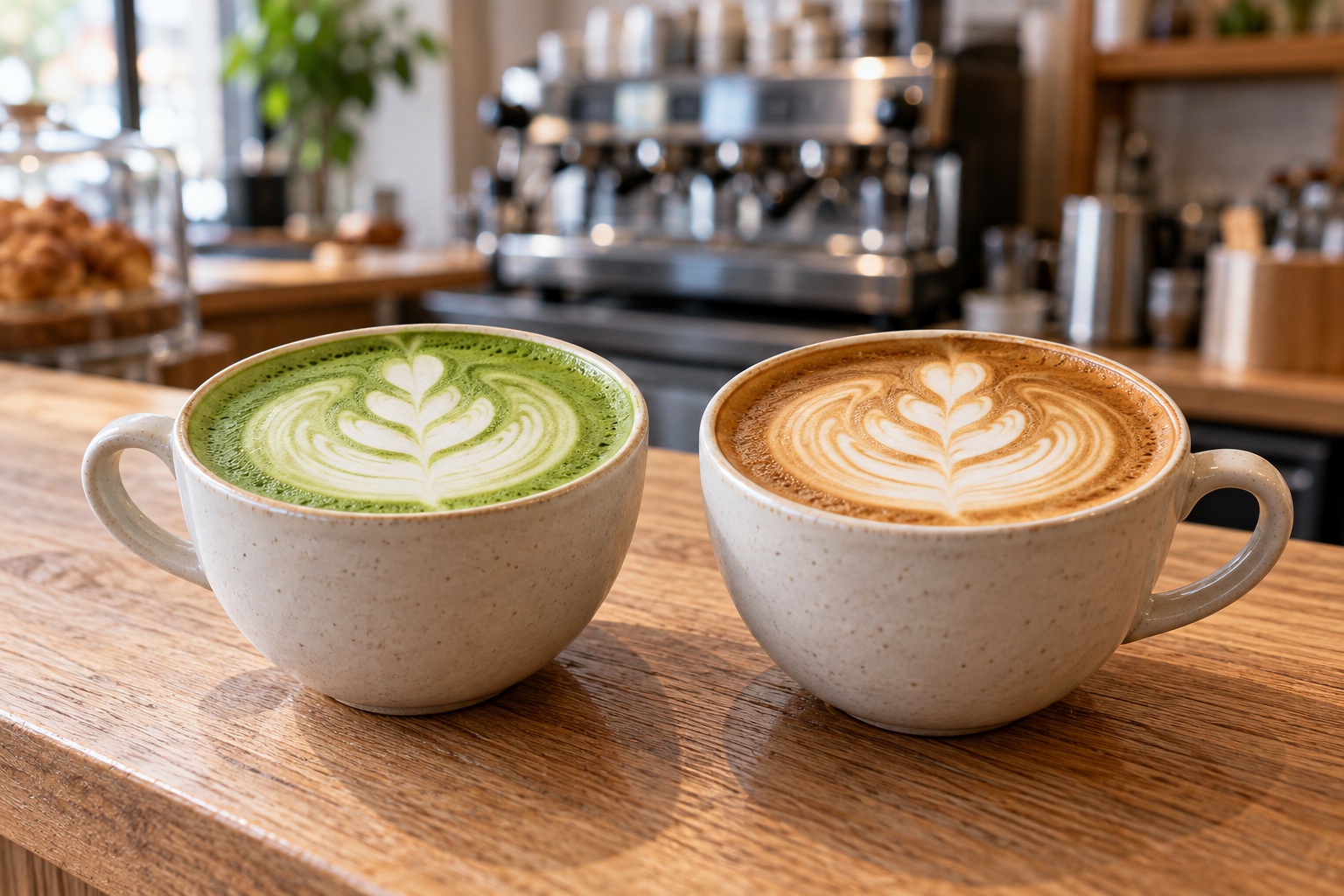
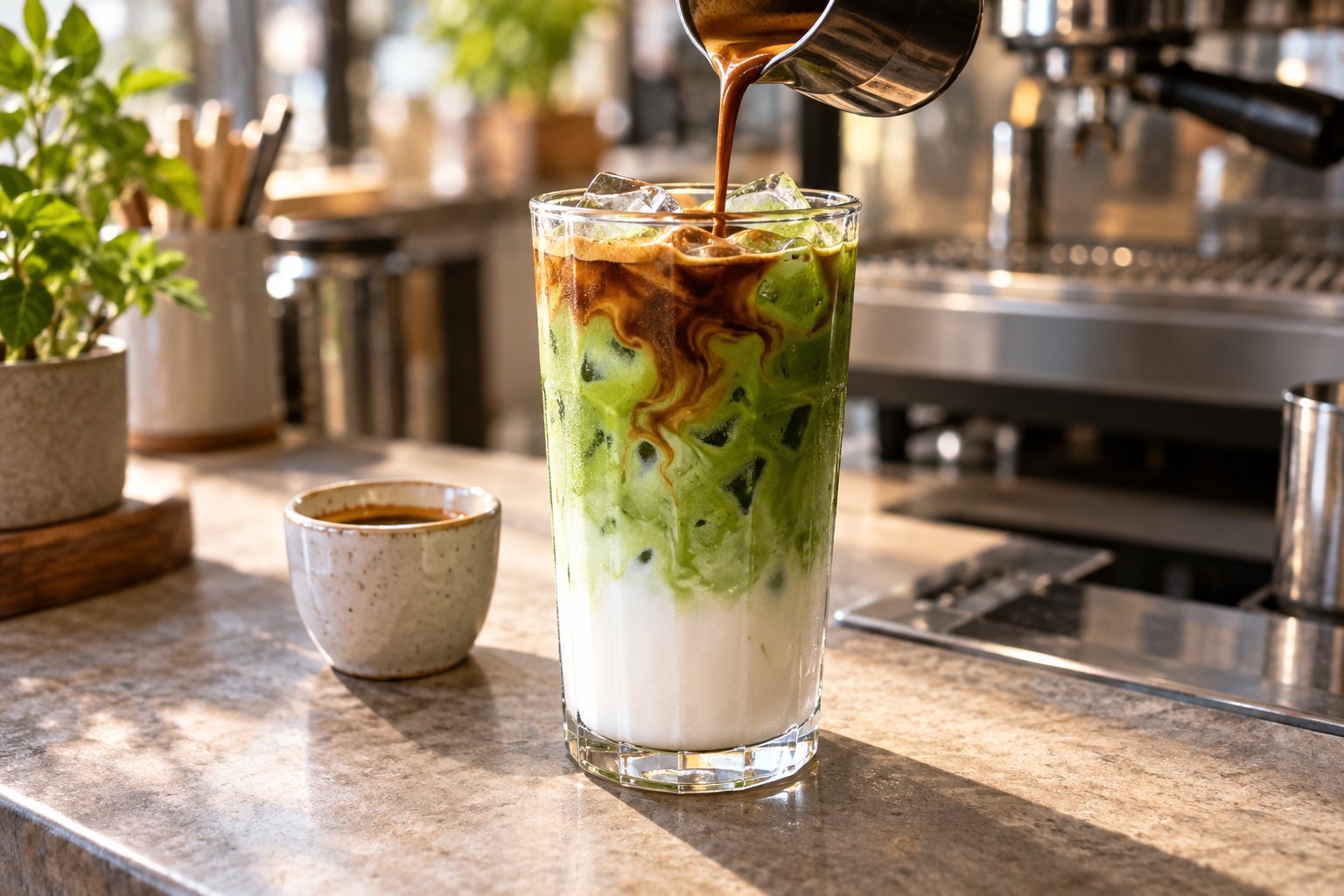
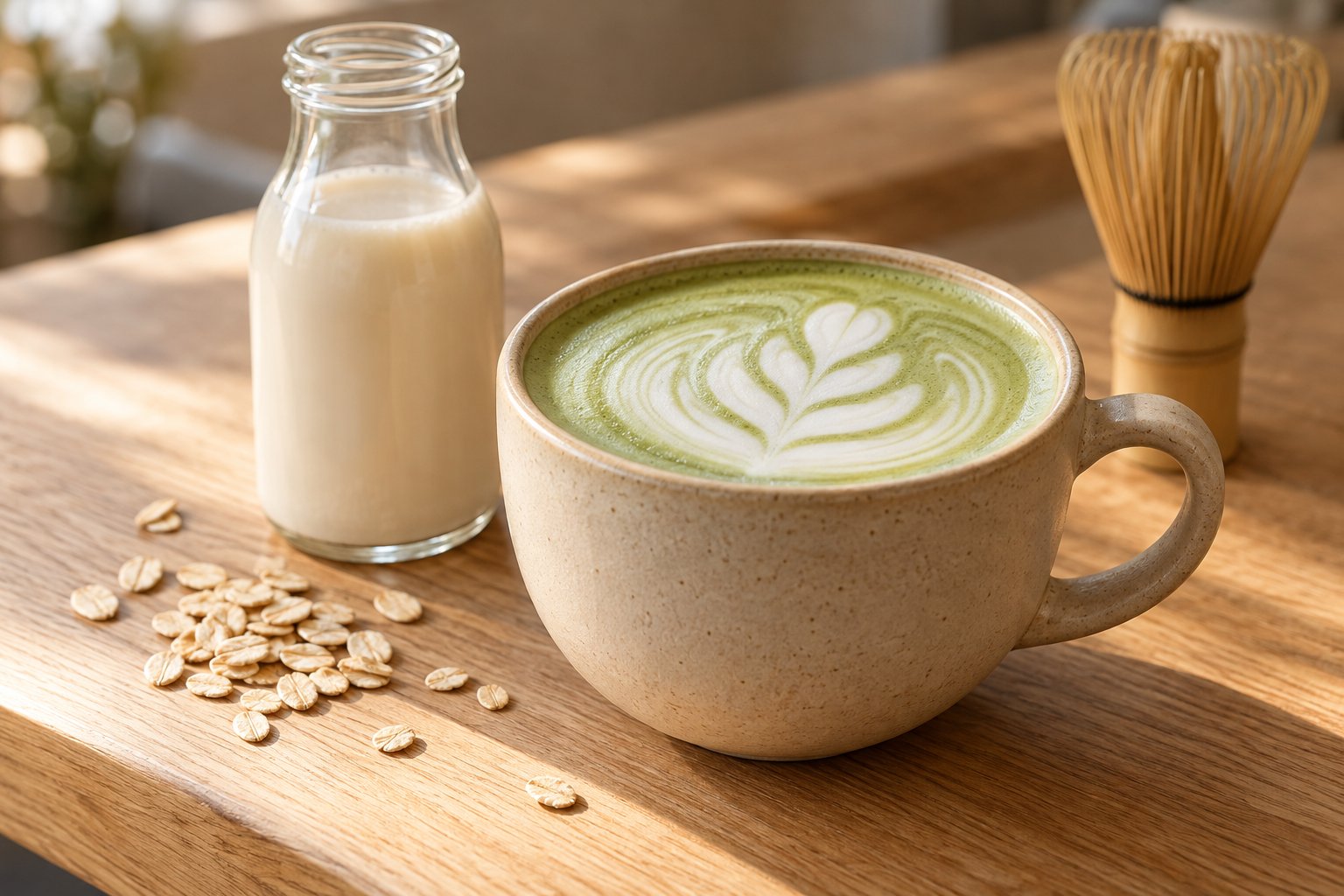
Ippodo Tea’s matcha latte recipe whisks 3g of matcha with 90ml of water at 80°C, then adds milk or soy milk. The amount of milk is up to you, and the shop adds sweetness.
| 100% matcha powder | Matcha latte powder (example above) | |
|---|---|---|
| Powder per drink | 3g (Ippodo Tea) | 14g |
| Sweetness | Set by the shop | In the powder |
| Milk | Chosen by the shop (dairy, soy, oat) | Milk powder included |
| Allergens | No milk or soy if the only ingredient is green tea | Milk, soy |
| Other menu items | Also baked goods, ice cream, straight matcha | Mainly drinks |
Which suits your shop
Latte powder helps keep the taste consistent in shops where different staff make drinks or where few matcha drinks are sold. 100% matcha suits shops that want less sweetness, plant milks, or the same matcha for sweets. For latte ratios, see Choosing matcha for café lattes; for telling 100% matcha apart, see What is pure matcha.
Choosing for lattes and for baking
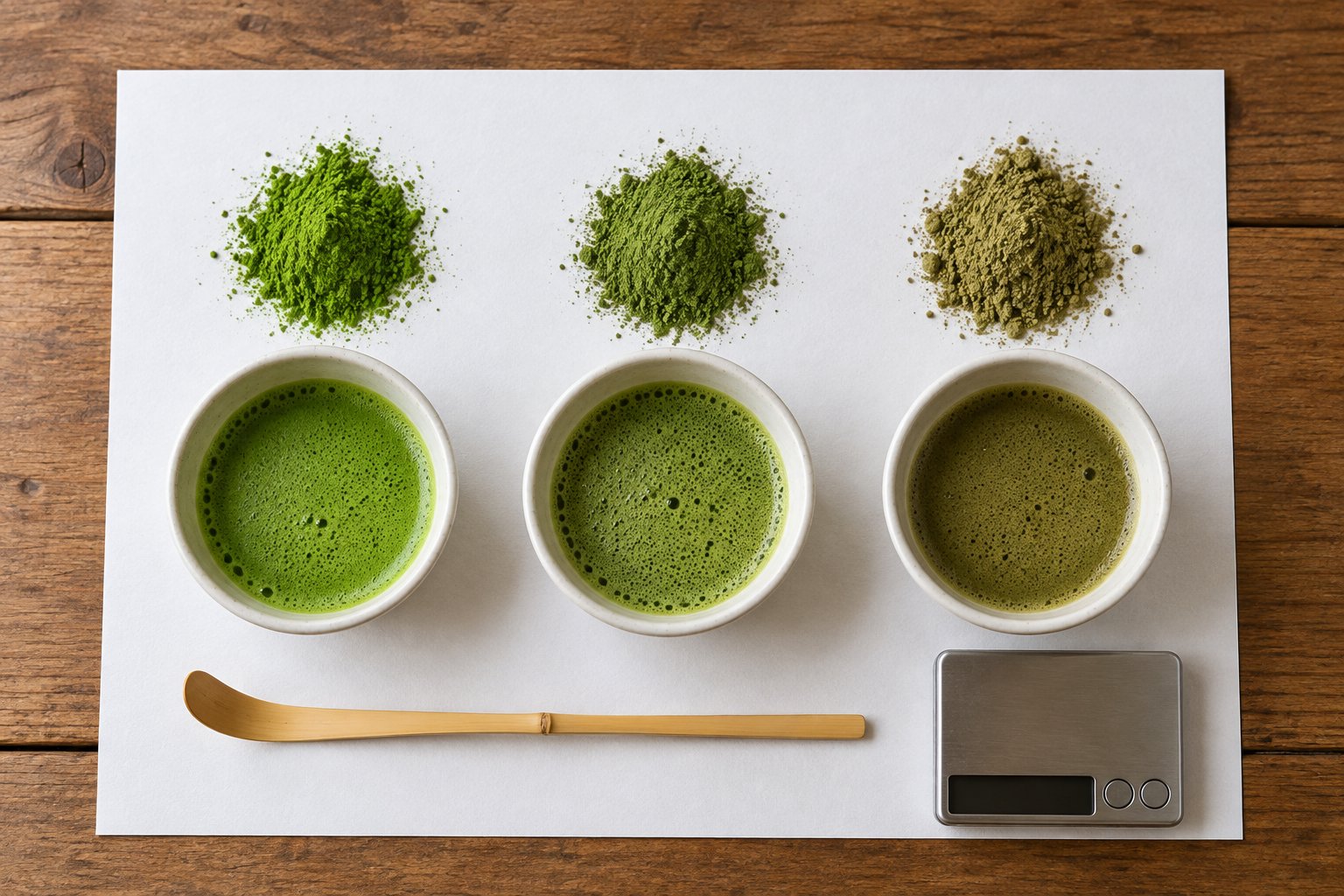
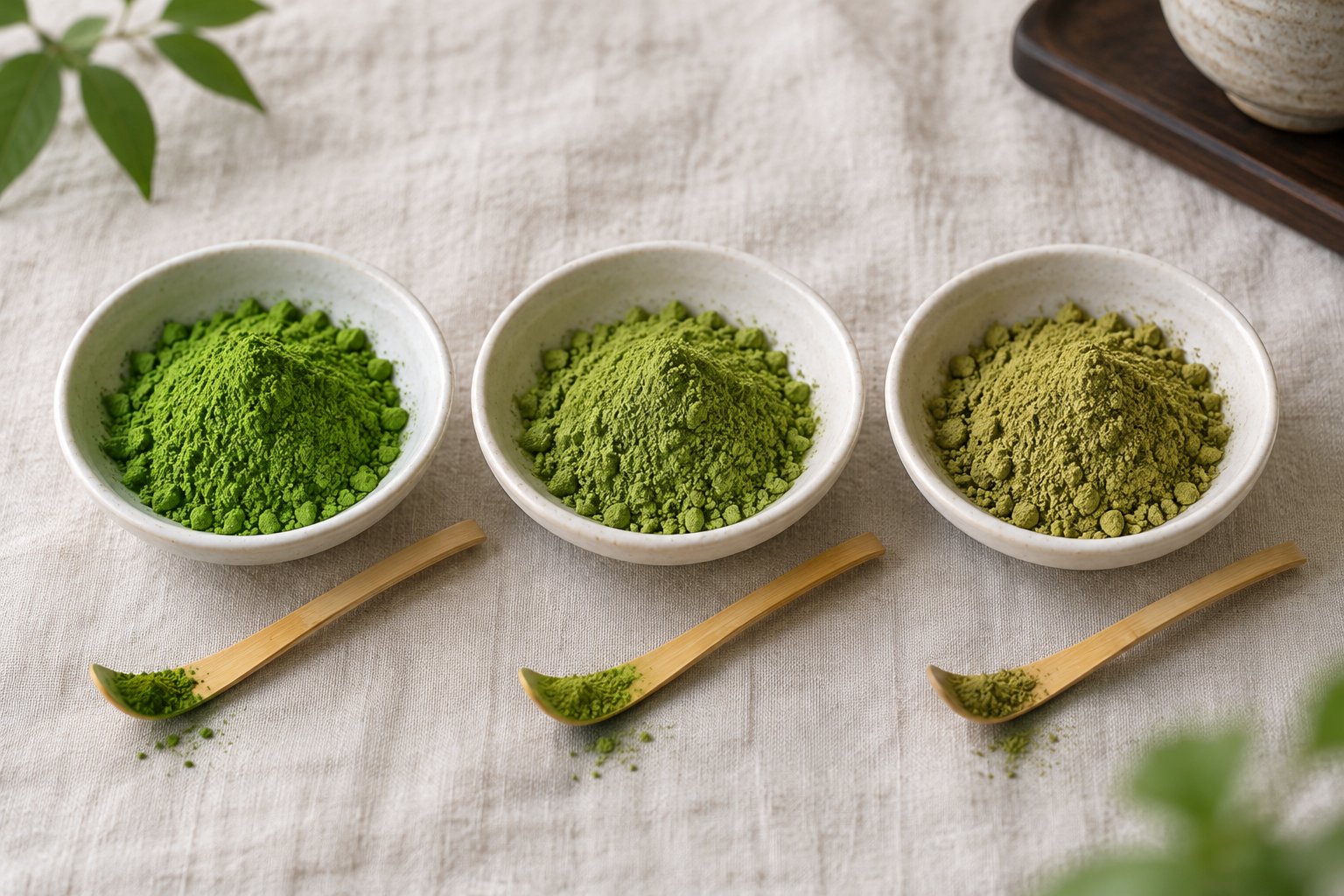
“Latte grade” and “culinary grade” are sellers’ own categories, with no national standard behind them. The main differences are when the tencha was picked (the harvest, or flush) and the strength of colour, aroma and bitterness.
Raw material prices differ about twofold by harvest
According to the Ministry of Agriculture, Forestry and Fisheries (MAFF) report on tea (October 2026), the 2025 price of crude tea (tea before finishing) was 10,030 yen per kg for first-flush tencha and 4,950 yen for second-flush tencha (survey by the National Federation of Tea Producers’ Associations). At the raw material stage, the first flush costs about twice the second flush.
A paper by Yoriyuki Nakamura of the University of Shizuoka cites the view that second-flush and autumn-winter tencha increased sharply as matcha came to be used not only for tea ceremony but also for sweets and food ingredients. It also says tencha varies widely in quality by harvest. When buying, ask the supplier which harvest the matcha’s tencha came from. For grade names, see Matcha grades.
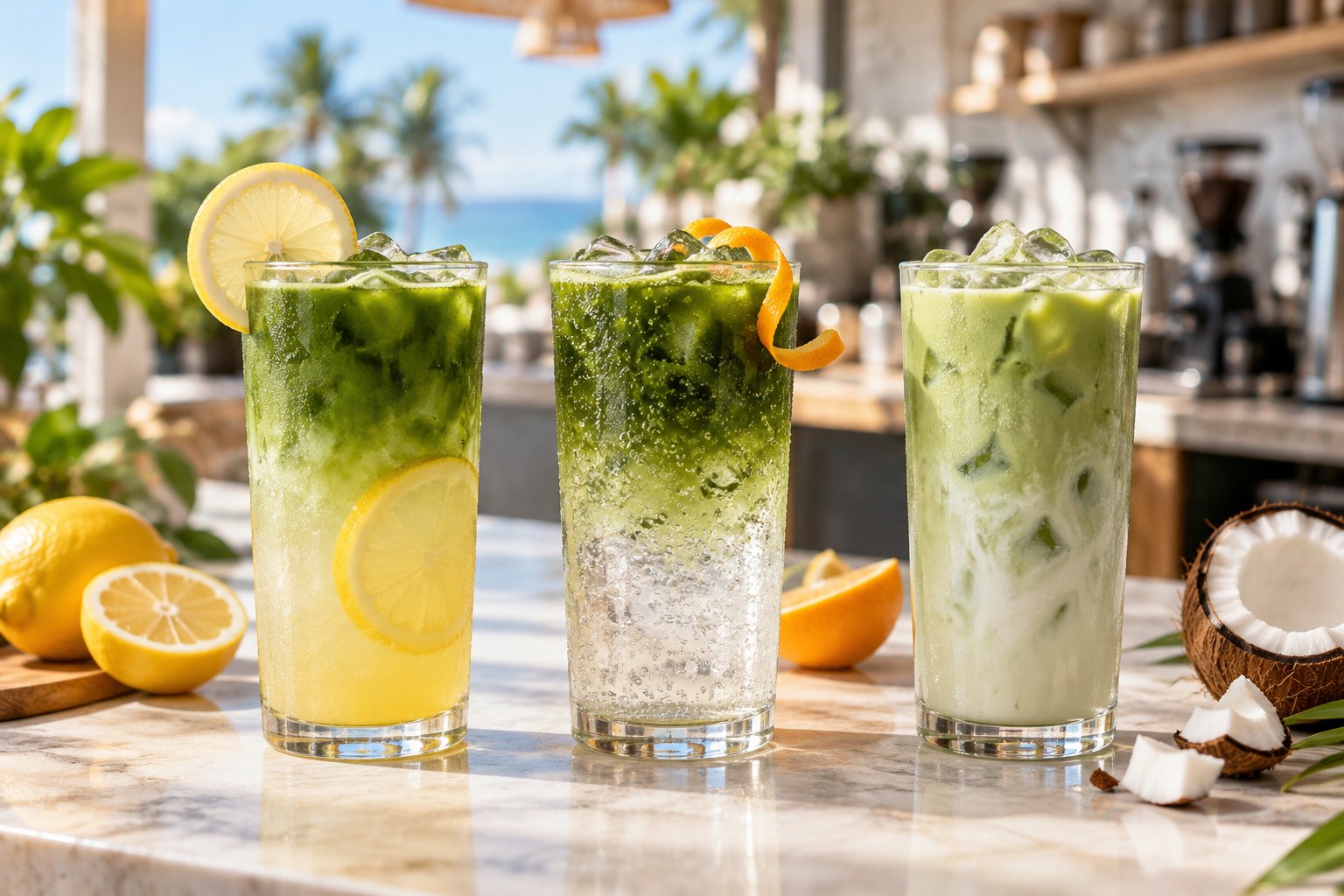
For lattes
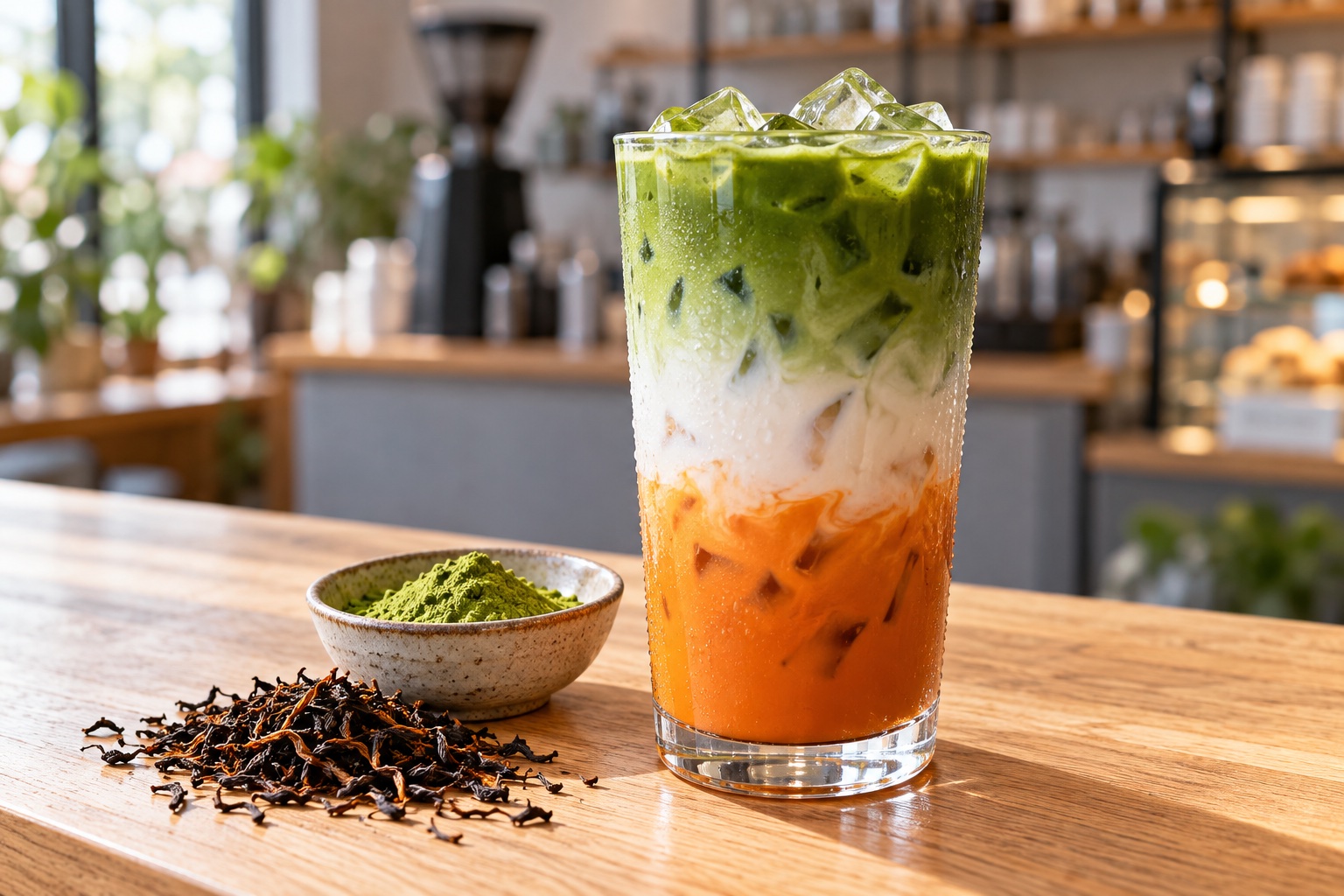
Minamikyushu City (a tea region in Kagoshima) explains that second-flush tea grows when days are longer, so it contains more catechins and caffeine, the sources of bitterness and astringency, and less umami and sweetness. To decide whether matcha containing second-flush tea works for your lattes, mix samples with the milk and sweetness you use and check the bitterness. For straight matcha or less sweet lattes, start with matcha that has a higher share of first-flush tea.
For sweets
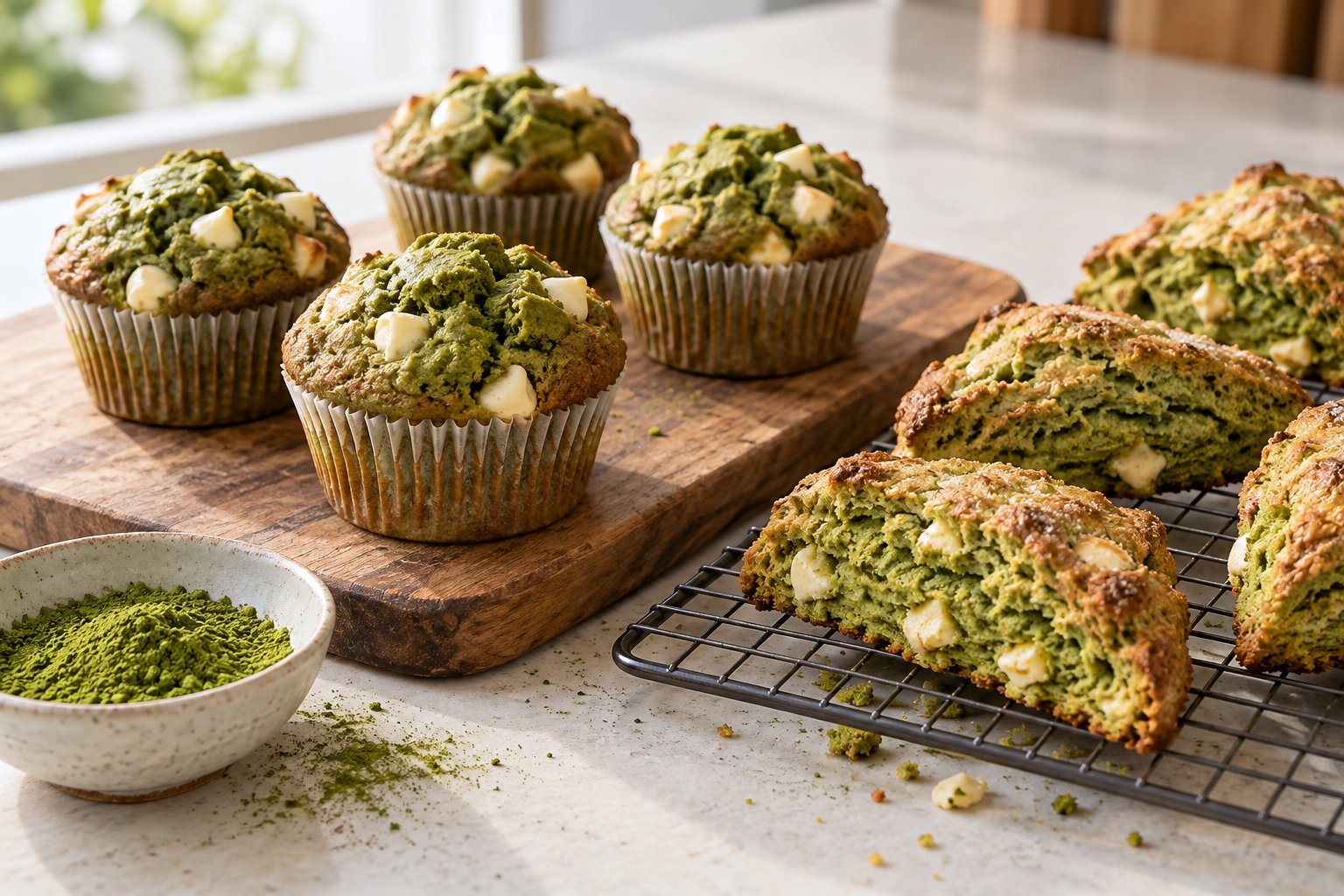
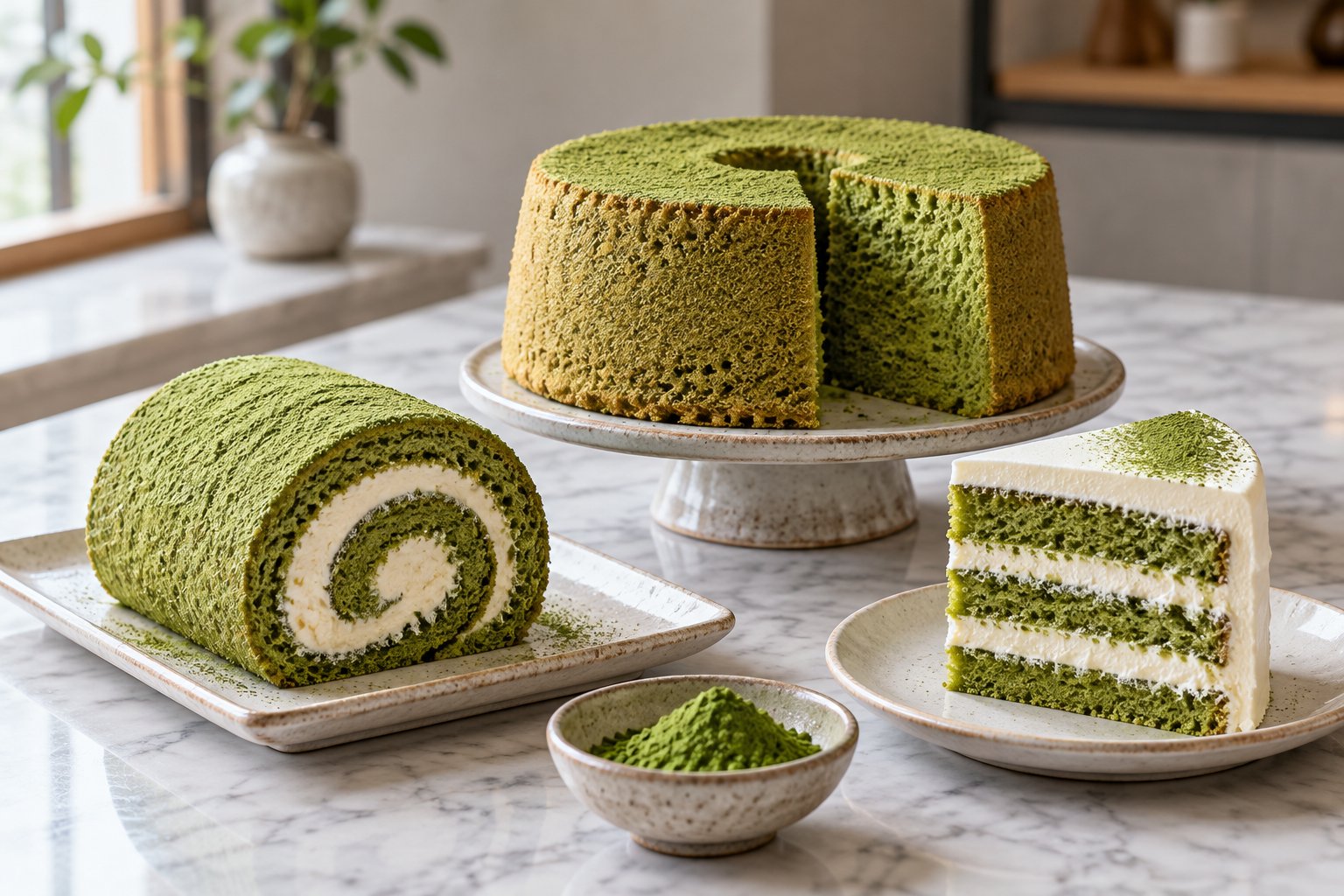
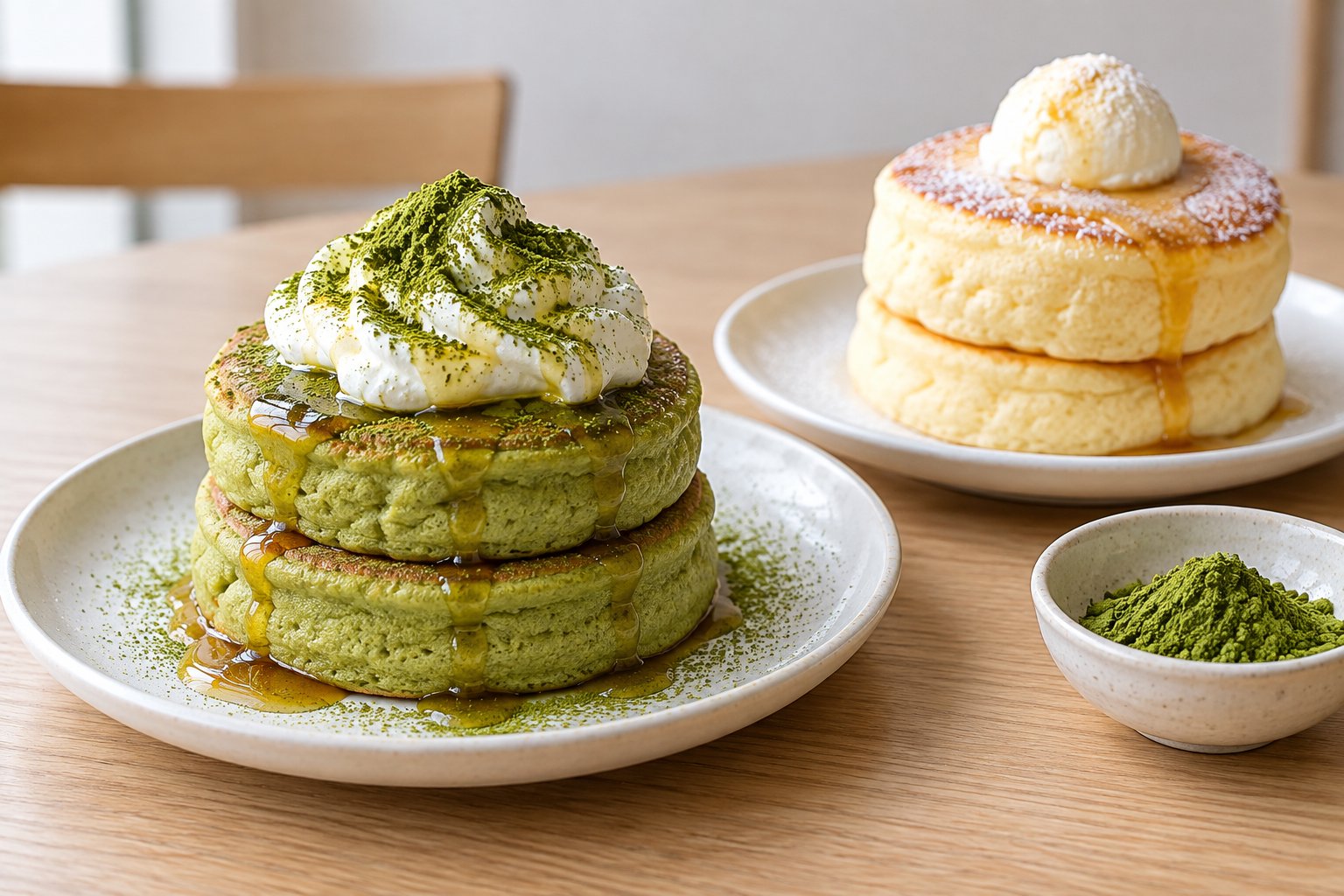
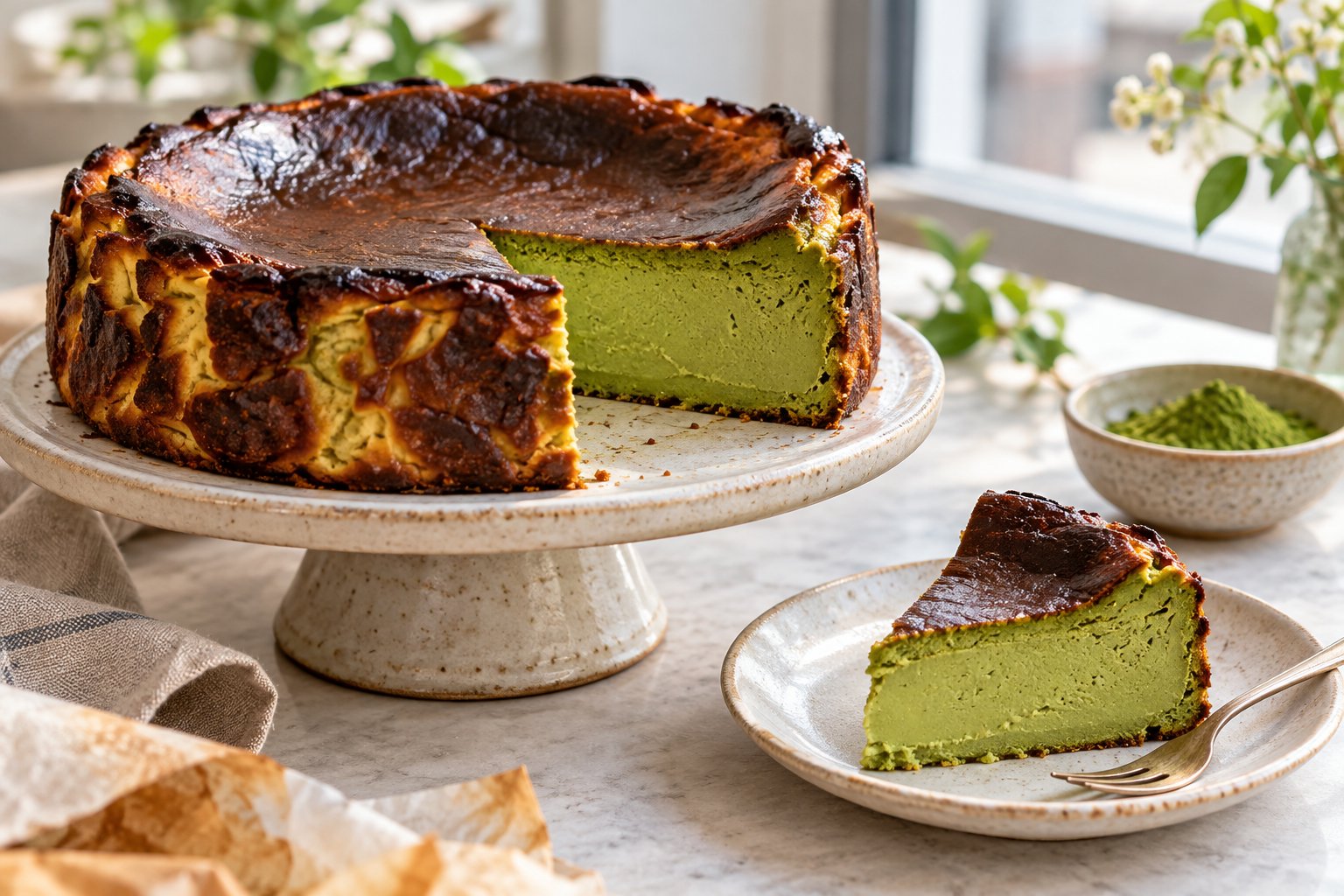
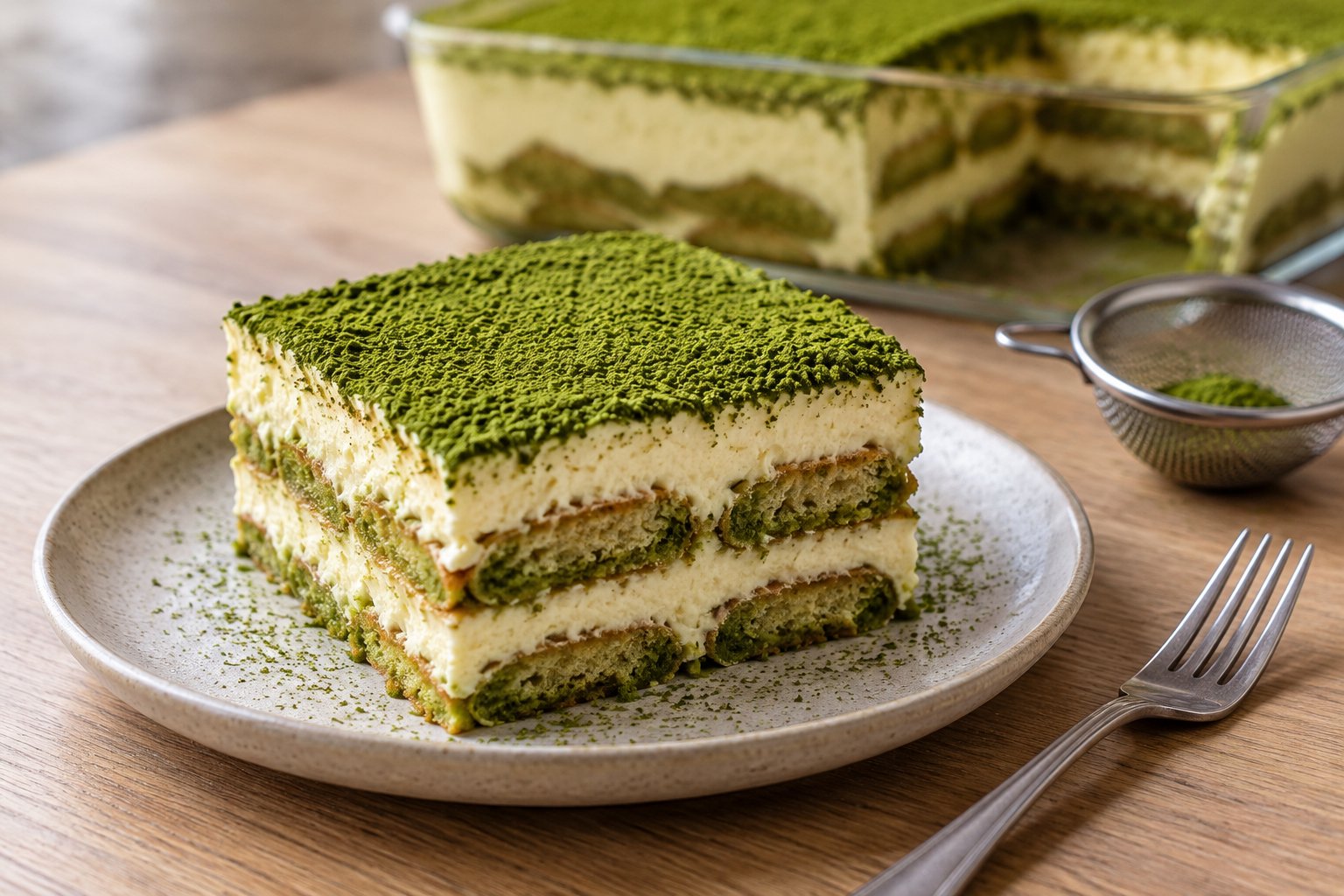
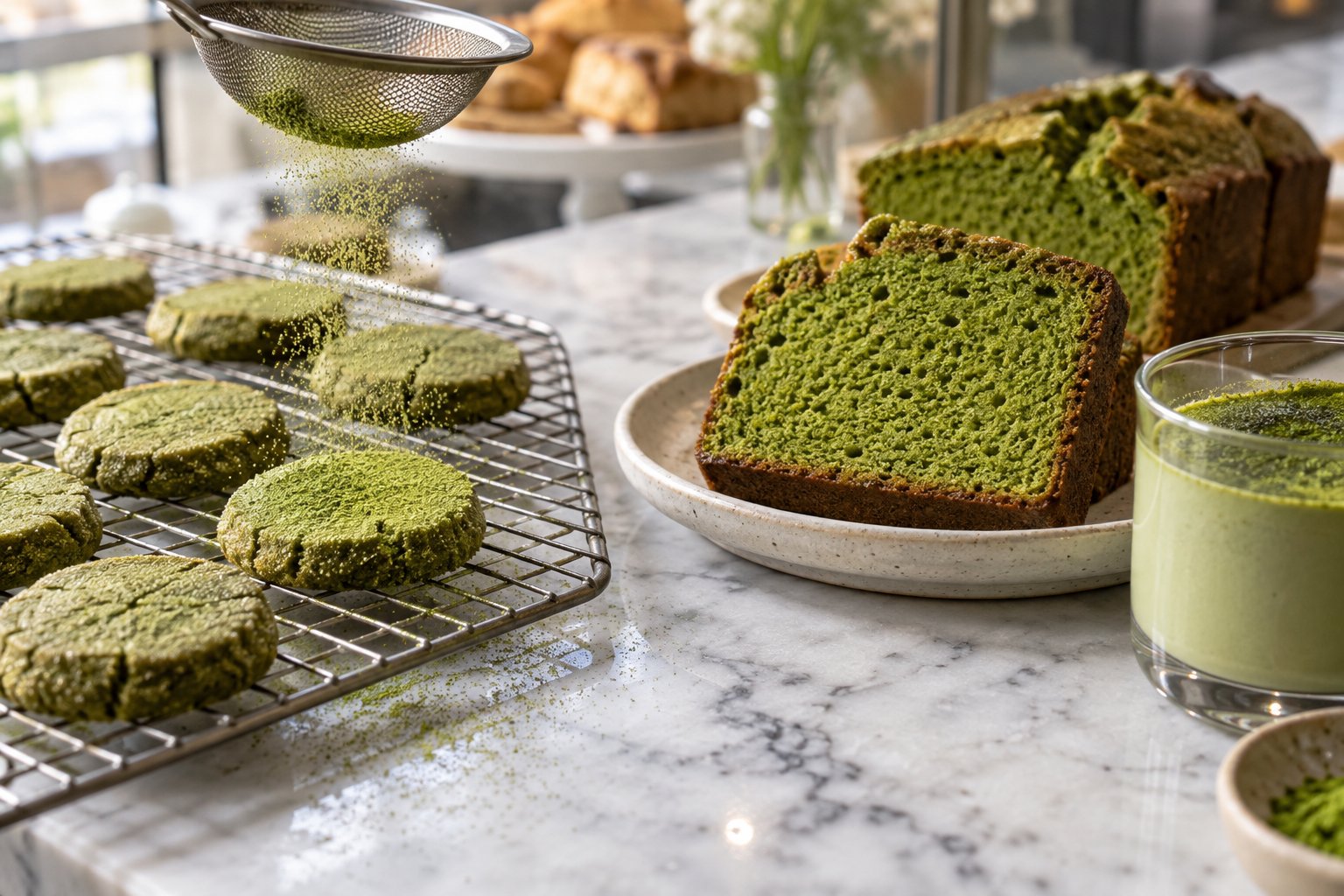
Matcha’s green comes from chlorophyll. A study by researchers including those at NARO (Japan’s national agricultural research organisation) uses the share of chlorophyll converted to pheophytin as an indicator of tea’s colour deterioration. When heat or acid removes the magnesium at the centre of chlorophyll, it turns from bright green to olive brown. Baked goods tend to lose their green, while ice cream, whipped cream, puddings and toppings with little heating show the powder’s colour as it is. Whether to use the same matcha for baked goods and cold desserts is best decided by test-making both and comparing colour and bitterness. For why the colour changes and recipe ratios, see Choosing matcha for baking.
Storing and using up a 1kg bag
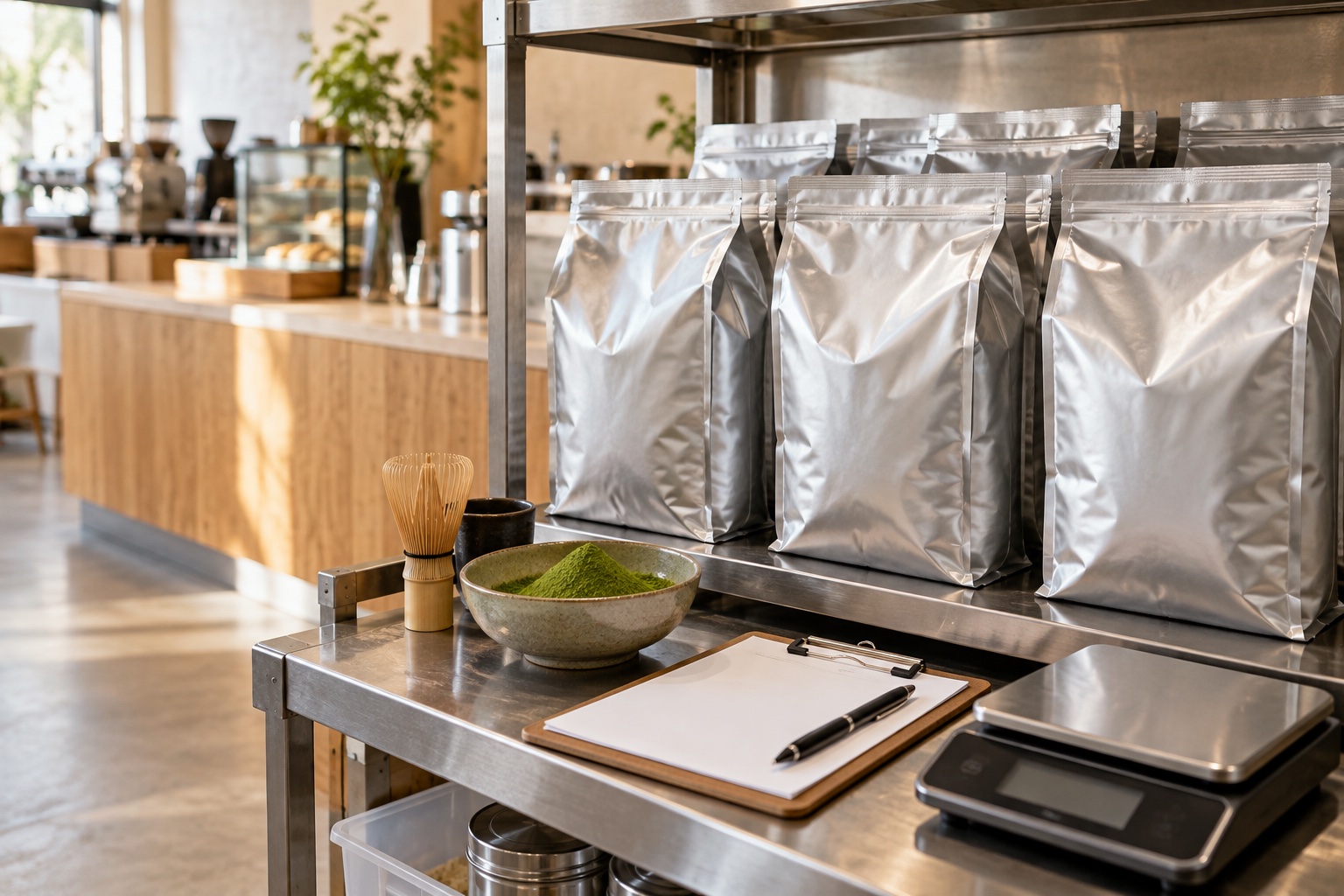
Buy a bag size you can use within a month of opening, and keep the rest sealed. Matcha does not spoil once opened, but its freshness starts to fade from that moment.
About one month after opening
Ippodo Tea says matcha does not spoil after opening but gradually loses freshness, and recommends drinking it within a month of opening. It recommends an opaque, tightly sealed container in a cupboard away from spices, coffee and other strong odours, and rolling up foil bags and clipping them closed between uses.
How long 1kg lasts
If used only for lattes at 3g each, 1kg lasts (our calculation):
| Drinks per day | Used per day | 1kg lasts |
|---|---|---|
| 10 | 30g | About 33 days |
| 30 | 90g | About 11 days |
| 60 | 180g | About 6 days |
At about 10 drinks a day, an opened 1kg bag takes more than a month to finish. If you also bake with it, add the number of cakes per day times the grams per cake.
Keep bags sealed and avoid condensation
If you buy more than you can use quickly, keep the bags sealed and open one at a time. Marukyu Koyamaen says frozen matcha must be brought close to room temperature before opening or condensation will make it damp, and that refrigerated matcha should also be brought close to room temperature before use. For refrigerator versus room temperature and storage in hot weather, see Matcha shelf life.
Working out the cost per drink or per cake
The matcha cost per drink is “price per kg ÷ 1,000 × grams per drink”. 100% matcha and latte powder differ in grams per drink and in what you add afterwards.
With 100% matcha
- Matcha: price per kg ÷ 1,000 × 3g (Ippodo Tea’s recipe)
- Added: milk (price per carton ÷ volume × amount per drink) and sugar or syrup
- Sweets: price per kg ÷ 1,000 × grams per cake
With latte powder
- Powder: price per bag ÷ bag weight (g) × grams per drink (14g in the example above)
- Added: hot water or milk
In both cases, add ice, cup and lid to get the ingredient cost per drink. Latte powder uses much more powder per drink, so compare it with 100% matcha per drink, not per kg. For what sets the price per kg, see Why matcha costs what it does.
What to check in a quote
Compare quotes only after lining up three things: what is in the bag, the documents, and the delivery terms. Two 1kg bags with different harvests or blends are different products.
Contents and documents
- Product name and ingredients: 100% matcha or latte powder; whether powdered tea is mixed in
- Origin and harvest of the raw material: prefecture, first or later flush, and blend ratio
- Best-before date: the period from production and how much remains on arrival
- Storage: whether a temperature is specified before opening
- Specification sheet: whether the supplier provides a document covering ingredients, origin, allergens and nutrition
For comparing quality, see How to judge matcha quality.
Price and terms
- Whether prices include tax and shipping
- Minimum order and bag sizes (1kg, 500g and so on)
- When the next stock arrives and when prices are reviewed
- Invoice format and payment terms
Compare samples
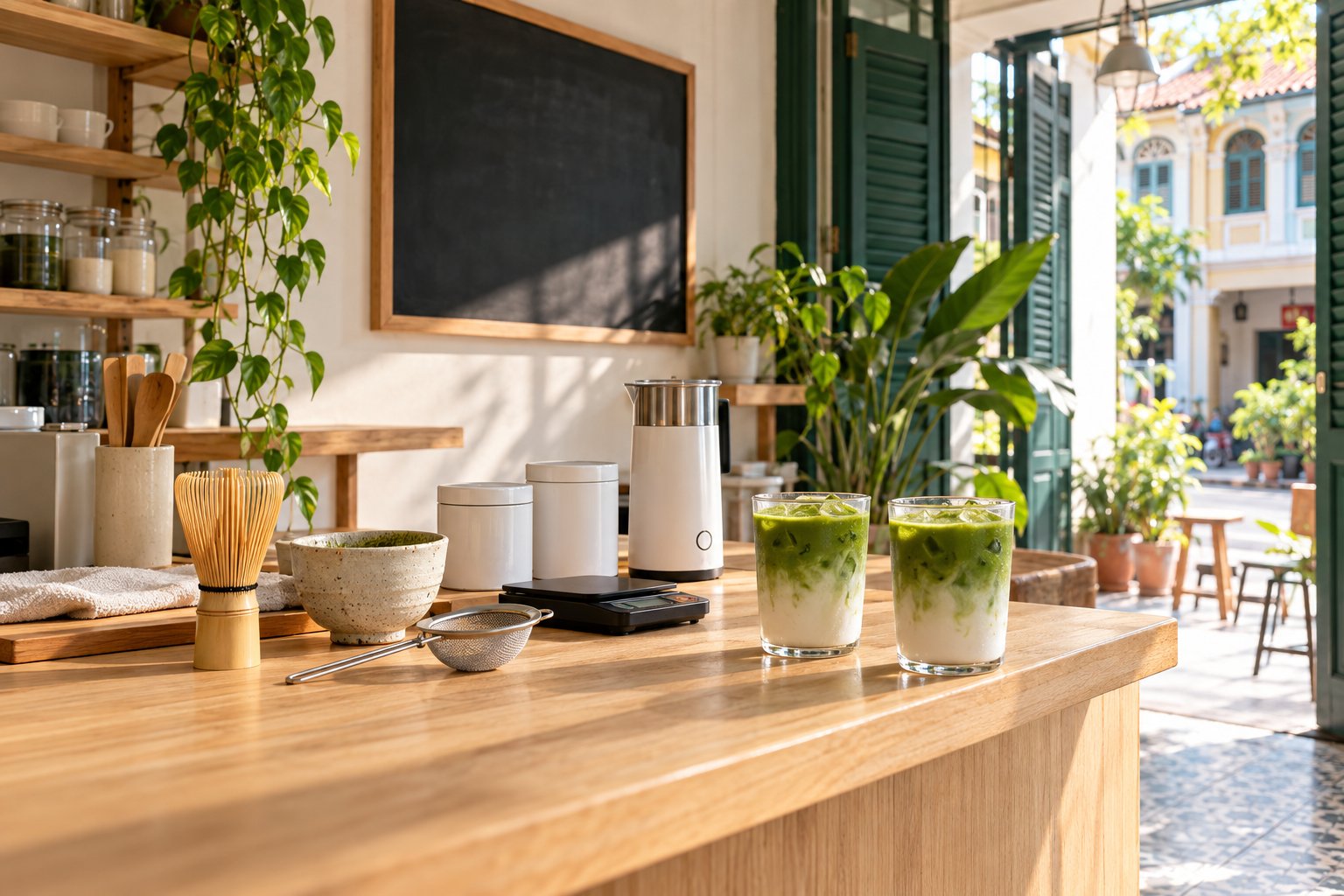
Before asking for a quote, make lattes from the candidate matchas with the same amount and the same milk, and test them in the sweets you bake. Omakase Matcha sources matcha directly from Uji, Yame, Kagoshima, Shizuoka and Miyazaki, sells from 1kg, and you can request up to 3 kinds of samples. Blends can also be adjusted. See our catalog for the matcha we carry and Matcha drinks for drink ideas.
Sources
- Japan Tea Central Public Interest Incorporated Association, “緑茶の表示基準” (Green Tea Labelling Standard, last revised 10 July 2026, in Japanese) https://www.nihon-cha.or.jp/pdf/hyoujikijyun.pdf
- Consumer Affairs Agency, “食品表示基準Q&A” (Food Labelling Standard Q&A, Chapter 2, processed foods, in Japanese) https://www.caa.go.jp/policies/policy/food_labeling/food_labeling_act/assets/food_labeling_cms201_261001_12.pdf
- Consumer Affairs Agency, “全ての加工食品に原料原産地が必ず表示されます!” (Origin labelling on all processed foods, March 2022, in Japanese) https://www.caa.go.jp/policies/policy/food_labeling/quality/country_of_origin/assets/food_labeling_cms202_220330_01.pdf
- Consumer Affairs Agency, “公正競争規約が設定されている業種” (Industries with fair competition codes, in Japanese) https://www.caa.go.jp/policies/policy/representation/fair_labeling/fair_competition_code/industries
- Mitsui Norin TEA BREAK, “業務用抹茶ラテ 500g” (Business-use Matcha Latte 500g, in Japanese) https://www.mitsui-teabreak.com/shopdetail/000000001655
- Morinaga Milk, “マウントレーニア 宇治抹茶ラテ” (Mount Rainier Uji Matcha Latte, in Japanese) https://www.morinagamilk.co.jp/products/drink/mtr_caffelatte/9065.html
- Ippodo Tea, “抹茶ラテ” (Matcha latte, in Japanese) https://www.ippodo-tea.co.jp/blogs/tea-recipe/19%E6%8A%B9%E8%8C%B6%E3%83%A9%E3%83%86
- Ippodo Tea, “How to Keep Your Matcha Fresh” https://ippodotea.com/blogs/ippodo-tea-blog/how-to-keep-your-matcha-fresh
- MAFF, “茶をめぐる情勢(令和8年10月)” (The situation of tea, October 2026, in Japanese) https://www.maff.go.jp/j/seisan/tokusan/cha/attach/pdf/ocha-201.pdf
- Yoriyuki Nakamura, “国内における抹茶(碾茶)生産の推移と科学的特性” (Trends and scientific characteristics of matcha (tencha) production in Japan, in Japanese) https://dfns.u-shizuoka-ken.ac.jp/labs/tsc/thesis/0410.pdf
- Minamikyushu City, “二番茶・三番茶・四番茶・秋冬番茶” (Second, third, fourth and autumn-winter flush, in Japanese) https://www.city.minamikyushu.lg.jp/chirancha/ajiwau/chirancha_shurui/8903.html
- Horie et al., “Comparison of the Chemical Components of Powdered Green Tea Sold in the US”, JARQ 52(2), 2018 https://www.jircas.go.jp/sites/default/files/publication/jarq/jarq52-02_143-147.pdf
- Marukyu Koyamaen, “抹茶について” (About matcha, in Japanese) https://www.marukyu-koyamaen.co.jp/about-tea/know-matcha.html
- Roberto et al., “The Fate of Chlorophylls in Alkali-Treated Green Table Olives: A Review”, Molecules 28(18), 2023 https://pmc.ncbi.nlm.nih.gov/articles/PMC10534587/