Reviewed by: Takahiro Sugiyama (CEO, meguri Inc.)

When you add a hojicha latte (a latte made with hojicha, Japanese green tea roasted over strong heat) to a menu that already has matcha lattes, the first decision is whether to make it with powder or with tea leaves. The choice changes the grams per cup, the prep work, how you make the iced version, and the cost. This article walks through how to set a house recipe, using the numbers in official recipes published by tea companies, a dairy body and a plant-based milk company. The definition of hojicha itself and its caffeine are covered in what is hojicha.
Two ways to make a hojicha latte
A hojicha latte is made either by dissolving powder and drinking it whole, or by brewing leaves strong and removing them. Powder makes it easy to prepare one cup per order. Leaves make it easy to brew several cups at once.
With powder
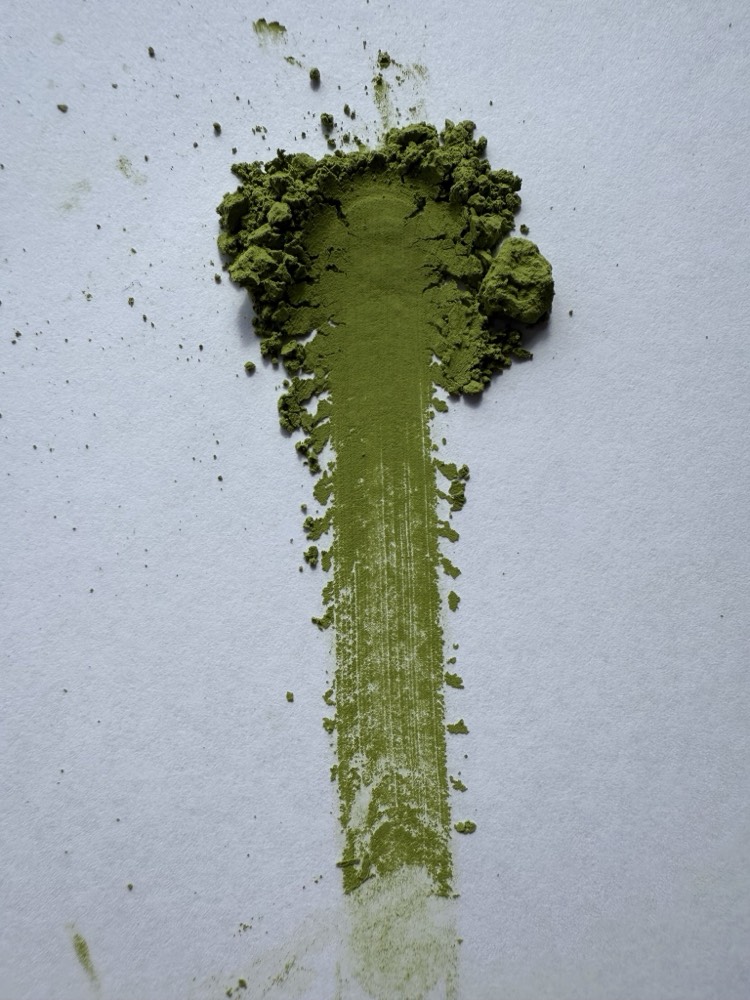
Dissolve hojicha powder (hojicha ground to a fine powder) in a little hot or cold water, then combine it with milk. The steps are the same as for a matcha latte, so a café that already serves matcha lattes can use the same tools. Because the powder is drunk whole, there is nothing to strain.
With leaves
Brew hojicha leaves strong in hot water, strain out the leaves, then add milk. Another method simmers the leaves with milk in a pan. As shown below, a cup takes more leaves than powder.
Comparing ratios in official recipes
Published official recipes include examples that dissolve 2 to 3g of powder in 20 to 30ml of liquid per cup, and that brew 10g of leaves in 240mL. The amounts differ from recipe to recipe, so set your own standard for your cup size.
Ratio comparison
| Good & Proper Tea (hot) | Paper & Tea (iced) | Oatly (hot) | Ippodo (iced tea) | J-milk (hot) | |
|---|---|---|---|---|---|
| Hojicha | 3g powder | 2g powder | 2 to 3g powder | 10g leaves | 2 tablespoons leaves |
| Liquid to dissolve or brew | 30ml water at 80°C | 20ml water at 80°C | 30ml cold water | 240mL water at 100°C, 60 seconds | Bring to a boil in 50ml water |
| Milk | Milk of your choice (amount not given) | 160ml milk | 150ml Oatly Barista Edition | None (poured over ice) | 150ml cow’s milk |
| Sweeteners and extras | None | None | 5 to 10g agave (optional), 20g sweetened, reduced oat milk, 10g tahini | None | None |
Good & Proper Tea is a tea company in London, UK. Paper & Tea is a tea shop in Berlin, Germany. J-milk is a Japanese dairy farming and dairy industry body. Ippodo’s recipe is an iced hojicha without milk, but it is a guide to how strong a leaf-based base can be.
What the numbers show
All the powder recipes keep the dissolving liquid small, at 20 to 30ml, and add milk afterwards. The leaf recipes use 10g (Ippodo) and 2 tablespoons (J-milk). Comparing Good & Proper Tea’s 3g of powder with Ippodo’s 10g of leaves, the grams per cup differ by about 3.3 times (our calculation). Recipes using 4g, from Yamamasa Koyamaen and Kurasu, are compared in what is hojicha.
How to make it with powder
Sift the powder, dissolve it in a small amount of liquid, and add milk only once it has fully dissolved. This is the same order as for a matcha latte.
Dissolving
Good & Proper Tea sifts 3g into a bowl, adds a little of the 80°C water, and whisks until no lumps remain, then adds the rest of the water and whisks until frothy. If you do not have a kettle that can be set to 80°C, it says to add a little cold water to just-boiled water. The milk is heated until it just starts to simmer and poured over the dissolved hojicha.
Dissolving in cold water
Oatly’s recipe puts 2 to 3g of powder in a bowl or shaker with 30ml of cold water, agave if you like, and 0.1g of salt, and whisks or shakes it hard for 30 seconds. This method dissolves the powder without boiling water, and Oatly combines the liquid with heated oat milk. For several servings at once, Oatly says to put the ingredients in a tall container and blend with an immersion blender until no lumps remain.
How to dissolve matcha, and the tools to use, are covered in how to make a matcha latte.
How to make it with leaves
When using leaves, brew them stronger than usual for a latte, and strain out every leaf. You can brew in hot water or simmer in milk.
Brew in hot water, then add milk
The iced hojicha recipe on Ippodo’s English site pours 240mL of water at 100°C over 10g of leaves, leaves it for 60 seconds without stirring, then pours every last drop over plenty of ice. To use this as a latte base, start from this strength and adjust the amount of leaves or the time while checking how much of the aroma comes through once milk is added.
Simmer in milk
J-milk’s “ほうじ茶オーレ” (hojicha au lait) puts 2 tablespoons of hojicha leaves and 50ml of water in a pan over medium-low heat, adds 150ml of milk when it boils, then simmers it over low heat until it takes on colour. The milk is not added at the start. The leaves are first boiled in a little water, then the milk goes in.
How to make an iced hojicha latte
When hot tea is poured over ice to chill it, the melted ice adds to the volume of liquid. So decide the ratio of ice to hot water in advance.
Ice and hot water at 1:1
Source: Ippodo, “急冷ドリップ ほうじ茶” (Flash-chilled drip hojicha, in Japanese): a recipe using a drip tea bag. Pouring the hot water slowly gives just the right strength, and with ice and hot water at 1:1 you can make any amount you like. 1 bag, 250ml boiling water, no steeping time, 250g ice.
Ippodo’s “急冷ドリップ ほうじ茶” (flash-chilled drip hojicha) pours 250ml of boiling water slowly through one drip tea bag, with 250g of ice. Ippodo says that pouring the hot water slowly gives just the right strength. Ippodo says that with ice and hot water at 1:1, you can change the amount you make freely.
Iced with powder
Paper & Tea’s iced version dissolves 2g of powder in 20ml of water at 80°C, pours it into a glass filled with ice, and adds 160ml of milk. There is only 20ml of hot water, and the rest is 160ml of milk. How to pour for two visible layers is covered for matcha in how to make an iced matcha latte.
Setting your iced standard (our approach)
- Fix the glass size and the amount of ice (in grams) first
- For a leaf base, brew the tea strong, using Ippodo’s 1:1 as a guide
- Also taste the drink 10 minutes after serving, and if it gets too weak, increase the powder or leaves
Making a batch ahead
We did not find any public document that says how many hours dissolved or brewed hojicha can be kept. So either keep it cold or set a time limit, in line with general food safety guidance.
Public food safety guidance
| Source | Guidance |
|---|---|
| Singapore Food Agency (SFA), guidelines for people ordering catered meals | Keep cold food below 5°C. No food should be kept at room temperature for more than 4 hours from the time it was cooked |
| U.S. FDA “Food Code 2022” | Foods that need temperature control, such as milk, are kept at 5°C or below. When time is used as the control instead, have written procedures, mark the time 4 hours later, and serve or discard by then |
| Japan’s MHLW “大量調理施設衛生管理マニュアル” (hygiene manual for large-scale cooking facilities) | Cooked food should ideally be eaten within 2 hours of cooking. Food that takes 30 minutes or more from cooking to serving (other than food served hot) is kept at 10°C or below |
The SFA guidance is for catered meals, the Food Code is a model that US states and local governments use when writing their rules, and the MHLW manual is mainly for large facilities such as institutional kitchens. Check the rules of the country and local authority where your café is for the standards you must actually follow.
Prep steps (our approach)
- Dissolve powder for each order as the default. Portioning the powder in advance keeps you fast at busy times
- If you make a leaf base ahead, keep it refrigerated (below 5°C) and write the time it was made on the container
- Do not make anything ahead once milk has been added. Use milk straight from the fridge
- Decide how long a base can be kept by tasting bases kept for different times side by side with a freshly made one, comparing aroma and flavour
Guidance for making a milk-based foam ahead is in how to make matcha cold foam.
Choosing milk and sweetness
Milk and sweeteners affect not only flavour but also sugar labelling in Singapore. Once the recipe is set, work out the sugar and saturated fat per cup in grams.
Plant-based milk
Oatly’s recipe uses a barista oat milk (Oatly Barista Edition), and adds sweetness and body with sweetened, reduced oat milk and tahini (sesame paste). How oat milks differ and how they foam are compared in oat milk matcha latte. For a hojicha latte too, taste it with each milk you use before deciding.
Nutri-Grade in Singapore
According to Singapore’s Ministry of Health (MOH) and Health Promotion Board (HPB), from 30 December 2023 drinks made in outlets also came under “Nutri-Grade,” which grades drinks by sugar and saturated fat, and drinks graded C or D must show the mark next to their menu listing. Smaller businesses with revenue of not more than S$1 million that sell at fewer than 10 premises are, for now, not required to show it.
Source: Starbucks Singapore, “Hojicha Tea Latte”: the Nutri-Grade mark next to the product photo shows C. Nutrition per 100mL: energy 83kcal, protein 3.2g, total fat 3.7g, saturated fat 2.2g, carbohydrate 9.2g, total sugar 9.1g, lactose 4g. The page says Nutri-Grade is based on the default preparation before ice is added.
Starbucks Singapore’s Hojicha Tea Latte has 9.1g of total sugar and 2.2g of saturated fat per 100mL, and its Nutri-Grade mark is C. The Iced Hojicha Latte has 11.5g of total sugar and 2.5g of saturated fat per 100mL, and both pages say the grade is based on the default preparation before ice is added. HPB says the mark shows sugar as a percentage of the drink’s total volume. The mark on the Hojicha Tea Latte page reads “5% sugar,” and the nutrition table on the same page lists 9.1g of total sugar per 100mL. The rules are covered in more detail in how to make a strawberry matcha latte. If you make syrup in-house, see also how to make matcha syrup.
Cost per cup, and placing it next to matcha drinks
The hojicha cost per cup is the purchase price per kg ÷ 1,000 × grams per cup. The formula is the same as for matcha, but grams per cup differ widely between powder and leaves.
Cost formula
- Hojicha: purchase price per kg ÷ 1,000 × grams per cup
- Milk: ml per cup × price per ml
- Sweetener: grams per cup × price per gram
- Ice, cup, lid, straw
At the same price per kg, the hojicha cost of a cup made with 10g of leaves is about 3.3 times that of a cup made with 3g of powder (our calculation). Powder and leaves also differ in price per kg, so in practice put the prices from your quotes into the formula and compare. How to turn a purchase quote into a per-cup cost, and what to check in a quote, are covered in what determines the price of matcha. Setting it against your selling price works the same way as in choosing matcha for café lattes.
Placing it next to matcha drinks
Starbucks Singapore has a “Matcha & Hojicha Sips” category on its drinks menu, listing the Hojicha Latte (hot and iced), Iced Coconut Hojicha and Iced Strawberry Hojicha Latte alongside matcha drinks such as the Iced Strawberry Matcha Latte. If you use the same milk, syrups and cups as your matcha latte, the only new thing to buy is hojicha powder or leaves. For a pairing with espresso see dirty matcha, and for prepping cold drinks see how to make an iced matcha latte.
Buying hojicha powder
What to check when choosing hojicha powder (raw material, roast level, particle size, documents) is covered in what is hojicha. The Omakase Matcha catalog also lists hojicha from Shizuoka and Yame for hojicha lattes.
Sources
- Ippodo Tea, “急冷ドリップ ほうじ茶” (Flash-chilled drip hojicha, in Japanese) https://www.ippodo-tea.co.jp/blogs/tea-recipe/24%E6%80%A5%E5%86%B7%E3%83%89%E3%83%AA%E3%83%83%E3%83%97-%E3%81%BB%E3%81%86%E3%81%98%E8%8C%B6-1
- Ippodo Tea, “Iced Hojicha” https://ippodotea.com/blogs/recipes-to-brew-japanese-tea/iced-hojicha
- Good & Proper Tea, “How to make a Hojicha Latte” https://www.goodandpropertea.com/blogs/all/how-to-make-a-hojicha-latte
- Paper & Tea, “Iced Hojicha Latte” https://www.paperandtea.com/blogs/journal/iced-hojicha-latte
- Oatly, “Sweet tahini hojicha latte” https://www.oatly.com/recipes/look-book-autumn-winter-2025/sweet-tahini-hojicha-latte
- J-milk, “ほうじ茶オーレ” (Hojicha au lait, in Japanese) https://www.j-milk.jp/recipes/recipe/9fgd1p000000furb.html
- Starbucks Singapore, “Hojicha Tea Latte” https://www.starbucks.com.sg/menu/beverages/teavana-tea/hojicha-tea-latte
- Starbucks Singapore, “Iced Hojicha Latte” https://www.starbucks.com.sg/menu/beverages/other-beverages/iced-hojicha-latte
- Starbucks Singapore, “Matcha & Hojicha Sips” https://www.starbucks.com.sg/menu/beverages/matcha-hojicha-sips
- Ministry of Health Singapore, “Implementation of Nutri-Grade requirements for freshly prepared beverages from 30 December 2023” https://www.moh.gov.sg/newsroom/implementation-of-nutri-grade-requirements-for-freshly-prepared-beverages-from-30-december-2023/
- Health Promotion Board Singapore, “Measures for Nutri-Grade” https://hpb.gov.sg/healthy-living/food-beverage/nutri-grade
- Singapore Food Agency, “Guidelines for ordering catered meals for functions and events” https://sfa.gov.sg/docs/default-source/food-retail/guidelines-for-ordering-catered-meals-for-functions-and-events.pdf
- U.S. Food and Drug Administration, “Food Code 2022” https://www.fda.gov/media/164194/download
- Ministry of Health, Labour and Welfare, “大量調理施設衛生管理マニュアル” (Hygiene manual for large-scale cooking facilities, last revised 16 June 2017, in Japanese) https://www.mhlw.go.jp/file/06-Seisakujouhou-11130500-Shokuhinanzenbu/0000168026.pdf