
 Reviewed by: Takahiro Sugiyama (CEO, meguri Inc.)
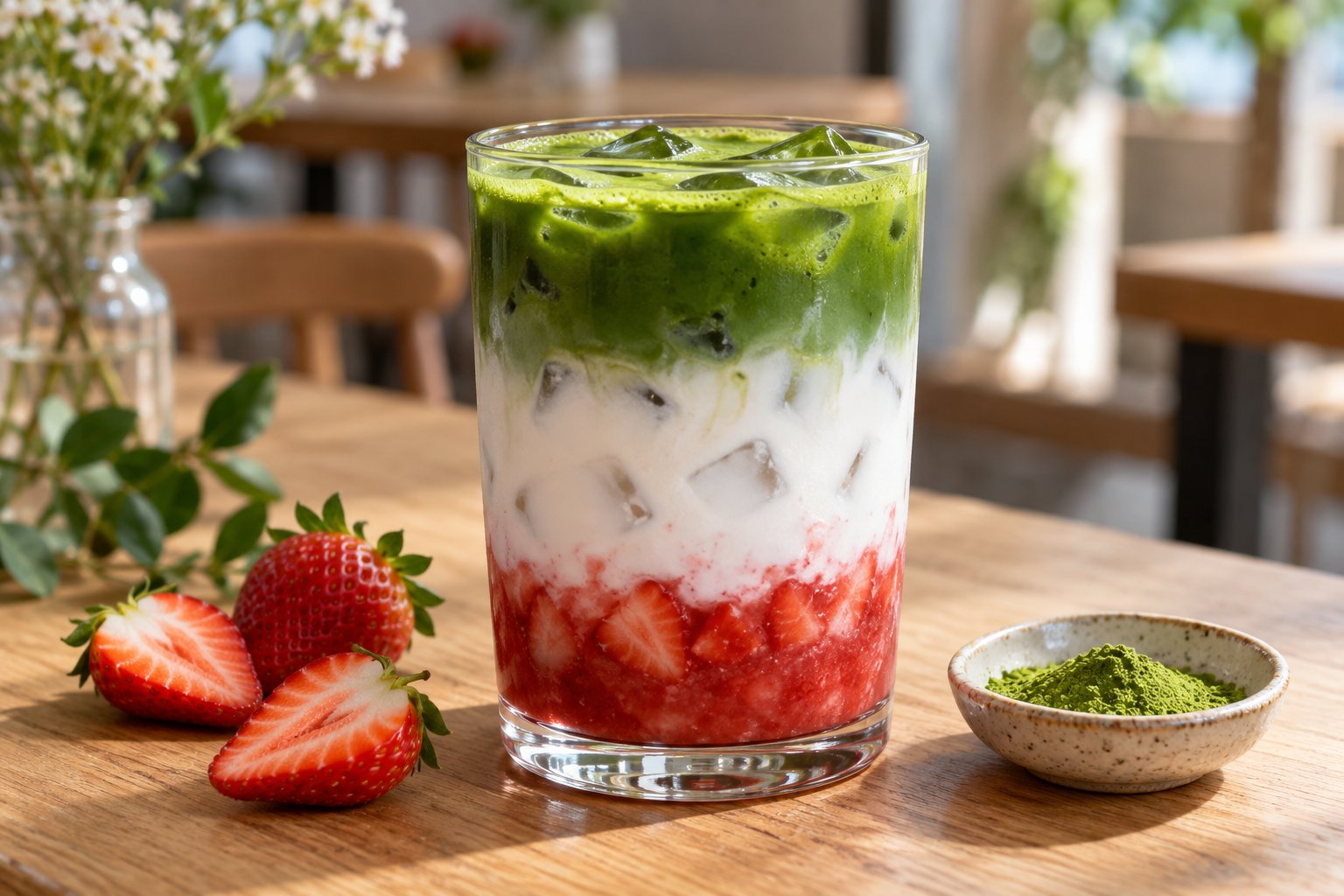
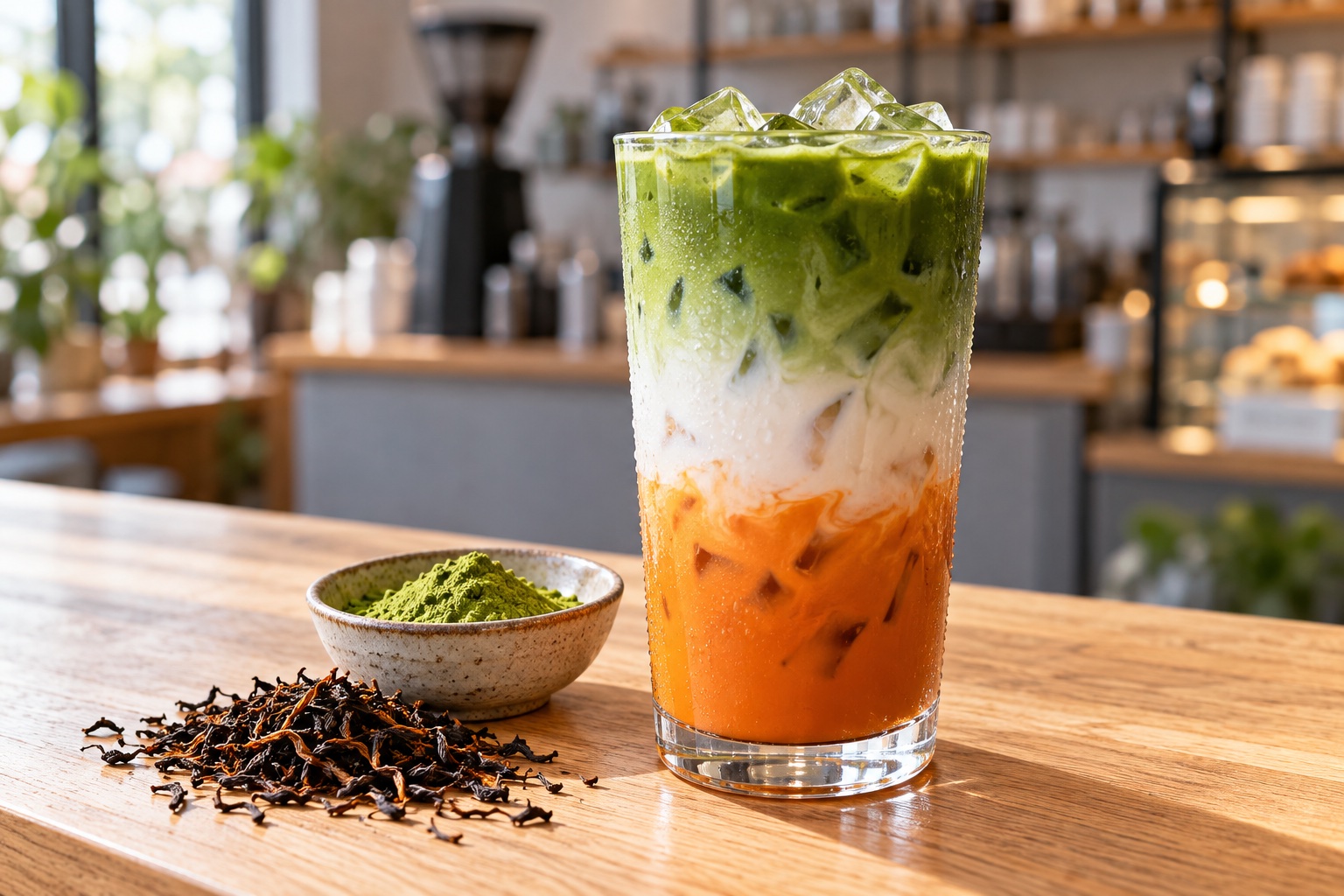
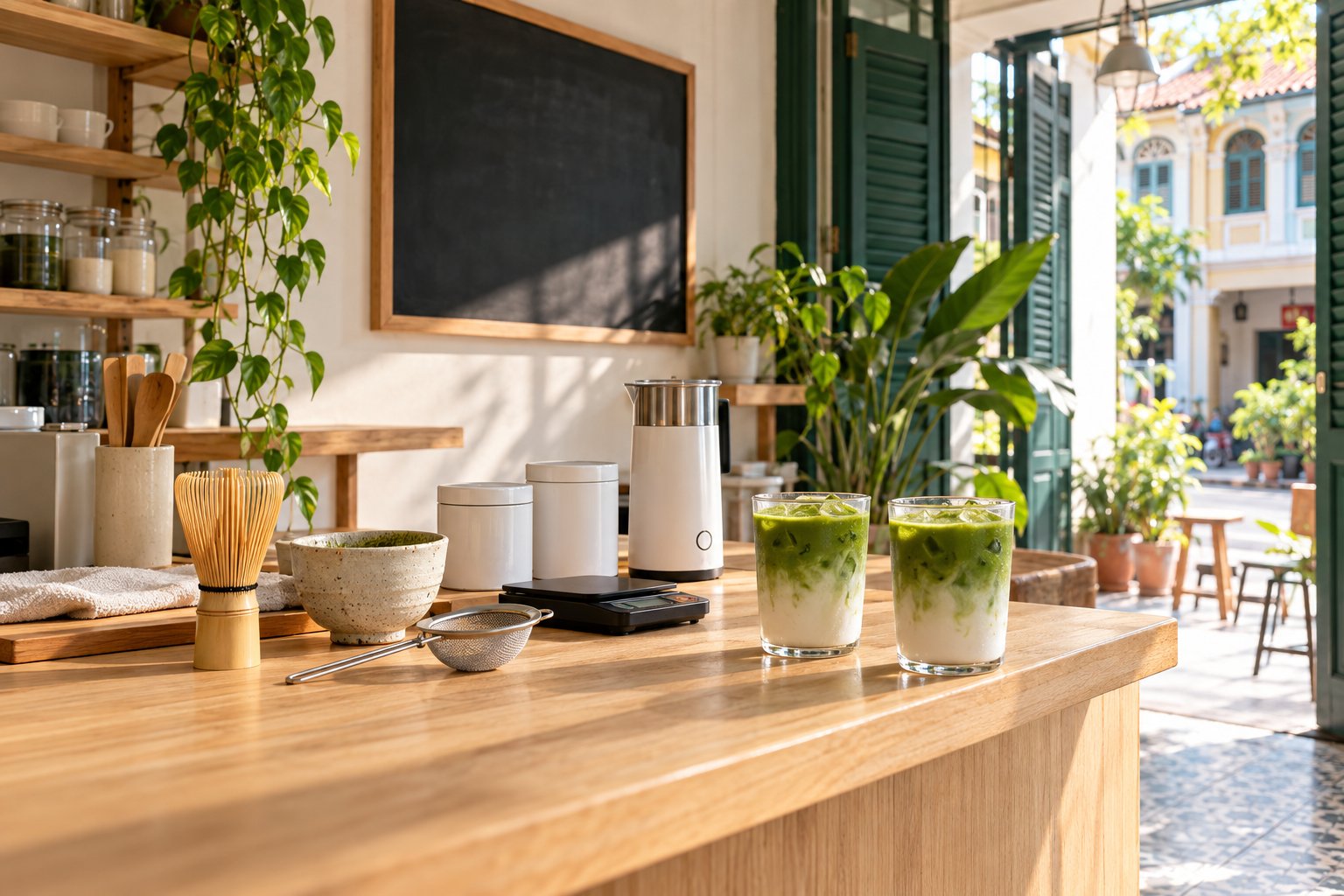
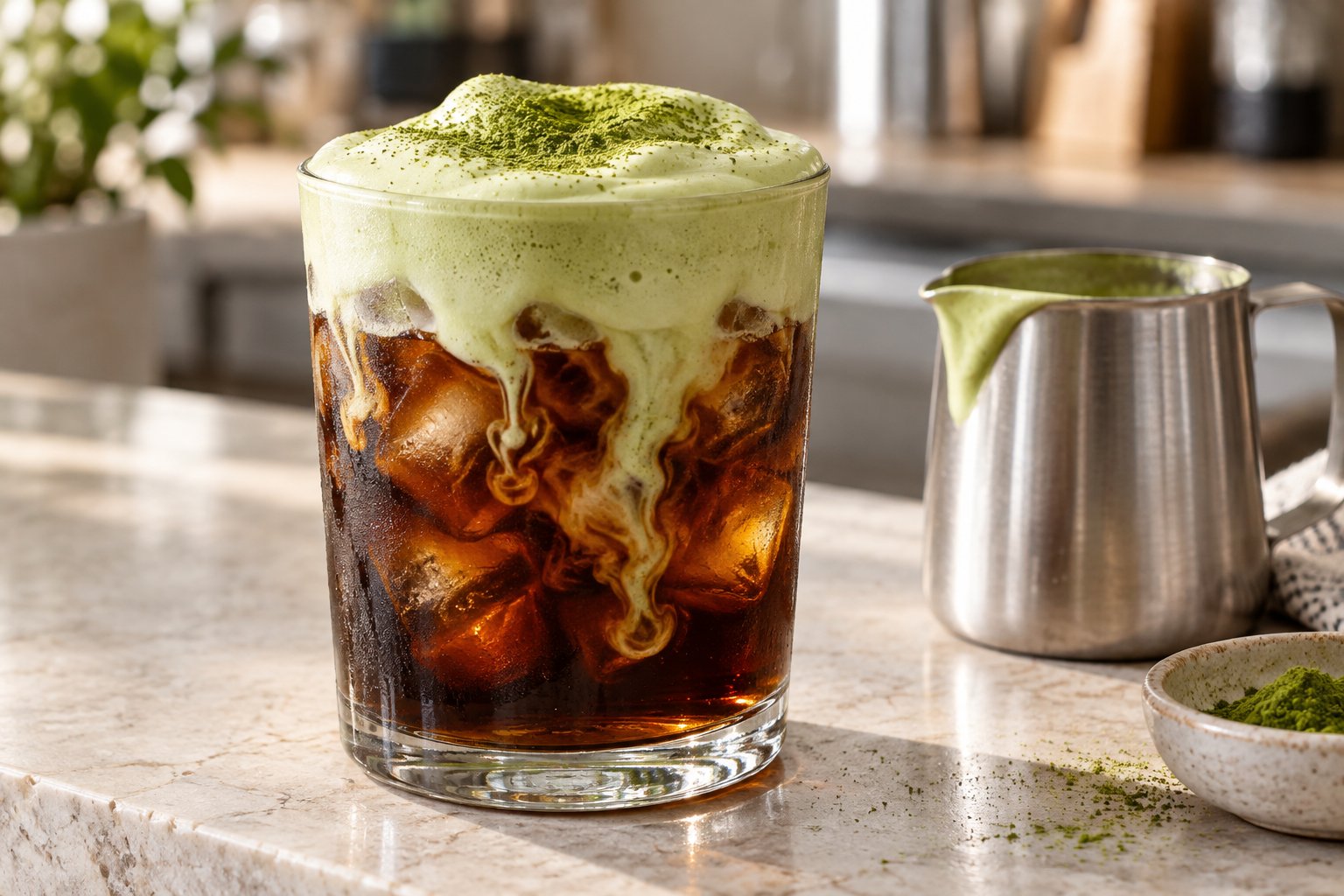
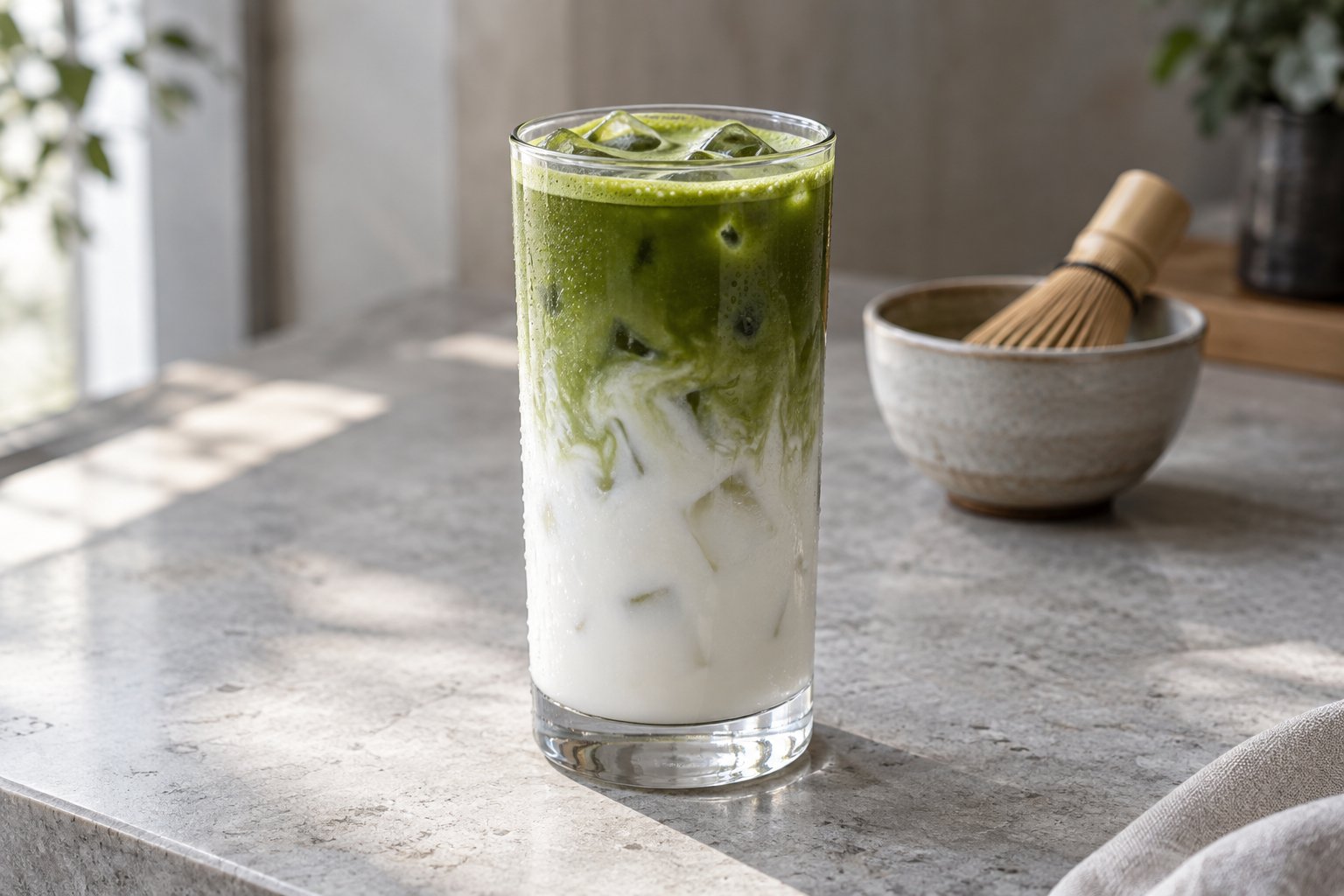
A strawberry matcha latte shows pink strawberry, white milk and green matcha in layers in the glass. This article compares the official recipes published by tea and food companies, then covers how to prep strawberry sauce for daily service, food safety and cost per cup.
What is a strawberry matcha latte?
A strawberry matcha latte is a cold latte with strawberry purée (crushed fruit) in the bottom of the glass, topped with milk and matcha. It is made by adding strawberry and sweetness to a matcha latte recipe.
How it differs from a matcha latte
The difference is the sourness and sweetness of the strawberry. The amount of matcha and the choice of milk follow the same thinking as a matcha latte, so it helps to read How to Choose Matcha for Café Lattes first for the base recipe and matcha grades.
Which matcha to use
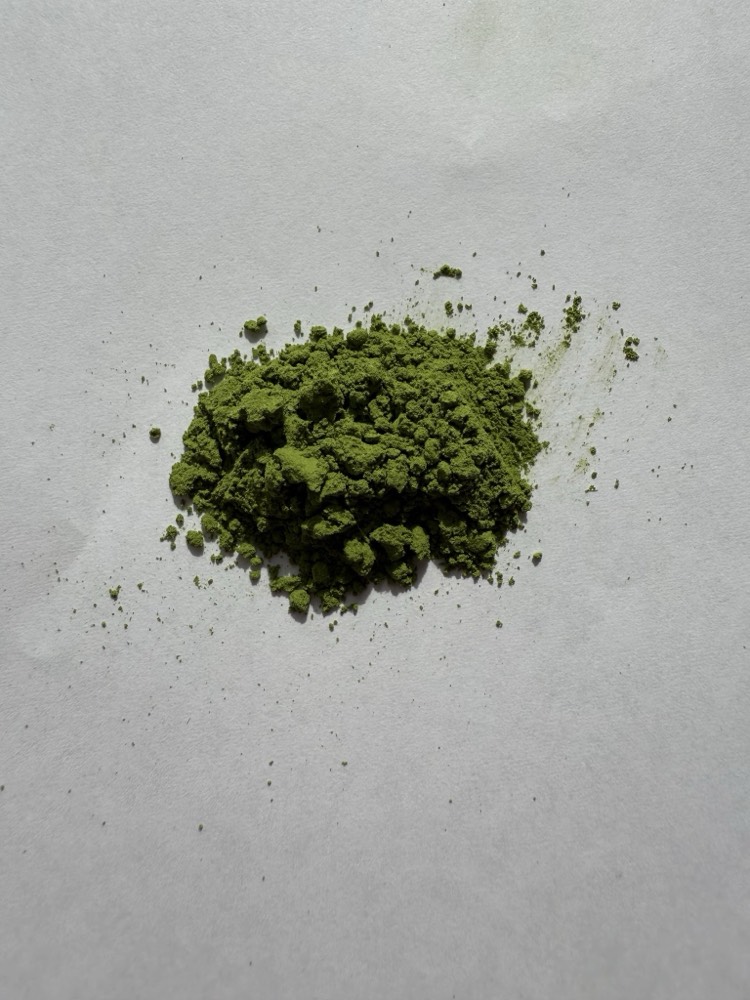
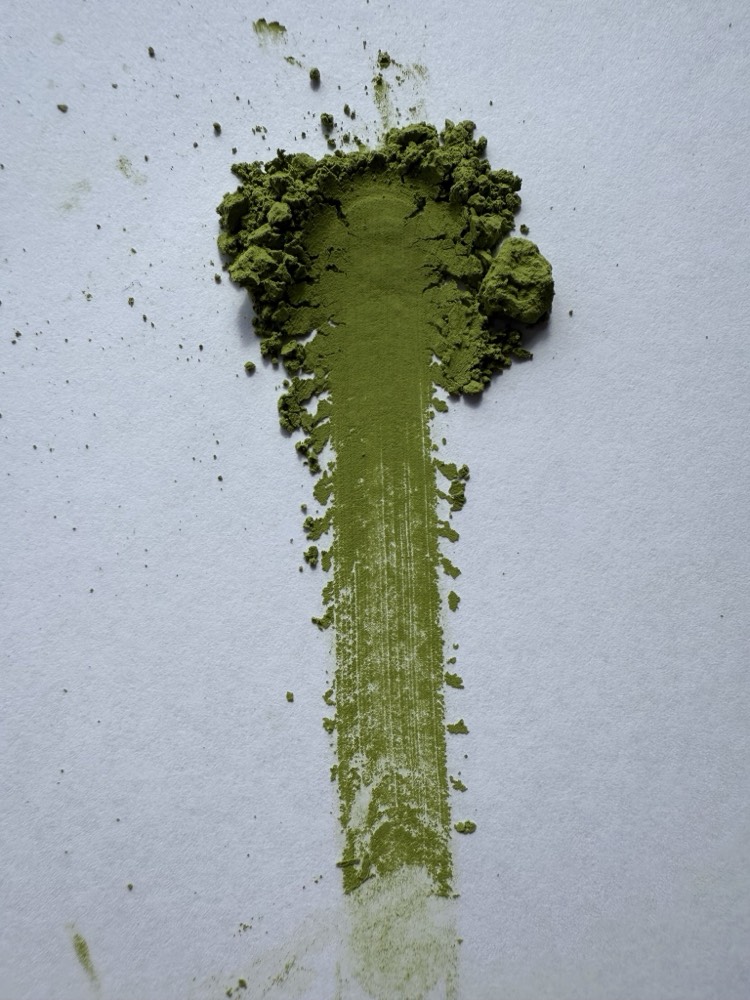
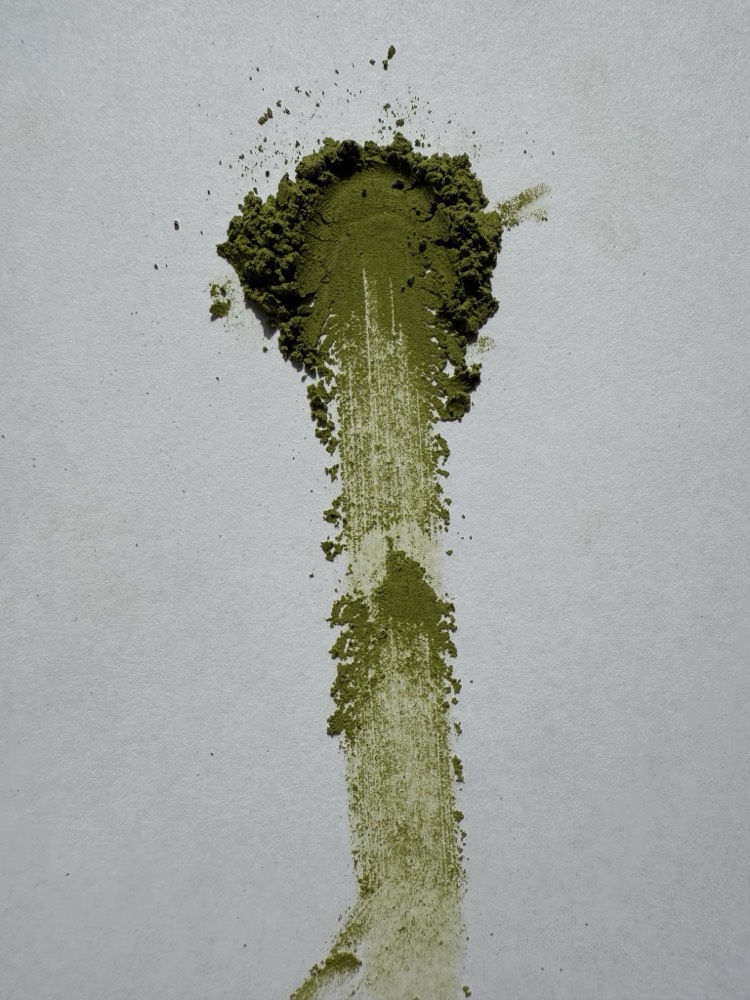
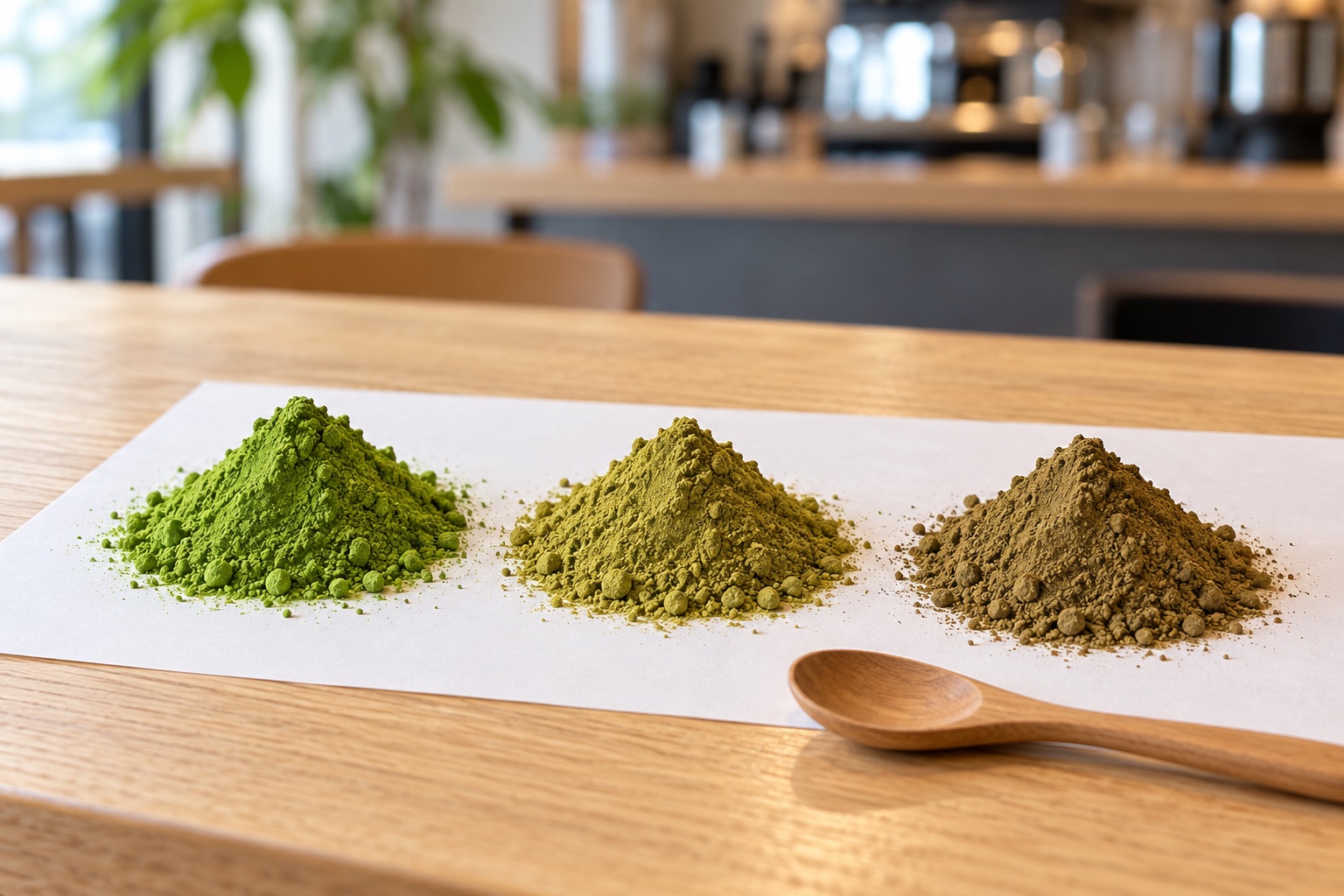
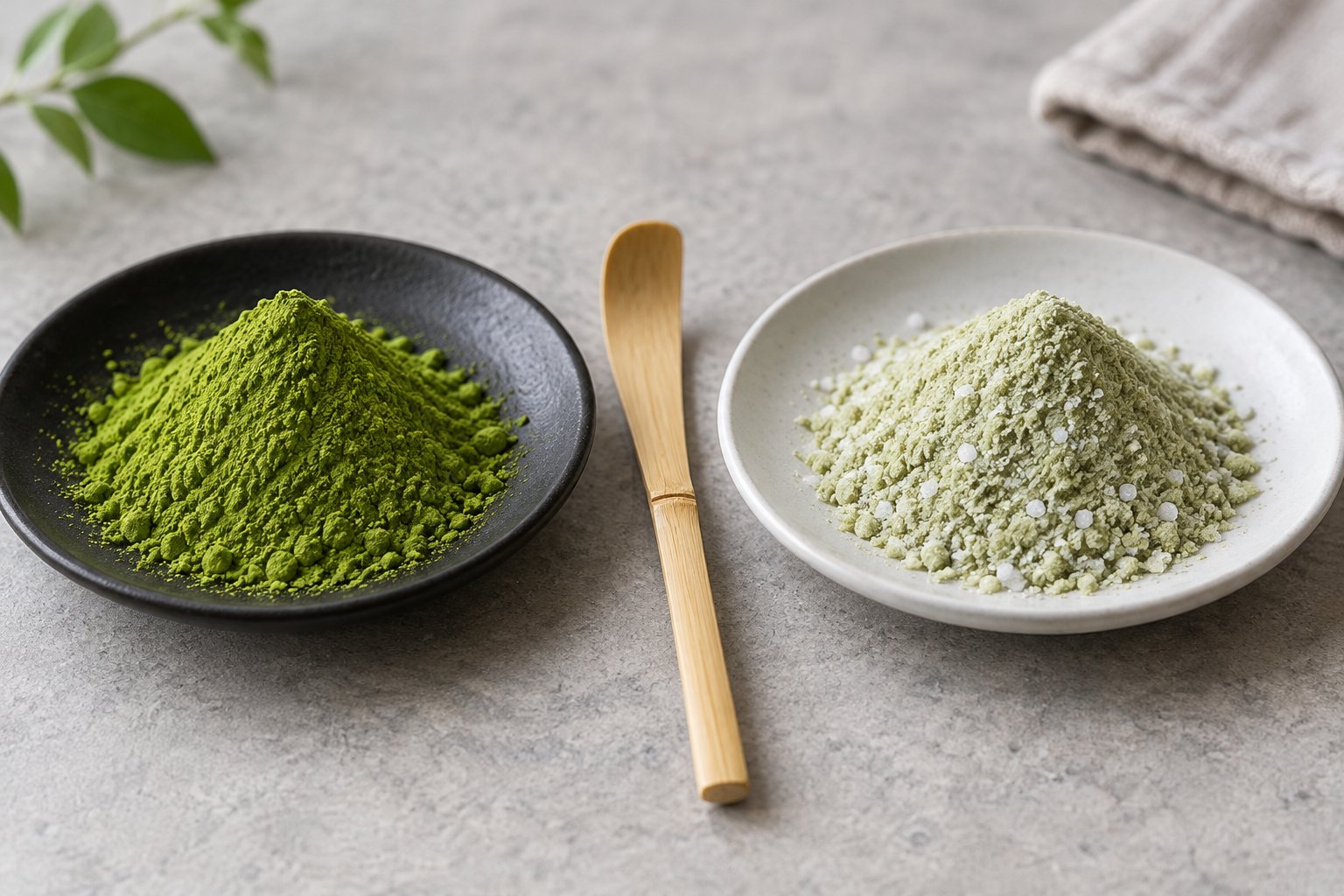
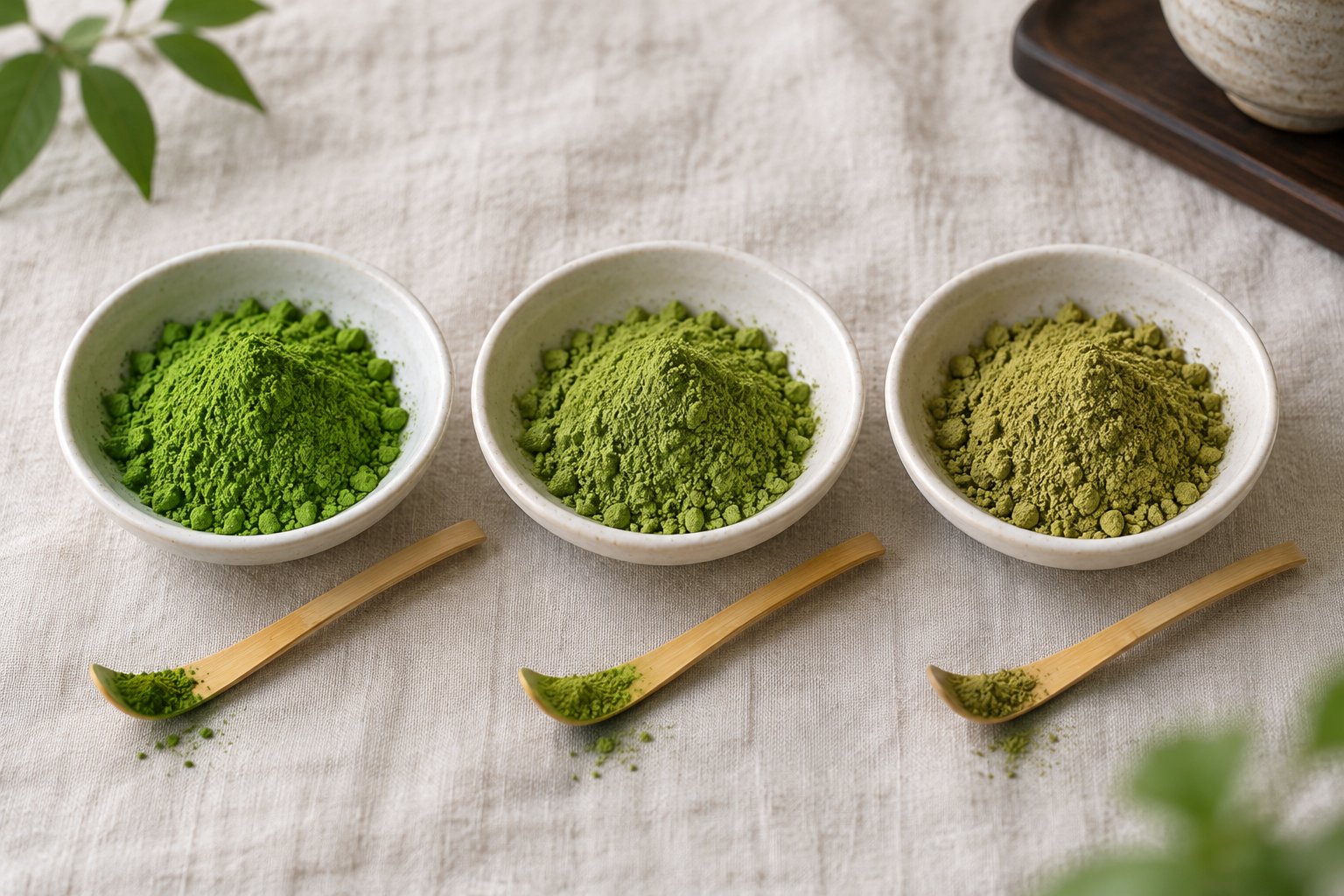
Use a latte matcha whose colour and flavour stay visible next to strawberry and milk. Grade names differ from seller to seller, so check the harvest (first flush or a later flush) and how it was milled rather than the name. See Grades for how grades differ.
Comparing official recipes
Among the six official recipes, the four that give matcha in grams use 1 to 5g per cup, and all five iced recipes add the matcha last, on top. Units also differ by company (grams, teaspoons, cups), so convert to grams before using a recipe in a café.
The base matcha latte
As a public recipe for a matcha latte without strawberry, Japan’s Ministry of Agriculture, Forestry and Fisheries (MAFF) introduced one in its public relations magazine: 1 teaspoon of matcha, about 20ml of hot water, 100ml of milk and 3g of sugar. The official recipe of Ippodo Tea, a long-established Kyoto tea shop, dissolves 3g of matcha in 100ml of water at 80°C and adds 100ml of milk.
| Item | MAFF matcha latte (1 cup) |
|---|---|
| Matcha | 1 teaspoon |
| Hot water (or water) | About 20ml |
| Milk | 100ml |
| Sugar | 3g (adjust to taste) |
| Method | Mix the matcha well with hot water to dissolve it. Warm the milk, add the sugar and froth it, then pour it over the matcha |
Source: MAFF, aff April 2017, “特集2 抹茶(2)” (Feature 2: Matcha, part 2, in Japanese) https://www.maff.go.jp/j/pr/aff/1704/spe2_02.html
Six official recipes compared
These are the strawberry matcha latte recipes that tea and food companies publish on their own websites.
| Company (country, business) | Servings | Matcha | Hot water (water) | Milk | Strawberry | Sweetener |
|---|---|---|---|---|---|---|
| Paper & Tea (Germany, tea shop) | 1 | 2g | 20ml at 70°C | 140ml | 100g, puréed | Not stated |
| La Via del Tè (Italy, tea company) | 1 | 2g | Hot water (amount and temperature not stated) | 200ml | 5 to 6 frozen strawberries, puréed | 1 teaspoon sugar |
| Japanese Taste (Japan, food retailer) | 1 | 5g sweetened matcha | 50ml at about 80°C | 100ml | 70g, crushed | 10g sugar |
| Domino Sugar (US, sugar maker) | 2 | 2 teaspoons | 3 ounces (about 89ml) cold water | 12 ounces (about 355ml) | 1 cup, puréed | 1/3 cup golden sugar |
| ArtfulTea (US, tea shop) | 1 | 1 teaspoon | 2 ounces (about 59ml) at 180°F (about 82°C) | 1 cup (about 237ml) | 3 tablespoons of sauce made by cooking and straining 2 cups | 2 tablespoons maple syrup in the whole batch of sauce |
| Grind (UK, coffee company) | 1 (hot) | 1g | 50ml, not boiling | 150ml | 2 to 3, warmed with sweetener into a syrup | 1 teaspoon |
Only Grind’s is hot; the other five are iced. The matcha used by Japanese Taste contains a little beet sugar. Domino Sugar dissolves its matcha in cold water. The three companies that give a water temperature range from 70°C to about 82°C.
What the table shows
Only two companies give strawberries in grams: Paper & Tea (100g) and Japanese Taste (70g). The others use pieces or cups. To serve the same taste every day, re-weigh both matcha and strawberry in grams. From here on is our editorial view. The amount of matcha depends on whether its flavour holds up against the strawberry’s sourness and the amount of milk. Start with 2g, and if the strawberry overpowers it, add 0.5g at a time until you find the amount that suits your cup size.
How to make strawberry purée and sauce
There are three ways to prepare the strawberries: mash them raw, purée them in a blender, or cook and strain them. In the official recipes, Japanese Taste crushes the strawberries; Paper & Tea, La Via del Tè and Domino Sugar purée them; and ArtfulTea and Grind heat them.
Using raw strawberries
Mashing raw strawberries keeps pieces of fruit and aroma. Japanese Taste mixes 70g of strawberries with 10g of sugar and says to adjust the sugar to the sourness of the strawberries. Because pieces remain, we suggest serving it with a wide straw.
Cooking and straining
ArtfulTea cooks 2 cups of strawberries, 2 tablespoons of maple syrup and 1 teaspoon of lemon juice over medium-low heat until soft, strains the purée and cools it completely. In our view, strained sauce has no pieces and is easy to pour in the same amount for every cup, so it suits cafés that want to prep in batches.
Using frozen strawberries
La Via del Tè blends frozen strawberries and sugar until smooth. Frozen strawberries are easy to buy with a consistent taste in any season, but there are food safety points to watch. These are covered below in “Prepping ahead and food safety.”
How to layer the matcha
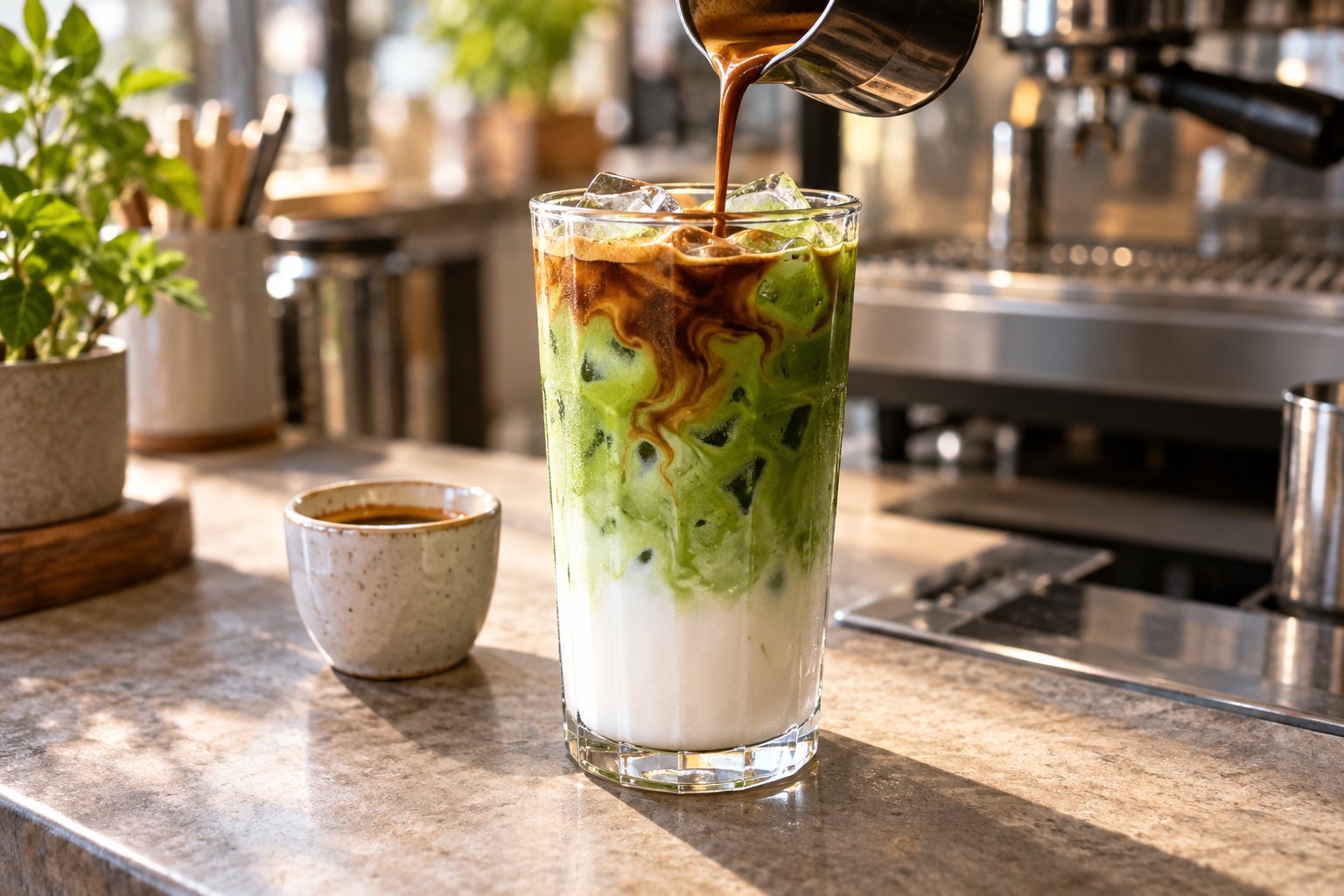
For clean layers, add strawberry, ice, milk and matcha in that order, and whisk the matcha thick in a small amount of water before pouring it last. All five official iced recipes put the matcha on top last.
The order of the layers
Paper & Tea puts strawberry purée in the glass, adds milk and ice, and finally adds the matcha. La Via del Tè spoons the purée into the bottom and levels it, gently adds ice, then pours the matcha in a thin stream directly onto the ice to form the matcha layer. From here on is our editorial view. Pouring the milk gently onto the ice as well makes it less likely to mix into the strawberry below.
Whisk the matcha thick in a little water
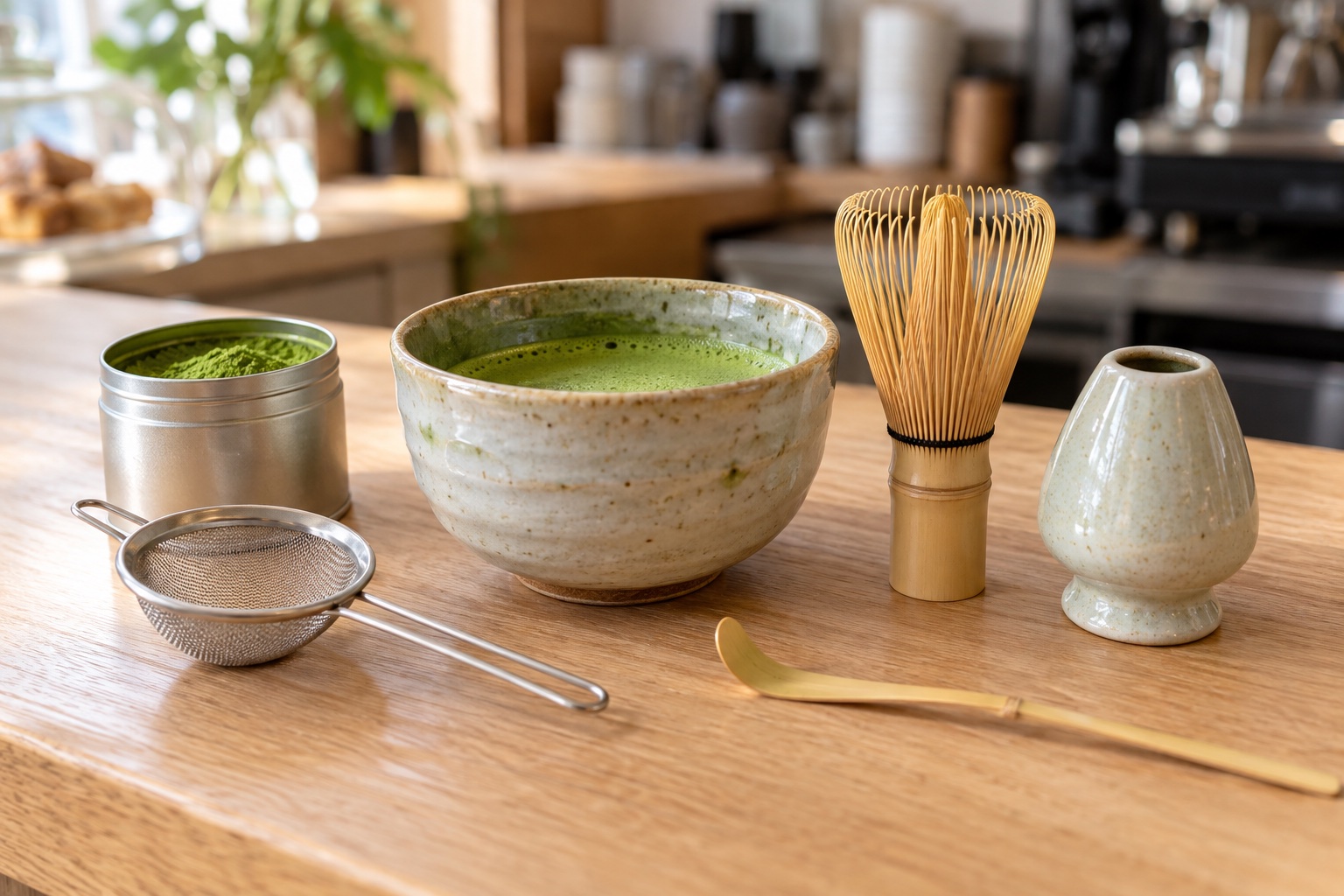
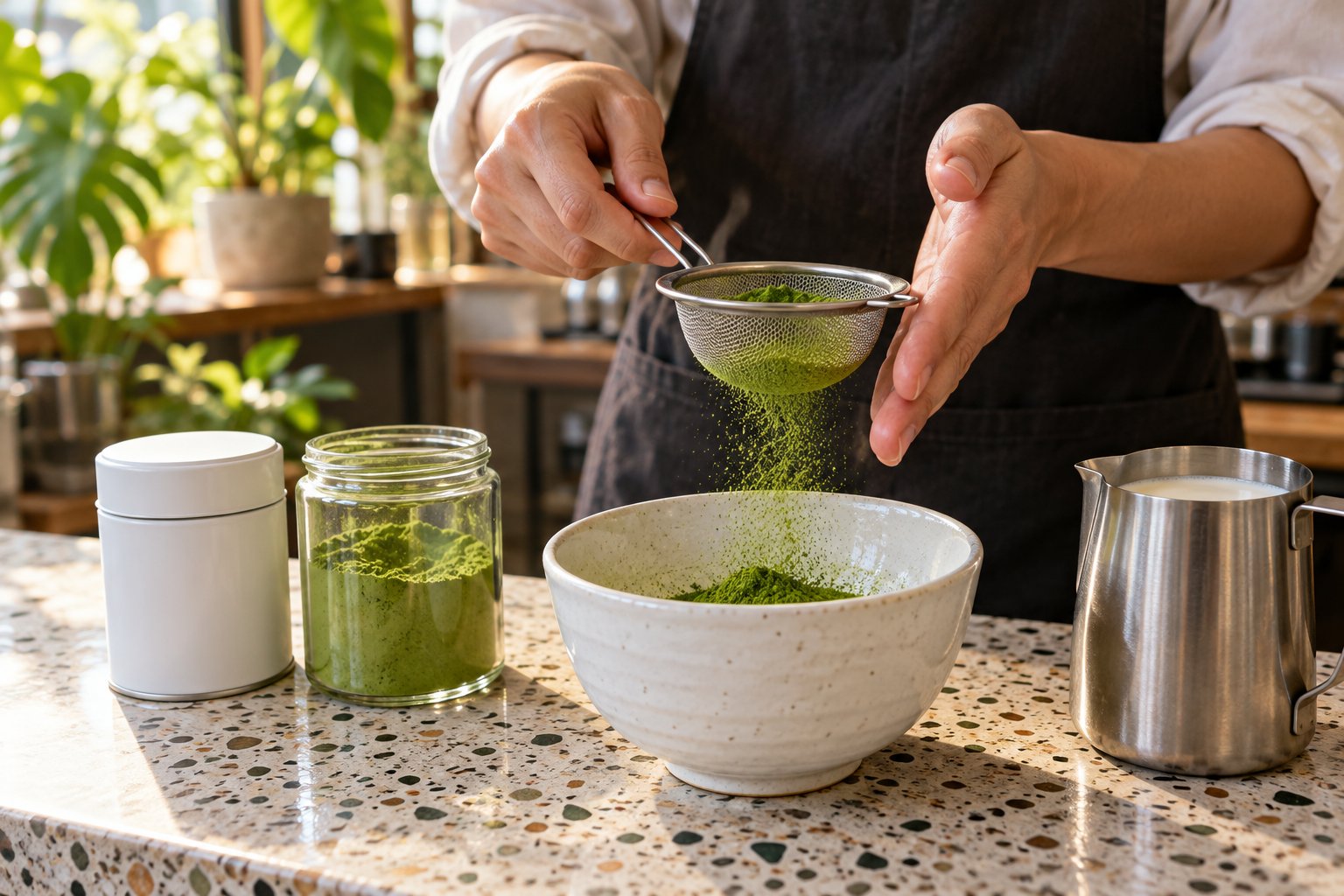
The water used to dissolve the matcha is 20ml at 70°C for Paper & Tea and 50ml at about 80°C for Japanese Taste. Grind says not to use boiling water because it burns the matcha. The less water you use, the denser the matcha layer and the less it gets diluted. For sifting matcha to prevent lumps and how to move the chasen (bamboo whisk), see How to Make Matcha.
Changing the milk
Some official recipes say almond milk or oat milk can replace cow’s milk. Different milks change the sweetness and how the colours look, so when you switch milk, re-check the amount of matcha.
Adjusting sweetness
We suggest setting the sweetness with the strawberry sauce and dissolving the matcha without sugar. That way, when you change sweetness levels, you only need to look at the amount of sauce. Sweetener in the official recipes ranges from none stated to 10g of sugar.
Adjust to the strawberries
Japanese Taste says to adjust the sugar to the sourness of the strawberries. The same amount of sugar tastes different depending on how ripe the strawberries are. From here on is our editorial view. If you make the sauce less sweet and add syrup to order, you can offer several sweetness levels while prepping only one sauce.
How much sugar
In 2015 the World Health Organization (WHO) recommended reducing free sugars, which include sugars in syrups and fruit juices as well as added sugar, to less than 10% of total energy intake per day. It says a further reduction to below 5%, or roughly 25g (6 teaspoons), would provide additional health benefits. Adding both a sweet sauce and sugar can easily make one cup high in sugar, so add sweetness in one place only, either the sauce or the syrup.
Serving in Singapore
In Singapore, from 30 December 2023, freshly prepared drinks also came under “Nutri-Grade,” the labelling of sugar and saturated fat. According to Singapore’s Health Promotion Board (HPB), the grade is set by the amount of sugar and saturated fat, and drinks graded C or D must show the mark next to the drink on the menu. Labelling A and B is optional. The sugar content of toppings must also be shown on menus and similar materials.
| Item | HPB, “Measures for Nutri-Grade” |
|---|---|
| Start for freshly prepared drinks | Labelling and advertising rules extended from 30 December 2023 |
| Daily sugar intake | Singaporeans consume on average 12 teaspoons (58g) of sugar a day |
| Share from drinks | More than half comes from drinks: pre-packaged drinks 64%, freshly prepared drinks 36% |
Source: Health Promotion Board (HPB), “Measures for Nutri-Grade” https://hpb.gov.sg/healthy-living/food-beverage/nutri-grade
For businesses with revenue of not more than S$1 million in the latest financial year that sell freshly prepared drinks at fewer than 10 outlets, there is a concession that does not yet require this labelling. Singapore’s Ministry of Health (MOH) and HPB say they will review this concession over time. Because the grade can change with the amount of strawberry sauce or syrup, cafés in Singapore should fix the amount used per cup in grams.
Prepping ahead and food safety
Four of the six official recipes use strawberries without heating them, so decide how to wash them, at what temperature to store them, and how long you have from prep to use. Japan’s MHLW “Hygiene Management Manual for Large-Scale Cooking Facilities” gives guidelines.
Official guidelines
The manual applies to facilities serving the same menu to 300 or more people at a time or 750 or more a day, but MHLW also asks small and medium-sized cooking facilities to manage hygiene in line with its intent. The main guidelines are:
- When serving fruit without heating, wash it thoroughly under running water, sterilise it if needed, then rinse it under running water
- Store fresh fruit and vegetables at around 10°C
- Food not served right after cooking should be kept at 10°C or below, or 65°C or above
- Food should preferably be eaten within 2 hours of cooking
- Food that is heated should reach 75°C at the centre for at least 1 minute, or 85 to 90°C for at least 90 seconds for foods that may be contaminated with norovirus, such as bivalve shellfish
How long purée keeps
We found no official guideline on how many days strawberry purée keeps, and the official recipes do not say either. We suggest keeping it at 10°C or below in the fridge and prepping small batches several times a day, because this keeps you closer to the manual’s temperature and time guidelines. Write the prep time and use-by time on the container and keep a record as a café rule.
Frozen strawberries
In the US in 2022 and 2023, there was a hepatitis A outbreak linked to frozen organic strawberries made from strawberries imported from Mexico. According to the US Centers for Disease Control and Prevention (CDC), 10 people in 4 states were infected and 4 were hospitalised. The US Food and Drug Administration (FDA) called on businesses not to sell or serve the recalled frozen strawberries, and ended its investigation in September 2023. When using frozen strawberries, check the supplier and product recall information, and decide whether to use them unheated or cooked into a sauce.
Serving it as a seasonal menu
A strawberry matcha latte works well as a limited-time menu item timed to strawberry season. From here on are editorial suggestions based on the official recipes and public sources.
Season and switching strawberries
A review in a Thai academic journal describes how strawberry cultivation efforts began in Thailand’s northern highlands in 1960, the first successful crop was grown in 1972, and the crop then spread to local growers. When local fresh strawberries are available, you can use raw purée, and at other times a sauce made from frozen strawberries, which lets you keep the menu all year. Switching changes the colour and aroma, so update photos and menu descriptions for each period.
Sweetness and milk options
Offering two sweetness levels, such as “regular” and “less sweet,” and a choice of cow’s milk or oat milk increases the options for customers. Too many sweetness levels make prep complicated, so keep one strawberry sauce and set the levels by the amount of syrup.
Changing the look
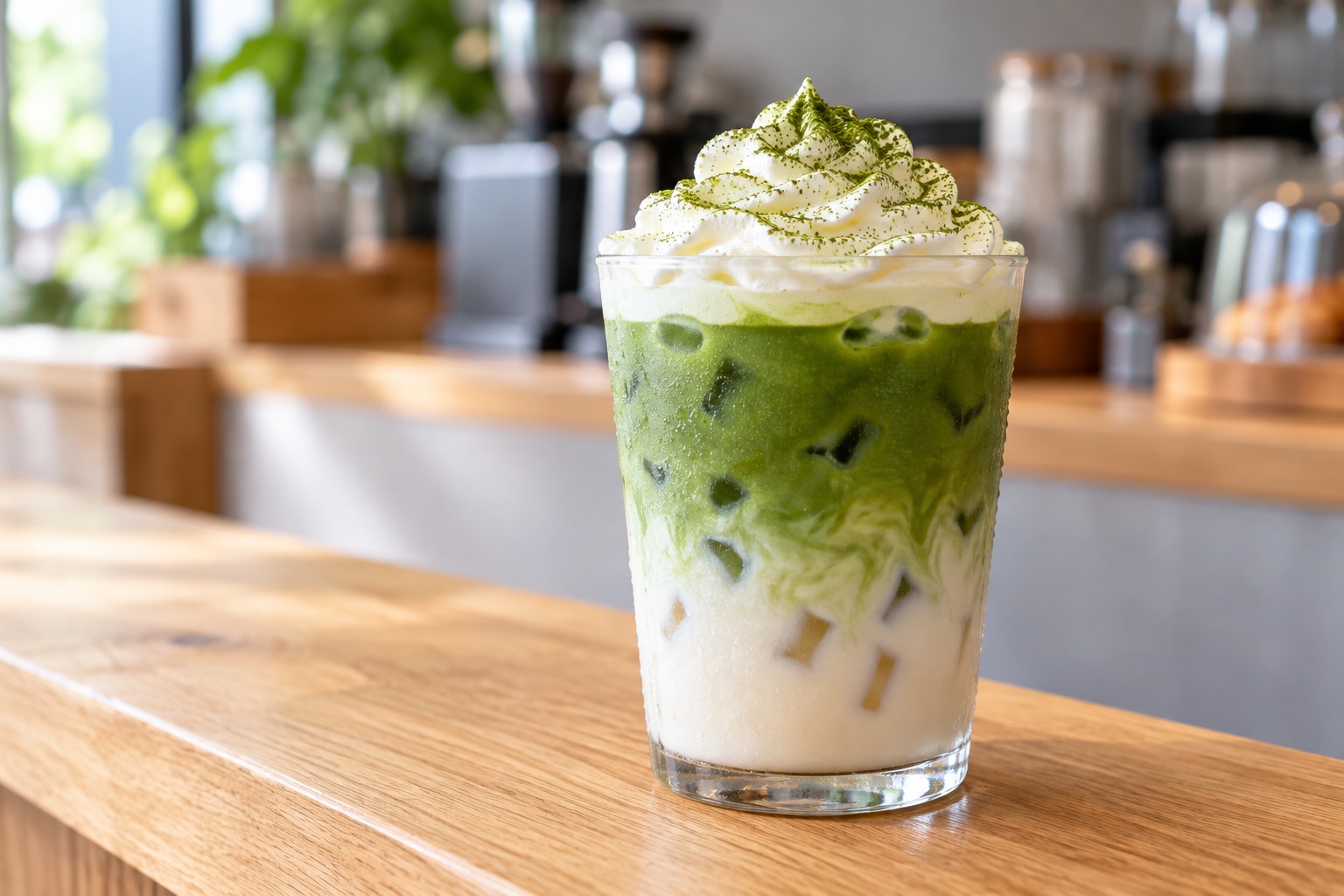
Some published recipes add cream on top of the matcha layer. Florida Dairy Farmers, a US dairy organisation, tops its drink with whipped cream mixed with matcha. Cream adds sugar and saturated fat, so in Singapore, re-check the Nutri-Grade grade too. For a hot version, you can stir warm strawberry syrup into the milk, as Grind does.
Cost per cup
The cost of one cup is the matcha cost plus the strawberry sauce cost, plus milk, ice, cup and so on. Matcha cost uses the same formula as in How to Choose Matcha for Café Lattes.
Matcha cost
Matcha cost per cup = price per kg ÷ 1,000 × grams per cup
At 2g per cup, 1kg of matcha makes 500 cups. At 3g, it makes about 330 cups. How the price per kg is set is covered in what decides the price of matcha.
Strawberry sauce cost
Strawberry sauce changes weight when you remove the hulls or cook it down, so divide by the finished amount.
Sauce cost per gram = ingredient cost of one batch ÷ grams of finished sauce
Sauce you throw away unused is also part of the cost, so record how much you prep and discard each day, and reduce the batch size if you discard a lot.
The order for setting the cost
- Set the amounts of matcha, sauce and milk per cup in grams and millilitres
- Calculate the matcha cost and sauce cost with the formulas above
- Add the cost of milk, ice, cup, straw and lid
- Look at the ratio to the selling price, and adjust the amount or grade of matcha or the amount of sauce
Compare how changing the amount and grade of matcha affects the taste by making the drink with your own strawberry sauce and milk. Omakase Matcha supplies matcha from Uji, Yame, Shizuoka, Kagoshima and Miyazaki, and you can choose up to 3 samples. If you check Matcha Shelf Life and Storage and set your order size from how much you use in a month, you can keep serving the same matcha throughout the seasonal menu.
Sources
- Paper & Tea, “Iced Strawberry Matcha Latte” https://www.paperandtea.com/blogs/journal/iced-strawberry-matcha-latte
- La Via del Tè, “Strawberry Matcha Latte” https://www.laviadelte.it/en/blog/strawberry-matcha-latte
- Japanese Taste, “How To Make Strawberry Matcha Latte Recipe” https://japanesetaste.com/blogs/japanese-taste-recipes/how-to-make-a-strawberry-matcha-latte-using-j-taste-matcha-powder
- Domino Sugar, “Strawberry Matcha Latte” https://www.dominosugar.com/recipe/strawberry-matcha-latte
- ArtfulTea, “Strawberry Matcha Latte Recipe” https://artfultea.com/blogs/tea-recipes/strawberry-matcha-latte-recipe
- Grind, “Strawberry Matcha Latte Recipe” https://grind.co.uk/blogs/features/strawberry-matcha-latte-recipe
- Florida Dairy Farmers, “Strawberry Matcha Latte” https://www.floridamilk.com/in-the-kitchen/recipes/desserts/strawberry-matcha-latte.stml
- MAFF, aff April 2017, “特集2 抹茶(2)” (Feature 2: Matcha, part 2, in Japanese) https://www.maff.go.jp/j/pr/aff/1704/spe2_02.html
- Ippodo Tea, “Matcha Latte Recipe” https://ippodotea.com/blogs/recipes-to-brew-japanese-tea/matcha-latte-recipe
- MHLW, “大量調理施設衛生管理マニュアル” (Hygiene Management Manual for Large-Scale Cooking Facilities, revised 16 June 2017, in Japanese) https://www.mhlw.go.jp/file/06-Seisakujouhou-11130500-Shokuhinanzenbu/0000168026.pdf
- CDC, “Hepatitis A Outbreak Linked to Frozen Organic Strawberries” https://www.cdc.gov/hepatitis-a/outbreaks/frozen-strawberries-2023/index.html
- FDA, “Outbreak Investigation of Hepatitis A Virus Infections: Frozen Strawberries (February 2023)” https://www.fda.gov/food/outbreaks-foodborne-illness/outbreak-investigation-hepatitis-virus-infections-frozen-strawberries-february-2023
- Health Promotion Board (HPB), “Measures for Nutri-Grade” https://hpb.gov.sg/healthy-living/food-beverage/nutri-grade
- Ministry of Health (MOH), “Extension of Nutri-Grade requirements to freshly prepared beverages from end 2023” (13 February 2023) https://www.moh.gov.sg/news-highlights/details/extension-of-nutri-grade-requirements-to-freshly-prepared-beverages-from-end-2023
- WHO, “WHO calls on countries to reduce sugars intake among adults and children” (4 March 2015) https://www.who.int/news/item/04-03-2015-who-calls-on-countries-to-reduce-sugars-intake-among-adults-and-children
- Tantivit, K., Tatmala, N., “Strawberry History, Cultivation and Problems in the Northern Area of Thailand: A review,” International Scientific Journal of Engineering and Technology 8(1), 2024 https://ph02.tci-thaijo.org/index.php/isjet/article/view/253684