
 Reviewed by: Takahiro Sugiyama (CEO, meguri Inc.)
“Kagoshima matcha” is a common sight next to “Uji matcha” in cafés and online shops overseas. Many English articles describe Kagoshima as Japan’s second-largest tea region after Shizuoka, but according to Japan’s national statistics, Kagoshima Prefecture has been first in tea production since the 2024 harvest. For matcha raw material alone, it was first even earlier. Volumes, growing areas, cultivars, how the tea is made and what to check when buying can all be confirmed in documents from Kagoshima Prefecture and the national government.
What is Kagoshima matcha?
Kagoshima Prefecture is first in Japan for production of tencha, the tea leaf that matcha is made from. In 2025 it produced 2,670 tonnes of tencha, about 43% of Japan’s total. On the other hand, as of October 2026 we have not found a definition or trademark that sets how the name “Kagoshima matcha” may be used.
Tencha and matcha
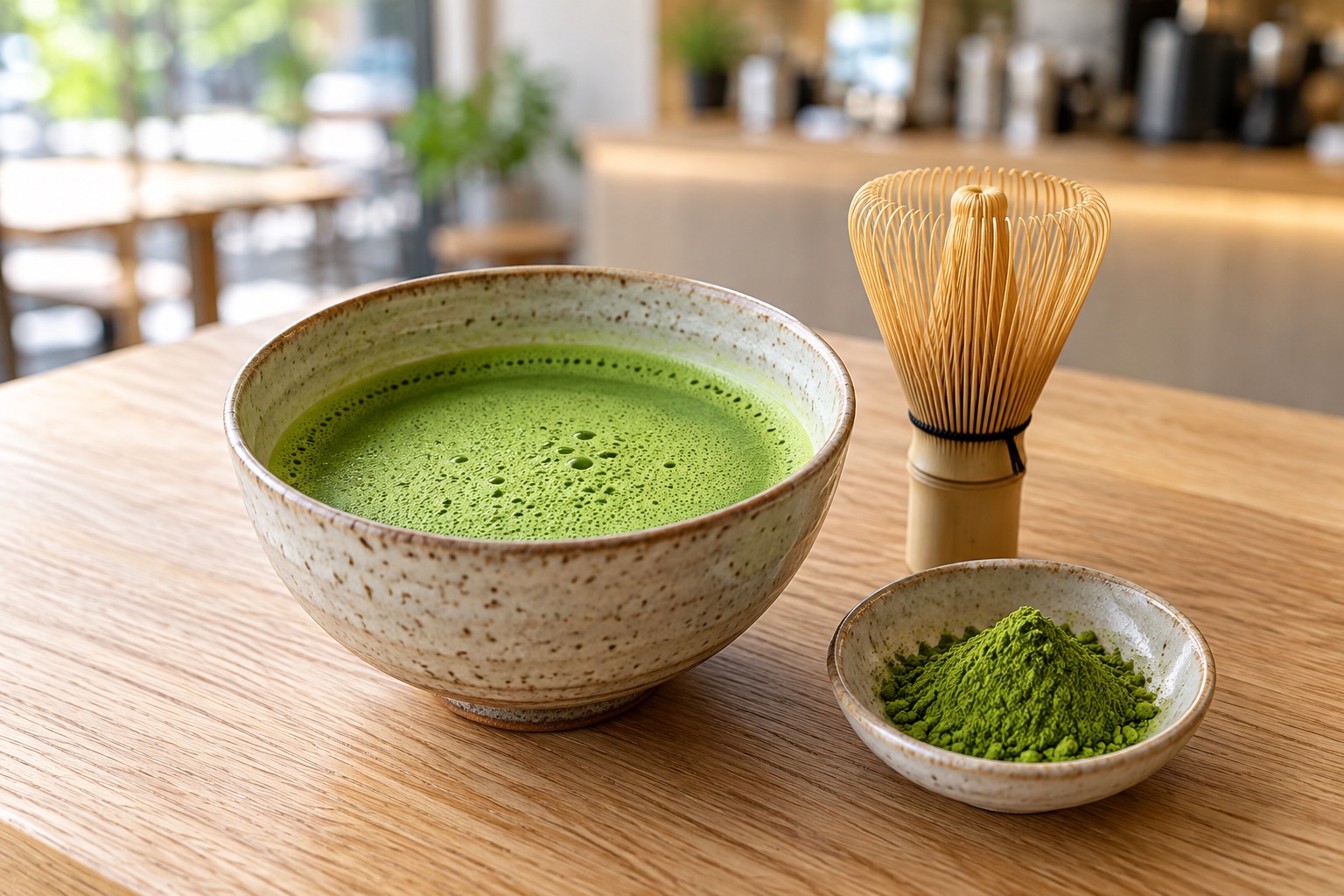
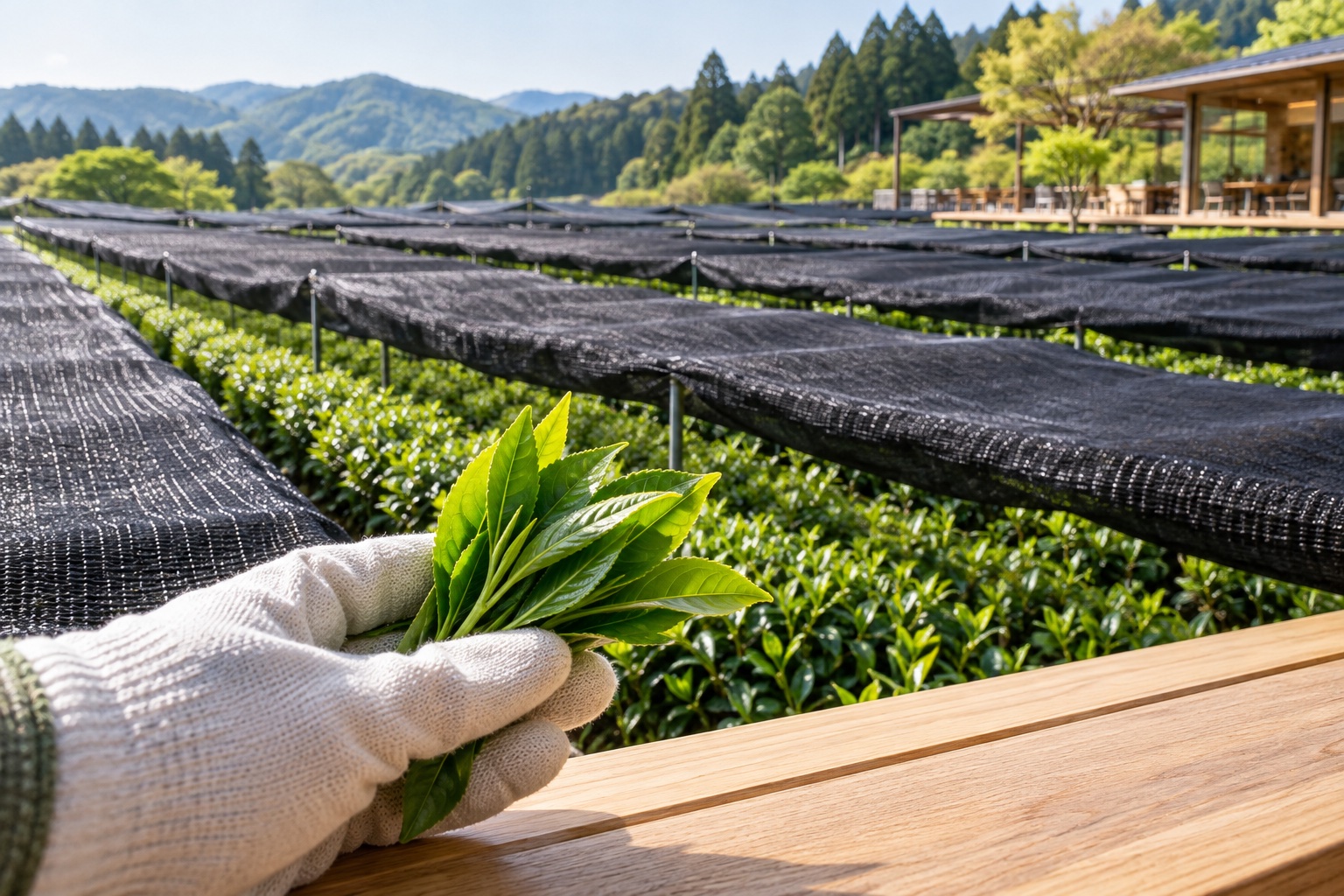
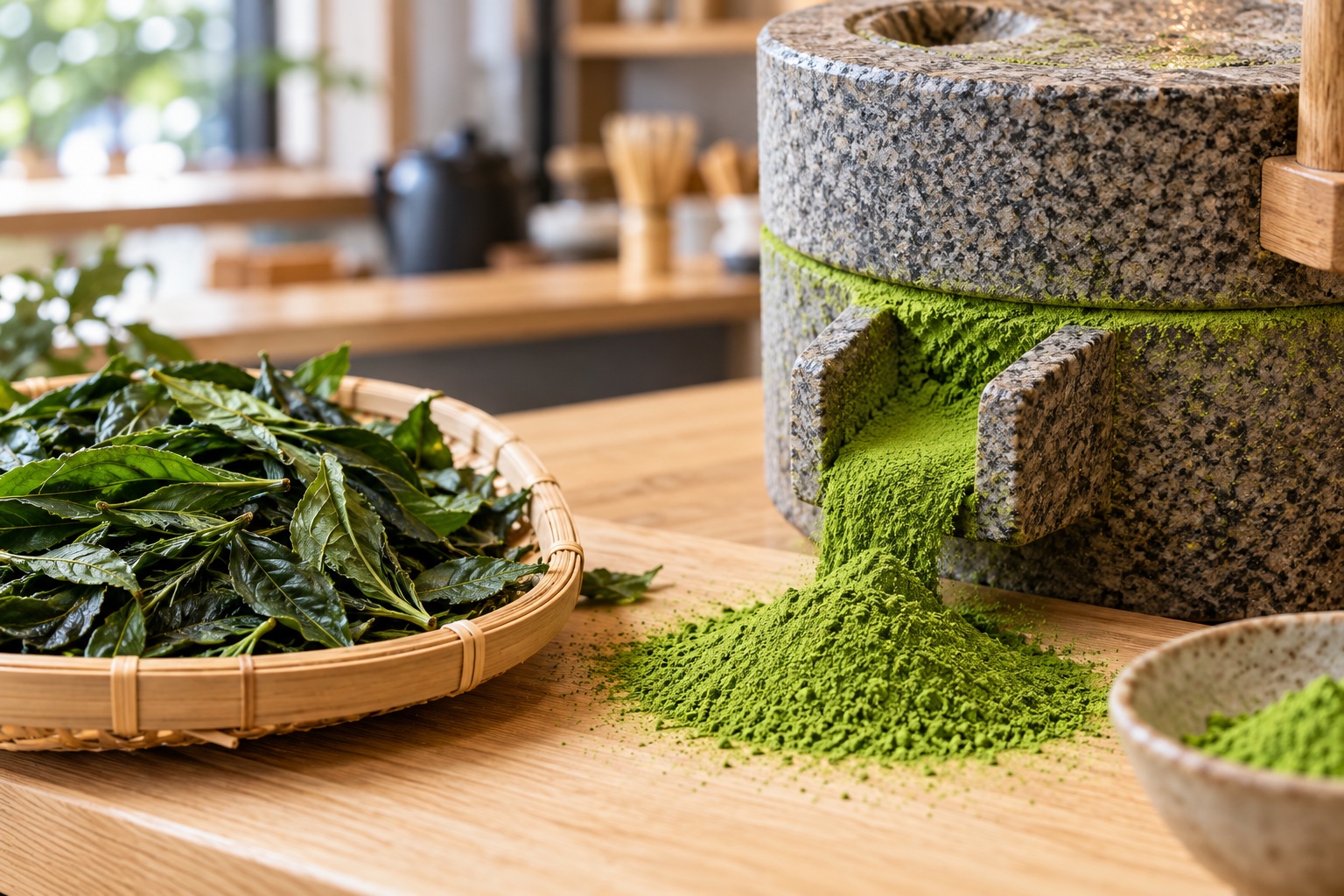
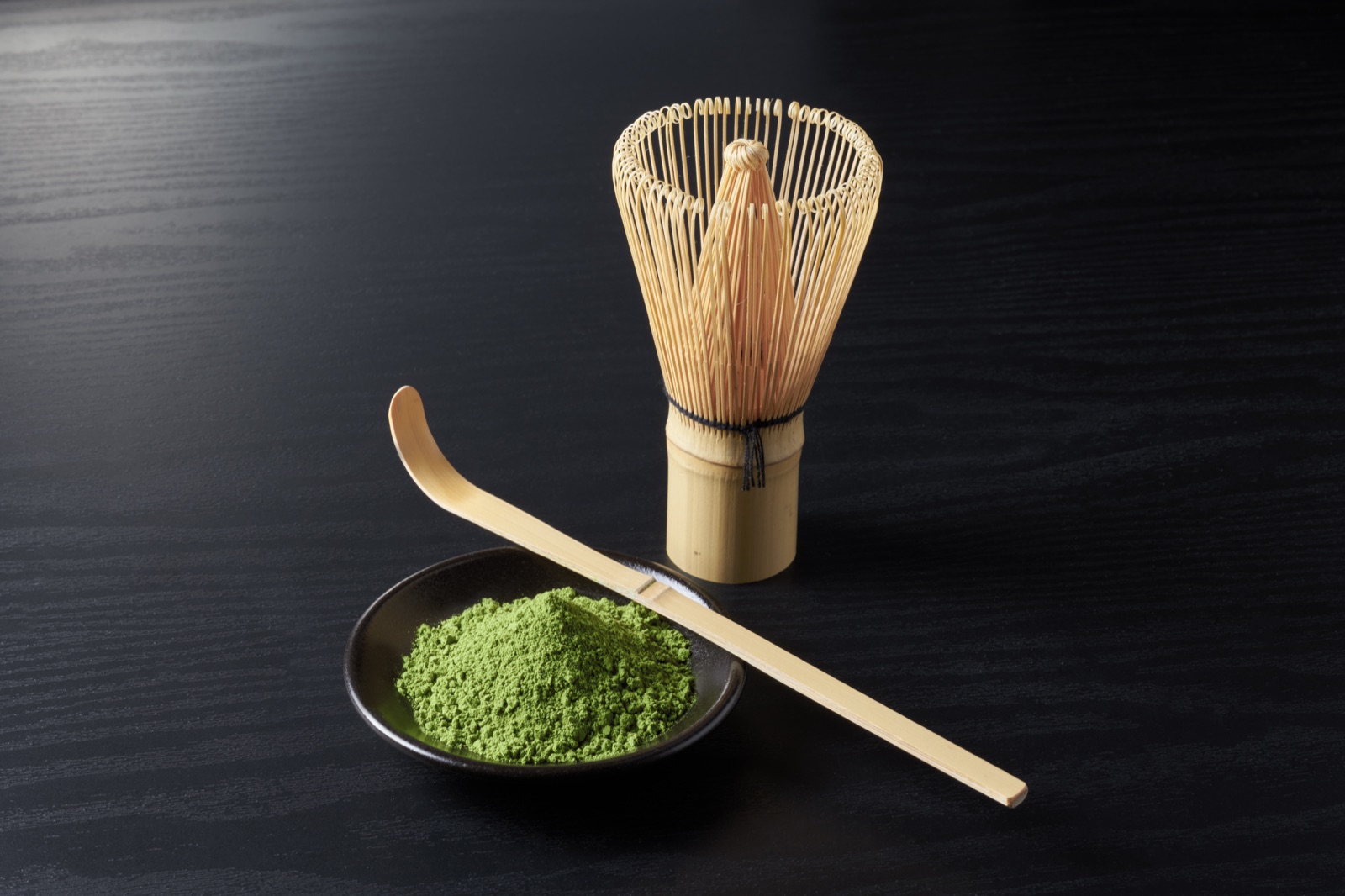
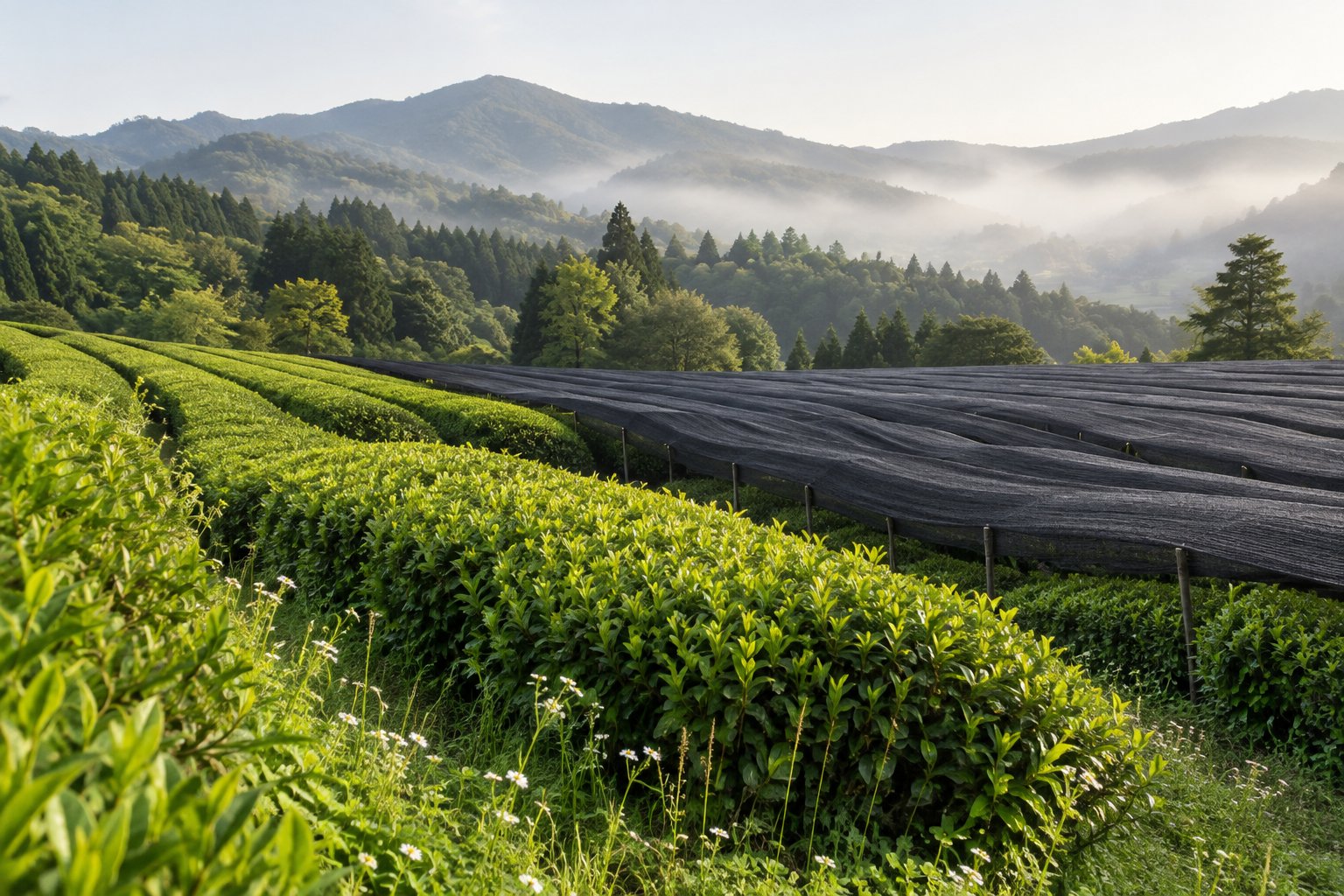
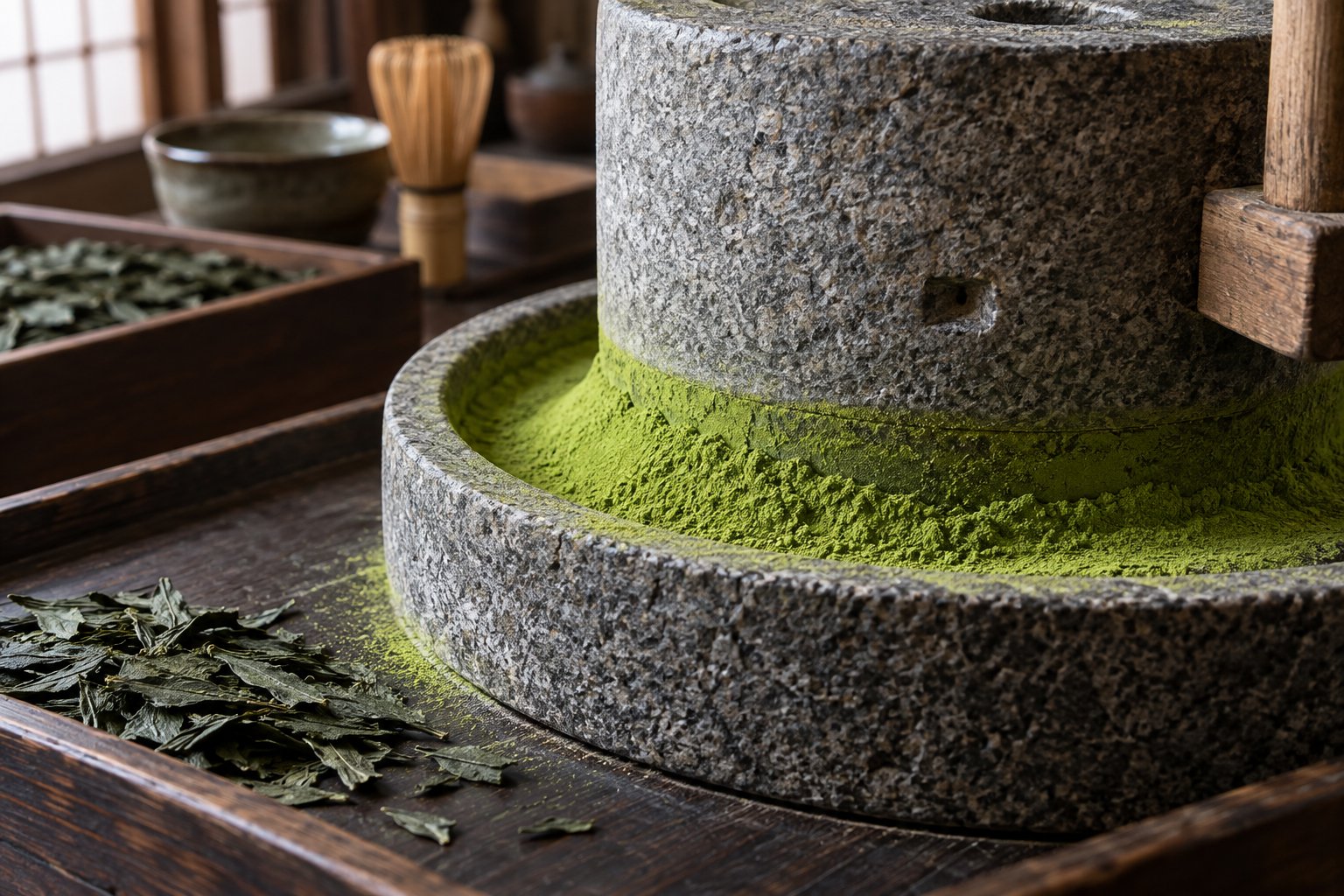
Tencha is made by steaming new shoots grown under covers that block sunlight before picking, then drying them without rolling. Grinding tencha finely with a mill or similar makes matcha. Statistics count tencha by region, and we could not find national statistics that show matcha itself by prefecture.
Tencha by prefecture (2025 harvest)
According to the National Federation of Tea Producers’ Associations, Japan produced 6,278 tonnes of tencha in 2025.
| Prefecture | Tencha | Share of Japan | All aracha | Tencha share of aracha |
|---|---|---|---|---|
| Kagoshima | 2,670 tonnes | About 43% | 30,000 tonnes | About 9% |
| Kyoto | 989 tonnes | About 16% | 2,121 tonnes | About 47% |
| Shizuoka | 875 tonnes | About 14% | 24,100 tonnes | About 4% |
| Aichi | 463 tonnes | About 7% | 561 tonnes | About 83% |
| Mie | 398 tonnes | About 6% | 4,805 tonnes | About 8% |
| Miyazaki | 304 tonnes | About 5% | 3,109 tonnes | About 10% |
| Fukuoka | 280 tonnes | About 4% | 1,486 tonnes | About 19% |
Shares are calculated from the National Federation of Tea Producers’ Associations figures. Aracha is tea whose picked leaves have been steamed and dried at a factory in the growing area, before final processing. Kagoshima makes about 2.7 times as much tencha as Kyoto, but tencha is less than 10% of all tea in the prefecture. Most of Kagoshima’s tea is still sencha, or bancha used as a raw material for bottled drinks.
How tencha production grew
Tencha factories in Kagoshima began to increase around 2014, and in 2020 Kagoshima overtook Kyoto to become first in Japan. Kyoto Prefecture writes that Kagoshima rapidly switched from sencha to tencha.
Factories and volume
According to Kagoshima Prefecture’s plan (March 2019), tencha factories in the prefecture increased from 3 in fiscal 2014 to 13 in fiscal 2018, and tencha production rose from 50 tonnes to 754 tonnes. The factories were in Minamikyushu city, Kirishima city and Shibushi city. Another prefectural document (March 2018) states that many producers started making tencha in 2014 or later. The March 2019 plan also notes that tencha was listed for the first time at the Kagoshima Prefecture tea market.
According to the prefecture’s statistics (including tencha made in autumn), tencha in Kagoshima grew as follows:
| Year | Tencha in Kagoshima |
|---|---|
| 2015 | 50 tonnes |
| 2020 | 1,210 tonnes |
| 2023 | 2,260 tonnes |
| 2024 | 3,410 tonnes |
| 2025 | 4,610 tonnes |
These figures include autumn tencha, so they are counted differently from the 2,670 tonnes of the National Federation of Tea Producers’ Associations above.
Why producers switched
A Kagoshima Prefecture document (June 2026) states that prices of sencha and gyokuro have stayed low, while the unit price of tencha has risen even as volume has grown. In the prefecture’s survey, some producers want to make less sencha, while about 20% answered that they want to make more tencha. In April 2026, two companies in the Matsumoto area of Kagoshima city also started running new tencha factories.
Where tencha is made
More than 90% of Kagoshima’s tencha is made in three cities: Shibushi, Minamikyushu and Kirishima. Minamikyushu city makes about half of all the prefecture’s aracha, but for tencha, Shibushi city on the Osumi Peninsula makes the most.
Tencha by municipality (fiscal 2025)
| Municipality | Tencha | Share of prefecture | All aracha |
|---|---|---|---|
| Shibushi city | 2,134 tonnes | About 46% | 4,542 tonnes |
| Minamikyushu city | 1,655 tonnes | About 36% | 14,545 tonnes |
| Kirishima city | 560 tonnes | About 12% | 2,335 tonnes |
| Hioki city | 134 tonnes | About 3% | 778 tonnes |
| Kagoshima city | 96 tonnes | About 2% | 940 tonnes |
Prefectural statistics including autumn tencha. Shares are calculated from the prefecture total of 4,610 tonnes. The prefecture’s table also lists Satsuma town with 26 tonnes.
Source: Kagoshima Prefecture, “令和8年度茶業振興対策資料” (Tea industry promotion materials, fiscal 2026) https://www.pref.kagoshima.jp/ag06/chagyoshinkou/documents/87621_20260918162127-1.pdf
Features of each area
Kagoshima Prefecture’s plan describes tea growing in each area as follows:
- Nansatsu area (Minamikyushu city and others): has wide upland fields and accounts for about half of the prefecture’s tea area and aracha production. It makes a variety of teas, including tencha and gyokuro
- Osumi area (Shibushi city and others): a fukamushi sencha (deep-steamed sencha) region, where more farms are working on tencha and exports. Overseas shipping routes from Shibushi port can be used
- Aira-Isa area (Kirishima city and others): has many hilly and mountainous areas, and tencha grown organically is expanding
Chiran in Minamikyushu city is known for “Chiran tea,” and Kirishima city for “Kirishima tea.”
Cultivars in Kagoshima
In Kagoshima, Yabukita, which covers more than 60% of tea fields nationally, has fallen below 30%, while Saemidori, a cultivar suited to shade growing, has increased. The prefecture explains that switching to Saemidori suits the move to tencha.
Cultivar mix
| Cultivar | Kagoshima (FY2005) | Kagoshima (FY2025) | Japan (FY2024) |
|---|---|---|---|
| Yabukita | 42% | 28% | 64% |
| Yutakamidori | 27% | 25% | 7% |
| Saemidori | 5% | 16% | 6% |
| Asatsuyu | 5% | 5% | n/a |
| Okumidori | 4% | 5% | 4% |
Kagoshima Prefecture data (share of growing area). In fiscal 2025 Saemidori covered 1,305ha, about 6 times the 207ha of 2000.
Source: Kagoshima Prefecture, “鹿児島県茶業をとりまく現状と課題” (Current situation and issues of the Kagoshima tea industry, June 2026) https://www.pref.kagoshima.jp/ag06/chagyoshinkou/documents/130225_20260827174720-1.pdf
How the prefecture describes each cultivar
Kagoshima Prefecture’s table of cultivar characteristics describes the main cultivars as follows. These descriptions are for green tea cultivars in general, not evaluations of them as matcha.
| Cultivar | Picking time (compared with Yabukita) | Prefecture’s description |
|---|---|---|
| Saemidori | 4 days earlier | High in amino acids and low in catechins, with a sweet taste |
| Yutakamidori | 5 days earlier | Strongly astringent, but quality can be improved by shading and steaming |
| Asatsuyu | 2 days earlier | Shading and deep steaming give a strongly green colour and rich taste |
| Okumidori | 5 days later | Refined, high aroma and umami |
At the tencha auction of the Kagoshima Prefecture tea market on 14 May 2026, one lot of Saemidori tencha from Minamikyushu city sold for ¥47,100 per kg. Shinbara Seicha, the company that bought it, announced this as the highest price ever. MAFF (Japan’s Ministry of Agriculture, Forestry and Fisheries) says that combining cultivars spreads out picking times, so harvesting and processing work does not all come at once. Kagoshima Prefecture writes that its mix, spread across early and mid-season cultivars, helps tea factories run efficiently.
Machine-picking and large-scale growing
Almost all of Kagoshima’s tea fields use riding tea harvesters (tea-picking machines that the operator rides on). According to MAFF, the adoption rate of riding harvesters in fiscal 2025 was 99.0% in Kagoshima and 22.9% in Kyoto.
Gentle fields and large factories
Hilly and mountainous areas make up 45.6% of tea fields in Kagoshima, lower than Kyoto’s 85.1% (2020). MAFF writes that even in Kagoshima’s hilly areas the slopes are gentle, so riding machines can be used in almost all areas. In Kagoshima, the tea area per farm household is 3.6ha, about twice that of other prefectures (2020).
According to Japan Tea Central Public Interest Incorporated Association figures shown in Kagoshima Prefecture’s document, in 2024 there were 19 tencha factories in Kagoshima and 90 in Kyoto. Dividing the 2024 tencha volume in the same document (Kagoshima 2,150 tonnes, Kyoto 1,068 tonnes) by these numbers, each factory made about 113 tonnes of tencha in Kagoshima and about 12 tonnes in Kyoto, a difference of about 9.5 times.
Work that is not yet mechanised
Kagoshima Prefecture says that machines are widely used for picking and spraying, but few machines are used for covering tea fields and weeding. Covering takes 18% of the working time spent on managing tea fields. The prefecture writes that heavy work such as covering and weeding is holding back the expansion of farms.
How much is grown organically
52% of Japan’s tea fields certified under organic JAS are in Kagoshima (2025). Organic JAS is the Japanese government’s standard for certifying produce grown without pesticides or chemical fertilisers. Organic JAS tea fields in Kagoshima increased from 493ha in 2018 to 926ha in 2024.
Organic tea and matcha in exports
According to Kagoshima Prefecture, the prefecture’s tea exports were worth ¥6.34 billion in 2024. 87% of this value went to the United States, and 69% of export value was matcha and tencha, and 43% was organically grown tea. According to MAFF, 62.8% of green tea exported to the United States in 2025 was organic tea exported using the organic equivalence arrangements. The prefecture says organically grown tea is in high demand in Europe and North America and is also well suited to meeting importing countries’ pesticide residue limits.
The extra work of organic tencha
Organic growing increases the time spent weeding, and according to the prefecture’s figures, aracha yields are lower than with conventional growing. The prefecture’s 2018 plan states that organic tencha needs a long shading period, so care is needed to keep the tea plants vigorous. When choosing organic matcha, check that the organic JAS certification continues not only at the tencha stage but up to the factory that ground it into matcha.
Price of Kagoshima tencha
Tea prices in Kagoshima rose sharply in 2025, and first flush tea from the 2026 harvest traded at about twice the previous year’s price. However, we could not confirm the average price of tencha alone at the Kagoshima Prefecture tea market in published documents.
Prices that can be confirmed in public documents
| Item | Price | Source |
|---|---|---|
| Tencha in Japan (2025 harvest, first flush) | ¥10,030 per kg | MAFF (National Federation of Tea Producers’ Associations survey) |
| Tencha in Japan (2025 harvest, second flush) | ¥4,950 per kg | Same as above |
| First flush at the Kagoshima Prefecture tea market (all tea) | ¥1,468 in 2024 → ¥2,146 in 2025 | Kagoshima Prefecture (auction unit price, excluding tax) |
| Annual average at the Kagoshima Prefecture tea market (all tea) | ¥889 in 2024 → ¥1,934 in 2025 | Same as above |
| First flush in Kagoshima (2026 harvest, all tea) | About twice the previous year | MAFF |
| Tencha auction at the Kagoshima Prefecture tea market (14 May 2026) | One lot sold for ¥47,100 per kg | Announcement by Shinbara Seicha, the buyer |
¥47,100 is the price of a single lot, not an average. Why prices rose and how this affects café buying is covered in Is There a Matcha Shortage?
Kagoshima matcha vs Uji
Volume, the share of machine-picking, cultivars and naming rules are clearly different, but there is no public data showing that either tastes better. Some English-language shop articles describe the taste of Kagoshima matcha as “sweet” or “less bitter,” but the descriptions vary from article to article, and none shows a comparative test behind them.
What public documents allow us to compare
| Item | Kagoshima | Kyoto (main growing area for Uji matcha) |
|---|---|---|
| Tencha (2025 harvest) | 2,670 tonnes | 989 tonnes |
| Tencha share of aracha | About 9% | About 47% |
| Adoption rate of riding harvesters (FY2025) | 99.0% | 22.9% |
| Share of tea fields in hilly and mountainous areas (2020) | 45.6% | 85.1% |
| Tencha factories (2024) | 19 | 90 |
| Share of Yabukita | 28% (FY2025) | 53% (FY2024) |
| Organic JAS tea fields (2024) | 926ha | 62ha |
| Naming rules | No regional collective trademark for matcha | Regional collective trademark “Uji matcha” |
Figures are for each prefecture as a whole. Uji matcha is the name for matcha made from tea grown in Kyoto, Nara, Shiga and Mie and finished inside Kyoto Prefecture by a Kyoto-based company. See What Is Uji Matcha? for details, and Yame Matcha for Yame in Fukuoka.
What the numbers suggest
Kagoshima is a region where tea is picked by machine on wide fields with gentle slopes and made into tencha in large factories. Kyoto has many hilly and mountainous areas, and riding harvesters are used on just over 20% of its tea fields. If securing volume matters most, Kagoshima tencha is likely to be a candidate. Even within Kagoshima, however, quality and price change with how the field is shaded, the cultivar, whether the tea is first or second flush, and whether it is organic.
What to check when buying “Kagoshima matcha” overseas
Even when a product says “Kagoshima,” whether the tencha came from Kagoshima and whether it was also ground into matcha there differs from product to product. According to Kagoshima Prefecture, in fiscal 2025 the prefecture produced 2,670 tonnes of tencha, while matcha made in the prefecture was 258 tonnes. 73% of the prefecture’s tea leaves the prefecture as aracha, and in a 2018 document the prefecture wrote that most of its tencha is shipped under contracts with tea merchants outside the prefecture.
Names and labelling rules
- Regional collective trademarks of the Japan Patent Office (trademarks that combine the name of a region with the name of a product): for tea from Kagoshima there are “Chiran tea” and “Kagoshima Chiran tea” (held by Minami Satsuma Agricultural Cooperative) and “Kirishima tea” (held by Aira Agricultural Cooperative), among others. The designated goods are green tea, sencha, konacha and similar products from Chiran town for Chiran tea, and green tea produced in Kirishima city for Kirishima tea. There is no regional collective trademark from Kagoshima named “[place] matcha” in the list
- Kagoshima Prefecture’s plans: the prefecture is considering a definition of how “Kagoshima matcha” is grown and processed, quality standards, a logo and trademark registration (draft outline, August 2026)
- Region names on labels: under the “Green Tea Labelling Standard” of the Japan Tea Central Public Interest Incorporated Association (a voluntary industry standard), a region name may be shown only if at least 50% of the raw material comes from that region. If it is less than 100%, the label must make clear that it is a blend
What to confirm with your supplier
- Origin of the tencha: which municipality in Kagoshima (Shibushi, Minamikyushu, Kirishima and so on)
- Where it was ground into matcha: inside Kagoshima Prefecture or at a factory outside it
- Share of Kagoshima raw material: 100%, or blended with other regions
- Cultivar and flush: cultivar such as Saemidori, and whether it is first or second flush
- If it says organic: whether organic JAS or other certification continues up to the factory that made it into matcha
The order to choose in for a café
The right grade depends on whether you use the matcha for lattes or serve it whisked on its own. Decide the use first (Matcha grades), work out the buying price you can use from the cost per cup (How to Choose Matcha for Café Lattes), then taste matcha from Kagoshima side by side with matcha from other regions such as Uji and Yame, using the same amount and the same milk. The regions Omakase Matcha works with are listed on Origins.
Sources
- Aichi Prefecture, “2025年産茶の生産状況” (Tea production in 2025, National Federation of Tea Producers’ Associations survey, in Japanese) https://www.pref.aichi.jp/uploaded/attachment/622005.pdf
- Kyoto Prefecture, “京都府茶業振興計画” (Kyoto Prefecture tea industry promotion plan, March 2025, in Japanese) https://www.pref.kyoto.jp/nosan/documents/2025kyoto_chagyousinkoukeikakui.pdf
- MAFF, “茶をめぐる情勢(令和8年10月)” (The situation of tea, October 2026, in Japanese) https://www.maff.go.jp/j/seisan/tokusan/cha/attach/pdf/ocha-201.pdf
- Kagoshima Prefecture, “鹿児島県茶業をとりまく現状と課題” (Current situation and issues of the Kagoshima tea industry, June 2026, in Japanese) https://www.pref.kagoshima.jp/ag06/chagyoshinkou/documents/130225_20260827174720-1.pdf
- Kagoshima Prefecture, “「かごしま茶」振興ビジョン(仮称)骨子案” (Draft outline of the Kagoshima tea promotion vision, August 2026, in Japanese) https://www.pref.kagoshima.jp/ag06/chagyoshinkou/documents/130225_20260827165208-1.pdf
- Kagoshima Prefecture, “令和8年度茶業振興対策資料” (Tea industry promotion materials, fiscal 2026, in Japanese) https://www.pref.kagoshima.jp/ag06/chagyoshinkou/documents/87621_20260918162127-1.pdf
- Kagoshima Prefecture, “「かごしま茶」未来創造プラン” (Kagoshima tea future plan, March 2019, in Japanese) https://www.pref.kagoshima.jp/ag06/documents/71400_20190325223604-1.pdf
- Kagoshima Prefecture, “かごしま有機抹茶輸出促進基本構想” (Basic plan for promoting exports of Kagoshima organic matcha, March 2018, in Japanese) https://www.pref.kagoshima.jp/ag06/documents/64999_20180327123259-1.pdf
- Kagoshima Prefecture, Kagoshima Regional Promotion Bureau, “令和8年4月(まつもと茶の生産開始)” (April 2026: Matsumoto tea production begins, in Japanese) https://www.pref.kagoshima.jp/ak09/chiiki/kagoshima/sangyo/nougyou/hukyuu/nougyougenntijouhou202604.html
- Japan Patent Office, “商標登録第5023855号 知覧茶” (Trademark registration No. 5023855, Chiran tea, in Japanese) https://www.jpo.go.jp/system/trademark/gaiyo/chidan/shoukai/ichiran/5023855.html
- Japan Patent Office, “商標登録第5008246号 かごしま知覧茶” (Trademark registration No. 5008246, Kagoshima Chiran tea, in Japanese) https://www.jpo.go.jp/system/trademark/gaiyo/chidan/shoukai/ichiran/5008246.html
- Japan Patent Office, “商標登録第6080598号 霧島茶” (Trademark registration No. 6080598, Kirishima tea, in Japanese) https://www.jpo.go.jp/system/trademark/gaiyo/chidan/shoukai/ichiran/6080598.html
- Japan Patent Office, “商標登録第6226519号 宇治抹茶” (Trademark registration No. 6226519, Uji matcha, in Japanese) https://www.jpo.go.jp/system/trademark/gaiyo/chidan/shoukai/ichiran/6226519.html
- Japan Patent Office, “地域団体商標登録案件一覧” (List of registered regional collective trademarks, in Japanese) https://www.jpo.go.jp/system/trademark/gaiyo/chidan/shoukai/ichiran/index.html
- Japan Tea Central Public Interest Incorporated Association, “緑茶の表示基準” (Green Tea Labelling Standard, in Japanese) https://www.nihon-cha.or.jp/pdf/hyoujikijyun.pdf
- Shinbara Seicha, “鹿児島県茶市場の碾茶入札会で史上最高額落札” (Record price at the Kagoshima Prefecture tea market tencha auction, 28 May 2026, in Japanese) https://prtimes.jp/main/html/rd/p/000000002.000091078.html