
 Reviewed by: Takahiro Sugiyama (CEO, meguri Inc.)
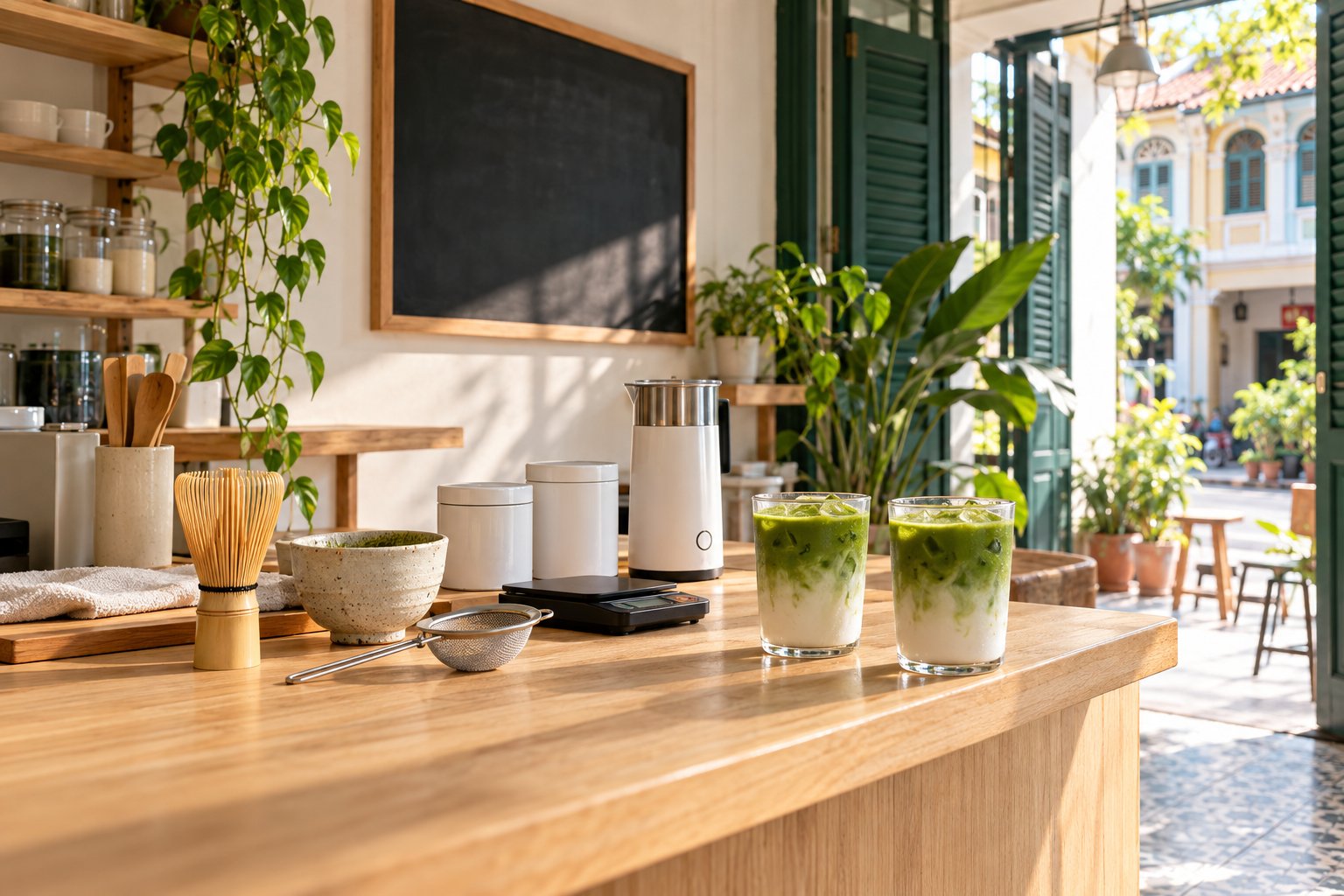
To open a matcha cafe or matcha stand in Indonesia, you get a business identification number (NIB) through OSS, the online licensing system, and then the hygiene permit that matches the size of your business. For halal certification, the government announced on 16 October 2026 that the deadlines will move to 2028. We checked each step against primary sources from OSS (run by the Ministry of Investment and Downstream Industry/BKPM), the Ministry of Health and the Coordinating Ministry for Economic Affairs, and put them in the order you will need them. The steps for Singapore and Thailand are in How to start a matcha cafe or matcha stand.
Three things to decide first
Decide three things first: the shop format, the size of the business, and whether you will open through a foreign-owned company. These decide the business classification, the type of hygiene permit, the halal timing and the investment requirement.
Shop format and business classification (KBLI)
KBLI (Indonesia’s standard industrial classification) is the code you choose when you get a business number on OSS. Two codes matter for a matcha shop.
| KBLI | Name | Shop format |
|---|---|---|
| 56303 | Rumah Minum/Kafe | All or part of a permanent building, mainly serving drinks to be consumed on site |
| 56304 | Kedai Minuman | A fixed spot that can be moved or taken down, such as a tent, serving drinks made there |
According to OSS, 56303 keeps the same number in KBLI 2025. A matcha cafe in a shopping mall unit or on the street is closest to 56303, and a stall-style stand is closest to 56304.
Business size
Under Article 25 of Minister of Investment Regulation No. 5 of 2025, size is set by capital (excluding land and buildings) or annual sales.
| Size | Capital | Annual sales |
|---|---|---|
| Micro | Up to 1 billion rupiah | Up to 2 billion rupiah |
| Small | Over 1 billion up to 5 billion rupiah | Over 2 billion up to 15 billion rupiah |
| Medium | Over 5 billion up to 10 billion rupiah | Up to 50 billion rupiah |
Whether you are micro or small-and-above changes the hygiene permit, and whether you are micro/small or medium-and-above changes how the halal timing applies. A foreign-owned company is treated as a large business regardless of this table.
Getting an NIB and a Sertifikat Standar on OSS
KBLI 56303 is medium-low risk at every scale from micro to large, and OSS issues a business identification number (NIB) and a Sertifikat Standar (a certificate that you will meet the business standards). The authority is the regency or city where the shop is (Bupati/Walikota).
How medium-low risk licences are issued
Under Article 186 of Minister of Investment Regulation No. 5 of 2025, the licence for medium-low risk is an NIB and a Sertifikat Standar without verification. Article 188 sets out these steps:
- Meet the basic requirements (spatial use, environment and building approval)
- Enter the business name and other details on OSS
- Submit the forms committing to safety, health and environment (K3L), the environmental management statement (SPPL), and the business standards and obligations
- OSS issues the NIB and the Sertifikat Standar
Three obligations for 56303
The KBLI 56303 page on OSS lists three obligations for licensed businesses.
Source: Ministry of Investment and Downstream Industry/BKPM, “OSS KBLI 56303 Aktivitas Rumah Minum/Kafe” (in Indonesian) https://oss.go.id/en/kbli/detail/6c75f121-83a3-5878-a849-621ba4dbeabb?id=semua&lang=en
| Obligation | Applies to |
|---|---|
| A Sertifikat Standar issued by a certification body (LSPr) | Foreign-owned companies (PMA) only |
| A self-assessment of the standards for facilities, organisation and staff, service, products and management system | All |
| A Label HSP (micro) or an SLHS (small, medium and large) | All |
If you choose 56304
On OSS, KBLI 56304 is available only to micro and small businesses. The obligations are a Label HSP, regular activity reports, and submitting documents on how the standards are applied.
Joining a franchise or starting on your own
In a franchise (waralaba), both the franchisor and the franchisee must hold a franchise registration certificate (STPW) on OSS. The rules are in Government Regulation (PP) No. 35 of 2024, promulgated and in force on 2 September 2024, which revoked PP No. 42 of 2007. The STPW is a supporting licence for the business; Article 12 sets the obligation, and Articles 13 and 14 set when it must be held.
| Item | Franchisor | Franchisee |
|---|---|---|
| When the STPW must be held | Before signing the franchise agreement | Before starting business |
| Documents attached to the application | The franchise offering prospectus (Prospektus Penawaran Waralaba); a foreign franchisor also attaches its home-country business licence documents and others | The franchise agreement; for a franchise from a foreign franchisor, also the franchisor’s STPW |
| Annual report | On OSS, by 30 June of the following year | On OSS, by 30 June of the following year |
The franchisor gives the prospectus, in Indonesian, to the prospective franchisee at least 14 days before the agreement is signed (Article 5). The prospectus includes the last 2 years of financial statements, the number of outlets, the list of franchisees, and the rights and obligations of both sides. A business can be franchised only if it has operated for at least 3 consecutive years and its financial statements for the last 2 years show a profit (Article 4). The agreement is governed by Indonesian law and sets out how fees are paid, the business territory, the term, and how it is renewed and ended (Article 6). The regulation does not set fee amounts.
As far as the franchisor’s quality standards and requirements allow, the franchisee gives priority to domestically produced goods and works with local micro, small and medium businesses as suppliers (Article 26). The franchise logo is displayed in a visible place in the shop (Articles 21 and 23). Using the name “waralaba” without an STPW is prohibited (Article 37).
Whether or not you join a franchise, choosing the business classification (KBLI) and getting an NIB, the hygiene permit, and the timing of halal certification stay the same. If you open through a foreign-owned company, the PMA requirements also apply.
Hygiene permits: Label HSP for micro, SLHS for small and larger
A shop that prepares and serves matcha counts, under Ministry of Health rules, as a place that handles ready-to-eat food and drink, and needs either a Label HSP or an SLHS. Both are supporting licences applied for on OSS, and their content is set by Minister of Health Regulation No. 11 of 2025. This regulation was enacted on 3 October 2025 and revoked Regulation No. 17 of 2024.
How the two differ
| Item | Label HSP (micro) | SLHS (small and larger) |
|---|---|---|
| Registration and inspection | Registered with the regency/city health office or community health centre, with a hygiene inspection (IKL) score of at least 80. The inspection can be a self-assessment or by the health office | IKL score of at least 80 |
| People | The manager and all food handlers attend a food safety briefing | At least 50% of food handlers hold a course certificate, and food handlers have a health check once a year |
| Testing | Not among the required documents (test results can be included on the IKL form) | Testing of food, drink and water (E. coli, formalin and others). Results are valid for 2 months |
| Time to issue | 15 working days | 30 working days |
| Renewal application | At least 2 months before expiry | At least 3 months before expiry |
Courses and briefings are run by the Ministry of Health, provinces, regencies and cities, and organisations working with the Ministry or local governments. SLHS courses follow the Ministry of Health curriculum.
Documents for an SLHS
For an SLHS you submit your business licence (NIB or Sertifikat Standar), the IKL self-assessment, course certificates for the manager and food handlers, health certificates, the IKL result and the test results. Test results can only be used for 2 months, so time the testing to match the inspection and the rest of your documents.
Obligations after you receive it
A shop with an SLHS displays the logo where visitors can see it and on packaging, reports IKL results once a year and test results once every 2 years. The same regulation also lists, as an obligation, showing the Nutrilevel logo for sugar, salt and fat on menus and similar places. Submitting sugar and other test results starts once the maximum limits are set. A shop with a Label HSP displays the label in the shop and keeps training its staff on hygiene.
Halal certification: moved to 2028 in the announcement of 16 October 2026
On 16 October 2026, the Coordinating Ministry for Economic Affairs announced that the halal certification obligation for services related to food and beverages will start on 18 October 2028, and that the phase-in period for food and beverages from micro and small businesses will be extended to 17 October 2028. This will be done by amending Government Regulation (PP) No. 42 of 2024, and as of 22 October 2026 we could not confirm that the amending regulation had been issued.
How Government Regulation No. 42 of 2024 works
Under Article 2 of Government Regulation No. 42 of 2024, products circulating in Indonesia must be halal certified. Products made from haram ingredients (ingredients forbidden under Islamic law) are excluded from certification and must carry a “not halal” notice. Article 155 lists processing, storage, sales and serving (penyajian) among the services covered by certification. The phase-in periods in Article 160 were as follows.
| Covered | End of phase-in period (before the amendment) |
|---|---|
| Food and beverages from medium and large businesses | 17 October 2024 |
| Food and beverages from micro and small businesses | 17 October 2026 |
The announced changes
Source: Coordinating Ministry for Economic Affairs, “Pemerintah Sesuaikan Masa Penahapan Kewajiban Bersertifikat Halal dengan Memperhatikan Kesiapan Ekosistem dan Pemangku Kepentingan” (16 October 2026, in Indonesian) https://www.ekon.go.id/publikasi/detail/7161/pemerintah-sesuaikan-masa-penahapan-kewajiban-bersertifikat-halal-dengan-memperhatikan-kesiapan-ekosistem-dan-pemangku-kepentingan
| Covered | Announced timing |
|---|---|
| Services related to food and beverages (excluding slaughtering services) | From 18 October 2028 |
| Food and beverages from micro and small businesses | Phase-in extended to 17 October 2028 |
| Food and beverages from abroad | From 18 October 2028 |
The same announcement said BPJPH (the Halal Product Assurance Agency) Regulation No. 4 of 2026, which set pre-shipment checks for imported products, will be revoked.
What a cafe should check
The announcement does not tell you whether a cafe serving matcha lattes is treated as “food and beverages” or as a “service”. For medium and large businesses and foreign-owned companies, the phase-in period for food and beverages under Article 160(1) before the amendment has already ended, so once the amending regulation is issued, check with BPJPH which category your shop falls under. A matcha latte made without haram ingredients is not one of the products excluded by a “not halal” notice.
How to check halal certificates for ingredients such as matcha, milk and syrup is covered in What is halal matcha.
Opening through a foreign-owned company (PMA)
Under Article 26(1) of Minister of Investment Regulation No. 5 of 2025, a foreign-owned company (PMA) is treated as a large business and has minimum investment and capital requirements. Because it is treated as large, the halal extension for micro and small businesses does not apply, and it cannot choose 56304, which OSS offers only to micro and small businesses.
Investment and capital
| Item | Requirement | Article |
|---|---|---|
| Investment (food and beverage services) | Over 10 billion rupiah, excluding land and buildings, for each first two digits of the KBLI code at each location | Article 26(3)(b) |
| How a location is counted | Per regency or city | Article 26(4) |
| Paid-up capital (limited company) | At least 2.5 billion rupiah | Article 26(10) |
| Handling of paid-up capital | Not moved out of the company account for 12 months after payment (except for buying assets, buildings or operations) | Article 27(1) |
As Article 26(3)(b) is written, food and beverage services are counted by the first two digits of the KBLI code (56), so a cafe and a restaurant in the same city fall under one investment requirement. The KBLI 56303 page on OSS explains the same point by citing the older 2021 rule (BKPM Regulation No. 4 of 2021).
The extra obligation for a PMA
On OSS, KBLI 56303 requires a PMA to have a Sertifikat Standar issued by a certification body (LSPr). Even at medium-low risk, this is one more step than for a domestic micro or small shop.
Sourcing matcha: import permits and halal
To import matcha from Japan as food for sale, you need a BPOM (Indonesian Food and Drug Authority) distribution permit (ML number) and an import permit (SKI) for each shipment. Only a local importer can apply, and the Japanese supplier is the one who prepares the documents.
Import yourself or buy from an importer
Shops that do not hold these permits buy from an importer with an ML number. Under the announcement above, the halal obligation for imported food and beverages starts on 18 October 2028. The steps, the documents from Japan and the duties are in How to import matcha into Indonesia.
Comparing ways to buy
The three ways to buy (a local importer, importing yourself, or online marketplaces) and how to read BPOM numbers are compared in How cafes in Indonesia buy matcha powder.
Menu, equipment, tax and how much to buy
Menu, equipment and monthly quantities work the same way as in Singapore and Thailand, while tax follows Indonesian regional tax.
Menu and equipment
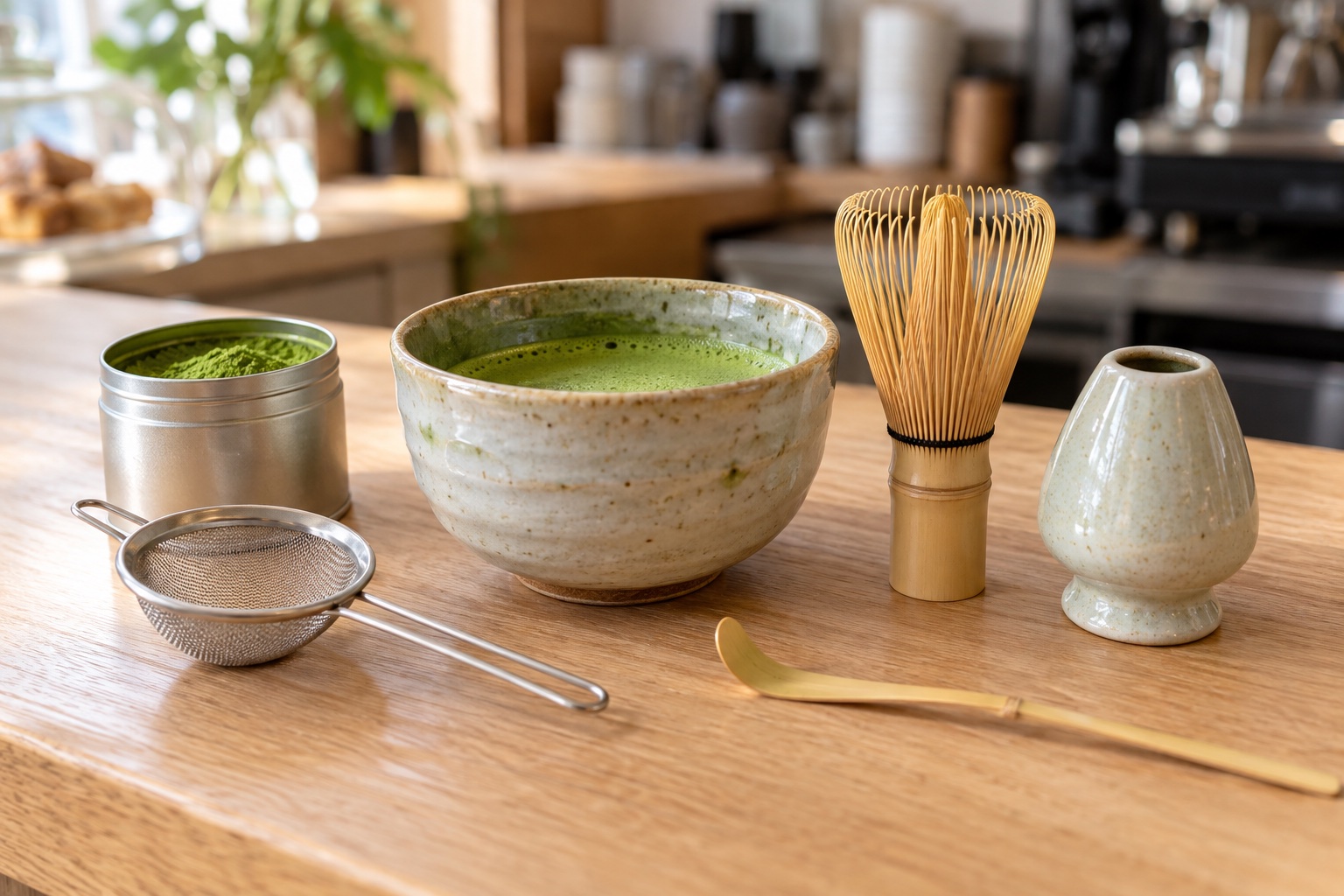
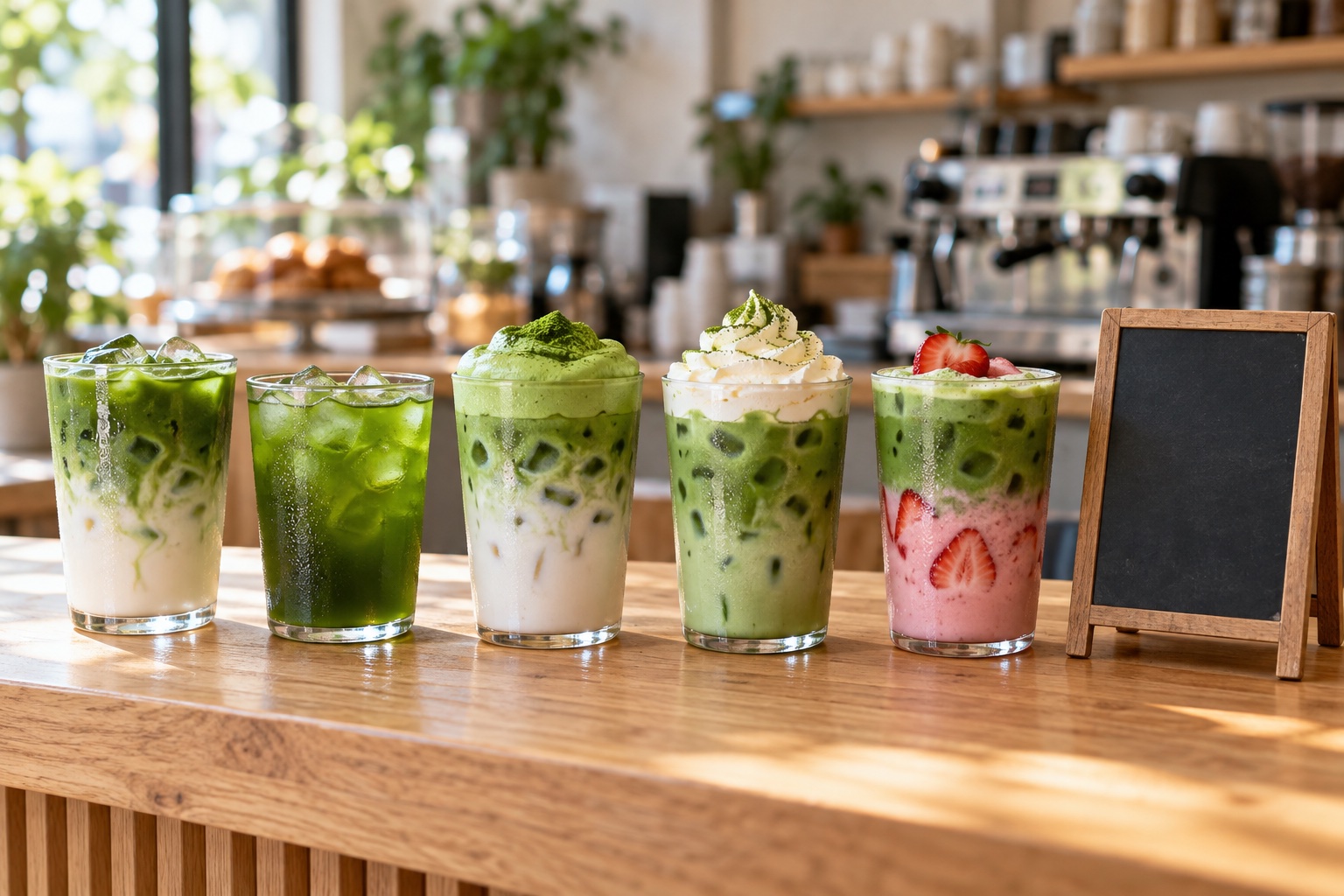
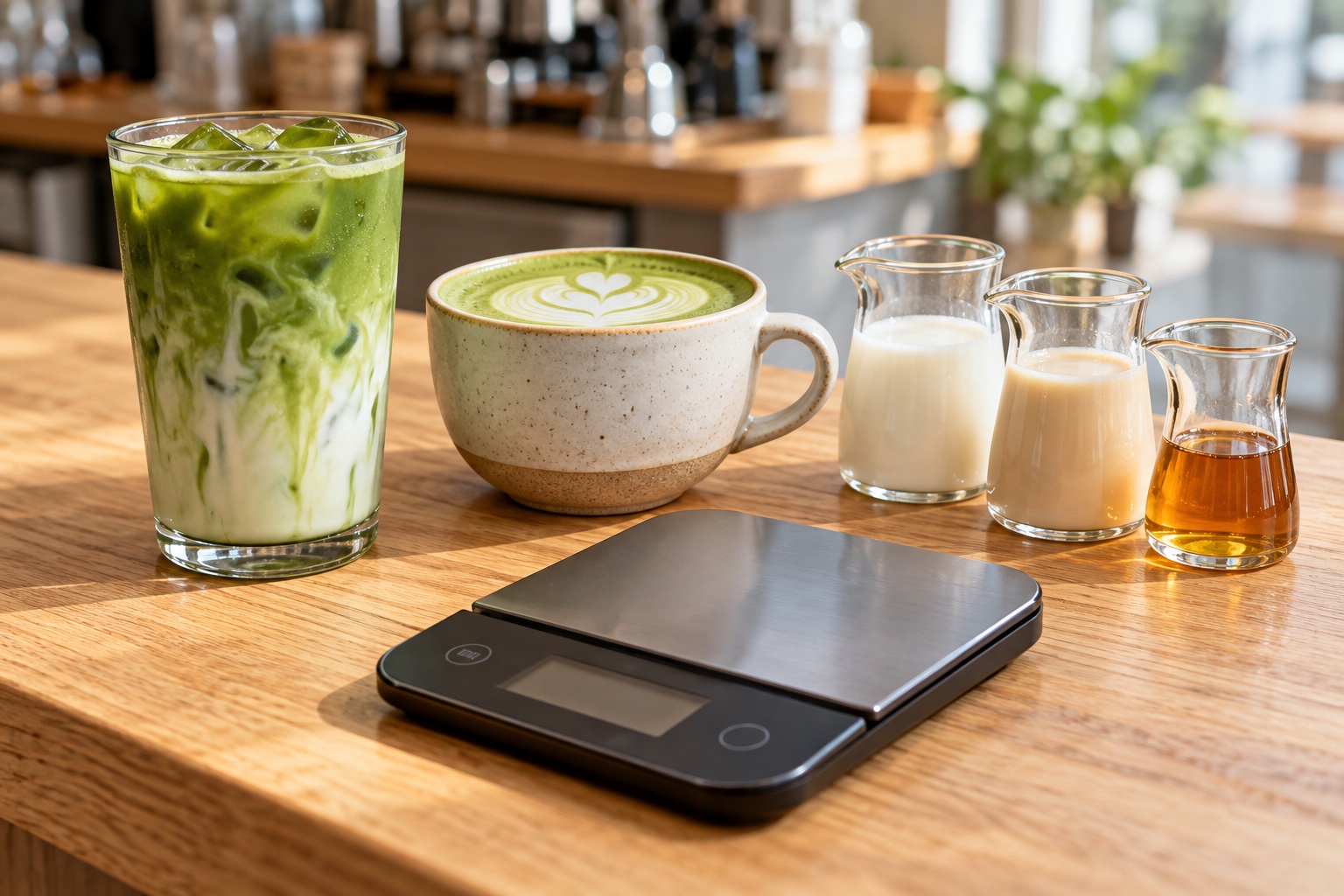
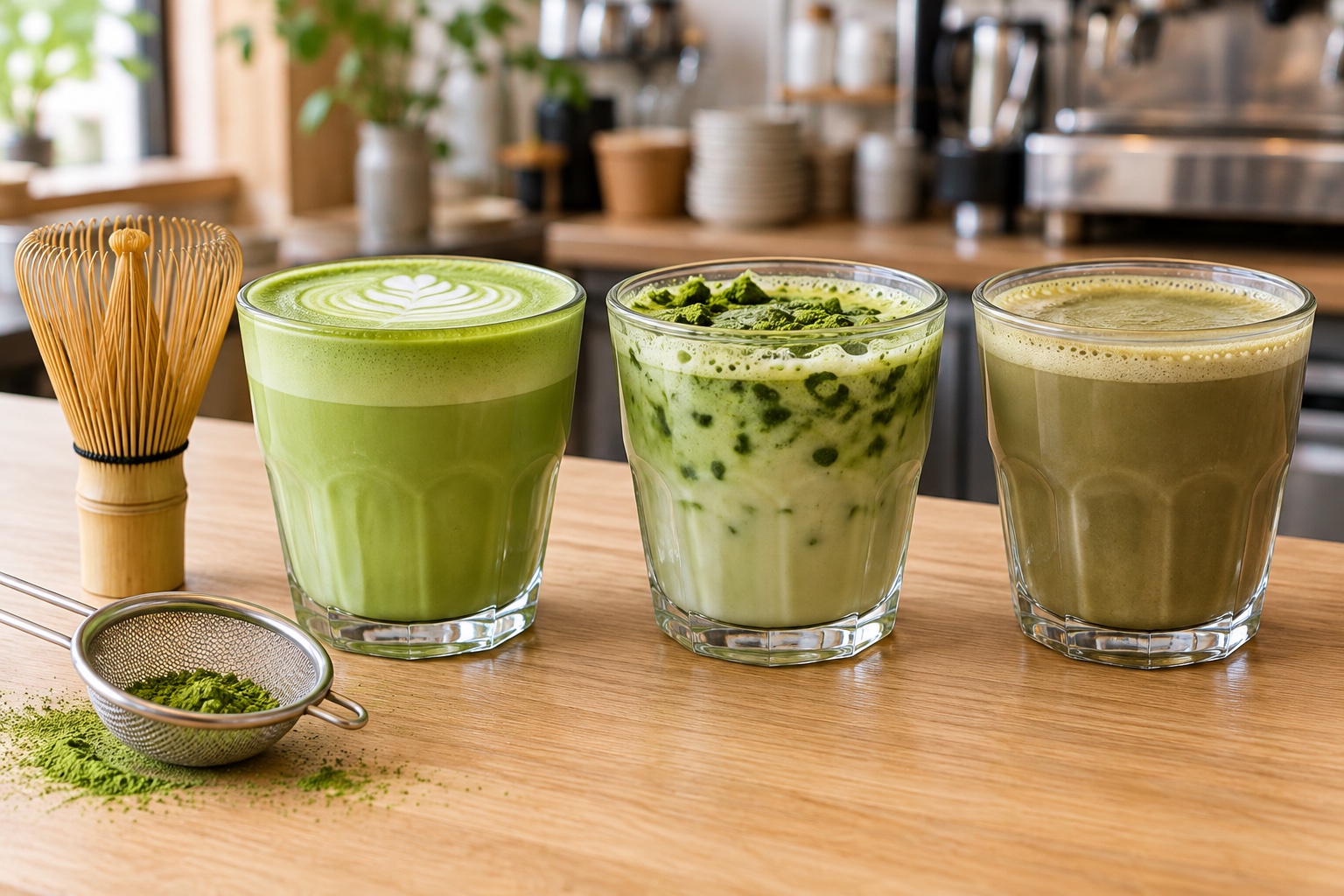
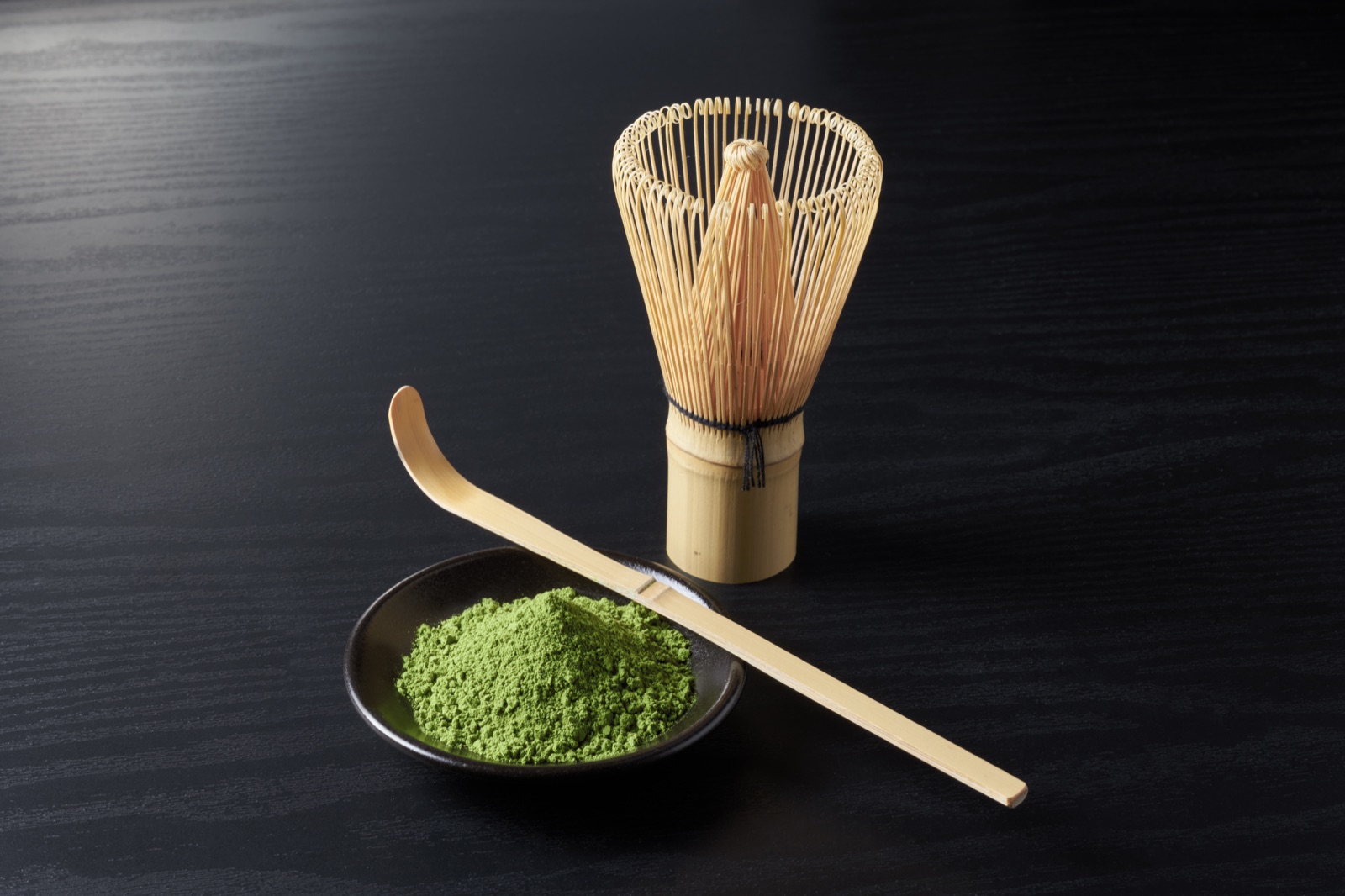
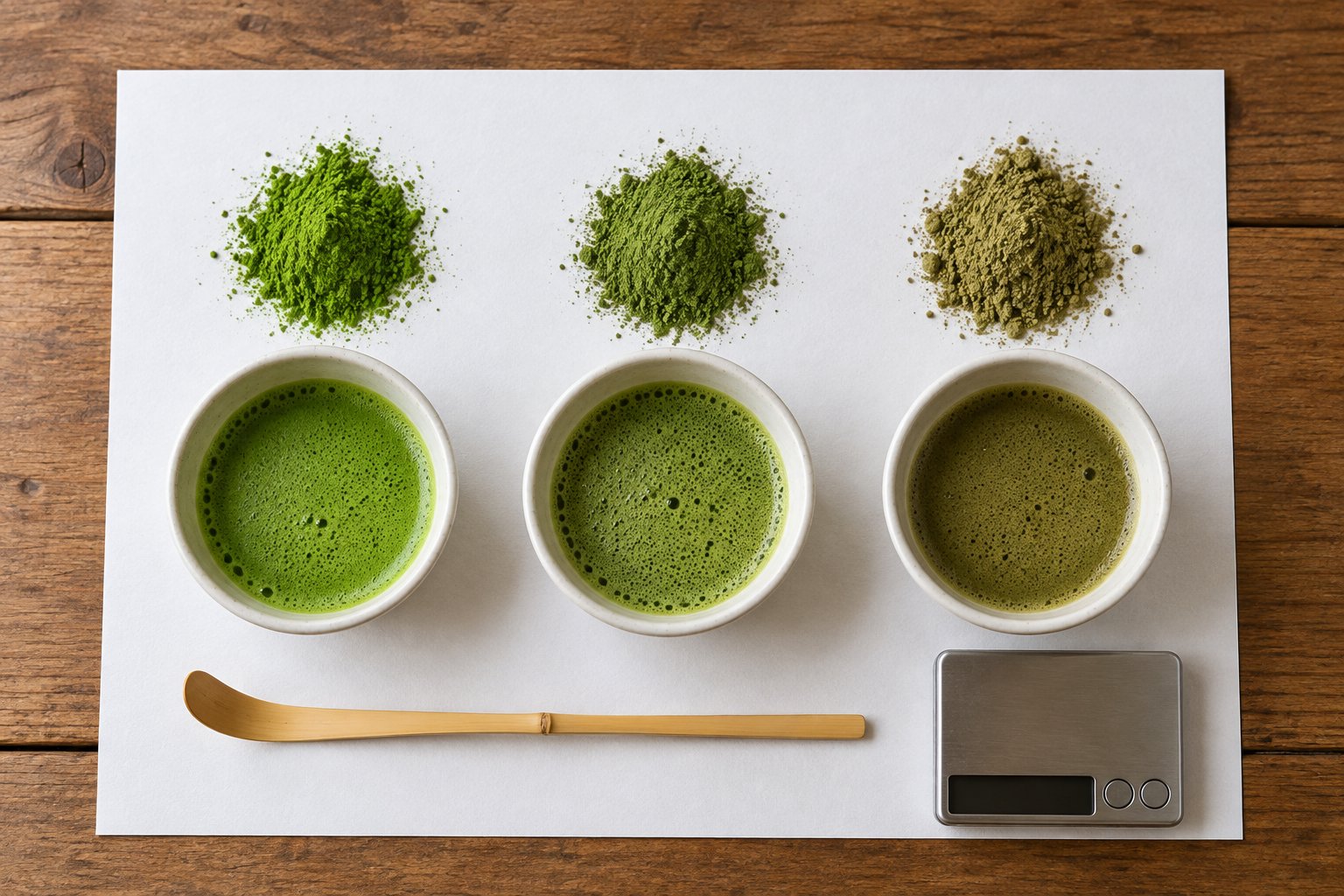
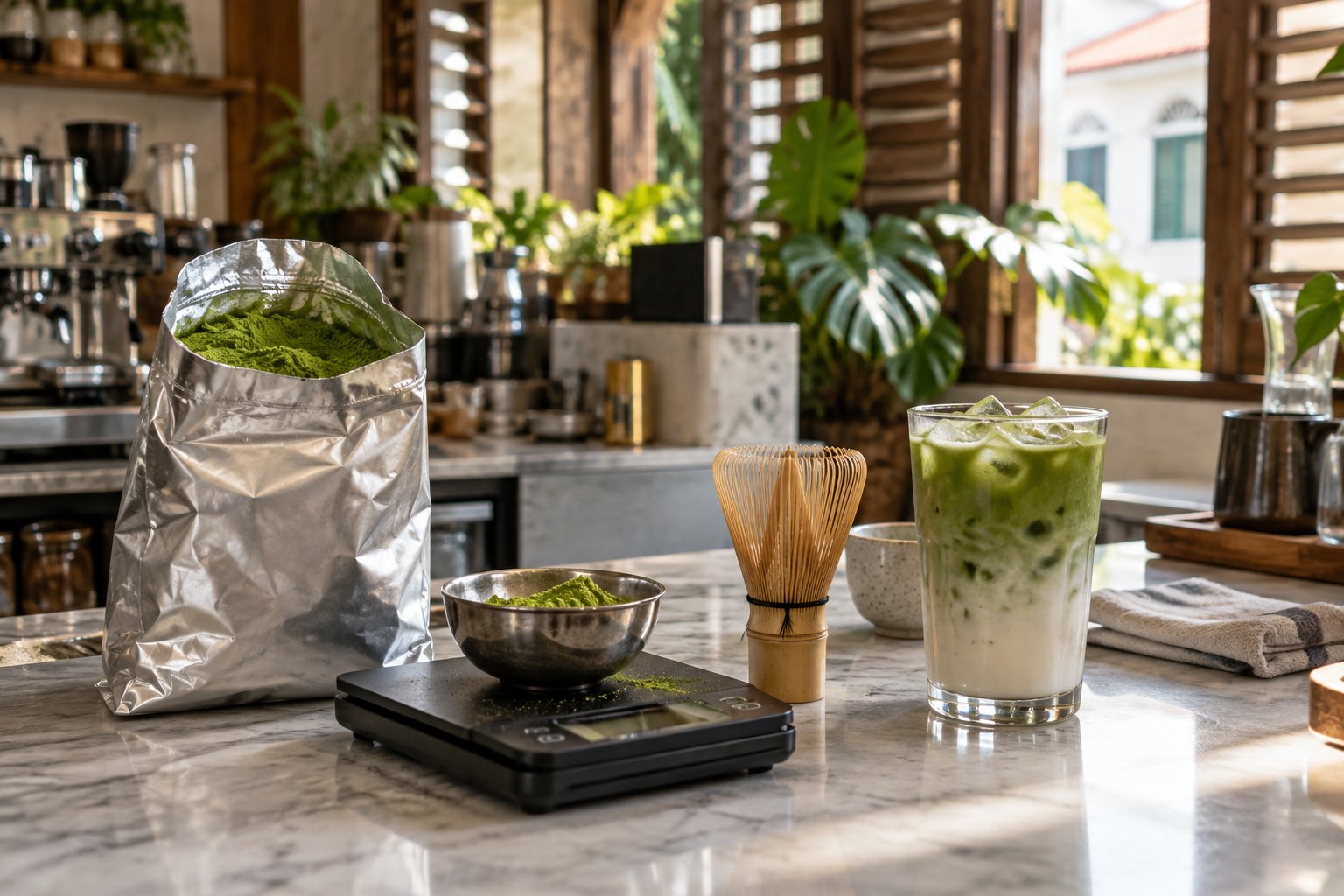
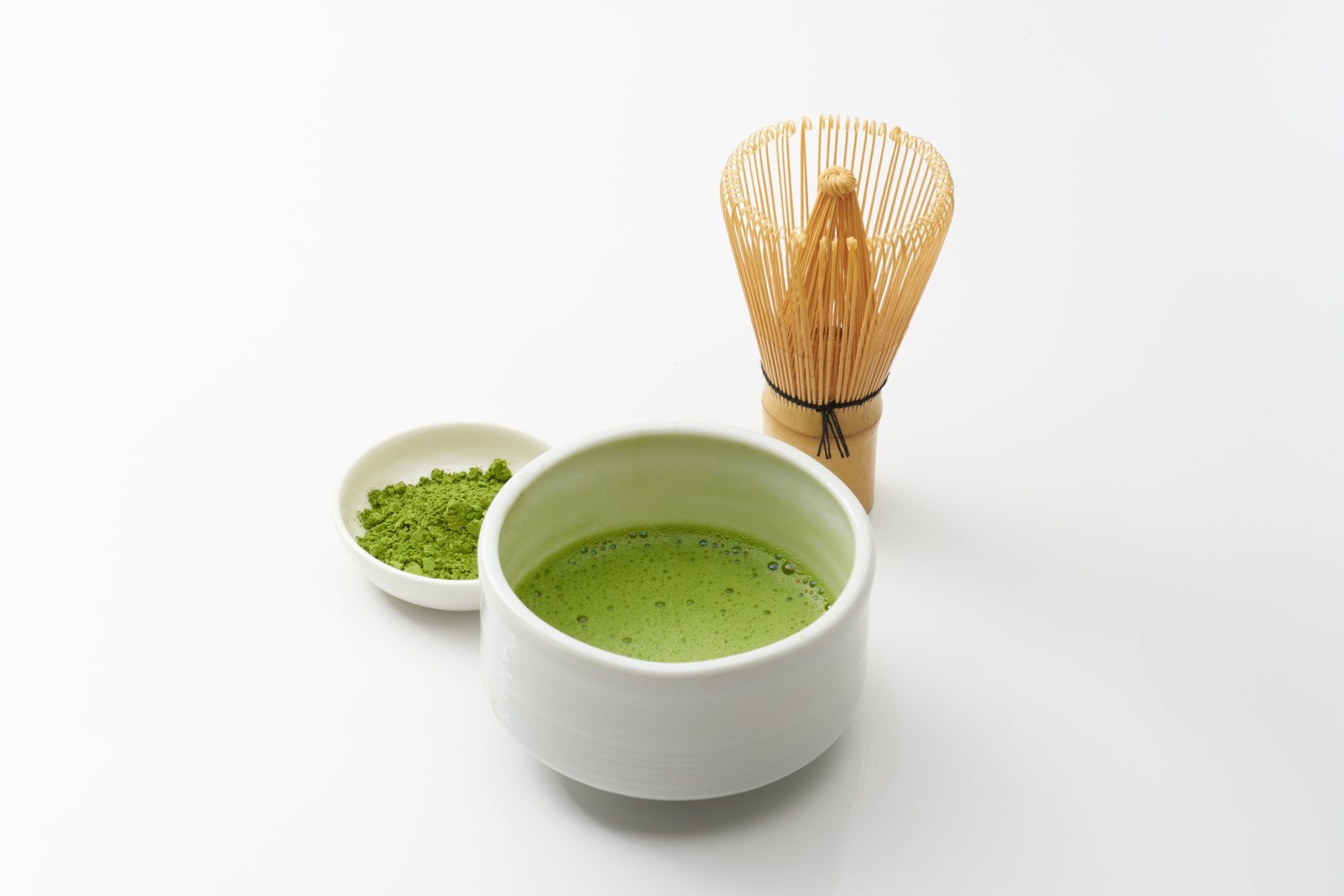
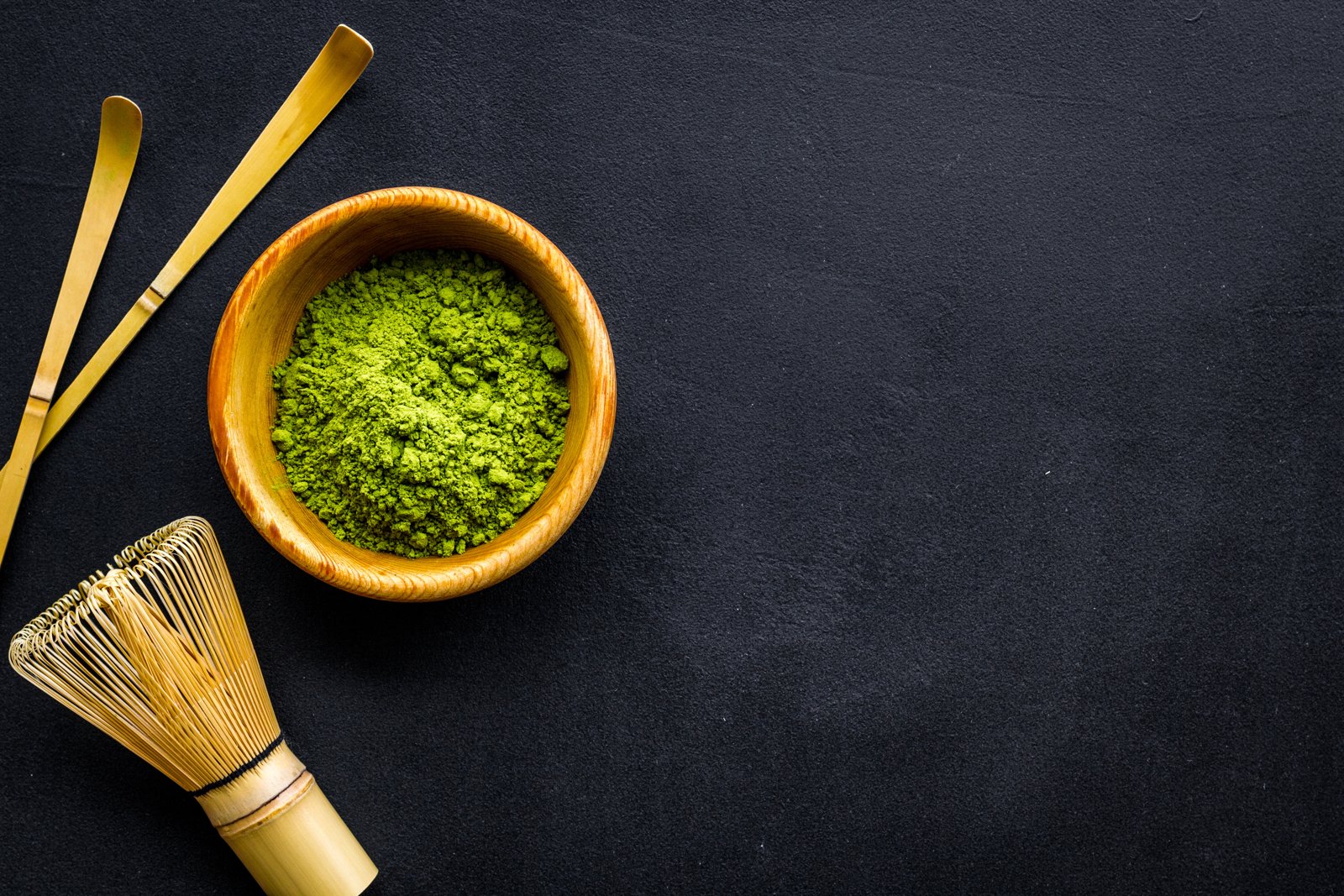
The basics are a hot matcha latte, an iced matcha latte and straight matcha. Equipment such as scales, a sieve and a chasen (bamboo whisk) is covered in How to start a matcha cafe or matcha stand. You can pick other drinks from the matcha drinks list.
The SLHS and Label HSP conditions include a layout that prevents cross-contamination, food-grade equipment and a place to wash equipment. Plan your layout around the items in the hygiene inspection.
Tax on drinks served in the shop
According to the Directorate General of Taxes, food and drinks served in a shop are not subject to VAT (PPN); the regional tax PBJT applies instead, with a maximum rate of 10%. How this relates to the VAT you pay on purchases is covered in How cafes in Indonesia buy matcha powder.
Monthly quantity
Calculate your monthly amount as grams per drink × drinks per day × days open. The table and how long an opened bag lasts are in How to start a matcha cafe or matcha stand.
The order of steps before opening
Decide the shop format and size, get the NIB on OSS, then get the hygiene permit. For halal certification, once the amending regulation is issued, check your shop’s category and timing and prepare.
Steps in order
| Step | What to do | Who with |
|---|---|---|
| 1 | Decide the shop format (56303 or 56304), the size and whether you are foreign-owned | Your company |
| 2 | If foreign-owned, plan whether investment and capital meet the requirements | Your company |
| 3 | Check that the shop location meets the basic requirements (spatial use, environment, building approval) | Your company |
| 4 | Get the NIB and Sertifikat Standar on OSS (a PMA also needs the LSPr certificate, and a franchisee also needs an STPW) | OSS |
| 5 | The manager and staff attend courses or briefings | Ministry of Health, local governments and others |
| 6 | Have the IKL inspection (and testing for an SLHS), then apply for a Label HSP or SLHS | Regency/city health office |
| 7 | Choose suppliers for matcha and ingredients, and check ML numbers and halal certificates | Importer |
| 8 | Display the label or logo in the shop and open | Your company |
Buying from Omakase Matcha
Omakase Matcha sells matcha sourced from the growing regions of Uji, Yame, Kagoshima, Shizuoka and Miyazaki, from 1kg. For Indonesia we ship DAP, which means your shop pays duties and taxes on delivery. Payment is in advance by Wise or PayPal. If you want to compare flavours before opening, you can request up to 3 samples, and terms are on the Indonesia wholesale and Wholesale pages.
Sources
Checked on 22 October 2026.
- Ministry of Investment and Downstream Industry/BKPM, “OSS KBLI 56303 Aktivitas Rumah Minum/Kafe” (in Indonesian) https://oss.go.id/en/kbli/detail/6c75f121-83a3-5878-a849-621ba4dbeabb?id=semua&lang=en
- Ministry of Investment and Downstream Industry/BKPM, “OSS KBLI 56304 Aktivitas Kedai Minuman” (in Indonesian) https://oss.go.id/en/kbli/detail/6df07938-6bd6-5a19-840c-5d38cf21c5f4?id=semua&lang=en
- Minister of Investment and Downstream Industry/BKPM Regulation No. 5 of 2025 (licensing through OSS) (in Indonesian) https://peraturan.bpk.go.id/Details/332573/permeninvesbkpm-no-5-tahun-2025
- Minister of Health Regulation No. 11 of 2025 (business standards in the health sector) (in Indonesian) https://peraturan.bpk.go.id/Details/335213/permenkes-no-11-tahun-2025
- Government Regulation (PP) No. 35 of 2024 (franchising) (checked on 23 October 2026, in Indonesian) https://peraturan.bpk.go.id/Details/297489/pp-no-35-tahun-2024
- Government Regulation (PP) No. 42 of 2024 (halal product assurance) (in Indonesian) https://peraturan.bpk.go.id/Details/304896/pp-no-42-tahun-2024
- Directorate General of Taxes, “Makan di Restoran Tidak Kena PPN” (19 May 2022, in Indonesian) https://www.pajak.go.id/id/artikel/makan-di-restoran-tidak-kena-ppn
- Coordinating Ministry for Economic Affairs, “Pemerintah Sesuaikan Masa Penahapan Kewajiban Bersertifikat Halal dengan Memperhatikan Kesiapan Ekosistem dan Pemangku Kepentingan” (16 October 2026, in Indonesian) https://www.ekon.go.id/publikasi/detail/7161/pemerintah-sesuaikan-masa-penahapan-kewajiban-bersertifikat-halal-dengan-memperhatikan-kesiapan-ekosistem-dan-pemangku-kepentingan