
 Reviewed by: Takahiro Sugiyama (CEO, meguri Inc.)
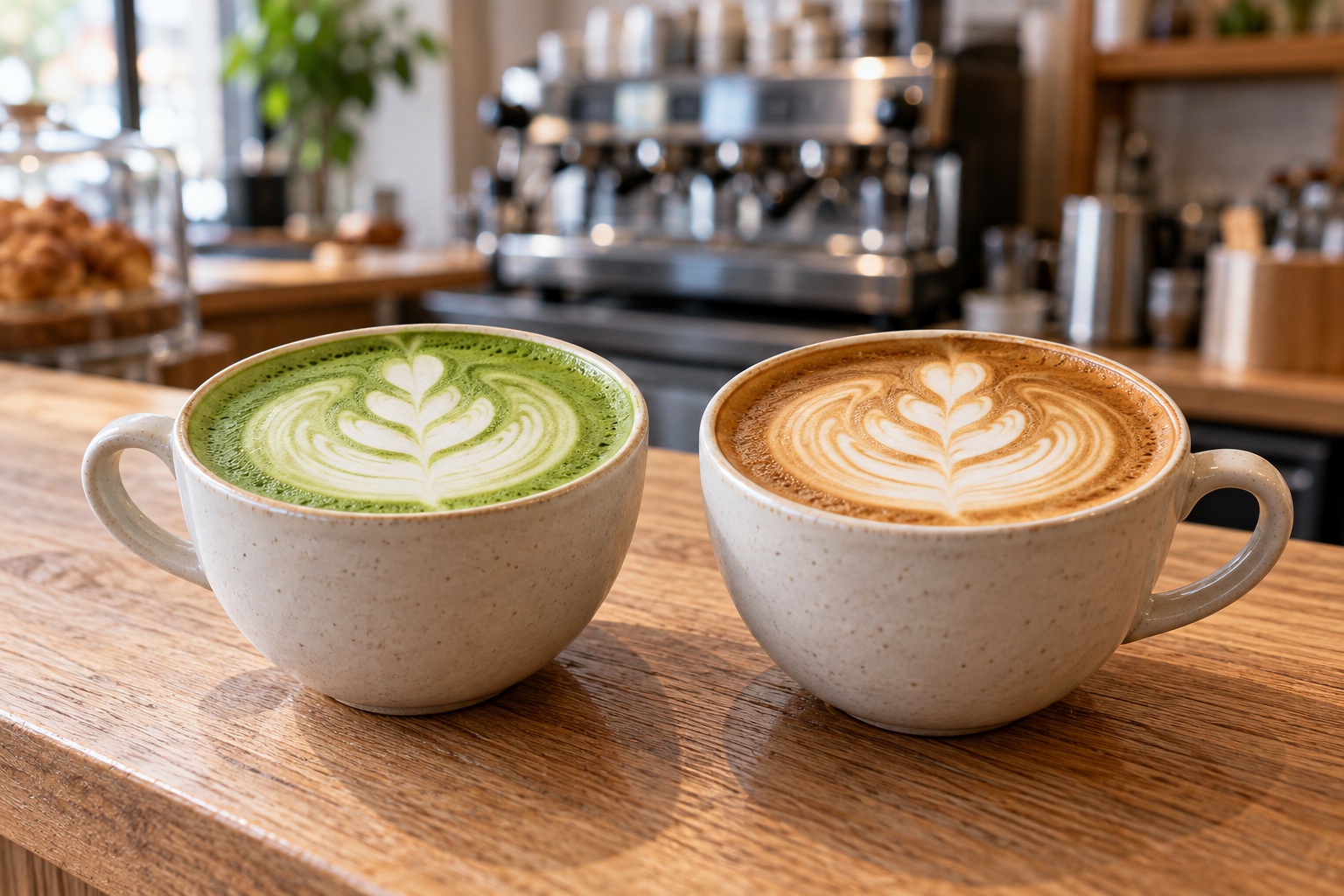
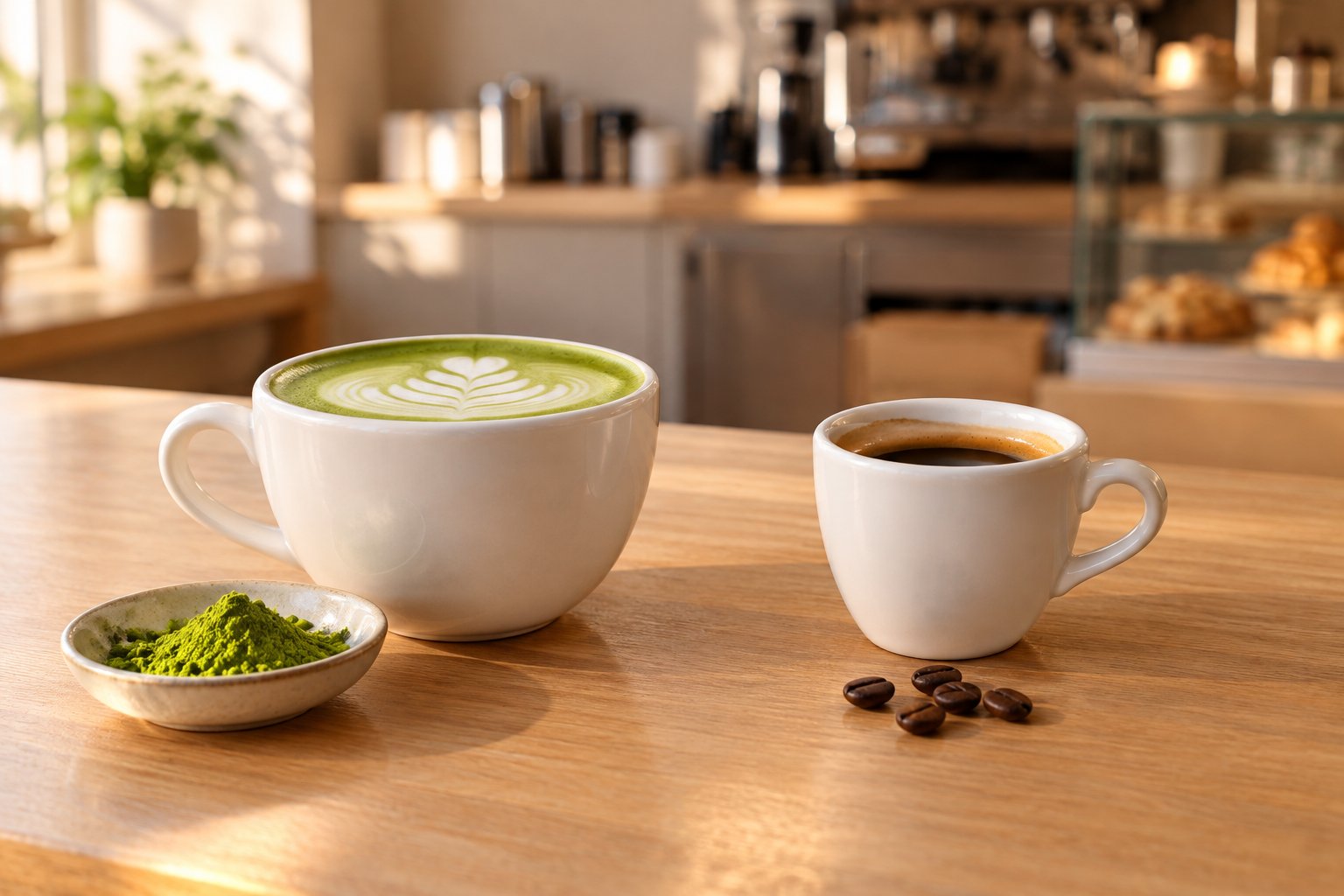
When a café that serves coffee thinks about adding a matcha latte, the questions are how much extra work it means, whether to buy new equipment, how to work out the cost per cup, and how to hold stock. Putting it next to a caffe latte shows what is the same and what is different. Below, the two are compared step by step using a long-established Kyoto tea shop’s recipe and figures from coffee associations, ending with a checklist for your own café’s numbers.
Cafés that serve caffe lattes also list matcha lattes
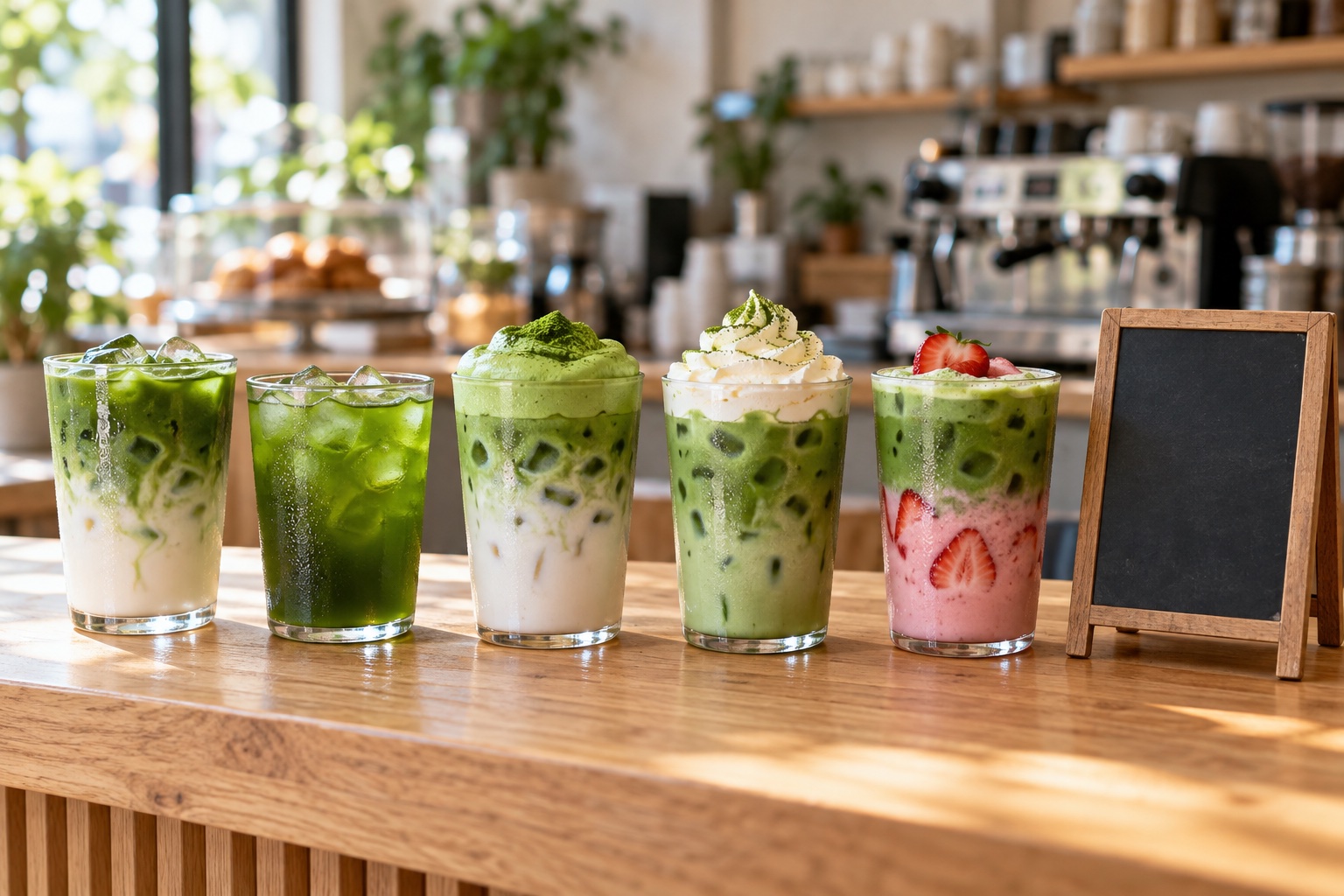
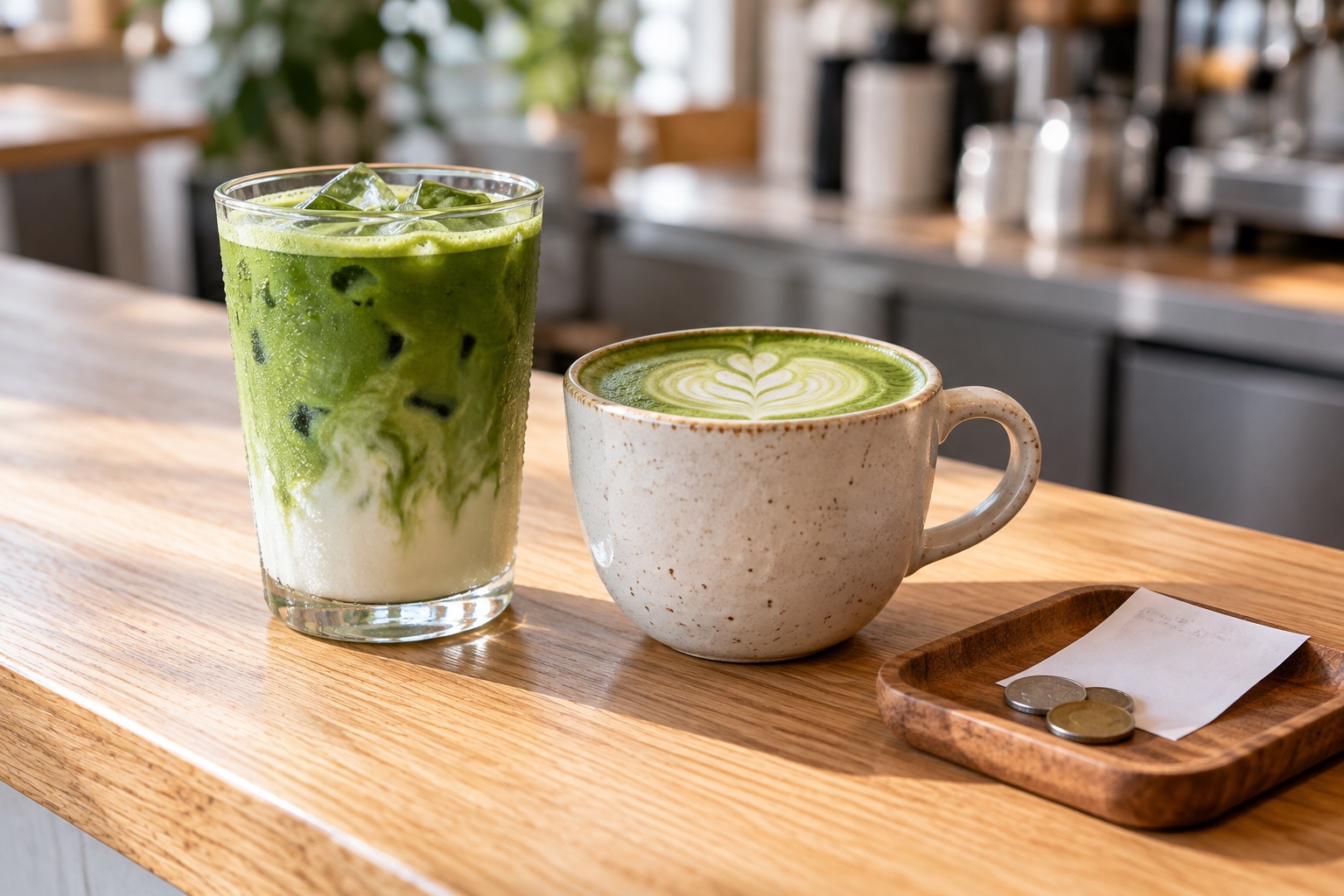
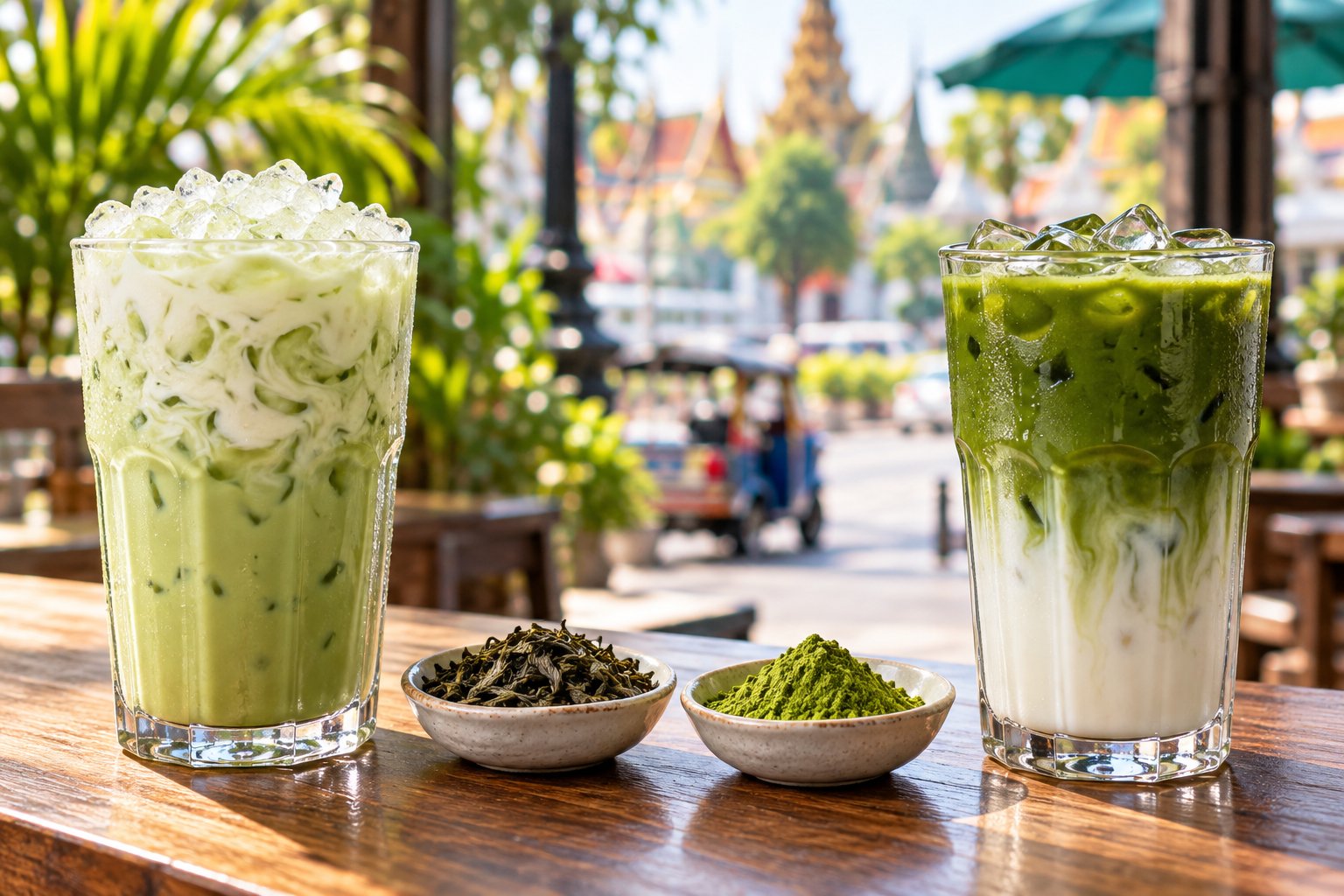
Coffee chains in Singapore, Thailand and Indonesia list caffe lattes and matcha lattes on the same menu. The matcha latte is not only a drink for matcha specialists.
Coffee chain menus in three countries
Checked on 22 October 2026 on each chain’s official menu or delivery menu.
| Country | Chain | Caffe latte | Matcha drinks |
|---|---|---|---|
| Singapore | Starbucks | Caffè Latte | Matcha Latte, Iced Matcha Latte |
| Thailand | Café Amazon | เฟรชคาเฟ่ลาเต้ (Fresh Caffe Latte) | เฟรชมัทฉะลาเต้ (Fresh Matcha Latte) |
| Indonesia | Fore Coffee | Hot / Iced Café Latte | Iced Matcha Butter Salt Cream (a matcha latte topped with cream) |
Matcha latte prices by café and country are in Matcha Latte Price.
In Thailand, an everyday choice next to coffee
In a May 2026 report, JETRO (the Japan External Trade Organization) writes that matcha products are sold in Bangkok in specialty cafés, shopping malls and even inside elevated railway stations, and that in Thailand matcha products are accepted as an everyday choice alongside coffee. It says people drink them mainly during work breaks or when relaxing, and that interest in drinks with milk or sweetness added is high.
Menus that combine matcha and espresso
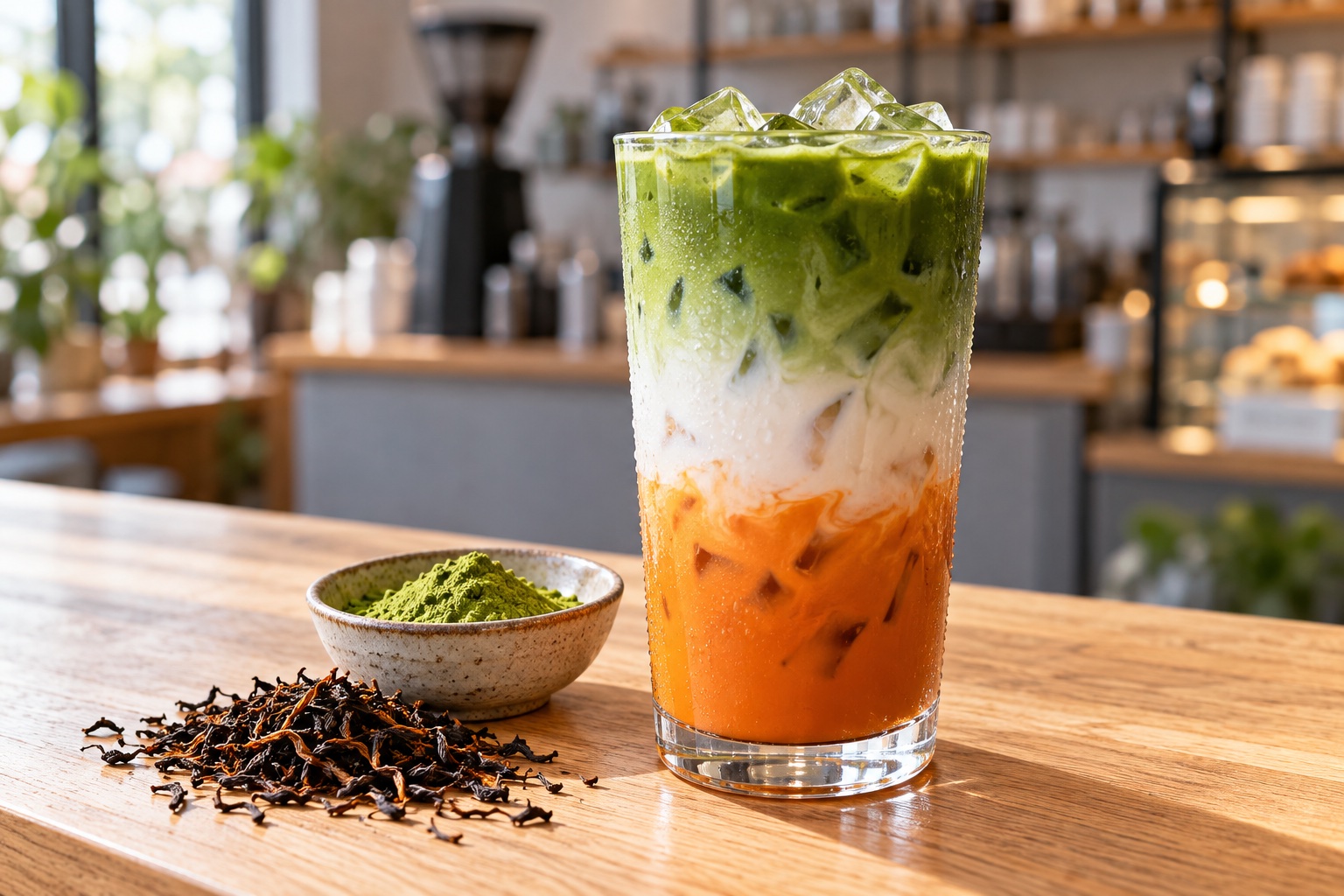
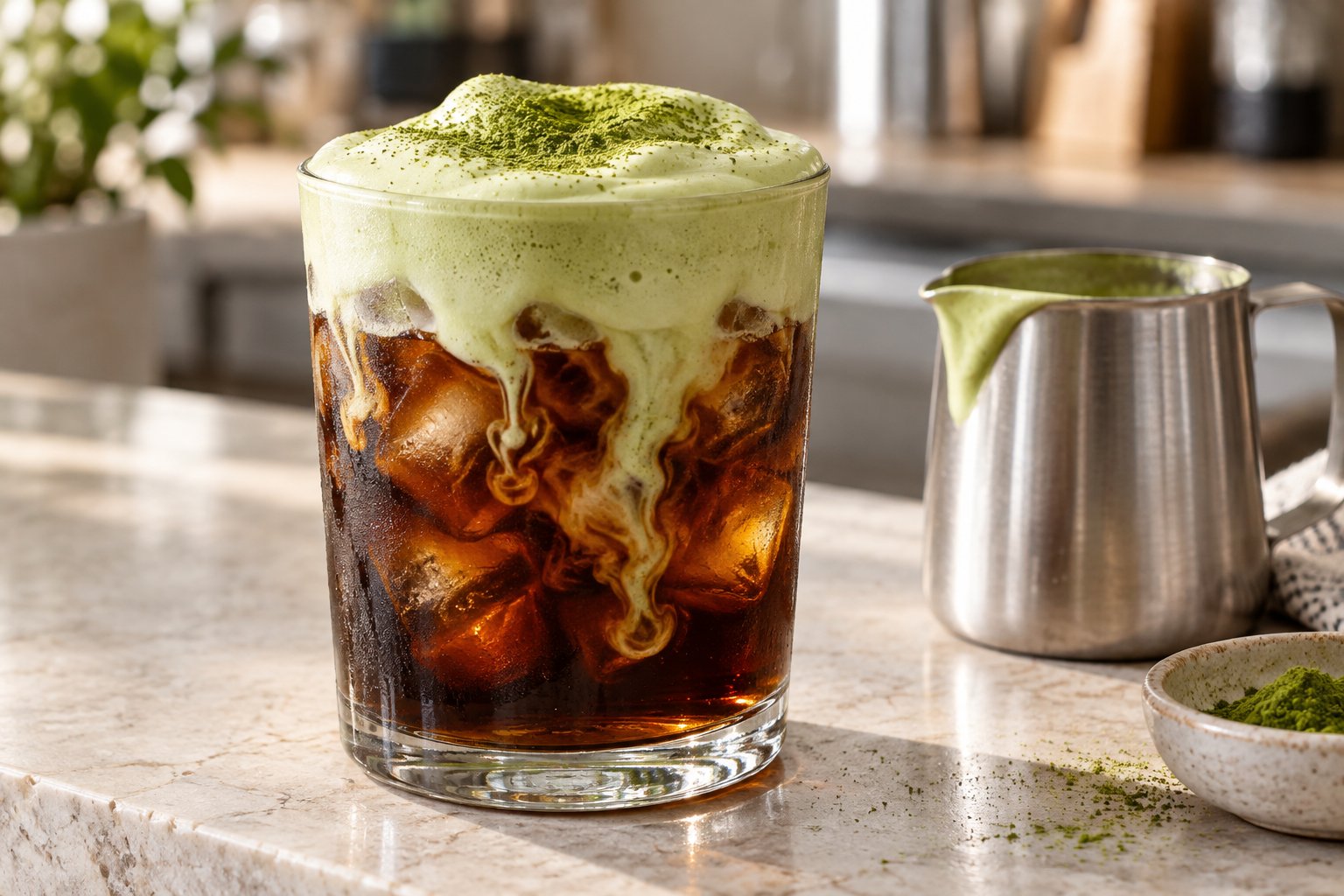
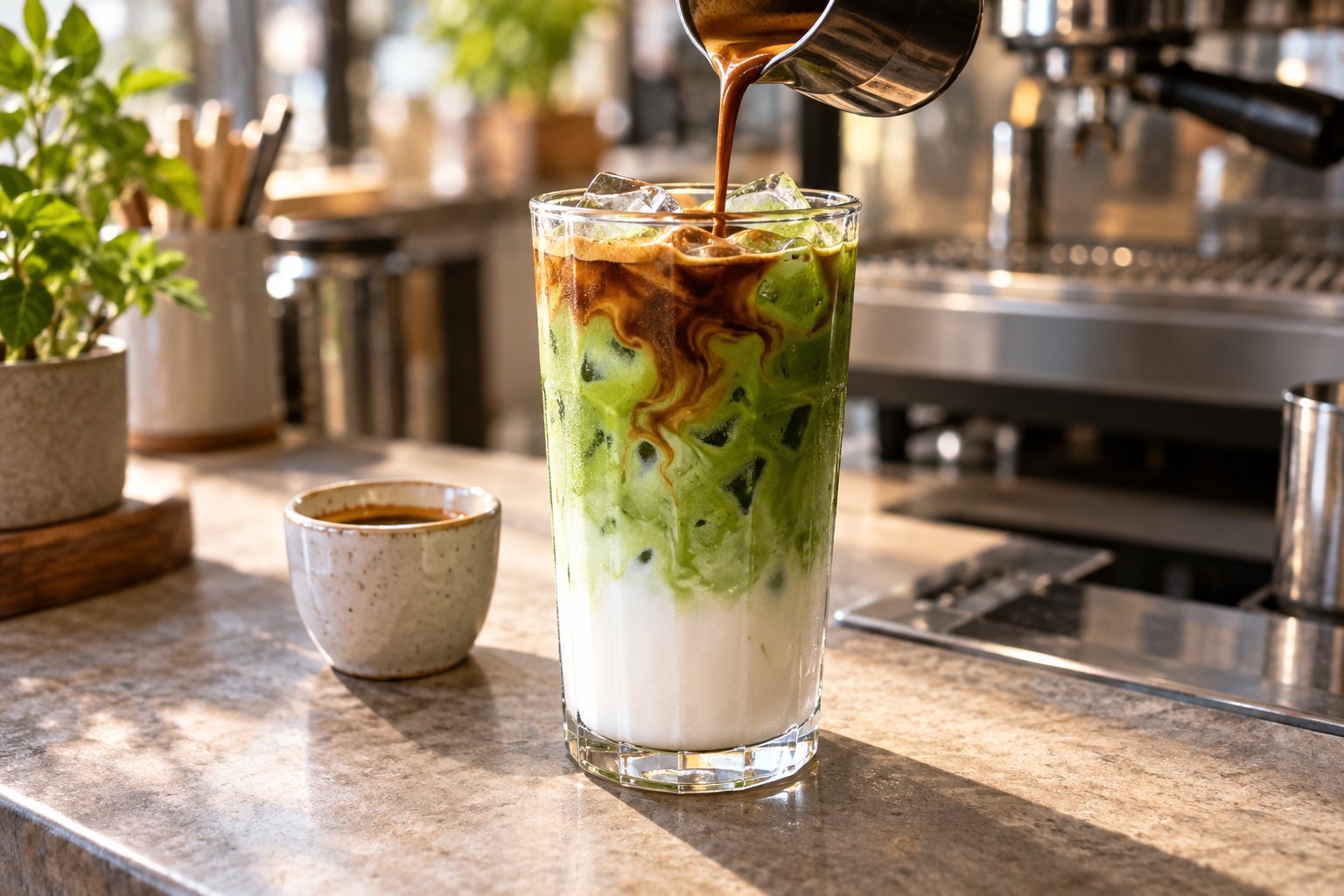
Fore Coffee also lists “Iced Dirty Matchapresso”, which combines matcha and espresso. A café that stocks both can also put drinks that combine the two on its menu. How to make them is in Dirty Matcha.
How the steps and time differ
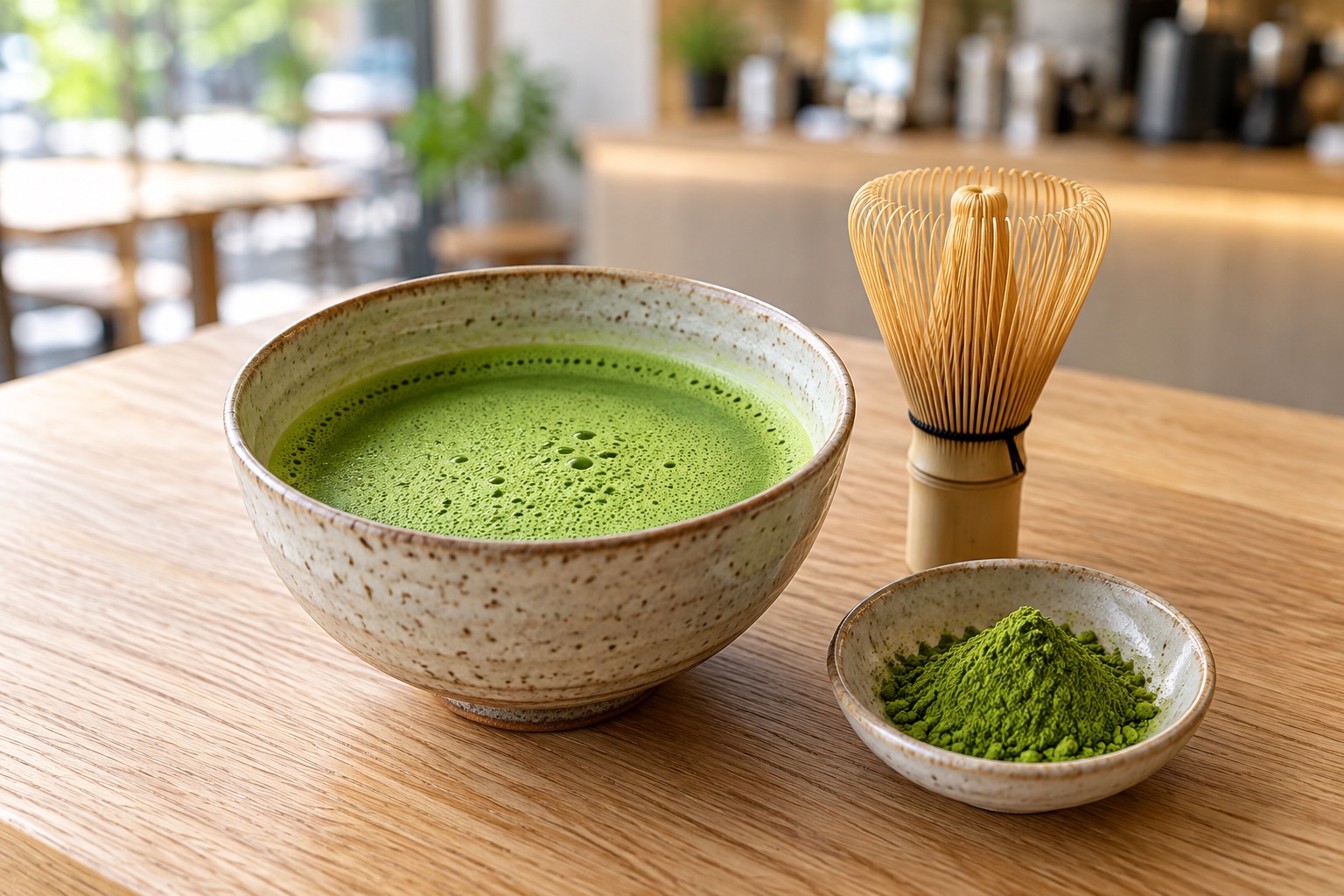
A matcha latte is “sift, whisk with 80°C water, add milk”; a caffe latte is “grind, tamp, extract for 20 to 30 seconds, add milk”. The milk step is the same; what differs is everything before the milk.
Official steps side by side
| Step | Matcha latte (Ippodo Tea) | Espresso for a caffe latte (National Coffee Association and others) |
|---|---|---|
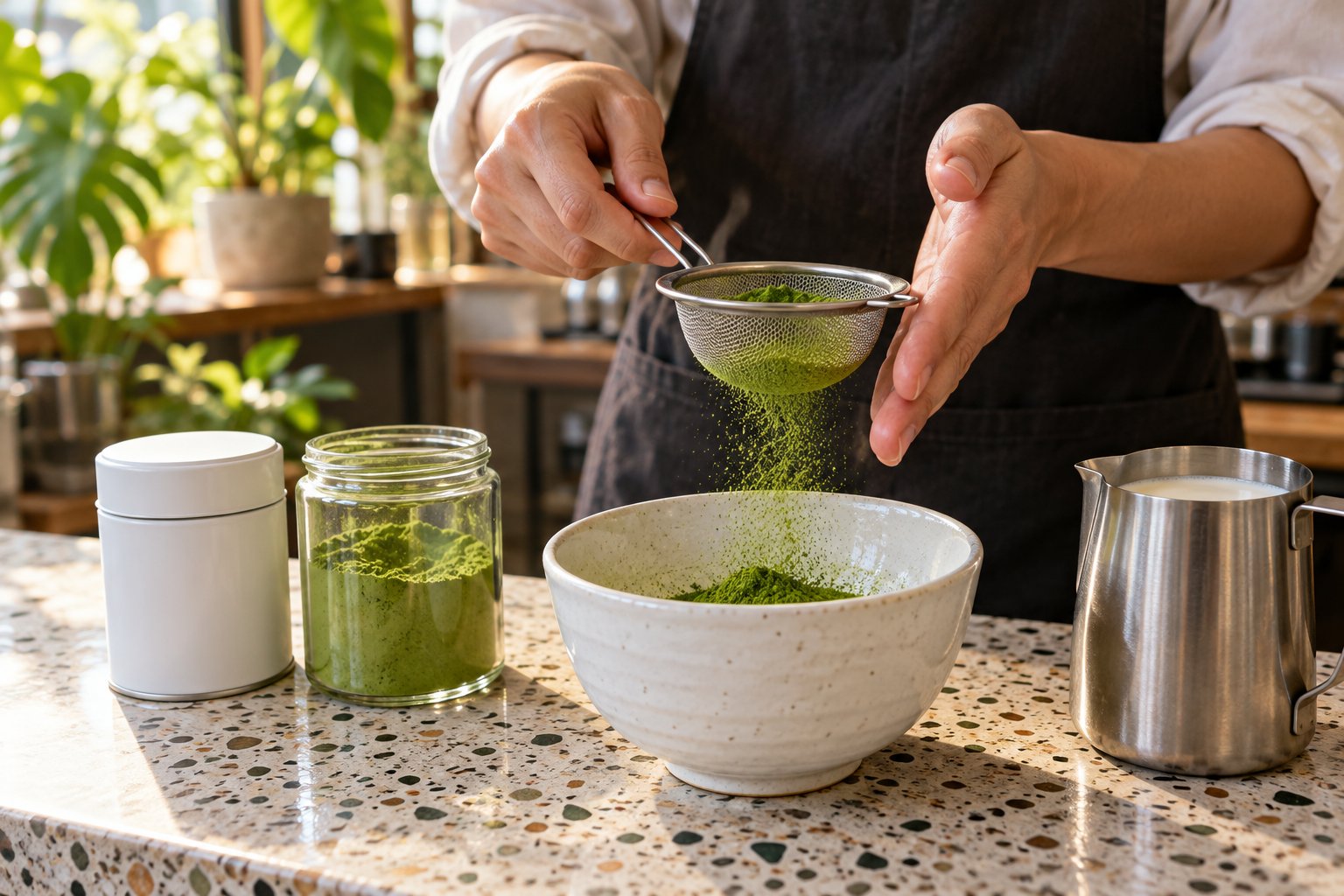
| Measure | Sift 3g of matcha | Grind the beans, put them in the portafilter (the handled tool that holds the grounds) and pack them evenly |
| Water temperature | 80°C (pour boiling water into a teacup first to cool it) | 90.5 to 96.1°C (former definition of the Specialty Coffee Association of America (SCAA)) |
| Extract / whisk | Add 100mL of water and whisk in an “M” shape for 15 seconds | Extract for 20 to 30 seconds |
| Milk | Add 100mL of warm or foamed milk | Espresso is used for lattes and other drinks |
The Specialty Coffee Association (SCA) magazine “25” quotes the definition of espresso set by the Specialty Coffee Association of America (SCAA) before it merged into the SCA: espresso is a 25 to 35ml beverage made from 7 to 9g of coffee (14 to 18g for a double), with water at 90.5 to 96.1°C forced through at 9 to 10 atmospheres of pressure, ground so that the brew time is 20 to 30 seconds, and prepared for and served immediately to the person who ordered it.
Source: Specialty Coffee Association, “Defining the Ever-Changing Espresso” https://sca.coffee/sca-news/25-magazine/issue-3/defining-ever-changing-espresso-25-magazine-issue-3-zyx36
Whisking time and extraction time
Ippodo Tea’s recipe whisks for 15 seconds; espresso extracts for 20 to 30 seconds. Both whisking and extraction take 30 seconds or less per cup. What a matcha latte adds is sifting, and bringing the water to 80°C. How to heat and foam the milk is in How to Make a Matcha Latte.
Both are made to order
The former SCAA definition says espresso is made for the person who ordered it and served immediately. Ippodo Tea’s matcha latte is also whisked one cup at a time and then combined with milk. Why whisked matcha sinks or separates is covered in Matcha Latte Troubleshooting.
Equipment: what both need and what only matcha needs
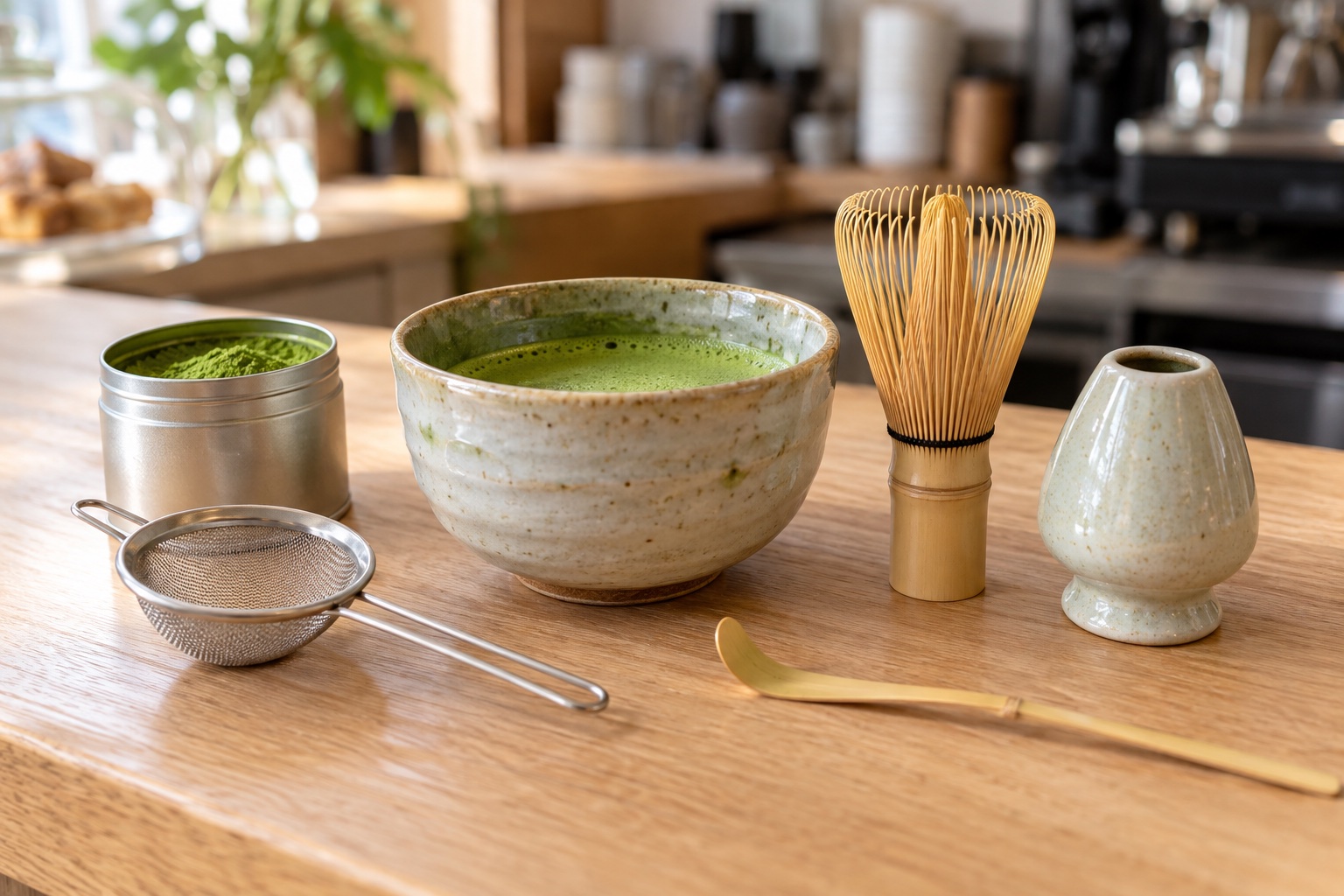
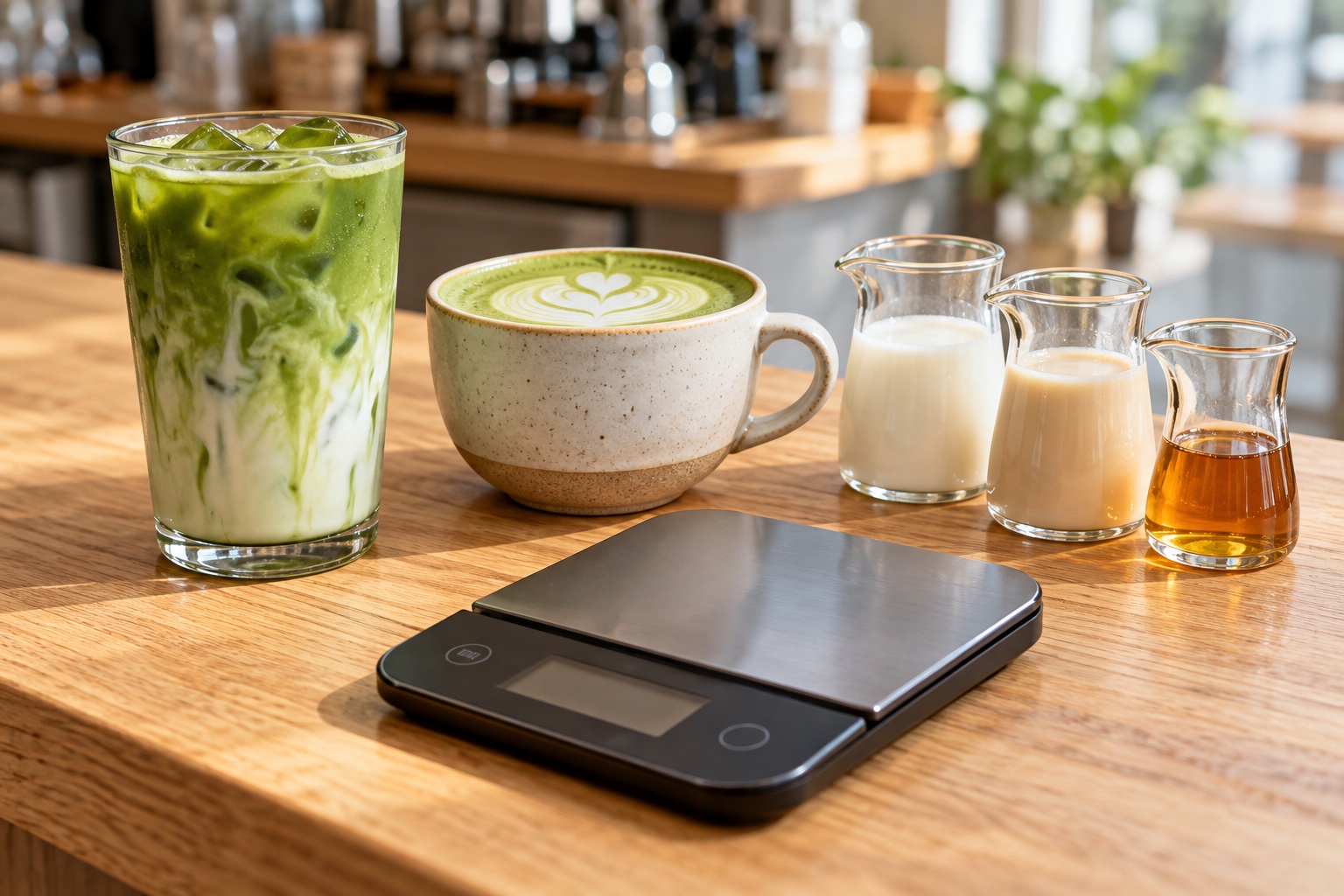
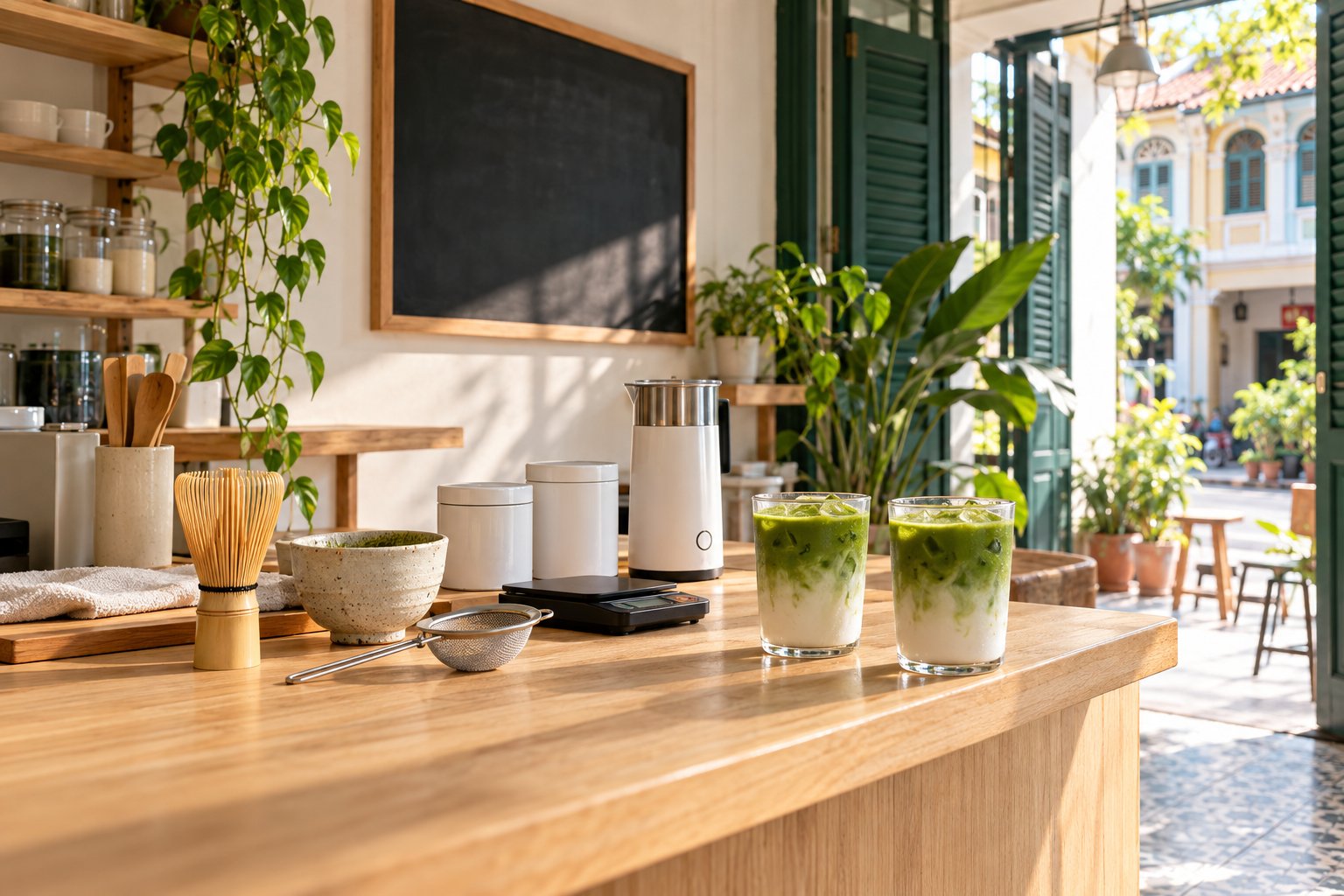
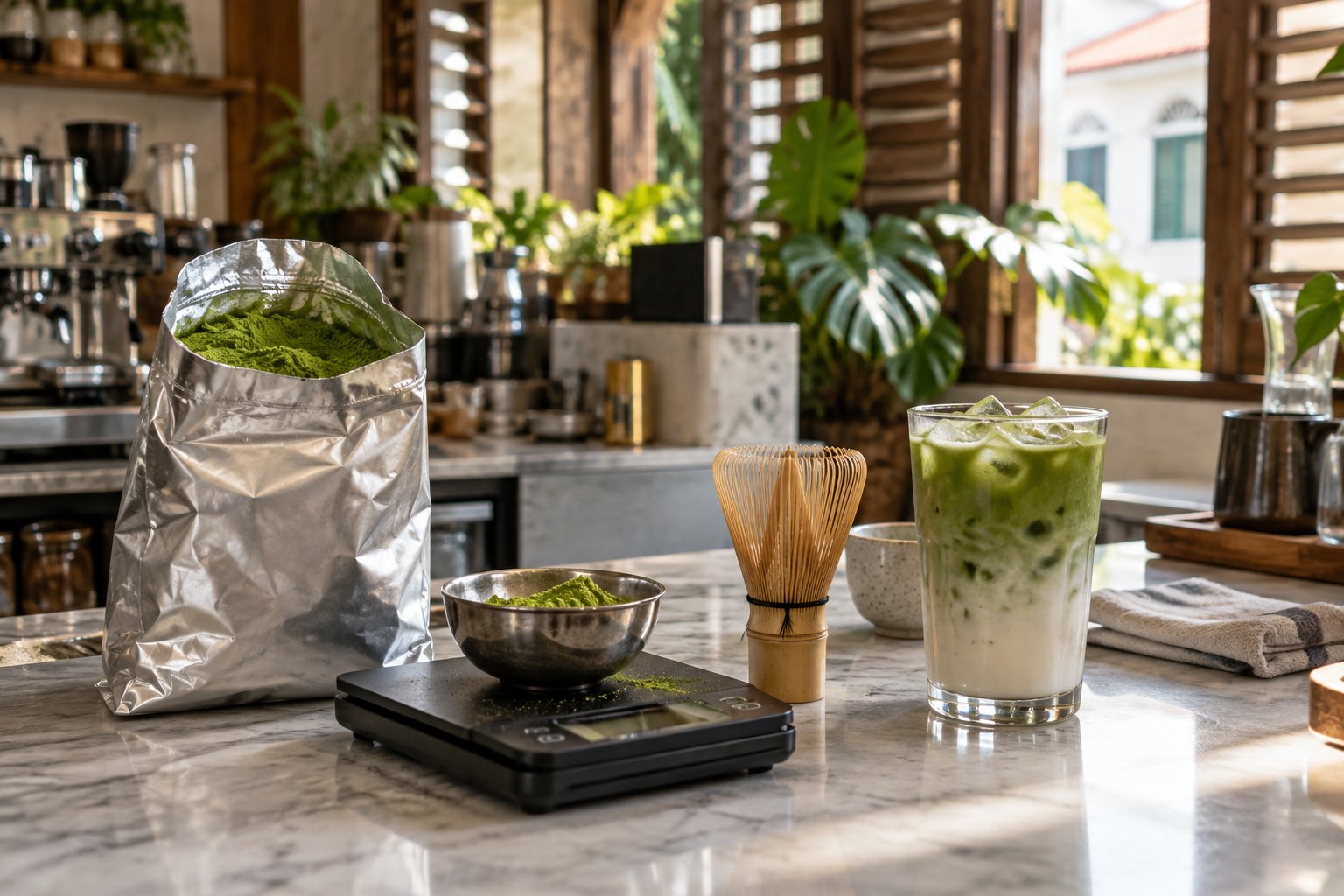
Milk heating and foaming equipment and a scale are shared by caffe lattes and matcha lattes. For a matcha latte you add a sifter, a whisking tool and a way to get 80°C water.
Equipment in three groups
| Group | Equipment | Source |
|---|---|---|
| Both | Milk heating and foaming equipment, scale, cups | Ippodo Tea (warm or foamed milk), National Coffee Association (scale) |
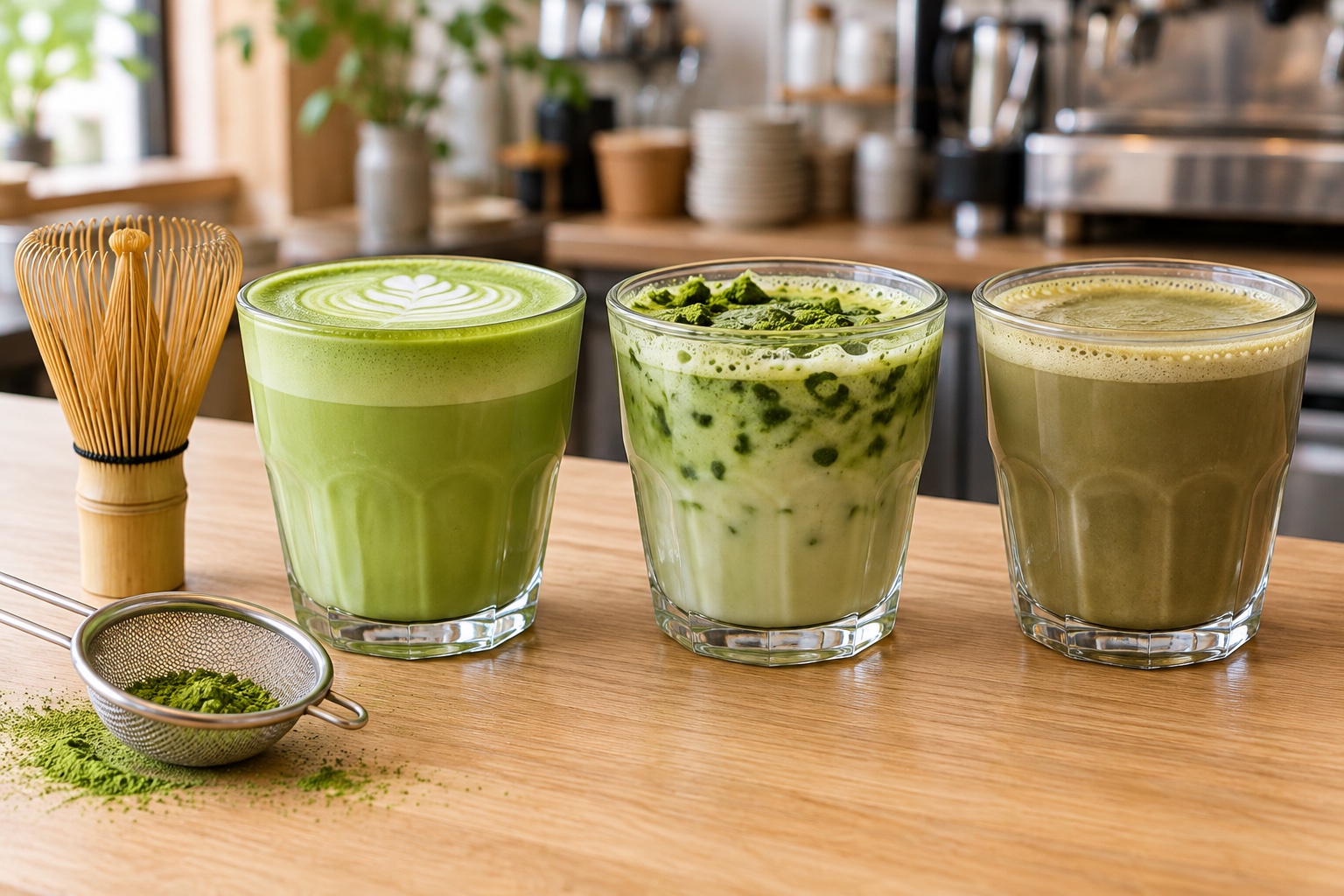
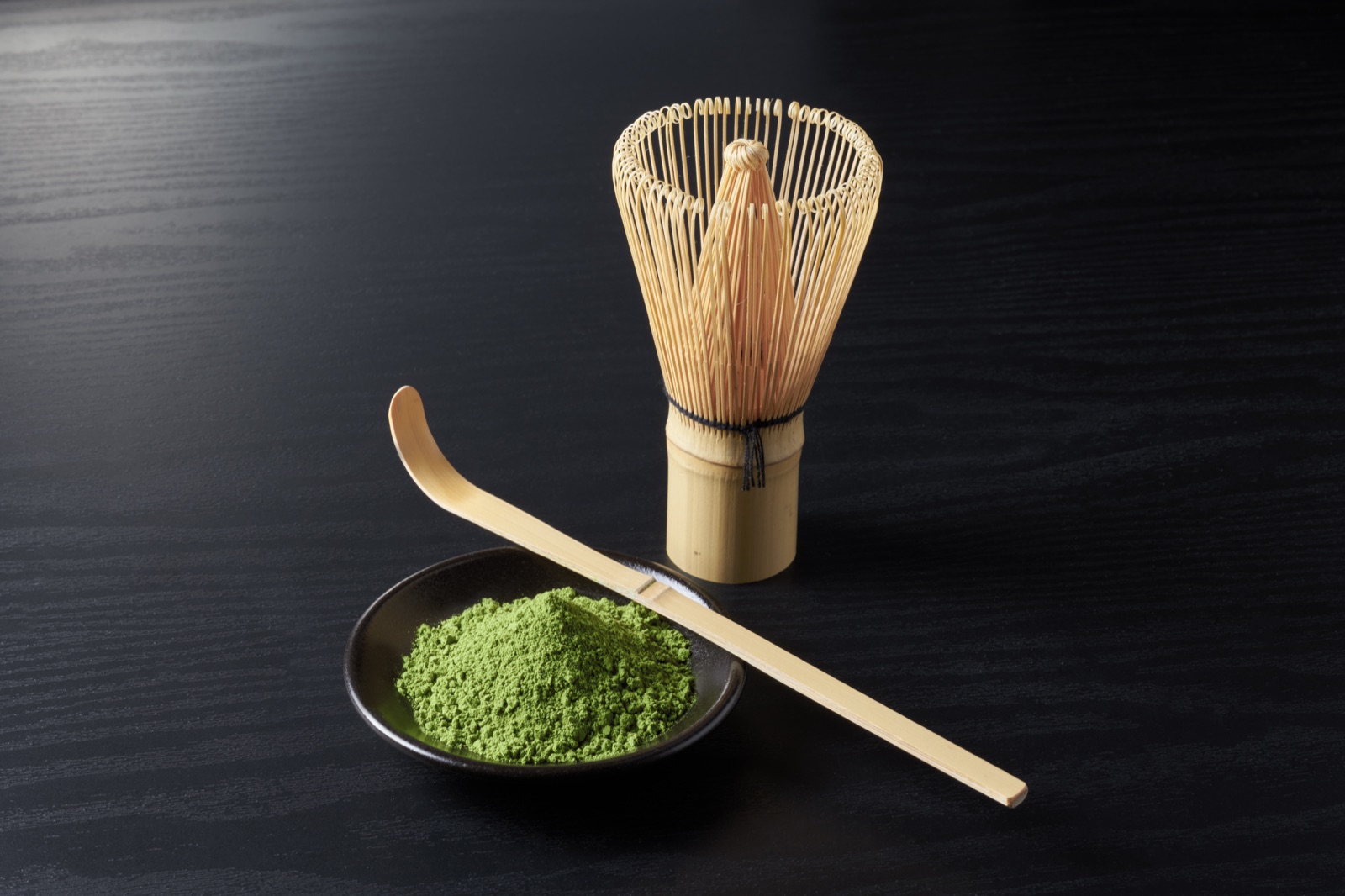
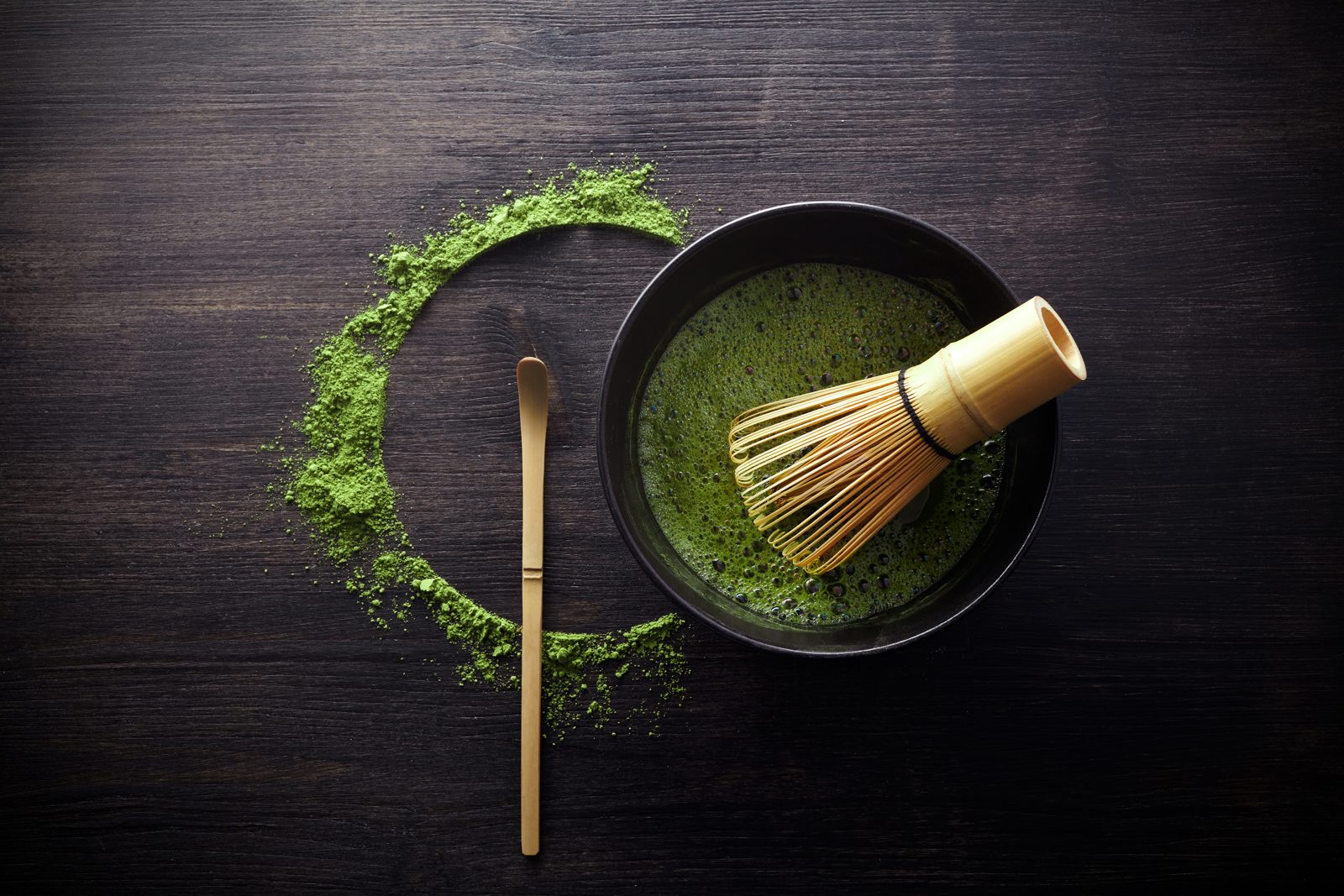
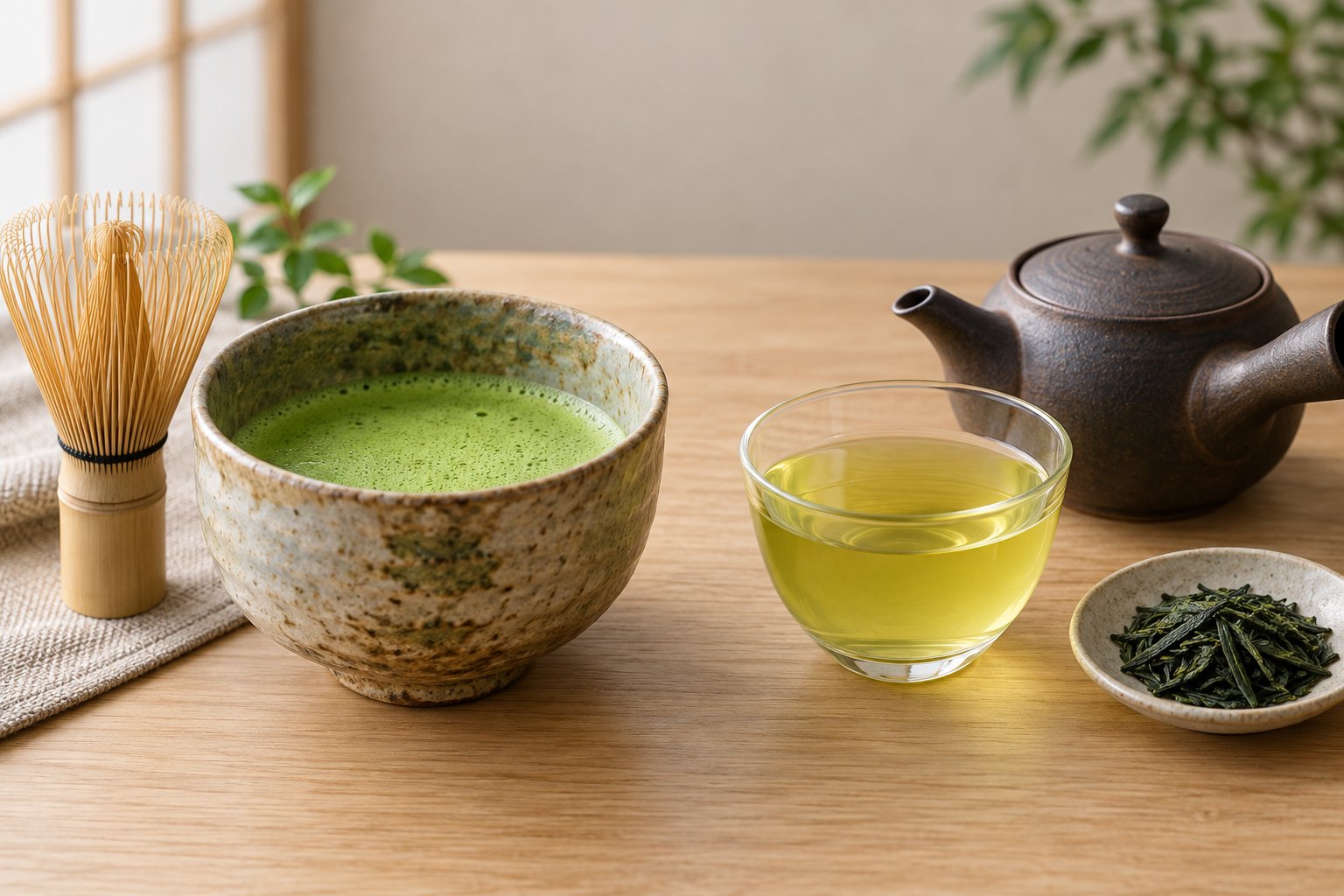
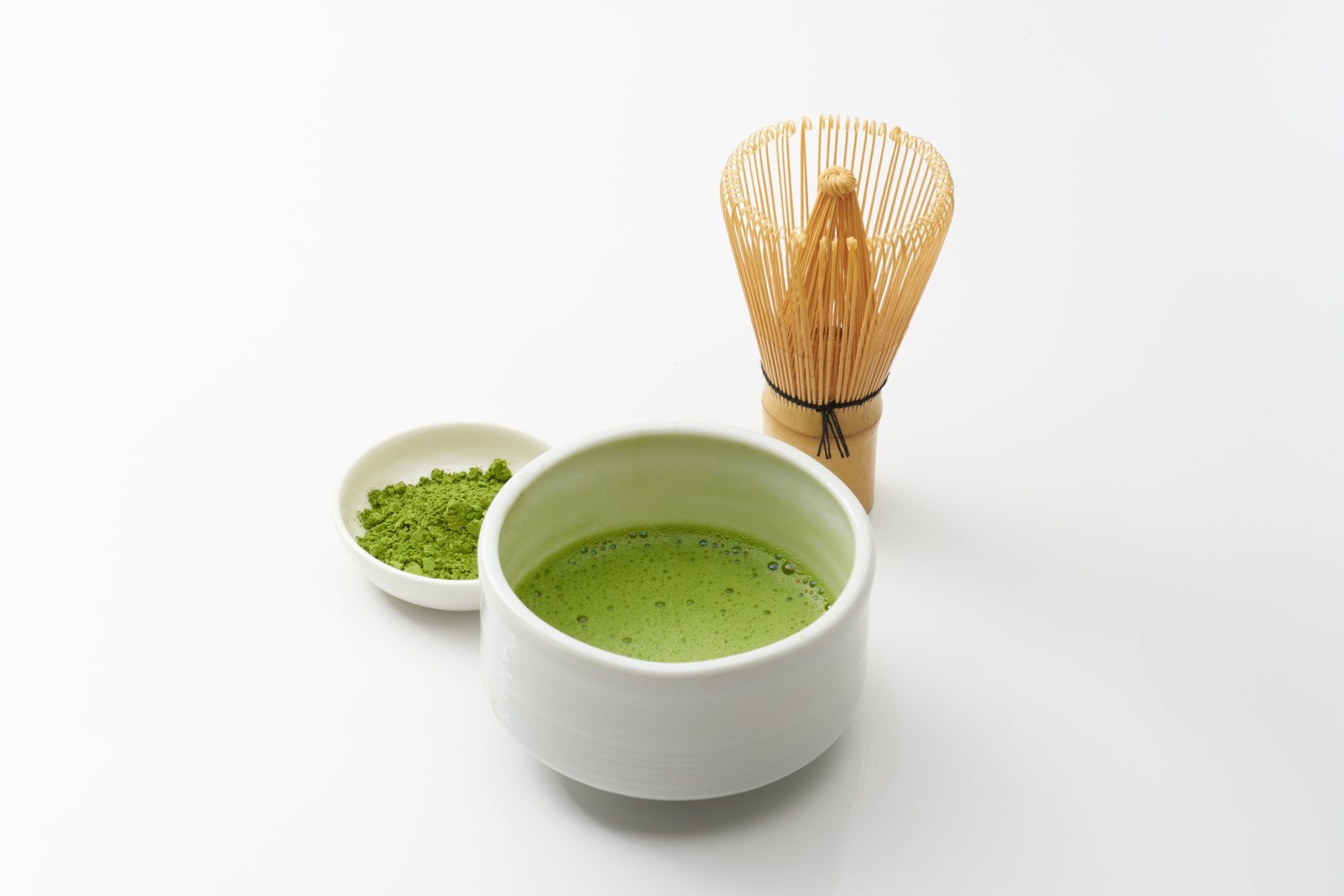
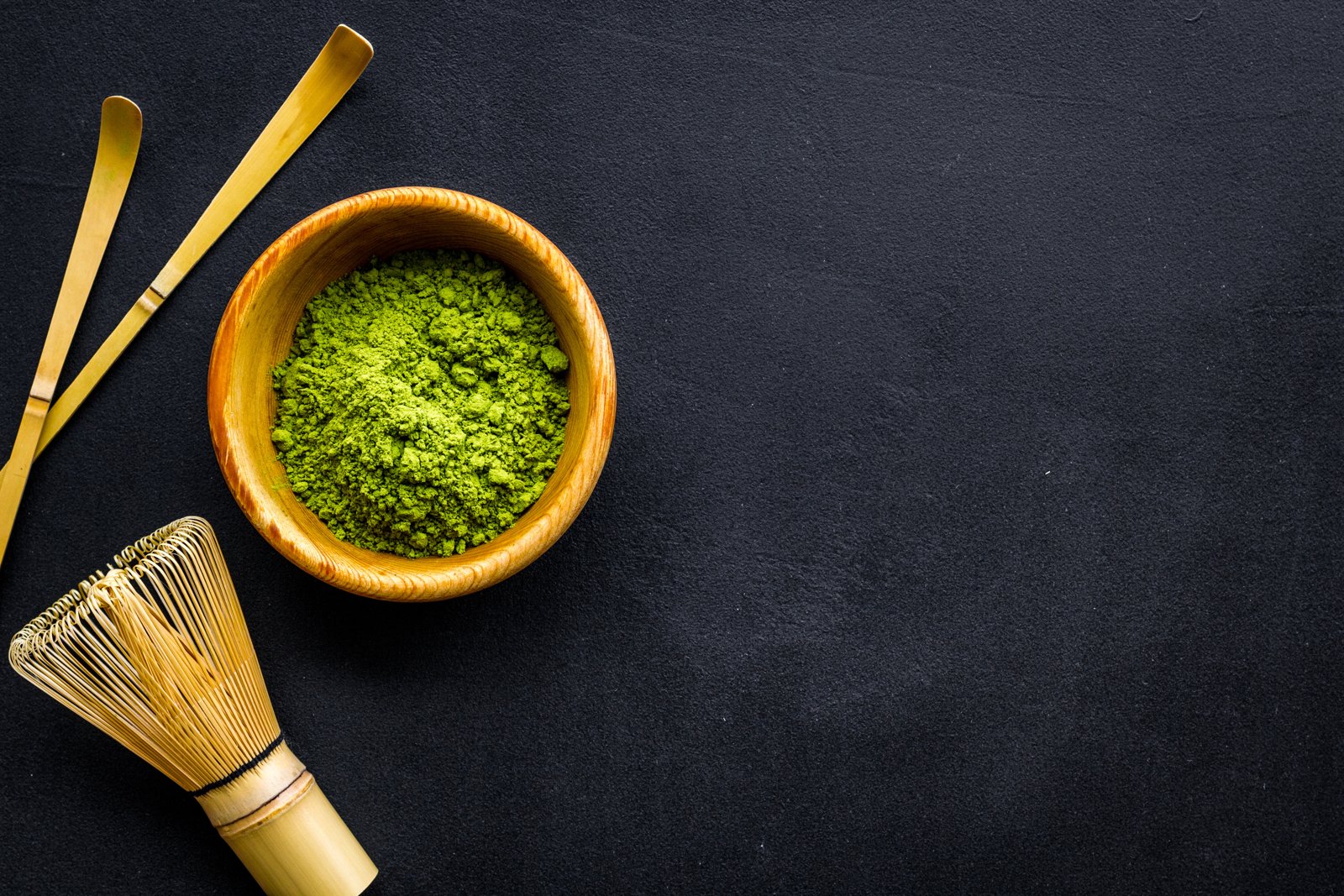
| Matcha only | Sifter (tea strainer), a whisking tool such as a chasen (bamboo whisk for matcha), 80°C water | Ippodo Tea |
| Coffee only | Espresso machine, grinder | National Coffee Association |
The National Coffee Association lists an espresso machine and a scale as what you need for espresso, and calls a grinder “optional, but preferred”, because grinding beans just before brewing gives the freshest result.
Getting 80°C water
Espresso is brewed with water at 90.5 to 96.1°C (former SCAA definition), while Ippodo Tea’s matcha uses 80°C. Ippodo Tea cools boiling water to 80°C by pouring it into a teacup first. In a café, setting aside one water heater or kettle with temperature control for matcha keeps the temperature the same cup to cup (our suggestion).
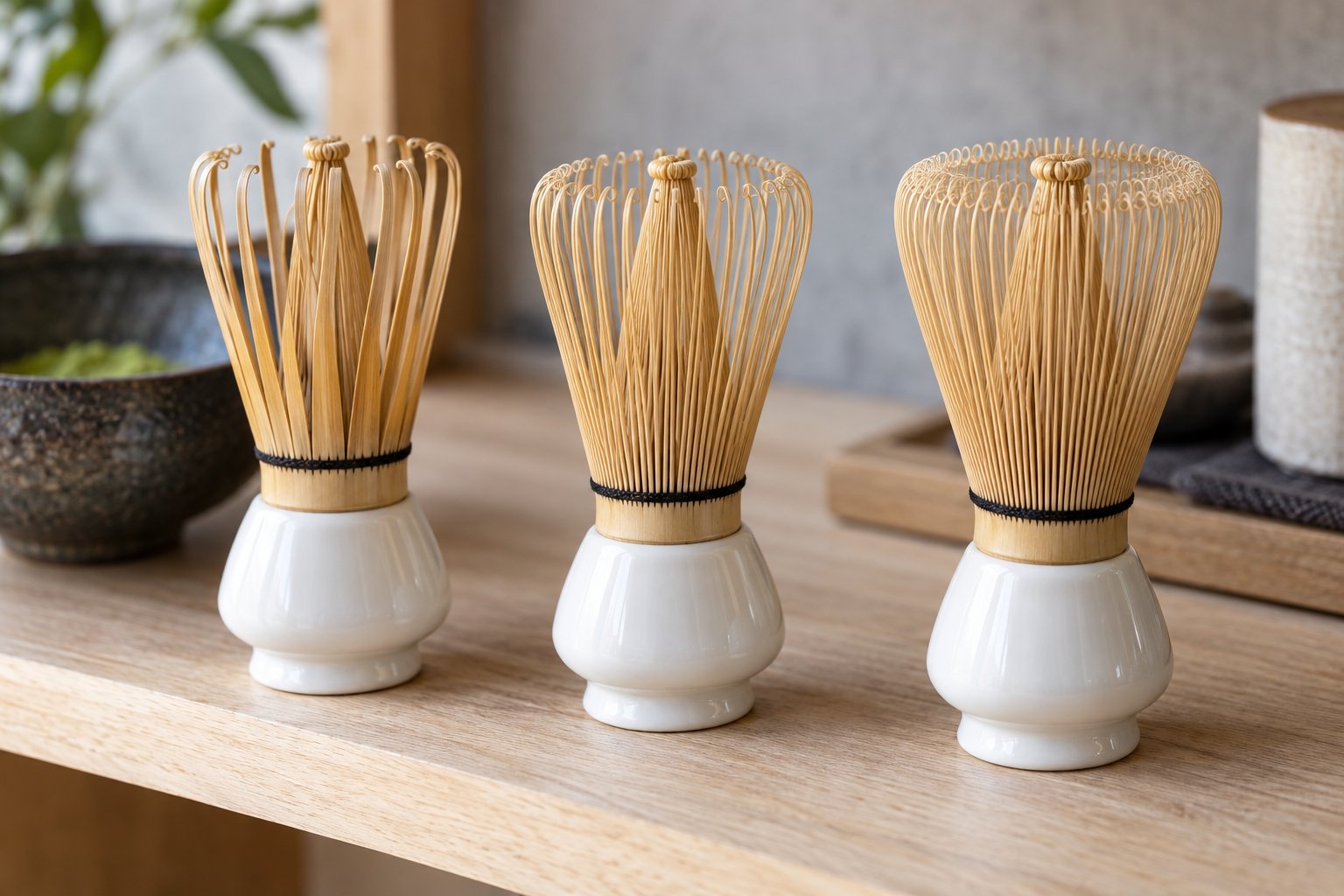
Choosing a whisking tool
Some cafés use an electric frother or a shaker instead of a chasen. Chasen care and when to use electric tools are covered in What Is a Chasen.
Caffeine and customers
A matcha latte with 3g of matcha has 96mg by calculation and one shot of espresso has 63mg, so a matcha latte does not always have less caffeine. When customers ask, answer with a figure calculated from the grams per cup.
Cup by cup
| Cup | Caffeine | Source |
|---|---|---|
| Matcha latte (3g matcha) | 96mg (calculated) | MEXT Standard Tables of Food Composition in Japan, Ippodo Tea |
| Matcha latte (4g matcha) | 128mg (calculated) | Same |
| Espresso, 1 shot (1 ounce) | 63mg | National Coffee Association (USDA data) |
| Espresso, 2 shots | 126mg (calculated) | Same |
Because matcha is drunk whole, caffeine can be calculated as grams of matcha × 32mg. Changing the amount of milk does not change the caffeine. Food composition values and each country’s daily guidance are in Matcha Caffeine.
When a customer wants less coffee
Even a customer who orders a matcha latte “instead of coffee” may, depending on the amount of matcha, get about as much caffeine as in a double-shot caffe latte. For customers who want less caffeine, be ready to suggest a smaller size with less matcha or a drink with less caffeine (our suggestion).
How to work out the cost per cup
Both matcha and coffee cost per cup is price per kg ÷ 1,000 × grams per cup. The formula is the same, but because the grams per cup differ, comparing price per kg does not compare cost per cup.
Grams per cup
| Cup | Amount per cup | Cups per kg (calculated) | Source |
|---|---|---|---|
| Matcha latte | 3g matcha | about 333 | Ippodo Tea |
| Espresso (single) | 7 to 9g coffee | about 111 to 142 | Former SCAA definition |
| Espresso (double) | 14 to 18g coffee | about 55 to 71 | Same |
3g of matcha and 18g of coffee differ by about six times in cups per kg (our calculation).
In the same article, a barista survey presented in June 2017 found that the average shot started with an 18 to 20g dose. Weigh how many grams your own machine uses per cup, and calculate with that figure.
Adding milk and other ingredients
Milk, sweetener, ice, cup, lid and straw cost the same way for both. Convert each to a per-cup figure as price per bottle ÷ volume × amount per cup, and add it to the matcha or coffee cost to get the ingredient cost per cup. How to set a selling price from a food cost percentage, and what cafés in each country charge, are in Matcha Latte Price.
Whether a matcha latte earns more depends on your numbers
We found no public data showing whether a matcha latte or a caffe latte earns more. The price per kg of matcha and beans, the grams per cup and the selling price all differ by café, so put your own numbers into the checklist below and compare.
Stock: beans for 1 to 2 weeks, matcha for a month after opening
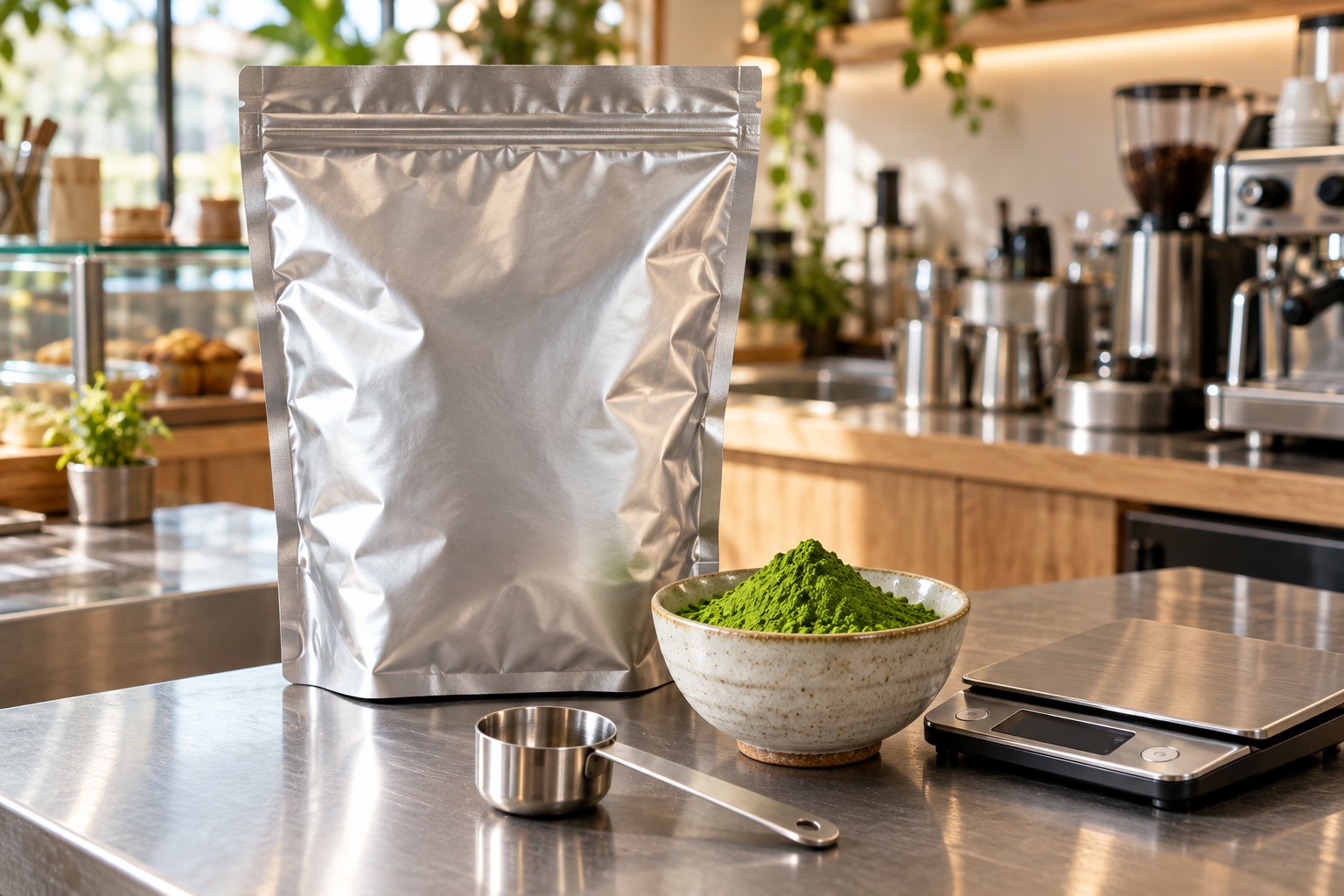
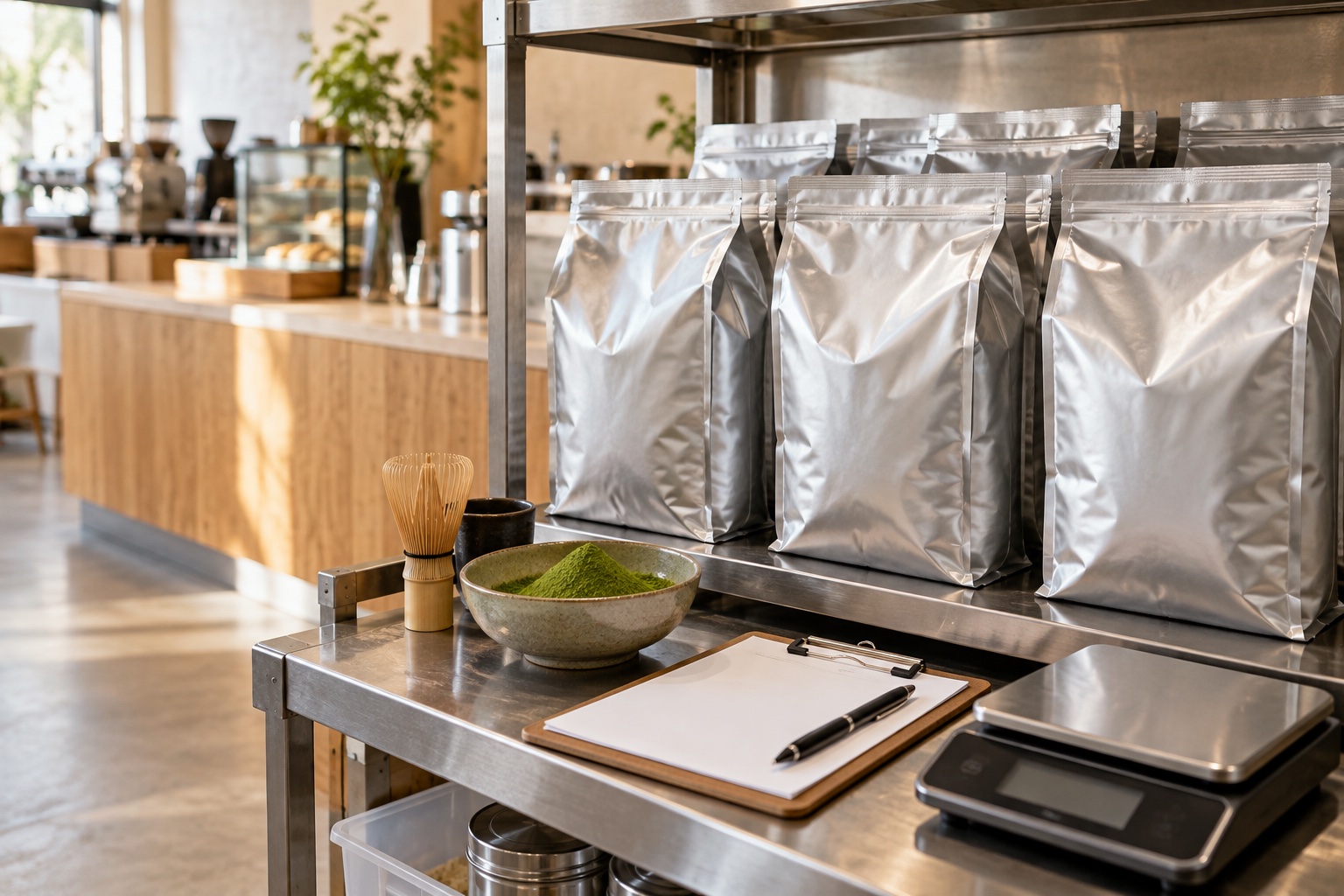
The National Coffee Association recommends buying roasted beans one or two weeks’ worth at a time, and Ippodo Tea says matcha tastes best within a month of opening. The guide periods differ, but in both cases you choose the bag size from how many days it takes to finish an opened bag.
Freshness guide for coffee beans
The National Coffee Association says coffee starts to lose freshness almost immediately after roasting. Its guide, assuming opened coffee is moved into an airtight container, is as follows.
| Form | Retains freshness |
|---|---|
| Roasted beans (room temperature) | 1 to 3 weeks |
| Ground coffee (room temperature) | 1 to 2 weeks |
| Unopened beans or ground coffee | Until the best-by date |
Keep matcha away from coffee
Ippodo Tea says to keep matcha in an opaque, tightly sealed container and store it away from spices, coffee and other strong odors. On the same page, it recommends drinking matcha within a month of opening for the best taste.
Source: Ippodo Tea, “How to Keep Your Matcha Fresh” https://ippodotea.com/blogs/ippodo-tea-blog/how-to-keep-your-matcha-fresh
In a café that grinds beans, place the matcha container away from the grinder and the bean shelf. Storage in hot countries is covered in Does Matcha Expire.
Order quantity and timing
Order matcha allowing for the days it takes to arrive from Japan. How to work out monthly usage and when to reorder from cups per day is in How Much Matcha per Latte.
Where cafés trip up with matcha lattes
Cafés used to coffee tend to trip up on lumps, water temperature and odors carrying over. Each can be prevented by fixing the steps and where things are kept.
Lumps and water temperature
Ippodo Tea’s recipe sifts the matcha first and whisks it with 80°C water. To avoid using water as hot as for espresso (90.5 to 96.1°C), keep separate water for matcha (our suggestion). Causes and fixes by symptom, such as bitterness or lumps, are in Matcha Latte Troubleshooting.
Keep tools separate
The National Coffee Association says to clean espresso equipment after each use. Keep separate tools and cloths for matcha so that coffee grounds and odors do not get on the chasen or the matcha container (our suggestion).
Checklist: should you add a matcha latte?
Put your own café’s numbers in and compare the matcha latte and the caffe latte in one table. The blanks are what to check before deciding.
A table for your numbers
| Item | Matcha latte | Caffe latte |
|---|---|---|
| Grams per cup | __ g (Ippodo Tea’s recipe: 3g) | __ g (former SCAA definition: 7 to 9g for a single) |
| Price per kg | ||
| Matcha or coffee cost per cup (price per kg ÷ 1,000 × grams) | ||
| Milk, sweetener and cup | ||
| Selling price (before tax) | ||
| Expected cups per day | ||
| Days to finish an opened bag | __ days (guide: one month) | __ days (guide: 1 to 3 weeks) |
| Equipment to add | Sifter, whisking tool, 80°C water | None |
After filling in the table
- Calculate caffeine per cup as grams of matcha × 32mg so you can answer when asked
- Decide where matcha is kept, away from beans and the grinder
- If you are starting from licences and setup, see How to Start a Matcha Business (Singapore and Thailand) and Opening a Matcha Café in Indonesia
Try matcha samples
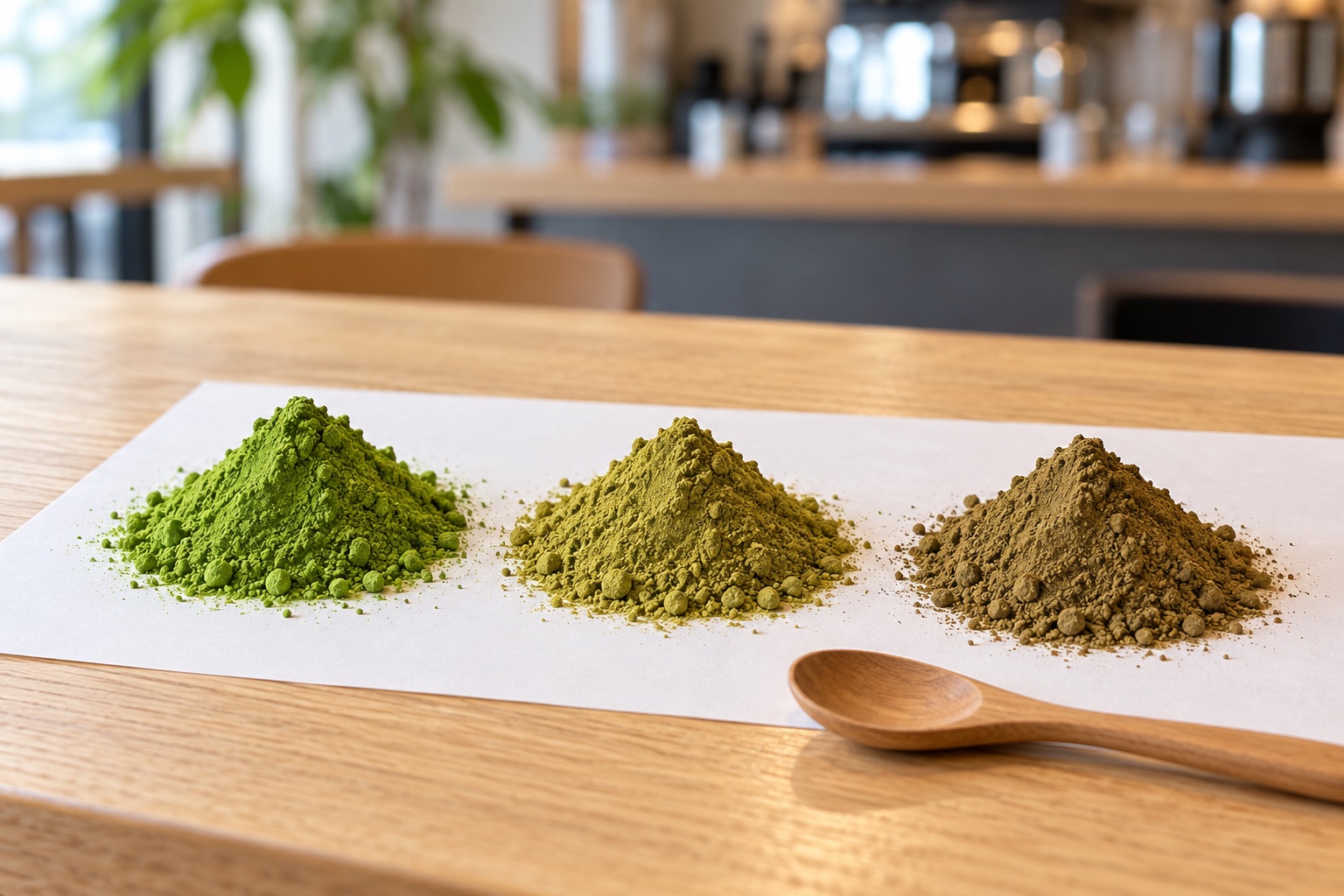
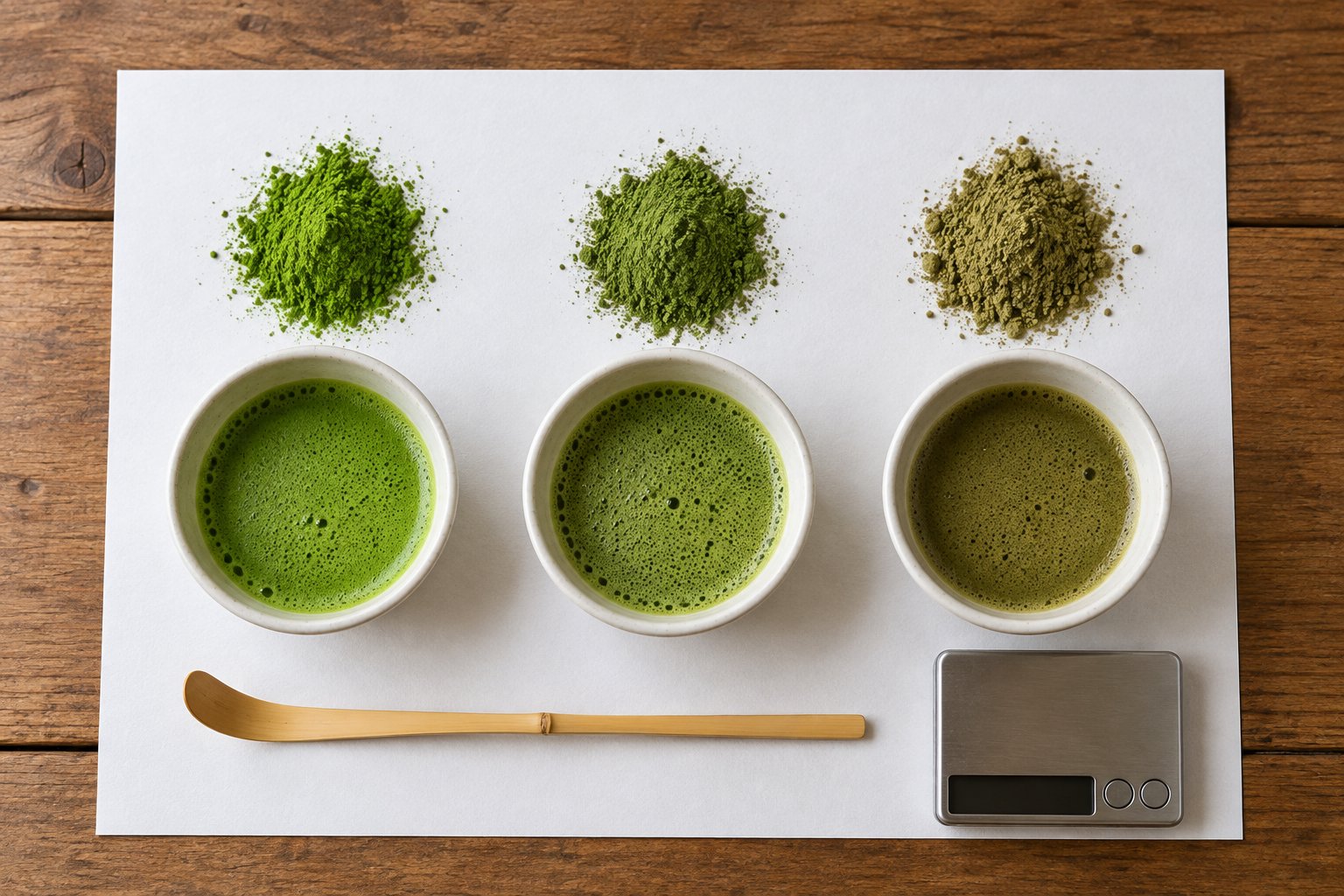
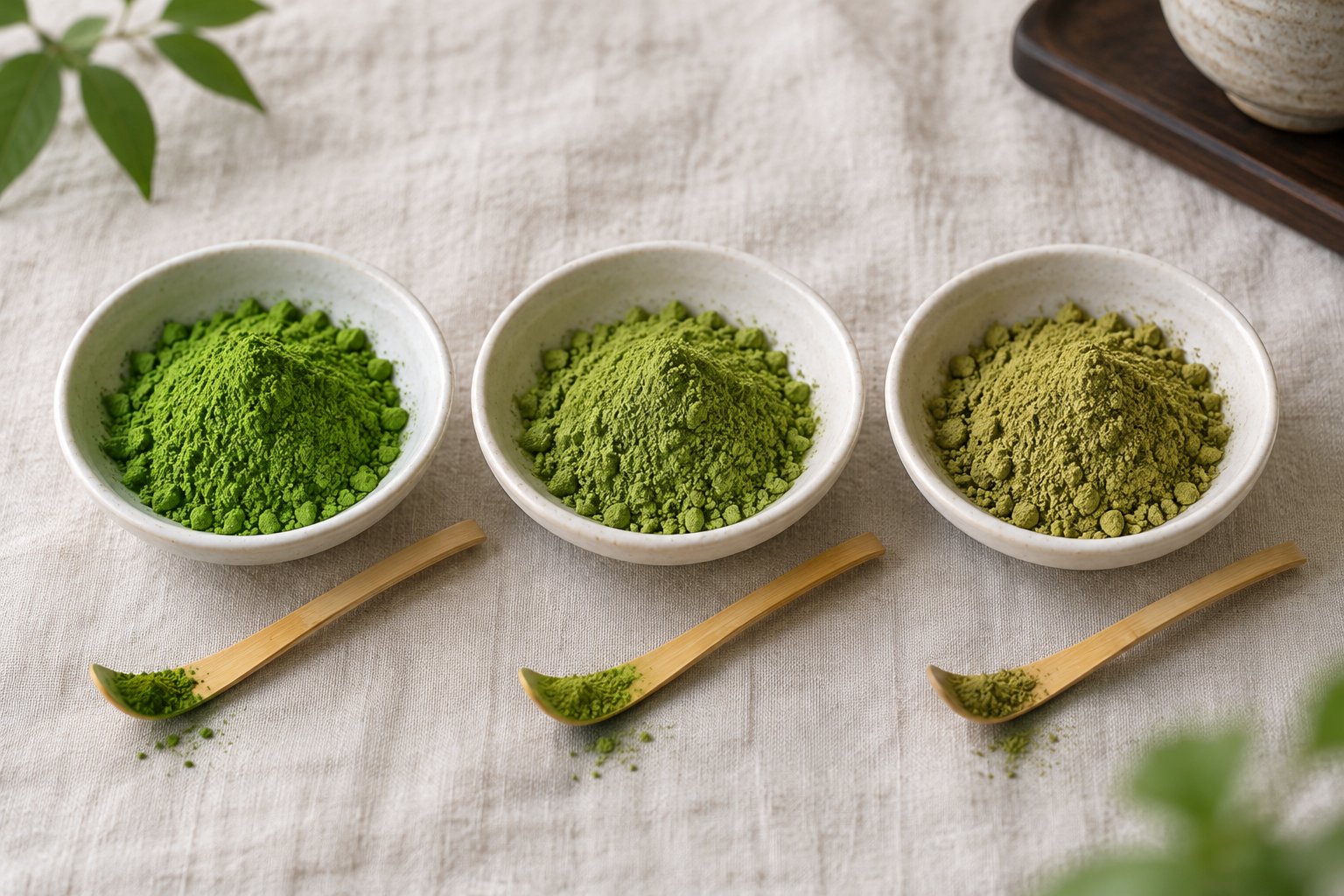
Choose matcha after tasting it with your own milk and sweetness. The differences between grades are in Matcha Grades. Omakase Matcha buys matcha directly from growing regions (Uji, Yame, Kagoshima, Shizuoka and Miyazaki) and sells it wholesale from 1kg, and you can request samples of up to three types.
Sources
- Starbucks Singapore, “Beverages” https://www.starbucks.com.sg/menu/beverages
- LINE MAN Wongnai, “Café Amazon” https://www.wongnai.com/delivery/businesses/577439iz/order
- Fore Coffee, “Menu” https://fore.coffee/menu/
- JETRO, “抹茶ブームを経て本格的な普及段階に移行するASEAN日本茶市場” (ASEAN Japanese tea market moving into full adoption after the matcha boom, 18 May 2026, in Japanese) https://www.jetro.go.jp/biz/areareports/2026/d7cf7db2e5a71454.html
- Ippodo Tea, “Matcha Latte” https://ippodotea.com/blogs/recipes-to-brew-japanese-tea/matcha-latte-recipe
- Ippodo Tea, “How to Keep Your Matcha Fresh” https://ippodotea.com/blogs/ippodo-tea-blog/how-to-keep-your-matcha-fresh
- Specialty Coffee Association, “Defining the Ever-Changing Espresso” (25 Magazine, Issue 3) https://sca.coffee/sca-news/25-magazine/issue-3/defining-ever-changing-espresso-25-magazine-issue-3-zyx36
- National Coffee Association, “Espresso” https://www.aboutcoffee.org/brewing/espresso/
- National Coffee Association, “Storage and shelf life” https://www.aboutcoffee.org/beans/storage-and-shelf-life/
- MEXT Food Composition Database, “抹茶 茶” (Matcha, food number 16035, in Japanese) https://fooddb.mext.go.jp/details/details.pl?ITEM_NO=16_16035_7