

Japanese matcha for cafés and wholesalers生産者・茶商の方はこちら →

How to Choose Matcha for Café Lattes: Grades, Recipes and Cost per Cup

#matcha latte#matcha powder#matcha grades#café menu#Thailand

Omakase Matcha editorial teamReviewed by: Takahiro Sugiyama (CEO, meguri Inc.)
記事の写真 matcha-latte-for-cafes
Contents
  1. What is a matcha latte?
  2. How it differs from a green tea latte
  3. Matcha vs. green tea powder
  4. The definition in the labelling standard
  5. What is happening in the Thai market
  6. Which grade suits lattes
  7. Look at harvest, origin and milling, not the grade name
  8. How to think about a latte grade
  9. Basic matcha latte recipes
  10. Hot
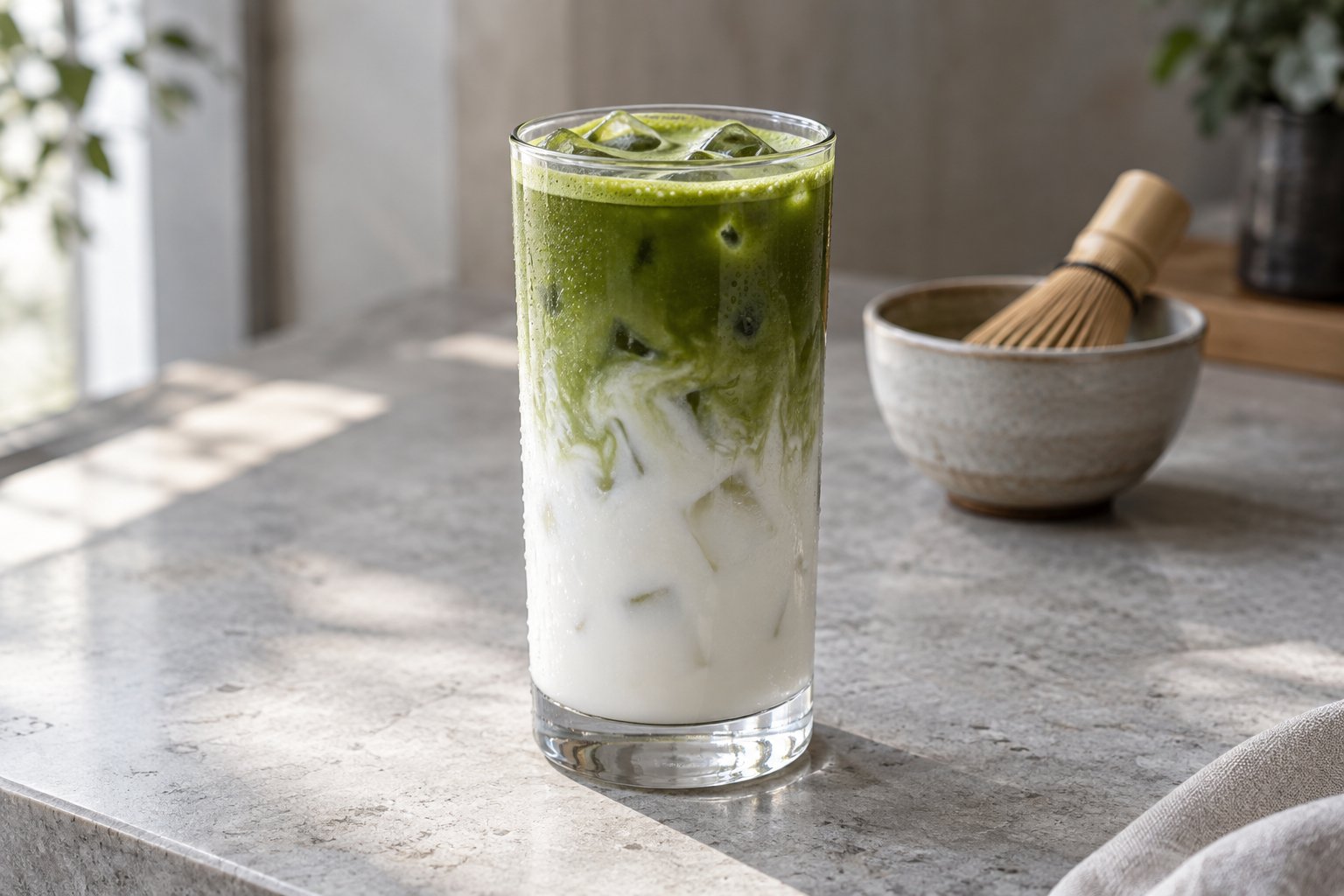
  11. Iced
  12. What to check when you change the milk
  13. Cost per cup and matching it to your price
  14. The formula for matcha cost per cup
  15. Choosing to match your menu price
  16. What to check when you buy
  17. Quality documents
  18. Importing into Thailand
  19. Japanese exports to Thailand, and origins
  20. Green tea exports to Thailand
  21. Differences between origins

What this article covers

  • How a matcha latte differs from a green tea latte, and matcha from green tea powder
  • How to choose a matcha grade for lattes
  • Starting recipes for hot and iced lattes, and what to check when you change the milk
  • How to calculate the matcha cost per cup and match it to your menu price
  • Documents to check when importing Japanese matcha into Thailand

Matcha lattes are now a staple in cafés across Thailand, but two powders that are both called “matcha” can give very different color, taste and cost. Drawing on Japanese public sources and recipes from specialist tea shops, this guide walks through which matcha a café should use, how much of it, and what it costs per cup.

What is a matcha latte?

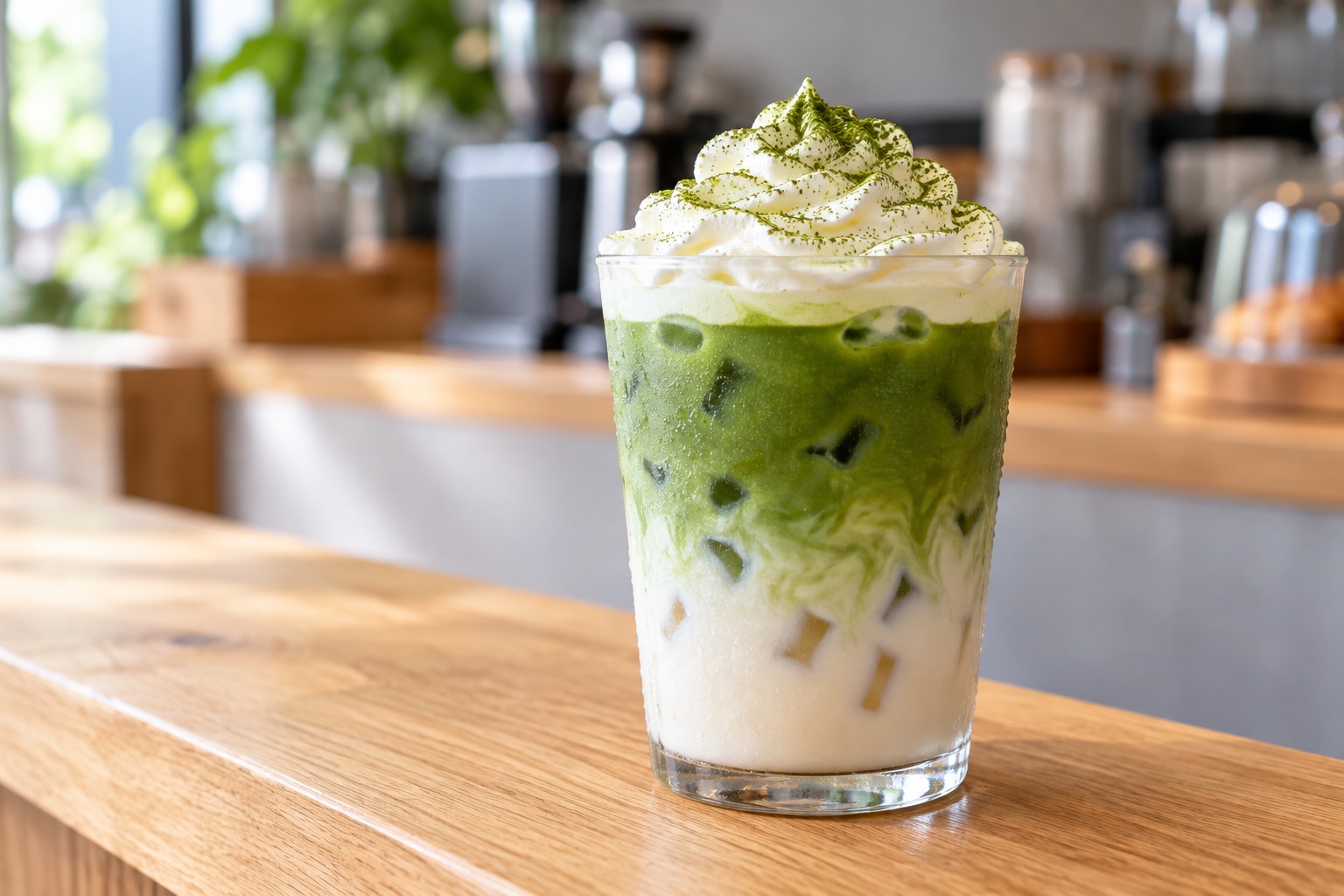
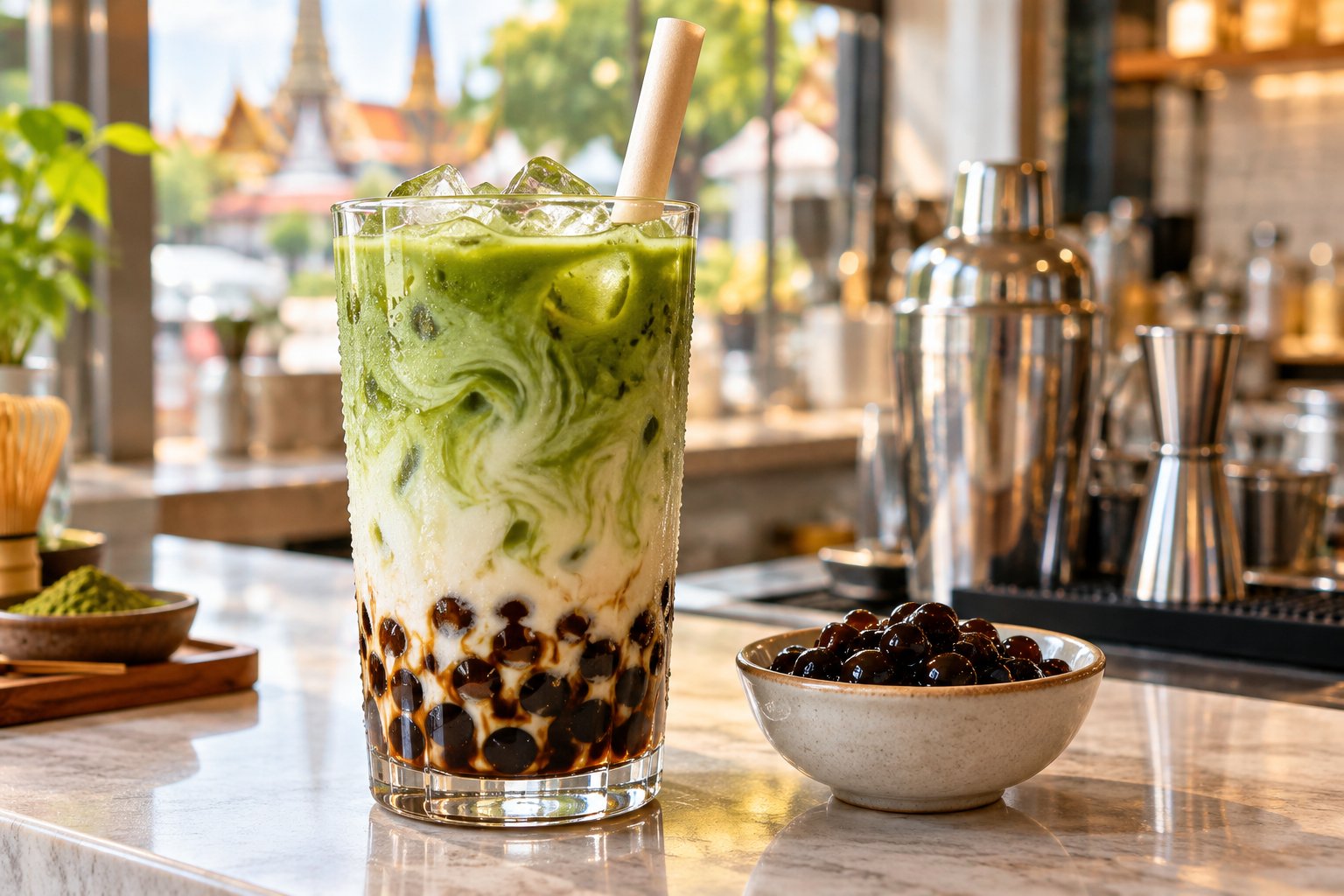
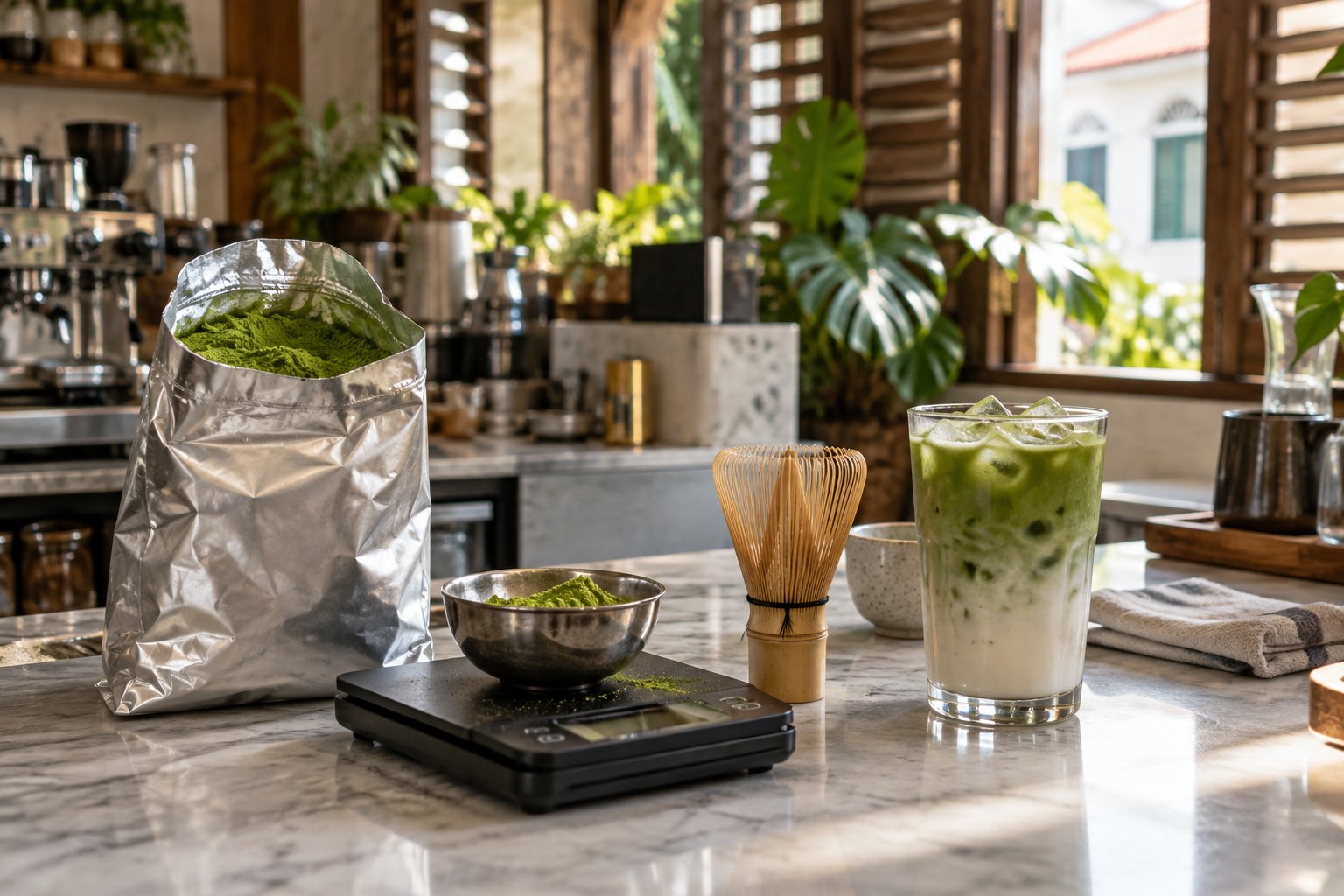
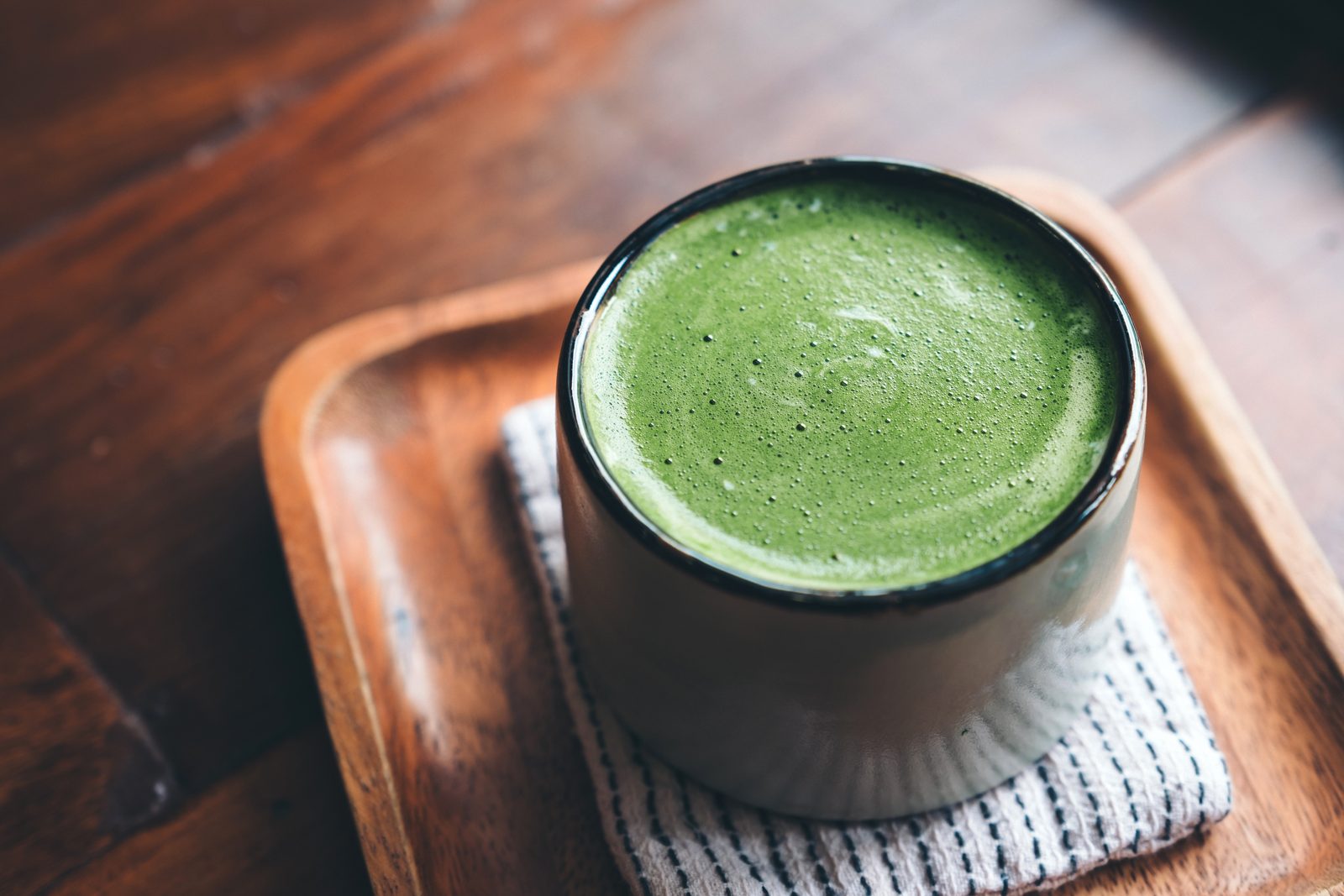
A matcha latte is matcha dissolved in a little hot water and topped up with milk. Matcha is tea leaf ground into powder, so you drink the whole leaf — unlike brewed green tea, where you drink only the infusion.

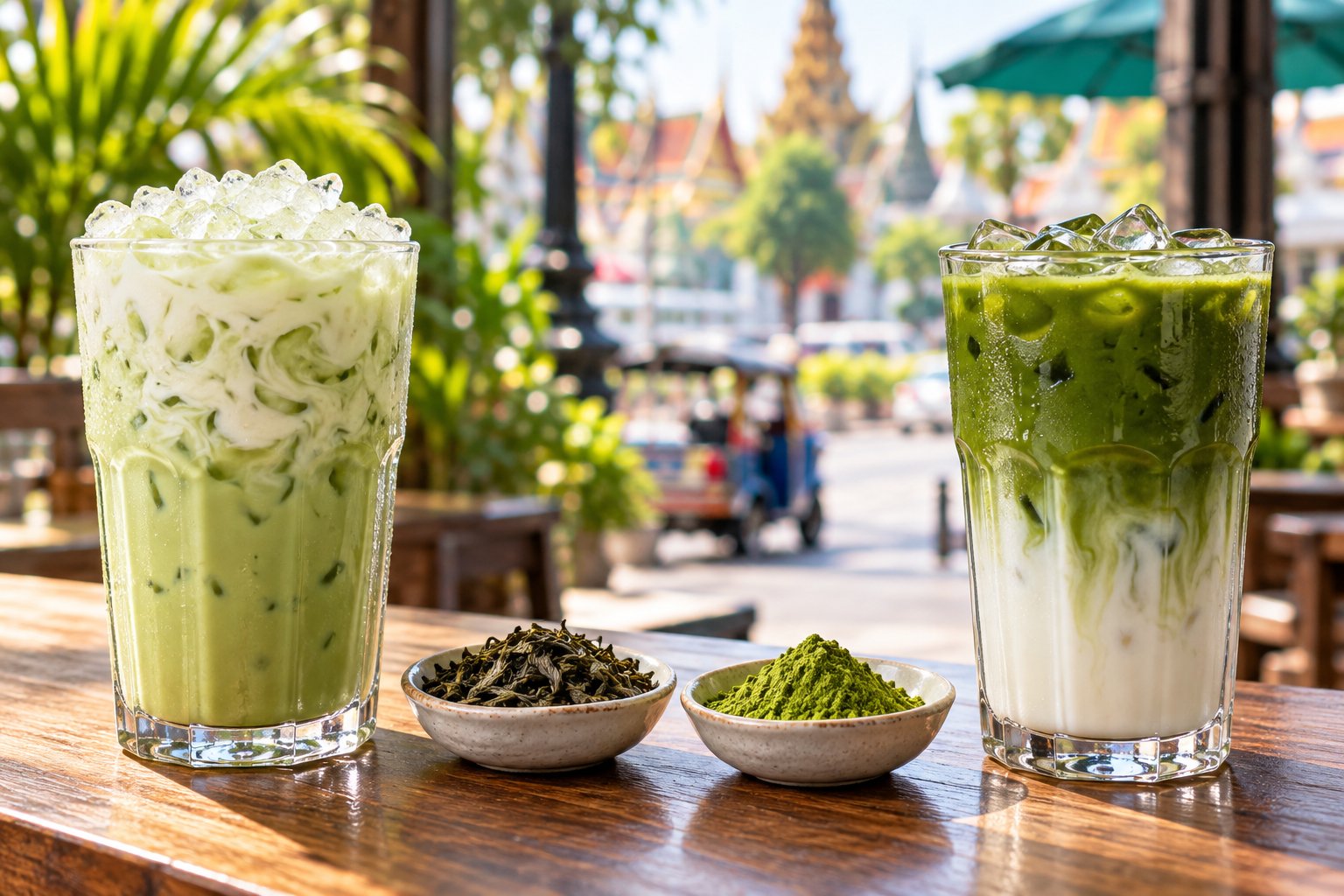
How it differs from a green tea latte

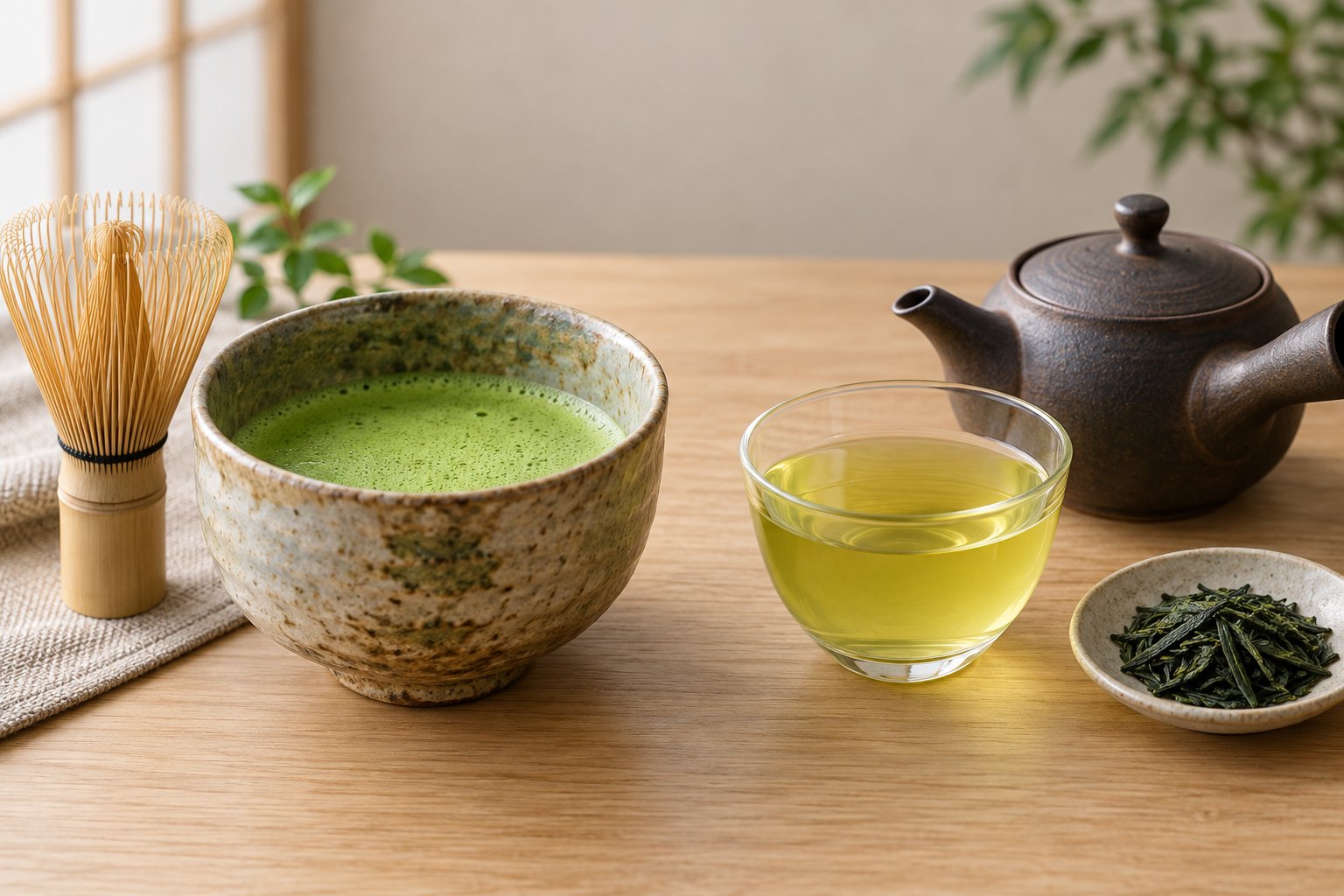
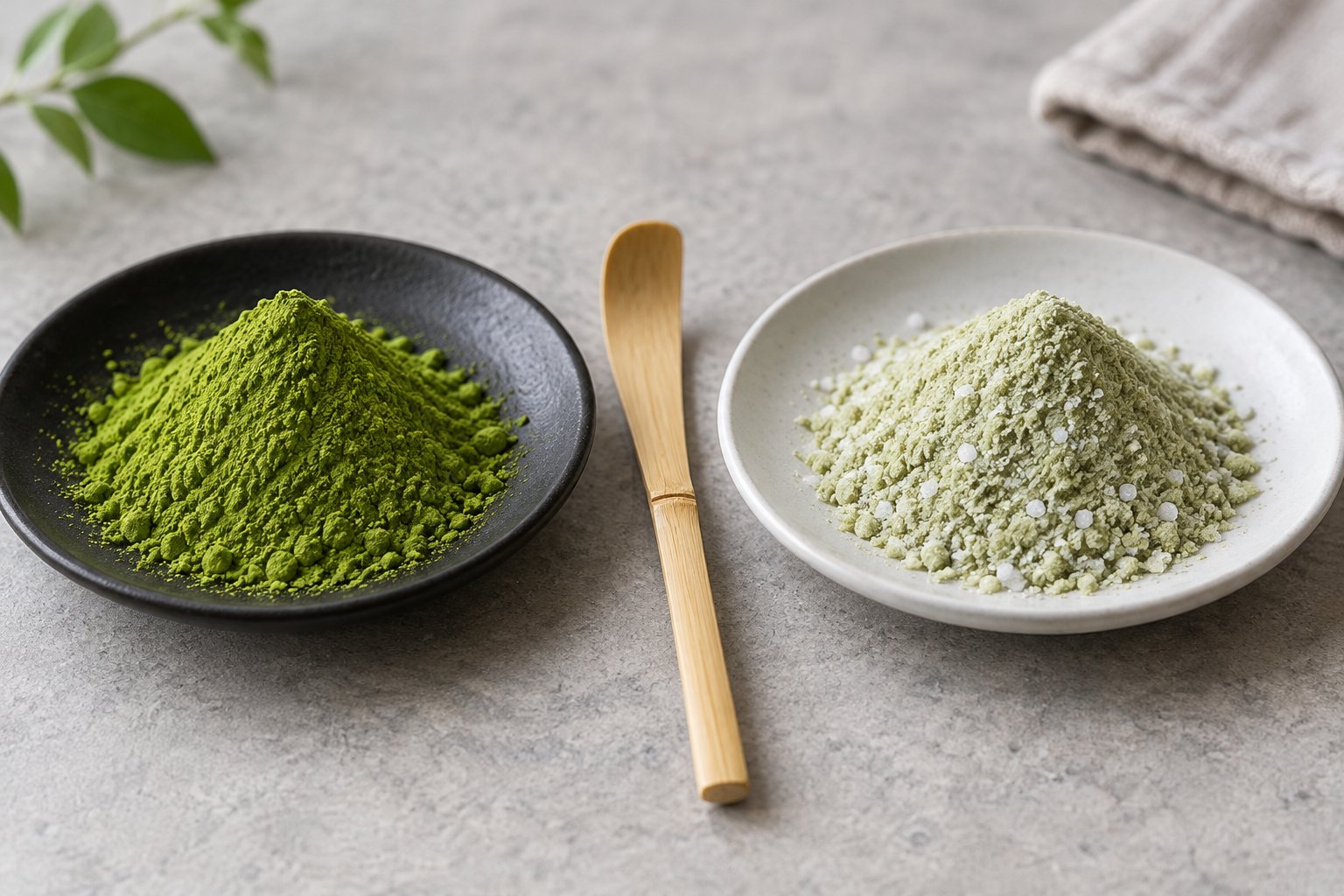
Some drinks sold as green tea lattes do not use matcha at all. They use powdered green tea made by grinding sencha or other teas with a machine, or green tea extract, so the color and aroma differ from matcha. If your menu says “matcha,” check that the ingredient really is matcha.

Matcha vs. green tea powder

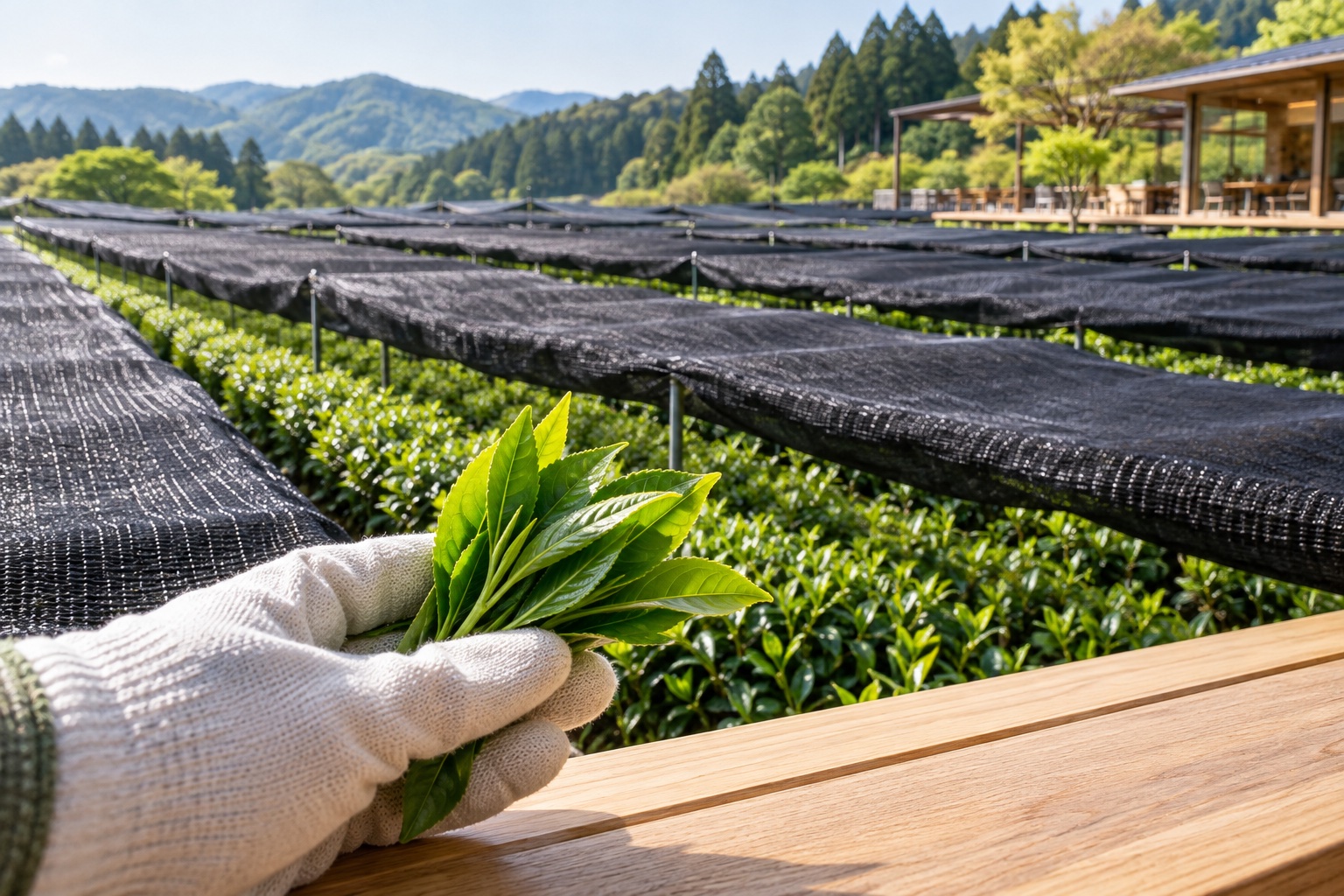
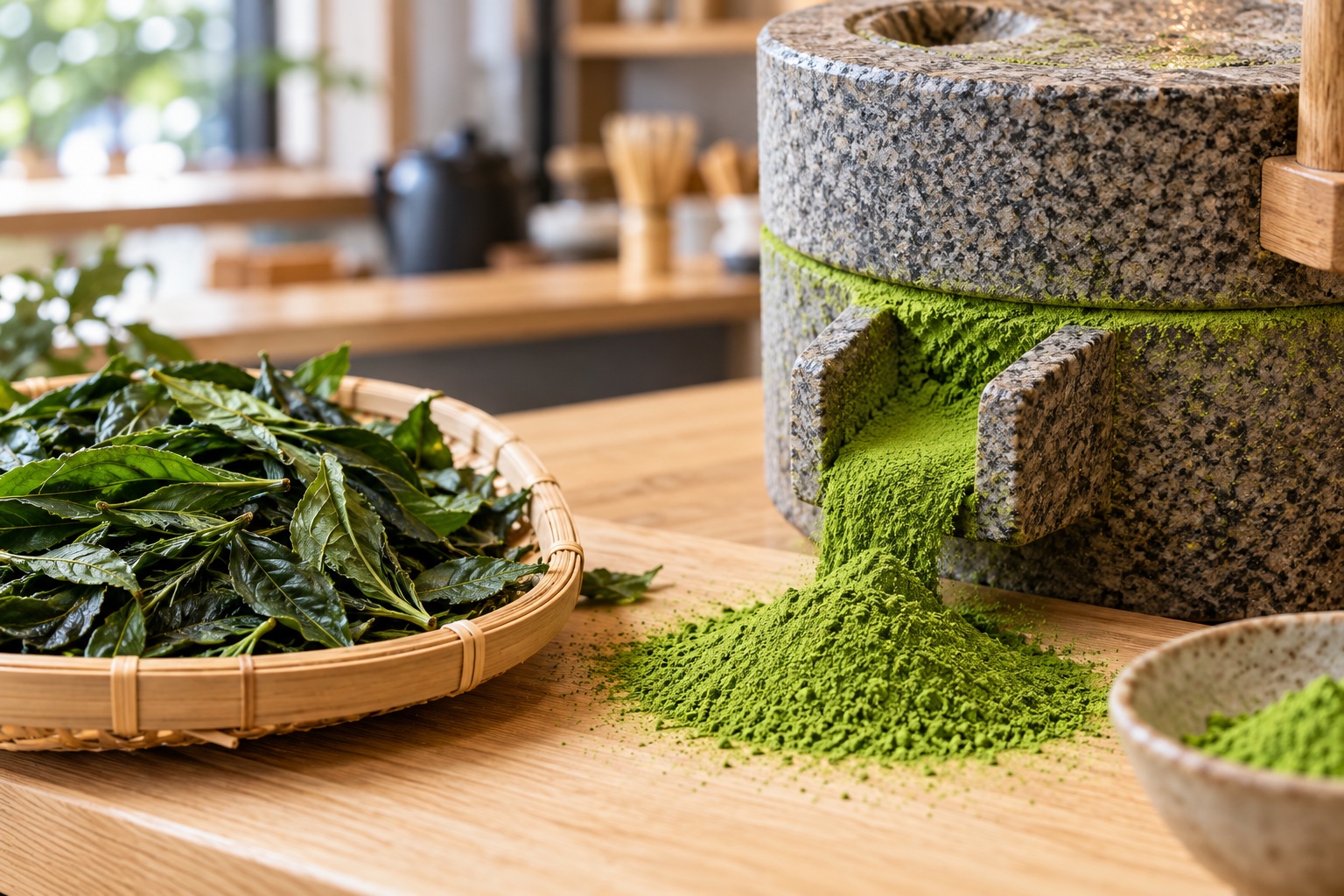
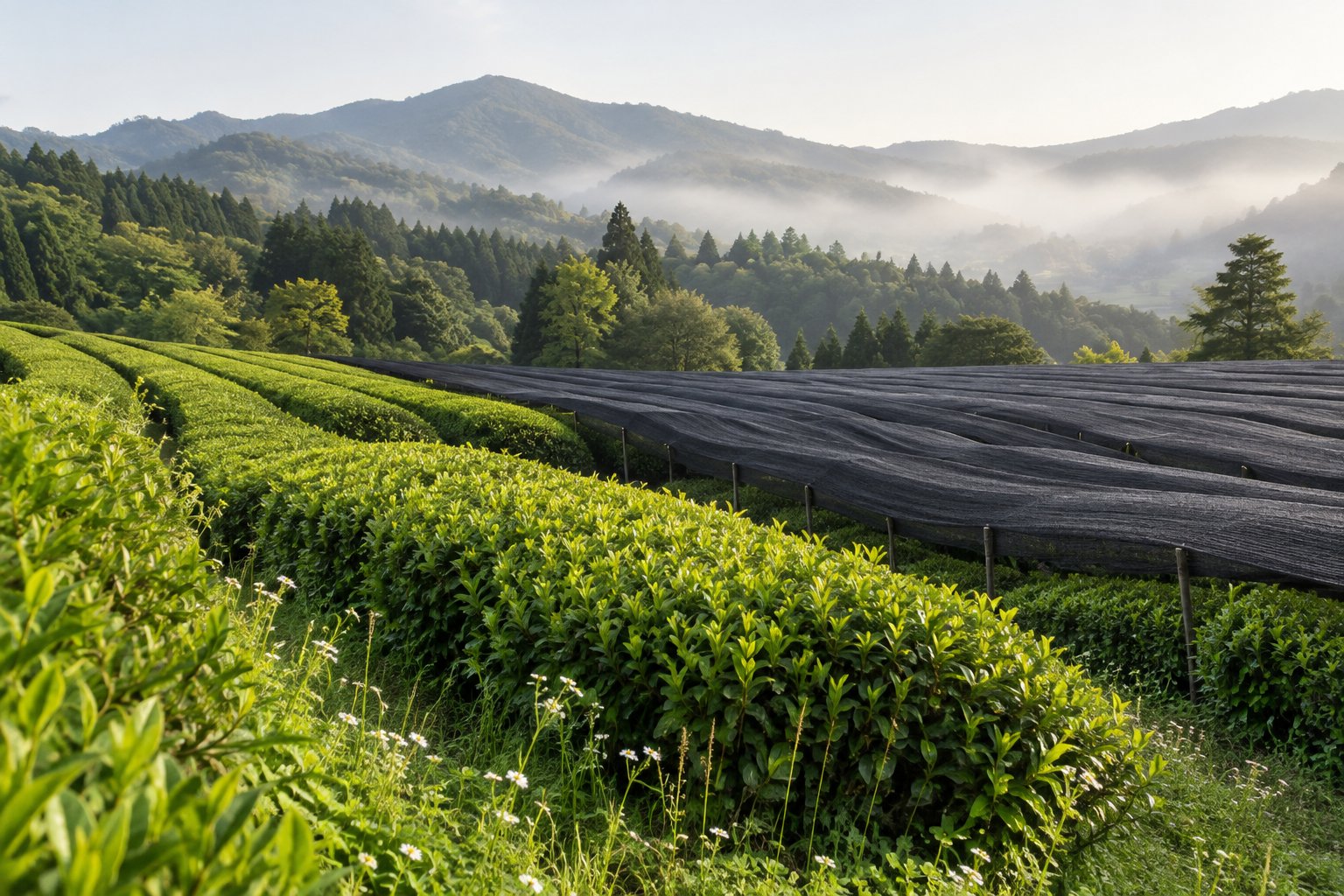
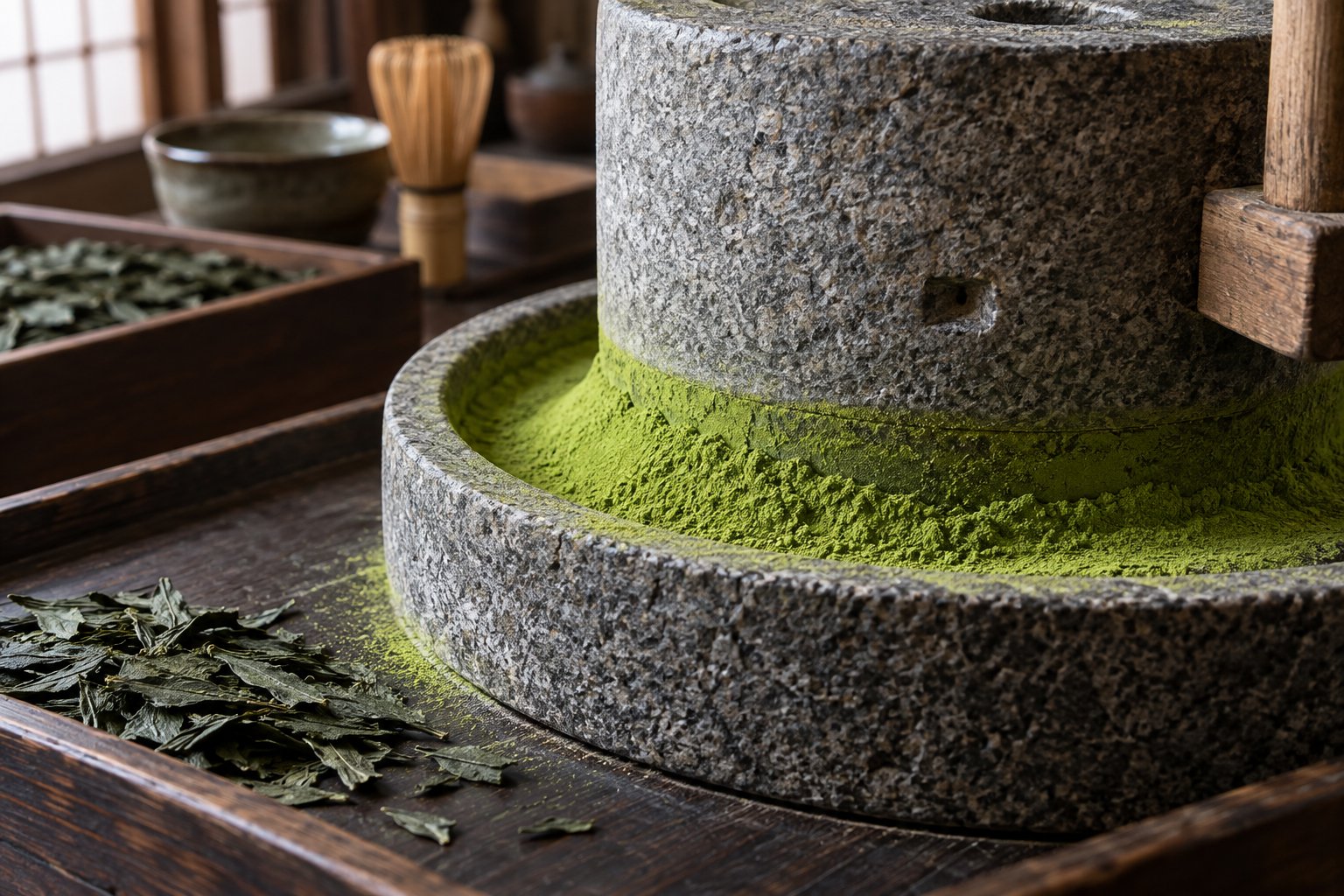
Under the Japanese tea industry’s labelling standard, matcha is “tencha ground into a fine powder with a stone mill or similar.” Tencha is tea grown under shade for about 2–3 weeks before picking, then steamed and dried without rolling. Growing the tea under shade increases its chlorophyll, which gives the deep green color.

The definition in the labelling standard

The Green Tea Labelling Standard of the Japan Tea Central Public Interest Incorporated Association (last revised 10 July 2026) defines matcha and powdered tea as different teas.

No. Name Definition
8 Matcha Tencha (tea leaves grown under shade and dried in a tencha furnace or similar without rolling) ground into a fine powder with a stone mill or similar
12 Powdered tea Tea ground into powder with a grinder or similar

Source: Japan Tea Central Public Interest Incorporated Association, “緑茶の表示基準” (Green Tea Labelling Standard) https://www.nihon-cha.or.jp/pdf/hyoujikijyun.pdf

What is happening in the Thai market

In an interview for a JETRO report, the head of a Japanese tea importer in Thailand said that in Thailand there are inconsistent labels and tea mixed with tea from other countries, as well as products whose prices are far out of line with their quality. Even if the pack says “matcha” or “made in Japan,” ask your supplier whether they can provide documents proving the origin and ingredients.

Which grade suits lattes

Matcha is sold under grade names such as “ceremonial,” “latte” and “culinary,” but these names are not defined in Japan’s green tea labelling standard either. Choose by what is actually in the tin, not by the name.

Look at harvest, origin and milling, not the grade name

Three things mainly drive the difference between grades.

  • Harvest: first flush (ichibancha), picked first each year, is rich in theanine, the source of umami. Second flush and later harvests contain less theanine and more catechins, the source of astringency.
  • Origin: Uji, Yame, Shizuoka, Kagoshima and Miyazaki — each origin and cultivar gives a different aroma and color.
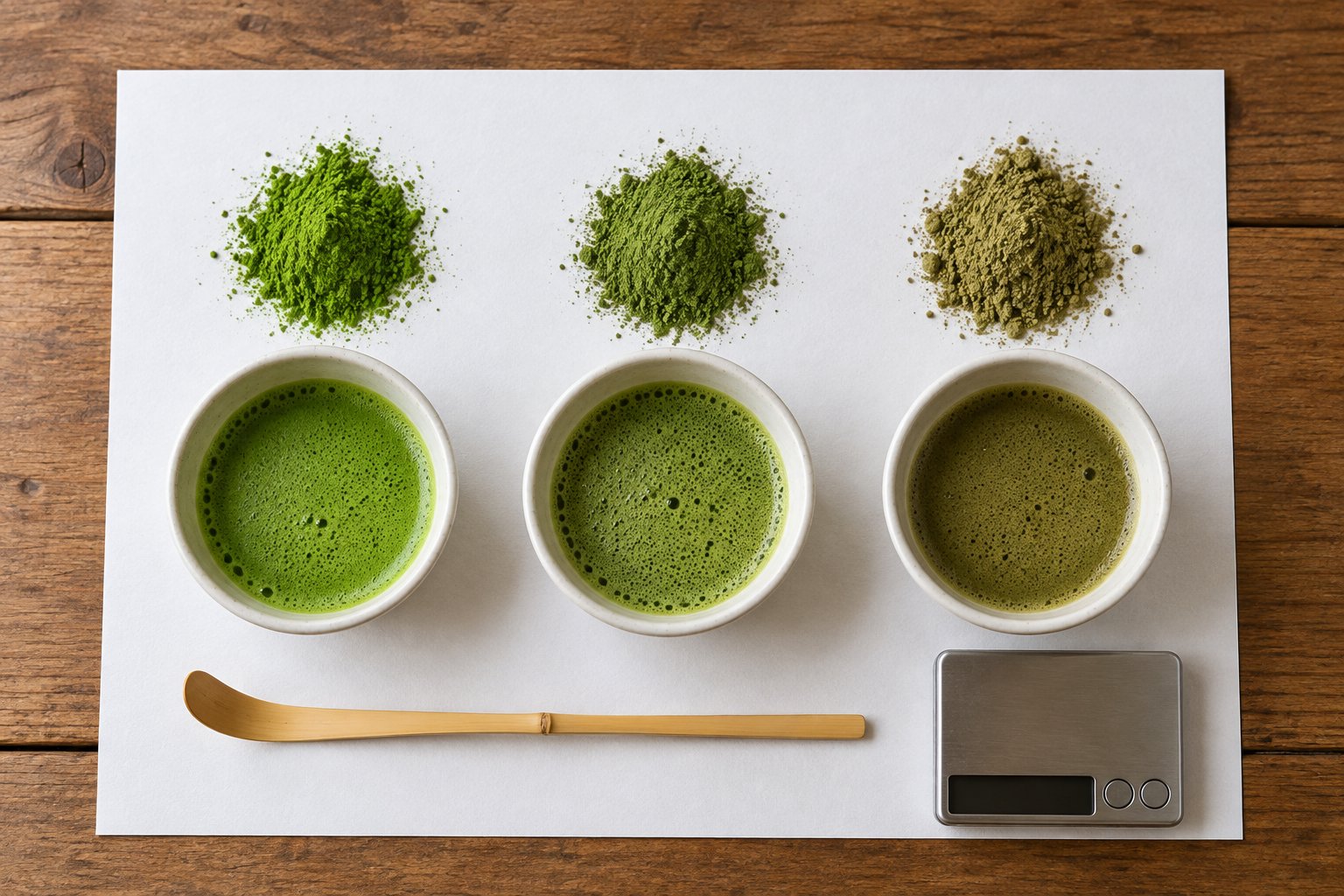
  • Milling: particle size changes the mouthfeel, so check samples mixed with milk.

How to think about a latte grade

In a latte, what matters is that the color and flavor hold up against the milk. High grades made for drinking whisked with water are expensive, and the difference can be hard to notice once mixed with milk. Among latte matcha, choose by the differences in harvest and milling.

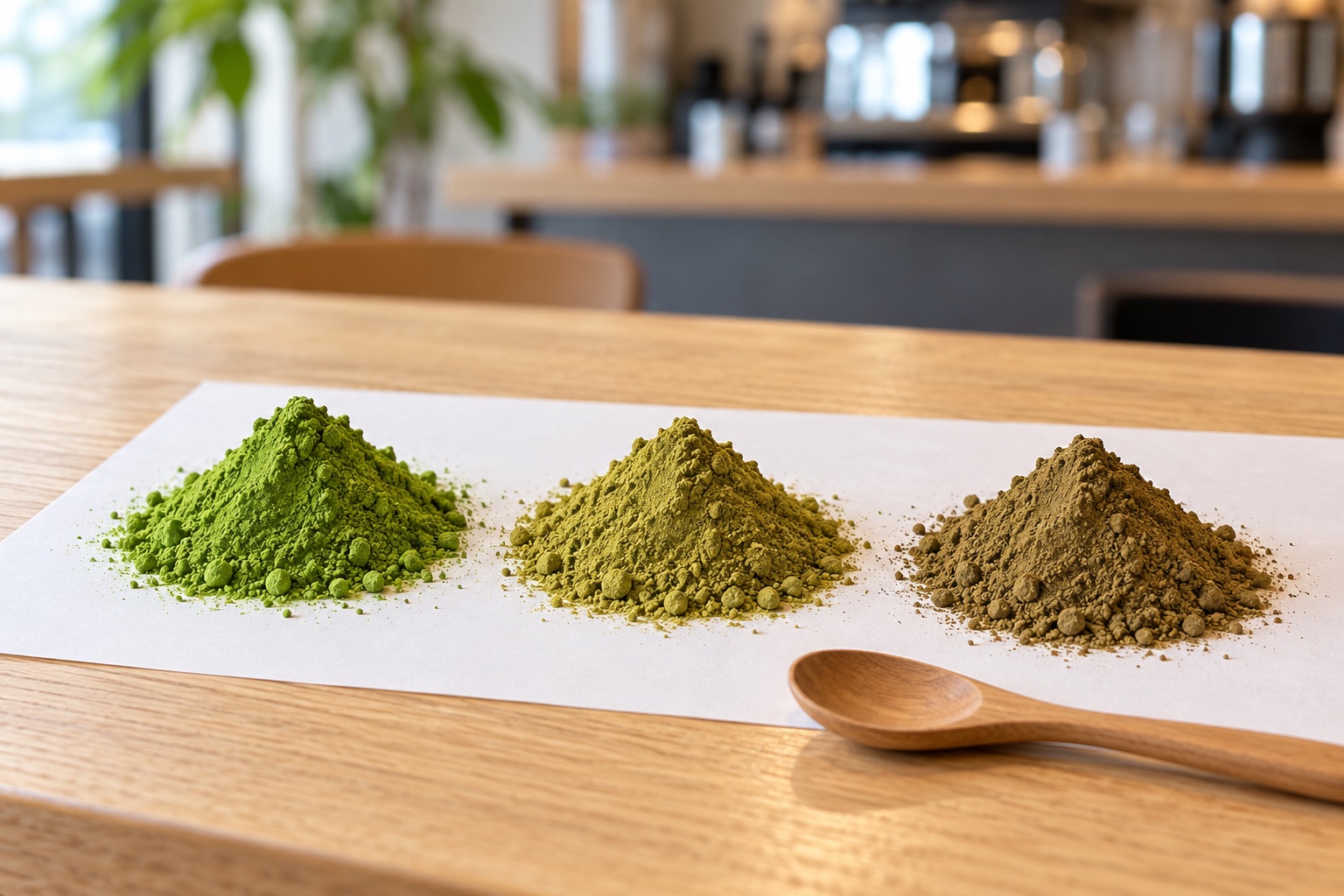
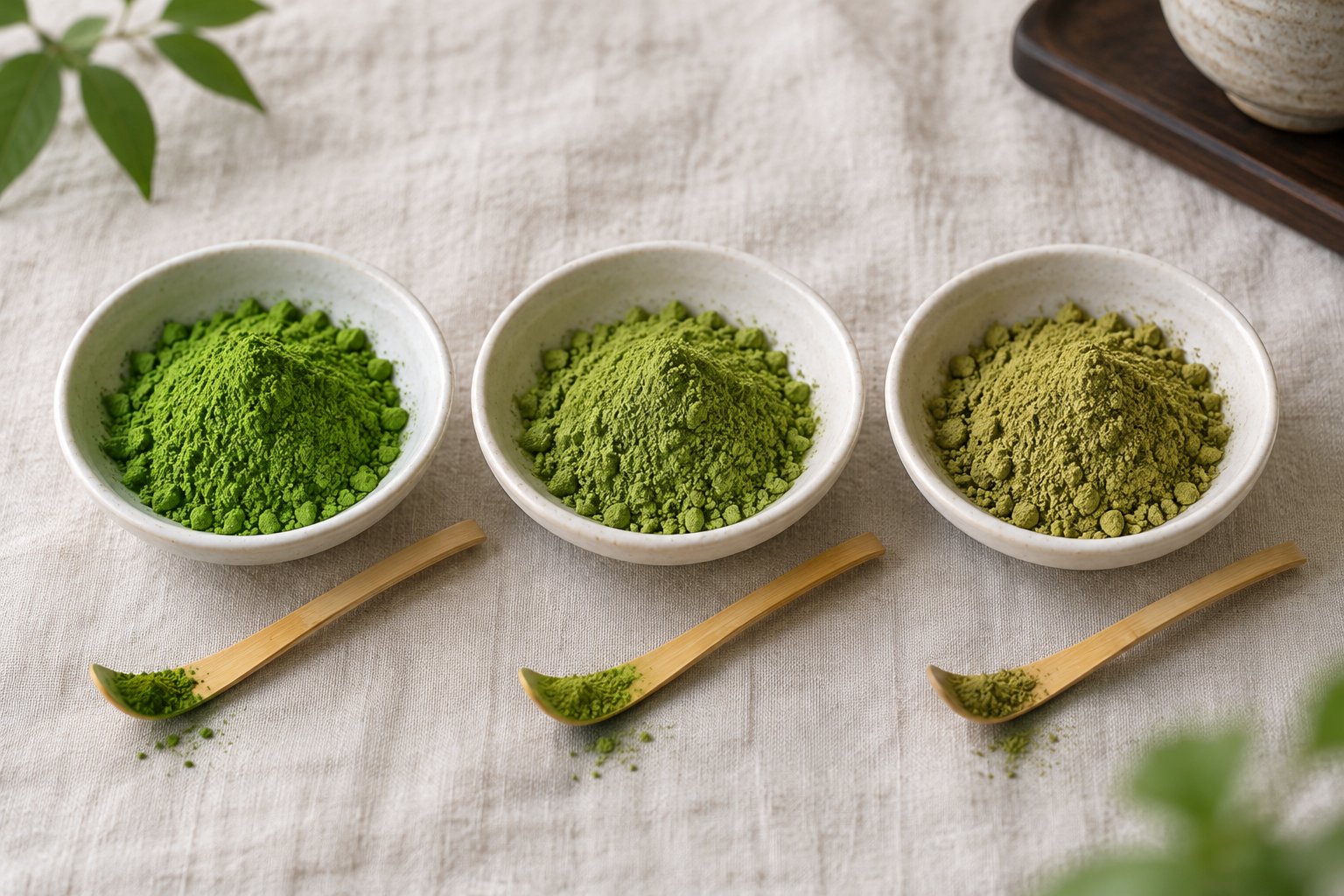
All Omakase Matcha is made for lattes, divided into three grades by harvest and milling.

  • Premium: first flush only, ground with a stone mill
  • Standard: first flush, or a first–second flush blend, ground by machine
  • Basic: tea leaves from the second flush and later

See Matcha grades for the differences.

Basic matcha latte recipes

Start from a specialist tea shop’s recipe, then adjust to your cup size and milk.

Hot

The official recipe from Ippodo, a long-established tea shop in Kyoto:

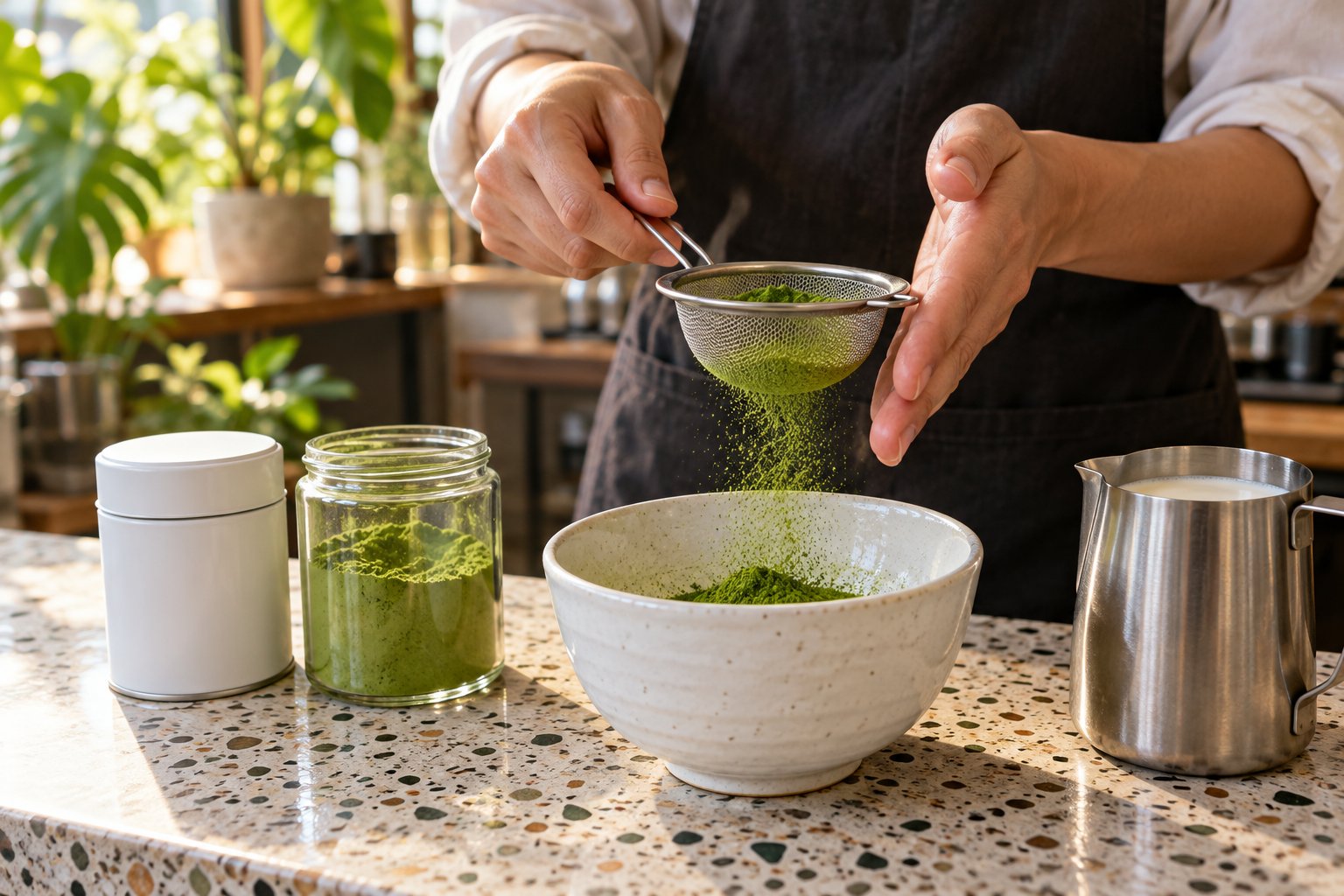
  • Matcha: 3g (sifted)
  • Water: 100ml at 80°C
  • Milk: 100ml (warmed or frothed)

The Kyoto Prefectural Tea Research Institute advises boiling the water, then letting it cool to 70–80°C before whisking matcha. For lattes, dissolve the matcha in water in the same temperature range.

Iced

Ippodo’s official iced matcha latte recipe uses the same 3g of matcha as the hot version.

  • Matcha: 3g
  • Water: 100ml at 80°C
  • Milk: 100ml (cold), with ice

What follows is our own editorial suggestion. If you serve in larger cups such as 16oz, or the latte tastes thin as the ice melts, scale up the matcha and milk to the total volume.

What to check when you change the milk

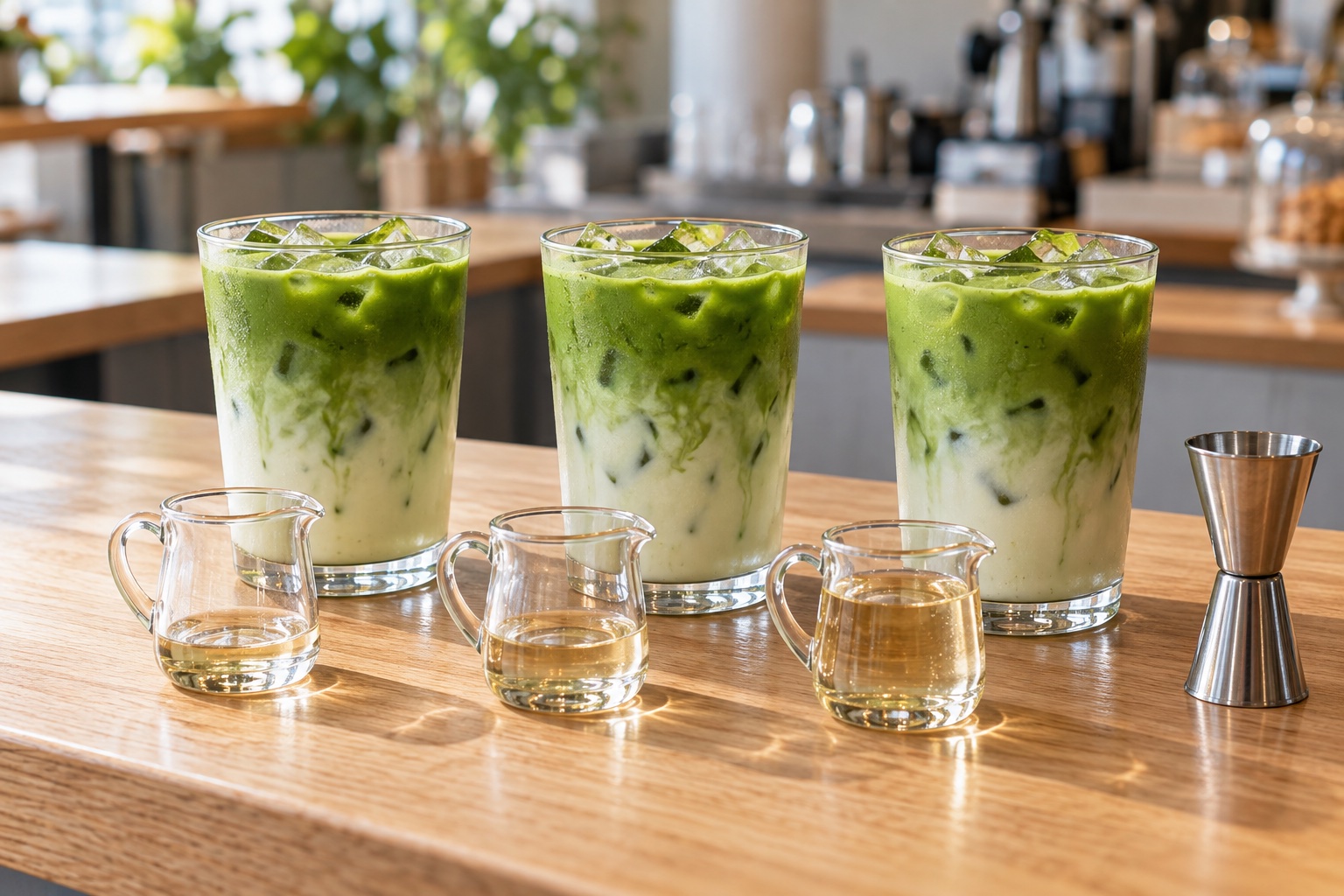
Dairy milk, oat milk, soy milk and coconut milk can differ in sweetness, body and color. The same matcha in the same ratio can taste different, so set the amount of matcha separately for each milk on your menu.

When you compare, check these five points.

  • Color: how much green remains, freshly made and after 10 minutes
  • Aroma: whether you notice the matcha aroma in the first sip
  • Bitterness: whether too much bitterness or astringency lingers at the end
  • Texture: whether it feels powdery or gritty
  • Sweetness: whether the matcha still comes through with the sweetener you use on the menu

Cost per cup and matching it to your price

The margin on a matcha latte depends heavily on how much matcha you use per cup and what you pay for it. Setting the formula first makes it easier to compare grades.

The formula for matcha cost per cup

Matcha cost per cup = price per kg ÷ 1,000 × grams used per cup

At 3g per cup, 1kg of matcha makes about 330 cups. At 4g it makes 250 cups. Add milk, sweetener, the cup and the straw to the matcha cost to get the ingredient cost per cup. How the price per kg is set is covered in what decides the price of matcha.

Choosing to match your menu price

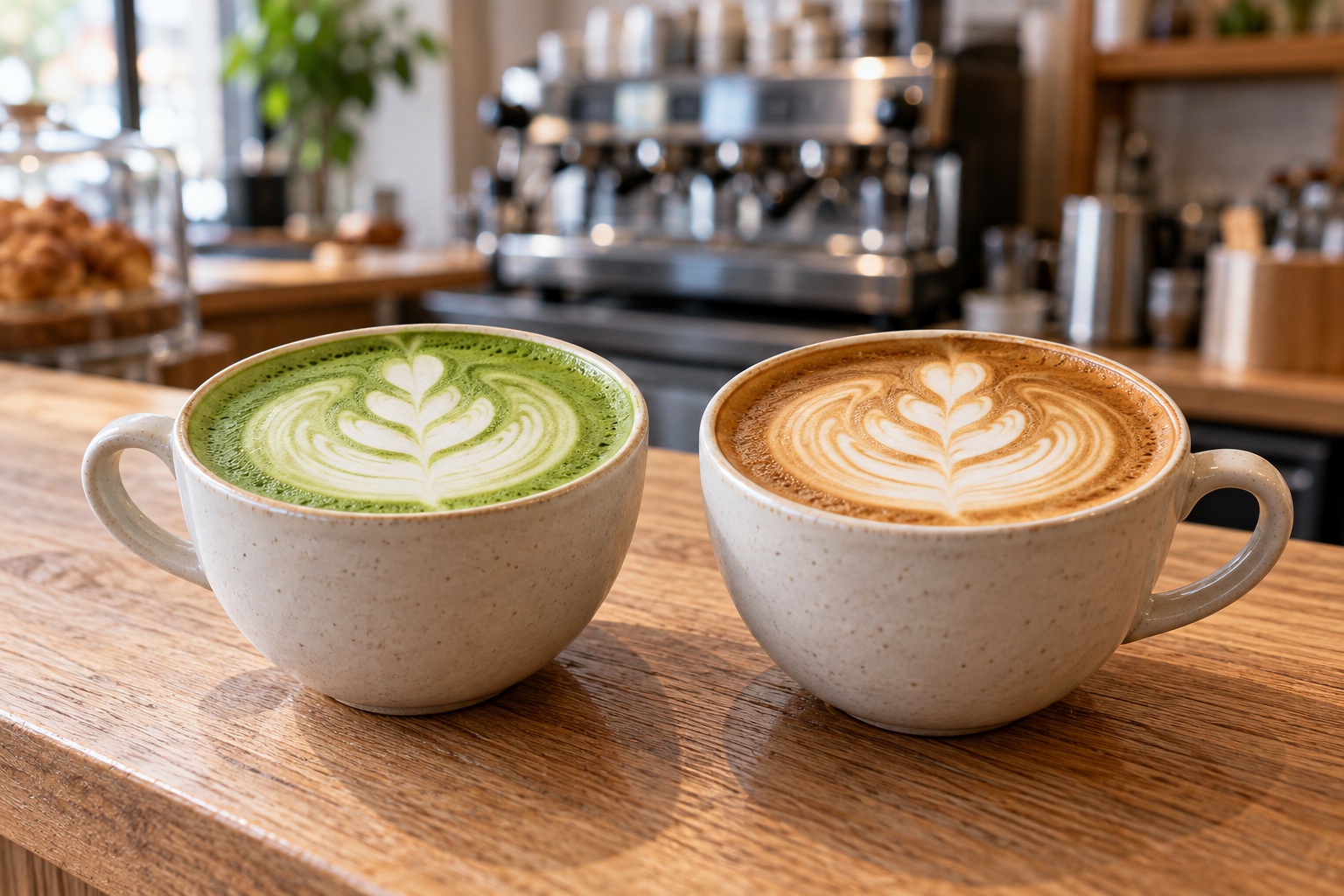
Specialist matcha cafés in Bangkok featured by Time Out Bangkok in March 2025 sold matcha lattes at 120–185 baht a cup.
Here is how we, the editors, think about matching the grade to your price. One option for cafés with higher prices is to use a grade with more first flush and more matcha per cup to make the taste stand out. One option for cafés keeping prices down is to use a first–second flush blend or a grade from the second flush and later, and fix the amount per cup to keep costs steady.
Decide in this order:

  1. Set the menu price and the ceiling for ingredient cost
  2. Subtract milk, sweetener and the cup to see what is left for matcha
  3. Work out how many grams of each grade that budget allows per cup
  4. Make lattes at that amount with your café’s milk and taste them side by side

What to check when you buy

When you import Japanese matcha into Thailand, check both the quality documents and the import procedures.

Quality documents

Ask your supplier for:

  • Origin, harvest and cultivar (for blends, the breakdown)
  • Lot number (showing when it was produced)
  • Pesticide residue test results and a certificate of analysis (COA)
  • Best-before date and storage instructions

Importing into Thailand

According to JETRO (survey as of October 2024), importing tea into Thailand requires the following.

Item Details
Phytosanitary certificate Tea is a restricted plant for import, so a certificate from the exporting country is required (not for products processed beyond a certain level)
GMP certificate Proof that the factory meets manufacturing standards, shown by ISO 22000, FSSC 22000 or similar
Import license and food registration The importer obtains a food import license (Or.7) from the Thai FDA and a food registration number for each product
Thai-language label Food name, registration number, net quantity, importer and country of manufacture in Thai
Import duty 30% within the quota, 90% outside it. Within the quota, duty is waived under the Japan–Thailand Economic Partnership Agreement (JTEPA)

Thailand’s tea standard (Ministry of Public Health Notification No. 196) sets the moisture of tea leaves at 8% or less. Before you order, decide who will handle the import — your café or an import agent.

Japanese exports to Thailand, and origins

Green tea exports from Japan to Thailand grew sharply in 2025; in 2026, volumes are falling while prices rise.

Green tea exports to Thailand

According to the Japan Tea Export Promotion Council, Japan exported 907 tonnes of green tea worth ¥2.95 billion to Thailand in 2025, the 4th-largest market. From January to August 2026, volume was 358.7 tonnes, down 40.7% on the same period a year earlier, while value rose 6.8% to ¥1.83 billion. The price per kg was roughly 1.8 times higher.

Green tea exports from Japan by destination, January–August 2026 (top 8):

Rank Destination Volume Value
1 United States 3,011t ¥28.17 billion
2 Germany 827t ¥6.94 billion
3 United Kingdom 343t ¥4.40 billion
4 Malaysia 338t ¥2.44 billion
5 Taiwan 818t ¥2.36 billion
6 Australia 222t ¥2.09 billion
7 Canada 229t ¥1.86 billion
8 Thailand 359t ¥1.83 billion

Source: Japan Tea Export Promotion Council, “緑茶の国別・形状別輸出実績 2026年1〜8月” https://nihon-cha.or.jp/export/wordpress/wp-content/uploads/2026-08_cha_export.pdf

As Japanese matcha prices rise, talk with your supplier about whether you can keep buying the same grade and how much the price could change.

Differences between origins

Omakase Matcha supplies matcha from Uji, Yame, Shizuoka, Kagoshima and Miyazaki. See Origins for what sets each apart. Some latte matcha is blended from several tenchas, so use the origin to narrow down candidates, then make the final call by tasting with your café’s milk.

Sources

FAQ

QWhat is the difference between a matcha latte and a green tea latte?

AA matcha latte is made by dissolving matcha — tencha leaves ground into a fine powder with a stone mill or similar — in hot water and adding milk. Some green tea lattes use powdered green tea made by grinding sencha or other teas with a machine, or green tea extract. Under the Japanese tea industry’s labelling standard, matcha and powdered tea are defined as different teas.

QWhich grade of matcha should I use for lattes?

AStart with a latte grade, which keeps its color and flavor when mixed with milk. Grade names such as “ceremonial” are not defined in Japan’s green tea labelling standard either, so check the harvest (first flush, or second flush and later), the origin and the milling, then compare the samples in the milk your café actually uses.

QHow many grams of matcha go into one latte?

AThe official recipe from Ippodo, a long-established tea shop in Kyoto, uses 3g of matcha whisked in 100ml of water at 80°C, then 100ml of milk. Ippodo’s iced matcha latte recipe uses the same 3g of matcha, whisked in 100ml of water at 80°C and poured over ice and 100ml of cold milk. Adding a little more matcha for larger cups, or when the latte tastes thin, is our own editorial suggestion.

QHow do I calculate the matcha cost of one latte?

AMatcha cost per cup = price per kg ÷ 1,000 × grams used per cup. Add milk, sweetener and the cup, then check the total against your menu price.

QWhat should I check when importing Japanese matcha into Thailand?

AAccording to JETRO, importing tea into Thailand requires a phytosanitary certificate, a GMP certificate for the factory, a food import license held by the importer, a food registration number for each product, and a Thai-language label. Also ask your supplier for the origin, the lot and the test results.

Reviewed by

Takahiro Sugiyama

CEO, meguri Inc.

Born in Gifu, Japan. Founded meguri Inc. in 2026. Visits tea fields and factories in Uji, Yame, Shizuoka, Kagoshima and Miyazaki, and cafés in Singapore and Bangkok, to source matcha and work with shops overseas.

View profile →

Products

Matcha mentioned in this article

KM-038Uji Matcha Powder 1kg for Lattes – Latte Grade, Halal

US$175 / kg

Blend
Single origin (Uji)
Cultivar
Okumidori, Saemidori, Yabukita
Harvest
First + second flush
Milling
Machine-milled
KM-011Yame & Kagoshima Matcha Powder 1kg for Lattes – Latte Grade

US$165 / kg

Blend
Multi-origin blend (Yame & Kagoshima)
Cultivar
Yabukita
Harvest
First 80% + second 20%
KM-014Culinary Grade Matcha Powder 1kg – Shizuoka & Kagoshima, Halal

US$130 / kg

Blend
Multi-origin blend (Shizuoka & Kagoshima)
Harvest
Third flush & later
Milling
Machine-milled

Check with samples whether it suits your latte

Tell us about your menu and the milk you use, and we’ll send up to 3 matcha samples.

Related articles

記事の写真 matcha-color
Matcha Color: What Good Matcha Green Looks Like, Why It Turns Yellow or Brown, and How to Measure and Compare It
記事の写真 matcha-cream-sauce
Matcha Cream and Matcha Sauce for Cafés: Matcha Ratios in Official Recipes, Avoiding Lumps and Splitting, Prep and Storage
記事の写真 matcha-crepe
Matcha Crepes and Matcha Crepe Cake for Cafés: Matcha in Official Recipes, Resting the Batter, Layers and Storage
記事の写真 matcha-donuts
Matcha Donuts for Cafés: Matcha Amounts in Official Recipes, Frying Temperature and Colour, Glaze and Shelf Life
記事の写真 matcha-jelly
Matcha Jelly for Cafés: Drink Cubes and Cup Jellies, Gelatin vs Kanten vs Agā vs Kudzu, and Matcha Amounts in Official Recipes
記事の写真 matcha-muffins-scones
Matcha Muffins and Scones for Cafés: Matcha Amounts in Official Recipes, Oven Temperatures for Green, Freezing Dough and Shelf Life
記事の写真 matcha-set
Matcha Set Guide: What Each Tool Does (Bowl, Whisk, Scoop, Whisk Holder, Sifter), Home vs Café Counter, How Many to Buy and How to Clean Them
記事の写真 matcha-wagashi
Matcha Dorayaki, Matcha Castella and Matcha Yokan for Cafés: Matcha in Official Recipes, Browning, Resting and Shelf Life
記事の写真 thai-tea-matcha
Thai Tea Matcha for Cafés: How to Layer It, Pouring Order, Condensed Milk and Thai Tea Colouring Labels
記事の写真 brown-sugar-matcha-latte
Brown Sugar Matcha Latte for Cafés: Kokuto vs Brown Sugar, Official Recipes Compared, Kuromitsu Syrup and Labeling
記事の写真 coconut-matcha-latte
Cloud Matcha and Coconut Matcha Latte for Cafés: 8 Official Recipes Compared, Fat Content, Why It Separates, and Labeling
記事の写真 dessert-matcha-latte
Banana Pudding Matcha, Pistachio and White Chocolate Matcha Lattes for Cafés: 9 Official Recipes Compared, Sweetness and Allergens
記事の写真 flavored-matcha-latte
Vanilla Matcha Latte, Lavender and Honey Matcha Lattes for Cafés: 8 Official Recipes Compared, Syrups and Infused Milk, and Honey Labelling
記事の写真 gyomuyo-matcha
Bulk Matcha for Cafés and Bakeries: Pure Matcha vs Matcha Latte Powder, Latte vs Baking Use, and Storing a 1kg Bag
記事の写真 hojicha-drinks
Hojicha Drinks for Cafés: Coconut, Cream Top, Frappe, Brown Sugar and Espresso Recipes, Labeling and Cost
記事の写真 iced-clear-matcha
Clear Matcha (Iced Matcha with Water, No Milk) for Cafés: 7 Recipes Compared, Cold Whisk vs Hot Water, Fixes and Cost per Drink
記事の写真 matcha-benefits
Matcha Health Benefits: What Research and Official Bodies Say, and What Cafés Can Write on the Menu (Singapore, Thailand, Indonesia, Japan)
記事の写真 matcha-brownies
Matcha Brownies for Cafés: Matcha Amounts in Official Recipes, Baking to Keep the Green, Cutting and Storage in Hot Climates
記事の写真 matcha-cake
Matcha Cake for Cafés: How Much Matcha in Roll, Chiffon and Shortcake, and How to Stop Cracking, Weeping and Fading
記事の写真 matcha-drink-names
Matcha Drink Names in English, Thai and Indonesian: Pure, Cloud, Dirty and Other Names That Mean Different Things at Different Cafés
記事の写真 matcha-drink-sweetness
Sugar Levels for Matcha Drinks: Setting 0, 25, 50 and 100% in Grams, and the Sugar Rules in Thailand, Singapore and Indonesia
記事の写真 matcha-einspanner
Matcha Einspanner: Whipped Cream, Sea Salt Cream and Cheese Foam Ratios, Layering and Holding Times for Cafés
記事の写真 matcha-export-pesticide-limits
Matcha Pesticide Residue Limits (MRLs) for Export: How the EU, US, Taiwan, Singapore, Thailand and Indonesia Differ From Japan
記事の写真 matcha-float
Matcha Float and Matcha Milkshake for Cafés: Official Recipes Compared, Why the Ice Cream Sinks, Melts or Foams Over, and Cost per Drink
記事の写真 matcha-kakigori
Matcha Kakigori and Uji Kintoki for Cafés: Matcha per Serving in Official Recipes, Syrup Strength, Shaving the Ice and Cost
記事の写真 matcha-latte-calories
Matcha Latte Calories: How to Calculate Them from Matcha, Milk and Sugar, and the Menu Labelling Rules in Singapore (Nutri-Grade) and the US
記事の写真 matcha-latte-price
Matcha Latte Price: Café Menu Prices in Singapore, Thailand, Indonesia, Japan and the US, and How to Set Yours
記事の写真 matcha-latte-troubleshooting
Why Is My Matcha Bitter? Fixing Bitter, Weak, Clumpy, Separating, Off-Colour and Flat Matcha Lattes (for Cafés)
記事の写真 matcha-orange
Matcha Orange and Yuzu Matcha for Cafés: Thai Chain Menus, Choosing the Juice, Color and Layers, and Cost per Drink
記事の写真 matcha-order-quantity
How Much Matcha per Latte, per Month and per Order: A Café Guide to Matcha Quantities and Reordering
記事の写真 matcha-pancakes
Matcha Pancakes for Cafés: How Much Matcha Official Recipes Use, Baking Without Browning, Soufflé and Prep
記事の写真 matcha-vs-coffee-latte
Matcha vs Coffee Latte for Cafés: Cost per Cup, Prep Time, Equipment, Caffeine and Stock Compared
記事の写真 start-matcha-cafe-indonesia
How to Start a Matcha Cafe or Matcha Stand in Indonesia: OSS Business Number (NIB) and KBLI, Hygiene Permits, Halal Certification and Foreign Investment Rules
記事の写真 what-is-matcha
What Is Matcha Made Of? Tencha Leaves, the Tea Plant, and How Matcha Is Made from Shading to Stone Mill
記事の写真 hojicha-latte
Hojicha Latte Recipe: Powder vs Leaves, Iced Dilution, Prep and Cost per Cup for Cafés
記事の写真 matcha-bread
Matcha Bread and Croissants for Bakeries: Matcha Amounts in Official Recipes, Effect on Rise, Colour and Shelf Life
記事の写真 matcha-chocolate
Matcha Chocolate for Cafés: Matcha Amounts in Official Recipes, Preventing Lumps and Split Ganache, Tempering and Storage in Hot Climates
記事の写真 matcha-cookies
Matcha Cookies for Cafés: Matcha Amounts in Official Recipes, Keeping the Green, Shelf Life and Labels for Packaged Cookies
記事の写真 matcha-mochi
Matcha Mochi for Cafés: Daifuku, Shiratama and Warabi Mochi, Flour Types, Matcha Amounts, Why It Hardens and Serving It Safely
記事の写真 matcha-parfait
Matcha Parfait for Cafés: How to Layer It, Matcha per Glass in Official Recipes, Prep and Cost per Serving
記事の写真 matcha-pudding
Matcha Pudding for Cafés: Gelatin, Agar and Baked Custard, How Much Matcha per Cup, and Shelf Life
記事の写真 thai-green-tea-latte
Thai Green Tea vs Matcha Latte: Ingredients, Colour, Sweetness and Recipes Compared, Plus a Matcha Version for Cafés
記事の写真 halal-matcha
Is Matcha Halal? MUIS, JAKIM and CICOT Rules, Recognised Japanese Certifiers and What Cafés Should Check
記事の写真 indonesia-import
How to Import Matcha into Indonesia: BPOM Distribution Permit, Import Permit, Halal Certification and Duty
記事の写真 matcha-cheesecake
Matcha Cheesecake for Cafés: Baked, Basque and No-Bake Recipes, How Much Matcha, Colour and Shelf Life
記事の写真 matcha-coa
Certificate of Analysis (COA) for Matcha: How to Read Moisture, Microbes, Pesticides and Radioactivity Against Singapore and Thai Standards
記事の写真 matcha-powder-indonesia
Where to Buy Matcha Powder in Indonesia: 3 Ways for Cafés, and How BPOM Numbers, Halal and Tax Differ
記事の写真 matcha-shipping
Shipping from Japan to Singapore, Thailand and Indonesia: How to Ship Matcha by EMS, Air Freight and Sea Freight
記事の写真 matcha-smoothie
Matcha Smoothie Recipe for Cafés: Official Ratios Compared, Fruit Pairings, Protein, Cut Fruit Safety and Sugar Labelling
記事の写真 organic-matcha-buying
Organic Matcha: How to Buy It Wholesale, Read a JAS Organic Certificate, and Label It “Organic” in Singapore, Thailand and Indonesia
記事の写真 start-matcha-cafe
How to Start a Matcha Cafe or Matcha Stand in Singapore and Thailand: Licences, Food Hygiene Courses, Equipment and How Much Matcha to Buy
記事の写真 matcha-cold-foam
Matcha Cold Foam: Official Recipe Ratios, Lump-Free Mixing, Tools and Holding Times for Cafés
記事の写真 matcha-frappe
Matcha Frappe for Cafés: 7 Official Recipes Compared, Ice Ratios, Sugar Labelling and Cost per Cup
記事の写真 matcha-ice-cream
Matcha Ice Cream for Cafés: Matcha Amounts in Official Recipes, Mixing, Soft Serve Machine Cleaning and Cost per Serving
記事の写真 matcha-milk-tea
Matcha Boba and Matcha Milk Tea for Cafés: Official Recipes Compared, Cooking and Holding Tapioca Pearls, Sugar Labelling and Cost per Cup
記事の写真 matcha-quality
How to Tell High Quality Matcha: Color, Aroma, Taste, Fineness and How Cafés Can Compare Samples
記事の写真 matcha-tiramisu
Matcha Tiramisu for Cafés: Matcha Amounts in Official Recipes, Raw Eggs, Shelf Life and Cost per Serving
記事の写真 dirty-matcha
Dirty Matcha (Matcha with Espresso) for Cafés: 8 Official Recipes Compared, How to Layer It, Caffeine and Cost per Cup
記事の写真 matcha-powder-singapore
Where to Buy Matcha Powder in Singapore: 3 Ways for Cafés, and How SFA Rules, GST and Storage Differ
記事の写真 matcha-powder-thailand
Where to Buy Matcha Powder in Thailand: 3 Ways for Cafés, and How Thai FDA Numbers, VAT and Storage Differ
記事の写真 matcha-price
Why Is Matcha So Expensive? Tencha, Stone Milling, Harvest and Japan's Export Prices, Down to the Cost per Cup
記事の写真 private-label-matcha
Private Label Matcha: How It Differs from OEM, the Steps, and What to Decide on Specs, Packaging and Labels
記事の写真 thailand-import
How to Import Matcha into Thailand: Thai FDA Import Licence, Food Registration, Tariff Quota and VAT
記事の写真 genmaicha
What Is Genmaicha? Genmaicha Green Tea, Matcha-Iri Genmaicha, Caffeine vs Matcha and Hojicha, Powder and Lattes for Cafés
記事の写真 hojicha
What Is Hojicha? Hojicha vs Matcha, Caffeine, Hojicha Powder and Hojicha Latte Ratios for Cafés
記事の写真 how-to-make-matcha-latte
How to Make a Matcha Latte (Hot): 7 Official Recipes Compared, Milk Temperature, Latte Art and Cost per Cup
記事の写真 matcha-baking
Matcha for Baking: Official Recipe Ratios Compared, Why the Green Fades, and Cost per Cake for Cafés
記事の写真 matcha-bowl
Matcha Bowl (Chawan) Guide: Shapes, Sizes, Pottery Styles, Bowls with a Spout, Café Care and Lead Limits
記事の写真 matcha-drinks
Matcha Lemonade, Tonic, Soda and Coconut Water: 12 Official Recipes Compared, Why the Color Changes, and Cost per Drink for Cafés
記事の写真 matcha-whisk
Matcha Whisk (Chasen): How to Use and Clean It, Drying and the Whisk Holder, When to Replace It, and Café Use
記事の写真 matcha-caffeine
Does Matcha Have Caffeine? How Much Caffeine Is in Matcha per Cup, Compared With Coffee, Black Tea and Gyokuro
記事の写真 matcha-syrup
Matcha Syrup Recipe for Cafés: 8 Official Recipes Compared, Storage, Amount per Drink and Cost
記事の写真 matcha-vs-green-tea
Matcha vs Green Tea: Is Matcha Green Tea? Sencha Compared by Growing, Processing, Caffeine per Cup and Price
記事の写真 pure-matcha
Pure Matcha: What 100% Pure Matcha Powder Means, How It Differs from Latte Mixes, and How to Check It Is Real
記事の写真 singapore-import
How to Import Matcha into Singapore: SFA Registration, Import Permit, GST and Labelling
記事の写真 buy-matcha-wholesale
Bulk Matcha: How to Buy Matcha Wholesale, Choose a Supplier and Check a Quote
記事の写真 grades
Matcha Grades Explained: Ceremonial vs Latte vs Culinary Grade Matcha, Compared by Harvest, Milling and Price
記事の写真 how-to-make-matcha
How to Make Matcha: Amount, Water Temperature, Whisking, and a Daily Routine for Cafés
記事の写真 iced-matcha-latte
Iced Matcha Latte Recipe: How to Make It Without Lumps, Ratios from Japanese Tea Makers, Layering, and Café Prep
記事の写真 kagoshima-matcha
Kagoshima Matcha: How Kagoshima Became Japan's Top Tencha Producer, Where It Is Grown, Cultivars, Kagoshima vs Uji, and What to Check When Buying
記事の写真 matcha-lead-testing
Matcha Lead: Does Matcha Have Lead? Why It Gets In, Limits by Country, and the Test Documents to Ask For
記事の写真 matcha-shelf-life
Does Matcha Go Bad? Matcha Shelf Life Before and After Opening, and How to Store It in Hot Climates
記事の写真 matcha-shortage
Is There a Matcha Shortage? Why Matcha Prices Keep Rising and What Cafés Can Do
記事の写真 nishio-matcha
Nishio Matcha: What It Is, the Trademark Conditions, How Aichi Compares with Uji and Kagoshima, and What to Check When Buying
記事の写真 shizuoka-matcha
Shizuoka Matcha: Tencha Volume, the Shift from Sencha, Growing Areas, and What to Check When Buying
記事の写真 strawberry-matcha-latte
Strawberry Matcha Latte for Cafés: Strawberry Purée, Layering, Six Brand Recipes Compared and Cost per Cup
記事の写真 uji-matcha
What Is Uji Matcha? Definition, Where It Is Grown, How It Compares, and What to Check When Buying
記事の写真 yame-matcha
Yame Matcha: What It Is, How It Relates to Yame Tea and Yame Gyokuro, Production, Uji Compared, and What to Check When Buying
記事の写真 oat-latte
Oat Milk Matcha Latte: Best Milk for Matcha Latte, Official Recipes Compared and How to Choose Your Matcha
Request samples
WhatsApp