
 Reviewed by: Takahiro Sugiyama (CEO, meguri Inc.)
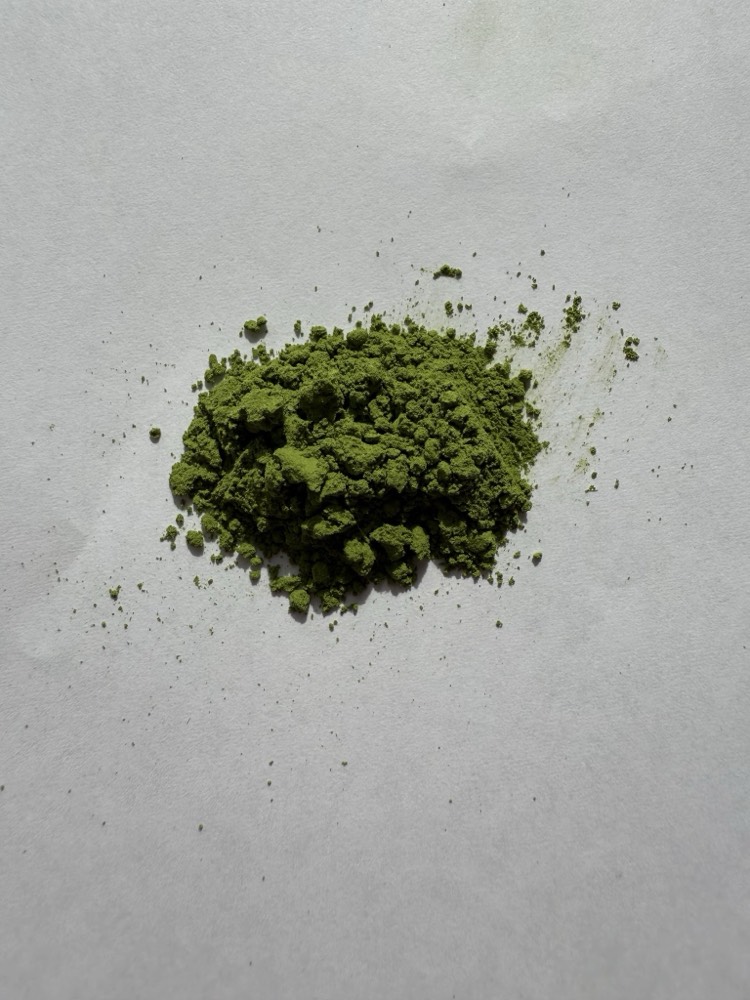
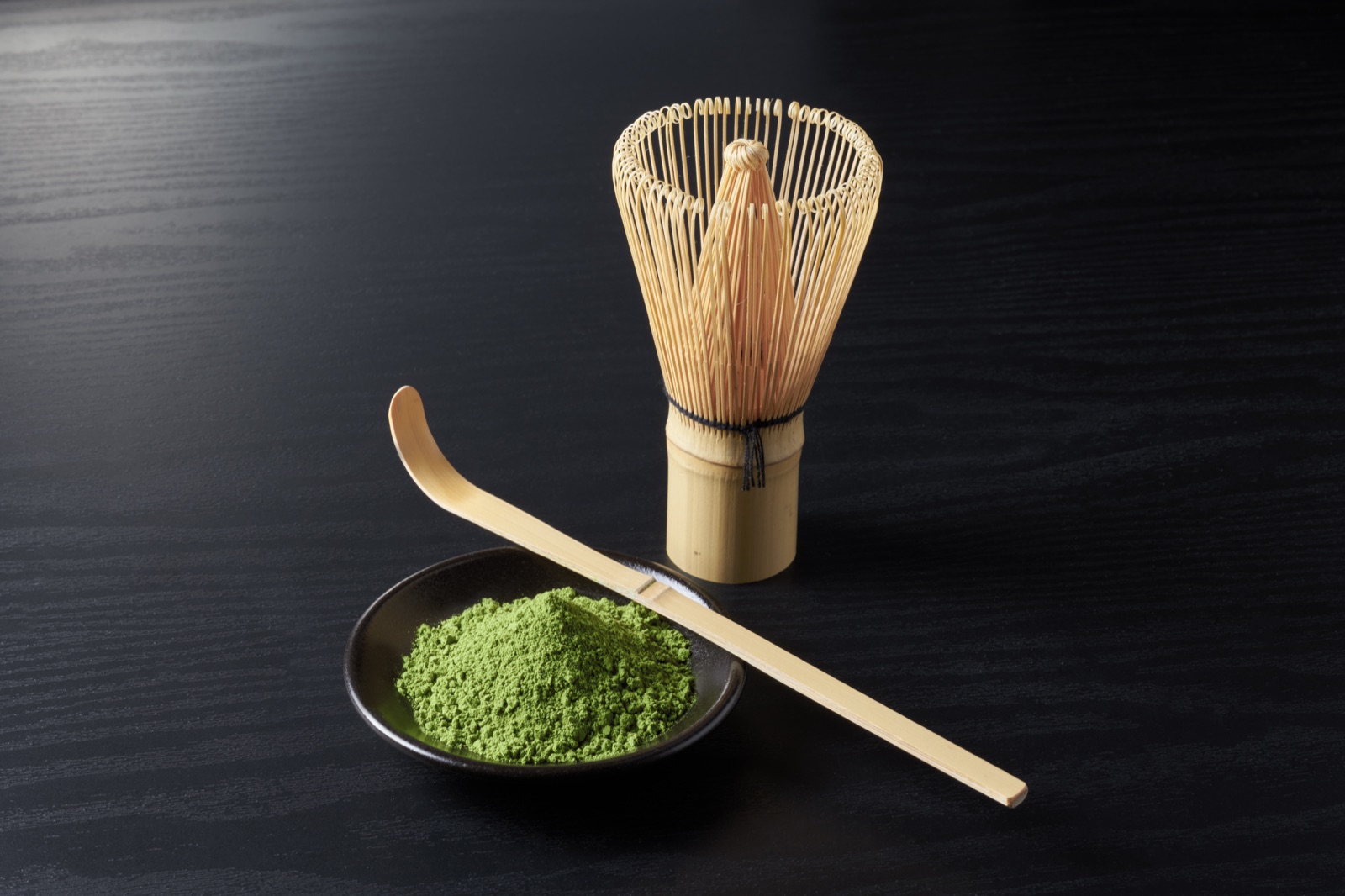
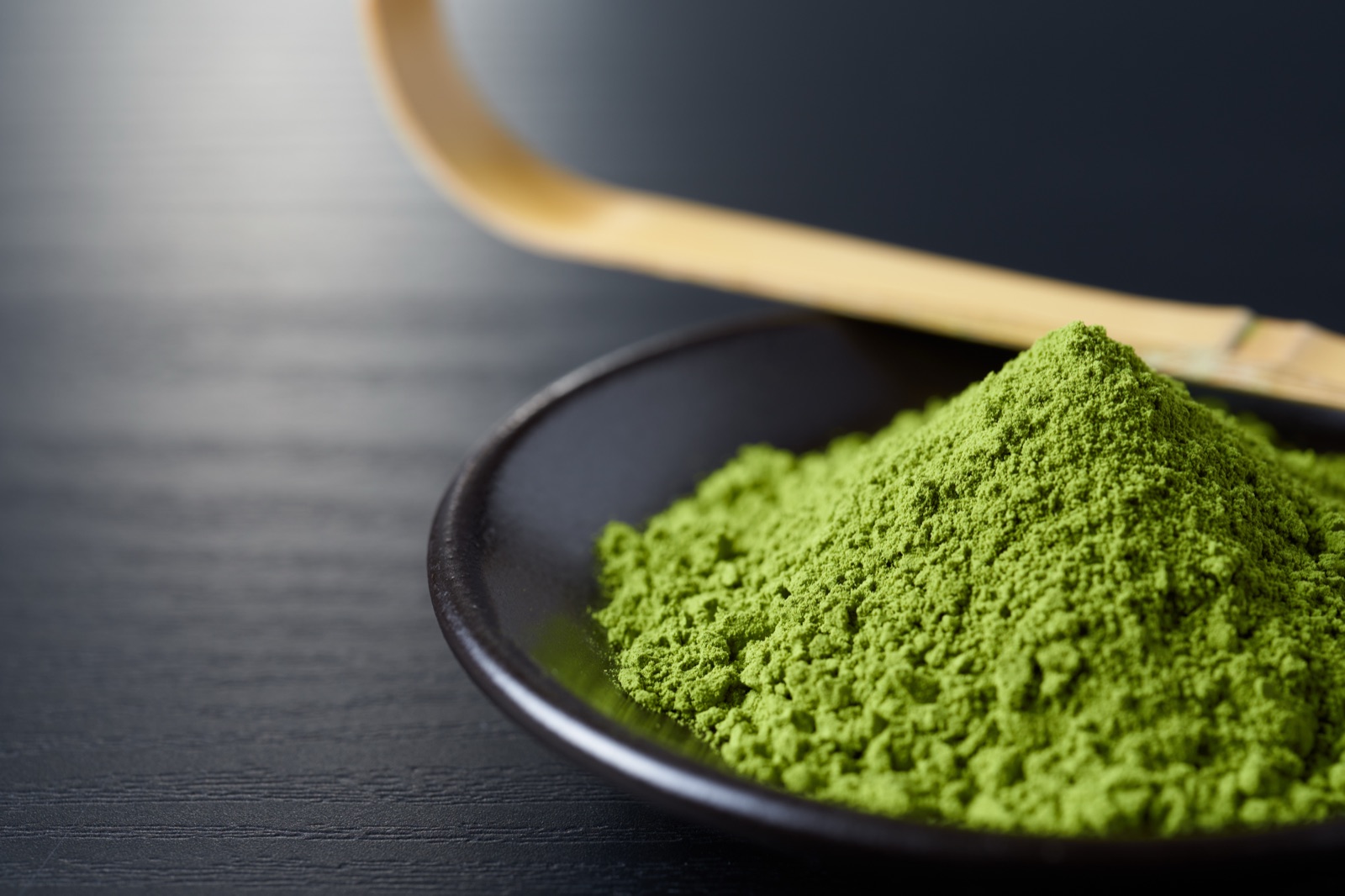
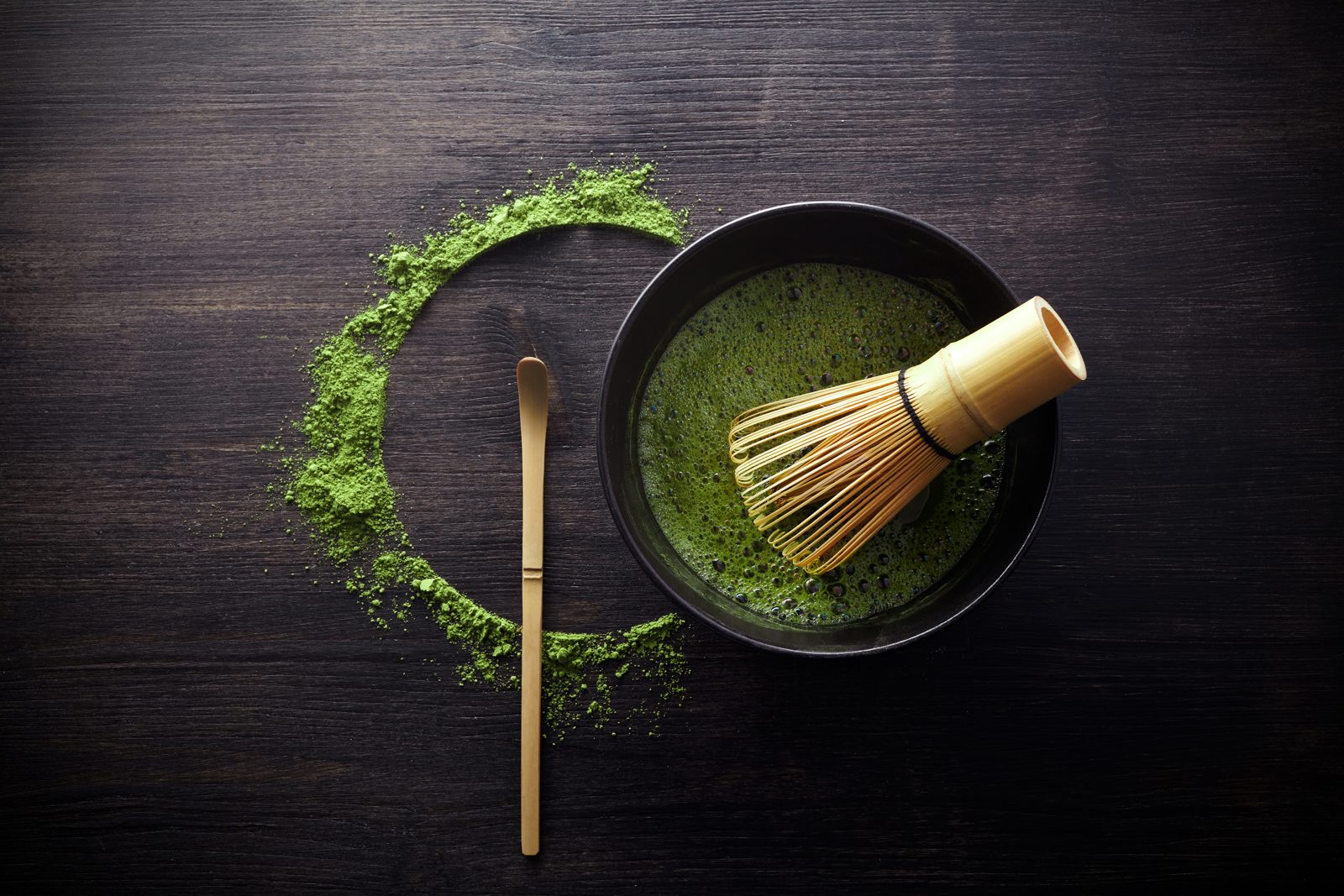
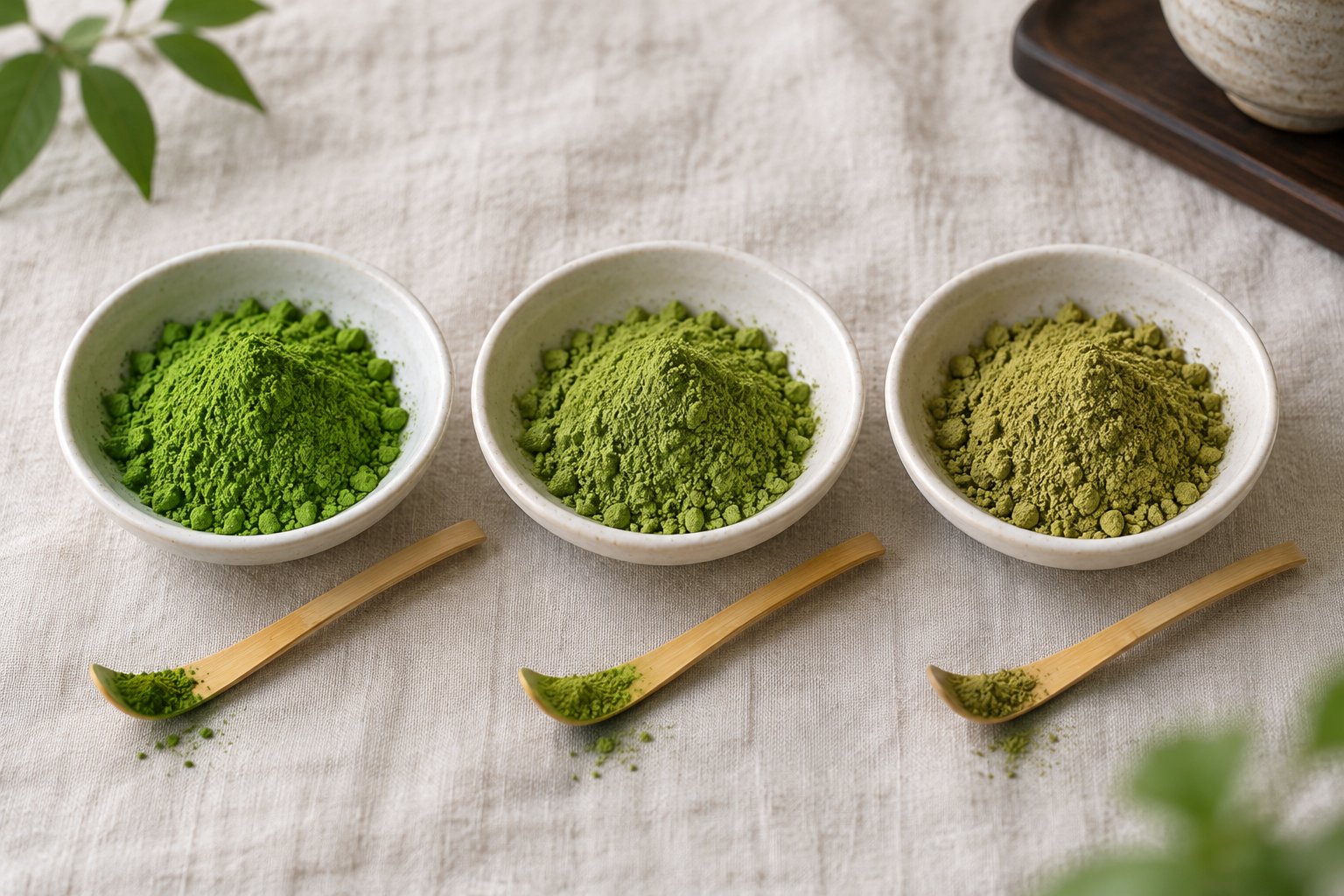
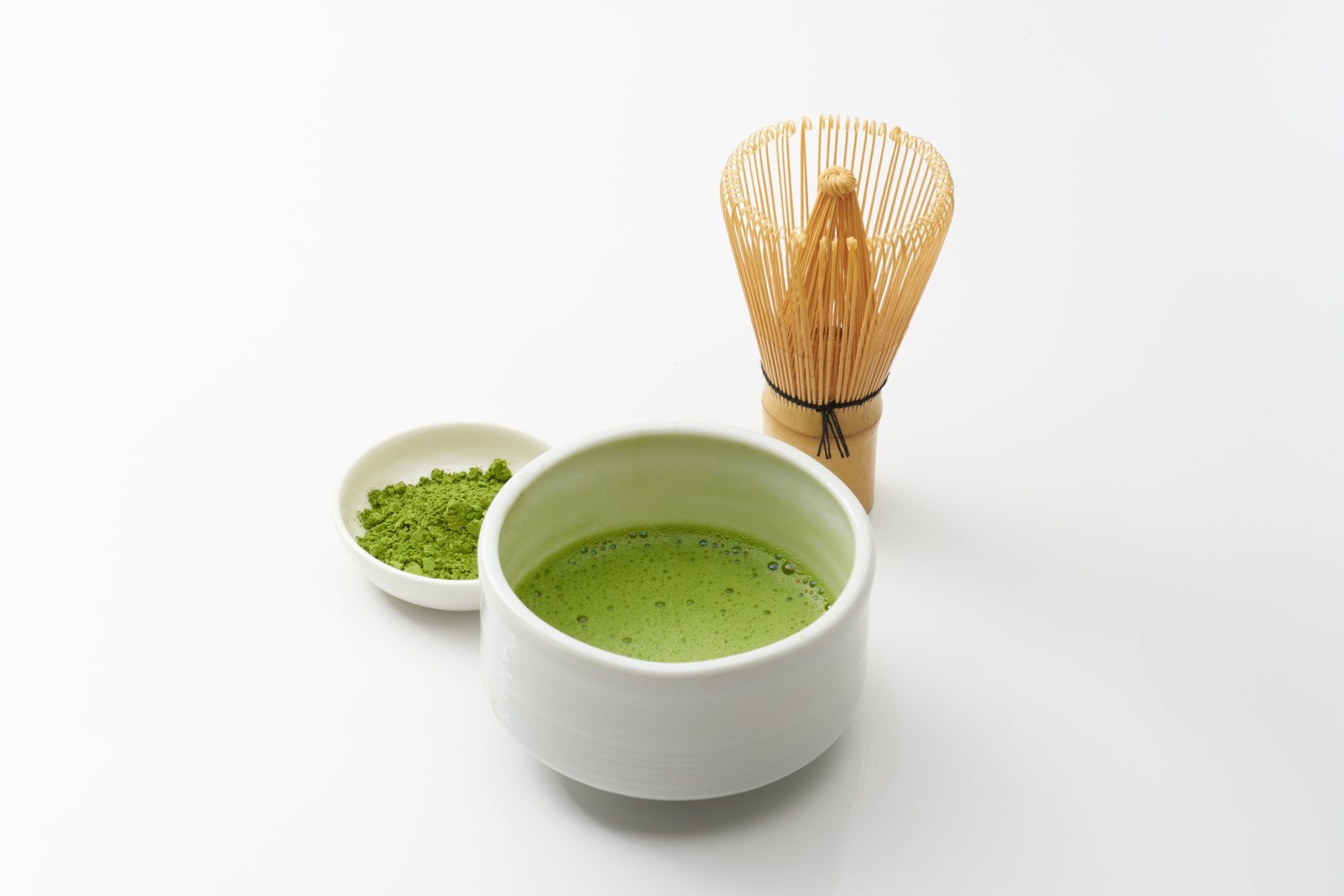
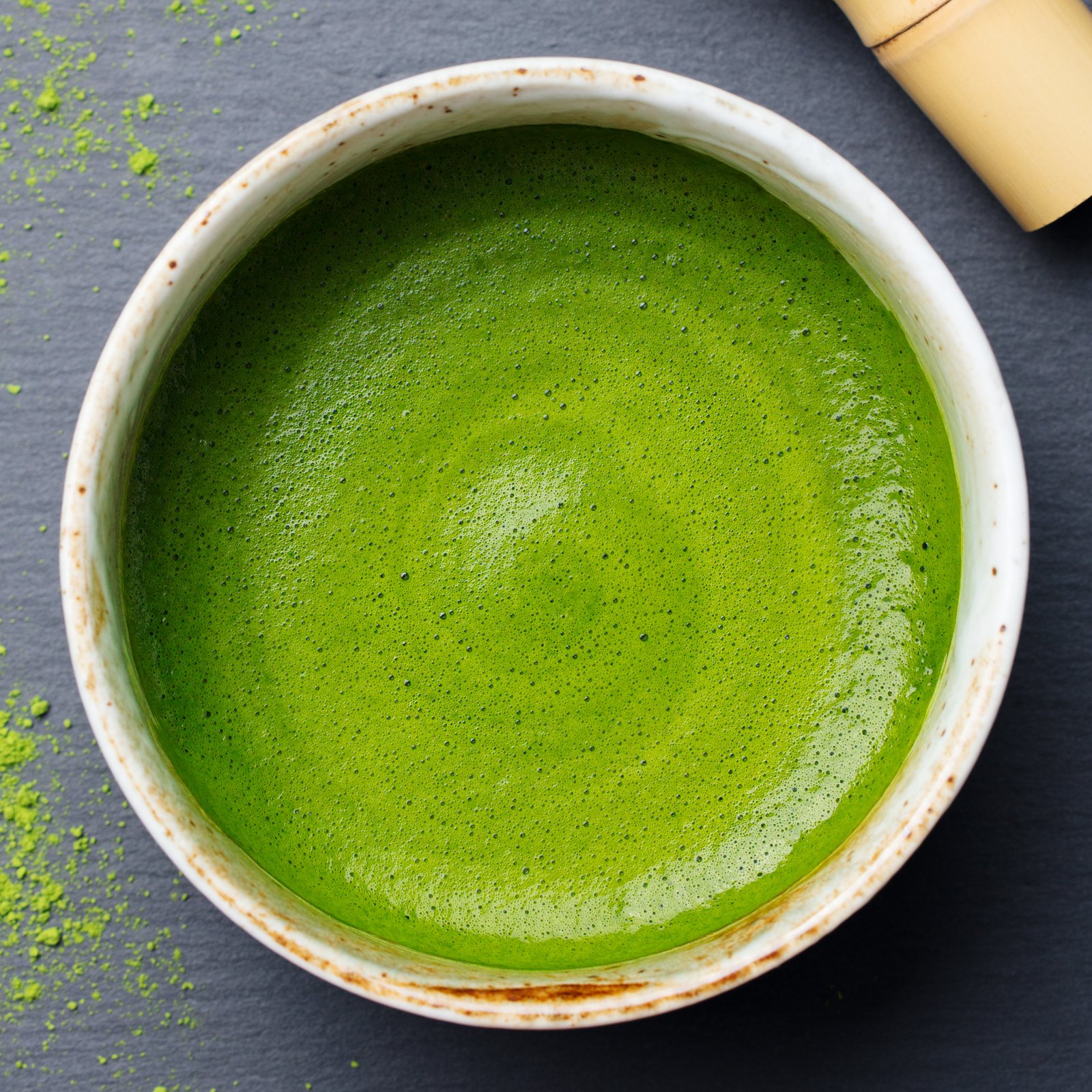
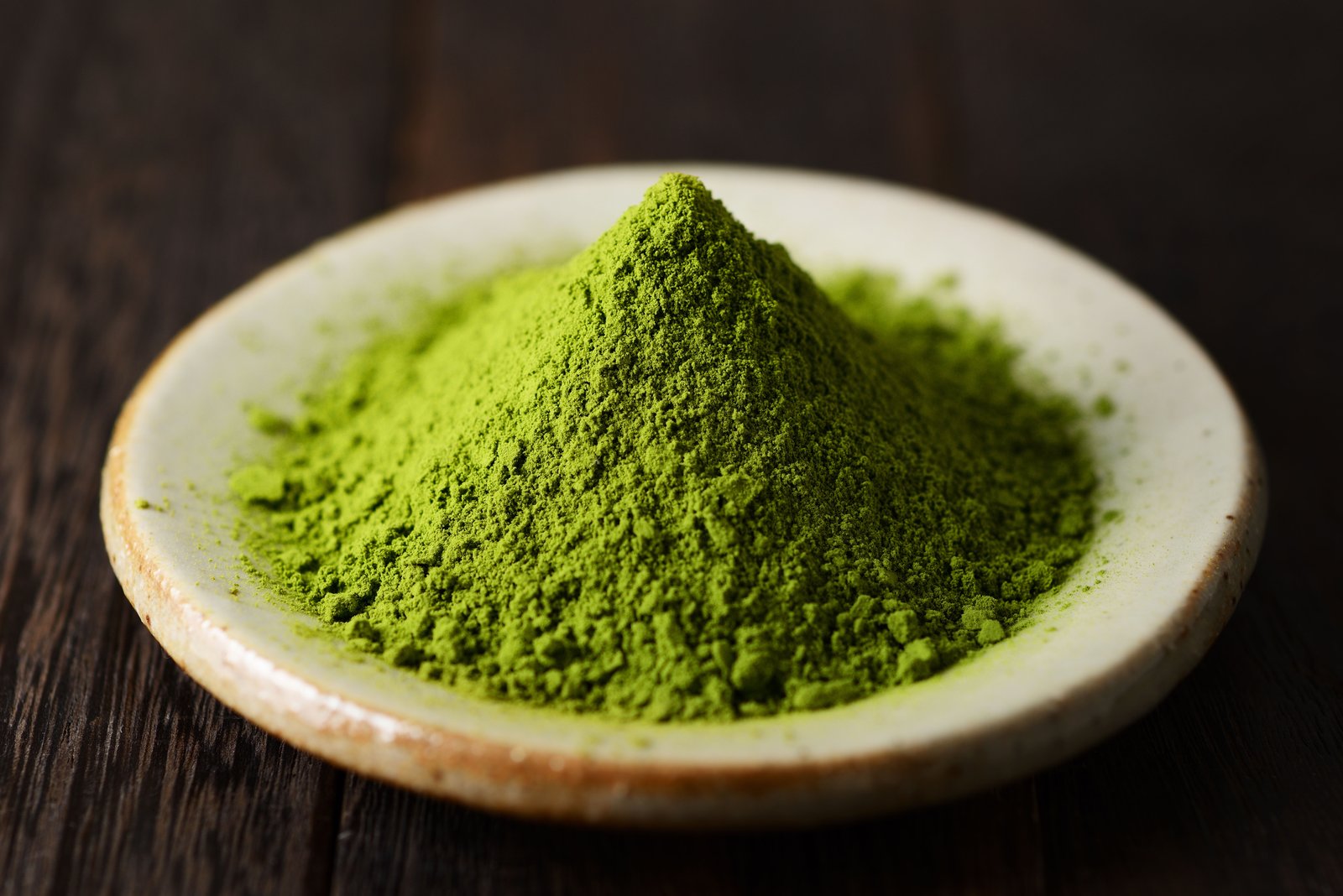
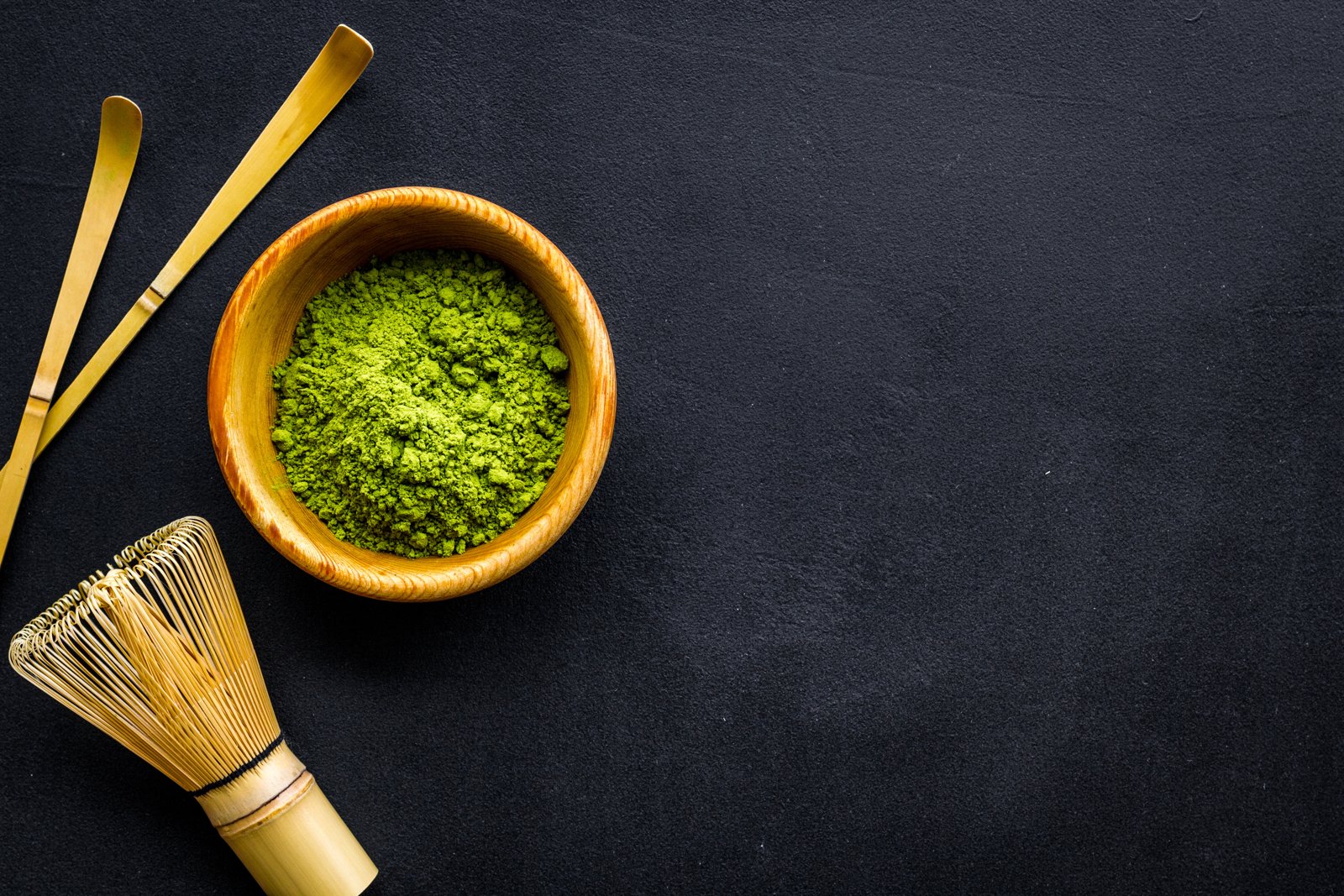
Matcha is a powder made by finely grinding a tea leaf called tencha with a stone mill or similar. Tencha comes from the same tea plant as sencha and black tea: the leaves are covered for about two to three weeks before picking, then steamed and dried without rolling, and there is no separate “matcha tree”. Using Japan’s labelling standard, international standards and material from national and prefectural research institutes, this article goes through what matcha is made of, how it is made, and the key differences from green tea.
What is matcha made of?
The only raw material in matcha is a tea leaf called tencha, with no sugar or milk. Both the Japanese industry labelling standard and the international standards define matcha by this method.
The definition in Japan’s labelling standard
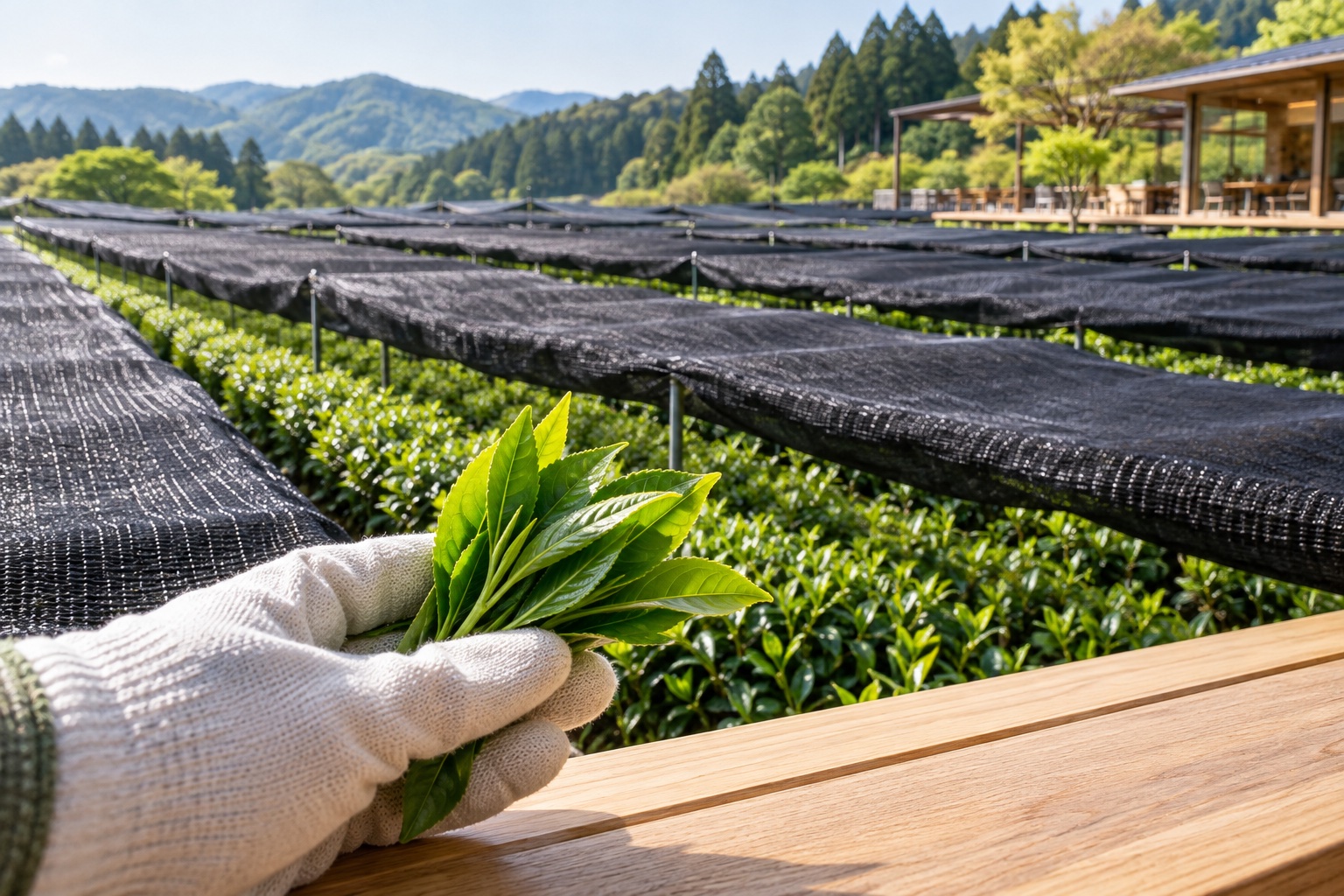
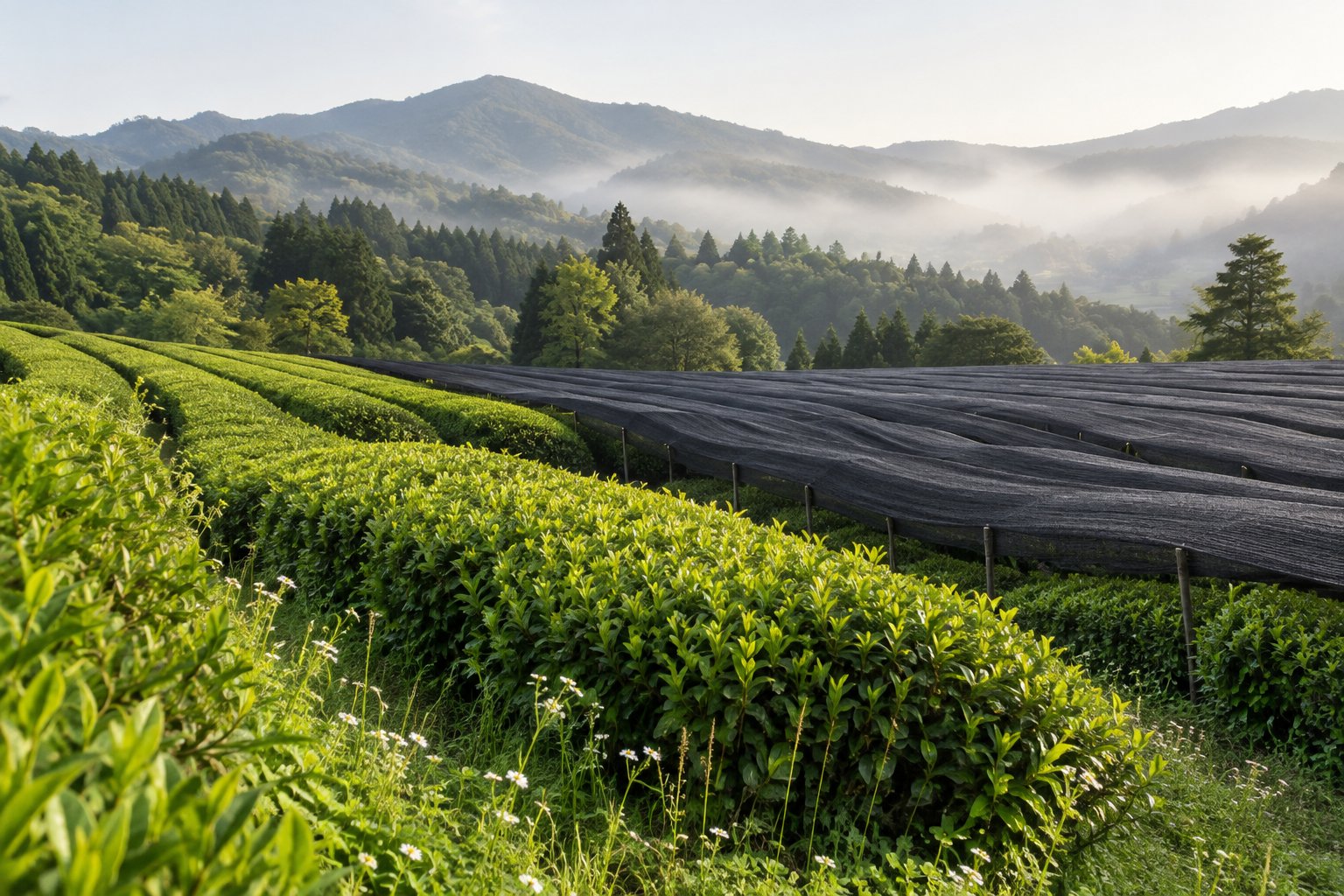
The Japan Tea Central Public Interest Incorporated Association’s Green Tea Labelling Standard (a voluntary industry standard, last revised on July 10, 2026) defines matcha as tencha ground into a fine powder with a tea mill or similar. Tencha is made by covering a tea field for about two to three weeks before picking, using shelves or other supports with reed screens, straw mats or kanreisha (shade netting), then steaming the leaves picked there and drying them in a tencha furnace or similar without rolling.
The definition in international standards
The international standard ISO 20715:2023 (classification of tea types) also defines matcha tea as young leaves and buds grown under shade, steamed to stop enzyme activity, dried without rolling, and finely ground into powder. ISO also has a technical report on matcha alone, ISO/TR 21380:2022 (Matcha tea: Definition and characteristics), and it excludes flavoured matcha and matcha blended with other teas from its scope.
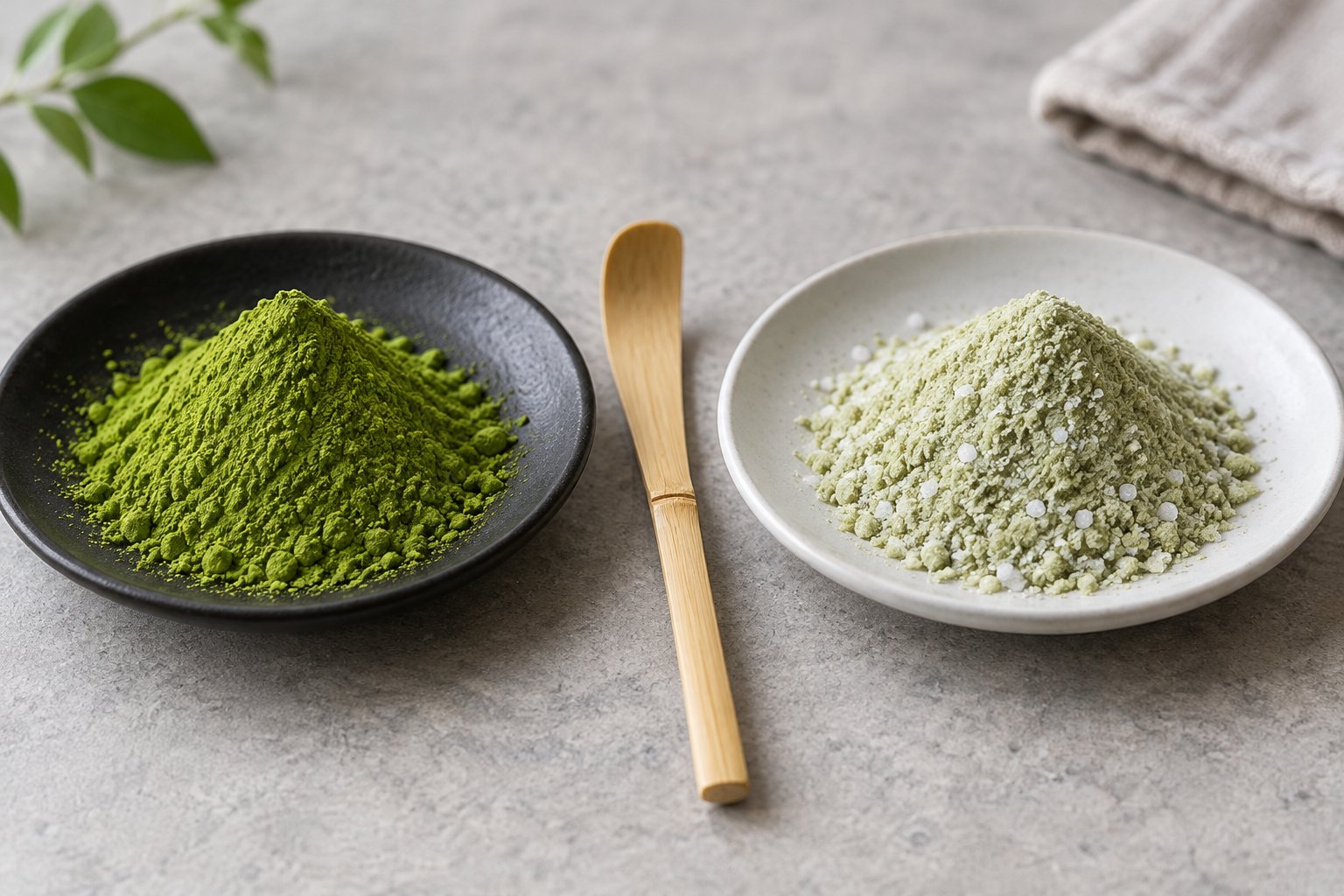
A latte powder mixed with sugar or milk powder is not matcha itself, even if matcha is among its ingredients. How to tell them apart is covered in Pure Matcha: what 100% pure matcha powder means.
There is no matcha tree: it is the same tea plant as sencha and black tea
There is no tree only for matcha. Matcha, sencha and black tea are all made from the leaves of the same plant, the tea plant (scientific name Camellia sinensis). The differences come from how it is grown and how the leaves are processed after picking.
The plant named by the labelling standard and ISO
The Green Tea Labelling Standard defines “tea” as tea made from the plant Camellia sinensis of the genus Camellia in the camellia family (called “cha”).
Source: Japan Tea Central Public Interest Incorporated Association, “緑茶の表示基準” (Green Tea Labelling Standard, last revised July 10, 2026). Section 2 (scope): tea made from material harvested from the tea plant. Section 3 (definitions): “tea” is made from the plant Camellia sinensis (L.) O. Kuntze of the genus Camellia in the camellia family. https://www.nihon-cha.or.jp/pdf/hyoujikijyun.pdf
ISO 20715 also classifies green tea, black tea, oolong tea and others by type as teas made from Camellia sinensis. Drinks made from herbs or fruit are outside its scope, even when they are called “tea”.
| Type of tea (ISO 20715 name) | Main steps in the ISO definition |
|---|---|
| Green tea | Stop enzyme activity, roll or otherwise shape, and dry |
| Matcha tea | Grow under shade, steam, dry without rolling, and finely grind |
| Black tea | Wither, roll, oxidise and dry |
| Oolong tea | Wither, partly oxidise, stop enzyme activity, roll and dry |
| White tea | Pick buds or young leaves, wither and dry |
The ISO definition of matcha names var. sinensis
ISO 20715 defines matcha as made from leaves of var. sinensis, a variety of the tea plant. People search for “matcha tree” in English and “pohon matcha” in Indonesian, and the answer is this tea plant.
Tea fields: the shaded new shoots are picked
Tencha uses the new shoots of tea plants grown under cover. NARO’s (National Agriculture and Food Research Organization) manual on shaded tea describes, for tencha, placing black kanreisha directly over the rows of tea plants.
Tencha: the leaf that becomes matcha
Tencha is the tea in its leaf form before it is ground, and it makes up 8.6% of Japan’s aracha (crude tea, the first-processed tea after picking). Tencha is what the English “matcha leaves” and the Indonesian “daun matcha” refer to.
Less than a tenth of crude tea, about 4.9 times the price of sencha
According to the Ministry of Agriculture, Forestry and Fisheries’ “Situation surrounding tea”, tencha made up 8.6% of crude tea produced in 2025, and its average crude tea price over all harvests was 8,562 yen per kg, about 4.9 times that of sencha. How the price is set is covered in Why Is Matcha So Expensive?.
Any cultivar can be used
NARO’s manual on shaded tea states that tencha can be made from any cultivar, and Samidori, Okumidori and Yabukita are often used.
Tencha for food processing
The labelling standard calls leaves such as autumn tencha, dried in a tencha furnace or similar without rolling, “tencha for food processing” and treats them as raw material used mainly for food processing. A manual on tea cultivars and processing published by NARO (2019) estimates that about 95% of matcha production goes to processed foods and the remaining 5% to the tea ceremony.
How matcha is made: grown under cover, steamed, dried without rolling and ground
Matcha is made in this order: cover the field, pick, steam, dry in a tencha furnace, separate stems and other parts, and grind. What differs from sencha is covering the field before picking and drying without rolling.
| Step | What is done | What public sources say |
|---|---|---|
| 1. Cover | Cover the field before picking to block sunlight | About two to three weeks (labelling standard); with direct covering, 20 days or more for the first flush at 85% shading (NARO) |
| 2. Pick | Pick new shoots from the covered field | Picked from the covered field (labelling standard) |
| 3. Steam | Stop leaf enzyme activity with steam | New shoots steamed for about 15 seconds (Kyoto Prefectural Tea Research Institute) |
| 4. Dry | Dry in a tencha furnace without rolling | Dried in a tencha furnace or similar without rolling (labelling standard) |
| 5. Separate | Separate stems and other parts, keeping the leaf | The production line has a stem separator and a winnowing machine (Kyoto Prefectural Tea Research Institute) |
| 6. Grind | Grind into a fine powder with a stone mill or similar | Ground into fine powder with a tea mill or similar (labelling standard) |
Source: Kyoto Prefectural Agriculture, Forestry and Fisheries Technology Center, Tea Research Institute, in “日本茶業の活性化に資する茶品種育成とその栽培・加工技術マニュアル” (Manual on tea cultivar breeding and cultivation and processing techniques, March 2019) p.23. Through shading, amino acids for umami and sweetness build up in new shoots and the formation of astringent, bitter tannins is held back; new shoots are steamed for about 15 seconds and dried in a tencha machine without rolling. Figure 47 shows the tencha line: leaf feeder, steamer, cooling and spreading machine, tencha machine, stem separator, winnowing machine, final drying. https://www.naro.go.jp/PUBLICITY_REPORT/publication/files/nifts_teaikusei_pamph201903031.pdf
Drying in a tencha furnace without rolling
According to the labelling standard, a tencha furnace (tencharo) is a machine in which steamed leaves are spread on a conveyor and dried by heat and hot air while passing through a tunnel-shaped drying chamber. The chamber usually has three to five tiers of conveyors. What sets tencha making apart is that the leaves are dried without passing through the rolling machines used in sencha factories. Non-brick tencha machines with the same function also count as tencha furnaces.
Separating stems before grinding
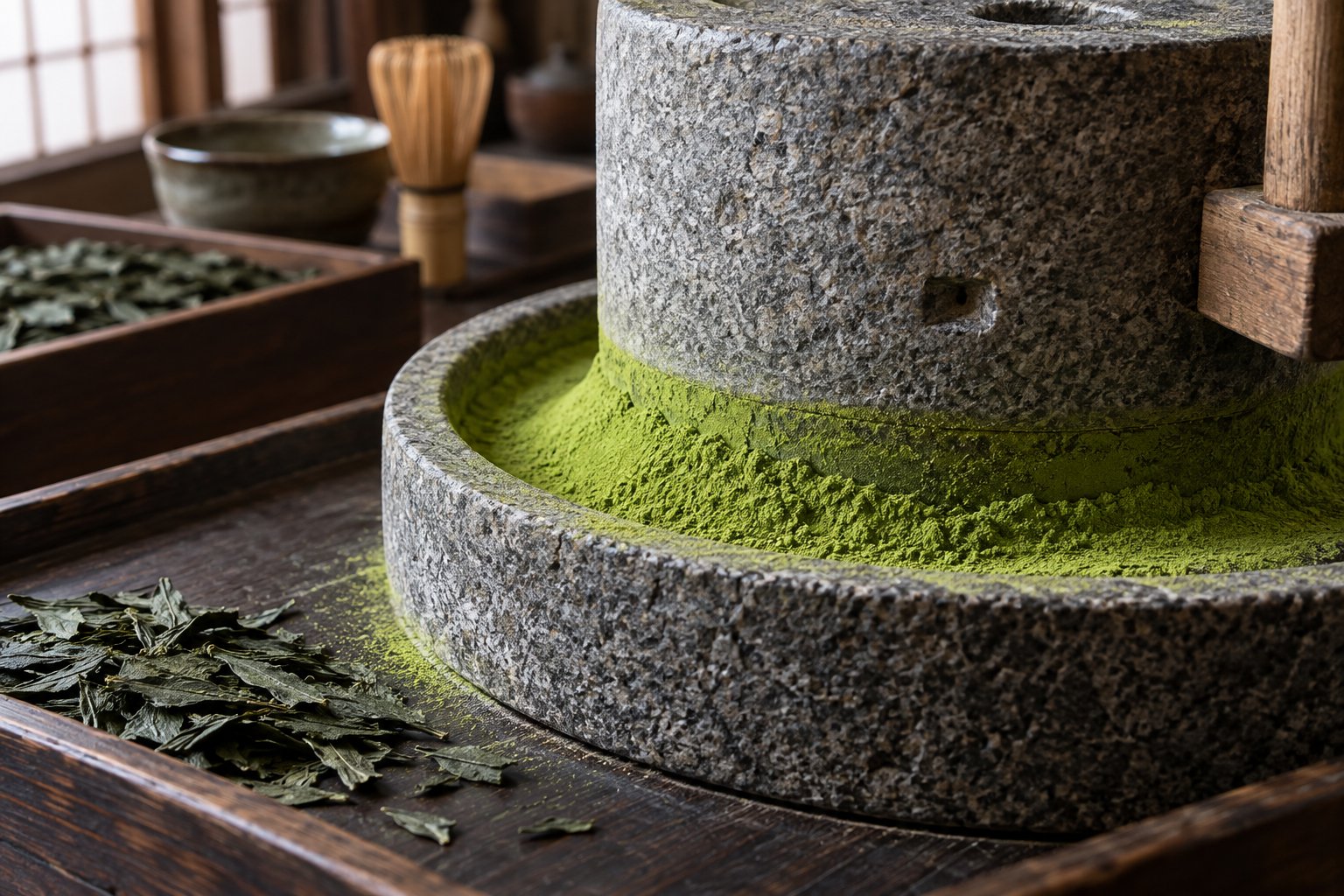
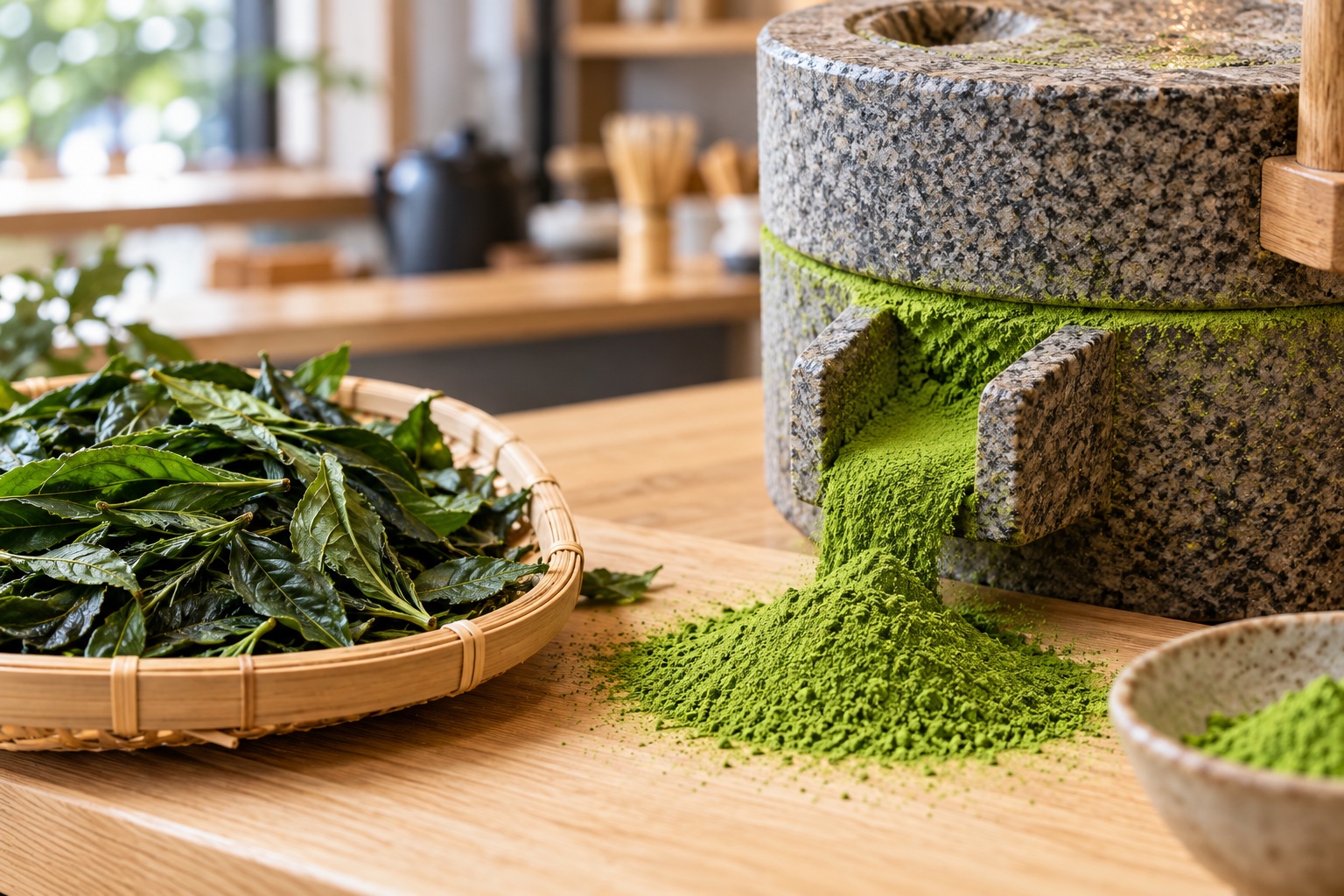
Stems and other parts are separated from the dried tencha with a stem separator and a winnowing machine (a machine that separates light and heavy material with air). The remaining leaf part is ground with a stone mill or similar to make matcha.
Grinding: a stone mill makes about 40 g an hour
A stone mill grinds about 40 g of matcha an hour, very different from what a machine line can produce. Either way, it can be called matcha if the raw material is tencha and the machine works like a stone mill.
Stone mills and machine lines
A tea merchant in Uji city, visited by the Kinki Regional Agricultural Administration Office in March 2025, turns its tea mills (chausu, the stone mills that grind tencha) at 53 to 54 rotations a minute, and each mill grinds about 40 g an hour. In the same report, the JA Kyoto Yamashiro processing facility in Ujitawara makes about 150 kg of matcha a day on an automated line using bead mill and air-flow grinding machines.
“Tea mills or similar” in the labelling standard
The labelling standard defines a tea mill as the stone mill used to grind tencha into fine powder, and includes in “tea mills or similar” anything that works like a stone mill, whatever the grinding method. Differences in particle size and colour by grinding method are covered in Matcha Grades Explained, and the effect of stone milling on price in Why Is Matcha So Expensive?.
What shading changes: umami and green colour
Growing under cover lets amino acids, the source of umami, build up in the leaves, holds back tannins, the source of astringency, and produces an aroma called ooika (covered aroma). These differences in composition also allow matcha and powdered tea to be told apart by analysis.
More umami, less astringency
The Kyoto Prefectural Tea Research Institute explains that shading tencha lets amino acids for umami and sweetness build up in new shoots, holds back the formation of astringent and bitter tannins, and produces ooika. NARO’s manual describes ooika as an aroma like green laver (aonori).
Matcha and powdered tea can be told apart by composition
In NARO’s 2018 study, matcha contained more amino acids such as theanine (the amino acid behind umami) than sencha, and only 1 of 56 matcha samples from Japanese producing areas had 1% theanine or less. None of the 6 commercial powdered tea samples had more than 1% theanine. In a green colour index (a value closely related to chlorophyll, the green pigment of leaves), every matcha sample was above a set level, and no powdered tea sample reached it. This research is also being used in drafting the ISO definition of matcha.
The burden of shading
NARO’s manual states that growing under cover may weaken tea plants through lack of sunlight, making yield and quality less stable. It also lists the covering work being complicated and heavy as a problem.
Key differences from green tea (sencha) and powdered tea
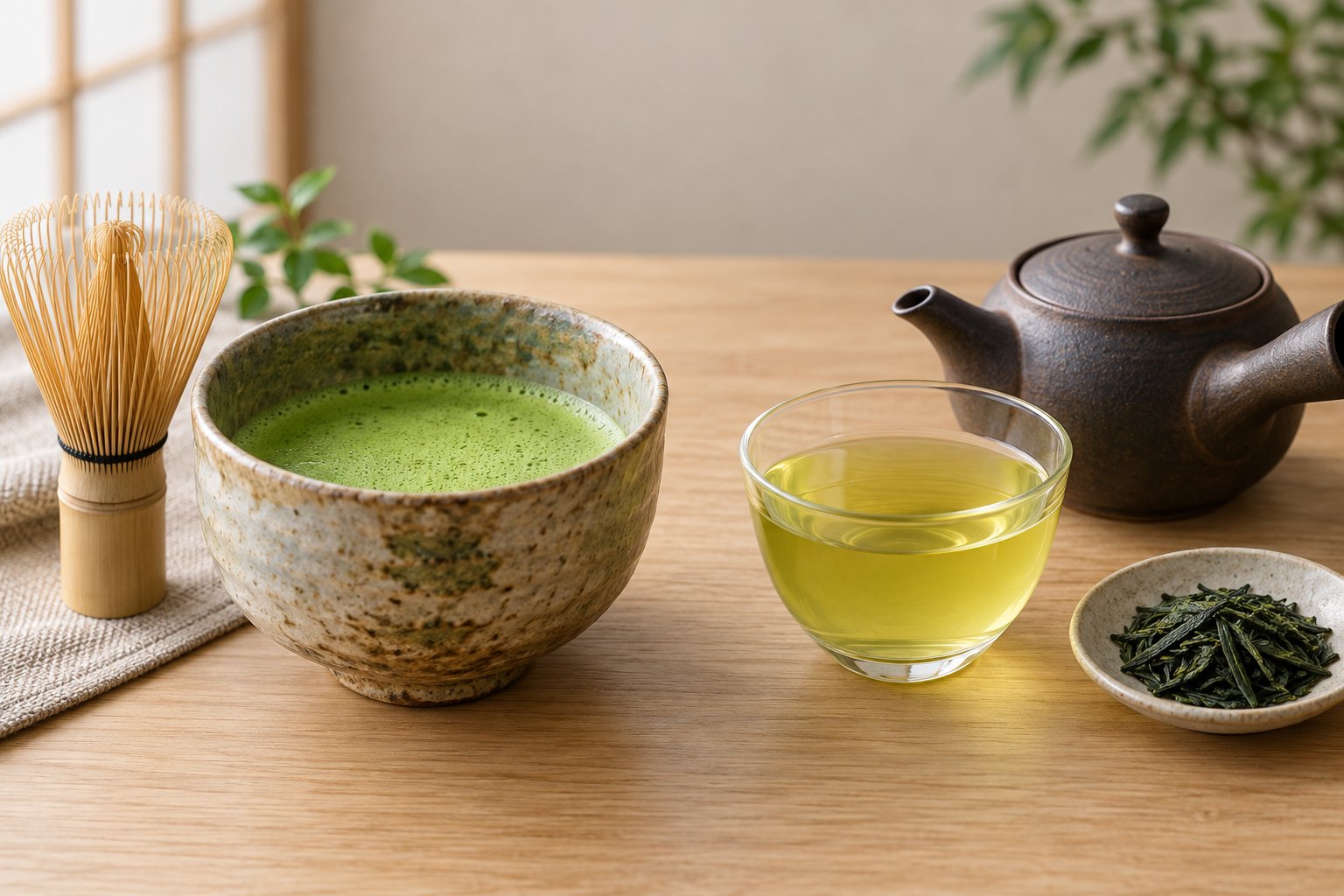
Matcha is a type of green tea. It differs from sencha, made from leaves of the same tea plant, in three points: covering, rolling, and drinking the whole powder. Sencha or other tea ground into powder is powdered tea, not matcha.
| Matcha | Sencha | Powdered tea | |
|---|---|---|---|
| Tea leaf used | Tencha (grown under cover, dried without rolling) | Grown without cover, steamed, rolled and dried | Tea (such as sencha) |
| How it is powdered | Tea mill (stone mill) or similar | Not powdered | Grinder or similar |
| How it is drunk | Powder dissolved and drunk with the leaf | Hot water poured over leaves; the infusion is drunk | Powder dissolved and drunk |
Comparisons of composition, caffeine and price are covered in Matcha vs Green Tea.
Where the raw material for matcha is made
Kagoshima makes over 40% of Japan’s tencha, the raw material for matcha, followed by Kyoto and Shizuoka. Uji and Nishio are well known as matcha regions, but in volume Kyushu accounts for a large share.
Tencha production in 2025
According to figures from the National Federation of Tea Producers’ Associations compiled by Aichi Prefecture, Japan produced 6,278 tonnes of tencha in 2025.
| Prefecture | Tencha production, 2025 |
|---|---|
| Kagoshima | 2,670 tonnes |
| Kyoto | 989 tonnes |
| Shizuoka | 875 tonnes |
| Aichi | 463 tonnes |
| Mie | 398 tonnes |
| Miyazaki | 304 tonnes |
| Fukuoka | 280 tonnes |
Production is about 3.2 times the 2014 level
The Ministry of Agriculture, Forestry and Fisheries states that tencha production has grown with rising demand, and 2025 production was about 3.2 times that of 2014. Differences between regions are covered in Matcha origins, What Is Uji Matcha? and Kagoshima Matcha.
What to check about the raw material when buying
When buying matcha, ask the supplier whether the only ingredient is tencha, where the tencha was grown, how it was ground and when it was picked. Green powders also include powdered tea and mixes with sugar.
What to check on the specification sheet
- Name and ingredients: matcha, powdered tea, or a mix with sugar or milk powder
- Where the tencha was grown (prefecture)
- Grinding: stone mill or machine
- Harvest: first flush, or second flush and later or autumn-picked
What to check with samples
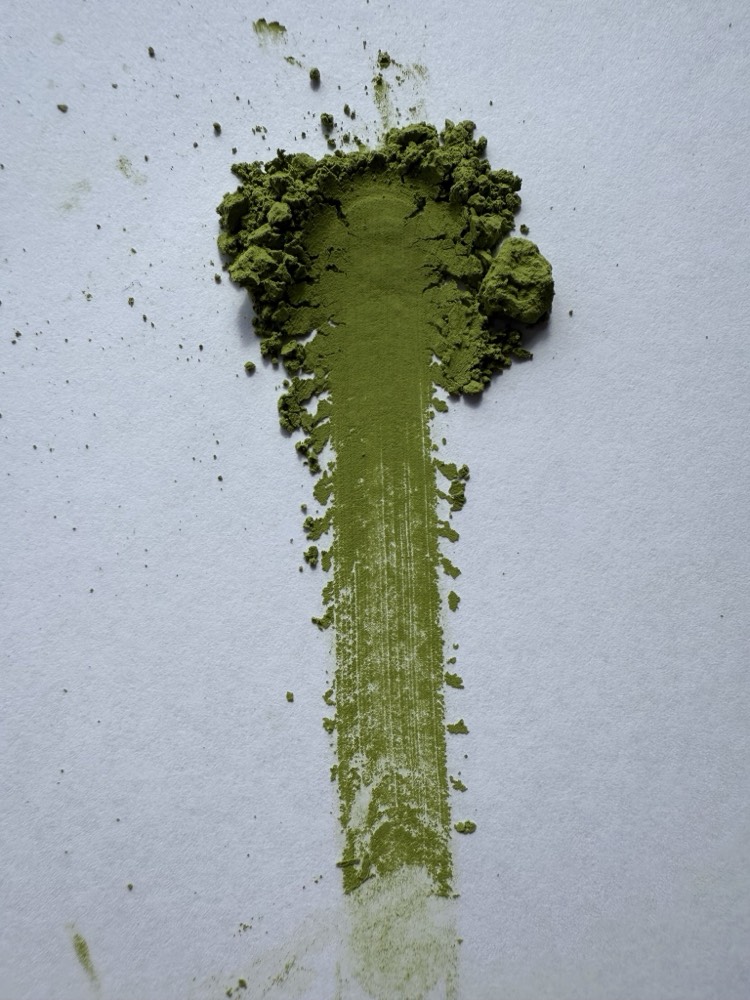
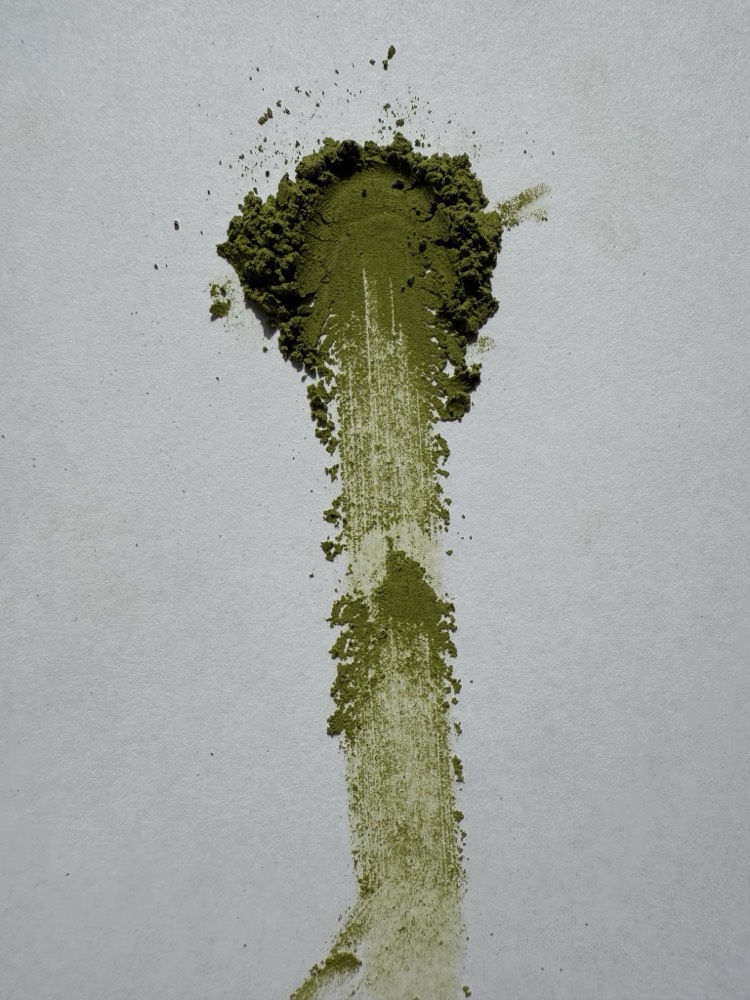
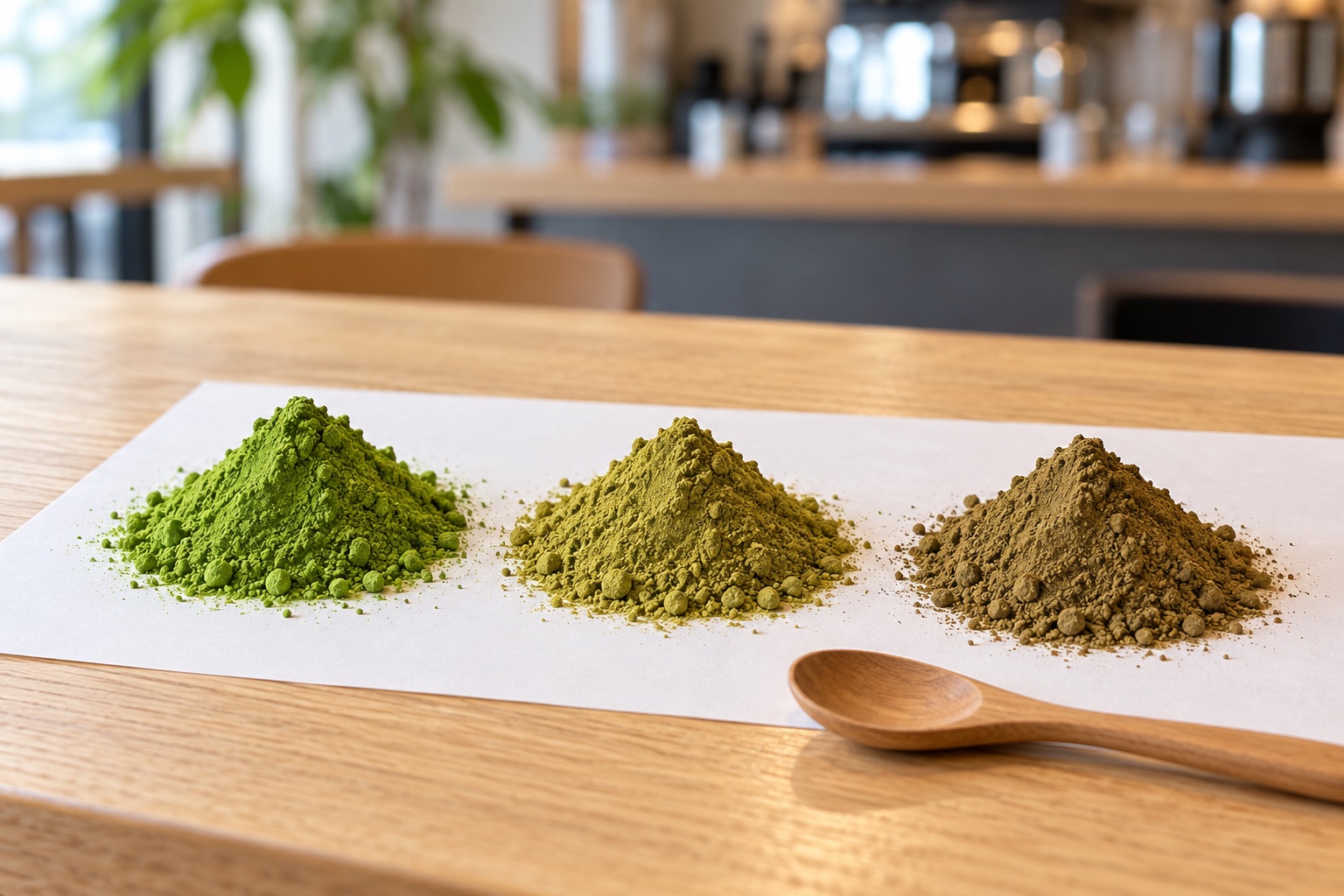
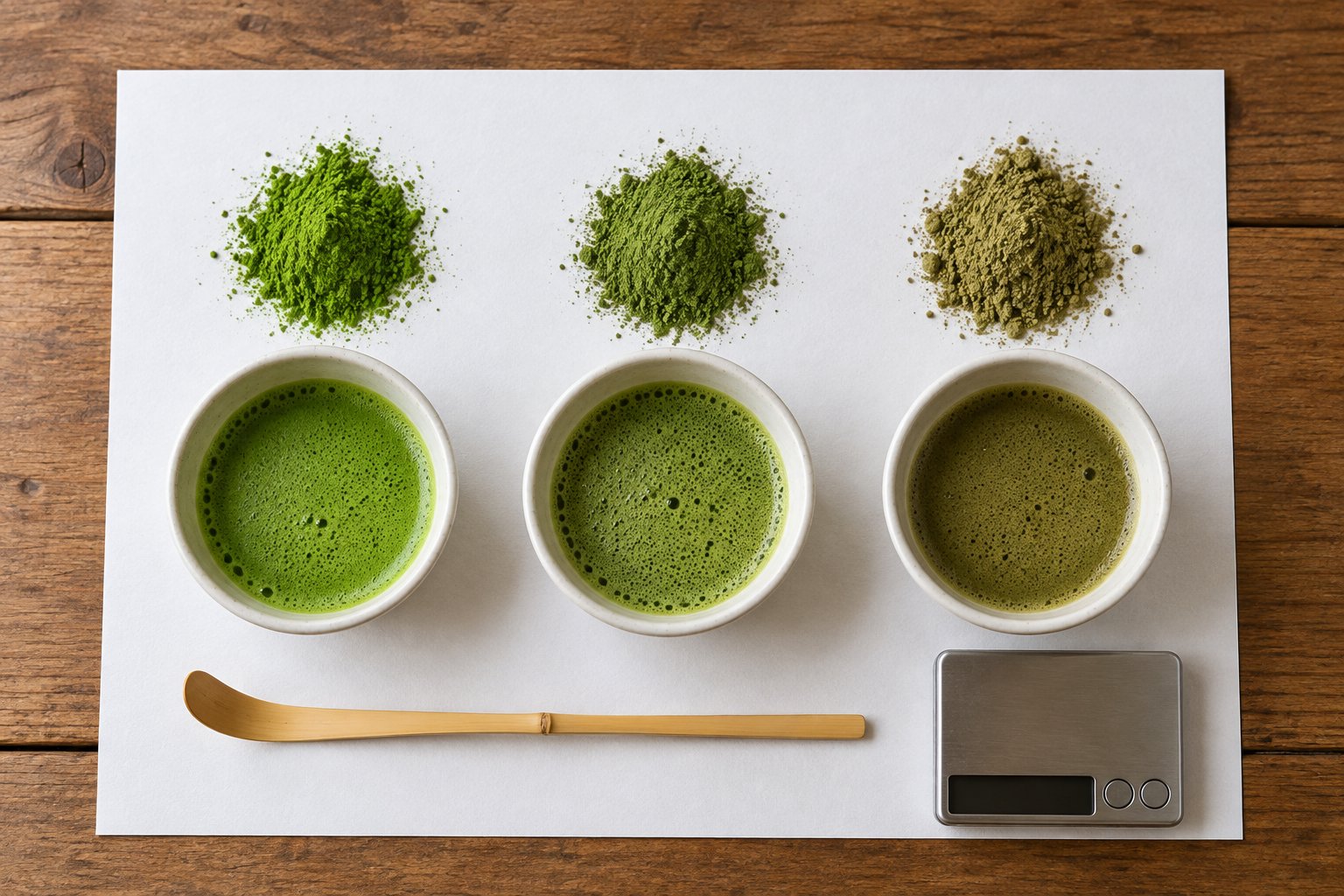
Colour, aroma and taste differences show when you prepare samples under the same conditions. How to compare them is covered in How to Tell High Quality Matcha. Omakase Matcha sources matcha directly from Uji, Yame, Kagoshima, Shizuoka and Miyazaki, and sends up to three samples.
Sources
- Japan Tea Central Public Interest Incorporated Association, “緑茶の表示基準” (Green Tea Labelling Standard, last revised July 10, 2026, in Japanese) https://www.nihon-cha.or.jp/pdf/hyoujikijyun.pdf
- ISO 20715:2023 Tea: Classification of tea types (preview) https://cdn.standards.iteh.ai/samples/75419/b937ca9e8b964f538549fe9a8cae15b5/ISO-20715-2023.pdf
- ISO/TR 21380:2022 Matcha tea: Definition and characteristics https://www.iso.org/standard/80777.html
- NARO, “被覆茶安定生産マニュアル” (Manual for stable production of shaded tea, 2018, in Japanese) https://www.naro.go.jp/PUBLICITY_REPORT/publication/files/hihukucha-antei_man201803.pdf
- Consortium 26099, “日本茶業の活性化に資する茶品種育成とその栽培・加工技術マニュアル” (Manual on tea cultivar breeding and cultivation and processing techniques, March 2019, in Japanese) https://www.naro.go.jp/PUBLICITY_REPORT/publication/files/nifts_teaikusei_pamph201903031.pdf
- NARO, “国産抹茶の価格と化学成分含有量の関係” (Relationship between price and chemical composition of Japanese matcha, 2018, in Japanese) https://www.naro.go.jp/project/results/4th_laboratory/nifts/2018/nifts18_s16.html
- Ministry of Agriculture, Forestry and Fisheries, “茶をめぐる情勢” (Situation surrounding tea, October 2026, in Japanese) https://www.maff.go.jp/j/seisan/tokusan/cha/attach/pdf/ocha-201.pdf
- Kinki Regional Agricultural Administration Office, “世界的な抹茶需要に応えるため!宇治茶の産地での取り組み” (Meeting global matcha demand: efforts in the Uji tea region, in Japanese) https://www.maff.go.jp/kinki/tiiki/kyoto/250304_ujichaseichakoujou.html
- Aichi Prefecture, “2025年産茶の生産状況” (Tea production in 2025, figures from the National Federation of Tea Producers’ Associations, in Japanese) https://www.pref.aichi.jp/uploaded/attachment/622005.pdf