
 Reviewed by: Takahiro Sugiyama (CEO, meguri Inc.)
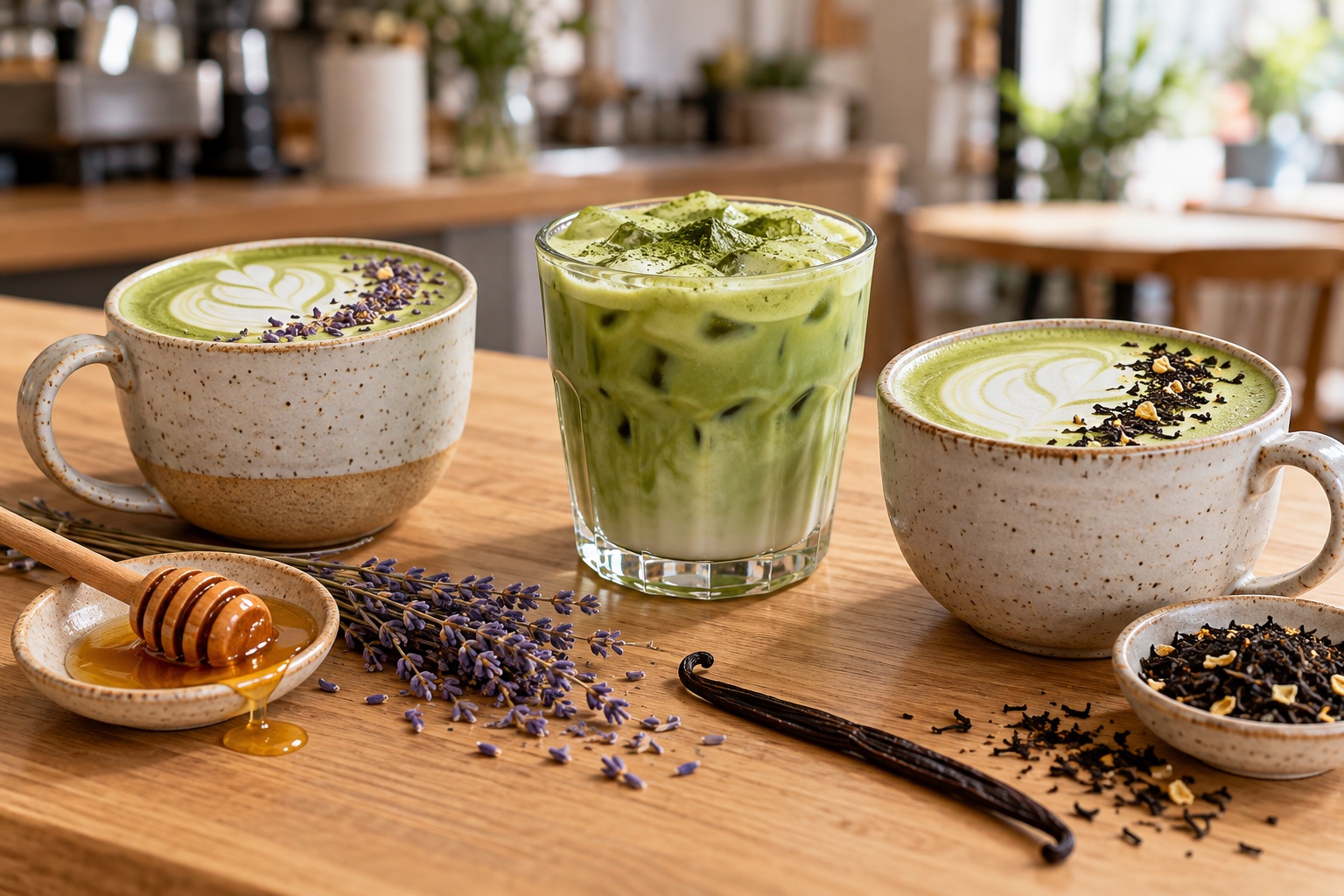
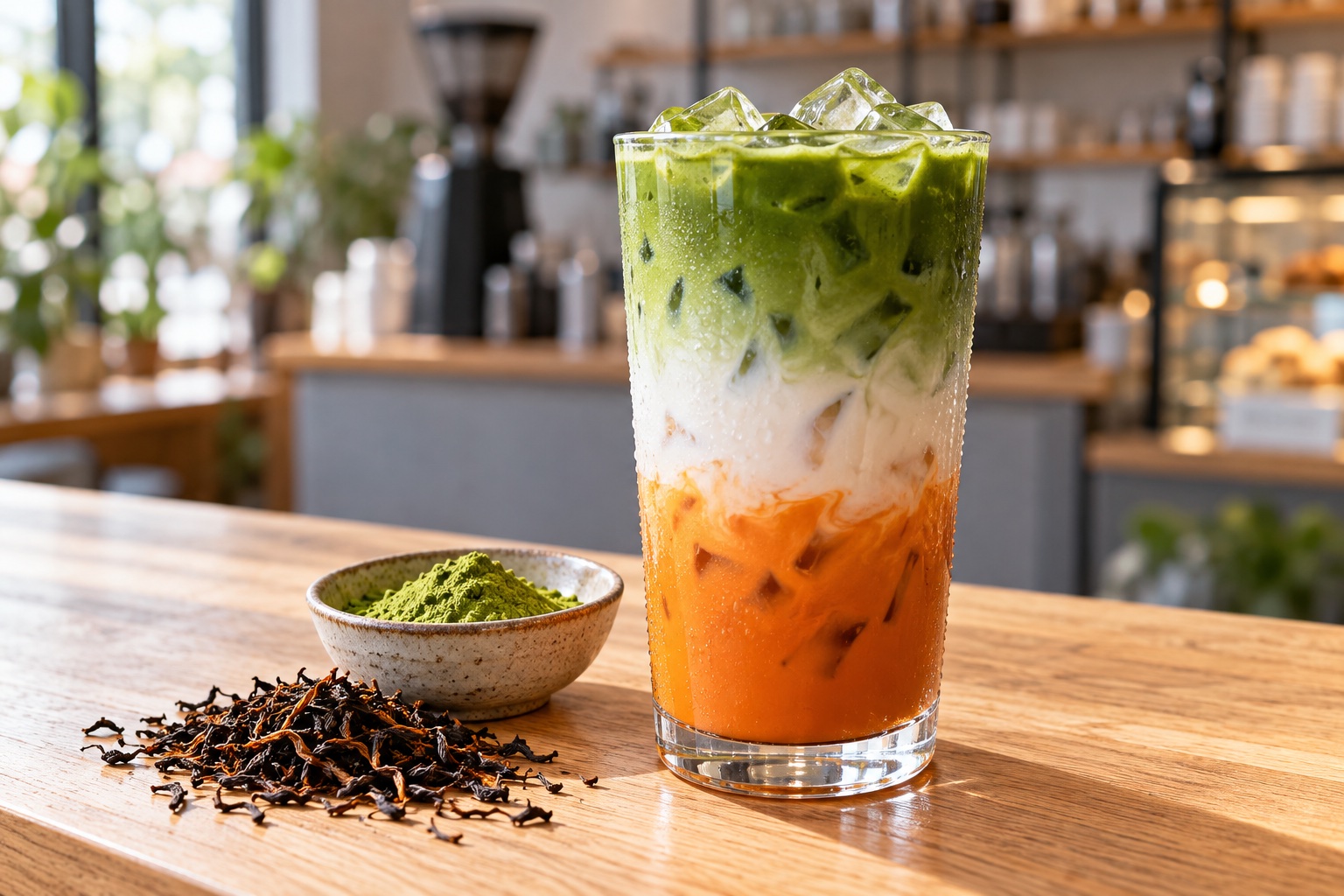
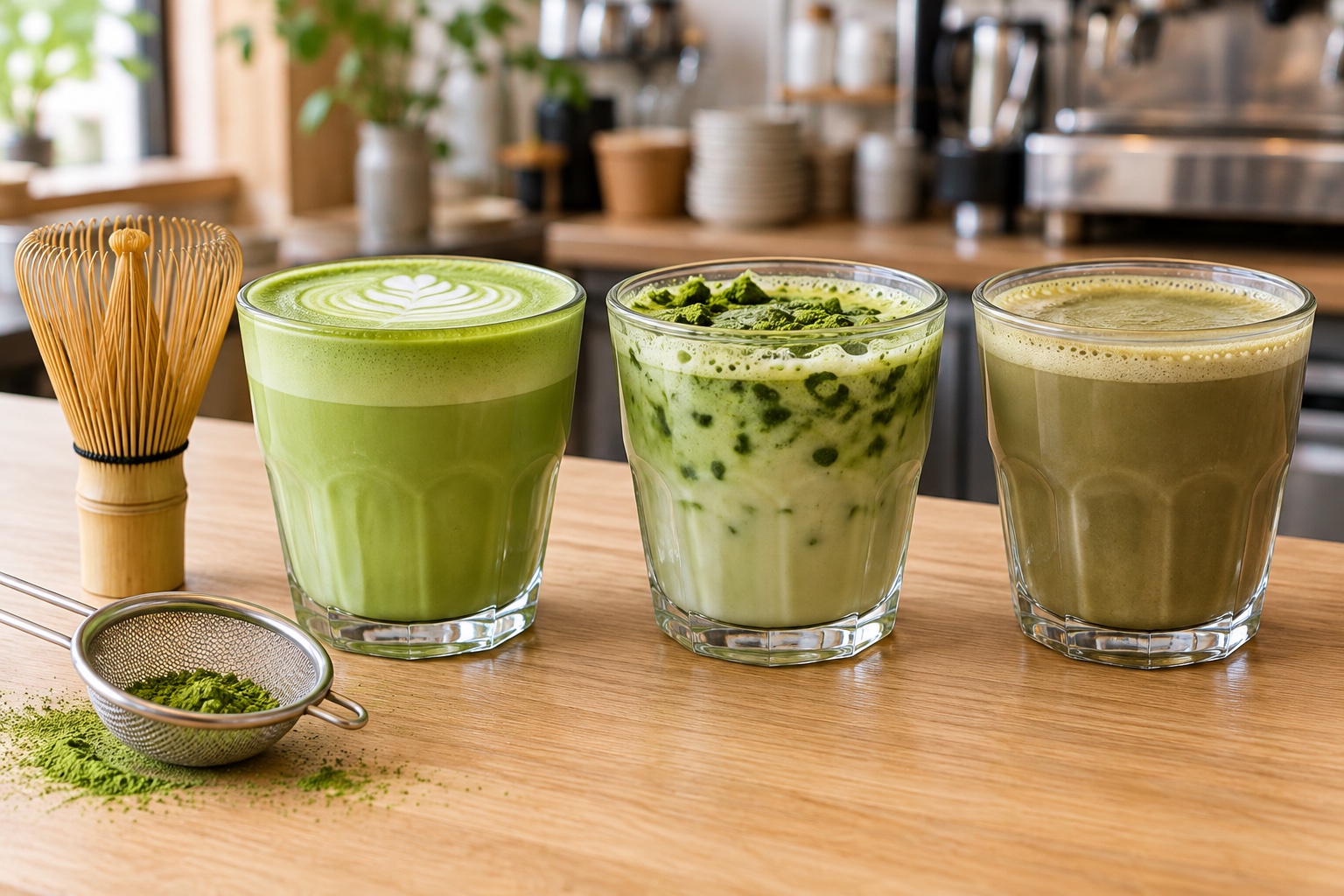
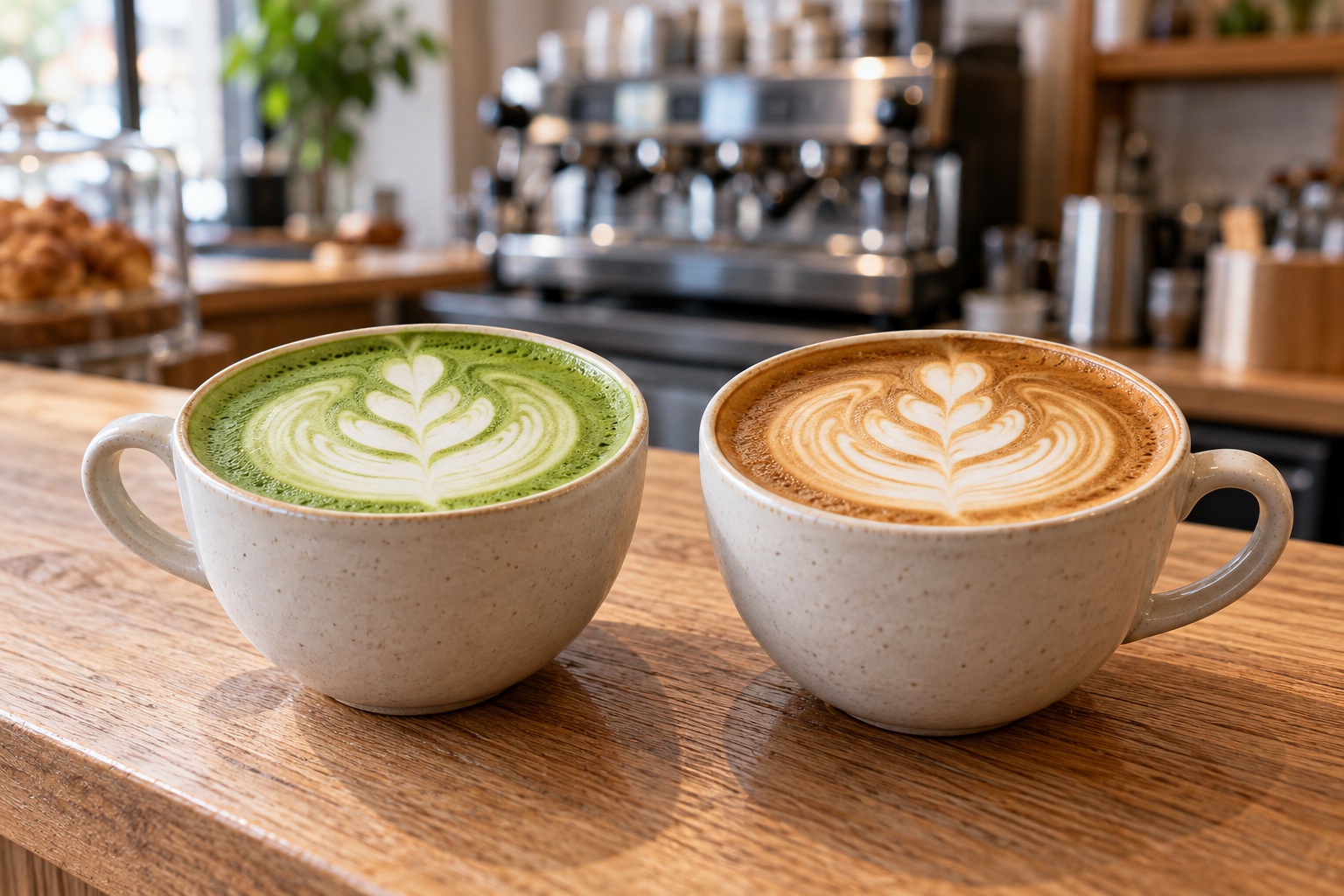
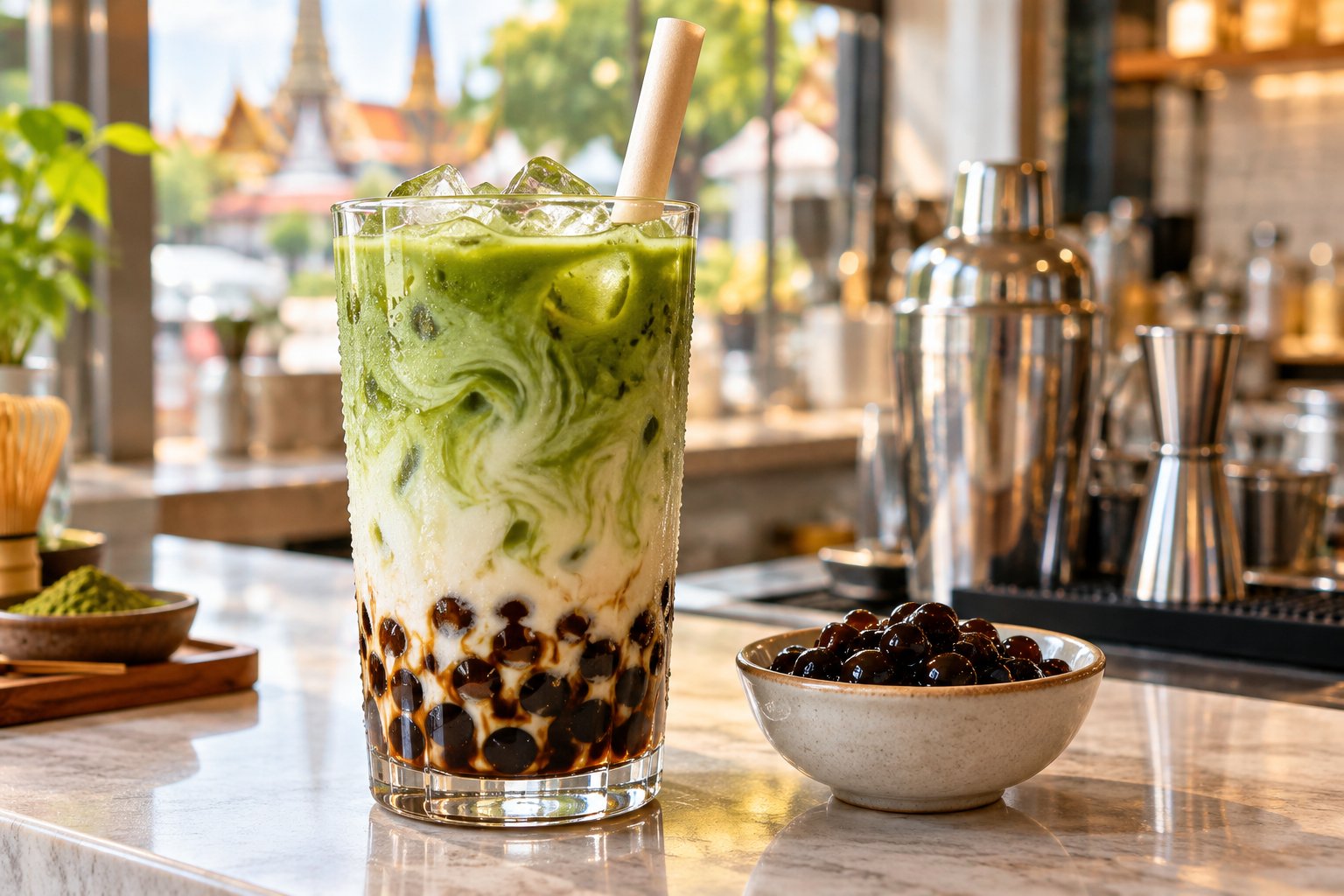
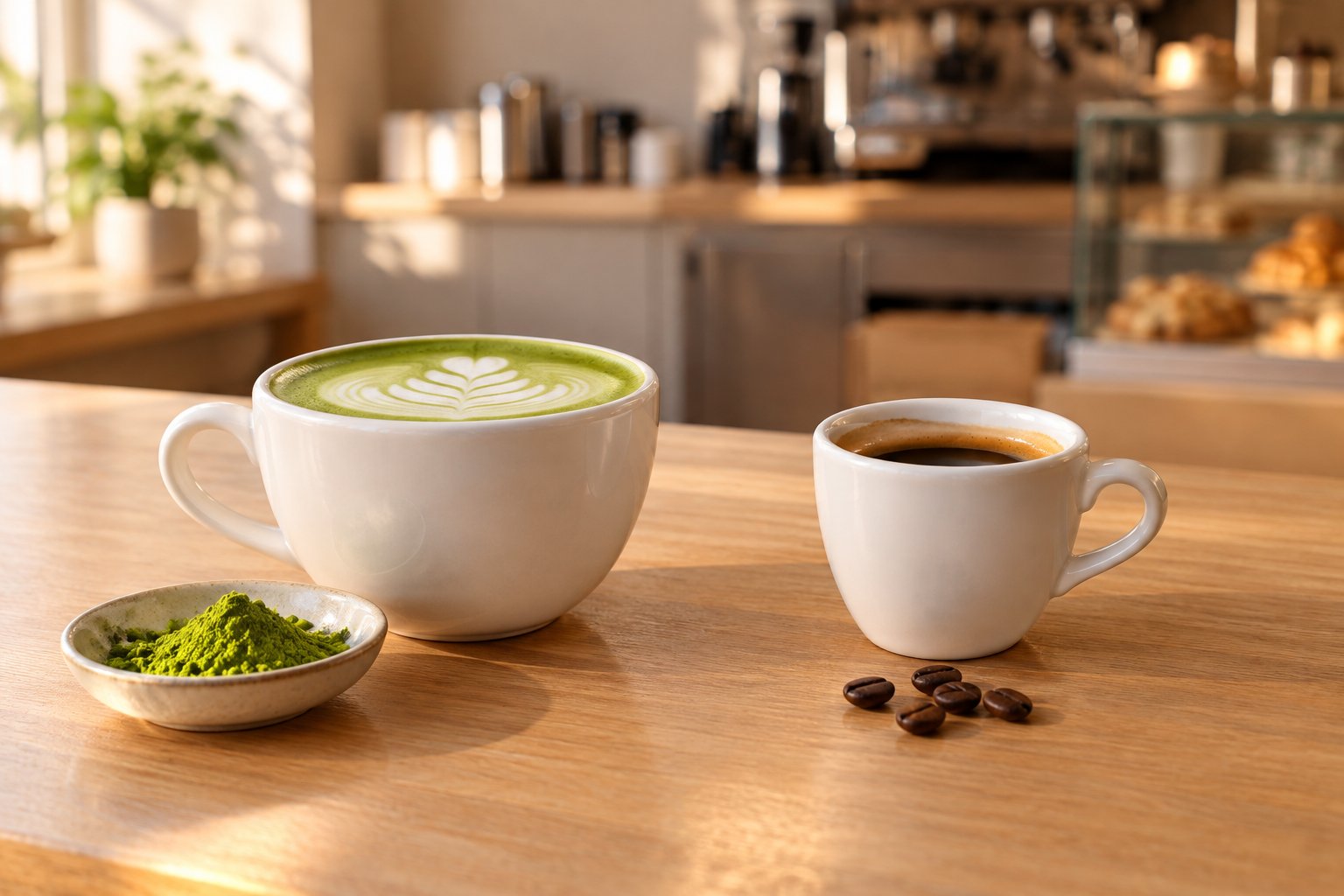
Matcha lattes with vanilla, honey or Earl Grey added are on café menus in Singapore, Thailand and the US, next to the regular matcha latte. They look like a plain matcha latte with syrup added, but to serve them in a café there are several things to decide: too much flavouring can hide the matcha, and you need to set how long prepared syrups and infused milk can be kept. Below we compare the official recipes of tea companies, dairy and syrup makers and a honey board, then go through prep, the honey warning, labelling and cost.
What is a flavoured matcha latte?
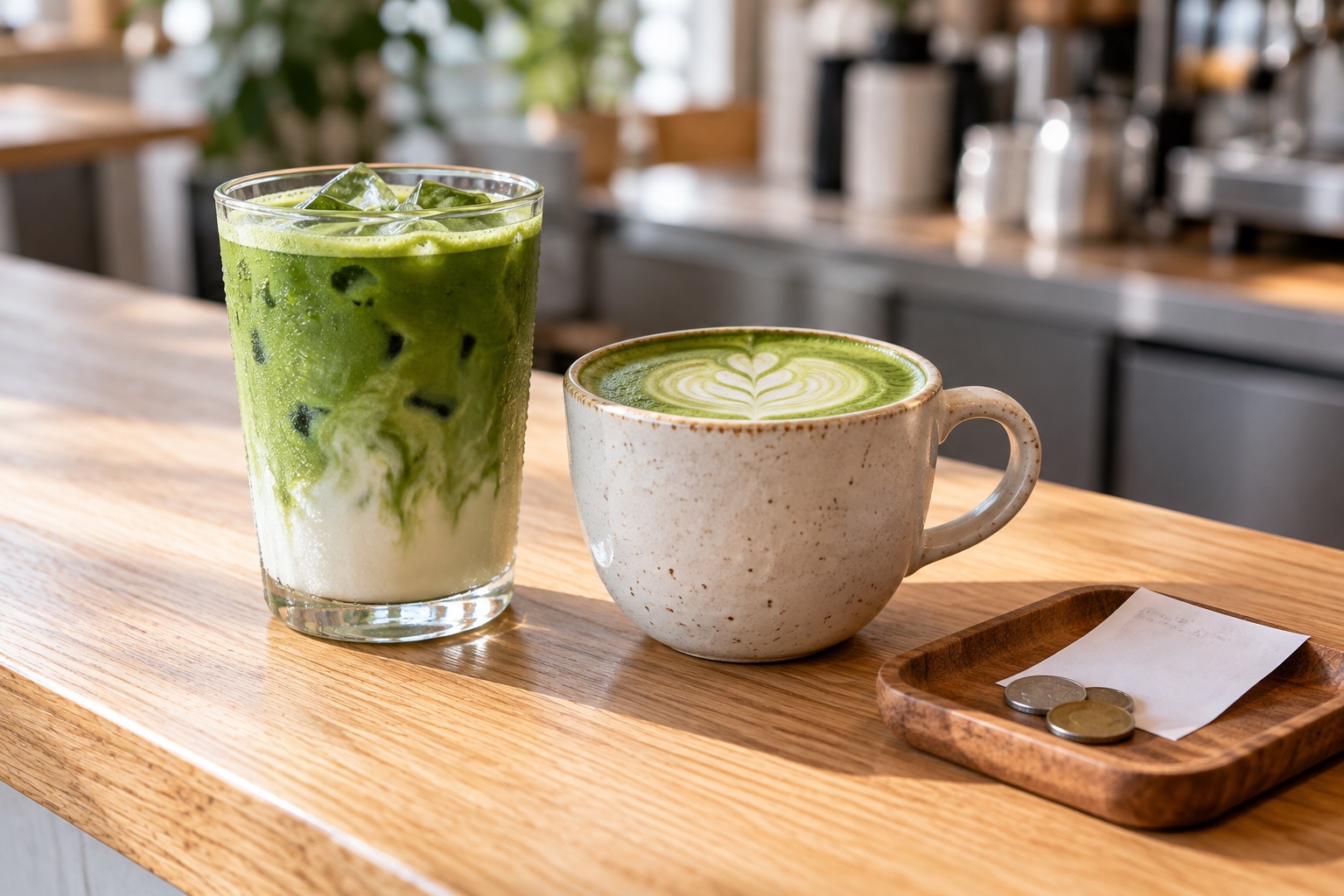
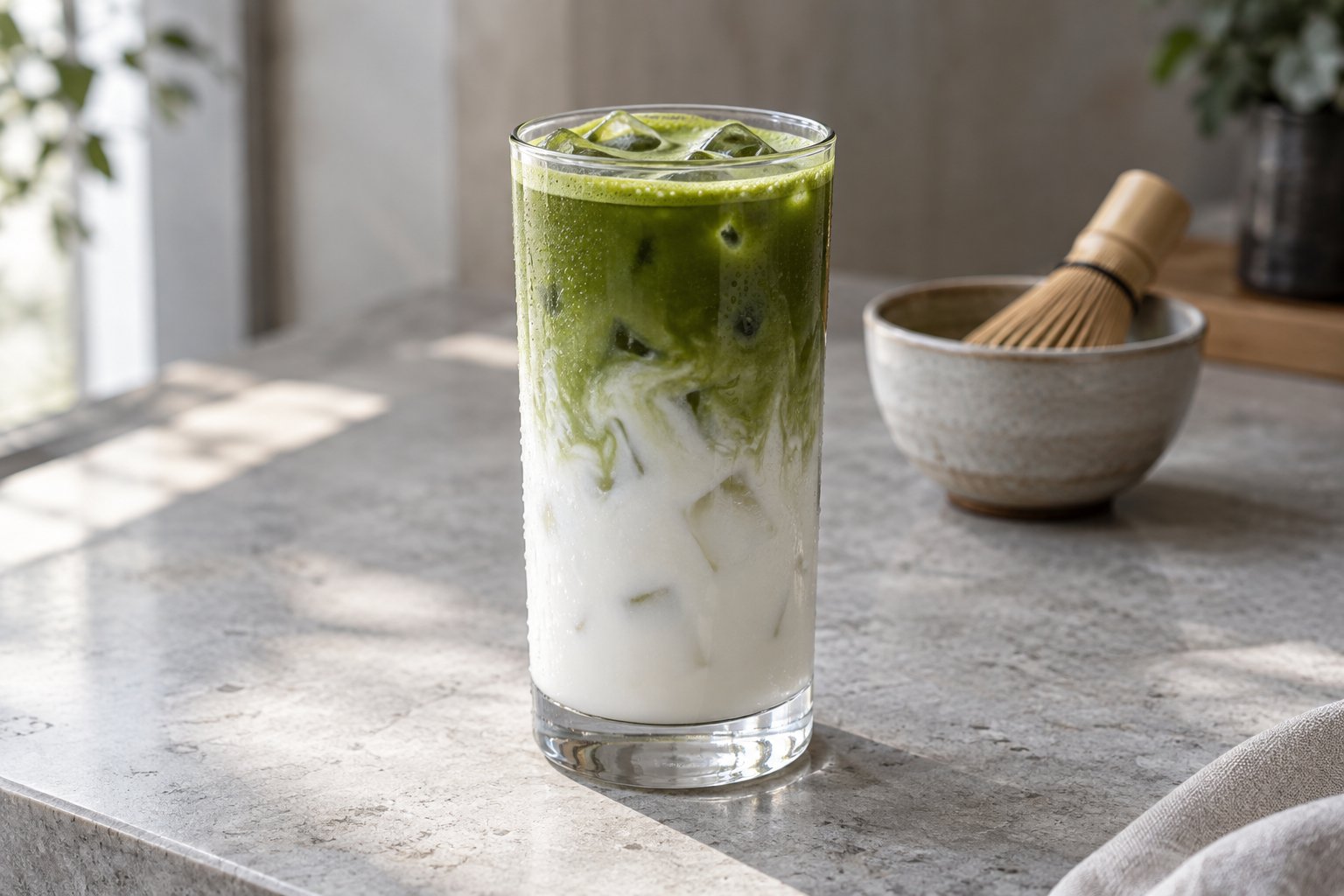
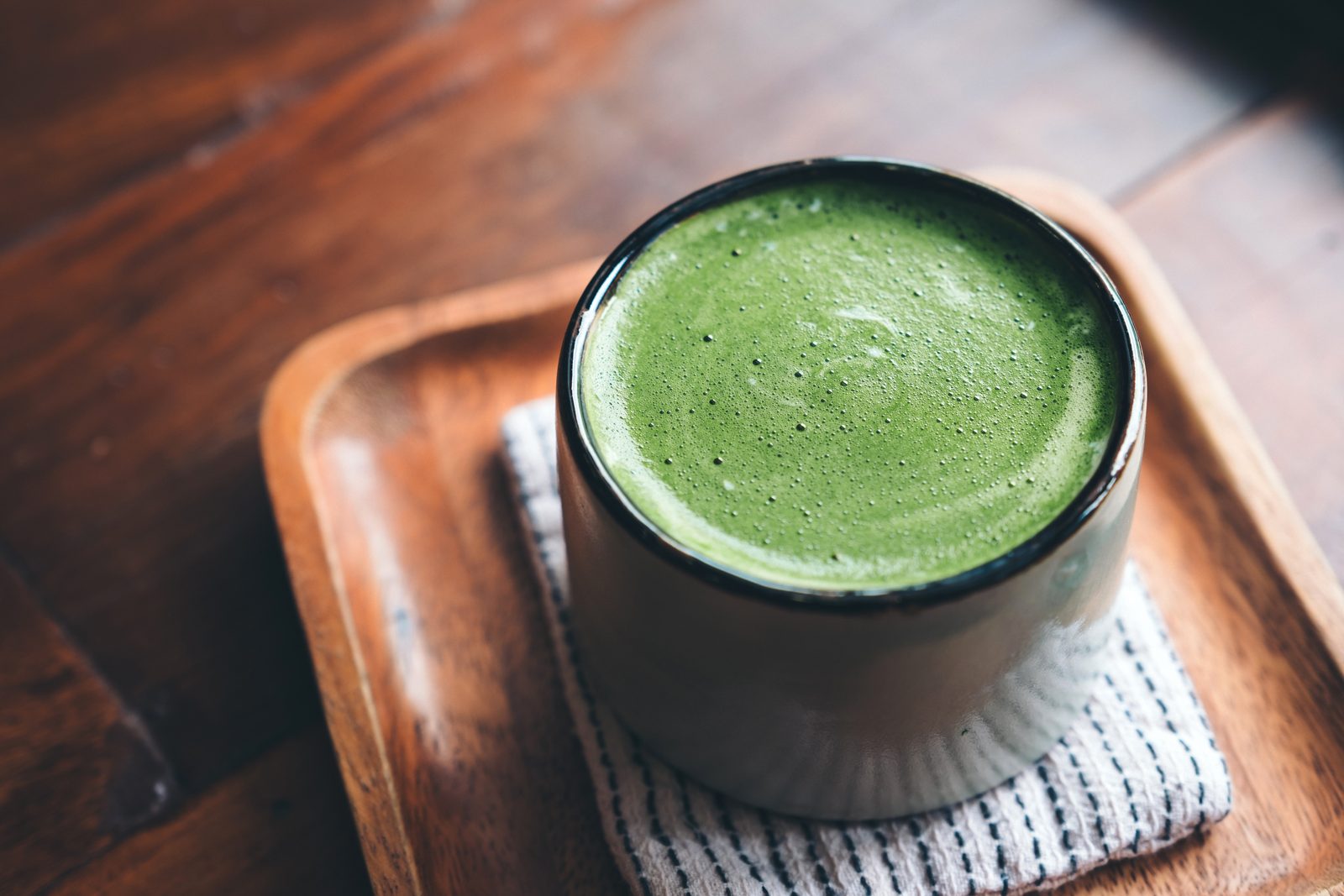
A flavoured matcha latte is a matcha latte with a flavour such as vanilla, lavender, honey, Earl Grey, jasmine or rose added. They are on café menus in Singapore, Thailand and the US, and some are sold for a limited time, such as the Rosy Matcha Latte at Peet’s Coffee.
Menus in Singapore, Thailand and the US
These are the menu items we checked on official sites and delivery listings (checked on 22 October 2026).
| Country | Café | Menu item |
|---|---|---|
| Singapore | Hey Matcha | Earl Grey Matcha Latte |
| Singapore | Gotcha Matcha | Hot Vanilla Matcha Latte, Iced Earl Grey Lavender Matcha Cloud |
| Singapore | Matcha Next Door | Honey Sea Salt Cloud Matcha Latte |
| Singapore | Starbucks | Iced Vanilla Cream Protein Matcha Latte |
| Singapore | Luckin Coffee | Matcha Jasmine Frappe |
| Thailand | Café Amazon | ไลท์มัทฉะฮันนี่ (a honey matcha drink) |
| Thailand | daia.muncha | Honey Matcha Latte |
| Thailand | UNDER BY | มัทฉะเอิร์ลเกรย์น้ำผึ้งเจลลี่ (matcha with Earl Grey and honey jelly) |
| US | Dutch Bros | Lavender Matcha Latte (launched May 2025) |
| US | Peet’s Coffee | Lavender Vanilla Matcha Latte, Rosy Matcha Latte (rose and lavender syrup, limited time around Mother’s Day) |
| US | Blank Street | Shaken vanilla bean matcha |
Within what we checked, Earl Grey and vanilla were common in Singapore, honey in Thailand, and lavender and vanilla in the US.
Flavours covered here
This article covers six flavours: vanilla, lavender, honey, Earl Grey (black tea scented with bergamot, a citrus fruit), jasmine and rose. How to make a sugar syrup with matcha in it is in How to make matcha syrup, and drinks topped with foam are in How to make matcha cold foam. Lattes sweetened with kokuto (Japanese brown sugar) or kuromitsu (its syrup) are in Brown sugar matcha latte.
Official recipes compared
Across the 8 official recipes, those that give matcha in grams use 2 to 4 g per drink, much the same as a plain matcha latte. The big difference is the amount of flavouring: syrup ranges from 2 teaspoons (about 10 ml) to 2 tablespoons (about 30 ml), a threefold difference.
The 8 recipes
| Source | Flavour | Matcha | Water for the matcha | Milk | Flavouring |
|---|---|---|---|---|---|
| Paper & Tea (German tea shop), hot | Lavender | 2 g | 70°C, 50 ml | 250 ml | Lavender syrup, 2 tsp (about 10 ml) |
| Monin (French syrup maker, Canadian site), iced, 480 mL glass | Lavender | Matcha concentrate 30 mL | None | Oat milk 150 mL, milk 120 mL | Lavender syrup 30 mL |
| Moya Matcha (European matcha company), iced | Vanilla | 4 g | A small amount (not stated) | 200 ml | Vanilla syrup to taste, guide 2 tbsp (about 30 ml) |
| Rishi Tea (US tea company), hot | Jasmine | 3 g | About 79°C, about 44 ml | About 118 ml | Jasmine syrup, 2 tsp (about 10 ml) |
| Rishi Tea | Rose | 1 tsp | About 82°C, about 30 ml (about 60 ml iced) | Rose-infused milk, about 300 ml | Rose syrup, about 30 ml |
| Neilson (Canadian dairy brand), iced | Earl Grey | 2 tsp | 2 tbsp | Not stated | Earl Grey syrup, 2 tbsp (about 30 ml), more to taste |
| Dallmayr (German coffee and tea company), hot | Honey | 1 tsp | About 75°C, 60 to 100 ml | 250 ml | Honey, 1 tsp |
| National Honey Board (US honey board), per drink | Honey | 1 tsp | About 30 ml | Coconut milk, about 240 ml | Honey syrup, about 30 ml |
| Ippodo Tea (Kyoto tea shop), English site, unflavoured reference | None | 3 g | 80°C, 100 ml | 100 ml | None |
We converted oz and cups at 1 fl oz = about 30 ml, and °F to °C. The National Honey Board recipe is for 2 drinks (about 60 ml honey syrup, 2 tsp matcha, about 60 ml water, about 470 ml coconut milk); the table shows half.
What the table shows
The recipes that give matcha in grams use 2 to 4 g, not far from the unflavoured Ippodo Tea latte (3 g) in the last row. Few recipes add more matcha when they add flavour; they set the strength of the flavour with the amount of syrup.
Paper & Tea and Rishi’s jasmine recipe use 2 teaspoons of syrup; Moya Matcha, Neilson, Monin and Rishi’s rose recipe use about 30 ml. Rishi’s rose recipe also infuses the milk, so it has the most flavouring of the 8. How to compare plain matcha latte recipes is covered in How to make a hot matcha latte and How to make an iced matcha latte.
Three ways to add the flavour
The official recipes add flavour in three ways: mix a syrup into the milk, infuse the milk, or work honey into the matcha. Which one you choose changes the prep work and how you think about storage.
Mix a syrup into the milk
This is the most common method. Paper & Tea stirs lavender syrup and milk in a glass until pale purple, then pours in the whisked matcha. Rishi’s jasmine recipe combines steamed milk and syrup in the cup before pouring in the matcha, and Neilson’s Earl Grey recipe adds the syrup to the milk and then froths it.
Syrup can be made in-house or bought. Moya Matcha’s vanilla syrup simmers 400 ml water, 250 g caster sugar, 150 g demerara sugar (a partly refined brown sugar) and 2 vanilla pods for 5 to 10 minutes, then adds 2 tablespoons of cognac or brandy once cooled. Neilson’s Earl Grey syrup infuses 1 tablespoon of tea leaves in 2 cups (about 470 ml) of boiled water, adds 2 cups of cane sugar and simmers until syrupy.
Infuse the milk
Rishi’s rose recipe uses infused milk as well as syrup. It steeps 9 g of a white tea and rose blend in about 120 ml of water at about 85°C for 1 minute, adds about 590 ml of whole milk, closes the jar, shakes it and refrigerates it for 4 to 6 hours.
| Rishi Tea “Matcha Rose Latte” | Ingredients | Method |
|---|---|---|
| White tea rose syrup | 16 g white tea rose blend (2 × 8 g), 10 oz water at 185°F, 9 oz sugar | Infuse 8 g for 4 minutes, reheat to 185°F, add the other 8 g and infuse 4 minutes, dissolve the sugar, strain |
| White tea rose milk | 9 g white tea rose blend, 4 oz water at 185°F, 20 oz whole milk | Infuse 1 minute in a 32 oz jar, add milk, shake, refrigerate 4 to 6 hours |
Source: Rishi Tea & Botanicals, “Matcha Rose Latte” https://rishi-tea.com/blogs/journal/matcha-rose-latte
Infusing the milk adds flavour without adding sweetness. In exchange, you are prepping milk and holding it in the fridge, so you need the temperature and date control covered in “Prep and storage” below.
Work honey into the matcha, or make a syrup
Dallmayr puts matcha and honey in a cup, works them together with a chasen (bamboo whisk), pours in water at about 75°C, whisks to a foam and then combines it with frothed milk. The National Honey Board makes a “honey simple syrup” of 2 parts honey to 1 part hot water, brought to a simmer and cooled, then shakes it for 10 seconds with matcha dissolved in hot water and coconut milk.
For iced drinks, turning the honey into a syrup first makes it easier to measure for each drink. The National Honey Board also suggests flavouring the syrup with vanilla bean and other aromatics while it simmers.
How much flavour before the matcha is lost
We did not find any public standard or study that gives a number for how much flavour can be added before the matcha taste is hidden. Below is what the published recipes and research show, followed by our suggested way to set the amount in a café.
Flavouring is 4 to 15% of the milk
Dividing the syrup by the milk in the official recipes gives about 4% for Paper & Tea (10 ml ÷ 250 ml), about 8% for Rishi’s jasmine recipe (10 ml ÷ about 118 ml), about 15% for Moya Matcha (30 ml ÷ 200 ml) and about 13% for the National Honey Board (about 30 ml ÷ about 240 ml). These are our calculations. Even among “flavoured matcha lattes,” the share of flavouring differs by nearly four times.
Vanilla also makes the drink taste sweeter
In 2019, Penn State University reported research in which milk with vanilla aroma added tasted sweeter than its sugar content would predict. The researchers said the aroma could make it possible to cut the sugar in flavoured milk by 20 to 50% while it still tastes about as sweet. Vanilla makes a drink taste sweeter through aroma as well as sugar, so set the sweetness with the vanilla already in.
How to set the amount in a café (our suggestion)
- Make the drink with the same matcha and milk as your regular matcha latte
- Start with 2 teaspoons (about 10 ml) of flavour syrup and line up cups with 5 ml more each time
- Taste them next to an unflavoured matcha latte with several people, and check whether you can still taste the matcha’s bitterness and aroma
- Choose the amount just before the matcha disappears; if it is too sweet, reduce the syrup or switch to infusing the milk
If you want the matcha to come through while keeping the flavour, add more matcha rather than more syrup, which keeps the sweetness the same. The cost per drink and the caffeine go up, though.
Prep and storage of syrups and infused milk
The only official recipe that gave a storage period was the National Honey Board’s honey syrup (4 weeks in the fridge). The others only say to refrigerate, or do not mention storage. For prep that uses milk, set the number of days using public hygiene standards.
Storing syrups
This is how each recipe describes storage.
| Source | What you prepare | Storage as written |
|---|---|---|
| National Honey Board | Honey syrup | Room temperature or fridge; 4 weeks in the fridge |
| Moya Matcha | Vanilla syrup | Keep in the fridge |
| Rishi Tea | Jasmine and rose syrups | Not stated |
| Neilson | Earl Grey syrup | Not stated |
Why lower-sugar syrups spoil more easily, and how to store syrup to keep its colour, are covered in How to make matcha syrup. For syrups flavoured with tea leaves or flowers, too, write the date made on the container and prep small batches.
Storing infused milk
We did not find a public guideline on how many days infused milk can be kept. The US Food and Drug Administration (FDA) Food Code 2022, a model that US states and others use when writing rules for food businesses, says this about food that needs temperature control, such as milk:
- Keep it at 5°C or below when holding it cold
- Food that needs refrigeration, is made on site and is held for more than 24 hours must be date-marked for a maximum of 7 days at 5°C or below (the day it was made counts as Day 1)
- When a refrigerated ingredient is combined with other ingredients, the food keeps the date of the earliest-prepared (or opened) ingredient
- If time is used instead of temperature control, written procedures are needed, for up to 4 hours
For rose or Earl Grey milk, count the days from when the milk you used was opened. If the date on the milk carton comes first, follow that.
Before opening and for each order (our suggestion)
Before opening, check the amount and dates of your syrups, and the temperature and dates of your infused milk. For each order, if you only need to measure syrup and milk into a glass and pour in matcha dissolved in hot water, the drink takes no more work than a regular matcha latte.
The infant warning when you use honey
A café that serves a honey matcha latte should tell customers, in a way they will notice, that it should not be given to infants under 1 year. Public bodies in both Japan and the US ask people not to give drinks with honey to children under 1.
Heating does not prevent it
According to Japan’s Ministry of Health, Labour and Welfare, babies under 1 year old can get infant botulism from eating honey. The heat resistance of botulism spores (a dormant form of the bacteria that resists heat and drying) is given as 120°C for 4 minutes, and they are not killed by ordinary heating or cooking. The ministry therefore asks people not to give honey or drinks and sweets that contain honey to babies under 1. It says honey is not a high-risk food for people aged 1 and over.
The ministry’s notice (translated):
- Babies under 1 year old can get infant botulism from eating honey.
- Botulism bacteria are heat-resistant and are not killed by ordinary heating or cooking. Do not give honey, or drinks and sweets that contain honey, to babies under 1.
- To food businesses: please tell consumers clearly, for example on labels, that honey and foods containing honey should not be given to infants under 1 year.
Source: Ministry of Health, Labour and Welfare, “ハチミツを与えるのは1歳を過ぎてから。” (Give honey only after age 1, in Japanese) https://www.mhlw.go.jp/stf/seisakunitsuite/bunya/0000161461.html
What businesses are asked to do
The Ministry of Health, Labour and Welfare asks food businesses to tell consumers clearly, for example on labels, that honey and foods containing honey should not be given to infants under 1 year. Japan’s Consumer Affairs Agency also says foods containing honey need a clear label. The US Centers for Disease Control and Prevention (CDC) asks people not to give honey or products made with it to children under 1. The National Honey Board also explains that honey may contain bacterial spores that can cause infant botulism, which is why it should not be given to babies under 1.
What a café can do (our suggestion)
- Write “contains honey” and “do not give to infants under 1 year” on the menu and near the till
- Label the honey syrup container as containing honey, so it is not mixed up with other syrups
- When a customer with a baby orders a drink with honey, mention it when taking the order
What to check for menu labelling
Some flavourings add caffeine, alcohol or sugar. Check what is in each ingredient so you can decide what to write on the menu.
Earl Grey and jasmine add caffeine
Earl Grey is black tea, and jasmine tea is tea leaves scented with jasmine flowers, so both add tea caffeine. In the fact sheet of Japan’s Food Safety Commission, brewed black tea has 30 mg of caffeine per 100 ml (5 g of tea in 360 ml of boiling water, 1.5 to 4 minutes). How to calculate the caffeine in one matcha latte is covered in Matcha caffeine. We found no data on how much caffeine remains when tea is infused into a syrup or milk, so writing “contains black tea (jasmine tea)” helps customers who watch their caffeine.
Alcohol in vanilla syrup
Moya Matcha’s vanilla syrup is finished with cognac or brandy. Under US federal rules (21 CFR 169.175), vanilla extract sold as “vanilla extract” must contain at least 35% ethyl alcohol. Where many customers avoid alcohol, either make the syrup without it or state that it is used. Halal certification and what to check when buying are covered in Is matcha halal?.
Use food-grade flavourings
US federal rules (21 CFR 182.20) list the essential oils and natural extracts of bergamot, jasmine, lavender, rose and vanilla as generally recognized as safe (GRAS) for their intended use. When you use lavender or rose flowers, buy ones sold as food, not for decoration.
In Singapore, drinks made in shops are also covered by the “Nutri-Grade” label for sugar and saturated fat. The amount of syrup or honey can change the grade, so set the amount per drink in ml. The scheme is explained in How to make a strawberry matcha latte.
Cost per drink
The matcha cost per drink is calculated as for a plain matcha latte: price per kg ÷ 1,000 × grams per drink. For the flavour, divide the cost of the syrup or infused milk ingredients by the number of drinks and add it.
Matcha per drink
These are the amounts in the official recipes that give matcha in grams. Multiply the grams by “price per kg ÷ 1,000” to get the matcha cost per drink. How the price per kg is set is covered in Matcha price.
| Drink | Matcha |
|---|---|
| Lavender (Paper & Tea) | 2 g |
| Jasmine (Rishi Tea) | 3 g |
| Vanilla (Moya Matcha) | 4 g |
Adding flavour does not change the amount of matcha, so the matcha cost is the same as for a plain matcha latte.
Add the cost of the flavouring
- Syrup: cost of the sugar, tea leaves, vanilla pods, honey and so on ÷ amount of syrup made × amount per drink
- Infused milk: cost of tea leaves and milk ÷ amount of milk made × amount per drink (include anything thrown away at its date)
- Bought syrup: price per bottle ÷ volume × amount per drink
Add the milk, ice, cup and lid to get the ingredient cost per drink. Simmered syrups lose water, so weigh what you end up with before dividing. Choosing a grade to match your selling price is covered in Choosing matcha for café lattes.
What to check when buying and adding it to the menu
For a flavoured matcha latte, choose a matcha that holds up to the flavour by tasting it in your own recipe. Decide the labelling and storage rules for each flavouring in advance too.
Choosing the matcha
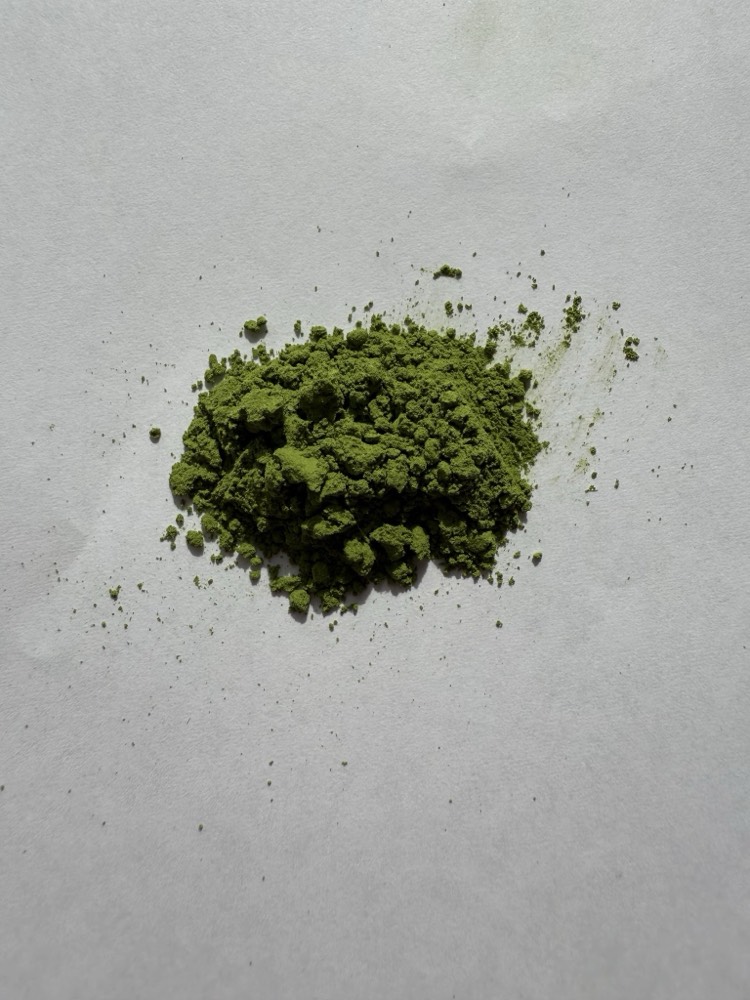
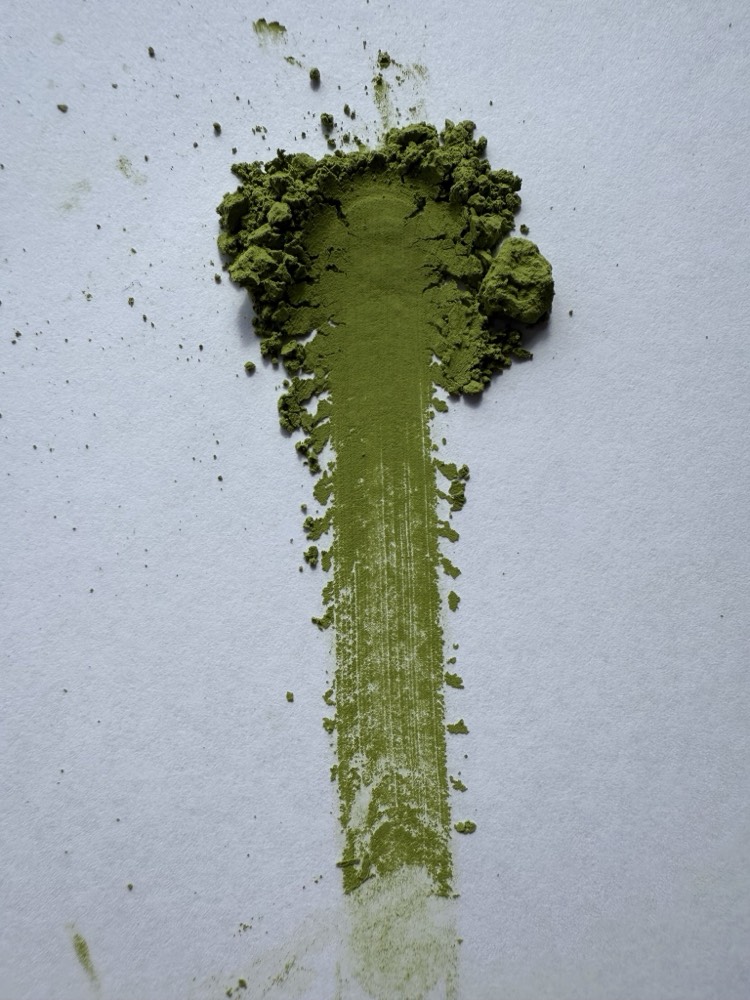
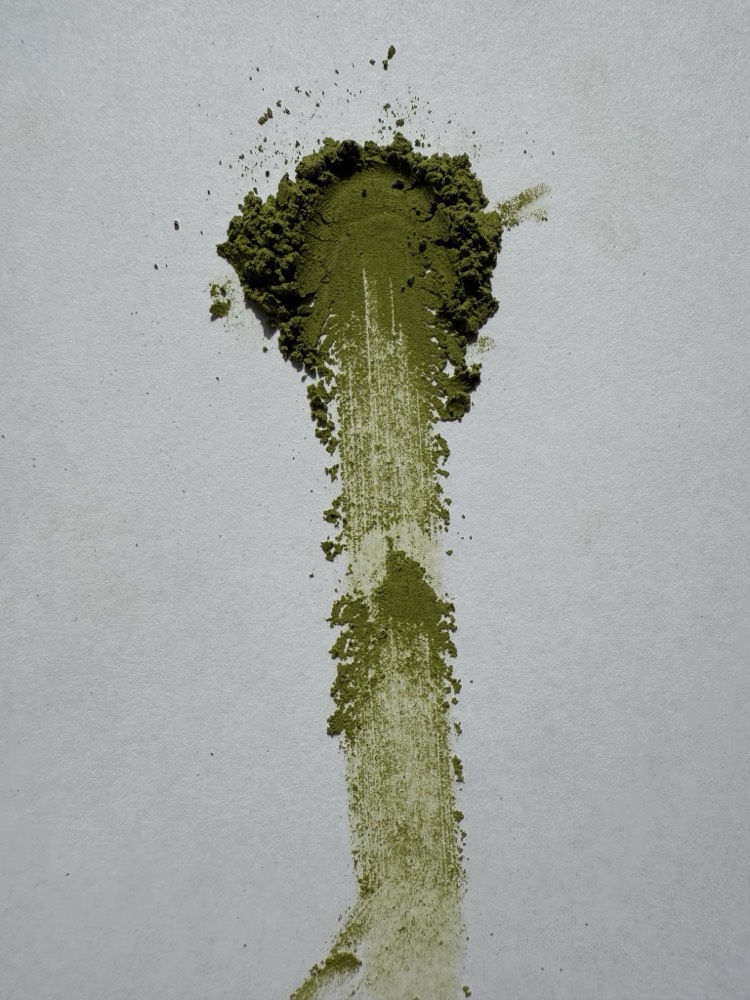
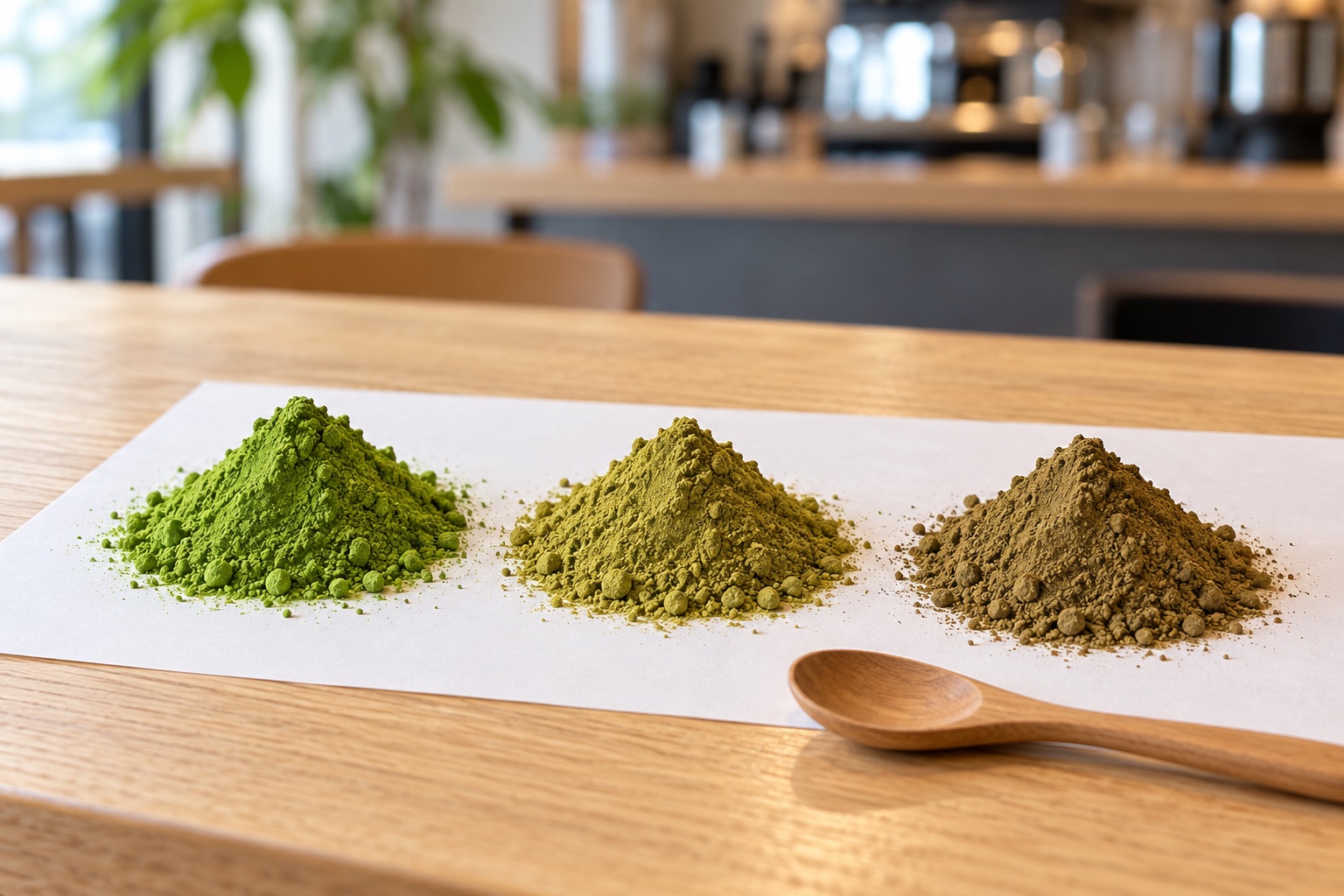
In the official recipes, Paper & Tea uses its own organic ceremonial matcha (“ceremonial” is a seller’s term with no public standard), Rishi Tea uses its barista matcha, and Moya Matcha uses its everyday matcha. Differences in harvest and raw material are in Matcha grades, and differences by region are in Matcha origins.
The following is our suggestion.
- Make each candidate matcha in your recipe for the flavours you will serve (for example vanilla and Earl Grey)
- Line them up next to an unflavoured matcha latte and check whether the matcha’s bitterness and aroma come through
- With the sweetness the same, compare the colour (the green in milk)
- Work out the matcha cost per drink and decide together with your selling price
Adding it to the menu (our suggestion)
- To start with one flavour, choose vanilla or Earl Grey, which were common on the menus we checked, and offer a less sweet option
- Put the infant warning on the menu before serving drinks with honey
- Make only as much infused milk as you will use in a day to a few days, and track it by the date the milk was opened
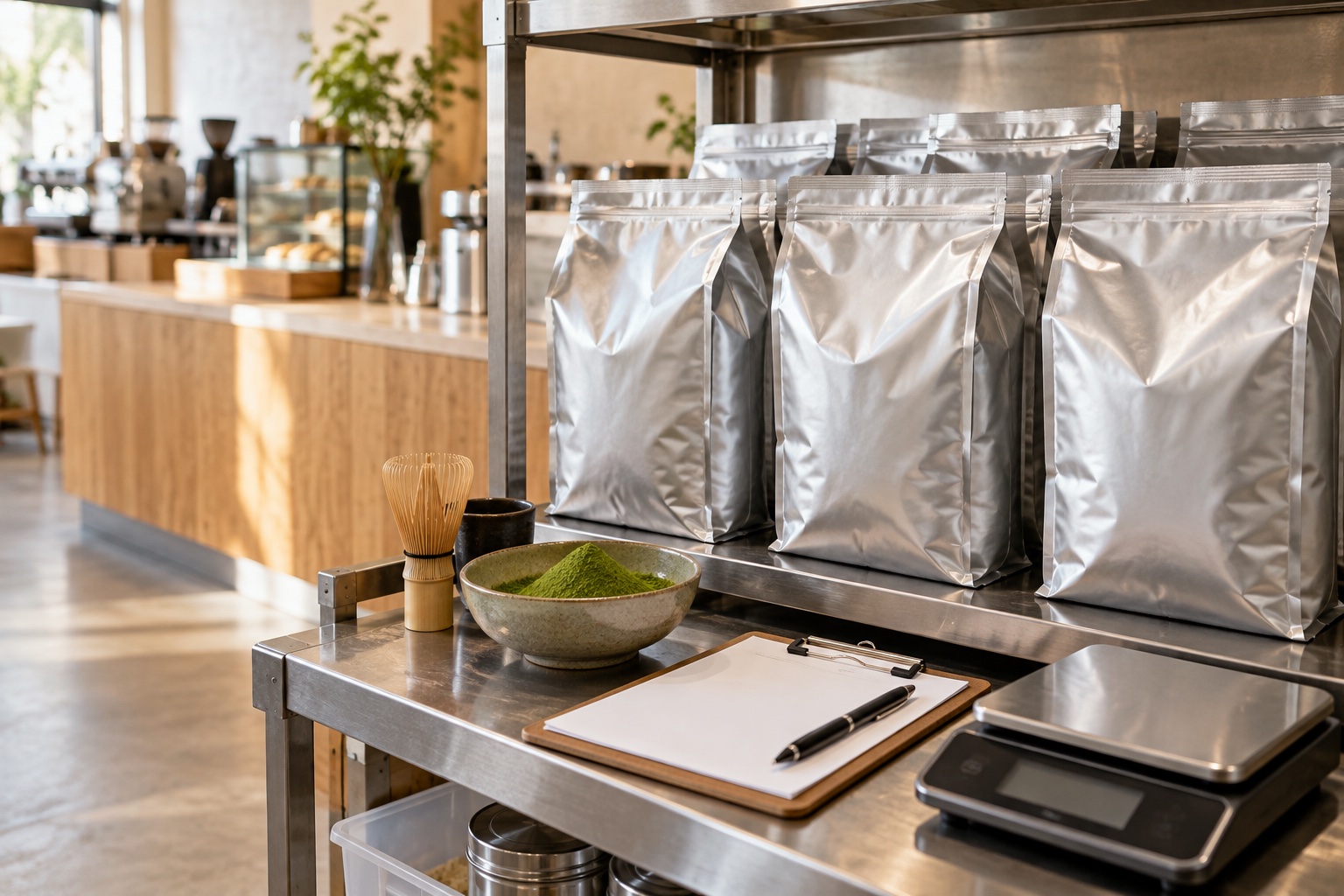
Omakase Matcha supplies matcha sourced from Uji, Yame, Shizuoka, Kagoshima and Miyazaki. Orders start at 1 kg, you can choose up to 3 samples, and we can help adjust the recipe for your menu. To request samples for testing, use the sample request page.
Sources
- Grab Singapore, “Matcha Singapore: Order Matcha Drinks Delivered to Your Door” https://www.grab.com/sg/articles/food/matcha-singapore/
- Grab Singapore, “Matcha Orchard: Find and Order Matcha Cafes in Singapore” https://www.grab.com/sg/articles/food/matcha-orchard/
- Starbucks Singapore, “Beverages” https://www.starbucks.com.sg/menu/beverages
- Luckin Coffee Singapore, “Menu” https://www.luckincoffee.com.sg/menu
- Wongnai, “Café Amazon” https://www.wongnai.com/delivery/businesses/577439iz/order
- Wongnai, “daia.muncha” https://www.wongnai.com/delivery/businesses/3840410sp/order
- Wongnai, “UNDER BY” https://www.wongnai.com/delivery/businesses/3668938GR/order
- Dutch Bros, “Dutch Bros Launches Matcha and New Drinks for a Flavor Fusion” (1 May 2025) https://www.dutchbros.com/news-events/dutch-bros-launches-matcha-and-flavor-fusion-drinks/
- VegNews, “Ube, Matcha, and Lavender Take Over Peet’s Spring Drinks Menu” (31 March 2026) https://vegnews.com/peets-coffee-spring-menu-vegan
- Blank Street, “Menu” https://www.blankstreet.com/menu
- Paper & Tea, “Lavender Matcha Latte” (9 April 2026) https://www.paperandtea.com/blogs/journal/lavender-matcha-latte-recipe
- Monin Canada, “Iced Lavender Oat Milk Matcha” https://monin.ca/products/iced-lavender-oat-milk-matcha
- Moya Matcha, “Vanilla matcha iced latte” https://lebanon.moyamatcha.com/vanilla-matcha-iced-latte/
- Rishi Tea & Botanicals, “Jasmine Green Tea Matcha Latte” https://www.rishi-tea.com/blogs/journal/jasmine-green-tea-matcha-latte
- Rishi Tea & Botanicals, “Matcha Rose Latte” https://rishi-tea.com/blogs/journal/matcha-rose-latte
- Neilson, “Earl Grey Matcha Latte” https://www.neilsondairy.com/en/recipes/earl-grey-matcha-latte
- Dallmayr Academy, “Honey Matcha Latte” https://www.dallmayr.com/deen/academy/magazine/honey-matcha-latte/
- National Honey Board, “Shaken Honey Matcha Latte” https://honey.com/recipe/shaken-honey-matcha-latte
- National Honey Board, “Honey Simple Syrup” https://honey.com/recipe/honey-simple-syrup
- National Honey Board, “FAQ” https://honey.com/faq
- Ippodo Tea, “How to Make a Matcha Latte” https://ippodotea.com/blogs/recipes-to-brew-japanese-tea/matcha-latte-recipe
- Penn State News, “Vanilla makes milk beverages seem sweeter” (20 June 2019) https://www.psu.edu/news/research/story/vanilla-makes-milk-beverages-seem-sweeter
- US Food and Drug Administration, “FDA Food Code 2022” https://www.fda.gov/media/164194/download
- Ministry of Health, Labour and Welfare, “ハチミツを与えるのは1歳を過ぎてから。” (Give honey only after age 1, in Japanese) https://www.mhlw.go.jp/stf/seisakunitsuite/bunya/0000161461.html
- Consumer Affairs Agency, “ハチミツによる乳児のボツリヌス症” (Infant botulism from honey, in Japanese) https://www.caa.go.jp/policies/policy/consumer_safety/food_safety/food_safety_portal/microorganism_virus/contents_001
- US Centers for Disease Control and Prevention, “Botulism Prevention” https://www.cdc.gov/botulism/prevention/index.html
- Food Safety Commission of Japan, fact sheet “食品中のカフェイン” (Caffeine in food, in Japanese) https://www.fsc.go.jp/factsheets/index.data/factsheets_caffeine.pdf
- eCFR, “21 CFR 169.175 Vanilla extract” https://www.ecfr.gov/current/title-21/chapter-I/subchapter-B/part-169/subpart-B/section-169.175
- eCFR, “21 CFR 182.20 Essential oils, oleoresins (solvent-free), and natural extractives” https://www.ecfr.gov/current/title-21/chapter-I/subchapter-B/part-182/subpart-A/section-182.20