
 Reviewed by: Takahiro Sugiyama (CEO, meguri Inc.)
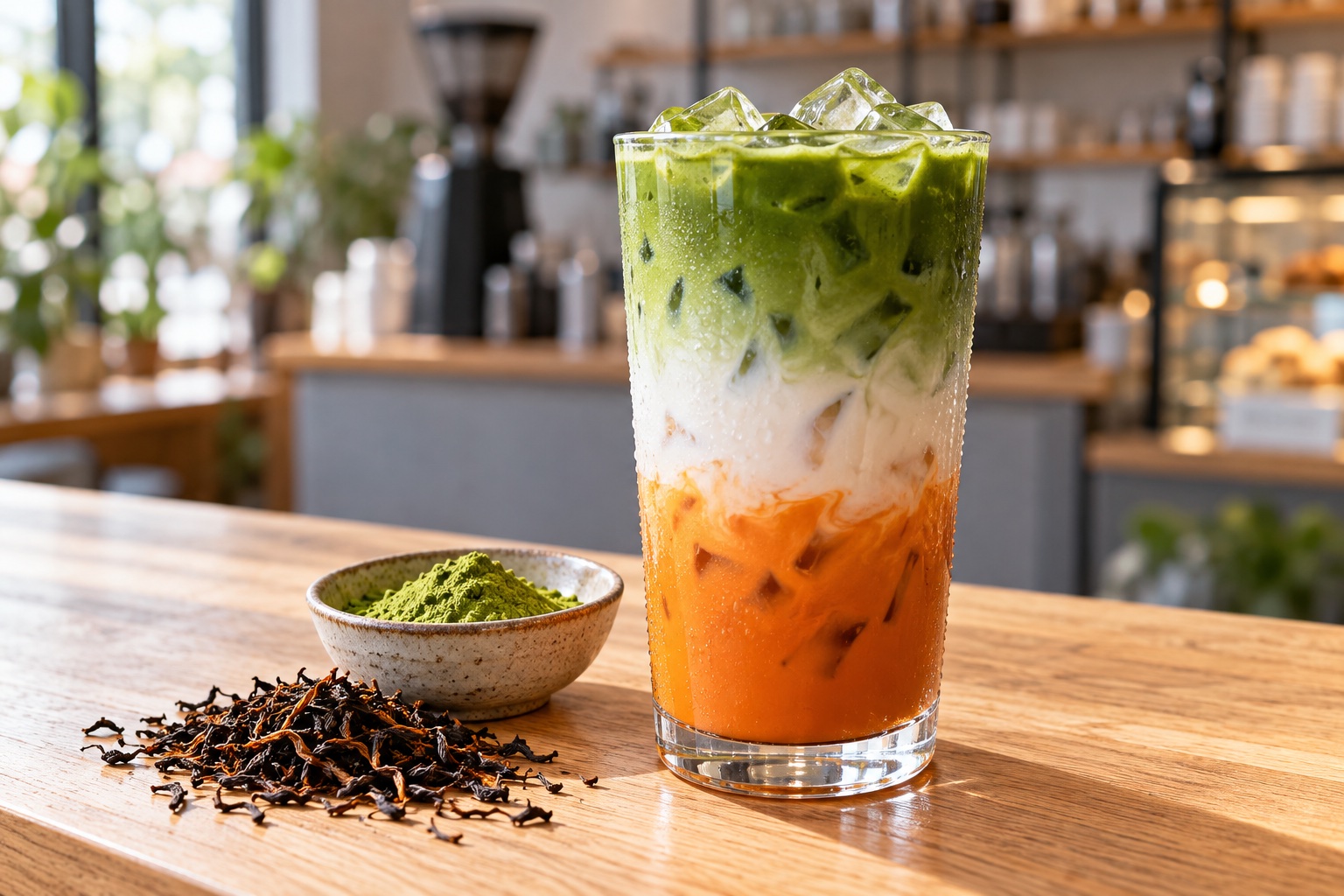
A two-layer drink of orange Thai tea topped with matcha is on café menus in Thailand. In English it is called “Thai Tea Matcha” or “Matcha Thai Tea”, and in Thai “มัทฉะชาไทย”. This article checks menu examples and what Thai tea is made of, then covers recipe ratios from makers and tea companies, how to layer it, how much condensed milk to use, the rules on colouring, prep and cost.
What is Thai tea matcha?
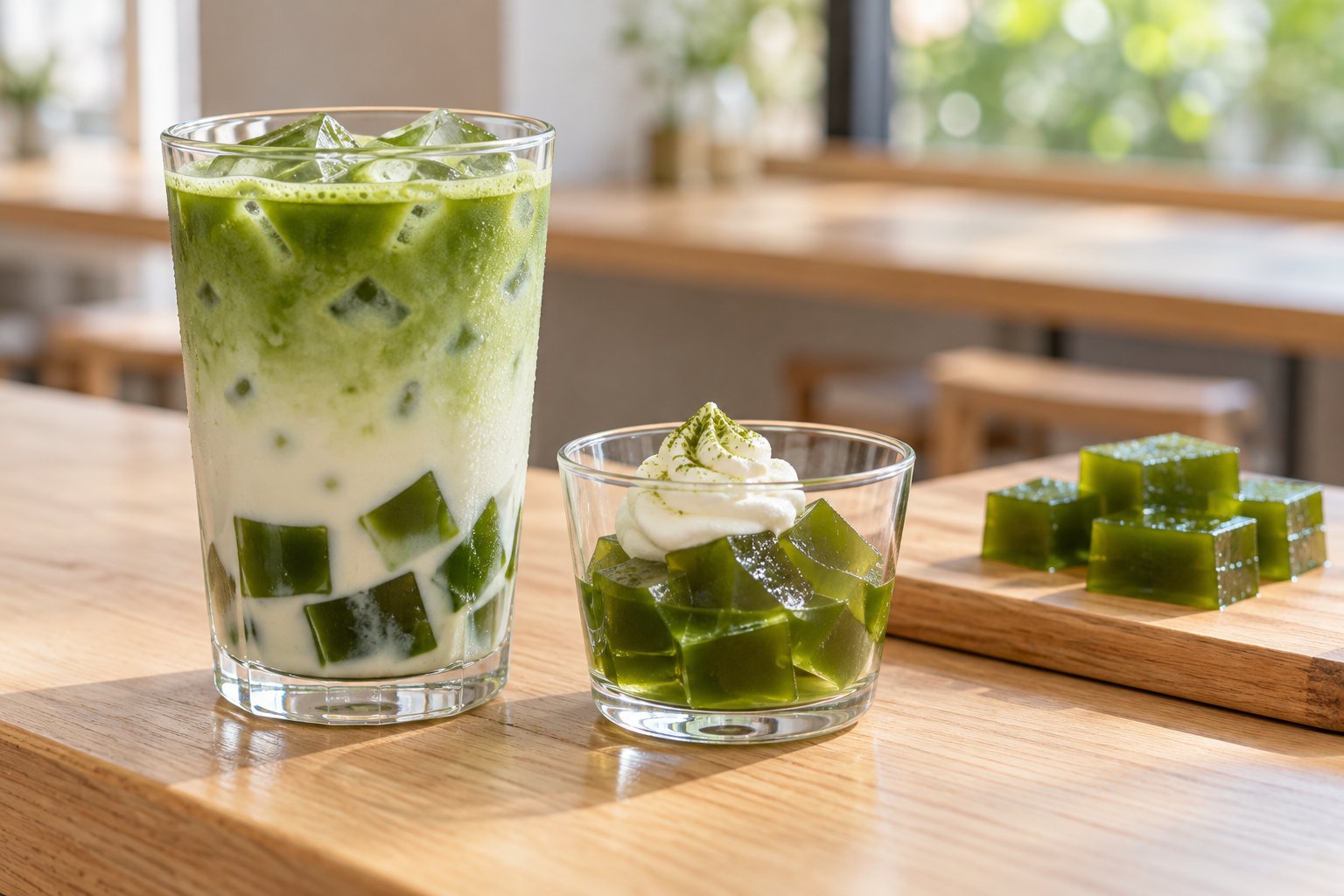
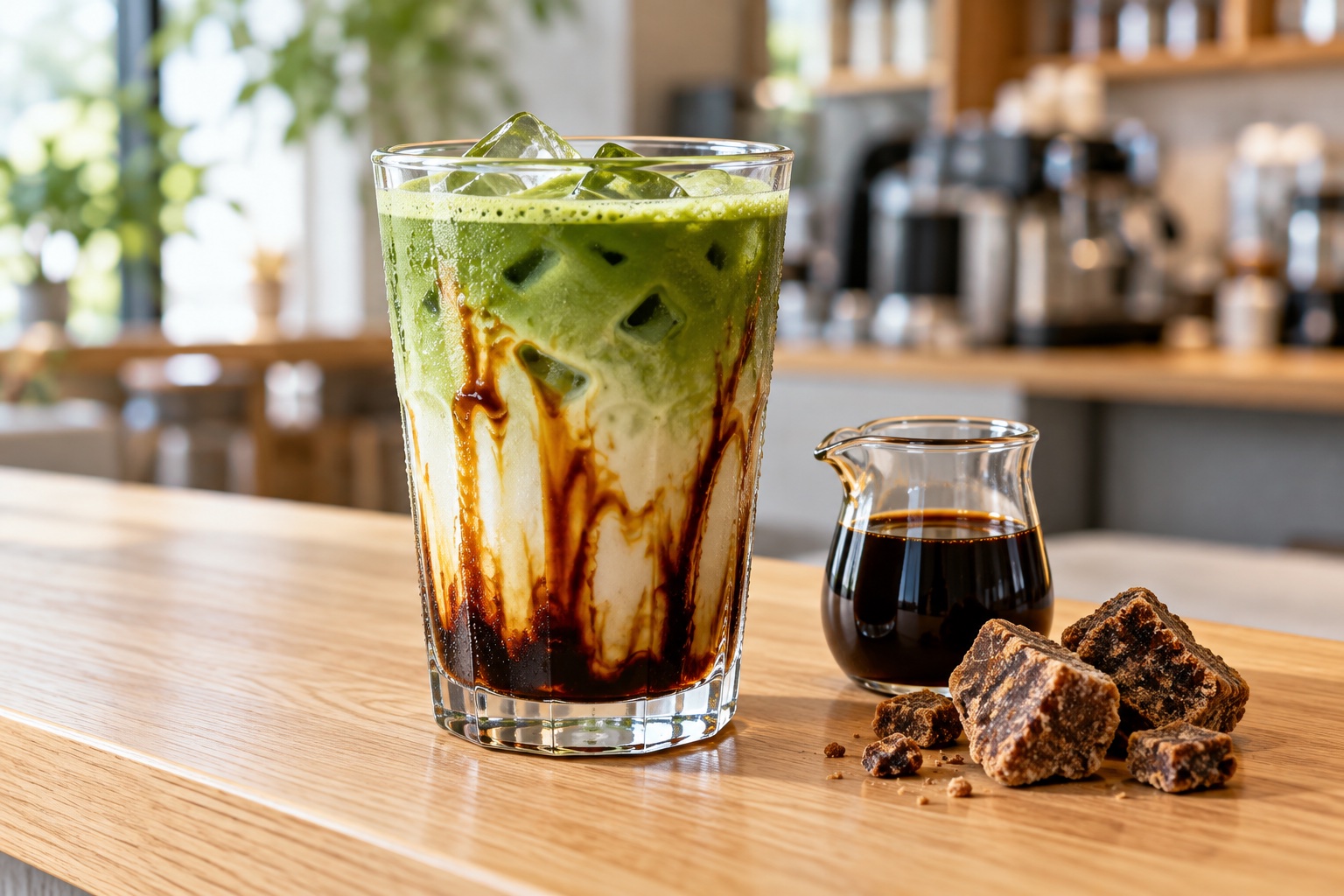
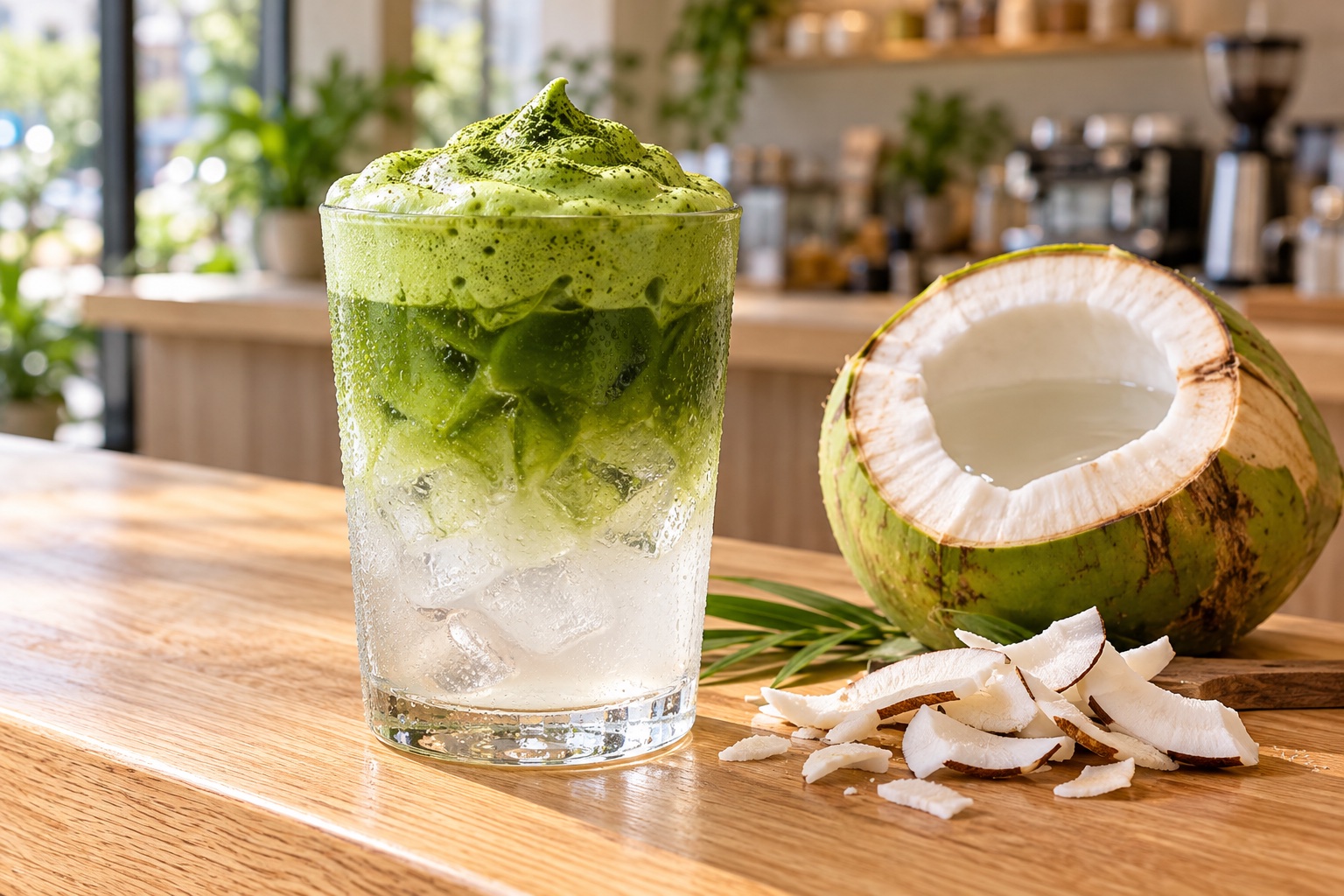
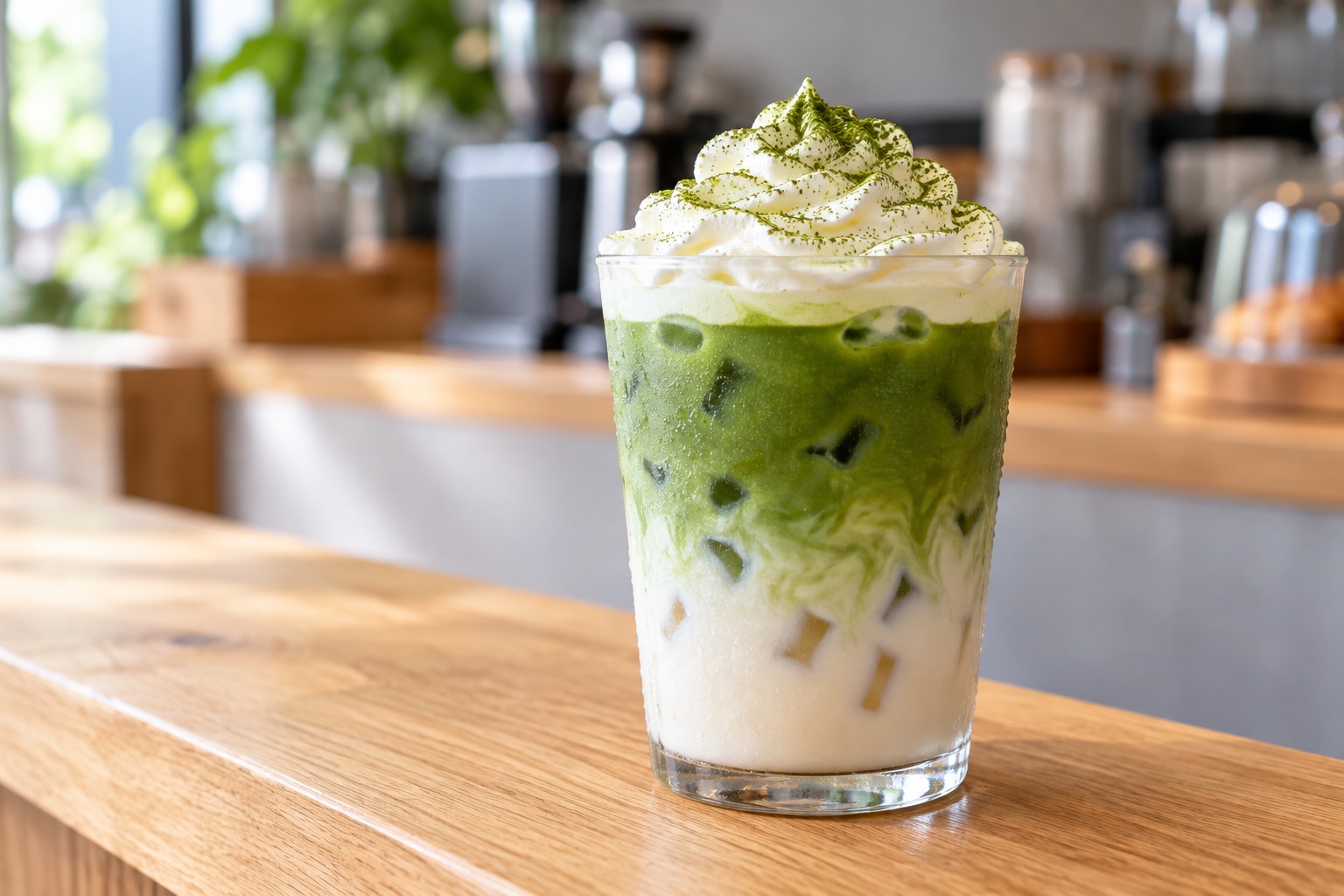
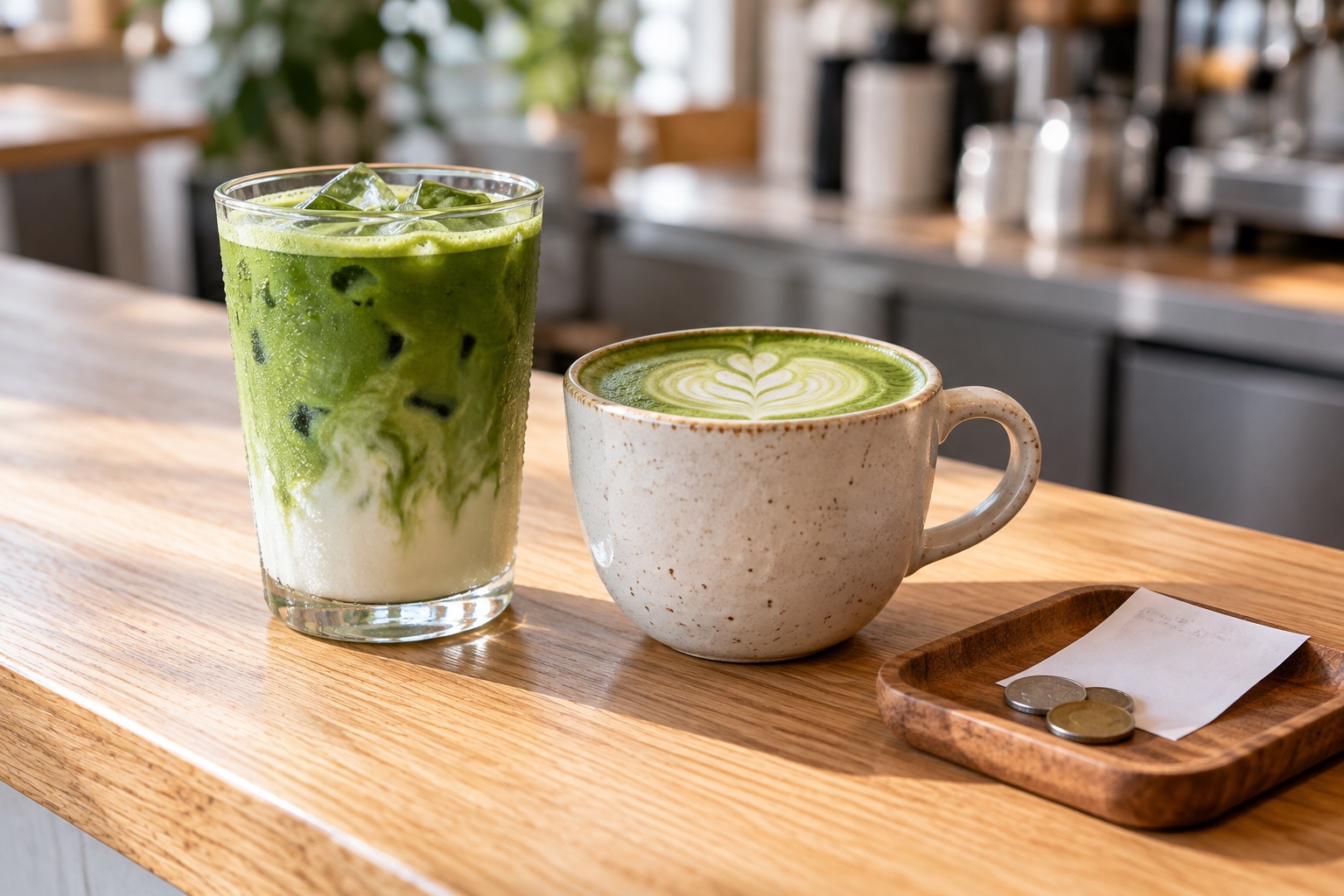
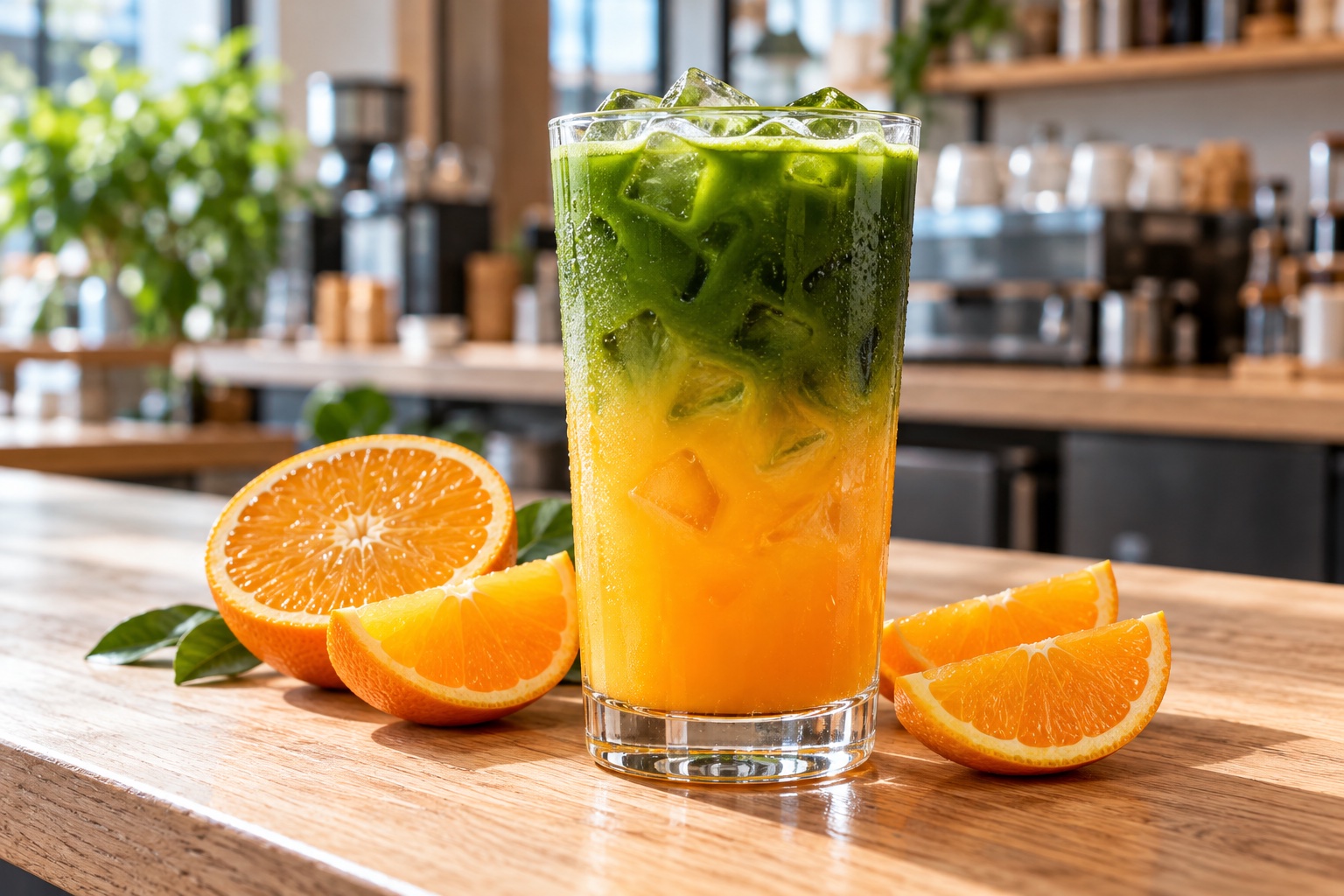
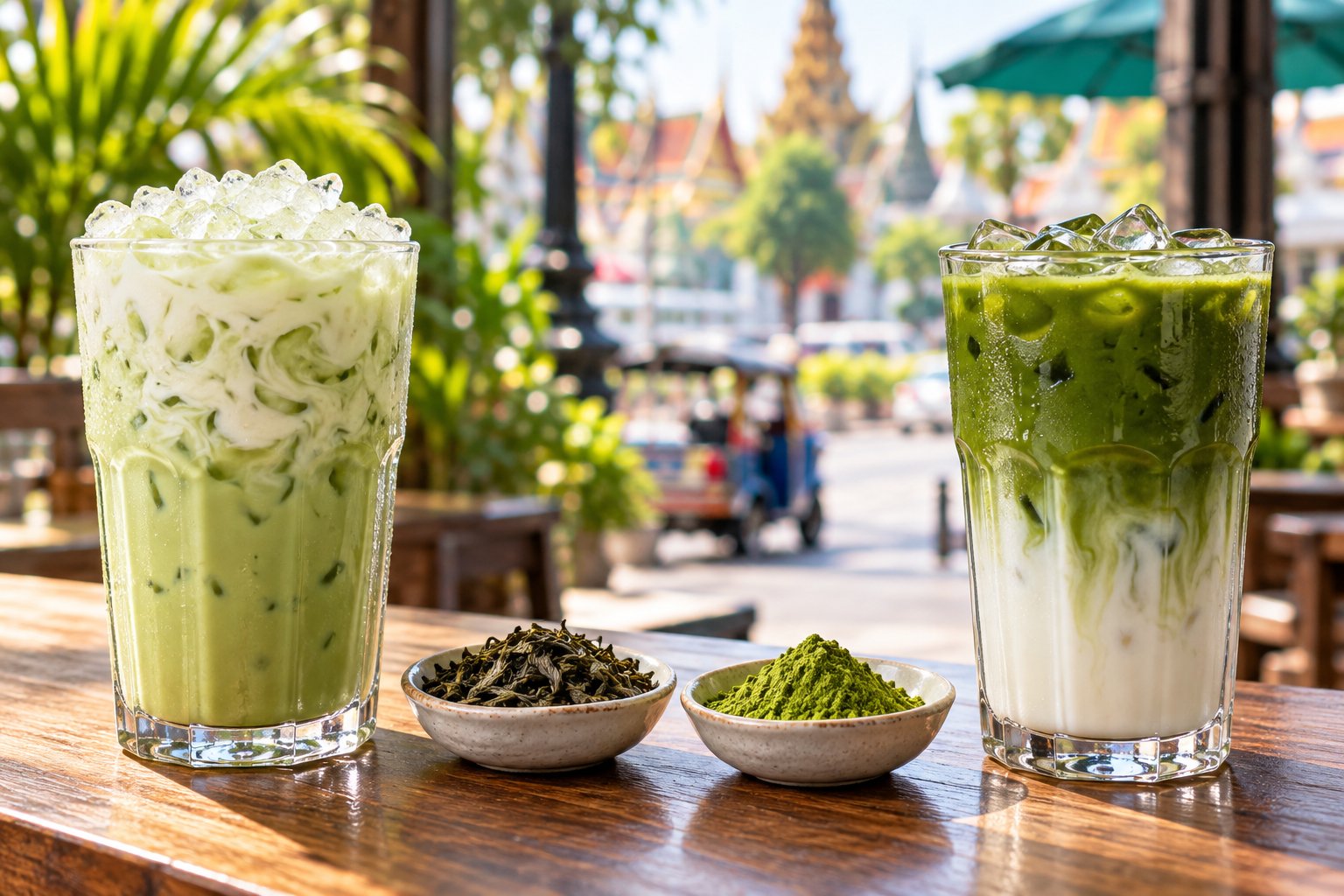
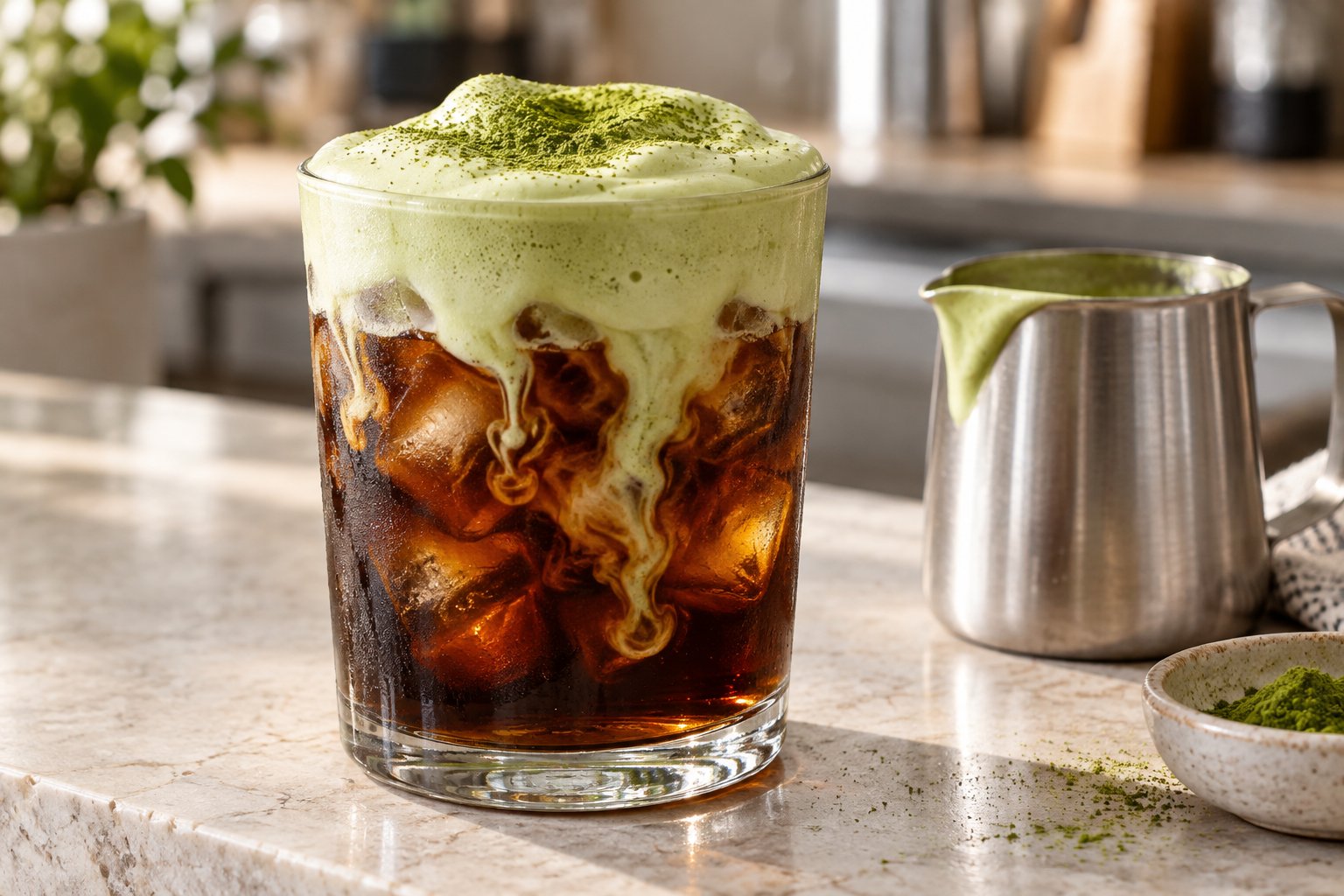
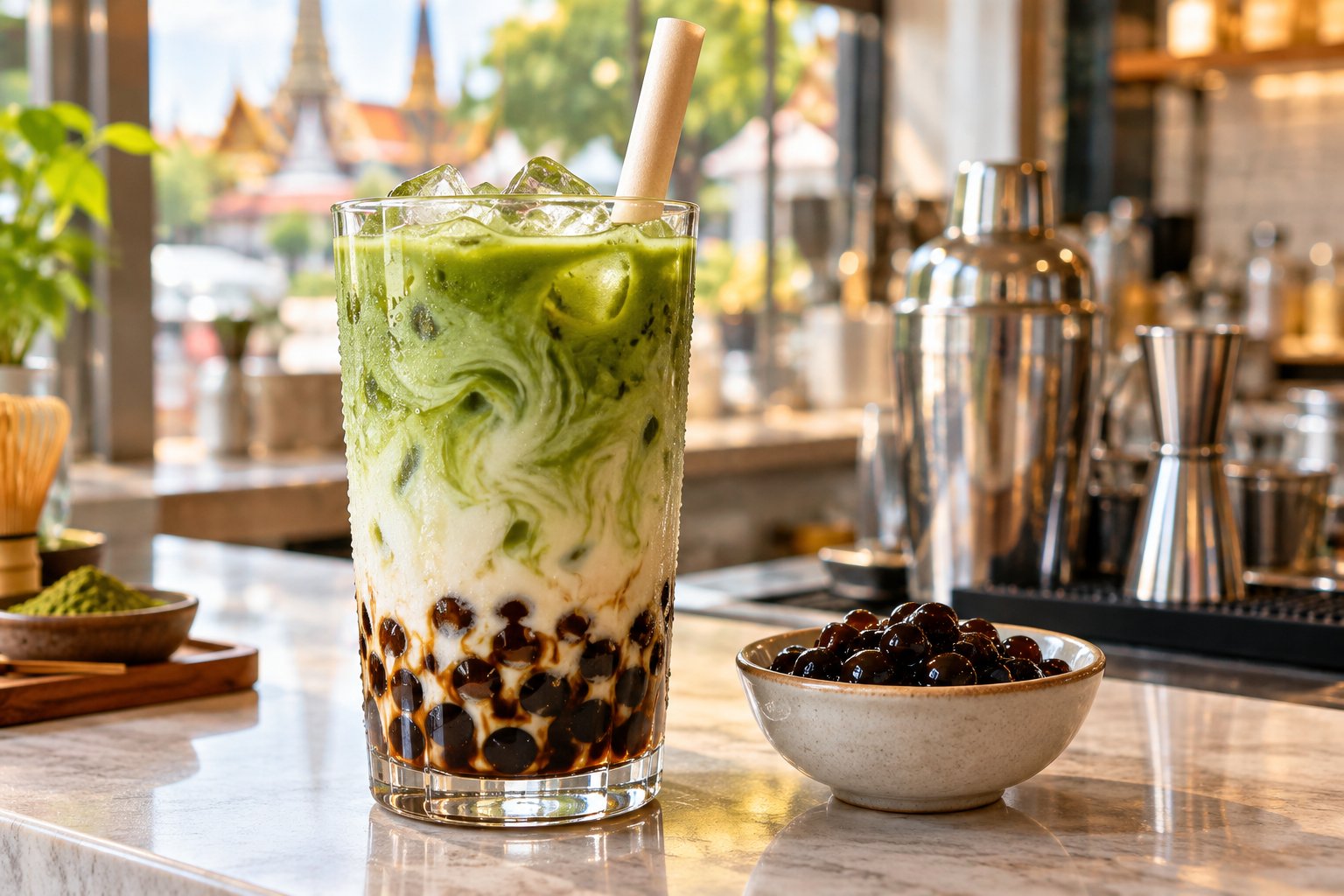
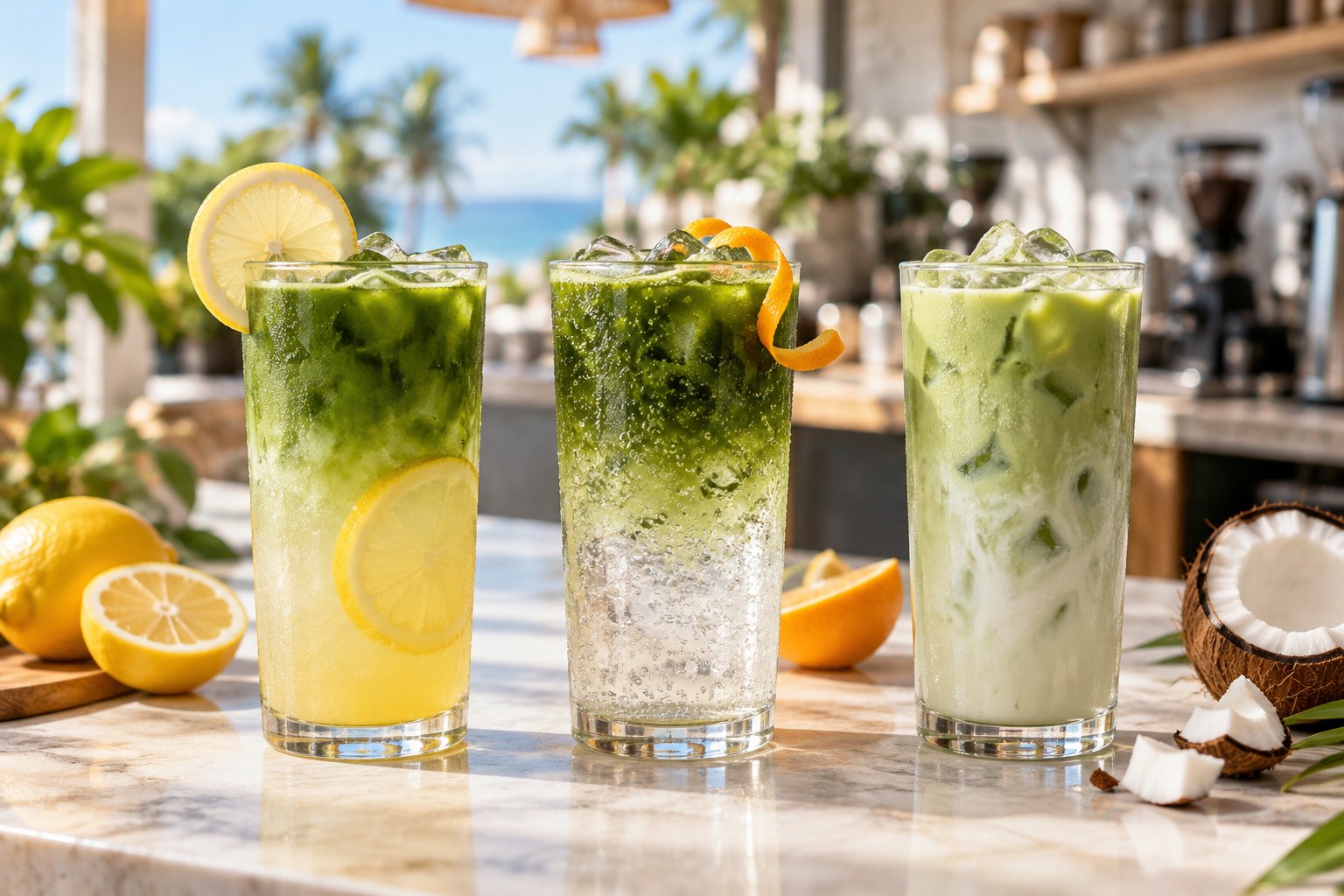
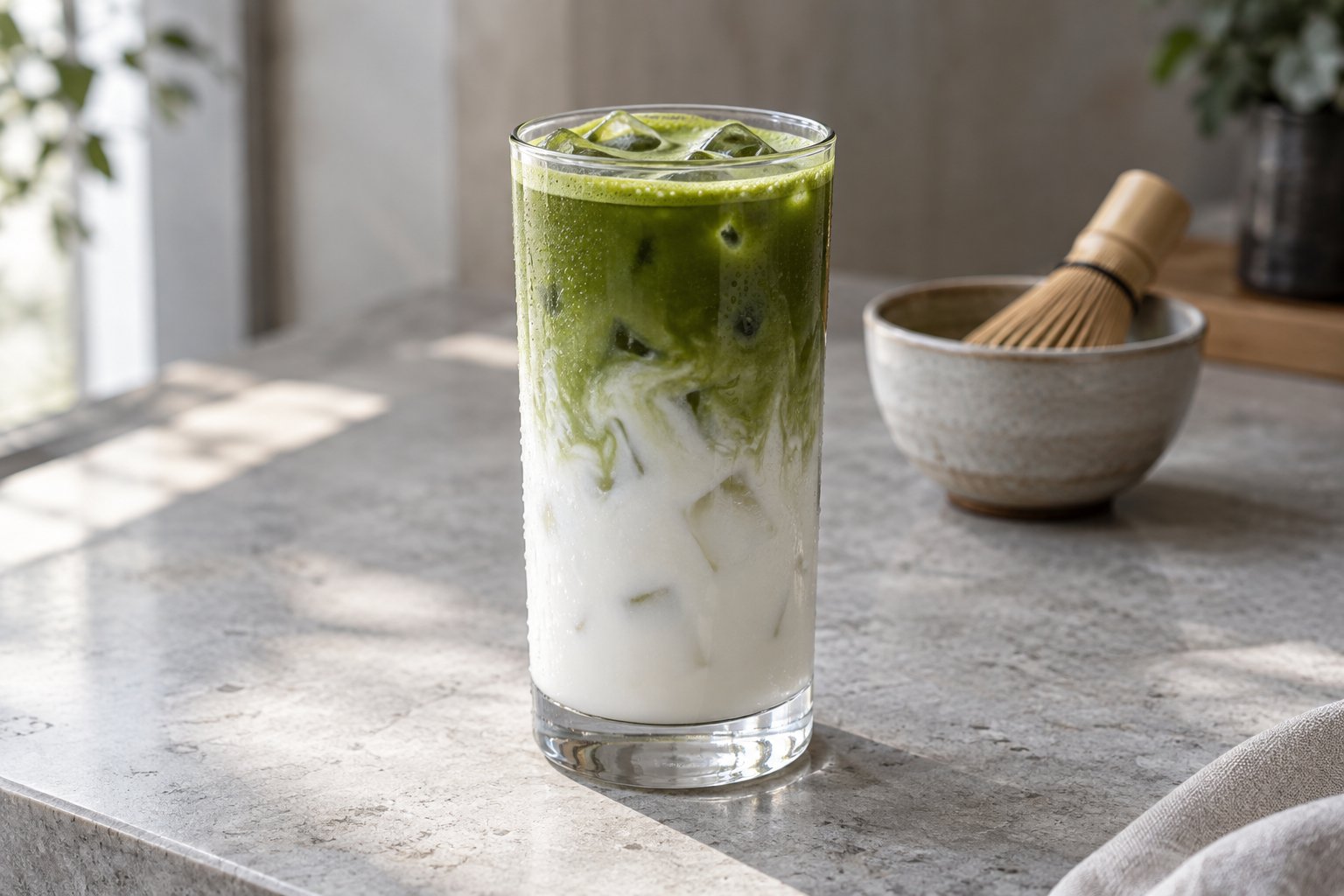
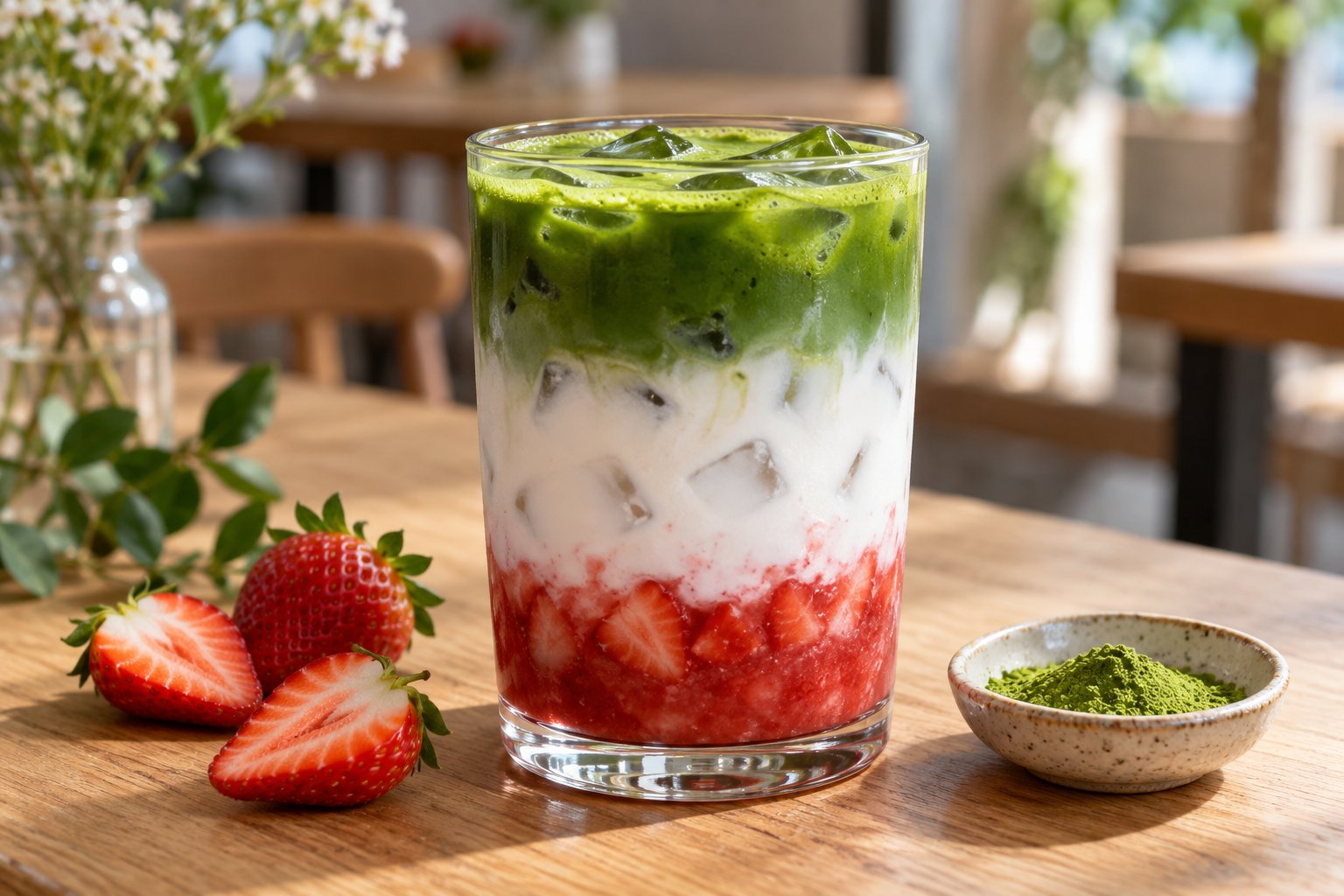
Thai tea matcha is a drink with a layer of matcha on top of a layer of Thai tea sweetened with condensed milk. The Thai café chain Inthanin sells it under the name “มัทฉะชาไทยลาเต้”.
Menus at a Thai café
Delivery listings for two Inthanin branches (October 2026) show the same prices.
| Menu item | Hot | Iced |
|---|---|---|
| มัทฉะชาไทยลาเต้ (Matcha Thai Tea Latte) | 65 baht | 75 baht |
| ชาไทยลาเต้ (Thai Tea) | 50 baht | 60 baht |
| มัทฉะลาเต้ (matcha latte) | 60 baht | 75 baht |
The iced Thai tea matcha costs 75 baht, the same as the matcha latte at the same shop and 15 baht more than the Thai tea. At a shop of the long-established Thai tea brand ChaTraMue (ชาตรามือ), Thai tea and matcha latte are sold separately, and no drink combining the two was listed. In Singapore and Indonesia, we did not find this drink on the official café menus we were able to open.
What is Thai tea?
According to ChaTraMue’s official website, in 1945 the company began selling red (black) tea blends for Thai Milk Tea served over ice, because hot Chinese tea did not sell well in Thailand’s hot climate. In 2020 a deputy secretary-general of Thailand’s FDA explained that Thai tea is Ceylon tea with added flavour and colour, and that Thai iced tea (ชาเย็น) contains water, sugar and milk (as reported by the newspaper Matichon).
How it differs from Thai green milk tea
Thailand also has a green “ชาเขียวนมเย็น” made from a green tea mix. That drink gets its green colour from the tea mix alone and is different from a drink layered with matcha. The differences are covered in Thai Green Tea vs Matcha Latte.
Comparing official recipes
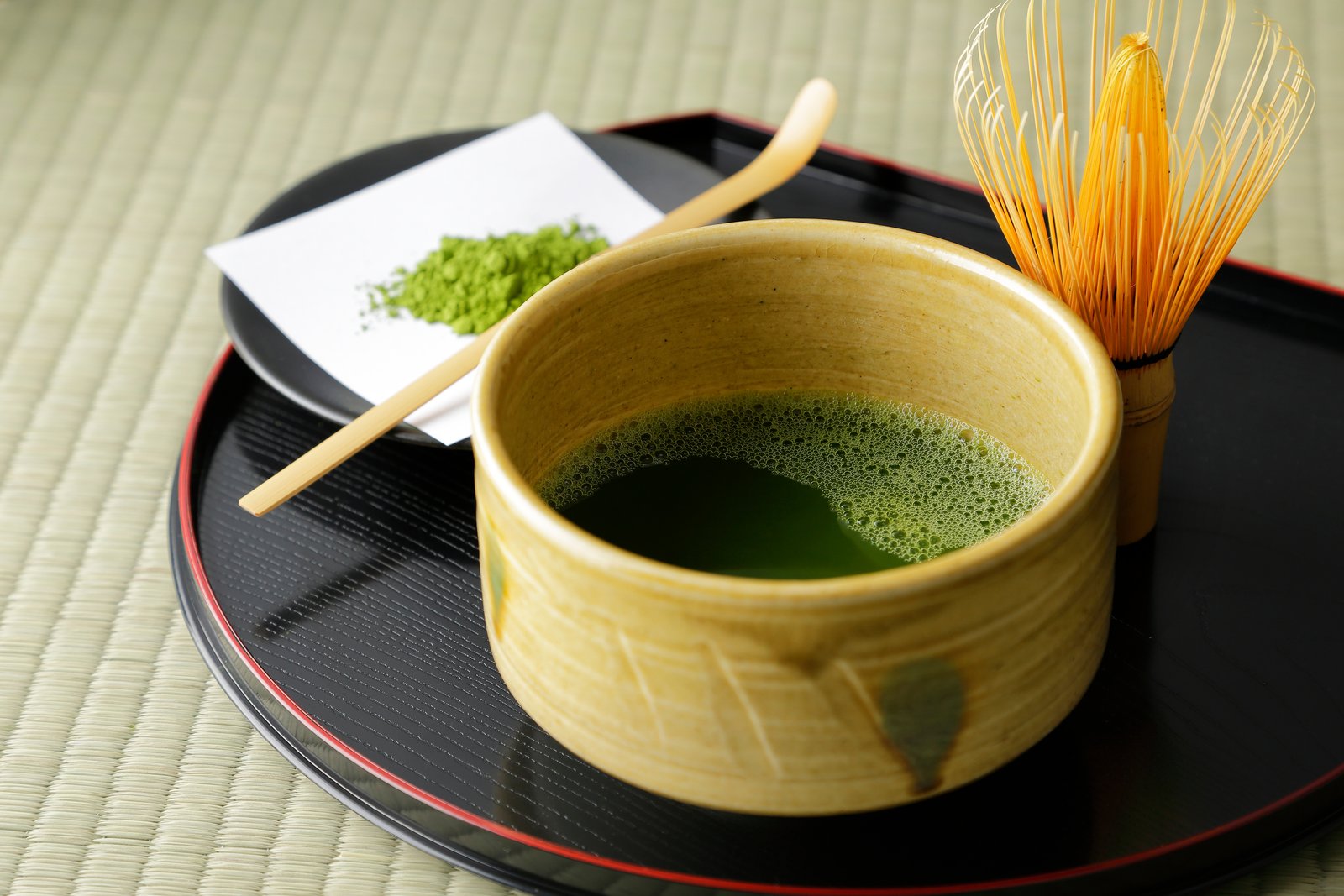
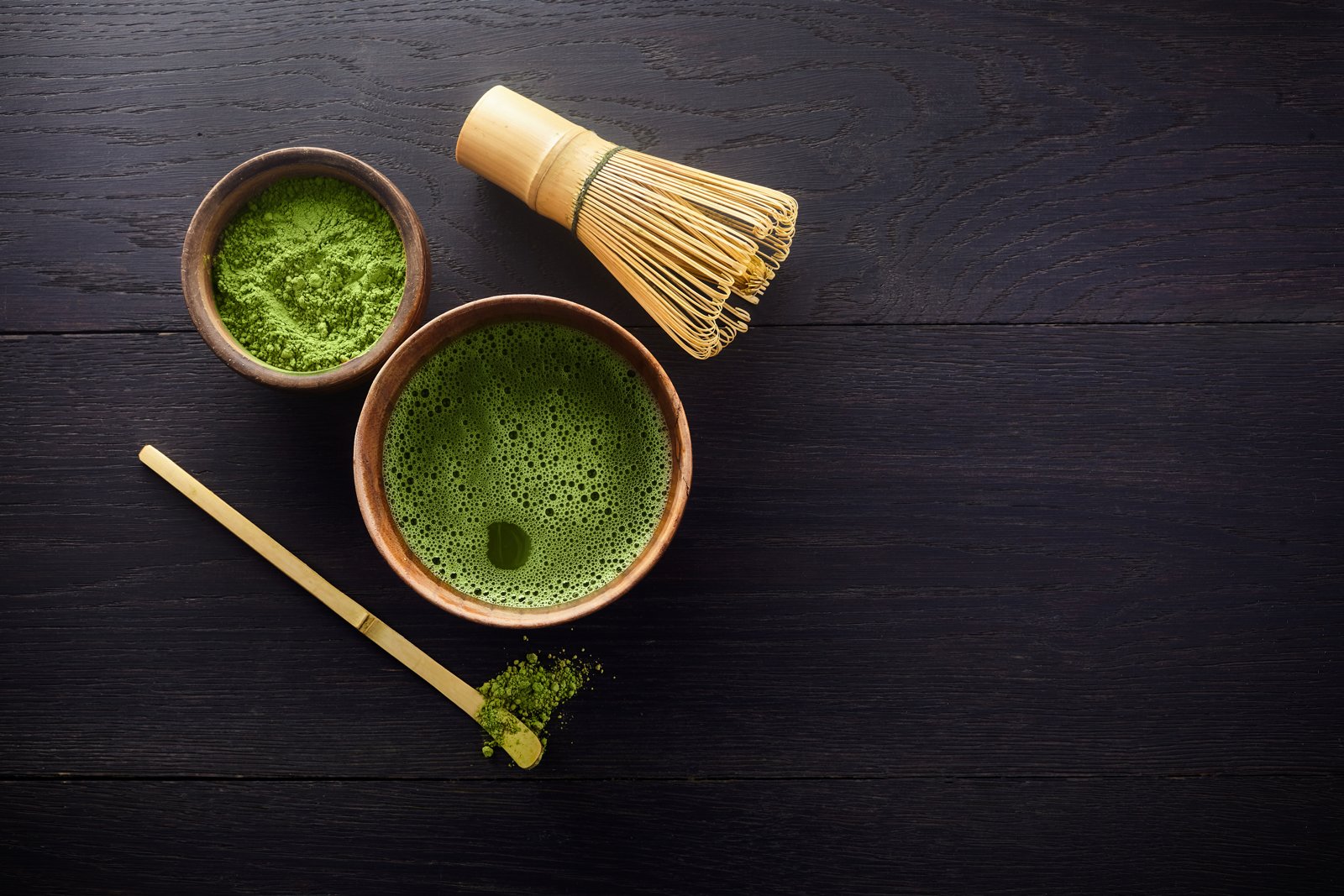
Thai tea recipes make a large amount of tea and add sweetener and milk afterwards. Matcha recipes whisk around 3g in a little hot water and pour it over milk.
Thai tea ratios
| Source | Tea | Water | Milk | Sweetener | Serving |
|---|---|---|---|---|---|
| Thai-made tea mix (package recipe, listed by Bossen) | 1 tbsp tea leaves (for 2 servings) | 1,000ml boiling water, 3 to 5 minutes | 100g creamer (for 2 servings) | 100 to 200g sugar or condensed milk (for 2 servings) | 2 × 16oz |
| Bossen Thai Tea Powder (made in Taiwan; the powder contains sugar and creamer) | 36g powder | 150ml hot water | 20g creamer | 30ml fructose | 16oz |
Per serving, the tea mix recipe works out to the tea from 500ml of water, 50g of creamer and 50 to 100g of sugar or condensed milk. Bossen notes that too much tea, or leaving it too long, makes the drink bitter.
Source: Bossen, “Premium Thai Black Tea Mix” https://www.bossenstore.com/products/premium-thai-black-tea-mix-1 (The product page shows a ChaTraMue Brand package marked “ชาผงปรุงสำเร็จ THAI TEA MIX”, country of origin Thailand, and ingredients “TEA LEAVES, FD&C YELLOW #6.”)
Matcha ratios and a layered recipe
| Source | Matcha | Water | Milk | Sweetener | How it is poured |
|---|---|---|---|---|---|
| Ippodo Tea, Iced Matcha Latte | 1.5 tsp | 100ml water at 80°C | 100ml cold milk | Not stated | Matcha poured over milk and ice |
| Ito En, iced matcha latte | 3g | 30ml hot water | 130g milk | 5 to 10g syrup | Strong matcha poured gently over the ice |
| Nestlé Professional (Indonesia), MILO Matcha | Diluted matcha (20g powder) | 20ml hot water | 80ml UHT milk | 15g condensed milk in the bottom sauce | Sweet sauce, then milk, then matcha |
Nestlé Professional’s recipe puts a MILO sauce at the bottom instead of Thai tea, but the order of putting the sweet layer with condensed milk at the bottom and the matcha on top is the same as for Thai tea matcha.
What the tables show
A serving of Thai tea has 50 to 100g of sweetener, while the matcha recipes use about 0 to 10g. When the two are combined in one glass, the sweetness is set almost entirely by the condensed milk in the Thai tea. Whisking the matcha thick in a little hot water keeps the amount poured on top small, and the green layer is not diluted.
How to layer it and in what order
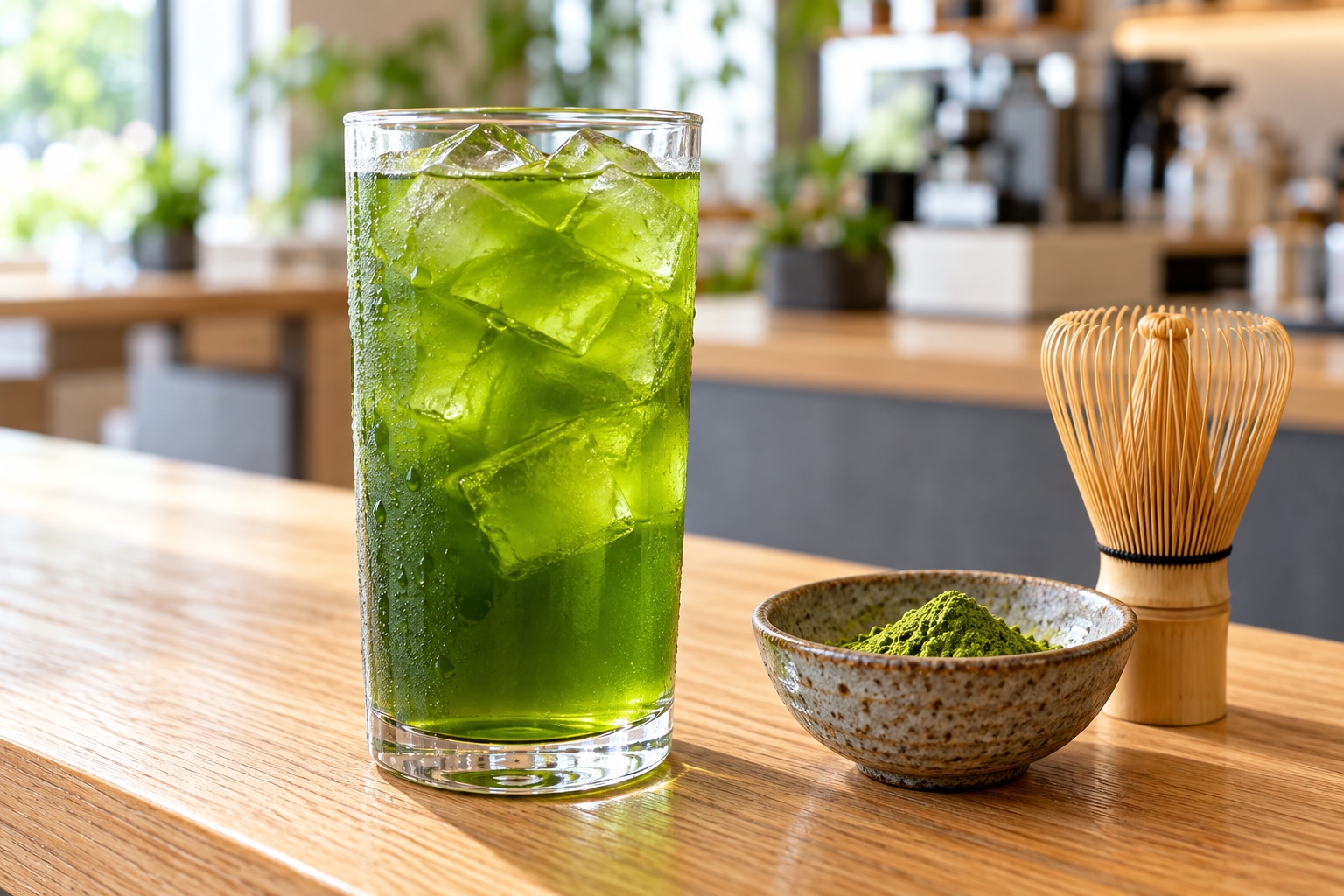
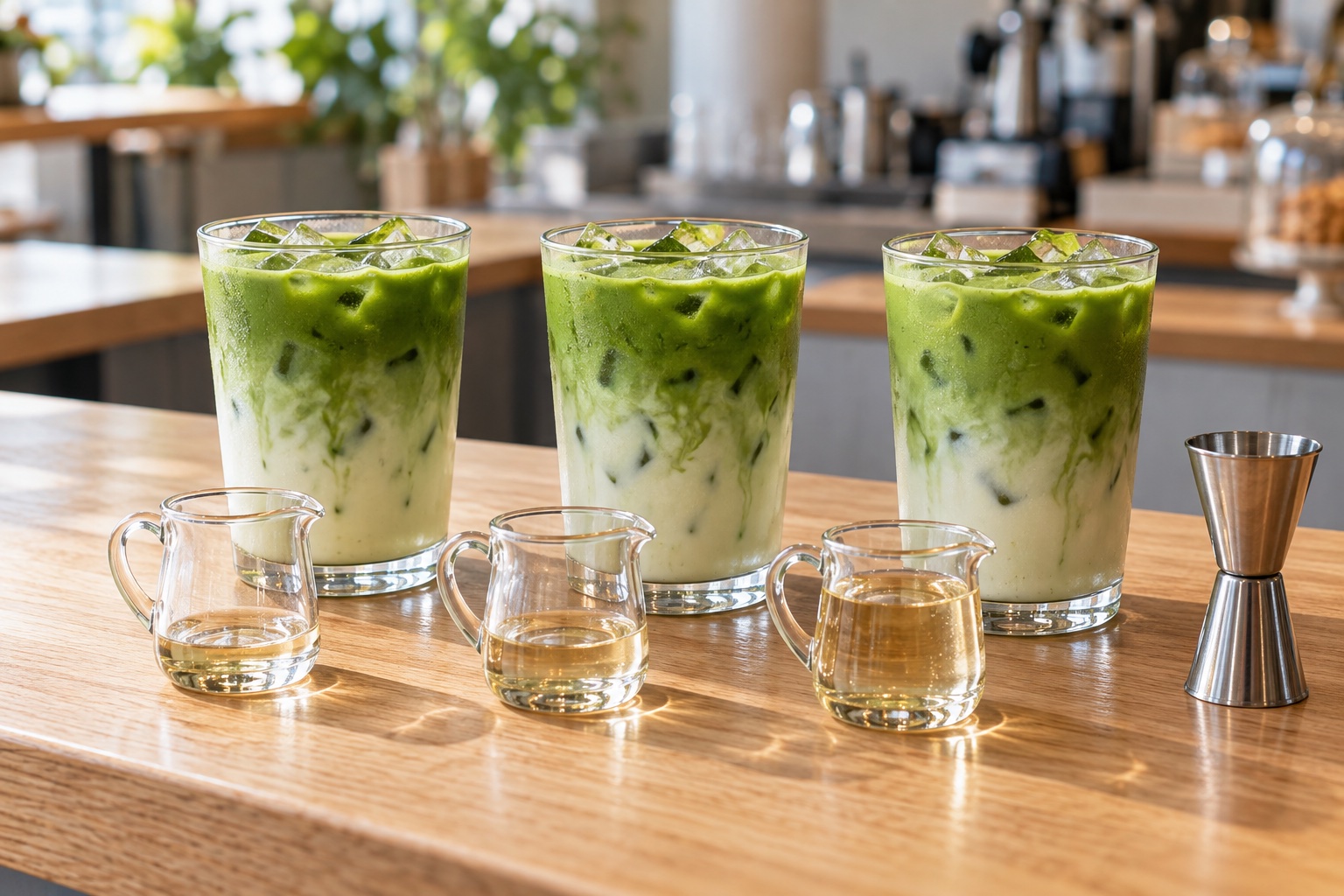
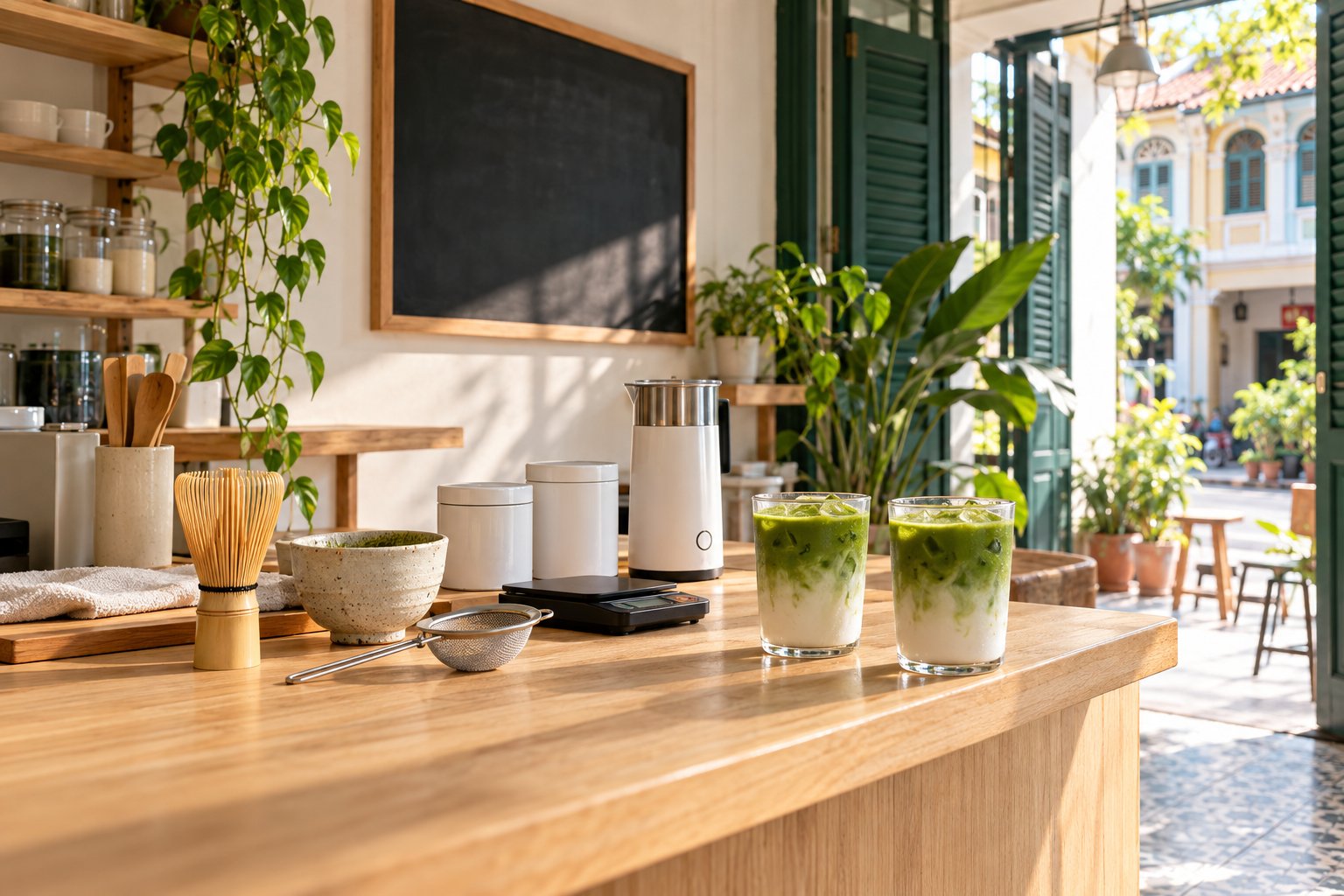
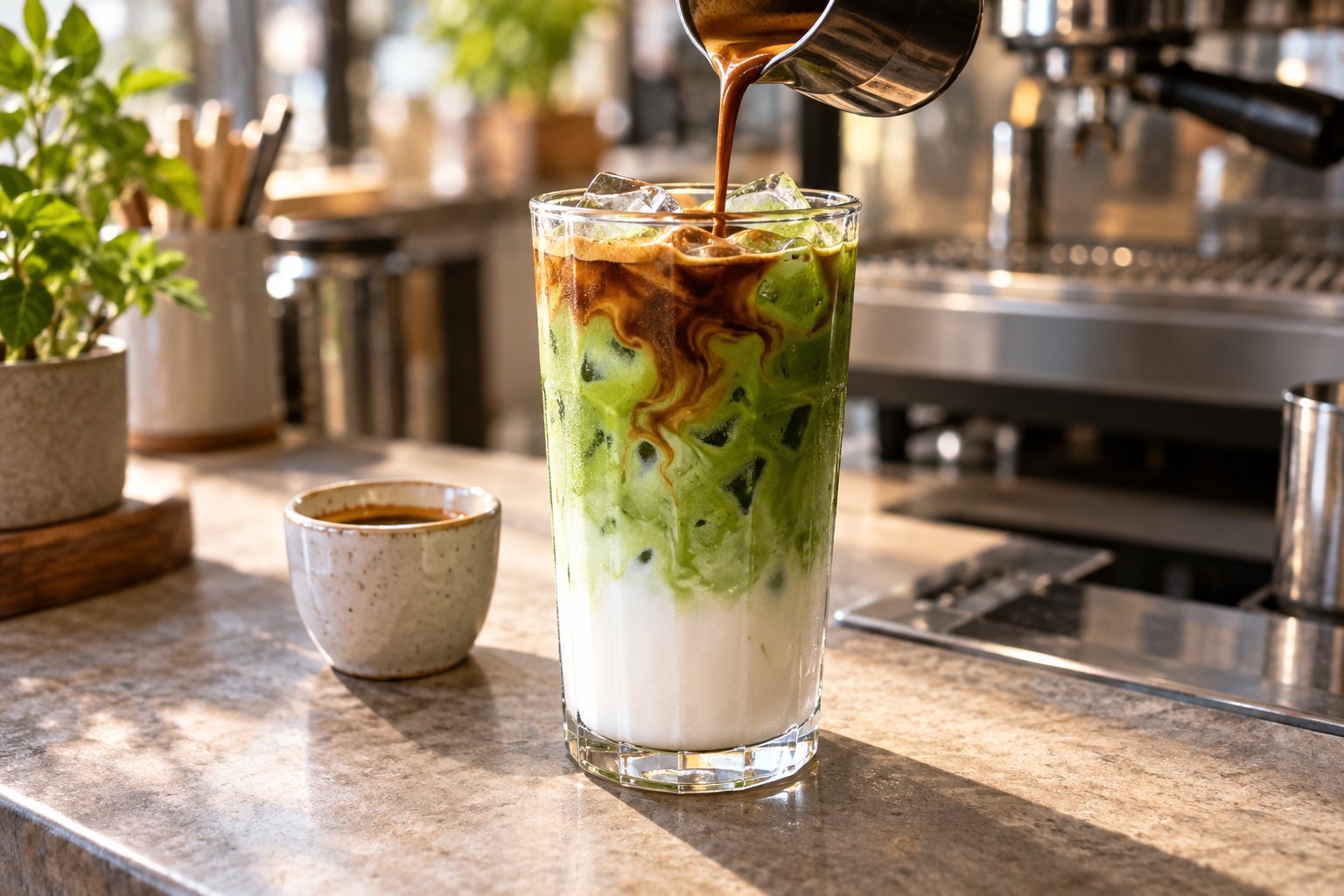
Pour the sweet, cold Thai tea at the bottom and unsweetened matcha last, on top, and the layers separate. The basic rule is to make the lower liquid heavier and the upper liquid lighter.
Differences in weight
According to the U.S. Geological Survey (USGS), the density of water (its weight per volume) is lower when warmer and higher when more is dissolved in it. The weight of dairy products can be calculated from the “grams per fluid ounce” in the USDA’s food database.
| Per fluid ounce (about 29.6ml) | USDA value | Per ml (our calculation) |
|---|---|---|
| Sweetened condensed milk | 38.2g | about 1.29g |
| Evaporated milk (unsweetened condensed milk) | 31.5g | about 1.07g |
| Milk (3.25% milk fat) | 30.5g | about 1.03g |
Sweetened condensed milk is about 25% heavier than the same volume of milk. Thai tea with condensed milk dissolved in it is heavier than matcha whisked only in water, so it stays at the bottom.
Pouring order
- Weigh condensed milk into the glass, pour in the cooled Thai tea and stir well
- Fill the glass with ice
- Pour milk or evaporated milk against the ice (if you add a milk layer)
- Pour the matcha slowly over the ice, against the back of a spoon
Ito En gives pouring strong matcha gently over the ice as the key to two layers. Letting the ice slow the pour makes it harder for the matcha to mix into the layer below.
Why the layers mix
Following the USGS explanation, the layers mix in cases like these (our view).
- Condensed milk or syrup was added to the matcha, making it heavier than the Thai tea below
- The Thai tea is still warm (warm liquid is lighter)
- The matcha was poured all at once from high up
Matcha is a powder suspended in the liquid, so it sinks over time. How it sinks is covered in Matcha Lemonade, Tonic and Soda, and an example of layering with espresso in Dirty Matcha.
How to make it: iced and hot
Brew the Thai tea in batches, and weigh the condensed milk and matcha for each order. The ratios in this section are our view, based on the official recipes above.
Iced (one 16oz serving or so)
| Ingredient | Amount |
|---|---|
| Thai tea (unsweetened, cooled) | 150 to 200ml |
| Condensed milk | The amount set for your shop’s sweetness levels |
| Milk or evaporated milk | 30 to 50ml (optional) |
| Matcha | 3g |
| Hot water (70 to 80°C) | 30 to 40ml |
| Ice | A full glass |
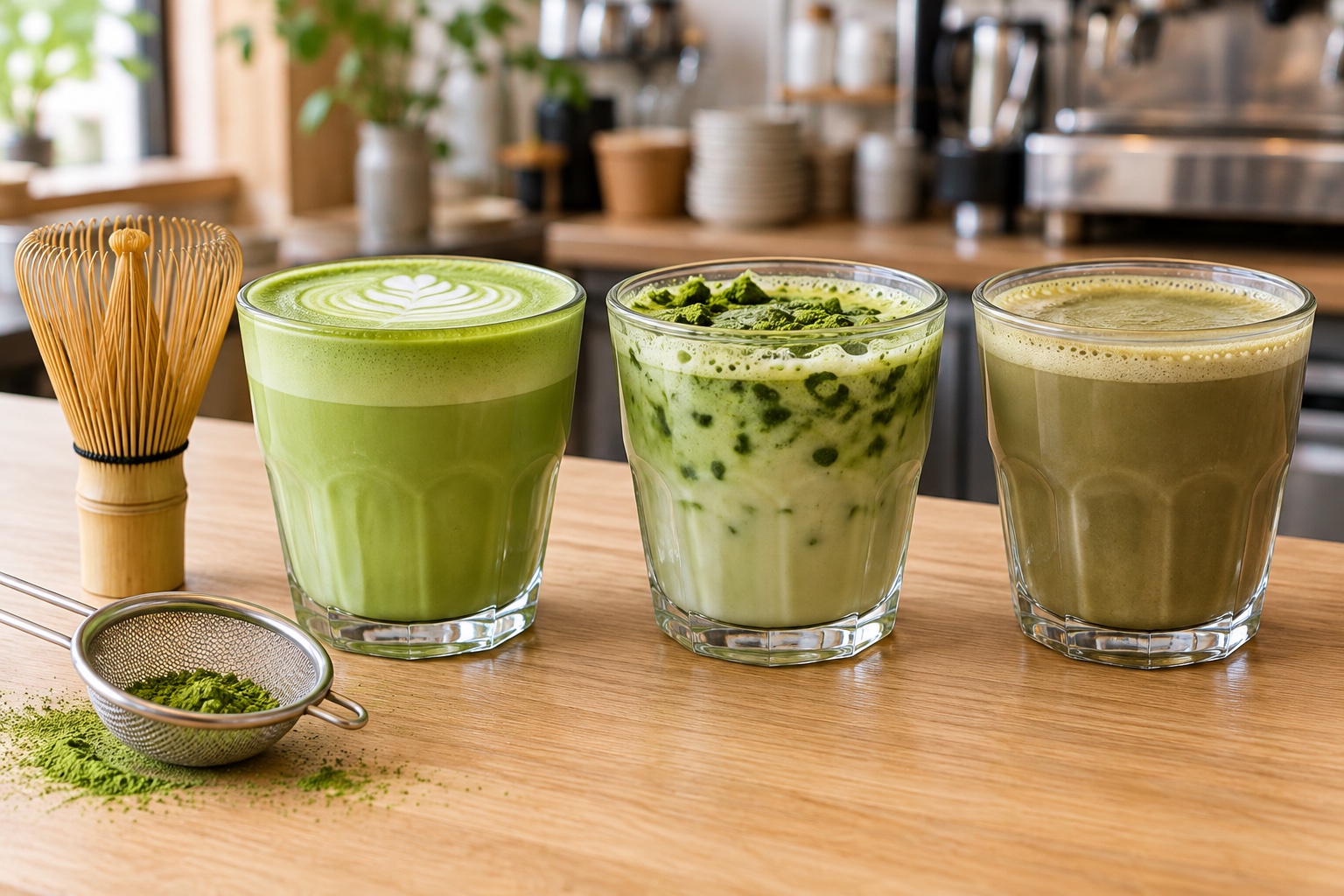
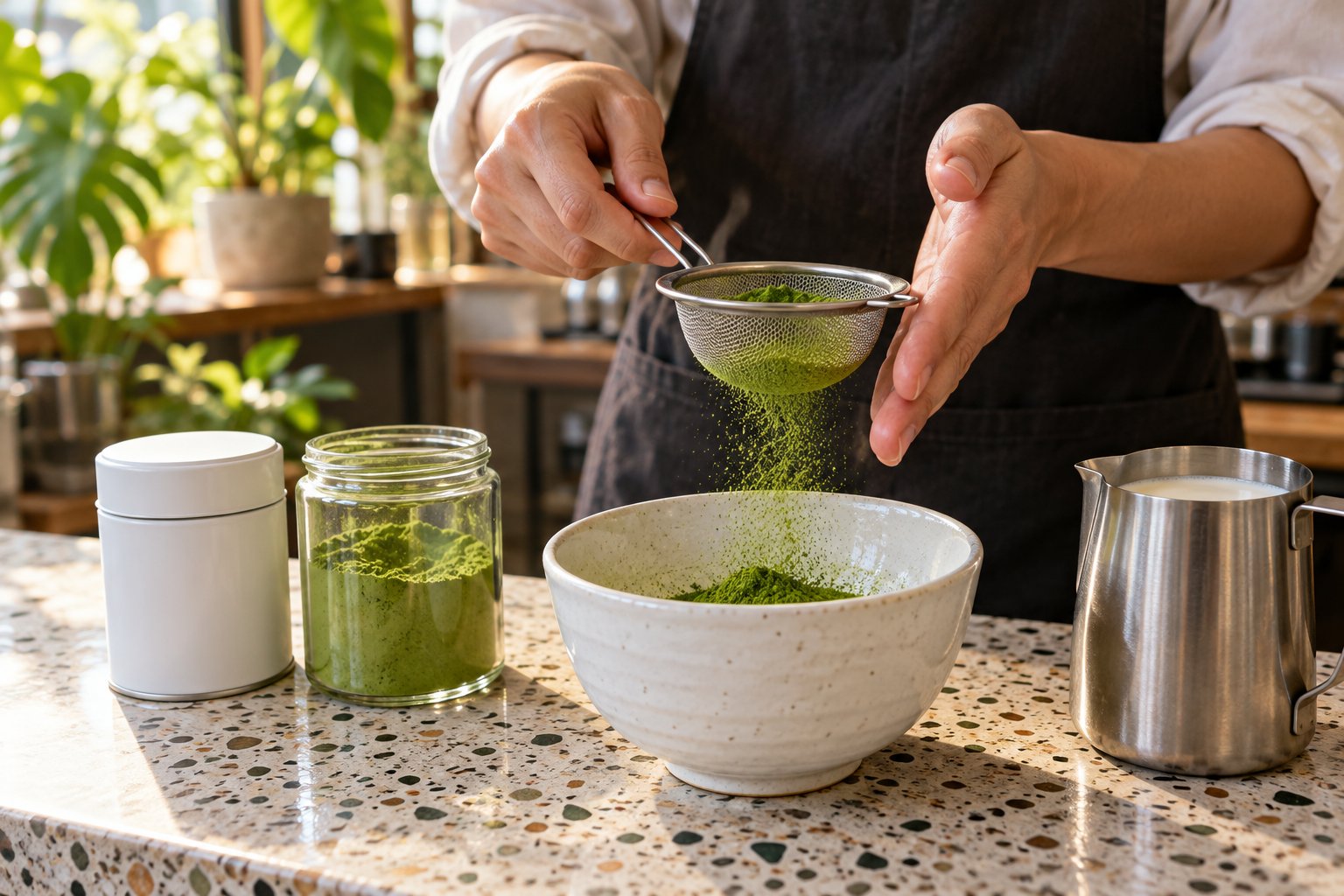
Sift the matcha, add half the water and knead it into a paste, then add the rest of the water. How to whisk without lumps is covered in How to Make an Iced Matcha Latte.
Hot
A hot drink cannot be layered by temperature difference, so pour warm Thai tea with condensed milk, add frothed milk on top, then pour the matcha over the foam. The foam catches the matcha, so the green stays on top. Inthanin also sells a hot version for 65 baht.
Caffeine per cup
In the Standard Tables of Food Composition in Japan published by MEXT (Japan’s Ministry of Education, Culture, Sports, Science and Technology), matcha contains about 32mg of caffeine per gram, so 3g gives 96mg. The caffeine in the Thai tea mix is not given on Bossen’s product page, so ask the maker if you need to give a figure. Comparisons with other drinks are in Matcha Caffeine.
Sweetness: how much condensed milk, and sugar content
Sugar per cup is the grams of condensed milk used multiplied by 0.544. Set your shop’s sweetness levels by comparing with the sugar amounts the Thai Department of Health gives for Thai tea.
Sugar in condensed milk
In the USDA food database, sugars in sweetened condensed milk are 54.4g per 100g, and in evaporated milk 10.04g. With the tea mix package recipe, 50g of condensed milk per serving gives about 27g of sugar from the condensed milk, and 100g gives about 54g.
Comparing with the Department of Health guide
The Bureau of Dental Health of the Department of Health, Thailand’s Ministry of Public Health, gives the sugar in a shop’s 16oz iced tea or milk tea (ชาเย็น/ชานม) as 6.6 teaspoons at 100% sweetness, 3.3 at 50% and 1.7 at 25%. The same page counts 4g of sugar as one teaspoon, so 100% is about 26.4g and 50% about 13.2g. Divided by the sugar content of condensed milk, 100% is about 49g of condensed milk and 50% about 24g (our calculation).
Which layer to sweeten
Sweetening only the Thai tea layer at the bottom helps the layers separate and lets you set the sweetness levels in one place (our view). How to set sweetness levels in grams, Thailand’s “หวานปกติ = หวาน 50%”, and sugar labelling in Singapore and Indonesia are covered in Setting Sweetness Levels for Matcha Drinks.
Thai tea colouring and labels
In Thailand, colour may not be added to tea leaves or instant tea; it may be used only in flavoured, prepared tea. There is a limit on the amount of colour in prepared tea, and any colour used is shown on the label by INS number or name.
Thailand’s rules
Thailand’s Ministry of Public Health Notification No. 196 (2000), “Tea”, divides tea into three types: tea leaves, instant tea (tea extract made into powder) and ready-to-drink tea mixed with other ingredients. The English translation says “No colour added” for both tea leaves and instant tea. Powder that is only matcha falls under tea leaves, so colour cannot be added.
In a statement on 10 February 2025, Thailand’s FDA said most coloured teas are prepared teas with added flavour and taste, and that Sunset Yellow FCF (FD&C Yellow No. 6 in the US) may be used up to 100mg per kg in the ready-to-drink state. Labels of products that use colour show “สีสังเคราะห์” (synthetic colour) or “สีธรรมชาติ” (natural colour) with the INS number or the name of the colour.
Source: Thai FDA, “อย. แจงชาบางประเภทใส่สีได้ แนะวิธีบริโภคอย่างปลอดภัย” (10 February 2025) https://www.fda.moph.go.th/news/cha10
The “FD&C YELLOW #6” in the tea mix ingredients above is the US name for Sunset Yellow FCF (INS 110). The package says “ชาผงปรุงสำเร็จ”, Thai for prepared tea powder.
Test results
On 27 November 2025, Thailand’s FDA announced that it had tested the colour in 35 samples of packaged tea in fiscal 2025, with 32 passing and 3 failing. It said colour in tea must follow Ministry of Public Health Notification No. 444 (2023), which is in line with Codex (the international food standards).
On 26 November 2025, the Thailand Consumers Council (a consumer body set up by law) announced that 11 of 15 Thai tea samples bought that August did not meet the standards. Of 13 prepared tea samples that may contain colour, 9 exceeded the limit, and Sunset Yellow was found in both of the 2 tea leaf samples that may not contain colour.
Thai tea without added colour
According to the Consumers Council, in 2025 Café Amazon launched Thai tea without added colour, and ChaTraMue announced Thai tea with no colour and with natural colour. In the delivery listing for ChaTraMue’s Big C Rama 2 shop (October 2026), “ชาไทย สีธรรมชาติ” (Thai tea with natural colour) is listed at 45 baht, the same as the regular Thai tea. Thailand’s FDA advises choosing tea drinks with a light colour when buying them at shops.
Serving it in Singapore
In the Singapore Food Agency (SFA) list of permitted food additives (as at 31 May 2024), Sunset Yellow FCF (INS 110) may be used within good manufacturing practice. Tartrazine (INS 102) is marked as needing the labelling under Regulation 5(4)(c) of the Food Regulations. If you import a tea mix, check the INS numbers in its ingredients. Import procedures for Thailand are covered in How to Import Matcha into Thailand.
Prep and holding time
Thai tea with water, sugar and milk combined spoils easily, so store the tea unsweetened and chilled, and add condensed milk and matcha for each order. Whisk the matcha one drink at a time too.
The Thai FDA’s caution
According to a Matichon report on 19 October 2020, a deputy secretary-general of Thailand’s FDA explained that Thai iced tea contains water, sugar and milk, so microbes that spoil food grow easily. For products kept refrigerated, the fridge temperature must be controlled at all times.
Prep in the shop (our view)
- Brew the tea for the time on the package and chill it as soon as it is strained
- Keep the chilled tea without sweetener or milk in a lidded container in the fridge, and write the time it was made
- Decide how long to keep it by comparing freshly made tea and tea a few hours old in the same recipe, for colour, aroma and bitterness
- Whisked matcha sinks and changes colour over time, so whisk it for each order
How to hold drinks made with milk, and public food hygiene guidance, are covered in the “Can you make it ahead?” section of How to Make an Iced Matcha Latte. Cooking and holding tapioca pearls are covered in Matcha Boba and Matcha Milk Tea for Cafés.
Cost per cup and what to check when buying
The ingredient cost per cup is the matcha, tea, condensed milk and milk, plus ice and the cup. Check the ingredients on the tea mix label, and choose the matcha by the colour and taste it gives in your shop’s recipe.
Cost formula
- Matcha: price per kg ÷ 1,000 × grams of matcha per cup
- Tea: price per bag ÷ ml of tea one bag makes × ml of tea per cup (with the package recipe, 1 tbsp of tea makes about 1,000ml)
- Condensed milk: price per can ÷ net weight in g × grams of condensed milk per cup
- Milk or evaporated milk, ice, cup, lid and straw
Include tea you throw away in the cost. How the price per kg of matcha is set is covered in How Matcha Prices Are Set.
When choosing a Thai tea mix
- Whether the ingredients show a colour (an INS number such as INS 110, or the colour’s name), or whether it has no colour or natural colour
- Whether it is tea leaves or prepared tea (on Thai labels, “ชาผงปรุงสำเร็จ” is prepared tea powder)
- Whether it contains sugar or creamer (if it does, it is harder to set the sweetness by the amount of condensed milk)
- The amount of tea and the brewing time in the package recipe
When choosing matcha
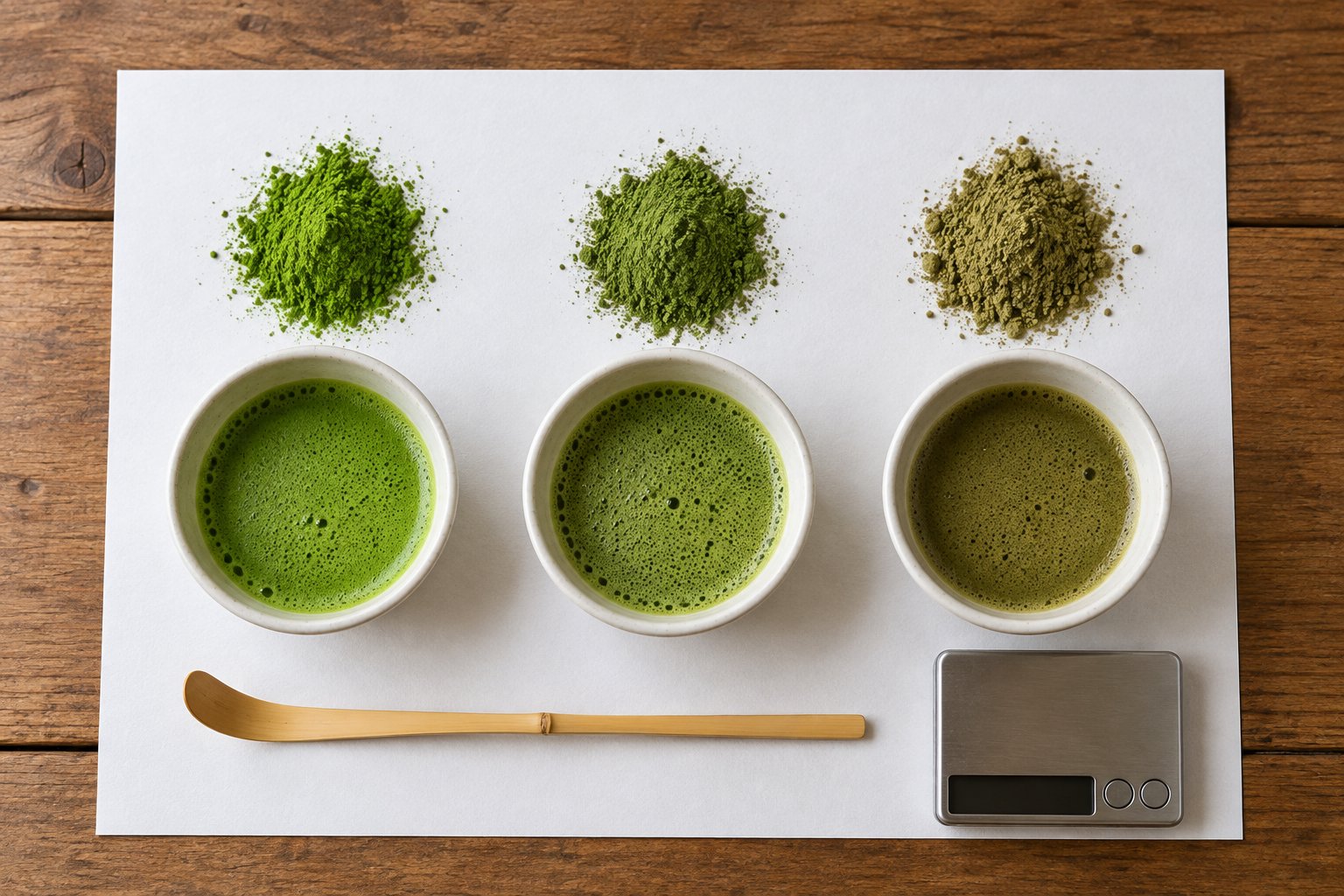
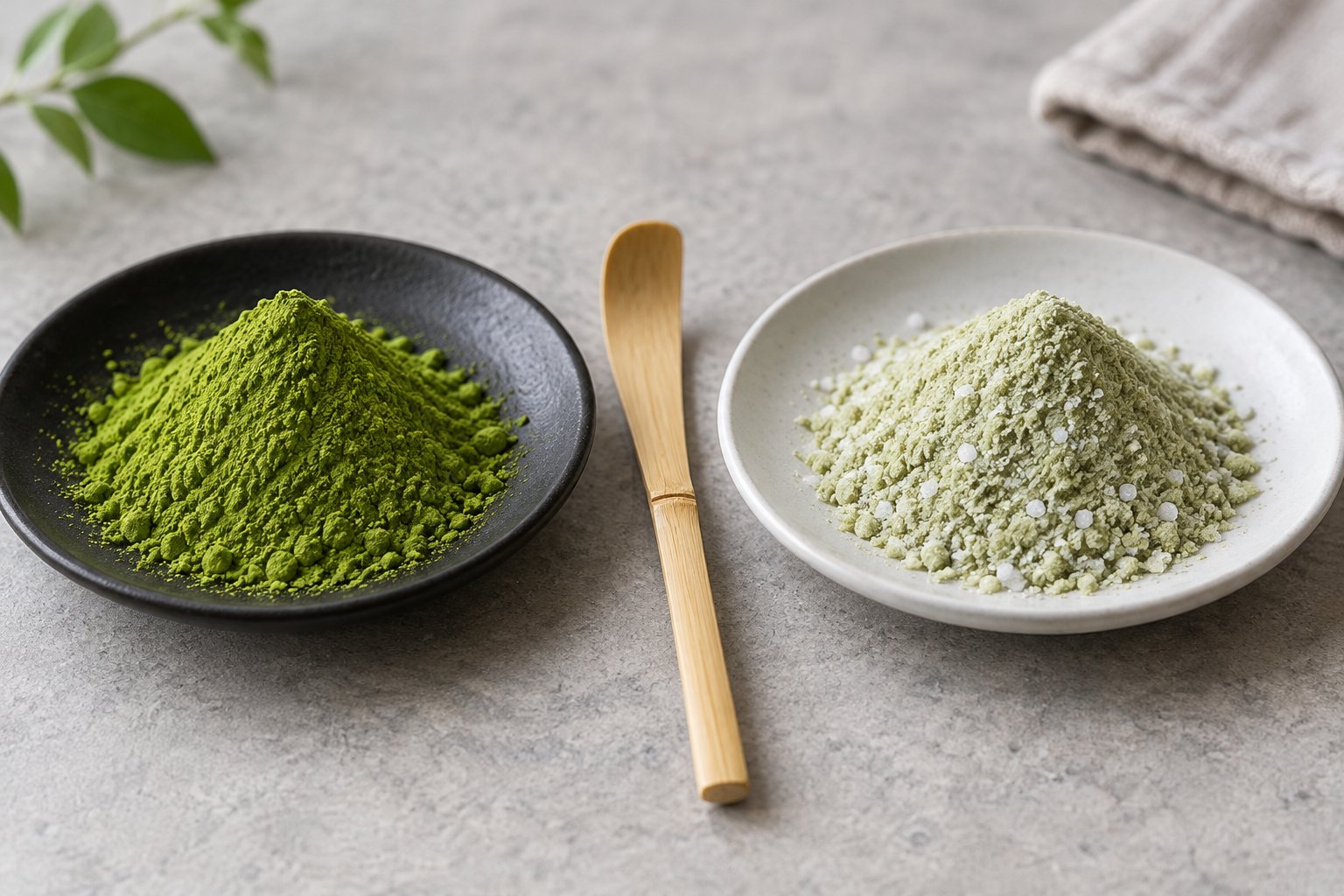
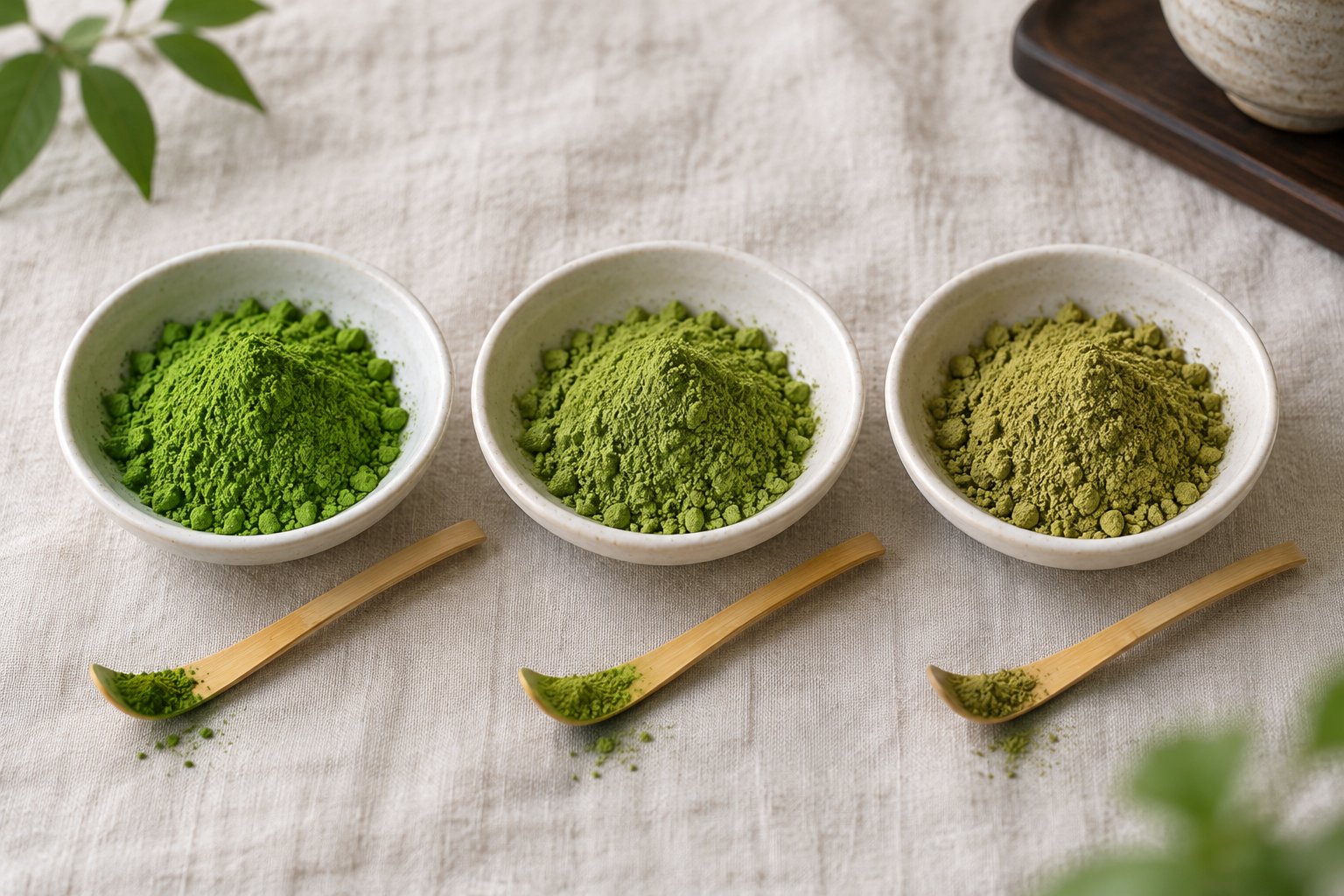
Choose a matcha that holds up against the Thai tea aroma and shows green in the top layer. Whether a powder is only matcha can be seen from whether matcha is its only ingredient (What Is Pure Matcha?). Culinary and ceremonial are sellers’ terms with no official standard. Make your candidate matchas with your shop’s Thai tea in the same recipe, side by side, and compare the colour of the layers freshly made and after 10 minutes. Differences by harvest and raw material are covered in Matcha Grades, regional differences in Matcha Origins, choosing matcha for lattes in Choosing Matcha for Café Lattes, and buying in Thailand in Buying Matcha Powder for Cafés in Thailand.
Omakase Matcha sources matcha from Uji, Yame, Shizuoka, Kagoshima and Miyazaki. Orders start from 1kg, you can choose up to 3 samples, and we can help adjust the blend for your menu. Request samples for testing on the samples page.
Sources
- Wongnai (LINE MAN), Inthanin Coffee ราษฎร์บูรณะ1 delivery menu https://www.wongnai.com/delivery/businesses/321927gX/order
- Wongnai (LINE MAN), Inthanin Coffee แจ้งวัฒนะ22 delivery menu https://www.wongnai.com/delivery/businesses/321918zp/order
- Wongnai (LINE MAN), ชาตรามือ บิ๊กซี พระราม 2 delivery menu https://www.wongnai.com/delivery/businesses/1014643eG/order
- ChaTraMue, “Our History” https://chatramue.com/pages/our-history
- Matichon, “อย.ชี้เครื่องดื่มชาไทยมีส่วนผสมเอื้อจุลินทรีย์ เก็บนานเปลี่ยนสภาพ” (19 October 2020, in Thai) https://www.matichon.co.th/local/news_2402373
- Bossen, “Premium Thai Black Tea Mix” https://www.bossenstore.com/products/premium-thai-black-tea-mix-1
- Bossen, “Thai Tea Powder” https://www.bossenstore.com/products/thai-tea-powder
- Ippodo Tea, “Iced Matcha Latte” https://ippodotea.com/blogs/recipes-to-brew-japanese-tea/iced-matcha-latte
- Ito En, “茶リスタ 小山和裕氏監修!本格抹茶ラテ” (Matcha latte supervised by Kazuhiro Koyama, in Japanese) https://www.itoen.jp/recipe/45614/
- Nestlé Professional Indonesia, “MILO Matcha” https://www.nestleprofessional.co.id/recipe/milo-matcha
- U.S. Geological Survey, “Water Density” https://www.usgs.gov/water-science-school/science/water-density
- USDA FoodData Central, “Milk, canned, condensed, sweetened” https://fdc.nal.usda.gov/food-details/171275/nutrients
- USDA FoodData Central, “Milk, canned, evaporated, with added vitamin D and without added vitamin A” https://fdc.nal.usda.gov/food-details/171276/nutrients
- USDA FoodData Central, “Milk, whole, 3.25% milkfat, with added vitamin D” https://fdc.nal.usda.gov/food-details/171265/nutrients
- Department of Health, Ministry of Public Health, Thailand, Bureau of Dental Health, “ภารกิจสำรวจเครื่องดื่มหวานน้อยในร้านค้าชุมชน” (in Thai) https://dental.anamai.moph.go.th/th/hl4/
- Ministry of Public Health, Thailand, Notification No. 196 (2000), “Tea”, English version (Thai FDA) https://food.fda.moph.go.th/media.php?id=509295897201483776&name=No.196-43Tea.pdf
- Thai FDA, “อย. แจงชาบางประเภทใส่สีได้ แนะวิธีบริโภคอย่างปลอดภัย” (10 February 2025, in Thai) https://www.fda.moph.go.th/news/cha10
- Thai FDA, “อย. แนะดื่มชา ไม่ใส่สี ก็อร่อย และให้ดี อย่าหวาน ลด NCDs” (27 November 2025, in Thai) https://www.fda.moph.go.th/news/271168
- Thailand Consumers Council, “ตะลึง! ชาไทย 11 ยี่ห้อ ใส่สีไม่เป็นไปตามเกณฑ์ที่กฎหมายกำหนด” (26 November 2025, in Thai) https://www.tcc.or.th/261168-thaitea-results/
- Thailand Consumers Council, “เทรนด์ “ชาไทยไม่ใส่สี” ทางเลือกใหม่ผู้บริโภค” (20 June 2025, in Thai) https://www.tcc.or.th/pure-thai-tea/
- Singapore Food Agency, “Food Additives Permitted under the Singapore Food Regulations” (as at 31 May 2024) https://sfa.gov.sg/docs/default-source/tools-and-resources/list-of-food-additives-permitted-under-food-regulations.pdf
- MEXT, “日本食品標準成分表(八訂)増補2023年” (Standard Tables of Food Composition in Japan, 2023, in Japanese) https://www.mext.go.jp/a_menu/syokuhinseibun/mext_00001.html