
 Reviewed by: Takahiro Sugiyama (CEO, meguri Inc.)
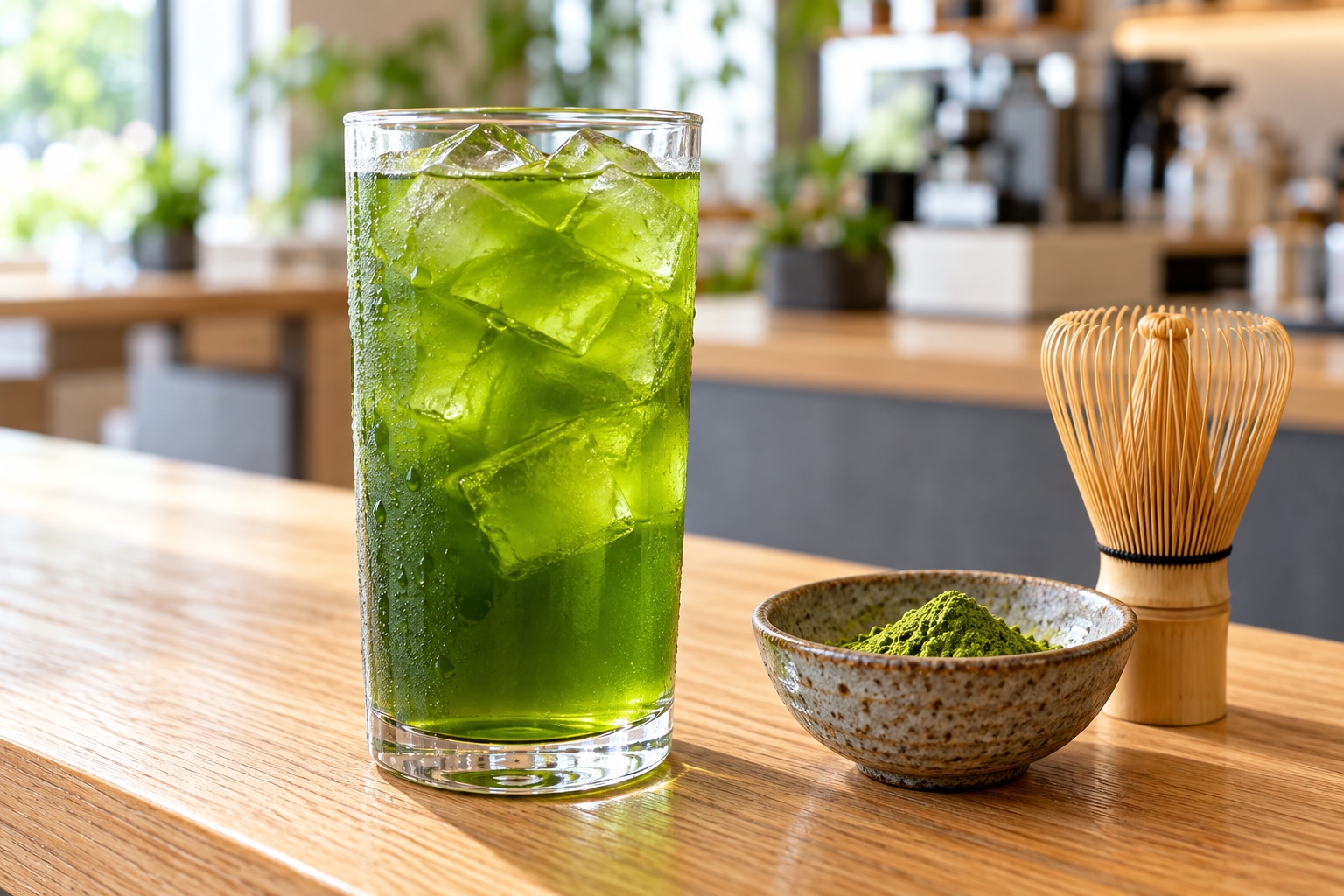
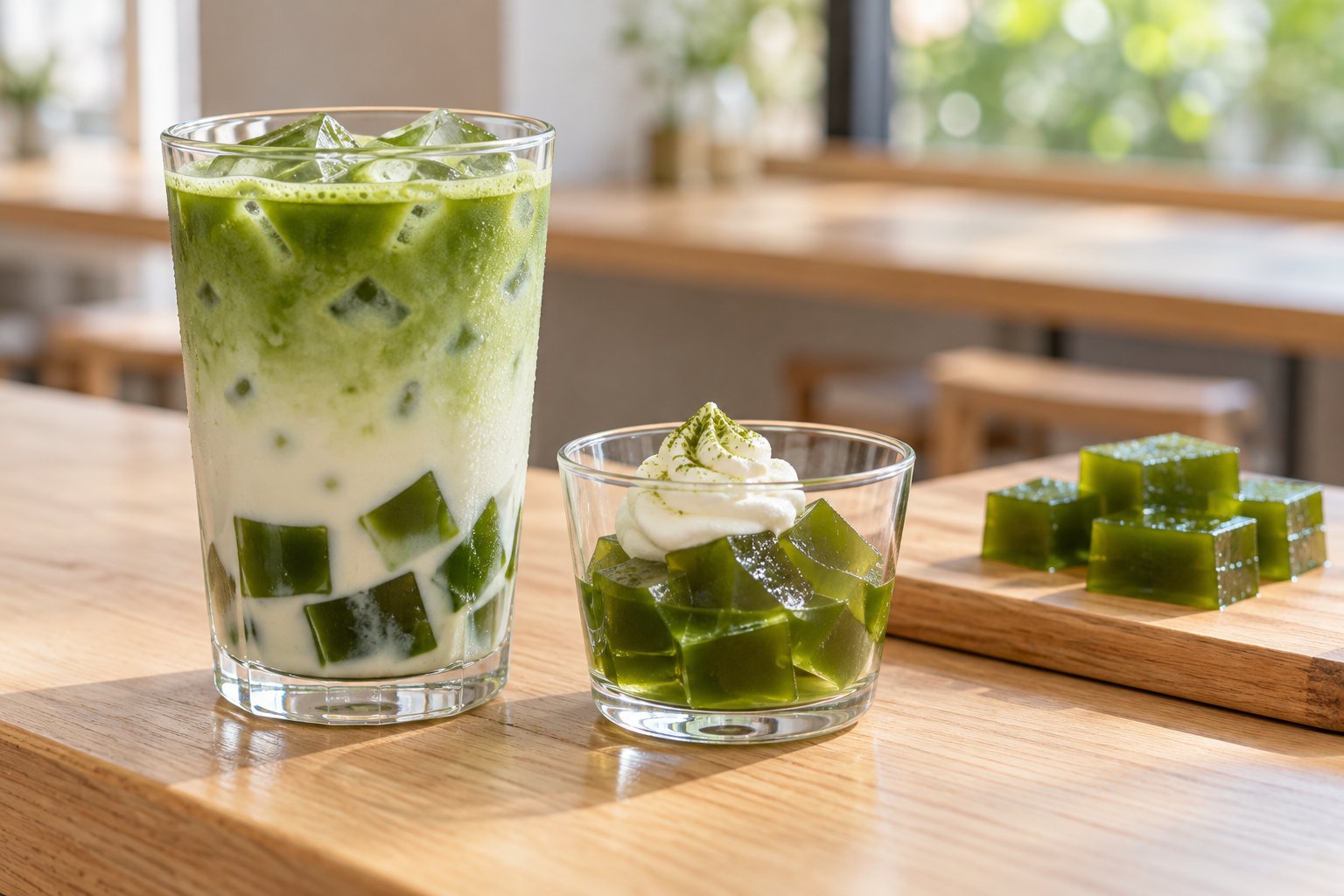
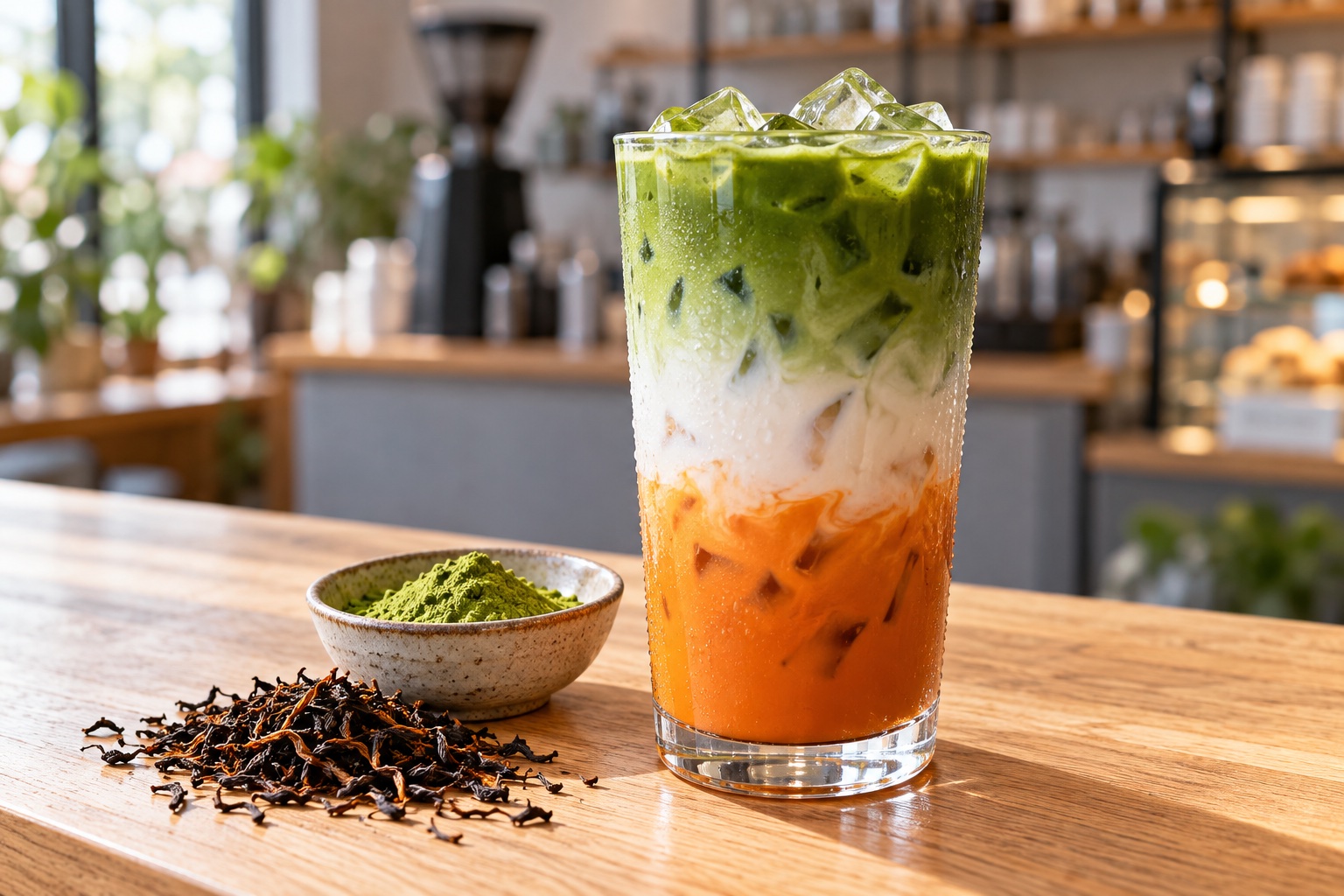
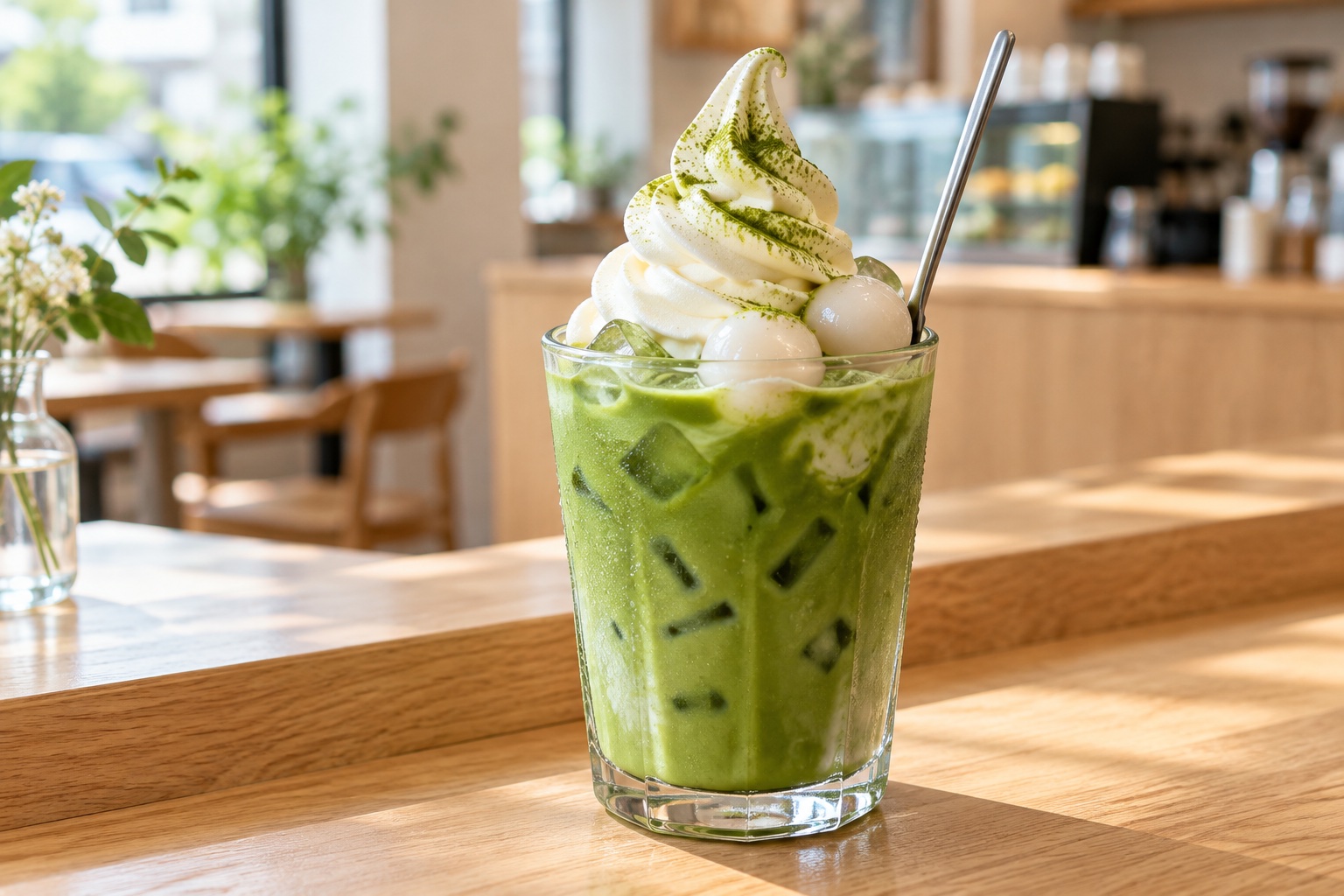
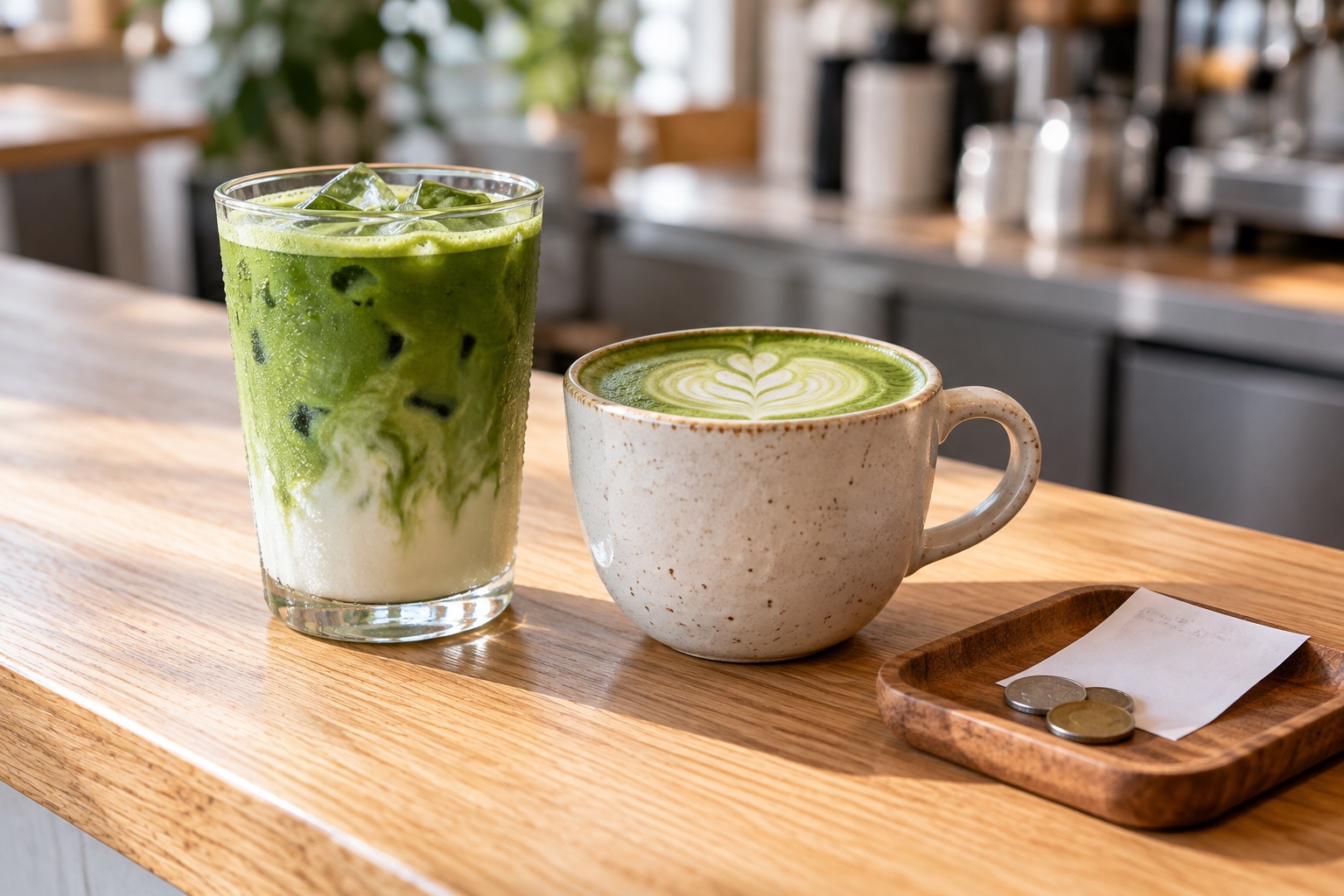
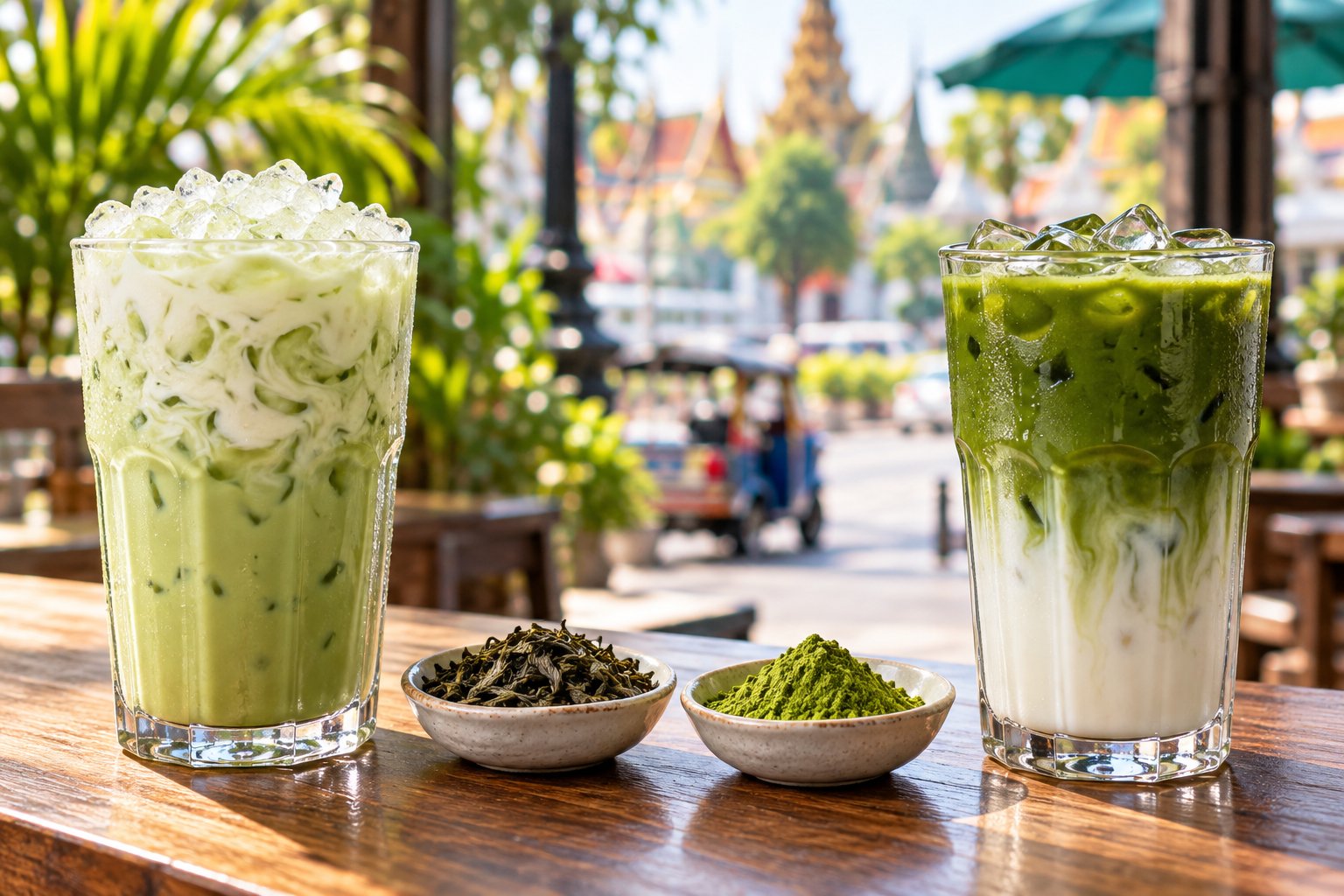
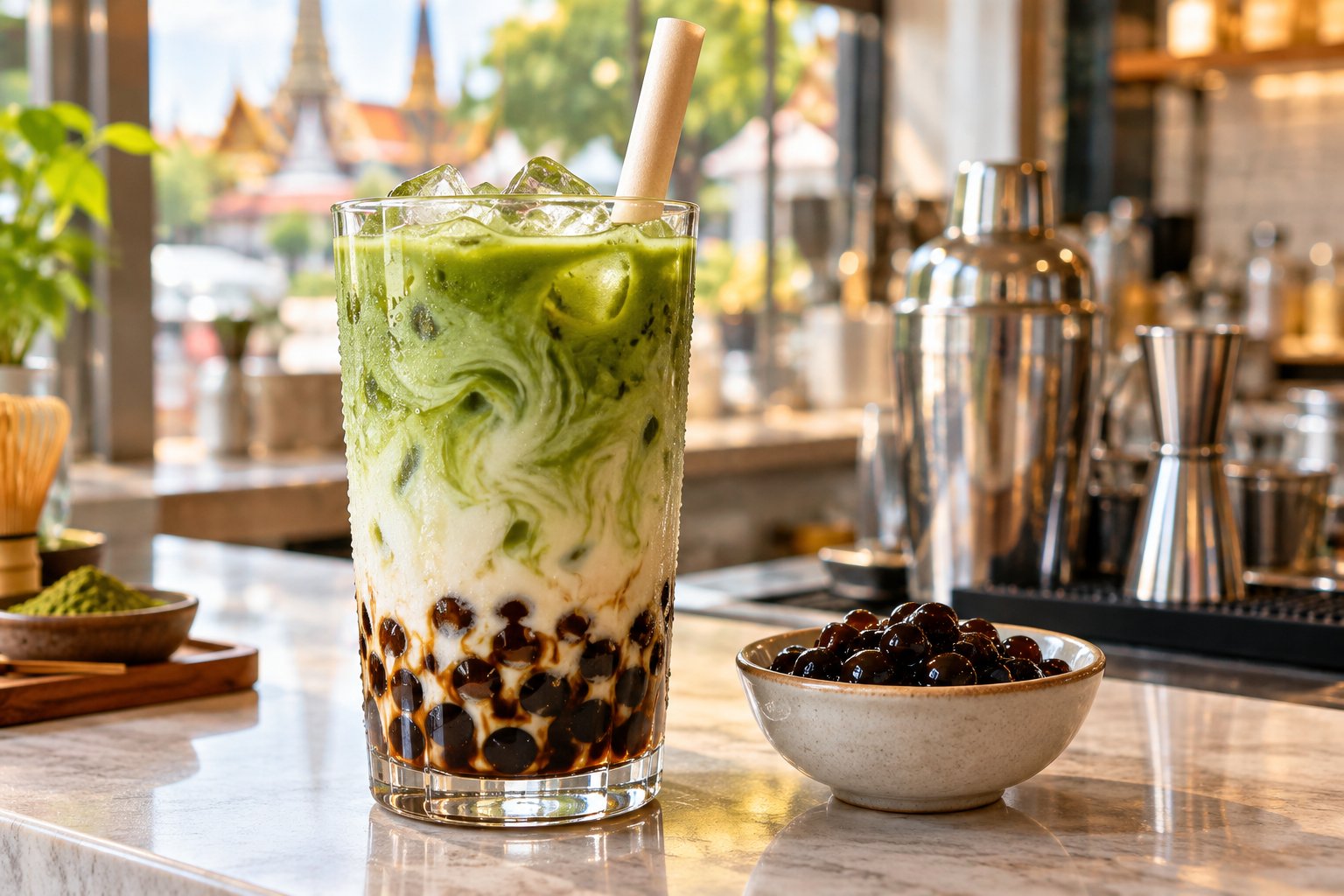
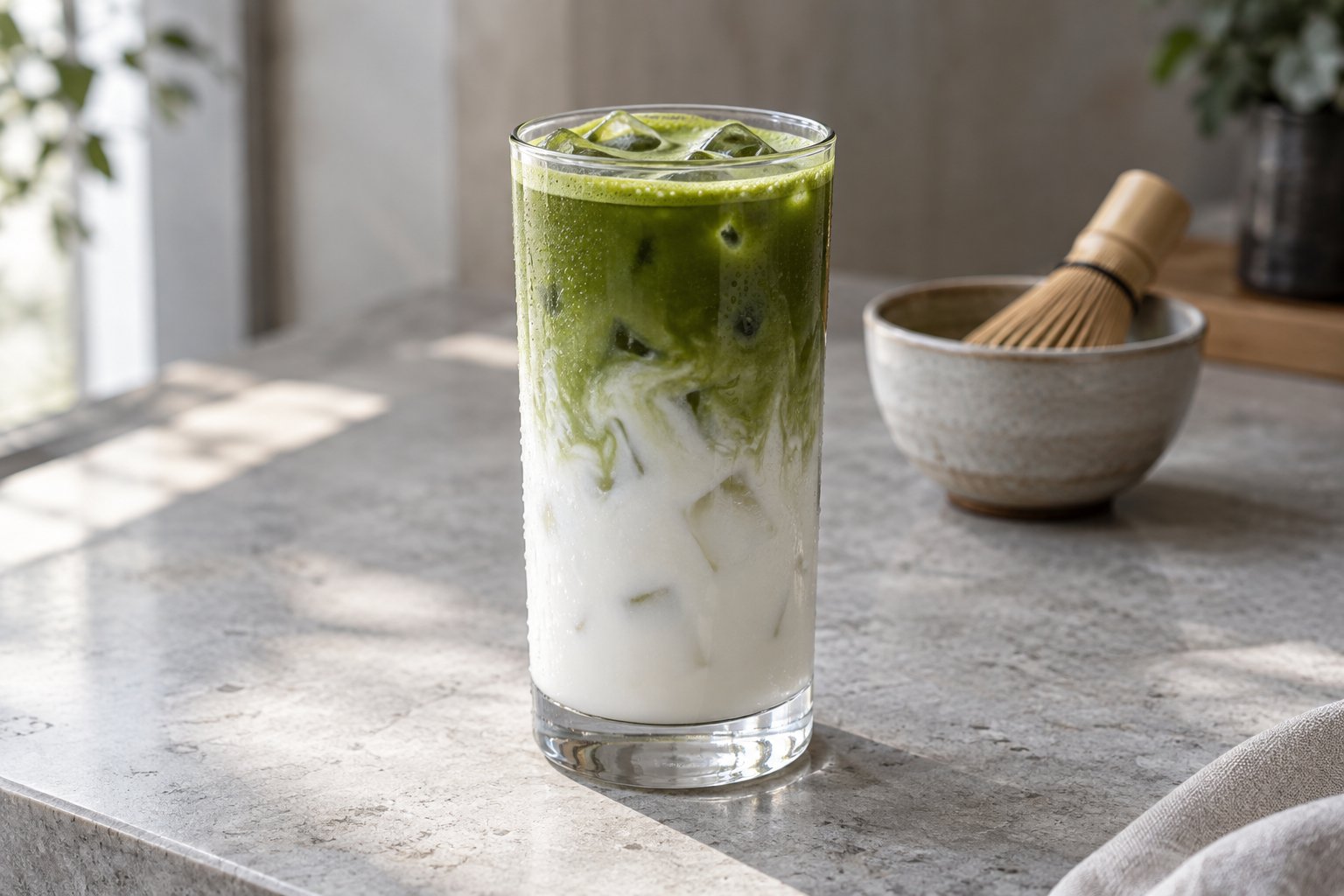
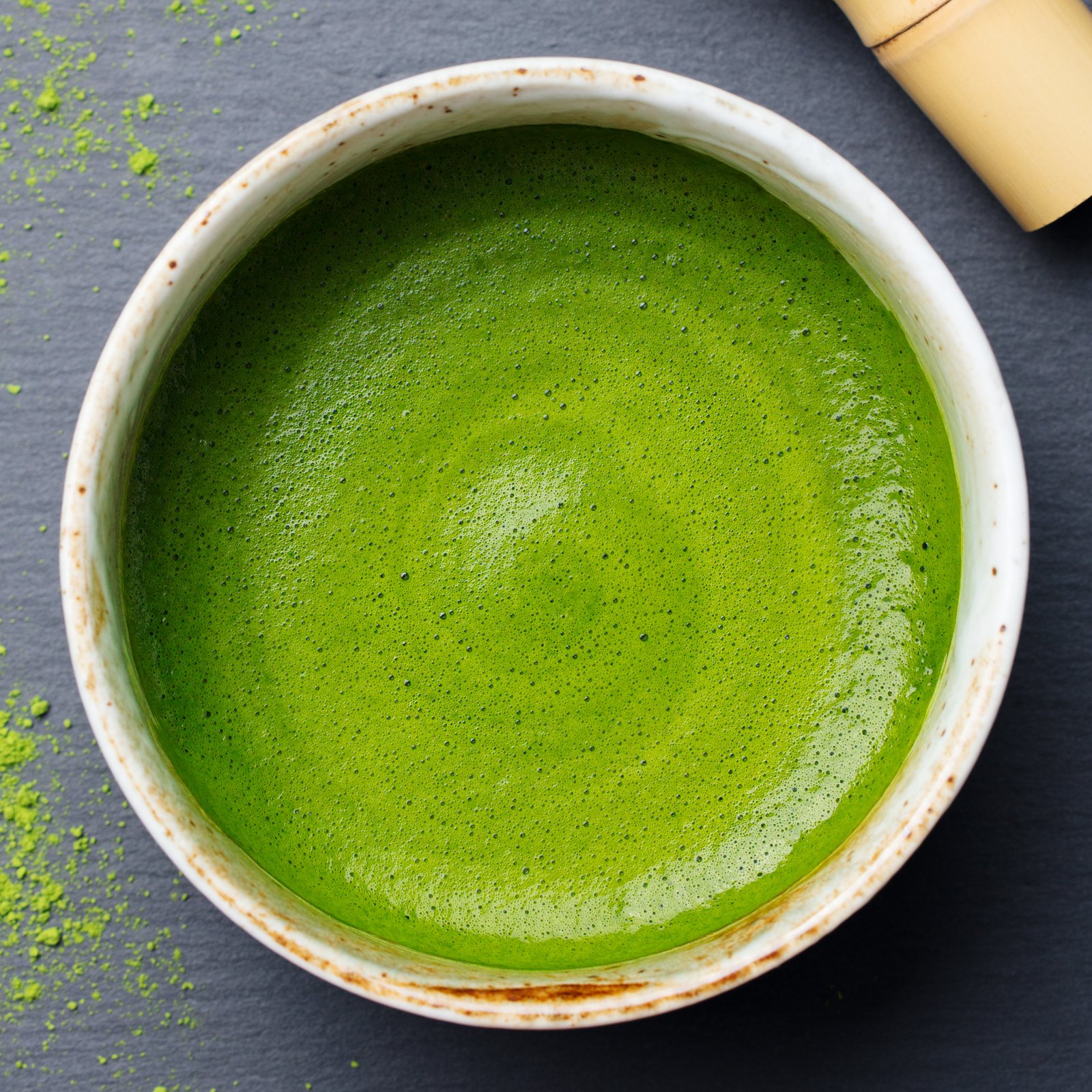
In Bangkok cafés, a cold matcha without milk sits next to the matcha latte on the menu. In Thai it is written “เพียวมัทฉะเย็น” (iced pure matcha), and in English “Clear Matcha” or “Iced Pure Matcha.” It is made with only matcha, water and ice. With so few ingredients, the amount of matcha, the water temperature, the amount of ice and the quality of the water all show up directly in the taste. This guide lines up recipes from tea companies, a public body and others to compare ratios, then covers why it goes wrong, how to choose water and ice, prep and cost.
What is iced matcha made with only water and ice?
Iced matcha made with only water and ice is a cold drink without milk: matcha is whisked in a little water or hot water, then topped up with ice and cold water. When we checked 12 café menus in Thailand in October 2026, 10 of them had this drink.
What cafés call it
The name changes from shop to shop. These are examples we checked on delivery sites and official menus (listed prices as of October 2026).
| Country | Shop | Menu name | Price |
|---|---|---|---|
| Thailand | Café Amazon | เพียวมัทฉะเย็น | 60 baht |
| Thailand | Café Amazon | Iced Premium Pure Uji Matcha | 80 baht |
| Thailand | Inthanin | เพียวมัทฉะเย็น | 60 baht |
| Thailand | Starbucks (Siam Future Ekkamai) | Iced Clear Pure Matcha | 145 baht |
| Thailand | Kyo Roll En | Iced Uji Matcha (100% Pure Matcha) | 135 baht |
| Thailand | daia.muncha | Signature Clear Matcha | 89 baht |
| Japan | nana’s green tea | 抹茶グリーンティー (HOT/ICED, English name Matcha green tea (sugar free)) | 620 yen |
Bangkok matcha shop daia.muncha offers three Clear Matcha drinks and charges more for the ones labelled as Yabukita cultivar matcha and as matcha from a Kyoto tea company. Without milk, the type of matcha is easy to turn into different menu names and prices. In Singapore, local media report that the matcha kiosk Matsu Matcha offers Uji matcha on its usucha menu (usucha: matcha whisked with hot water at everyday strength).
How this differs from “pure matcha” powder and other guides
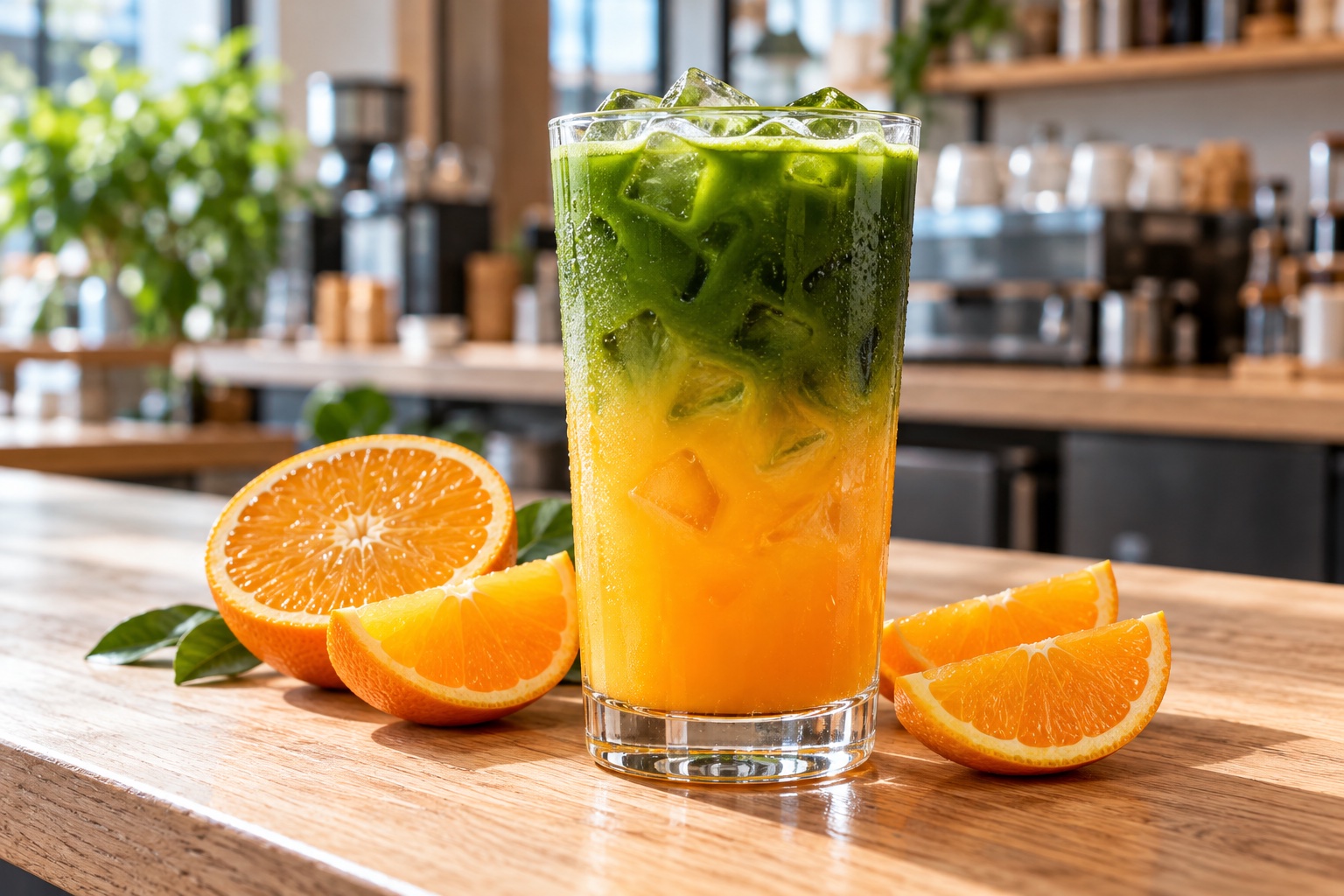
In Thailand, “pure matcha” refers both to this drink and to 100% matcha powder with no sugar or other ingredients. How to tell whether a powder is 100% and how to read the label are covered in What is pure matcha?. Iced matcha with milk is in How to make an iced matcha latte, and matcha with lemonade or coconut water is in Matcha lemonade, tonic, soda and coconut water. This guide focuses on what to decide when you use only water and ice.
Recipes compared
In recipes that give matcha in grams, one drink uses 1 to 5g of matcha. The bigger difference is not how much water the matcha is whisked in, but how far it is then diluted with ice and water.
The 7 recipes
These recipes are published by tea companies, a public body and a Thai food media site. 1 fl oz is converted as about 30ml. The Kyoto Prefectural Tea Research Institute recipe is the basic hot usucha, included for comparison with the cold recipes.
| Source (country, type) | Matcha | Water to whisk | Water and ice to top up | Matcha relative to water |
|---|---|---|---|---|
| Ippodo Tea, 水点て抹茶 (cold-whisked matcha) (Japan, tea company) | 2g | 60ml cold water (the US site says 5°C), whisk 15 seconds | None | About 3.3% |
| Ippodo Tea, シャカシャカ抹茶 (shaken matcha) | 1g | Add 100ml ice water and shake | None | About 1.0% |
| Ippodo Tea, “Iced Matcha” (US site) | 2g | 60mL water at 80°C, 15 seconds | 1 to 2 ice cubes | About 3.3% (ice excluded) |
| Marukyu Koyamaen (Japan, tea company) | Amount not given | Whisk a little stronger with hot water | Float ice | Not calculated |
| Art of Tea (US, tea company) | 4g (two 2g sticks) | 4oz (about 120ml) cold water | 4oz (about 120ml) cold water, 4oz ice | About 1.7% (ice excluded) |
| KRUA.CO, “Pure matcha” (Thailand, food media) | 5g | About 40ml water at 70 to 80°C | Remaining water and ice (200ml water in total, adjust between 180 and 250ml) | About 2.5% (ice excluded) |
| Kyoto Prefectural Tea Research Institute (Japan, public body, hot usucha) | About 2g | 70ml water at 70 to 80°C | None | About 2.9% |
Matcha relative to water is our calculation: the weight of matcha divided by the total water (1ml = 1g, ice excluded).
Source: Ippodo Tea, “Cold-Whisked Matcha” https://ippodotea.com/blogs/recipes-to-brew-japanese-tea/cold-whisked-matcha
What the table shows
The water used to whisk the matcha is 40 to 120ml in every recipe, except Ippodo’s shaken matcha, which puts the full amount of water in from the start and shakes it. Ippodo’s cold-whisked matcha and Iced Matcha stop at 60ml as a small serving, and Iced Matcha only adds 1 to 2 ice cubes. Closest to a café glass are Art of Tea and KRUA.CO, which pour whisked matcha over ice and water. In these two, matcha is about 1.7 to 2.5% of the water, stronger than Ippodo’s iced matcha latte (3g matcha, 100ml hot water, 100ml milk, about 1.5%) (our calculation).
Setting your shop’s standard (our view)
The following is our view.
- Put ice in your glass, add water, and measure how much water one drink holds
- Start with matcha at about 2% of the water (4g for 200ml)
- Whisk in 40 to 60ml of water and top up with cold water
- If it tastes thin, add 0.5g at a time. If it tastes bitter, use less matcha or compare with the cold-water method in the next section
Set the matcha amount in grams, not spoons. The Kyoto Prefectural Tea Research Institute counts one light teaspoon as 2g, but the weight changes with sifting and how fine the powder is.
Cold water or hot water?
Recipes use two methods: whisking in cold water, or whisking in hot water and cooling with ice. Ippodo Tea describes cold water with “sweetness” and hot water with “fragrance.”
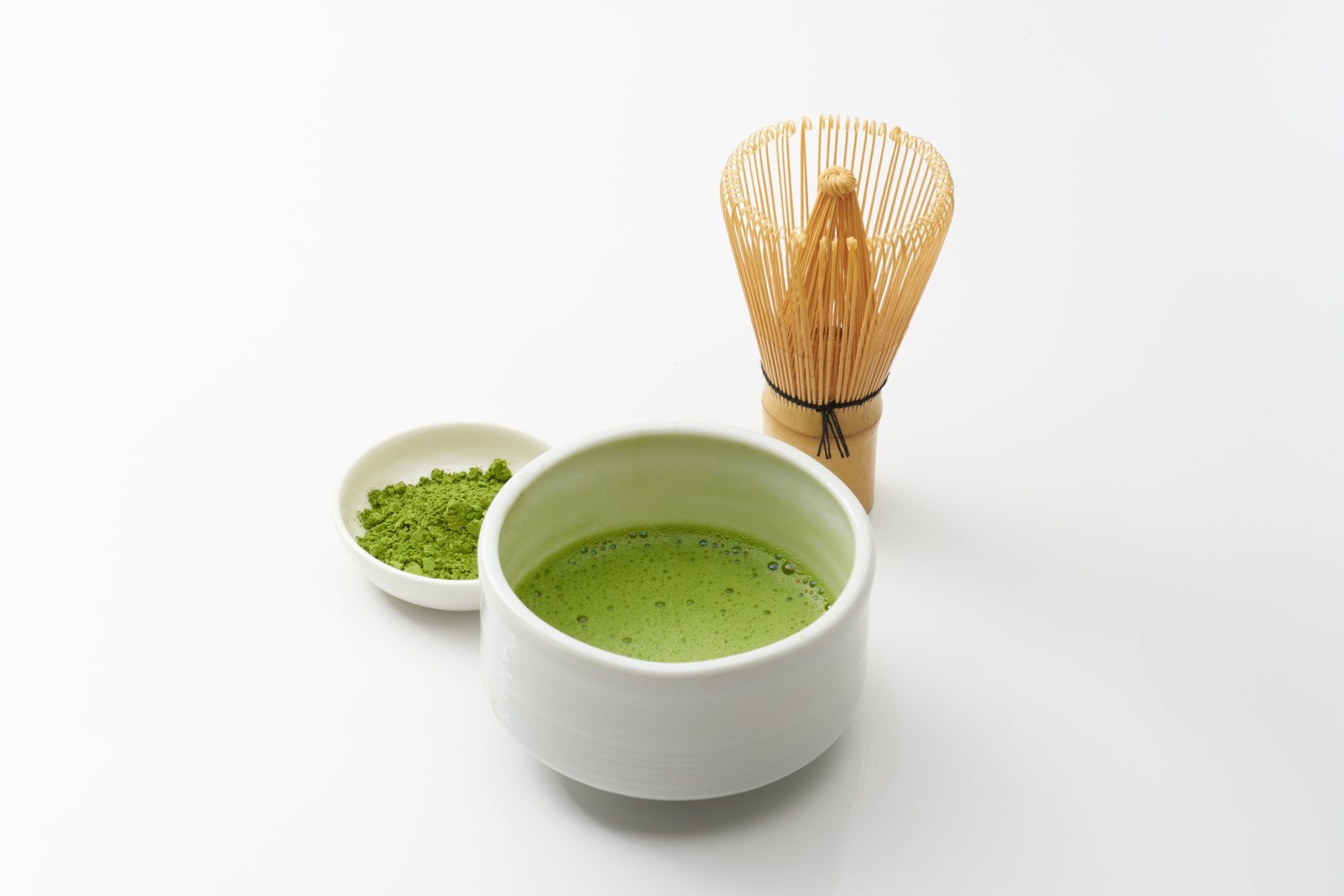
Whisking in cold water
Ippodo Tea says whisking with cold water brings out a strong sweetness. On its US site, water is chilled with ice to 5°C, the ice is strained out, and 60ml is whisked quickly for 15 seconds. Art of Tea also uses only cold water, whisking until foam appears and the matcha is fully suspended, then adding the rest of the water and ice.
Thai food site KRUA.CO uses water at 70 to 80°C for matcha sold as ceremonial grade, and cold water for lower grades that taste bitter. Cold whisking is worth comparing when you want to serve a bitter matcha without milk. daia.muncha in Bangkok also makes a Cold Whisk Matcha Latte by whisking matcha straight into cold milk with no water, and its menu notes there may be slight sediment.
Whisking in hot water and cooling with ice
Ippodo Tea’s Iced Matcha is whisked for 15 seconds in 60ml of water at 80°C, then ice is added and stirred lightly. Ippodo describes cooling it rapidly with plenty of ice for a refreshing taste and fragrance. Marukyu Koyamaen also says to whisk it a little stronger with hot water, float ice and stir lightly.
For water temperature, the Kyoto Prefectural Tea Research Institute gives 70 to 80°C, and Marukyu Koyamaen gives 70 to 80°C in summer and 75 to 85°C in winter. With hot water, melting ice dilutes the drink. Keep the whisking water to 40 to 60ml and set the top-up water to suit how the ice melts.
Shaking
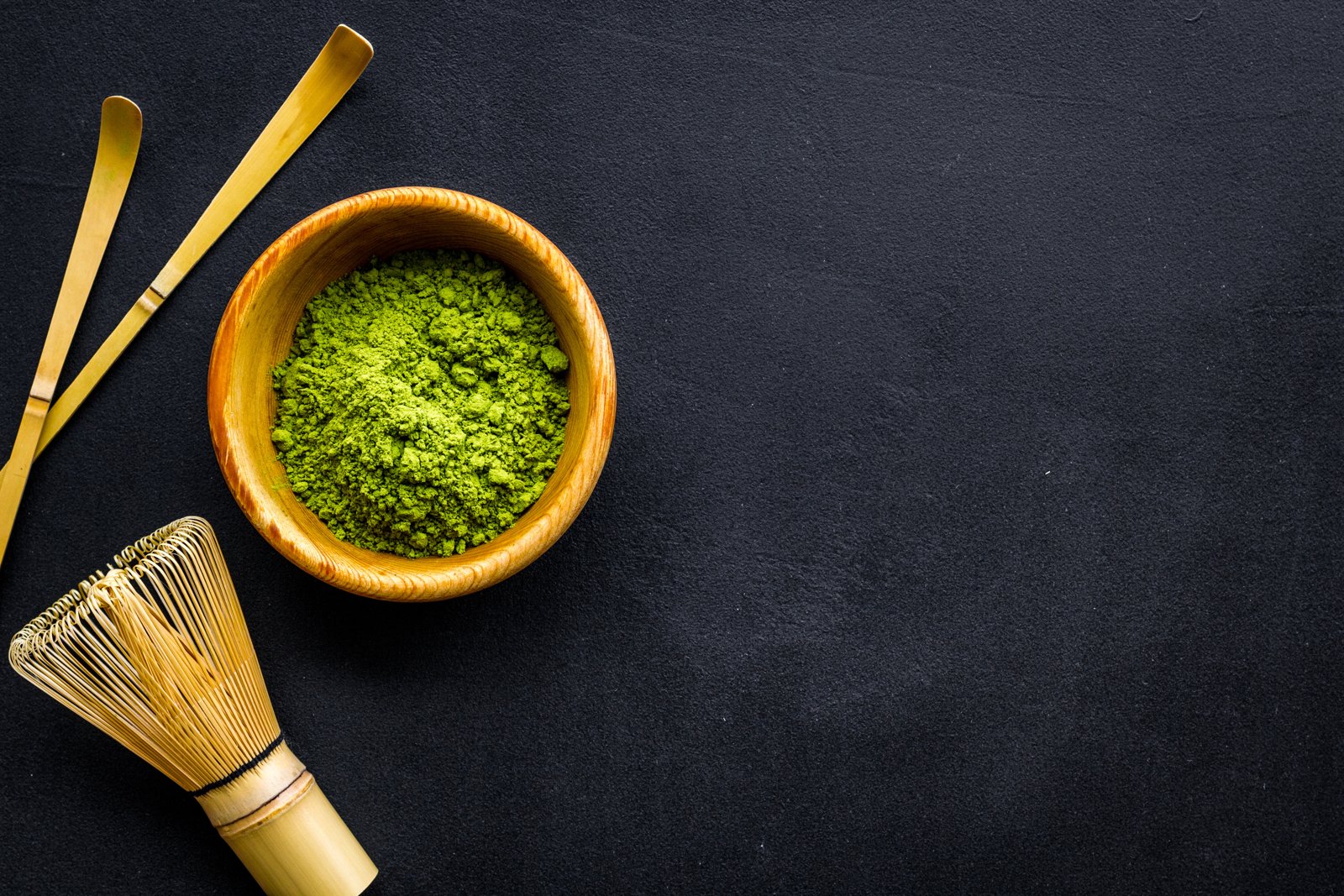
Ippodo Tea’s shaken matcha adds 100ml of ice water to 1g of sifted matcha and shakes it in a container with a lid. It needs no chasen. In a café, shaking matcha with a little cold water in a cocktail shaker and pouring it into a glass of ice and water takes less work per order than a chasen (our view). Whichever method you use, sift the matcha first.
Why it goes wrong, and how to fix it
Clumps, sediment, a thin or bitter taste, and fading color each have different causes. With no milk to hide them, they are more visible than in a latte.
Clumps
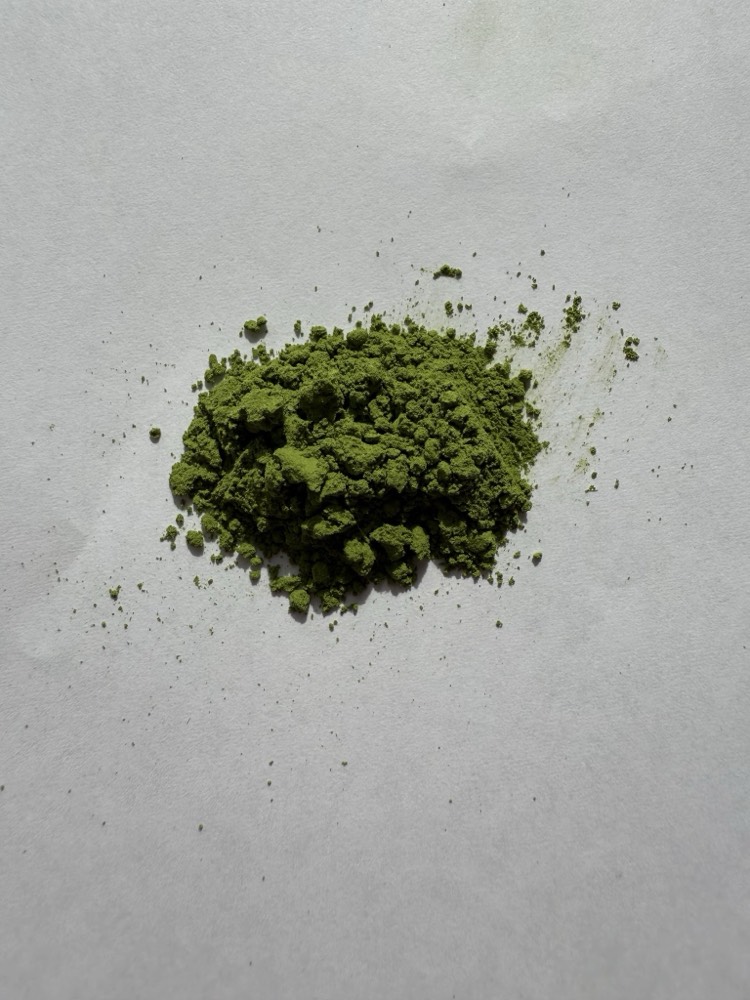
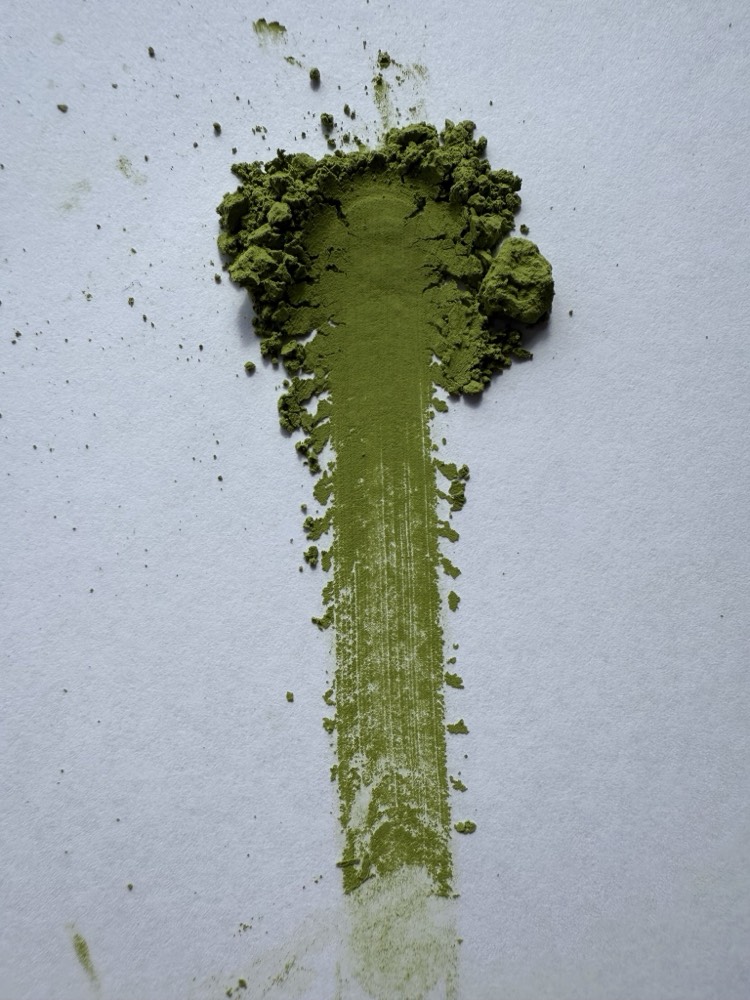
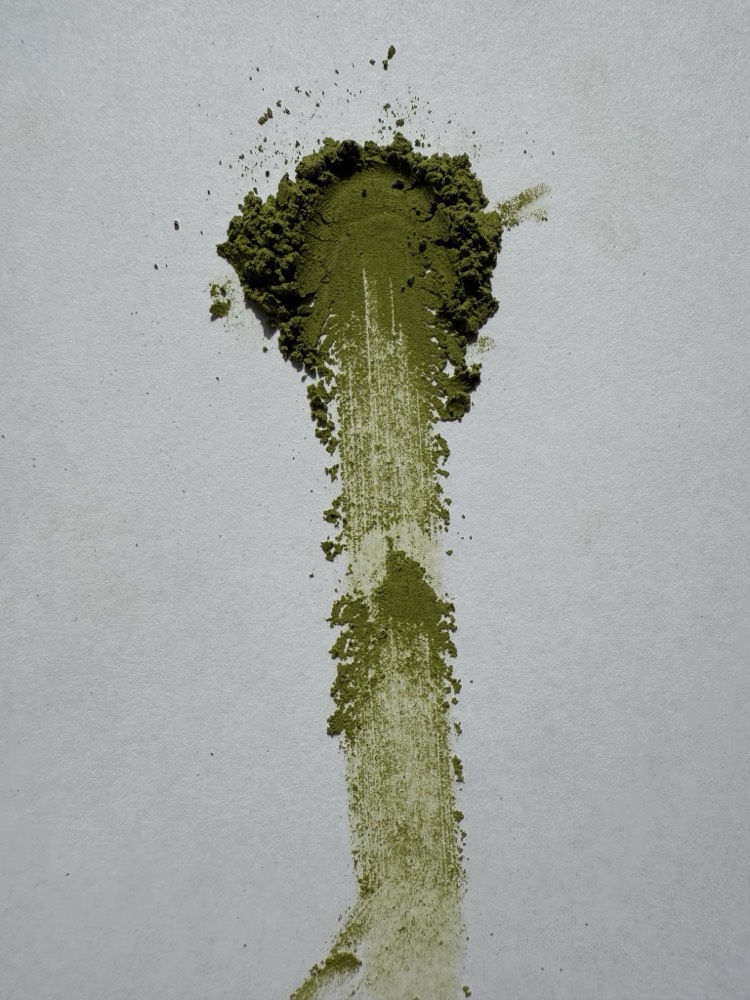
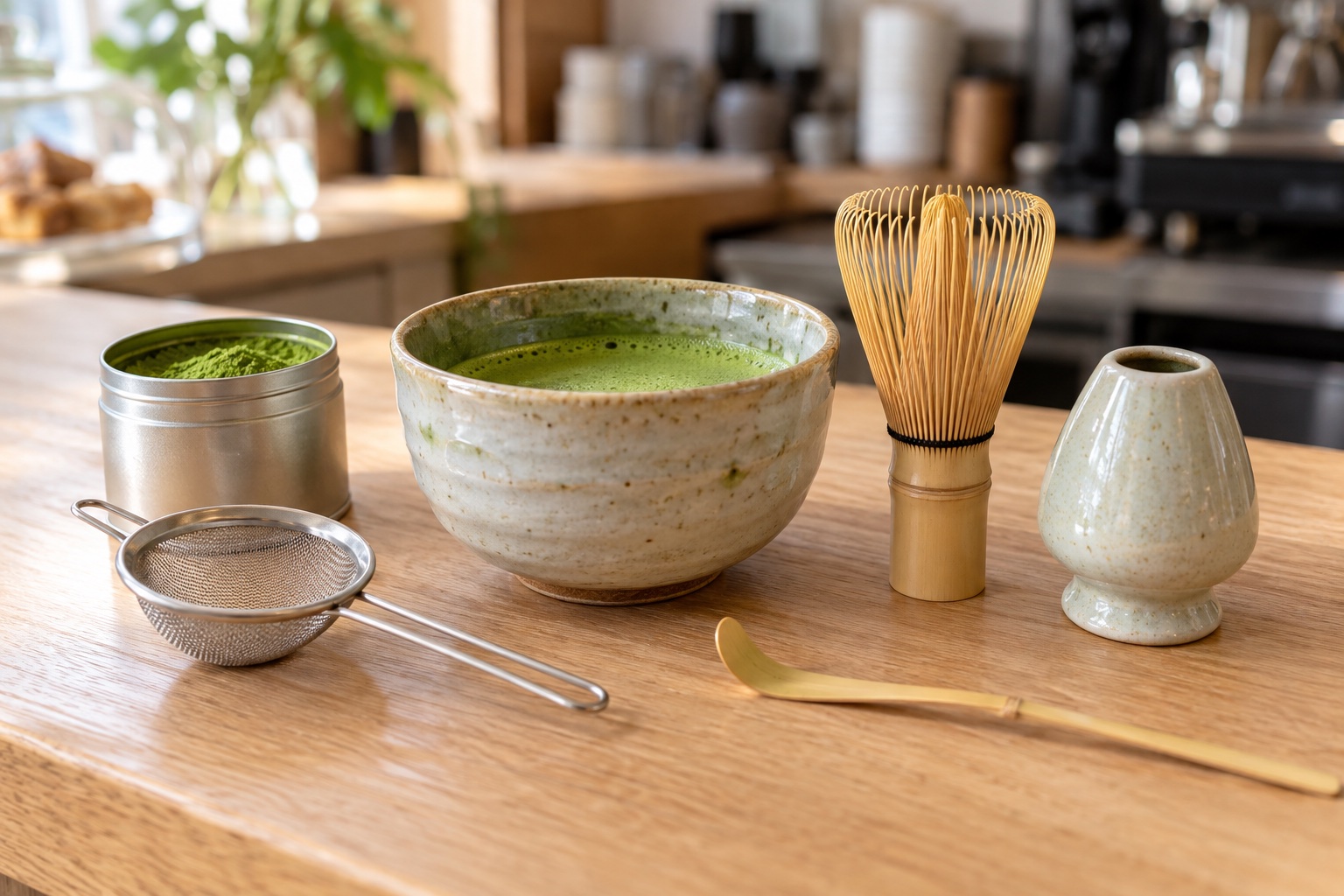
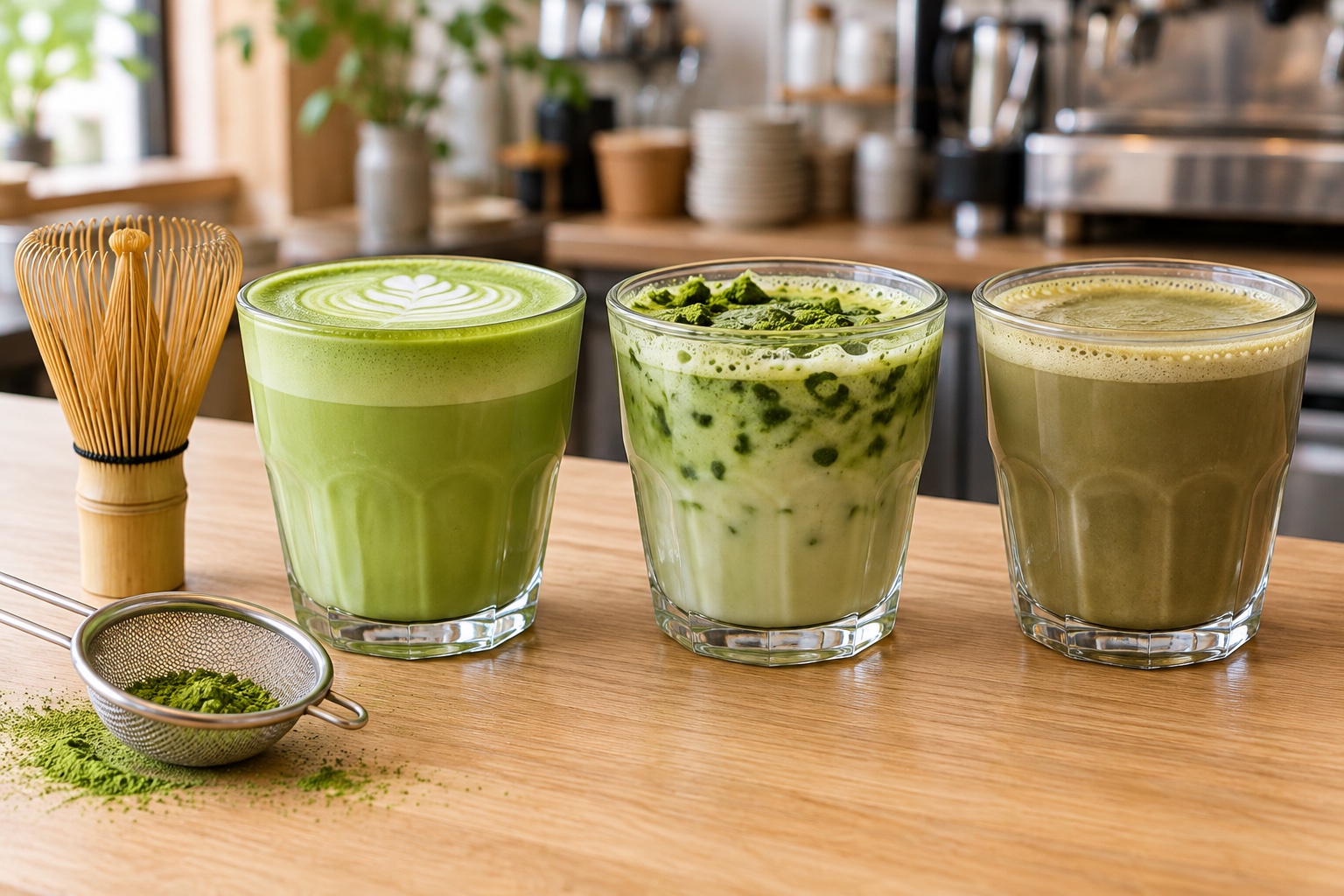
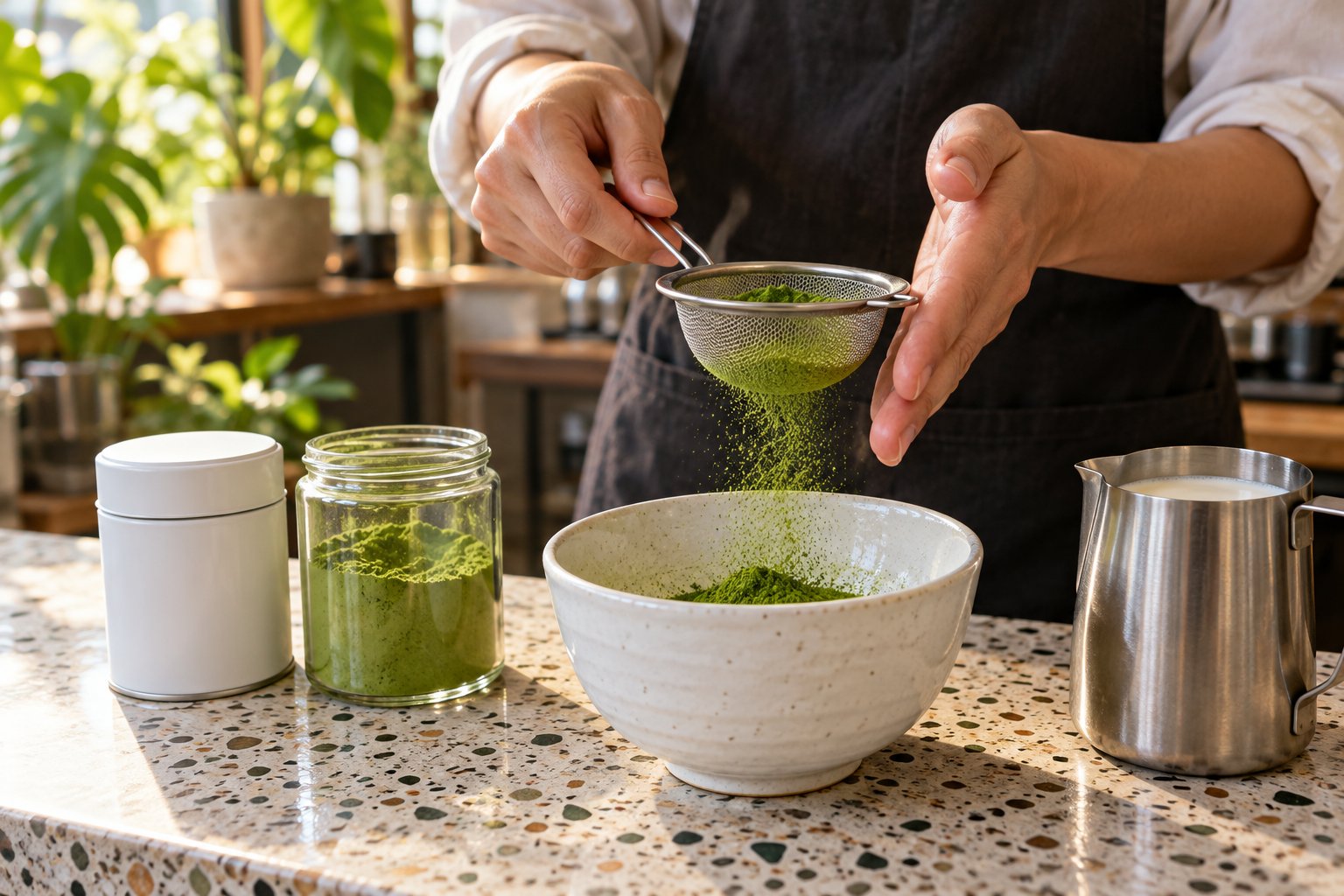
Matcha is a fine powder that clumps easily. The Kyoto Prefectural Tea Research Institute sifts matcha through a tea strainer to remove clumps, dissolves it in a little hot water first and then adds the rest. The same applies with cold water: do not drop the powder straight into a glass of ice and water. Whisk sifted matcha in a little water first, then combine. Why clumps form, and why wet tools make hard lumps, are covered under “How to prevent lumps” in How to make matcha.
Sediment
Matcha does not dissolve in water. Fine particles float in it. A 2003 study reported that normal matcha particles average 11.5µm and finely milled matcha 3.2µm, and that the finer matcha settled more slowly in water. When you change matcha, check again how much collects at the bottom of the glass. Stir before serving and add a straw or stirrer. Layered drinks and the reason matcha sinks are covered under “Separation, settling, and showing the layers” in Matcha lemonade, tonic, soda and coconut water.
Thin or bitter
The following is our view. If the drink tastes thin, first check whether melted ice has added water. Hot water melts ice faster, so use less hot water or compare with cold whisking. Using the same amount of ice in every glass keeps the taste consistent.
If it is too bitter, compare in this order: less matcha, lower water temperature, cold whisking. KRUA.CO recommends cold water for matcha that tastes bitter. If it is still bitter after changing the method, compare other matcha.
Fading color
Matcha’s green fades with light and time. Test results on light fading are covered in Matcha shelf life and storage. Whisked matcha made ahead in a clear container or left by a window loses color before it is served. Whisk to order, or keep made-ahead matcha in a container that blocks light.
Choosing water and ice
With no milk or sweetener, the water and ice affect both taste and safety directly. Check hardness for water, and whether ice is edible ice.
Use soft water
Marukyu Koyamaen says soft water with low hardness suits Japanese green tea, and that mineral water overseas varies in hardness, so care is needed. For tap water, it recommends a water filter, or boiling to reduce the chlorine smell. daia.muncha’s menu says every Clear Matcha is made with mineral water. If you use mineral water, check the hardness on the label and compare the same matcha with a few different waters.
For cold whisking, Ippodo Tea’s US site chills the water with ice and strains the ice out. We recommend keeping filtered water in the fridge and measuring it for each order.
Thailand’s rules for ice
In Thailand, Ministry of Public Health Notification No. 463 on edible ice sets the quality, containers and labelling of ice. It was published in the Royal Gazette on 11 December 2025 and took effect the next day, 12 December. It repealed Notification No. 78 (1984) and the notifications that amended it. Ice for eating, and the water used to make it, must meet the standard for drinking water in sealed containers and be free of dirt and foreign matter. According to the Thai FDA’s explanation, the microbial part of that standard is fewer than 1.1 coliform bacteria and fewer than 1.1 E. coli per 100ml (MPN method). Containers and packaging for ice must be easy to clean, covered so nothing from outside can get in, and never used for anything other than ice.
The main clauses of the notification:
| Clause | What it says |
|---|---|
| 1 | Takes effect the day after publication in the Royal Gazette (12 December 2025) |
| 2 | Repeals Notification No. 78 (1984) and Nos. 137, 254 and 285, which amended it |
| 4 | Ice for eating and the water used to make it must meet the standard for drinking water in sealed containers and be free of foreign matter |
| 6 | Containers for transport and packaging must be easy to clean, covered against contamination from outside, and never used for anything other than ice |
| 7 | Packaged ice for eating must follow the rules for labelling prepackaged food and show “น้ำแข็งใช้รับประทาน” (edible ice) |
| 8 | Ice approved before the notification took effect may continue to be sold for up to one year |
Source: Thailand Ministry of Public Health Notification No. 463 on edible ice (Royal Gazette, 11 December 2025; Thai FDA copy) https://food.fda.moph.go.th/media.php?id=841483502506614784&name=P463.pdf
When buying ice, check that the bag says “น้ำแข็งใช้รับประทาน” (edible ice). Clause 7 of Notification No. 463 requires this wording on packaged edible ice. Ice approved before the notification took effect may be sold for up to one year after that date, so bags with the old wording may still be around until December 2026. In our view, if you use an ice machine, use filtered water and keep the machine and ice scoops clean.
Prep before opening and steps per order
Whisk matcha to order and set up water and ice before opening, and a drink without milk takes little time per cup. The following is our example routine based on the recipes.
Before opening
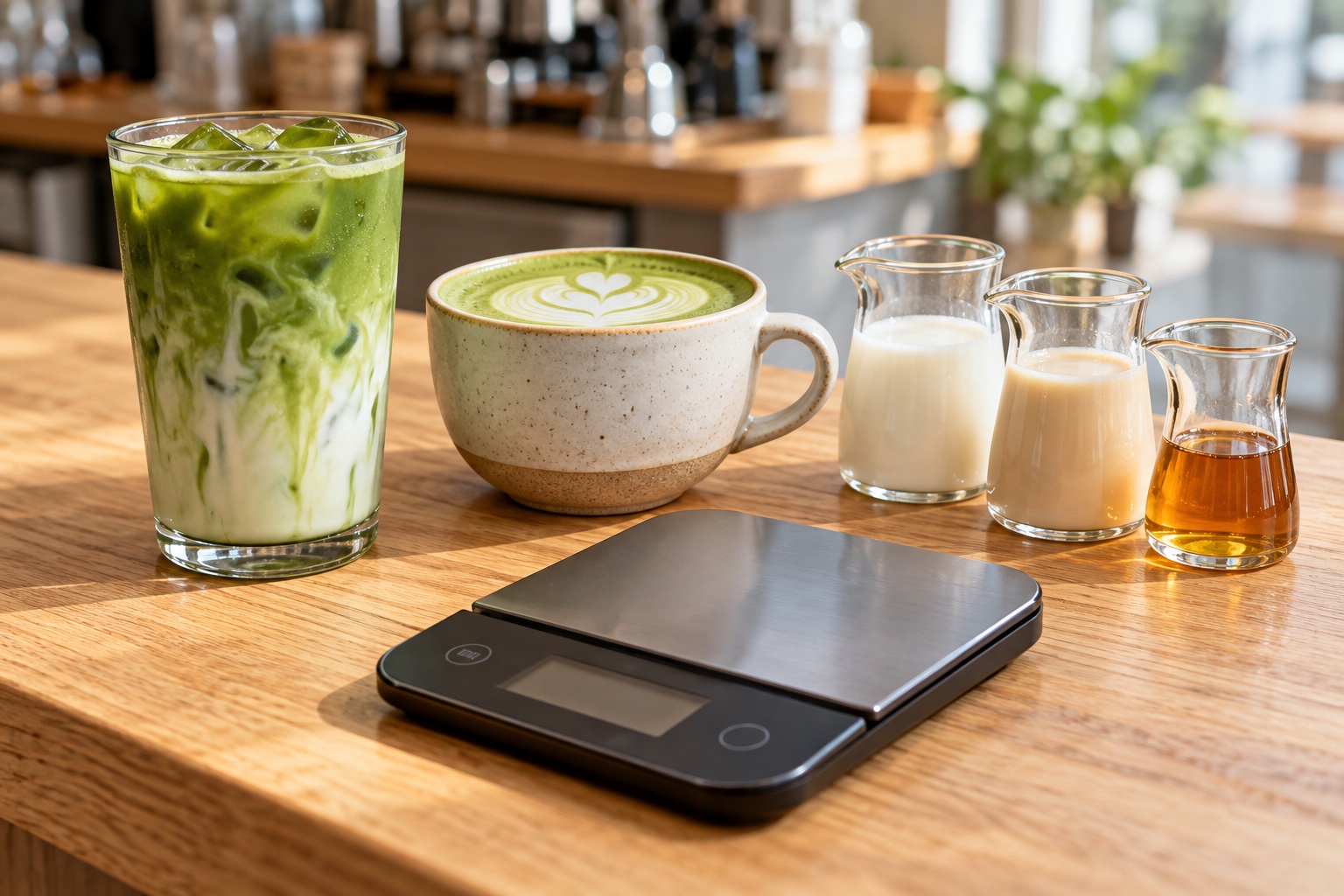
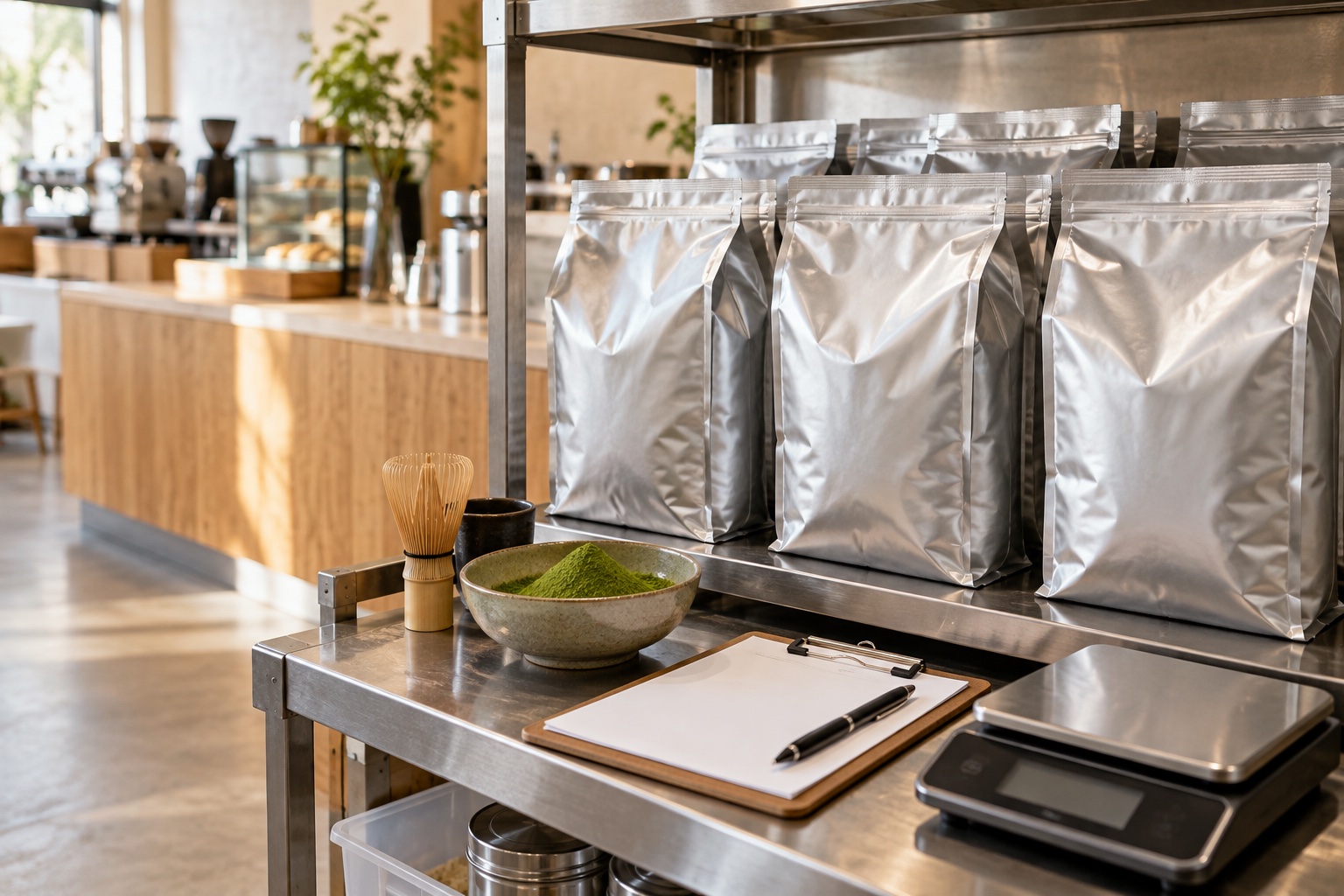
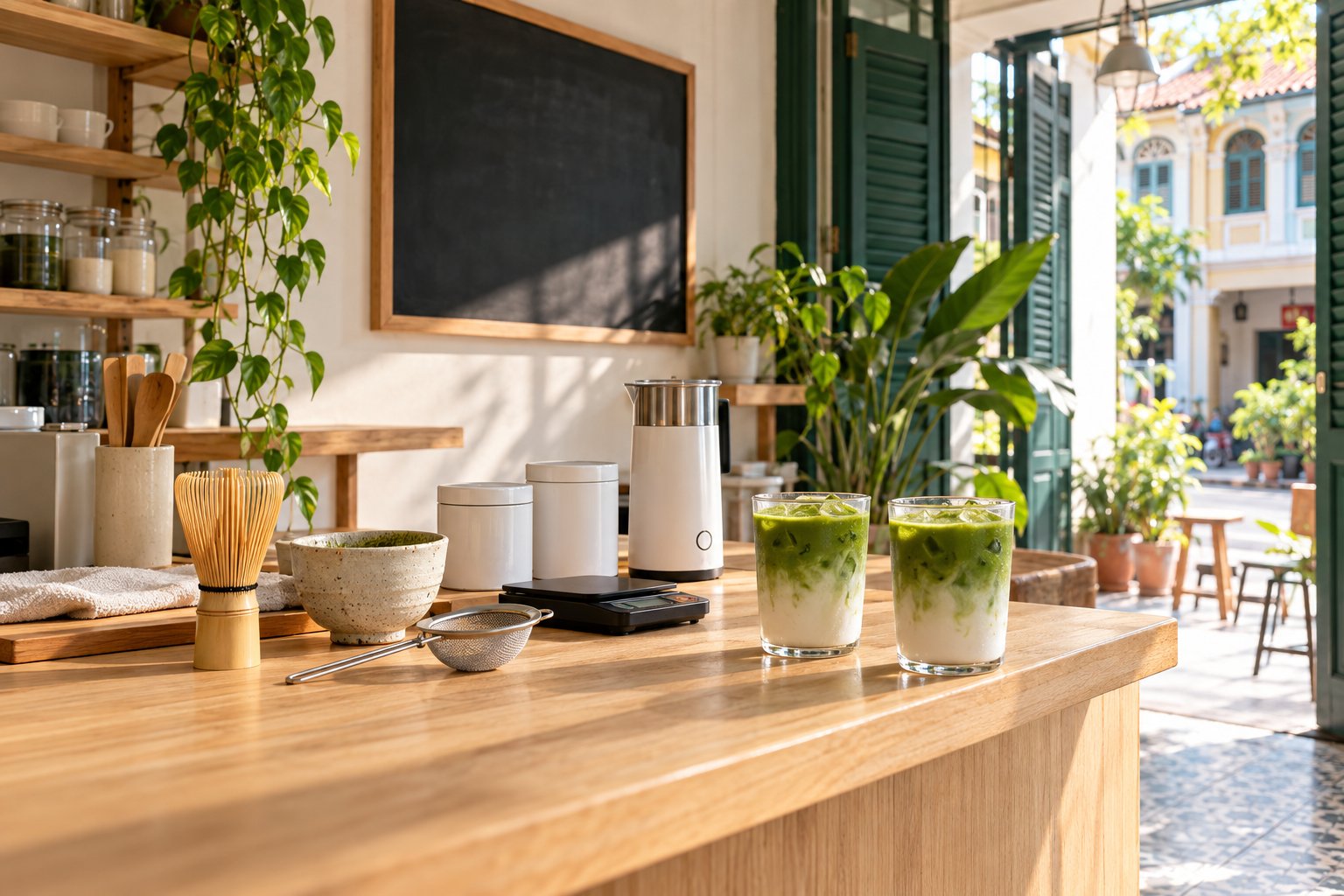
- Set out a scoop or scale for one drink’s matcha (for example 4g) and a dry tea strainer
- If you whisk with hot water, set a temperature-controlled kettle to 70 to 80°C
- If you whisk with cold water, chill filtered water in the fridge
- Mark the water level for one drink on the glass or use a measuring cup, and set the ice as a number of scoops
- Check the edible ice label and keep ice in a covered container
Per order
- Weigh and sift the matcha, then whisk it in 40 to 60ml of water or hot water (or shake it)
- Put the set amount of ice and cold water in the glass (add sweetener here if used)
- Pour the whisked matcha over the ice
- Stir lightly, add a straw or stirrer, and serve right away
Making it ahead
We found no public guidance on how long whisked matcha can be kept. Public guidelines on temperature for cold foods and how long food can sit after preparation are covered under “Can you make it ahead?” in How to make an iced matcha latte. If you make matcha ahead for busy times, we recommend keeping it in the fridge without ice, writing the time on the container, and shaking it again before use. Left with ice, it melts and becomes thin.
Sweetness and the menu
Many shops serve this drink unsweetened by default and let customers choose a sweetness level. If you sweeten it, set the amount of sweetener per drink in grams or millilitres.
Sweetness on Thai menus
Inthanin lets customers choose the sweetness of its เพียวมัทฉะเย็น starting from 0%. daia.muncha adds a line to all three Clear Matcha drinks suggesting 25% more sweetness for customers who do not like bitterness. Thailand’s sweetness levels for drinks made in shops (หวานน้อย, less sweet, and หวานปกติ, normal sweetness) are covered in Thai green milk tea vs matcha latte.
Sugar dissolves poorly in cold water, so make it into a syrup first. Using a matcha syrup made by dissolving matcha in sugar syrup is covered in How to make matcha syrup.
Nutri-Grade in Singapore
According to Singapore’s Health Promotion Board (HPB), from 30 December 2023 drinks prepared in shops, including freshly brewed coffee and tea, are covered by the Nutri-Grade label for sugar and saturated fat. Grades C and D must be labelled, and labelling grades A and B is optional. The grade can change with the amount of syrup, so calculate the sugar per drink for each sweetness level. The scheme is covered under “Serving in Singapore” in How to make a strawberry matcha latte. For caffeine per drink, see Matcha caffeine.
Cost per drink
Matcha cost per drink is the buying price per kg ÷ 1,000 × the grams used per drink. There is no milk cost, but the matcha amount can be higher than in a latte.
Matcha per drink
The table shows the matcha per drink in each recipe. Multiply the grams by “buying price per kg ÷ 1,000” to get the matcha cost per drink. How the price per kg is set is covered in How matcha prices are set.
| Recipe | Matcha per drink | Water per drink |
|---|---|---|
| Ippodo Tea, shaken matcha | 1g | 100ml ice water |
| Ippodo Tea, cold-whisked matcha and Iced Matcha | 2g | 60ml |
| Art of Tea | 4g | About 240ml plus ice |
| KRUA.CO | 5g | 200ml plus ice |
| (For comparison) Ippodo Tea, iced matcha latte | 3g | 100ml hot water plus 100ml milk |
Art of Tea and KRUA.CO, closest to a café glass, use 4 to 5g, 1 to 2g more than the 3g in a latte.
Other ingredients
Apart from matcha, the costs are:
- Water: filter cartridge cost, or for mineral water, bottle price ÷ volume × amount per drink
- Ice: price of bought ice ÷ weight × amount per drink (for an ice machine, water and electricity)
- Sweetener: the syrup per drink, if used
- Cup, lid and straw
Without milk, matcha makes up a larger share of the ingredient cost, so the matcha you choose shows directly in both cost and taste. Choosing a grade to fit your price is covered in How to choose matcha for café lattes.
What to check when buying
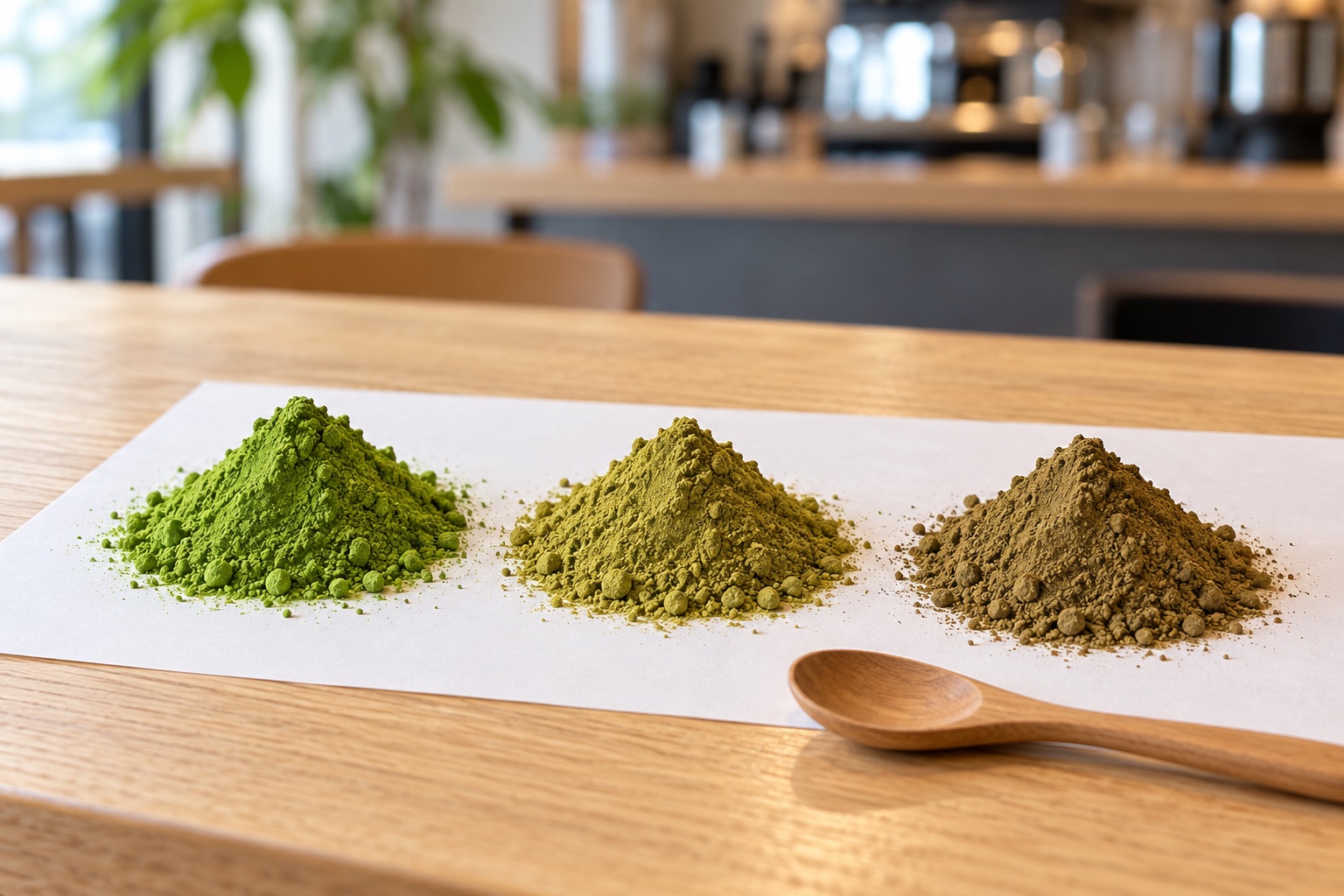
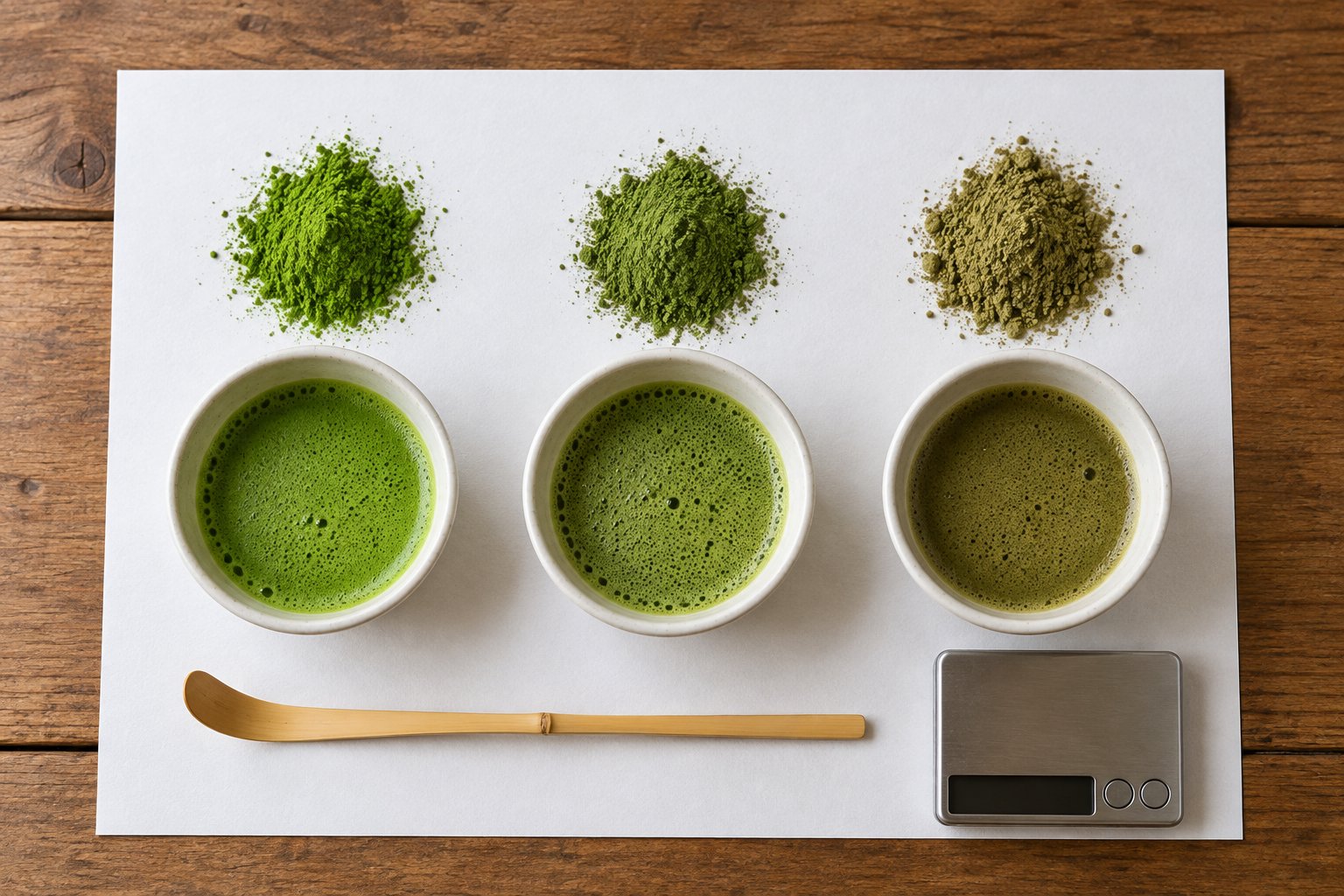
In iced matcha without milk, nothing hides the color, aroma or bitterness, so choose matcha by a drink made with your own water and ice. Decide by side-by-side results in the same recipe, not by grade names.
Taste-test in your recipe
The following is our suggestion.
- Make each candidate matcha with your water and ice, using the same grams
- Make one cold-whisked and one hot-whisked and cooled with ice
- Compare color, sediment at the bottom and bitterness when fresh and after 15 minutes
- Check whether it is drinkable without sweetener, then calculate the matcha cost per drink and match it to the price
Grade names such as ceremonial and culinary are sellers’ terms with no official standard. Harvest and raw material differences are covered in Matcha grades, and how to judge color and particles in How to judge matcha quality.
Use different matcha for the menu
Like daia.muncha, you can use a matcha of a different cultivar or region only for drinks without milk, and price them separately. Regional differences are covered in Matcha origins. If you use the same matcha as your latte, check separately whether it is too bitter with water.
Omakase Matcha sources matcha from Uji, Yame, Shizuoka, Kagoshima and Miyazaki. Orders start at 1kg, you can choose up to 3 samples, and we can help adjust blends for your menu. To compare how matcha tastes with only water and ice, request samples.
Sources
- Ippodo Tea, “水点て抹茶” (Cold-whisked matcha, in Japanese) https://www.ippodo-tea.co.jp/blogs/tea-recipe/7%E6%B0%B4%E7%82%B9%E3%81%A6%E6%8A%B9%E8%8C%B6
- Ippodo Tea, “シャカシャカ抹茶” (Shaken matcha, in Japanese) https://www.ippodo-tea.co.jp/blogs/tea-recipe/15%E3%82%B7%E3%83%A3%E3%82%AB%E3%82%B7%E3%83%A3%E3%82%AB%E6%8A%B9%E8%8C%B6
- Ippodo Tea, “Cold-Whisked Matcha” https://ippodotea.com/blogs/recipes-to-brew-japanese-tea/cold-whisked-matcha
- Ippodo Tea, “Iced Matcha” https://ippodotea.com/blogs/recipes-to-brew-japanese-tea/iced-matcha
- Ippodo Tea, “Iced Matcha Latte” https://ippodotea.com/blogs/recipes-to-brew-japanese-tea/iced-matcha-latte
- Marukyu Koyamaen, “抹茶の点て方” (How to prepare matcha, in Japanese) https://www.marukyu-koyamaen.co.jp/about-tea/enjoy-matcha.html
- Kyoto Prefectural Tea Research Institute, “お茶のおいしい入れ方 抹茶” (How to make good matcha, in Japanese) https://www.pref.kyoto.jp/chaken/irekata_maccha.html
- Art of Tea, “Art of Iced Matcha Recipe” https://www.artoftea.com/blogs/recipes/iced-matcha-recipe
- Art of Tea, “Matchasticks” https://www.artoftea.com/products/matchasticks
- KRUA.CO, “Pure matcha” (in Thai) https://krua.co/recipe/pure-matcha
- Haraguchi, Imada, Sawamura, “Production and characterization of fine matcha for processed food,” Journal of the Japanese Society for Food Science and Technology 50(10) 468–473 (2003, in Japanese with English summary) https://agris.fao.org/search/en/records/647242e92c1d629bc9792fac
- Thailand Ministry of Public Health Notification No. 463 on edible ice (Royal Gazette, 11 December 2025; Thai FDA copy, in Thai) https://food.fda.moph.go.th/media.php?id=841483502506614784&name=P463.pdf
- Thai FDA, explanation of Ministry of Public Health Notification No. 463 on ice (January 2026, in Thai) https://food.fda.moph.go.th/media.php?id=851338757692071936&name=announ-fda-463.pdf
- Thai FDA Food Division, “น้ำแข็ง” (ice) https://food.fda.moph.go.th/food-law/f2-ice
- Health Promotion Board, Singapore, “Measures for Nutri-Grade” https://hpb.gov.sg/healthy-living/food-beverage/nutri-grade
- Wongnai, Café Amazon menu https://www.wongnai.com/delivery/businesses/577439iz/order
- Wongnai, Inthanin menu https://www.wongnai.com/delivery/businesses/321927gX/order
- Wongnai, Starbucks Siam Future Ekkamai menu https://www.wongnai.com/delivery/businesses/4760uM/order
- Wongnai, Kyo Roll En menu https://www.wongnai.com/delivery/businesses/214788iP/order
- Wongnai, daia.muncha menu https://www.wongnai.com/delivery/businesses/3840410sp/order
- nana’s green tea, drink menu (in Japanese) https://www.nanasgreentea.com/collections/drink-menu
- Eatbook, “Matsu Matcha: New Kiosk With Matcha Mill In CBD” (15 April 2026) https://eatbook.sg/matsu-matcha/