
 Reviewed by: Takahiro Sugiyama (CEO, meguri Inc.)
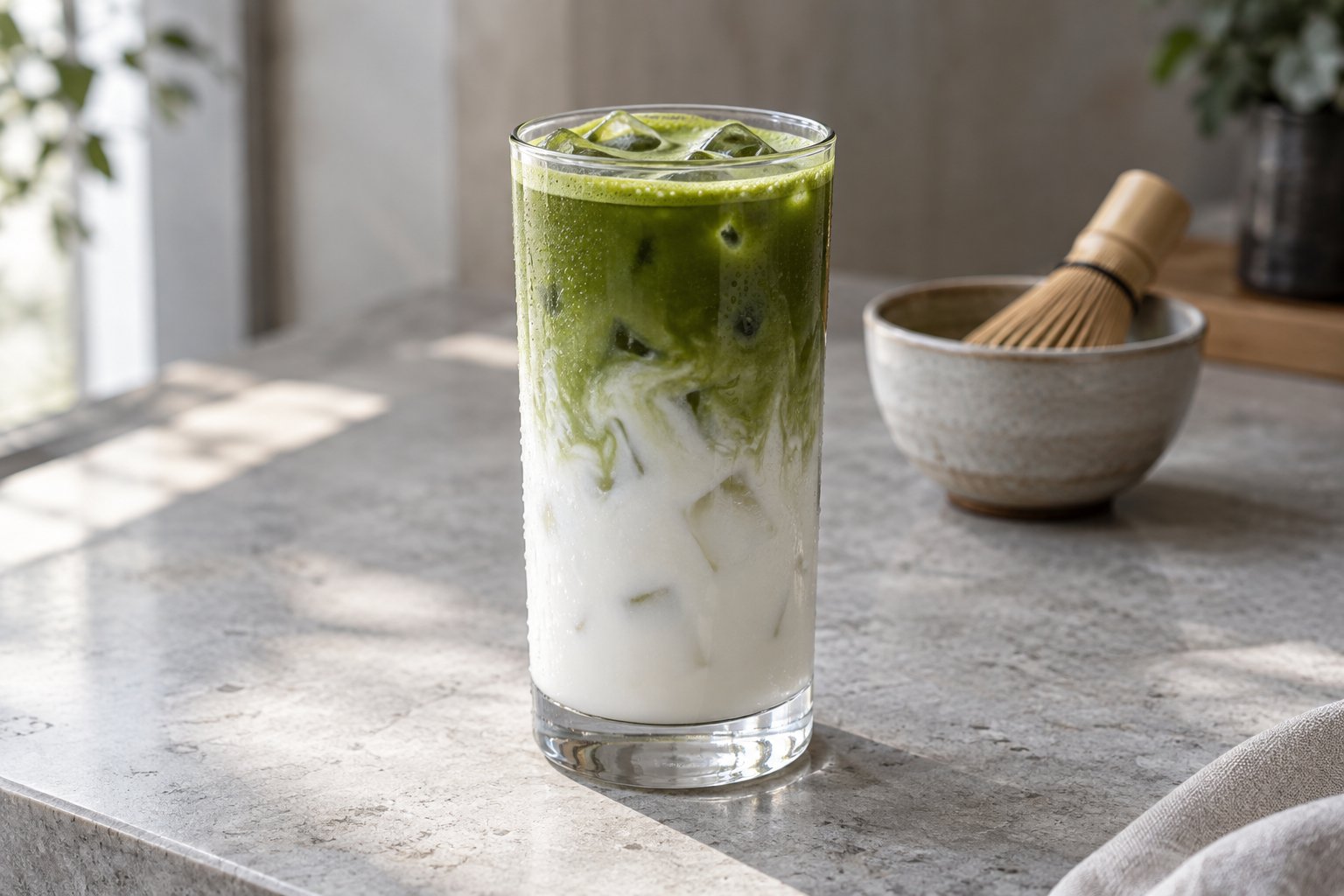
With an iced matcha latte, the amount of water used to dissolve the matcha changes both the taste and the look, and melting ice dilutes the drink. If the amounts are not fixed, every cup tastes a little different. This guide compares the iced matcha latte recipes published by long-established Kyoto tea shops and a major Japanese tea maker, then covers how to dissolve matcha without lumps, how to pour two layers, whether you can make it ahead, a prep routine, and the cost per cup.
Iced matcha latte basics
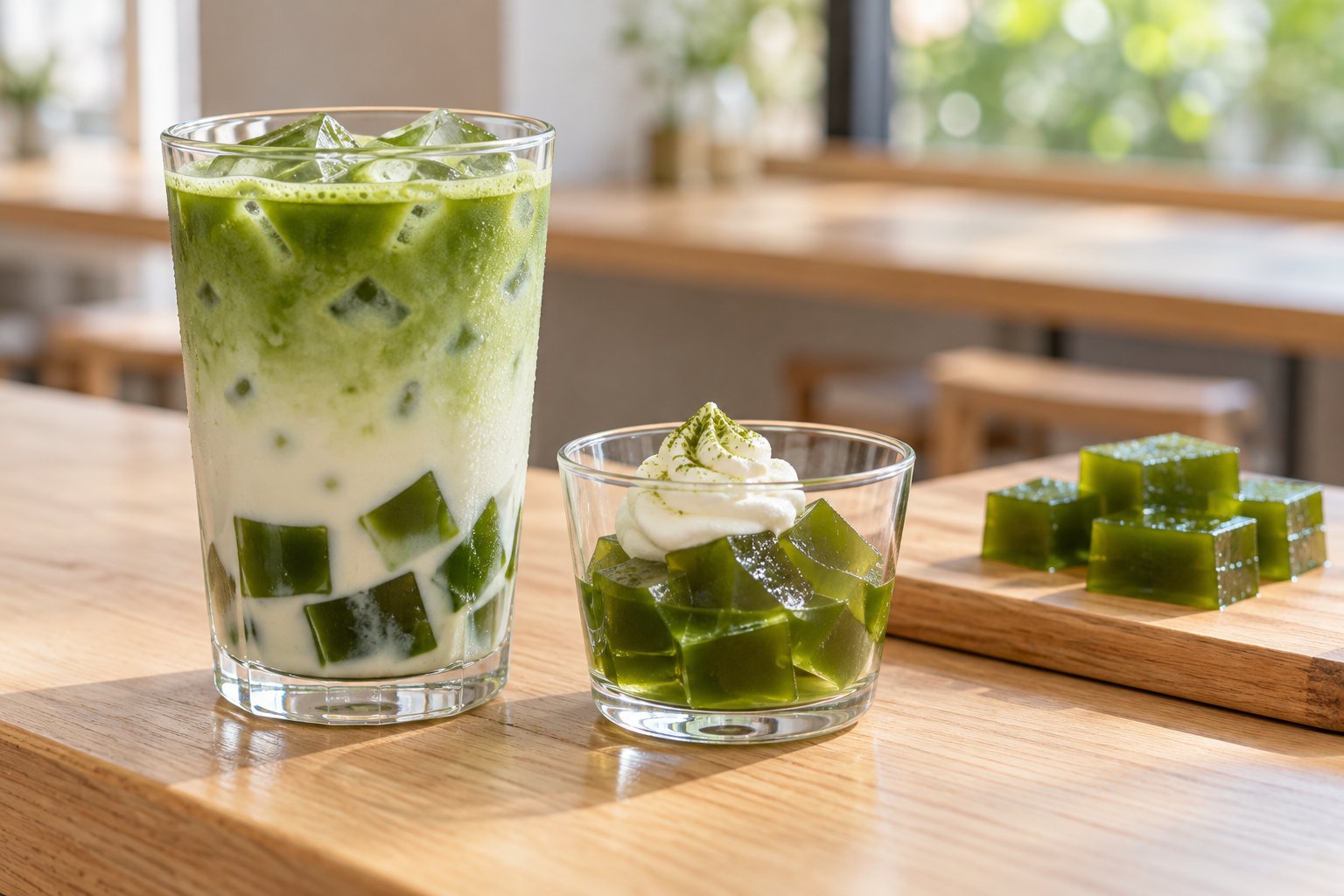
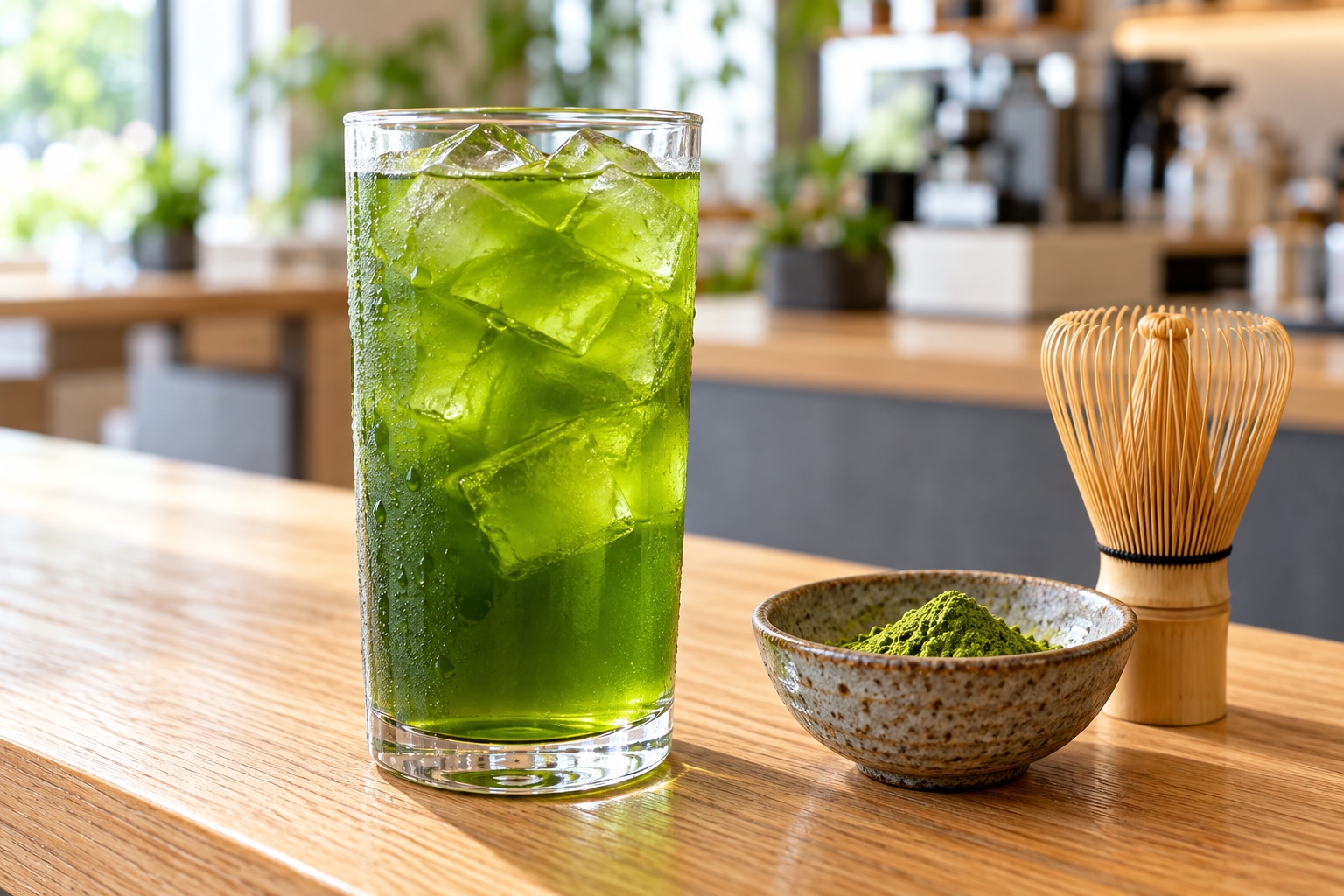
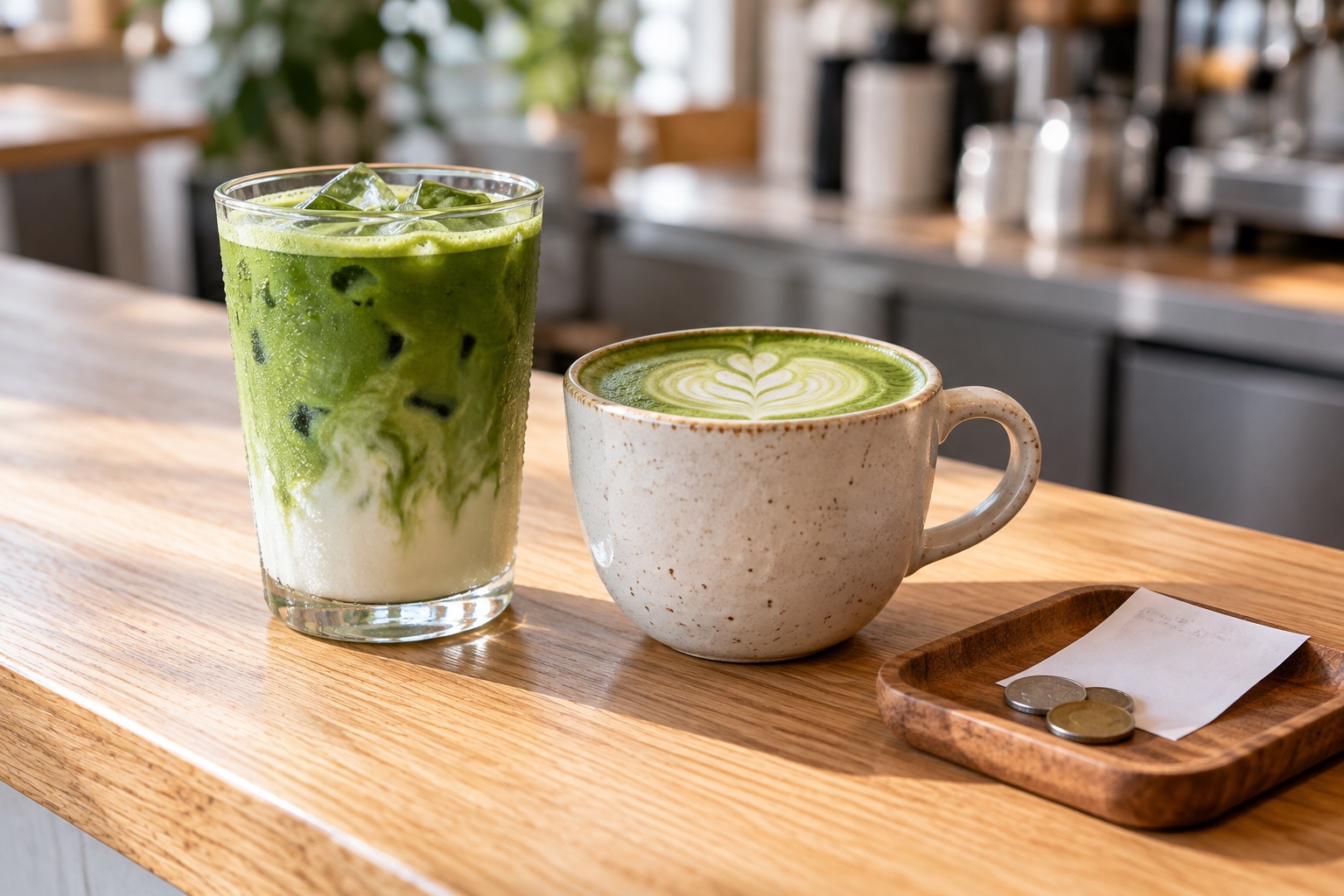
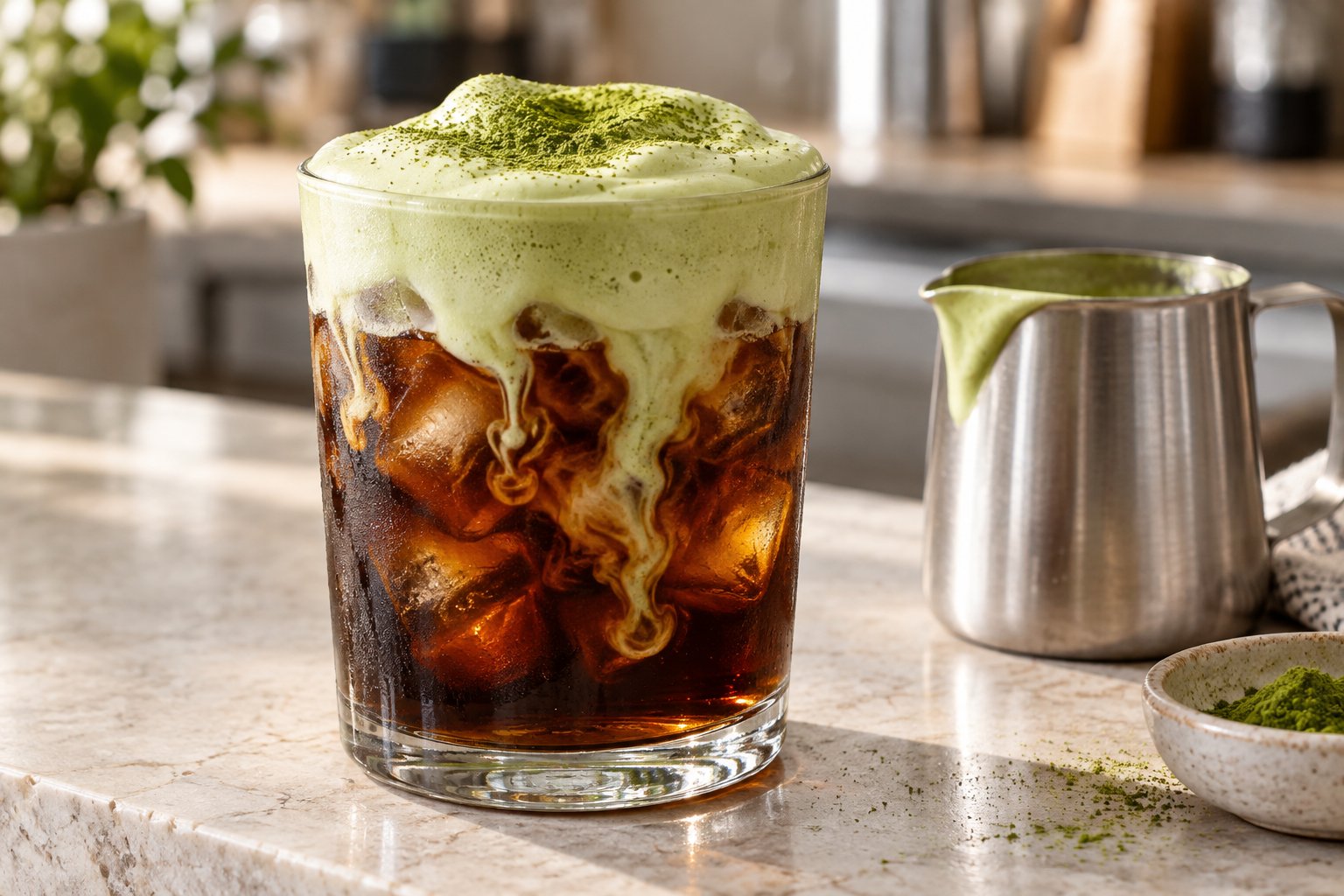
An iced matcha latte is made by dissolving matcha in hot water, then pouring it over ice and cold milk. As with a hot matcha latte, you do not add the powder straight to cold milk; you dissolve it in a liquid first.
Ingredients: matcha, water, milk, ice and sweetener
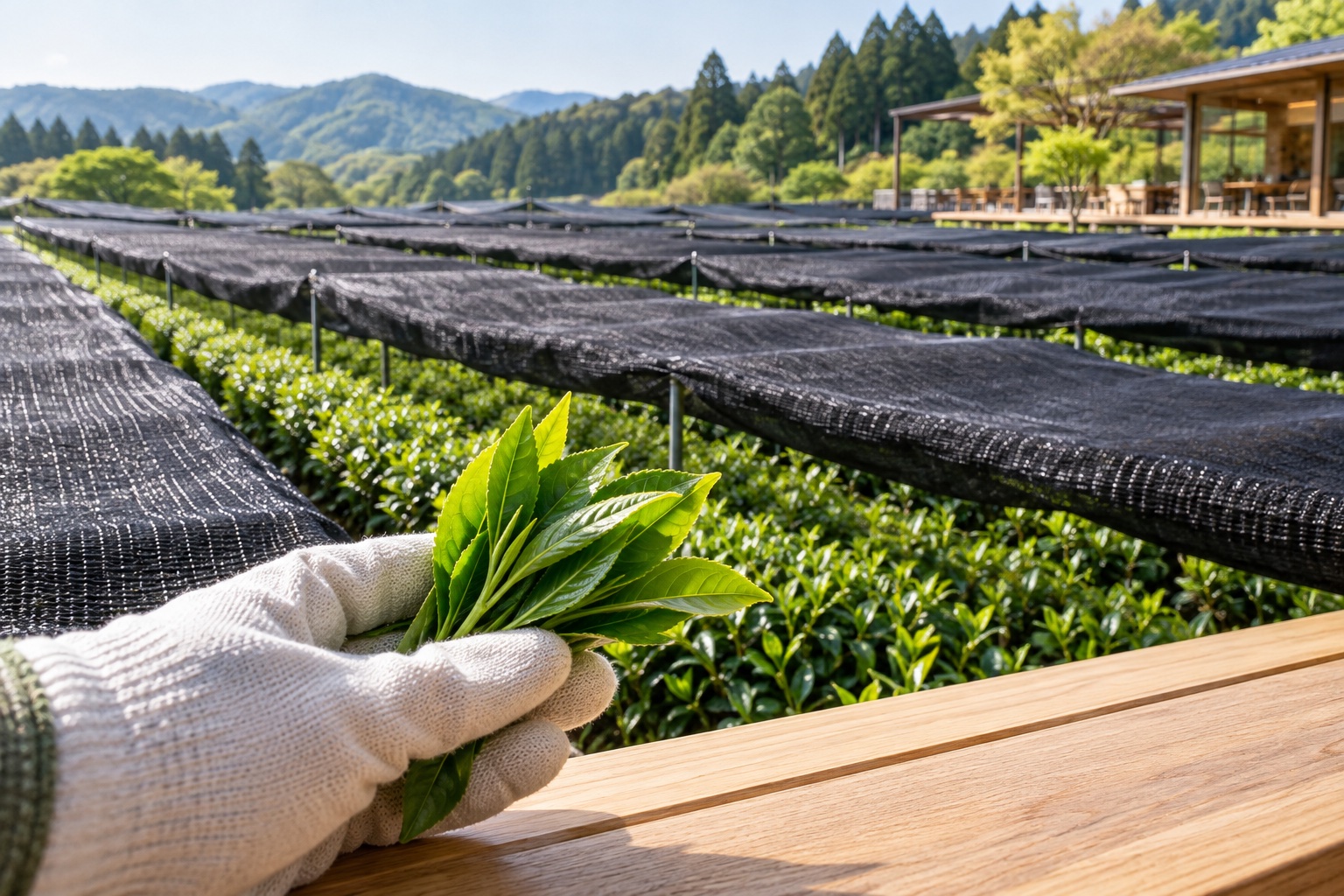
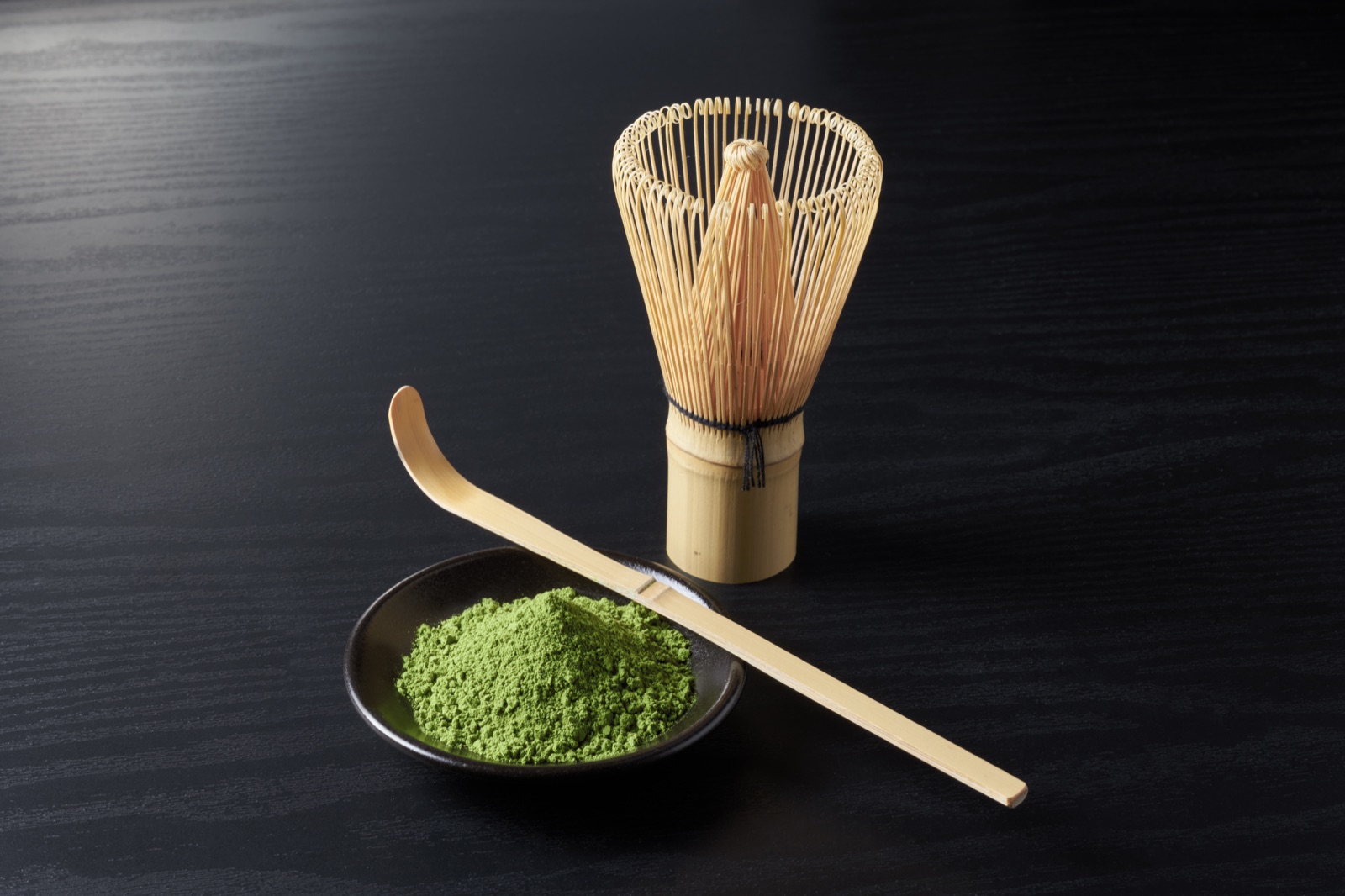
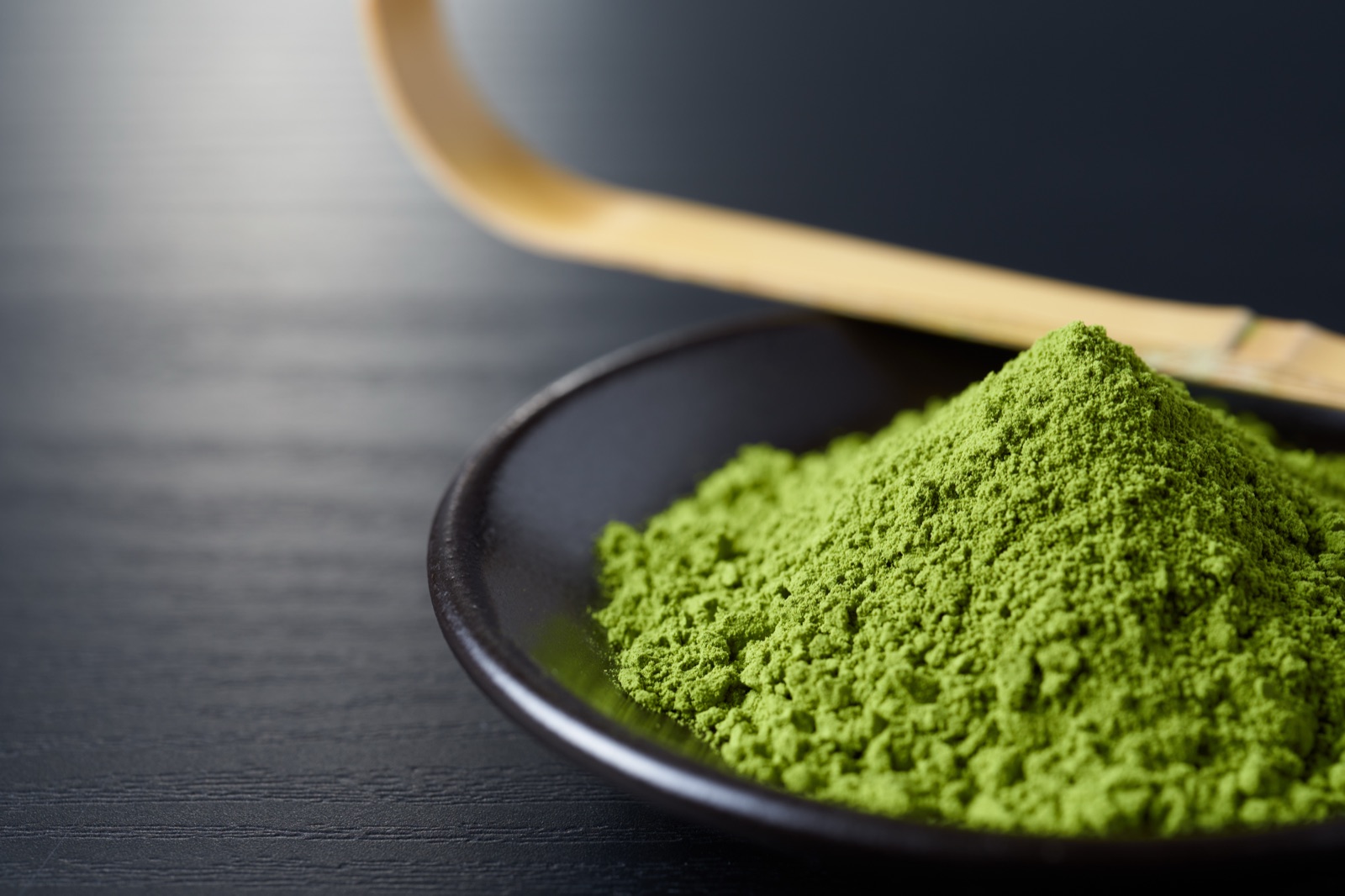
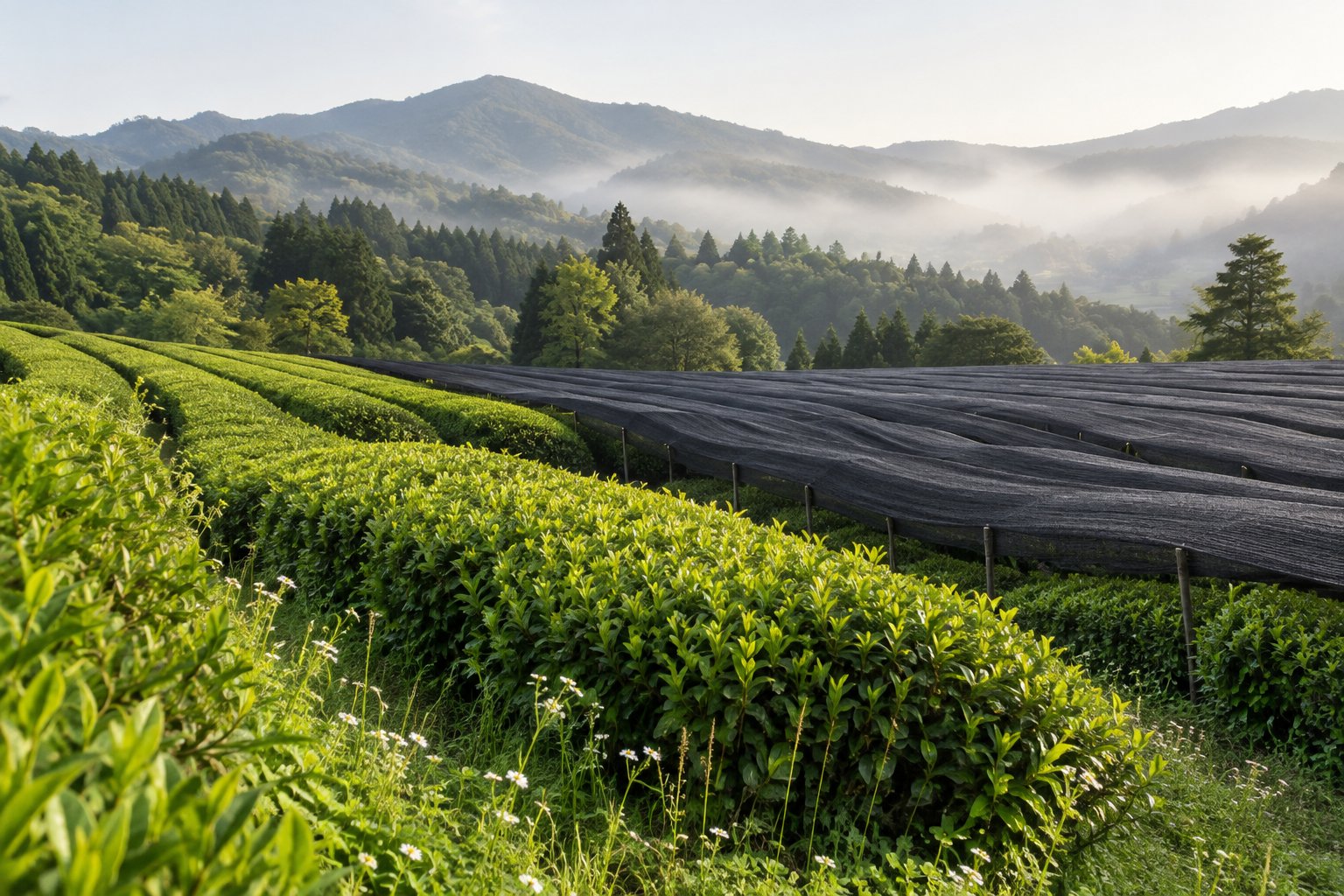
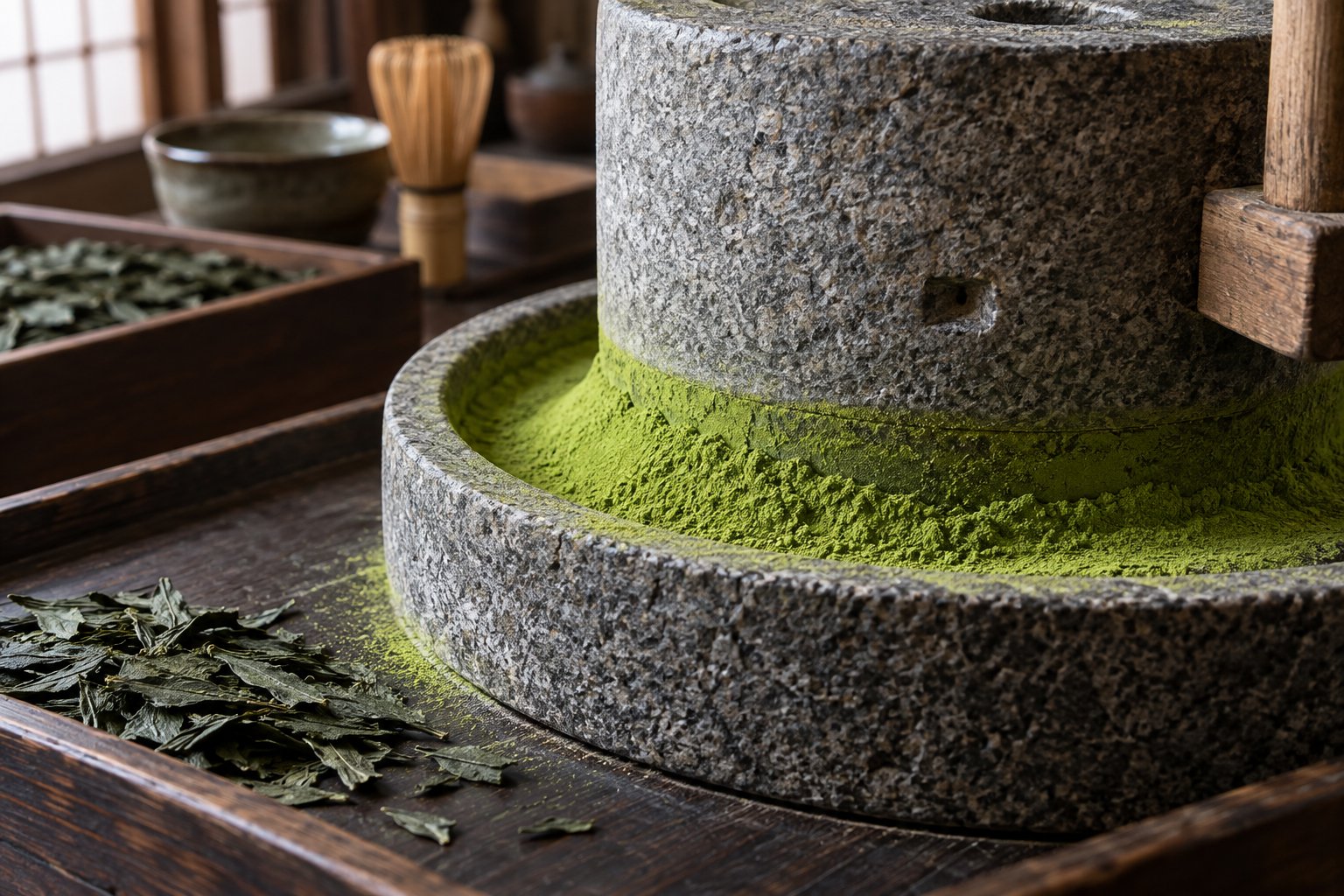
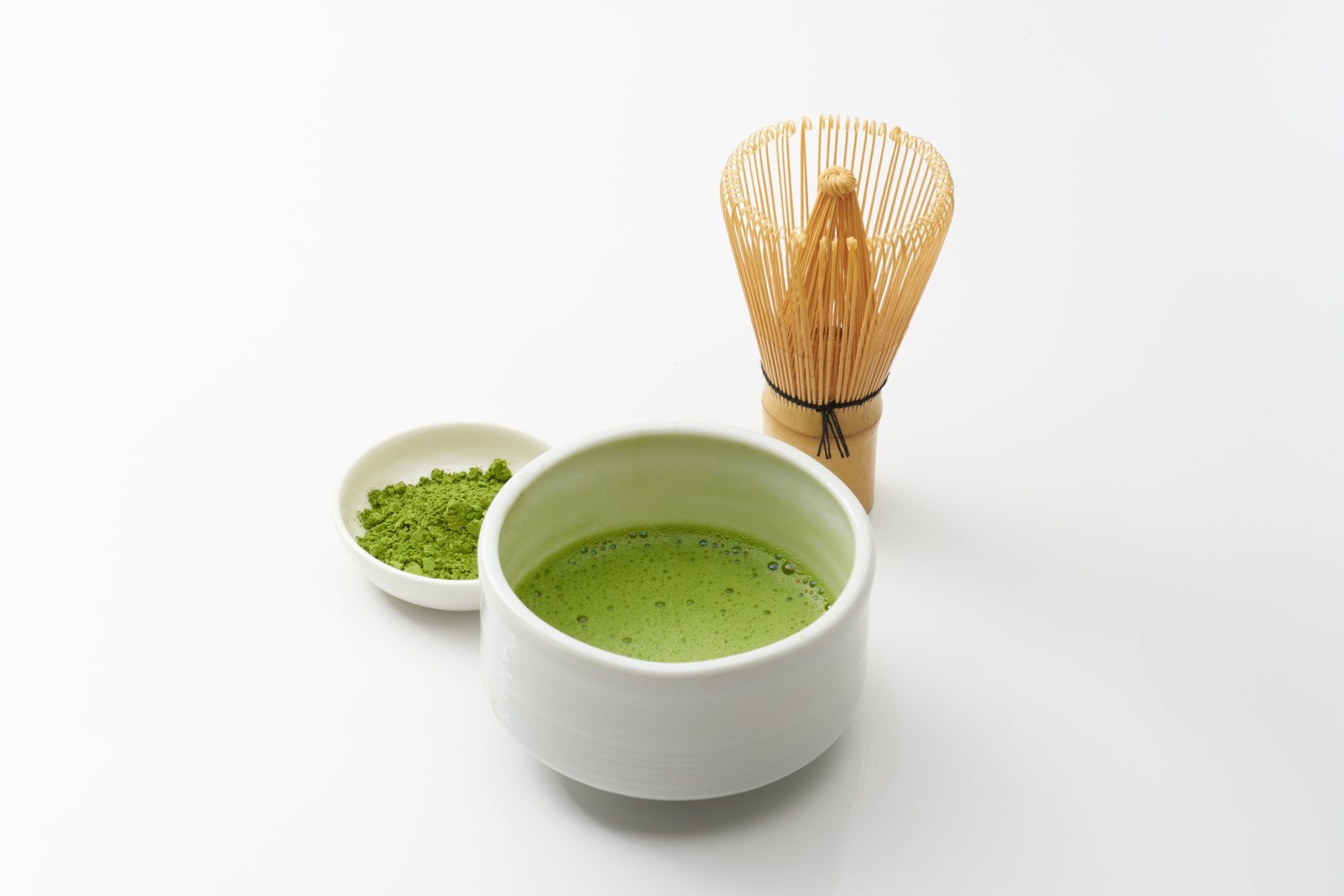
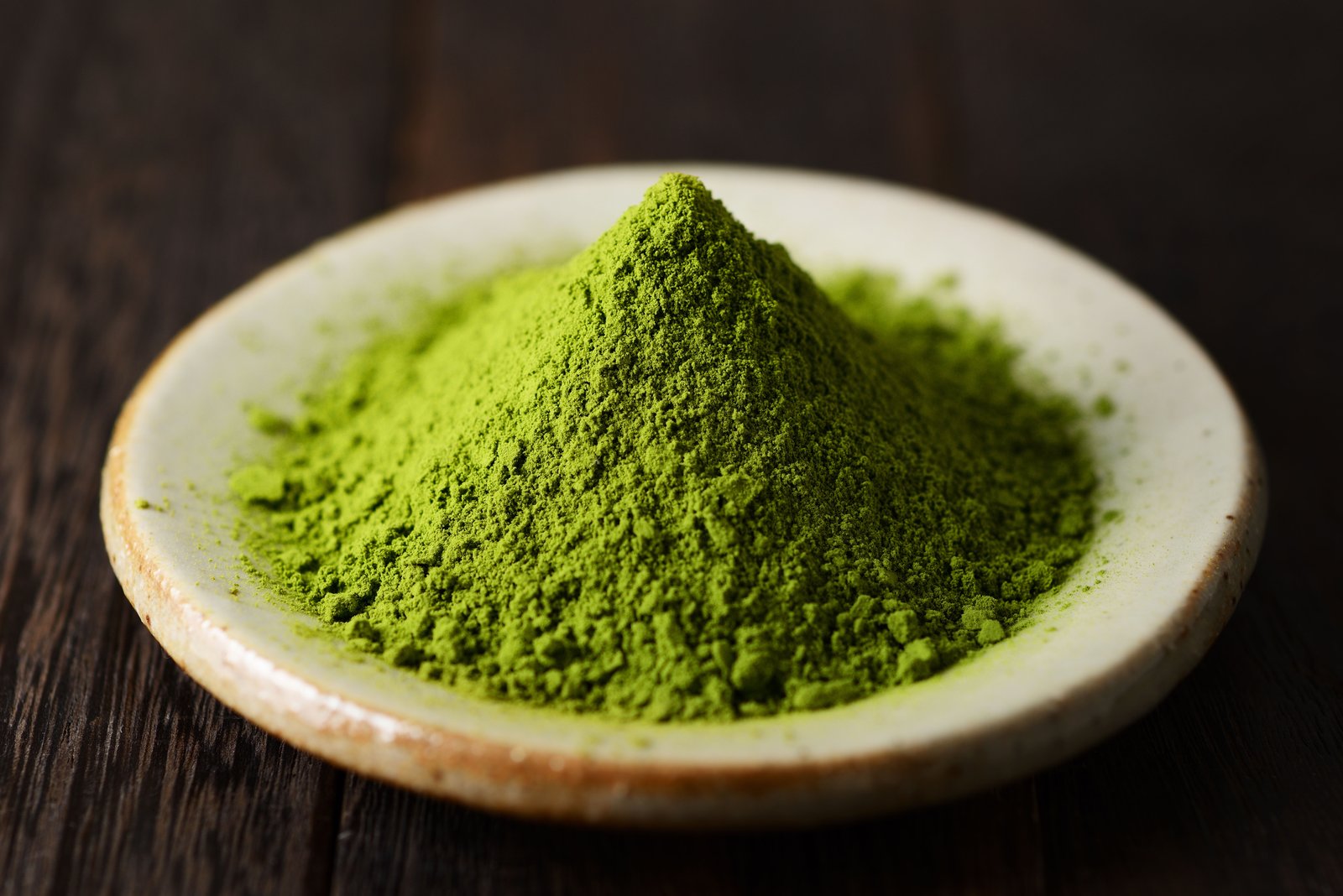
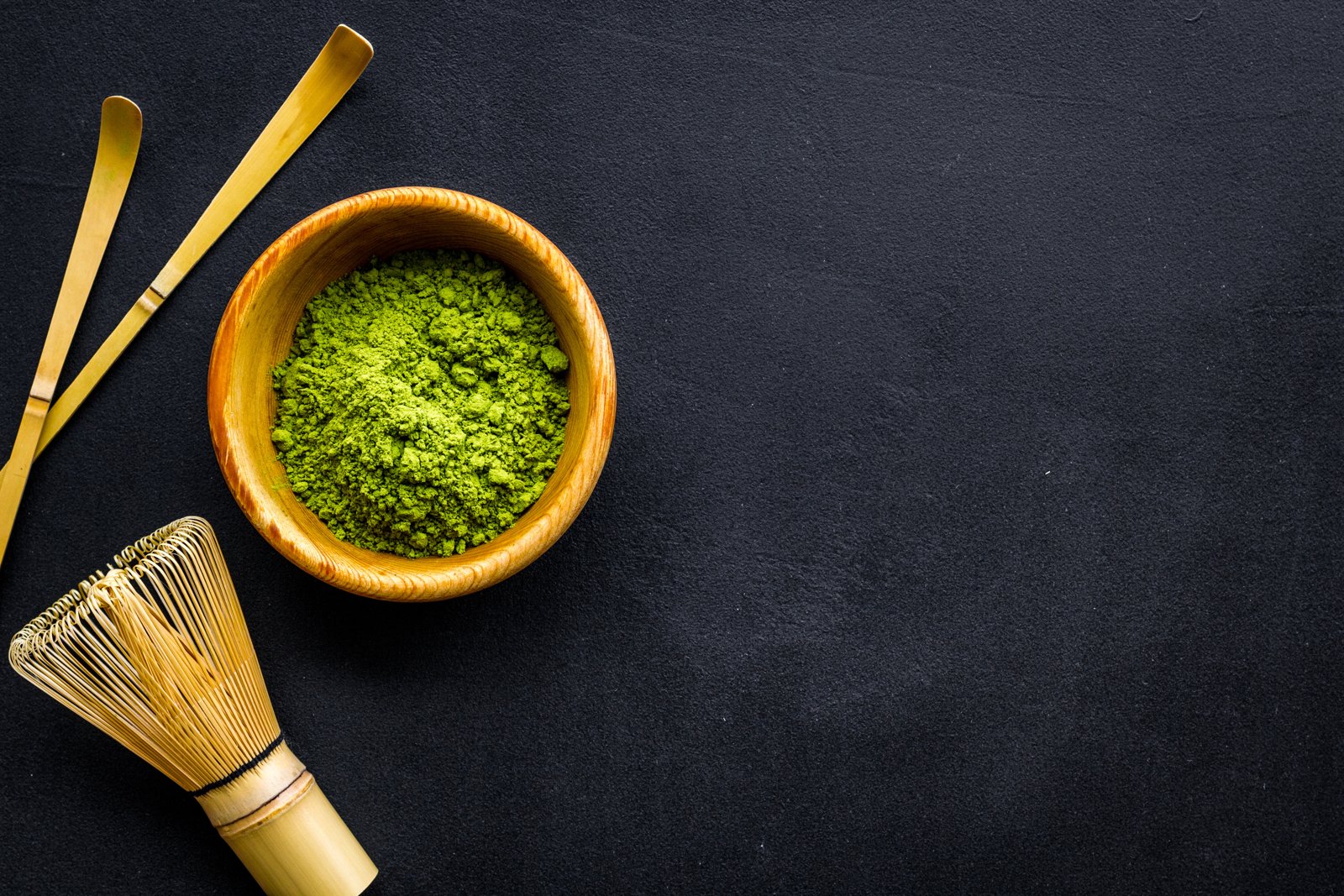
An iced matcha latte has five ingredients: matcha, hot (or cold) water to dissolve it, milk, ice, and sweetener if you like. Matcha is tencha (tea leaves grown under shade and dried without rolling) ground into a fine powder with a stone mill or similar. Unlike green tea that you brew and pour, matcha is drunk with the whole leaf in powder form.
How to choose a grade for lattes and the hot latte recipe are covered in How to Choose Matcha for Café Lattes, and how to whisk matcha itself in How to Make Matcha. This guide focuses on what changes when the drink is iced.
Comparing the recipes of Japanese tea shops and tea makers
Ippodo Tea and Ito En both use 3g of matcha in their iced matcha latte. The difference is the amount of water used to dissolve the matcha: 100ml for Ippodo, 30ml for Ito En.
The official recipes side by side
| Source | Matcha | Liquid for dissolving | Milk | Ice | Sweetener |
|---|---|---|---|---|---|
| Ippodo Tea (Iced Matcha Latte) | 3g | 100ml of hot water at 80°C, whisk with a chasen for 15 seconds | 100ml of cold milk | Yes (amount not given) | Not mentioned |
| Ito En (supervised by Kazuhiro Koyama, a “Charista” tea specialist) | 3g | 30ml of hot water (temperature not given), added little by little and kneaded | 130g of milk | Glass filled with ice | 5–10g of syrup (optional) |
| Yamamasa Koyamaen (cold matcha, no milk) | 2g | Knead with a little lukewarm water, then 30–40ml of cold water | None | Float on top | Not mentioned |
| Marukyu Koyamaen (iced matcha) | Not given | Whisk a little strong with hot water | “Fresh milk” (small creamer portions) on the side, if you like | Float on top | Syrup, if you like |
Yamamasa Koyamaen’s matcha latte recipe is a hot one: 2g of matcha kneaded with a little warm milk, then 150cc of warm milk added. Marukyu Koyamaen’s iced matcha is cold matcha whisked with hot water and served with ice, with milk added only if you like.
Source: Ippodo Tea, “Iced Matcha Latte” https://ippodotea.com/blogs/recipes-to-brew-japanese-tea/iced-matcha-latte
In ratios, the difference is strength
Ippodo says to combine hot matcha and milk at one part to one part. Ito En uses 130g of milk to 30ml of water, so there is a little over 4 times as much milk as water. With the same amount of matcha, Ito En’s dissolved matcha is about 3 times as strong as Ippodo’s, and the recipe has a higher share of milk. In Ippodo’s recipe, water and milk are equal.
Setting your shop’s standard (our view)
From here on, this is our editorial view based on the comparison above. Start with 3g of matcha, the amount both companies use. For the water, start from Ito En’s 30ml if you want two visible layers, or from Ippodo’s 100ml if you want less milk, then settle somewhere in between to suit your cup size and milk. Once decided, write a recipe card with the matcha, water, milk and ice all in grams or millilitres, so the drink comes out the same whoever makes it.
How to prevent lumps in a cold drink
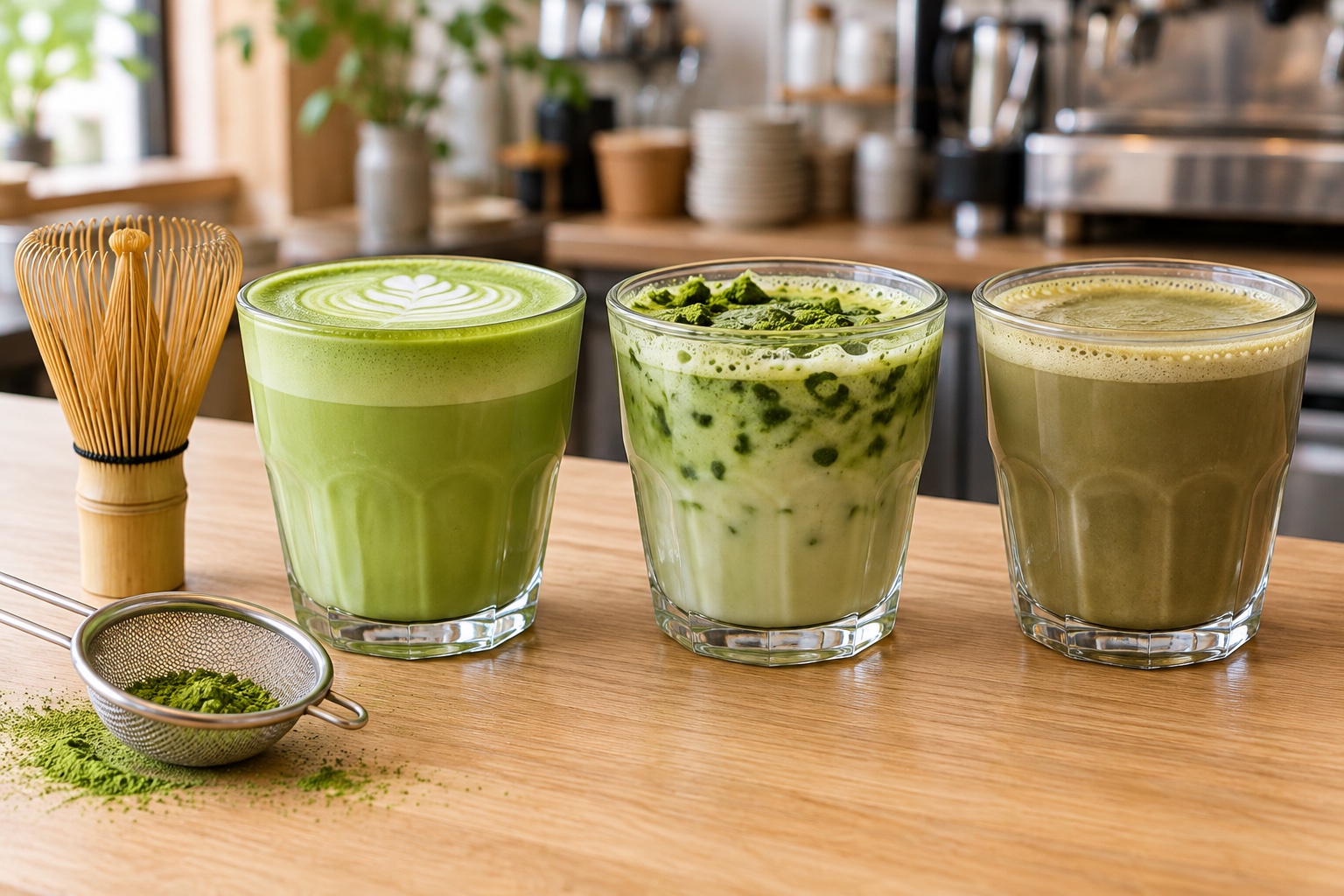
Do not add the powder straight to cold milk. Sift the matcha and dissolve it in a small amount of liquid first, then combine. None of the official recipes we compared add the powder directly to cold milk.
Dissolving in hot water (Ippodo and Ito En)
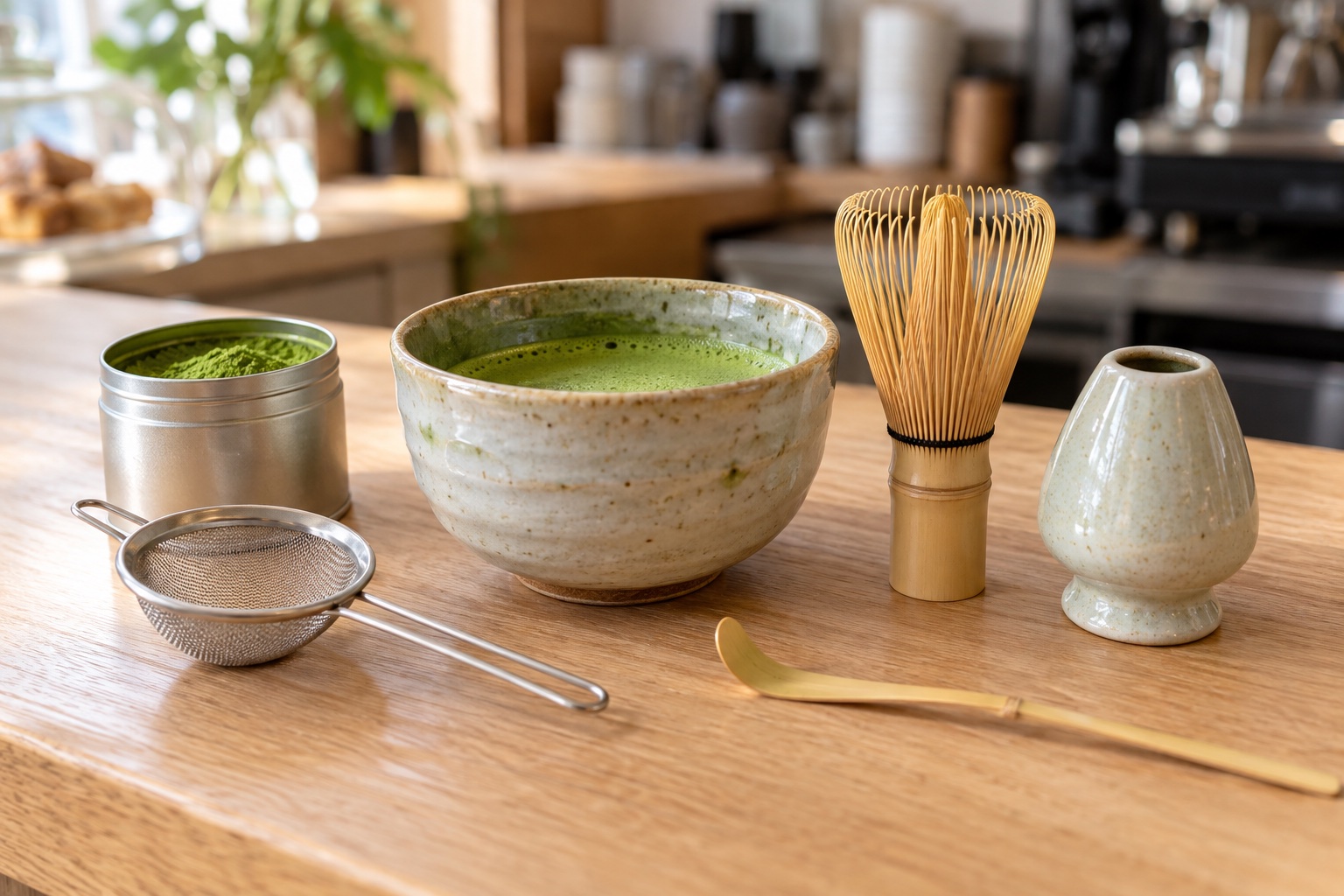
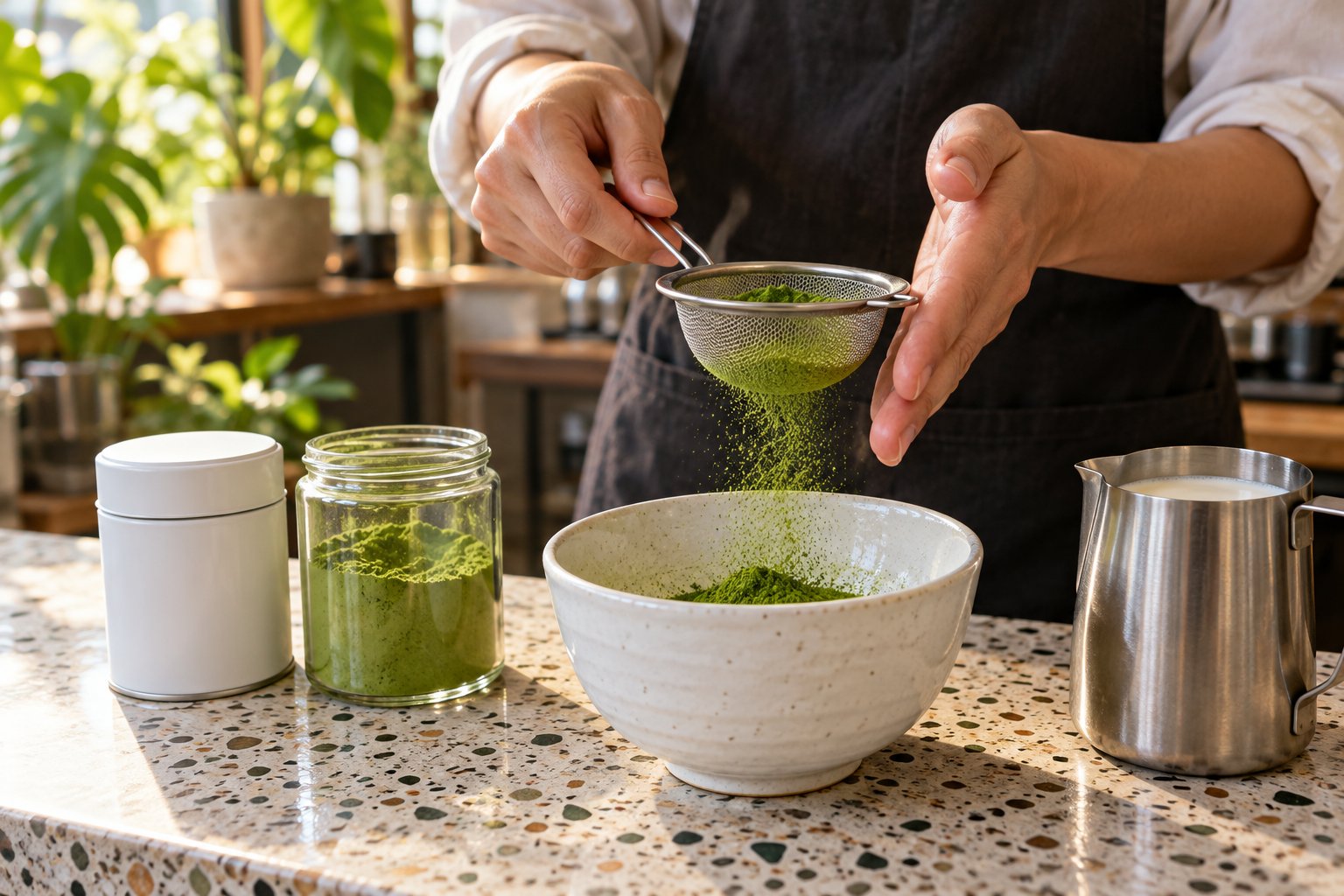
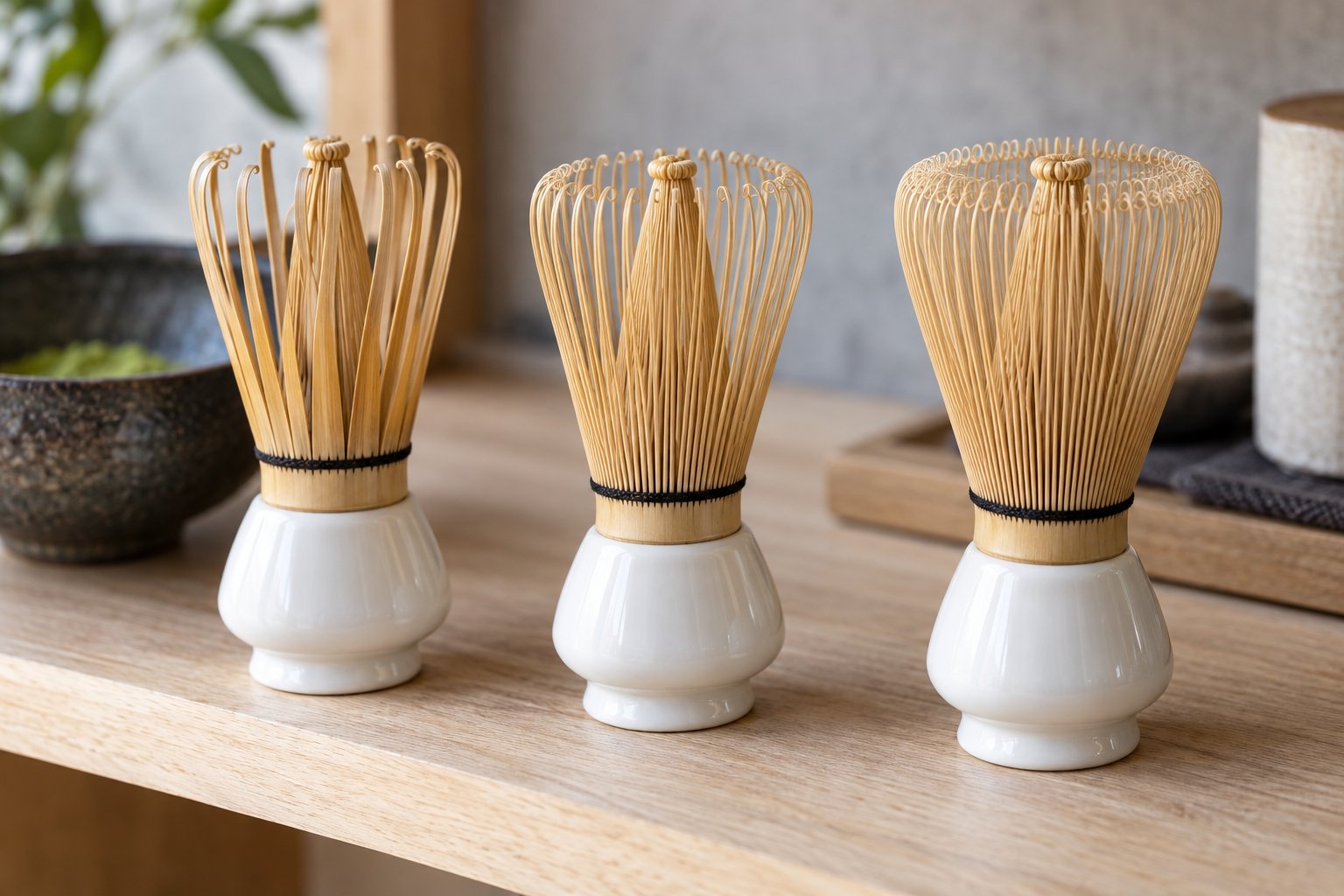
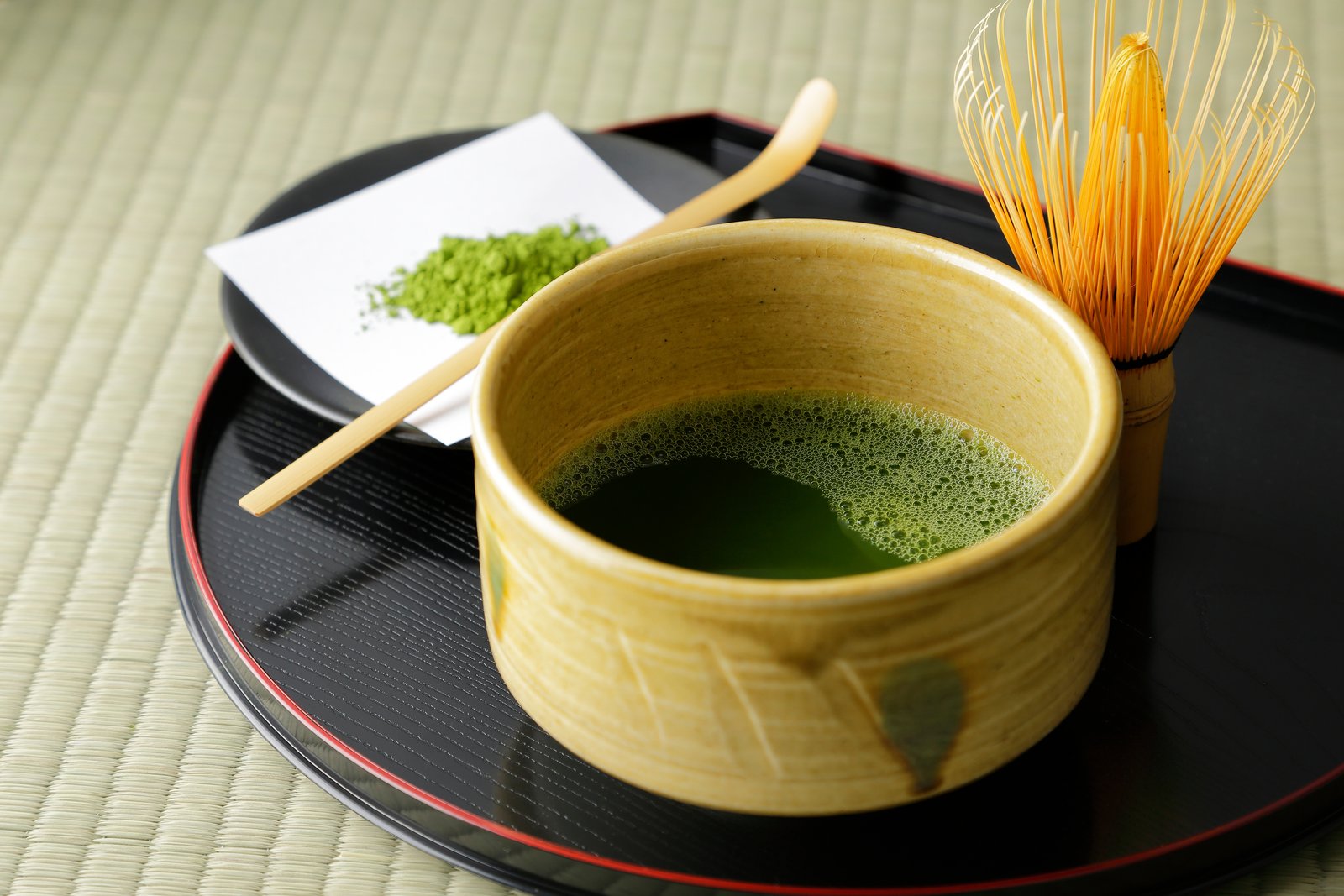
Ippodo sifts the matcha, pours in 100ml of hot water at 80°C, and whisks for 15 seconds with a chasen (a bamboo tea whisk). Ito En sifts the matcha through a tea strainer into a bowl, then adds hot water little by little, kneading it with a spoon pressed against the side of the bowl. If you have a chasen, Ito En says to knead with that instead. Ito En’s method works with just a tea strainer and a spoon, even in a shop without a chasen.
Finishing with cold water (Ippodo and Yamamasa Koyamaen)
The long-established tea shops also publish methods that finish with cold water. Ippodo’s two methods use only cold water or ice water, while Yamamasa Koyamaen uses a little lukewarm water only for kneading.
- Ippodo “mizudate matcha” (cold-whisked matcha): sift 2g of matcha, add 60ml of cold water and whisk briskly with a chasen for 15 seconds
- Ippodo “shaka-shaka matcha” (shaken matcha): sift 1g of matcha, add 100ml of ice water and shake
- Yamamasa Koyamaen “cold matcha”: add a little lukewarm water to 2g of matcha and knead with a chasen; once there are no lumps, add 30–40ml of cold water
In a 2019 article, Yamamasa Koyamaen introduced a matcha for cold drinks, sold in limited quantities in summer, blended with a stronger hika (the toasty aroma from the final firing) so the aroma comes through even at low temperatures. If a menu item dissolves matcha in a cold liquid, dissolve the matcha you plan to use in cold water and check the aroma before deciding.
Why lumps form, and the details of sifting and kneading, are covered in the “How to prevent lumps” section of How to Make Matcha.
How to pour two layers
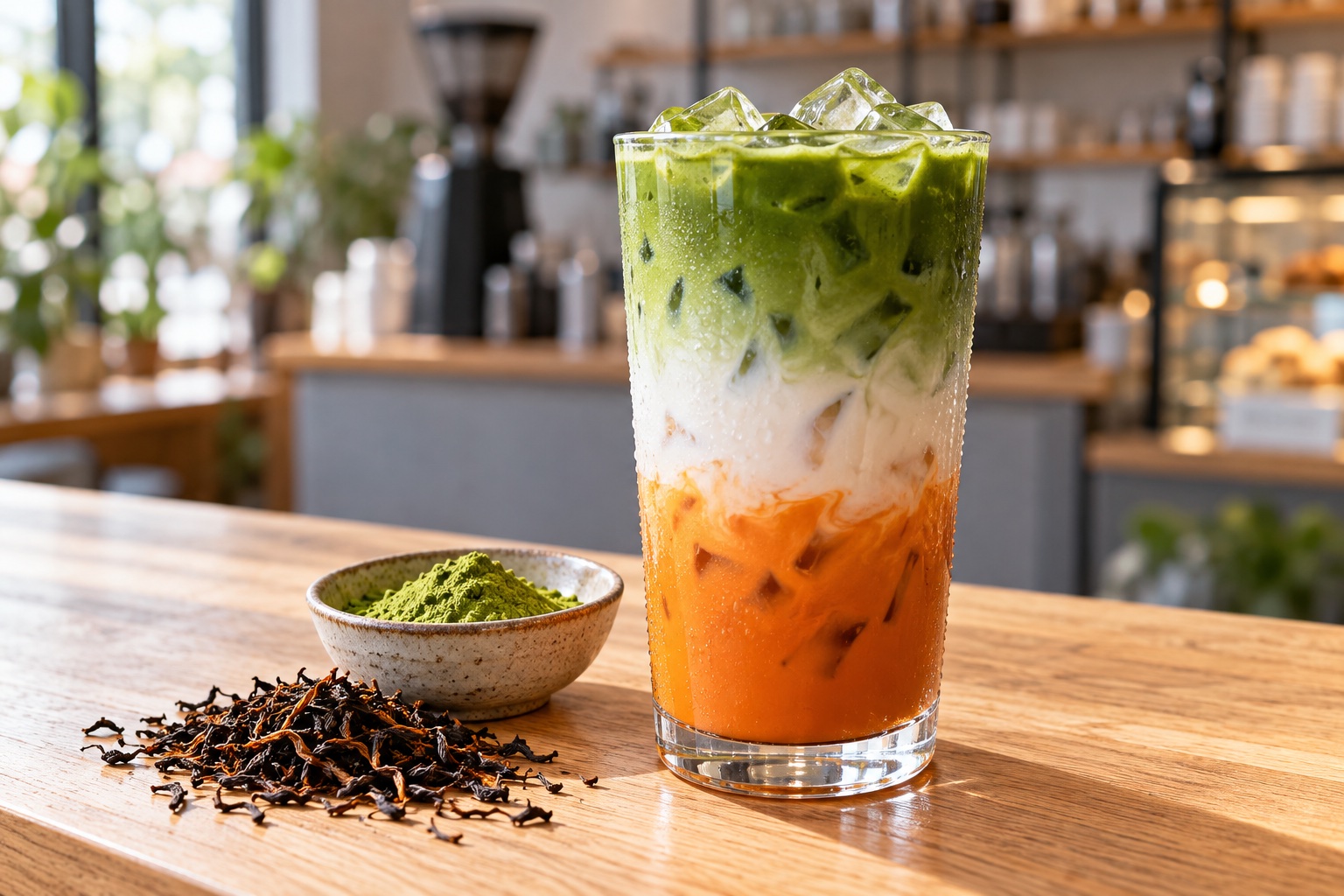
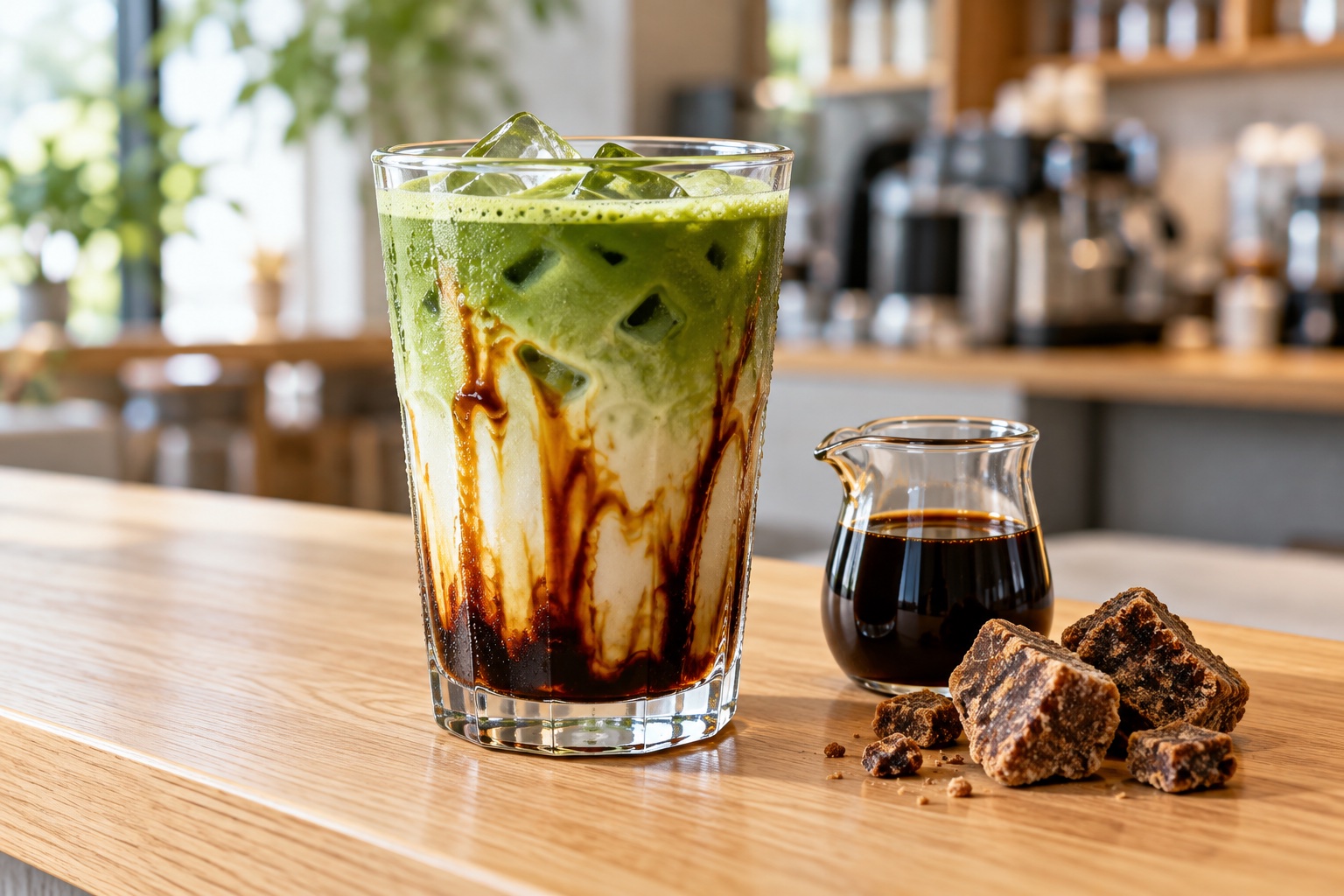
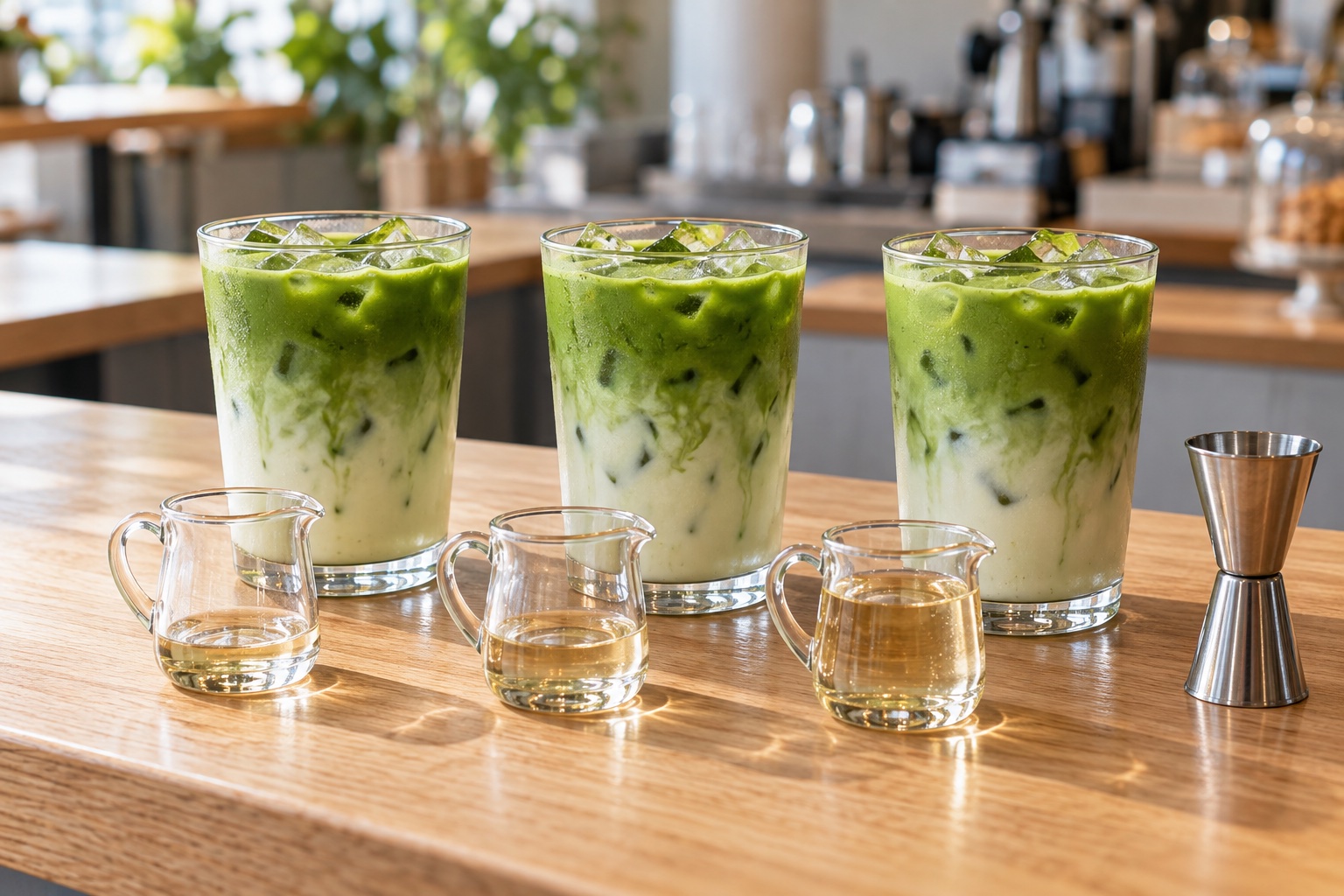
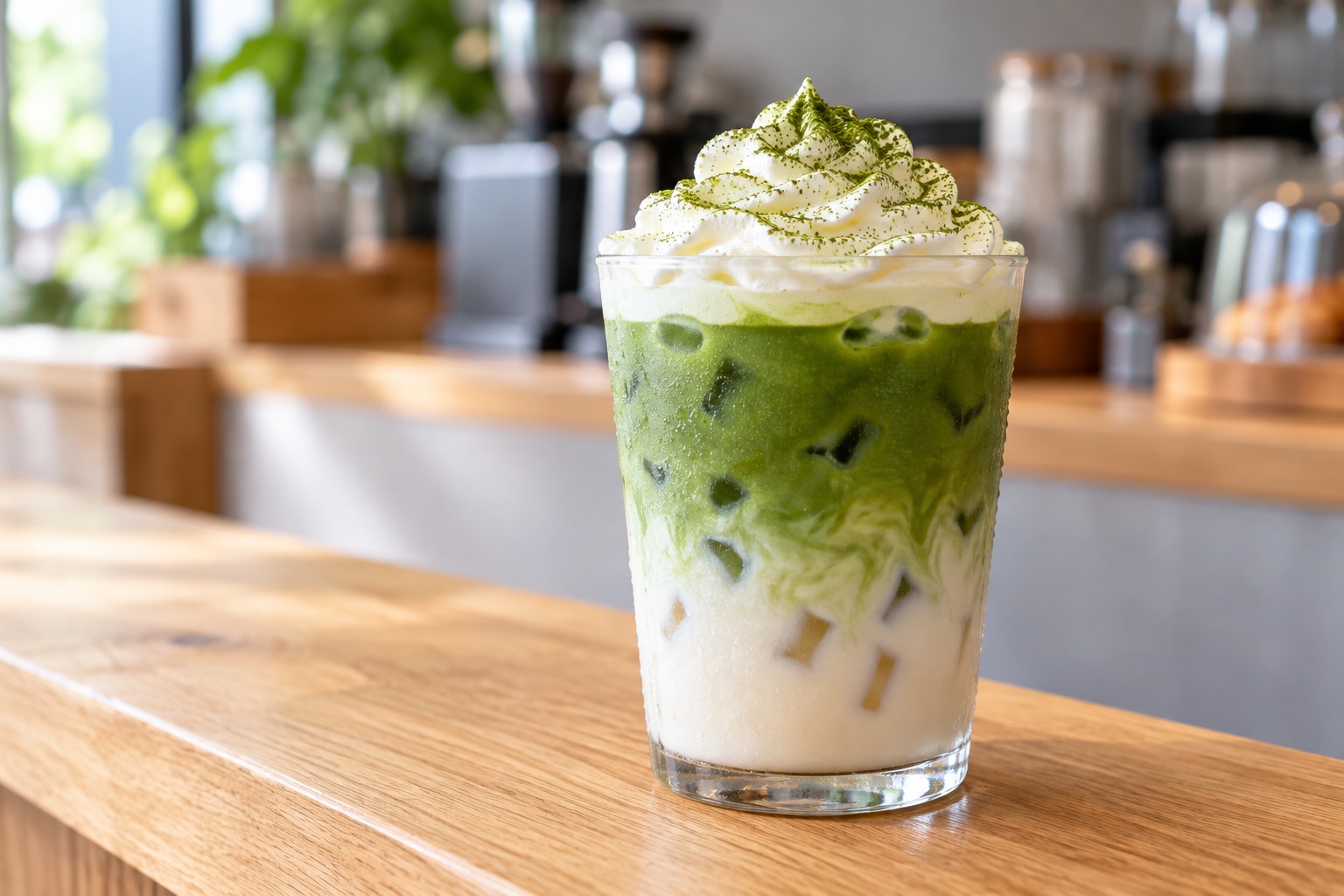
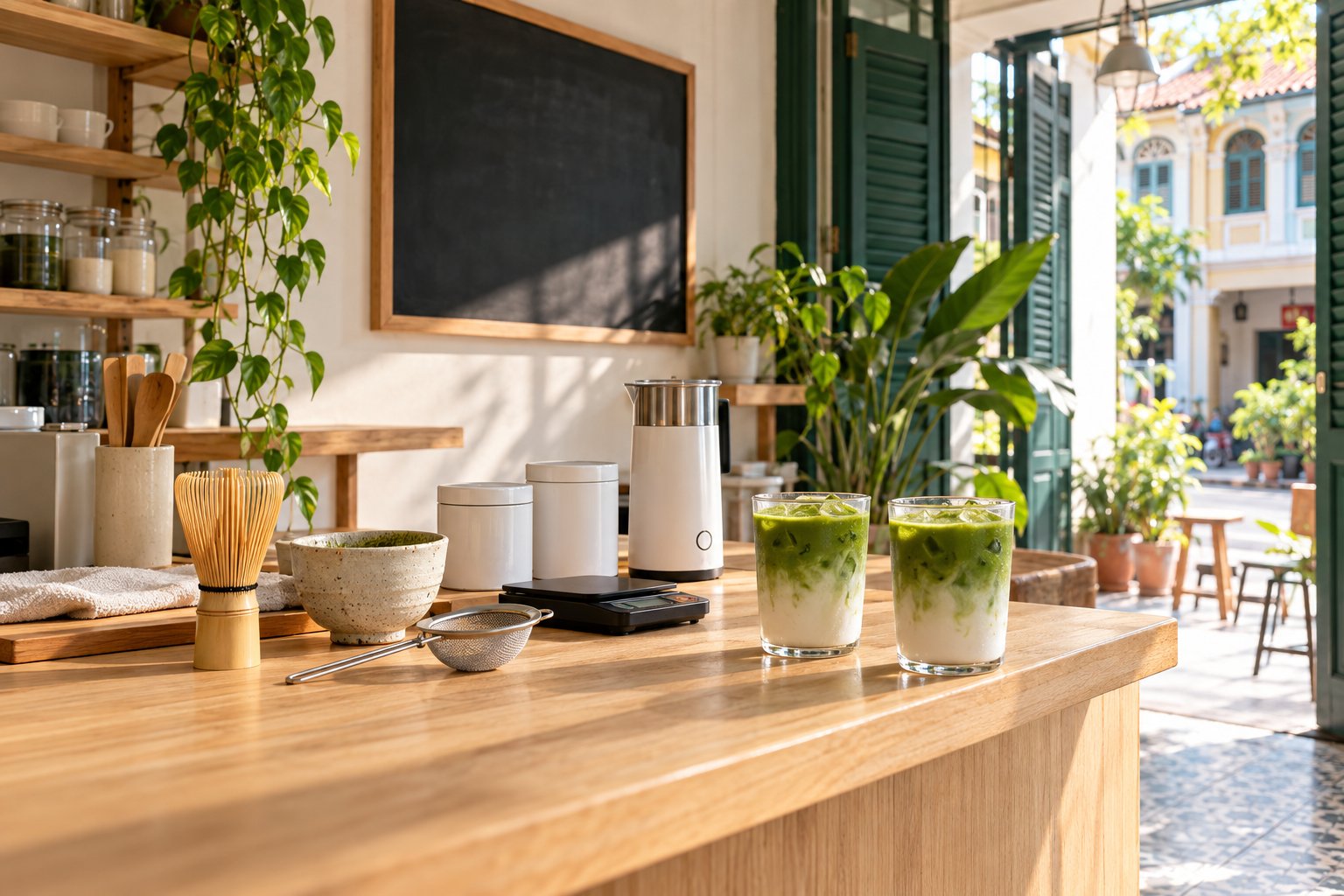
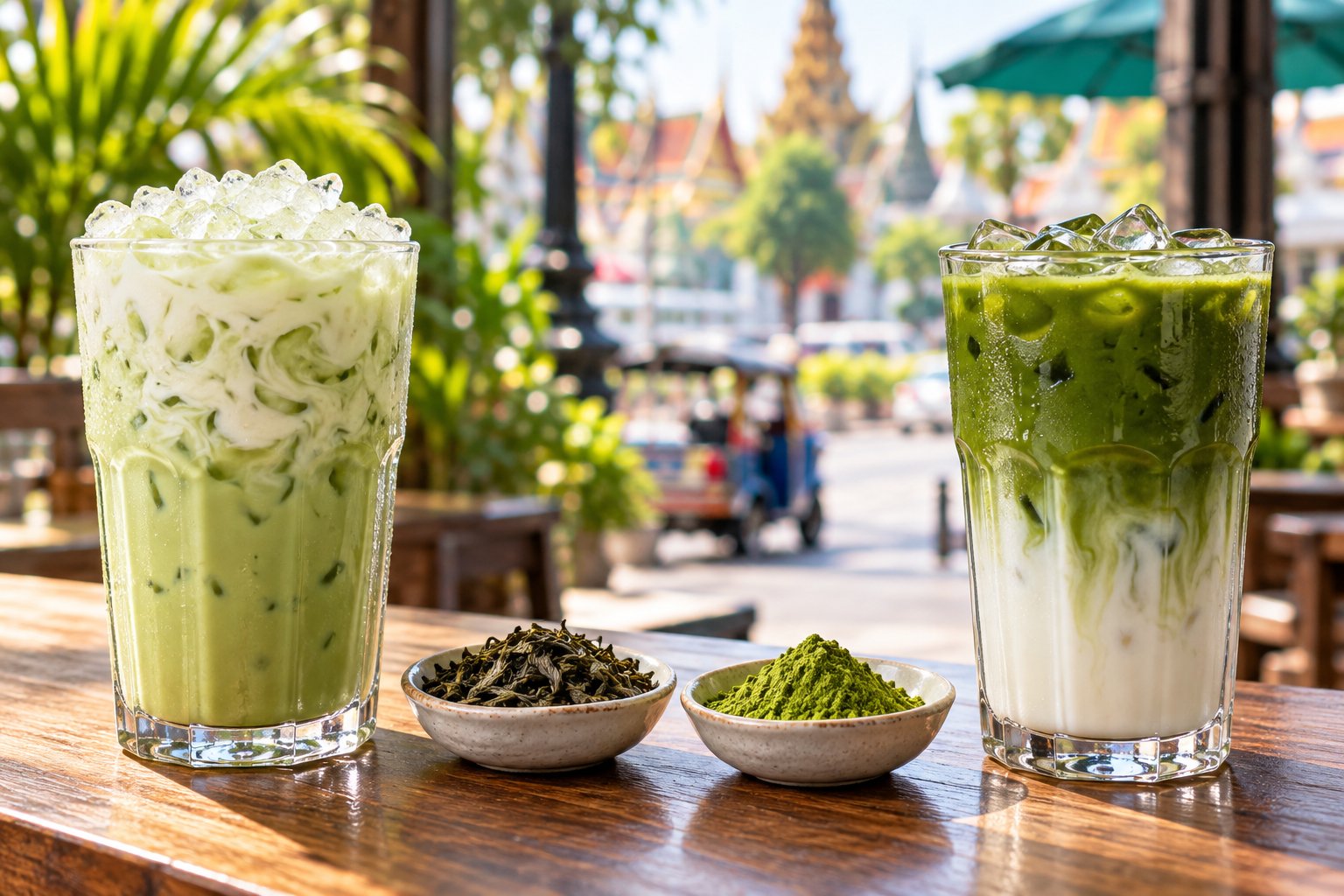
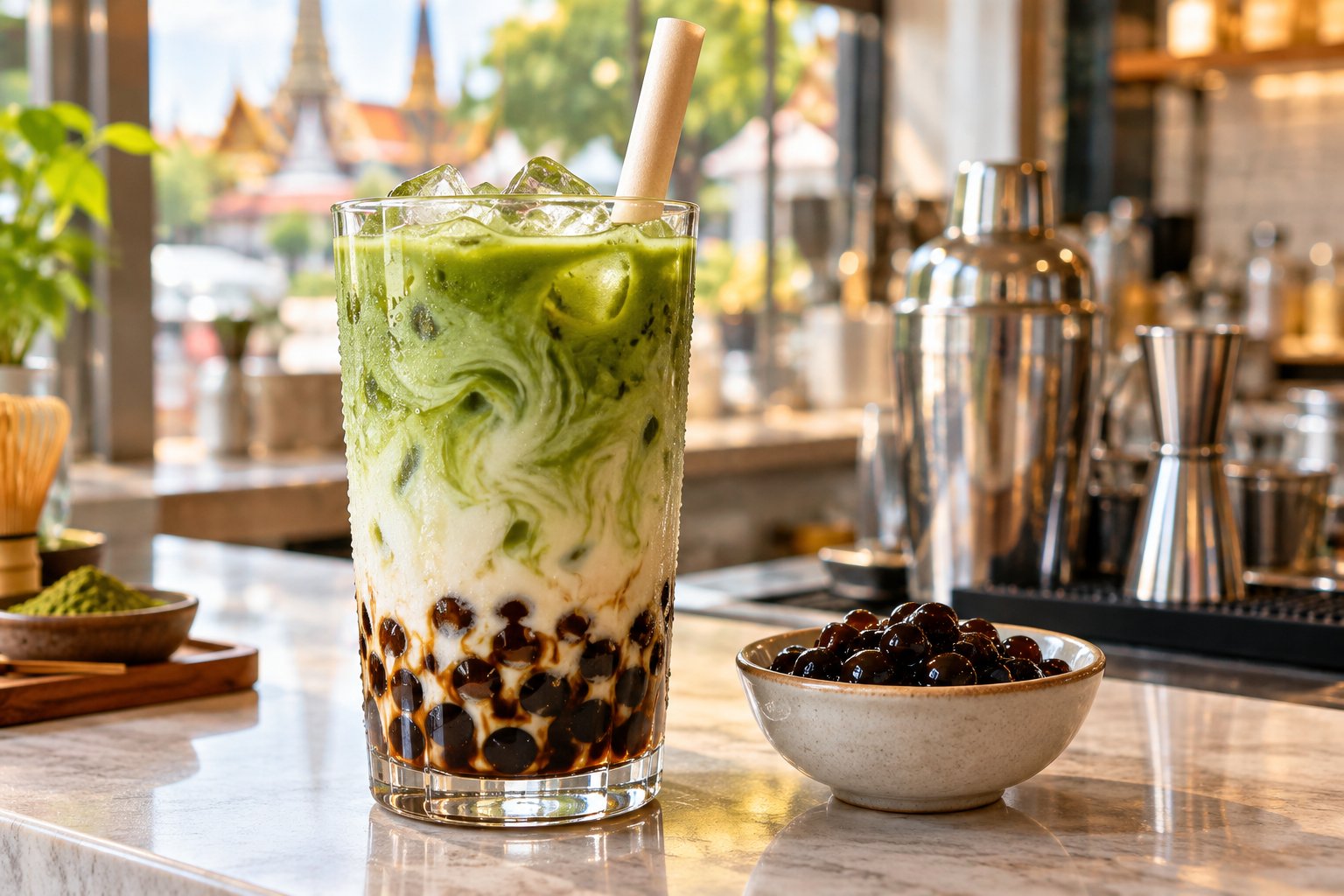
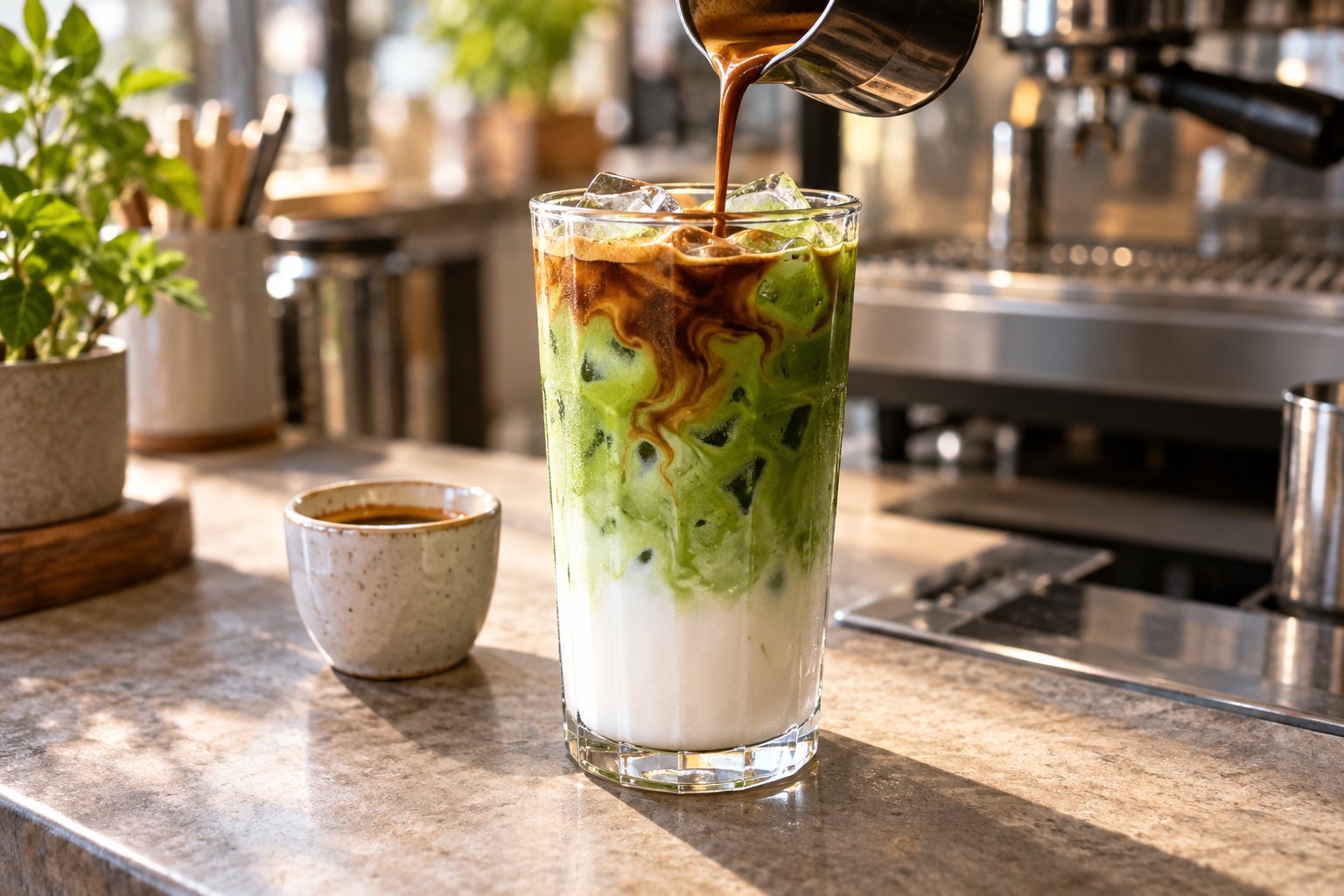
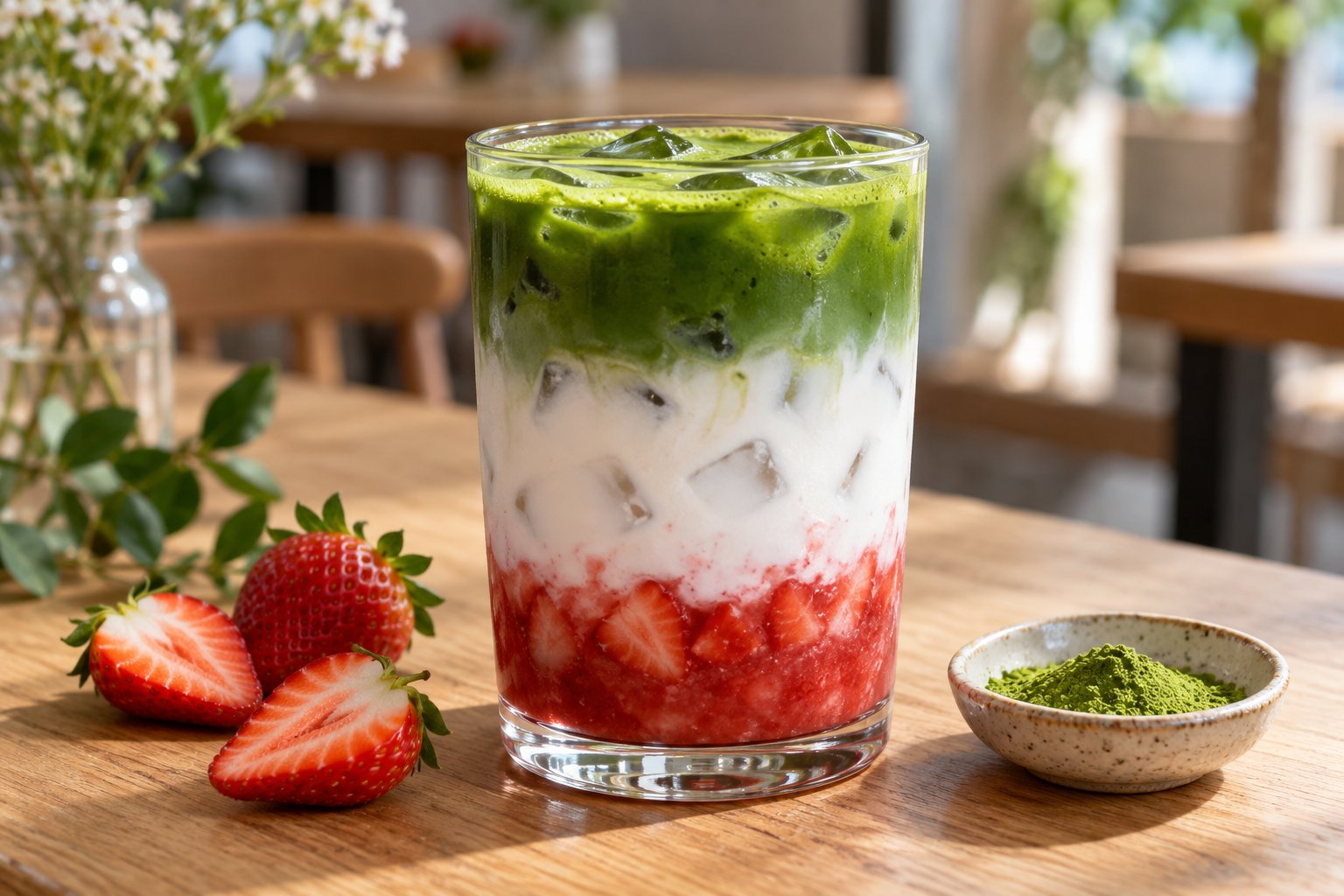
Put the ice and milk in the glass first, then pour the strongly dissolved matcha gently over the ice at the end. Ito En calls this the key to making two layers.
Ito En’s steps
The order in Ito En’s official recipe is:
- Sift 3g of matcha through a tea strainer into a bowl
- Add 30ml of hot water little by little and knead to mix
- Fill a glass with ice and pour in 130g of milk (add syrup here if you like)
- Pour the kneaded matcha gently into the glass
Ippodo also adds cold milk and ice to the glass first, then pours the whisked matcha on top. Both companies put the milk in first and the matcha last.
Source: Ito En, “茶リスタ 小山和裕氏監修!本格抹茶ラテ” (Authentic matcha latte supervised by Charista Kazuhiro Koyama, in Japanese) https://www.itoen.jp/recipe/45614/
What to keep consistent for clean layers
Ito En gives two points: dissolve the matcha strong, and pour it gently over the ice. From here on, this is our editorial view. When serving in a shop, fix the amount of water, the amount of ice and the pouring speed as part of the method, and keep a reference photo at the counter. This reduces differences in how the drink looks depending on who makes it.
If the drink is sipped while still layered, the first sips are only strong matcha or only milk, so we suggest serving it with a straw or stirrer so customers can mix it.
How to add sweetener (syrup)
In the official recipes we compared, the sweetener used for cold matcha is syrup. In Ito En’s layered recipe, the syrup goes into the milk, not the matcha.
Sweeteners in the official recipes
Ito En adds 5–10g of syrup made from beet sugar or cane sugar, if you like, after the ice and milk. Marukyu Koyamaen serves syrup on the side with its cold matcha, if you like. For its matcha latte, Yamamasa Koyamaen recommends keeping the sweetness low so you can enjoy the flavour of the matcha.
What to keep consistent on the menu
From here on, this is our editorial view.
- If customers can choose the sweetness, for example “none, light, regular,” set the grams of syrup for each level and write them on the recipe card
- For layered drinks, add the syrup to the milk before pouring the matcha (the same order as Ito En)
- For drinks made with milks that are already sweet, such as oat milk, set the syrup amount separately from cow’s milk
Can you make it ahead?
We did not find any public document that says how many hours dissolved matcha can be kept. So follow general food safety guidelines: keep it cold, or set a time limit.
Public food safety guidelines
| Source | Guideline |
|---|---|
| Singapore Food Agency (SFA), guidelines for people ordering catered meals | Food pathogens multiply rapidly between 5°C and 60°C. Keep cold food below 5°C. No food should be kept at room temperature for more than 4 hours from the time it was cooked |
| Japan’s Ministry of Health, Labour and Welfare (MHLW), hygiene manual for large-scale cooking facilities | Cooked food should ideally be eaten within 2 hours of cooking. Food that takes 30 minutes or more from cooking to serving (other than food served warm) should be stored at 10°C or below |
The SFA guidelines are mainly for catered meals, and the MHLW manual mainly for large facilities such as institutional kitchens. The MHLW also asks small and medium-sized kitchens to manage hygiene in line with the intent of the manual.
How to apply this in a café
The MHLW manual asks that ingredients taken out of the refrigerator be prepared or cooked promptly. Use milk promptly once it is out of the fridge, too. If you make dissolved matcha ahead, here is our editorial view:
- Keep it refrigerated (below 5°C) and write the time it was made on the container
- Decide how long it can be kept by making batches ahead at different times and comparing their colour, aroma and taste with freshly made matcha
- For anything kept at room temperature, set a short limit within SFA’s 4 hours and MHLW’s 2 hours from the time it was made
- Use a container that blocks light
Yamamasa Koyamaen explains that the green colour of matcha fades in light, and that the same applies to foods made with matcha. Storage of matcha powder is covered in Does Matcha Go Bad?
Prep before opening, and steps for each order
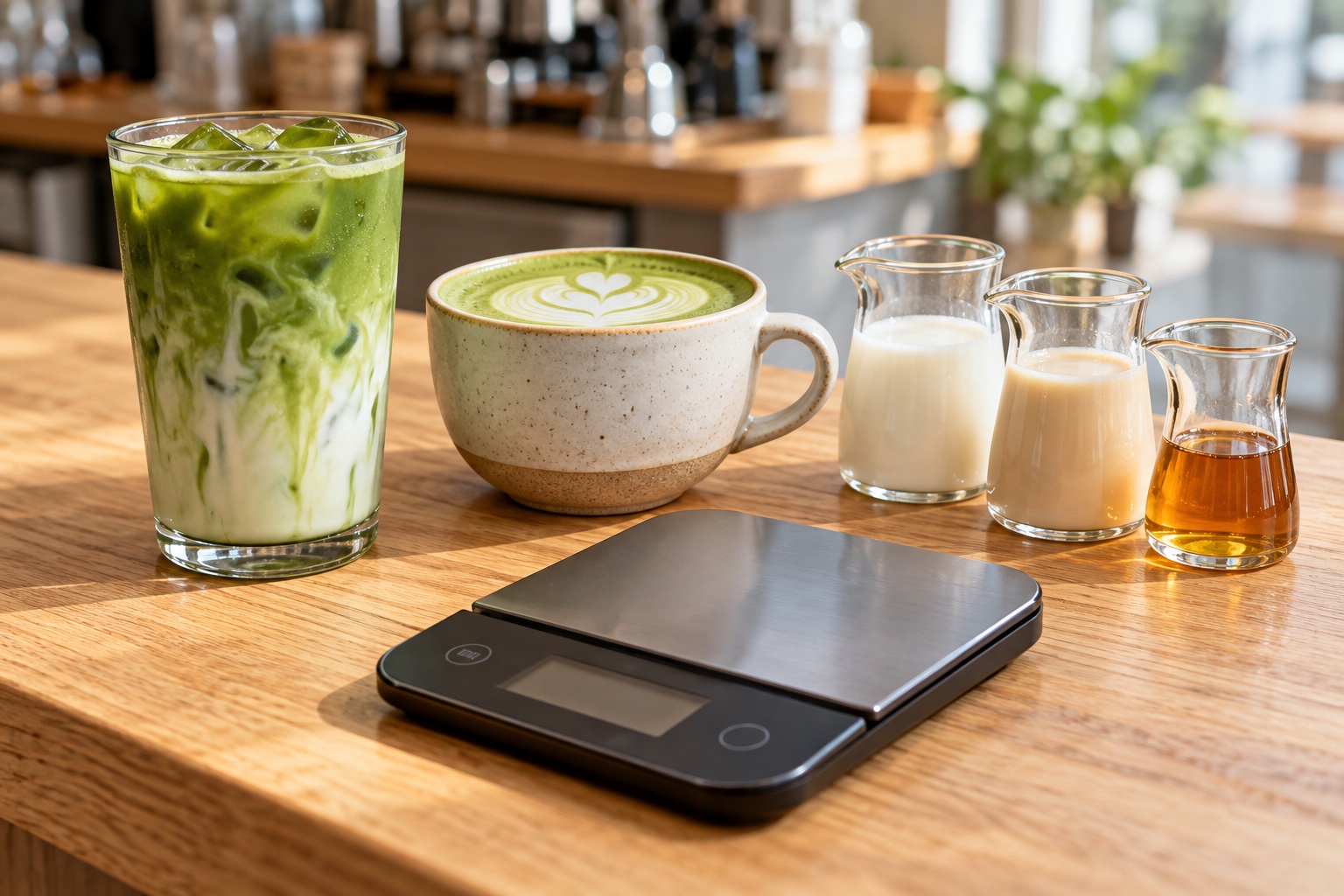
Prepare and measure in advance, and as a rule dissolve the matcha for each order. The following is an example routine from our editorial team, based on the official recipes and food safety guidelines above.
Before opening
- Decide how to measure one serving of matcha (for example 3g), and keep the scale and tea strainer dry and ready (Yamamasa Koyamaen says to sift just before use)
- Decide the water temperature for dissolving the matcha, and prepare it in a kettle or pot with temperature control (Ippodo uses 80°C)
- If you make syrup, write the time it was made and refrigerate it
- Keep the milk in the fridge and take out only what you need
- Decide the amount of ice per glass (for example, filled to the top) and show it with a photo
For each order
- Measure and sift the matcha, then dissolve it in the set amount of hot water
- Put ice in a glass and pour in cold milk (add sweetener here if used)
- Pour the dissolved matcha gently over the ice
- Serve with a straw or stirrer
If you dissolve the matcha for each order, you do not need to track how long a batch has been kept. Shops that use a prepared batch during busy hours should set time limits using the guidelines in “Can you make it ahead?” above.
Cost per cup
Matcha cost per cup = price per kg ÷ 1,000 × grams used per cup. It is the same formula as for a hot matcha latte.
At 3g per cup, 1kg of matcha makes about 330 cups. At 2g, the same as Yamamasa Koyamaen’s cold matcha, it makes 500 cups. How the price per kg is set is covered in what decides the price of matcha. Add the following to the matcha cost to get the ingredient cost per cup:
- Milk (ml used per cup × price per ml)
- Syrup (g used per cup × price per g)
- Ice, cup, lid and straw
With iced drinks, the amount of ice changes how much milk goes in, so decide the glass and the amount of ice first, then measure the milk and work out the cost. How to choose a grade to match your menu price, and the order in which to decide, are covered in How to Choose Matcha for Café Lattes. Why matcha buying prices are rising is covered in Is There a Matcha Shortage?
Sources
- Ippodo Tea, “Iced Matcha Latte” https://ippodotea.com/blogs/recipes-to-brew-japanese-tea/iced-matcha-latte
- Ippodo Tea, “抹茶ラテ” (Matcha latte, in Japanese) https://www.ippodo-tea.co.jp/blogs/tea-recipe/19%E6%8A%B9%E8%8C%B6%E3%83%A9%E3%83%86
- Ippodo Tea, “水点て抹茶” (Mizudate matcha, in Japanese) https://www.ippodo-tea.co.jp/blogs/tea-recipe/7%E6%B0%B4%E7%82%B9%E3%81%A6%E6%8A%B9%E8%8C%B6
- Ippodo Tea, “シャカシャカ抹茶” (Shaka-shaka matcha, in Japanese) https://www.ippodo-tea.co.jp/blogs/tea-recipe/15%E3%82%B7%E3%83%A3%E3%82%AB%E3%82%B7%E3%83%A3%E3%82%AB%E6%8A%B9%E8%8C%B6
- Ito En, “茶リスタ 小山和裕氏監修!本格抹茶ラテ” (Authentic matcha latte supervised by Charista Kazuhiro Koyama, in Japanese) https://www.itoen.jp/recipe/45614/
- Yamamasa Koyamaen, “抹茶ラテのレシピ” (Matcha latte recipe, in Japanese) https://www.yamamasa-koyamaen.co.jp/enjoy/2019/post-2/index.html
- Yamamasa Koyamaen, “冷抹茶の点て方” (How to make cold matcha, in Japanese) https://www.yamamasa-koyamaen.co.jp/enjoy/2019/post-8/index.html
- Yamamasa Koyamaen, “抹茶の取扱い” (Handling matcha, in Japanese) https://www.yamamasa-koyamaen.co.jp/matcha/basic/handling.html
- Marukyu Koyamaen, “抹茶アラカルト” (Matcha à la carte, in Japanese) https://www.marukyu-koyamaen.co.jp/about-tea/enjoy-recipe.html
- Singapore Food Agency, “Guidelines for ordering catered meals for functions and events” https://sfa.gov.sg/docs/default-source/food-retail/guidelines-for-ordering-catered-meals-for-functions-and-events.pdf
- Ministry of Health, Labour and Welfare, “大量調理施設衛生管理マニュアル” (Hygiene manual for large-scale cooking facilities, last revised 16 June 2017, in Japanese) https://www.mhlw.go.jp/file/06-Seisakujouhou-11130500-Shokuhinanzenbu/0000168026.pdf
- Japan Tea Central Public Interest Incorporated Association, “緑茶の表示基準” (Green Tea Labelling Standard, in Japanese) https://www.nihon-cha.or.jp/pdf/hyoujikijyun.pdf