
 Reviewed by: Takahiro Sugiyama (CEO, meguri Inc.)
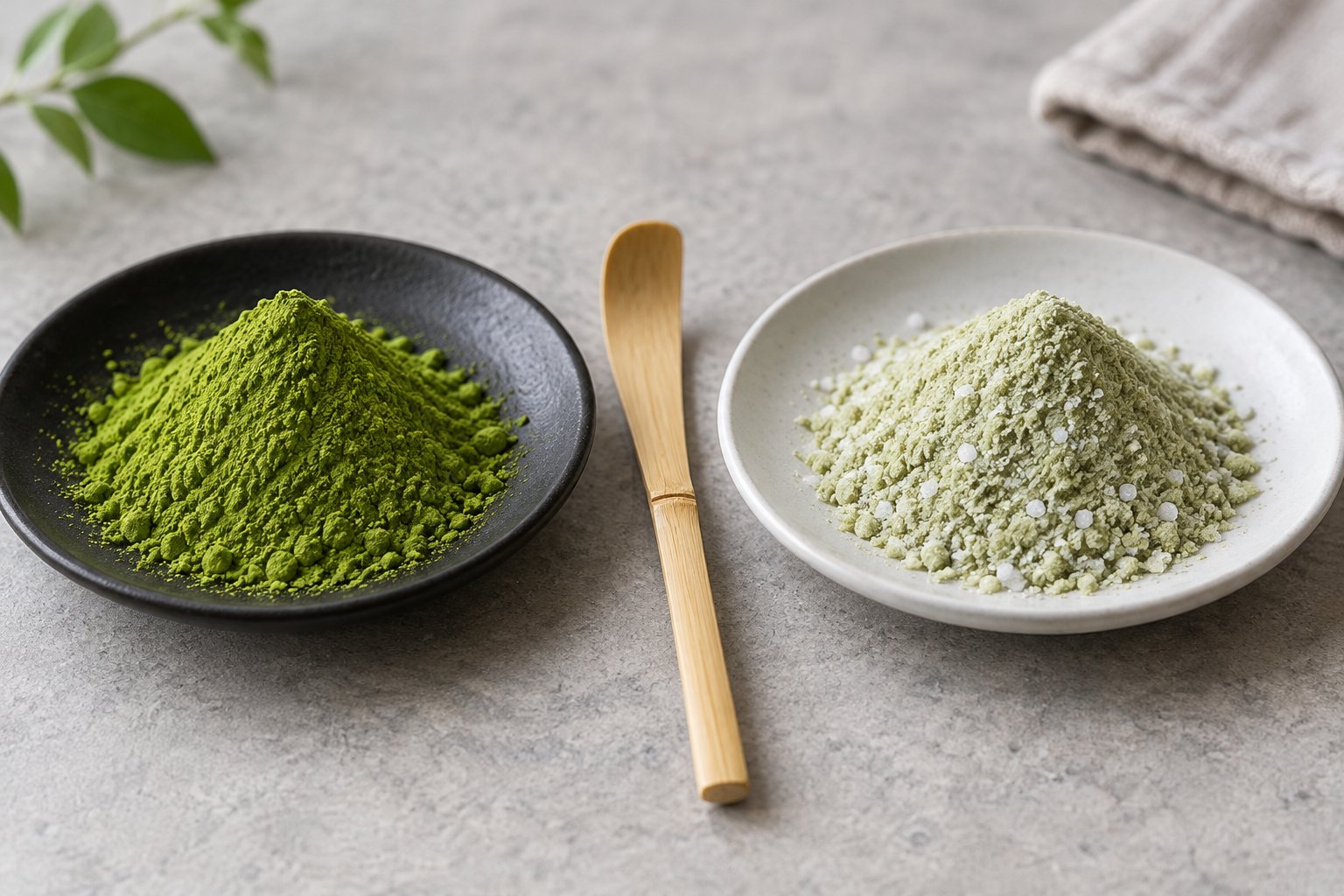
In Thailand, “pure matcha” (เพียวมัทฉะ) appears both on café menus and in the names of matcha powders. The term is not defined in Japan’s industry labelling standard for green tea or in the Thai Ministry of Public Health’s notification on tea, and what it means depends on the shop or seller. Knowing its two meanings, and how the labelling rules in Japan and Thailand sort green powders, lets you tell from the label whether a powder is 100% matcha or a mix containing sugar and other ingredients.
What is pure matcha?
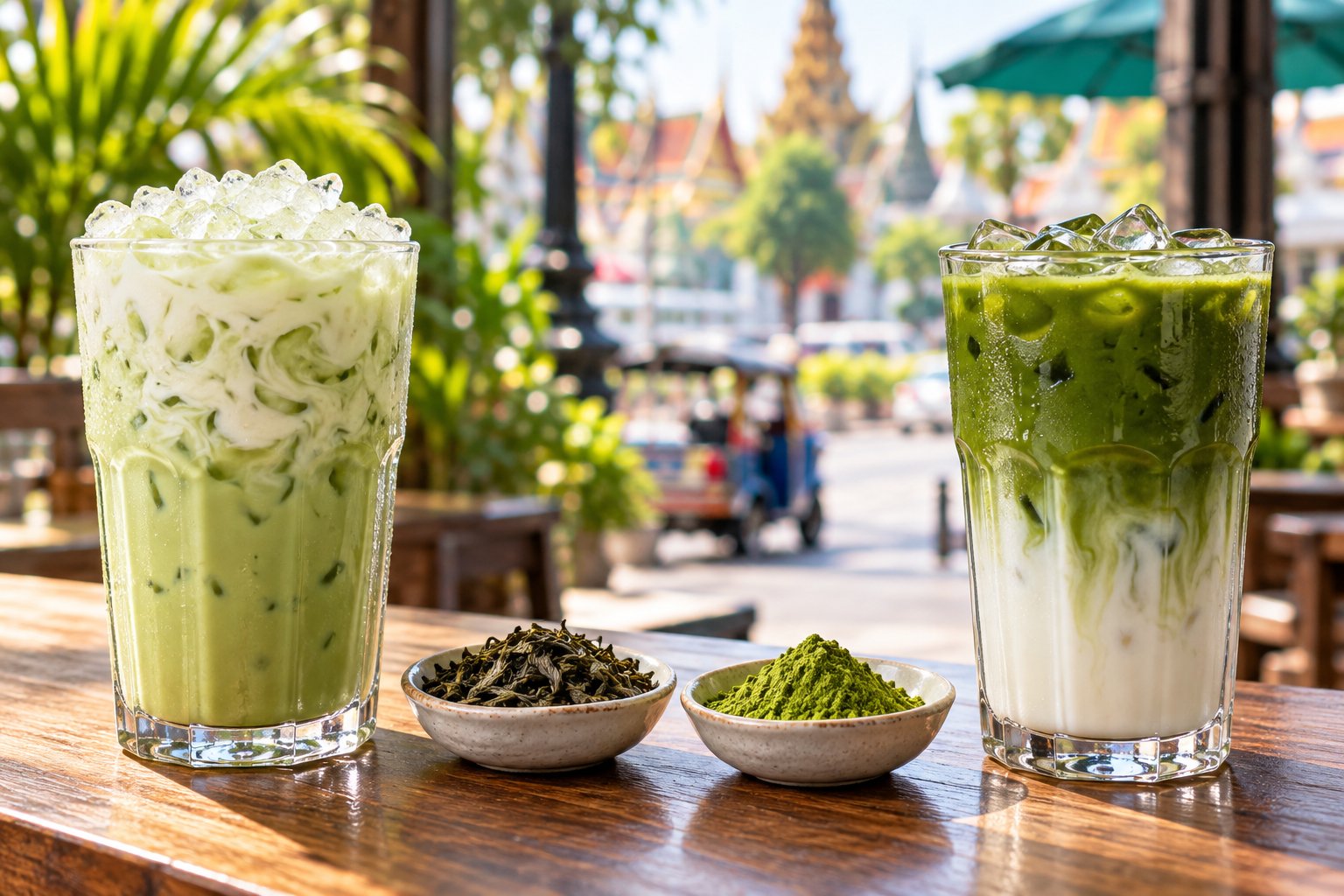
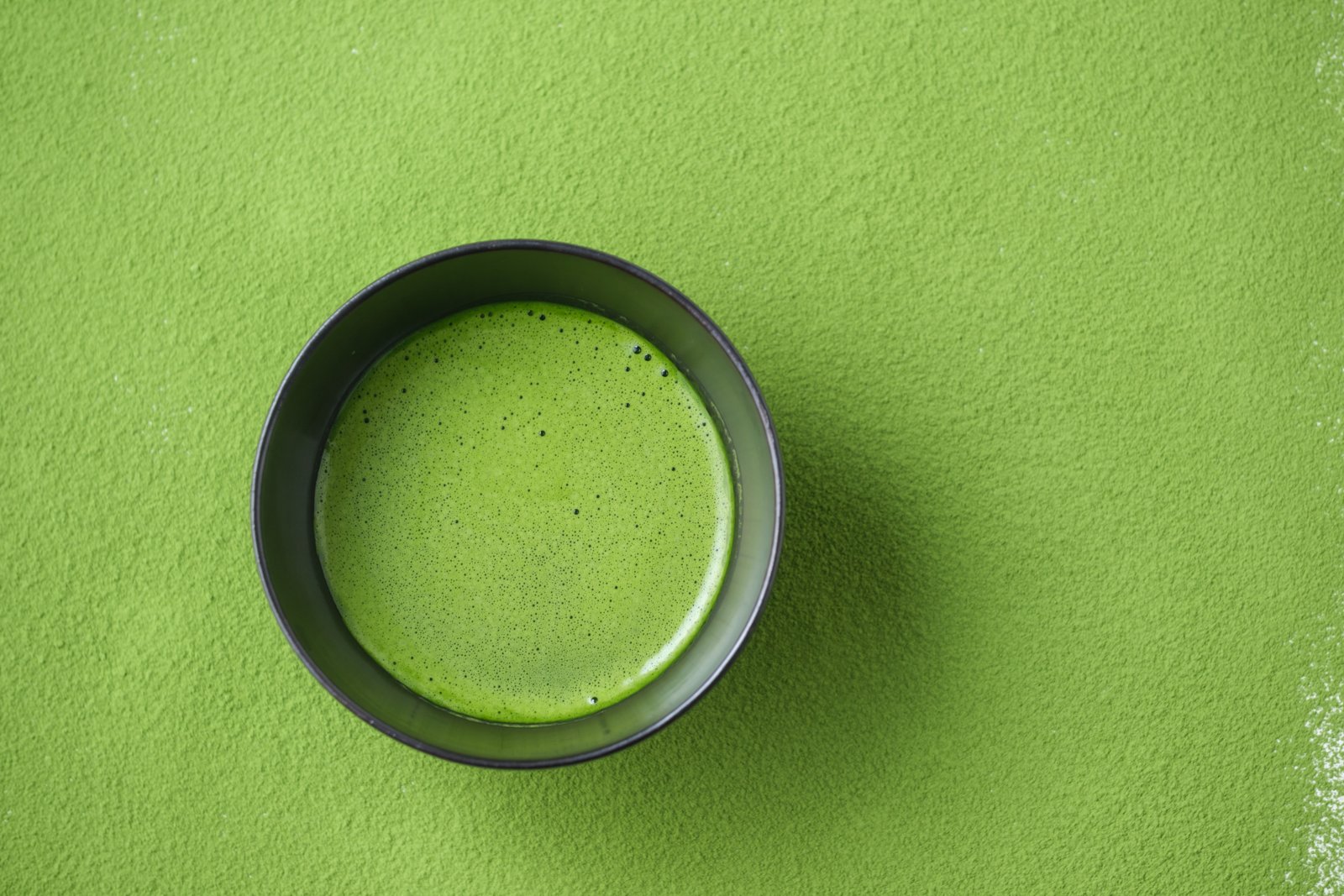
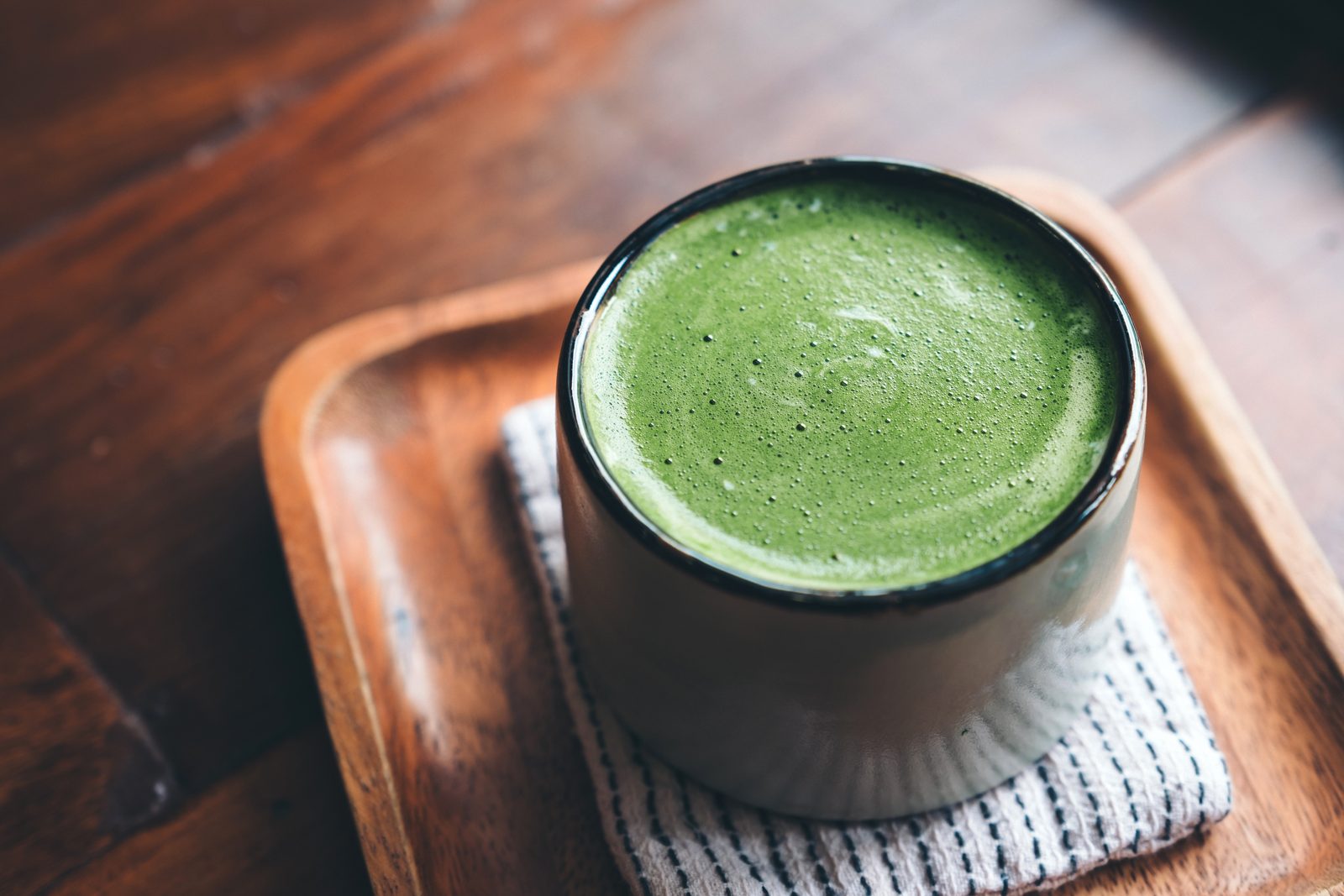
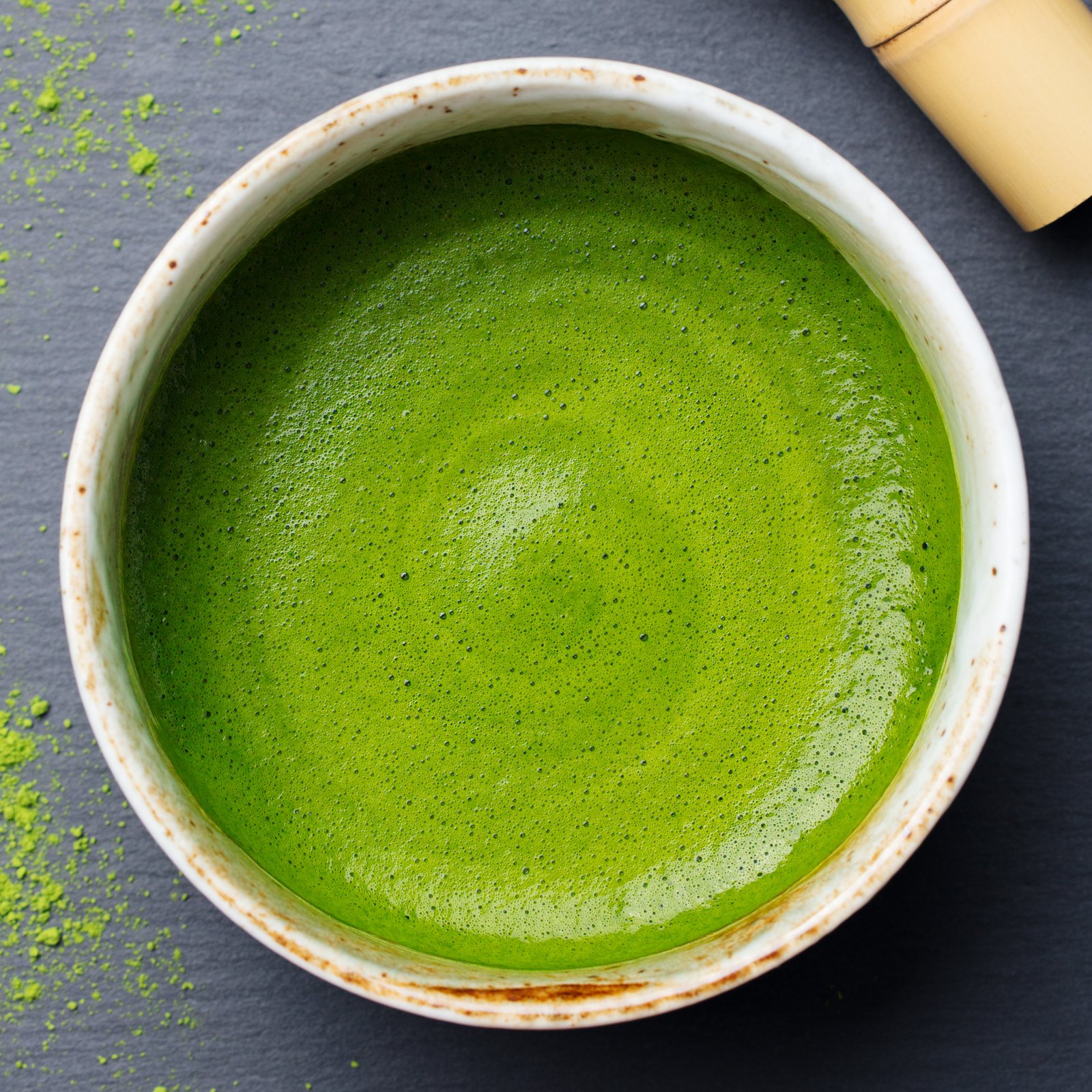
In Thailand, “pure matcha” refers to two things: a matcha drink made with water, and 100% matcha powder. Both are called “pure” in the sense that they bring out the taste of matcha itself, without milk or sugar.
The two meanings used in Thailand
Articles, recipes and product pages that come up in Thai-language searches use “pure matcha” in these two ways:
| Meaning | What it is | Common description |
|---|---|---|
| Drink | Matcha whisked in a little hot water, then topped up with cold water and ice | No milk. No sweetener, or a little syrup |
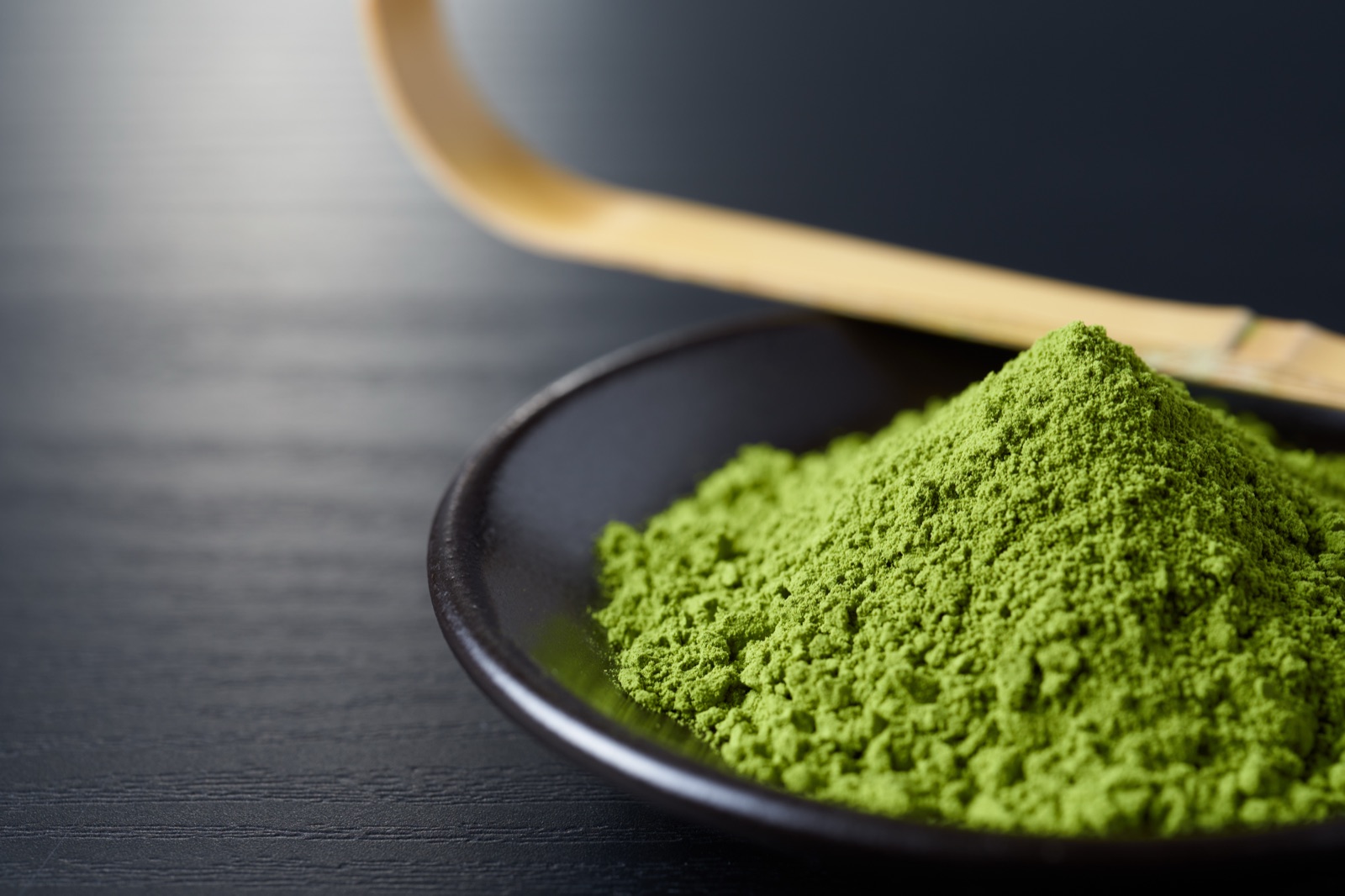
| Powder | Powder made only of matcha | “100%,” with no sugar, creamer, milk powder or flavoring |
An explainer from Thai PBS, Thailand’s public broadcaster, describes pure matcha as 100% matcha powder with nothing else mixed in. A recipe from a Thai food media site uses the name for a way of drinking matcha topped up only with water, without milk.
Neither Japan’s standard nor Thailand’s notification defines “pure”
Neither Japan’s green tea labelling standard nor the Thai Ministry of Public Health’s notification on tea has a category called “pure.” In the Japanese standard, “100%” appears in an example of how to label a cultivar (“Yabukita 100%”) and in the rule on the share of raw material needed to put a region’s name on tea.
This means you need to check the ingredient label and documents, not the name, to know whether a product called “pure” is 100% matcha. Some Thai articles describe pure matcha as “a higher grade than ordinary matcha,” but neither of these two rules supports that either. Grade names are covered on Matcha grades.
Matcha, powdered tea and latte mixes: the differences
Green powders include matcha, powdered tea made by grinding sencha or other teas, instant tea made by drying an extract, and latte mixes with added sugar or milk. Japan and Thailand classify them as follows.
How Japan’s labelling standard classifies them
The Green Tea Labelling Standard of the Japan Tea Central Public Interest Incorporated Association (a voluntary industry standard, last revised on 10 July 2026) defines each name as follows:
| Name | Definition |
|---|---|
| Matcha | Tencha (tea grown under shade and dried without rolling) ground into a fine powder with a stone mill or similar |
| Powdered tea (funmatsucha) | Tea ground into powder with a grinder or similar |
| Instant tea | Water-soluble components extracted from green tea, concentrated and dried into powder or granules |
| Blended tea | A mix of different types of tea |
Latte mixes with added sugar or milk powder are not among the tea names in this standard. When sold in Japan, their ingredients are labelled under Japan’s Food Labelling Standards, like other processed foods.
How Thai Notification No. 196 classifies them
In Thailand, Ministry of Public Health Notification No. 196 (2000), “Tea,” divides tea into three types:
- Tea: dried young leaves, buds and stems of the tea plant
- Instant tea: tea extract made into a powder that dissolves easily (the English version describes this as spray drying)
- Ready-to-drink tea: tea of type 1 or 2 that has been flavored (the English version says “mixed with other ingredients”) to be ready to drink, and packed in a sealed container in dry or liquid form
Source: Thai Ministry of Public Health Notification No. 196 (2000), “Tea,” Clause 3 (Thai FDA, English and Thai versions) https://food.fda.moph.go.th/media.php?id=509295897201483776&name=No.196-43Tea.pdf
This can be read as placing 100% matcha powder under type 1, tea, and a latte mix with sugar or milk powder under type 3, ready-to-drink tea in powder form. Even when both are green powders, the Thai notification sets separate standards for tea leaves and for mixes. Tea leaves must meet standards such as moisture of no more than 8% and caffeine of at least 1.5%. Ready-to-drink tea powder must have moisture of no more than 6% and, when dissolved as the label directs, meet the standards for the liquid.
Reading Japanese ingredient labels
On a bag of matcha labelled under Japan’s green tea labelling standard, the ingredient name is written as “tea” or “green tea,” and any other ingredients are listed in descending order of weight. For 100% matcha powder, the ingredient list says only “tea” or “green tea.”
What the standard says
The Green Tea Labelling Standard sets these rules for ingredient names:
- The ingredient name is “tea” (茶) or “green tea” (緑茶)
- As a rule, food additives are not used as ingredients
- Ingredients used are listed in descending order of weight, with foods and additives shown separately
- It gives “tea, dextrin” as an example for instant tea
- Imported products show the country of origin
If the ingredient list includes sugar, glucose, milk powder, creaming powder, dextrin or flavoring, the powder is not 100% matcha. The further back matcha appears in the list, the smaller its share of the whole. How ingredients are ordered under Japan’s Food Labelling Standards, and the rules for emphasis labels such as “made with Uji matcha,” are covered in Matcha Syrup Recipe for Cafés.
Emphasizing “additive-free” is treated as an unfair label
The standard treats labels that say “additive-free” (無添加) to make a product look better than others as unfair labelling, since tea is normally made without additives. Look at what the ingredient list says rather than at large “additive-free” or “100%” claims. Labels such as “best,” “finest” or “supreme” with no objective basis are also listed as unfair labelling.
Reading Thai labels
Prepackaged food sold in Thailand must show the percentage by weight of its main ingredients on a Thai-language label. 100% matcha powder does not need to show this percentage, while for a latte mix the percentages of the main ingredients give a rough idea of how much matcha it contains.
What Notification No. 450 requires on the label
Labels on prepackaged food in Thailand follow Ministry of Public Health Notification No. 450, which came into force on 19 July 2024. According to JETRO (the Japan External Trade Organization), food that received its registration number before then could use its old labels until 18 July 2026. The main items are:
| Item on the label | What to look at when buying matcha |
|---|---|
| Name of food | Whether it is tea or a drink mixed with other ingredients |
| Food registration number | You can look up the registration on the Thai FDA search page |
| Importer’s name and address, and the manufacturer’s name and country | Whether it was made in Japan |
| Percentage by weight of main ingredients | What percentage is matcha, and whether it contains sugar or creamer |
| Food additives | Whether flavorings, colors or other additives are used |
| Expiration or best-before date | Whether there is enough time to use it up after buying |
With only one ingredient, the percentage can be left out
Clause 5(5) of Notification No. 450 requires the main ingredients to be shown as a percentage by weight, with these exceptions:
| Exception | What the notification says |
|---|---|
| 5.1 | Labels with a total area of less than 35 cm², provided the main ingredients are shown on the package |
| 5.2 | Food with only one ingredient, not counting food additives or flavoring |
| 5.3 | Dried, powdered or concentrated food that must be diluted or dissolved before eating may show the percentage as it is, or after dilution or dissolving as directed on the label, or both |
Source: Thai Ministry of Public Health Notification No. 450 (2024), “Labeling of Prepackaged Foods,” Clause 5(5) (Thai FDA, English and Thai versions) https://food.fda.moph.go.th/media.php?id=657392349080592384&name=P450_EN.pdf
Powder made only of matcha counts as “food with only one ingredient,” so it does not have to show the percentage. Powders for dissolving, such as latte mixes, show either the percentage in the powder or the percentage when dissolved as the label directs. If the label lists percentages of sugar or milk powder, the product is not 100% matcha.
Clause 4 of the same notification prohibits labels that suggest a food contains an ingredient that it does not contain, or contains only in an amount too small to give that ingredient’s properties.
Registration numbers can be checked with the Thai FDA
Thai food registration numbers (อย.) can be looked up on the Thai FDA permit search page (ตรวจสอบการอนุญาต) by number or product name. Food numbers take the form “10-3-XXXXX-X-XXXX.” Searching the number and comparing the registration that comes up with the product name and other details on the label lets you check whether the product is registered in Thailand.
What is sold as “pure matcha” in Thailand
Powders sold as “pure matcha” in Thailand mostly advertise “100%” and “no sugar or creamer,” and grade names differ from seller to seller.
Common wording on powder products
Thai e-commerce and wholesale product pages commonly use wording such as:
- “100%,” “แท้” (genuine), “ไม่มีน้ำตาล” (no sugar), “ไม่มีครีมเทียม” (no creamer)
- Grade names chosen by the seller, such as “เกรด A” (grade A), “Excellence” or “Premium”
- Names of Japanese prefectures (such as Kyoto or Kagoshima) or tea cultivars
Grade names are set by each seller, and the same name does not guarantee the same contents. In Thailand, the notification that regulated the word “premium” on labels was repealed in May 2022. According to JETRO, documents showing the basis for calling a product “premium” may still be requested when it is registered. As covered in What Is Uji Matcha?, the rules for using a region’s name differ from region to region.
The drink has spread to cafés and RTD
Thai-language searches show the same name on café menus and on bottled ready-to-drink beverages (RTD). A JETRO report from May 2026 says that in Thailand, powdered products and RTD have a strong presence, ease of customizing drinks is valued, and there is strong interest in drinks with added milk or sweetener.
In the same report, the head of a Thai importer of Japanese tea says there are inconsistent labels and mixing with tea from other countries, and some products whose prices are far out of line with their quality. Even when a product says “pure” or “Japanese,” you still need to check what is inside.
How to check that matcha is real
Check four things in order: the label, the documents, the color and particles, and the taste when whisked. Using the label and documents to confirm the raw material and where it came from, then comparing the product itself, leads to fewer surprises than choosing by name alone.
1. Check the ingredients and country of origin on the label
See whether the only ingredient is matcha (“tea” or “green tea” on a Japanese label) and whether there is any sugar or milk powder. On a Thai label, also check the manufacturer’s name and country, and the food registration number.
2. Ask your supplier for documents
When buying for a business, ask for these documents for each lot:
| Document or information | What to check |
|---|---|
| Specification sheet | Whether the raw material is tencha, the region, the harvest season (first flush or later) and how it was milled |
| Lot number | Whether you can trace when it was made |
| Certificate of analysis (COA) | Whether there are test results for moisture, microbes and so on for each lot |
| Pesticide residue test results | Whether it meets the standards of the destination country |
| Heavy metal test results | The values for lead and other metals, and which standard was used to judge them |
How to read heavy metal test results is covered in Does Matcha Have Lead?
3. Compare color and particles
Matcha and powdered tea show differences when their components are analyzed. When NARO tested 56 Japanese matcha samples and 6 commercial powdered tea samples, only 1 matcha sample had theanine, the amino acid behind umami, at 1% or less, while all the powdered teas were at 1% or less. On a green color indicator linked to chlorophyll, every matcha sample was above a set value and no powdered tea was. NARO states that these are effective indicators for defining matcha.
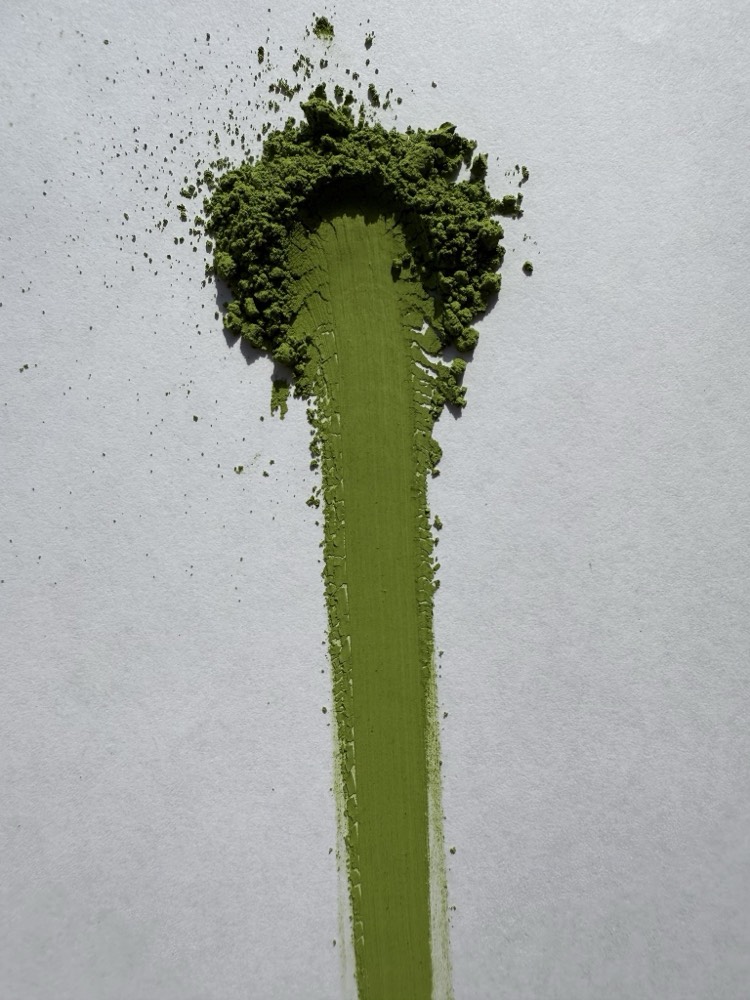
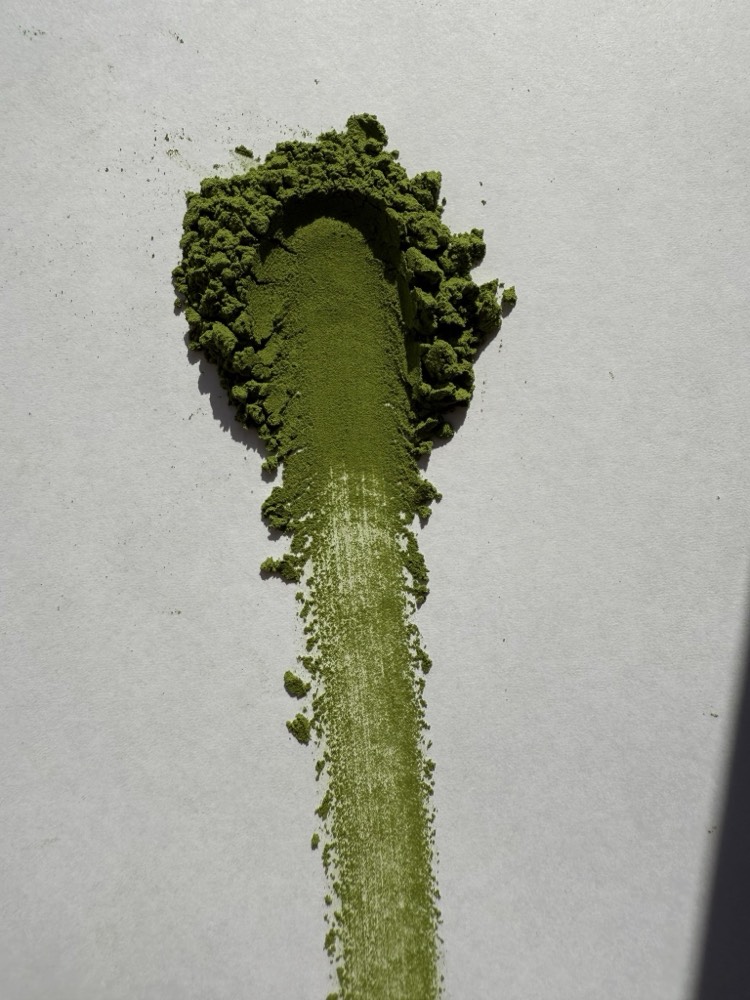
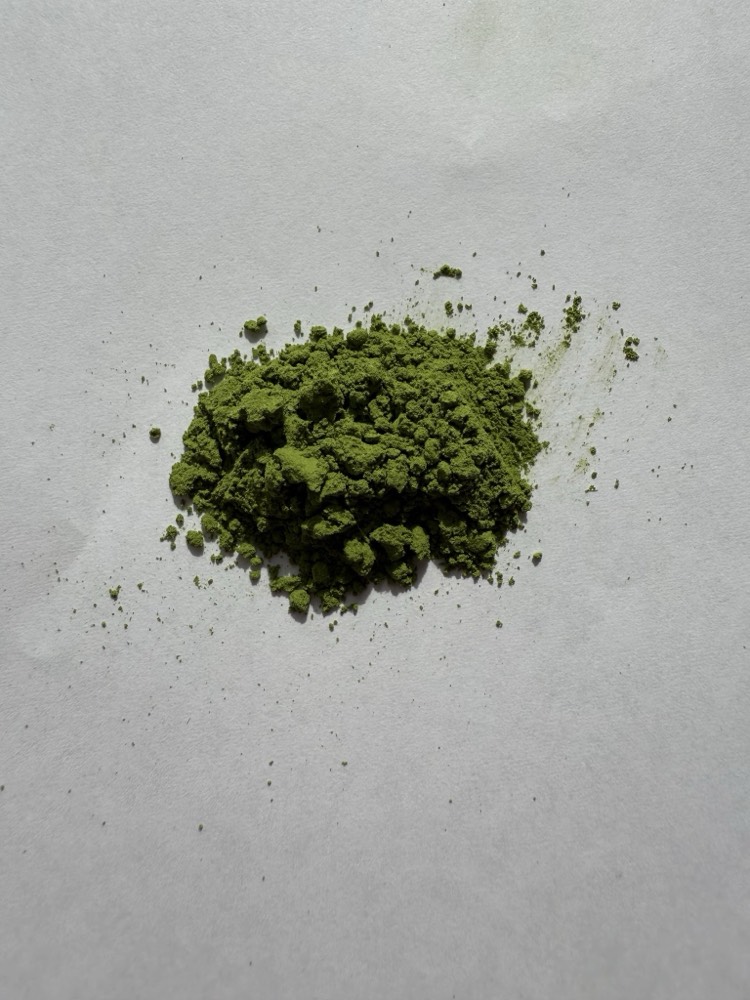
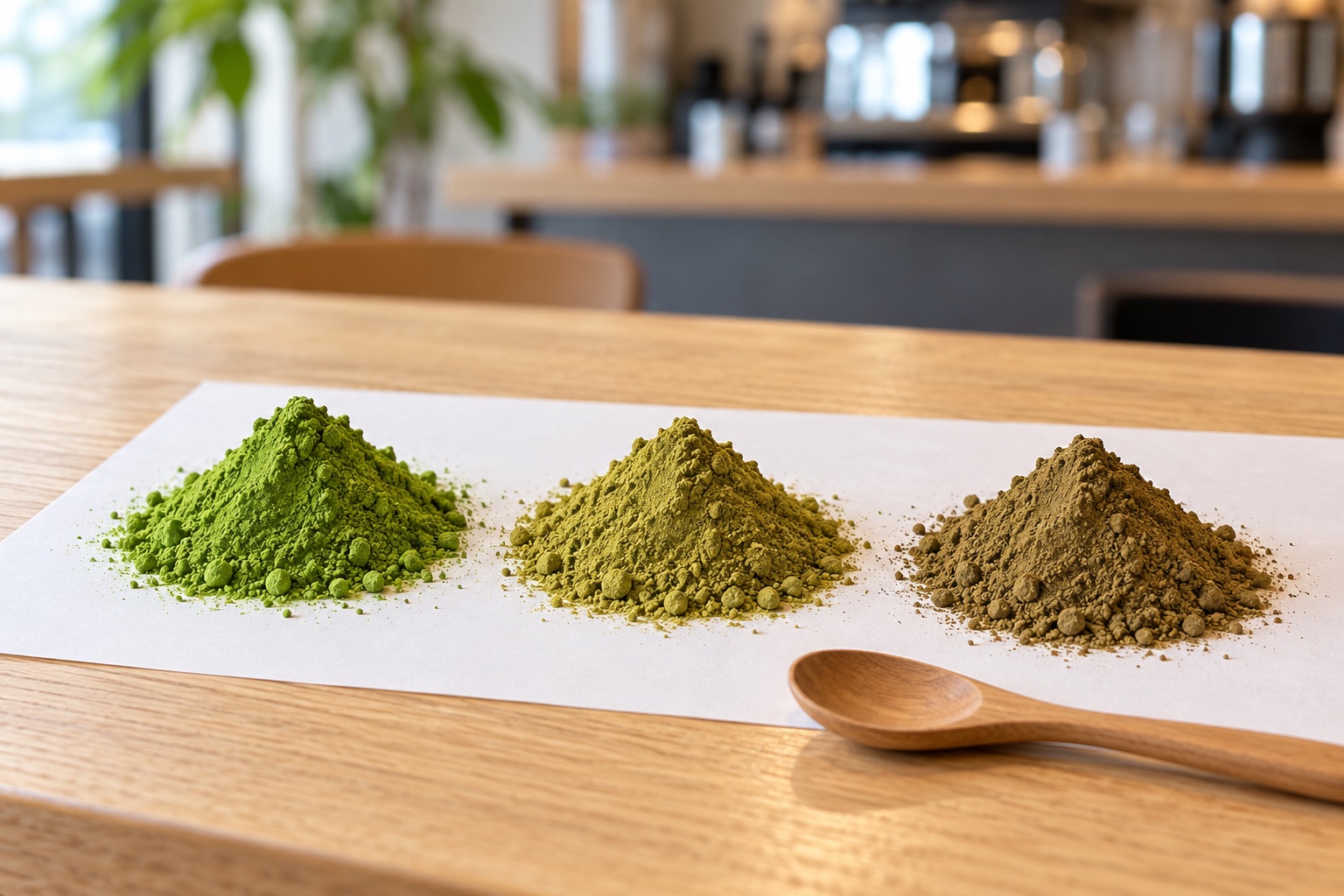
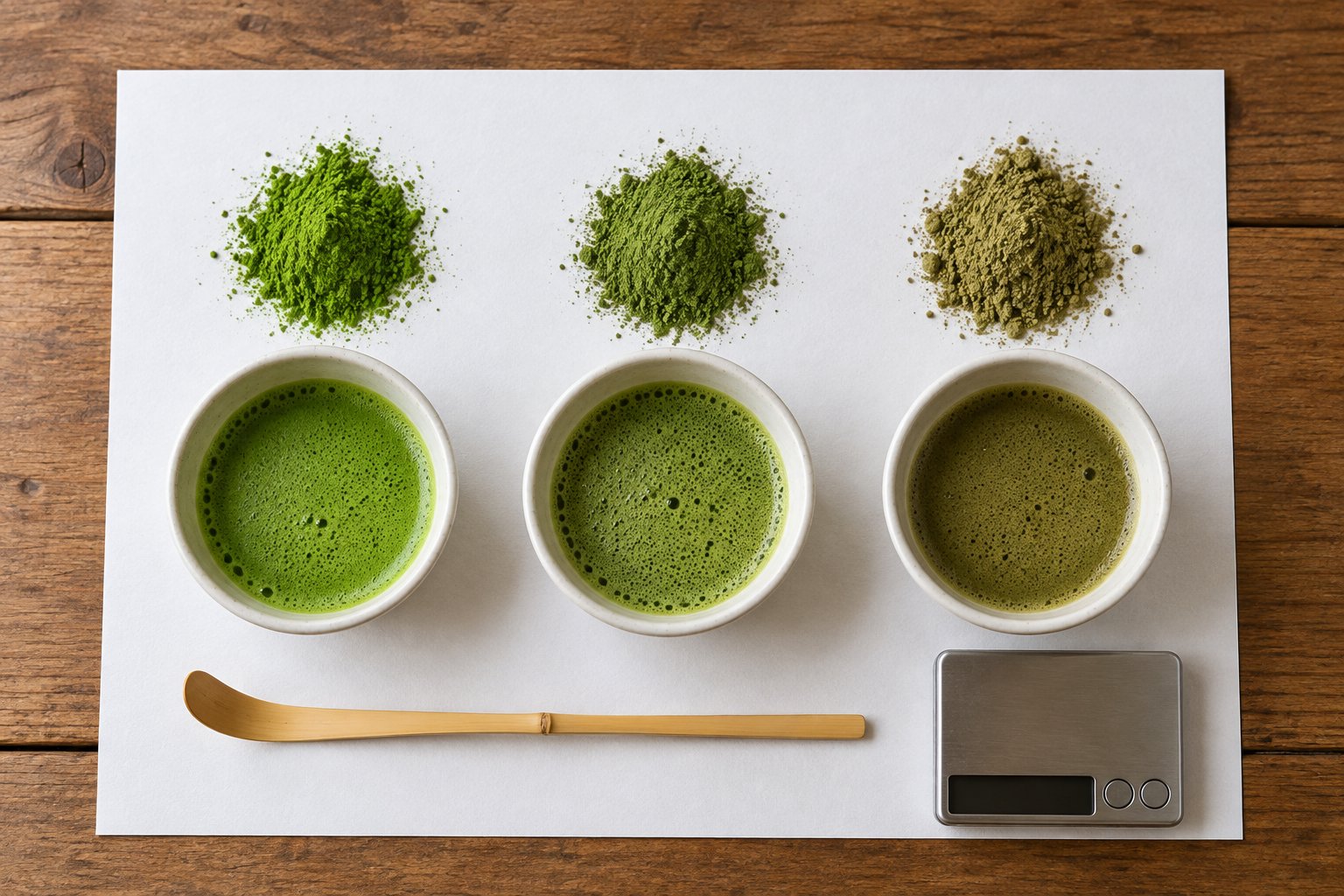
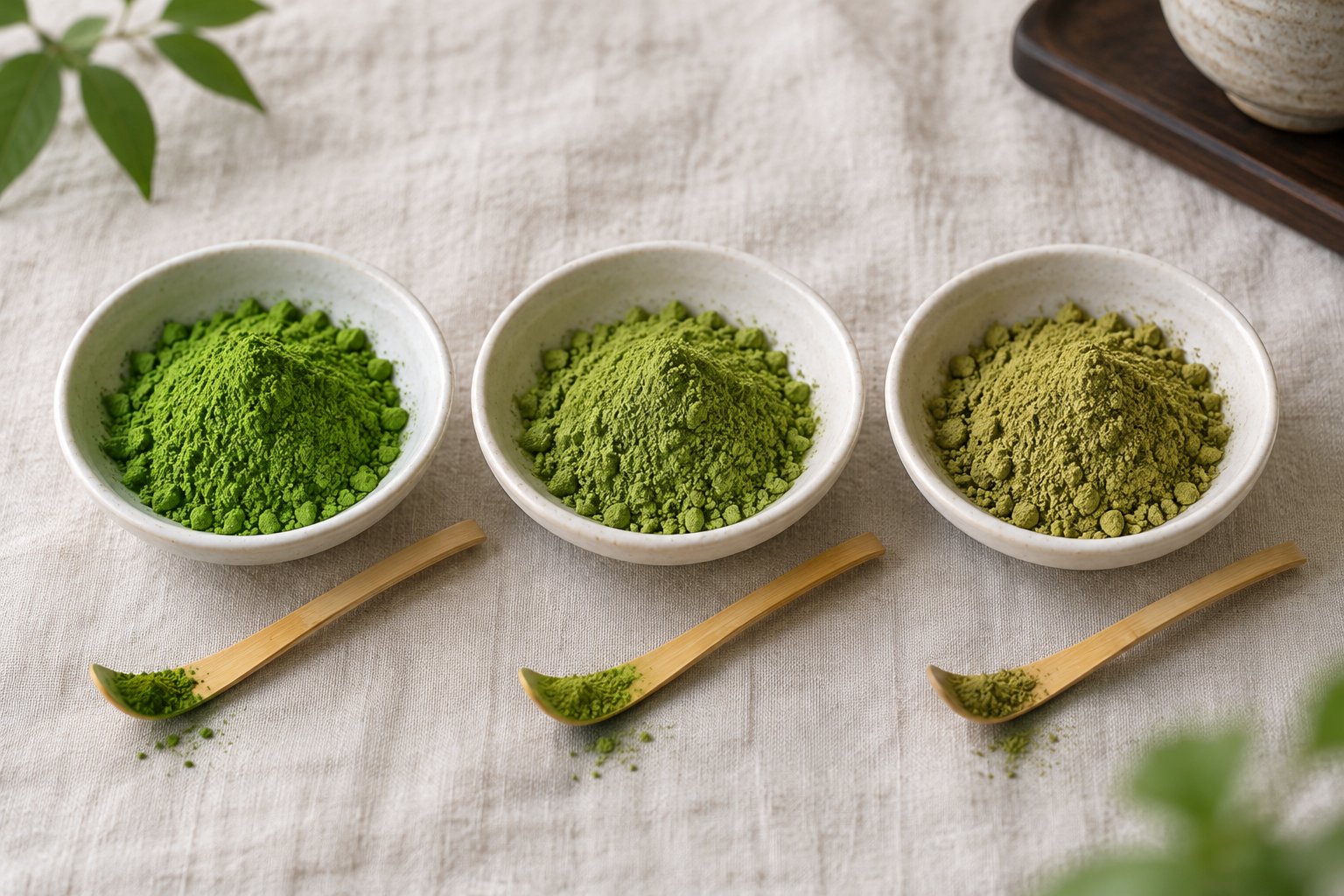
In a paper by Yoriyuki Nakamura of the University of Shizuoka, higher-priced matcha tended to be greener. Among Japanese matcha sold in Japan, higher-priced matcha had finer, more even particles, but for matcha sold overseas the link with price was not clear. You can compare color and particles by placing small amounts of each powder side by side on white paper. How harvest season and milling relate to price is covered in Matcha grades.
4. Whisk and compare under the same conditions
Finally, whisk each sample with the same amount and the same water temperature, and compare aroma, astringency and how fine the foam is. If you will serve it as pure matcha, taste it topped up with water and ice. If you will also use it in lattes, check how well the color holds with your shop’s milk. Comparing color and taste does not replace a component test, so judge together with the documents.
How to make pure matcha
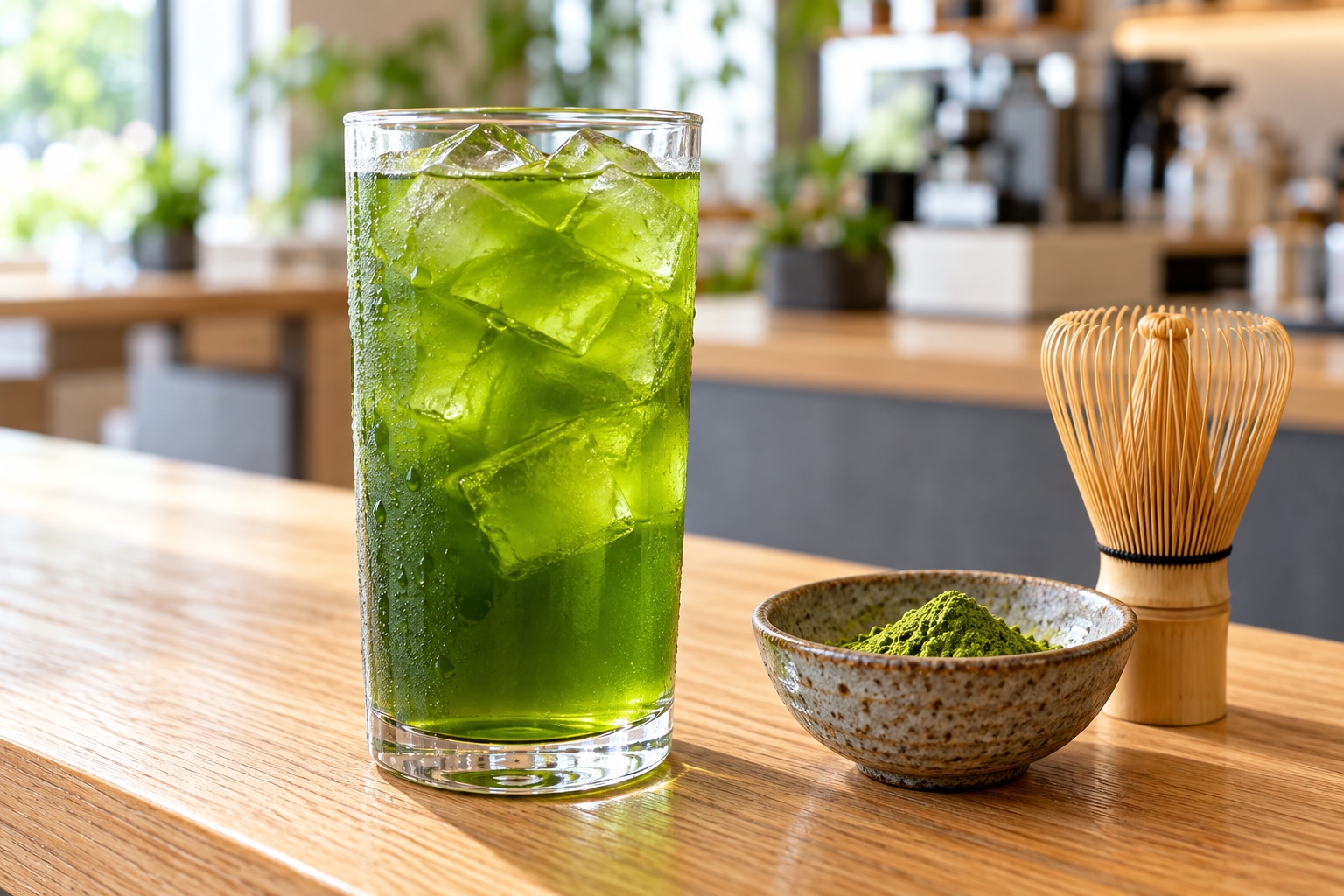
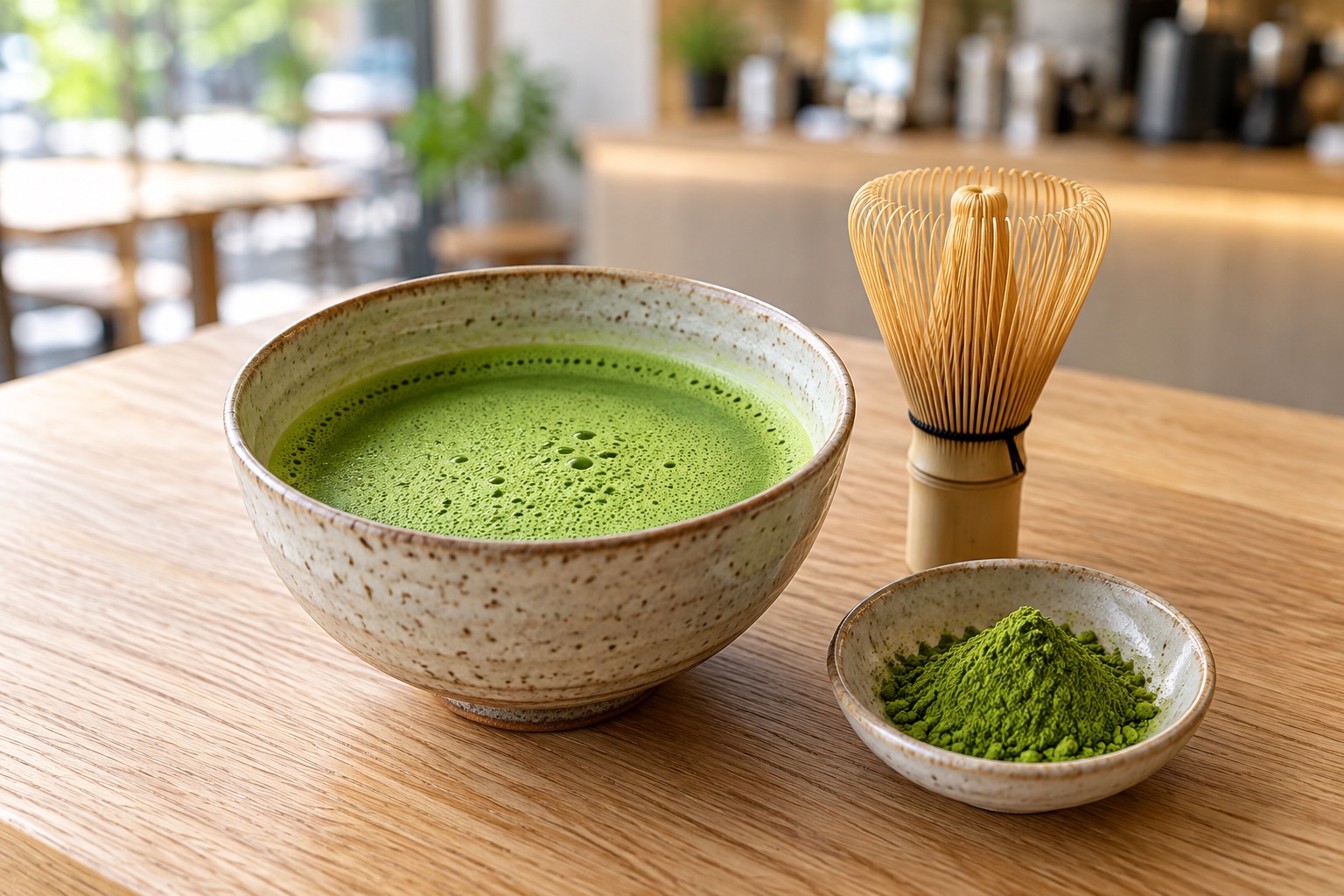
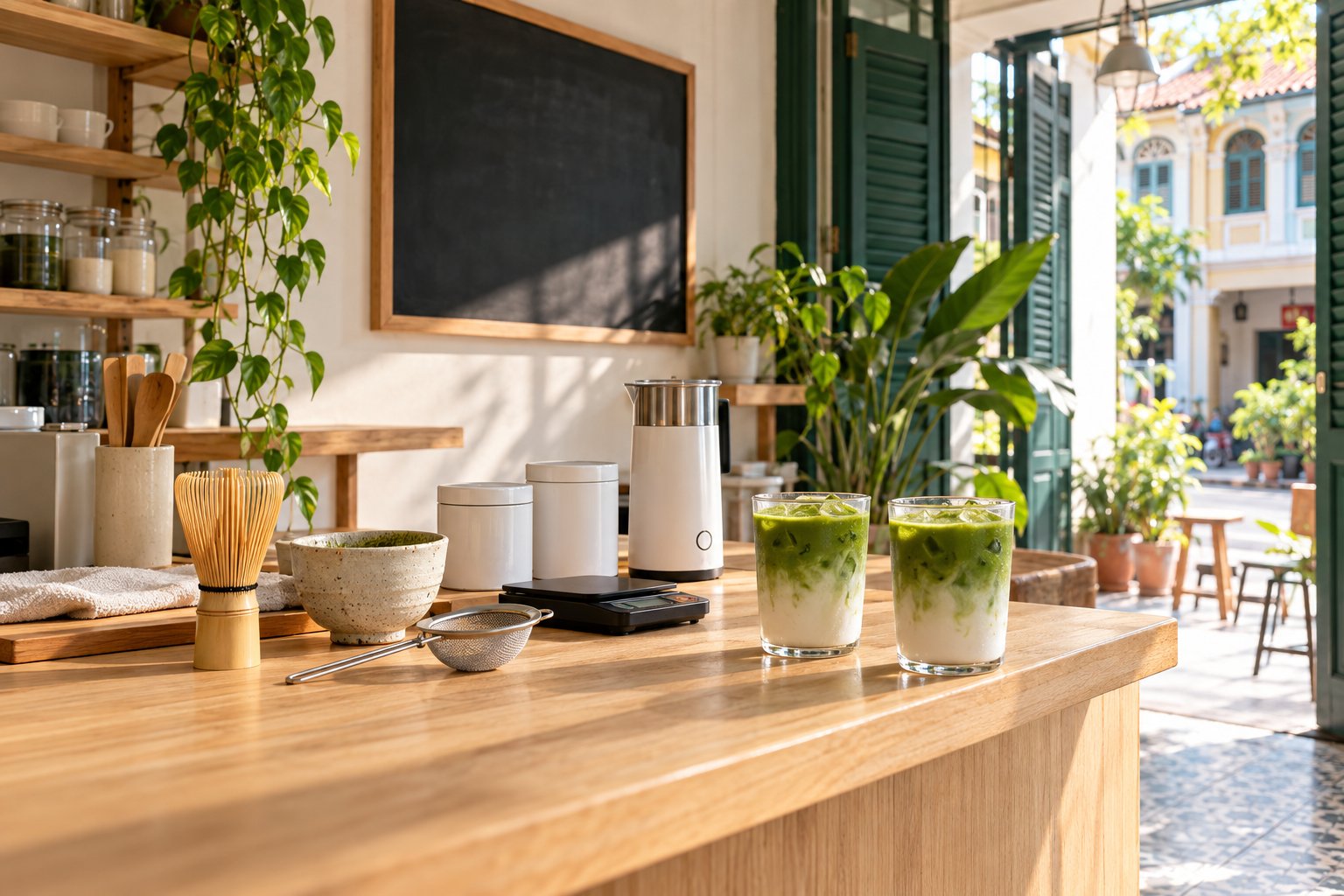
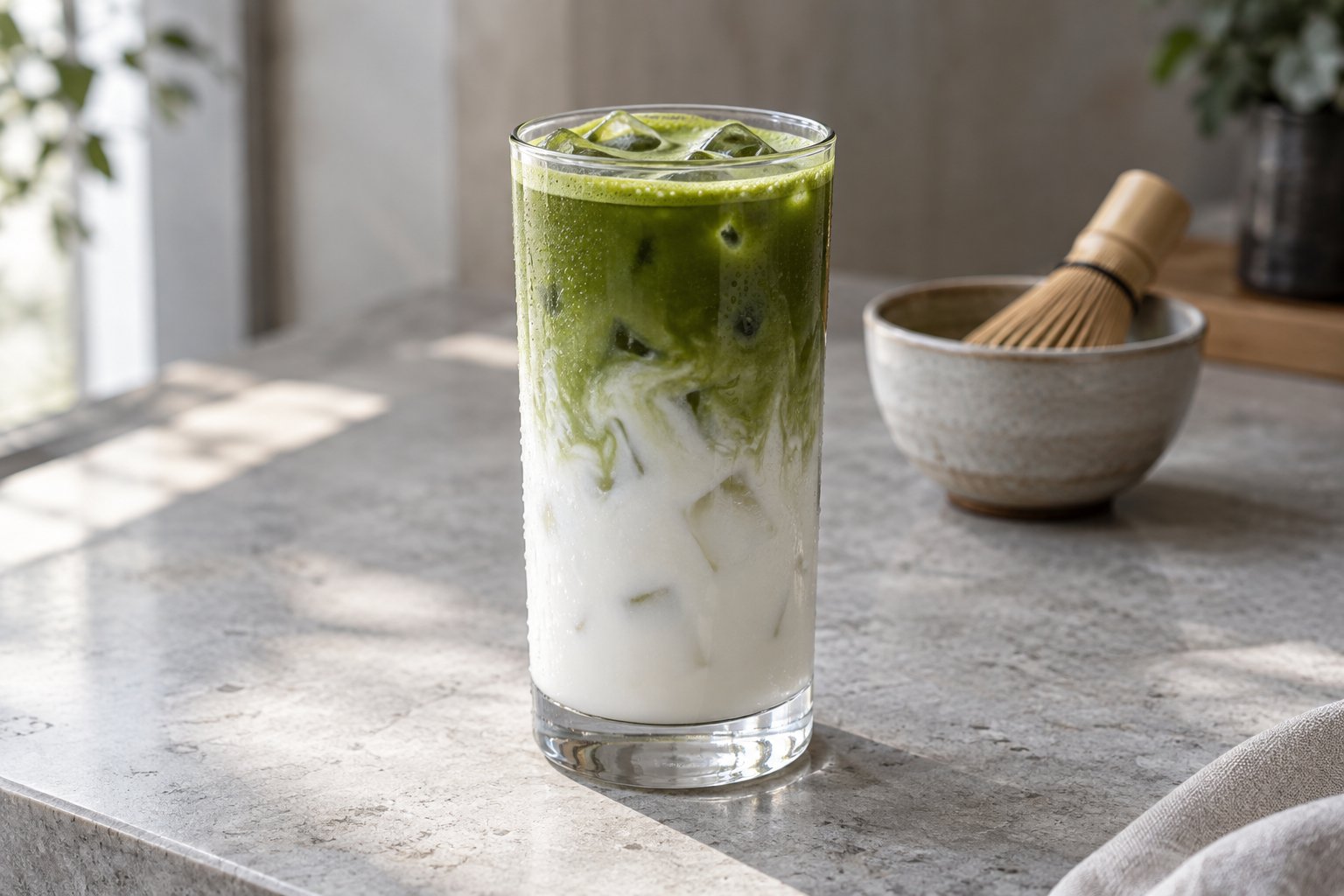
Pure matcha is made by whisking matcha in a little hot water until there are no lumps, then pouring it over cold water and ice. Without milk to round out the taste, the amount of matcha and the water temperature decide how it tastes.
Basic amounts
A recipe from a Thai food media site whisks 5g of matcha in about 40ml of water and pours it into a glass with ice and the rest of the water. The total water is 200ml (adjust between 180 and 250ml).
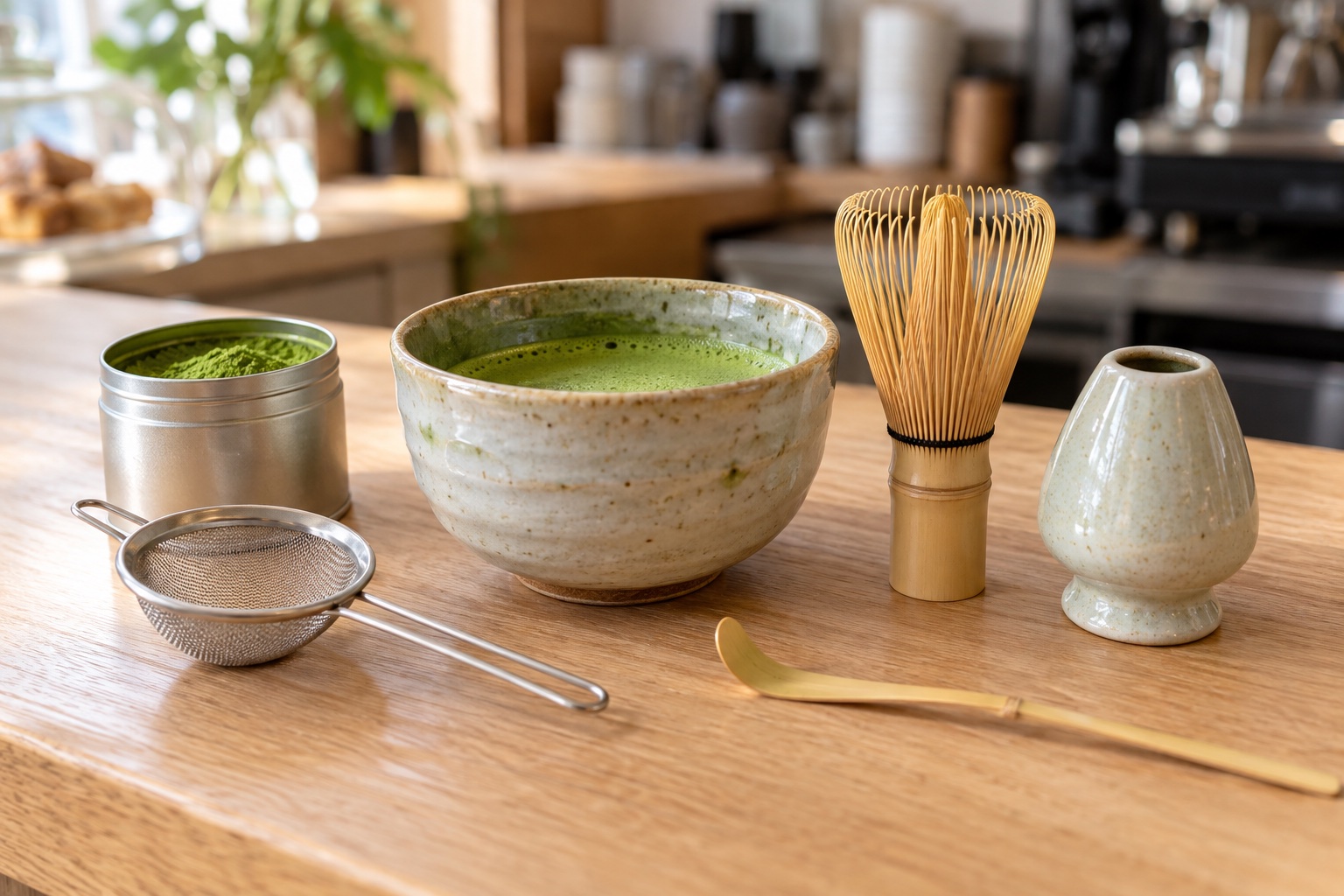
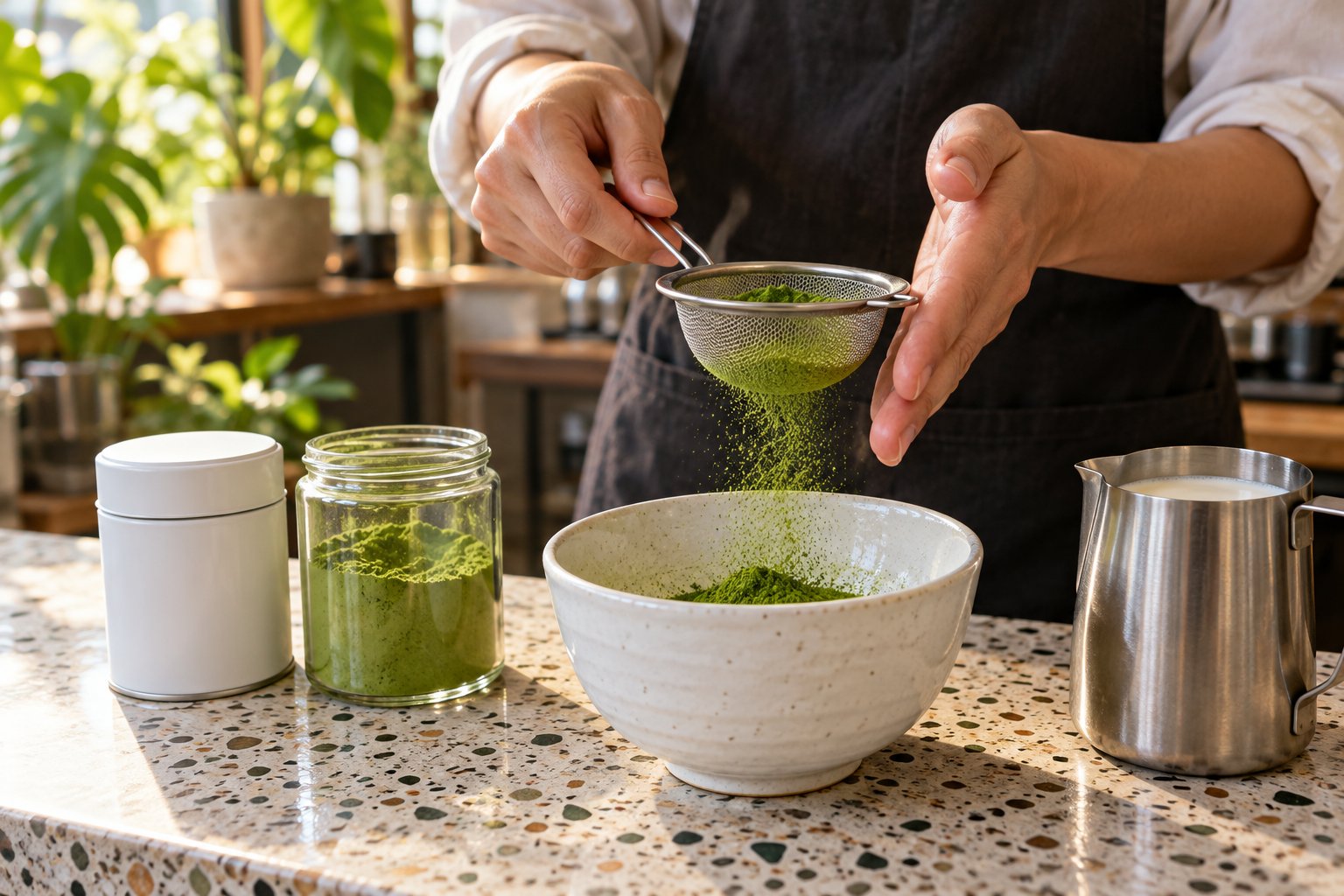
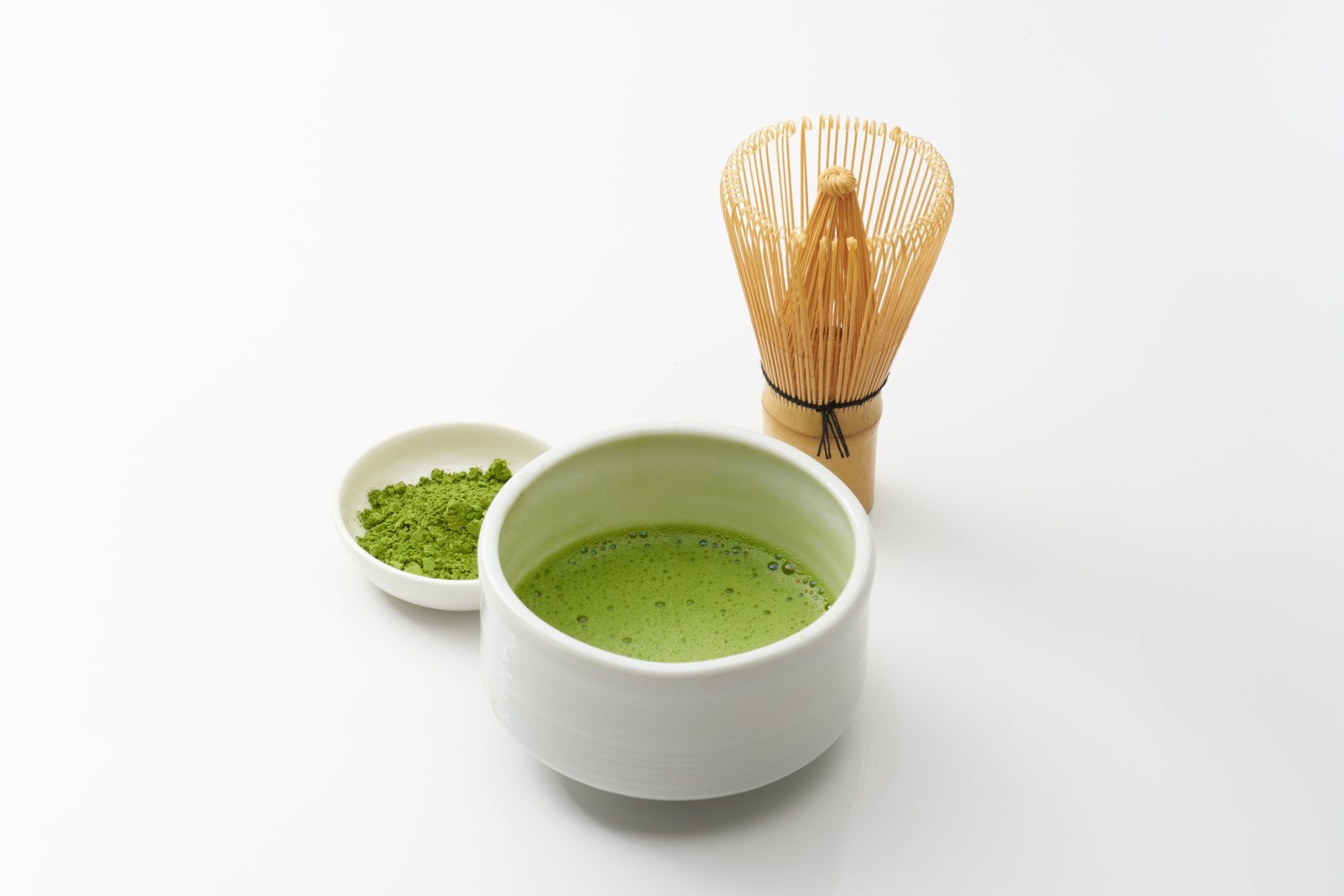
- Sift the matcha into a bowl
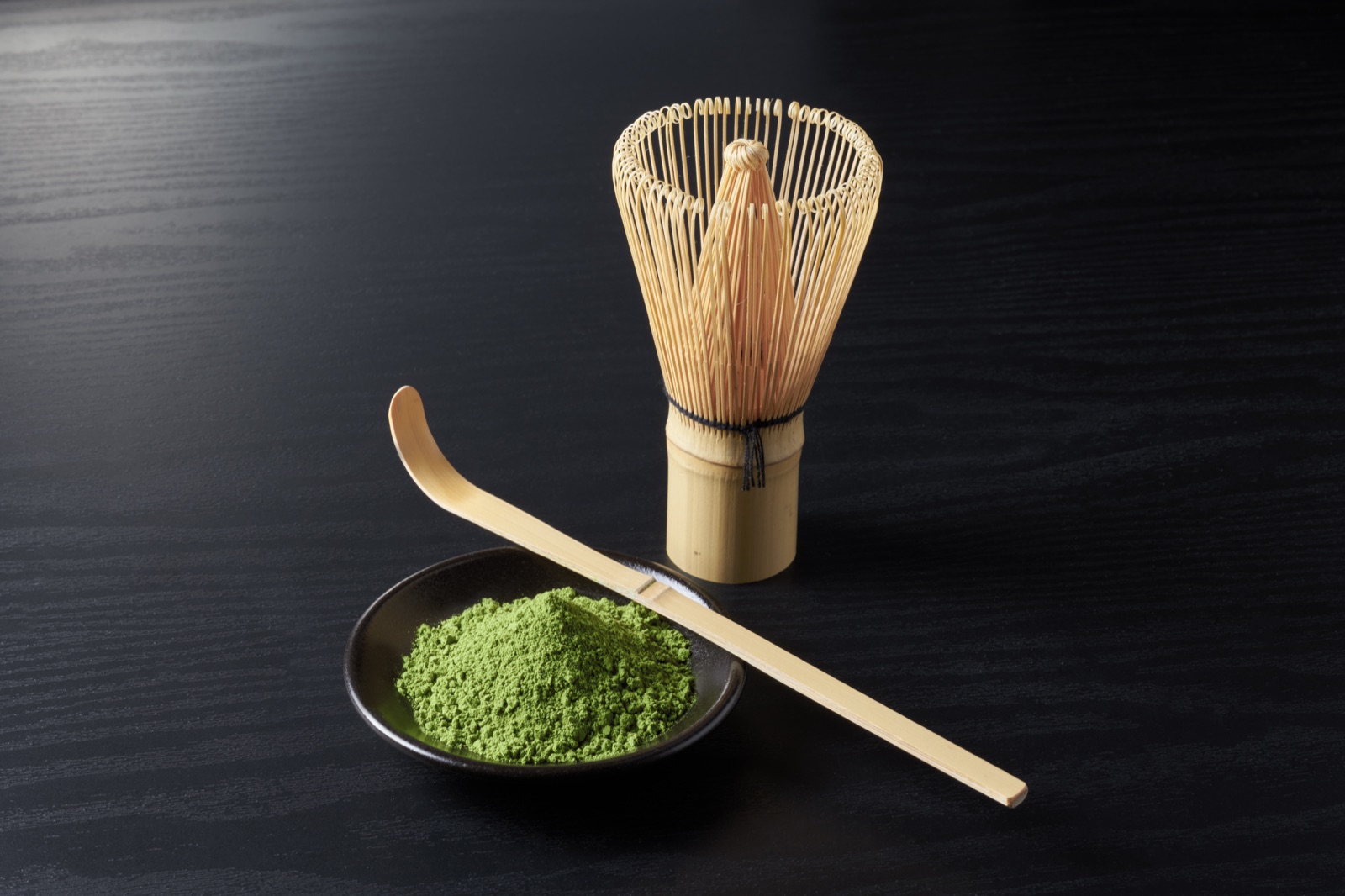
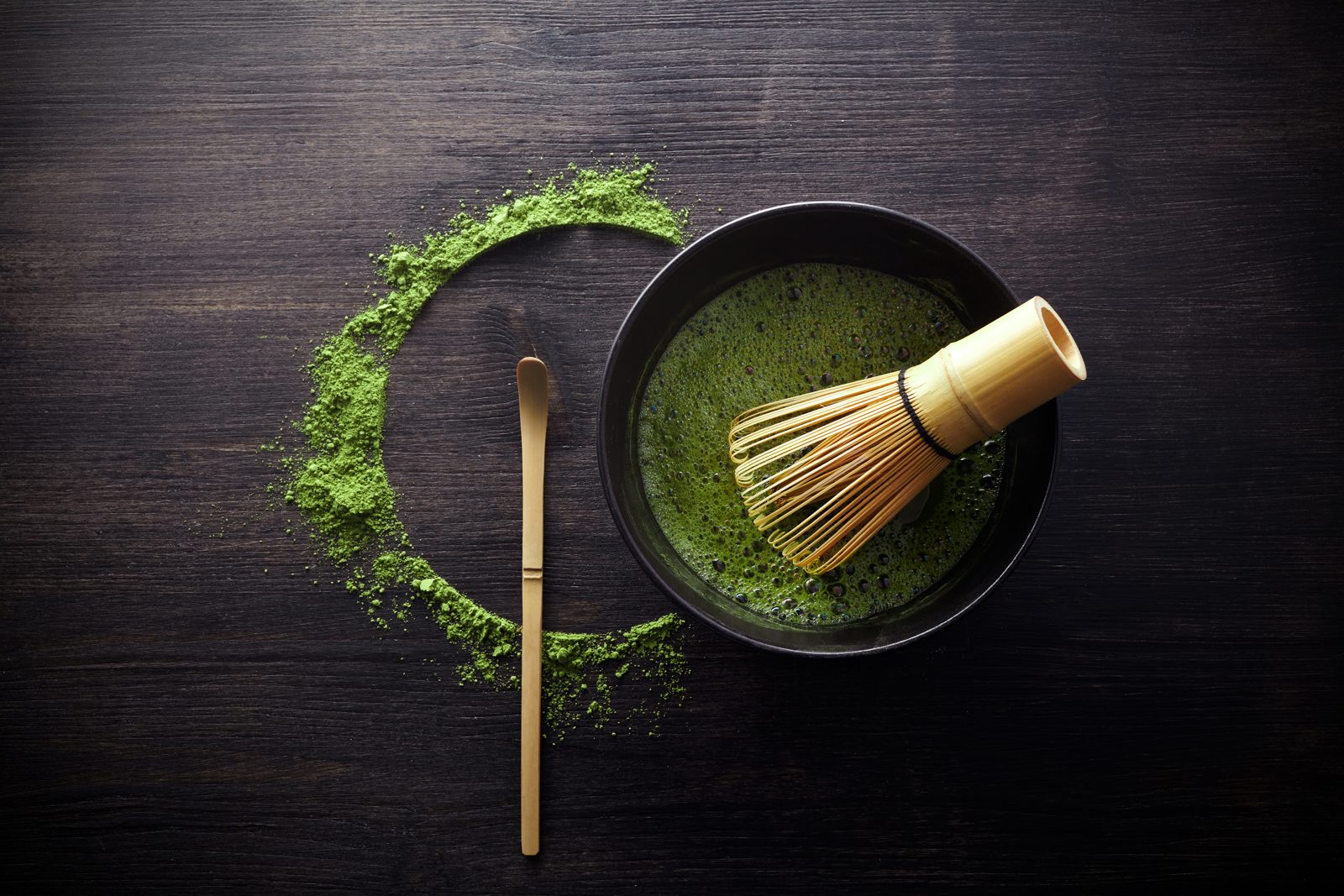
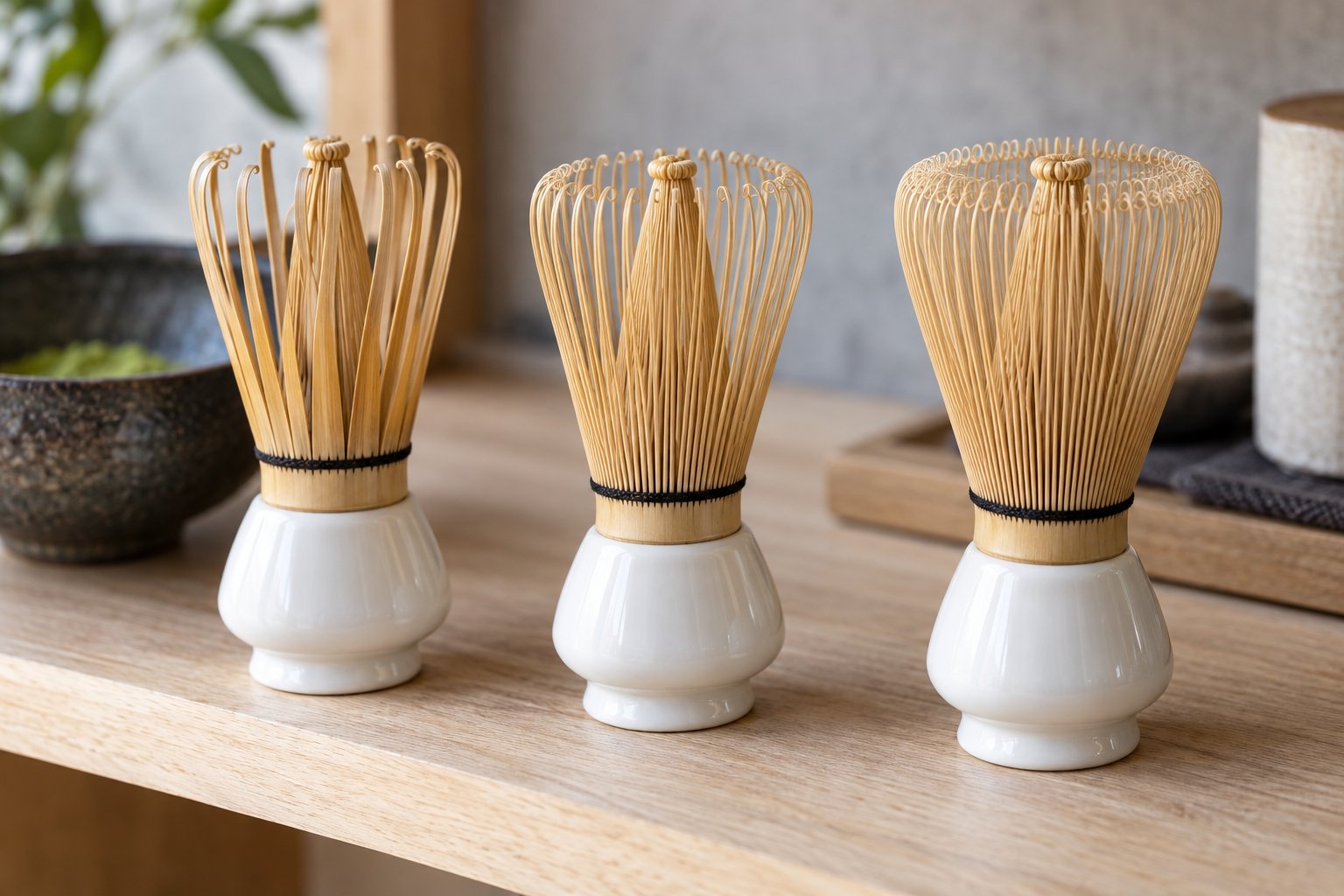
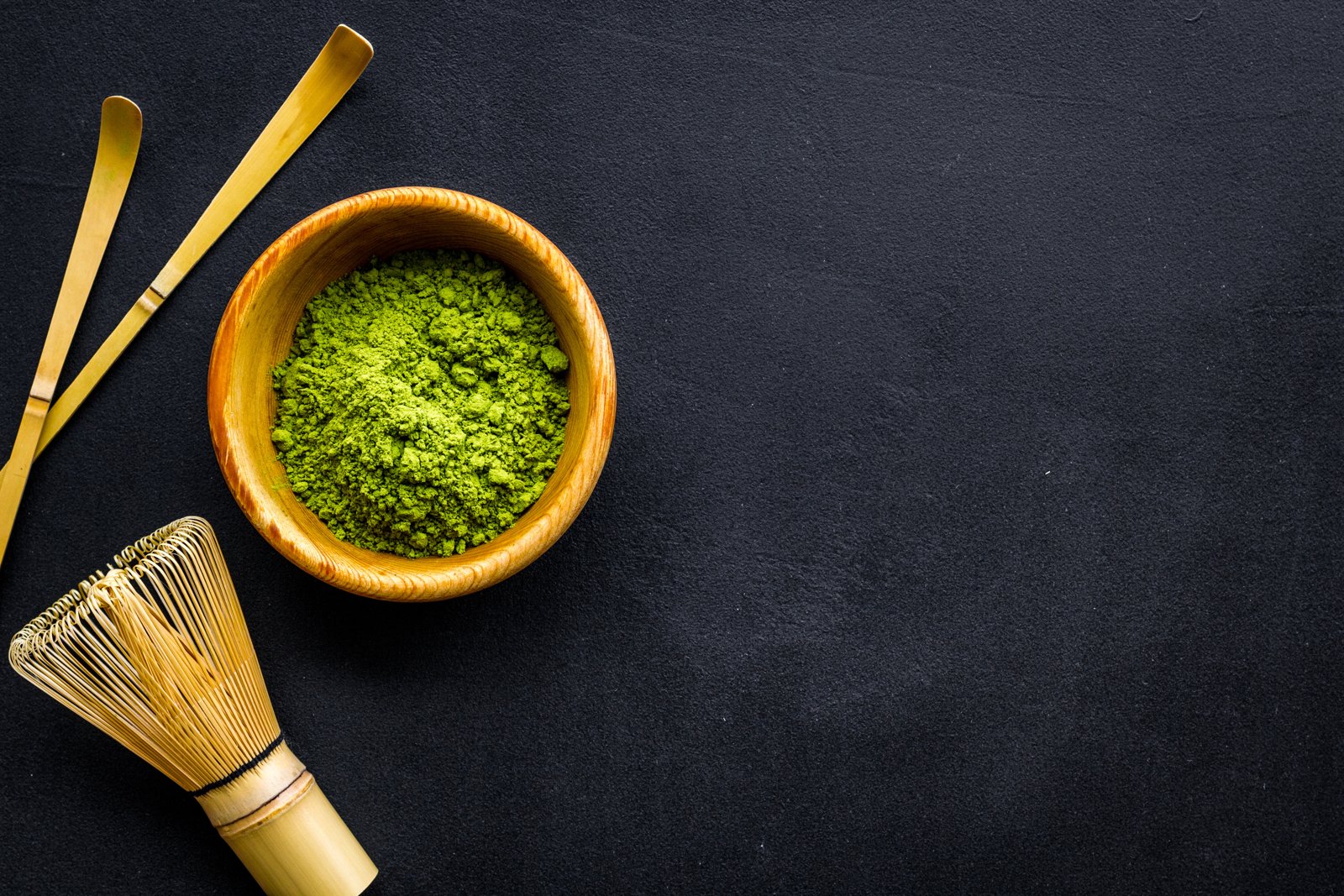
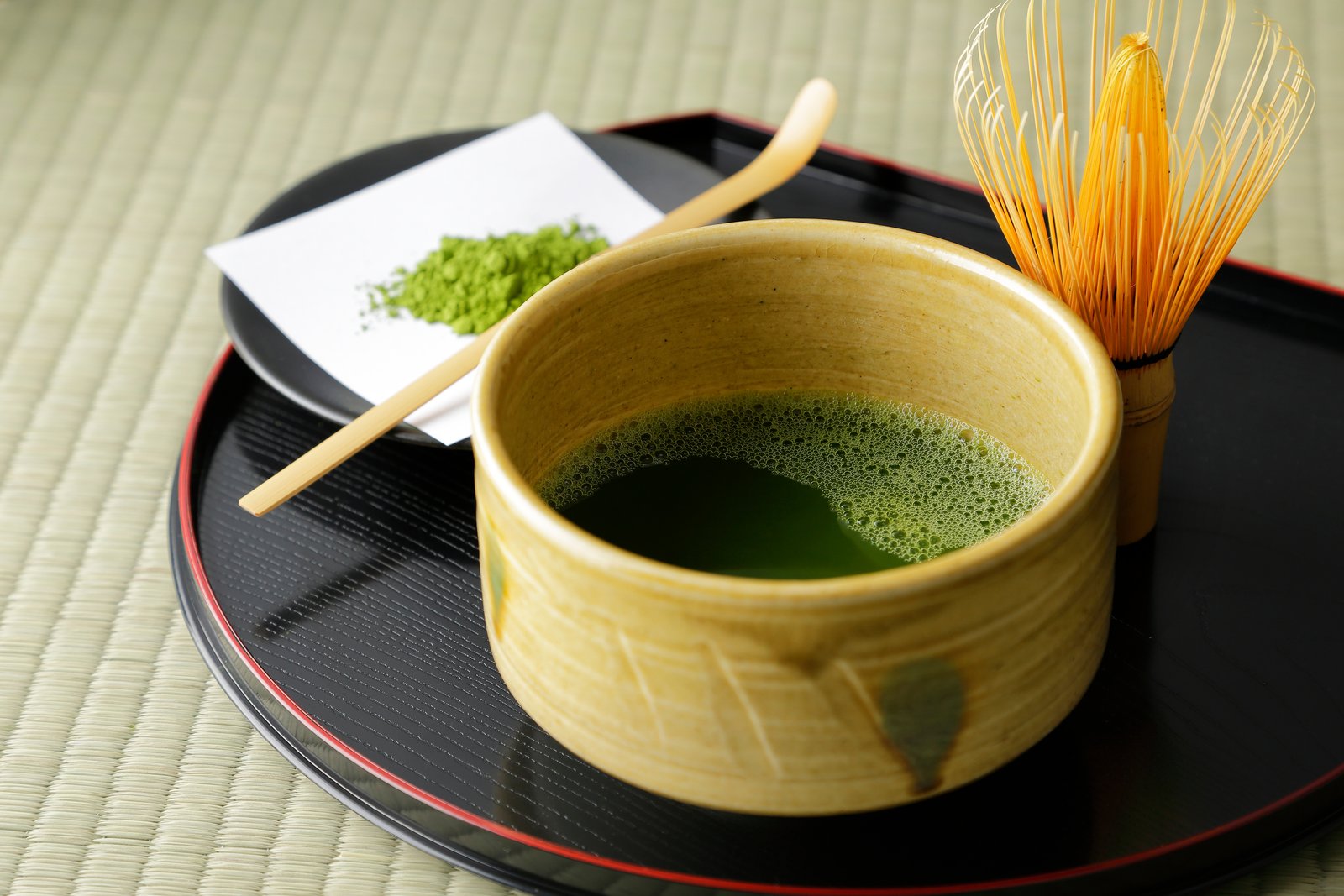
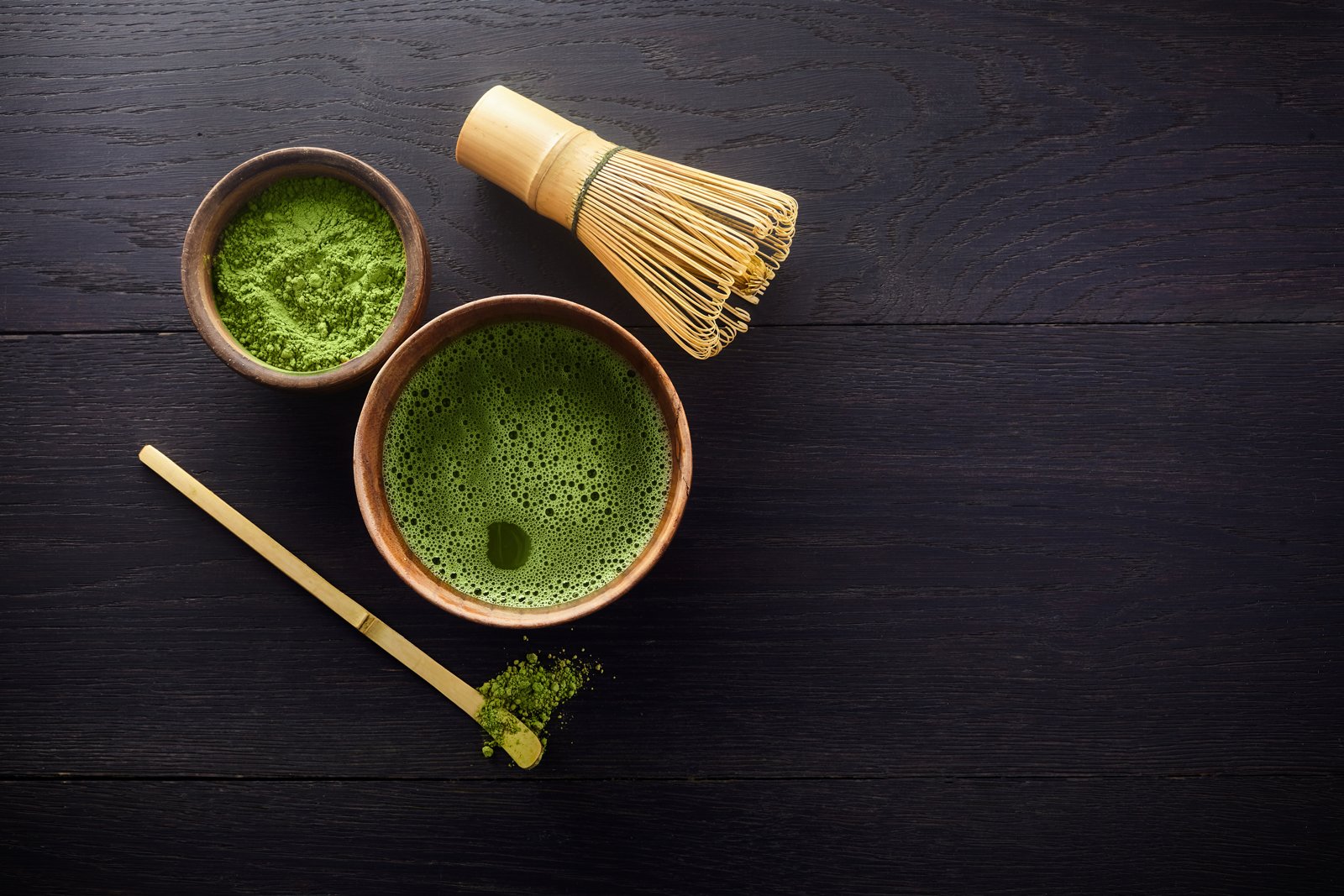
- Add a little water at 70–80°C and whisk with a chasen (bamboo whisk) until there are no lumps
- Put ice and cold water in a glass
- Pour in the whisked matcha slowly, stir and serve
70–80°C is the temperature the Kyoto Prefectural Tea Research Institute gives as a guide for whisking matcha. The basics of whisking with hot water only, and the steps for whisking every day in a café, are in How to Make Matcha. Cold drinks are covered in Iced Matcha Latte Recipe.
If it tastes too bitter
If it tastes too bitter or astringent, compare using less matcha or a lower water temperature. If you add sweetener, keep sweetened and unsweetened versions separate on your menu so the name matches what is in the cup, which makes it easier for customers to choose.
Why cafés use pure matcha, and the cost per cup
With 100% matcha powder, one powder can make several drinks, such as pure matcha, lattes and iced drinks, and your shop decides the sweetness and milk. On the other hand, pure matcha uses no milk, so matcha makes up a larger share of the ingredient cost per cup.
Benefits of 100% powder
- Your shop decides the sweetness and amount of milk for each drink
- A pure matcha drink without milk can only be made with 100% powder
- With only one ingredient, it is easier to check what is inside from the label and documents
- The same powder works in drinks made with cow’s milk, oat milk, soy milk and other milks
Latte mixes only need to be dissolved, so they are faster to prepare. You can also use different powders for different drinks, depending on the time it takes to whisk and how much matcha taste you want. How to store matcha after opening is covered in Does Matcha Go Bad?.
Calculating the matcha cost per cup
The matcha cost per cup uses the same formula as How to Choose Matcha for Café Lattes:
Matcha cost per cup = price per kg ÷ 1,000 × grams used per cup
The amount of matcha used per cup is as follows. How the price per kg is set is covered in what decides the price of matcha.
| Drink | Matcha per cup |
|---|---|
| Matcha latte (amount in Ippodo Tea’s recipe) | 3g |
| Pure matcha (amount in the Thai food media recipe) | 5g |
Pure matcha has no milk cost, but it uses more matcha, and the quality of the matcha shows directly in the taste. When comparing matcha at different prices, decide on both the matcha cost per cup and the taste when topped up with water.
Shops using a latte mix can work out how much matcha is in each cup from the matcha percentage on the label. As a hypothetical example, if a mix is labelled 10% matcha in the powder and you use 20g per cup, each cup contains 2g of matcha. This gives you a basis for comparison when switching to 100% powder.
Omakase Matcha works with matcha from Uji, Yame, Shizuoka, Kagoshima and Miyazaki. We send up to 3 samples, accept orders from 1kg, and can discuss blends to suit your menu. To compare how they taste topped up with water, apply through Sample request.
Sources
- Japan Tea Central Public Interest Incorporated Association, “緑茶の表示基準” (Green Tea Labelling Standard, last revised 10 July 2026, in Japanese) https://www.nihon-cha.or.jp/pdf/hyoujikijyun.pdf
- Thai FDA, Ministry of Public Health Notification No. 196 (2000), “Tea” (English version) https://food.fda.moph.go.th/media.php?id=509295897201483776&name=No.196-43Tea.pdf
- Thai FDA, Ministry of Public Health Notification No. 196 (2000), “Tea” (Thai version, in Thai) https://food.fda.moph.go.th/media.php?id=510362387866591232&name=Compi_196.pdf
- Thai FDA, Ministry of Public Health Notification No. 450 (2024), “Labeling of Prepackaged Foods” (English version) https://food.fda.moph.go.th/media.php?id=657392349080592384&name=P450_EN.pdf
- Thai FDA, Ministry of Public Health Notification No. 450 (2024), “Labeling of Prepackaged Foods” (Thai version, in Thai) https://food.fda.moph.go.th/media.php?id=654869394207416320&name=P450.pdf
- Thai FDA, “ตรวจสอบการอนุญาต” (Permit search, in Thai) https://porta.fda.moph.go.th/fda_search_center_new/
- JETRO, “茶の輸入規制、輸入手続き(タイ)” (Import regulations and procedures for tea: Thailand, in Japanese) https://www.jetro.go.jp/world/asia/th/foods/exportguide/greentea.html
- JETRO, “抹茶ブームを経て本格的な普及段階に移行するASEAN日本茶市場” (The ASEAN Japanese tea market moves from a matcha boom to wider adoption, 18 May 2026, in Japanese) https://www.jetro.go.jp/biz/areareports/2026/d7cf7db2e5a71454.html
- NARO, “国産抹茶の価格と化学成分含有量の関係” (Relationship between price and chemical components of Japanese matcha, in Japanese) https://www.naro.go.jp/project/results/4th_laboratory/nifts/2018/nifts18_s16.html
- Yoriyuki Nakamura, “国内における抹茶(碾茶)生産の推移と科学的特性” (Trends in matcha (tencha) production in Japan and its scientific characteristics, Tea Science Research Center, University of Shizuoka, in Japanese) https://dfns.u-shizuoka-ken.ac.jp/labs/tsc/thesis/0410.pdf
- Kyoto Prefectural Tea Research Institute, “お茶のおいしい入れ方 抹茶” (How to make delicious tea: matcha, in Japanese) https://www.pref.kyoto.jp/chaken/irekata_maccha.html
- Ippodo Tea, “Matcha Latte Recipe” https://ippodotea.com/blogs/recipes-to-brew-japanese-tea/matcha-latte-recipe
- Thai PBS, ““มัทฉะ” ทำไมต้องดื่มเพียว ถึงได้สุขภาพ ดีต่อร่างกายอย่างไร” (in Thai) https://www.thaipbs.or.th/news/content/354376
- KRUA.CO, “Pure matcha” (in Thai) https://krua.co/recipe/pure-matcha