
 Reviewed by: Takahiro Sugiyama (CEO, meguri Inc.)
When you order matcha samples from several suppliers, they may all say “premium” or “ceremonial,” and the names alone do not tell you how they differ. Knowing how Japan’s tea competitions and tea research institutes judge quality, and what the research numbers show, lets you compare samples on what is inside.
What is high quality matcha?
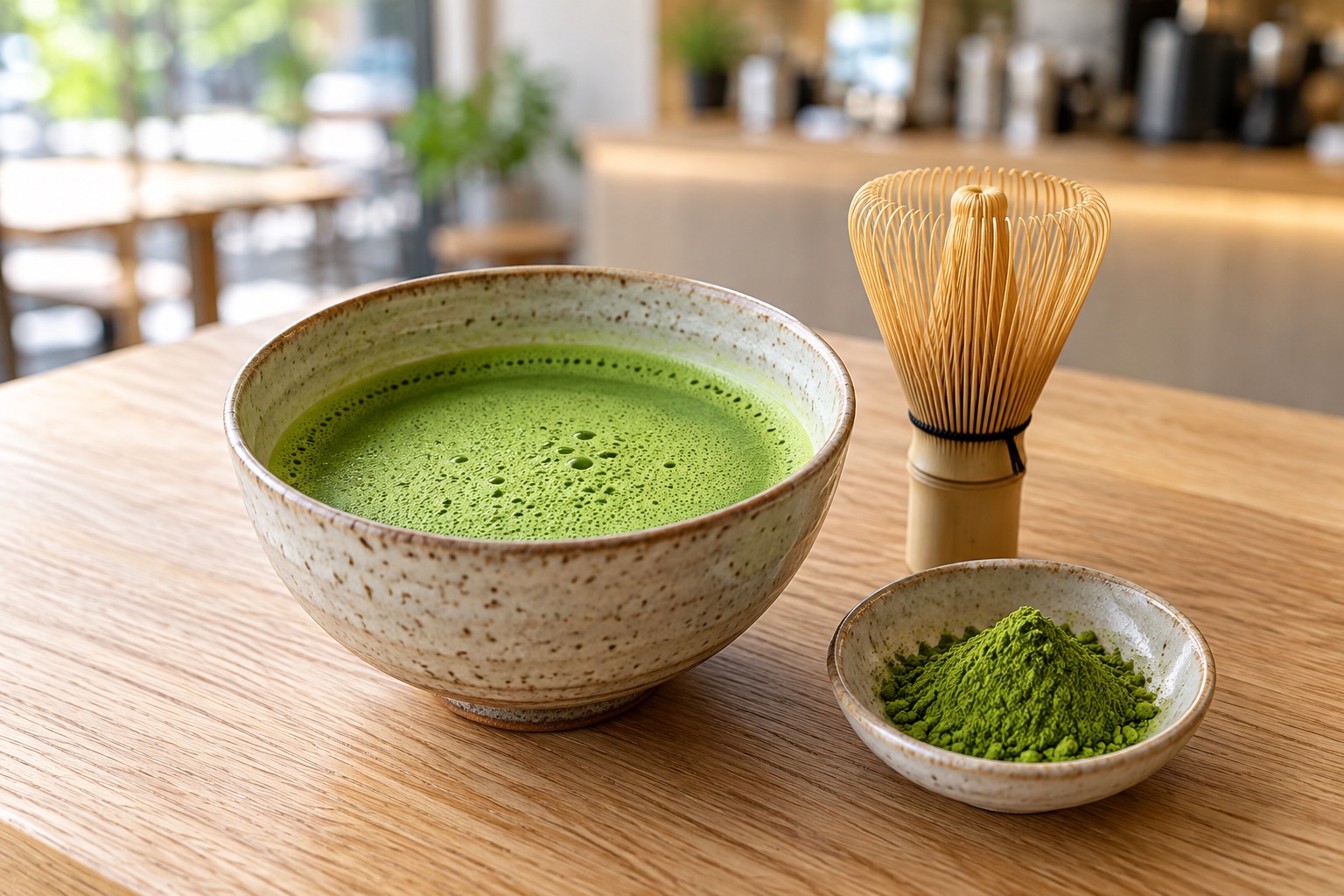
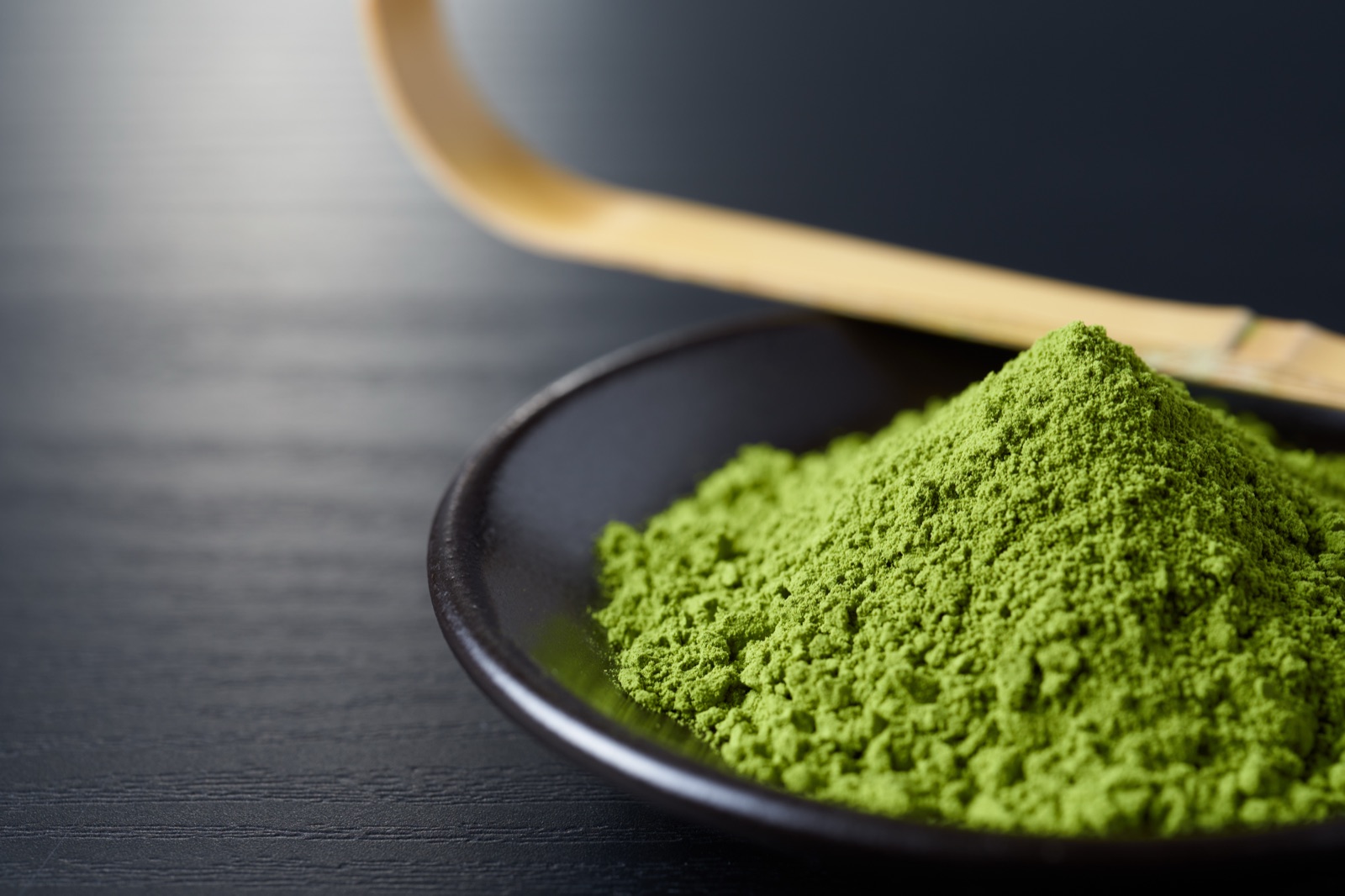
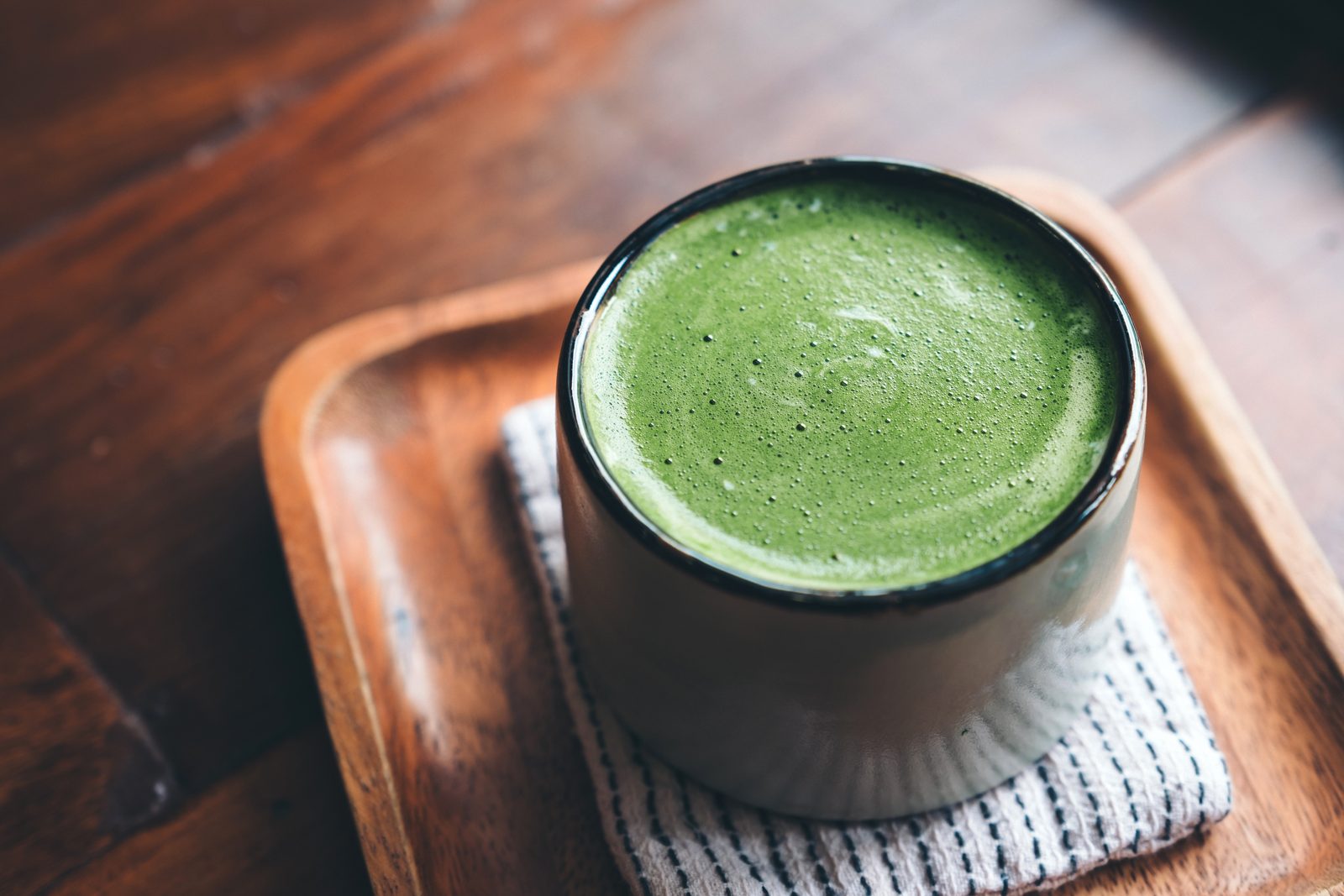
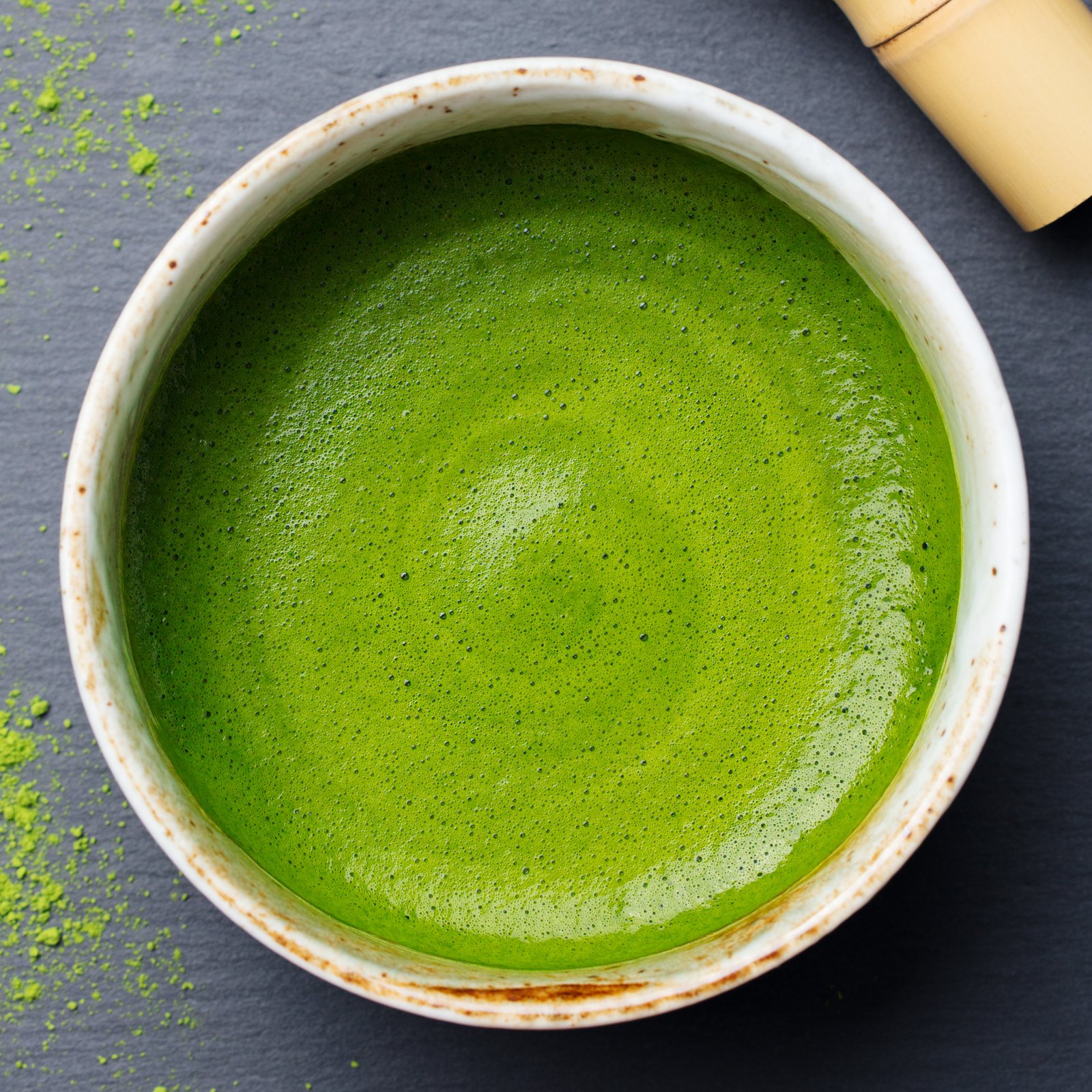
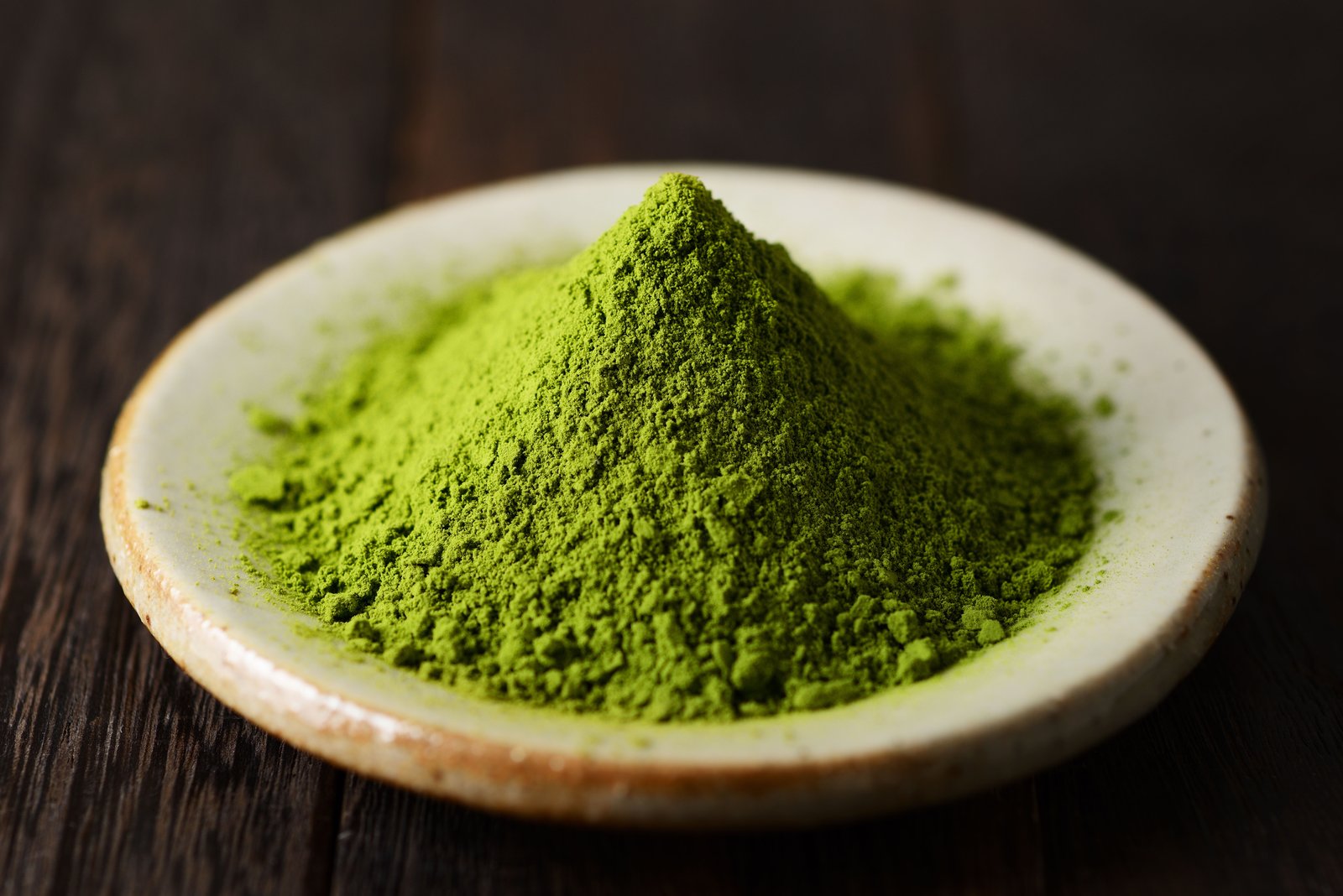
High quality matcha has a clear, vivid green color, fine and even powder, fine foam that lasts, a smooth mouthfeel, and umami in harmony with the shaded aroma. The Kyoto Prefectural Tea Research Institute judges matcha on five points: color, particle size, foaming, foam color and taste.
The five points used in judging
Hiroaki Murakami, formerly of the Kyoto Prefectural Tea Research Institute, described matcha judging in Tea Research Journal (the journal of the Japanese Society of Tea Science and Technology). Judges look at five points.
| Point | What is checked | What good matcha shows |
|---|---|---|
| Shikitaku (color and luster) | Color and luster of the powder | “Sae”: a color in which vivid green stands out |
| Ryudo (particle size) | Fineness of the powder | Fine and even |
| Foaming | Foam after whisking | Foams well, with fine foam that lasts |
| Foam color | Color of the foam | Vivid, like the powder |
| Jimi (taste) | Taste and mouthfeel | Smooth, with umami and shaded taste in harmony with the aroma from grinding |
Shaded taste and shaded aroma (ooi-aji, ooi-ka) are the seaweed-like aroma and taste of leaves grown with sunlight blocked before picking.
Most of the quality is decided before grinding
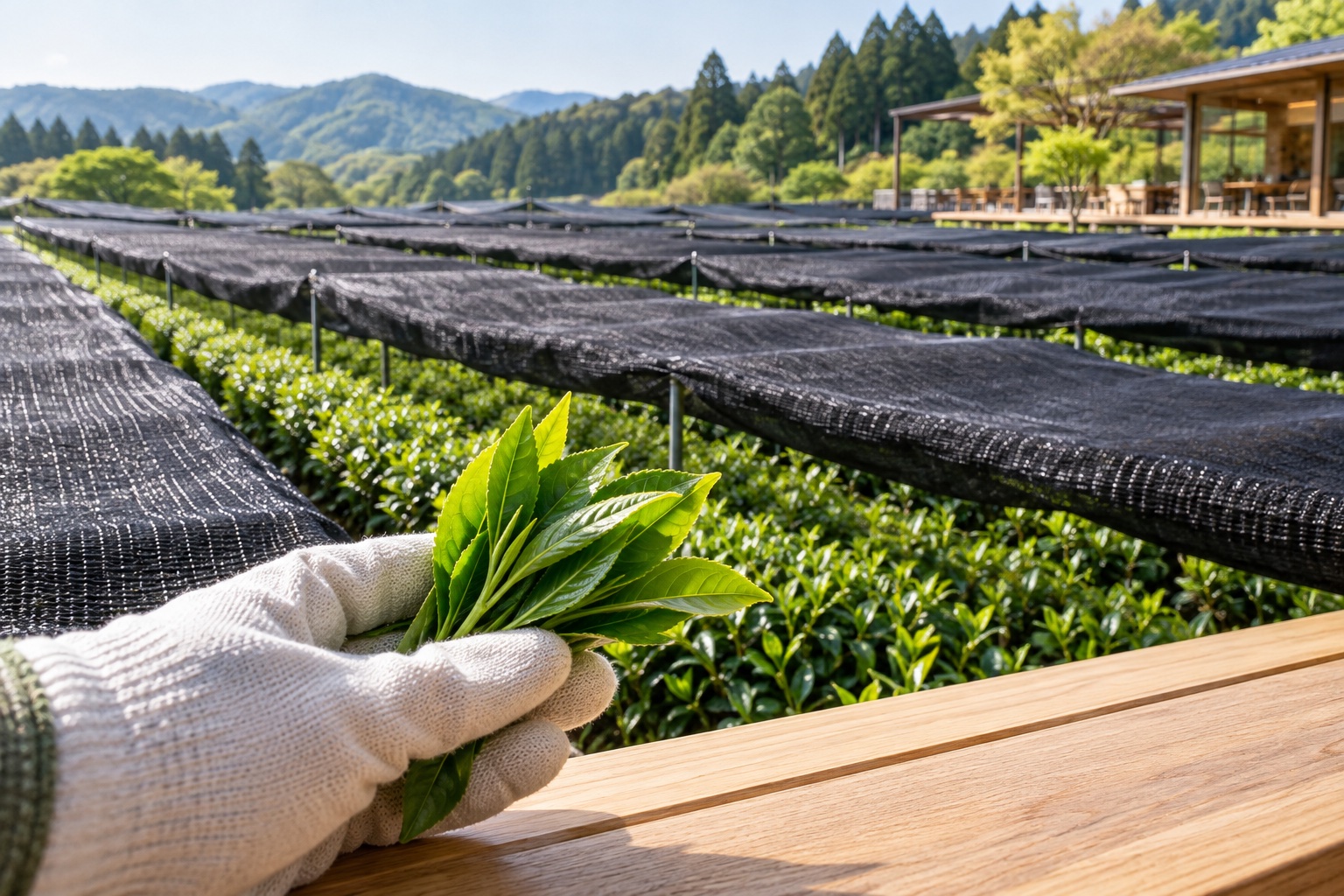
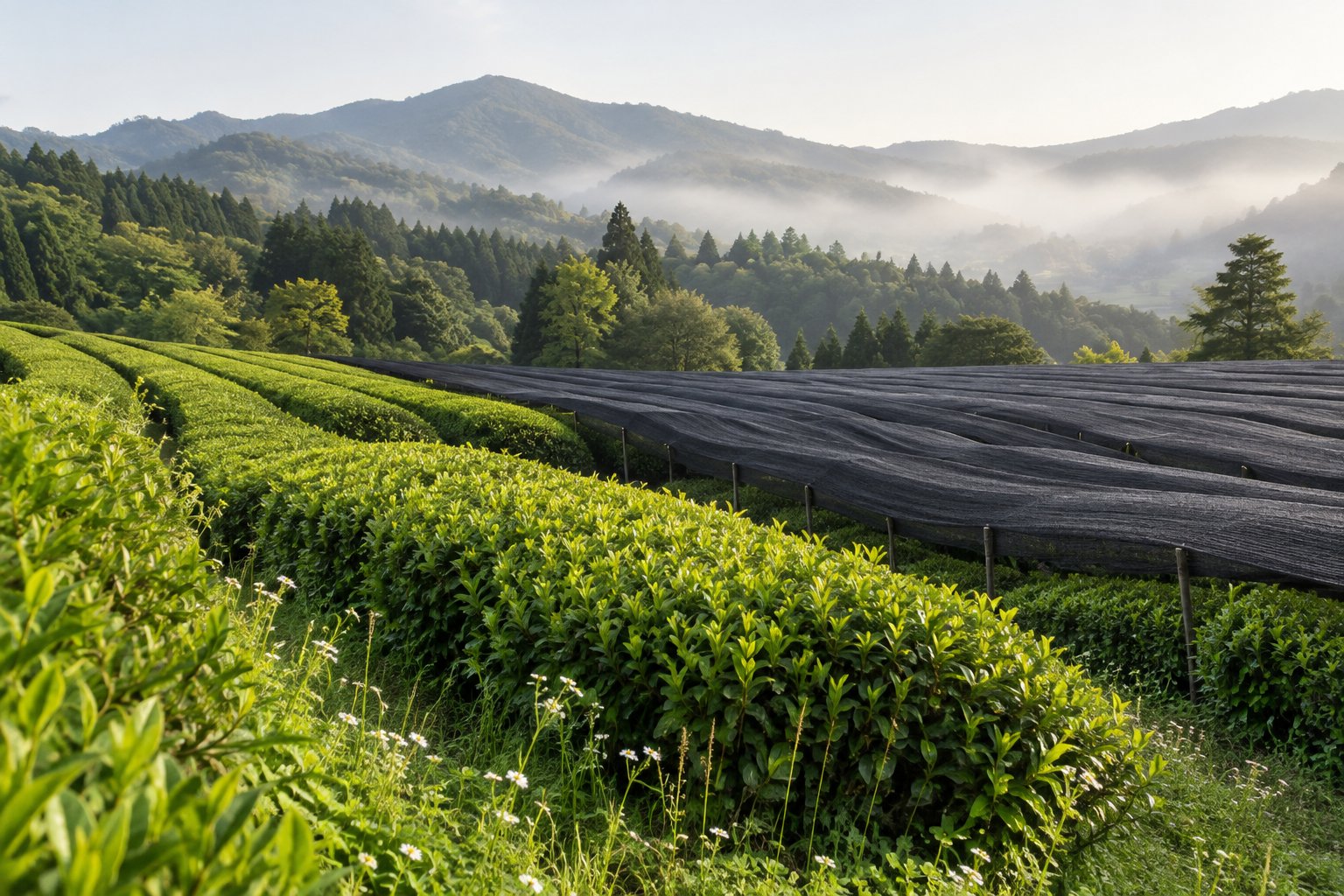
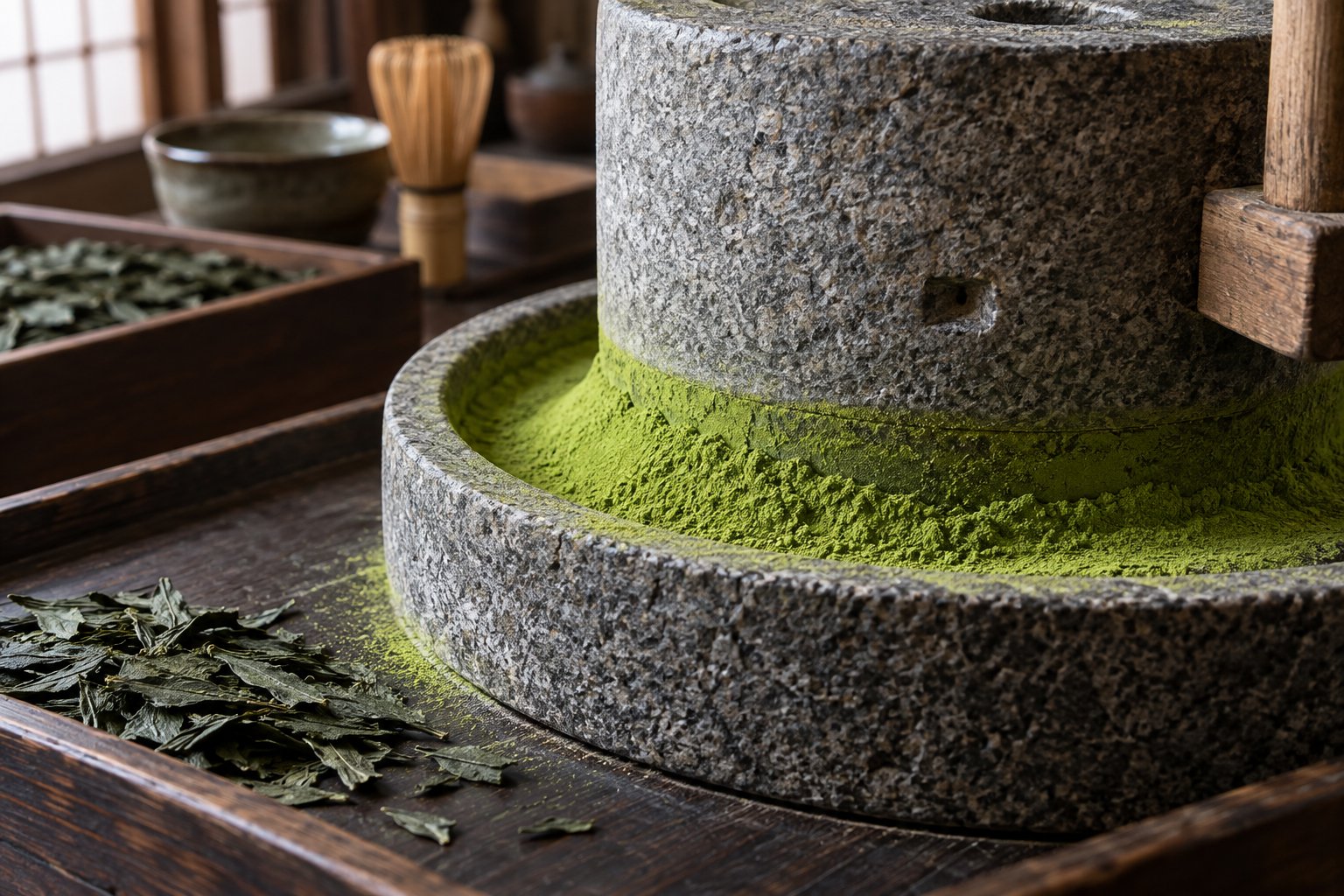
Murakami writes that whether matcha is good or poor is basically decided by the tencha stage (tencha: the leaf that is ground into matcha), before grinding. Growing conditions, such as how well the shading works, have the largest effect, and grinding alone does not decide quality.
Names such as “ceremonial” and “culinary” have no official standard. How these names relate to what is inside is covered in Matcha grades, and how matcha differs from powdered green tea and latte mixes in Pure Matcha
How the Japanese tea industry judges quality
Japanese tea is graded by sensory evaluation, in which judges score appearance, aroma, color and taste. At the National Tea Competition, tencha is scored out of 200: aroma 65, taste 65, appearance 40, liquor color 20 and infused leaf color 10.
Tencha scoring at the National Tea Competition
The National Tea Competition (Zenkoku Cha Hinpyokai) is held every year by the National Federation of Tea Producers’ Associations and others for aracha (unrefined tea), and it has a tencha category. Scores are set by tea type. Both NARO’s explainer (2006) and the judging rules of the 69th competition (2015) give tencha the following points.
| Tea type | Aroma | Liquor color | Taste | Infused leaf color | Appearance | Total |
|---|---|---|---|---|---|---|
| Sencha | 75 | 30 | 75 | - | 20 | 200 |
| Deep-steamed sencha | 70 | 30 | 80 | - | 20 | 200 |
| Kabusecha | 70 | 30 | 70 | - | 30 | 200 |
| Gyokuro | 65 | 30 | 65 | - | 40 | 200 |
| Tencha | 65 | 20 | 65 | 10 | 40 | 200 |
| Steamed tamaryokucha | 75 | 30 | 75 | - | 20 | 200 |
| Pan-fired tamaryokucha | 75 | 30 | 75 | - | 20 | 200 |
Source: NARO Vegetable and Tea Science Institute, Yuichi Yamaguchi, “日本茶の品質評価の現状と展望” (Current status and outlook for quality evaluation of Japanese tea), Table 1, in Japanese https://www.naro.go.jp/PUBLICITY_REPORT/publication/archive/files/vt_s_3_5-2.pdf
Liquor color (suishoku) is the color of the infusion, and infused leaf color (karairo) is the color of the leaves after infusion. Only tencha is judged on infused leaf color. The judging rules of the 2025 Kansai Tea Competition (a regional competition held by prefectures in the Kansai area and others) give tencha the same points, and the 80th National Tea Competition, held in Saga Prefecture in 2026, was also scored out of 200.
Points are taken off for defects
According to NARO (Japan’s National Agriculture and Food Research Organization), judging starts with an ideal tea as full marks and deducts points for each defect. Most judging terms describe defects, and the tencha results of the 78th National Tea Competition list terms such as “insufficient dyeing,” “damaged-leaf odor,” “yellowish liquor,” “scorched taste” and “lack of shaded taste.”
Each defect has a cause. In NARO’s table for sencha and gyokuro, a reddish tint comes from problems in handling or storing picked leaves, and a hard-leaf odor comes from picking too late. Defect terms are also the words to use when you ask a supplier about a cause.
Keeping judging conditions the same
Competitions set conditions so that judging is fair.
- Weigh 3 g of sample, pour on boiling water, and for tencha steep for 5 minutes before judging color and taste
- Hide the sample numbers from judges so they cannot tell whose tea it is
- Start with appearance
- Announce the pH and hardness of the judging water in advance
NARO notes that the color of the leaf and of the infusion looks very different under different light, so lighting needs care. The same applies when a café compares samples.
Judging by color
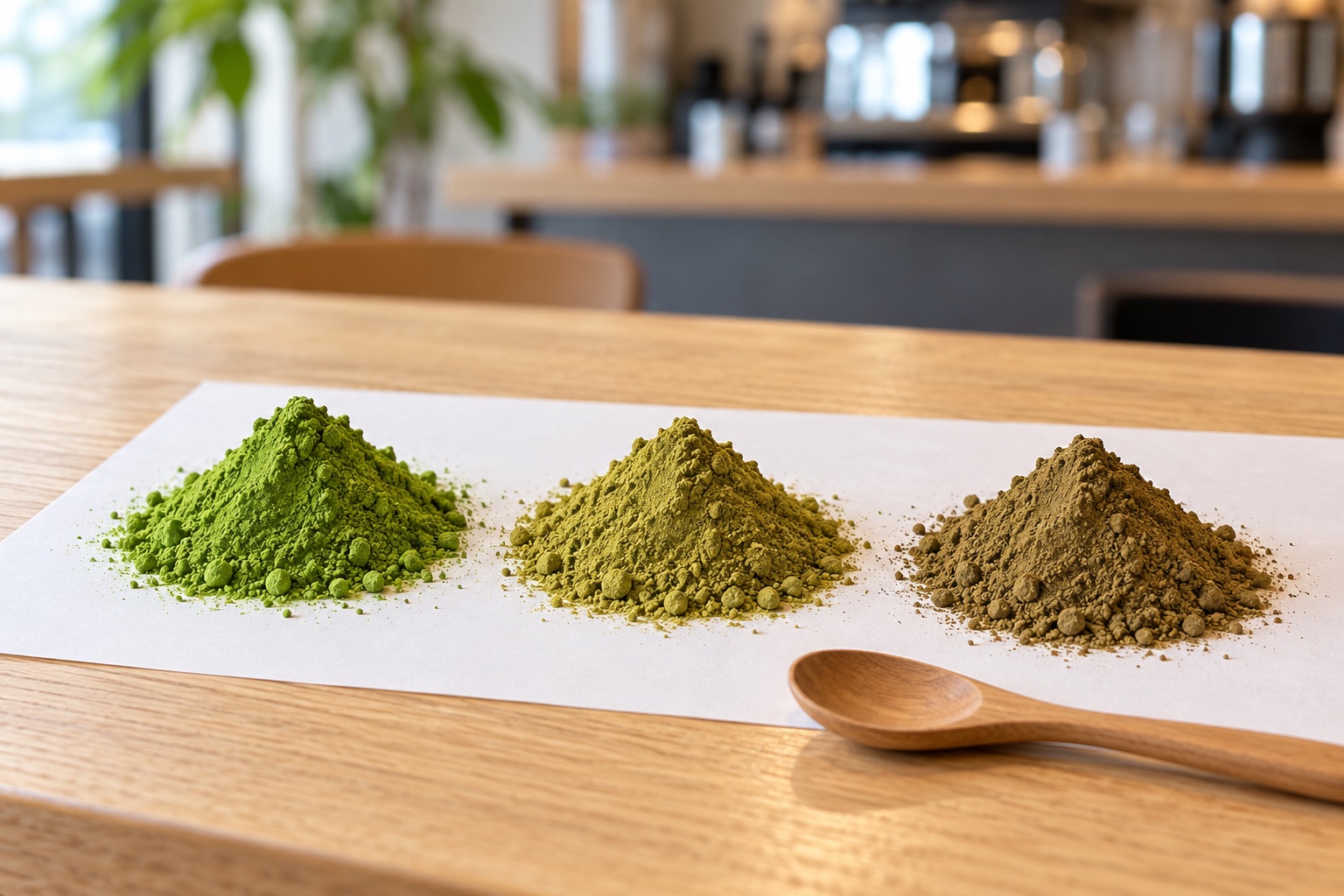
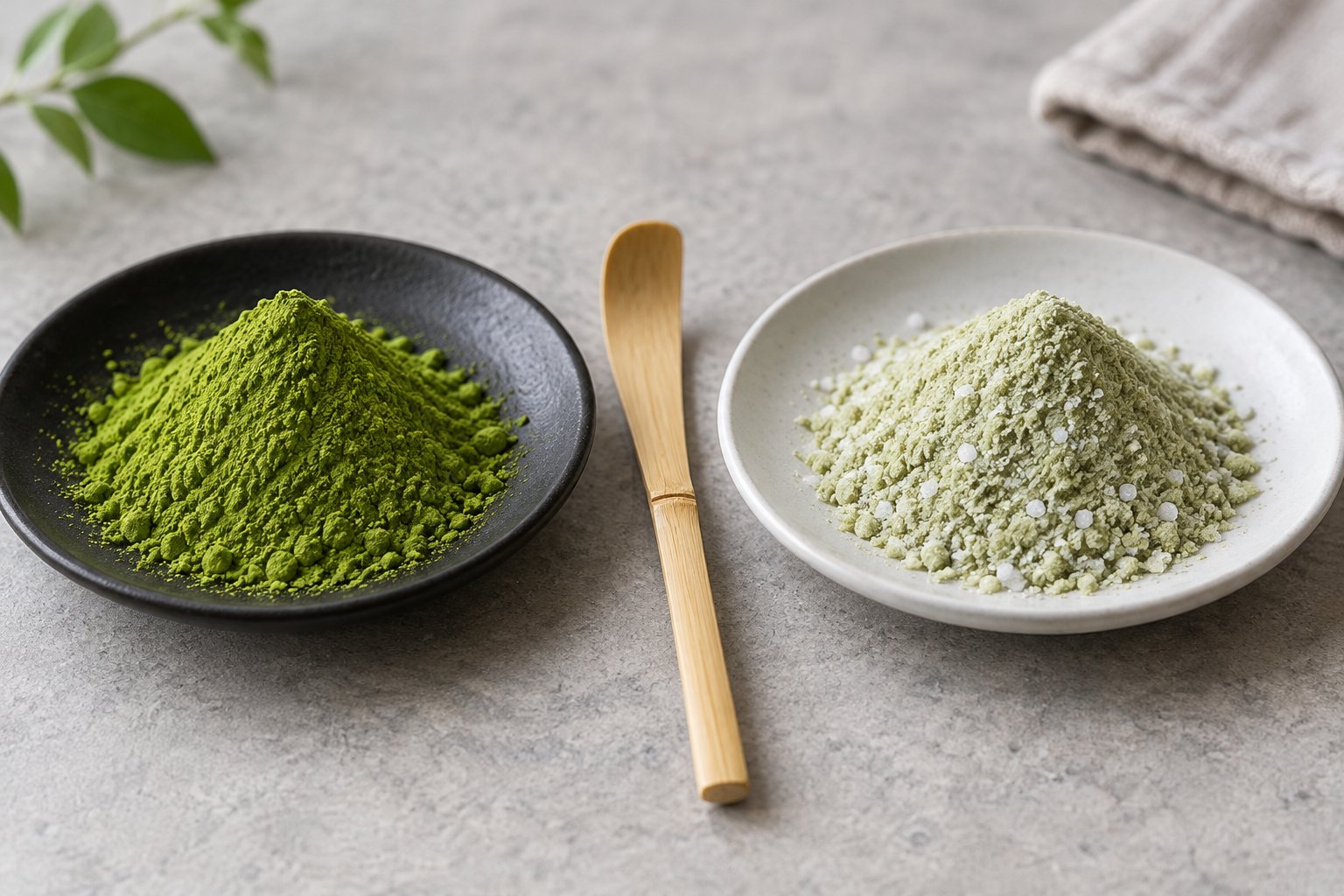
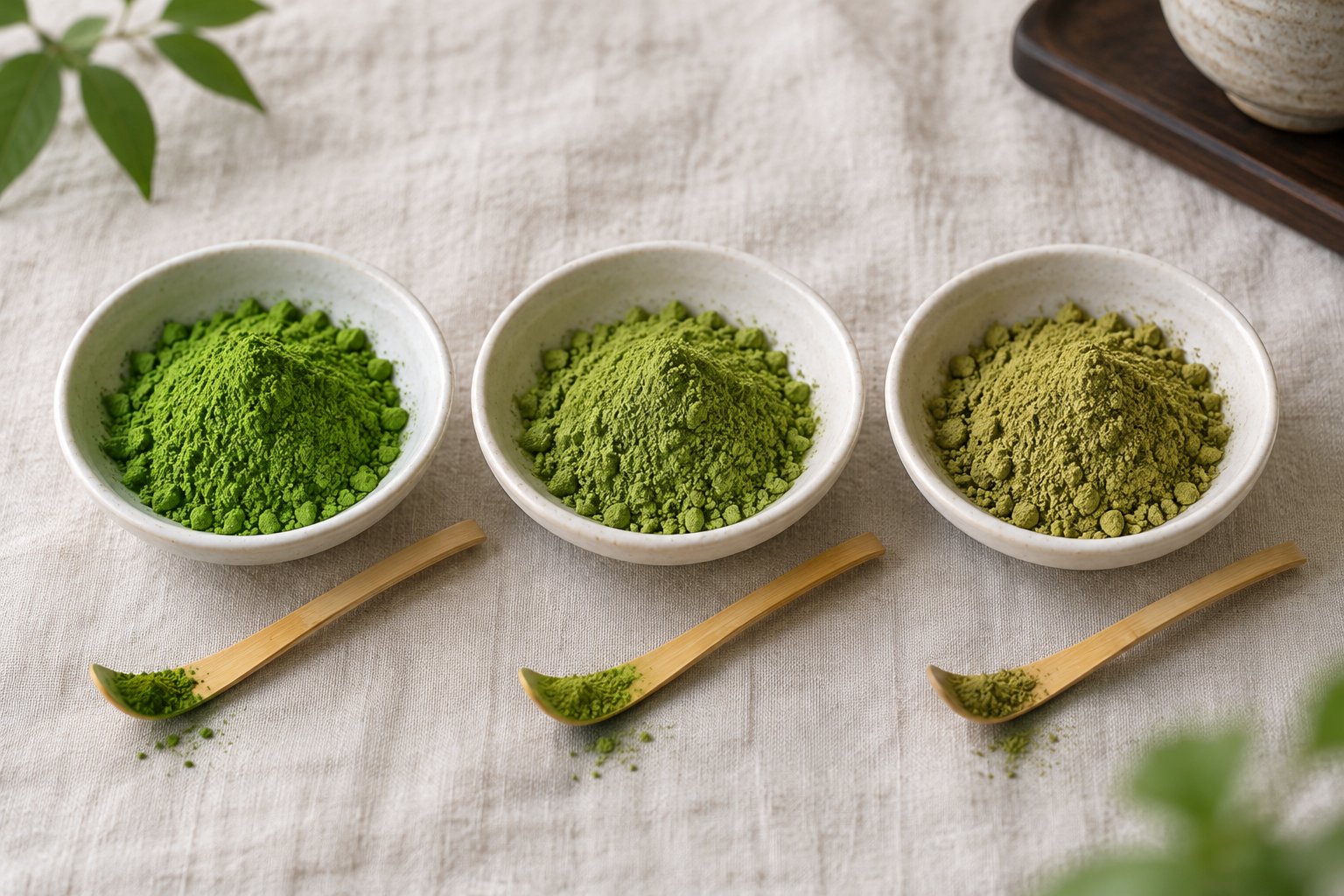
Good matcha has “sae,” a color in which vivid green stands out. A reddish-black, bluish-black, yellowish or whitish tint is a defect.
Color defects and their causes
Murakami’s paper lists the following color defects and causes.
| Color defect | Main causes |
|---|---|
| Reddish-black | Not enough shading, damaged leaves, deterioration in storage |
| Bluish-black | Hardened new shoots, not enough steaming, coarse particles |
| Yellowish | Not enough shading, hardened leaves (a large drop in quality) |
| Whitish | Over-grinding; the tea’s own color is pale, sometimes with red |
| Discolored (faded) | The green fades through storage and takes on a red or reddish-black tint |
Color is linked to price and harvest
Color can be measured as the hue angle (a number showing where a color sits between yellow and green; the larger it is, the stronger the green). In Murakami’s paper, when 74 commercial matcha samples bought in Japan (6,000 to 270,000 yen per kg) were judged, samples ranked higher on appearance had larger hue angles.
In a survey by Yoriyuki Nakamura of the University of Shizuoka, the hue angle of matcha from Shizuoka Prefecture was 106.76 for first flush, 104.45 for second flush and 102.16 for autumn-winter tea. The green became weaker in later harvests (flushes: which picking of the year the tea comes from). A trial in Nagasaki Prefecture comparing three early varieties showed the same trend: 116.3 to 119.1 for first-flush matcha and 111.8 to 113.0 for second flush (three-year averages). Samples and measuring methods differ between studies, so the numbers cannot be compared from one study to another.
Color also changes with variety and growing
In a Kagoshima Prefecture trial comparing varieties of tencha for food processing, leaves with more chlorophyll and thinner leaves gave a deeper, vivid green matcha, and the variety “Okumidori” had the best color. In an Aichi Prefecture trial using tencha shaded with covers placed directly on the bushes, a higher shading rate gave a higher hue value and a higher judging score.
Between samples of different varieties or regions, a difference in color does not always mean a difference in quality.
Judging by fineness
Good matcha has fine particles of even size. Fineness alone, however, does not decide quality.
Spread it on paper
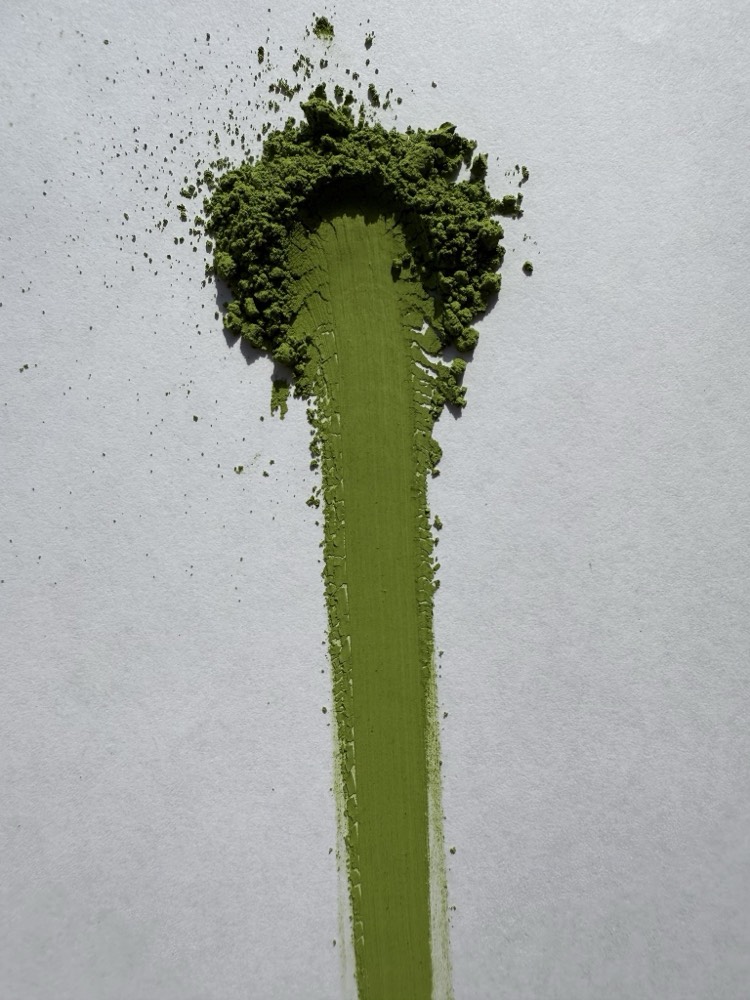
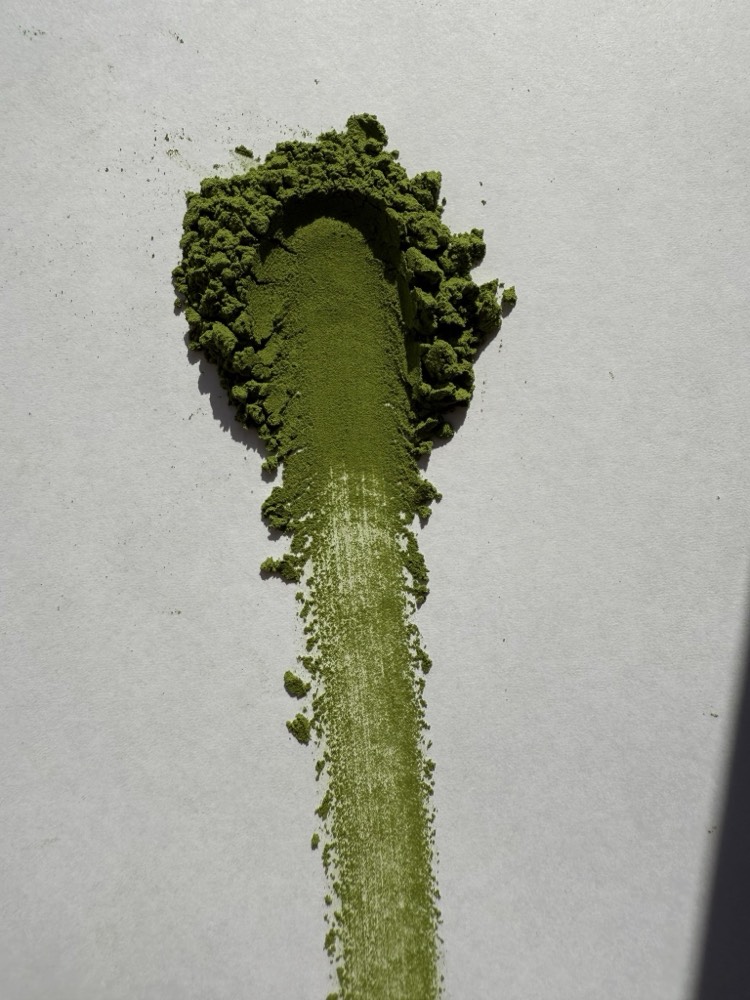
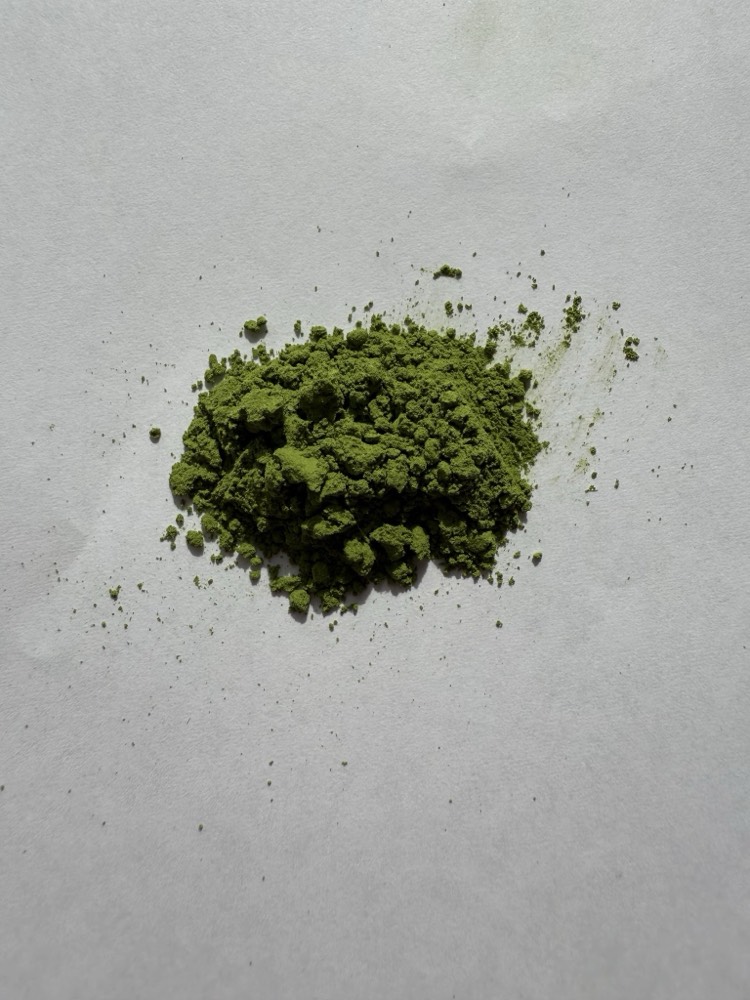
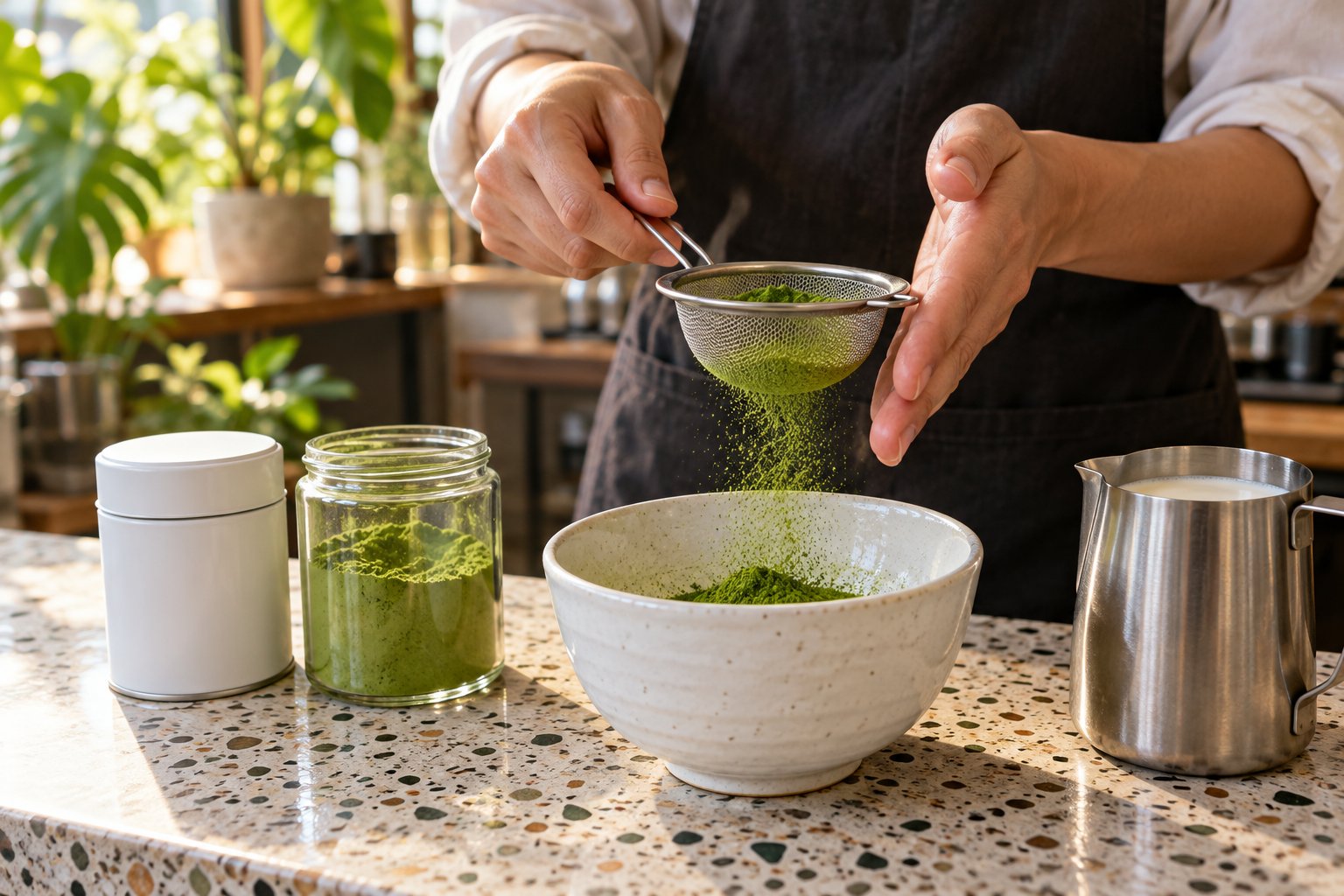
In the Kyoto Prefectural Tea Research Institute’s method, 2 g is weighed onto white paper (medicine paper), looked at, then pressed and spread with a spatula.
- Fine matcha: the spatula glides and spreads it well, and the spread surface shows a vivid color
- Coarse or uneven matcha: it looks gritty like sand and bluish-black, and breaks off as if torn when spread
- Matcha with large particles mixed in: particles show on the pressed surface and leave drag marks
Particle size in numbers
Nakamura measured the particle size of matcha bought in and outside Japan with a laser measuring instrument. Samples whose particle size distribution has a single peak averaged 15 to 17 µm, and those with two peaks 39 to 53 µm. For Japanese matcha sold in Japan, the single-peak type averaged 6,902 yen per 100 g, and the two-peak type 1,572 yen.
In Murakami’s paper, across 74 commercial matcha samples bought in Japan, the line between gritty and not gritty in the mouth was a median particle size of 16.0 µm (micrometers: one thousandth of a millimeter). This is within the 10 to 25 µm range at which people are said to sense grittiness, but Murakami considers that factors other than the median also affect grittiness.
Finer is not always better
In the same 74 samples, higher-ranked samples tended to be finer. However, the lower-ranked group also included samples as fine as those in the upper group. Murakami says particle size is a guide to quality, but other characteristics also need to be considered.
Matcha made from hardened new shoots is said not to feel smooth, even when ground finely.
Judging by aroma and taste
Good matcha feels smooth, as if the particles had dissolved, with rich umami and shaded taste in harmony with the aroma created during grinding. In Aichi Prefecture’s tencha trial, the more amino acids (the source of umami) and the less tannin (catechins, the source of astringency), the higher the judging score tended to be.
Components and judging scores
The Aichi trial made tencha at different shading rates and compared judging scores with components. In 2014, tencha shaded at 85% scored 96 out of 100 and tencha at 70% scored 85, with amino acids at 2.6% and 1.4% and tannin at 9.6% and 11.1%.
| Item | 2014: 85% | 2014: 70% | 2015: 85% | 2015: 75% | 2016: 85% | 2016: 90% |
|---|---|---|---|---|---|---|
| Sensory score, total (out of 100) | 96 | 85 | 92 | 82 | 86 | 93 |
| Total nitrogen (dry basis %) | 5.1 | 4.3 | 5.0 | 4.4 | 5.2 | 5.4 |
| Amino acids (dry basis %) | 2.6 | 1.4 | 1.9 | 1.1 | 2.3 | 2.6 |
| Tannin (dry basis %) | 9.6 | 11.1 | 10.9 | 12.5 | 11.1 | 10.5 |
Source: Aichi Agricultural Research Center Research Bulletin 49, “スキャナーとフリーソフトを利用したてん茶の葉色簡易測定法” (A simple method for measuring tencha leaf color with a scanner and free software), Table 4 (shading comparison I; the 2016 amino acid difference was not significant), in Japanese https://www.pref.aichi.jp/uploaded/attachment/258417.pdf
How theanine, the main source of umami, relates to price is covered in Matcha grades.
Components alone do not decide taste
NARO’s explainer says that components such as amino acids in sencha are useful quality indicators but cannot always explain the whole taste, because tea leaves with the same components often differ greatly in astringency depending on processing. Use the numbers as a guide, and decide by tasting.
Grinding changes the aroma
The aroma unique to matcha is created when tencha is ground. According to Murakami’s paper, a stone mill normally warms to around 50°C, and matcha ground with the mill heated to 60°C had a weaker aroma and a flatter taste. Over-grinding can make the aroma seem to disappear or bring a scorched bitterness.
How to compare samples side by side in a café
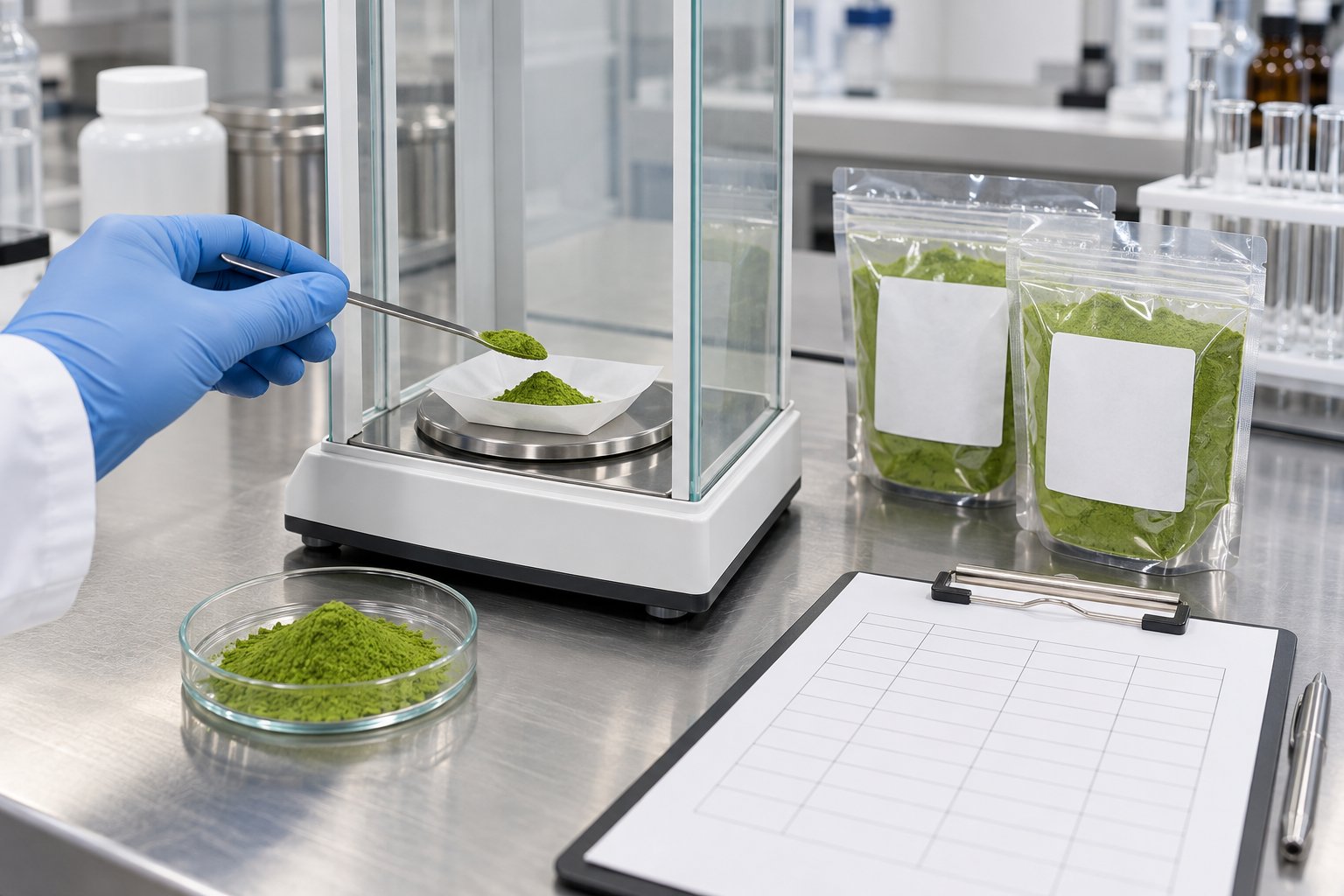
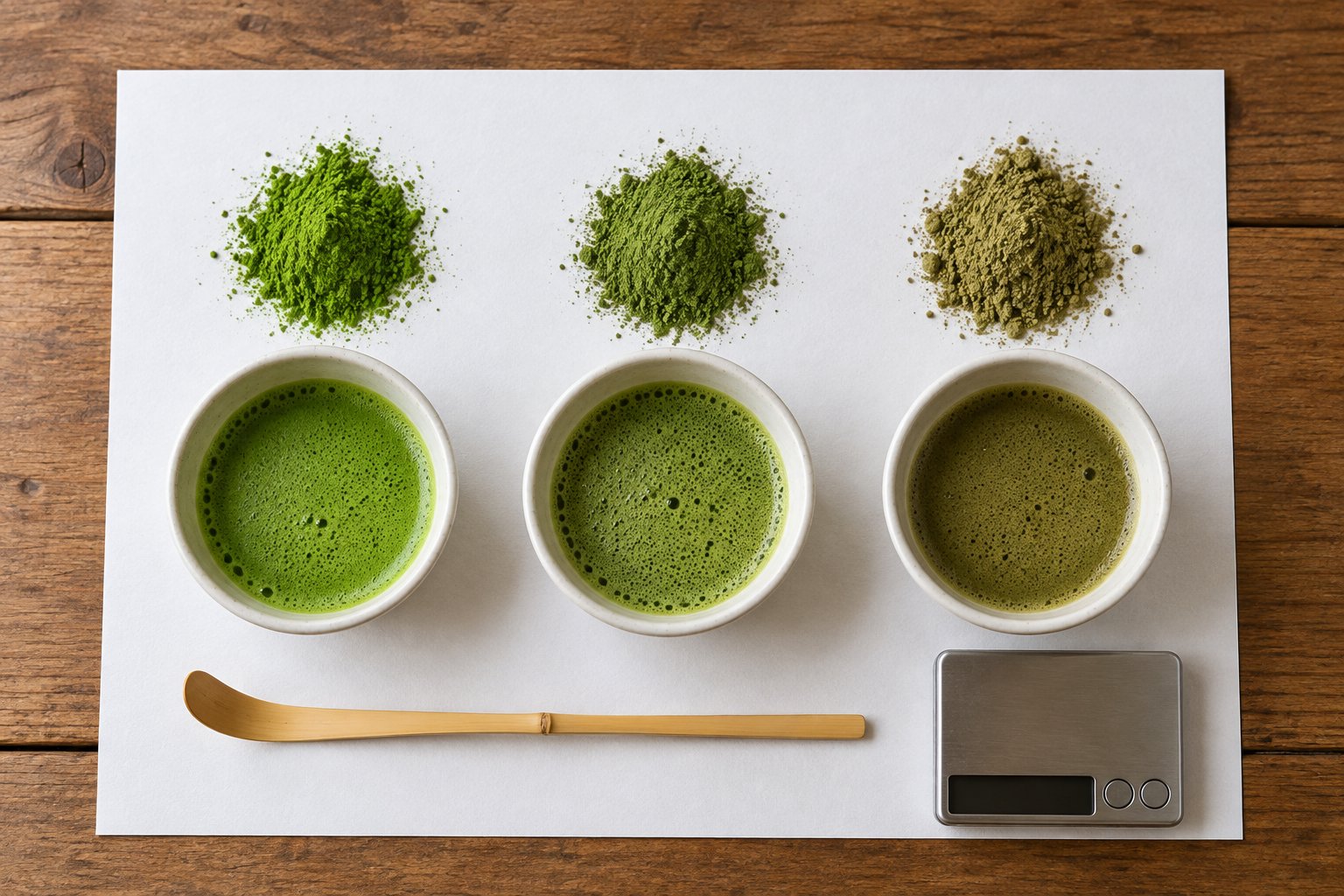
Line up samples with the same amount, the same water, the same time and the same lighting, and number them so tasters do not know which is which. The steps below were put together by our editors for cafés, based on the Kyoto Prefectural Tea Research Institute’s method and competition rules.
Preparation
- Number each sample and hide the origin and price from tasters (competitions also hide sample numbers from judges)
- Compare about 10 samples at most at one time (from Murakami’s paper)
- Avoid places where light changes, such as by a window, and look under the same light
Compare powder color and fineness
- Place 2 g of each sample on white paper
- Look at the vividness of the green, and check for red, yellow or white tints
- Press and spread with the back of a spoon, and check how it spreads, grittiness and particle marks
Whisk with water and compare
- Put 2 g in a bowl, add a little of 100 ml of boiling water, and work it with a whisk so no lumps form
- Add the rest of the water and whisk for 20 seconds
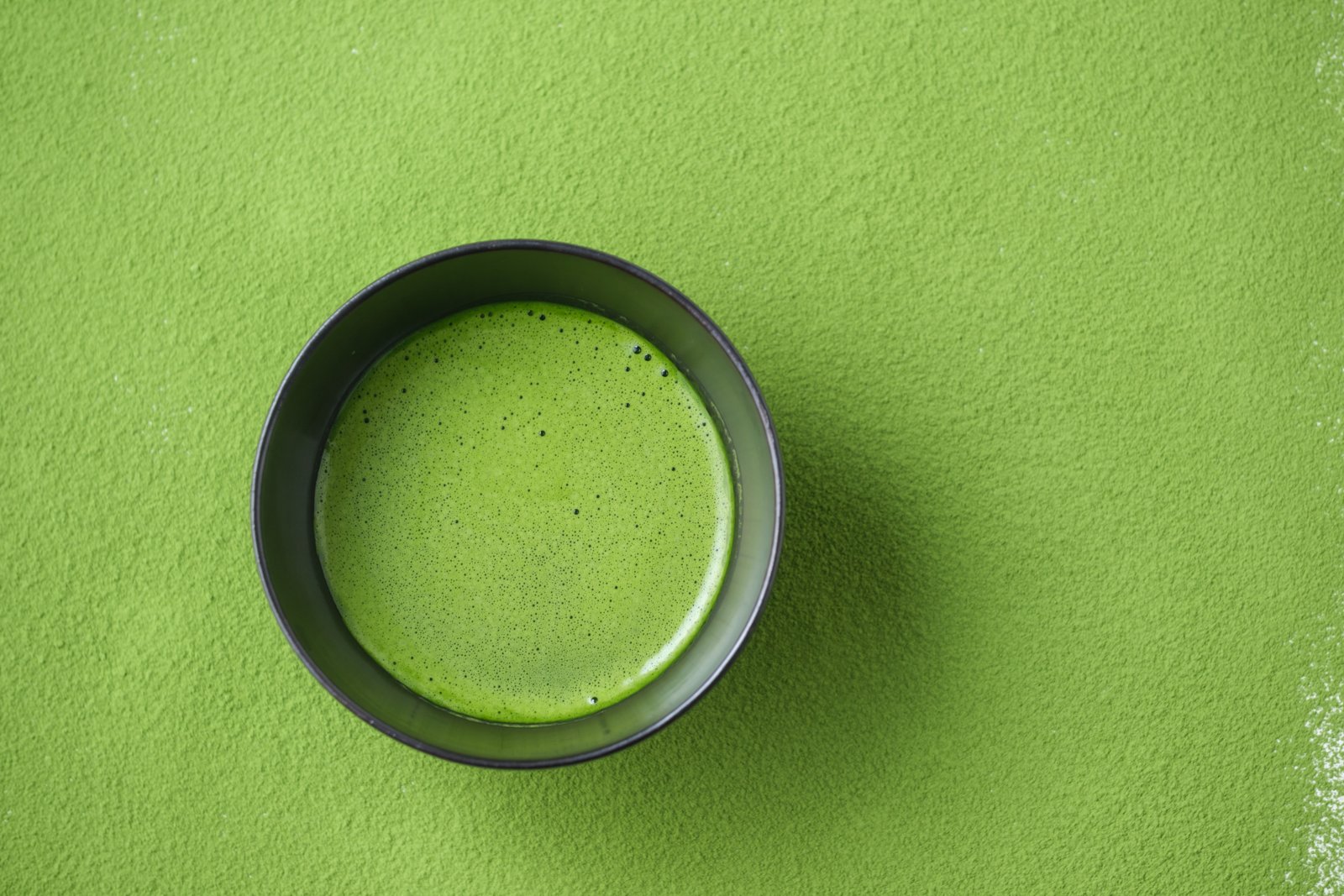
- Break large bubbles to level the surface, then look at the amount, fineness and color of the foam
- After a few minutes, see how much foam remains
- Particles settle, so stir with a spoon before tasting, then compare smoothness, umami, astringency and aroma
Whisking also at the water temperature you serve at (around 80°C; see How to Make Matcha) gets closer to the real cup.
Compare with milk
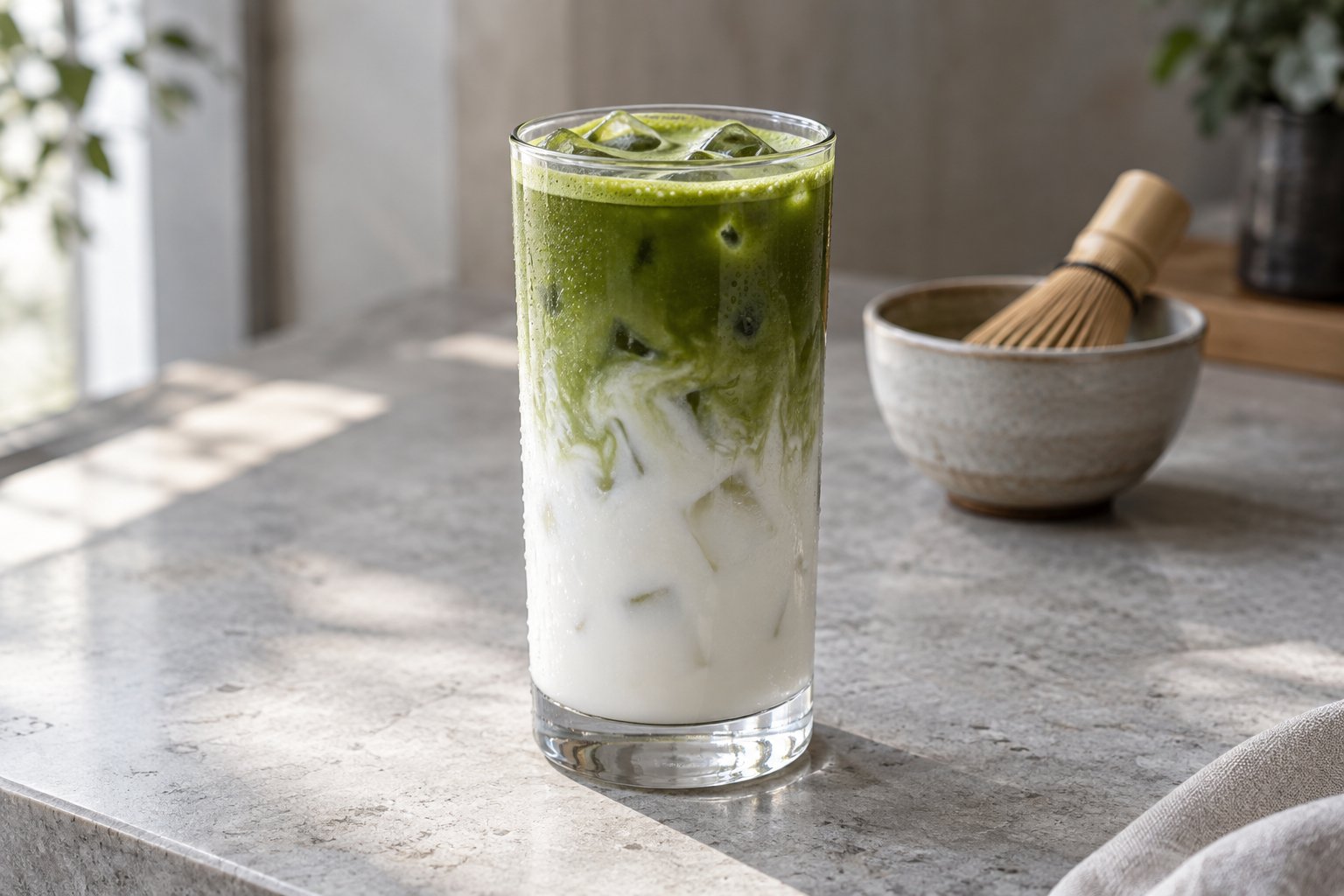
For lattes, make each sample with your own recipe and the milk you use (dairy, oat or soy, for example). Check how much color and matcha flavor remain when freshly made and after 10 minutes. How to choose matcha for lattes and work out the cost per cup is covered in How to Choose Matcha for Café Lattes.
Signs of deteriorated matcha
In deteriorated matcha, the vivid green fades and takes on a red or reddish-black tint, and the matcha aroma weakens.
Changes in color and aroma
Murakami’s paper calls matcha whose green has faded and taken on a red or reddish-black tint through storage “discolored (faded),” and lists time passed since grinding and poor storage among the causes of weak matcha aroma.
What to check on arrival
- The bag or tin is sealed, with no swelling or tears
- Next to the previous lot, the color has not turned reddish
- On opening, it has the shaded aroma and has not picked up other smells
How to store matcha in hot countries is covered in Does Matcha Go Bad?.
Common myths about judging matcha
Bright color, plenty of foam or a high price alone does not decide quality. The research shows exceptions to each.
“Brighter is better”
Matcha looks brighter the finer it is ground, and over-ground matcha turns whitish, which is a defect. In the Aichi trial, tencha made with weaker shading was brighter in some years. In Nakamura’s table averaging matcha bought in and outside Japan by price band, the band of 1,000 yen or less per 100 g had the highest brightness. Look at the strength of the green, not the brightness.
“More foam is better”
According to Murakami, matcha made from hardened new shoots can foam well at first. The foam, however, is coarse and uneven, and soon shrinks. Judge foam by how fine it is and how long it lasts, not by volume. Whisking also changes the foam, so keep the person whisking and the time the same when comparing.
“More expensive is better”
Nakamura says that, for Japanese matcha sold in and outside Japan, color readings level off above a certain price band, and that a high price often also reflects the brand. What sets the price of matcha is covered in Why Is Matcha So Expensive?
What to check in specifications and certificates of analysis
Along with comparing samples, check the supplier’s specification sheet and certificate of analysis (COA: test results for each lot).
Points to check in the specification
| Item | What to check |
|---|---|
| Raw material | Made by grinding tencha (not powdered green tea) |
| Harvest | First flush only, or includes second flush or later |
| Origin and variety | Prefecture or area and variety name are given |
| Grinding | Stone mill or machine |
| Grinding date and lot number | You can tell when it was ground |
| Storage and packaging | At what temperature it is stored and how it is packed |
It also helps to ask whether they can provide color or particle size readings, so you can see variation between lots. How to read test documents is covered in Matcha Lead, and what to check in a quote in Bulk Matcha: How to Buy Matcha Wholesale.
Match documents against the product
If something does not match, such as “first flush” matcha with a yellowish tint or “stone-ground” matcha that feels gritty, ask the supplier why, using judging defect terms (reddish-black, yellowish, coarse, lack of shaded taste).
Samples from Omakase Matcha
Omakase Matcha sells matcha bought directly from the regions of Uji, Yame, Kagoshima, Shizuoka and Miyazaki. We send up to three samples, and orders start at 1 kg. We also adjust blends to suit your menu and visit shops in Singapore and Thailand.
Sources
- NARO Vegetable and Tea Science Institute, Yuichi Yamaguchi, “日本茶の品質評価の現状と展望” (Current status and outlook for quality evaluation of Japanese tea), Bulletin of the National Institute of Vegetable and Tea Science No. 3, 2006, in Japanese https://www.naro.go.jp/PUBLICITY_REPORT/publication/archive/files/vt_s_3_5-2.pdf
- Hiroaki Murakami, “抹茶の審査について” (Sensory evaluation of matcha), Tea Research Journal No. 134, 2022, in Japanese https://www.jstage.jst.go.jp/article/cha/2022/134/2022_31/_pdf
- “第69回全国茶品評会 開催要領・審査要領” (69th National Tea Competition: rules and judging rules), 2015, in Japanese https://shizuoka-cha.lolipop.jp/69ocha-fes/gaiyou/pdf/69_zenkoku_cha_hinpyokai_kaisai_youryo.pdf
- Shizuoka Prefecture, “第78回全国茶品評会 てん茶審査結果” (78th National Tea Competition: tencha results), in Japanese https://www.pref.shizuoka.jp/_res/projects/default_project/_page_/001/062/929/tencha.pdf
- Kyoto Prefecture, “京都府の出品茶が農林水産大臣賞と産地賞を獲得 ~第80回全国茶品評会の結果について~” (Results of the 80th National Tea Competition), 28 August 2026, in Japanese https://www.pref.kyoto.jp/press/documents/2026082801.pdf
- Kyoto Prefecture, “第77回関西茶業振興大会京都府大会 開催要綱要領集” (77th Kansai Tea Industry Promotion Convention: rules), 2025, in Japanese https://www.pref.kyoto.jp/nosan/documents/youkou.pdf
- Yoriyuki Nakamura, “国内における抹茶(碾茶)生産の推移と科学的特性” (Trends in matcha (tencha) production in Japan and its scientific characteristics), Tea Science Research Center, University of Shizuoka, in Japanese https://dfns.u-shizuoka-ken.ac.jp/labs/tsc/thesis/0410.pdf
- Aichi Agricultural Research Center Research Bulletin 49, “スキャナーとフリーソフトを利用したてん茶の葉色簡易測定法” (A simple method for measuring tencha leaf color with a scanner and free software), 2017, in Japanese https://www.pref.aichi.jp/uploaded/attachment/258417.pdf
- Nagasaki Agriculture and Forestry Technical Development Center, “茶早生品種『さきみどり』は抹茶の色が優れる” (The early tea variety Sakimidori gives matcha with excellent color), fiscal 2020, in Japanese https://www.pref.nagasaki.jp/e-nourin/nougi/theme/result/R2seika-jouhou/shidou/S-02-45.pdf
- Kagoshima Prefectural Institute for Agricultural Development, “炒蒸機とネット型乾燥機を用いて製造した加工用てん茶・抹茶の品種別色の特徴” (Color by variety of processing-grade tencha and matcha made with a roast-steamer and net dryer), in Japanese https://www.pref.kagoshima.jp/ag11/pop-tech/nenndo/documents/56364_20201113082445-1.pdf