
 Reviewed by: Takahiro Sugiyama (CEO, meguri Inc.)
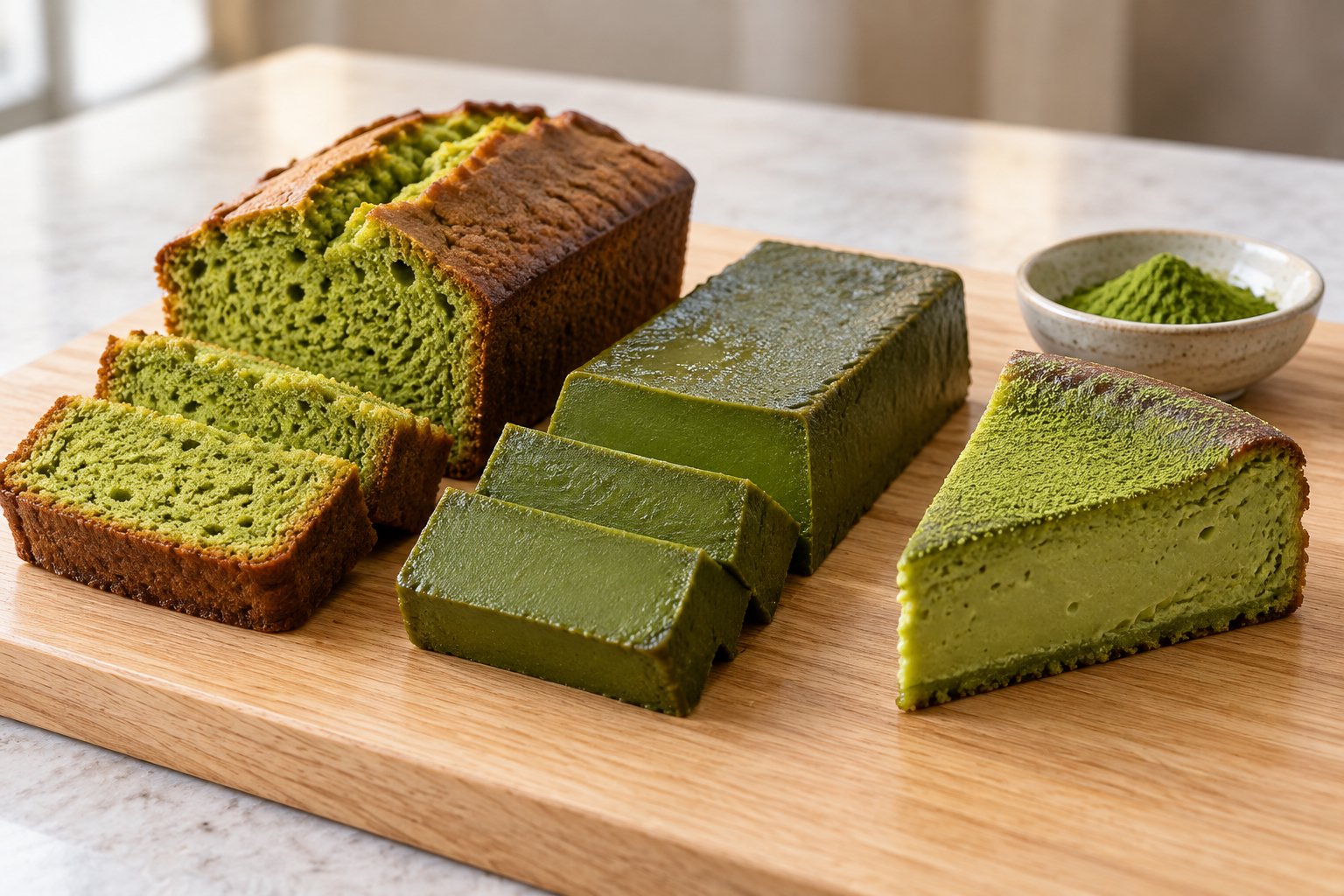
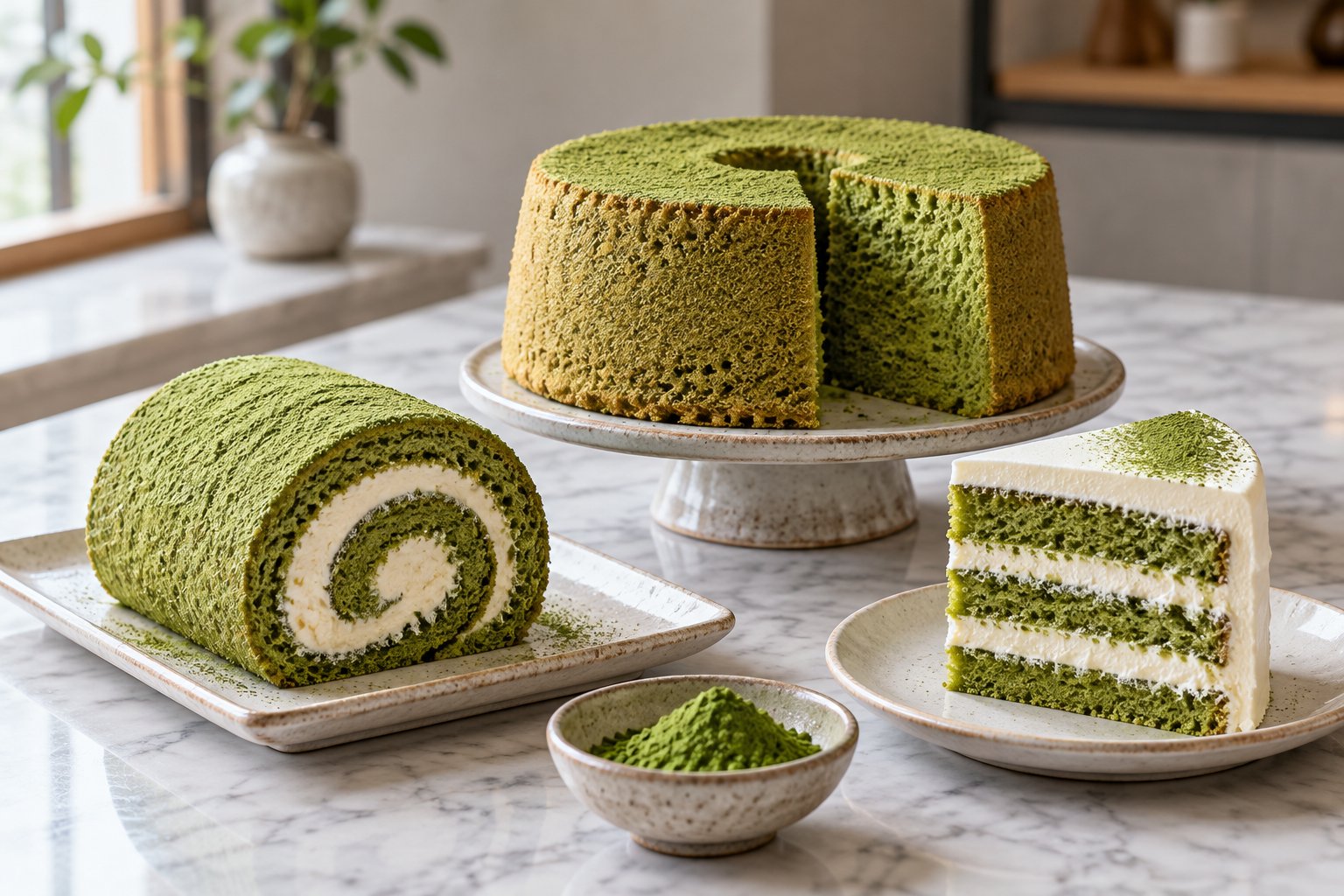
Matcha pound cake, terrine and gateau chocolat are all baked as one cake in a loaf pan or round pan, then sliced to serve. Once you decide how many slices to cut from one cake, the cost per slice is easy to work out, and they are easy to set out in a display case. We compare matcha amounts in official recipes from baking suppliers and tea companies, then look at the top split, resting, water baths, handling white chocolate batter, slicing and shelf life from a shop’s point of view.
How the three cakes differ: baked from flour, set chocolate, or lifted with meringue
Even in the same loaf pan, pound cake is a flour batter, terrine is chocolate baked until set, and gateau chocolat is flour batter lifted with meringue. These differences change how much matcha goes in, the baking temperature and when each tastes best.
Ingredients and texture
| Main ingredients | Baking | Texture | |
|---|---|---|---|
| Pound cake | Butter, sugar, eggs, flour | Oven at 160–180°C | Fluffy, moister after a day or so |
| Terrine | Chocolate, butter, eggs, cream | Water bath at a lower temperature | Dense and smooth, close to nama chocolate (Japanese-style ganache squares) |
| Gateau chocolat | Chocolate, eggs (yolks and meringue, or whipped whole eggs), flour | Oven at 160–180°C | Both light and rich |
The Japanese chocolate maker Meiji explains that chocolate terrine contains no flour or other powders and is made with as little air as possible, so it has a texture like chocolate baked until set. Gateau chocolat contains flour and is baked with meringue (whipped egg whites) folded in.
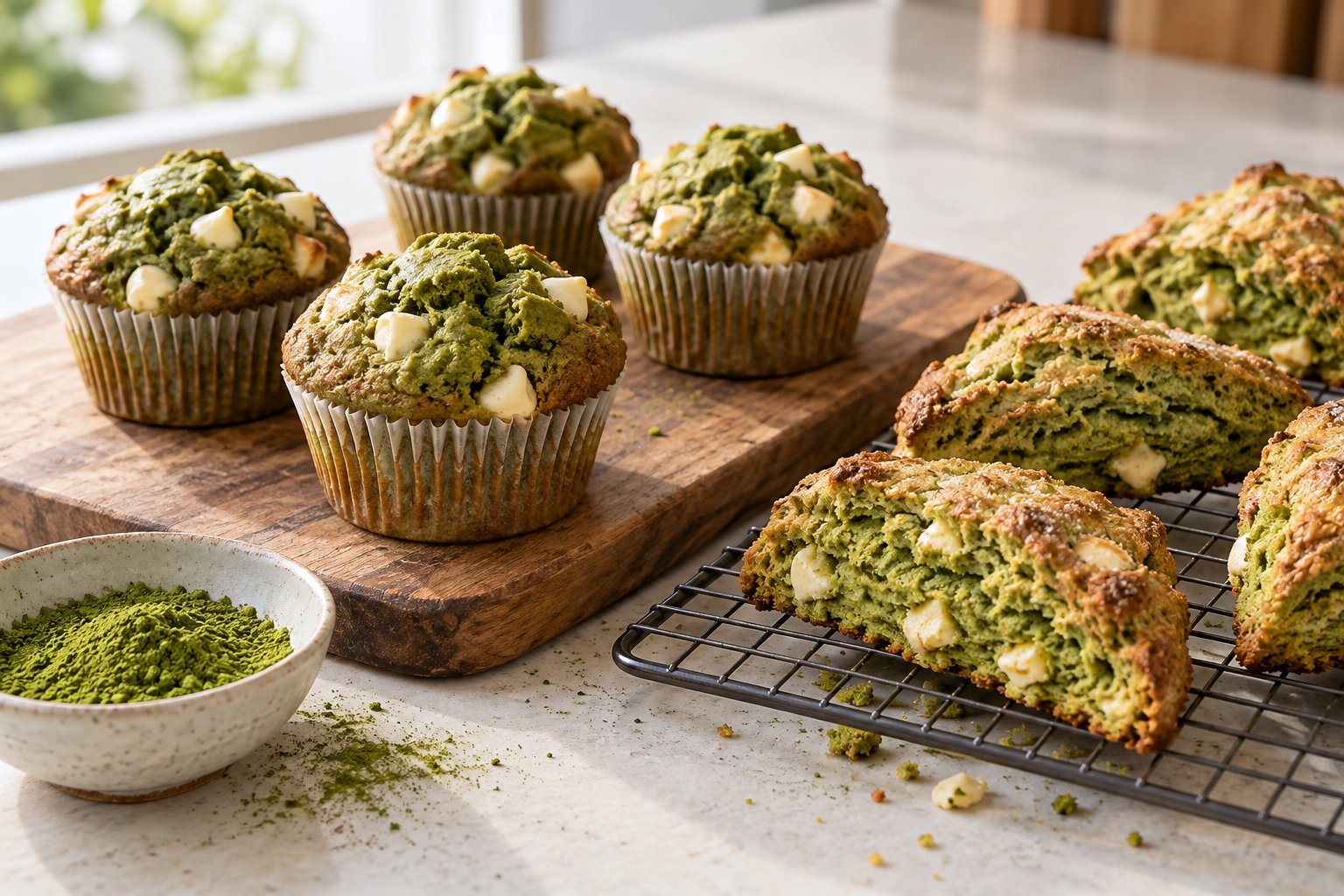
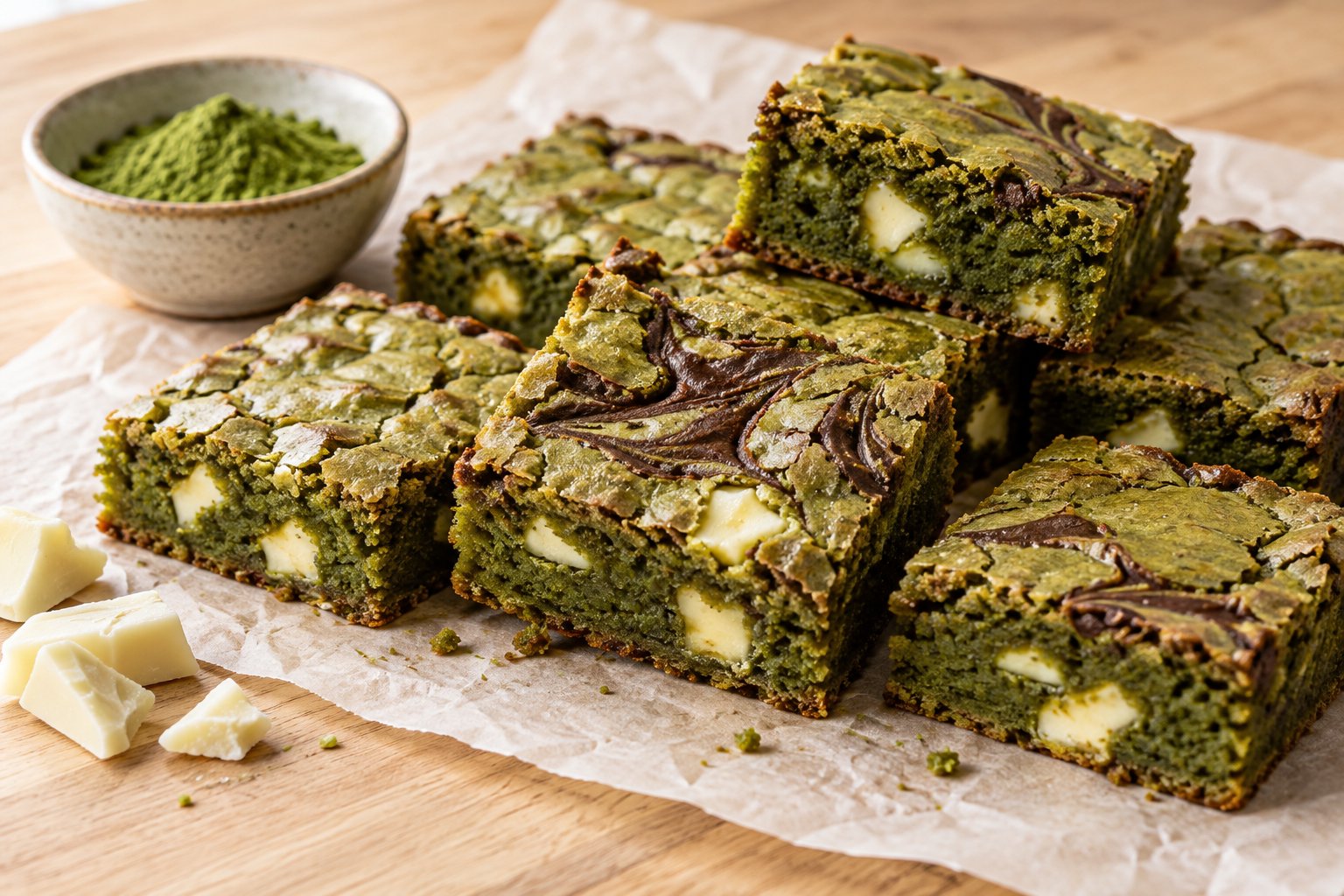
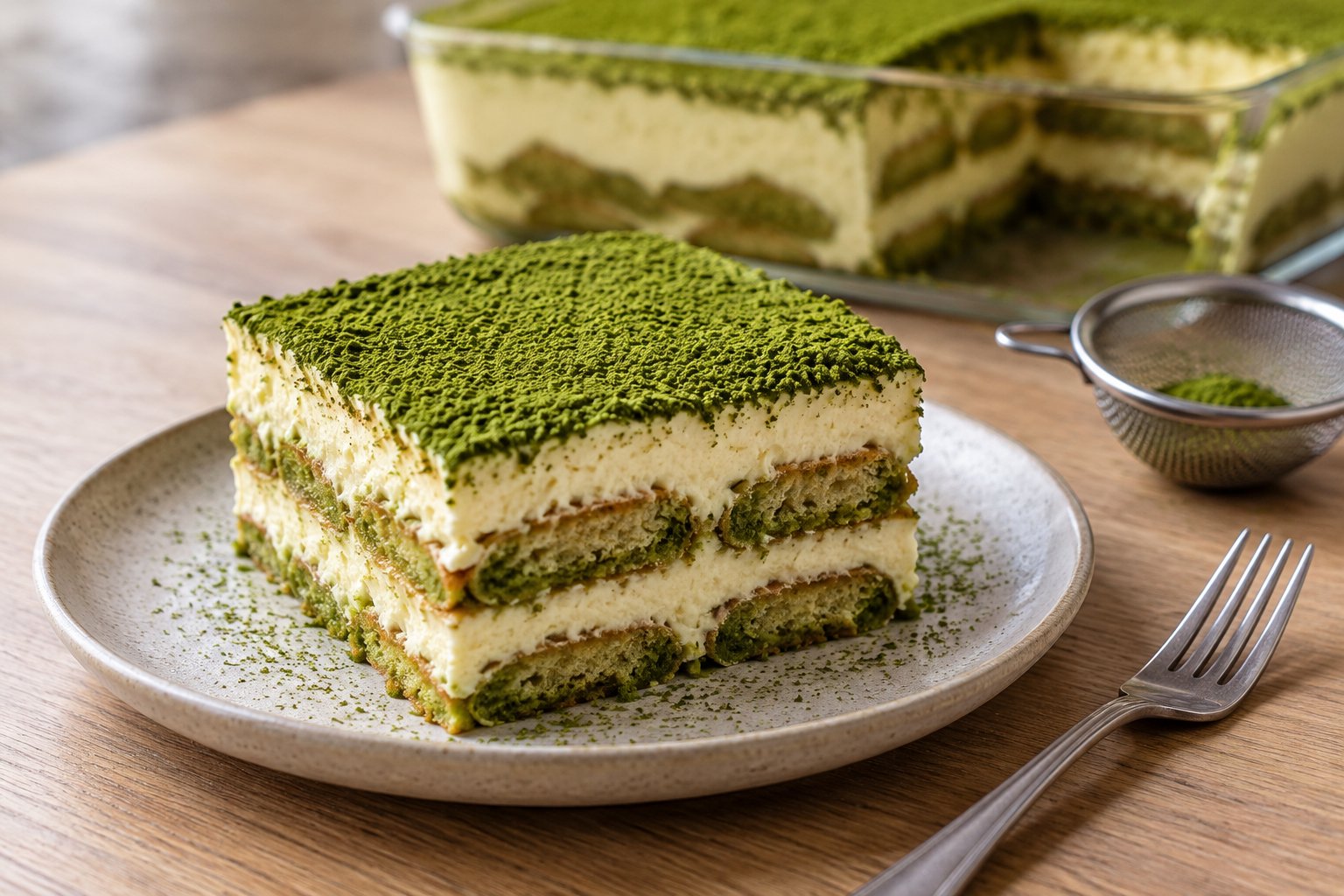
Matcha versions use white chocolate
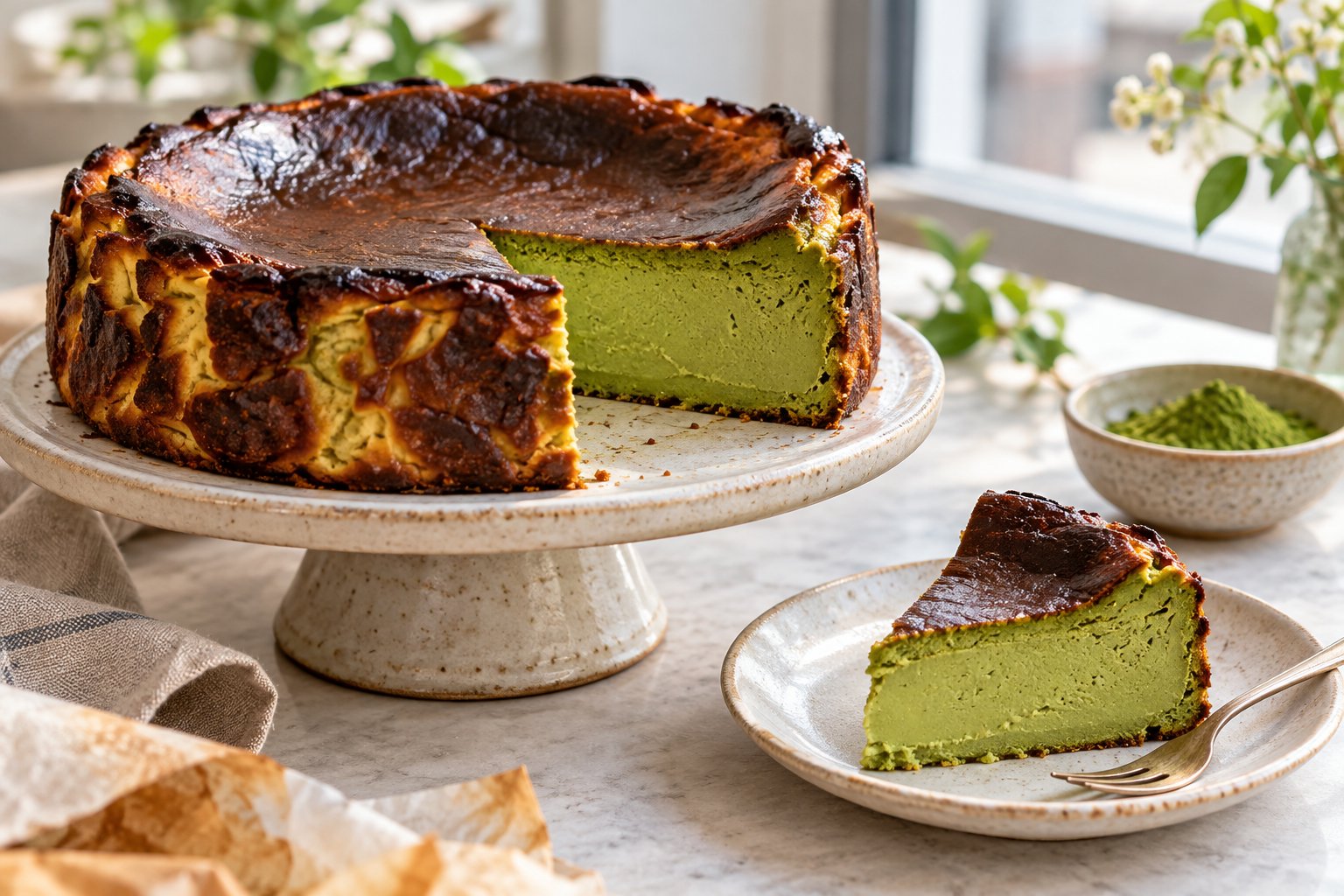
All 9 official matcha terrine and gateau chocolat recipes we compared used white chocolate or cream cheese. With dark chocolate, the green of matcha would not show (our view). Why mixing matcha into white chocolate makes it green is covered in Matcha chocolate for cafés.
Comparing matcha amounts in official recipes
In 17 official recipes, matcha was 3% to about 18.5% of the flour in pound cake, about 7–13% of the white chocolate in terrine, and about 4–15% of the white chocolate in gateau chocolat. The percentages are our own calculations, dividing the weight of matcha by the weight of flour or chocolate.
Pound cake (matcha to flour)
| Source | Pan | Matcha | Flour | Matcha to flour | Baking |
|---|---|---|---|---|---|
| Tomizawa Shoten (a Japanese baking supplier), “Basic pound cake” | 18cm | 3g | Cake flour 100g | 3% | 170°C for 15 minutes, then slit and 30–35 minutes |
| Tomizawa Shoten, “Matcha pound cake” | Paper pan (large) | 7g | Cake mix 200g | 3.5% | 180°C for 30–35 minutes |
| Nisshin Seifun Welna (a Japanese flour company), “Azuki and matcha pound cake” | 16×8cm | 6g | Pancake mix 80g | 7.5% | 170°C for about 40 minutes |
| Tomizawa Shoten (Hiroko Sako) | 20cm | 10g | Cake flour 80g (plus almond 20g) | 12.5% | 180°C for 30–35 minutes |
| Tomizawa Shoten (cuoca recipe), “Basic deep matcha pound cake” | Loaf pan (L) | 10g | Cake flour 60g | About 17% | 170°C for about 50 minutes |
| Tomizawa Shoten (SAWAKO), “Rich matcha pound cake” | 20cm | 25g | Cake flour 135g | About 18.5% | 180°C for 50 minutes |
| Tomizawa Shoten (Kanako Okabe) | Loaf pan (medium) | 2 tsp | Cake flour 130g (plus almond 80g) | Not in grams | 160°C for about 50 minutes |
| AIYA America (a US matcha seller) | 2 loaves | 2 tbsp | All-purpose flour 3 cups | By volume | 325 degrees (apparently Fahrenheit, about 163°C) for about 1 hour 30 minutes |
Tomizawa Shoten’s basic recipe is meant to be used with matcha, cocoa or tea powder in turn, and uses 3g matcha. The recipes called “rich” or “deep” raise matcha to 17–18.5% of the flour.
Terrine (matcha to white chocolate)
| Source | Pan | Matcha | White chocolate | Matcha to chocolate | Baking |
|---|---|---|---|---|---|
| Tomizawa Shoten, “Smooth matcha terrine chocolat” | Loaf pan (S) | 10g | 135g | About 7.4% | Water bath at 150°C, 50 minutes |
| Tomizawa Shoten (chef Yukihiro Nabeta), “A pro’s matcha terrine chocolat” | Loaf pan (S) | 7g | 60g | About 11.7% | 100°C for 40 minutes, with a container of water in the oven |
| Nakamura Tokichi Honten (a tea company in Uji, Kyoto), “Matcha chocolate terrine” | 16×7cm | 20g | 150g | About 13.3% | Water bath at 160°C, 25–30 minutes |
| Tomizawa Shoten (Ayumi Hosaka), “Matcha cheese terrine” | 17cm | 2 tbsp | 90g (plus cream cheese 200g) | Not in grams | Water bath at 160°C, 40–50 minutes |
| Tomizawa Shoten (Yuko Kishida), “Matcha cheese terrine” | 21×8cm | 2 tsp | None (cream cheese 200g) | Not in grams | Hot water in the tray, 160°C, 60 minutes |
Nakamura Tokichi Honten’s recipe: for a loaf pan of about 16×7cm, white chocolate 150g, unsalted butter 80g, 2 eggs, cream 100ml, granulated sugar 40–50g, matcha 20g and 1 tbsp cornstarch. Bake in a water bath at 160°C for 25–30 minutes until the surface is set and the center wobbles slightly, rest overnight in the refrigerator, and warm the knife before cutting.
Source: Nakamura Tokichi Honten, “抹茶の旨みを味わう濃厚デザート[抹茶チョコレートテリーヌ]” (Matcha chocolate terrine, in Japanese) https://tokichi.jp/blogs/life-with-cha/matcha-chocolate-terrine
Both cheese terrines give matcha in spoons, so they could not be compared in grams. In official cheesecake recipes, matcha was about 1.3–3% of the cream cheese (Matcha cheesecake).
Gateau chocolat (matcha to white chocolate and flour)
| Source | Pan | Matcha | White chocolate | Flour | Matcha to chocolate | Baking |
|---|---|---|---|---|---|---|
| Tomizawa Shoten, “Matcha gateau chocolat” | 15cm round | 5g | 120g | Cake flour 45g | About 4.2% | 170°C for 35 minutes |
| Nakamura Tokichi Honten, “Matcha gateau chocolat” | 15cm round | About 6g | 120g | Cake flour 30g | 5% | 160°C for 30–35 minutes |
| Tomizawa Shoten (Hiroko Sako) | No. 5 (15cm) | 10g | 150g | Cake flour 40g (plus almond 20g) | About 6.7% | 170–180°C for 30–35 minutes |
| Tomizawa Shoten (Chori Mama), “Matcha gateau chocolat” | 15cm | 15g | 100g | Cake flour 15g | 15% | 160°C for 40 minutes |
Even in the same 15cm round pan, matcha ranges from 5g to 15g, three times as much. Against flour it ranges from about 11% to 100%, so for gateau chocolat, comparing matcha to chocolate makes the differences between recipes easier to read.
Matcha pound cake: the top split, moistness and resting
For pound cake, mix the butter and eggs without letting them split, cut a slit partway through baking, then wrap the cake and slice it from the next day on. These three steps decide the shape of the split on top and how moist the cake is.
The slit decides the split
The top of a pound cake splits because the surface sets first, then the batter inside rises later and pushes it up (our explanation). Tomizawa Shoten’s basic recipe bakes for 15 minutes at 170°C, takes the cake out, cuts one slit down the center with a knife, then bakes for another 30–35 minutes. The recipe says this slit helps the batter rise well and bake evenly.
Source: Tomizawa Shoten, “アレンジ自由自在!基本のパウンドケーキ” (Basic pound cake for any flavor, in Japanese) https://tomiz.com/recipe/pro/detail/20250818134754
Other recipes on the Tomizawa Shoten site cut one slit in the surface with a knife before baking (Hiroko Sako), or spread the batter higher at both ends with a dip in the middle (cuoca recipe). One recipe fills the pan to about 60%. In a shop, set the time and depth of the slit so every cake splits the same way.
Mixing without splitting
The cuoca recipe says cold eggs chill and harden the butter and cause the batter to split, and that about 20°C is ideal for the eggs. It adds the eggs in 3 to 5 parts, and says adding 1/3 to 1/4 of the flour once about half the egg is in helps, because the flour absorbs the liquid. Hiroko Sako’s recipe adds the eggs in about 10 parts. Most recipes sift the matcha together with the flour before adding it, while the cuoca recipe mixes it with the granulated sugar and then beats it into the butter.
Wrap it and slice from the next day
King Arthur Baking, a US flour company, says the flavor of pound cake matures over time, so it suggests wrapping it in plastic for a day or two, ideally slicing and serving it on the second or third day. Tomizawa Shoten’s “Rich matcha pound cake” also says to seal the baked cake so air does not reach it, for example by heat-sealing it in a bag. Not slicing on the day of baking, but wrapping the cake once cool and slicing it the next day also makes the shop’s workflow easier to run (our suggestion).
Matcha terrine: water baths and baking at low temperatures
Terrine is baked slowly at a lower 100–160°C, in a water bath or with a container of water in the oven, then set in the refrigerator or freezer. Recipes differ on when it is done: some say when the center still wobbles slightly, others when the batter no longer moves as you shake the pan.
How high the water comes
A water bath means baking with hot water around the pan so heat reaches the batter slowly. Morinaga Milk’s cheese terrine recipe says the water should come about 2cm up the pan, and that if the oven tray is shallow, you set a deeper tray on it before pouring in the water. Chef Yukihiro Nabeta’s recipe on Tomizawa Shoten does not stand the pan in water, but puts a heatproof container of water in the oven and bakes at 100°C for 40 minutes.
How to tell when it is done
| Source | Sign that it is done | Chilling |
|---|---|---|
| Nakamura Tokichi Honten | Surface set, center wobbles slightly | Rest overnight in the refrigerator |
| Tomizawa Shoten (terrine chocolat) | Surface dry and springy to the touch | Chill in the freezer for about 2 hours, then unmold |
| Tomizawa Shoten (chef Yukihiro Nabeta) | Batter does not move when you shake the pan | Cool fully in the refrigerator, then unmold |
Check the center temperature
Terrine uses eggs and is baked so the inside does not set too firmly. The US FDA recommends cooking dishes containing eggs to 160°F (about 71°C) and checking with a thermometer. Japan’s hygiene guide for confectionery puts sweets that are not heated, or heated less than the equivalent of 75°C for 1 minute, in Category 5. Because this category has no heating step that reduces bacteria, the guide puts weight on packaging and on how the date is set. For terrine baked at a low temperature, put a thermometer in the center when it comes out, record how high it rose, then fix the recipe and baking time (our suggestion). Heating and cooling standards for cheesecake with eggs are covered in Matcha cheesecake.
Matcha gateau chocolat: handling white chocolate batter
Melt the white chocolate at a lowish temperature, emulsify it with the egg yolks, then fold in the meringue in 2 or 3 parts. The three recipes on Tomizawa Shoten follow this flow, while Nakamura Tokichi Honten’s recipe makes no meringue and folds in whipped whole eggs in 3 parts. Do not overbake, leave the center moist, and chill before slicing.
Melt white chocolate at a lowish temperature
Callebaut, the Belgian chocolate maker, says chocolate that is simply melted is at 40–45°C. Most of the recipes we compared melt the white chocolate and butter over hot water, while Hiroko Sako’s recipe melts white chocolate and rice bran oil in the microwave. A Tomizawa Shoten recipe says that when egg yolks are added to the melted chocolate and butter, the mixture looks grainy at first, then turns into something that looks like soft caramel as you keep mixing. This is the sign that it has emulsified (oil and water mixed without separating). Temperatures for white chocolate are also covered in Matcha chocolate for cafés.
Meringue stiffness and folding
| Source | Meringue stiffness | Folding |
|---|---|---|
| Tomizawa Shoten, “Matcha gateau chocolat” | Stiff, upright peaks | In 2 parts, adding the flour before the second part is fully mixed in |
| Tomizawa Shoten (Hiroko Sako) | Glossy, with peaks that bend over | Mix in one scoop first, then combine everything |
| Tomizawa Shoten (Chori Mama) | Until peaks stand | In 3 parts, lifting from the bottom |
Do not overbake, chill and serve the next day
Nakamura Tokichi Honten advises not overbaking, says it is fine if the center is still slightly moist, and that chilling it in the refrigerator for 2 hours or more gives a richer melt. Chori Mama’s “Matcha gateau chocolat” on Tomizawa Shoten recommends eating it from the next day on. Tomizawa Shoten’s “Matcha gateau chocolat” is dropped on the counter a few times after baking, then taken out of the pan while hot.
Keeping the green from browning
Heat dulls the green of matcha, so choose a temperature and time that do not over-brown the cake, and add green to the parts you want to show after baking. Cakes baked at a lower 100–160°C, like terrine, keep their green more easily than pound cake baked at higher temperatures (our view).
Why the color fades
The green of matcha comes from chlorophyll, and heating removes the magnesium at its center and turns it olive. In a 2022 study that heated green tea powder in a microwave, the color changed clearly from green to yellow when the powder reached about 97–114°C. The study is covered in detail in Matcha for Baking, and how to judge the color of matcha itself in Matcha color.
What you can do when baking
- For pound cake, if the surface browns early, cover it with foil near the end. King Arthur Baking says to tent it with foil for the final 15 minutes if it browns too quickly
- The more matcha in the recipe, the more the green looks sunken as the crust darkens, so bake the same recipe 10°C lower and compare (our suggestion)
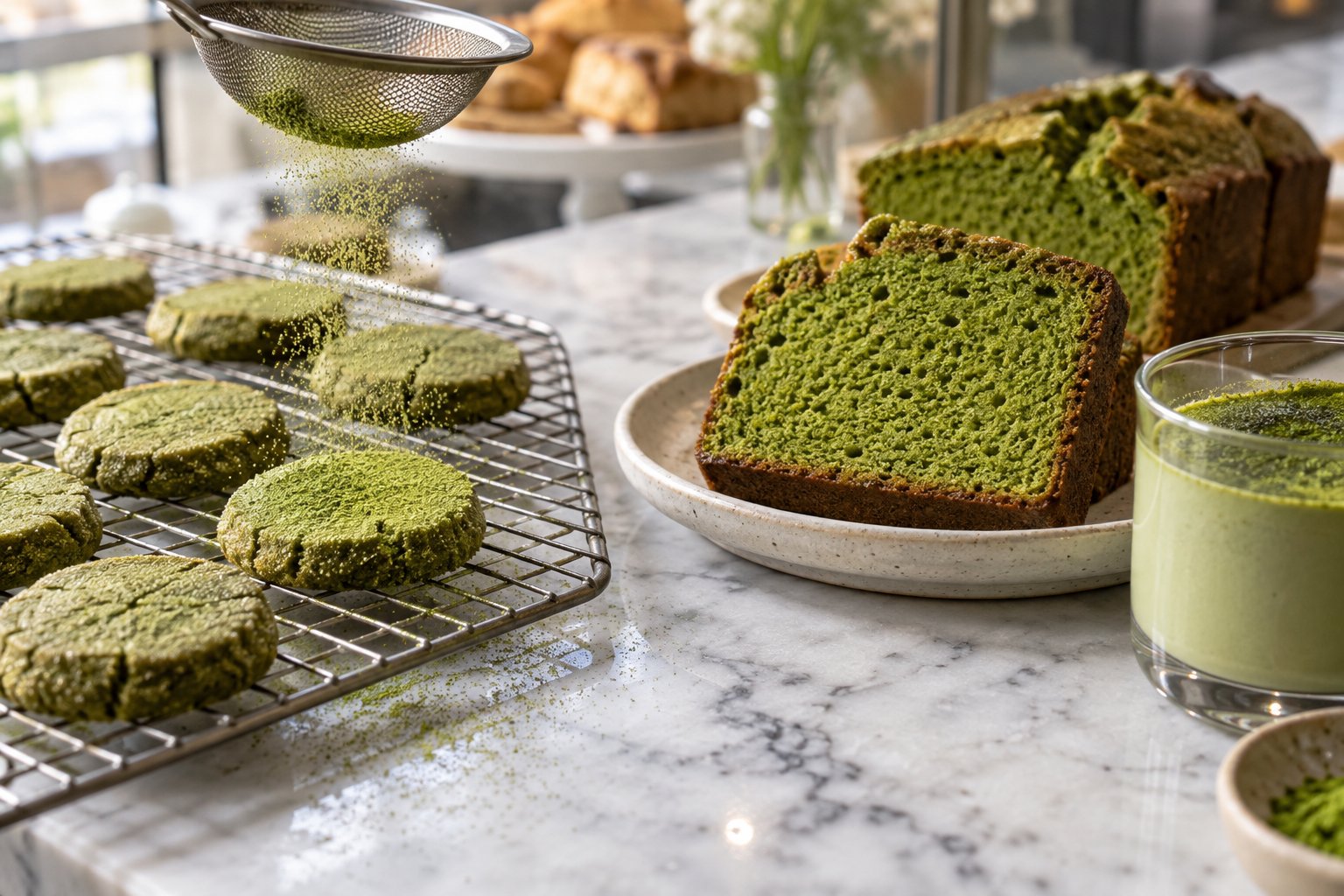
- For gateau chocolat and terrine, dust matcha on top after cooling to show the green. Recipes from Tomizawa Shoten and Nakamura Tokichi Honten finish with matcha or powdered sugar
Lighting fades the color
Yamamasa Koyamaen in Kyoto explains that matcha fades in light, and that a matcha cake left under display case lights for a long time loses its color. The cut face shows the change most, so only put out in the case what you will sell that day (our suggestion).
Slicing and individual wrapping
Slice terrine and gateau chocolat well chilled with a warmed knife, and slice pound cake the day after it has cooled and been wrapped, for even cut faces. Slicing and wrapping are steps where hands touch the cake, so decide on gloves and tool hygiene at the same time.
Chill, then slice with a warm knife
Nakamura Tokichi Honten says warming the knife before slicing terrine gives a clean cut face. Tomizawa Shoten’s cheese terrine is chilled, then the outside of the pan is warmed with a hot towel to release it before slicing. Meiji says chocolate terrine is rich, so thin slices of about 1cm are best. Pound cake is less likely to crumble if wrapped and rested a day before slicing, as the crumb settles (our suggestion).
How many slices per cake
| Cake | Pan | Example slicing |
|---|---|---|
| Pound cake | 18–20cm loaf pan | 8 slices (about 2–2.5cm wide, our assumption) |
| Terrine | 16–17cm loaf pan | About 16 slices at 1cm, 8 slices at 2cm (our calculation) |
| Gateau chocolat | 15cm round pan | 8 equal pieces (our assumption) |
Morinaga Milk gives nutrition values for its cheese terrine, baked in a loaf pan of about 18cm, per slice when cut into 8. Once you decide the number of slices, use a guide to cut the same width every time.
Individual wrapping and work by hand
Japan’s hygiene guide for confectionery notes that the same castella cake is Category 2 if cut by machine after baking, but Category 3 (sweets with manual work after heating) if a person cuts it with a knife. When selling unwrapped, it asks staff not to touch the product directly and to use disposable gloves or tongs. When bagging each slice, wrap it only once fully cool so no droplets form inside the bag (our suggestion). Labelling and allergen rules for selling in bags are covered in Matcha cookies for cafés.
Shelf life and storage: the hygiene guide, public standards and hot climates
Pound cake falls under “butter cakes” in Category 2 of Japan’s confectionery hygiene guide and keeps relatively well because it is low in water. Terrine and gateau chocolat contain a lot of eggs and dairy and need refrigeration. For all three, store your own recipe in your own packaging and check it before setting a date.
Water activity of pound cake
The “Guide to hygiene management plans for confectionery manufacturing based on HACCP,” made by the All Nippon Kashi Association and others and confirmed by Japan’s Ministry of Health, Labour and Welfare, divides sweets into 5 categories by how they are made, and puts butter cakes in Category 2 (sweets heated after the batter is made). In the guide’s reference data, pound cake has a water content of 17.20% and a water activity of 0.803. Water activity is a number from 0 to 1 for the share of water in a food that microbes can use. The guide says that below 0.86, bacteria generally cannot be active, and below 0.80, ordinary molds cannot either. The pound cake value is close to the mold threshold, so packaging and how you set the date matter (our view).
Refrigerate terrine and gateau chocolat
| Source | What it says |
|---|---|
| US FDA, “Food Code 2026” | Refrigerated foods made in a shop and held more than 24 hours: 5°C or below for up to 7 days. Mark the date, counting the day of preparation as day 1 |
| US FDA, “What You Need to Know About Egg Safety” | Do not leave egg dishes out of the refrigerator for more than 2 hours, or more than 1 hour above 32°C (90°F) |
| Japan’s confectionery hygiene guide | Set use-by and best-before dates on a reasonable basis, for example through testing |
| Same | When selling refrigerated items, check how long the customer will take to get home and add ice packs |
None of the official terrine or gateau chocolat recipes we compared gave a number of days they keep. The Food Code’s 7 days is a maximum, so also check the dates on the cream or cream cheese you used, set a shorter period in the shop, and record it. Refrigerating and freezing baked cakes is also covered in Matcha cake and Matcha brownies.
Shop counters in hot climates
In the Meteorological Service Singapore’s 1991–2020 normals, Singapore’s monthly mean temperature is 26.8–28.6°C. The guide says Bacillus cereus grows actively at around 30°C in foods made with grains, so after heating, food should not be left at room temperature for long but cooled quickly. In hot climates, keep pound cake in an air-conditioned area or a refrigerated case too, and sell terrine and gateau chocolat without taking them out of a case at 5°C or below (our suggestion). White chocolate batter softens easily in a warm place, so add ice packs for takeaway (our suggestion). Storing the matcha powder itself in hot climates is covered in Matcha shelf life.
Matcha per slice and matcha cost
Work out the matcha cost of one slice as “buying price per kg ÷ 1,000 × grams of matcha per slice.” The matcha per slice is the matcha used in one cake divided by the number of slices.
Matcha in one slice
| Recipe | Matcha per cake | Slices | Matcha per slice |
|---|---|---|---|
| Tomizawa Shoten, “Basic pound cake” | 3g | 8 slices (assumed) | About 0.4g |
| Nisshin Seifun Welna, “Azuki and matcha pound cake” | 6g | 8 slices (assumed) | About 0.8g |
| Tomizawa Shoten (SAWAKO), “Rich matcha pound cake” | 25g | 8 slices (assumed) | About 3.1g |
| Tomizawa Shoten, “Matcha terrine chocolat” | 10g | 8 slices (assumed) | About 1.3g |
| Nakamura Tokichi Honten, “Matcha chocolate terrine” | 20g | 8 slices (assumed) | 2.5g |
| Nakamura Tokichi Honten, “Matcha gateau chocolat” | About 6g | 8 equal pieces (assumed) | About 0.8g |
| Tomizawa Shoten (Chori Mama), “Matcha gateau chocolat” | 15g | 8 equal pieces (assumed) | About 1.9g |
Matcha per slice is our own calculation, and the slice counts are the assumptions in the table above. Even for pound cake, matcha per slice ranges from about 0.4g to about 3.1g depending on the recipe, about 8 times as much. One matcha latte uses 3g matcha in Ippodo Tea’s recipe (Matcha for Baking). A slice of a rich pound cake uses about the same amount of matcha as one latte.
What goes into the cost
Besides matcha, include white chocolate, butter, eggs, cream, flour, individual bags and labels, and the trimmed ends and unsold slices in the cost of one slice. How the price of matcha per kg is set is covered in How matcha prices are set.
Test-bake matcha in your own recipe
In Yamamasa Koyamaen’s guide, matcha for baked batters ranges from the lower drinking grades to processing grade No. 1, and drinking grades are for dusting (Matcha for Baking). How grade names differ is covered in Matcha grades. Bake each candidate matcha in your own recipe at the same amount, and compare the color of the cut face on the day of baking, the next day and the third day under the same light before deciding.
Omakase Matcha supplies matcha from Uji, Yame, Shizuoka, Kagoshima and Miyazaki, with orders from 1kg and up to 3 samples. We can also help adjust recipes for your shop’s menu. Request matcha for test baking from Samples.
Sources
- Tomizawa Shoten, “アレンジ自由自在!基本のパウンドケーキ” (Basic pound cake for any flavor, in Japanese) https://tomiz.com/recipe/pro/detail/20250818134754
- Tomizawa Shoten, “抹茶パウンドケーキ” (Matcha pound cake, in Japanese) https://tomiz.com/recipe/pro/detail/408501
- Tomizawa Shoten, “【定番!】抹茶と大納言の基本のパウンドケーキ” (Basic matcha and azuki pound cake, in Japanese) https://tomiz.com/recipe/pro/detail/20201231125128
- Tomizawa Shoten, “基本の濃い抹茶パウンドケーキ” (Basic deep matcha pound cake, in Japanese) https://tomiz.com/recipe/pro/detail/20190622094258
- Tomizawa Shoten, “濃厚抹茶のパウンドケーキ” (Rich matcha pound cake, in Japanese) https://tomiz.com/recipe/pro/detail/20170906165403
- Tomizawa Shoten, “しっとり~抹茶のパウンドケーキ” (Moist matcha pound cake, in Japanese) https://tomiz.com/recipe/pro/detail/20220528142847
- Nisshin Seifun Welna, “あずきと抹茶のパウンドケーキ” (Azuki and matcha pound cake, in Japanese) https://www.nisshin-seifun-welna.com/index/recipe/detail/n-333.html
- AIYA America, “Matcha Pound Cake” https://aiya-america.com/matcha-pound-cake/
- King Arthur Baking, “King Arthur’s Original Pound Cake” https://www.kingarthurbaking.com/recipes/king-arthur-flours-original-pound-cake-recipe
- Tomizawa Shoten, “口溶けなめらか!抹茶のテリーヌショコラ” (Smooth matcha terrine chocolat, in Japanese) https://tomiz.com/recipe/pro/detail/20211129023827
- Tomizawa Shoten, “プロが教える!抹茶のテリーヌショコラ” (A pro’s matcha terrine chocolat, in Japanese) https://tomiz.com/recipe/pro/detail/20231129141642
- Tomizawa Shoten, “濃厚!滑らか 抹茶のチーズテリーヌ” (Rich, smooth matcha cheese terrine, in Japanese) https://tomiz.com/recipe/pro/detail/20230509155339
- Tomizawa Shoten, “抹茶チーズテリーヌ” (Matcha cheese terrine, in Japanese) https://tomiz.com/recipe/pro/detail/20190214093716
- Nakamura Tokichi Honten, “抹茶の旨みを味わう濃厚デザート[抹茶チョコレートテリーヌ]” (Matcha chocolate terrine, in Japanese) https://tokichi.jp/blogs/life-with-cha/matcha-chocolate-terrine
- Nakamura Tokichi Honten, “抹茶ガトーショコラ:冬の終わりに楽しむ、濃厚な抹茶の余韻” (Matcha gateau chocolat, in Japanese) https://tokichi.jp/blogs/life-with-cha/february-matcha-gateau-chocolat
- Tomizawa Shoten, “抹茶のガトーショコラ” (Matcha gateau chocolat, in Japanese) https://tomiz.com/recipe/pro/detail/20220113121537
- Tomizawa Shoten, “【混ぜるだけ!簡単】抹茶のガトーショコラ” (Easy mix-only matcha gateau chocolat, in Japanese) https://tomiz.com/recipe/pro/detail/20210118222139
- Tomizawa Shoten, “抹茶ガトーショコラ” (Matcha gateau chocolat, in Japanese) https://tomiz.com/recipe/pro/detail/20170822092000
- Morinaga Milk, “至福のチーズテリーヌ” (Blissful cheese terrine, in Japanese) https://www.morinagamilk.co.jp/recipe/detail/recipe.php?id=98061K
- Meiji Hello, Chocolate, “ショコラテリーヌとは。ガトーショコラとの違いやレシピも” (What is chocolate terrine, in Japanese) https://www.meiji.co.jp/hello-chocolate/column/93/
- Callebaut, “Tempering chocolate with Callets” https://www.callebaut.com/callebaut-chocolate-academy/tutorials/tempering/tempering-chocolate-with-callets
- Wang et al., “The Effect of Microwave Radiation on the Green Color Loss of Green Tea Powder,” Foods (2022) https://pmc.ncbi.nlm.nih.gov/articles/PMC9407078/
- Yamamasa Koyamaen, “抹茶の取扱い” (Handling matcha, in Japanese) https://www.yamamasa-koyamaen.co.jp/matcha/basic/handling.html
- All Nippon Kashi Association and others, “HACCPの考え方を取り入れた菓子製造業における衛生管理計画作成の手引書” (Guide to hygiene management plans for confectionery manufacturing based on HACCP, confirmed by the Ministry of Health, Labour and Welfare, revised 4 June 2024, in Japanese) https://www.mhlw.go.jp/content/11130500/000478404.pdf
- U.S. Food and Drug Administration, “Food Code 2026” https://www.fda.gov/food/fda-food-code/food-code-2026
- U.S. Food and Drug Administration, “What You Need to Know About Egg Safety” https://www.fda.gov/food/buy-store-serve-safe-food/what-you-need-know-about-egg-safety
- Meteorological Service Singapore, “Climate of Singapore” https://www.weather.gov.sg/climate-climate-of-singapore/